
The sciences: positivism and increasing relativism
The tension between a humanistic view of man and society and a more materialist vision of the world which had been felt from the fifteenth century onwards heightened in the second half of the nineteenth and the early decades of the twentieth century. In particular, a way of thinking couched mainly in terms of the concept of progress, that in the eighteenth century had already started to reflect a rosy vision of the development of European culture and that was adopted by philosophers around the turn of the century, now seemed to acquire an empirical, scientific basis.
During each decade of the nineteenth century, the ‘positive’, ‘exact’ sciences and applied technology brought new discoveries, which sometimes could be put to immediate practical use, making life easier and more comfortable not only for the old elites but for the masses as well. The fact that not everyone could and did profit from them equally does not detract from their importance.
The list of new ideas and new techniques is long indeed, of which the following are but a few examples. In biology, Remak discovered cell division in 1852, and Mendel’s theory of heredity was made public in 1865. In medicine, Morton developed ether anaesthesia in 1846, while in 1861 Semmelweiss showed how puerperal fever could be combated. Koch discovered the tuberculosis bacteria in 1882, and in 1883 Behring developed the diphtheria serum. In physics, Fresnel startled the world with the theory of light waves in 1815, while Faraday developed electric induction in 1831 and electrolysis in 1833. In 1888, Hertz wrote about electromagnetic waves and in 1895 Röntgen gave the world x-rays. Werner von Siemens (1816–92), a former army officer, had founded a telegraph company in 1849, and went on to introduce the dynamo in 1866–7 and the electric tram and train in 1879; in 1882, the Siemens firm electrified the Berlin street lighting system. Otto had developed the four-stroke engine in 1876, while, in 1884, Daimler patented the gasoline motor, and in 1885 produced the first car.
Many of these inventions contributed to the cultural unification of Europe and, indeed, of the world, if only because, by reducing the speed of communication, they intensified the process to an extent hitherto unknown. Thus, in 1855, Siemens Bros, which the founder envisaged as a worldwide enterprise that would surpass the sixteenth-century German venture of the Fugger family, was given the contract to put in a telegraph network across the Russian empire, connecting St Petersburg with the Pacific; in 1879, they linked Europe to India – a message from London to Calcutta now took 28 minutes, rather than two or three months; finally, they also linked Europe to the USA by putting cables under the Atlantic Ocean.1
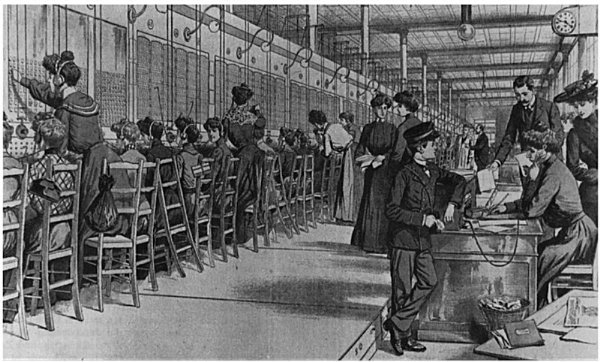
Plate 16.1 This late nineteenth-century lithograph of a Parisian telephone exchange shows not one but, actually, two ‘revolutions’. The introduction, in the 1860s, of the telephone revolutionized communications in the western world. However, the manual operation of the exchange required a large staff. The new jobs involved were among the first considered ‘suitable’ for decent girls who were also nimble-fingered and thus able to handle the plugging system. Thus, besides being a factory worker, a household servant, and, more recently, a shop assistant, a new profession became available to women and, moreover, one that, for the first time, gave them some status.
Source: CKD RU Nijmegen

BERLIN, 1877: HEINRICH STEPHAN REJOICES IN THE FIRST GERMAN TELEPHONE SERVICE
In November 1877, the German postmaster-general Heinrich Stephan wrote the following letter to Prince Bismarck, chancellor of the newly formed German Empire, in which he outlined the general physical principles of the telephone, the history of its development and the possibilities of its use:
Your Grace knows that moving a piece of steel or iron within the reach of a magnet will induce an electric current that lasts while the movement of the iron or steel lasts. If one projects one’s voice against a sheet of steel or iron so thin as to enable the human voice to make it tremble, and if a magnet, within a coil, is near, there will be electric vibrations in this coil which completely match the sound waves induced by the voice. The coil is connected to a normal telegraph cable, and through it the currents are transmitted to the receiving station. There, a similar instrument is connected to thin sheets of iron, through which the electric currents once more are transformed into air currents, and consequently into sound….
On the above, the theory of the telephone is based. Only a century ago, people first conceived of the relationship between electricity and magnetism, when a stroke of lightning caused the magnetic pole of a compass to reverse. Fifty-eight years ago, Oerstedt established the principles of electromagnetism, and Ampere, only three years later, proved that magnetism was the consequence of electric vibrations. Nowadays, this research, combined with the principles of acoustics, which have been known for some time, has resulted in the invention of the telephone, which, I am convinced, will have a great future in the realm of human communication.
As far as is known today, in 1861, Philipp Reis, a Frankfurt school teacher, has been the first to have constructed a telephone capable of transmitting musical sound. Afterwards, the Americans have got hold of the idea, and Messers Bell, Edison and Gray have constructed various telephones to transmit human speech. As far as I can see, the most practical one is Bell’s machine, which has served as the model for a number of telephones which I have ordered from the firm of Siemens and Halske. During the last weeks of October, we have first tried them out, to start with from my central office in the Leipziger Strasse to the General Telegraph Office in the Französischen Strasse. As these experiments were totally satisfactory … we started transmitting to Potsdam on the same day. With Potsdam, too, perfect communication has been established.2
Meanwhile, from the 1820s onwards, Niépce, Talbot and Daguerre had developed photography. In 1839, a proud French government bought Daguerre’s formula, presenting it as ‘a gift to mankind’. But the breathtaking inventions of one generation were the old fashions of the next. The exact likenesses captured in the photograph soon seemed outmoded when film made images actually move. A new mass medium was born in 1897, which was to deeply influence European and indeed western society.3
In short, for many Europeans, life acquired a new speed, an almost breathless quality, not least because, for the first time in history, they could now look at themselves as they really were. Undeniably, these developments greatly helped to improve the material quality of life, facilitating not only transport and communication but also the movement of goods, thus, for example, contributing to a more varied and better diet. Moreover, through increased medical knowledge, the chemical industry, which developed in the wake of mechanical industrialization, through the mass production of patent medicine could help to increase life expectancy and reduce the death rate from all kinds of disease, though it also unscrupulously exploited people’s fear of sickness and death for commercial purposes.
In a subtle and complex way, these new discoveries not only changed people’s material lives but also their perception of themselves and of their relationship to nature. Understandably, most of these developments were hailed as triumphs of science and technology, of the genius that more and more seemed to characterize Europe, giving it its unique position in the world – to many, ‘Europe’ and ‘progress’ became almost synonymous. Yet the results of research in other fields, where the spiritual rather than the physical person and the material world was involved, were less unequivocally positive, not to say rather unsettling, especially to those who were convinced that the Christian Bible was the fount of all truth.
Around the turn of the eighteenth to the nineteenth century, French scientists like Buffon and Lamarck wrote about the variability of organic forms and their gradual evolution from monad to man, undermining the concept of the uniqueness of the human species. Meanwhile, geology showed the earth must have been shaped over the course of several million rather than several thousand years, considerably undermining the ideas proclaimed by the Churches about the age of the world and a creation process that was supposed to have been completed in a single week’s time.
On the basis of these discoveries and speculations, biologists went on asking new questions about the development of life on earth. In the 1780s and 1790s, an English country doctor, Erasmus Darwin, had voiced his opinions about the creative force of natural or sexual selection in the origin of new species. Though he had carefully couched his ideas in such a way as not to irritate the religious establishment, he soon found that society was not yet ready to accept the notion that, perhaps, humans stemmed from apes. Some 60 years later, in 1844, the eccentric Scotsman Robert Chambers produced his Vestiges of the Natural History of Creation, presenting an evolutionist view of the genesis of life. He did so anonymously, undoubtedly afraid of adverse reactions within the conservative Christian community. Consequently, his work was not heeded.
Yet by that time, Charles Darwin (1809–82), building on the studies of all these predecessors, including his own grandfather,4 was thinking about biology in terms of evolution as well. Yet, he needed another decade to come to terms with his own discoveries. In 1859, his On the Origin of Species by means of Natural Selection, or the Preservation of Favoured Races in the Struggle for Life convincingly, and scientifically, ‘proved’ to many that new species developed in a constant process of evolution in which, in accordance with a fixed law of nature, stronger specimens of older species survived by adapting themselves, while the weaker ones disappeared.5 When Darwin, although somewhat hesitantly, reached the logical conclusion of his own position and in 1871 published The Descent of Man, the human species lost its position at the apex of creation, the sole being created in the image of God. For many, Christianity in all its authoritarian institutional forms began to lose an essential part of its credibility.
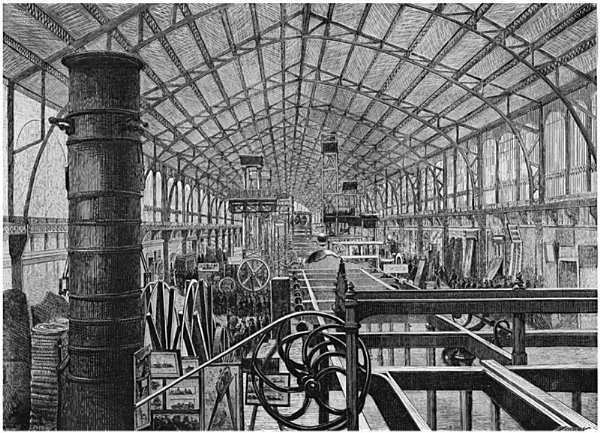
Plate 16.2 An engraved representation of the ‘Hall of the French Machines’ at the ‘Exposition Universelle’ held at Paris in 1878.
Source: CKD RU Nijmegen

Plate 16.3 Machines, or mechanical and later electrical appliances, not only facilitated production in almost all sectors of the economy, they also entered the family home, being widely advertised as the means to finally free women of their heavy household chores.
Source: Centre for Art Historical Documentation, Nijmegen, the Netherlands
Still, the success of Darwin’s books, written in an almost novelistic style and, if only for that reason, appealing to a large audience,6 shows the extent to which the cultural climate had changed during the early decades of the nineteenth century. For though the Churches did react negatively to the notion of evolution and its theological implications, the scholarly community by and large did not, and nor did the general public: Europe had been ready for a ‘change of paradigm’, for a theory which answered the questions raised by a new society, a world of growing economic and social tensions and of global contrasts. Darwin’s concepts were quickly popularized.7 They flourished in a climate of continuing scepticism in the field of religion and to a large extent reinforced this, precisely because his and other new ideas bore the stamp of scientific method, of truth.
In these years, too, the human sciences, ‘invented’ in the late eighteenth century, began to dominate the scientific and cultural debate. Social theory – ‘sociology’, in the terms of the Frenchman Auguste Comte, who had been among the first to label it a positivist science – anthropology and, finally, psychology entered the world of scholarship and, far more important, the realm of popular culture that asked for scientific explanations of an increasingly complex society. Soon, they revolutionized the ways in which Europeans thought about themselves.8 In 1859, which saw Darwin’s biological theory unleashed upon the world, Europeans were shocked in their belief in the social make-up of the world as well. For in the same year Karl Marx (1818–83) published his Zur Kritik der politischen Oekonomie. Obviously influenced by the social misery and the political tensions caused by unbridled economic expansion in large parts of industrializing Europe, Marx proposed a scientific theory that showed society had developed as systematically as Darwin’s nature: in a constant fight for the means of production, those who possessed the means of production had survived, had become stronger, while those who did not had weakened, and would for the foreseeable future continue to do so.
Soon science, rather than religion, became Europe’s new faith.9 For the first time in European history, an idea taken from the natural sciences had succeeded in influencing all fields of life, and in an unprecedentedly short period of time, too: the evolutionary perspective not only changed the other exact sciences but also politics and economics, as well as philosophy and literature, and, indeed, religion itself. A new view of man was born, strongly coloured by biological determinism. Free will as an essential human characteristic seemed to have disappeared. God, providence and deliverance had no place in the Darwinian world. Who could still believe in nature as a harmonious order? Was the entire physical world not a battlefield, in constant movement as a result of the struggle between the representatives of the diverse species? In the face of a continuous struggle for survival, of the need to achieve progress, the notions of good and evil as advocated by, specifically, the Churches, seemed rather weak categorizations.
Notwithstanding such potentially dangerous developments as the monk Mendel’s genetic experiments and, more generally, the boost to genetic research given by those who studied the implications of Darwin’s ideas – indeed, all over Europe movements advocating eugenetic research and, sometimes, policies now cropped up – at the end of the technologically highly successful nineteenth century most Europeans were thrilled rather than worried by the prospects of science. Of course, the great majority did not understand the implications of the scientific debate. If anything, they would rather read the dozens of exciting and hugely popular adventure novels written by the Frenchman Jules Verne (1828–1905). He showed how machines and other technical devices – including a number of applications which, like Leonardo da Vinci before him, he ‘invented’ on paper only, though some of them were scientifically proven correct and then technologically realized in the later twentieth century10 – would make life for people easier, more pleasant and more exciting.
The nineteenth century being the first ‘century of children’s books’ on a scale to deserve this name, it is a highly significant aspect of European culture that Verne’s massive output, translated into all European languages, aimed at an adolescent rather than an adult public. In such novels asVoyage to the Moon and Robur the Conqueror, the belief in the power of science was inculcated in the new generation from an early age. Nor was Verne the only one to incorporate new ideas. Those British children who read Charles Kingsley’s highly popular The Water Babies (1863) were given a didactic fairy tale about a poor little chimney sweep who fled his persecutors by drowning himself and lived on in a new, clean, healthy world – a typical image of the age of pollution. Moreover, it was a watery world that confidently spelled out the benefits of progress through evolution and the survival of the fittest.
Yet one should note that in this age of triumphant positivism and materialism, the need to escape from reality seemed greater than ever, especially if judged by its manifestation in literature. The past, or at least a time when myth and a rural, village culture, rather than science and an urban, industrial civilization dominated man’s life, became a powerful attraction. The first woman to win the Nobel Prize for literature, the Swedish author Selma Lagerlöf (1858–1941), wrote her Gösta Berling’s Saga in 1891. This tale of the vicissitudes of a Lutheran minister who had fallen from grace was a powerful evocation of the landscape and the culture of her native Värmland, a mixture of realism and fantasy, of folklore and psychology, recreating a life that seemed both more simple and more passionate than the present. And in Nils Holgersons underbara resa genom Sverige(1907), fairy tale, travel book and Bildungsroman, which made her famous all over the world, she successfully tried to teach her youthful readership the history and beauty of the Swedish country. And yet, at the same time, both texts evince a kind of metaphysical Darwinism, showing man’s evolution as a constant battle between his animal drives and his divine potential.11
This past-oriented tendency was dominant in many fields of elite culture. In 1859, ‘Darwin’s Year’, Europe had first heard the long melodic lines of Richard Wagner’s (1813–83) revolutionary opera Tristan und Isolde, in which physical love was openly shown as a passion that governs everything. It was now even coded in the notes themselves: Wagner’s musical characteristics, the so-called ‘leitmotiv’, tried to express the compelling impulses that people experience and which determine their behaviour in the face of rationality and even all other emotions.12 This and some of Wagner’s other works were all set in a mythical, German past, though there were many among his audience who thought they could also detect messages for the present in his tales of superhuman heroes and heroines.
Rather than turning to an idealized or at least romanticized past, Friedrich Nietzsche, one of the many who were influenced by Darwin’s thought, had proposed what he thought a more realistic analysis of the present, but did so in creating a heroic view of man that had not failed to influence Wagner: ‘This world is the will to power – and nothing else! And you yourself are this will to power – and nothing else!’13 Nietzsche called Christianity the symbol of the complete distortion of precisely all those natural values that help man to survive in this world, the only one he is given; to him, Europe’s religion was the creed of ‘the sick and dying who despised the body and the earth, and who invented heaven and the saving drops of blood, and they even deprive the body and the earth of that sweet, dark gift.’14 ‘Thus spoke Zarathustra’, the ancient Persian philosopher whom Nietzsche used to voice his beliefs. Christianity had made the world into a vale of tears by damning all passions, instead of making optimal use of them as the positive forces that they were. Nietzsche wanted to undo this Umwertung aller Werten (The Revaluation of all Values) that had, in his view, negatively directed Europe for centuries.
In the same period, comparative ethnology flourished as never before, especially as a result of Europe’s knowledge of the world’s various peoples and cultures that arose from colonialism and imperialism. It was now slowly given form as a science of man in his cultural environment. One of its first influential practitioners, James Frazer (1854–1941), also developed comparative religious history. In his riveting 12-part analysis of world religions and the myths associated with them, The Golden Bough (1890–1915), he set out to show that Christianity in its essence and functioning was definitely not unique, that both its beliefs and its characteristic rituals were to be found in many other religions as well. He convinced many readers. Yet many felt shocked when they realized that the distinction often made between magic and faith, between the many non-western ‘superstitions’ and the one, true western religion was built on sand, at least scientifically speaking.
Those who continued to cling to traditional beliefs and attitudes were certainly not well served by the practitioners of philology, of that textual science which already in the world of humanist learning had cleansed the Bible of all sorts of mistakes. For scholars now subjected the life of Jesus to historical analysis as well. They did so according to the rules developed by the nineteenth-century scientific, empiricist study of history. Among others, the highly controversial Das Leben Jezu (1839) by David Friedrich Strauss (1808–74) as well as Ernest Renan’s (1823–92) La Vie de Jesus(1863) led to violent reactions all over the Christian world: many felt deeply pained when they were told the Son of God was an ‘incomparable human being’, an inspired revolutionary, only.15
Inevitably, in this cultural climate, secularization grew ever stronger. After Copernican physics had moved the earth from its place as the centre of God’s universe in the sixteenth and seventeenth centuries, Darwinian biology now removed man from the pedestal on which he had placed himself as the culmination of God’s creation and reduced him to an ‘incidental’ winner in the mechanistic process of evolution, while according to anthropology Christianity equally lacked any unique glory, being a culturally ‘explainable’ phenomenon among a multitude of other religions. In short, while many traditional values now became relative or even obsolete, only the belief in science seemed to reign supreme.
Europe in hiding, Europe surviving
While developments in the domain of high culture influenced Europe’s intellectual upper crust, much larger groups were affected by the large-scale migration from the countryside to the towns that was connected with industrialization and urbanization, which in most countries became more marked from the 1860s and 1870s onwards.
People became detached from their traditional social and religious institutions, especially the rural community and its centre, the Church, where the clergy still held a powerful grip on the population. Removal to the ever more anonymous environment of the big city meant an erosion of the ‘moral economy’ of traditional societies. The bonds with the Church, but also with the old socio-emotional frameworks of family, village and neighbourhood were slowly weakened. When this became obvious to the spiritual authorities, the various Churches embarked upon a large-scale offensive. In doing so, they often allied themselves with secular governments who, for several decades already, had been equally alarmed at the disintegration of society and the political dangers inherent in increasing individualism.
A culturally fascinating situation now developed. From the 1840s onwards, the secular elites had used a variety of means to civilize the urban underclass, such as literacy campaigns, organized sports and large-scale community singing in amateur choirs that presented proper patriotic music, aided by the new mass education and the incipient mass media. Moreover, from the 1860s and 1870s onwards these same means were also employed by the colonial authorities to bring the increasing numbers of non-European subjects into the fold of European rule. The Churches, assisting the secular authorities through their global missionary activities, were particularly eager to employ these instruments of mass manipulation to convert the world to Christianity in its various forms. With renewed vigour, Rome staged extensive mission campaigns, partly out of fear of the equally energetic Protestant missionary movement which, from the early nineteenth century, had greatly affected the Catholic Church’s near-monopoly on the proclamation of Christian, European values in large parts of the world. Significantly, however, by the late nineteenth century, the Churches felt that the industrialized cities and regions of Europe itself were the frontiers of a new paganism, of a world that had to be wrung from the new barbarism of individualism and of liberal or socialist doctrine. Europe itself now became a missionary field, to be worked with the same methods that were used in the non-European world.
The effectiveness of this religious-cultural offensive varied greatly from country to country, from social group to social group. Protestant communities, especially the less hierarchically organized ones, had problems binding their congregations to tradition, whether or not revamped and revitalized. After all, the role of the clergy in these Churches had traditionally not been very strong and individual believers had always played an important role in shaping religious policy; often, scepticism simply could not be checked by authority.
However, in some parts of the Catholic world, Rome’s attempts to reinforce its hold over believers did result in the strong ‘ultramontanism’ which the papacy had hoped for: a renewed orientation towards the centre of the Catholic Church, ‘beyond the mountains’. Consequently, in such countries as the Netherlands, Belgium and Austria, a growing ‘sectarianism’ developed that turned the Catholic communities into virtually self-contained worlds, wherein every aspect of life, of culture, was determined by religion and the clergy. Sometimes, however, the increasing demands of the Roman hierarchy had the opposite effect, resulting in a slowly more critical attitude and even in a political as well as cultural compromise with more recent movements like liberalism and socialism.16
In 1869, during the first Vatican Council, the Catholic Church, trying at least to keep its grip on the educated believers, supposed to be the leaders of these communities, decided to dogmatize some of Thomas Aquinas’s thirteenth-century doctrines. In a large-scale campaign Rome once more tried to re-impose on the Catholic world its traditional views on the relation between man, the world and God. But this so-called neo-Thomism was only a reformulation of old positions, a fresh attempt to once again eliminate the tension the Christian faith itself had introduced into European culture almost 2,000 years earlier. Yet Rome hoped to rebuild the Catholic community as a power that could compete with the national states whose aims did not often run as perfectly parallel with the Church’s ideas as had been hoped. It wanted to combat and finally destroy what it felt to be the destructive consequences of the Enlightenment and revolution, now summed up and condemned as ‘Modernism’ – i.e. materialism, individualism, the rejection of authority and secularization.
Nevertheless, even in such a religious society as existed in Spain, the combined forces of industrialization, the adoption of a constitution and the growing power of the bourgeoisie resulted in a new mood. Many were no longer willing to accept the Church’s dominating position in cultural life. Liberal bourgeois leaders like Don Francisco Giner who, in 1875, founded his ‘Institute of Free Education’, decided that Spain had to be educated anew, and, of course, preferably not by an undereducated priesthood. His educational reforms inspired a host of collaborators who crisscrossed the country, taking books, paintings and music to teach the new generation, and introducing them to sports and country walks. These efforts produced such painters as Pablo Picasso and Salvador Dalí, such musicians as Isaac Albeniz and Enrique Granados.17 But as the Spanish government was unable to find the means for the large-scale adoption of this experiment, right-wing Catholicism continued its hold over the middle classes, who needed education as a means towards economic and social mobility.
Meanwhile, only a small group continued to feel that Europe was not only about material progress, but represented an ideal consisting of more profound norms and values that had to be cherished, if only to ward off the dangers of the increasing aggression between the European nations and of the growing gulf between the humanities and the natural sciences, two developments that would destroy Europe’s cultural unity.
Just as in earlier centuries, concern about the outcome of these struggles caused intellectuals to devise all sorts of plans and strategies to maintain peace and bring about greater cohesion so that Europe might actually live up to its claim to be a humanistic civilization.18 But even if people thought in terms of closer cooperation between states – one hears echoes of ideals like those which Dubois, Penn and Novalis had once articulated – the independence of Europe’s sovereign nations was seldom discussed.
In this respect, the books written by the Danish state councillor Carl Friedrich von Schmidt-Phiseldek are intriguing. In 1820 he published his Europa und Amerika oder die Künftigen Verhältnisse der civilisierten Welt (Europe and America or the future situation of the civilized world) and in 1821 Die Europäische Bund (The European Union), to impress upon his readers the danger that the young United States posed to a divided Europe. In 1859, J. Fröbel was even more terse in his Amerika, Europa und die politische Gesichtspunkte der Gegenwart (America, Europe and the political aspects of the present), arguing that if Europe did not develop some form of unity it would very soon become a mere stage for the inevitable struggle between America and Russia. In 1867, the French writer Victor Hugo felt forced to point out that Europe was still at least the ‘mother country of mother countries’. But three years later, such notions did not prevent a gruesomely bloody struggle between France and Germany. With the misery of this war still fresh in his memory, Friedrich Nietzsche tried yet to convince himself, in his 1886 essay Jenseits von Gut und Bösen(Beyond Good and Evil), that:
nowadays the most obvious signs are not read, or even wilfully misinterpreted, which show that Europe will be one. In all people who, during this century, have looked beyond the surface, this has been the real direction their soul, in its mystical work, has been taking: to prepare the way towards that new synthesis.19
Yet, deep down he must have realized that this vision would remain a dream only, the dream of a handful of intellectuals. In a society dominated by political and cultural nationalism and socio-economic individualism, it seemed that the European ideal could no longer be a living force. Indeed, only a few Europeans still felt they could argue that their world was a world with unique, transnational values and norms shaping everybody’s thoughts and actions regardless of their social or national background. Only a few felt that the nations of Europe collectively showed cultural characteristics which gave their part of the globe both unity and uniqueness, distinguishing it from the rest of the world. Only a few translated these notions into a concept of Europe that aimed to bridge differences or prevent disputes.
Nevertheless, such characteristics could be distinguished, even if only in the domain of elite culture, in which, because of its cosmopolitan character, they had been developed in the first place. A few should be named here.
Many Europeans did still admire the two great cultures of Greece and Rome which had so essentially influenced Europe’s view of man and had contributed to the formation of Europe’s notion of the State. For even though the practice of democracy in the ancient Greek city-states had not at all resembled what was now being created in the constitutional and representative democracies of nineteenth-century Europe, still the idealizing inspiration Europeans derived from ancient Greece and from the republican virtues of classical Rome had been a force in shaping political and social ideology from the sixteenth century onwards and, hence, in furthering the spirit of change that came to characterize the nineteenth century.20 Another fundamental European characteristic was its empirical, later positivist, scientific thought; though not unique to Europe – if compared, for example, with developments in China until the seventeenth century21 – yet nowhere was this way of thinking as all-pervasive as in Europe. In this field, moreover, the link with antiquity, though equally idealized, was actually far more real than in the domain of political thought. Besides the momentous consequences in the development of the sciences themselves, the ancient Greek notion of the free spirit that strives to know all greatly contributed to the climate of secularization and, hence, of cultural change that characterized nineteenth-century Europe as well.
Then, of course, there was the cultural unity brought about by certain motifs in the visual and literary arts, some of which seem to refer to an all-European emotion of contrasts and tension, such as, for example, the motif of the myth of Prometheus, the ‘one who looks forward’, one of the Titans, who, disobeying his father, Zeus, brought fire to the earth and thus embodied the spirit of creation and individualism with which Europe liked to identify its culture. It may be linked to the equally mythical figure of Faust,22 who embodies the ancient tension between the powers of belief and reason: ‘Zwar weiss ich viel, ich möchte aber alles wissen’ (I do know much, but would like to understand all).
European music was by now quite unique among most other musical cultures in the world by its insistence on ever more complex harmonic polyphony, both instrumental and vocal, as well as in the quantity of the instruments and the performers used for large-scale religious and secular works. Indeed, no other culture created such a large and diverse corpus of religious music than the Christian culture of Europe. True, the introduction, in the eleventh century, of a uniform, written musical notation, attributed to the monk Guido of Arezzo (c.990–c.1050), had led to the gradual loss of an important, orally transmitted musical culture – perhaps Portugal and Spain are among the few European countries that, with the flamenco and the ‘fado’, still have a significant tradition in this field. It had also resulted in a composers’ rather than a performers’ musical culture, which developed along lines that urged these composers to differ from their predecessors as much as possible; indeed, from the eighteenth century onwards, this urge for originality became imperative both in musical culture and, indeed, in most other creative arts, reflecting, of course, Europe’s increased insistence on the uniqueness of the individual.
Yet despite its emphasis on individual expression, this musical culture, too, became a unifying force in European cosmopolitan culture. In the middle of the eighteenth century, composers like Christoph Willibald von Gluck (1714–87), as well as Handel and Haydn, mentioned above, left their own country to work in Paris and London, adapting their compositions to French and English tastes. At the turn of the nineteenth to the twentieth century, the music of Pyotr Ilich Tchaikovsky (1840–93) and Modest Mussorgsky (1839–81) was brought from St Petersburg to the concert halls of Paris by such culture brokers as Sergei Diaghilev (1872–1929) – introducing a music that breathed a spirit of the exotic, of a Russia that, though trying to retain, or perhaps even regain its own character, was yet adopting western European culture in more than just music.
Though it seems paradoxical that during the very nationalistic nineteenth century all these forms of ‘European’ culture gained strength, it is perhaps precisely because, while less emphasis was placed on their common ‘European’ character, they were presented and experienced as ‘genuinely German’, ‘specifically English/British’ or ‘typically French’ achievements or expressions. Tennyson, while not creating great poetry when he wrote:
Not in vain the distance beacons. Forward, forward let us range.
Let the great world spin forever down the ringing groves of change.
Thro’ the shadow of the globe we sweep into the youngest day:
Better fifty years of Europe than a cycle of Cathay23
did however clearly state Britain’s pride in its conquests and progress. Yet in contrasting these achievements of British culture to China, he could not but present them as European as well.
In doing so, his poem – with its reference to the faraway Middle Kingdom which, in these very decades, was increasingly dominated by Britain and other European powers economically, politically and militarily – was an expression of what is yet another seeming paradox. Most European states, despite their constant and sometimes bloody competition in Europe itself, in the wider world took care to manifest themselves as the agents of a certain culture, a set of values they always presented as specifically European, and, as such, as the touchstones of civilization. Thus they justified their hold over the non-European world, which acquired its most trenchant expression in imperialism.
Consciously or unconsciously, many European civil servants, merchants, entrepreneurs and missionaries, in short, ‘empire builders’, experienced the need to emotionally and intellectually justify their participation in a policy of economic, political and cultural domination. Therefore, they created an ideology that would vindicate their actions. Sometimes, they would appeal to ‘social Darwinism’, a way of thinking in which the principles of Darwin’s theory of biological evolution were misleadingly used to scientifically explain cultural, economic and political differences between peoples from racial distinctions. Far more often, the universal values of Christianity were adduced. And sometimes Europe’s manifest power was felt simply to be its own justification. Always, Europeans were trying to excuse what they forcefully imposed on and asked of others: conversion to one of the forms of Christianity; acceptance of the capitalist system; the adoption of a lifestyle conforming to ‘European’ norms of civilized behaviour.
This imperial ideology, expressed in and imposed on Europe’s growing colonial periphery, also helped to strengthen the cultural cohesion of the metropolis, Europe itself. All kinds of visual and printed propaganda, including a massive effort to educate Europeans, especially children, to an awareness of empire and its responsibilities, e.g. through highly romanticizing fiction, drove home the message that the nation and, on a deeper level, the concept of Europe, represented certain ideals, which had to be preserved and spread.24An author illustrative of this tendency was Karl May (1842–1912), who in terms of sales was easily the most successful German writer of all time. He influenced generations of boys and adults in works that were translated into dozens of languages. Though he never left his native country to engage in the adventures he so vividly described, he not only contributed outstandingly to the new genre of ‘westerns’, but also almost single-handedly created the genre of ‘easterns’, writing as convincingly about the noble Indian as about the noble Bedouin. Sincerely outlining the plight of the former at the hand of ruthless European/American land speculators and of the latter in a Near East beset by corrupt Turkish officials, he helped to cement the stereotypes Europe needed to rationalize its imperial policies. Despite May’s open criticism of imperialism’s rougher edges, in the end the indigenous protagonist – ‘Winnetou, the red Gentleman’ being the most famous one – was always saved by the humaneness and wisdom of the European hero, who epitomized a utopian vision of the power any individual could wield if only he let himself be directed by a benign, obviously Christian providence.25
A growing sense of fin de siècle: between pessimism and optimism
All over the world, both the Europeans who travelled and those who ruled presented a front of pleasant, uncritical and even uncompromising faith in the many positive characteristics and values they attributed to their civilization which, they maintained, differed immensely from the cultures they encountered and sought to dominate. Yet in Europe itself the continuous economic and political rivalry that was both the cause of and inherent in the phenomenon of nationalism resulted in increasingly bitter and bloody wars during the later nineteenth century: the machine had brought into use weapons which were vastly more effective and, thus, more destructive than anything ever seen before.
For those who seriously analysed contemporary life, the constant threat of war as well as the many changes wrought in society and culture by industrialization – the rise of new elites, of mass education, of mass consumption, the decline of ‘old’ values and traditions – created a sense of almost inevitable disaster. In 1907, John Little wrote about The Doom of Western Civilization. This feeling was enhanced by the relativism that became a dominant force in European elite culture from the end of the nineteenth century onwards. Despite all the changes, the ideas of a physical world built on the inalterable atom and the inalterable cosmos, and of man as a rational creature had remained unchallenged for most educated Europeans. But around the year 1900, even those certainties were threatened.
Many poets and philosophers – men such as Boehme and Bruno, Novalis and Goethe,26 men such as Schopenhauer and Nietzsche – had cherished notions of the subconscious as the power which, unlike the reason glorified by the Enlightenment thinkers, basically moved both man’s thoughts and his actions. Now, the Viennese neuro-chemist turned ‘psychologist’ Sigmund Freud (1856–1939) took this idea a few steps further;27 while obviously borrowing many of his ideas from Nietzsche and Schopenhauer, he denied having read their work at all. In his Die Traumdeutung (The Interpretation of Dreams) (1900) he showed how an ‘archaeological’ survey of the mind through research into man’s dreams could reveal the – to many frightening – world of the subconscious. There, rational controls did not rule; on the contrary, deeply embedded anxieties and suppressed lusts seemed to steer man’s life. Despite the abundant evidence that Freud doctored much of the data he used to support his theories about man, and despite the fact that his patients, rather than accepting his preferred role as an impersonal investigator, made him into a father-figure, an idealized lover, a saviour even, he nevertheless was a great clinical observer and a great writer. Perhaps more than any other author, he has altered the way people in the West have thought, talked and written about human nature since the early twentieth century.28 Arguably, the Viennese psychoanalyst stood at the end of a long revolution. It had started when Newton, albeit implicitly, all but denied God’s role as a continuous actor in the management of the macrocosm, of the universe. It had continued to the moment Darwin had robbed God of his role in the development of life on earth. It now found its climax in Freud, who seemed to suggest that even in man’s soul God had no role.29
Yet, it soon appeared the revolution had not yet reached its final phase. For in physics, too, the turn of the century brought a revolutionary change. Traditional thinking on the structure of the microcosm was challenged and the idea of the unchanging atom was discarded: scientists began to accept that even atoms are unstable and produce energy when they disintegrate. Thus, it was increasingly evident that energy and matter were not separate worlds. Here, too, scientific proof was now presented for ideas that had been developed intuitively in earlier centuries, mostly by alchemists: matter can be altered, it can be changed into energy.
In the year 1900, the patrician American Henry Adams, thoroughly schooled in the humanist tradition of western culture, was in Paris. He wanted to visit the Universal Exposition, the umpteenth in a series that had started a century earlier, in 1798, also in Paris, with Europe’s first ever industrial exhibition, a manifestation that had elevated the products of manufacture to the status formerly enjoyed only by the products of the ‘arts’. Adams, who had been travelling and studying in Europe from the 1850s onwards, now wrote to his brother Brooke:
As far as I have guessed the results of this Exposition, the Germans alone show very marked development of energy. But I see no one to give me a general idea of the whole field, and of course no single corner of it has value without the rest. The limit of the great economies may be near or far. Since 1889, the great economy has evidently been electricity…. Electricity must have altogether altered economical conditions. Looking forward fifty years more, I should say that the superiority in electric energy was going to decide the next development of competition. That superiority depends, in its turn, on geography, geology and race-energy. All these elements have somewhat exact numerical values, and the value of your theory depends on getting the values of these unknown quantities. We should both have gained by knowing a little mathematics. That deficiency, due to the shocking inefficiency of Harvard College, has destroyed half the working value of our minds as trustworthy machines.
… I can see no reason for expecting any collapse at present, in Europe…. We ought to see a long period of rising prices and extensive economies. Apparently, Europe can go on indefinitely as she is, and the future type of England and France may be merely an extension of the Belgian and Dutch experience.30
Whereas Adams’s political predictions proved false, his observations on economic development and the role of science and technology in it are quite interesting, as is his conclusion that to understand it all he lacks a basic precondition – some knowledge of mathematics, etc.
In the same year, Adams found a friend willing and able to explain to him the implications of the new sciences. From these lessons he proceeded to draw definite conclusions as to his own attitude towards culture, his need to understand and, perhaps, even somehow reconcile the old, Christian-humanist ideas and the new sciences. He tells about it in his autobiography, in a chapter he titled, significantly, ‘The Dynamo and the Virgin’:
Until the Great Exposition of 1900 closed its doors in November, Adams haunted it, aching to absorb knowledge, and helpless to find it…. While he was thus meditating chaos, Langley came by, and showed it to him … Langley threw out of the field every exhibit that did not reveal a new application of force, and naturally threw out, to begin with, almost the whole art exhibition…. He taught Adams the astonishing complexities of the new Daimler motor, and of the automobile…. Then he showed his scholar the great hail of dynamos, and explained how little he knew about electricity or force of any kind…. To Adams, the dynamo became a symbol of infinity. As he grew accustomed to the great gallery of machines, he began to feel the forty-foot dynamos as a moral force, much as the early Christians felt the Cross.
… The new forces were anarchical…. The force was wholly new…. In these seven years man had translated himself into a new universe which had no common scale of measurement with the old. He had entered a suprasensual world, in which he could measure nothing except by chance collisions of movements imperceptible to his senses,perhaps even imperceptible to his instruments, but perceptible to each other, and so to some known ray at the end of the scale. [… he] seemed prepared for anything, even for an indeterminable number of universes interfused – physics stark mad in metaphysics.
… the rays … were a revelation of mysterious energy like that of the Cross; they were what, in terms of mediaeval science, were called immediate modes of the divine substance…. Clearly, if he was bound to reduce all these forces to a common value, this common value could have no measure but that of their attraction to his own mind. He must treat them as they had been felt; as convertible, reversible, interchangeable attractions on thought. He made up his mind to venture it; he would risk translating rays into faith…. Here opened another totally new education, which promised to be by far the most hazardous of all … two kingdoms of force which had nothing in common but attraction.31
In view of his attitude towards the role of science in culture and society, Adams’s experience may be deemed archetypal of one current of development of European, indeed of western man in the course of the twentieth century, the optimistic strand.
In 1900, the German physicist Max Planck (1858–1947) stipulated that subatomic radiation was not emitted in a steady stream, but rather in uneven little spurts, which he called ‘quanta’. He also introduced a new constant in the field of physics, meant to determine the distribution of energy produced by a radiating body. This so-called ‘Planck’s constant’, symbolized as h, soon proved fundamental in the development of a new mechanics of the atom, now named quantum mechanics. This spelled the end of the exclusive dominance of the classical, mechanistic interpretation of physics codified by Newton 200 years earlier.
Albert Einstein (1879–1955) synthesized many of the new developments in his ‘General Theory of Relativity’. After his already revolutionary gravitational research that had upset traditional, Newtonian views, he now claimed, among other things, that time, space and movement should not be seen as absolute entities but, rather, be interpreted as relative in accordance with the position of the observer. Aristotelian logic, Euclidean mathematics and Newtonian physics – the three modes of thinking that, together, had structured the European vision of the universe – now seemed to collapse. And with it came the demise of a number of non-scientific certainties in the fields of ethics, philosophy and politics that had been loosely based on that structured universe with its fixed laws. Not surprisingly, Einstein’s views led to a passionate debate in which theologians, philosophers and historians joined with their scientific colleagues.32 Surprisingly, the Belgian-born priest-mathematician Georges Lemaître (1894–1966), a member of the papal academy of science, took up Einstein’s own mathematics and in 1927 came up with the idea of the primeval atom that was the beginning of life, when, some 15 billion years ago, the universe was born with a ‘big bang’ – the actual term was coined by the British astrophysicist Fred Hoyle in 1949. He also argued that this universe was anything but static. Einstein himself accepted Lemaître’s position only when, in 1931, the two of them got together with the American astronomer Edwin Hubble (1889–1953), who had presented the world with the proof of the existence of other galaxies besides the Milky Way. But despite the meeting of these three great minds, and their final consensus, the discussion about the precise nature of the universe as either contracting or expanding, or even static, continues.
Meanwhile, both Einstein and Planck tried to counter the indeterminist world-view that seemed to follow logically from their own arguments and which, moreover, was supported by their fellow physicists Nils Bohr and Werner Heisenberg. They held that a distinction should still be made between man the observer and the object of his observation, the physical universe.33 But to many this distinction was no longer viable.
Since so many people perceived their own age as more revolutionary than any before it, a feeling of uncertainty pervaded the last decades of the nineteenth and the first years of the twentieth century. It was reflected in various forms of culture, as were the new ideas about man and the cosmos that were soon widely popularized. In a kind of wild abandon, a frenzy of creativity manifesting itself in painting and architecture as well as in literature and music, many artists now took up an ‘avant garde’ position. Re-examining the languages of the arts and using radically new techniques, they hoped to succeed in creating something that reflected the new age. Analysing, deconstructing and reconstructing reality as they saw or heard it, using such wide-ranging means as atonality and collage, cubism or expressionism, they did, indeed, succeed.34 However, much of their creative production tended to present a pessimistic view of man and the world he had created.
In the visual arts, many artists felt that, despite all the efforts of the past century, indeed, despite the invention of photography, reality could not be represented. Paul Cézanne told his viewers that representation had to account for the effect of interaction between what one sees and the object one is looking at – one cannot paint reality, but only one’s perception of it. Yet he also sought to find the basic structural forms of everything material – geometric solids. Thus, in 1907, Pablo Picasso (1881–1973) in his painting Les Demoiselles d’Avignon, represented his female figures as a ‘cubist’ composition. Though many were shocked by his choice of topic, prostitutes, far more were bewildered by his choice of form, by his proclamation of a new, anti-representational model of what one might call ‘de-form-ation’. In his Girl with a Mandolin (1910), this idea of multiple, though simultaneous viewpoints is presented even more forcefully and logically. In a sense, the idea that when we look at an object it is never fixed but is always shifting, that reality is a combination of variability and stability, was later demonstrated in physics as well.
In the 3,000-odd pages of the great cycle of novels À la recherche du temps perdu (Remembrance of Things Past) (1913–27), in which Marcel Proust (1871–22) tried to capture the mystery of time – and memory – and its relentless workings in man and society, he analysed, specifically, the ways and means of the new leaders, the bourgeoisie, who were trying to penetrate the bastions of the old aristocracy. In a series of merciless analyses of individual representatives of these various groups, Proust depicted the decline of the latter and the shallow, valueless drive for power and pleasure of the former, manifest in varieties of grotesque social opportunism and hypocrisy. The spirit of the time was also criticized, albeit rather more implicitly, in the works of the great Norwegian playwright Henrik Ibsen (1828–1906). He fathomed the growing conflict between an ever more restrictive society and the individual, between illusion and reality, in a series of haunting plays that, not incidentally, centre around powerful females in whose lives these conflicts are tragically shown. In Samfundets Stotter, Et Dukkehjem and Gengangere – Pillars of Society, A Doll’s House and Ghosts – he described dilemmas that, as was shown by their success all over Europe, were felt increasingly by the bourgeois world of the West. Pablo Picasso, in the many still lifes he painted in the years between 1910 and 1914, often positioned his glasses and bottles against the background of a newspaper page: on each, something tragic is told – a chauffeur murders a woman, a soldier spits out a bullet, an actress poisons her lover; society is sick from moral decay and physical violence.35
Others, while convinced that western civilization was doomed and, worse, that it had brought down this doom on its own head, precisely by rejecting the old norms and values, were optimistic: out of the ashes of the past, if necessary the ashes left by another great war which seemed increasingly unavoidable, a new society would rise, not burdened by tradition but free. Thus, in Italy, the philosopher and cultural critic Benedetto Croce (1866–1952) tried to develop an open-ended historicism as an alternative to traditional religion and the culture of science. To him, reality was history: the human world forever grows as a result of the creative solutions individuals find to solve the problems that face them. He also argued that truth and morality do not dissolve if one denies transcendence and accepts historicity: men will always use these to order the world.36
A world between wars
Nevertheless, in 1914, a ‘world war’ was the almost inevitable outcome of the economic and political tensions that had built up during the preceding decades and which had been translated into military preparations by the three main imperialist nations of Europe – England, France and Germany – while they watched what was happening in the Balkans between the Habsburg Empire and Russia.
Admittedly, to term this conflict a ‘world war’ is, in a way, hypocritical, for it was, first and foremost, a war fought between the states and nations of Europe, for motives and interests entirely their own. The only reason why this struggle came to involve much of the non-European world was the very fact that Europe’s economic and political interests had acquired global proportions, influencing even the farthest corners of the earth and the people living there, if only because so many men from French Africa and British India were now called upon to defend their ‘mother country’ in a world, Europe, they had never seen before.
Against the background of this ‘world on fire’, the dream of Europe turned into a nightmare. As before, part of the intellectual elite rejected their responsibility for the disasters befalling the old world. Yet they stated their claim to be seen once more as Europe’s cultural conscience, demanding to be involved in the eventual building of a new one. With an acute insight into the social, mainly urban character of Europe’s cultural elite, the Austrian literary critic and writer Hugo von Hofmansthal (1874–1929) wrote:
We, we. I know very well that I cannot speak for the entire generation. I speak about several thousand people spread over Europe’s big cities. Some of them are famous; some of them write … moving and gripping books; some … write only letters; … some of them leave no traces…. And yet these two or three thousand people have a certain significance; … they’re not necessarily the leaders or the soul of their generation: but they are its conscience.37
Many intellectuals were convinced not only that a century had ended, but also that the end of civilization itself had come. This sense of doom was aptly coined in the phrase Der Untergang des Abendlandes (The Decline of the West), the title given by the German philosopher Oswald Spengler to the two-volume study he published between 1918 and 1922 – a book which was an instant bestseller and, as some of its analyses and criticism still stands, deserves to be read even now. Others, such as the Belgian historian Henri Pirenne in his Mahomet et Charlemagne (1937), created a vision of a European civilization that would have continued triumphantly from its ancient origins in the Mediterranean to its Christian fulfilment were it not for the coming of Islam, the power that had disrupted the cultural, religious unity still prevailing at the end of the sixth century – as if to alert Europe to the fact that, now, too, it could define itself only in contrast with other cultures, as if to remind Europe of the central, Christian roots and characteristics of its civilization.38
Meanwhile, many of the scientific ideas that evolved around the turn of the century, though often misunderstood or not understood at all, became highly influential in other fields of early twentieth-century culture, precisely because they seemed to support a view of man and his world as unstable and relative. They definitely contributed to the prevailing climate of disorientation and scepticism as is shown in the work of poets and other writers, such as the Czech author Franz Kafka (1883–1924).39 On the other hand, these emotions, emphasized by the millions of deaths that had been the devastating inheritance of the First World War, confronted people with the question of the validity of these scientific ideas and their consequences, and, finally even with the question of the meaning of existence.
The sense of alienation that gripped many people was, perhaps, best voiced by the Austrian author Robert Musil (1880–1942), who, like Proust, used the novel to research the conditions of contemporary society. His gigantic, multi-volume Der Mann ohne Eigenschaften (The Man without Qualities) (1930–43) in its very construction of hundreds of short pieces showed the fragmentation of life and thought which, to many, seemed to characterize European culture in the first decades of the twentieth century.40
In this context, the relationship between Europe and America was reconsidered once more. Obviously, the appreciation of America fluctuated on the waves of Europe’s self-image. In the early years of the twentieth century, Franz Kafka devoted the first of his great novels to America as the at-once alienating and yet challenging context in which his protagonist Karl Rossmann comes to know himself, through a series of situations that remind one forcibly of the bitter-sweet atmosphere that colours the movies of Charlie Chaplin, between naive innocence and world-wise cynicism. Landing in New York, Rossmann muses: ‘Die ersten Tage eines Europäers in Amerika seien ja einer Geburt vergleichbar’ (‘the first days of a European in the United States after all resemble birth’).41
However, most European cultural critics were less ambivalent. Indeed, those philosophers and social analysts who, at the turn of the century, had admonished Europe to copy the ‘American model’ now felt that contemporary American culture and society presented a mirror to be held up to Europe, to show it the dangers that would arise if the American example were indeed followed: here, too, human misery and cultural consumerism would be the result of the unbridled egoism and the rampant materialism that characterized the USA. They argued that the expectations voiced by Hector St John, that the best of the culture of the old world would find its fulfilment in the new, had been proven entirely wrong. On the contrary, America showed what would happen to man if he did not have the benefit of traditions to structure his thoughts and actions.
While they preached the American nightmare, millions continued to believe in the American dream. Either way, it was symbolized by the skyscrapers that seemed to touch the clouds: they were the embodiment of human pride, or of human tragedy, as those who knew their Bible were inclined to point out. All over Europe, the new media used the image to signify the United States. Indeed, photography, soon followed by the cinema, gave the skyscraper worldwide notoriety.42 But the cinema often combined this skyscraper-world with another one, that of the all-powerful machine. Fritz Lang (1890–1976), whose fascinating film Metropolis was made in Germany in 1926, had had his first impression of New York’s electrically lit skyline aboard ship, on his arrival from Europe. In the film, the machine inhabits the mile-high buildings and shows man his diminishing importance. In the end, it threatens to devour man, as a new Moloch.43 This was the very fear that Europe had had for the past 100 years; the stormy developments of American technology only increased it.44 A vision of technological science as a dehumanizing influence now combined with a pessimistic view of the equally dehumanizing effects of the metropolis, the machine-driven industrialized community, to create a deep-rooted anxiety about the approaching end of the individual, that proud, central figure in European culture. Hence, the heroic struggle of man against machine became a recurrent theme in western cinema. As if to show that after many decades the problems of western society had not been solved, as recently as 1988 the very images that made Metropolis unforgettable returned in the ‘cult’ film Blade Runner.45
The negative view taken of the United States by Europe’s cultural elite from the end of the nineteenth century onwards had ended decades of positive propaganda. It was certainly the outcome of growing cultural pessimism, especially in intellectual circles which were profoundly influenced by the horrors of the First World War, when mass destruction ended the life not only of so many irreplaceable humans but also of so many irreplaceable monuments. In the Netherlands, the famous historian and cultural critic Johan Huizinga published his philosophically rather than historically founded opinions of the United States and their influence on the old world in his Mensch en menigte in Amerika (Man and multitude in America) (1918), followed in 1927 by Amerika levend en denkend(America as it lives and thinks). His views were shared by many all over Europe. On the one hand people felt there was no denying that America showed Europe the logical consequences of its own way of thinking and living that had originated in the optimistic, progressive attitudes of the eighteenth-century Enlightenment. Consequently, Huizinga, himself the heir of this intellectual tradition, decidedly admired the ‘vitalistic attitude’ inherent in the American way of life, an attitude of ‘Dit, Hier en Straks’ (of ‘this, now and soon’). Yet, this admiration went hand in hand with an essentially pessimistic vision on the situation of contemporary European culture, that had lost its erstwhile vitality: the will to fight the inevitable decadence.46 Moreover, his admiration was overshadowed by an equally clear aversion to the increasingly dehumanized mass culture created in and exported by the United States.
Meanwhile, the issue of European decadence was also addressed by one of Germany’s, and indeed Europe’s, most creative twentieth-century writers, Thomas Mann (1875–1955).47 He analysed his world, the world of the first two decades of that century, in a monumental novel, Der Zauberberg(The Magic Mountain) (1924). Its hero, Hans Castorp, goes to visit a relative in a Swiss sanatorium. By the ‘magic’, the opaque language and actions of a staff of sinister, incomprehensible but apparently all-powerful doctors and psychologists, he is convinced that he, too, will succumb to the century’s most dreaded illness, tuberculosis, if he does not follow their strange prescriptions. Hence, he decides to stay. Finally, he comes to know both himself and the maladies of his age: the conflict between freedom and responsibility, between art that can become anarchy, and civic values that can stultify the spirit if not inspired by art. The conflict, he fears, is between any form of tyranny, physical or spiritual, and chaos. In a gripping scene, set on the snow-capped mountain top, Castorp ponders the possibilities of a synthesis between the Apollonian and the Dionysian face of culture, of man: the harmony produced by a spirit of reason and the rapture produced by a spirit of emotion. When the novel ends, with Castorp leaving for the front, he dreams that, after death brought about by the war, Europe’s fatal disease will be cured and there will be fraternity, a new humanity.
However, during the 1920s and 1930s the lessons of the terrible war of 1914–18 were not heeded at all, nor did the various forms in which Europe reconsidered the roles of man, of culture, produce the positive effects so many, including Mann, had hoped for. That much, at least, was clear when in 1939 a second all-European war seemed imminent. When it erupted it soon proved even more disastrous, and more far-reaching globally speaking, than its predecessor.
The rise of totalitarian modes of thinking, of totalitarian states, even, from the 1920s onwards, had been one of the most profound shocks ever felt by those who believed in Europe as a civil society based on certain norms and values, such as democracy, tolerance and responsibility vis-à-vis one’s fellow human beings, precisely because most people deemed them almost intrinsically European and, therefore, invulnerable. Now, Europe itself produced a culture that almost denied the value of the individual. Worse, it resulted in the bloodiest war the world had ever seen.
And yet many have argued that the preconditions for this episode in European history lay in the very structure of its culture and society. The more or less liberal nationalism of the nineteenth century had helped the European states to further develop their power though their constitutional and parliamentary democracies; these resulted in and were the result of the gradual enlargement of the electorate until, finally, it encompassed all adult males and, by the 1920s, even females. Some have argued that despite the hopes raised by democratization, it was precisely the democratic system itself that facilitated the transformation into new totalitarian policies of the widespread feelings of resentment and vengeance felt by those states that had lost the First World War, or thought they had not gained enough. Both in Italy and, even more so, in Germany, these feelings galled from the moment the allied forces settled the terms of peace at the 1919 Paris Peace Conference. Now, the parliamentary democracy itself that, to many voters, seemed unable to prevent the degradation of their state and nation, gave easy access to power for those political leaders who exploited these feelings of hurt national pride and promised revenge and national glory if only they were given a free hand.
The capitalist economy and the society based on it had, from the late nineteenth century onwards, brought unprecedented wealth to Europe at large and raised the standard of living of the majority of its people to unknown levels. But allowed to develop unchecked, this socio-economic system had been unable to restrict the economic and social consequences resulting from the periodic crises inherent in it. Aggravated by irresponsible financial speculation, such a crisis occurred in the 1920s, resulting in mass poverty all over Europe, not least in defeated Germany. There, as elsewhere, the misery combined with a growing lack of faith in democratic institutions and solutions, and propaganda for totalitarian alternatives promising new national glory and new national wealth. Such a new medium as film was a perfect vehicle to drive the nationalistic message of salvation through strong, heroic leaders home to the masses.
In Germany, Fritz Lang – a trained architect and painter of large-scale canvasses – produced Die Nibelungen (1927), an impressive as well as oppressive film version of the ancient epic, dedicated ‘to the German people’. It seemed to put the force of myth before the power of reason. Like its numerous historical counterparts elsewhere in Europe, it did not so much visualize the past as, more precisely, present the public with an idealized past of strong, even heroic men, and sometimes women, that might help it survive the unpleasant present. Other states, too, harked back to history to give new force to their nation. In France, which had a special bureau producing historical films, one of Europe’s great cinematographers, Abel Gance (1889–1981), created his greatest work, Napoléon(1927), using the most daring of techniques – among other things projecting three different images simultaneously, on three screens, an innovation not taken up at the time but reinvented in the 1950s. In this epic, he illustrated the vital force of the French nation as embodied in the revolutionary hero. No wonder that in such a climate the warning message contained in the Dane Carl Dreyer’s (1889–1968) moving masterpiece, La Passion de Jeanne d’Arc (1928), that the past had also been a time of fearful repression of the outspoken individual by powerful systems, Church and State, was definitely less welcome.
Indeed, without the technology that was greatly broadening Europe’s perspective both of itself and of the world, the cultural and political consequences of social and economic change would not have been as serious as they were. Both the radio and the cinema, two of the most exciting technological manifestations of twentieth-century culture, provided the very means for the propaganda that helped Europe’s would-be dictators on their way to power. Yet, undeniably, the technology that was used by nationalistic politicians also facilitated people’s lives all over the western world, contributing greatly to their material well-being as well as to an easier and healthier life: the mechanical and chemical industries that provided food and medication, public transport and domestic appliances. To give but one example: the German state that, from the late 1930s onwards, ordered the mass murder of its Jewish population and of so many other citizens, also introduced mass transport – the much-vaunted ‘Volkswagen’ – and mass tourism, thus easing the tensions between collective goals and individual desires both in the working and the middle classes through a heightened consumerism.48
At the same time, the organizational skills and the technology involved were used to produce weapons that could bring death on a scale and with a thoroughness hitherto unknown. The very wings that in the early years of the century finally realized man’s eternal dream of flying and that, through commercial machinations and a public demand for glamorized heroes, were almost immediately represented both in established and in popular culture through photography, the cinema, and songs49 – soon brought bombs to the cities where other dreams of Europe had found their expression, both in magnificent works of ‘high’ art and in the by now highly improved ‘popular’ housing estates where many people lived in reasonable comfort. In the end, experimental physics, based on theories about the atom and the basic structure of matter going back to the ancient Greeks, created forces that could easily destroy the world that human culture had produced.
The social, or human sciences, by the end of the nineteenth century had begun to study politics and society and interpret it as a rational and therefore even makable organization. The work of the German scholar Max Weber (1864–1920), one of the most creative spirits in the field, still offers monumental insights into societal and cultural processes, even though he studied and implicitly judged other cultures such as the Chinese and the Indian by the standards of modernity and progress which Europe had set.50 Empirically based on socio-historic data, and boasting some success in explaining the problems of contemporary society, these as yet mostly theoretical ideas about ‘social engineering’ seemed to offer the perfect proof to those who maintained they were able to liberate the world from its present predicaments and shortcomings: socialist politicians, social-democrat thinkers but equally more totalitarian-minded men. The modern state, with its efficient bureaucracy, had succeeded in almost eliminating private violence by concentrating the right to legal violence – jurisdiction and punishment, the use of the army – in its own hands. But that state could also be used as the highly accurate instrument that it was to enforce whatever policy carried the day in a democracy that lost its sense of human dignity. Indeed, in many respects these nationalist and nationalistic societies were conservative, not to say reactionary. Thus, for example, in Nazi Germany, notions of female emancipation were quickly suppressed, again by using the modern technology of film to create images of women contentedly staying at home, to take care of husband and family. In nationalistic France – the France of the Vichy regime – even the national heroine, Jeanne d’Arc – whose image has always been used by the various French governments to suit their own political and social ideals – was now presented to the French children as a thoroughly womanly woman who, when she was not leading the French army against the English, would do the sewing and the cooking and who, of course, had only denied herself motherhood in the cause of ‘France’.51
In a Europe showing such great potential, the egotism of states – both the losers and the winners of the First World War – resulted in their failure to create an acceptable balance, an international order that did not breed dissatisfaction and war. In most states, the narrow-mindedness of various interest groups often resulted in a situation wherein the electorate failed to accept responsibility for society at large and for the weak in particular. Many felt they needed no excuse to break with traditional values now considered ineffective and to embrace other ideas, which were, after all, equally part of the European tradition and promised consolation for hurt national pride, solutions for deeply felt national problems: where democracy and tolerance disappeared, dictatorship and repression succeeded. Inevitably, this happened more easily in those states where industrialization, education and democracy were still comparatively recent developments, a thin veneer covering an older, rural, more traditionally hierarchical society.52
While Germany was, by the end of the nineteenth century, in many ways one of Europe’s most civilized countries, producing musicians, painters, scientists and writers whose works still inspire European culture, it was also a country where almost all of the above-mentioned preconditions were fulfilled at the same time. This helps us to understand the genesis there of a totalitarian system of unprecedented brutality and effectiveness, the ‘Third Reich’ and its ‘final solution’.53 The so-called Holocaust – a word meaning sacrifice to the gods and, hence, a totally inappropriate name for what was plain mass murder or genocide on the most gigantic scale known to mankind – saw the death of millions of people: not only the extermination of all but a few Jews from all over Europe, but also the slaughter of blacks, gypsies, homosexuals, mentally and physically disabled people and others,54 because ‘the system’ – a government elected by the Germans themselves – had convinced society that it needed conformity and total obedience; to enforce this, it mobilized that society against an enemy, against those who could be stigmatized as ‘the other’. However, one should not forget that the leaders of Nazi Germany exploited a prejudice against ‘strangers’ that had been part of European culture for more than 1,000 years.55 However, in the twentieth century not only were the Nazis able to give their racist ideology a pseudo-scientific gloss, more important they were able to use the instruments of modernity, like advanced technology and the bureaucratic apparatus of the modern state, to implement it.56
Meanwhile, comparable views were, indeed, being entertained elsewhere as well. In Italy, the birthplace of Humanism and the Renaissance, of new visions of man and society, a fascist dictatorship ruled from the early 1920s for more than 20 years; however, only at the end of the Mussolini era did it also succumb to the attractions of racist policies. Moreover, France and Spain showed obvious totalitarian tendencies and parallel scapegoat ideologies; in France and in the countries of central Europe – Austria, Poland, Romania, etc. – the authorities were as explicit in their anti-Semitic form as in Nazi Germany. Also, there were small groups advocating strong leadership with little or no regard for democratic principles in Belgium, England and the Netherlands and, indeed, in almost all the countries of western Europe, as there were in other parts of central and eastern Europe, too.
In short, all over Europe a complex culture of ‘modernity’ had come into being, full of (technological) possibilities for good and evil, which goes a long way to explaining the origins of dictatorship in democracy, of war and mass murder in a society that, objectively judged, had never before been as educated and as prosperous. Most European societies manifested some form of what one might call hyper- or organic ultra-nationalism – ‘nation-statism’ – with para-militaristic tendencies. In most European societies, there were people who subscribed to utopian projects offering regeneration, promising a cleansing of the nation, as a remedy for prevailing problems. Arguably, the Nazi variety can only be understood if it is not seen as an anomaly, but as the outcome of obsessions that characterized Europe at large.57
Dossier: Who am I?
It may not be Vienna’s most-visited museum, nor is it its most impressive, but since its opening in 1971, Berggasse 19 has been a place of pilgrimage for people from all over the world with an interest in Sigmund Freud (1856–1939), the man who, some would argue, definitively altered the perception Europeans had – or have – of themselves as individual beings.58 Perhaps some of these visitors might also travel to 20 Maresfield Gardens in the London suburb of Hampstead. There, Freud spent what turned out to be his last year. Following the wish of his daughter Anna, his study is kept as it was during his lifetime, including the famous couch that became almost synonymous with his specific branch of psychology: psychoanalysis. Most of the scientific and other papers written by Freud are also housed there, in the so-called Freud Archives. Alas, the Austrian and the British institutions are competitors as well as collaborators – the past is, in the present, often an object over which fierce wars are waged, for scholarly prestige and financial gain.
Far fewer Freud-adepts take the trouble to go to the Czech town of Pribor, where the house where Freud was born has been turned into the world’s third museum dedicated to him. Indeed, it has no ‘original’ documents or other objects that satisfy the need felt by most museum visitors to get in touch with the ‘real’ past, certainly if that past is embodied in a famous person.
The house in Vienna is the place where Dr Freud spent most of his working life, till, in 1939, he reluctantly let himself be persuaded to go into exile. Of course, he had known that the political-cultural tide was turning against him. In 1930, he had been awarded the prestigious ‘Goethe Prize’, which acknowledged him as a major contributor to German culture. But already in 1933, his books were being destroyed, causing him to wryly remark: ‘What progress we are making. In the Middle Ages they would have burned me. Now, they are content with burning my books.’ Finally, in 1938, the German National-Socialist government invaded Austria. Amongst other things, the military police started searching every house inhabited by people of known or believed Jewish descent. Though Freud was a professed atheist, the Nazi’s ‘visited’ him, too. While trying to behave politely, they still took all the petty cash they found on the premises, causing Dr Freud to famously quip: ‘I have never taken that much for a single visit.’
Originally trained in medicine and neuro-anatomy, in the 1880s and early 1890s young doctor Sigmund Freud developed an interest in, and established a private practice to treat patients with ‘nervous disorders’; psychopathological complaints. As therapy he used a strongly verbal approach, which at times included hypnosis. He also encouraged his clients to express their thoughts through free association and through narrating their dreams, all this to access what he called their subconscious. Arguably his most important concept, he was not the first to coin it, for it had been in use in philosophy and biology in the previous centuries. Already in 1704, the great philosopher Gottfried Leibniz had suggested, in his Nouveaux Essais sur l’entendement humain, ‘New essays on human understanding’, that man’s mind will always be invaded by ‘petites apperceptions’, small ideas and notions that, for some reason, he represses but that yet greatly influence his conscious thoughts and actions. In 1824, the German scholar Johann Herbart, in hisPsychologie als Wissenschaft – ‘Psychology as Science’ – argued that there is a dynamic relationship between ideas and desires stored in the subconscious and those which are retained in the conscious mind.
Starting with his early publications of the late 1890s onwards, Freud postulated the subconscious as a cauldron of ideas that are both latent and yet operative, influencing behaviour. Often revising earlier notions, or opting for different emphases, Freud subsequently introduced other notions as central elements in man’s (early) development, such as the libido, with the sexual thoughts and fantasies that he felt came with it, the various stages of development a child had to go through (as, for example, oral, anal and phallic), the Oedipus complex, in which the young male has to come to terms with his attraction towards his mother, the female with what binds her to her father, and the death wish. If repressed, all these urges would cause hysteria and other problems. If, however, the patient had freed himself of them, through therapy, they might enter his consciousness and even further enhance his creative potential.
Now that more than a century of Freudian influence on psychopathology has elapsed, it is necessary to gauge the impact of his legacy, both on psychiatry in particular and, indeed, on the Humanities’ interpretations of man in general. Yet, establishing the value and, indeed, endurance of this legacy is fraught with problems, if only because it is very hard to verify the purported scientific basis of psychoanalysis.
We know that Dr Freud heavily doctored his case-files – in themselves already hard to assess – to fit the concepts he devised. Moreover, many ideas central to Freud’s vision of man, while they have entered common western parlance – such as the Oedipus complex, which, at one time, Freud thought was the source of all art, myth, philosophy and religion – are no longer held as valid analytical tools by the profession. Indeed, it has to be stressed that, contrary to Freud’s own ambition and, actually, dearest desire, given its method psychoanalysis has not become and indeed cannot become a positivist science. The realities seemingly described by most of the Freudian concepts have remained as unprovable as the existence of God. Some would even argue that most of Freud’s cherished notions belong to the realm of pseudo-science.
But why, then, has the Freudian discourse become so successful, to the extent that, to many, his specific brand of psychiatry has become synonymous with the entire profession? First of all we should ask why it arose when it did – and not earlier, or later. We need to judge all science, indeed, all views about culture, i.e. including psychoanalysis, as historically circumscribed discourses.
Although, of course, in the Renaissance some people had already started ‘analysing’ themselves, as, for example, shown in the autobiography of Benvenuto Cellini or the poetry of Michelangelo, this did not develop into widely accepted forms of personal expression, into new, self-reflective visions of man and his self. Nor did the introspective, almost confessional practices of self-writing adopted by some Protestant sects develop into a scientific discourse. Only from the late seventeenth century onwards did science become interested in the human subject and, specifically, the human mind beyond the strictly medical or philosophical sphere. As indicated above, the subconscious was already stipulated in the early eighteenth century. In 1808, the German scholar Joachim Reil coined the word ‘psychiatry’, as a method of understanding and treating a group that by then had become recognized as specific: the mentally ill. In Paris in the 1870s and 1880s, Jean-Martin Charcot became famous Europe-wide as a doctor who diagnosed and treated mental disorders such as hysteria that had no origin in actual neurological damage. Young Freud had been one of his students.
But what caused this change of paradigm, in a wider cultural sense? One might argue that, certainly by the nineteenth century, capitalism with its overt individualizing tendencies, both economically and socially, created a situation wherein the ‘subject’, a person, was enabled – or, one might say, ‘forced’, viz. by a commodity-centred culture that increasingly catered both to his material and his spiritual needs – to seek the expression of his self through the provision of immediate (sense) gratification. Amongst other things, this might explain a growing ‘awareness’ of the self and its motivational and behavioural make-up. It also, of course, might lead to a growing tendency to express any dissatisfaction with one’s life as an illness that could be cured if someone would give constant attention to one’s complaints. And should not that someone be a scientist, since science had become the perhaps most successful element of modern European culture? In short, in an increasingly secular age that set great store by empirical analysis and the related promise of a scientific treatment, the confessional was now replaced by the couch, the priest by the psychiatrist. A paradigm shift from one belief-system to another?
From the 1890s onwards Freudian notions have resonated with both medical professionals and those who declared themselves patients. Moreover, they soon were used by many people in, specifically, Europe’s sociocultural elite, including the now burgeoning bourgeoisie, who needed to somehow describe, understand and present themselves as meaningful, complex individuals.
One of the forces behind the wider acceptation and spread of these concepts was the ‘International Association of Psychoanalysis’, founded in 1910, which had originated in 1902 in the weekly Wednesday gatherings of a group of scientists receptive to Freud’s ideas in the master’s house on Bergstrasse. Soon, it started publishing monthly and annual periodicals, including, from 1911 onwards, a journal significantly titled Imago, which set out to apply the new science to research and interpretations in the fields of literature and the other arts.
Despite the almost immediate success of the psychoanalytic movement, many who were first Freud’s disciples developed ideas of their own which, often, were not condoned by the core group, and, indeed, by the master. In a sociocultural sense, Freudian psychoanalysis became the creed of a sect, or, perhaps even a ‘Church’. Either one wholeheartedly subscribed, or one was branded as a renegade, a schismatic. Thus, during the first half of the twentieth century, many of Freud’s former friends and pupils, such as Carl Jung and Alfred Adler, went on to create their own theories of man’s psyche. In their turn, they have founded ‘schools’ which, subsequently, have branched out, giving birth to dozens of often speculative notions about human mental development and action, and indeed, of therapies related to them.
Since the late twentieth century, neurobiology and neurochemistry in particular have given an entirely new direction to man’s views of his self. Whether, eventually, ongoing neuroscientific research will reconnect with notions once put forward by Freud remains to be seen.
Meanwhile, historical scholarship is left with a problem. For more than a century, most educated Europeans and, indeed, Westerners have been accustomed to look at themselves through a Freudian lens, if only because Freudian concepts have become part of common parlance. Consequently, many historians tend to apply Freudian categories to the past as well. Of course, this is methodically wrong: the actions and supposed thoughts of a pre-Freudian person, i.e. anyone who lived before, say, the 1910s, cannot be analysed and interpreted by using a paradigm that not only did not exist yet, but is also a definite cultural construct of a specific time.

Plate 16.4 Sigmund Freud – seated, left – in 1922, with a number of other famous European and American practitioners of early psychoanalysis.
Source: Mondadori via Getty Images