
Part III
Europe’s changing views of man
The survival of classical culture and the beginnings of Humanism
It is worth bearing in mind that a resurgence of interest in the culture of the classical Greek and Roman worlds occurred at the court of Charlemagne, while yet another resurgence is notable from the twelfth century onwards rather than, as is so often stated, only as late as the fifteenth and sixteenth centuries. Indeed, we would probably do best to realize that this fascination with the ‘Ancients’ had always been present since the decline of the Roman Empire in the third and fourth centuries. Though many classical texts were deliberately destroyed or simply lost in the course of time, the Catholic Church assiduously retained all those elements of classical civilization that in their underlying ideas did not conflict with Christian doctrine, and had passed these on through the manuscript texts which were the primary carriers of information. Thus, the ‘great tradition’ was born, in which Europe’s cultured elite always had access to, and communicated with, the culture of the ancient Mediterranean.
A man like Dante Alighieri provides a prime example of this ‘great tradition’.1 Fully versed in classical and later Latin, as well as in the poetical traditions of Provence – such as the Romance of the Rose – and the north of France, looking at the painter Giotto’s efforts to bring new life into his pictures but also gazing at the Graeco-Byzantine mosaics of Ravenna which told of an older tradition, this descendant of a crusading knight also lived the life of a Florentine citizen. He lived in, and observed with wonder and, sometimes, horror, the world of popes and emperors, listening to their political and theological arguments about power and salvation, as well as participating in the party strife of his own town. Given this background, one can understand how his masterpiece, The Divine Comedy, which he finished in the year of his death, 1321, came to chart the totality of history as it was known to him. It narrates the author’s trip through time and space, where he meets with figures historical and mythical. It culminates in his visit to heaven, where he lovingly contemplates the perfection of creation. For in doing so, man can begin to understand the lieto fautore(joyful Creator), who gave him his soul and thus the possibility to enjoy this very creation. It is in his insistence on the essential importance of belief for man’s total experience of life and death that Dante is a typical representative of a Christian world-view. But in other ways he was the precursor of a group of men, urban middle-class laymen rather than clergy or landed gentlemen, who in the following decades would manifest a new way of looking at things, who created a culture that would later be designated as ‘humanist’.
Due to the capital generated by Mediterranean trade and a flourishing manufacturing sector, Italy was certainly Europe’s wealthiest region during the thirteenth, fourteenth and fifteenth centuries. The many city-states and principalities, with Florence and Venice, Mantua and Urbino and papal Rome in the lead, were governed, politically and culturally, by enormously wealthy merchants and bankers, counts and dukes, by the Pope and cardinals. Living in the magnificent palaces and villas they built, they enjoyed all the good and beautiful things their money could buy. Their attitude to life gradually became more secular, that is to say, more centred on man and the here and now than on God and the hereafter. In adopting this attitude they felt confirmed by their reading of the classical texts in which the same mentality, centred on a creative concept of life, was abundantly evident.
During these centuries, in many Italian cities, learning and learning-infused art acquired increasing prestige among the wealthy interested in these forms of culture, who were greatly influenced by the artists and scholars with whom they often surroundedthemselves for reasons of status. In this milieu, a more individualistic view of man was systematically developed and conceptualized. These men – and, increasingly, women – no longer saw man as an anonymous member of the mass of God’s obedient creatures, but as a unique being, supreme in his rational and creative capacities that marked him as an individual. Though men had lived the ‘I’ in previous centuries, the thinkers of these times made the ‘I’ the centre of their spiritual credo, arguing that the optimal development of the individual should be the central aim and value of a man’s life.2 People came to think of every person as having his own, special qualities, given to him because God willed it; consequently, man would honour God most by making the best of all his possibilities and his qualities.
To develop these qualities, however, one had to study, and more specifically study the studium humanitatis;3 these were the traditional academic subjects of the so-called ‘trivium’, namely grammar, rhetoric and logic, and the ‘quadrivium’, namely geometry, arithmetic, astronomy and music, the latter being considered a mathematical science rather than an ‘art’. These subjects by no means embraced all disciplines then taught at universities, but their study was now seen to defeat the rather narrow aims of scholastic education, with its stress on a sophistical analysis of concepts many found no longer relevant. More important, however, these studies were deemed to help a man to realize his innate human, creative potential, which was summed up in the concept of virtù, whichcannot be equated to our present concept of virtue. By using his virtù, man could live his life as fully as possible, within the community he was supposed to serve, and thus fulfil an essential moral obligation. Only in doing so, would he realize the richness of creation as God had intended it. Therefore, without losing their belief in the basic tenets of Christianity, the outlook of many of these humanist thinkers and writers, artists and musicians, besides becoming more individualistic, also became decidedly more secular.
The study of the humanities called for texts which would help man to better understand these ideals. Not the texts produced by the Church and its musty, restricting scholastic tradition but, preferably, classical texts, giving a glimpse of the pure culture of ancientRome that, once again, was now seen as the touchstone of civilization. Humanists, therefore, started searching for such texts, and found them in abundance – most often in the manuscript repositories of the very churches and monasteries they despised as centres of old-fashioned lore; many were even found in the transalpine countries that were not held in great cultural respect by the humanists for, despite their claims to universality, they were more than a touch proud of being Italians. Thus, from southern Germany came unknown works by Cicero, Petronius and the Institutes of Oratory of Quintilian, which taught a man how to speak in public, an important asset in view of the fact that the humanists wanted their virtù to express itself in service to the community, to their town.
In the thirteenth, fourteenth and fifteenth centuries, new information about classical, humanistic culture also came to Europe from regions that had not been controlled by the Catholic Church. During these centuries, Europeans completed a process which, more forcefully than ever, integrated the non-Christian, classical, Graeco-Roman part of its past with its own culture;4 remarkably, once again this occurred to a large extent by way of, or at least with the help of, Islam. Indeed, following the earlier contacts with the Islamic world on the Iberian peninsula, it was now the Graeco-Byzantine civilization of Europe’s orthodox Christian south-east that provided new impulses to the culture of the Christian world in the west.
The loss of Byzantium – the gain of Europe: the further development of Humanism in Italy
Despite the growing power of rulers who tried to maintain their claims to sovereignty by steering a middle course between the Church, the landed aristocracy and the increasingly powerful elites of the cities, the urge for a central ideal that might give them a hold in troubled times developed among many people, especially but not only intellectuals. One of the reasons was, of course, that the budding national states were frequently involved in long-lasting conflicts causing chaos in the lives of each and all. But the need for more unity increased further when outside threats were again felt during the course of the fifteenth century.
Word had spread of the growing might of the Ottoman Turks, a militant tribe originating in central Asia, who, after moving into Anatolia in the twelfth century, had converted to Islam and had quickly developed into a regional superpower. Now the Ottoman sultans’ assaults on the last remnants of the Byzantine Empire and, thus, the borders of Catholic Europe, created a fear which again fanned the flames of the centuries-old feud between the Christian and Islamic worlds. In short, Europe trembled. This not only led to frantic attempts to settle mutual hostilities within the world of western Christendom, as had happened so often in European history – the Council of Constance (1414–18) had been a sign of this – but also resulted in a resolve to try for common action.
The advance of the Turks into what Europeans thought of as the homeland of Greek culture reached a dramatic climax when, in 1453, the Ottomans conquered the Byzantine capital of Constantinople. Now, the eastern part of the area defined as Europe seemed to lose not only its Christian fundament – a claim already being disputed by many westerners who despised the orthodox variety of Christianity – but also, in western eyes, its ‘European’ status precisely because Islam was now established there. It is hardly surprising, when the fall of Byzantium seemed imminent, that Pope Pius II had launched an appeal for a crusade, but with a new slant. For Pius was also Aeneas Silvius Piccolomini (1405–64), a scholar well versed in the classics.
As pope, he was pragmatic and realistic enough to accept the multiplicity of states as an irreversible characteristic of what Europe now was. He admitted as much, deliberately paying attention to the historical and cultural diversity of peoples in Europe.5 He was well aware that the universal power of the emperor continued to exist only on paper. And perhaps he even told himself that Rome’s leadership of the Church was no longer undisputed.6 All this was precisely why a new ideology was called for that would help to create unity at home as well as stimulate powerful action abroad. Instead of a geographical-religious area, Christianitas, ruled by the universal Church with or without the support of an all-powerful emperor in the secular sphere, Pius now talked and wrote ofEurope, describing it in politically rather vague terms but yet defining it as a general cultural category in which religion, Christianity, would naturally continue to play a central role in everyday life. In the words of this pope, Europe became ‘our home’, and being a European meant, simply, being a Christian.7 But Pius also wrote ‘Greece is now broken and ravaged – you all know what a cultural loss this is for us after all, you know that the whole civilization of the Latin world stems from Greek sources’.8 Equally significant, Pius believed that eastern Europe, the world of Greek Christendom, had to be reconquered in order to reintegrate Europe culturally.9 Even if, like his immediate predecessors, he did have ulterior motives in wanting to heal the rift between Catholic and Orthodox Christians and thus increase his own papal power, his interest in Greek culture was entirely genuine. As the true scholar he was, he had been part of the development of the studium humanitatis; and all humanists knew that the Latin culture they were now rediscovering and indeed recreating had its roots in the civilization of ancient Greece.
Meanwhile, this renewed acquaintance with classical culture was intensified hugely when, faced by the Turkish threat, numerous members of the Byzantine Empire’s cultural elite fled the Balkans and Greece. The scholars and artists who now took to Europe mostly sought a safe haven on the Italian peninsula. In 1396, the government of Florence had already asked the leading Byzantine scholar Manuel Chrysoleras to come and teach at the university, which he did, creating a generation of Italian humanists who now began to study and translate Greek texts. In the 1430s, the Greek philosopher Pletho had taught a course on the difference between the Aristotelian and Platonic systems. The latter, less tainted by adoption and interpretation by the Church, was deemed by some to offer an attractive alternative to the former. In his wake, a group of scholars, the so-calledAccademia Platonica – founded in 1475 with the support of the vastly wealthy Florentine patron of the arts and sciences, Cosimo de Medici – tried to reach a new synthesis. In particular, Marsilio Ficino (1433–99) sought to reconcile a renewed Platonism with Christianity.10 Also, Florence had been the town where, in 1438, a council was organized to bring the Greek and Roman Churches closer to one another.
To this refuge, the Byzantine scholars brought their Christian tradition, coloured, to a far greater extent than in the west, by the influence of classical Greek civilization.11 In their luggage, the exiles from Byzantium carried dozens of manuscripts which had preserved the thoughts of the great Greek thinkers and other writers hardly known in the west. The Iliad and the Odyssey, the great poems attributed to Homer, could now be read. Also, better or even entirely new versions of Aristotle’s and Plato’s reflections on man and society became available, as well as Dioskurides’ survey of the plant and animal worlds, to name but a few.
Essentially, the necessity to reconquer the Greek cultural world was now considered vital from a political and religious as well as a cultural point of view by intellectuals like Pius II; it was the almost logical outcome of the virtually continuous interaction mentioned earlier between the two cores of Christian civilization, the religious values of the Bible, and the more secular cultural elements of Mediterranean antiquity. It was an interaction which had first peaked in the third and fourth, and once more in the eighth and ninth centuries, and which had intensified from the twelfth century onwards. Now, even though Greece was liberated from the Ottomans only in the early nineteenth century – for Pius’s crusading plans failed – from the fifteenth century onwards Europeans tried to intellectually reconquer the Mediterranean world, as one of the most important elements in its cultural formation. It was a reconquest which certainly contributed to European supremacy in ‘science and every branch of learning’,12 as Pope Pius had promised, defining Europe’s cultural character in precisely the terms which one might expect from an intellectual.
Understandably, the enthusiasm for the ideas of the ancient Greeks and Romans was paralleled by an interest in the languages in which they had written. Classical Greek and Latin were now seen as far more elegant and lucid than the Latin that had been used in previous centuries by the Church and in Church-dominated scholarship. Admittedly, Latin did, by the fifteenth century, include many corrupted words and, moreover, in order to remain a living language had of necessity absorbed all sorts of new words. However, humanist scholars now thought it had to be purified to become a language that was as precise as possible, preferably resembling the Latin used by the Roman rhetorician Cicero. It was to be the medium for a logical expression of ideas that would allow man to articulate his new questions and insights about himself and the world. Actually, in seeking this purity and precision of language, the humanists, too, created a new Latin.
In the century following the death of Thomas Aquinas, the study of classical texts and the new attitude towards man and the world that emerged inevitably led to questions and doubts that had lingered at the back of many a mind now acquired a new urgency. What exactly was the relationship between man and God? Was the Bible the only source of knowledge about creation, as the Roman Church preferred to present it? Or could man himself, by observing and analysing the world around him, finally fathom nature and his own place in it, as the Greek thinkers had asserted? Could man thus acquire knowledge of the order of the cosmos and God’s intentions for it?
At least one man thought along such lines, fully realizing they differed from what most of his contemporaries thought. He was Nicholas Chrypffs, the ‘Crayfish’, better known as Nicholas of Cusa, bishop of Brixen and cardinal of the Holy Roman Church (1401–64),13 From his training as a theologian and his interest in mathematics and in astronomy, he went on to speculate about the cosmos and its creator. Some of his ideas have a decidedly modern ring. Not only did he conclude that the geocentric model was untenable, but also that the universe, far from being the Ptolemaic globe encapsulated in a fixed heaven, actually knew no bounds and was filled with many planets probably not unlike the earth. It had been willed by God, who was the absolute and infinite, the centre and the circumference, the beginning and the end, the synthesis of all opposites, thecoincidentia oppositorum. In writing about God, Cusa used mathematics as well, musing that one might imagine Him by thinking of the radius of a circle as infinite, which then would cause the circumference of the circle to coincide with a straight line. With these and other speculations, he was indeed far ahead of his time. That he was able to voice his thoughts at all shows the relative openness of the Church in matters concerning doctrine and learning – although, of course, the authorities must have realized that there was little danger of ordinary people being corrupted by such abstruse notions, formulated in Latin and written in manuscript texts.
Far less speculative were those who, following men like Abelard, asked themselves whether the Bible and the texts from the first years of the Christian Church had not been corrupted by 1,500 years of use? They wondered whether much of what was actually considered incomprehensible or unreasonable in the ideas of the Church was just the result of texts that had been copied incorrectly. However, they also wondered whether the Bible and other fundamental texts of the Church had been worded rather differently at the moment of their origin. Soon, their questions could, at least partly, be answered. For from the Byzantine world now came the old Greek version of Holy Scripture. When compared with the younger, Latin text traditionally used in the west, exciting and even shocking discoveries were made: over the course of time many errors had indeed entered the standard Latin version.
On the one hand, this allowed scholars to prepare new, better editions of the Bible, especially when Hebrew and Aramaic texts were brought in for comparison as well. Consequently, in the sixteenth and seventeenth centuries a number of so-called ‘polyglot’ bibles were produced, which published the holy texts in six, seven or even eight languages in parallel, making the similarities and differences in language and time very clear indeed.
On the other hand, it was precisely these scientific analyses of Holy Scripture that started to undermine people’s belief in its absolute value. The Bible now appeared to be the product of history, a man-made creation. As a result, the authority of the Church, which had, after all, based its claim to absolute power on the absolute, timeless truth of the Bible, was to a certain extent affected. Not surprisingly, even nowadays the unchangeableness of the Koran is being hammered home in the Islamic world. If Islamic clergymen did not do this, their power would decline considerably. A comparable process began in Christian Europe in the late fifteenth century. It quickly led to fierce differences between the traditional religious and cultural establishment, the Roman Catholic Church, and those who pleaded for a new culture. Their position was made abundantly clear in a text by one of their protagonists, the Dutch-born scholar, Desiderius Erasmus (c.1465–1536).14
Partly due to his critical reading of religious texts, partly because he was a keen observer of contemporary reality, Erasmus began to disapprove of institutions like the Catholic Church that asked people to unquestioningly accept the Bible and other fundamental texts as literally and eternally true. In his later years he showed a growing aversion to the ecclesiastical power structures that, in his opinion, could not always withstand the test of intellectual and, hence, critical analysis. Yet, in the end he did not become a real reformer, though he did cleanse the Old and especially the New Testament of all sorts of incorrect readings and outright mistakes. He also published new, scholarly editions of the works of important theologians from the first centuries of Christianity.
In his Anti-Barbari, Erasmus vehemently attacked contemporary culture, especially the way it was served by the Roman Catholic clergy, who dominated most of the primary and secondary schools in Europe. He accused them of hypocrisy and ignorance because of their refusal to base education on a sound study of the secular literature of the ancients, the bonae litterae. Instead of striving to raise the level of culture through the advancement of knowledge and learning, they tried, or so Erasmus felt, to keep people ignorant and hence unhappy. Elsewhere, Erasmus observed that at least part of the religious establishment was, indeed, loath to lose its comfortable position as the keeper of tradition; they would not relinquish the power they held through their monopolization of magic, ritual and science, the keys to the world of incomprehensible nature, of God. In a letter, he wrote:
These people see only too plainly, that their own authority will fall to the ground, if we have the Sacred Books accessible in an amended form, and seek their meaning at the fountain-head. And so high a value do they set upon their own importance, that they had rather have many things unknown, many things misread and cited amiss from the Divine Books, than appear ignorant themselves of any point.15
And yet, in spite of Erasmus’s rather over-pessimistic sketch, European civilization was changing rapidly. The fifteenth and sixteenth centuries once again became a period of heightened tension between its two components. Many intellectuals no longer thought that the intellectual tradition, which had developed from the twelfth century onwards in an effort to reconcile the Bible and the Church fathers with the Greek philosophical and scholarly body of thought handed on by Islamic culture, was a convincing framework for thought and action. Obviously, their own increasingly intense acquaintance with classical civilization greatly influenced their critical position. To them, what had been presented as culture in Europe was no longer an adequate representation of classical values, including the Latin language, they were worded in, nor indeed did that culture adequately represent the original Christian principles. A new analysis and synthesis were needed, which had to result in a true ‘rebirth’ of both traditions in the purest forms of their past.
From Humanism to the Renaissance in Italy
Gradually, during the fifteenth and sixteenth centuries, not only scholars, but also artists, architects, musicians and creative writers were now educated in and shaped by the culture of Humanism. They began to experience a more general sense that their society had entered upon a new age, an age reborn after the ‘darkness’ of the preceding centuries: the ‘Renaissance’. While this interpretation of their own past was exaggerated and although they did overemphasize the actual newness of the ideas they professed and the material culture they produced, a new vision of man was undeniably being created. The ‘new man’ was considered sovereign in the world and, with his reason and creative powers, was able to penetrate any secret, make anything he invented. Indeed, while Humanism denotes, basically, an intellectual movement, circumscribing the world of intellectuals mostly, the Renaissance nowadays is understood as representing a much wider idea. It stands for creativity in a great variety of fields, especially, but not only, in the visual arts, in literature and in music.
To many, Leonardo da Vinci stands out as the Renaissance man par excellence. Undeniably, he realized his virtú in an astonishing number of fields, demonstrating in all of them one of the basic characteristics of the Renaissance, which stemmed, basically, from the Humanist attitude towards establishing truth: its empirical attitude towards the world and everything in it. Leonardo, and many others in his time, felt that before proclaiming something true, it should be tested, proven. This, they felt – and Leonardo’s famous notebooks do fully attest to it – could only be done by observing, describing, analysing whatever came to occupy one’s mind. He was driven by an insatiable curiosity – a habit now seen by many as a prime virtue. This not only shows in often scrupulously detailed and deeply observant paintings – among other things, in depicting gesture, he felt he was representing ‘mental events’ which is, of course, a very fundamental observation. Leonardo’s curiosity also shows in an astonishing variety of inventions, from tanks to aeroplanes, to name but two; often, these predate their re-invention or actual application by many centuries.16
Inevitably, the Renaissance artists even presented a new physical image of man. People now went in search of the material remains of classical culture as assiduously as they had searched for ancient texts: consequently, the fifteenth and sixteenth centuries saw the birth of archaeology. Soon, numerous works of art were discovered, especially in the ruins of ancient Rome, and reinforced the new view of man that had been developing in the previous century. More specifically, the idea that a perfect culture, which had produced the great texts, could not but be the product of perfectly shaped people induced many artists to produce works based on such revealing examples of classical art as the Roman copies of Greek originals like the ‘spear bearer’ and the ‘wounded amazon’. A multitude of paintings and sculptures of ‘perfectly’ proportioned men and women were the result. A new, ideal-type human being was created, which has held western man captive ever since: in the twentieth century, it influenced not only the state-controlled breeding programmes of Nazi Germany but also the Hollywood star cult and the fashion industry.17
Besides incorporating the secularist and individualist aspects of Humanism, the reborn age or Renaissance favoured realism as well. Consequently, in painting, attempts were made to represent everything as it appeared to the scrutinizing eye. Though not totally absent in previous ages – as seen in the marvellously minute renderings of beasts and plants and even people in illuminated manuscripts – one can certainly maintain that for many centuries realism had been relatively unimportant, since the religious idea and the intention behind it determined both the message and the form in which art was cast, whether in painting or in sculpture. However, in the fourteenth and fifteenth centuries, during the first phases of Humanist culture, painters and sculptors increasingly tried to reproduce reality rather than represent preconceived ideas of what was morally or religiously acceptable. Increasingly, what the eye could measure or observe – distance, depth, colour and even ugliness – was portrayed. Thus, also, this was the time when perspective made its appearance in European painting.
In sculpture, too, people were individualized, with recognizable faces, whereas the art of the preceding centuries had mainly depicted types. For more than 1,000 years most sculpture had been a component of an architectural background – reliefs more than free-standing figures. Now, sculpted images started presenting man in his newly won vision of himself as an independent, moving, walking, running and if necessary fighting, but always free and recognizable, individual.
At the same time and, in a sense, as the logical outcome both of the glorification of man and of the wish to present him as he was, a pride in the beauty of the body – even or perhaps especially of the naked body – became manifest, showing not only the male but, in view of the conventions of the preceding age rather more surprisingly, the female. Whereas woman had been stereotyped for a long time as either an unapproachable saint or an untouchable whore, due to the restrictions imposed upon her roles by the Church, she now seemed to regain some stature as an individual person, in whose body the perfection of God’s creation was made as visible, as in the male.
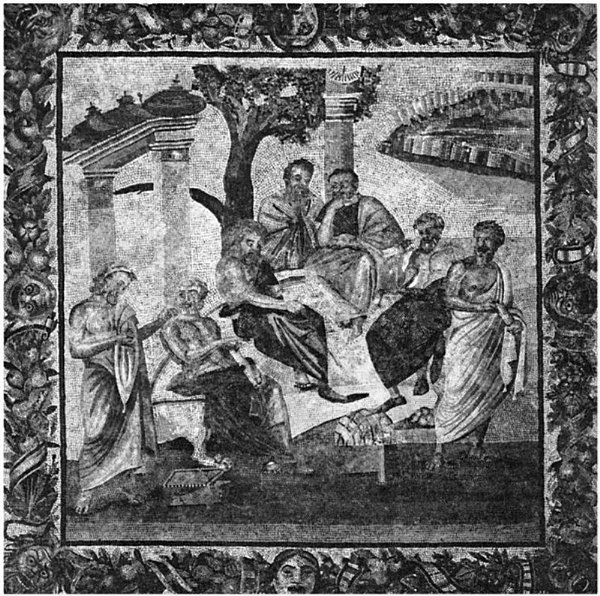
Plate 7.1 A new combination of mind and body. An ancient Roman mosaic allegedly depicting Plato’s Academy, showing a number of scholars engaged in discussion, at the National Museum of Naples. It was this academy which inspired the humanist, neo-Platonist group who gathered around Marsilio Ficino working at Florence in the fifteenth century. Looking at these well-made men, who had, obviously, been the classical world’s leading lights, many humanists realized that the body, too, was God’s gift.
Source: Centre for Art Historical Documentation, Nijmegen, the Netherlands
However, one should remember that new ideas always tend to become fashionable. The same individuals who had themselves depicted ‘true to life’ – in the so-called ‘warts and all’-mode – also wanted to conform to the new aesthetic ideal. The Florentine ruler, Lorenzo de Medici, patron of painters and writers and himself a poet and thinker of some merit, allowed his face to be modelled from life by Michelangelo, who was the sculptor, while his body was cast into the mould of an ‘ideally’ proportioned Greek god. Therefore, one must be wary in accepting as ‘real’, or realistic, what was produced in painting and sculpture, as European art historians tended to do in the nineteenth and the first decades of the twentieth century. There certainly is more and also more conscious realism in Renaissance art than in the preceding period. However, both sculpture and painting were subject to normative and even moral rules and ideals, as well as, simply, to changing fashions; these were different from but no less compulsive than the mainly religious conventions of the preceding age. Thus, there was a definite tendency to present the world and everything in it rather more harmoniously than it really was; in particular, geometric proportions were seen as harmonious and, hence, ideal, reflecting the innate ideal-ness of the universe, and, therefore, they had to be strictly adhered to because only in doing so could real art be produced and nature, which art was supposed to imitate, perhaps be improved.
Nor should we forget that by far the majority of paintings and sculptures still served religious purposes, and were composed in such a way as to elicit an appropriate devotional reaction in the viewers, whether these were private owners contemplating a picture of the Madonna and her child, by the Italian painter Raphael, in the solitude of their bedroom, or the flocks of the faithful who attended mass and looked up at the huge frescos, mosaics and statues that adorned walls, ceilings and cupolas in an angel-crowded vision of heaven.

ROME, AD 1538: MICHELANGELO ANALYSES ITALIAN ART
In the year 1538, the Portuguese miniature painter Francesco de Hollanda was present at several conversations in which Michelangelo took part as well. The notes de Hollanda made of the artist’s sayings are among our more precious testimonies of the painter’s ideas. Though, at first, one might think that Michelangelo is taking a rather narrow, chauvinistic stance, in the end it is clear that he is actually defending a style, in fact the only style, namely that of ancient Greek painting preserved and now even resurrected in Italy.
Elsewhere, de Hollanda specifically records Michelangelo’s words about Flemish painting, revealing the master’s opinions not only on the ‘sublime’ rather than realistic characteristics of true, i.e. Italian painting, but also about the relationship between certain aspects of taste and aesthetics and persons of a specific class or sex.
Only works which are done in Italy can be called true painting, and therefore we call good painting Italian, just as if it were done so well in another country, we should give it the name of that country or province. As for the good painting of this country, there is nothing more noble or devout, for with wise persons nothing causes devotion to be remembered, or to arise, more than the difficulty of the perfection which unites itself with and joins God; because good painting is nothing else but a copy of the perfections of God and a reminder of His painting. Finally, good painting is a music and a melody which intellect only can appreciate, and with great difficulty….
And I further say … that of all climates or countries lighted by the sun and the moon, in no other can one paint well but in the kingdom; and it is a thing which is nearly impossible to do well except here, even though there were more talented men in the other provinces, if there could be such, and this for reasons which we will give you.
Take a great man from another kingdom, and tell him to paint whatever he likes and can do best, and let him do it; and take a bad Italian apprentice and order him to make a drawing…. You will find, if you understand it well, that the drawing of that apprentice, as regards art, has more substance than that of the other master…. Order a great master, who is not an Italian, even though it be Albrecht [i.e. Dürer], a man delicate in his manner, in order to deceive me … and I assure You that it will be immediately recognized that the work was not done in Italy, nor by the hand of an Italian. I likewise affirm that no nation or person (I except one or two Spaniards) can perfectly satisfy or imitate the Italian manner of painting (which is the old Greek manner) without his being immediately recognized as a foreigner…. And if by some great miracle such a foreigner should succeed in painting well … it will be said that he painted like an Italian. Thus it is that all painting done in Italy is not called Italian painting, but all that is good and direct is, for in this country works of illustrious painting are done in a more masterly and more serious manner than in any other place. We call good painting Italian, which painting, even though it be done in Flanders or in Spain (which approaches us most) if it be good, will be Italian painting, for this noble science does not belong to any country, as it came from heaven; but even from ancient times it remained in our Italy more than in any other kingdom in the world, and I think that it will end in it….
The painting of Flanders will generally satisfy any devout person more than the painting of Italy, which will never cause him to drop a single tear, but that of Flanders will cause him to shed many; this is not owing to the vigour and goodness of that painting, but to the goodness of such devout person; women will like it, especially very old ones, or very young ones. It will likewise please friars and nuns, and also some noble persons who have no ear for true harmony. They paint in Flanders only to deceive the external eye, things that gladden you and of which you cannot speak ill, and saints and prophets. Their painting is of stuffs, bricks and mortar, the grass of the fields, the shadows of trees, and bridges and rivers, which they call landscapes, and little figures here and there; and all this, although it may appear good to some eyes, is in truth done without reasonableness or art, without symmetry or proportion, without care in selecting or rejecting, and finally without any substance or nerve.18
Increasingly, the studium humanitatis and the general cultural climate of the Renaissance produced texts that showed this deepening interest in the essence of what made man a more civilized, humane being and which were therefore called litterae humaniores. Mostly, these were the old texts, written by classical authors in Greek or Latin. However, new texts were now designated ‘humane texts’ as well, whether they were carefully composed in the purified Latin of the fifteenth and sixteenth centuries or in Europe’s new cultural language, the Italian of Tuscany, the language of Petrarch (1304–74), the writer who was considered a real humanist, and was famous for his beautiful sonnets immortalizing his beloved Laura.
The subject matter an author chose was actually less important than his ability to show that he understood what man was and could achieve, both as an individual and as a member of society. This resulted in a broad variety of works. Inevitably, in a day and age that so valued both realistic observation and the expression of the self, the new genre of the autobiography was born in humanist circles. Its most splendid early example is surely the hundreds of pages that the famous goldsmith and sculptor, Benvenuto Cellini (1500–71), began to write in 1558, telling the story of his own life. It is a secular, individual and realistic work par excellence. His ‘I’ takes central stage – indeed, life is often presented as drama in autobiography which, of course, should warn readers not to accept it as objectively true. In Cellini’s ‘Vita’, everything is seen and described from his perspective. His readers are forced to see the world around him through his eyes, not according to all sorts of idealizations which Church or State required of people, but, at least from his own point of view, realistically, with all the deception and filth he found in the world but also the beautiful, mostly made by man himself, that exists in it.
Thus, Cellini writes of the necessity to record one’s deeds, analyses his own character, unwittingly lets us know that, being a city man, he had no idea of the geographical layout of the surrounding countryside, tells of the ancient monuments that inspired him, gives an idea of the sense of life and movement in the work of Michelangelo Buonarotti, graphically describes his quarrels with his competitors, and so on:
No matter what sort he is, everyone who has to his credit what are or really seem great achievements, if he cares for truth and goodness, ought to write the story of his own life in his own hand; but no one should venture on such a splendid undertaking before he is over forty. […]
Like the raw young man I was I answered my poor, distressed father back, and, taking the few wretched clothes and the odd couple of coins that I had left, went out of the house and began walking towards one of the city gates. I had no idea which gate was the one for Rome, and I ended up at Lucca, and from Lucca I went on to Pisa. I went to see the Campo Santo while I was at Pisa, and there I discovered many beautiful antiques, that is, marble sarcophagi. In various other parts of Pisa I came across many other ancient works, and I used to study them assiduously whenever I had time off from work. […]
[Michelangelo] depicted a number of infantrymen who because of the summer heat had gone down to bathe in the river Arno: he caught in his drawing the moment when the alarm is sounded and the naked soldiers rush for their arms. He showed all their actions and gestures so wonderfully that no ancient or modern artist has ever reached such a high standard. […]
I grew so angry that I was utterly determined to make mischief, and anyway I am rather hot-blooded by nature…. I left … fuming with rage and rushed back to my workshop. There I seized hold of a stiletto and hurried round to where those enemies of mine lived. I found them sitting down at dinner, in their home above the shop, and as soon as I appeared that young Gherardo who had started the quarrel hurled himself on me. I stabbed him in the chest, piercing his doublet and jacket right through to the shirt … and I shouted out: ‘You traitors, today I’m going to kill the whole bunch of you’.19
At the other end of the broad spectrum of humanist writers, one finds, for instance, Niccolò Machiavelli (1469–1527), a Florentine scholar, who, in his famous 1513 tract Il Principe (The Prince), analyses man’s role in that segment of society which is called politics. Machiavelli, too, is secular and a realist. He shows that, in political life, the will to power is a dominant principle. Though often couched and cloaked in nice words of a religious, ethical or social nature, upon closer reading it reveals itself in all its nakedness as pure self-interest:
Everyone perceives how praiseworthy a king is who keeps to his word and is candid instead of sly in political actions. Yet the experience of our time teaches us that those rulers who gave their word easily have come far, who knew how to deceive people with their sly tricks and, finally, they have gained the upper hand over those who lived honestly….
It is therefore clear that a sensible ruler cannot and may not stick to his word if this is to his disadvantage and if the reasons why he gave his word are no longer valid…. A ruler therefore does not necessarily have to have all the good qualities which I outlined earlier; he only has to give the impression that he has them…. He must appear sympathetic, trustworthy, without guile, and pious, and actually be like that. But at the same time his character and nature must be such that, if he has to be the opposite, he can also behave that way…. He must be flexible, following fate and circumstance. In short, he must not deviate from the way of goodness, as long as that is sensible, but he must know how to be bad when necessary.
Education was among the most important institutions through which the classical cultural tradition was transmitted. In a letter to one of his pupils, the humanist scholar Leonardo Bruni (1370–1444) explained the essence of a good education:
Devote Yourself to two kinds of study. In the first place, acquire a knowledge of letters, not the common run of it, but the more searching and profound kind in which I very much want You to shine. Secondly, acquaint Yourself with what pertains to life and manners – those things that are called humane studies because they perfect and adorn man. In this kind of study Your knowledge should be wide, varied, and taken from every sort of experience, leaving out nothing that might seem to contribute to the conduct of Your life, to honour and to fame. I shall advise You to read authors who can help You not only by their matter but also by the splendour of their style and their skill in writing; that is to say, the works of Cicero and of any who may possibly approach his level. If You will listen to me, You will thoroughly explore the fundamental and systematic treatment of those matters in Aristotle; as for beauty of expression, a rounded style, and all the wealth of words and speech, skill in these things You, if I may so put it, borrow from Cicero … for I would wish an outstanding man to be both abundantly learned and capable of giving elegant expression to his learning….
What riches will compare with the rewards of these studies? Perhaps the study of law will more easily get You a job, but it is a long way behind those others in utility and dignity. For they combine to produce a good man than which nothing can be thought more useful; the law does nothing of the sort.20
Inevitably, trade and travel, military conquest and diplomatic contacts linked the new culture of the Italian towns and courts with the world beyond. The new culture was admired and imitated all over Europe although, of course, by the better educated and the wealthy only. Both south and north of the Alps, Humanism and the Renaissance were elite phenomena. But few of the new ideas and thoughts filtered down to the ordinary man who, after all, could not read or write the bonae litterae and, therefore, continued to be semi-barbaric because, in the eyes of this elite, he lacked the means to fully realize his virtù.
Humanism and the Renaissance: Italy and beyond
In spite of what many Italians like to think, the new culture was certainly not limited to their peninsula. From Poland to Portugal, from Sweden to Switzerland, people wrote, painted and built, aiming to bring European, Christian civilization to a new flowering by confronting it with its roots, by a return to its sources. These activities took place within institutional frameworks comparable to those of Italy, namely in the palaces of the rulers, in academies sponsored by princes or nobles, but also in the universities they founded.
In Bohemia, the Emperor Charles IV (r. 1346–78) encouraged both the Latinization of his court, and the purification of German. In 1348, he also gave his realm its first university, at Prague, basing it on the examples of Bologna and Paris. In his great castle, Karlstein, frescos were painted in the style of Giotto. Meanwhile, his friend, the Polish King Casimir III (r. 1353–70), followed the same policy, establishing a university in the capital, Cracow, in 1364. At Vilnius, in Lithuania, and at Visegrád, in Hungary, the kings built huge Renaissance-style palaces that became the centre of a court culture that was also a learned culture.
At the same time, all over Europe learned culture continued to flourish in the oldest centres, the monasteries and their libraries. There, too, the monks explored new ways of thinking about the world, and representing it in words and in images. Importantly, however, humanist learning and Renaissance art were also popular with new milieus, the urban elites, who delighted in the idea that, modelling their own vernacular language on the classics, they could give it a new dignity as, of course, they now aimed to give a new dignity to their towns and their own houses by building and decorating them in the new style.
Meanwhile, while the fifteenth century saw the peak of the Renaissance and Humanism in Italy, during its final decades a complex mix of factors began to make cracks in the material basis of the new culture – for, of course, a material basis it had and, indeed, without it the culture would not have flourished. The lucrative trans-Mediterranean trade, the basis of the prosperity of most Italian cities and states, gradually collapsed as a result of disruptive conflicts between the major powers of the Islamic Near East that affected the caravan trade in the Levant and, inevitably, led to sharply rising prices of the oriental products that were the staple of Italian commerce; as the value of silver, up until then the main currency in the Mediterranean, had been steadily rising for a long time because of problems in central Asia, where most of that precious metal came from, the economic climate deteriorated. Also, many Mediterranean port cities had for a long time looked longingly at the rich trade and the even more promising gold that seemed to be for the taking in the Maghrebine port towns. Now, partly as a result of the discovery of America and of alternative routes to Asia, around the Cape of Good Hope, the economic centre of Europe slowly but definitely shifted from the Mediterranean to the Atlantic Ocean, where, of course, great wealth had been accumulated already by the French, Flemish and Dutch towns through commerce and industry. The latter, moreover, were able to produce the consumer goods Europe sought at more competitive prices than Italian artisans could.
At the same time, the Italian peninsula became the most important pawn in the fight for political hegemony in Europe between the Habsburgs, who ruled in Spain, Austria, the German states and in the 17 Netherlands as well as in southern Italy, and the kings of France who desperately sought to break Habsburg domination. In 1494, French soldiers invaded northern Italy and caused havoc there. A horde of German mercenaries in the Habsburg service followed in 1527, even destroying Rome, the symbolic centre of Italian and indeed European culture, both as the papal capital and as the ‘eternal city’.21
Yet, although some historians disagree, Italy, or rather the new forms of culture that had developed there, did survive these blows.22 In the course of the sixteenth and early seventeenth centuries, Italian artistic culture still manifested itself in notable products, especially in the so-called baroque period, up until c.1660. Michelangelo Buonarotti, besides being a great painter and sculptor – and, often forgotten, a notable poet, too – was the architect who, after decades of changing inputs by a range of other people, produced the final design for a new St Peter’s, which after 1,000 years was to replace the great basilica first erected in the fourth century by the Emperor Constantine over the reputed sepulchre of the Apostle Peter, the first pope. With its mighty cupola and its new-fangled architecture in the classical vein, it provided Christianity with an effective symbol of ecclesiastical, papal power precisely at a time when criticism of the Church’s teaching was ever more openly voiced. Meanwhile, Giovanni Pierluigi da Palestrina composed his beautiful masses for the papal Sistine Chapel, which had also been decorated by Michelangelo with his awesome vision both of creation, in the ceiling fresco, and of the Last Judgement, on the altar wall. The much-applauded writer Torquato Tasso produced such great epic poems as Gerusalemme Liberata (Jerusalem Delivered), which took their inspiration from the stories of magic and knightly chivalry generated by the Crusades. In the last years of the sixteenth century, the first opera was composed by a group of humanists in Florence, who wanted to revive the classical Greek ideal of tragedy which, they understood, had always been accompanied by music. Soon, at the ducal court of Mantua, Claudio Monteverdi not only delighted his audiences with his madrigals extolling both earthly and divine love, but brought operatic music to its first apogee in such seminal pieces as Il ritorno d’Ulisse in Patria and L’Incoronazione di Poppea – the subject matter taken, obviously, from Greek and Roman history respectively. And yet, the Italian cities and states gradually lost the pre-eminently active role they had played in earlier times, even though the whole of Europe continued to look to and admire the peninsula not only as the cradle of European civilization but also as the place where it had been born again after what were now rather disparagingly described as ‘ages of darkness’ – the ‘middle ages’, the period between the brilliant culture of the ancients and its newly reconstructed version.
In the sixteenth century, Renaissance and Humanism increasingly became manifest north of the Alps as well. Spain became enormously wealthy through its new American colonies. In the German states, the economy prospered through the distributive trades which connected central Europe with the big trading cities along the North Sea, and in England and the Netherlands the economies were given a new impulse from the textile industry and grain trade which had to feed and clothe Europe’s population, now growing again after the great economic and demographic crises of the fourteenth century. Thus, the material conditions for a new flowering of culture were abundantly present there. Its effects were soon felt, the more so because in transalpine European thought, too, ideas about the relations between man, the world and God had changed dramatically.
From the late fourteenth century, Church authorities had impotently watched as some of the more intellectual and spiritual of their flock, both men and women, chose to live an exemplary Christian life in the world rather than enter the closed existence of the monastery that kept them under Church control. Thoughts about man’s own individual relationship with God, and his individual religious and therefore also social responsibility in the world, were now less controllable. No longer safely confined within monastic walls, these new ideas began to spread. One movement advocating the new thinking, significantly called the Devotio Moderna (Modern Devotion), became quite influential, especially in the Netherlands and the neighbouring German states.23 One of the most powerful writers in this context was Thomas Haemerken, better known as Thomas à Kempis (c.1380–1471), whose text De Imitatione Christi (On the imitation of Christ), offered many believers a new, more simple and personally intense view of Christianity – it became Europe’s second most popular book, after the Bible, of course. Precisely because this group expressly aimed to raise people’s awareness and chose education as the most effective means of communication, it posed an outright threat to established culture. Indeed, the Church considered the members of such groups to be much more dangerous than the scientists who, with their complex arguments, might sow the seeds of doubt but, after all, would only ever reach a handful of colleagues.
In the fifteenth and early sixteenth centuries, the educational institutions of the Modern Devotion produced many humanists. Like their Italian colleagues, learned men, north of the Alps, also began to focus on the classical Greek and Roman texts and on the accuracy of the holy book of the Christians. Desiderius Erasmus, mentioned earlier, was easily the most famous of these northern European humanists.24 In a series of tracts, he tried to lay down the rules for an educational system that, while remaining devoutly Christian, was yet imbued with the critical spirit of Humanism. Indeed, one should not forget that, contrary to what has often been suggested, most people living the culture of Renaissance and Humanism did not display a ‘heathenish’, pagan spirit at all but remained firmly tied to a view of man and the world as, essentially, redeemable only by God. Looking at Hieronymus Bosch’s painting The Prodigal Son, probably finished in 1510, we see man – the prodigal son – depicted as a free agent who, while looking back on scenes of a past life of waste and sin, still turns towards the future, the possibility of salvation through the cross, which is the painting’s emphatic centrepiece.
The Church was fully aware that the new spirit of criticism and free will that now pervaded Europe had indeed created a new concept of man and thus was, if slowly, giving birth to ‘the new man’. As long as this revolutionary view of man and the world, of man and God, was entertained by and spread among only an elite, via education, via texts, pictures and illustrations, the danger was small. But changing perceptions of man can also affect and change large groups of people if the appropriate means and channels of communication are available. It was precisely in this field that the Church’s continued power, its supremacy over the people of Europe, was really threatened.
Dossier: European music
Today, a site that evokes memories or histories might not only be a real location, but also a virtual one. Thus, a television moment can be a ‘site of culture’. Every year, millions of Europeans listening to one of the many regular Eurovision broadcasts will recognize its opening tune – a triumphant trumpet voluntary – and assume it is ‘the’ European song. Yet they will be hard put to name its composer. He was a seventeenth-century Frenchman, Marc-Antoine Charpentier, who wrote it as a prelude to a Te Deum commissioned to celebrate peace after one of the wars fought by his belligerent master, Louis XIV.
When asked about the official European hymn, a few connoisseurs might say it is Ludwig van Beethoven’s ‘Ode to Joy’ – ‘An die Freude’ – composed in 1823 as the choral finale of his ninth symphony. Yet they may not be able to name the man who wrote the words, which begin with the highly political vision that ‘Alle Menschen werden Brüder’ (‘All men should be brethren’). These lyrics are not Beethoven’s, but were taken by him from a poem written in 1808 by the German poet Friedrich Schiller. Interestingly, however, the European statesmen who, in 1972 and, again, in 1985, decided to adopt the Beethoven melody, also decided not to use the text, with its message of liberty, freedom and equality, that had been the ideological reason to select it in the first place, their – not openly voiced – argument being that after World War II a German poem could not very well be the basis of an all-European statement.
In short, though these two pieces of music are performed at what purportedly are specifically European moments, they were not written for such occasions which, obviously, did not exist at the time. However, the question that concerns me here is, whether they still represent something that may be called ‘European music’?25
Most anthropologists and historians will accept that music is one of the cultural elements common to all societies, from their very beginnings. Another important point is that while there may have been differences between the music performed during official occasions and that which was commonly practised by the people, the difference between ‘classical’ and ‘popular’ is a culturally complex one that has certainly not existed always and everywhere. In Europe it dates only from the eighteenth century.
As to the roots of the music created in what was later termed Europe, these, according to some, lay in ancient Egypt. Subsequently, the Greek musical tradition – perhaps starting with the Homeric epics, which were sung rather than recited – was inspired not only by the culture of the pharaohs, but also by music as performed in the ancient Near East. In their turn, the Romans, who used music for a wide variety of both private and public occasions, employed Greek models, modes and instruments.
From the fifth and sixth centuries onwards, all over Europe local and regional traditions of ‘popular’ music must have existed. Indeed, we know that in the north-west sagas and other epic poems were sung by bards, who even used musical notation – in rune script – to ensure the transmission of a correct execution. From the eleventh century onwards, in southern France there were noble ‘troubadours’ and travelling minstrels, and, in the German lands, the ‘Minnesinger’ performed secular songs, mostly love themes.
However, the dominant, all-European form of music came to be that of the monophonic chant which accompanied the rituals and ceremonies of the Church. Interestingly, this does not seem to have Graeco-Roman roots but rather, perhaps not surprisingly, originated in the Jewish tradition of antiphonal psalmody. Though later ages have credited this liturgical music to the sixth-century Pope Gregory ‘the Great’ – hence the term ‘Gregorian chant’ – there is no proof for this assertion. Nowadays, we rather think it was first codified as an eighth-century Carolingian synthesis of the ‘Roman’ tradition of church music and the different practice which had developed in (Frankish) Gaul.
For a long time, the Church would only allow the human voice to praise God, banning the use of instruments. Nevertheless, a need for variety, for more complexity of sound was, apparently, felt. Emotional, psychological? There seems to be no real explanation. Slowly, both the organ and additional supporting voice-lines were introduced and became part of the musical palette, resulting, by the tenth century, in harmonic music which, obviously, added splendour to Church ceremonies. Yet more splendour was achieved by polyphony, which means that several, independent melodic lines – vocal and sometimes also instrumental – are heard simultaneously. For a long time people believed this was a purely European development, but polyphony occurs in many of the world’s musical cultures. Nevertheless, its further development to ever greater complexity both vocal and instrumental is peculiar to Europe.
During the Middle Ages, the interplay between Church music and the secular world increased with, for example, battle, love and street songs providing inspiration for the melodic repertoire of the mass, of hymns, etc. Though in the thirteenth century this provoked a plea for a return to the transparency and spirituality of early Church music – perhaps not incidentally coinciding with a general tendency to ‘reform’ the Church in the spirit of the early Christians – in the fourteenth century polyphony won. Now it also became the medium for purely secular music performed in princely courts, for example in France and Burgundy, in noble households and in the milieu of the wealthy burghers. The so-called ‘Ars Nova’, the new way of making music, has been linked to other forms of cultural change occurring at the same time, such as the introduction of perspective in painting. It definitely enabled singers to achieve greater ‘depth’ and expressiveness in their treatment of text-based music. Its most important representative is Guillaume de Machau(l)t (c.1300–77), who was a courtier and a poet as well as a composer, and whose oeuvre contains both love songs and the famous ‘Messe de Nostre Dame’, first sung in Rheims cathedral during the 1360s.
The spreading of ‘Ars Nova’ could not have been possible without another important, though again not uniquely European development, viz. the gradual refinement of systems of musical notation. Unlike improvisation, this enabled music to be uniformly sung and played wherever a manuscript copy of the score was available and, moreover, to be transmitted to the next generation. Such systems had existed in antiquity, and had re-emerged in Carolingian times, when symbols were introduced to indicate tone movements and relative duration for plainchant. During the twelfth century, staff notation further systematized musical performance.
The rediscovery of the culture of antiquity in the Renaissance brought, amongst other things, the notion that their much-admired plays had been sung rather than spoken. With other tendencies towards the melodramatic already evident in, for example, the fifteenth-century musical presentations of scenes from the life of the Christ introduced in processions, in the late sixteenth century this resulted in the genesis of two, closely related forms of staged musical drama. While the opera’s text developed a secular story line, almost always with a love interest, the lyrics of an oratorio – so-called because some of the earliest ones were written for, and performed in a hall of the Roman headquarters of the Order of the Oratorians – dealt with Biblical or other religious topics. Again, these forms are not specifically European, since operas were performed in, for example, Tang China as well. Meanwhile, outside the realm of the Church instrumental music developed, sometimes combining ever more different instruments in a ‘concerto’, a harmonically constructed composition.
Essentially, subsequent developments show variations on this theme. Church music became ever more elaborate, both in settings of the mass (sometimes with massively polyphonic proportions of not only four but five, six, seven or more parallel vocal lines), of hymns and of the oratorio, which, in Protestant countries, specifically resulted in so-called Passion music such as, for example, that composed by Johann Sebastian Bach.
After its beginning in the palaces of late Renaissance Italy, opera became immensely popular all over Europe, not only among the elite but among the wider population as well. Indeed, with its often inventive and spectacular stage-setting, it was the obvious predecessor of what, in the twentieth century, became the romantic, epic film. Interestingly, European operas often were used to convey political messages such as, in the seventeenth century, the legitimacy of princely rule and, in the nineteenth century, the ideals of nationhood; but then again, early Chinese opera was certainly political as well.
Finally, instrumental music showed an ever greater variety of forms, between the earliest, single-instrument pieces for, for example, the flute, lute, violin, or keyboard and, by the late eighteenth century, the multi-instrument symphonies of Haydn and Mozart. This variety was, perhaps, uniquely European.
This picture did not essentially alter during the nineteenth century. Yet, when the bourgeoisie became both more numerous and more prosperous, its craving for all kinds of culture, music included, increased as well. Though there had been public opera houses in the previous centuries, now public concert halls were also opened. As these grew in size, this necessitated both the enlargement of the orchestra and the increase of the pitch of the individual instruments to meet changing acoustic demands. This, in turn, encouraged composers to indulge in the writing of ever more grandiose pieces, such as Dame Ethel Smyth’s ‘Mass’, in 1893 performed by more than 1,000 musicians in London’s Royal Albert Hall, which was filled to capacity with an audience of 12,000. Interestingly, another such work, Gustav Mahler’s eighth symphony, was, much to his chagrin, immediately nick-named ‘Symphony of the Thousand’ on its first performance in Munich in 1910. Somewhat paradoxically, the composer felt this reduced his work to a ‘Barnum and Bailey piece’. This, of course, referred disparagingly to the music performed in circuses both in the USA and in Europe, though that music itself often followed developments in or took its themes from the concert hall. So did, a few decades later, film music, which also showed symphonic tendencies, or was even composed for the new medium by well-established composers: some of the films created by the Russian master-cinematographer Sergei Eisenstein in the 1920s and 1930s were set to music by Sergei Prokofiev (1891–1953).
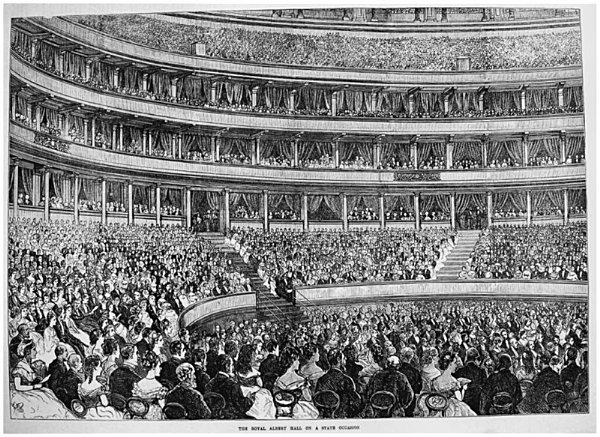
Plate 7.2 The interior of one of Britain’s largest nineteenth-century musical venues, London’s Royal Albert Hall, during a state occasion in 1874.
Of course, outside the opera house or the concert hall or, for that matter, the music room of the private residences of the wealthy, there was a vigorous musical life as well, to accompany all kinds of festivities both in rural and urban communities, consisting mostly of songs and ballads performed in taverns or village halls but also in the music halls that became a feature of most larger towns. Inevitably, and, perhaps, specifically because the middle classes, concerned about their status and power, wanted to distinguish their ‘high-brow’ culture from that of the dangerous masses with their ‘low-brow’ or even ‘kitsch’ tastes, a distinction was now articulated between ‘art music’, for the elite, and ‘popular music’. Whereas the latter was soon the most commercially interesting genre, the boundaries between the two remained diffuse.
The introduction of radio and the gramophone helped to greatly enlarge the potential public for both popular and elite music. Moreover, from the early twentieth century onwards, in music as in the other arts, ‘mass’ culture has often merged with ‘elite’ culture, either through subconscious cross-influences or because composers of ‘serious music’ feel the need to bring the two together, to somehow break down barriers that, they argue, are conceptually non-existent and, because of their exclusionist propensity, socially dangerous. On the other hand, in the 1960s and 1970s, rock bands such as the Moody Blues and Genesis, both British, created a sub-genre called symphonic rock; the latter also crossed borders with concerts that were almost operatic experiences, incorporating innovative stage design, pyrotechnics, extravagant costumes and on-stage stories.