
Economic and technological change and the definitive formation of the ‘modern’ state
The fifteenth century saw a changing world in Europe, which experienced momentous economic progress, after a period of prolonged depression. In the twelfth and thirteenth centuries, a serious crisis had developed partly because the temperature on earth dropped slightly – the phenomenon of the ‘small ice age’. The climate had become cooler and wetter, with a sharp dip in the fourteenth century. The abandonment of settlements and the inundation of coastal plains were but a few of the visible manifestations. Then a succession of very wet years resulted in poor harvests, in cruel famines, in malnutrition and, soon, in widespread disease – typhus and malaria. All this caused long-term chaos in the still largely agricultural economy. In a spiral of undernourishment, growing child mortality and a decreasing birthrate, a demographic decline set in, not least because in this situation the Black Death – first attested in Messina, in 1347 – and other epidemics caused hundreds of thousands of deaths, which many, not knowing any of these causes and effects, simply blamed on divine anger at human depravity.1
During the fourteenth century, however, the climate improved, and by the beginning of the fifteenth century, the epidemics had subsided and economic and social disruption had been overcome. People, desperately trying to rebuild their personal lives as well as make up for demographic losses, started marrying earlier and produced more offspring. Though effects differed from region to region and, indeed, between urban communities and the rural countryside, by the beginning of the fifteenth century, western Europe in particular began to experience a period of spectacular economic growth. The agricultural sector expanded, the population increased, and surplus production resulted in an extension of regional and interregional trade; in consequence of all this, the fiscal base of governments was considerably broadened. The complex structures of expanding states needed to be managed. Fiscal systems were organized on the basis of mathematical calculations, armies and navies were built like perfect machines in which soldiers functioned according to rules of combat that were planned mathematically as well. Besides, learning, science and technology were increasingly used to maximize commercial and thus state income.
Many craftsmen and scientists whose qualities enabled them to realize all the state’s new needs offered their services to Europe’s princes. They were men – for in this group, few women participated – who now thought about quantifiable results first, and about the old, religious-metaphysical questions second, if at all. Slowly, a chasm emerged between those for whom knowledge and wisdom were forms of speculation about the relation of man to nature and the supernatural and those who only sought to ‘technically’ control man and nature. It was a split that in the seventeenth-century debate on the quality of culture was translated in terms like ‘old’ and ‘new’, ‘ancient’ and ‘modern’. Actually, the ‘reasonable’, rational explanations seemed to hold the future, given that they were so obviously successful in the creation of power and wealth. The branches of knowledge which produced these explanations therefore meant ‘cultural capital’ for those whose profession it was, providing them with an entrance to the world of power, to a position in society which otherwise could only be attained by those with money or of noble birth.
During the fifteenth and sixteenth centuries, states in Europe, building on the foundations laid from the twelfth century onwards, definitively acquired the structure that still characterizes them now. In a process of alternately violent and bloody interaction or peaceful negotiation between the rulers, the various aristocratic power groups and the patrician elites of the major towns, most states developed into complex, centralized bureaucracies, a cultural phenomenon, a ‘work of art’ even, created by human hands as were the artistic and literary products of the Renaissance.
If only because the process of state formation was so often painful, many literate Europeans increasingly stressed the necessity for a rational, uniform legal system and for a clear circumscription of state power. They based this conviction not only on their reading of classical texts on political theory but also on their empirical observation of the reality of their world, a world of states eager to extend their power internally and externally. Hence, Roman Law was elaborated as a system guaranteeing state subjects at least some minimal, inviolable rights while at the same time stressing the supreme authority of the monarch, and complex ideologies were devised to legitimize a prince’s right to rule while yet safeguarding the liberties of the subjects. Mostly, these referred to the divine origin of princely power but, increasingly, secular contract law was invoked to enhance the legality of the relationship between the State, embodied in the prince, and the subjects.
In the sixteenth century, Niccolò Machiavelli had already opined it was precisely the many relatively small states into which Europe was divided that gave this part of the world its virtù.2 These states proved to be stronger whenever the old ruling elites – clergy and nobility, as well as state bureaucracy – realized that a properly functioning economy was the necessary basis of power, that a relatively strong middle class was the principal bearer of such an economy, and that it must therefore be allowed a certain say in public matters and even in politics. These ideas recurred in political analyses produced during the following centuries. The extent to which the ideas expressed therein – state control over the economy and the empowerment of the middle classes – were actually realized in the various states of Europe would greatly influence not only the development of political institutions but also of culture, in each individual state as well as in Europe at large until, finally, the revolutions of the late eighteenth and early nineteenth century brought about both the victory of the central State as well as of the middle classes as its prime power group.
Meanwhile, in 1752, more than two centuries after Machiavelli, François-Marie Arouet, better known by his pen name Voltaire, looking back upon the history of Europe in the seventeenth century in his Le Siècle de Louis XIV (The Age of Louis XIV), noted that:
all [states] resemble each other. They all have the same religious foundation, even if it is divided into different denominations. They all employ the same principles of public law and policy, which are unknown elsewhere in the world.3
Voltaire’s contemporaries, such as Charles de Montesquieu and Adam Smith, looking at the past of their world, probed even deeper in trying to explain the ways in which Europe functioned and exercised its power. They, too, noted the fact of these comparatively small states, with their rapidly evolving production systems, which they ascribed to their continuous competition but also to their inevitable, creative communication. They saw Europe as a world unified by Christianity, but with religion not being overly powerful. Nor, for that matter, was this European world dominated by one secular ruler only; indeed, the numerous princes who embodied the various states were not all-powerful either. Moreover, though these authors were critical of the situation in many European states, they especially admired the balance which had been achieved in the Dutch Republic and in England, where liberty, equality and wealth, the main elements of a ‘virtuous’ state, contributed to their prominent position both in Europe and in the wider world.
By and large, later historians have supported these analyses and have named the phenomenon of the centralized, competitive states and the elaboration of public law as some of the most important formative elements in the establishment of the ‘wonder’ that was Europe.4
All these developments were enhanced if not made possible in the first place by technological inventions that had far-reaching economic, political and cultural effects. Their significance is made clear in a revealing statement by the famous English statesman,philosopher and scientist, Sir Francis Bacon (1561–1626). In 1620, he published his Novum Organum (The New Instrument), its very title referring to Aristotle’s celebrated work on the nature of science, the ‘Organon’. In his introduction, Bacon says:
We should note the force, effect and consequences of inventions, which are nowhere more conspicuous than in those … which were unknown to the Ancients, namely, printing, gunpowder, and the compass. For these … have changed the appearance and state of the whole world.5
Bacon not only ascertains which inventions or rather instruments Europe had adopted, or discovered, to now see them bring about cultural and social changes, but also establishes that these instruments were unknown in the ancient world and that they are, therefore, the achievements of contemporary Europe. In this, he implicitly distances himself from the widely held belief of the humanists that no further progress would be possible once the level of civilization of the ancient Greeks and Romans had again been reached: against the ‘Ancients’, he positioned himself as a ‘Modern’, someone who believed in the power of contemporary society to perfect itself.
From manuscript to typescript
Indisputably, Christian Europe changed radically through the influence of two adjoining cultures, the Islamic and the Byzantine, which intellectually both hailed back to the ancient Graeco-Roman culture whence all three had originated. The classical tradition, the ‘great tradition’, i.e. not only the norms and values but also the outward forms of the culture of Greece and Rome, certainly became more dominant in the fourteenth and fifteenth centuries, both among the monks and the warriors, the two traditional ‘orders’ who still formed the backbone of Europe’s cultural elite, and among the new urban aristocracy. Yet the cultural forms we now categorize by the terms Renaissance and Humanism would never have acquired their enduring significance if another development had not taken place.
Culture exists thanks to communication and even is, to a large extent, communication. If people do not share their thoughts with others, these thoughts will not endure. They will never be shaped or become manifest as recognizable utterances, which then mark a group of people as sharing common characteristics, as sharing a culture.
Of course, the spoken word was and still is probably the most important mode of communication, but what is said is transient and does not last. What is written more easily survives the moment it was first thought or spoken. It begins a life of is own, becoming transferable information, and moreover the basis for recognizing common thoughts and behaviour. That which is written may also may turn into knowledge, a corpus of information which, by somehow being deemed important enough to be passed on from generation to generation, thus continues to exist. This was acutely felt by the Graeco-Byzantine scholar, Johannes Bessarion (1403–72) who fled to Italy and became a formative influence on humanist culture. In 1468, he donated his enormous collection of manuscripts to the city of Venice, on condition that they be made available to the public. In the letter presenting his library to the Doge, he writes of his books:
They live, they converse with us, they teach us, they form us, they comfort us, they point us to that which we have forgotten…. So great is the power of books, their value, their glory, yes, even their divine force, that we would all be awkward and ignorant if books did not exist; there would be no knowledge of the past, no examples, no learning about divine and human things. The tombstone which covers the body of man would also cover up his name…. After the fall of Greece and the lamentable captivity of Byzantium, I, with unprecedented intensity, used all my strength, all my care, all my material possibilities to trace Greek texts…. And so I have collected all the books of the Greek philosophers, especially the rare ones, which are difficult to find.6
Bessarion’s letter not only indicates the prime importance of texts as carriers of culture, but also shows that in his time ‘books’ were rare. Until late in the fifteenth century, handwritten texts were the only vehicle of textual information. Moreover, texts were rare also because they were expensive: written, by hand, on hides turned into the very costly ‘vellum’, or parchment. Consequently, the group who based its knowledge on texts was necessarily small, an elite. At first, texts were initially produced in the scriptoria of monasteries. From the twelfth century onwards, the universities began to cater for the demand for textbooks for both professors and students: professional scribes would copy what students needed. Subsequently, even more professional workshops were set up to meet the wishes of private collectors, bibliophiles, who ordered luxury manuscripts that were mainly if not solely valued for their beautiful illustrations. Yet, by its very economic and social context as well as by its nature, for centuries both the amount and the communication value of handwritten texts was severely limited.7
For example, in the relatively poor region which was the northern Netherlands before c.1400, not more than a few texts were produced.8 In the southern Netherlands and present-day northern France the situation was somewhat better until the economy declined there.9 In wealthy Sicily, the biggest number of books possessed by any private person in the late fourteenth and early fifteenth centuries amounted to only 20.10 Indeed, in about 1450, when Europe had approximately 100 million inhabitants, the number of manuscript books kept in the libraries of cathedrals, monasteries, palaces and castles probably ran to only several tens of thousands. Private citizens, regardless of their wealth and prominence – kings, nobles, senior clergy, the great merchants and bankers – seldom owned more than a few manuscripts. If they bought texts at all, these tended to be illuminated bibles, prayer books and missals or, again, treatises dealing with the art of living as a nobleman or the management of great estates, as well as, perhaps, one or two courtly romances.
Therefore, any technique that made possible the exact reproduction of a particular text in great numbers would be revolutionary from every point of view. It would reduce the time and cost of repeatedly copying a particular text by hand. It would greatly increase the amount of copies of a particular text. And it would remove the many errors that inevitably occurred when a text was copied, which meant that, in the manuscript culture, the essential points of a particular work were often so mutilated over the course of several generations that the original meaning had partly or completely disappeared, as had become painfully obvious when the humanists started scrutinizing the Bible.
In China, this central communication problem had been solved before the beginning of the Christian era by using block printing or xylography. The cutting of texts into wooden blocks had been combined with another invention, paper, on which the ink-covered blocks were impressed. Even before the year 1000 AD, block printing helped to produce and spread not only the 150-odd volume edition of the works of Confucius, the founding father of Chinese social and political philosophy – which in its turn spawned a veritable Chinese Renaissance – but also more than 5,000 volumes in which the Buddhist canon, the Tripitaka, was divulged.11
In the twelfth century, the Koreans developed and used the technique of individual signs cast in metal, which was also introduced into China. However, the fact that the Koreans do, but the Chinese do not have a phonetic alphabet meant that in China some 30,000 separate characters were needed to print a scholarly text. With manual labour being cheap – usually the main reason for discarding the large-scale application of technological inventions – for the time being, the Korean invention was not adopted in China.
It is certain that Europe knew about Chinese printing methods as early as the late thirteenth century, if only through the tales of the Venetian traveller, Marco Polo. Also, news may have reached Europe about the type-casting developments in twelfth-century Korea and in the realm of the Uigur Turks, bordering on the Islamic world, who started using wooden letters at roughly the same time.12 Indeed, block printing was in evidence in Europe from the fourteenth century onwards, in the production of playing cards as well as religious prints. It certainly occurred in the Rhineland around the 1370s and had probably been introduced there from the Islamic world. Yet, it is impossible to determine if, in the case of the early fifteenth-century efforts at type-casting in the Netherlands and of the subsequent, more successful efforts of Johann Gutenberg (c.1400–67) – again, in the Rhineland which, due to its importance as a centre of trade, was a centre of creativity as well – we are dealing with regular technology transfer, with more complex idea diffusion or with independent invention.
Whatever the answer to this question, from the late fifteenth century onwards, the west continued along the path of typography, whereas China held on to its xylographic tradition. For a long time, the two were compatible at least in the sense that the amount of time and expense it took to found and set the type for a western-style book page was the same as the amount of time necessary to produce a carved page for a xylographically reproduced book. Only in the late nineteenth century, when labour in China became far more expensive, and the technique of typographic or ‘European’ printing was greatly improved with the introduction of the rotation press, could the west begin to successfully introduce its own system in the land of origin, where understandably it had been discarded as less than practical a millennium earlier.
In Europe, the credit for realizing the great leap from a manuscript to a print culture is traditionally given to the German Johann Gutenberg, though the Dutch have long staked the claim of the Haarlem-based printer Laurens Jansz Coster. Gutenberg experimented with individual, raised letters of uniform height and width cast in metal; he fiddled around with ink, manufactured on the basis of oil paint; he developed a press which printed the letters, set in line as words and sentences in wooden frames, onto paper, instead of placing the paper on the woodcut letters, as in China.
Between 1438 and 1452, Gutenberg, besieged by spies – industrial espionage can be said to have begun then – developed his technique, shrouding his experiments in secrecy. However, operating on the basis of borrowed capital, inevitably his backers asked to see their money’s worth. In the course of the year 1453, the Fust firm, that had invested in Gutenberg’s research, on being told he could not yet deliver, demanded their money. As Gutenberg could not pay, he had to hand over his materials, just when he was ready to test his invention in practice. In the same year, the first printed book appeared, the result of a technique still used today, although, of course, digital methods have begun to take over from traditional printing presses. Significantly, the first printed book was ‘The Book’, the Bible. It was a monument to what was quickly called the Ars artficialiter scribendi, ‘the art of artificial writing’. ‘The Gutenberg Bible’, as it is referred to, was a splendid, clear print in a number of exactly identical copies. Nowadays, a single copy is worth millions of dollars, euros or pounds.
Gutenberg’s inventions brought about a veritable revolution in European society: economic, technical and cultural. One might even argue that it was the beginning of the most important cultural revolution that western man had experienced in many thousands of years.13 Printers, who were simultaneously publishers and booksellers, quickly set up business in all the large European cities. Book production now became an economic factor and an industry. In the world of manuscript culture, a copy was usually made because an individual client had asked for it. Now that books could be printed in larger numbers, and presses, which were of course expensive, should preferably be kept running, a printer-publisher had to investigate and sometimes even create a market. He did this by, among other things, advertising his product, which he offered to customers who did not yet know that they needed it. He advertised a still unknown text by a classical Greek or Latin writer, an even better version of the Bible, yet another hymn book. But publishers also worked to create a market, e.g. for a new cookery book – one of the most magnificently illustrated ones ever produced was the Opera dell’arte del cucinare, written in 1570 by Bartolomeo Scappi, court chef to Pope Pius V; for a new treatise on the education of children, such as Erasmus’s tract De Ratione Studii, of 1516, and his De pueris statim ac liberaliter instituendo, of 1529, wherein the ‘liberal’ refers to what makes man ‘humane’ or, indeed, free; or for a new series of erotic or even pornographic stories, complete with revealing pictures. For the latter, the famous painter Tiziano and the equally famous writer Pietro Aretino teamed up to produce a highly successful illustrated book of stories-cum-pictures, considered to be not only ‘dirty’ but outright sinful by the Roman Catholic Church which banned its sale, only to increase its sales, of course. In short, the new medium literally created new texts, which previously had not existed because there was no market for them. Precisely because all sorts of texts could be produced properly and cheaply, they were now written and printed. As a result, life in Europe changed fundamentally.
The price of books dropped dramatically, both because it was now possible to produce and sell a large number of identical copies and because paper was used instead of the much more expensive parchment, or vellum. The technique of manufacturing paper, also developed by the Chinese, had become known in Europe in the thirteenth and fourteenth centuries, again via the Arab-Islamic world of Spain. Consequently, the transcriber’s or copyist’s profession started to disappear during the sixteenth century though, of course, texts that would serve only a limited readership continued to be copied by hand well into the eighteenth century. Indeed, recent research has revealed that even in the world of scholarship, manuscript texts remained in use for a long time, influencing intellectual debate and, thus, the development of ideas in ways that, by the perishable nature of such handwritten notes, are often now difficult to trace.
The new printing technique, however, was soon perfected. All sorts of typefaces were developed, intended to guarantee greater precision in printing, and for use in small-format books, which now quickly appeared. Gutenberg’s Bible had been an enormous, unwieldy tome. In the sixteenth century, the Venetian printer-publisher Aldus Manutius developed more convenient texts, pocket-size books, as an answer to a growing need, which was also a sign of the demand for the product. The Chinese literati, of course, had produced them long before, calling them ‘sleeve-books’.
Gunpowder and compass
Undeniably, the instruments named by Bacon have been of central importance in the development of Europe from the fifteenth century up until today. It is therefore necessary to pause and consider their role. The cases of the printing press, the gun and the compass are also illustrative of a situation which contributed to significant developments in the entire field of European technology and, consequently, of the European states but also of Europe’s position in the wider world.
While printing may be considered a European invention, devised independently from, although far later than in China, neither gunpowder nor the compass were European discoveries. Yet Europe applied both instruments in ways that had not been thought of or elaborated elsewhere. It is one of the fascinating aspects of human history that certain inventions, while causing little or no change in a given culture, can bring about a revolution in a different setting.
The very fact that Europe was made up of a great number of small, increasingly competitive political entities may well have been one of the main reasons for the progress made in creatively modifying techniques that arrived from Asia. In later periods, this competition continued to stimulate indigenous inventions.
In view of their demographic expansion, Europe’s many polities were forced to exploit to the utmost their meagre resources. But this very division into small states may also have helped Europe to overcome the depressing effects of the global agricultural and economic crises of the fourteenth century and its accompanying ‘pandemic’. Europe’s population, decreasing from c.80 million to c.60 million in the fourteenth century, started rising again in the fifteenth century. Indeed, Europe entered upon a phase of great expansion in every field. In China, however, a population that had numbered c.115 million in 1200 dropped to 85 million by 1300 and to 75 million in around 1400. There, this very crisis seems to have been one of the causes that heralded a prolonged period of relative stagnation, which may be explained by a growing tendency towards conservatism in the upper echelons of the huge, monolithically ruled empire.14 Thus, for the first time in history, the technological and consequently economic balance between the two civilizations was reversed.
Nevertheless, the combination of a discernible resurgence of conservative, agriculturally orientated ideologies in China and, less so, in Japan and India, from the fifteenth century onwards, and the increased interest in technical innovations in Europe cannot entirely explain the technological gap that grew between the west and the east. For while China surprisingly decided to give up maritime expansion after the great and evidently successful expeditions of Admiral Cheng Ho in the mid-fifteenth century, it still continued to produce inventions, such as, for example, the three-spindle spinning wheel and the calendering roller in the textile industry. Nor is it sufficient to note the fact that food prices and, consequently, wages seem to have been higher in Europe than in Asia, which on the European side of the globe stimulated the introduction and perfection of machines in most fields of production.
Rather, it seems that the main cause for the growing gap between east and west lay in the notion, propagated by such men as Sir Francis Bacon, that science should be studied systematically, through the collection, classification, analysis and interpretation of ever greater amounts of empirical data and, moreover, that such scientific work should be strictly organized. Such positivist ideas certainly had their origins in the earlier method of philological empiricism developed by the humanists from the thirteenth century onwards to deal with biblical and classical texts. Of course, the slow permeation of this view of the world as a mental attitude, contributing to the growth of the habit of abstract thought, was greatly strengthened by the availability of information through printing – the invention of which coincided with the first age of maritime expansion. Printing, besides the numerous other cultural changes it brought about, was certainly immensely important too in facilitating, broadening and speeding up the development of new technology in Europe.
As to scientific developments in sixteenth-century Europe, one may assume that thinking in terms of systematic organization and operation had developed from the large-scale mental absorption of the processes observed in early machinery; among these, the clock was probably the most influential, both in providing a vision of order and in imposing a sense of regulated time, which, when introduced into economic life, also began changing people’s attitudes towards work and leisure.15 In its turn, this way of thinking was transferred to various fields of human endeavour. In the long term, all this resulted in a mental and organizational change in general industrial production, too, from a craft-orientated attitude to an assembly-line mode.16 In the short term, two sectors of public life were drastically changed.
After its introduction in the fourteenth century, gunpowder in Europe was soon used not only to fire heavy cannon, but also to provide ammunition for light arms to be carried and used by single men operating on foot rather than on horseback. This new application led to a major change in European society, affecting life far beyond the military sphere.
Small, inefficient armies of knights, riding expensive, heavily armoured horses were replaced with increasingly large armies, consisting mainly of cheap mercenaries armed with guns. The phenomenon of the armaments industry was born, but so was the arms race; increasingly large masses of troops were deployed, and military technology as well as investments in it came to play a more essential role. New types of weaponry were developed and new ways of protecting cities against the volleys of far-reaching guns and cannons had to be devised. While wars became bloodier, they also became costlier. Even in times of peace, armies continued to demand their toll as soldiers, when not sent home but retained in garrisons, had to be paid, fed and clothed.
Reforms in military organization in particular, such as the arms drill in marching and the use of weapons practised by Prince Maurice of Nassau in the northern Netherlands and King Gustavus Vasa in Sweden, were highly influential in creating a mentality tuned to the systematic division of labour. This also resulted from the need of early modern armies for the production of food, clothing and weaponry along uniform lines and in great amounts. But attitudes towards the State in general were influenced by a more technical, machine-influenced image. The state could be seen as a clock, as it was a complex mechanism made up of numerous people all doing their part to make it run. The prince was, of course, if not the actual clock-maker, still the person who wound it.
From the sixteenth century onwards, a steadily growing proportion of national revenues went to the military. Therefore, the European states needed to increase their income. To the extent that their fiscal capacity did not suffice, foreign expansion could offer a solution. Since a certain balance of power had been reached in Europe, expansion outside Europe continued out of necessity. This is one of the reasons why Europeans, who for 1,000 years had hardly dared venture beyond the borders of their own world, now began to leave their safe territory in ever-increasing numbers, heading for unknown lands and, increasingly, waters: individually, they may have sought adventure, fame and wealth; collectively, they looked for opportunities for economic expansion that would be the basis for greater power, abroad but more importantly at home.
In this context, the compass acquired its importance. European sailors, having become acquainted with the new instrument in the thirteenth or fourteenth centuries, now used it to venture onto the open seas. With new geographical notions finding wider acceptance following the humanists’ rediscovery of such ancient writers as Ptolemy and Strabo, some mariners now even dared to cross the oceans, hoping, and later knowing, that the earth was, indeed, round, and that each journey outward could also be a journey homeward. Thus began the voyages of discovery, and, with them, European colonialism: the compass provided the assurance of direction at sea, and firearms provided certainty and ascendancy in the newly discovered lands. Europe spread its wings and began commercially and territorially to conquer large parts of the world. But the men who did so acted for the European states, beginning with Vasco da Gama and Christopher Columbus, employed by the Portuguese and Spanish crowns respectively.

THE HAGUE, AD 1625: HUGO GROTIUS EXPOUNDS ‘THE LAW OF NATIONS’
In 1625, the famous Dutch legal theorist and lawyer Hugo de Groot (1583–1645) published his De Iure belli ac pacis (On the Right of War and Peace), a systematic account of all legal thinking relevant to the relationship between individual states which, in their development towards formalized and centralized structures, had become increasingly competitive. The need to regularize this often bloody competition induced Grotius to think thoroughly about the problems involved. In these excerpts, Grotius’s concern about the conflict between practice and theory, power politics and the rights of human dignity, becomes clear:
Many have endeavoured to write explanatory commentaries or concise surveys of the municipal law, for instance, of Rome or of a man’s own country. Few, however, have attempted the law which applies to the relations of several nations or of their rulers, whether it be derived from nature itself or instituted by custom or tacit contract, and no one so far has treated it completely and systematically. Yet mankind has a concern that this be done….
True, man is an animal, but of a very superior kind, a great deal more removed from the others than their species differ from another; many activities peculiar to the human race show this. Among the special characteristics of mankind is a desire for society, that is for a life in common lived not anyhow but in tranquility and (to satisfy one’s intellect) arranged with men of one’s own kind. So the supposition that every animal naturally seeks its own advantage is true of other animals, but of man only before he has achieved the employment of his peculiarly human qualities….
That preference for society … of which I have already spoken is the source of ius properly so called. It involves abstention from another’s property, its restitution to him if we do happen to possess it, reparation of damage done by fault, and an admission that punishment may be applied among men….
It is quite wrong to suppose, as some imagine, that in war all laws cease to apply; indeed, war should never be engaged in except to obtain lawful ends, nor once engaged in should it be waged except within the bounds of law and good faith. Demosthenes was right to argue that war is an action directed against those who cannot be constrained by process of law….
Holding it thus firmly established that there exists among nations a common law with force for and in wars, I had many and weighty reasons for writing a book about it. Throughout Christendom I saw a readiness to make war of which even barbarians might be ashamed. Men take up arms for light causes or none at all, and once at war they discard all respect for the laws of God and men…. The sight of such atrocities has induced a good many truly reputable writers to forbid Christian men all recourse to arms since it is their special duty to love all men….
[Concluding that this situation is unrealistic, Grotius continues to ponder about the regulation of war.] Touching those who are truly enemy subjects, that is from a permanent condition, the law of nations permits them to be injured, as to their persons, in any place. When war is declared against anyone it is simultaneously declared against the men of his people…. We may therefore lawfully kill them on our own soil, on enemy soil, or on soil belonging to no one, or on the high seas. It is not permitted to kill them on [neutral] territory remaining at peace….
How widely this liberty extends may be seen from the fact that the killing of children and women is held to be lawful and included in this law of war…. Not even prisoners are exempt….
The violation of women is variously regarded as permitted or not. Those who allow it consider only the injury done to the person, which they hold it agreeable to the law of arms to inflict on anything belonging to the enemy. The other opinion is better: it takes into account not only the injury but also the act of unbridled lust and concludes that something pertaining to neither safety nor punishment should be no more lawful in war than in peace. This latter view is not the law of all nations, but it is the law of the more respectable ones.17
Whether or not they heeded the law of nations, it was these states that, from the fifteenth century onwards, wondered what kind of Europe they wanted. What they definitely did no longer want was a situation in which one hegemonic system limited their sovereignty, the more so because, since the effective demise of the imperial authority one associated with the Holy Roman Empire, the only remaining organization with such pretensions, the Catholic Church, partly derived its authority from its power over the incomprehensible, the magical, through ritual and sacrifice. Most people in Europe continued to be deeply influenced by this kind of power. As the Church’s might was still based on it, it made its authority potentially all-embracing. Thus, it was all the more frustrating for rulers and their bureaucrats, who were striving to attain absolute power over the people they now considered primarily to be the subjects of their states.
Church and State: the break-up of religious unity
Until the fifteenth century, the Catholic Church was the only bearer of a religion practised everywhere in Europe. It was an institution which, transcending the borders of manors, counties, duchies and kingdoms, had created a common religion with a number of values derived from it, and a common cultural awareness, at least among the elite. In the tenth, eleventh, and subsequently the fourteenth and fifteenth centuries, under the influence of the repeated revival of the crusading idea, the habit had developed of equating the term Christianitas, which defined the world of Christianity as opposed to the world of Islam, with geographical ‘Europe’, suggesting that the latter represented a certain cultural unity as well.
However, in the fifteenth and early sixteenth centuries, the Church of Rome finally lost its millennial monopoly of power in the Christian west. Though criticism of the Church’s doctrinal views and moral practices, as well as of growing papal authority, both within the Church itself and in secular politics, had increased significantly during the fourteenth and fifteenth centuries, the Church’s structure, though crumbling somewhat, had largely remained intact. Admittedly, there had been strong dissenting voices, such as, for example, those of the Englishman John Wycliffe and the Czech Jan Hus, who had both clearly expressed their dissatisfaction. Yet their influence had remained regionally limited. After all, they could spread their ideas only by word of mouth or through handwritten texts. Hence, they were unable to mobilize multitudes of followers over large parts of Europe. A true ‘reform movement’, gathering adherents from all over the Christian world, was simply not possible at this time. However, by the beginning of the sixteenth century, the situation was considerably altered as became obvious when the ideas of the German theologian Martin Luther (1483–1546) proved instrumental in shaking the foundations of the Roman Catholic Church and altering the religious landscape of Europe forever.
Luther, deciding that discussion of the conclusions he had reached on the basis of his study of the Bible and other important texts from early Christianity was necessary, if only because the Catholic Church’s practices were found wanting, took the course normal in the scholarly world. He formulated his ideas in a number of propositions and, or so the story goes, advertised them in public – in this case by nailing his handwritten theses to the door of the church at Wittenberg. It was then 31 October 1517.18
Raised in the humanist tradition, Luther finally broke with the traditions of the Church of Rome in all those areas wherein, according to him, they were no longer founded on the oldest Christian texts as scientifically established. Central to the many doctrines that Luther derived from his thorough study of the sources of Christianity was the idea that the core of God’s revelation is found only in Holy Scripture. He questioned the value of several of the seven sacraments because in his opinion they had not been instituted by Christ and, moreover, had become mere acts without any content. Indeed, Luther observed that many Christians had no notion whatsoever of the norms and values presented in the Bible, simply accepting, uncritically and even superstitiously, as salutary the magic of all sorts of actions performed by priests. Hence, he wrote:
Thus it is not baptism that justifies or benefits anyone, but it is faith in that word of promise to which baptism is added. This faith justifies and fulfils that which baptism signifies…. It cannot be true, therefore, that there is contained in the sacraments a power efficacious for justification, or that they are ‘effective signs’ of grace…. For if the sacrament confers grace on me because I receive it, then indeed I receive grace by virtue of my work, and not by faith; and I gain not the promise in the sacrament but only the sign…. Therefore let us open our eyes and learn to pay heed more to the word than to the sign, more to faith than to the work or use of the sign.19
More fundamentally, Luther disputed the concept of free will: man himself does not determine whether, as a result of his way of life, he will be blessed with salvation. God has already predetermined this. Only a person’s faith, given him by the mercy of God at the beginning of creation, will save him from damnation, if that is, he lives according to it. Luther proves himself to be a real humanist here. After all, this doctrine of divine providence is clearly derived from the study of early Christian ideas that, in their turn, had been influenced by Greek Stoicism and Persian Manichaeism.
In a debate with Erasmus, who fiercely defended the doctrine of free will as central to Catholic theology, Luther wrote a rejoinder in his De servo Arbitrio (On the Bondage of the Will), published in 1520:
It is then fundamentally necessary and wholesome for Christians to know that God foreknows nothing contingently, but that He foresees, purposes, and does all things according to His own, immutable, eternal and infallible will.
… The will of God is effective and cannot be impeded, since power belongs to God’s nature; and His wisdom is such that He cannot be deceived. Since, then, His will is not impeded, what is done cannot but be done where, when, how, as far as, and by whom He foresees and wills….
I frankly confess that, for myself, even if it could be, I should not want ‘freewill’ to be given me, nor anything to be left in my own hands to enable me to endeavour after salvation; not merely because in the face of so many dangers, and adversities, and assaults of devils, I could not stand my ground…. but because … I should still be forced to labour with no guarantee of success, and beat my fists at the air. If I lived and worked to all eternity, my conscience would never reach comfortable certainty as to how much it must do to satisfy God.20
The introduction of such ideas effected a profound change in the traditional views of man and the world and, as a result, in all sorts of cultural forms. While many derived a pious optimism from Luther’s teachings, hoping they might develop a more personal relationship with God, through a life of good works, many others were steeped in sombre thoughts of doom and gloom, in apathetic pessimism.
From the 1520s onwards, a very successful movement for religious reform developed, first in Luther’s name, but soon around other divines as well; for example, John Calvin, who taught in Geneva, quickly proclaimed his own dissident views of theology and Church organization. Besides addressing doctrinal issues, Luther and his fellow critics were vociferous in condemning many ecclesiastical practices that had developed over the centuries. They vehemently attacked the phenomenon of Church tithes and of the sale of indulgences that channelled much of the wealth of the faithful into the coffers of Rome. They also denounced the often disappointingly low intellectual and spiritual level of the clergy, who, largely uneducated themselves, kept their flock ignorant of even the most basic tenets of Christian belief. Such criticism was quickly adopted not only in the many states of the German Reich, but also in the Low Countries. There, for example, the plays produced by members of the urban elite of Ghent for the town population increasingly voiced Lutheran ideas until, in 1539, central government, afraid of civic unrest, decided to ban such plays altogether.21
As indicated above, long before the voices of Luther and his other reformist contemporaries were heard, critical members of the Roman Catholic clergy had themselves voiced concerns over the state of the Church, mostly at the Church’s general councils that had convened during the fifteenth century. The new criticism and the demands that went with it would have been as ineffective as the earlier ones if it had not been for two important factors. Of course, one of them was the influence of the first mass-medium of Europe, printing, which greatly facilitated the spread of new ideas, as will be shown below. Equally important, however, was that the calls for reform now were taken up by a number of European princes. Some of them were genuinely concerned about the many malpractices affecting their people through the Church, but many just felt that the power wielded by Rome and its regional representatives impinged rather too much upon their own authority, politically and economically, which, precisely during this period, they tried to increase. Thus, they eagerly seized upon this opportunity, using the prevailing climate of protest either to force Rome into a number of concessions, mostly of a financial and political nature, that gave them greater independence in the affairs of the Church in their own realm, or to sever altogether the ties that had bound them to the papacy for almost 1,000 years.
The kings of France and Spain, for example, while remaining staunch Roman Catholics, yet greatly reduced Rome’s influence in their states, whereas the king of England, followed by the monarchs of Denmark and Sweden and a number of German princes, went over to the Reformation, as the entire movement came to be called. However, due to circumstances that varied from state to state, the movement eventually developed rather differently in north-west and in central Europe.
Basically, the actions of Luther and the other reformers created a fundamental split in what there had been of European unity. They caused the one Church that had given Europe cultural coherence for more than 1,000 years to become divided into many religious denominations, all, true enough, Christian, yet quickly manifesting very different value concepts and, indeed, cultures. The Reformation divided the people of Europe into Catholics, who remained loyal to Rome and, thus, to Latin as the language of worship and culture, and Protestants of all sorts who translated the Bible and the liturgy into the vernacular and in doing so made a considerable contribution to further linguistic and hence cultural nationalism.
During the Council of Trent (1545–63), the Catholic Church showed its resilience, formulating positions intended to buttress anew the power of the institution that still called itself the Universal Church. Probably more radically than ever before, this restored Roman Church did indeed influence virtually all areas of culture through religion. On the central level, the Congregation of the Inquisition, a court judging the (im-)propriety of doctrine, became an instrument to ensure orthodoxy; obviously, it could also be used to stifle any form of critical thinking remotely affecting, or threatening to affect, the teaching and thus the power of the Church. However, one has to realize that it was not very effective outside the Italian states and the Spanish kingdoms. Indeed, despite all its efforts, the papacy did not succeed in making its reformed version of Christianity ‘universal’ once more.
Due to the political background and backing of the Reformation, in most of the ‘reformed’ parts of Europe, State-dominated Protestant churches came into existence, controlled by both secular and spiritual authorities cooperating in an often uneasy balance. For though the reformers had the princes and their bureaucracies to thank for their effective support in introducing the new doctrine, they would have preferred to be left free to run their own religious communities. Instead, the states used them to introduce and impose their own views even in the field of doctrine, very much as the Church of Rome had always done and still did in Catholic Europe.
Despite this tendency towards uniformity, the reformers’ insistence on the individual’s primary obligation and responsibility vis-à-vis his Maker may have contributed to or even resulted in a situation wherein alternative thinking, both in matters religious and in matters social and political, slowly began to take root more easily in the Protestant states of north-west Europe than in the south-eastern regions still dominated by the Roman Church. For a long time, this situation has been used as part of the wider argument that asserts that, on the whole, from the sixteenth century onwards, Protestant societies and states ‘did better’ than Roman Catholic ones, more specifically in paving the way for modernization and progress. This, of course, is a highly complex matter. It must suffice, here, to say that this supposition is not borne out by recent research.22
However, by and large, the influence of religion on society remained undiminished, whether in Protestant or in Catholic Europe. Following the adage ‘cuius regio, illius et religio’ (who rules the land also decides upon its religion), most princes continued to use religion both as a channel for propaganda and, in many cases, as an instrument to enforce cultural cohesion in their state, with the sole aim of increasing their own power. To the extent that the states of Europe still felt the need to capture their subjects by ritual and sacrament, the kings were increasingly presented as rulers sent and sanctioned by God. They were or became the embodiment of the state or the nation.
Once again it was the intellectual elite who helped to shape this ideology. An elite, as always, of scholars and even, by now, of ‘intellectuals’, of men who, making the accumulation and transfer of knowledge their profession,23 set out to influence society through their power over the word and through the ways in which they used and manipulated images and symbols. They were writers of chronicles and histories, political theorists and propagandists. However, they were no longer, as in the time of Charlemagne, recruited exclusively from the ranks of the Church which, at that time, had still supported the State. Instead, they were increasingly laymen, servants of the State, often even hostile to every claim the Churches still dared to make, and certainly enemies of the one Church which did so by calling on its unique function as the protector of Europe’s unity.
The rise of the Reformation and the growing opposition to papal authority, even in Catholic circles, meant that the sixteenth century saw neither the formation of a common European front based on a common religious foundation, for instance against Islam, nor the genesis of a parallel sense of identity. ‘Rather Turkish than popish’ was a slogan often heard. Perhaps precisely because many people rejected the papacy, which underpinned its claims to supremacy by calling on a universal Christianity that was presented as identical with Europe, more and more people also rejected the 1,000-year-old identification of their world with Europe with Christendom. In short, as a result of a variety of developments, the notion of Christianitas was gradually abandoned and the concept ofEurope became firmly established. But even though most educated people may now have thought in these terms, they still saw Europe exclusively as a composite world, a context of interaction, perhaps, made up of independent sovereign nations, whose task it was to realize peace and prosperity by maintaining a balance.24
Printing, reading and the schools: education for the masses?
Until the fifteenth century, education had been restricted largely to the elite. In schools directed by monks or other clergymen and attached to monasteries and cathedrals, the sons of the upper classes received a rudimentary education in which reading and writing were the staple curriculum. Future knights and even government officials did not actually need much more to be able to fulfil their roles in society.
Someone desiring a career in the ranks of the Church was naturally supposed to acquire other skills – in Latin, theology and philosophy. Moreover, a career in the Church was the only chance for a decent education for boys from non-aristocratic backgrounds, since the Church did not make any social distinction when recruiting clergymen, although the highest positions in the hierarchy were increasingly given to those who not only boasted a good education, but also the family background that gave them easy access to patronage and power.
It was precisely because of their education that clergymen were frequently asked to fulfil all sorts of functions in secular politics as well. One regularly sees them as advisers to kings, who often preferred unmarried priests to members of the aristocracy, who, after all, would want to enlarge their own power and that of their offspring, often at the monarch’s expense.
In the fifteenth and sixteenth centuries, when princes began to expand their power through, among other things, a policy of administrative centralization, they knew they needed an effective bureaucratic apparatus. For indeed, a powerful state can exist only if it is based on a large, well-organized civil service. To create such a bureaucracy required many well-educated people who were not only able to read and write but were also at home with the principles of taxation and public finance. Besides this, they had to be especially well acquainted with the foundations of Roman Law. Whether or not Roman Law was mixed to varying degrees with the ‘Germanic’ legal tradition, it was considered by virtually all of Europe as the basis of political-administrative thought and of the legal system, which, of course, was the major factor in ensuring the uniformity and homogeneity necessary to a powerful state. At the same time, the economy also needed improved education: international trade and banking naturally required different skills from running the corner shop.
Thus, the need for more and better education was felt all over Europe. But it could only be realized after the invention of printing. Without the printed word, education on a large scale would have been virtually impossible. Now, textbooks covering all areas of learning were printed at prices affordable for parents from the middle class and not just the social elite. For it was precisely the well-to-do burghers who wanted to give their sons the chance to climb the social ladder through careers in the new sectors: the swelling government bureaucracy, banking, commerce, overseas trade and early industrialization.
Indeed, in the fifteenth, sixteenth and seventeenth centuries, the number of schools increased significantly; thus education indisputably became one of the ‘basic structures of culture’ in Europe.25 For instance, in England there was a definite trend towards more schools, offering education for more people as the fifteenth century drew to a close, which became more intense in the following centuries. This was helped by the fact that English slowly replaced French as the spoken language of the elite and as the written language of government, a development stimulated by growing political differences between England and France.26 As education, apart from ‘the three Rs’, consisted mainly of religious teaching, the choice by the English Reformation for the vernacular as the language of worship and the emphasis on independent reading of the Bible in the translated, so-called King James version (1611) was an influential one. For the same reasons the use of the Dutch so-called ‘State Authorized Version’ (Statenvertaling) (1637) had an effect on the standardization of Dutch and the reading ability and language use of people in the Dutch Republic, both those who attended school and those who were confronted with it only at home.
Yet the effects of education based on the new print culture differed greatly in Europe, according to region and especially social group, and were not felt as quickly everywhere. Considering the lowest level of education, that is, reading and writing one’s own language, it has been established that literacy slowly increased. Admittedly, most research has taken the ability to write one’s signature as the only proof of this development. Measured in this way, illiteracy dropped to 80 per cent for men and 95 per cent for women in the England of Queen Elizabeth I. Still as high as that in about 1600, the figures dropped to 70–90 per cent in about 1650, 55–75 per cent in about 1700 and 40–60 per cent in about 1750. Then stagnation set in, lasting well into the nineteenth century.27 In France, using the same gauge, 70 per cent of men and 90 per cent of women were still illiterate even by about 1700, a situation which hardly improved in the following 150 years.28
While this rate of progress may not be impressive, the low level of literacy is not surprising, if only because in large parts of Catholic Europe badly educated clergymen were the sole teachers. When, in 1671, Grenoble’s new bishop, Monseigneur Le Camus, made a tour of inspection in his new diocese – the first such tour for 200 years – he encountered some devoted and cultured parish priests, but the majority were alcoholic, fornicating and almost illiterate, and one of them had never even heard of the New Testament.29One may well wonder what the peasants were supposed to learn from such men. Nor was the situation any better in the ‘reformed’ parts of Europe. Reading the autobiography of the seventeenth-century English theologian Richard Baxter, one still feels his dissatisfaction with a youth not nourished by well-educated, high-principled clergymen:
We lived in a country that had but little preaching at all. In the village where I was born there were four readers successively in six years time, ignorant men, and two of them immoral in their lives…. The clerck could not read well…. Within a few miles about us were near a dozen ministers that … never preached …; poor, ignorant.30
However, historians have long argued that the level of literacy in Protestant countries, where, after all, the Bible had been translated into the vernacular and the reading of it was encouraged, was certainly higher than in Catholic states. There, the decrees of the Council of Trent had forbidden translations of Holy Scripture, thus making it impossible for most people to read it, so that the clergy continued to form the only ‘information caste’. Yet, this assertion appears to be wrong: in those German states that had embraced the Reformation, people were confronted only with the very simplest of excerpts from the Bible and could hardly understand even these. Historians have also highlighted the Swedish situation, arguing that there, through the efforts of the Lutheran Church, the reading proficiency of large sections of the population was already high by the seventeenth century. Yet here, too, scattered indicators point to the fact that this reading ability, largely limited to Holy Scripture as it was, in no way meant that people actually understood what they were reading. Indeed, all over the world the ‘reading’ of, specifically, sacred texts seems largely to have been and often still is more a matter of rote learning than an indication of effective literacy.
Meanwhile, in Rome the spiritual authorities did try to use cheap prints to promote different forms of popular piety to enhance the vision of the Church as they saw it, a situation of which, of course, printers eagerly took advantage.31 But on the whole, both the Catholic Church and the Protestant Churches seem to have pursued a fairly restrictive policy with regard to the extent to which they wanted their believers to become independent thinkers through the printed word.32
Many who were taught to read and write actually learned little else. By far the majority of people in Europe attended ‘vernacular schools’, where both dictation, the didactic method most popular in the fourteenth and fifteenth centuries, and the few new teaching methods developed in their own times, remained in use for the following centuries.33 When debate about improving popular education began in the eighteenth century, it appeared that in France, which called itself ‘enlightened’, most thinkers, for reasons of economic and social expediency, did not consider it wise to burden pupils from the masses with anything more than reading, writing and arithmetic: grand ideas would lead only to political and social criticism and dissatisfaction.34
From a ‘primary school’, one could proceed to a ‘Latin School’, as it had always been called, because of the language of instruction there. From the fifteenth century onwards, all over Europe the curriculum of these schools was deeply influenced by the studium humanitatis, to which the classical texts, now reconstructed as close to the original as possible, were central. Specifically, Cicero became the model for elegant prose. Mostly the same subjects were taught at these Latin Schools as, until the middle of the twentieth century, were taught at the traditional ‘gymnasium’, ‘lyceum’ or grammar school: the curriculum greatly stressed the value of the classical tradition, presented in a broader cultural framework which established the norms that Christianity imposed on everyone from early childhood.
Certainly, education both at these Latin Schools and at the academies or universities that a small group of boys would subsequently attend was authoritarian and, moreover, imitative rather than creative.35 One person only seems to really have tried to improve the system. He was Jan Amos Komensky, or Comenius (1592–1670).36 Born in Moravia, he became a priest and a poet – in his native Czech – as well as a scholar and a didactic. He advocated ecumenicism, i.e. unity among the religions, and the need for Christian pacifism, emphasizing the necessity to create an international legal order and a universal language. While living in Poland, he composed his Dialectica, in which he set out the importance of studying creation and all its realia besides the Bible and the litterae humaniores; he also suggested that only the inclusion of sports and other forms of play would result in a proper curriculum; finally, he proposed that boys and girls be educated together. In Sweden, he was allowed to introduce some of his ideas into the school system. In Hungary, he was finally able to set up a school entirely along his own lines. While in Comenius’s ideals we can recognize many ideas that have contributed to modern educational notions, by and large his ideals proved too much in advance of his age and only very slowly gained recognition. Thus, for a long time girls were excluded from public schools beyond the primary level. If they were given any further education at all, this was done at home or, in the Catholic world, in monastic establishments. In the Protestant world, schools providing secondary-level education for girls were only established in the seventeenth century, in the form of private boarding schools.
Despite the didactic and intellectual, the economic and social and, indeed, the gender restrictions of most Latin Schools, they must be considered a major pillar of European civilization. For centuries, the forms of classical antiquity combined with the values of Christianity provided a firm intellectual and moral world for Europe’s literate classes, i.e. for the people who would create the more articulate manifestations of culture of their own time and who can thus be called, with some rhetorical exaggeration, the ‘bearers’ of European civilization.
From the Latin School, talented or wealthy male pupils would go on to university. Whereas in earlier centuries most universities had originated in cathedral and monastery schools, in the fifteenth and sixteenth centuries the number of new, secular foundations grew explosively. The new states promoted secondary and higher education from understandable self-interest, especially to create a reservoir of highly educated people from which an administrative elite could be recruited. Also, a university was considered to lend prestige to a city or state. Finally, the Reformation led to the creation of many new academies for the academic training of Protestant theologians; often, these soon evolved into fully fledged universities such as, for example, Strasbourg (1538) and Leiden (1575).
But as always, this was education for an elite and scholarship carried out by an elite, even though these elites did not entirely overlap, socio-economically speaking. Though from the sixteenth century onwards the number of students rose considerably, secondary and higher education were definitely not available to all. Moreover, certainly at university level, the subject one studied was strongly influenced by financial factors; for example, studying medicine was expensive and thus beyond the reach of most.
Yet the great expansion of academic education in the sixteenth century meant that the percentage of the European population who could participate in it rose,37 significantly changing the cultural character of Europe. However, at the end of the seventeenth century, a new elitism slowly became apparent;38 the attendance percentage dropped again.39 Partly as a result, the climate of social and intellectual openness which had come to characterize Europe through, among other things, the universities, seems to have altered during the eighteenth century. Not until the twentieth century did the percentage of those participating in higher education again reach the same levels as in the sixteenth and early seventeenth centuries.
Those educated Europeans, who had gone from primary school to Latin School, and perhaps even on to university, wanted to understand their place in the world in all its facets. The fifteenth and sixteenth centuries were precisely the period in which the world became vastly more complex. The first overseas discoveries, the new medium of printing and the increased possibilities of acquiring an education meant that more information than ever before now reached an audience larger than ever before. In a world that was getting bigger every day, people tried to fit the multitude of new data and ideas into their traditional but inevitably slowly changing frames of reference. As a result, the literate classes had to redefine their position both in relation to their fellow men and to society and in relation to their Creator. A changing culture led to stimulating questions but also frequently to nagging doubts.40
In short, the interaction between the norms and values inculcated by the combined forces of classical scholarship and Christianity was reinforced by the challenge that the increasingly complex world presented to Europeans. Together, these forces determined secondary and higher education as well as the world of learning. The two concepts of Renaissance and Humanism embodied these forces, circumscribing a cultural ideal that for a long time has characterized European thought and, in a changed, adapted form, obviously still does.
One might argue that the religious differences which ravaged Europe in the sixteenth century – the rupture in the universal Catholic Church, the split between Rome, Wittenberg and Geneva – preclude a general pronouncement on the ‘European character’ of education and learning. Yet we should not forget that, despite many differences, to a certain extent the same questions arose in both the Catholic and Protestant worlds. People discussed the same issues and, even if they did not discuss these together, they did share a number of educational ideals and practices. Thus, the pedagogical concepts of the Protestant humanist Jacob Sturm (1507–89), who lived in Strasbourg and all his life strove for unity in the Christian world, greatly influenced the ratio studiorum, the curriculum of the Jesuits. All over Roman Catholic Europe, from the sixteenth century onwards until, sometimes, the present day, the followers of Ignatius of Loyola have formed in their boarding schools generations of boys schooled by the Jesuits, who were allowed to enter into the cultural, and also sociopolitical, elite.
Reflecting on the common ground between the two religiously defined cultures of Europe, one should first point to the theological discussion among both Catholics and Protestants about the text and content of the Gospels and, indeed, the entire Bible, as well as about the normative function of the early Christian Church. Both camps also struggled with questions concerning the core concept of grace, as well as the increasing tension between faith and reason, between man’s knowledge of nature and the far more complicated question of his place therein in relation to God. Nor should one forget that there were innumerable areas where religious differences were less pressing, where people of opposing religious views still could and did actively debate with each other, the more so as communication was still relatively easy since, for the time being, Latin remained the common language of traditional learned culture, and mathematics, a universal symbolic language, became the vehicle for the new sciences.
In short, all over a Europe religiously divided, sites of education and learning, which had been given such an enormous boost by the invention of printing, did indeed share many fundamental characteristics that made them institutions in which a truly ‘European’ culture was being preserved and spread, as well as being criticized and expanded.
Unity and diversity: printing as a cultural revolution
The most important, but obviously largely unforeseen results of the invention and introduction of the art of printing were cultural in the widest sense. Indeed, there were no areas of European life wherein even those who could not read or write were not somehow influenced by the advent of the printed word. But precisely because we can hardly imagine a society without printed communication it is so difficult to appreciate that a veritable cultural revolution actually took place.
Obviously, the effects of printing first became manifest in scholarship, where the need for communication was probably most acutely felt. In the time of manuscript communication, scholars usually had great problems in simply hearing about other people’s ideasin their field. Most scientific texts were available in a few copies only. There was, therefore, hardly any continuous and widespread accumulation of knowledge. New notions might develop around a particular person or in a particular region but did not spread easily and swiftly to contribute to discussion and an increase of knowledge elsewhere.
This changed momentously under the influence of the process of printing. When, in Venice, Aldus Manutius began his systematic edition of classical Greek texts, based partly on the manuscripts introduced by Greek-Byzantine refugee scholars like Bessarion, Europe acquired the Iliad and theOdyssey and, thus, the subject matter of many a learned debate of a philological and historical nature. When well-researched and complete editions of Aristotle and Plato appeared for the first time, European philosophers could not believe their luck. And (as discussed above) the text of the Greek Bible, showing the incompleteness and inconsistency of the Latin version used by the Catholic Church, set Roman theologians and philologists to work on a new edition which also led to vehement discussions, with repercussions in various domains, including Church politics.41 Thus, the seemingly simple but essentially scholarly, scientific work of establishing a ‘correct’ text and making it public through the process of printing contributed greatly to the sense of community among Europe’s learned elite – as it had done in other cultures which had developed this process, namely China, Japan and Korea.
One of the most important aspects of the printed word is that it gives those who hold power over it the opportunity to exercise or increase their power through its use. Therefore, the two main components of the European elite, the leaders of both State and Church, were among the first to appropriate the new instrument.
In 1539, King François I of France issued the edict of Villiers-Cotterets, in which he made it known that from then on the dialect of Paris, French, would be the official language of his entire kingdom. Writing and publishing all official documents in this one unequivocal language – the laws and regulations were now printed in Paris and spread as pamphlets or broadsheets all over France – the king might actually expect to reach the majority of his subjects. Of course, the new policy was meant to buttress royal authority and extend its scope, for the many regional languages spoken in France – as in Spain, England, the German states and in fact the whole of Europe42 – prevented the various peoples of his state from understanding each other. This severely limited the power of central government in Paris. Under these circumstances, a real feeling of ‘we, Frenchmen’, a ‘national awareness’, could never develop; conversely, it also meant that the different parts of the state of France retained their own cultural identity and were therefore better able to resist the often unwelcome intrusion in regional and local government by the royal officials sent from Paris. The lack of a ‘state’ language caused great practical difficulties as well. The collection of taxes and the administration of justice did not function properly because officials and citizens literally did not speak the same language. By making one language compulsory, King François now hoped to eliminate all these problems. Yet he knew the printing press was the principal, indeed the only, instrument to effectuate his new edict. For without educating his entire realm in this one language, it would remain just a dead letter. And, without cheap texts in this one language or, in other words, printed texts, large-scale education would be impossible. With the help of the printed word, however, he might expect to greatly enlarge his royal power.
As in France, all over Europe, printing led to crucial developments in language itself. How should children be taught the one ‘national’ language, the language, therefore, of the elite? How could the dialect of Paris become French, or the dialect of Holland, Dutch?
First, textbooks establishing the rules of grammar were written and published. And, as mentioned before, in the Protestant countries, the Bible was translated and printed in that specific variety of the vernacular that now became the national language. As the holy book was by far the most important story – indeed, often the only story – children were told, the language in which it was read to them before they were taught to read it themselves was one of the most influential factors in shaping the ‘national’ language. However, those languages which were not promoted and codified in this way – as happened in France to its many ‘regional’ languages – became ‘mere’ dialects, spoken still, but written or printed no longer. These ‘second-rate’ languages also withdrew from cultural life precisely because they lost their status. People who wanted to be part of the establishment, political or cultural, had to start learning French instead of staying with Breton or Provençal, English instead of Gaelic, Dutch instead of Guelders. In this way, language became a characteristic of national unity. It also became an instrument for central government, for princes and their bureaucracies.
Through incipient mass education, based on printed textbooks, uniform ‘national’ languages were now formed in France and in other European countries. Central governments began to express and impose regulations and ordinances in these languages, which were now understood in the same way by every educated citizen. In France, in the early seventeenth century, Louis XIII even decided to found an official newspaper to make his government’s opinions known to as great a readership as possible.
These developments had their reverse side as well. Those who disagreed with the government also began to use the weapon of print. Thus, the sixteenth century was the first to see large-scale propaganda and anti-propaganda, through an official and a clandestine press. Inevitably, governments soon introduced yet another new weapon, one that until then had hardly been necessary – namely censorship, under which all printed material had first to be officially approved.43 However, the clandestine press refused to be silenced; increasingly, subversive texts were printed in secret or abroad, and distributed underground.
Through the printing press, propaganda acquired other forms and uses than the printed word. The public display of power by kings, which most people never witnessed because they did not travel and therefore never visited the capital, was now depicted in printed pictures which could be sold cheaply and in large quantities, as, for example, in the royal almanacs which were spread all over France in the seventeenth century, to proclaim the glories of Louis XIV, and of France. Coronations, court celebrations and parades for military victories could all be virtually ‘seen’. Thus, the state’s power, symbolized by and in the king, was brought to the masses. Even the king himself, who was certainly considered unique by the ordinary people, inhabiting an exalted sphere halfway between heaven and earth, could now be ‘seen’ by them as he too was made visible. Engraved portraits showed people what their ruler looked like and, understandably, princes ensured that they presented themselves as impressively as possible, with all the pomp of their dignity and power. Their portraits, painted by their court painters, were used as the basis for engravings which were then printed and distributed.
That other government, the Church, also used the printed word to divulge its ideas and to impose and enforce these as uniformly as possible. In the late fifteenth century, Rome had already realized the potential of the printing press as a means of spreading its dogmas and rules to strengthen its power and to enforce uniform behaviour among as wide a readership as possible and under as closely controlled circumstances as could be contrived. Rome even proclaimed that the invention of printing was proof of the very superiority of Christian civilization. The argument was heard again in the first great political campaign ever directed with the help of the press: the call to mobilize Europe against the Turks in the late fifteenth and early sixteenth centuries, when the sultan’s soldiers, having already seized Byzantium, stormed the Balkans and even came to threaten the walls of Vienna.
Yet Rome manifestly did not want the press to spread alternative opinions, to encourage the individualistic interpretations of the man–God–world relation, increasingly voiced by those schooled in the views of Renaissance culture and humanist thinking. Therefore, the Roman Catholic Church tried to introduce censorship in the form of the so-called Index, a list of banned, forbidden books, of publications that proper Catholics were forbidden to read – a form of censorship that could be expected of an organization trying to hold on to its power in an increasingly literate culture. However, here too one has to admit that this power was limited, as it relied largely on the reader’s moral acceptance of Rome’s bans. More effective was the demand made of printers in the Catholic states to obtain permission from the Church authorities before publishing a text, though this prescript, too, was frequently disregarded. Indeed, it seems that the efforts of the secular authorities to create an effective censorship system as a weapon against political criticism were, for the most part, far more successful, as is demonstrated by the example of France, although there, of course, the trade in ‘forbidden books’ was both widespread and lucrative indeed.
As mentioned above, instead of relying on traditional methods of dissemination only, Luther’s friends and followers also saw the opportunity for a much greater debate which the new print culture offered.44 Not only did they ensure that Luther’s propositions were printed, but they also had them distributed. One way of doing this was through the travelling bookseller, a recent cultural phenomenon. He journeyed from city to city and especially from village to village to provide with reading material those who could read but had no regular access to bookshops. It is known that in 1517, 1518 and 1519 many booksellers in the German states were paid by Luther’s followers to stock themselves with only one sort of text, Luther’s publications, instead of their usual selection. Many customers, either curious or simply for the love of reading, bought and read Luther’s works and were frequently affected by his ideas.
Between 1517 and 1520 no fewer than 300,000 copies of Luther’s works were sold in this and other ways. Thus, his ideas could become the basis for an effective religious reformation, unlike the equally radical alternatives that had been proclaimed in earlier years. Like the popes of the late fifteenth century, Luther also said, with good reason, that the invention of the art of printing had been ‘God’s greatest mercy’. Soon, in Germany, illustrated broadsheets and picture books provided visual propaganda for the illiterateand the semi-literate, exploiting popular belief as well as producing it.45 However, the Reformation also relied on the more traditional methods of mass indoctrination long used by the Roman Catholic Church: despite a certain aversion to religious painting, as part of a systematic evangelism among a half-literate laity still at the picture-book stage, thousands of devotional paintings and tens of thousands of such prints were produced during the sixteenth and seventeenth centuries.46 In England, too, the new visions about man’s relationship with God were widely popularized through broadsides combining catchy music – godly tunes – with religious pictures to instruct those who could barely read, or couldn’t read at all.47
The Catholic Church’s reaction to the actions of Luther and other reformers has been called the Counter Reformation – a nineteenth-century term – or the Catholic Reformation, as many would prefer.48 In fact, Rome’s approach to the many issues that had presented themselves since the late fifteenth century was mainly formulated during the 20 or so years that the Church’s main representatives sat in council, albeit intermittently, in the Italian town of Trent. It fitted into of a millennial tradition of councils which had been convened whenever the Church’s local and regional spokesmen rather than the Curia and the popes in Rome itself felt the need to deliberate on internal and external problems and re-establish unity. To a considerable extent, the so-called Tridentine reforms became a success thanks also to the printing press. From 1530 onwards, Rome increasingly used the printed word to publicize its answer to Luther and the other reformers. Soon, an increased religious uniformity was imposed and enforced through all sorts of books. The catechism comprehensively summarized the central points of Catholic doctrine for the general public; the breviaryand the missals made the liturgy the same all over the Catholic world; sermon books instructed priests on the best, psychologically most effective ways to approach the faithful.
Among the many instruments devised by the Church of Rome to effect social control and discipline, the reform and strengthening of the sacrament of confession was, perhaps, the most profoundly successful. The Council of Trent’s new stress upon confession as a central sacrament and the subsequent policy of educating priests to actually introduce and enforce it in their parishes, aided by printed confession books, resulted in a moral and indeed cultural conformity at the deepest level, that of people’s innermost thinking in terms of what was accepted behaviour and what was not, in the eyes of God, of the Church and of society. Analysing one’s sins, confessing the ways in which one had not obeyed the rules of the Church, to a priest who was the representative of that Church, in due time created a complex psychological and social interaction between a set of rules imposed from above and their acceptance both by individuals and groups who increasingly began to live according to these precepts.
The introduction of the tenets reformulated or newly conceived by the Council of Trent was greatly facilitated by the foundation of new religious orders, among which the Society of Jesus was the most conspicuous. The Jesuits and their like especially concentrated on education, trying to create a truly Roman Catholic elite by recruiting pupils from the urban middle and upper classes, who eagerly flocked to their colleges because of their reputation for an intellectually rigorous, superior education. Here, again, printing was the inevitable prerequisite. Moreover, as Rome embarked upon a new missionary campaign using all available propagandist means, vast parts of Catholic Europe, especially in the more remote agricultural areas, were now properly Christianized for the first time. Once more, both abroad, in bringing European, Christian concepts to non-western peoples, and in Europe itself, where the mass of the faithful had to be mobilized to offer its prayers and its material support for the missionary effort, the new print culture provided an indispensable context. Obviously, the Church did not discard older methods, of proven worth, either. Thus, religious imagery, in painting and sculpture, was propagated on a scale larger, perhaps, than ever before in the history of Christianity and, again using print, was also distributed in mass form.
What with all these new or revitalized policies, and the impact of print that now helped to spread them, it is perhaps permissible to say that for the first time in 1,000 years Christianity actually became a vital force, even though, at the same time, its institutional unity was disrupted. Surprisingly, where there had been many local varieties of Catholicism during the first millennium of European Christianity, the religious culture of Catholic Europe and, with it, the code of norms and conventions, now became much more uniform.49 It has also been said that it soon became modern, too. Of course, ever since the German sociologist Max Weber entered the sociocultural debate in the early twentieth century, the spirit of capitalism, which was to produce so much of Europe’s subsequent modernity, has been closely associated with the ‘Protestant’ work ethic of sober, responsible, active, productive living. Recently, people have argued that the ‘Counter Reformation’ ethic worked in the same way and, indeed, produced some of the same results in Roman Catholic societies.50
In their own ways, the Reformed Churches, too, succeeded in creating greater uniformity. Of course, the stress on the importance of reading and following Scripture seemed to lay primary responsibility with the individual believer. However, the locally organized churches, with their ministers and, in Calvinist countries, their elders elected from the local community, did not fail to influence the behaviour of the faithful through a regimen of religious and social control. They, too, used the printed word, in the form of moral and pious tracts, to drive home their notions of proper conduct.
Thus, the art of printing, used as a new and powerful instrument of government in both Church and State, greatly contributed to the standardization and uniformity of culture and thought. Moreover, this occurred not only in language and religion but also in manyother areas of life where earlier there had been considerable variety. Thus, in 1520, the first ‘Manual for Tailors’ appeared in Seville, establishing, as it were, the prevailing Spanish dress habits. Through the distribution of this text via the press, people in other parts of Europe could now acquaint themselves with Spanish clothing conventions. Because Spain was looked upon as a culturally pre-eminent country, as a result of the wealth it had acquired from its colonies and its consequent European power policy, many Europeans felt they should even emulate Spanish fashion. Without books like the Seville guide, tailors could never have stimulated and satisfied their clients’ demands.
Printing, therefore, contributed to something as essentially cultural as clothing being spread internationally. Inevitably, however, this led to a growing uniformity, with regional traditions often coming off worst, as had been the case with language. Publicizing prevalent dress conventions through printing also led to more rapid changes in what now became ‘fashion’ in the present sense of the word; indeed, it is a phenomenon that we can observe from the beginning of the sixteenth century. It is clear that this greatly altered man’s consumption patterns and also, as a result, the economy. The same happened when the first cookery books were published: in food culture, too, habits from a particular region or social group now spread more quickly and became ‘fashionable’, which also meant changing and changeable, prone to manipulation by those who produced whatever was needed.
Thus, people increasingly discovered the possibilities of the printed word. Those with ideas about better methods of education, better codes of behaviour for young men and women who were courting, or better ways to build houses could now all try to impress their ideas and views on as many readers as possible. Treatises on horsemanship and fencing,51 on the theory and practice of dancing and music, on painting and the theatre appeared in bewildering numbers. Architecture is a good case in point. Both in building and in urban construction and layout, the virtues of ‘classical’ forms, that is the forms thought to be advocated by the great architect of ancient Rome, Vitruvius, were extolled in texts by such Italian Renaissance architects, either practising ones or only theorists, as Andrea Palladio and Sebastiano Serlio. Soon, this changed the way public buildings and towns in Europe looked for the following four centuries, and still influences modern or rather ‘postmodern’ architecture, which, from the 1980s onwards, has been eclectically referring to it.
Also, many of Europe’s less obvious ‘cultural’ forms, which are, however, often deeply engrained as codes of behaviour, originate in the first period of the influence of printing. Don’t eat with your mouth open; don’t grab food with your hands, use a knife and fork; don’t blow your nose with your fingers and then flick off the snot, use a handkerchief; don’t start fighting another person after the first insult he offers you – these are all practices that were first adopted by specific, often powerful individuals or groups for no other reason than to create social distinction. Often, if new ideas received the support of government or of one of the sociocultural elites, the concepts propagated therein were spread in print, adopted in education, and thus helped to establish norms, as well as the material manifestations thereof, if only because, soon, others would want to ape those who acted out this behaviour because it indicated high sociocultural standing.
In short, a variety of manners and ideas acquired wide and sometimes even general application, both through the printed word and through the education made possible by it. Thus was inaugurated a development towards collective and indeed individual behavioural self-restraint that continues until the present day, despite the stress on ‘individual expression’ prevalent in contemporary culture. All over Europe, uniformity – although perhaps in manners more than in ideas – increased, while at the same time printing contributed to changes in what was ‘in’ and ‘out’, ‘cool’ or not ‘cool’, which were occurring faster and on a wider scale than ever before. However, this process, which has somewhat misleadingly been called the ‘civilizing process’,52 has not necessarily made Europeans ‘civilized’ if the latter term is used as the equivalent of intrinsically humane, as it often seems to imply.
In short, culture in Europe underwent a gradual but definite transformation. For many, a new perception of reality developed. The ‘literal’ truth, the truth of the written word, stood increasingly central, especially in the Protestant world, where since Luther Holy Scripture, as the word of God, was presented as the only source of authority, which then led many believers to actually accept all ‘authoritative’ words as ‘true’. Furthermore, people everywhere started to ‘live according to the book’, their thoughts and actions now becoming more uniform. However, at the same time, the need to escape from this compulsion and the restrictions it brought increased as well, because the individual ‘I’, the concept whose development since the fifteenth century had been put forward as educated man’s goal in life, wanted to manifest itself. Standardization provoked reaction.
Many elements inherent in the culture of print as a new medium of communication are illustrated by one of its fascinating and successful products. In 1605, the Spaniard Miguel de Cervantes Saavedra (1547–1616) published a book. He intended it to be a comic novel about a man called Don Quixote, a man who had read too much and, moreover, believed everything he read to be true. Don Quixote’s passion was reading novels of courtly love, in which knights errant went out on a complicated quest of honourable fighting to gain the hand of their beloved. Such novels had proliferated in the early years of printing, bringing a genre already popular in the manuscript culture of the preceding centuries to a new, larger public. Cervantes himself had travelled to Italy, and had fought both at Lepanto and at Algiers, two of Christian Europe’s bloody battles with Islam, before returning to an unprofitable career in Spain. He soon became bitterly disappointed at the discrepancy between the courtly ideal held up to so many readers in novels and other texts and the social reality of his own times. In his El ingienioso hidalgo Don Quixote de la Mancha (The ingenious nobleman Don Quixote from la Mancha), the protagonist, accompanied by his servant Sancho Panza, sets out on a long journey, prepared to wage chivalrous battle against injustice wherever he meets it. Increasingly dejected by his experiences, Don Quixote gradually loses his idealism. Sancho Panza, on the other hand, the embodiment of an agricultural, down-to-earth, no-nonsense society, though very sceptical when he set outs with his master, becomes increasingly convinced of the essential value of knightly ideals. Thus, in his Don Quixote, Cervantes created one of the first ‘modern’ literary texts, a text that explores the psychology of its characters and even shows their development.53 Due to the very fact of printing, the novel was soon famous all over Spain although, it has to be confessed, many contemporary Spaniards did not greatly appreciate this quirky image of a Spanish hidalgo and his society. However, translations were made in English, French and German, and numerous seventeenth- and eighteenth-century writers all over Europe loved and were influenced by the book. It was illustrated by well-known artists, too, for example, in the nineteenth and twentieth centuries, by the engraver Gustave Doré and the painter Salvador Dalí. It even inspired such composers as Jules Massenet, Manuel de Falla and Richard Strauss.54
From the beginning of the sixteenth century onwards, more than ever before, daily life in Europe became embedded in a body of common rules; man created a collective morality, and then became subject to it himself. It was spread and propagated more easily and intensively through the printed word. Yet, one should, of course, ask what were the relations between the world of print culture outlined above and the far larger world of the oral culture that continued to characterize Europe.
All over Europe, the orally presented power of traditional, individually and often locally recognizable authorities, the ‘interpreters of information’ or cultural intermediaries, became more dependent on texts put together by mainly anonymous creators of norms. Power itself, both religious and secular, increased though it became more anonymous precisely because the printed word distanced it further from its subjects. Orders that for centuries had been given orally by authorities who, even if only for that reason, retained some form of closeness to the ‘common people’, were now imposed in writing by the mainly invisible ‘powers that be’. This also explains why many of those who could not read often saw printing as a threat, the new secret instrument of the powerful. The ‘culture brokers’, both the ‘official’ ones, the members of the various elites like the clergy and the bureaucracy, and the unofficial ones, like quacks and colporteurs, in short all those who contributed to the formation of established, standardized codes of behaviour, of ‘ritual repertories’, were now living the tension which arose between, on the one hand, the ambiguous space which for so long they had been able to exploit to their own use and advantage and, on the other, an official, normative, increasingly enforceable and controllable printed culture.
The illiterate, besides experiencing the new administrative pressure, were influenced, too, by the encoding in writing and in print of standardized norms because the written message was frequently imposed on them through the filter of the more traditional, yet stillvery effective media of oral culture: both songs – sung in the marketplace and on the street, or, of course, in the pub55 – and various kinds of drama. The latter was, and, until the nineteenth century, remained one of the most influential means of communication, with its combination of word, image and emotive act. Often, new notions of what was civilized and uncivilized were expounded in plays. For example, from the sixteenth century onwards peasants were frequently portrayed as rough and wild, as characters who defecated, gorged themselves and copulated in public, behaviour that was no longer deemed acceptable or civilized. Thus, those who held power, both the nobility and the influential urban middle class, tried to impose new standards for the simple reason that they thought that ‘different’ also meant ‘uncontrollable’.
A striking example of the way the educated, written, printed culture penetrated the oral culture of enacted word and song is the play Mariken van Nieumeghen, which was also translated from the original Dutch into English and German. Written in c.1500, it was printed and, obviously, enjoyed some success with an international readership. However, its message was probably heard and experienced by many more.
When the illiterate country girl Mariken is considering relinquishing her fate to the Devil, she asks him:
Eer ghi met mi sult versamen in ionsten,
suldi mi leeren di seven vrije consten,
Want in alle dingen te leeren verfray ick.
Ghi sullet mi all leeren, suldi?56
Before you will couple with me,
you will teach me the seven liberal arts,
for I very much want to learn everything and become a more rounded person.
You will teach me everything, won’t you?
The Devil agrees: ‘Noyt vrouwe en leefde op eerde so abel also ic u maken sal’ (‘Never, my lady, was there on earth one so learned as I will make thee’). Not surprisingly, from the sixteenth century onwards, demands were made for women to be given more equality, which often stressed the need for better education, obviously influenced by the Renaissance concept of man,57 and the diffusion of this concept in print. However, a severely patriarchal culture still had problems in accepting these demands. For though Mariken gets her education, she also descends into a life of sin. Only by a hair’s breadth does she finally escape from temptation, and from the worst fate, her union with the Devil, by once more seeking communion with the Church. An essential part of the message was that knowledge was not for each and everyone. So, while the story acknowledges that knowledge is power, its moral is that the learned aspirations of a woman cannot go unpunished if society is to remain stable and free from chaos. Indeed, what was probably the most important cultural factor in the gendered division of Europe, the educational disadvantage of the ‘second sex’, was deliberately upheld by a male-dominated society until late in the nineteenth century.
More generally speaking, as printing began to revolutionize all aspects of life and culture in Europe, affecting even those who remained illiterate, contemporaries, mostly intellectuals and politicians, voiced their concern: might not the common people – women and men – given the chance to acquire new ideas and test them against their own opinions of their present position, come to voice their criticism?58 Thus, Europe’s literate classes long continued to argue that the number of people who could read and write should not become too great. They would undermine the monopoly of power implicit in the monopoly of knowledge. If only for this reason, the Catholic Church forbade the reading of the Bible in the vernacular. Inevitably, however, the fear that the printed word that interpreted the world would also mobilize it, and might even lead to revolutions in the centuries to come, was to become reality indeed. Yet, it was precisely those revolutions that would contribute to the genesis of European society and culture as we now know it.
Europe and its frontiers: nation-feeling and cultural self-definition
The same studium humanitatis which opened up a clearer view of the classical and Christian roots of European culture by calling for a careful analysis of the Greek and Latin texts on which the learned tradition rested also led, in the sixteenth century, to research into and a greater appreciation of all that was valuable and had been written in the vernacular. In this way, Europeans gained a better understanding of the past of their own communities, which had been formed by interaction with, but to a certain extent also in opposition to, the unifying rhetoric of the Catholic Church. Indeed, it was Humanism that, despite its cosmopolitan nature, also promoted the genesis of a gradually more ‘national’ culture. Consequently, while a new notion of Europe was slowly growing, at the same time it was a Europe that encompassed a variety of self-conscious entities, the new states. Surviving and, if possible, expanding their own power gradually became the most important aim for the majority of these states.
Not surprisingly, the earliest ‘national’ poems had developed in the regions where the threat to people’s own culture appeared greatest: the Iberian peninsula and the Balkans. There, a typical ‘frontier’ mentality of constant alertness underlined the importance of propaganda.59 A wide variety of ideological material – topics for poems and songs, mostly – was mined for those elements that would most effectively strengthen and motivate the people involved in the constant fight to survive, to help them establish or maintain their own identity. The topics were usually taken both from theChristianitas concept and from an often idealized past of shared emotions and actions strengthened by a sense of linguistically proven community.
At an early stage, south of the Pyrenees, the confrontation between Christendom and Islam had led to self-reflection and, thus, to ‘border poems’ written to bolster up regional identities: in the eleventh and twelfth centuries, in the region separating the Christian and the Muslim world, theChanson de Roland and the Poema del mio Cid were created, epic poems which expressed first the Frankish and later the Castilian ‘frontier feeling’ with regard to the Islamic enemy. In late fifteenth-century Portugal, a similar feeling combined with a new front of contact and confrontation between the Portuguese and the world of Asia they now started to discover, resulting in Luis de Camões’s epic and magnificent poem Os Lusiadas, which articulated Lusitanian nationalism.60
On Europe’s other frontier, in the Byzantine Empire, even before the fall of Constantinople the threat of Islam produced the ‘Akritic Songs’, a variety of frontier poetry wherein, often, a Greek-Christian girl marries a Saracen, Islamic man who then converts to Christianity.61 Further north, in the old town of Split in the Balkans – formerly a Roman imperial palace – Marko Maruliç wrote his epic Judita in c.1500,62 and the Serb Ivan Gunduliç published his Osman, two works created in the face of the advancing Turkish forces. However, the religious, and in a broader sense cultural, emotions revealed in these poems could not obviously prevent the region’s capture by the sultan’s janissaries.
All of these texts seem to point to a slowly emerging sense of national identity, especially in regions where this served an obvious need against an enemy. The process also shows in the increasing use of the ‘vernacular’ both in literature and in government administration, education and so on. Indeed, the purity of the ‘national’ language became a symbol for the purity and the unity of the nation. Thus, Juan de Valdes, writing about the history of the Spaniards in 1535, noted that:
This conquest … lasted until 1492 when the Catholic Kings, of glorious memory, took the kingdom of Granada and expelled the tyrannical Moors from Spain. But during this time, the Spaniards were unable to keep the purity of their language and stop it from mixing with the Arab one, for even though they recovered kingdoms and cities, towns and other places, as many Moors stayed living in them, their language also stayed; and things remained like this until a few years ago the Emperor [i.e. Charles V] ordered that they become Christians or leave Spain. But speaking with them, many of their words have stuck to us.63
In Spain, the demand for the purity of language was soon combined with demands for religious and even racial purity as well. Although not all European states were to adopt the extreme measures used in Spain – after the Moors had been forced to convert or accept expulsion, the Jews were treated in the same way – many were embarking upon some kind of policy to safeguard that purity.
Meanwhile, in comparing the more obvious ‘nationalist’ texts, it is clear that inevitably the virtues now vociferously attributed to a people’s specific culture were often the same as those claimed by other nations, rooted as they ultimately were in the Christianity which was their common context, and in the contact with classical civilization that increasingly became the touchstone of ‘civilization’. Thus, an increasingly diverse ‘Europe’ still defined itself in these dual, although by now somewhat hidden, component parts.
Dossier: Capitalism
Amsterdam is, for many people, a ‘must-see’ on any tour of Europe, if only because they feel it is the capital of weed, and/or free love. In fact, Dutch society is less tolerant of the free use of either than is generally assumed, although it is free in the sense that, within boundaries, it allows the free play of the market economy and the private ownership of the means of production, two elements singled out as essential to any definition of capitalism. Yet, few tourists will make a detour to view the symbol par excellence of early modern European capitalism, the Amsterdam ‘Beurs’, or (stock) exchange.
Admittedly, the present building, dating from 1912, is not hugely impressive. It is the fourth to house that institution. The third, which is rather more beautiful, designed in the early twentieth century by the famous Modernist architect Hendrik Berlage, is now used for cultural purposes. The second only functioned for a few decades during the nineteenth century, after the first building where it all started, which was erected in 1608, had become unstable in 1836, resting as it did on a great number of oaken pillars in the dangerously soggy subsoil of the town.64
To seventeenth-century contemporaries, the Amsterdam Exchange was a visualization of and epitomized the triangle of production (by manual and/or machine-driven labour), consumption, goods and money. Amsterdam was the acknowledged centre of one of Europe’s most thriving economies, which linked most economies in north-western Europe. No wonder money-changers gathered in the Bourse since, of course, bullion or coin was needed for most international commercial transactions. Amsterdam was also a centre of world trade, as exemplified in the global networks of the Dutch East India and West India Companies, established in 1602 and 1619 respectively. Actually, the Dutch EIC was Europe’s first full-fledged manifestation of a joint stock company. The capital needed to engage in high-risk, long-distance trading operations to East Asia had been raised by emitting shares, and had proven hugely successful. Since then, the shares, as well as other paper capital such as letters of exchange, were traded in Amsterdam. Shares in particular became an object of financial speculation which has been a characteristic of capitalism ever since. Indeed, though the term capitalism has only been used since the mid-eighteenth century, the noun ‘capitalist’ was first introduced in a seventeenth-century Dutch periodical.
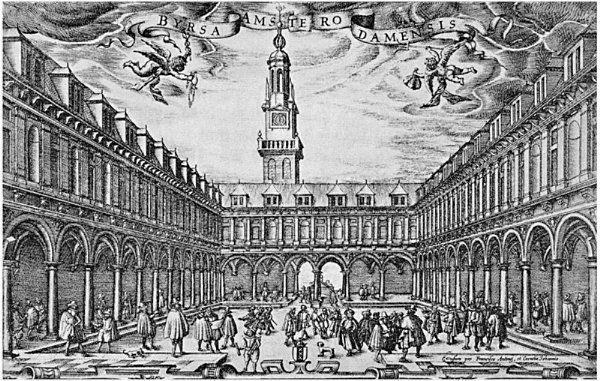
Plate 8.1 The first stock exchange of Amsterdam: the hub of seventeenth-century world capitalism.
Source: Ken Welsh / Bridgeman Images
Since Roman times, in most towns where goods other than those which were purely locally produced were exchanged in the market place – sometimes even without the use of money – there had been places where merchants gathered to buy and sell wares which had been brought in from afar; often, these goods were traded in impressive buildings. Though during the early Middle Ages regional, national or, even, international trade had been limited, it had expanded since the tenth and eleventh century, not only in the Mediterranean, where it was scarcely interrupted by the growing differences between Christendom and Islam, but also along Europe’s great rivers, and at the edge of the Atlantic, specifically the North Sea. Soon, Bruges became the town where merchants resided, who sent their ships as far away as Italy and the Baltic coasts. To do so, they also engaged in banking, thus concentrating various elements of economic activity in one, capitalist hand. Many historians argue that the introduction of double-entry bookkeeping in the fourteenth century provided merchants with reliable calculations of the rate of return on capital and, thus, that this truly marks the establishment of the notion of capital’s essential economic role.
By the fifteenth century, this ‘merchant capitalism’ had come to dominate the economy of western and, to a lesser degree, central Europe. It also began to permeate the agricultural sector – especially the production of grain and wool – which, till the nineteenth century, still provided labour and, thus, income to the majority of Europeans. Especially in those regions where labour was a market commodity – rather than being provided by serfs – landed property, too, became an object of rationalist exploitation for profit, ever more closely related to other sectors of the capitalist economy.
According to at least one leading cultural historian, Max Weber, in his famous essay Die protestantische Ethik und der Geist des Kapitalismus (1904/1905; 1920), it was precisely a change in the religious and ethical attitude towards labour, consumption and profit that from the sixteenth century onwards caused capitalism to become a really large-scale phenomenon. This, he argued, then came to characterize Europe and, indeed, was one of the elements that started to distinguish Europe from other economies and, hence, cultures. Weber wrote that the new mentality of work discipline as a virtue per se, and of thrift and the accumulation of capital for re-investment to engender more profit, ultimately served to honour God. According to him, this attitude first became apparent amongst the urban middle class, mostly in the towns of those parts of Europe where people embraced Protestantism which, especially in its Calvinist guise, stressed the direct, almost personal relationship between a Christian and his creator.
Since its publication, the ‘Weber thesis’ has been vehemently debated, which was partly caused by selective reading – made easier by Weber’s perhaps too great insistence on the role of religion as a constitutive factor. At least one author has tried to (dis-)prove Weber’s argument that the Protestant cities of Germany showed significantly more economic growth than others. Though he concluded this was not the case, I feel the evidence is rather slender. Other scholars have shown, rather more convincingly, that the kind of religious attitude posited as a decisive factor by Weber was also part of new ideas in Roman Catholic theology and ethics, which thus might explain capitalist tendencies in the non-Protestant regions of Europe. Moreover, in 1911, Werner Sombart also drew attention to the involvement of the European Jews in the development of capitalism, given that they were excluded from the traditional economy.
However, Weber’s argument, even if it is extended to include all kinds of religious contexts, simply cannot be proven or disproven. I feel it is, perhaps, more productive to study the entire complex of elements synthesized by Weber. For he did adduce many other factors to explain the growing prevalence of capitalism in Europe, such as the rationality underlying the rule of Roman Law and (technological) science, both of which created favourable conditions for, and were eagerly used by those entrepreneurs who wanted to maximize their profits. He stressed, too, the role of a free market, for labour also, and of a political system that did not endanger the accumulation of capital by arbitrary confiscation.
Obviously, religion – Christianity in all its forms – was important, if only because it instilled a sense of obedience to authority in the work force. Equally obviously, the new capitalist attitude has been a major element in the development of Europe towards a more modern, rationalist culture, as well as, in time, creating the financial and in a wider sense economic basis for the industrialization of the late eighteenth and early nineteenth century.
It is debatable whether (overseas) imperialism and colonialism have been necessary in the further development of capitalism. The example of sixteenth- and seventeenth-century Spain seems to disprove this – indeed, Spain showed no real economic growth in a capitalist direction, despite or perhaps because of the huge riches that came from its American possessions. However, the Northern Netherlands in the seventeenth and England in the eighteenth and nineteenth century are definite cases in point.
No wonder that, by the middle of the nineteenth century, scholars such as Friedrich Engels and Karl Marx, having experienced and studied the situation in the industrial centres of Great Britain, produced a general analysis of the effects of capitalism on European society and culture. Their texts – nowadays mostly read selectively and therefore imperfectly understood – tend to stress the unbridled nature of the phenomenon though, of course, there never was, or is, a situation in which all means of production are in private hands and can be used, or misused, for purely private profit, reducing the masses to near-indigence. Nevertheless, their interpretation, famously in Marx’s Das Kapital (1867), of the conditions of the labouring class has been both scientifically important and politically effective in that it contributed to a growing awareness of the dangers – economic but also social and political – of rampant capitalism.
By the end of the twentieth century, Europe seems to have two ‘models’ of capitalism. One is sometimes termed ‘Anglo-Saxon’, characterized by individual, short-term profit seeking, and the other ‘Rhinelandish’, after the socio-economic and political practices prevalent in the huge economic region of the Rhineland since the early twentieth century, but actually common to many of the continental economies of north-western Europe; there, long-term profits are sought collectively and consensually. Some would argue there is a third model, yet, resulting from the collapse of Communism in central and eastern Europe in the 1990s, which has given almost unlimited control over vast sectors of the economy to old and new elites closely associated with the post-Communist regimes. Obviously, these models are, in a scientific sense, ideal-types. The actual economies will often show elements of both, or even of all three.
Starting with the early decades of the twentieth century, but with far greater urgency since the economic crisis of the 1980s, in many European societies a debate has been waged about the desirability and, according to some, necessity to allow and even encourage state intervention in the capitalist economy, in order to prevent the concentration of ever greater riches in the hands of an ever smaller group, which, inevitably, entails the pauperization, not only economically, of the majority of the population. This debate also extends to the question of whether health care, education and, indeed, the energy sector should remain publicly financed or, as liberal politicians sometimes argue, be sold into private, profit-seeking hands.
More recently, people have asked whether the explosion of unsound credit extended by many banks to their customers for the sake of short-time profit – to many observers one of the causes of Europe’s recurrent economic crises – should not be checked, precisely by cooperation between Europe’s state governments and the European Central Bank. The first steps towards such a policy were taken in Spring 2014.
Plate 8.2 The first (1867) edition of Karl Marx’s Das Kapital.
Source: UIG via Getty Images