
CHAPTER 8
Grass heals over the scar which our descent into the bosom of earth has made, and the carpet of the infant becomes the blanket of the dead.—Ingalls 1905
I never came upon the place without emotion, and in all that country it was the spot most dear to me.—Cather 1918
This old flora, like an old book, should be preserved for its historical associations. We can hardly understand our history without knowing what was here before we were.—Leopold (1942a)
Along railroad rights-of-way, and here and there in small patches throughout the state [Iowa], virgin prairie sod is still to be found.—Hayden 1945
It is perhaps appropriate that the best assemblages of prairie species are often found today in cemeteries which date from settlement. . . . This prairie, which occupied approximately 13% of the Indiana landscape of 1816, is known to us only through such remnants and from imperfectly formed memories.—Petty and Jackson 1966
Local prairie remnants served as our model for species composition and proportion.—Schulenberg 1970
MOST OF THE TRIPS the pup and I take to Minnesota prairies today are reminiscent of that first prairie visit three decades ago. It’s a long drive through monotonous monocultures of corn or beans to get to a small patch of diverse prairie. Oddly, we probably see more plant species in our first couple steps into the prairie than we saw on the couple hours of driving through the modern agricultural landscape.
Today the prairie is like the sea, but opposite of the way that the metaphor has been used historically. Remnant prairies are small islands of native diversity in an ocean of exotic monocultures. Across a study of Illinois and Indiana prairies, thirty of forty-five prairies were smaller than an acre and only three were larger than five acres (Betz and Lamp 1989, 1992). These prairies were spread across forty-two counties in Illinois and twenty counties in Indiana. Prairies are islands in a sea of corn.
The prairie had two inadvertent saviors. Pioneer cemeteries figure prominently in the tallgrass literature (Figure 5).
[W]hen the open-grazing days were over, and the red grass had been ploughed under and under until it had almost disappeared from the prairie . . . so that the grave, with its tall red grass that was never mowed, was like an island. (Cather 1918)
It is an ordinary graveyard. . . . It is extraordinary only in being triangular instead of square, and in harboring, within the sharp angle of its fence, a pin-point remnant of the native prairie on which this graveyard was established in the 1840s. (Leopold 1949)
The other factor was the railroad. First the railroad acquired wide rights-of-way along the tracks that settlers didn’t plow. Historically, locomotives would have scattered sparks igniting the prairies each fall that protected them from encroaching woody vegetation.
The purest remnants of the prairie are often found along the right of way of the older railways which entered the territory before the original prairie was broken. (Shimek 1925)
The outstanding conservator of the prairie flora, ironically enough, knows little and cares less about such frivolities: it is the railroad with its fenced right-o-way. (Leopold 1949)
Whether along the railroad or in the historic cemetery, these prairies never fail to fill a knowledgeable person with emotion or bring out the poet in the writer.
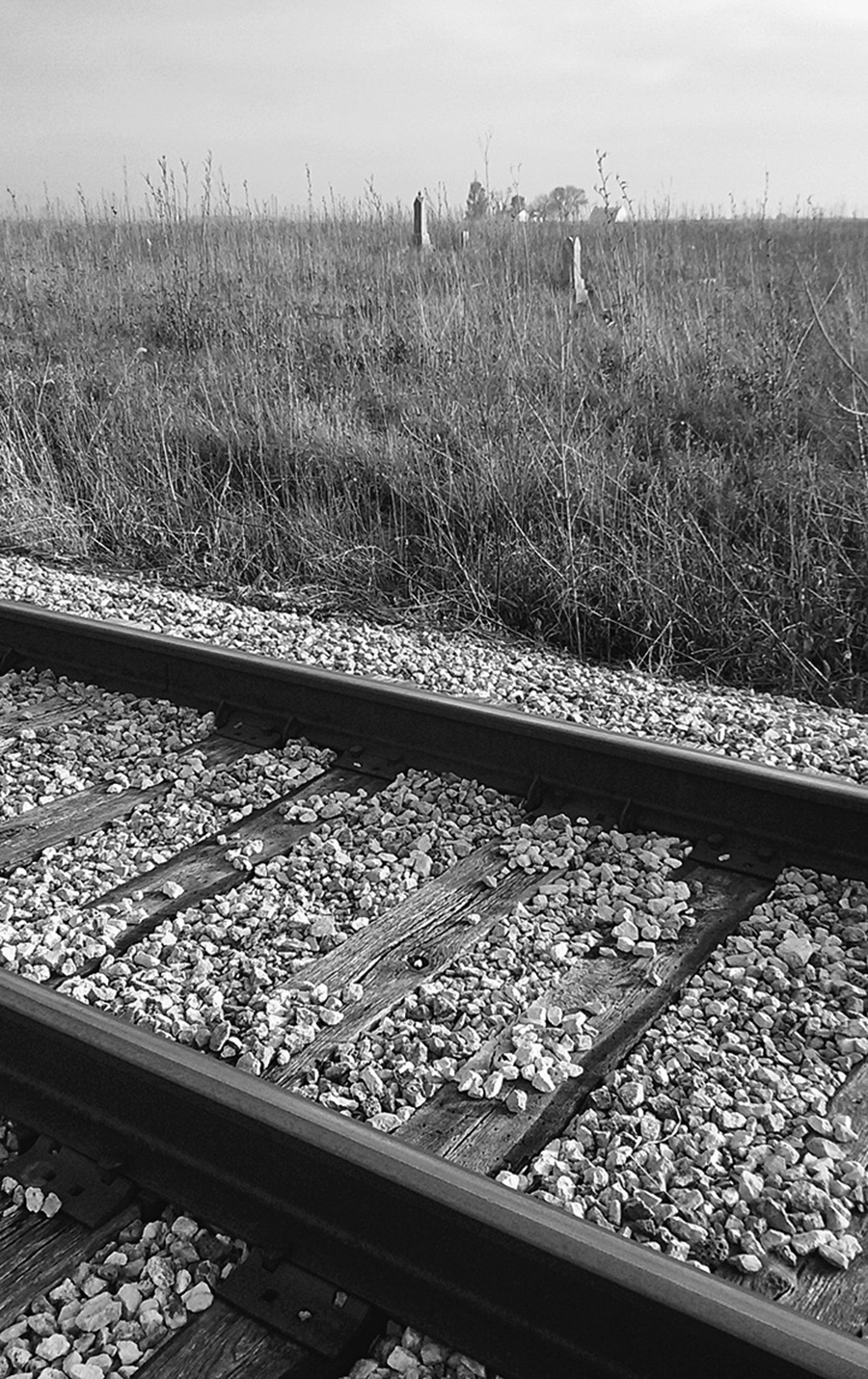
FIGURE 5. Weston Prairie in central Illinois perfectly captures the forces that protected the last prairies, the stone grave marker, and the steel rail. Photo courtesy of the author.
Certainly it saw the successive funerals of the local pioneers as they retired, one by one, to their repose beneath the bluestem. (Leopold 1949)
How ironic that the long steel road which carried the freight of destruction to the prairie should be a refuge for its scattered remnants and that those who turned their lives against a wilderness of grass should sleep in its last few shadows. (Petty 1973)
One way of looking at plant communities that is especially relevant to small, fragmented prairies is the Core-Satellite Hypothesis (Hanski 1982). This hypothesis states that there are some species that are common, the core species, and species that are rare, the satellites. While it was Hanski who formalized this theory, the basic idea had been around for over a century in the prairies.
Its leading feature is rather the unbounded profusion with which a few species occur in certain localities than the mixed variety of different species occurring everywhere. (Short 1845)
Thus the extreme importance of a relatively few species stand in great contrast to the relative infrequency of the great majority of the total flora. (Curtis 1959)
Multiple studies found this hypothesis to hold up with prairie plants (Gotelli and Simberloff 1987; Collins and Glenn 1991). The dominant grasses and a few dominant forbs such as some of the goldenrods are abundant and widely distributed. These are the core species and show up at almost every site or every plot within a site. Many of the forbs are loosely scattered at low densities through this grass matrix. These are the satellite species and rarely or sporadically occur, usually at low densities, and usually occur only at a few sites or few plots within a site.
In Wisconsin, 62 percent of the plant species occurred in 20 percent or fewer of the remnant prairies (Curtis and Greene 1949). In a survey of 26 Michigan remnants, 24 percent of species were found in three or fewer sites (P. W. Thompson 1983). In Illinois and Indiana surveys, 42 and 68 percent of the species were found in three or fewer sites (Betz and Lamp 1989, 1992). We can summarize all these studies up with the simple phrase “most species are rare.” If we would lose an entire remnant, or a species within that remnant, we may be looking at a regional extinction, not just a local extinction.
This isn’t just theory. It has some real, practical implications for managing prairies. The smaller the prairie, the greater the probability of losing species just by bad luck or random events. Imagine a population of a few shooting stars in the corner of a small prairie remnant. A juvenile ground squirrel randomly finds this remnant. It randomly starts digging in this corner, uprooting and killing all the shooting stars. In a large prairie with a large population of shooting stars, the loss of a few individual plants wouldn’t matter. No one random event, such as a ground squirrel arriving in an area, could wipe out all the shooting star in a large prairie. However, because this was a small population of plants in a small remnant of prairie, shooting star is now locally extinct in this scenario. If there aren’t any other nearby populations, then shooting star is regionally extinct. This is a purely random event. If the ground squirrel had never found this area or had taken up residence in another corner of the remnant, the few shooting star plants would still be there.
[D]uring the 100 years in which the relics have been isolated there may have been times in which certain species were reduced to very low populations levels, or even wiped out, by temporary meteorological or biotic influences on the particular area of the relic. (Curtis and Greene 1949)
This can lead to “unpredictable species loss to local extinction” (Howe 1994a). This unpredictability and the accidental nature of local extinctions are what keep conservationists up at night. Even with the best planning, the most careful actions, something random can still happen. That’s scary when you’re talking about the last few individuals of a species, within a single prairie or across a region. Unfortunately, the smaller and more isolated the prairie is, the greater the probability things like this will happen.
For example, one of the most notable species at my first prairie, Smith Pioneer Cemetery in western Indiana, is royal catchfly. There are eight populations of royal catchfly in Indiana, and it is relatively rare through the rest of its range. Smith Pioneer Cemetery contained 895 individual plants. The other seven populations consisted of 165, 64, 58, 53, 25, 6, 5 individuals (Dolan 1995). Smith Pioneer Cemetery makes up 70 percent of the population of the entire state. Fortunately this remnant prairie is protected. However, if it were ever lost, it could represent a loss of almost three-quarters of the population across an entire state. There are many similar species and locations across the prairie region.
In addition to the number of individuals in small populations, there can be genetic issues. Research shows that royal catchfly “populations in the eastern portions of the range to be genetically depauperate compared to western populations” (Dolan 1994).
What is the effect of being a small population on the plants and what are the long-term effects of a population being genetically depauperate? In populations of 150 or fewer plants, seed germination is lower than in larger populations of royal catchfly (Menges 1991). This could be from two issues. The first is inbreeding due to a loss of genetic variability in small populations. When prairies become fragmented and populations get small, the only sources of pollen are from close neighbors, which are often close relatives.
Imagine how large many prairie plant populations were before the prairies were broken. Populations were huge and pollinators could carry pollen, and genes, over long distances. Over time, genes could mix over large regional areas. In today’s small, fragmented, isolated populations, plants that are near relatives may be the only plants to pollinate with.
The second issue is reduced pollinator activity (Menges 1991, 1995). A small and isolated population may not attract very many pollinators. Pollinators need to find the isolated patch, which might be a challenge, and there needs to be enough pollen and nectar in that area to make it worth their while to stay in that area. An isolated patch with few plants may not be worth the search effort, the travel to get there, or staying around to gather nectar and pollen.
If all that isn’t bad enough, small prairies are actually smaller than they look. Edges are more susceptible to invasive species and other issues. The outer thirty feet of some remnant prairie is less diverse than interior parts of the prairie (Taft 2016). A thirty-foot buffer around the smallest site in this study represented 32 percent of the area. If a small site has the highest quality plant community only on the inner 68 percent of the area, small prairies become tiny prairies.
It’s tempting to say that these remnant prairies are a representative of the original tallgrass prairie that once dominated large swaths of the Midwest.
What is the importance or value of these perhaps ephemeral relicts of a long-vanished prairie? What do they signify? In a sense, I think, they serve us as “control plots.” (Berry 1981)
[T]hese cemetery prairie remnants give us a small glimpse of what the settlers of the pre-settlement Illinois-Indiana first saw when they entered the region. (Betz and Lamp 1989)
However, these remnants often represent the driest, hilliest, steepest, wettest, or rockiest grounds (Figure 6). These remnant prairies were the only places the pioneers couldn’t get a breaking plow or drainage ditch. They may not always characterize the wide, flat prairies that once surrounded these remnants and that dominated the Midwest historically. Compare the following quotes to the previous quotes.
The remnants of the prairie flora still existing along our railroad tracks give only a faint idea of the normal structure of the prairie vegetation. (Gleason 1909)
The information obtained in this study should be used in reconstruction of the composition of the original prairie in Wisconsin only with very great caution. In most instances the relicts are on atypical sites, so far from the great bulk of the original prairie area is concerned, and have largely persisted because of this fact. (Curtis and Greene 1949)
Just as important, there may be caveats we want to consider if we use these remnants as models of restorations we want to do in the area. They are probably the best models we have and the information in these prairies cannot be ignored. However, it might not be the best goal to try to exactly replicate any prairie since each one is slightly different from every other one.
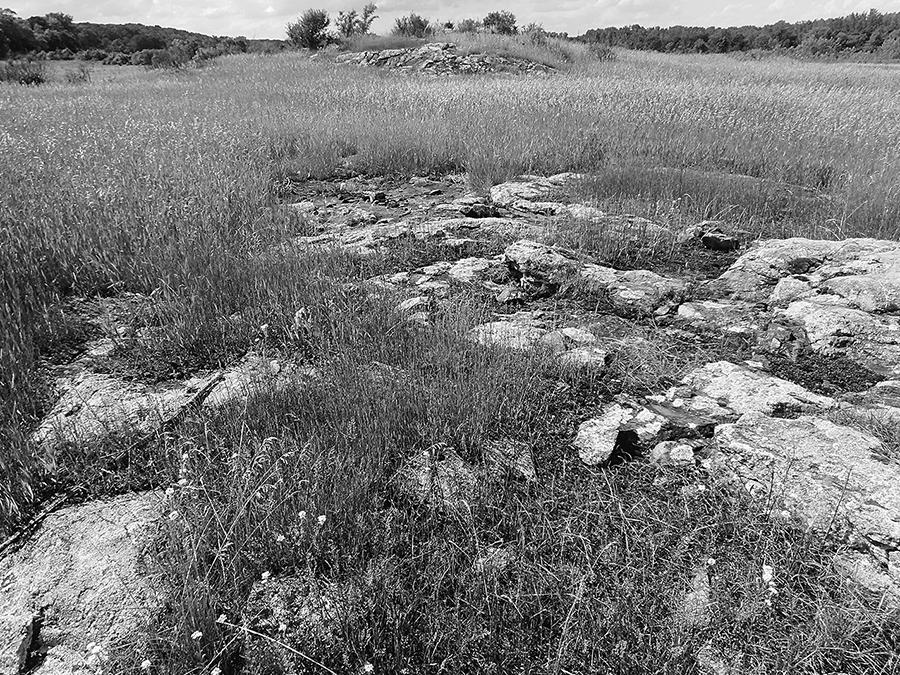
FIGURE 6. Many of the prairies that remain are those that were too steep or too rocky to plow. Photo courtesy of the author.
That is what makes the conservation, protection, and management of even the smallest fragments of the original prairie all the more important. Each one of these remnants is unique. There isn’t a plant community just like them anywhere else. Just as likely, the remnant may hold a species that doesn’t occur anywhere else or only in a couple other places in the region.
With less than 1 percent left in most states, surely, we aren’t still losing prairies. We are (Wright and Wimberly 2013; Lark et al. 2018, 2020). Even cemeteries aren’t sacred anymore. A story on Minnesota Public Radio reported the plowing of a century-old cemetery. The state archeologist stated, “I’d say it’s not unusual.” The article goes on to state that people simply “removed the headstones and plowed over the top of it” and that someone “simply piled the headstones in the ditch and plowed up the cemetery” (Gunderson 2012).
Every remaining prairie is different and unique. While that one acre may not characterize the full range of prairie types in that area or region, they are incredibly valuable. Each loss is its own tragedy. In contrast, each prairie saved is a reason for celebration as there probably isn’t another prairie like it anywhere in the Midwest.
Prairies I’ve Known
WE KNOW THIS PRAIRIE. Although the pup has only been here a couple times, his predecessor visited scores of times with me. We have walked this prairie many times in every season over a decade. Although it had been a couple years since our last visit, I can still close my eyes and map out the plants in my mind.
A decade ago I spent a summer conducting what I thought was a fairly comprehensive survey of the forb community at this site and twenty-seven other native prairies in this area on Waterfowl Production Areas. I surveyed the sites four times that summer. This site came in third with sixty-seven forb species. I know this prairie.
So here I stand, in the southeast corner of the prairie, just on the west side of the aspen clone, scratching my head. There should be several hundred prairie smoke right here. They should be getting their fuzzy, wispy seedheads and be very easy to see. But I can’t find any of them. I remember so clearly because this is a fairly wet site and prairie smoke is usually a sandy, hilltop species. I always thought it odd to find it at this prairie.
We start to walk a tight grid across the area but can’t even find a leaf. After a very frustrating ten minutes we give up and move on to other areas. After another few minutes we’ve counted fifteen species in flower.
We wander on looking for flowers to photograph and I stop dead in my tracks. There are several dozen small yellow ladies slippers in front of me. Once I see a few, I see more, and more, and more. This site has always had a high density of small white ladies slippers, but the yellows were new to me.
After snapping some photos, we move on. And we find ground plum. This makes me scratch my head even more. While abundant at some nearby prairies, I don’t remember it here. Like prairie smoke, ground plum usually grows on the dry hilltop prairies, so what is it doing here in this wet prairie? We finally do find one lone prairie smoke, but not in an area I remember seeing it before.
Our next prairie is another favorite, a small hilltop prairie, a few miles to the southeast. And there were several pale penstemon right where we always walk into this prairie. I don’t remember that species here, but it’s a dry prairie species on a dry prairie. I’m sure I have it in my records.
On the drive home, I think back about another prairie a few miles west and a couple miles north of this one. Again, over the course of a decade the dog and I walked that prairie hundreds of times. If I know these prairies well, I knew that prairie intimately.
One summer, the area right by the parking lot, not some far back corner we rarely got to, was covered with wood lilies. These tall, fluorescent orange flowers are hard to miss. I’d never seen them there before but, on this visit, there were hundreds. The following year there were a few, and the next I couldn’t find them at all. While not as distinct as their orange petals of the flower, wood lily leaves are pretty distinctive. I couldn’t even find any non-flowering wood lilies in following years.
When we arrived home that evening, the first thing I did was look at my old records. Sure enough, ground plum, small yellow ladies slippers, pale penstemon were all in my records, but not for those sites. All that time and effort and I still missed several species.
Maybe I don’t know these prairies? Or maybe no matter how well you think you know a prairie, the prairie always keeps a few surprises.