
CHAPTER 11
ALL LIFE ON EARTH consumes nutrients. We eat to take in molecules that we use to build more of us, and also to provide us with the energy that our bodies need to work. Food provides the fuel in the tank but also the parts we need to make a new car. This all seems very simple. And yet the science of food and nutrition is often dogged with controversy. It is full of bad science, commercial interests and torment. Our relationship with food in the 21st century has become ever more complex, and the developed world is currently suffering from an obesity epidemic.
We now have a deeper understanding of what it is about food that makes us crave it, and efforts are under way to make synthetic food that is healthier and that will cut out the middle man (or in this case the middle cow). Who would have thought that something our ancestors thought of as a simple thing (I’m hungry, I must eat) would have become so complex and disturbing?
A lot of scientific progress has given insight into what controls our appetite, why we crave certain foods and why some people are prone to obesity. It’s a very important medical question, as current analysis shows that 25 per cent of Irish people are overweight or obese, with that percentage set to rise1. Being overweight brings with it all kinds of health problems, from heart disease to diabetes to an increased risk of cancer. Governments are trying to do things to stem this tide of obesity, whether it be a tax on sugar or a decrease in fat content in processed foods. There appears to be a constant battle between food producers and regulators. Food producers want to maintain their businesses, while regulators want to make sure the public don’t get sick.
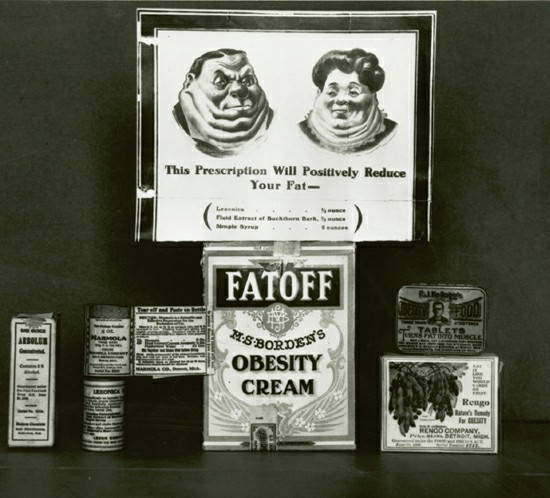
ON SALE IN THE US IN THE 1800S, FAT OFF CREAM CLAIMED TO ‘REDUCE SUPERFLUOUS FLESH WHEREVER NEEDED’.
But there is no doubt that high sugar consumption promotes obesity. The reason is simple. We live in Stone Age bodies – that is to say, bodies that evolved for conditions that prevailed 200,000 years ago. Food was relatively scarce, so when we got some, we ate as much of it as we could. When we had our fill, any extra was stored as fat. Our bodies are especially good at changing sugar into fat, since fat is a great way to store food. The energy released when we burn fat is huge – at least ten times more than burning the same amount of sugar, and so we store fat from sugar for the rainy day when we’re starving.
The modern situation, however, is that we are rarely starving and we’re always gorging. Result? We become obese. Added to this is the fact that our primitive ancestors had a lifestyle where they hunted, caught the animal to eat, ate it and then ran on. Run, eat, run. As opposed to Run, Fatboy, Run. Life today therefore has a deadly combination: no running and a lot of eating. Our sedentary lifestyle is working against us. Eating is one of Maslow’s primary needs, and so it’s little wonder that in our current land of plenty (at least in most countries) we keep on eating.
But is it really as simple as that? Recent work has identified hormones that control our appetite, our desire for certain foods and also the off-switch – the response that says ‘stop eating’. These can go out of kilter too, and lead to obesity. Some sound like the names of the seven dwarves – for example, leptin and ghrelin. Others have more complex names such as FGF21, a hormone that stops us having a sweet tooth. Work on them is giving us some fascinating insights into when we eat, why we eat, what we eat and when we decide to stop eating.
Scientists have been studying hunger and satiety (feeling full) for decades. These are sensations, with hunger being the physiological need to eat food, and satiety the absence of hunger. Feeling hungry generally happens after only a few hours without eating, and is sufficiently unpleasant to motivate us to seek food. Satiety happens five to 20 minutes after eating. A breakthrough happened with the discovery of a hormone called leptin2. This hormone is mainly made by fat cells and regulates energy balance in your body by stopping you from feeling hungry. The discovery of leptin gave rise to great excitement. Might it be possible to give it to people to stop them eating? Sadly things didn’t turn out as simple as that.
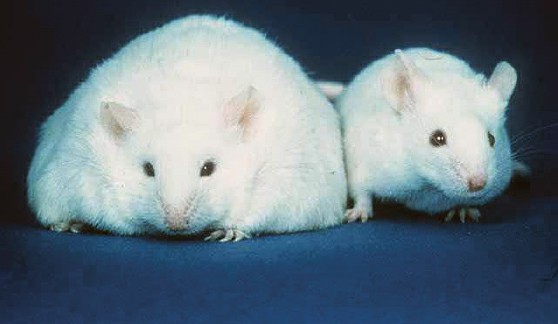
THE OB/OB MOUSE (LEFT) IS GENETICALLY OBESE. IT CAN’T MAKE A HORMONE CALLED LEPTIN WHICH LIMITS HUNGER, CAUSING THE MOUSE TO OVEREAT.
Leptin was discovered from studies on obese mice. In 1949, scientists in the US found a laboratory strain of mice that ate voraciously and were massively obese; these mice were called ob/ob mice (‘ob’ being short for ‘obese’). Then another strain of obese mice was found that developed diabetes; these were called db/db mice, ‘db’ standing for diabetes. And then in 1990, the defective gene in the ob/ob mouse was found, and was shown to be responsible for making leptin (the name is from the Greek meaning ‘thin’). The ob/ob mice turned out to be missing leptin, and the db/db mouse was shown to be missing the leptin sensor (called a ‘receptor’) on cells, and so couldn’t respond to their own leptin. Both mice were therefore obese because of a defect in leptin – ob/ob mice couldn’t make any, and db/db mice couldn’t respond to their own leptin.
An Irish scientist, Stephen O’Rahilly, then made an important discovery in humans, describing severely obese children who were obese because they couldn’t make any leptin, a bit like the ob/ob mouse. These patients were treated with leptin, and lost weight dramatically. They remain of normal weight to this day, but require daily leptin injections. Leptin was then investigated as a treatment for more common forms of obesity. Surely if it was given to obese people they would then feel full and stop eating? But as ever with science and medicine, there is many a slip twixt cup and lip (a particularly apt analogy if the cup holds a sugary drink). It turns out that most obese people have high circulating levels of leptin anyway, because they have a higher percentage of body fat. Remember, it’s your fat cells that make the leptin. They have actually become resistant to their own leptin. The elevated levels of leptin therefore fail to control hunger and regulate weight gain.
Although leptin may not quite be the hormone to allow you to have your cake and eat it, work on it has revealed the complexities of how hormones can regulate obesity. Leptin may in fact be a starvation signal sent when levels are low, provoking us to get some food. When it’s made normally, it says ‘Stop looking for food because you have plenty of fat in storage.’ And obesity may be partly about our bodies not responding to our own leptin. Studies are trying to make obese people more responsive to their own leptin, as occurs in type 2 diabetes, where several of the existing drugs that are used work by making people more sensitive to their own insulin.
So if leptin isn’t crucial to making you feel full, then what is? This involves a special region in your brain called the ventromedial nucleus, which is in a part of your brain called the hypothalamus. It turns out that this part of the brain can actually sense the levels of nutrients in your blood, including rising blood glucose, fats and the levels of amino acids (which come from protein). It is especially sensitive to the level of amino acids. All those amino acids in your bloodstream regulate your appetite and get you to eat less overall. This might explain why a high-protein diet helps us lose weight.

GO ON … IGNORE YOUR FGF21 AND HAVE SOME.
Psychology can also play a role, however. If you repeatedly see a picture of a foodstuff, you actually go off it, at least for a short time. This is probably to stop you eating too much of the same food, which might lead to a deficiency in nutrients. Work on leptin led to the discovery of another hormone that regulates appetite: ghrelin. Low levels of leptin (which occur when you have insufficient stores of fat) trigger the release of ghrelin, which is therefore described as a secondary hormone to leptin3.
Ghrelin actually makes you feel hungry. Studies have shown that increased production of ghrelin will enhance appetite when we actually see food. When you see an advertisement for food and you feel hungry it is probably ghrelin that is making you want that food. Also of interest are studies showing that when you are stressed, ghrelin is made. This may explain why hunger can prevail during a stressful situation. To lose your appetite then might be negative, as you risk being malnourished in a stressful situation when you might need energy. There are currently studies exploring the use of ghrelin to stimulate appetite in the elderly, or in cancer patients who lose their appetite. GLP1 is another, possibly even more important, substance made that stimulates appetite, so this is a very active area of research.
One of the most interesting recent studies described another hormone called FGF21, which is made after we’ve eaten sugar. Its job is to regulate how much sugar we eat. For those of us who make plenty of it, it is easier not to be tempted by the vending machine in the corridor. For those with less of it, however, the temptation to eat all the biscuits in the packet is too strong. Studies have shown that no matter how careful you are with your diet, some of us just find it too hard to overcome the desire for more sweet things, and it could be down to FGF21 levels. This hormone had been found to reduce sugar ingestion in rats, but now the same has been shown to be the case in humans.
In a study in Denmark involving 6,500 Danes4, scientists found that those with a particular type of FGF21 were 20 per cent more likely to be high consumers of sweets. These people were carrying a defective form of FGF21, hence the increased tendency to eat cakes and sweets. The liver can sense how much sugar there is in your blood and starts to make and send out FGF21, which goes to your brain and says ‘Stop eating sugar.’ Our craving for sugar decreases and we find it less appealing.
This kind of research might be useful in helping people to lose weight, as giving FGF21 will suppress the desire for sugar and so lower the production of fat. However, as ever with science, unexpected results crop up. It turns out that people with defective FGF21 were actually less obese. This was a surprise, as it was the opposite of what we might expect, since these people ate more sugar. Clearly obesity is not just down to sugar consumption; a sedentary lifestyle is a big factor. Perhaps FGF21 has other roles, such as promoting exercise – maybe the type of exercise that involves running to the shop to buy more sugary foods.
The work did highlight how a hormone can control how much sweet food we eat, though. That said, the likelihood of simply injecting yourself with a hormone to help you lose weight by affecting your appetite seems challenging, but this is an active area of research. Meanwhile several diets have been proven to help, including the low-carbohydrate diet (which might be due to all the amino acids in the proteins being eaten, making you feel full), the Mediterranean diet (which involves a lot of olive oil, vegetables, fish and berries) and the Paleo (or Stone Age) diet, which has no processed foods5. These have been shown to help people lose weight or put on less weight. However the simplest advice is to eat less and exercise more.
Although FGF21 makes sure you eat less sugar, what do we know about cravings? We all have these, and they can suddenly jump up on you. Seemingly out of nowhere you will have a craving for some salt and vinegar crisps or a bag of toffees. Some will crave a type of food which others won’t like at all. What is it that gives us these appetites? Preferences might be formed in part while we are still in our mother’s womb. A fan of carrots, for example, will give birth to one (a fan that is, not a carrot). And all mammals have a craving for sweet things, perhaps because it is the main taste in their mother’s milk.
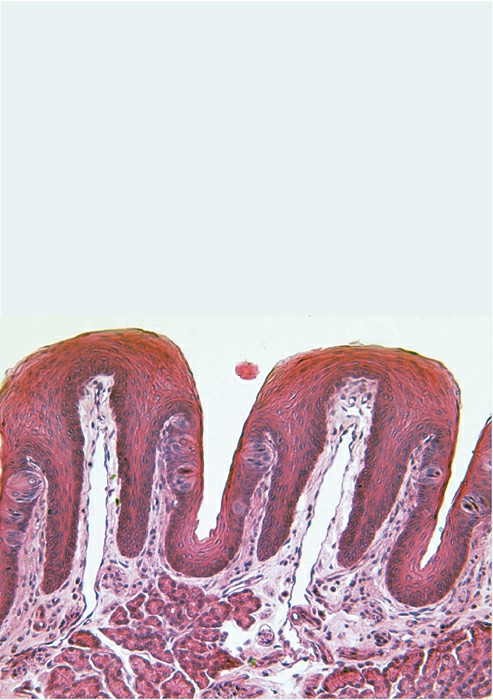
WE TASTE FOOD THROUGH TASTE BUDS ON OUR TONGUES BUT WE ALSO USE OUR SENSE OF SMELL.
Studies have also shown that babies born to mothers who have diets high in fat and sugar are inclined to become obese, but also they are at a higher risk of being addicted to other substances, including alcohol and drugs6. So if you want you can blame your mother for your Krispy Kreme Donuts, Jack Daniels or speed habit (although it must be said the science behind all this is not especially robust). One possible mechanism here is the dopamine rush that we get in our brains when we eat food, which we find pleasurable.
Dopamine is the reward neurotransmitter that is also triggered by alcohol and drugs, and so we may also crave those. This gives rise to the question – can we become addicted to food? In a way we can. Brain scans of teenagers who have eaten chocolate ice cream are revealing. Those who had it as an occasional treat had huge activity in their brains. But those who ate it all the time had a much lower signal, showing that they had become desensitised. This might mean that they will overindulge next time to get the same kick as they got before they developed tolerance.
Psychology again plays a role here. For some unknown reason, if you eat food off a round plate you will think it is sweeter than if you eat it off a square plate7. A copper spoon can make food taste bitter. Strawberry mousse tastes 10 per cent sweeter on a white plate, while coffee tastes less bitter if you serve it in a transparent blue glass. A red soft drink will be rated as being sweeter, while a yellow drink will be rated as more sour. A colourless cola sold under the name ‘Tab Clear’ bombed, even though it had the exact same flavour as the regular version. It’s not known why this happens, as we taste food on the taste buds on our tongues.
And a lot of taste also involves smell. A good thing to try is to eat some mint leaves while pinching your nose. The mint will taste bland, until you unpinch your nose, after which the sensation of mint rushes to your brain. You are tasting the mint via your taste buds but also through your sense of smell. We only have five types of receptors for taste on our taste buds: salt, sweet, bitter, sour and savoury (also called umami). But our noses have thousands of receptors for what we smell, so there is much more diversity there. We mainly ‘taste’ melons and pineapples from our sense of smell.
As we get older, our sense of smell starts to fail, which is one reason why older people will complain that food has no flavour. And one place where all our senses of taste and smell are compromised is in an aeroplane8. The senses of taste and smell are the first things to go at 30,000 feet. This is a recipe for disaster when combined with that wonderful airline food that we all love. Our perception of saltiness and sweetness fall by as much as 30 per cent when we are in a pressurised cabin. This is driven by a lack of humidity, lower air pressure and even the background noise. Airlines add more salt and spice to the food to make it more palatable. Fruity wines retain some of their flavour at altitude, but one drink that really suffers is champagne, which tastes much more acidic at altitude.
So what might the future look like for food? For the obesity epidemic dietary change and more exercise are key, but both are difficult to achieve because of our hard-wired desire for sugar, salt and fat, and how our hormones can get the better of us. Perhaps the future is in synthetic food9. This is a very active area of research. One reason for decreasing meat production is to save the planet. Meat production is a huge cause of greenhouse gases. In Ireland, one-third of our greenhouse gases come from farm animals belching methane, which as a greenhouse gas is eight times as damaging as carbon dioxide.
If we can make meat synthetically, we can alter its composition to make it healthier and more nutritious. In 2015, the first ever synthetic burger was reported. It took five years to make and involved taking cells from organic cows, culturing them in a nutrient solution to allow them to grow into a type of muscle tissue, and then teasing them into strands of meat. The burger needed tens of billions of cells, egg powder, beetroot juice, breadcrumbs, salt and saffron to add flavour and texture. It also cost $330,000, and so won’t be in a shop near you anytime soon.
Several companies have been set up to explore synthetic food, however. One of the more notable ones, ‘Impossible Foods’, is backed by Bill Gates and Larry Page of Google fame10. Like other Silicon Valley ventures, they sold themselves on the principal of ‘disintermediation’ – removing the middle man. Just as Amazon removed the bookstore, Impossible Foods will remove the middle cow. Gates’s investment was inspired by the growing number of middle-class people in the developing world, as a feature of wealth is the desire for meat. This company has sold its burgers in several restaurants in the US, with what are claimed to be promising results. How did it crack the challenge at a price that people could afford?
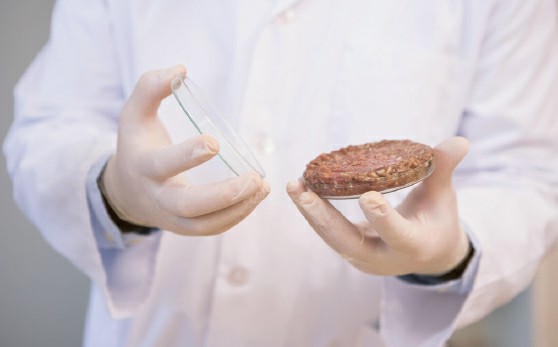
IN 2015, THE FIRST COMPLETELY SYNTHETIC BURGER WAS MADE BY GROWING BILLIONS OF CELLS FROM COWS AND ADDING EGG POWDER, BEETROOT JUICE AND OTHER INGREDIENTS. COST: $330,000.
Patrick Brown, the biochemist founder of Impossible Foods, knew that a key ingredient in meat is a substance called haem. Haem gives meat its red colour and some of its protein content. Brown realised that a similar protein could be found in clover, and so he collected clover from a hill near his house and extracted the haem. He then combined it with fibre from wheat and potatoes, coconut oil instead of animal fat and an Asian plant called konjac as a replacement for gelatin. These burgers will be considerably less fattening, with a lot less cholesterol than regular burgers, and could lead to less obesity. He is now producing synthetic burgers in a company employing 140 staff. In effect he has removed the cow from the chain of events that begins with them eating clover to help make meat. He now makes the ‘meat’ directly from the clover.
A key issue is of course flavour. The burger has to trigger the same pleasure sensations and dopamine rush as a regular burger. The company is working on the ‘sizzle’ – the way a burger reacts to cooking and mouth-coating, the aftertaste that makes a burger so appealing. To identify the chemicals that give rise to these flavours, extracts of regular barbecued meat were fed into a mass spectrometer (a machine that identifies chemicals at a very high sensitivity). Human noses also smelt the sizzling meat and listed flavours which included, alongside ‘buttery’ and ‘burnt’, more unusual descriptors such as ‘skunk’ and ‘smelly diaper’. The company has managed to recreate some of these flavours in their burger. They are also working on pork and chicken, but beef burgers are the main focus. This is because burger meat is consumed in huge quantities. McDonald’s sells 500,000 tonnes of beef per year. If some of these could be substituted with the synthetic burger, and if soft drinks with a lot less glucose syrup could be sold, there is likely to be a major effect on levels of obesity.
Synthetic food is of course nothing new. Processed cheese has been sold for years, containing fillers, oils and emulsifiers and often no cheese. Similarly, butter substitutes with no butter are common, as is orange juice that is not orange juice but rather extracts of various fruit concentrates with flavours added. These stimulate the same pathways in our brains as natural foods, but with fewer nutritional benefits. A synthetic juice drink will still stimulate the production of FGF21, which hopefully does its job and stops you drinking too much of it.
With the prospect of synthetic food and the advent of food as a major business proposition looking for innovation and new markets, food fraud has also emerged as a concern11. How do you know that what you’re eating is what it says on the label? Food fraud is said to cost the global food industry $49 billion per year, with the top three foods that are adulterated being oil, milk and honey. Europe was beset in 2013 by the horse meat scandal, where foods advertised as beef were found to contain horse meat12. This revealed a major breakdown in the traceability of the food supply. In the UK, of 27 beef burgers tested, 37 per cent tested positive for horse DNA, and 85 per cent for pig DNA. An Irish company called Identigen has led the way with using DNA testing to prove the origin of beef, and through their work and that of companies like them, food fraud, at least in the meat industry, should be less common.
The horse meat scandal at least gave us one of the funnier jokes of 2013: What is HAMBURGERS an anagram of? SHERGAR BUM. And when it comes to food perhaps we should remember what Alex Levine, a well-known science writer, said: ‘Only Irish coffee provides in a single glass all four essential food groups: alcohol, caffeine, sugar and fat.’ Ireland can therefore rejoice as the provider of excellent food and drink. If only we could get rid of the obesity epidemic we might become the poster children of Europe when it comes to the food industry and nutrition.