
CHAPTER 12
COMIC BOOKS AND HOLLYWOOD have always had a great time with enhanced humans created by genetic engineering – stories featuring a dystopian future where modified humans go out of control. One example of how an attempt to predict the future got it terribly wrong was the 1982 movie Blade Runner. This movie depicts a dystopian Los Angeles in 2019 where ‘replicants’ – as genetically engineered humans are termed – are made to work in off-world colonies. Some escape and return to Earth and Harrison Ford plays a special policeman (a ‘blade runner’) whose job it is to hunt them down. The movie is therefore very high tech, with one exception. At one point, Ford has to make a phone call, and guess what? He uses a pay phone. All that tremendous science and yet no mobile phones. It illustrates how predicting the future can be dangerous.
However, recent advances in genetic engineering, notably a technique called CRISPR, have made the prospect of altering humans genetically a more feasible occurrence. Might it be possible to make humans disease-resistant by correcting faulty genes? And how about existing humans who are naturally superior in terms of resisting diseases? Can we use that information to make everyone disease-resistant? Would it be possible to make a human like Fionn MacCumhaill or Spiderman? Can we make humans with stronger muscles or vision or hearing?
You actually don’t need technology that is too advanced to try to make a superhuman. Humans have been trying to do this since boy met girl all those years ago on the plains of Africa. As we saw in Chapter 3, the woman will select her mate based on her guessing of certain traits, such as intelligence or likelihood to stay around to help raise the offspring. The man on the other hand will select his mate based on her perceived fertility, such as shiny hair or a curvy body indicating fat stores. Both sexes like symmetry in the face, because this correlates with normal development and so good genes.
The future though might involve parents-to-be selecting traits that their babies will have, based on testing sperm and egg. The company 23andMe was recently given a patent called ‘Family Traits Inheritance Calculator’ (patent #8543339), which allows them to use genetic and computer technologies that would allow prospective parents to hand-pick a sperm or egg donor. The chosen donor would be likely to produce a child born with certain traits based on genetic features of the donor. Sperm banks already provide a wide range of information on the man who produced the sperm. Things like socio-economic status, pedigree (number of siblings, nieces and nephews and the like), level of intelligence and many other features can be listed.
There is a huge premium on sperm from very successful men, including Nobel laureates, who regularly get asked for sperm donations. One laureate supposedly responded by saying, ‘It’s not my sperm you want. It’s my dad’s, as he produced me. He’s a cab driver in New York.’ An IVF clinic in the US will charge $2,500 for you to select the gender of your child, based on whether you use a male (XY) or female (XX) sperm. However, 23andMe allows for genetic testing to select a ‘preferred donor’, which when combined with the genetics of the person who is selecting the sperm or egg is most likely to give rise to a child with selected traits where genetics plays a big role. Diseases with a strong genetic basis such as cystic fibrosis or Huntington’s disease can also be predicted. And there is no need to worry about the morality of what’s happening, because selection happens before fertilisation (unless, of course, you believe that every sperm is sacred).

A TECHNOLOGY CALLED CRISPR HAS MADE GENETIC ENGINEERING MUCH EASIER.
But the 23andMe patent goes beyond issues of health and includes such traits as height, weight, eye colour, ‘personality characteristics’ like warmth and sense of humour, and the kind of muscle performance that would make the person better at endurance sports. These can’t be fully guaranteed, however, as the precise genetic basis for these things is not fully known, and there are environmental influences that are probably as important, or at least work in tandem with, the genetic traits.
The science isn’t there yet, though. At the moment, 23andMe aren’t providing this service, but the fact that they have patented it indicates that they or someone else will. If there is a hefty profit to be made they may well pursue it. Market research reported on a parent who said, ‘If I am going to spend $100K to send my kid to Princeton, I’ll spend $20K to give my kid an increased chance of success in life at the genetic level.’ This of course brings us closer to a Brave New World situation, where the rich can afford to make sure their kids have the best traits.
And 23andMe can at the moment provide you with a range of information on your own DNA, including predicting your risk of over 200 diseases. I had my DNA tested and learnt that I am hypersensitive to the blood-thinning drug warfarin. I am also sensitive to norovirus, the winter vomiting virus, and I have a higher risk of blindness in old age. I also found out that I am distantly related to the actress Susan Sarandon. Based on my genetics, the chances of me starring in a film with Susan as ‘Blind Vomiting Clot-Man’ seem remote.
If we know that certain genetic variants result in certain traits, how close are we to actually making designer babies, where we engineer traits into eggs, sperm or the fertilised egg? How close is ‘Gucci Gucci Goo’? The discovery of a technique called CRISPR has brought us closer than ever. CRISPR has made genetic engineering relatively easy. You can almost do it in your kitchen. It’s a bit like going from a hand-operated whisk to a food processor. It was first discovered in bacteria, in an enzyme called Cas9, which are able to chop out viral genes from their genomes as a means of self-defence. The same machinery can be used on any cell, though, and scientists can now remove genes, or replace broken ones with fixed ones. Human embryos were recently tested, and a gene linked to heart attacks was fixed1. The embryo wasn’t implanted but could have been.
Dogs, goats and monkeys have all been modified, but pigs have been at the heart of some eye-catching work. So-called micro-pigs have been made that weigh six times less than normal pigs, and are sold as pets. Pigs with more muscle (and hence more pork) have also been made, as has a pig whose DNA has been modified in 62 places, the aim being to make organs that might be usable in humans2. This is a laudable goal, as many transplant patients are waiting for a donor, so if a pig kidney could be used that matches those in humans, a lot more transplants could be performed. Less importantly, goats have been made with longer hair to produce more cashmere. And in a particularly exciting development, mosquitoes are being engineered to be sterile. They will compete with other mosquitoes in the wild and may eventually dominate the population, potentially getting rid of malaria, which they transmit.
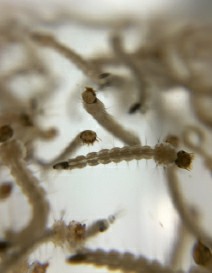
MOSQUITOES THAT ARE MODIFIED USING CRISPR SO THAT THEY CAN NO LONGER TRANSMIT DISEASES SUCH AS MALARIA ARE CURRENTLY BEING TESTED. THIS HAS THE POTENTIAL TO ERADICATE MALARIA WITHIN ONE YEAR OF THEIR RELEASE.
The ethics of using CRISPR on humans, however, has been hotly debated, and has been banned in many countries. International guidelines state that humans shouldn’t be altered using CRISPR. The fear is that once it starts it won’t stop, and the population of the Earth will be dramatically changed for various traits. For the first time ever, there is a species on Earth (i.e. us) who can tamper with genetics with relative ease, not through the usual way of natural selection allowing for survival of the fittest, but by directed intervention.
No one knows where that will lead. These kinds of things scare some people, as they raise the prospect of eugenics. Previously, discussions on genetic enhancement were largely viewed as theoretical, but CRISPR is seen as something of a game changer. It’s more flexible, accurate, cheaper and easier to use than previous techniques. Scientists in China recently successfully applied CRISPR to human embryos, although the embryos were later destroyed, in compliance with Chinese ethical guidelines. Next came the UK, where human embryos were also modified, in a study of early development. So far only Denmark and German have banned using CRISPR on human embryos.
There is a strong lobby to allow CRISPR to correct genes that will cause birth defects. Every year an estimated 7.9 million children are born with such defects. Potentially CRISPR could stop all that suffering. Clearly the recent success of editing a gene in human embryos by CRISPR must mean that this will eventually come to pass, although it will have to be tightly regulated.
So what genes would we modify if we could? We might be able to make a superhuman that is resistant to diseases. This could involve correcting or deleting a broken gene. A good example is cystic fibrosis, where a gene making a protein called CFTR is defective. The job of this protein is to keep the salt balance in your lungs normal – it is a chloride ion channel. In people with cystic fibrosis, however, it behaves abnormally. There are drugs available that help it work better, by binding to CFTR and getting it to perform. The best known is Vertex’s Ivacaftor, which has made a big difference to people with cystic fibrosis. But if you could fix the gene in the embryo using CRISPR, that would solve the problem at source and permanently. There are many diseases up for grabs that afflict humanity caused by a genetic defect.
One interesting study took a different approach. Usually doctors study someone who is sick, find out what is wrong with them and then treat them. Recently, however, doctors have been examining people who should be sick but who aren’t. Some people never get AIDS in spite of being infected regularly. Why? And we all know the granny who smoked all her life but didn’t die of lung cancer. This is an interesting group of people to examine. One study recently looked at 13 people who have genetic mutations that mean they should be dead3. These people have defied their own biology – but the big question is how?
The study involved almost 600,000 people. One of these people should have had cystic fibrosis but didn’t. Another should have had Pfeiffer syndrome (a disease affecting skull growth) but didn’t. These people must have had other genetic changes that protect them, and scientists are now trying to find out what those changes are. They are basically making their own medicine of sorts to stop themselves from getting sick. The gene variant responsible could potentially be engineered into people to prevent disease. A bigger study called ‘Resilience’ is under way to find more of these people, specifically those who should have more common diseases based on their genetics but don’t. These resilient people could prove to be quite useful.
In the case of AIDS, people were found who had been heavily exposed to the virus but never succumbed4. Their genetics was studied, and some of them were found to have a mutation in the gene for a protein called CCR5. This protein is on the surface of T lymphocytes – the cell type infected by the human immunodeficiency virus (HIV), which causes AIDS. The virus locks onto it and then gets inside the T lymphocyte. Those people who weren’t infected had a version that the virus could not lock onto. It was a bit like changing the locks on the door – the old key no longer fits and the virus can’t get in.
This led to the development of a drug called Maraviroc, which binds to CCR5 to prevent viral entry and has shown some success. That resistant CCR5 variant could be engineered into humans, making HIV infection a thing of the past. We are all inheritors of an immune system built up by our ancestors over many generations in order to survive in the face of infection.
Genes of the immune system are the fastest-evolving genes in humans because of this constant battle with infectious bacteria, viruses and fungi. So if AIDS had been allowed to continue to kill so many people, only those with the CCR5 mutation would have survived.
And what about smokers? People who live to a ripe old age despite being heavy smokers have been studied in detail, and a set of genes has been found that seems to protect them5. These genes are involved in repairing damage to DNA. Smoking will damage DNA, causing mutations that promote cancer. But in those who are resistant, that damage is corrected, providing some protection against cancer developing. It’s as though these people have a spellchecker that corrects the mistakes in the DNA code caused by smoking. This souped-up spellchecker might prevent damage from all kinds of environmental toxins and pollutants, and could be engineered into humans to prevent them from getting a whole range of environmental cancers. Smoking kills half of the people who smoke, so understanding how to prevent the damage it causes could be most useful.
Britain’s oldest smoker died at the age of 102, and doctors estimated that she smoked her way through 170,000 cigarettes6. Winnie Langley took up the habit days after World War I broke out. She was seven years old. Winnie outlived her husband Robert and her son Donald. She cut down from five cigarettes a day to one a year before she died because of what she said was ‘the credit crunch’. This may have been the cause of her demise. Her genetics would certainly be interesting to probe.
Sporting prowess has also been studied extensively. Scientists are trying to help our muscles work better. This might involve strengthening muscles in the elderly or helping devise new treatments for muscle-wasting diseases such as Duchenne muscular dystrophy (DMD). Genetics again plays a part in some of these diseases, with DMD involving a mutation in a gene for a muscle protein called dystrophin. However, if we could intervene would we want to make a superhuman who had huge sprinting abilities or endurance?
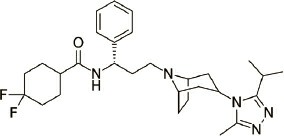
MARAVIROC, A TREATMENT TO PREVENT AIDS, WAS DISCOVERED FROM WORK ON PATIENTS WHO ARE NATURALLY RESISTANT TO THE HUMAN IMMUNODEFICIENCY VIRUS.
Athletes from East Africa have long been known to be superb performers over long distances. Why is this? It is often assumed that it comes down to genetics, since a small community in areas with few resources has produced a disproportionate number of medallists at the Olympics. There is some evidence that the typical body type of East Africans – e.g. long slender legs – may be part of this success, but distinct genetic traits have yet to be found to explain the performance7. A possible reason is that they run a lot in childhood. One study has shown that the distance to school for these successful athletes varied from three to 12 miles each way, with the future athletes running both ways every day. This may have built up stamina and endurance. Training at altitude may also play a part, but a major motivation is the desire for economic success for them and their communities. This drives them on. There is also evidence of a gene encoding a protein (ACTN3) in muscle being involved in running skills. The non-mutant version is associated with sprinting, while a mutant form is linked to endurance. We may well find a large part of the genetic basis for sports performance.
One hormone that is used in doping is erythropoietin, or EPO. Its job is to stimulate your bone marrow to make erythrocytes, also known as red blood cells. These carry oxygen around our bodies. If you inject EPO you make a lot more red blood cells, and this brings more oxygen to muscles, making them burn more fuel and generating more power and stamina. The only problem is that EPO makes your blood very thick with red blood cells, and so increases pressure on your heart, leading to a much higher risk of heart disease.
There are, however, some people who naturally make more EPO than others, and have muscles that work better. Similarly, a protein called NCOR1 was found which can generate muscle mass. When this was engineered into a mouse, the mouse had muscles that were three times stronger than an ordinary mouse8. It had in effect become Supermouse. People have therefore speculated whether gene doping might come into sport, where athletes have the natural gene inserted into their tissues, causing them to make the natural proteins, and so there will be no evidence of doping. The risks of such approaches are wholly unknown.
Given that it’s been possible to make Supermouse, scientists have had fun speculating on whether it might actually be possible to make superheroes9. There are many legends of heroes with huge strength. The Irish hero Fionn Mac Cumhaill could throw rocks the size of the Isle of Man. In the US, comic books and Hollywood have provided a way to give humans superpowers. We’ve all seen the movie where a scientist is working in the lab late one night (and no doubt about to do the Monster Mash). An unfortunate mishap happens, with some science attached to it – exposure to radiation, some toxic chemical, or some form of high energy with a fly in the chamber, and hey presto we get the Hulk or Spiderman.
Notably, superheroes often start off as scientists. Bruce Banner, who became the Incredible Hulk, is a good example. They are inclined to be handsome, rugged types, which immediately puts us on alert that this can’t be true, given that, as we all know, scientist are awkward wimps with glasses and buck teeth, who spend all their time in the lab doing incredibly tedious things that require huge amounts of intelligence, and precious little in the way of social skills. Is there any likelihood that we could turn scientists into superheroes (which of course they are already)?

THE IRISH SUPERHERO CÚ CHULAINN, WHO SINGLE-HANDEDLY DEFENDED ULSTER FROM THE ARMIES OF QUEEN MEDH BY DEPLOYING HIS SPECIAL POWER: THE WARP SPASM.
Creating someone with Superman’s powers would be impossible to achieve. His ability to lift heavy objects is put down to gravity being much stronger on his home planet of Krypton. His ability to fly comes down to willpower alone, which sadly will never be achieved.
With Spiderman we are on slightly more solid ground. Peter Parker is the human who is transformed by the bite of a spider that has been exposed to radiation. This might have changed the DNA in the spider, with the venom that is injected into Peter then altering genes. Maybe the writer of Spiderman foresaw CRISPR! He has a super-grip, and is able to walk up walls and across ceilings. Insects can do this in part by having specialised hairs at the base of their feet that allow them to grip. The gecko, a type of lizard, is also able to walk across almost any surface. This comes down again to thousands and thousands of hair-like structures at the base of its toes, which actually penetrate the surface the gecko walks on, causing an attractive force that maintains adhesiveness.
And what about the web he weaves? A spider’s web is made of silk which is rich in a protein called keratin. It has huge strength, so it might even be possible for Spiderman to catch criminals with the silk he fires out, and string them up. Scientists are currently examining the silk spiders make to see what they can learn from it in order to make stronger materials for bags and other applications.
And what about his special Spidey Sense? Spiders do have special hairs called setae, which are connected directly to the spider’s nervous system and can detect changes in air pressure and temperature. Perhaps Spiderman has these too, and can therefore detect subtle compression changes in the air that are akin to acute hearing abilities. So who knows, if we wanted to we could perhaps make a Spiderman.
The Incredible Hulk also draws on some real science. In the recent version Bruce Banner’s father, who is tampering with DNA, modifies his own, which is passed down. Again, did the writers see the advent of CRISPR? Bruce is then exposed to gamma rays – a very high-energy form of radiation. This leads to further changes. This could all build up muscle mass, especially if the gene for NCOR1 was modified. But the business of suddenly building such mass is too far-fetched, as it takes years for such transformations to occur.
So sadly it seems unlikely that we’ll turn humans into superheroes any time soon, although exactly where CRISPR – or perhaps follow-on technologies that might be even better – might lead is intriguing to speculate on. The likelihood is that some parents will choose traits for their offspring based on DNA testing prior to IVF. Or it might be permissible to do this kind of testing in utero. What might happen then is that if potential defects are found, the wonder of CRISPR will be brought to bear in utero, and the embryo fixed. Whether such traits as intelligence, beauty, musical ability and empathy will ever be shown to have a genetic component which might be modifiable is not certain either, given the complexities of these traits, and the fact that we are all pretty close to each other in these traits anyway. One thing that is obvious is that people will still want to make babies in the old-fashioned way, as evolution made sure that we are all strongly motivated to do it.