
CHAPTER 20
WHAT DOES THE FUTURE hold for Homo sapiens? Well, in spite of all the glass-half-empty people, the naysayers, the pessimists, the negative people, all this science and technology is actually making the world a better place overall for humans, and will continue to do so. In spite of what it looks like, with war and famine and crime, things are actually as good as they have ever been for humanity, at least since we invented agriculture. There is good evidence that agriculture was actually the cause of much misery and inequality in the world. The workers had to toil in the fields for The Man, who could lord it over them and make them slaves. Agriculture gave rise to inequality and overcrowding, which in turn bred infectious diseases.
For much of the history of humankind a tiny minority held most of the wealth and set up a system to keep the peasants under control. Barring the occasional revolution which shook things up for a while, humans returned to a situation where some humans were more equal than others. But now, perhaps we see the beginnings of an actual Brave New World, where at last, largely through science and technology, we will be free again.
Am I talking nonsense? Why should the world owe us a comfortable living? Won’t there always be the unlucky ones, the ones who perhaps are born with the wrong set of genes in the wrong place or at the wrong time? Or who through bad luck end up doing less well than others? Well, no. The signs for humanity as a whole look good1. There is a lot less poverty in the world, especially since World War II ended. There are far fewer children dying, there is more democracy than ever, more education and less death in wars. This is on a global scale, taking the population of the Earth as a whole. There will be pockets of awfulness mainly because of what are technically known as ‘assholes’ running things, but when looked at globally, it looks like things are good and will only get better.
First let’s look at poverty. Extreme poverty is at the moment defined as living on less than $1.90 a day. Poverty measurement also takes into account non-monetary income, and is corrected for different price levels in different countries and adjusted for inflation over time. If we go back to the 1820s, only a tiny minority had a high standard of living. These were the ones living in the castles, who had armies to protect them. The vast majority lived in extreme poverty, literally living from hand to mouth, dying in their droves of malnutrition and infections.
Since 1820, the percentage of extremely poor people has fallen steadily. In 1950, 75 per cent of people in the world lived in extreme poverty. In 1981 it was 44 per cent. The most recent figures show that it is now 10 per cent. This still means that an awful lot of people are living in poverty in terms of numbers, given population growth, but the percentage has gone down substantially. Why did the situation improve? Industrialisation. This increased productivity and gave people a greater share of the wealth. And the people who built the technology – the makers of the machines – got really rich and became fat cats.
But the tide lifted all boats. People became ever more productive, and their incomes rose. This is perhaps the greatest achievement for humankind in our history. A whopping 90 per cent of the Earth’s population now do not live in extreme poverty. What makes it all the more amazing is the rise in the population of the Earth, which has grown sevenfold over the last 200 years. In spite of this, we managed to lift more and more people out of extreme poverty. Increased productivity meant more goods and services, better food, better clothes and better housing and sanitation. Lifting people out of poverty also meant better health and better prospects. Subsistence farmers don’t have much time to teach their children things other than farming. And so education improved as well.
That brings us to the second aspect where there has been remarkable progress: literacy. In the past again, only a tiny proportion could read and write – 1,500 years ago that was restricted to the clergy (hence the word ‘clerk’), who learnt to read because of the Bible, or to civil servants who served the king. They were mainly tax collectors. Reading must have been seen as an odd thing to do. The Irish monks who created the Book of Kells saw writing as a sacred act. Writing down a prayer or the story of Jesus was seen as remarkable. It did things to your mind. The idle rich could read and write too. They could lounge around in Greece thinking deep, meaningful thoughts. In 1820 only one in ten was literate. In 1930, it was one-third, and today 85 per cent of the world’s population can read and write. Again, this is a remarkable achievement. And if you’re young, chances are its above 85 per cent, as most of the illiterate population are old. Put another way, in 1800 there were 120 million people who could read and write. Now there are 6.2 billion. And tragically they’re all on Facebook.
The statistics in relation to health are also striking. In 1800, 43 per cent of babies died before the age of five. Think about that. If a mother had two babies, one was likely to die before reaching five. This seems like an awful waste but for biology it doesn’t matter a damn – as long as some babies survive to have more babies. In 1915, the average life expectancy was 35. To live into your 40s was to become a wise old man. Remember, Leopold Bloom in Ulysses was 38, and his wife Molly was 33, and they felt themselves to be middle-aged. Nowadays the average life expectancy in Ireland is 78.3 for a man and 82.7 for a woman.
This isn’t only down to new medicines. A big factor was improved housing and sanitation. Poor sanitation leads to more infectious diseases. It happened because of the switch from us being nomads to being settled farmers, and leaving our refuse all around us. Better housing and sanitation improved our chances against infectious agents, which were the main cause of death.
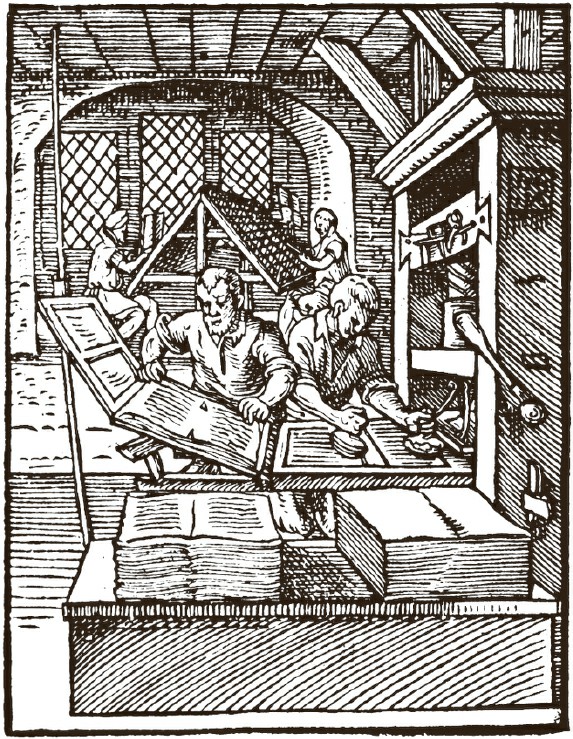
THE INVENTION OF THE PRINTING PRESS BROUGHT HUGE ADVANCES IN KNOWLEDGE DISSEMINATION AND LEARNING.
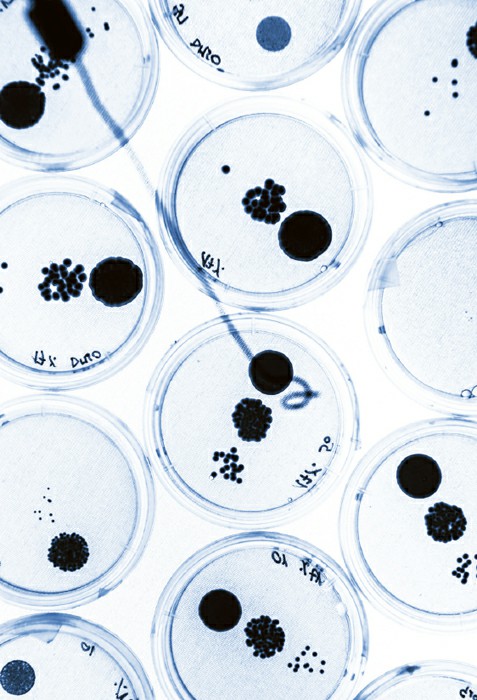
ONE TO FEAR: OVERUSE OF ANTIBIOTICS MIGHT BRING BACK INFECTIONS DISEASES.
Better food also made our immune systems stronger to fight the infection. Science and medicine of course mattered as well. Science became a profession because of increased productivity again, allowing for a better education system. These educated scientists were then ready to make scientific breakthroughs. Perhaps one of the most important was the so-called germ theory of disease propounded by Robert Koch and others. The idea that microscopic creatures were causing diseases like TB that destroyed the lungs seemed preposterous. But it meant that something simple like doctors washing their hands when switching from a post-mortem to delivering a baby made all the difference. A big reason for infant mortality was dirty doctors.
The germ theory was the basis for the discovery of antibiotics and also vaccines. This in turn gave rise to public health – monitoring and treating the health of the public. This is especially important for vaccines, where everybody being vaccinated benefits everybody else because of so-called herd immunity. A certain percentage of the herd has to be vaccinated to outdo the germ. It has insufficient hosts to hide in and so dies out.
In 2015 childhood mortality worldwide was down to 4.3 per cent – 10 times lower than 200 years earlier. As we saw in Chapter 14, vaccines have made a huge contribution to human health. Polio has almost been eliminated from Earth. Smallpox, the scourge of the Dark Ages, is now gone completely. Without a global programme of vaccination, around 4 million cases of measles occurred in the US each year. After the anti-measles vaccine was introduced in 1963 measles was almost eliminated, with only 667 cases reported in 2014, for example2. Again, a quite remarkable statistic.
The second-greatest contribution is antibiotics. Without them, people would continue to die of infectious diseases, which would return as the commonest cause of death (as opposed to cancer and heart disease, which together hold the current title). Surgery could not be performed without them, because of the risk of life-threatening infections in wounds. This is why we greatly fear antibiotic resistance. If bacteria evolve to resist bacteria, as is actually happening, the world will be a very different place, and the successes seen in human health will be severely reduced, back to the era before antibiotics. Let’s hope we can use our ingenuity to outwit the bugs, otherwise they will kill us. I can hear them. They’re laughing at us now.
The decrease in infant and overall mortality with less poverty is the main reason for population growth. The Chinese of course had a problem with overpopulation, and so introduced the one-child policy. This was a very sensible thing to do to try to limit the population, which was felt to be growing at too fast a rate, although it did create problems such as forced abortions. But it reflected the increased fertility in China because of better income and health, a worldwide phenomenon. Some estimates have fertility in the pre-modern era (meaning before the Industrial Revolution) as high – five or six children per woman.
What kept the population down, however, was the rate at which children and babies died. Population growth happens because of high fertility and low mortality. A strange and somewhat counterintuitive consequence of decreased infant mortality is a decrease in the birth rate. It looks like once women realise that the chances of their baby dying has decreased, they choose to have fewer children. This has been shown to be the case in country after country over the past 200 years.
As a result population growth comes to an end, which is increasingly the case on Earth. This is called the ‘demographic transition’. The numbers are interesting. In those countries that industrialised first (e.g. the UK) it took 95 years for fertility to decline from above six children per woman to under three. Other countries that have industrialised more recently had an even faster demographic transition. South Korea went from six babies per mother to fewer than three in just 18 years. In Iran it was even faster: the demographic transition happened in only 10 years. Overall though, the global population has increased four-fold during the 20th century.
In this century this will be much less. A doubling of the population by 2100 will be viewed as being remarkable. The current projections are that the Earth’s population will stop growing around 2075, and will then start to decline. It may go back up again in the future as women decide to have more babies in an underpopulated world. One thing is clear, though; the more educated a woman is the fewer children she will have. Education would appear to broaden horizons and decrease the rate of babies being born. It could be that education delays the time for when a woman will have a baby, and some women leave it too late, as their fertility has then declined. Whatever way you look at it, women were freed from the relentless treadmill of having babies and then watching half of them die. That is real progress.
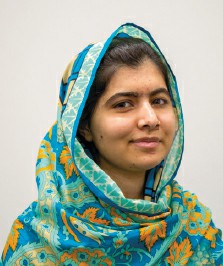
MALALA YOUSAFZAI, AN ADVOCATE FOR EDUCATION. LITERACY USED TO BE THE PRESERVE OF RICH MEN. NOWADAYS 85% OF THE WORLD’S POPULATION ARE LITERATE, A PARTICULAR ADVANCE BEING AMONG WOMEN.
Education is of course the key to all the progress that has been made. It is straightforward to project the future of education. A literate young woman today will be a literate old woman in 2080. A secondary school student will become a university student in the future. Education is self-sustaining, and the good news is that more and more of the world’s population are getting educated. This trains the minds of our children, drawing out what they’re good at, and then they grow up and make their difference, in an autocatalytic manner. Money spent on education is never wasted.
Current projections have, by 2100, 7 billion people on Earth who will have received an education at least up to second level. Again, this is a huge achievement for Planet Earth. The value of education has of course been recognised for centuries. As the astronaut John Glenn said, ‘Everywhere that Americans spread off the Eastern seaboard, heading west across the country, they put up the schoolhouse first, hired a schoolteacher and put all the kids in school.’ Without education we don’t have the scientists, engineers, businesspeople and doctors who make a difference to our society. Education could be seen as the most important thing to get right, for the lives of people on Earth to continue to improve. This is why teachers are so important – they open the mystic portal for the student to go through. Education unleashes talents and capabilities. So stand up, teachers – you are the most important of people.

NO MORE WAR? MY FATHER, KEVIN O’NEILL (LEFT) IN THE WESTERN DESERT, NORTH AFRICA IN 1942. HE DROVE A SHERMAN TANK WITH THE BRITISH EIGHTH ARMY AT THE BATTLE OF EL ALAMEIN IN WORLD WAR II.
That brings us to the final thing that has shown remarkable improvement: peace (not war)3. I once met a pedagogist – an expert on education. She said to me that one of the purposes of a university education is to make people reasonable. Being able to debate with people is critically important to stop wars. More people are living in peace than ever before. We have really Given Peace a Chance.
In the 1980s, military experts, the ones who study war (and peace) as a process, noticed something astonishing. What had been the greatest cause of death (outside infection) – war among great powers and developed states – had effectively stopped. Sabre-rattling had happened from time to time of course (for example the Cuban Missile Crisis between the USSR and the USA), and the nuclear threat was there (and is still there) but no major armed conflicts have happened in some time. This became known as the ‘long peace’, and it has held for over 40 years. The per-capita death rate (which those who study war use as a key quantitative indicator) fell more than tenfold from its peak in World War II to the Korean War, and then dropped even more precipitously, falling an additional hundredfold. Other data show steep drops in genocides and other mass killings. Of course, when we hear about a mass killing we are horrified. They still happen, but a lot less frequently, and let’s hope the downward trend continues.
So as a species more of us are more prosperous than ever before, and we’re living longer, healthier lives. More of us are well educated. And we’re not being drawn into needless wars, the purposes of which are often impossible to interpret. So why is it that most people think things have got worse and will continue to do so, in spite of the evidence staring them in the face? Recent studies have shown that only 10 per cent of Swedes think things will get better. The number was 6 per cent in the USA (the Trump effect?) and 4 per cent in Germany (the Angela effect?).
Psychologists call this phenomenon ‘cognitive dissonance’, where what you see (e.g. a death on TV) points to one thing, but the data doesn’t agree (e.g. lots of people still being alive). Most people assess the world from Facebook or Twitter. As long as they see that violence hasn’t vanished, that there are still explosions and wars going on, they will have a pessimistic outlook. This is in spite of the fact that the vast majority of people aren’t subjected to these events. One problem is that no one wants to report on peace. George Mitchell, Bill Clinton’s special envoy to Northern Ireland during the Troubles, said he longed for the day when the assembly in Stormont would be debating sheep quotas. No one would report on that. They want more bang for their buck.
Perhaps this is a safety mechanism. We are drawn to the more pessimistic position to protect ourselves. To be prepared for the worst-case scenario. To batten down the hatches against the storm that might come. Only by gathering the data (a very important role for all scientists), systematically analysing it and plotting the data over time do we get the accurate picture.
Life for us therefore began as a single cell around 4.2 billion years ago. Evolution then played out according to Darwin’s law of natural selection. Life then became a fight. Cells and organisms were in a competition with rivals for resources, to allow for yet more evolution. All of it random, to get to us: hairless, bipedal apes. A chance in a million or more for us to arise. It could all have been so different. Our ancestors could have become extinct in one of the great extinction events. The dinosaurs could have survived to rule the roost, leaving little room for us.

LIVE LONG, MY FELLOW HUMAN BEINGS, AND PROSPER.
As a species, we’re curious, so we discover all kinds of interesting things. But life was brutish for the vast majority for a very long time. Poverty, infant mortality, oppression, wars, all put upon us for reasons that were never fully explained. And then, things begin to get better. Educated scientists and engineers come along to help. Engineers come up with sanitation strategies. Scientists discover drugs to kill bacteria. Things then improve and improve, and the trajectory says up, up, up. What will continue to improve? Will there be more and more people out of poverty and well above the poverty line? Will we prevent or cure diseases that still afflict us, especially in the developing world? Will the world become more equal? Will robotics and artificial intelligence make a huge difference to our lives? We control our environment like no other species before. As long as we stop making a hames of it by threatening the water or food supply, or continue to destroy our environment, we should be fine.
Every single human being on Earth has a right to continue to reap the benefits of all the science that’s been done in their name and for future generations. It’s been done out of curiosity. It’s been done to make things better, either through enlightenment or for practical benefits. It’s been done to enhance the lives of people. Scientists continue to go boldly, where no one has gone before. Live long, my fellow human beings … and prosper.