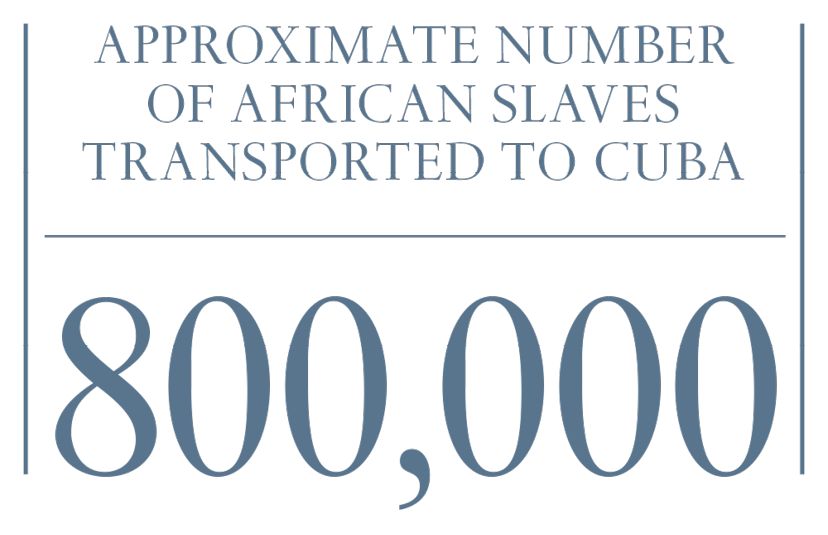
FEW NATIONS REMAINED UNTOUCHED by the railroad boom of the 19th century, and many were affected in remarkably different ways. Cuba was the first country in Latin America to build railroads, but their purpose was very different from those of the US and Europe. Their chief role was to transport sugar—a crop that was grown in vast plantations to satisfy the sweet teeth of the developed world—and so they did little to help the general population. Cuba had become a sugar economy somewhat by accident, after an increase in the price of sugar in the late 18th century made its cultivation highly profitable. Relying heavily on slave labor, the industry grew rapidly in the early 19th century, but transporting the cane to the mills was expensive because of the island’s poor roads. Indeed, in the rainy season, from May to November, the tracks became muddy and rivers flooded, making movement almost impossible. What was needed was a railroad to shift the cane swiftly and cheaply—from the plantations to the mills for processing, and then on to the coast where it could be shipped abroad. Such a line was duly built, and the crop that was brought to Cuba by Christopher Columbus in 1493 found its way back to Europe in unprecedented amounts, making fortunes for Cuba’s sugar barons.
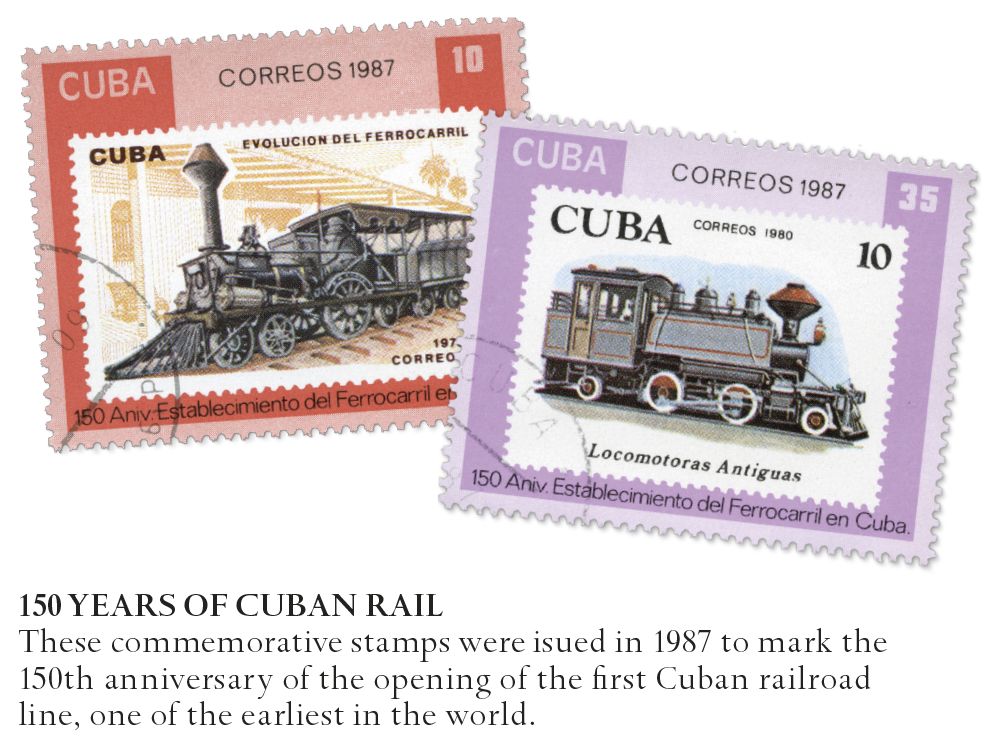
Throughout the 19th century, Cuba was a Spanish colony, but its railroad opened long before that of its imperial master. Indeed, although Cuba was undeveloped and wretchedly poor at the time, it was one of the first countries in the world to build a railroad—by the time its first line opened in 1837, only six other countries had railroads. In 1830, just as the Liverpool and Manchester line was being completed in Britain (see Liverpool and Manchester line), leading plantation owners in Cuba set up a commission to consider building a railroad network. In 1834, once a route had been established and sufficient funds raised, work started on a 46-mile (74-km) line between the capital, Havana, on the coast, and Güines, inland on the Mayabeque River.
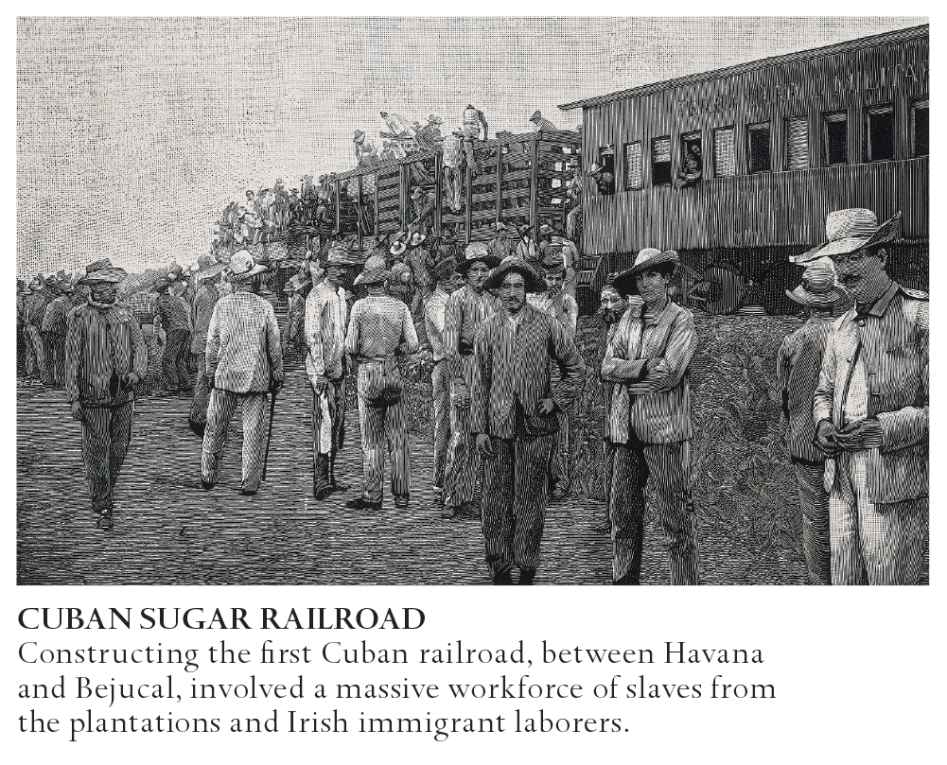
It was a grand and sophisticated operation. The first part of the 16-mile (26-km) route, from Havana to Bejucal, climbed to 320ft (98m) above sea level, a very steep grade for a railroad at the time. The line also had several bridges, the longest of which, across the Almendares River, needed 200 supporting pillars. Moreover, unlike many other early lines, the Cuban railroad was designed to have two tracks right from the start. To supplement the thousands of slaves owned by the railroad company, workers were brought in from abroad to help construct the line. These were largely Irish immigrants who had only recently reached the US, and men from the Canary Islands, which was also under Spanish rule. The new arrivals did not thrive. The Irish in particular suffered, being unused to the tropical climate, which was at its worst during the rainy season. Badly fed and poorly sheltered, large numbers of workers succumbed to the effects of tropical diseases. Many of them also turned out to be drunks and quickly found themselves in the filthy colonial jails, where they soon perished. The survivors found that when their contracts ended the railroad companies did not fulfil their promise of returning them to the US, and they were left to wander the streets of Havana, penniless and destitute. The Canary Islands immigrants fared little better, even though they spoke Spanish. Their employers considered them more likely to try to escape, so they were treated like prisoners on the work sites. Forced to work up to 16 hours per day, many of them died of exhaustion.
The project ran out of money, but new investors stepped in and the first section of the Bejucal line was completed by 1837, just three years after work had begun. The locomotives and engineers were imported from England, and when the section to Güines opened the following year, the railroad boomed. Although it was primarily intended for freight, passengers flocked to the railroad too, generating as much revenue as the sugar in the early years. There were two trains a day in each direction—a 30-car freight train, and a seven-car passenger train.
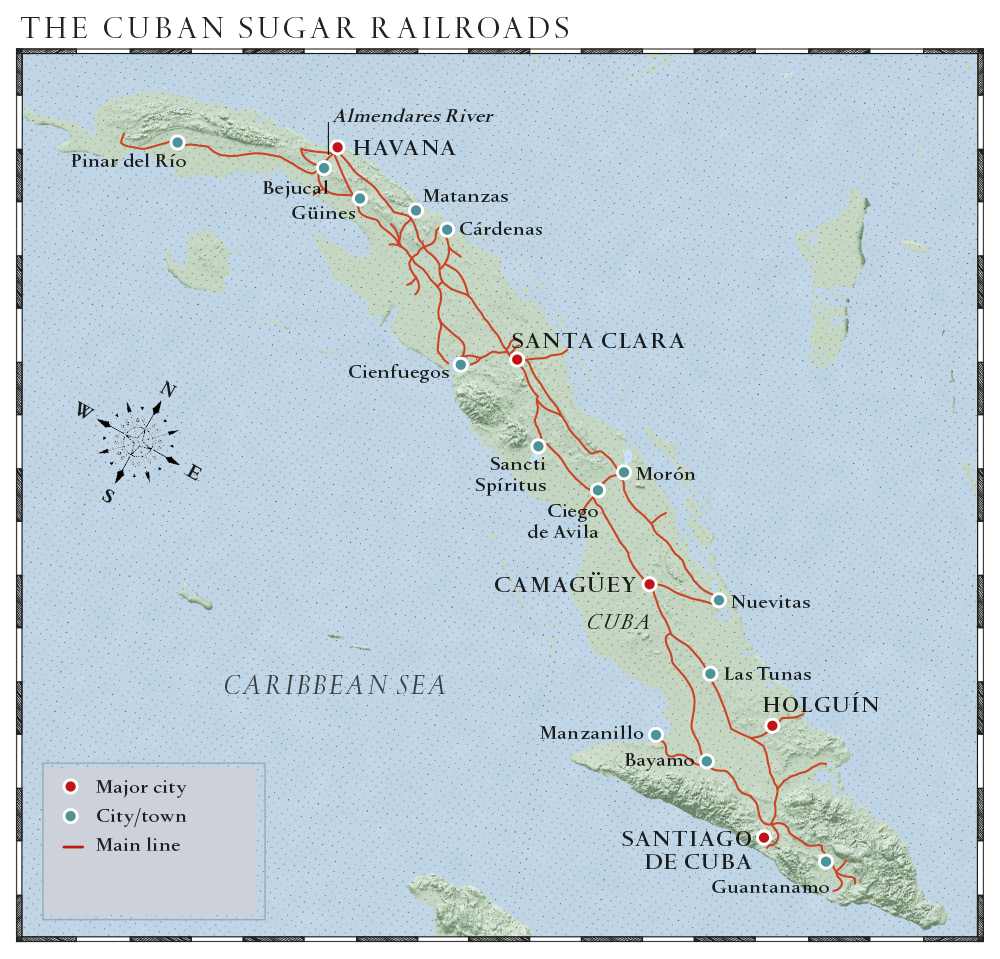
The success of the line prompted further railroad construction. The first section of a second line—built to bring sugar, molasses, and rum to the port of Cárdenas—was completed in 1840, after which the system expanded rapidly. A decade after the first line opened, the area around Havana was criss-crossed with lines connecting all the neighboring districts, and the sugar industry boomed as a result. In 1846, Havana alone had 169 sugar mills producing more than 40,000 tons of sugar and 45,000 barrels of molasses each year. The railroads serving these mills were highly profitable, but they were geared so specifically toward the sugar industry that they provided little support to other industries, or indeed to passengers. They were built purely to help sugar merchants export their produce, and so were not treated as commercial enterprises. Unlike in Europe and the US, where every railroad junction soon became a bustling town, the railroads did not stimulate urban development in Cuba.
By 1852, nine companies had built a total of 350 miles (565km) of track, although the pace of growth slowed down due to a slump in world sugar prices and a clampdown on slavery. However, sugar prices recovered, stimulating a second boom in railroad construction. The Crimean War of 1854–56 raised prices even higher—sugar was already a global commodity, and the war diverted British shipping from carrying sugar from Asia, creating a surge in demand. The sugar barons found themselves with enormous amounts of cash, which they used to invest in more and more railroads. Consequently, the amount of track laid reached 800 miles (1,288km) in 1868, providing this impoverished island in the Caribbean with one of the densest railroad networks in the world. It was bettered only by a few major European nations, and in fact had more miles of track per inhabitant than any other country in the world—more, even, than England, the mother of the railroad.
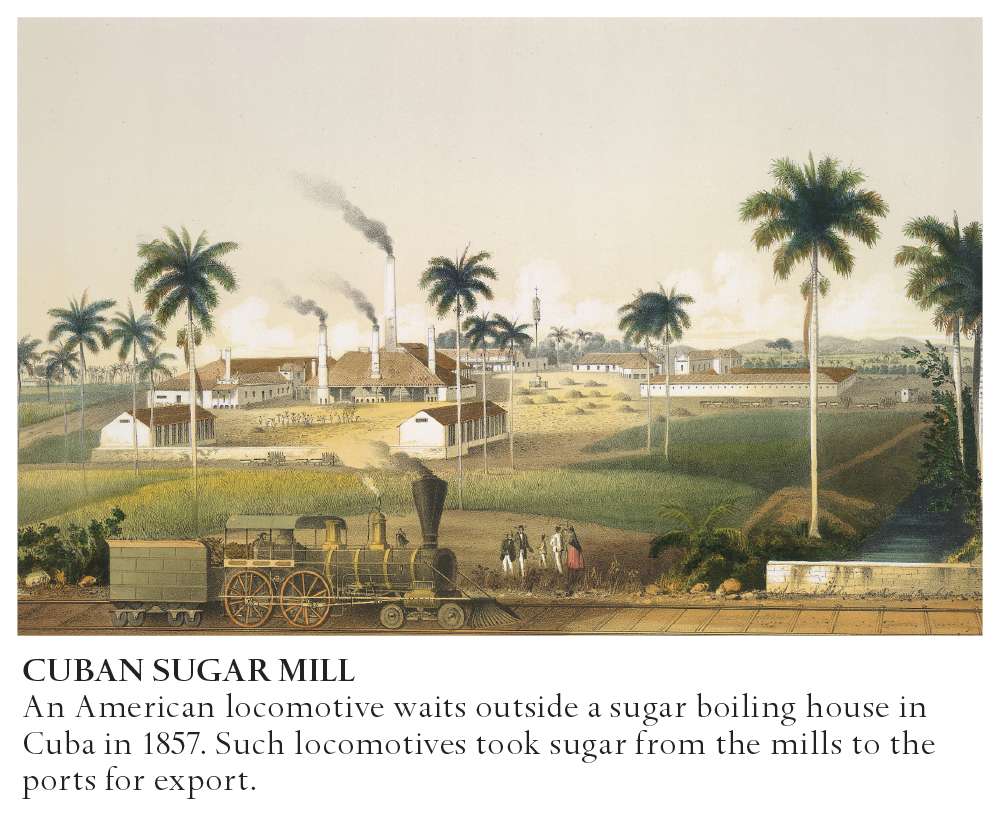
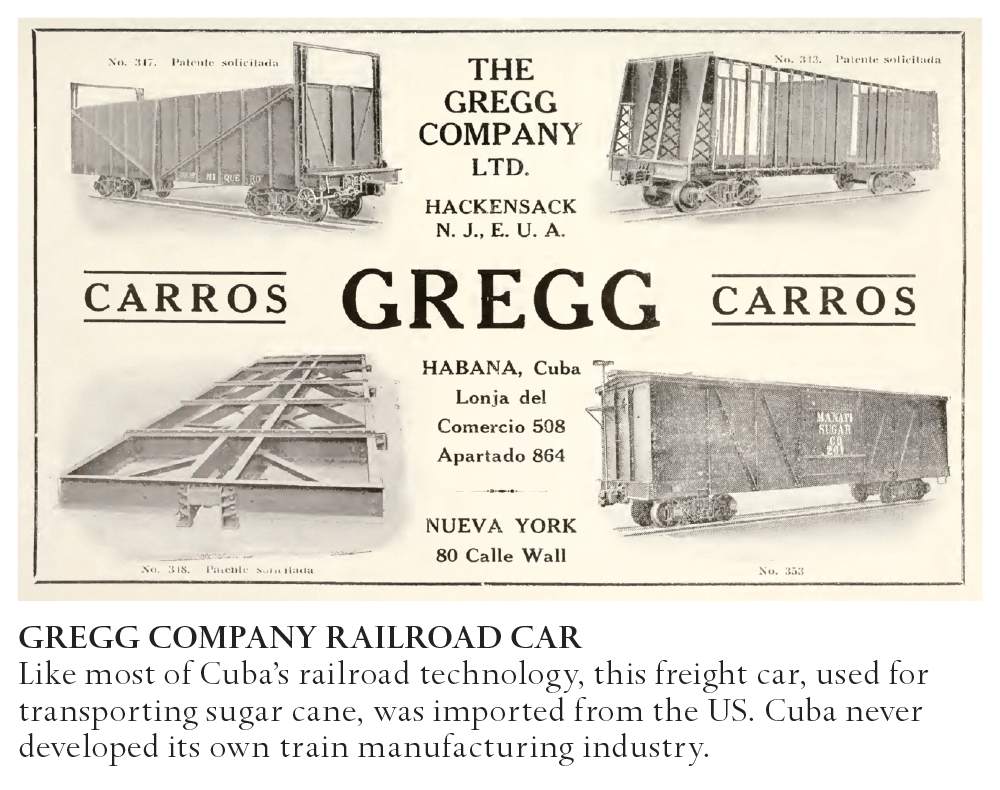
By the late 19th century, the Cuban railroads had reached a remarkable 5,000 miles (8,000km) of track, half of which were standard-gauge lines designed to shift sugar out of the plantations and sugar products from the mills. The rest were mainly narrow-gauge tracks, often crudely laid, for hauling cane on the plantations themselves. Unfortunately, however, not only did the railroads fail to serve passengers, they failed to stimulate the economy, for they remained dependent on British and US technology: no Cuban supply industries were ever established. If anything, the railroads had a rather damaging effect on the wider economy—they exacerbated the differences between the rich areas, which benefited greatly from their construction, and those that were poor, which became even more neglected. They were also concentrated in the affluent western half of the island. Only a handful of lines were built in the east, where there were few plantations. Crucially, the east–west line connecting the two halves of the island was not built until the 20th century, because it required a government subsidy, which was not forthcoming. As the authors of a study of the Cuban railroads argue: “the railroad development of the first decades lacked the long-term perspective that would permit the growth of a national grid.” In fact, the economic effect of the railroads was quite perverse. By making the plantation owners so rich, they helped perpetuate the slave system that might otherwise have collapsed.
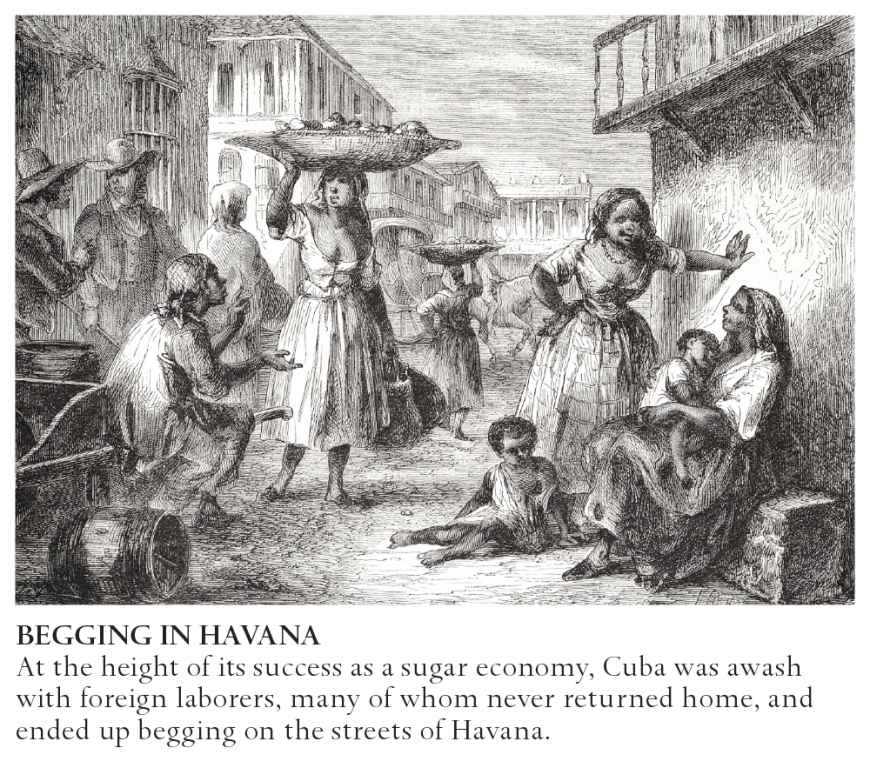
The railroads’ dependence on the sugar trade was ultimately their undoing. They were profitable as long as sugar boomed, because there was no other form of transportation. In the late 19th century, however, another collapse in sugar prices rocked Cuba’s economy, leading to the takeover of the railroads by British investors. Few lines were found to be viable, so much of the network was shut down. By the early 20th century, the remainder of Cuba’s railroads were entirely owned by British and US companies. These monopolized the western and eastern networks respectively, but the stagnation of Cuba’s sugar industry drove the railroads into crisis. The spread of the motor car and improvements in Cuba’s roads only deepened the railroads’ problems, which would only be solved when the network was nationalized in the late 1950s.