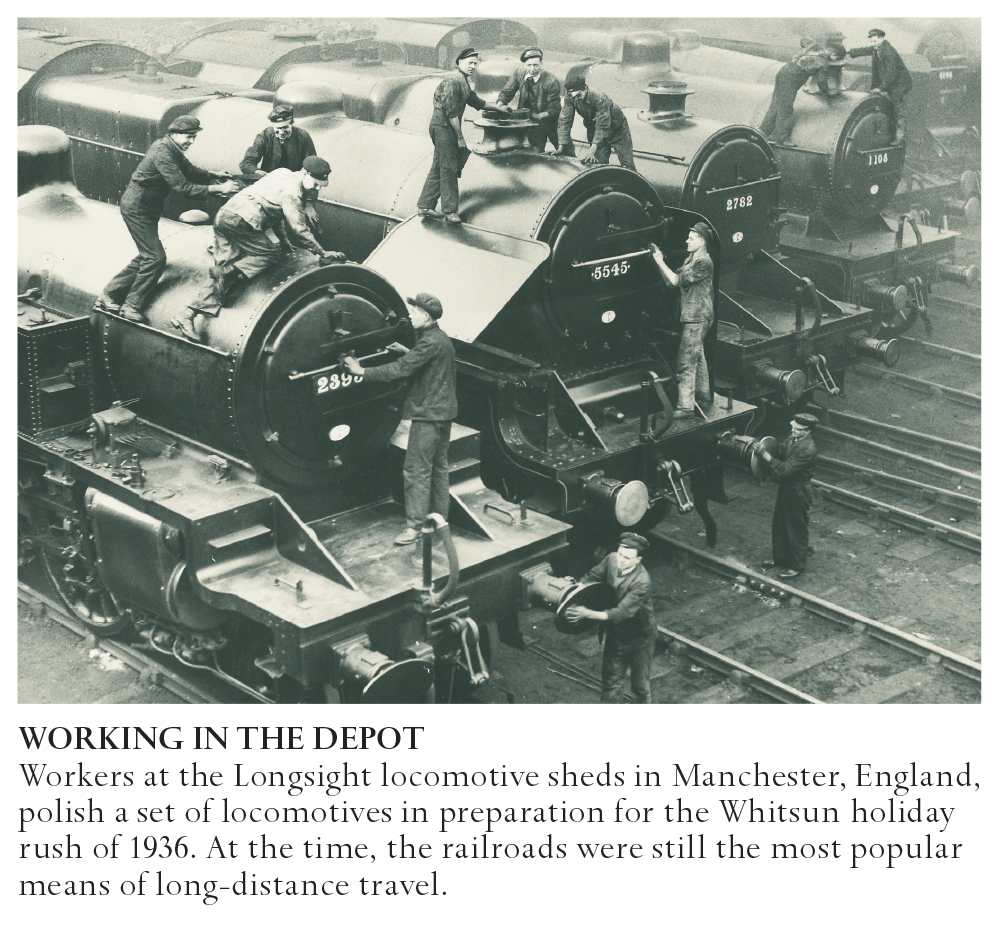
The railroads reached their apogee just before the outbreak of World War I. Trains were now safer, cheaper, and faster than they had ever been, and reached virtually every sizeable town and village in the developed world. The United States was the world’s leader, with more than 250,000 miles (400,000km) of line. Inevitably, it was the railroads that bore the brunt of coping with the huge transportation demands of the war. Not only did they take virtually all the war materials to ports for dispatch overseas and to the front, but they also carried millions of men off to war, and brought the casualties home. Indeed, the armies built whole networks of narrow-gauge lines to carry men and supplies right up to the front line. Railroads inevitably became targets during the conflict, notably in the Middle East, where Lawrence of Arabia led a series of assaults on the Hejaz Railway controlled by the Ottoman Empire.
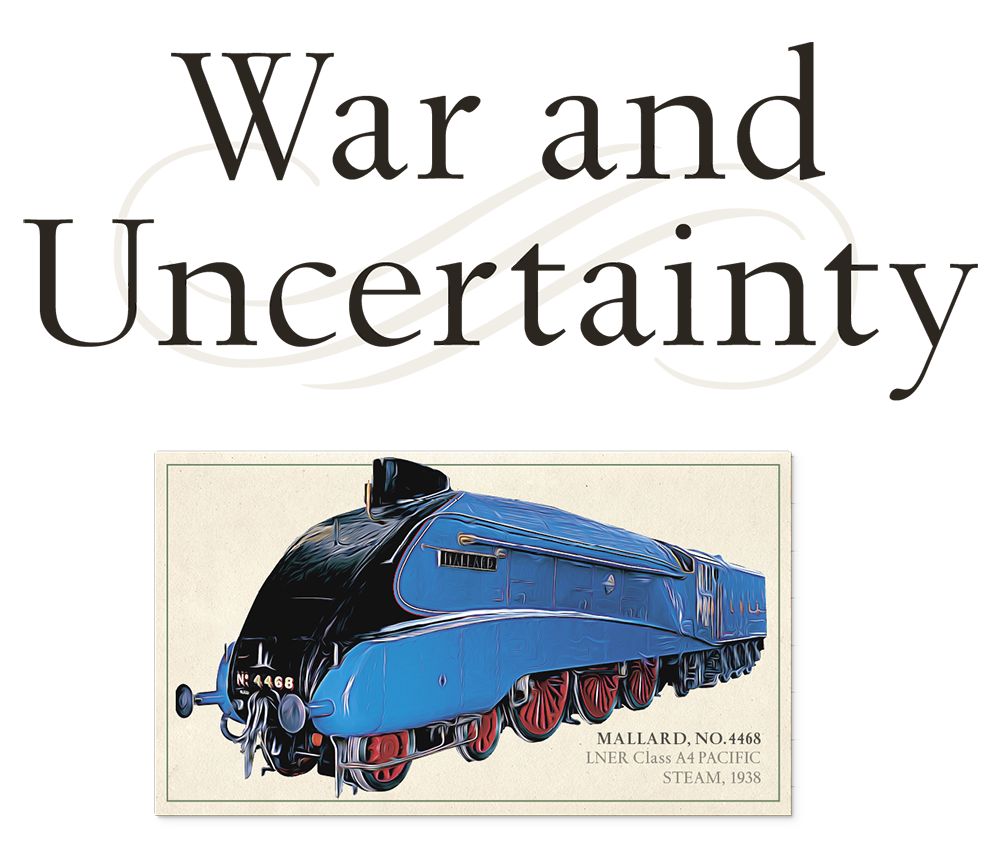
After the war, the railroad companies began to realize that they had to look for alternatives to steam locomotion. There had been some electrification before the war, but now diesel was being considered, and both the Germans and the Americans created fast new diesel services in an effort to improve journey times. Attempts were still made to modernize steam locomotives, however, and the fastest ever speed by a steam engine was reached in 1938 by the British locomotive Mallard.
The railroads remained prominent in World War II, in which they saw their darkest hour—millions of Jews and other minority groups were transported by train to the German concentration camps, and thousands of prisoners died while constructing the Burma–Siam railroad. Elsewhere, they played a vital part in the eventual Allied victory over the Germans and the Japanese. However, the railroads were poorly treated after the war—as soon as hostilities ended, services closed in many countries as competition from road transportation and aviation intensified.
IN MANY WAYS, THE IDENTIFICATION OF a “golden age” of rail is difficult. At various times there were many incredible railroads in operation, and several companies undoubtedly enjoyed relatively long periods of prosperity, but trouble always seemed to be around the next bend. The problems came in varied forms—safety issues, worker dissatisfaction and unrest, the need for further investment to improve services and cope with new technology, the whims of hostile governments, and, perhaps most crucially, the arrival of new methods of transportation, such as the car, the semitruck, and later the airplane.
Initially, however, the railroads had a crucial advantage: for nearly the whole of the first 100 years following the opening of the Liverpool to Manchester line in 1830 (see Liverpool and Manchester line) they were the only feasible form of transportation for many types of journeys. Thanks to the railroads, passengers could travel across whole continents, journey between a nation’s major cities, commute between town centers and suburbs, and even reach remote villages—and freight, too, could be moved swiftly over great distances. By the beginning of the twentieth century, the railroads had become a sophisticated industry—larger and more influential than any other in existence at the time—and in the years leading up to World War I in 1914 they reached the apogee of their power. It was a time when the car was still the province of the rich and the lorry was an unreliable contraption, and both had to cope with roads that, for the most part, were rutted muddy tracks. It was a brief heyday for the railways, but it was one that had deep and lasting effects.
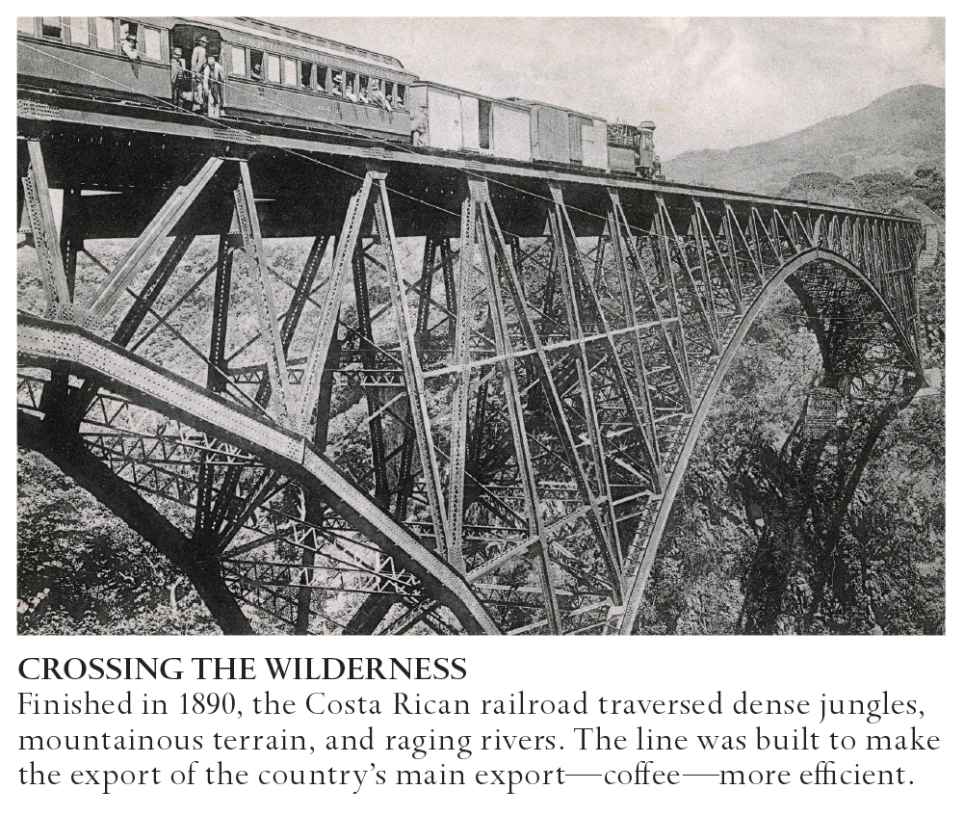
By 1914, virtually every country in the world had entered the railroad age. There were no absolute boundaries to the spread of the railroads, and even the toughest natural obstacles—jungles, mountains, rivers, and deserts—could be overcome by clever engineers. Latecomers, ranging from Costa Rica (1890) to Hong Kong (1910) and Morocco (1911), joined the established railroad nations in Europe and the Americas, extending the iron road across most of the globe. The United States, Europe, and Asia could boast transcontinental lines. Even some small islands had substantial systems. Sicily, the biggest island in the Mediterranean Sea, had more than 1,500 miles (2,400km) of line at the peak of its railroad age, and even the Isle of Wight, measuring just 150sq miles (380sq km), boasted 55 miles (89km) of line by the turn of the 20th century. In the Caribbean, the island of Cuba had 64 miles (103.5km) of railroad by 1849, mostly for carrying sugar.
Most countries embraced the railroads, particularly as their spread seemed so inevitable, but there were some exceptions. China was the last major nation in the world to give in to the incursion of the iron road. Even when the first line was finally built between Shanghai and Woosung in 1877, opposition to it was so strong, partly because it had been financed by foreign interests, that it was dismantled a year later. Gradually the powerful Chinese mandarins, or administrators, were persuaded of the necessity of joining the railroad age, although by 1895 a mere 18 miles (30km) had been completed. In contrast, today China has more high-speed rail lines than any other country (see China, the New Pioneer).
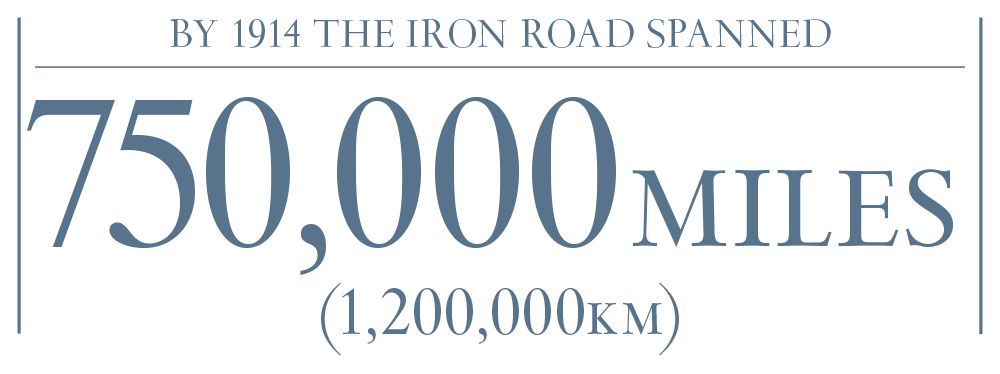
For the most part, railroads played a key role in connecting the world in the 19th and early 20th century. Thanks to their facility for carrying both passengers and freight in large numbers, railroads began the process of globalization that was carried forward in the late 20th and early 21st centuries by airplanes and information technology. In the latter years of the 19th century and the start of the 20th, railroads across the world grew on average by 10,000 miles (16,000km) per year, making many towns and villages accessible to the outside world for the first time.
The precise impact of the railroad varied across the world, but it was invariably profound. Unlike roads, which need little day-to-day attention, railroads require constant maintenance, such as patrols that ensure the good condition of the track, and investment, such as replacement of rails and signaling equipment. Therefore, once the railroads arrived, they transformed the economy and, inevitably, the character of a region. In fact, the railroads were a revolutionary force in both predictable and unpredictable ways. The most obvious advantage was a reduction in the cost of transportation. Consequently local produce, whether it was crops, minerals, or manufactured goods, could be transported more cheaply to national or global markets. The mail-order industry grew hugely at this time, as the railroads transported all sorts of mail-order goods to the newly connected citizens. The railroads also stimulated international population movement: immigrants arrived in the US by ship but then transferred to trains to fan out across the country. Indeed, many of the tracks were built especially to transport the influx of workers to industrial or agricultural centers, and then to transport away the results of their labors. Within countries too, the railroads were a catalyst for the vast migration of people—the towns and cities became attractions for people from the countryside who could now relocate far more easily.
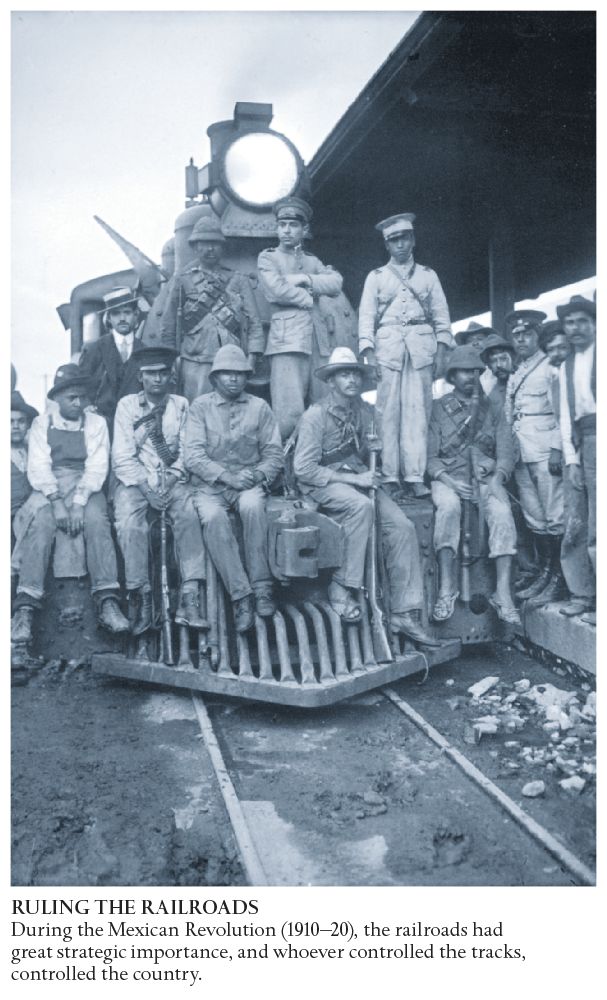
British economist Alfred Marshall, writing in 1890, summed up the influence of the railroads and the industrial boom they had stimulated: “the dominant economic fact of our age is the development not of the manufacturing but of the transport industries.” Another important outcome of the railroad boom concerned the workers and industries that supported the railroads themselves. The railroads required a whole set of new skills to enable them to run very large enterprises so, according to the railroad historian Terry Gourvish, “it is not an exaggeration to say that the [rail] industry played a key role in encouraging the growth of occupational professionalism based on specialized work. Engineering, law, accountancy, and surveying all received an important stimulus.” Banks developed new loan systems in order to provide investment capital, universities stepped up to supply competent engineers and surveyors, and factories of all kinds were built to manufacture the vast array of equipment needed, ranging from huge steel components such as boilers and wheels for locomotives to soft furnishings for seats and panels for train roofs.
Furthermore, the railroads affected other industries. By making transportation cheaper, they enabled similar factories to be concentrated in particular areas, which enabled the easy transfer of skills and experienced workers. The railroads also stimulated small-time capitalism, empowering many people previously restricted by their geographical isolation. In Mexico, Teresa Miriam van Hoy, the author of a social history of the railroads, found that the railroads introduced local competition in more remote regions since they:
prompted the arrival of multiple suppliers, thereby breaking any monopolies or market strangleholds, and provided smallholders affordable access to markets beyond their local community.
In Russia, the village money-lender became redundant because the local peasants were now able to travel to the town market by train to sell their produce and turn it into cash. The new stations, according to one contemporary writer:
swarmed with a mass of small traders, exporters, and commission merchants, all buying grain, hemp, hides, lard, sheepskin, down, and bristles—in a word everything bound for either the domestic or the foreign market.
Many of the lines built, especially in the latter stages of the railroad boom, were unprofitable but nevertheless had a lasting effect on the region they served. A railroad built in Senegal in 1885 as a way of establishing French colonial rule became a vital lifeline for the economy as, according to one historian of the African railroads, it allowed “the rubber, the cereals, and the peanuts from a rich hinterland to reach the Senegal river and transported [back to] the interior manufactures produced on the coast, such as textiles, foodstuffs and machinery.” This story of economic opportunity was replicated across the world.
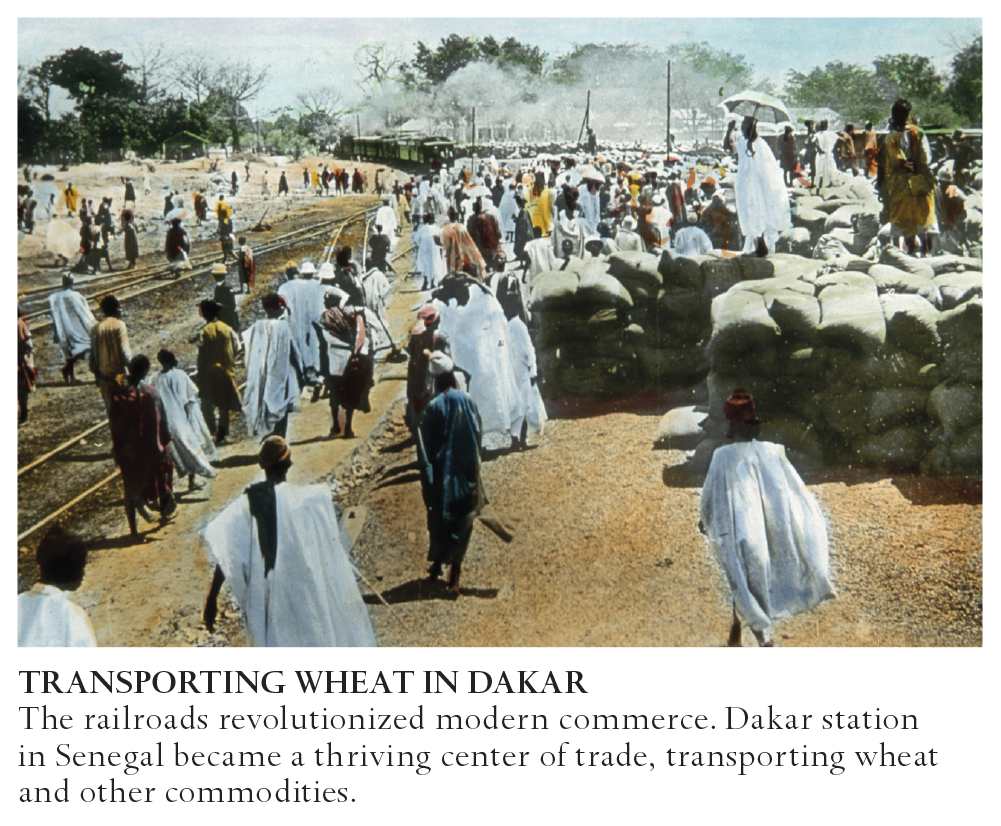
The railroads not only revolutionized existing industries, they also helped to create new ones: in the US, Birmingham in Alabama was a sleepy backwater until it was transformed into an industrial center by the Louisville and Nashville Railroad, which provided favorable freight rates, thus enabling the iron ore deposits at nearby Red Mountain to be exploited. The wine industry also developed, and not solely because of the cheaper transportation. In Argentina, wine production centered on the inland town of Mendoza and, as European immigrants arrived by train, they modernized the small existing vineyards and then exported their vastly increased yield via the railroads. Italian favorite Chianti became a regular feature of French and British restaurant tables thanks to quicker, easier access to wider markets. In other regions the taste of wine improved notably thanks to the railroads. As the rail historian and wine writer Nicholas Faith recounts, “in pre-railway days, many wines tasted decidedly resinous because they had been carried on mule-back in hog skins painted with pitch.”
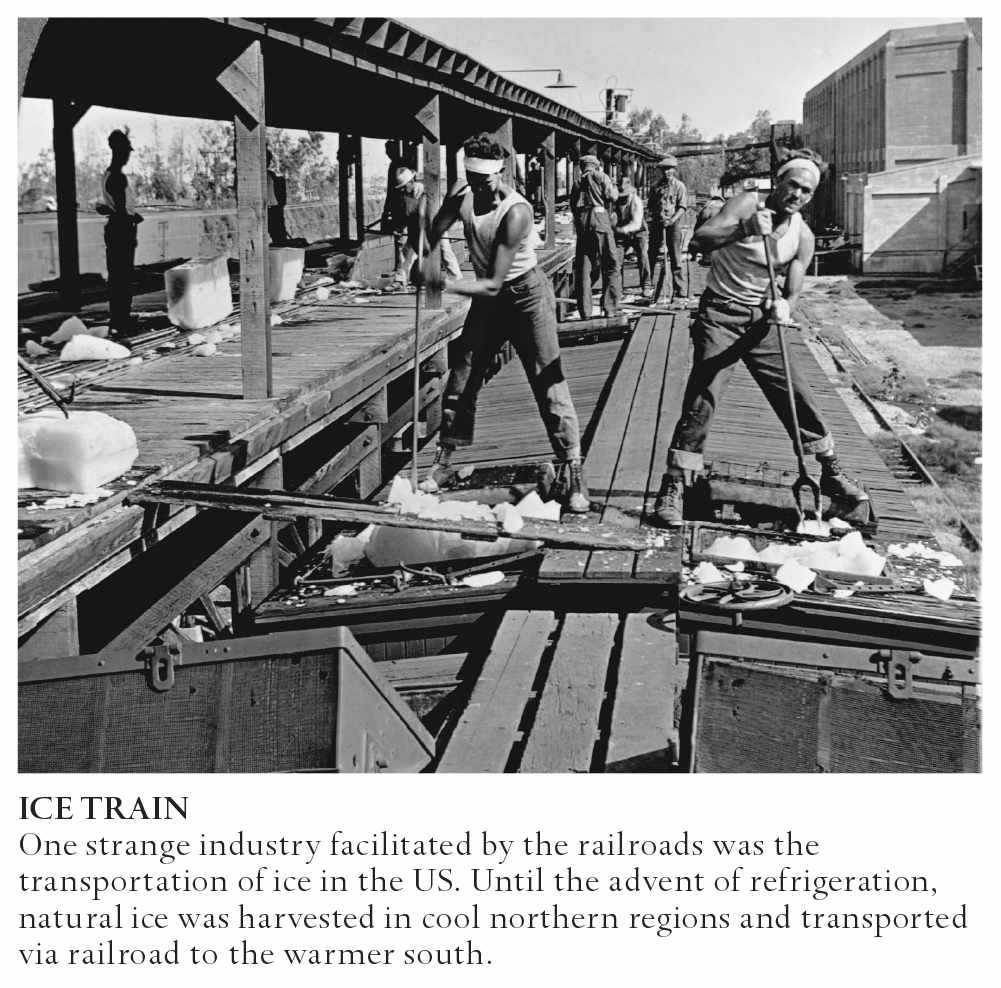
It was not only industries and economies that were affected by the railroads. Even the lives of those who could not afford train fares were improved by the railroad’s existence. In many countries, particularly in South America, Asia, and Africa, the railroad provided the only safe thoroughfare for pedestrians—provided they did not get in the way of the trains, of course. The railroad lines forded rivers and canyons and cut through mountains far more efficiently than the old mule paths that were circuitous and badly maintained. Pipelines also followed many railroad routes, bringing water to many towns and villages for the first time. Even the station buildings became prominent local landmarks. They were often the most imposing building in the area, or even the only permanent ones, and they were frequently used as community meeting places. Every railroad also had a telegraph system, which allowed faster communication than ever before. Finally, thanks to the iron road, people were free to travel around spreading ideas, and information and newspapers could be distributed easily. Thus, the wider dissemination of democracy, and other political and social ideas, can be attributed—at least in part—to the railroads.
By 1914, in many countries, the railroad network was virtually complete. Consequently, the railroad companies were able to focus investment on improvements, such as faster locomotives or straighter track. Moreover, they could also devote substantial resources to making life more comfortable for passengers, especially those at the luxury end (see The Pullman Phenomenon) of the market. These included elegant dining cars, comfortable sleeping facilities, and luxurious waiting rooms. At the other end of the scale, however, there were still lots of lousy trains. A branch line shuttle might run only a couple of times a day, and was not only slow but also subject to regular delays—the passenger cars might be pulled next to freight cars, which could be switched out at various stops along the way, slowing progress. The local trains that meandered between mainline towns often used the oldest rolling stock and made their way in a desultory fashion, waiting patiently on sidings for express trains to pass. Timetables were also subject to all kinds of vagaries, and were often designed for the convenience of the railroad company rather than its passengers. The railroads were unchallenged and the companies took full advantage, with many making healthy profits by charging high fares and bullying their smaller rivals to improve their own position. Worst of all was the grime—steam locomotives were dirty machines, spewing smoke and grit wherever they went.
So, while for a short period the railroads were king, their dominance could not last. By 1914, the railroads had done their job as the catalyst for the creation of the modern world. The world would never be the same again, but nor would the railroads. By the end of the World War I in 1918, semitrucks had become more sophisticated and would soon offer viable alternatives to rail freight transportation. Moreover, in the coming years the automobile would become ubiquitous, further reducing the dominance of the passenger railroad.