
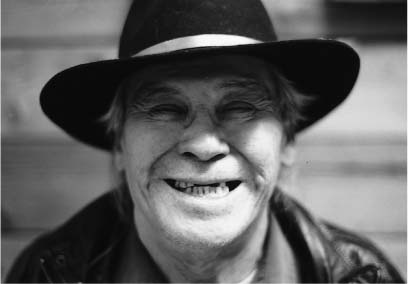
MELVIN EAGLE (b. 1931), whose Anishinaabe name is Miskwaanakwad (Red Sky), is a gifted oratorical artist. He grew up hearing legends told by his grandfathers Chief Migizi and Jim Littlewolf, both of whom were prominent religious and political figures in their community. When he was a boy, his uncles and a number of older men from the community at Neyaashiing forced him to sit and listen to their stories about history, culture, and daily life.
When he was first sent to day school at Onamia, Minnesota, Melvin spoke nothing but his first language, Ojibwe. The school was conducted entirely in English, and, through the power of immersion and embarrassment, Melvin quickly acquired knowledge of the English language. However, he never forgot Ojibwe, and, throughout his schooling in reading, writing, and arithmetic, Melvin continued to be instructed about Big Drum, hunting, fishing, and ricing by numerous elders in his community.
As a young man, Melvin was commissioned to hold one of the permanent seats on the Mille Lacs Big Drums. There he began his formal education in the songs and speeches used at the ceremonial dances. He would eventually become a member on the Ladies Drum at Mille Lacs and two more Big Drums. The miraculous story of his healing at the Drum and his reaffirmed faith in Ojibwe culture is detailed in the following narratives.
As Melvin approached middle age, his knowledge of the Drum and fluency in the language proved to be assets well appreciated by his peers, and on one of the Big Drums Melvin was raised up to the position of Drum Chief. From then on, Melvin was to be not only a student of Indian ways, but also an increasingly recognized and respected teacher of Ojibwe culture.
Melvin worked several jobs, sometimes as far away as Minneapolis. However, he never relinquished Mille Lacs as his home base and spiritual center. In his retirement, Melvin is busier than ever. He was recently seated as the first Oshkaabewis on the Big Drum at White Earth, and he uses that position to teach the proper means of conducting the ceremonies. He also travels frequently to participate in Drum ceremonies at Round Lake, Lake Lena, East Lake, and elsewhere.
In December 1997, I was in Mille Lacs for the dance at which Melvin’s Big Drum was being used. I stayed at Melvin’s house to visit and to record some Ojibwe stories. As I flipped on the tape and Melvin began to speak, I was astounded by the depth of his knowledge and experience, as well as his gift for gab. Melvin filled up one side of my 120-minute tape and, when I flipped over the tape, he continued to speak, nearly filling the second side as well. He only used one English word—Batiste—the name of a Mille Lacs elder. Everything else was unwavering, fluent Ojibwe, full of inspiring thoughts about the importance of language and culture as well as humorous reminiscences about Melvin’s learning process and the actions of various elders around him. I had goose bumps at parts of his story and laughed out loud at others.
By the time he was finished speaking, Melvin had shared a great deal of information about numerous learned elders—gekendaasojig—and the process of acquiring their knowledge himself—gikendaasowin. Ultimately, we broke his long narration into several stories for ease of access and reference. However, all of Melvin’s stories in this book were originally connected as one piece of verbal art. Humble, open, and very entertaining, the stories vividly describe Ojibwe cultural beliefs from hunting to Big Drum ceremonies—the Anishinaabe gift of gikendaasowin.
Gimishoomisinaan
[1] Ahaaw-sh iwidi mewinzha go daa-gii-pi-agaashiinyiyaan iko gii-pabizindawagwaa akiwenziiyag gii-pizindawagwaa ko waawiindamawiwaad gegoo iwidi ko mewinzha o’ow indazhindaan. Owidi mewinzha ko gii-kichi-naaniimi’idiiwaad Gaa-waababiganikaag gii-izhaa gii-pi-onjibaad gaa-onji-ondaadiziyaan gaye niin. Wa’aw akiwenzii iwidi Gaa-waababiganikaag gii-onjibaa. Owidi gii-pi-niimi’idiid omaa, omaa o’ow ikwe-dewe’igan omaa gii-tibendaagozi omaa nookomis. Miish imaa nimishoomis gaye gii-pi-wiidigemaad gii-pi-niimi’idiiwaad ko. Mii imaa gaa-izhi-ondaadizid nimaamaa.
[2] Miinawaa-sh gegoo nisiwag ingiw gwiiwizensag imaa, iwidi Gaa-waababiganikaag. Ma’iingaansag gii-izhinikaazowag. Miinawaa aya’aa iwidi bezhig a’aw wiijikiwending. Gaawiin ingikenimaasiin ezhinikaazod a’aw akiwenzii gii-wiidigending Gaa-miskwaawaakokaag. Mii gaye wiidiged imaa-sh gaye wiin akiwenzii imaa-sh besho iwidi Gaa-waababiganikaag. Mii iwidi gaa-onjibaawaad ingiw Ma’iingaansag gaa-izhinikaazojig.
[3] O’ow dash akiwenzii imaa ingii-waawiindamaag ko gii-pi-naaniimi’idiiwaad iko biboong gii-paa’igoowaad iko miinawaa go sa ingoji aabita gii-tazhi-daawag ko gii-pi-azhegiiwewaad imaa gii-pi-niimi’idiiwaad. Mii eta ko gii-pi-anokiiwaapan gii-niimi’idiiwaad miinawaa go mawadishiwewaad gaye wii-ishkwaa-niimi’idiiwaad gigizhebaawagak. Miinawaa aangodinong ko niiyogon ko gii-niimi’idiiwag omaa. Mii omaa Neyaashiing akeyaa gii-kichi-naaniimi’idiiwaad iko ongow dewe’iganag.
[4] Mii iwidi akeyaa dewe’iganag gaa-pi-onjibaawaad bwaanakiing. Niibowa eyaajig omaa o’ow dash dagoshinowaad omaa ingiw dewe’iganag. Mewinzha ko ongow anishinaabeg gii-miigaanaawaad iniw bwaanan. Gaawiin igo sa gikendanziiwag. Gii-maanendiwag apane ingiw bwaanag miinawaa go anishinaabeg, gii-miigaanaawaad iniw bwaanan. Gaawiin ongow anishinaabeg odaa-gii-miigaanaasiiwaawaan iniw bwaanan. Ayi’iin dash iniw baashkiziganan ogii-ayaanaawaan wiinawaa go anishinaabeg iwidi gii-pi-onjibaawaad akeyaa wendaabang. Omaa gii-pi-dagoshinowaad gii-minwendamowaad o’ow aki. Mii gaa-onji-miigaanaawaad iniw bwaanan. Gayesh imaa gii-izhaawaad ingiw bwaanag akeyaa bangishimog gii-kiizhikawaawaad. Gayesh ingiw bwaanag gaa-shawenimaawaad iniw dibishkoo gii-maanendiwag sa go. Miish ingiw bwaanag gaa-izhi-inendamowaad i’iw wii-miinaawaad iniw dewe’iganan, dibishkoo go akeyaa o’ow apane gii-miigaadiwaad dibishkoo go gii-shawendiwaad; gii-shawenimaawaad iniw anishinaaben i’iw gii-niimiwenigoowaad. Mii gaa-pi-onji-maajii-izhaawaad ingiw dewe’iganag imaa gii-pi-dagoshinowaad ingiw dewe’iganag.
[5] Dibishkoo go i’iw gii-ani-miinaawaad; iwidi ingiw bwaanzhii-dewe’iganag imaa wenji-ayaawaad, weweni ji-ganawendaagozinid iniw anishinaaben. Mii imaa wenji-ayaawaad ingiw dewe’iganag. Biinish igo iwidi akeyaa gii-izhaawag akeyaa iwidi akeyaa bangishimog gii-pi-maajaawaad bangishimog gii-izhaawaad akeyaa. Mii eta go bezhig i’iw apane ezhaad a’aw dewe’igan iwidi akeyaa wendaabang. Gaawiin daa-gii-azhegiiwesiin imaa, iwidi.
[6] Imaa gaye wiinawaa ingiw Waawiyegamaag, mii imaa gaye wiinawaa ongow anishinaabeg gii-shawenimaawaad anishinaaben iwidi Waawiyegamaag. Biinish igo iwidi akeyaa iwidi waasa gii-izhi-izhaawaad dewe’iganag gii-kikinoo’amawaawaad gaye wiinawaa gii-shawenimaawaad, gichi-ganawenimigoowaad iniw dewe’iganan. Mii gaa-onji-ayaad dewe’igan ji-wiidookawaawaad zhawendaagozinid anishinaaben.
[7] Mii sa go gaa-onji-gikendaasoyaan gaye niin gaa-wiindamawid a’aw akiwenzii, a’aw moozhag gaa-waawiindamawid gii-agaashiinyiyaan. Gaawiin go ingii-izhi-mikwendanziin go wiin. Iwidi go wiin-sh chi-aya’aawiyaan, niin maagizhaa gikendamaan iko wiindamawid akiwenzii. Dibishkoo go bijiinaago, awasanaago indinendam ko gii-waawiindamawid a’aw akiwenzii, akeyaa gaye manidoo akiwenzii gaa-wiindamawid akina go gegoo omaa miikana gaa-agoojigewaad, gaa-adaawaagewaad wiigwaasi-mazinigwaasowaad. Miish gegoo gii-pi-maajaawaad bi-izhaawaad adaawewigamigong. Mii go akiwenzii ganoozhid, “Hey! Omaa bi-izhaan. Omaa bi-izhaan, ishkwaaj biindigen. Wewiib bi-izhaan omaa.” Namadabiyaan, “Haa namadabin. Aniibiish minikwen.” Mii eta go aniibiish minikwed. Mii go omaa ashamigooyaan, niibowa ashamigooyaan gaye.
[8] Mii gaa-izhi-waawindamawiwaad i’iw aaniin ji-gikendaasoyaan, o’ow gaagiigidoyaan imaa niimi’idiing. Ingii-waawiidookawaag inendaagoziyaan, iniw manidoon o’ow gii-waawiindamawiwaad. Mii moozhag. Mii omaa gii-izhi-aajimod a’aw akiwenzii bezhig. Haa ani-maajaayaan, mii go miinawaa gomaa apii miinawaa ani-izhaawaad dagoshinowaad ani-agoojigewaad. “Hey, omaa bi-izhaan. Omaa bi-izhaan, nishiimens.” Indizhinikaanigoog ishkwaaj. “Hey, omaa bi-izhaan.” Mii go omaa biindigeyaan miinawaa imaa. Gaawiin igo wiigiwaamens—wiigiwaamiin ogii-ayaanaawaan. Mii go omaa, “Haa, namadabin. Aniibiish minikwen.” “Gaawiin ganabaj igo niin.” Ingii-naanoogishkaa gaa-wiindamaagooyaan akina. Gaawiin gaye naasaab indibaajimotaagoosiin. Mii booch igo gii-kikendamaan igo, miish ginwenzh. Gaawiin ingii-mikwendanziin. Imaa-sh ezhi-gichi-aya’aawiyaan ezhi-ani-gikendamaan gaa-waawiindamawiwaad ingiw akiwenziiyag. Miish i’iw wenji-gikendaasoyaan gaye niin o’ow. Gaawiin go akina go ingikendanziin. Maagizhaa gaye ingoding booch inga-gikendaan i’iw gaa-wiindamawiwaad ingiw akiwenziiyag.
[9] Mii sa go ani-maajaayaan, “Wayaa niin indebisinii.” “Hey gomaa indaakoshkade,” indinendam ko mooseyaan, “niibowa dash.” Gaawiin indaa-ikidosiin. Apiichi-apiitenimadwaa ingiw waawiindamokwaa, biinish go gii-miinadwaa gidasemaan ishkwaa-waawiindamokwaa. Ishkwaa-wiindamaagooyaan gegoo, o’ow isa ani-maajaayaan miinawaa indaakoshkade, wii-ani-maajaayaan. Booch igo miinawaa chi-ganoozhid a’aw akiwenzii, gaye aaniish gaa-onji-izhichigewaad ingiw akiwenziiyag.
[10] Maazhaa ingii-kikenimigoog miinawaa naagaj ji-ani-biinag dewe’igan ji-ani-gikendamaan. Mii imaa gaa-onji-waawiindamawiwaad ingiw, o’ow isa akiwenzii gii-waawiindamawid a’aw. Gaawiin igo wiinawaa apane ingii-kaganoonigoosiin. Aya’aa Dedaakam, aya’aa abezhig akiwenzii Medwe-ganoonind gii-izhinikaazod, mii gaye weweni gaa-wiindamawid ge-izhiwebak dewe’igan sa go. Weweni iko gii-maajiibizoyaang gii-niimi’idiiyaang owidi Waawiyegamaag. Mii go ani-maajaayaang, ani-maajii-gaagiigidod a’aw akiwenzii. Mii iwidi booch igo dagoshinaang, mii iwidi geyaabi waawiindamawid o’ow isa dagoshinaang, wii-kabaayaang. Zhebaa akawe gii-ayaa—gaawesh. Mii gaa-izhid akiwenzii. Mii go miinawaa maajaayaang, gaawiin go naasaab miinawaa inaajimotaagozisiin, apane go bakaan gii-inaajimotawid. Mii go omaa dagoshinaang, mii go omaa geyaabi gii-wiindamawid a’aw akiwenzii akeyaa gaa-izhi-gikendaasod a’aw akiwenzii. Mii i’iw wenji-gikendamaan ingiw dewe’iganag gaye niin gaa-onji-ininendaagoziyaan ji-bimiwinag a’aw dewe’igan, maagizhaa gikendaagoziwaanen o’ow ji-gikendamaan gegoo akiwenziiyag gaa-waawiindamawiwaad. Booch igo ingii-kaganoonigoog ingiw akiwenziiyag, akeyaa gaye bezhig akiwenzii.
Zhimaaganish Ezhinikaazod
[11] Bezhig oshki-gwiiwizens gaa-wiijiiwag apane—niwiijii’idiimin sa go, ingikinoo’amaagoomin gaye. Aabiding imaa naaniibawiyaang jiigikana, haa imbaapi’idimin, gaagiigidoyaang imaa imbaapi’idimin. Aanish bimosed a’aw Zhimaaganish gii-izhinikaazod a’aw akiwenzii, haa sa naa miinawaa imbaapi’idimin maanoo ji-ikidoyaang. Wa, bimosed a’aw akiwenzii, wa gwashkibagizo imaa gaa-waabamiyangid. Zaka’onan, miish iniw dekonang gaye. Ezhi-waabamiyangid i’iw, ingii-inenimigoonaan gii-paapi’angid. “Aaniin dash wenji-baapiyeg,” indigoonaan a’aw akiwenzii. Waa-ayiizhino’wiyangid i’iw, ingii-segizimin sa go. Gaawiin ingii-inaasiin a’aw akiwenzii i’iw apane gaa-inaabamiyangid i’iw, gaa-pi-izhi-maajii-apa’iweyaan daa-awi-giiweyaan. Gaawiish. Wiindamawagaa indedeban nimaamaam eyaawaad, “Wiin a’aw akiwenzii, niinawind a’aw Biindige-gaabaw ingaagiigidomin jiigikana. Imbaapi’idimin miinawaa bimosed a’aw Zhimaaganish, a’aw ingii-inenimigoonaan ji-baapi’angid, gii-ikido. Gaawiin gidaa-baapi’aasiig gichi-aya’aag; mii gaa-inendamaan i’iw. Miish, ingii-nishki’igoonaan a’aw akiwenzii. Miish miinawaa waabamiyangid mitigong.” “Gaawiin dash,” wiindamawid nimaamaam. “Ambe wewiib, wewiib asemaan iwidi awi-miizh a’aw akiwenzii wiindamawad gii-paapi’aasiwad. Wewiib igo. Maajaan igo. Wii-piiskaayan igo dash, maajaan igo endaad igo. Biindigen,” gii-ikido.
[12] Naa miinawaa-sh biindigeyaan wii-paabaagoo’igekeyaan biindigeyaan igo jiishkimag namadabid a’aw akiwenzii. Wa, apane ge-inaabamid a’aw, o’ow debaabandang ozaka’on. Aan wiindamawag, “Hey Zhimaaganish. Gaawiin gibaapi’igoosiin iwidi. Miinawaa ingii-paapi’idimin.” Imaa go miinind asemaan a’aw, “Gaawiin ji-maanenimigooyaan igo gibaapi’isinoon i’iw.” Wa, mii a’aw akiwenzii gii-paapid gaye. “Ho, ho, ho, ho, noozis. Weweni, weweni gaye weweni wii-pi-izhichigeyan,” ikido. “Gaawiin gigikenimisinoon. Weweni giinawaa gigii-paapim, indinendam,” gii-ikido a’aw akiwenzii. Mii bijiinag gii-minwendamaan gii-ani-giiweyaan. Wa, naa imbaabaapi’aa miinawaa nagamoyaan ani-maajaayaan. Mii go bijiinag gii-miinag asemaan. Gaye go, miish imaa gii-wiindamawid a’aw indedeban miinawaa nimaamaaban, “Gego wiikaa aapiji gaye ingoji niibawiyan baapi’aaken ingiw akiwenziiyag miinawaa mindimooyenyag,” gii-ikido. “Gichi-apiitenimad gichi-aya’aa,” gii-ikido. “Gaye ingoding igo giga-ganawenimigoog gichi-aya’aag. Gegoo giga-ganawenimigoog,” ingii-ig. Miish i’iw gaa-izhi-debwewaad.
Gekendaasojig
[13] Miish i’iw wenji-gikendaasoyaan gaye niin. Indinaa sa gikendaasoyaan. Gaawiin go akina gegoo indaa-gikendanziin. Indinendam igo debinaak, debinaak o’ow inendamaan wiidookawiwaad ingiw manidoog wii-kaagiigidoyaan. Gegoo gaa-wiindamoonaan i’iw gegoo biindigeyaan imaa niimi’idii’wigamigong niimi’idiing. Gaawiin gegoo indaa-gikendanziin igo. Niwiidookaaz sa nagamong. Ingoding sa go ininendaagoziyaan iwidi wii-gaagiigidoyaan, mii iwidi bezhig gikendamaan waa-ikidoyaan. Gaawiin memwech indaa-mikwendanziin waa-ikidoyaan, mii go ba-izhi-dagoshinaan imaa gaye waa-inaajimoyaan.
[14] “Gegoo naagaj igo gaye giin ge-izhiwebiziyan, maagizhaa-sh, mii go gaye ezhiwebiziwanen azhigwa, mii go. Giga-zhawendaagoz i’iw bimiwinad dewe’igan enaginzoyan gidewe’igan dibendaagoziyang i’iw oshkaabewisiwiyan. Mii gosha gii-kikendaagwak ji-minoseyan. Gigikendaanan gaye giin iniw nagamonan. Akina go weweni gigikendaan gaye. Gidinendaagoz ji-gikendaman iniw nagamonan miinawaa ge-ikidoyan sa go. Mii i’iw wiidookawag inendaagoziyan. Gimanidoog giwiidookaagoog gegoo go wii-izhichigeyan.” Mii gaa-pi-izhid akiwenzii, gichi-aya’aa.
[15] Ingii-kaganoonigoog weweni ingiw akiwenziiyag. Gaawiin wiikaa indaa-wanenimaasiig i’iw gaa-pi-izhi-ayaawaad ingiw akiwenziiyag. Miinawaa aangodinong igo gegoo gii-koshkoziyaan gigizhebaawagak, mii dash zhayiigwa i’iw gegoo i’iw mikwendamaan gaa-wiindamawiwaad. Gaawiin gaye apane naasaab indaa-izhi-mikwendanziin. Miinawaa go gegoo gaye a’aw dewe’igan imaa genawendamaageyaan wiipemag imaa indabiwining. Mii go i’iw gegoo aaningodinong gigizhebaawagak goshkoziyaan, maagizhaa gaye dibikak onishkaayaan, mii dash mikwendamaan iniw nagamonan gaa-pi-noondamaan. Maagizhaa gaye imaa wiidookawag inendaagoziyaan ezhi-gikendamaan niibowa iniw nagamonan. Niibowa ingikendaanan iniw nagamonan. Gaawiish indaa-gashkitoosiin iniw ji-maajii’amaan akina go iniw nagamonan indaga ininendaagoziyaan imaa dibendaagwak iniw nagamonan. Ingikendaanan akina go. Gaawiin dash wiin indaa-mikendanziinan apane. Aaningodinong imbwaanawitoonan iniw ji-maajii’amaan, namanj sa maagizhaa gaye bagijigewaanen, namanj iidog.
[16] Mii sa go i’iw, mii sa go i’iw gaa-izhid a’aw akiwenzii, “Mii go naagaj igo ji-ani-gashkitooyan.” Gegoo a’aw bezhig akiwenzii imaa gaa-tewe’iganid iniw, Waabishki-bines ge-bimiwinaad iniw dewe’iganan. Negwanebii gii-izhinikaazowag. Negwanebii, mii a’aw akiwenzii gii-tibenimaad iniw jibwaa-dibenimaad a’aw Waabishki-bines. Mii gii-wiindamawid a’aw akiwenzii iwidi Waawiyegamaag. Ingii-izhaamin. Mii i’iw oshki-bimiwinag a’aw dewe’igan, ingii-wiijiiwaag iwidi gegoo. Gaawiin igo ingii-kikendaagozisiin awashiime Medwe-ganoonind, ikwe, miinawaa-sh a’aw Negwanebii gaa-inind, miinawaa a’aw Wewanabi. Mii niiwiwaad ingiw dayewe’iganjigejig gii-izhaawaad iwidi. Gayesh goshkoziwaad inindwaa ingiw niiwin, ingiw dewe’iganag, owidi gii-izhaawaad. Gayesh a’aw Bezhigoogaabaw gii-izhinikaazod a’aw akiwenzii. Iwidi Moose gaa-inind, Bezhigoogaabaw gii-izhinikaazo. Oon Niibaa-giizhig, mii a’aw gaa-waawiindamawid. Awegwesh a’aw gaa-wiindamaagoogwen a’aw akiwenzii. Ganabaj a’aw bezhig akiwenzii gaa-tewe’iganinijin ogii-pi-wiindamaagoon, gii-wiindamawaad iniw gii-pazhitoonigooyaan imaa. Onishkaad a’aw akiwenzii. “Ambe omaa. Niwanichige omaa,” ikido. “Ambe sa go naadig a’aw bezhig imaa dewe’iganid bemiwinjiged aya’aa gaa-pezhigoo’oonang,” gii-ikido akiwenzii. Mii sa go omaa maajaawaad akina ingiw, akina ongow gaa-piindigewaad endashiiwaad akina go anishinaabeg, akina ingiw biitoowaajigan bi-dagoshinowaad waa-ani-aabideg, waa-ani-gwapideg i’iw gaa-apwakozidamaagooyaan niin eta go, ji-niibawid. Niibawi minik gaye, minik wiinawaa niiwin gaa-tewe’iganijig. Mii genoozhid-sh gaa-pibideg iwidi gii-wanenimigooyaan imaa. Inashke gii-ikidowag. “Gaawiin dash indizhaasiin iwidi. Gaawiin ingikenimaasiig ingiw dayewe’iganijig iwidi,” gii-ikido a’aw akiwenzii.
[17] Miish a’aw Negwanebii, niwiidabimaa imaa, nimamaag iniw asemaan wiindamawag, “Haa, gaagiigidotamawishin.” Wa, gichi-ganawaabamid a’aw akiwenzii. “Tayaa! Gidoodoon-sh ji-gaagiigidoyan,” indig. “Gaagiigidon gaye waa-izhi-miigwechiwitaagoziyan igo.” Mii sa i’iw gaa-izhi-bazigwiiwaad dash i’iw baapish gii-maajii-giigidoyaan. Gaawiin dash wiikaa ingii-kaganoonaasiig ingiwejig, akiwenzii gaa-toodawid. “Atoon gaye gidayaan ji-gaagiigidoyan,” indig. Gegaa anooj ingii-toodawaa a’aw akiwenzii, booch igo, booch igo gaye. “Mii sa i’iw baa-wiindamawad maajaayang.” Niin eta ishkwaa akawe. “Iwidi izhichigeyan weweni i’iw ji-miigwechiwi’ad giijanishinaabe gegoo memwech. Gego gaganoonaaken,” ikido. “Akeyaa gaye gigaganoonig, gaganoonik ji-aaniikanootawad. Wii-miinag asemaan, gego wiin inaaken. Wewiib igo ge-izhi-bazigwiiyan igo ji-wiindamawad. Mii i’iw ge-izhi-gikendaagwak i’iw waa-ikidoyan,” ingii-pi-wiindamaag a’aw akiwenzii.
[18] Mii go gaye baa-wiindamawid. Mii sa wenji-baa-gashkitooyaan ji-gaagiigidoyaan dibishkoo go giin igo. Gii-kaagiigidoyaan imaa, “Gaa gidaa-gaagiigidotamaagoosiin,” indig. Gaawiin gii-ayaasiin go apii gii-maajii-inenimag. Ganabaj igo miinawaa go niin nitam ingii-taso-biboonagiz i’iw apii ganabaj igo. Gaawiin nisimidana gii-taso-biboonagizisiin apii gaa-bimiwinaad dewe’iganan. Gaye niin nisimidana ashi ningodwaaso-biboonagiziyaan gii-maajii-bimiwinag a’aw dewe’igan. Maajii-dibinendaagoziyaan sa go ingiw dewe’iganag, akeyaa gaye a’aw ikwe-dewe’igan, indibendaagoz imaa miinawaa Negwanebii odewe’iganan miinawaa Chi-aanakwad odewe’iganan imaa-sh wa’aw niin dibinendaagoziyaan—niswi bwaanzhii-dewe’iganag miinawaa bezhig a’aw ikwe-dewe’igan dibinendaagoziyaan i’iw. Mii go gii-siigwang, nisimidana ashi ingodwaaswo-biboon ganabaj gii-maajii-agimigooyaan imaa dewe’iganag.
[19] Baamaa naagaj ingii-pi-miinigoog. Ingii-meshkwadabi’ig iwidi ko bimiwinag. Iwidi akeyaa wendaabang akeyaa ingii-neskwaakide’wig akeyaa. Ingii-namadab ajina go omaa, mii i’iw. Miish a’aw Naawigiizis ezhinikaazod, maajaawan odedeyan. Mii a’aw dayewe’iganid a’aw gaa-izhinikaazod akiwenzii. Miish i’iw gaa-tewe’iganid. Booch igo inga-mikwenimaa a’aw naagaj. Miish i’iw gaa-izhi-ikidod, “Wiin odaa-bi-miinaan iniw Naawigiizis ezhinikaazod odewe’iganan.” Miish gaa-izhi-ikidod, “Gaawiin niin indaa-aashki’aasiin ji-miinag a’aw dewe’igan; indawaaj igo bezhig omaa debinendaagozid. Asig,” gii-ikido. Mii sa a’aw ogichidaakwe bezhig gaa-ikidod niin maajii-asigooyaan. Miish imaa gii-aandabii’igooyaan. Aagawaat gaa-izhinikaazod a’aw gaa-wiidabimag. Mii gaye gii-wiidabimag o’ow isa gii-inendamaan igo ji-wiidookawid a’aw nitam, a’aw nitam akiwenzii gii-maajaad imaa gii-namadabii’igooyaan. Gaye a’aw go nitam gaye, mii nitam waa-kaagiinisigeg, gekoonisookideg. Mii iwidi wendaabang akeyaa; mii iwidi gii-namadabii’igooyaan.
Dewe’igan Meshkawiziid
[20] O’ow dash gegoo ezhi-manidoowaadiziwaad gidewe’iganag imaa ko gii-anokiiyeg daashkiboojiganing imaa awas akeyaa agaaming gemaa gaye anokiiyaan, miish i’iw. Miish a’aw nabagisag wasigone-ombinag, ingii-chagitaan bikwan. Mii gaa-izhi-bwaanawitooyaan. Mii gaa-izhi-mashki’inigooyaan gaa-izhi-waabamag. Hay’! Mii i’iw giizhiitaamagak dibi go. “Gaawiin wiikaa gidaa-gashkitoosiin iwidi ji-ayaayan. Giga-mashki’inin,” miish imaa bi-niimi’idiing. Mii imaa. Mii jibwaa-dibinendaagoziyaan ingiw dewe’iganag imaa bi-biindigeyaan imaa dash niimi’idiing. Mii a’aw medwewed biindigeyaan, omaa babaa-naazikawid a’aw Aagawaat megwaa gii-pi-maajiid a’aw akiwenzii gaa-inaabishkawagiban. Mii dash i’iw bezhig a’aw Nitamigooneb gaa-izhinikaazod a’aw akiwenzii. Nitamigooneb gii-izhinikaazo, geyaabi go gii-inaabishkawag. Miish gaa-izhi-izhid, “Haaw. Dibendaagozin imaa. Gigagwejimin ji-dibinendaagoziyan. Haaw sa giin inakomag.” Mii gaa-izhid a’aw akiwenzii, “Gego gaagiigidoken wii-kagwejimigooyan ji-dibinendaagoziyan dewe’igan. Giniijaanisag miinawaa gidinawemaaganag weweni da-dibendaagoziwag. Mii sa go gaawiin da-maazhisesigwaa, weweni ji-ani-bimaadiziwaad.”
[21] Gayesh indaakoz. Imbikwan indaakoz. Wayaa! Mii ezhi-bwaanawitooyaan wii-mino-ayaayaan, azhigwa miinawaa go gaye wii-izhi-ayaayaan bimoseyaan. Aanish naa, mii gaa-wiindamawid a’aw Mashkiin. “Gaawiin wiikaa giga-minosesiin gibikwan,” ingii-ig. “Aaniish iniw nagamonan i’iw eko-nising, haa gidaa-niimi’aawaa,” ikido. Medwe-ganoonind igo oshki-niimi’iweng imaa. “Niimig.” “Haa sa ezhi-gashkitooyaan ji-niimiyaan,” indinendam. Ingii-naaniim iko. Ingii-pwaanzhii’igoo naaniimiyaan. “Haa niimig,” ikido. “Nagamon gegaa imaa giizhibaashiwan imaa,” indig. Gegaa go, gegaa go ingashkitoon bimoseyaan, anooj igo aakoziyaan imbikwan oseyaan. Zhayiigwa apii go niizhing gaa-izhibaataayaan, aanish miinawaa imaa go bakaadendamaan imaa dash gaa-izhi-gashkitooyaan miinawaa naaniimiyaan. Azhigwa omaa nising ge-izhibaashkaayaan o’ow gaa-niimi’igooyaan, weniban aanh miinawaa gii-aakoziyaan. Indig wa’aw, “Wa, hay’!” Wii-paa-apagizoyaan igo ani-mino-ayaayaan sa go omaa bakaadendamaan i’iw aandiish sa go naa indigooban a’aw Mashkiin. Indig a’aw, “Gaawiin izhisinoon gibikwan. Mii giizhiitaamagak,” ingii-ig. Mii i’iw Mashkiin inind. Mii gaa-izhi-gagwejimag a’aw akiwenzii, niyawe’enh gii-wiiyawe’enyid ko gii-abiigizigewininiiwid. Mii imaa Giiyoganebii gii-izhinikaazod, mii a’aw gaa-niimid. Haaw sa naa gaa-izhi-ayaayaan imbikwan. Indinaa imbwaaniwinaaban. “Enh,” indig. “Mii i’iw dewe’igan, dibishkoo ingii-nanaandawi’ig,” gii ikido. Miish i’iw gii-kikendamaan i’iw gegoo ingiw dewe’iganag ji-wiidookawiyangidwaa. Gegaa imaa, gaawiin ingii-pi-aakozisiin imbikwan. Indizh, gaawiin igo wiin igo naasaab, ginwenzh namadabiyaan imaa niimi’idiing. Zanagad igo ginwenzh nagamong imaa. Ingikendaan igo. Mii sa go ajina go indaakoz. Gaawiin igo indaakozisiin; indashkawigam eta go. Gaawiin wiikaa miinawaa imbi-aakozisiin imbikwan—gegoo gaa-izhi-minoseyaan imaa gii-nakodamaan dibishkoo go ingiw dewe’iganag wiidookawiwaad igo gegoo go. Gegoo gaye epiichii-manidoowaadiziwaad ingiw dewe’iganag, a’aw ikwe-dewe’igan.
[22] Miinawaa a’aw noozhishenh owidi gii-paashizwaa Gakaabikaang omisadaang. Yo’ow dash ayi’ii o’ow—aaniin ezhinikaadeg i’iw—opikwanding, mii iwidi gii-ani-aabideg anwii. “Gaawesa. Gaawiin,” gii-ikido mashkikiwinini. “Gaawiin gaye nanaandawii’iwewinini odaa-gashkitoosiin i’iw.” Miinawaa odaa-gashkitoon igo gegoo. “Gaawiish odaa-bimosesiin,” ingii-ig. “Ojiitaad gii-pagisin. Zegosin imaa,” gii-ikido, “anwii.” Miish i’iw gii-piindaakoojigeyaan, miinawaa gii-atooyaan onaagan ikwe-dewe’igan. Mii go apii gii-chi-niimi’idiing imaa, gii-shingishing iwidi aakoziiwigamigong gichi-aakozi. Miish i’iw gegoo gii-naano-giizhigak gii-paashkizwind, mii sa go gaa-izhi-wiindamawid a’aw. Mii go gaa-niizho-giizhigak, mii gii-pi-giiwed. Mii i’iw gii-pi-bimosed. Mii go ikidong, “Giwii-kagwejimin.” “Ingikendaan,” indig. “Awegonen?” “Awiiya imaa zhingishinaan ingii-paa-ayaawaa,” ikido. “Mii gaa-izhi-gikenimag imaa inaabiyaan. Gaawiin bakaan awiiya imaa ayaasiin. Mii eta waa-izhi-gikenimagwaa ongow awenenag imaa eyaagwenag aya’aag zhingishinaan. Mii sa go maajii-mino-ayaayaan igo,” ikido. “Gaawiin zhaaganaashiimosiiwag. Gaawiin gaye ninitaa-anishinaabe-gaagiigidosiin omaa.” Gaye imaa, mii imaa gii-piindaakoojigeyaan imaa gii-kanawenimigod iniw manidoon gii-kagwedweyaan miinawaa gaye. Miish a’aw gwiiwizens gii-mino-ayaad, mii a’aw geyaabi bezhig.
[23] “Mii doodoobik. Gigii-aanawi-maw bikwanaang; gaawiin wiikaa gaa-pimigaadesinoon. Miinawaa gaa-pimigaadenig, daa-niboose.” Mii gaa-ikidod a’aw nanaandawii’iwed imaa. Gaye go, miish igo nawaj igo gegoo, mii nawaj igo wenji-gikendamaan i’iw ji-wiidookawag inendaagozid a’aw anishinaabe iniw asemaan biindaakoonaad dewe’iganan. Niigaani-manidoog bemiwinaad iniw dewe’iganan, moozhag igo ingii-pi-wiindamaagoo. Mii i’iw dewe’iganag bemiwinikwaa sa go dibi go ezhaayan gaye o’ow ingoji sa go, ingoji wii-izhaayan biindaakoojigeyan. Mii genawinendaagoziyan i’iw. Miinawaa go ongow gegoo gaagiigidoyaan, ongow gagwedwetamaageyaan ingiw bemiwinikwaa, ingiw ji-dagoshinowaad weweni ji-dagoshinowaad. Ingoji maajaayan gaye gizaagi’aag weweni ji-ani-waabamadwaa miinawaa. Mii gaa-pi-wiindamaagooyaan.
Nandawenjigewin Gechitwaawendaagwak
[24] Hey, gayesh bangishenh wiin o’ow waa-wiindamoonaan omaa. Geyaabi go nawaj igo, geyaabi go gigizhebaawagak ezhi-gikendamaan igo gaa-pi-izhiseg. Miinawaa go gegoo, gaye a’aw bezhig nimaamaayiban iniw oshiimeyan gii-shawendaagozinid iniw. Zhaangaswi waawaashkeshiwan gii-nisaad a’aw nimaamaayan oshiimeyan, Animikiins gii-izhinikaazod, gaa-izhi-nisaad iniw zhaangaswi waawaashkeshiwan; nishiwed iniw waawaashkeshiwan. Ingoding sa go, mii midaaswi ji-gii-nisaapan iniw gaa-izhi-waabamaad iniw ayaaben imaa, mii aazhooshkaayaang imaa biiwaabikoo-miikanaang. Miinawaa sa go naa wii-paashkizwaad. “Baamaa dash gaa-izhi-niibawid imaa zhaadigewining,” gii-ikido. “Apane gaa-inaabamag,” ikido. “Namanj sa go naa izhichigewaanen,” ikido. “Weniban imaa gii-shaadigeng gii-niibawid imaa waawaashkeshi, wa’aw gichi-ayaabe,” gii-ikido. Miinawaa gaawiin ogii-paashkizwaasiin. “Mii dash gaa-izhi-maajiibatood,” ikido. “Gayesh ingii-inendaagoz i’iw.” Onzaam niibowa ogii-nisaan iniw. Gegoo da-izhiwebizi giishpin nisaad iniw midaaswi. Weweni ji-ganawinendaagozid i’iw ge-izhi-inang gegoo; gegoo asemaan gii-asaad ko endaso-giiyosed asaad iniw asemaan i’iw gaye. Mii gaa-izhi-wiidookawag inendaagozid i’iw. Maagizhaa daa-gii-izhiwebizi a’aw akiwenzii.
[25] Moozhag igo gaye niin iko ingii-kiiyose, gaawiish geyaabi. Omaa akeyaa bagijishkamaagooyaan, ingiw chimookomaanag imbagijishkamaagoog. Indakandoon imaa sa bidaakiing miinawaa ge-izhi’igooyaan. Gaawiin gegoo gaa-noondamaan o’ow isa, miinawaa megwaa bimosed a’aw gichi-ayaabe gaa-noogishkaad besho go. Gaawiin igo waasa, besho imaa niibawi apane. Gaa-inaabamag, wayaa wenda-onizhishi. Indaa-waateshkaagoo dibishkoo o’ow isa apane ba-inaabamid, inaabamid iwidi, inaabamid akeyaa apane gaa-inaabamid. Miish igo omaa eteg baashkizigan. Gaawiin gaye nimamoosiin, apane gaa-inaabamag. Wa, chi-weweni bimosed besho; chi-weweni apane gaa-ako-waabishkikiing apane. Naa sa naa gii-izhiwebiziyaan, indinendam isa ogoopimaanaawaan ingiw chimookomaanag waa-pagidinishkawaawaad. Wa, bi-dagoshing a’aw chimookomaan indizhi’aa imaa gaa-pi-izhaad a’aw.
[26] Besho imaa ingaganoonig ojibwemong. “Besho omaa, besho omaa izaabamaad awedin waawaashkeshiwan,” indig. “Enh,” indinaa. Miinawaa indoojibwemotawaa. “Geget,” indinaa. “Geget besho omaa ninandawaabamaa. Ninandawaabamaa weweni ji-gii-nisagiban,” indinaa. “Apane gaa-inaabamag,” indinaa. “Wenda onizhishi a’aw waawaashkeshi. Gaawiin gaye aagawaateshkaasiin,” indinaa. “Weweni bimose jekaakwa’ang.” Gaa-izhi-gagwejimag a’aw, indinaa gaa-izhi-gagwejimag a’aw ji-ganawaabamag miinawaa bangii bimaadiziyaan. Mii gaa-izhi-gagwejimag, “Aaniin ezhiwebiziyaan,” indinaa. “Enh,” ikido. “Gaawiin. Gaawiin inendaagwasinoon ji-nisad onow,” ingii-ig. “Gego miinawaa wiikaa nisaaken onow,” ingii-ig. “Gizhawenimaa a’aw awesiinh,” gii-ikido. “Gizhawenimigoog giin igo. Manidoog i’iw oga-zhawenimaawaan giniijaanisan,” gii-ikido. “Gego miinawaa wiikaa omaa nisaaken eta noo onjida,” ingii-ig. “Giga-naganigoz. O’ow manidoog giga-naganigoog onjida nisadwaa,” gaa-ikidod. “Aan naa manidoog ingiw, mii ingiw awesiinyag ezhinikaazojig, waawaashkeshiwag. Gegoo ezhiwebak biindaakoojigeyan igo gaye, mii ezhi-gikendaagwak gegoo ji-izhichigesiwan.”
Wenji-ganawendamang Gidakiiminaan
[27] Mii gaye akiwenzii gaa-wiindamawid: “Mii ingoding, mii ezhi-gikendaman igo gegoo, maagizhaa gaye ji-giiwaadiseyan,” gii-ikido a’aw akiwenzii. Mii sa gaye, mii sa apane wii-inendamaan i’iw gegoo. Gegoo niwii-izhaanendaan sa go gegoo. Wii-wanichigeyaan ji-wanigiizhweyaan gaye ayaapii, gaawiin igo ingotaayisiin, eta go bangii niizhaan eta, gaawiish gegoo. Gegoo gaa-izhid a’aw akiwenzii. “Gego, gego gaye. Gaawiin gaye gidaa-giiwanimosiin gegoo,” ikido. Ingii-wiindamaagoz i’iw gaagiigidod i’iw, “Gego agajiken gaye da-gaagiigidoyan.” Mii gaa-izhid a’aw akiwenzii. Moozhag go ingii-paa-wiindamaagoog ingiw akiwenziiyag i’iw. “Gego babaamendangen gegoo ji-wanigiizhweyan gaye,” gii-ikido.
[28] Gegoo ingoding, ingoding igo gaye gaa-ani-bimiwinagwaa dewe’iganag, ingii-igoog ingiw akiwenziiyag. Gayesh igo geget, gayesh bimiwinagwaa ingiw dewe’iganag, wiidookaazoyaan ji-bimiwinag wa’aw dewe’igan. “Onjida go noondaagozi ji-bimiwinaad ji-gikendang iniw dewe’iganan.” “Da-zhawinendaagoziyan sa go, giiyaw da-zhawendaagwad. Miinawaa giniijaanisag, goozhishenyag, gidaanikobijiganag, gegoo akina giijikiwenyag, miinawaa go gidinawemaaganag sa go akina—mii akina ingiw ge-zhawendaagozijig gagwejimadwaa ongow manidoog miziwe eyaajig genawendangig o’ow aki. Mii sa gaye, gaawiin giinawind gidibendanziimin o’ow aki. Gaawiin sa go gidaa-dibendanziin. Giganawendaamin eta go. Gayesh wiinawaa chimookomaanag, ‘Hey indibendaan o’ow aki.’ Hey, gaawiin gidibendanziinaawaa. Maagizhaa gaye, maagizhaa gaye niisininig da-dibendamowaad. Gaawiish odaa-dibendanziin. Gaa odaa-ikidosiin owidi da-dibendang. Anishaa gidabiitaan mino-aki. Gizhe-manidoo gigii-izhi-igoonaan ji-ganawendamang o’ow, ji-ganawendamang o’ow aki ji-ganawenimangwaa ongow, weweni ji-ganawaabamangwaa ongow awesiinyag, miinawaa ingiw binesiwag, miinawaa giigoonyag, miinawaa zaaga’igan, mitigoog, akina sa ingiw.” Mii gaa-izhid a’aw ani-igooyang ji-ganawendamang.
[29] Gayesh noongom ingoji go naabe izhind akina ingoji ji-asinajigaadeg o’ow aki. Gegoo omaa zaaga’igan ingoding igo, ingoji go ingii-ashi-naanobiboonagiz gemaa ingii-ashi-niiyo-biboonagiz go, gii-paa-kikinoo’amaageyaan i’iw giigoonyag gii-pi-miinagwaa sa chimookomaanag ingiw wii-tiba’amawiwaad gaye ji-gikinoo’amawagwaa iniw giigoonyan ayaanid. Gegoo iwidi akeyaa Neyaashiing ingii-wiindamaagoo maagizhaa go gaye midaaso-ashi-niiyogozid. Mii go dash debaabandamaang ingiw giigoonyag gaa-tebaabamangidwaa babaamakwazhiwewaad. Noongom dash ezhaayaan iwidi, gaawiin iwidi gidaa-debaabandanziin i’iw gichi-wiinagamiginig bimi-izhi-naajigaadeg. Gegoo ongow chimookomaanag—i’iw medwebizod i’iw isa waasakonenjiganaaboo, mii inetood a’aw—ani-atoowaad i’iw ongow chimookomaanag ezhinikaazojig.
[30] Miinawaa-sh gegoo a’aw bezhig, a’aw anishinaabe, a’aw ogii-anooji’aan iko iniw ogozisensan. Ingii-paa-wiijiiwaa ko ji-baa-izhaad jiigibiig. Miish omaa gaa-ani-bimoseyaang jiigibiig. “Gayesh owidi inaabin,” indig. Miish inaabiyaan iwidi jiigibiig akeyaa ani-izhaayaang. Omaa sa naa baawan aboonjiiyiwaad ingiw, ingiw dibishkoo go gegaa go ingiw gwiiwizensag ingiw gii-ayaawaad. Ingiw manidoonsag bemaashijig, mii gaye baagomojig omaa, gayesh ongow ikidong. “Mii ingiw, mii ingiw manidoonsag bemaashijig,” indinaa. “Gaawiin,” ikido. “Gayesh owidi akeyaa o’ow akeyaa izhitaan,” ikido. “Inaabin iwidi.” Miinawaa-sh o-waabandamaan i’iw waasakonenjiganaaboo imaa angoodeg. Gayesh gaa-izhi-debibinaad onow okanan. “Gayesh weweni ganawaabam ingiw,” indig. Mii sa weweni ganawaabamagwaa geget. Wa, oniisidoonaawaa ongow gwiiwizensag. “Ogaawag ingiw,” ikido. “Mii dash ezhi-inaachigewaad ingiw chimookomaanag,” ikido. “Mii i’iw waasakonenjiganaaboo ingiw bemibizojig. Gaye gaawiin gaye izhinaachigesiiwag ingiw. Mii akeyaa inga-wiinimbigoonaanig ingiw chimookomaanag o’ow gashkitooyaang o’ow gaa-ani-onigooyaang. Gegoo ongow chimookomaanag neko’aakwendamowaad wii-wewebanaabiiwaad gegoo, gegoo go o’ow da-izhi-dabaabendamowaad i’iw ezhinaagwak naamayi’ii. Gaawiin onizhishinzinoon ji-izhichigewaapan i’iw.
[31] Mii o’ow iko mewinzha, mii i’iw gaa-izhi-mikamaang ko iniw waa-ani-ayaayaang. Mii imaa ko niising i’iw. Mii gaa-izhi-gashkidibeyaang iwidi aandi ezhi-debaabandamaang. Mii imaa gii-ayaawaad. Ingii-kwaamigoo gaa-izhi-mikawangid a’aw. Weweni gomaa ashi ningodwaaswi ko gii-tebinaagwak mewinzha ingiw giigoonyag ajina gomaa debinangidwaa biijisewaad gii-ayaawangidwaa ashi ningodwaaswi ingiw giigoonyag. Gegoo gaa-izhi-minosed mewinzha anishinaabe; weweni go gii-pimiwidood iniw. Mii gaa-izhi-michi-abwiiyaang iwidi gii-izhaawag. Gaawiin gaye, medwebanzigwaa ingiw isa. Mii zhooniyaamising ji-ayaamagadwaag a’aw, enh ji-maanensang ge-ani-aabajitoowaagin ani-baa-nininjii’igooyaan. Aanh, dibishkoo gaa-izhi-debinangidwaa ko giigoonyag. Gaye memwech chi-waasa, chi-waasa da-baa-izhaayaang o’ow gaa-anoojii’igaang o’ow jiigibiig omaa gii-mikawangidwaa ingiw giigoonyag. Mii go gaa-izhi-gikendamaan i’iw wii-pi-wiindamawiwaad ingiw akiwenziiyag.
[32] “Gaye imaa baa-izhaayaan jiigibiig, baa-izhaayaan jiigibiig waa-ako-baa-inaagwak,” gii-ikidowag. “O’ow akina bizoyeg omaa, gaawiin gaye omaa o’ow biiwaabikoons, gaawiin sa go gaye o’ow gii-paangide’angodesinoon imaa. Daa-biinad. Ogii-piini’aawaan sa go jiigibiig imaa gaye,” a’aw akiwenzii gaa-ikidod. “Ingoding igo, ingoding igo gaawiin daa-nisidoo’anaagosinoon ezhiwebak o’ow, ezhinaagwak o’ow aki,” gii-ikido. “Mii go omaa ingiw chimookomaanag o’ow wii-shiishiigiwaad imaa zaaga’iganiing.” “Hey,” ikido. “Wiinichigewag owidi biboong,” gii-ikido. “Mii gaye ezhichigewaad. Mii dash inaa’itoowaad i’iw zaaga’igan. Inga-miigaanigoonaanig ingiw chimookomaanag wii-ayaamowaad. Wiin-sh wiinawaa dash odinaajitoonaawaa o’ow zaaga’igan,” gii-ikido.
[33] Mii i’iw akina Misi-zaaga’igan gaa-tazhindamowaad iko, akina sa go. Akina go gegoo omaa neyaashiiwan gii-tazhindamowaad ingiw akiwenziiyag. Gii-kikendaasowag ingiw akiwenziiyag waa-ani-izhiwebak. Gegoo noongom igo, gegoo noongom igo bangii-sh wii-izhaayaang, gaawiin igo noongom. Mii go gashkitoosiwaang, nawaj anooj gii-igooyaan noongom. Gaawiin igo, anooj gii-igooyaanin ezhi-dakone’iyangidwaa ingiw chimookomaanag. Miinawaa dibendamowaad i’iw zaaga’igan, gii-ikidowag. Gaawiin odibendanziinaawaa o’ow zaaga’igan. Gizhe-manidoo debendang zaaga’igan, akina go giigoonyan. Mii imaa gaa-asaad, gaawiin ji-asaad iniw giigoonyan i’iw ji-ani-waabanji’aad a’aw anishinaabe awegwen sa bemaadizid giigoonyan ji-izhi-bimaadizid sa go ji-amwaad gaye. Mii gaa-inaakonigooyang. Gayesh noongom iniw ge-izhi-inaajitood a’aw chimookomaan. Gegoo omaa miinawaa gii-kashkading ingoji go apii a’aw manidoo-giizisoons besho gii-kashkading. Mii go bizhishig iniw ko agomo iwidi ateg. Namanj igo, mii akina ezhi-bi-meginamowaad iwidi wiinitoowaad zaaga’igan. Ingoding igo oga-wanitoonaawaa zaaga’igan. Mii sa go bangii azhigwa, azhigwa bangii inga-wii-pagida’waanaanig. Inga-wiipazhibaawanaan. Mii azhigwa ikidowaad, “gaawiin” ji-izhi-ind a’aw anishinaabe. Ikidowag ingiw chimookomaanag gayesh wiinawaa ezhi-inaachigewaad gegoo, gegoo minik debinangidwaa giigoonyag. Aabiding niibing oga-bagida’waawaan. Gayesh wiinawaa ingoding, ingo-giizhig minik nesaawaad niibowa anooj wiinawaa onisaawaan, “Biizh iniw minik eni-nisangidwaa,” ogabe-igoon.
[34] Miish o’ow gii-kashkitoowaad o’ow ongow waadookawiyangijig o’ow gaa-ina’oonigooyaang igo o’ow gii-nagishkawaawaad ingiw akiwenziibaneg. Wa’aw Migizi gaa-inind a’aw aya’aa, miinawaa aya’aa Zhaabaashkang gaa-ogimaawijig omaa. Mii a’aw Migizi, a’aw nimishoomisiban miinawaa go, miinawaa go gaye odedeyibanen a’aw aya’aa, miinawaa aya’aa Zhaabaashkang gaa-inind. Mii gaye gaa-kashkitoojig o’ow miinawaa go iwidi akeyaa niibowa gii-ayaawag ingiw iwidi akeyaa. Bagone-giizhig gaa-izhinikaazod, mii gaye ingiw waa-wiidookaazojig o’ow gii-miinigooyang akina o’ow aki gaye dibishkoo sa go gii-makandweyang i’iw aki. Gaye o’ow gii-ikidowag ingiw chimookomaanag, “Mii weweni, mii weweni ongow anishinaabeg ge-bimiwidoowaad o’ow aki. Debinaak o’ow ji-miigaanaasigwaa iniw chimookomaanan.” Gegoo a’aw Migizi gaa-inind, a’aw Bagone-giizhig gaawiin ogii-kanoonaasiin anishinaaben dambeng igo dibi go nisaadaaniking imaa chimookomaanag. Owidi biinish go, biinish igo iwidi akeyaa Nisoogamaag miinawaa go imaa akeyaa Oshki-oodenaang gii-izhinikaadeg, akina go iwidi akeyaa gaa-tazhewaad ingiw chimookomaanag. Mii i’iw gaa-poodaag gii-nisaad akina anishinaaben a’aw chimookomaan. A’aw Bagone-giizhig wiidookawaapan. A’aw Migizi gaa-inind omaa, “Gaawiin,” ikido Migizi. “Gaawiin niinawind nimiigaazosiimin.” Miish i’iw gaa-izhi-inaatood a’aw Bagone-giizhig. Miish i’iw weweni gaawiin wiikaa miinawaa ji-miigaadising. Miish i’iw gii-miigwechiwi’ind a’aw Migizi imaa gii-miigaazosig o’ow gii-miinindwaa o’ow aki. Miish i’iw gaa-onji-ozhibii’igaadeg o’ow ji-dibendamang i’iw aki. Aanawi go aanind gii-miigiwewag i’iw aki. Gaawiish wiin i’iw gii-miigiwesiiwag i’iw, mitigoon, giigoonyan, waawaashkeshiwan, miinawaa i’iw manoomin. Mii gaa-kanawendamowaad anishinaabeg. Miish i’iw gaa-kashkitoowaad imaa ongow Misi-zaaga’iganiing eyaajig sa go. Mii i’iw ezhi-wiidookaazowaad gaye iwidi akeyaa, iwidi akeyaa wendaabang, mii miinawaa gii-pakinaagewaad i’iw. Mii sa go biinish igo gii-pakinawind a’aw chimookomaan. “Gaawiin geyaabi,” ge-izhi-ikidopan.
[35] Mii sa go gaye, mii go gaye gaa-izhi-waawiindamawiwaad ingiw akiwenziiyag, mii i’iw. Moozhag go, moozhag go bimi-mikwendamaan gaa-wiindamawiwaad i’iw weweni, weweni ji-bimiwidooyang o’ow aki. Aanishinaa doodoosiwang i’iw aki gaa-ina’oonigooyang. Gaawiin go wiin a’aw chimookomaan gigii-ina’oonigoosiinaan. A’aw Gizhe-manidoo gaa-miininang, mii sa go ji-baamendamang. Mii i’iw wenji-gashkitooyang noongom. Gegoo wiidookawag inendaagoziyang igo weweni ge-gashkitooyang i’iw gaa-ina’oonigooyang. Moozhag go, moozhag go nimikwendaan iko gaa-izhi-mino-ayaad a’aw akiing a’aw anishinaabe memwendang go giiyosed a’aw.
Gaa-nandawaabamag Waabooz
[36] Gegoo gii-maajawaasakwad. Iwidi akeyaa ingii-izhaamin. Gaawiin aapiji go waasa iwidi akeyaa gii-paa-agoodooyaang ingiw waaboozoog gii-nisangidwaa. Mii sa gaa-wedenimagiban a’aw akiwenzii gii-kichiwag azhigwa a’aw akiwenzii. “Ambe, ambe, ambe iwidi baa-agoodoodaa,” indig. “Ingiw waaboozoog.” “Haaw,” indinaa sa gii-maajiibatooyaang mashkimodaasimoons madweyaang agaashiingobaans. Maagizhaa gaye ingii-ashi-niiyo-biboonagiz babaamoseyaang iwidi akeyaa. Akeyaa gichi-waabishkiki iwidi ayaamagad. “Haa, michi-agoodooyang waabang giga-bi-naadagwiimin,” indinaa. “Gaawiin,” ikido. “Gaawiin. Mii go baa-izhi-agoodoon gomaa omaa go nisawiyan. Anooj igo baayendamogwen miikana, waaboozoo-miikanensan,” ikido. “Giga-gikinoo’amoon ezhichigeyang. Gaawiin memwech gidaa-bi-izhi’iwesiimin waabang,” ikido. Mii sa, mii gii-michaag o’ow waabishkiki gaa-agoodooyaang imaa akina go baa-agoodooyaang. “Haa, ambe maajaan. Maajaan. Anooj igo iwidi akeyaa baa-izhaan o’ow. Ambe. Izhaan omaa akeyaa,” ikido gaye aya’aa. “Zhooshkaan igo gaye bimoseyan igo,” ikido. Miish bi-dagoshinaan imaa wiin imbaabii’ig wiin niin. Niin ingii-izhi-ig imaa ji-baamoseyaan iwidi bagijinaashkigeyaan. Mii sa iidog. Gaawiin ingii-kikendanziin ji-bagidinaashkigeyaan. Mii sa bi-dagoshinaan, “Aaniish wenji-izhi-wendig akeyaa ji-baa-izhaayaan,” indinaa. “Ambe,” ikido omaa.
[37] “Omaa izhi’ishin ikidomagak.” Wa! Gomaa apii wa, haa dazhi-wiikwaji’o omaa waabooz. Omaa baskindibe’wag. Mii sa omaa biindoomooyaan omaa mashkimodaang bimoseyaang. Wa, miinawaa iwidi a’aw wii-ayaa, “Ashkimoonaan!” Niibowa indizhi-bimiwinaanig ingiw waaboozoog. Wiiyaa! Ashkimonaanigozibanewag. Tayaa! “Ingaashkinaazig,” indinaa. “Haa, inga-ani-bimiwindamoon,” indig. Mii gaye gii-pi-izhi-bimoondang. Wayaa, indayekoz. Waasa go gaye gaa-izhi-dibikadinaagwak gaa-ani-boodaajiged ji-wanishinaang. “Daga aweshinimishinaam,” indinaa. “Gaawiin,” ikido. “Gidamigoo gomaa besho-sh go omaa endaayan wenji-wanishinang,” indig. Gaye wii-pimoseyaang o’ow isa gegapii indaniwin ayaag. “Endaayaan ate. Wewiibitaan.” “Gaawiin,” ikido. “Moozhag maajaadaa go,” ikido. “Wayaa indayekoz megwaa bimoseyaan o’ow isa anooj igo ningodwaaso-jiigise. Apiitate bimoseyaang ingoji go ongow waaboozoog o’ow isa megwaa ganabaj igo naa, ganabaj igo naa ishwaaswi ingii-pimoomaag ingiw waaboozoog, waabishki-waaboozoog ezhinikaazojig. Wa! Da-minwendamoog ingitiziimag dagoshinowaad wiinawaa. Gaawiin gegoo. Apiichi-gigizheb miinawaa geyaabi wii-poodaakwewaad. Wayaa! Gaye niin inanjigeyaan gii-onaagoshi-wiisiniyaang ingiw waabishki-waaboozoog. Mii miinawaa gigizhebaawagak, mii go miinawaa. Aanishinaa gaawiin igo wiikaa gegoo aapiji ingii-ayaanziimin. Dibishkoo ingii-inigaazimin sa go. Gaawiin dibishkoo wiikaa ingii-ayanziimin. Gaawiin wiikaa ingii-miinigoosiimin i’iw wiisiniwin. Booch igo.
[38] Miinawaa giigoonyag, mii gaa-izhi-wewebanaabiiyaang. Mii eta gaa-izhi-wiisiniyaang miinawaa niibing. Miinawaa dagwaagig gaye manoomin niibowa ogii-ishkonaanaawaan niij-niiyoshkinag o’ow gaa-kiizhiitoowaad. Mii gaa-inanjigeyaang. Miinawaa go gii-kitigewag iniw opiniin. Anooj igo gegoo gii-kitigewag. Mii eta go imaa naamayi’ii naamakamig imaa ogii-ayaanaawaa naamayi’ii waakaa’iganing. Mii eta go omaa gaa-tinowaad gegoo ge-miijiyaang. O’ow isa gabe-biboon gii-wiisiniyaang gegoo, imaa ani-ziigwang, ani-dagwaagig, mii go miinawaa gaa-izhichigeyaang gii-ishkanangidwaag gegoo o’ow isa debiseg gaa-pabaa-ayaayaang baa-nanda-agoodooyaang. Miinawaa go waawaashkeshiwan babaa-nisaawaad gaye. Mii ko gegoo maajaawaad wiinawaa ko ininiwag babaa-giiyosewaad. Aaningodinong go bezhig eta onisaawaan waawaashkeshiwan. Mii sa akina da-daashkonomidiwaad i’iw. Mii minik o’ow debisewaad. Mii sa go akina go weweni go, weweni go gaa-izhichigewaad anishinaabeg weweni go, weweni wii-ashamaawaad iniw wiijanishinaabewaan bebangii go. Mii debiseg gii-ayaawaad iko gaa-izhiwebiziwaad ko mewinzha giiyosewaad. Miinawaa go waaboozoo-nagwaagan, waaboozoon obiinaawaan. Mii ba-izhi-agoodoowaad igaye wiinawaa.
Gii-ina’oonind Anishinaabe
[39] Mii gaa-onji-gikendaasoyaan gaye niin gaa-izhiwebiziwaad anishinaabebaneg. Mii sa wenji-gikendaasoyaan gaye niin o’ow gii-pi-waawaabamagwaa gaa-pi-izhichigewaad miinawaa gii-pabizindawagwaa gaye iwidi nimaamaa, nookomisag. Biinish sa ingii-waawiindamaagoog gegoo gaa-izhi-minosewaad ingiw anishinaabeg. Miish sa go gaye niin igo ezhi-gashkitooyaan o’ow waawiindamoonaan igo nawaj igo gegoo ge-ikidoyaan igo. Maagizhaa go gaye gabe-dibik o’ow geyaabi go gidaa-waawiindamoon. Gigizheb o’ow giga-ayaa omaa. Naa indaa-mooshkinadoonan iniw. Mii ezhi-gikendaasoyaan akina gegoo. Mii sa wenda-minwendamaan iko gaagiigidoyaan i’iw omaa niimi’idiing gegoo go ezhi-mikwendamaan igo ezhi-gikinoo’amawagwaa ongow oshki-ininiwag weshki-bimaadizijig i’iw bizindawiwaad ingiw nesidotawijig. Miish ingoding, oga-ani-aabajitoonaawaan gaye wiinawaa ji-ani-gikendaasowaad ingiw o’ow ezhi-dazhimindwaa ingiw manidoog ge-ani-apiichi-nookwikamig i’iw manidoo, manidoo bezhig o’ow isa. Niibowa waa-ayaawaad manidoog gegoo akina gegoo omaa o-ganawendweninangwaa ji-ganaweniminangwaa sa go gaye ingiw manidoog. Aaningodinong iko, aaningodinong iko niwenda-niizaanendam ko gaagiigidoyaan i’iw aaniin i’iw wenji-ininendaagoziyaan i’iw. Miish igo naa mikwendamaan, ingii-pi-wiindamaagoo ji-maada’ookiiyaan. Mii wenji-gikenimid a’aw, mii sa go ji-wiidookawag inenimid a’aw manidoo endazhimag. Moozhag go, moozhag go ingagwejimigoog ingiw anooj igo awiiya go i’iw, “Aaniish gaa-onji-gikendaman gaye giin o’ow?” Onjida, onjida ongow go wiidookawagwaa, indinenimigoog manidoog o’ow gii-pi-waawiindamawiwaad ingiw akiwenziibaneg mewinzha. Gegoo niibowa go ingii-pi-wanendaan a’aw akiwenzii gii-paa-wiindamawid azhigwa. Miinawaa azhigwa nichi-aya’aaw. Nichi-aya’aaw gikendaasoyaan ezhinikaadeg gegoo. Mii azhigwa ani-gikendamaan i’iw ge-izhi-minosed a’aw niijanishinaabe azhigwa ge-izhi-gikendaasod igo awiiya.
[40] Mii gegoo, gegoo giin ge-izhi-waawiindamoonaan go gaye, gegoo go wiindamoonaan iwidi niimi’idiing ko. Mii ezhi-minwendamaan igo gegwejimid awiiya anishinaabe moozag igo gagwejimid ezhi-gikendaasoyaan. Mii gaye niin ji-ani-gikendaasoyaan, nawaj gikendaasod a’aw bezhig. Miinawaa go ongow aanind ongow weshki-bimaadizijig gegoo azhigwa midaaswi-ashi-ningodwaaso-biboonagiziwag azhigwa gaye—gaawiin geyaabi indaa-izhi-agindanziin—maagizhaa gaye midaaso-biboon, niishtana, namanj iidog. Miish i’iw wenji-wiidookawag niijanishinaabe weshki-bimaadizid nesidootawid. Mii ji-ani-gikendaasod gaye. Ingoding go naanimidana ashi ingodwaaso-biboonagiziyaan, “Mii giin gikendaman o’ow ji-mikwendaman o’ow gidizhitwaawininaan sa go gaye ge-izhi-minoseyang sa go miinawaa go ge-izhi-minosewaad giniijaanisinaanig, goozhishenyinaanig, giiji-ayaawaad, booch eyaawaad goozhishenyinaanig. Ingoding gaye, mii moozhag zhawendaagwak goozhishenyag ayaawaad imaa nawaj igo gidaanikobijigaansag ayaawaad sa go ongow.”
[41] Sa go ongow indaanikobijigaansag naaniwag azhigwa, bezhig gwiiwizens miinawaa niiwin ikwezensag. Wayaa! Mii apiichi-apiitenimagwaa. Mii gaawiin ge-inendaagoziwaanen ji-daanikobijigeyaan. Niibowa wiin gaye noozhishenyag ayaawag. Zhaangaswi ayaawag ingiw noozhishenyag. Miinawaa naaniwag, ganabaj igo nising endaayaan. Indaa-bimaadiz ji-daanikobijigeyaan. Maagizhaa gaye namanj ingikendaan. Gaawiin sa go ingikendanziin minik weni-bimaadizid. Mii go Gizhe-manidoo o’ow gii-pagaminang o’ow apii waa-ani-ishkwaa-ayaayang sa go.
[42] Gegoo mewinzha ko, mewinzha ko gaye ingii-kagiibaadiz iko mewinzha. Ingii-minikweshk gaye gegoo. Gegoo aangodinong iko wii-minikweyaan, mii i’iw gaa-izhi-wanibiiyaan iko gaye. Ingii-kiiwashkwebii sa go. Gaawiin ingikendanziin gegoo dagoshinaan endaayaan gigizhebaawagak babaa-niibawiyaan, “Aaniish gaa-izhi-dagoshinaan omaa?” Awiiya ingii-kanawenimig. Inganawendaagoz. Gegoo ingii-kanawendaagoz. Miish dash waa-kikendamaan gaa-onji-ganawinendaagoziyaan. Mii i’iw wii-ani-wiidookawag a’aw niijanishinaabe, wii-pimiwinagwaa dewe’iganag wiidookaazoyaan. Mii gaa-onji-ganawinendaagoziyaan sa go gegoo. Dibishkoo go ongow nimanidoomag inganawenimigoog. Enang, “Dibi go ezhaayan booch igo giganawenimig gegoo, gegoo o’ow inaabiyan,” indig. “Akeyaa opime-ayi’ii gaye gegoo biijibideg, awenesh dabaziyan awiiya. Giwii-nibaa gegoo wii-piizikaagooyan gaye. Gaye giganawendaagoz. Ingiw gimanidoomag giganawenimigoog o’ow wenji-gikendaasoyan, wenji-gikendaman sa go gegoo.” Mii i’iw gaye gaa-pi-izhiwaad ingiw akiwenziiyag. “Gegoo, gegoo go gidoonji-ganawendaagoz,” ingoding ingii-ig. “Gegoo ji-ani-wiidookawad giijanishinaabe,” ingii-igoog ingiw akiwenziiyag.
[43] Gayesh igo geget, mii go ezhi-waawiidookawag geshkitooyaan gashkawewiziyaan ji-wiidookawag a’aw niijanishinaabe. Mii go ezhi-miigwechiwi’ag izhi-inendamaan a’aw bi-gagwejimid gegoo awiiya ji-waawiindamawag. Miish i’iw gegoo omaa, gegoo omaa waawiindamoonaan o’ow eko-minwendamaan i’iw ji-gikendaasod a’aw niijanishinaabe ji-wii-ani-bizindawid. Gaye ingoding maagizhaa gaye ingoding o’ow gaawiin imaa inga-ayaasiin ingoding ji-gikendaagwak i’iw wenji-wiidookawag anishinaabe. Moozhag iko, moozhag iko o’ow nimishoomisiban, ambesh go dino indayaamaambaan, indinendam akina go gegoo gaa-pi-waawiindamawid. Mii nawaj gikendaasoyaan, gaawiin dash memwech i’iw, memwech i’iw. Ingoding go, ingoding go ezhi-mikwendamaan iko gaa-pi-izhid gii-pi-gogiiyaan aangodinong go. Ingoding go ingii-midaaso-biboonagiz i’iw. Ingii-ashi-niizho-biboonagiz gii-pi-waawiindamawid a’aw akiwenzii, akiwenziiyag sa go, miinawaa go mindimooyeyag. Mii go gaye wiinawaa ingiw mindimooyeyag gaa-izhi-wiindamawiwaad iko i’iw. Mii go gaye gaa-pi-izhiwebak, ge-ani-izhiwebak sa go gii-kikendaasowag sa go ingiw akiwenziibaneg miinawaa mindimooyebaneg. Wii-manidoowaadiziwag sa go ingiw akiwenziibaneg, gaawiin miinawaa go o’ow, gaawiin go akina ongow. Moozhag go, moozhag go nimikwenimaag ongow. Ingichi-miigwechiwi’aag go ingiw akiwenziiyag gaa-wiindamawiwaad. Mii gaye niin wenji-waawiindamaageyaan i’iw gaa-pi-waawiindamawiwaad. Mii gaa-onji-izhichigewaad i’iw ji-waawiindamaageyaan gaye niin igo owidi go biinish waasa dibinendaagoziyaan a’aw dewe’igan miinawaa go akina sa go gegoo, gegoo akina go ji-wiidookawag inendaagozid, ji-wiidookawag a’aw niijanishinaabe. Mii gaa-onji-asigooyaan gaye niin iidog omaa. Inde-inendam sa go gegoo gaye giin. Mii go gaye giin gaa-onji-asigooyan ji-ani-waawiidookawad ji-aaniikanootawad a’aw bwaaniwitood ji-ojibwemowaad.
Inwewin Meshkawiziimagak
[44] Mii eta go zhaaganaashiimowaad, eta go aanind igo gaye, maagizhaa gaye ingoding go besho. Mewinzha ko gaawiin igaye awiiya omaa, gaawiin gaye awiiya omaa gii-shaaganaashiimosiin gaye, mii eta go. Mii gaye gii-pi-agaashiinyiyaan igo eko-giiyaan igo iidog gaye niin gii-anishinaabe-ganoozhiyaang ingitiziimag miinawaa go akiwenziiyag. Gaawiin wiikaa gii-shaaganaashiimosiiwag ongow akiwenziiyag. Gaawiin sa ogii-kikendanziinaawaa ji-chimookomaani-gaagiigidowaad.
[45] Gegoo giga-wiindamoon i’iw. Ingii-ingodwaaso-biboonagiz omaa gii-maajiitaayaan ji-gikinoo’amaagooyaan. Gaawiin gaye, gaawiin gaye ingii-kikendanziin i’iw chimookomaan gaa-izhid. Gaawiin gegoo ingii-kikendanziin. Mii gaa-izhi-bwaanawiziyaan awenesh ge-izhid a’aw indinendam. Miish a’aw isa niitaawis gaa-wiijigimag o’ow dibishkoo. Mii a’aw gaa-aaniikanootawid waawiindamawid. Jiigegaabaw gii-izhinikaazo. Mii gaa-wiindamawid i’iw gaye ikidowin indig. Aanish go ingii-kopaji’ig a’aw gwiiwizens, niijakiwenzii dibishkoo go. Mii gaa-izhi-izhid ko ji-wiindamawag i’iw gikinoo’amaagewinini. Ingii-wiinigiizhwe gomaa omaa gaye ji-bazanjiiwid ko a’aw gikinoo’amaagewinini. Miish a’aw bezhig igo miinawaa bezhig niitaawis gaa-pi-izhi-wiindamawid, “Gego bizindawaaken Jiigegaabaw. Niin omaa bizindawishin gaye.” Mii a’aw weweni. “Gaawiin miinawaa inga-bizindawaasiin wiikaa.” Wewiib igo ingii-kikendaan igo i’iw wiinigizhweyaan akina gaa-izhi-ikidoyaan gaye. “Eko-bi-wiijiiyan,” ingii-ig gaye; mii a’aw Jiigegaabaw gii-izhinikaazod. “Miinawaa go gibi-wiijii’in,” indig. “Enh,” indinaa gaye wiin igo, ongow oshki-ininiwag gaye miinawaa ingiw. Gaawiin gaye, aanish sa gaawiin gaye owii-kikendanziinaawaa ji-anishinaabe-gaagiigidowaad. Gaawiin ogii-kikendanziinaawaa. Miish i’iw gaa-izhid. “Gegoo aanawewiziyan,” indigoo. Gii-tagwaagig gii-maajii-gikinoo’amaagooyaan, azhigwa ani-ziigwang, mii azhigwa ani-izhi-gikendamaan i’iw chimookomaani-gaagiigidoyaan. “Anishinaa go awenesh ge-bonezid,” indinaag gwiiwizensag. “Niizh ingikendaanan. Inga-ayetoonan,” indinaag gaye. Bizaaniyaawag. “Gaawiin imbaapi’igoosiin geyaabi. Gaawiin geyaabi imbagosenimigoosiin,” ingii-inaag, baa-baapi’agwaa ingiw sa go weweni, weweni gii-kashkitooyaan ji-gaganoonagwaa ingiw chimookomaanag dash.
[46] Gaawiin wiikaa, wiikaa dibi go baa-anokiiyaan—anooj igo ingii-paa-anokii waasa iwidi akeyaa daga biizh ingiw chimookomaanag gaa-wiidanokiimagak—gaa wiikaa gaye ingii-wanendanziin i’iw anishinaabe-gaagiigidowin. Gegoo azhigwa ginwenzh ingii-anokii iwidi Gakaabikaang. Ganabaj igo nisimidana daso-biboon o’ow gaye ingii-anokii. Anooj igo wii-tanakiiwagwaa ingiw chimookomaanag, gaawiin wiikaa niwanendanziin i’iw indizhitwaawin. Gegoo aaningodinong igo abinoojiinyag, mii gegoo noongom igo ongow abinoojiinyag, mii dash gaawiin ogikendanziinaawaa i’iw anishinaabe-izhitwaawin. Ingikendaan igo. Gaawiin niibowa, niibowa o’ow gaye gichi-aya’aag, gaawiin ogikendanziinaawaa i’iw anishinaabe-izhitwaawin. Miinawaa ji-gaagiigidoyaan, mii eko-maanendamaan i’iw bwaaniwitood anishinaabe ji-anishinaabe-gaagiigidod iwidi gaa-ina’ooninijin ji-gaagiigidod. Moozhag ko inendamaan maanendamaan ingiw waabamagwaa niniijaanisag gegoo niniijaanisag, gaawiin ninisidootaagosiin aano-gaganoonagwaa. Aanish igo gaye ganabaj igo gaye niin igo, gaawiin niin ganabaj igo indizhichigesiin gegoo gii-pi-agaashiinyiwaad weweni go bi-gaganoonagwaaban. Maagizhaa gaye wiinawaa, mii ge-izhi-gikendamowaaban azhigwa go o’ow apii. Gaawiish. Ingii-pi-aagonwetaan meta gii-ojibwemotawagwaa, chimookomaani-gaagiigidoyaan gii-agaashiinyiwaad gii-pi-gogiiwaad. Miinawaa gii-pizhishigwaa anishinaabeg bi-gaganoonagwaaban gaa-pi-doodawiwaad ingiw akiwenziiyag miinawaa go ongow ingitiziimag. Booch igo weweni, weweni gaa-kaganoonagwaaban ingiw niniijaanisag, indaanisag, nisidootamowaad, maagizhaa gaye odaa-gikendaanaawaa i’iw anishinaabe gaa-izhi-miinind. Moozhag go, moozhag go niwenda-maanendam niniijaanisag gikendanzigwaa i’iw. Gegoo gaye booch igo gayesh ogikendaanaawaa-sh igo wii-piindaakoojigewaad gegoo wii-izhiwebak i’iw ge-animikiikaag gaye gegoo go asemaan asaawaad. Ogikendaanaawaa ongow eniwek i’iw gagwejimaawaad ingiw iwidi. Ingii-waabamaabaneg ingiw iwidi gii-taayaang. Ongow ogikendaanaawaa ge-izhi-baayaashing gii-izhinikaadeg ge-izhi-baayaashing ge-chi-nichiig wii-chigewaad ingiw manidoog.
[47] Ingoding owidi akeyaa iwidi bangishimog iwidi akeyaa ingii-waabandaanan, mii iniw bi-naagwak akeyaa biindaakoojigeyaan, a’aw mii dash ingozis imaa gaa-wiijii-ayaad. “Hey. Ishpiming gaye inaabin,” ikido chimookomaani-gaganoonid. “Gayesh naa ongow, gayesh naa wa’aw migizi,” ikido. Gii-izhibaabasod a’aw sa omaa bi-waabamag. Miinawaa ishpiming gaa-ani-izhi-izhaad ishkwaa-bi-waabamangid a’aw migizi. Mii iwidi akina gaa-ninikawag i’iw gii-ani-maajiidood a’aw migizi. Gaawiin imaa gii-pangishinzinoon omaa, omaa anishinaabe-aki akeyaa. Ingii-nakomigoo. Ingii-nakomewiz miinawaa gii-piindaakoojigeyaan sa dash agaamed. Chimookomaanag endaawaad, mii gii-ani-boonimaag gii-ani-bigishkaasijigewaad iwidi manidoog iwidi agaamayi’ii miinawaa zaaga’iganiing. Ingii-pizindaamin igo debaajimomaawag gii-ani-bangising. Gaye gaawiin omaa gii-pagisinoon. Inashke, gaa-izhi-gagwejimag a’aw bezhig Naawigiizisookwe miinawaa bezhig a’aw Zhaawanaasang gaa-inind. “Eya’,” ikido. “Aya’aa a’aw binesi wayaabamad,” ikido. “Ginookwezigemin imaa gii-piindaakoojigeyan, awas oga-izhiwidoon akeyaa ishpiming ge-izhi-baayaasing miinawaa booniimangiban imaa akina ge-izhi-biishkaasigiban o’ow,” ikido. Daaweshkesh igo eyaawaad gidewe’iganag, gaawiin wiikaa booniimagasinoon eta noo o’ow. Debwe gwek bi-izhaamagad miinawaa iwidi akeyaa miinawaa ishpiming.
[48] Mii ingiw dewe’iganag, gimishoomisinaanig begijigejig i’iw weweni biindaakoonangwaa weweni bimiwinangwaa. Weweni ongow, mii ingiw binesiwag i’iw genawenjigejig. Ganawendaagozi sa go anishinaabe gegoo go, gegoo zhawinendaagozid i’iw gagwedwed gagwejimaad iniw manidoon o-biindaakoojiged. Mii i’iw wenji-ganawinendaagozid a’aw anishinaabe gegoo. Mii go gaye gaa-onji-gikendamaan. Mii go wenji-gikendamaan i’iw akiwenziiyag gii-pi-waawiindamawiwaad gegoo.
Dibendaagoziwin
[49] Akina sa go wiindamoonaan, gaawiin gegoo wiindamawisiiwaaban ingiw akiwenziiyag. Gaawiin gaye gidaa-wiindamoosiinoon, gaawiin sa go gaye gidaa-nagishkoosiinoon iwidi gii-pi-ganoonigooyaan ji-wiidookawagwaa ingiw Gaa-waababiganikaag dewe’iganan gii-pi-gagwejimiwaad. “Enh. Giga-wiidookooninim,” ingii-inaag. Miish i’iw bi-dagoshinowaad ingiw, ingiw gwiiwizensag waa-pi-gagwejimiwaad. “Gidaa-wiidookooninim ji-maajiishkaayaang iwidi dewe’igan iwidi ginwenzh gaa-abid iwidi. Geget noongom ikidowag dash gii-wiindamawiwaad i’iw gaa-izhiwebak o’ow gii-noondawind ko dewe’igan imaa de-madwewed imaa gaye wiin. Gaawiin o’ow, gaawiin imaa anami’ewigamigong daa-ayaasiin. Gaye gii-kashkendamoog imaa ingiw manidoog, debendaagozijig gaa-onji-wiikwajiwaad gimishoomisinaan ji-gowi’aawaad imaa. Mii sa geget gii-kowi’aawaad iwidi. Miish i’iw gaa-izhi-wiindamawag. “Enh. Giga-wiidookooninim,” ingii-pi-inaag, mii ongow gwiiwizensag o’ow isa ge-bimiwinaajig noongom iniw dewe’iganan. Ingiw ogimaag gii-pi-gagwejimiwaad miinawaa go niigaani-niimiwed gii-pi-gagwejimid. “Enh. Giga-wiidookooninim,” indinaag. “Iwidi o’ow gagwejimig a’aw nanaandawii’iwewinini a’aw. Ogikenimaawaan onow dewe’iganan,” ingii-igoog. “Gaawiin,” ikidowag. “Haaw. Mii sa gagwejimig a’aw nanaandawii’iwewinini,” ikidong. Mii sa gaye gii-wiindamaagoowaad. “Naanig o’ow bi-zhoonig,” iwidi gii-igooyaan. Miish i’iw gii-wiindamaagooyaan i’iw nanaandawii’iwewinini. Mii gaa-tinowaad o’ow iwidi Neyaashiing eyaad. Mii a’aw bwaanzhii-dewe’igan gii-ikido daga. Miish gii-pi-wiindamawiwaad. Haanh, miish gii-ikido’amawagwaa ezhinaagwak miinawaa gii-atooyaang iniw nagamonan. Gegoo miinagwaa aanish noongom ge-awi-bimiwidoowaad. Mii imaa, mii iko gaa-oozhendamaan i’iw gii-maajiishkaayeg dewe’igan bimiwineg sa go gaye wii-chawezhendamaan ji-minwendamaan sa go wii-ayaad a’aw dewe’igan iwidi. Gaawiin daa-gii-inenaasiin a’aw. Gidaa-gii-pimiwinaawaa igo. Ingiw gegoo gaa-izhichigewaad ingiw gaa-pimiwinaajig, gii-azhe-asaawaad. Miinawaa imaa gaawiin da-gijigesiiwag i’iw. Gaawiish gijigesiiwag o’ow isa gii-maajii-bimiwinaawaad iniw.
[50] Mii sa go noongom i’iw, noongom igo wenji-minwendaagozing iwidi. Mii sa go wenji-gikending a’aw dewe’igan nagishkodaadiyang igo gaye ongow owidi weshki-maajiitaayaang iwidi gii-kikinoo’amawagwaa iniw nagamonan. I’iw nakweshkodaadi-nagamon ayaamagad gaye, nakweshkodaadi-nagamon weshki-ayaawaad oshki-nakweshkodaadiwaad igo. Mii a’aw akiwenzii ge-izhi-gikinoo’amawid i’iw. Gaawiin igo aapiji indaa-izhi-mikwendanziin igo. Naagaj igo inga-mikwendaan sa go i’iw. Indaa-mikwendaan miinawaa, miish i’iw nakweshkodaadi-nagamon ezhinikaadeg. Gaawiin igo indaa-izhi-mikwendanziin azhigwa i’iw. Ayaa. Indayaan igo imaa. Niwenda-igoomin i’iw. Gaawiin indaa-gikendanziin i’iw niin. Mii nitam iwidi, nitam iwidi oshki-ayaad a’aw dewe’igan, oshki-maajiishkawangid sa go.
[51] Mii o’ow apii i’iw gii-waabamaawaad ingiw gichi-aya’aag iniw migiziwan niiwin gii-izhibaashkaanid imaa gii-asangidwaa, gii-asangidwaa sa debendaagozijig o’ow omaa dewe’iganing akina go. Mii imaa gii-waabamaawaad niiwin iniw migiziwan gii-izhibaashkaanid imaa Gaa-waababiganikaag zaaga’igan ezhinikaadeg. Mii imaa gaa-tazhi-niimi’idiiyaang nitam gii-wiidookawagwaa sa. Niin ingii-namadabi’aa a’aw niigaani-ogimaa booch ezhichigewaad o’ow ge-namadabi’aawaad iniw. Mii ge-ishkwaa-namadabi’ag, miish akina gaye gaa-paa-izhi-namadabi’aawaad gii-kikinoo’amawangidwaa. Miish megwaa go baa-gikinoo’amawagwaa baa-asaawaad iniw ge-dibendaagozinid o’ow apii. Mii imaa gii-izhi-baabasowaad ingiw niiwin, ingiw migiziwag. Gaye gii-shawendaagoziwag ongow anishinaabeg iwidi eyaajig. Ingoding igo gaa-izhi-maamaajaawaad waasa iwidi wending akeyaa izhaawag niiwin igo wending gaye gaa-onji-izhichigewaad. Gaye iwidi akeyaa wendaabang, mii iwidi niigaani-manidoo eyaad, mii a’aw. Mii ingiw migiziwag, mii iwidi dibishkoo go ingiw binesiwag, ingiw binesiwag. Mii gii-paa-wiindamaagewaad; dewe’igan aandi eyaad. Mii gaa-onji-maamaajaawaad i’iw manidoon iwidi gii-paa-wiindamawaawaad dibishkoo go oshkaabewisag gii-paa-wiindamaagewaad imaa gii-waabamaawaad iniw imaa gii-oshki-bakite’wind a’aw dewe’igan; gegoo gaa-izhiwebak dash iwidi sa gaa-chawaazhendamaan gii-chi-minwendamaan sa go gii-maajiishkaayang a’aw dewe’igan gii-wiidookaazoyaan ji-maajiishkaayang iwidi dewe’igan. Mii go noongom igo gichi-apiitendamaan i’iw gii-wiidookawagwaa gwiiwizensag sa go iwidi ji-maajiishkaawaad iniw dewe’iganan o’ow apii jibwaa-giizhiikawangid giizhiikawaawaad iniw dewe’iganan.
[52] Ingii-pi-maakojii. Ingii-pi-maakowenan. Bezhig waakaa’igan gii-ayaa. Mii imaa gii-pawaanag a’aw dewe’igan iwidi ezhi-abid imaa niisidoowinigoowag, mii iwidi. Gaawiin igo onjida indinaabandanziin i’iw dewe’igan i’iw ji-wiidookawagwaa gaa-onji-inaabandamaan i’iw. Mii sa gaa-inendamaan i’iw. Miinawaa noongom gaa-asangid a’aw noongom imaa dewe’iganing a’aw ogichidaa gii-asangid noongom. “Gigii-ayaa na imaa gii-asangid?” “Enh.” “Ogichidaa?” Gaye ingii-pawaanaa gaye a’aw oshki-inini. Ingii-tago-bawaanaan iniw dewe’iganan bimi-wiidookaazod. Gaye ingii-inendaagoz i’iw. Owii-inenimigoon iniw manidoon miinawaa iniw waa-inaabishkawaajin i’iw ji-inaabandamaan i’iw weweni ji-bi-bimiwinaad. Mii gaa-waawiindamawag a’aw oshki-inini. O’ow isa naa gaye miigaadiwin gaye iwidi gii-ayaa. Gegoo gaye ingii-wiindamawaa, “I’iw gijipizon onagamon, mii gaye ezhi-niimikamowaad ingiw ogichidaag. Mii i’iw aanishinaa ogichidaa-nagamon i’iw akina go.” Mii i’iw gaa-izhi-wiindamawag. “Gaawiin igo memwech i’iw eko-niizhing gidaa-niimi’isiin,” indinaa. “Mii i’iw akina ge-izhi-niimikaman binaa go gijipizon,” indinaa. “Gaye miinawaa go ingoji go gegoo ingoji go dewe’igan a’aw bwaanzhii-dewe’igan madwewed gikenimigooyan i’iw ogichidaawiyan, mii ezhi-wiidookaazoyan dibi go.” Mii gaa-izhi-wiindamawag a’aw oshki-inini weweni ji-wiidookaazod i’iw jibwaa-migosig sa go i’iw gegoo go ingoji aabadizid a’aw dewe’igan.
[53] Mii gegoo gaye, mii go gaye a’aw Medwe-ganoonind gaa-pi-waawiindamawid i’iw. Mii i’iw. Gegoo gaye a’aw dewe’igan opwaaganan odayaawaan. Gegoo akina ongow, akina ongow akina go debendaagozijig, mii go ezhi-opwaaganiwaad. Awegwen igo bemiwinaad, mii ge-izhi-bimiwinaad igo iwidi opwaaganan. Mii i’iw. Akina go gidayaamin miinawaa go opwaagan inashke izhi-ayaayang go opwaagan ingoji wii-pimiwinad dibi go. Gaawiin gaye, booch igo weweni akawe ji-giizhi’ad a’aw opwaagan i’iw ji-biindaakoonad gaye miinawaa ji-ombaabasod gaye. Mii i’iw ezhi-aabaji’ind. Namanj igo gegoo go ge-izhi-gagwejimad a’aw opwaagan ji-izhi-wiidookaak. Mii go gaa-igooyaan i’iw, Medwe-ganoonind gaa-izhid. Mii i’iw akina; mii i’iw wenji-gikendamaan gegoo sa i’iw. Gaawiin go i’iw akina indaa-izhi-gikendanziin i’iw. Gegoo dewe’igan moozhag niibowa ingikendaan. Ingiw dewe’iganag ingikenimaag. Ingii-inendaagoz i’iw oshki-bi-wiindamawiwaad ingiw akiwenziiyag o’ow weweni. Mii sa wenji-gikendaasoyaan sa go.
[54] Gegoo gaye ongow ayaawag ogichidaag. Niigaani-ogichidaa, mii i’iw dibishkoo a’aw gijipizon bemiwidood. Mii i’iw akina go gaye ge-izhi-izhichiged imaa o’ow dewe’igan enangizod. Mii go ezhi-ogichidaawid, mii go ezhi-oshkaabewisiwid, mii go gaye niimi’iwewininiiwid akina sa go gaye gii-izhi-gaagiigidopan gaye. Mii ingiw ogichidaag enangizowaad. Miinawaa-sh aanind ongow ogichidaag ogii-pi-ani-asaawaan iniw bemaadizinijin. Mii wenji-ogichidaawiwaad gii-shimaaganishiiwiwaad gaye. Mii wenji-ogichidaawid o’ow a’aw anishinaabe omaa o’ow gaye.
[55] “Gigikendaan ina wiikaa i’iw bangisinjiged awiiya imaa de-bi-izhichigeyang?” Bangisinjiged gaye maagizhaa gaye miigwan bangishimod maagizhaa gegoo go bangisidooyan igo imaa niimi’idiing, booch igo ji-gii’imod a’aw wiin a’aw ogichidaa. Omamoon dash a’aw ogichidaa. Gaawiin gaye obiinisigawadashamoosiin gegoo ogichidaa. Bangisidood awiiya, awiiya gaawiin odaa-izhi-mamoosiin. Gaye imaa azhemayishin ezhi-niimikang a’aw o’ow nagamon a’aw ogichidaa. Namanj igo apii ogichidaa—niizhing, nising, niiwing—namanj igo apii enangizod, maagizhaa gaye gijipizon bemiwidood eyaad imaa. Miish i’iw ge-izhibaashimod imaa dewe’iganing miinawaa-sh imaa gii-pangisijigaadeg. Mii miinawaa ezhi-giizhibaashkang, niiwing ezhi-giizhibaashkang gaa-pangisijigaadeg, mii miinawaa ezhi-izhaad i’iw dewe’iganing ezhi-mamood i’iw ezhi-izhaad ezhi-mamood i’iw baaga’okwaan. Mii dash ezhi-mamood i’iw. Miish i’iw gegoo ezhi-mamood. Miish i’iw baaga’okwaan ezhi-giishkizhang, mii gegoo, akina gegoo. Miish ge-izhiwebak gegoo akina gaye gii-mamood. Mii akina gegoo giishkizhang iwidi gii-maajii-izhiwebak. Gii-maanzhii-izhiwebizid a’aw bengisijiged gegoo, gegoo sa go ji-maanzhi-izhiwebizisig gegoo sa go zaagimijayi’ii go ji-giishkizhang a’aw ogichidaa. Mii enangizod a’aw ogichidaa. Mii ge-izhi-gaagiigidod gaye, namanj igo gashkitood. Mii enangizowaad ingiw ogichidaag akina go, mii ingiw maamawi dibishkoo a’aw naagaanizid ogichidaa.
[56] Miinawaa go dibishkoo wiinawaa go gaye ingiw, ongow oshkaabewisag, mii ingiw bemiwinaajig iniw asemaan. Mii inag. Aanish naa mii a’aw anishinaabe maamawi-niigaanizinid iniw asemaan. Mii a’aw naagaaned asemaa, mii i’iw oshkaabewis bemiwinaad. Mii go gaye a’aw oshkaabewis, awegwen sa go omaa ongow, awegwen igo omaa debinendaagozid o’ow omaa, niimiwewininiwag omaa, oshkaabewisag, ogichidaag, awegwen igo, mii go abiigizigewininiwag, mii go opwaaganan ezhi-zaka’awaapan, awegwen igo, gaawiin igo memwech opwaaganiiwinini, mii go awegwen igo ezhi-gagwejimaad ayaasig a’aw opwaaganiiwinini, awegwen igo. Mii go ezhi-bima’adoowaad. Miinawaa-sh weweni obimiwinaan gaye onow opwaaganan.
Bizindamowin Miinawaa Gaagiigidowin
[57] Ganabaj igo gigii-wiindamoon iko mewinzha aya’aa. Indaa-inendam igo. Ganabaj gidaa-gii-wiindamoon. Gaawiin giishpin gigii-wiindamoosiinoon gaye bijiinag go ji-gikendaman, ji-gikendaman sa go o’ow wenji-atooyaan o’ow ji-inendaman i’iw gegoo go. Ingoding igo bizindaman igo, mii ge-izhi-gikendaman oshki-ayi’ii igo o’ow gegoo sa go booch igo, booch igo dazhimag a’aw manidoo gegoo omaa gaagiigidoyaan o’ow gaa-pi-izhiwebak, gaa-izhiwebiziyaan, gaa-pi-izhiwebiziwaad ingiw ingitiziimag, ingiw akiwenziiyag, akina sa go. Ingoding igo inga-waawiidookaagoo ji-minji-mikwendamaan igo o’ow ezhi-waawiidookawid a’aw giijanishinaabem. Mii wenji-inendamaan i’iw ji-wiidookawag inendaagozid a’aw anishinaabe. Miinawaa go ongow, weweni ongow, weweni ongow ji-wiidookawadwaa gaye giin giijanishinaabeg gegoo o’ow gagwejimikwaa gikendaman gaye wenji-gikendaasoyan sa go. Mii wenji-waawiindamoonaan o’ow gegoo go. Ingoding gegoo giga-wiindamoon. Mewinzha go gigii-wiindamoon i’iw, gigii-wiindamoon giin igo ji-gaagiigidoyan gashkitooyan. Gigii-wiindamoon igo i’iw booch igo. Gaye aaningodinong gaye gaawiin indaa-gashkitoosiin ji-izhaayaan iwidi Gaa-waababiganikaag. Gaawiin gegoo, gegoo sa go imaa, gaawiin gegoo gidaa-gikendanziimin igo. Inga-ikid ji-izhaayaan iwidi naano-giizhigak. Maagizhaa gaye gaawiin indaa-izhaasiin. Maagizhaa gaye da-biigodaabaane. Namanj iidog. Gigikendaan ina? Booch igo, booch igo ji-gashkitooyan ji-bimiwidooyan o’ow akina go gaagiigidoyan miinawaa go ezhichigeyan akina go ezhi-gikendaman i’iw. Mii wenji-waawiindamoonaan i’iw gaye. Giin eta go gaye gidaa-gii-nisidotaan. Miinawaa i’iw weweni gigaagiigid. Mii gaa-onji-minwendamaan i’iw gii-ikidoyan i’iw ji-gaagiigidoyang o’ow dibi gegoo ekidoyaan.
[58] Maagizhaa gaye geyaabi go omaa gaasiidibeyang indayaan waa-kaagiigidoyaan. Miinawaa niin nimooshkinadoon igo naanan, ningodwaaswi gaye. Gaye inendamaan azhigwa i’iw gegoo, gegoo i’iw akiwenzii ikidoyaan apiish ayaamaambaan i’iw dinowa. Gayesh, mii azhigwa omaa gikendaagwak omaa i’iw ji-gashkitooyaan omaa gaagiigidoyaan omaa ji-bizindawiyan, ji-bizindawiwaad sa go ingiw awegwen igo ongow anishinaabeg ji-ani-gikendaasowaad gaye. Gaye gizaagi’igoomin. Gizaagi’igoomin i’iw wenji-gashkitooyaan o’ow ji-gaagiigidoyaan omaa sa. Obi-ani-wiidookaagoon igo gegoo go waawiindamoonaan sa go apane.
[59] Mii gaye weweni gaa-izhid a’aw akiwenzii gaye. “Gaye gaawiin imaa. Awi-gikendan igo omaa wiindamoonaan. Mikwendan igo weweni go. Gego naa gaye wiikaa wanendangen,” ikido. Gaawiin igo apane omaa indaa-ani-ayaasiin, mii ji-ayezhinood. Gaawiin wiikaa apane omaa indaa-ani-ayaasiin. Booch igo giin omaa ji-ani-gikendaman i’iw. Mii wenji-waawiindamoonaan giin. Gego-sh wiikaa wanendangen. Gego wiikaa ani-wanendangen ji-wiidookawad a’aw giijanishinaabe awegonen igo gagwejimigooyan. Gego naa wiikaa zhaagwenimoken, gaawiin wiikaa, gaawiin ji-inad o’ow. Gegoo sa go ji-wiidookawag inendaagozid. Moozhag gaye, moozhag gaye nimiigwechiwitaagoz i’iw bizindawiwaad ingiw niijanishinaabeg o’ow gegoo o’ow omaa gegoo ezhi-bizaaniyaawaad iko imaa niimi’idiing ingiw anishinaabeg bizindawiwaad. Mii go bizindawaawaad sa go iniw gayaagiigidonijin. Mii gaye wenji-gikendaasowaad imaa ingiw akiwenziiyag. Mii go gaye niin wenji-akiwenziiwiyaan. Miish i’iw wenji-gikendaasoyaan i’iw bizindawagwaa ingiw akiwenziiyag gegoo, a’aw Naawigiizis, miinawaa Gimiwan bizindawagwaa. Mii ani-izhi-gikendamaan. Akina sa go imbi-gikendaan igo bebizindawagwaa ingiw gaagiigidoyaan. Miinawaa go bezhig akiwenzii gii-pizindawag iko Eshpan gaa-inind. Mii gaye gaa-pizindawag iko miinawaa go Niibaa-giizhig akina sa go. Mii i’iw akina maamawi-inendaagwak omaa gii-pi-bizindawagwaa igo ayi’ii inendamaan igo gegoo gaa-izhid a’aw akiwenzii bezhig miinawaa awedi bezhig. Mii i’iw akina imaa—akina imaa ani-gikendaasoyaan gegoo wenji-gikendaasoyaan igo. Gaawiin igo biizikamaan indizhi-gikendaasosiin i’iw. Weweni go ingii-pi-wiidookawaag, inendaagozid o’ow ji-gikendamaan gegoo. Onjida sa go gii-inendaagoziwag ingiw akiwenziiyag i’iw, o’ow ji-bi-miizhiwaad o’ow ge-ani-ikidoyaan.
[60] Miish i’iw, gego wiikaa wanendangen o’ow. Booch igo ingoding giga-ani-gikendaan i’iw. Gemaa maagizhaa gaye waabang, awaswaabang, giin onjibaayan gegoo bakaan, baa-anokiiyan, maagizhaa gaye gaawiin gidaa-mikwendanziin. Ingoding sa go eyaayan, mii go ge-izhi-gikendaman biinish igo anooj igo ezhi-gaganooninaan.
[61] Mii sa ganabaj igo minik i’iw ge-izhi-waawiindamoonaan. Maagizhaa gaye ingoding miinawaa giga-aadizookoon ingoding miinawa gashkitooyaan. Aaningodinong ingikendaan i’iw aadizookaan, booch igo ge-izhi-mikwendamaan i’iw akawe, akawe weweni. Gaawiin gaye iniw bakaan, anooj gigii-animoon. I’iw aadizookaan baamaash weweni sa go ayizhising go niizhinoon i’iw aadizookaan. Mii i’iw Makoozid ezhinikaadeg. Niizhinoon i’iw. Gaye nitam i’iw gaa-izhi-gashkitood a’aw Makoozid gii-makandwed o’ow aki. Miinawaa-sh ogii-wiidigemaan iniw chi-ogimaan odaanisan. Mii miinawaa imaa aanji-andaadizookeng. Miinawaa bakaan i’iw weweni gii-ani-izhi-ayaawaad niizhing. Ingikendaan. Gaawiin igo ingikendanziin i’iw eko-niizhing. Bezhig eta go weweni ingii-kikendaan iko. Moozhag go ingii-pizindawaag ingiw. Makoozid gaa-inind a’aw chi-ogimaan gii-shiishiiginid imaa, mii ani-makoozid. Ingoding sa go giga-aadizookoon. Gaawiin igo aapiji gidaadizookaasiinoon i’iw. Ingoji go maagizhaa gaye ingo-diba’igan imaa awashiime. Namanj iidog.
[62] Mii i’iw.
[63] Ho, miigwech.
[64] Ahaaw.
Our Grandfather
[1] All right then, a long time ago when I was a child I used to listen to the elderly men, listening to them in what they told me about different things over there a long time ago, this [is] what I’m talking about. A long time ago they used [to] have huge Big Drum ceremonies over there at White Earth; the people went there where they came from just as I originate from there myself. This one old man was from over there at White Earth. My grandmother was a member of the Ladies Drum here [at Mille Lacs] when they were having a Big Drum Ceremony over here. And then my grandfather married her while they were having [a] Drum Ceremony. That’s where my mother was born.
[2] And there were three boys there too, over there at White Earth. They were called the Littlewolfs. And with that one guy over there, they were all brothers. I don’t know that one old man’s name who got married at Cass Lake. And that one old man got married there, but that’s close over there to White Earth. That’s where they were from, those Littlewolfs as they were called.
[3] That old man there told me this here about how they used to have Drum Ceremony in the winter and they would go along until somewhere about halfway there where they would stay and then return there when it came to be time for the Dance to be held. They only used to work when they had Drum ceremonies and then they visited after they had the dance in the morning. And sometimes they used to hold a dance for four days here. Right here by Neyaashiing they used to have really big Drum ceremonies with these Drums.
[4] The Drums originated over there in the Sioux lands. There were a lot of them here when those Drums came here. A long time ago these Indians used to fight those Dakotas. They don’t know why. The [Ojibwe] Indians and the Dakotas hated each other, and they fought those Dakotas. These Indians shouldn’t have fought the Dakotas. But the Indians had acquired guns for themselves from the east where they came from. When they arrived here they liked this land. That’s why they fought those Dakotas. And those Dakotas went out there towards the west where the [Ojibwe] chased them. And then the Dakotas loved them just like they used to hate one another. Then it occurred to the Dakota to give them the Drums, and they loved one another the same way they used to hate one another; they really blessed those Indians in making such a gift as that. That’s how those Drums came there, how those Drums arrived.
[5] It was just like that when they bestowed the gift on them; that’s why those Sioux Drums are there, when the Indian people are looked after so well. That’s why these Drums exist there. So they went over that way, out there toward the west, they left going out west. The Drum always only goes over there toward the east. It can’t return over there.
[6] And the ones over there at Round Lake, these Indians here blessed them at Round Lake. The [Dakotas] themselves taught about them, too, up until the Drums went a long ways away over there and they loved them and wanted the Drums to be given the very best care. That’s why the Drum came into being so that they could help the Indians in their blessing.
[7] This is how I became so learned myself about what that old man told me, as he was always telling me things when I was small. I couldn’t remember then. But as I am now an elder myself, maybe I remember what that old man used to tell me. It’s just like yesterday or the day before when I think about what that old man used to tell me about, as he told me about all spiritual matters and everything about this road—when they were hanging out their baskets for sale and working on birch bark embroidery. They would leave and go to the trader’s shop. So this old man converses with me, “Hey! Come here. Come here, come in. Get over here quick.” Then I would sit down, “All right sit down. Drink some tea.” He only drank tea. I got fed there, and I got fed a lot.
[8] He would tell me about things that would make me smarter, like the talk I give there at the Drum Ceremony. I helped them when I was thought of, and they would tell me this about those Spirits. This was all the time. That one old man would tell me things here in a certain way. And when I prepared to leave, a little while later he would get ready to take off and show up where they were hanging the laundry. “Hey, come here. Come here my little brother.” That’s what they called after a while. “Hey, come here.” So I would go inside there again. Not some little hut—they had huge wiigiwaams. So in here, “All right, sit down. Drink some tea.” “Maybe not for me.” I had [already] stopped by from time to time when he told me about all these things. But he wouldn’t tell me about the same things. So I certainly learned, and for a long time. I didn’t remember then. But as I came into my old age, I arrived at an understanding of what those old men had been telling me about. And that’s why I’m so knowledgeable about this myself. I don’t know everything. But maybe sometime I’ll certainly come to understand that which those old men told me.
[9] So I would get ready to leave, “Wayaa am I ever full.” “Hey I even got a little stomachache,” I used to think as I was crawling, “very much so.” But I couldn’t say that. When you hold them in such high regard for what they’ve told you, you give them your tobacco after they tell you about things. After I was told about these things, when I prepared to leave and had a stomachache [from overeating], then I would go. And that old man really gave me a talking to, and that’s why all those elderly men did that.
[10] Perhaps they knew my [destiny] was to carry a Drum and come to know about it. That’s why they told me about stuff there, why that old man told me about this. I wasn’t told about this constantly. But that Dedaakam and that one old man named Medwe-ganoonind, he’s the one who told me what would happen with the Drum. We used to start driving to Big Drum ceremonies over there at Round Lake. And as we prepared to leave, that old man started talking. Over there when we arrived, he was still jabbering at me when we got there, even when we disembarked. He was there first thing that morning—unbelievable. That’s how the old man talked to me. And when we left again, he didn’t tell about the same things again, he always told me about something different. When we arrived here, that old man was still telling me about his knowledge of things as an elder man. That’s how I know about these Drums and why I was thought of to carry that Drum, as maybe I must have been known to have learned about these things from the old men who talked to me. Certainly those elderly men were always conversing with me, particularly that one old man.
The One Called Zhimaaganish
[11] There was one young boy whom I accompanied all the time—we were always together, and we went to school together too. One time we were standing around near the road, laughing with one another, as we were talking and laughing together there. Well that elder man named Zhimaaganish came walking by, and we were laughing together, letting ourselves say whatever [came to mind]. Wa, as that old man was walking, he turned around just startled there when he saw us. And he was holding onto those canes too. As he saw us, he thought we were laughing at him. “So why are you guys laughing,” that old man says to us. As he pointed at us with [his cane], we were scared. I didn’t tell that old man anything as he just stared at us the whole time, so we started to run away to go home. But no. I told my father and mother where they were, “That old man, Biindige-gaabaw and I were talking by the road. We were laughing together and that Zhimaaganish walked by. He thought we were laughing at him, he said. You shouldn’t laugh at elders; that’s what I was thinking. Then that old man got mad at us. Then he saw us again by the tree.” “Oh no,” my mom tells me. “Come quick, hurry up, go over and give that old man tobacco telling him you were not laughing at him. Hurry up. Go on. As fast as you can, go over to his house. Go inside,” she says.
[12] And so I went inside, wanting to be as timid as possible. As I entered I nudged that old man where he was sitting. Boy, he just stared at me, and kept an eye on his cane. So I told him, “Hey Zhimaaganish. You weren’t being laughed at over there. We were just laughing at one another again.” He was given tobacco then, “So I won’t be thought of in a bad way because I wasn’t laughing at you.” Boy, then that old man laughed too. “Ho, ho, ho, ho, grandson. It’s good, in a good way that you come to do this,” he said. “I don’t know you. But I think you guys were laughing in a good way,” that old man said. So for the first time again I was happy when I prepared to go home. Golly, I laughed [with] him and I was singing again as I left. That was the first time I gave him tobacco. Then my father told me, and my mother too, “Never ever laugh at those old men and old women when you’re standing around someplace,” he says. “Hold the elder in high regard,” he said. “One time the elders are going to watch over you. They’ll take care of you in various endeavors,” he told me. And they spoke the truth.
The Learned Ones
[13] And that’s why I’m so learned myself. I tell [people] about the things I know about. I can’t know everything. I think in a number of ways, a variety of ways in my thinking, the Spirits help me when I want to talk. I told you something about when I went in the dance hall there during the Big Drum Ceremony. I didn’t know anything. Yet I’m helped by the singing. One time I was thought of over there to give the speech, right at once I knew what I was going to say. It’s not necessary for me to remember what I’m going to say, when I come to that point there I simply speak.
[14] “You’ll fare this way yourself later on, and maybe this must be how things are with you right now. You will be blessed in that you’ll carry a Drum and you’ll be counted among the membership of your Drum just as you’re its messenger. It was already known that you would have good fortune. You know those songs yourself. And you know everything very well. You are thought to know those songs and what to say as well. That’s how I help when I am thought of. You are helped by your Spirits in the things you will do.” That’s what an old man told me, an elder.
[15] I was spoken to by those elders in a good way. I’ll never forget how those old men were. Sometimes when I wake up in the morning, then already I remember certain things that they told me. But I can’t always remember those same things. And it’s the same thing again with that Drum I watch over and sleep with there in my room. And sometimes when I wake up in the morning, or maybe if I get up at night, then I remember those songs I came to hear. And maybe I help him there when I am thought of to do so as I remember a lot of those songs. I do know a lot of those songs. But I am unable to start off all of those songs, all those position songs, when I am thought of to do so. But I know them all. I just can’t remember them all the time. Sometimes I’m unable to lead them out, I don’t know maybe if I might make an offering, I don’t know.
[16] That’s it, that’s what that old man told me, “Later on you’ll be able to do that.” That elder man was a Drum Keeper there, Waabishki-bines, and he would carry those Drums. They were called Negwanebii. Negwanebii, he was owner of that one before Waabishki-bines became the caretaker. That’s what that old man from over there at Round Lake told me. We went. When he first carried that Drum I went around with them over there. I wasn’t known then nearly as much as Medwe-ganoonind, that woman, and that one called Negwanebii, and also that Wewanabi. There were four of those Drum Keepers that went over there. And as those four were called, they got up for those Drums, over there where they went. And there was one old man named Bezhigoogaabaw. Over there he was called Moose, but his name was Bezhigoogaabaw. Niibaa-giizhig, he’s the one who told me about this. Someone told that old man. Perhaps one of the other Drum Keepers talked to him and told him that I was being neglected there. That old man got up. “Come here. I made a mistake here,” he says. “Come fetch that one Drum Keeper there who carries [that Drum] that’s been left by himself,” the old man said. So they all left here, and they all came in, however many Indians there were, and all of them putting blankets there as they arrived, it was getting huge as they prepared that bundle just for me, as he stood there. He stood for a certain amount of time, then all four Drum chiefs themselves. And he talked to me where it was resting there about how I was forgotten there. They spoke. “I don’t go over there. I don’t know those Drum Keepers over there,” that old man said.
[17] Then that Negwanebii, I sat with him there, I picked up those tobaccos and told him, “Hey, speak for me.” Golly, that old man really looked at me. “Tayaa! But you do that speaking,” he tells me. “Give a speech about what you want to express thanks for.” So they all stood up when I started to speak. I never talked to those other ones on account of what the old man did to me. “And put down whatever you’ve got to give your speech,” he tells me. I almost did all kinds of things to that old man, really, truly. “You talk to him when we start.” I was the only one left. “It’s necessary for you to do this in a good way over there to express thanks to your fellow Indian. Don’t just converse with him,” he says. “That’s how they will come to you, as he’ll ask you to translate for him. I want to give him tobacco, but don’t tell him. You’ll stand up right away to talk for him. That’s how the understanding will come when you speak,” that old man said to me.
[18] And that’s what he went around telling me. That’s how I became able to give speeches just like you. When I spoke there, “You don’t have to be spoken for,” he tells me. He wasn’t there at times when I started to think of him. Maybe then I was the oldest at that time perhaps. He wasn’t even thirty years old when he first started to carry the Drum. As for myself, I was thirty-six years old when I started to carry that Drum. When I started being a member of these Drums, it was that Ladies Drum, and I’m a member of Negwanebii’s Drum and there on Chi-aanakwad’s Drum I’m a member myself—that’s three Sioux Drums and one Ladies Drum I belong to. Last spring it was perhaps thirty-six years since I’ve been counted among the membership of the Drums there.
[19] Later on they gave it to me. He put me in a different position so I could be the carrier. He removed me from the east [stick]. I had been sitting here for just a little while, that’s it. Then that guy called Naawigiizis, his dad passed away. That old man had been named the Drum Keeper. He was the Drum owner. I’m certainly going to remember that guy. Then he said this, “That guy called Naawigiizis should be given his Drum.” Then he said, “I can’t take care of him or give [enough] to that Drum; it’s best to use someone who’s already a member here. Seat him,” he said. So that one warrior woman said that I was starting to be seated myself. Then I was shifted over there. I sat with Aagawaat as he was called. As I sat with him I thought he would help me at first, as that old man who had passed away where I was sitting was first. And first of all it was going to be the third stick, the third stick it was. It was over there in the east; it’s over there that I had been seated.
The Power of the Drum
[20] And your Drums are sacred things even there in the saw-mill where you used to work or where I worked myself on the other side of the lake. As I was lifting a wooden beam, I pulled a muscle in my back. I was just unable to do it. I thought I was strong enough when I saw it. Too bad! That’s all done with now. “You could never manage being over there. I’ll give you strength,” that’s [what I was told] there at the Big Drum Ceremony. Right there. This was before I was a member on those Drums, when I came inside the Drum ceremonial there. The [Drum] was sounding out as I came in, and in the middle of leading out a song that old man Aagawaat, whose position I would assume, came after me here. Then that one guy, that old man who was called Nitamigooneb. Nitamigooneb was his name, and I still have his old position. So he tells me, “All right. Take your position there. I am asking you to be a Drum member. All right, you answer him yourself.” That’s what that old man told me, “Don’t speak as you are being asked to become a member on the Drum. But your children and your relatives will have a place at the Drum too. They won’t have any misfortunes, and will come live in a good way.”
[21] And I was in poor health too. My back was ailing me. Holy buckets! Although I was disabled I was going to be healthy, that’s how I was going to be now when I started walking again. Well now, that’s what Mashkiin told me. “You will never have good luck with your back,” he told me. “But for these songs, you should dance for him that third one,” he says. Medwe-ganoonind was just starting to dance there. “Dance.” Well [I was uncertain] whether I’d be able to dance, I’m thinking. I used to dance. I was a traditional war dancer when I danced. “Well, dance,” he says. “That song there is almost done there,” he tells me. Barely, I’m barely able to walk, as there were all kinds of things messed up in my back when I got to my feet. Now at this time I had circled [the Drum] twice, and again there things changed for me, as I was able to dance again. I had now circled around three times here as I was dancing, and then my ailments were gone. I am told by him, “Boy, unreal!” I flopped down here in perfect health with everything changed around for me while I was being talked to by that Mashkiin. He tells me, “Your back won’t act up now. It’s all over,” he told me. That was Mashkiin as he’s called. So I asked that old man, my namesake, if he would be a namesake for me as well as that one who was a Drum Warmer. That there was Giiyoganebii as he was called, the one who had danced. All right, that was how things were with my back then. I told him I was feeble. “Yes,” he tells me. “But it’s like that Drum doctored you,” he said. It was then that I knew something about how these Drums help us. I was barely even ailing there in my back. So you might tell me it’s not the same, as I sit for a long time at the Drum ceremonies there. But singing for a long time there is difficult. I know. I only get sick for a little while. I’m not ill; I only get minor ailments. And I’ve never had problems with my back again—I’ve had good fortune there in being answered just like those Drums helped me through things. Those Drums have the utmost spiritual power, [like] that Ladies Drum.
[22] And one of my grandchildren was shot in the stomach over here in Minneapolis. And this body part right here—what’s it called—the spine, the bullet lodged itself right there. “There’s no way. No,” the doctor said. “And an Indian doctor won’t be able to do anything about it.” But he was indeed able to do things. “He’ll never walk,” he told me. “His spinal cord has been severed. The bullet is lodged there,” he said. Then I made a tobacco offering and put a bowl down at the Ladies Drum. At that time they had a really big dance there while he was stretched out there in the hospital, terribly ill. He was shot on a Friday, or so he told me. And then on Tuesday, he came home. He was already walking then. So he says, “I want to ask you something.” “I know,” he tells me. “What is it?” “When I was laid out there someone came to be with me,” he says. “When I peeked there I knew who he was. There was nobody else there. I was only going to know these beings that were there while I was lying down. Then I started to get well,” he says. “They didn’t speak English. And I’m not good at talking Indian here.” So there, right there I made a tobacco offering and I requested that he be watched over by the Spirit. Then that boy was healthy, and he is still.
[23] “This is what’s been done. Despite your crying about your back, nothing ever came of it. And this is despite the fact that what did happen could have caused paralysis.” That’s what that Indian doctor said there. And then to a greater extent, to a much higher degree did I come to understand how [critical] it is to help the Indian when he thinks of his tobacco to make an offering of it at the Drums. The head Spirits carry those Drums, that’s what I was always told. And those Drums in turn carry you wherever you go and wherever it might be that you want to go as you make a tobacco offering. That’s how you are looked after. Again when I give speeches about these things, when I make requests to these [Spirits] that you’ll be carried so they will come, come in a good way. And when you leave somewhere you care for them in a good way so that you’ll see them again. That’s what I was told.
The Sacred Art of Hunting
[24] Hey, I want to tell you a little bit more about this here. There is still more that I remember in the morning about what has come to pass. Again in these things my mother’s younger brother was blessed as well. My mother’s younger brother killed nine deer, that Animikiins as he was called, he killed nine white-tailed deer; he killed all those deer. Then one time as he prepared to kill the tenth one, he saw a buck there, right there as we were crossing the highway. And so he shot him. “But after a while he was just standing there in the shadows,” he said. “I just stared at him the whole time,” he says. “What the heck am I doing,” he says. “Then that deer there disappeared as he was standing there in the shade, this big buck,” he said. He didn’t shoot him again. “Then he took off running,” he says. “And I was considered [blessed] in that.” He had killed too many of them. Something would have happened to him if he had killed that tenth one. So he was being watched over in a good way, at least that’s what he came to say of it, and he used to put tobacco down every time he went hunting; he would put that tobacco out. I used to help him when he was being considerate like that. Maybe that’s how that old man should have been.
[25] I used to hunt all the time myself, but not any more. Over this way I was having drives made for me, those white guys were making drives for me. I’m waiting in the stand there on the top edge of a slough again where I was put. I hadn’t heard a thing when a great big buck stops in mid-stride just close. It wasn’t far; he stood close there the whole time. When I looked at him, boy he was just beautiful. I was all decked out in blaze orange, but it was just like he stared at me the whole time, as he stared at me over there, and he stared and stared. Then my rifle was here. But I didn’t grab it, as I just kept my eye fixed on him. Boy, he [looked] so fine as he walked up close, just regal and right by the slough the whole time. Well, what am I doing, I thought as those white guys were so upset about [the deer] they had permitted to pass by them. Gee, that one white man showed up and I had him go over there.
[26] Then somebody talked to me close by in Ojibwe. “Near here, right near here he was so close to that deer over there,” he tells me. “Yeah,” I say to him. Again I spoke Ojibwe to him. “Truly,” I tell him. “I am tracking him down really close here. I’m searching for him so I can properly kill him,” I tell him. “I saw him the whole time,” I tell him. “That deer was just nice. I never let him out of my sight,” I tell him. “He walked by just dignified and then went off in the woods.” Then I asked that guy, I told him as I was asking him that I look after him a little bit in my life. So I asked him, “What am I doing,” I tell him. “Yes,” he says. “No. It wasn’t meant for you to kill this one,” he told me. “Don’t ever try to kill this one again,” he told me. “You love that animal,” he said. “And they’ll love you too. The Spirits will bless your children,” he said. “Never intentionally kill one again,” he told me. “You’ll get abandoned. The Spirits will abandon you if you kill them intentionally,” he said. “Now those Spirits are animals and the so-called deer. Something will happen when you make a tobacco offering too, that’s how it will become known what you have not done.”
Why We Take Care of Our Earth
[27] That old man told me this too: “One time as you come to know about things, maybe you will have that kind of fortune too,” that old man said. That too, I think about all the time. I want to let my thoughts go to a certain place. If I’m going to make a mistake or misspeak at times, I’m not scared, only a little bit, but not really. That old man told me other things too. “Dos and don’ts. You shouldn’t lie about things,” he said. I was told that when he gave a speech, “Don’t be bashful to speak.” That’s what that old man said. Those old men always used to come around telling me that. “And don’t worry about things like making a mistake while speaking,” he said.
[28] One time, one time when I was starting to [help] carry these Drums, I was talked to by those old men. That’s for sure, it’s when I was just starting to [help] carry those Drums, helping out and then carrying that one Drum myself. “He is being heard on purpose so that he’ll carry these Drums and know about them.” “You will be blessed, your body will be blessed. And your children, your grandchildren, your great-grandchildren, all your friends and all your relatives—they will all be blessed when you ask the ever-present Spirits that take care of this earth. And also, we don’t own this land. You can never own it. We only take care of it. But those white people, ‘Hey I own this land.’ Hey, you guys can’t own it. Maybe, maybe the ones who lowered it here shall own it. But he can’t own it. He can’t say that he will own it. You live on this good earth but for the grace of God. And that Kindly Spirit told us to look after this here, to take care of this earth and look after these creatures, so that we can take good care of these animals, and these birds, and the fish, and the lake, the trees, all of these things.” He said that we’ve been told to be caretakers.
[29] The people have been told now too how things are gathered up from the earth. One time this lake here, when I was about fifteen years old or maybe fourteen years old, I went around as a fishing guide and gave the white people whatever they would pay me for to teach them where the fish were at. Over there towards Neyaashiing I was told there were about fourteen of them [that] had moved. And we saw it from a ways off, as we eyed up those fish when they went along the shore. Now as I went over there you couldn’t keep your eye on what was happening as they had made a terrible mess in the water that was just getting picked up. These white people—as they motorboat along it’s that gasoline, they dump it there—they just put it there, those Big Knives as they’re called.
[30] And again this certain Indian, he used to bring his son along in the boat. I used to hang around with him when he went to the shore. “And look over here,” he tells me. Then I glanced over there at the shore in the direction we were heading. There was something vaporizing in the air here but they were kids, but it was like one could barely [see] where those boys were. Those bugs were hovering, so they’re floating there, so that’s what they say. “Those are bugs sailing around,” I tell him. “No,” he says. “Over here, go over that way,” he says. “Look over there.” And I went over and looked at [what turned out to be] gasoline floating there [on the water]. So he grabs [my arm] bones. “And take a good look at them,” he tells me. So I took a real good look at them. Golly, those boys were lowering something. “Those are walleye pike,” he says. “That’s how those white people do things,” he says. “The speedboaters [use] that gasoline. But they don’t do that in the [right] way. That’s how those white people are desecrating our waters so that we’ll be able to relinquish them. These white people want to have everything so bad when they fish, they have a very low regard for how things look underneath them. It just isn’t right for them to do that.”
[31] It used be this way a long time ago, that is to say that we used to find [what we needed] whatever we were at. It was put there. We could make use of things over there wherever we might happen to see them. That’s how they were there. I would not be refused when we found one of those [fish]. One time the catch was really good and there were sixteen fish or [a] little bit less that we grabbed with our bare hands as they swam up just fast and we had sixteen of those fish. The Indian people had good fortune a long time ago; he carried that with him in a proper way. When they went somewhere, we paddled over there by hand. And they didn’t motor around. When there was no money to be had, they found it disagreeable to use that which I had panhandled. It was just like that when we used to catch some fish. And we had to go a long, long way when we made sales of the fish we [caught] at the shore there. That’s how I knew about what those old men wanted to tell me.
[32] “And I used to walk along the shore there, walking along [thinking about] how it used to look,” they said. “This motoring around here didn’t happen like that, and the tin cans and other junk wasn’t left floating there. It should be clean. They cleaned them at the shore there too,” that old man said. “One time, one time nothing will be disposed of on the earth as it happens [now] and how it is made to look,” he said. “Right here those white people want to urinate in the lake there.” “Hey,” he says. “They’re dirtying it over here in the winter,” he said. “And that’s what they do. That’s what they’re doing with that lake. Those white people are going to fight us for what they want to have. But that’s what they say about this lake,” he said.
[33] They used to talk about the whole length and breadth of Mille Lacs Lake, all of it. Those old men talked about every one of these peninsulas here. Those old men were so knowledgeable about what was going to happen. Today, when we want to go somewhere, that’s no longer the case. So we aren’t able to do that, as I’m told more about a variety of other things presently. No, I must have been told variously that those white people have a confining hold on us. And they own the lake, they said. They do not own this lake. The Great Spirit owns this lake, and all the fish. He put them there, and those fish were not just put there, but shown to the Indian people alive at that time so that he could live and eat those fish. That decision was made for us. But today that white man is going to talk about it his way. And when the lake froze over here sometime in December it froze nearby.
It was just an empty floating mass out there. I don’t know, they always leave their [garbage] over there and dirty the lake. One time though they’re going to lose the lake. It’s a little bit right now, we just harvest those fish with nets a little bit now. But we are going to have [unfettered rights] to spear them. That’s what they’re saying now, as the Indian is told “No.” But those white people themselves say that they want to do these things, to catch [more] fish. Some summer they’re going to harvest fish with nets. But any time, any day whenever the [Indians] had killed many fish, killing all kinds of them, “Bring whatever you’ve killed,” they’re always told.
[34] But then these ones who’ve helped us, these old men who encountered those [whites] have been able to bestow a great gift upon us. That’s this Migizi as he was called, and also that Zhaabaashkang who were chiefs here. That Migizi, he was my grandfather, and his father was the one called Zhaabaashkang as well. They’re the ones who were able to do this even when there were so many [whites] over this way. And regarding that so-called Bagone-giizhig, it was because of the ones who wanted to help the [whites] that we were given this land just like the land had been taken away from us.* And those white people said this, “It is good, it is in a good way that the Indians shall take this land. They didn’t want to foolishly fight the white man.” The one called Migizi, Bagone-giizhig had not consulted him or any of the Indians anywhere about the killing of whites there. From over this way to up there, up to the edge of Nisswa and also over there by Brainerd as it was called, all the white people there were in an uproar. Those sentiments intensified as the white people [thought about] killing all the Indians. That Bagone-giizhigwas just helping to make things worse. So the one called Migizi here, he says, “No. We are not fighting.” Then Bagone-giizhig himself said the same thing about the situation. Then there was never any fighting again. Migizi was thanked there for not going to war, and they were given title to this land. That’s why it was written down in the [treaty] that we own this here land. Some of them still made a land cession. But they never ceded this here, or the trees, fish, deer, and that rice. The Indians took care of those things. That how the ones at Mille Lacs have been able to [keep the land]. So they helped over that way, over there in the east, and they won there too.† Up until then the white people were getting beaten. “Not any longer,” he would say then.
[35] And that’s what those old men told me about. Always, I will always remember what they told me in this good way, how we kept our hold on this land so well. Well we didn’t do [bad] things to this land when we migrated here on the waterways. And the white people certainly didn’t paddle us over here. The Great Spirit gave it to us so that we could take care of it. And that’s why we are able to do so today. So I help him with things since we have been considered in such a wonderful way to be able to migrate [here]. Always, I always remember how the people live so well on the earth, how the Indian enjoys his life when he hunts.
My Rabbit Quest
[36] Something happened [one time] way off in the tules. We went over that way. Not too far over that way we had been hanging up [snares] and killing those rabbits. I thought that old man was acting silly in the things I did with that old man at that time. “Come, come on, come on let’s go snaring over there,” he tells me. “Those rabbits.” “All right,” I tell him as we start running, making noise with the little sack and backpack. And I must have been fourteen years old when we went walking over that way. There’s a huge swamp over that way. “Boy, we’ll hang these up by hand and then come after our snares tomorrow,” I tell him. “No,” he says. “No. We’ll hang a certain amount here so you can make some kills. Different things must be taken into consideration about the trail, the rabbit trail,” he says. “I’ll teach you as we do this. It won’t be necessary for us to come after them tomorrow,” he said. So, this swamp was so gigantic that as we hung snares there it [seemed like] we hung snares throughout the whole thing. “Okay, come start out. Go on. You go over towards that way. Come on. Go this way here,” he says. “And then slide the [snares into shape] while you are walking,” he says. So when I finally get over there he’s waiting for me himself. There he told me to walk along over where I had been placing the [snares]. Confusion. I didn’t know where I had put them down. So when I got there, “How could it be possible for me to backtrack that way,” I tell him. “Come on,” he says here.
[37] “Tell me what’s to be said about this.” Holy buckets! Golly, after a little while there was a rabbit trying to get free here. Then I killed him with a blow to the head. So I put him in the bag here as we walked along. Boy, again there was another one over there. “Put him in the bag.” Thus, we ended up carrying a lot of those rabbits. Wow! They were all stuffed in the bag. Unreal! “The carrying is overwhelming me,” I tell him. “Okay, I’ll carry it for you,” he tells me. Then he carried it. Boy, was I ever tired. It was completely dark way out there when he blew on his finger to see if we were lost. “Please get us out of here,” I tell him. “No,” he says. “You are so concerned with getting lost that you are oblivious to the fact that your house is so nearby,” he tells me. And as we walked along, my house was right there. “My house is there. Hurry up.” “No,” he says. “Let’s leave,” he says. Golly was I tired while walking around [my house] about six times. Then our walking around was sufficient because these rabbits, while we were [doing that], I brought in eight more of those rabbits, white rabbits as they are called. Wow! My parents are going to be happy when they get back. Nothing. And it was still early in the morning when they built the cooking fire. Boy! As for myself, I had been eating those white rabbits when we had supper. And again in the morning, then too. Well we never had too much. We were quite poor. It was more like we never had enough. But we were never given that food. That’s for sure.
[38] And regarding the fish, that’s how we fished with poles. That’s all we ate in the summer. And in the fall they saved up the rice, maybe four partners would finish it. That was our diet. They also planted potatoes. They planted a variety of things. They only kept things there in the cellar below, underneath the house. They only had certain kinds of things they could eat here. We would eat these things all winter, and in the spring there, and in the fall, we did that again to acquire a sufficient quantity of food wherever we would be and go snaring. And they killed deer too. The men were always leaving to go around hunting. Sometimes they would kill only one deer. So they all shared in that. Whatever amount they had was sufficient. So it is with all good things, the Indians did things properly, and fed their fellow Indians a little at a time. So it was enough with the way they used to be, the way they used to behave when they went hunting. And with the rabbit snaring, they would bring a rabbit. Then they would all go snaring there themselves.
The Indian Was Gifted
[39] This is how I became so knowledgeable myself about what the Indians used to do. Then I became learned myself about this which I saw them doing and listened to them too over there, my mother, my grandmothers. They told me about things like the Indian’s good fortunes. Then I too became able myself to tell you more about these things in what I shall say. And I might be able to talk to you about this all night long. In the morning you’ll still be here. I could fill up those [cassettes]. I have knowledge about everything. So that’s why I’m just happy talking about this here Drum Ceremony and things I remember to teach these young men, the young people who listen to me and understand me. Then one time they will use these things themselves to become knowledgeable about how the Spirits are spoken of in a gentle way, and the one Spirit too. There will be a lot of Spirits who look after us here, the Spirits who take care of us. Sometimes it used to be, sometimes I used to be just stingy when I used to be thought of to talk about this. Then I remembered about how I was told to share. That’s why he knows me, so that I will help him when the Spirit I speak of thinks of me. Always, I’m often asked this by different people, “How come you know so much about this yourself?” Intentionally, when I help these ones with such purpose, the Spirits think of me in how those old men told me about things long ago. Now I have since forgotten many things that old man told me. And now I’m an elder. I’m a learned elder as it’s called. So now I do know about how the Indian has good fortune now and how one becomes knowledgeable about that.
[40] There’s something, something I want to tell you too, tell you about how the Drum Ceremony used to be. This is why I am happy when someone often asks me about things I’m knowledgeable about. And I have come to be knowledgeable myself, although that one [elder] is more knowledgeable. And again some of these young people now are sixteen years of age—I can’t count any more—maybe ten years, twenty, I don’t know. That’s why I help my fellow Indian, the young ones who understand. It’s so that they’ll become knowledgeable too. One time when I was fifty-six years old [I was told], “Since you know about this and remember our culture too and how we have good fortune as well, your children, grandchildren, companions will have good luck and your grandchildren wherever they’re at. This time and always it will be a blessing wherever your grandchildren are at and your great-grandchildren are too.”
[41] My great-grandchildren now number five, one boy and four girls. Wow! I have such strong feelings for them. I might or might not have been considered to have great-grandchildren. My grandchildren are numerous too. There are nine of my grandchildren. And the five [great-grandchildren], maybe three are at my house. I have been able to live to have great-grandchildren. But maybe I knew that. I didn’t know how many would come into being. The Great Spirit has brought us here at this time until we will no longer exist.
[42] It used to be that a long time ago, a long time ago I used to misbehave. And I was [a] chronic drinker. Sometimes when I wanted to drink, I used to consume way too much [liquor]. I was a drunk. I didn’t know when I arrived at my house, standing around in the morning, “How did I get here?” Someone watched over me. I am protected. I was protected in things. And then I wanted to know why I was being looked after. Then I wanted to help my fellow Indian, as I belonged on the Drums I helped. That’s why I was protected in things. It was like my Spirits protected me. It was said, “Wherever you go you are certainly protected by the [Spirit], so you see these things,” he tells me. “When something comes [at you], you dodge off to the side. When you want to sleep they will envelop you too. And you are protected. You are protected by those Spirits, that’s why you are learned, why you know things.” And that’s what those old men told me. “You are protected for that reason,” he told me one time. “You will help your fellow Indian,” those old men told me.
[43] And truly, I do help him in what I am able to do to the full extent of my abilities to help my fellow Indian. Then I thank him as I think of how someone asked me to tell him these things. And then this here, what I’m telling you here is what I remember so that my fellow Indian becomes knowledgeable when he wants to listen to me. And one time, maybe I won’t be there one time for it to be known why I help the Indian people. It always used to be like this with my grandfather, how I wish to have him with me as I would think about everything he told me. Now that I’m smarter, that’s not so necessary. One time, I remember what he used to tell me sometimes when I was growing up. One time I was ten years old. Although I was twelve years old when that old man started talking to me, the elder men and the elder women. And those old ladies used to tell me things too. Those old men and old women were very knowledgeable about history and what was going to happen in the future. Those old men wanted to be spiritual people, although not all of them. Always, I will always remember them. I give my greatest thanks to those old men who told me about things. The reason I talk about this is because of what they told me. That’s why they did that so that I would talk about this myself as I would become represented on the Drum over there far away and in all things helping the [people] who are considered for it, helping my fellow Indian. That’s why I have been seated [on the Drum] here myself. I’ve thought enough about this for you too. This is why you have been seated [on the Drum] to help [the people] and to translate for those who are unable to speak the Ojibwe language.
The Power of Language
[44] They only speak English, and only some [speak Indian], but maybe sometime soon [it will be different]. A long time ago there wasn’t anyone here, nobody spoke English here. And when I was small too growing up myself, my parents and those old men talked to me in Indian. These old men never talked English. They didn’t know how to talk American [English].
[45] I’m going to tell you something about that. I was six years old here when I started going to school. And I didn’t know what the white people were telling me. I didn’t know anything. I would be unable to process whatever he was telling me, I thought. Then there was my cousin that I accompanied. He was the one who translated for me what the [whites] told me. He was called Jiigegaabaw. He talked to me and told me a word. Well that boy would trick me, just like my fellow elder [today]. He told me to tell that [word] to the teacher. I swore and that teacher made me stand in the [corner]. Then another one of my cousins came and told me, “Don’t listen to Jiigegaabaw. Just listen to me here.” He was nice. “I’m never going to listen to him again.” Quickly I learned about my swearing and everything I should say too. “You come with me,” he had told me, that was that Jiigegaabaw as he was called. “I’ll accompany you again,” he tells me. “Sure,” I tell him and all those young men. And no, well they didn’t want to know how to talk Indian. They didn’t know how. That’s what he told me. “You’re inadequate,” I was told. It was fall when I started going to school, but now, by the springtime, I already knew how to talk like an American. “Well who is going to forget,” I tell the boys. “I know two [languages]. I’m going to use them,” I told them too. They were quiet. I wasn’t getting laughed at any more. “I’m not getting wished for any more,” I told them, and I laughed at them in a good way, as I was able to properly converse with the white people.
[46] Never ever in all my going around for work in different places—and I worked all over, far away, working with the white people—never did I forget the Indian way of talking. I had worked over there in Minneapolis for a long time. Maybe thirty years I worked there. I lived with those white people, but I never forgot my religion. Sometimes children, these kids now, they don’t know the Indian religion. I know it. Even a lot of them, a lot of the elders don’t know about the Indian religion. And when I talk, I feel quite bad about how the Indian people are unable to manage speaking Indian over there, to speak wherever they’ve migrated. Often as I think about this I feel bad when I see my own children as they do not understand when I speak to them in vain. Well maybe there’s nobody [to blame] but myself because I might not have done things when they were small to talk to them properly. And maybe them too, they know this now. But no. I did not see the importance of speaking only Ojibwe to them, as I spoke English when they were little and growing up. And it is almost in vain that I talk to Indians now, how the old men and my parents used to do things for me. It is truly in a good way that I properly talk to my children, my daughters, so they can understand and maybe know what the Indian people have been given. Often, I always feel just bad about my children not knowing that. But they certainly know things like how to make a tobacco offering when certain things will happen, when it is thundering they put out tobacco. They know a certain amount about talking to the [Spirits] over there. I’ve seen them over there where we lived. They know about when there will be a tornado as it was called, when tornadoes will form and the weather will turn really bad and the Spirits do certain things.
[47] One time over there towards the west I saw them [thunderbirds], and since they looked that way I made a tobacco offering and my son was there with me. “Hey. Look up there,” he says, talking to me in English. “Those ones and this bald eagle,” he says. He was soaring here when I came to see him. He went up in the sky after we saw that eagle. Over that way I held out my hand to him and that eagle took [the offering] with him. It didn’t touch down here, here on the Indian lands. I was answered. I was answered again when I made the offering and he traveled across the lake. Where the white people live, that’s where they went to release [their fury] and the Spirits tore everything up over there on the other side of the lake. We listened as they told the story of its falling. Nothing came down here. You see, I asked that one Naawigiizisookweand also that one Zhaawanaasang as he was called. “Yes,” she said. “That’s a thunderbird you saw,” she said. “We burn medicine there when you make an offering, and he’ll take it further up in the sky to sound out and leave us alone and not unleash himself here,” she says. Wherever your Drums are at, nothing will be bothered. It truly turns right around and goes up there in the sky again.
[48] It’s those Drums, our grandfathers, where they make offerings, where we make offerings to them in a good way as we carry them. And properly, it is the thunderbirds who are the protectors. The Indian people are protected in these things, he is blessed in what he asks, what requests he makes of the Spirits when he goes over to make an offering. That is why the Indian people are protected in these things. And that’s how I came to know about it. That’s why I know what the old men came to tell me about things.
Belonging
[49] Everything that I’m telling you, these things weren’t just told to me by those elder men. I wouldn’t be able to tell you, and I wouldn’t even have been able to meet you if I hadn’t been commissioned to help those [people] at White Earth when they came to ask me about the Drum. “Yes. I will help you,” I told them. Then they came here, those boys who wanted to come ask me. “I can help you when you get started with that Drum which has been sitting over there for so long. They told me what had happened and what they say today about how the Drum used to be heard there sounding out there all by himself. The [Drum] should not, it cannot, be inside a church. And those Spirits were sad there, which is why the Drum members were trying to free our grandfather to enable him to leave there. Then they truly did enable him to leave over there. Then I told him that. “Yes. I will help you,” I came to tell them, that’s these boys who’ve come to carry that Drum today. Those chiefs came to ask me and again that head singer came to ask me. “Sure. I will help you,” I tell them. “Go ask that medicine man over there about this. They know these Drums,” the [elders] told me. “No,” they say. “Well all right. Ask that medicine man,” they say. So that’s what they were told. “Get him and give him money,” I was told. Then I was told that by the medicine man. There are many different kinds of [Drums] over there at Mille Lacs. But he said that was a Sioux Drum. That’s what they told me. Well, then I explained to them how it was to look and again how we would put those songs on the [Drum]. Well I gave them certain things they would carry with [them] to this day. Right there, I got goose bumps on myself when you guys started that Drum you carry and I was just overwhelmed with happiness that there was going to be Drum over there. It couldn’t be made up. You guys had to bring it [into being]. The ones who carried it did things that way, as they were reseated. They will never be removed from there again. They will never be removed as they have now started to carry that [Drum].
[50] It’s that way today, that’s why there are such good feelings over there now. That’s why it is known that we’ve made our acquaintances at the Drum and that we have made a new start over there and I’ve been teaching about those songs. And there is a certain greeting song there, a greeting song for when they first come into being and they meet one another for the first time. That old man taught me that. A lot of the time I can’t remember it. Later on I’ll remember it. I can remember it again, that’s that greeting song as it’s called. But I can’t remember it right now. It’s there. I have it there. We were just told about it. I can’t know of it myself. But for the first time over there, when the Drum was first [used] over there, we started it anew.
[51] Then at this time, those elders saw the four bald eagles circling there where we had placed them, where we placed the Drum members all here on the Drum. Then and there they saw those four bald eagles circling there at White Earth Lake as it’s called. That’s where we had Drum Ceremony the first time when I was helping them. I seated the first Drum chief although they certainly did things in seating the others. After I seated him, then they seated all of them as we gave the teachings to them. Then while I was teaching them, they seated those [who] would become Drum members at this time. Right there those four encircled the [Drum], those bald eagles. And these Indians who were over there were blessed. Then all at one time they started their departure in the far reaches of the winds over there; they went in the directions of the four winds and did so for this reason. And over there toward the east, the head Spirit is over there, that’s one. These bald eagles, they are like those thunderbirds over there, the big birds. They went around telling the news; [this] is where the Drum was. That’s why they started their departure, telling the Spirits over there, just like messengers they spread the news there that they had seen the Drum struck for the first time; and as these things happened over there I was so overwhelmed with happiness that we had started that Drum, that I was helping when we started that Drum over there. Today I have the highest regard for my helping those boys over there so that they could start that Drum at this time before we finished with him, before they finished with that Drum.
[52] And something happened with me. It happened to me with those things. There was a certain house there. Right there I dreamed about that Drum sitting over there as they were lowered into position, right over there. I didn’t intentionally dream about the Drum that way, [it happened] so that I would help them, that’s why I dreamed about it like that. This is how I saw it in my mind. Today again when we seated that veteran there at the Drum, we seated him that way today. “Were you there when we seated him?” “Yes.” “The veteran?” And I dreamed about that young man too. I dreamt about that Drum with him coming to help out. And I was thought of in that. He was to be considered by the Spirit who wanted him to represent him, so I saw that in my dream that he would come to be a good carrier. This is what I told that young man. And he was also over there during the war. And I told him things, “That belt song, those veterans dance for that too. Well, so it is with all veteran songs.” I told him that. “You shouldn’t dance just for that second one,” I tell him. “You can dance for them all as well as the belt,” I tell him. “And wherever it might be, wherever the Drum is at, when that Sioux Drum sounds his voice and you are known to be a veteran, wherever that is you shall help as well.” And thus I told that young man to help in a proper way so as not to refuse his responsibilities wherever that Drum is used.
[53] And regarding these things, it was that Medwe-ganoonind who told me about it. That’s it. And that Drum also has a pipe. And all of these one, all of these Drum members, they are pipe carriers. Whoever is a carrier [of the Drum], shall also be carrier of the pipe over there. That’s it. We are all there and all carry the pipe, like the pipe you carry wherever you go. But no, first in a truly good way you make that pipe so that you may give tobacco offerings with it and have them swirl upwards. That’s how it is used. I’m not exactly sure, but you may ask that pipe to help you. This is what I’ve been told, what that Medwe-ganoonind told me. Thus it is with everything; that’s why I know about those things. I can’t know everything about that. But I’ve always known many things about the Drum. I know those Drums. I was considered that way when I was first told things by those old men in such a proper way. This is why I am knowledgeable.
[54] And there are these veterans. The head veteran, he is the same status as the one who carries the belt. And they all do things this way there whomever is counted among the Drum membership. He who serves as veteran, he who serves as messenger, and he who gives the Dance—they are all speakers. They are counted as veterans. And again some of these veterans seat the one who shall live. This is the reason they are warriors and served as soldiers. This is why the Indian becomes a veteran here.
[55] “Do you know what we do there when somebody ever drops things?” When someone drops something or maybe a feather falls or if you drop something there at the Drum Ceremony, truly it is the veteran himself who retrieves it. And that veteran takes it. And that veteran does not just dance in with something. If someone drops something, nobody can pick it up. And that veteran comes after it while he dances for the song. It doesn’t matter which veteran—second, third, fourth—it doesn’t matter which number, and maybe even the one who carries the belt if he’s there. Then he dances there at the Drum and again there where it fell. Then again when he finished dancing for it, having finished dancing four times where the thing fell, then he goes to the Drum to fetch something, he goes and retrieves that Drumstick. Then he takes it. Then he grabs it. Then with the Drumstick he makes a cutting motion, that’s for the thing [which has fallen], everything. Then as this happens he grabs everything [which had fallen]. He cuts everything over there as this starts to happen. The one who drops things might have bad things happen to him but won’t have anything bad happen to him when the veteran cuts underneath it. That’s whichever numbered veteran. And he shall make a speech, whatever he might be able to do. All of those veterans count the same, together they are just like the head veteran.
[56] And again things are the same with these messengers; it is they who carry the tobacco. So I tell him. Well it is all the Indian people’s tobacco that is combined for the most important use. And it is this important tobacco which the messenger carries. And so that messenger, or whomever is here, whichever Drum member is here, the dance givers here, messengers, veterans, whomever, the Drum warmers, they thusly light the pipe, not necessarily the pipe man, it is whomever he asks when the pipe man is not present, whomever. They carry it. And also in a proper way he may carry the pipe.
Listening and Speaking
[57] Perhaps I used to tell you this a long time ago. I should think so. Maybe I did tell you. But if I didn’t tell you, then this will be your first opportunity to know this, to know what I am putting [on tape] here so you can think about these things. And one time when you are listening to this, so shall you know it for the first time and for certain how I speak to the Spirit about things here, how I give speeches about history, what happened with me, how things were with my parents, those old men and everything. One time I will be helped to remember and will thusly be told so by your fellow Indian. This is the reason I see in my mind for me to help the Indian people when they are considered for it. And also when you help your fellow Indians yourself, and when they ask you about the things you know, this will be the reason you are so knowledgeable. So this is why I am telling about these things. Sometime I’ll tell you more things. A long time ago I told about this, I told you to speak yourself as you’ve become able. I really did tell you that. And sometimes I will not be able to make it over there to White Earth. We can’t know everything that [will happen]. I’ll say I’m going to go over there on Friday. But maybe I won’t be able to go. Perhaps my car will break down. I don’t know. Do you know? Truly, certainly you will be able to carry all of this and to speak and do all these things you’ve thusly come to know about. And this is why I’m telling you this. You are the only one who can understand it. And you speak well. This is why I was so happy that you said that we would speak about that which I am saying.
[58] I have more that I want to talk about but maybe we’ll be erasing [over what’s already been said]. And I might fill up five or six [tapes]. And now that I think about things, things about the elder men, there are [many] different things I have to say. And also, it is now known here that I am able to speak about them for you to listen to me as well as whomever else of these Indians, so that they can become learned too. And we are loved. We are loved and that’s why I am able to speak here. The [Spirit] helps the [people] with what I am always telling you.
[59] And that’s what that old man told me in a good way as well. “Not there. Learn what I am telling you here. Remember it well. And never forget it,” he says. “I won’t be here forever,” that’s how he addressed the matter. I won’t be here forever [either]. It is up to you to know this here. So this is why I’m telling you. And don’t ever forget it. Don’t forget to help your fellow Indian in whatever is asked of you. Never be shy, never, to talk to him about this. And so I help [the people] in the things for which they are considered. And always, all the time I express my thanks that my fellow Indians listen to me about these things and are customarily so quiet there at the Drum Ceremonies so the Indians listen to me. They listen to the speakers. That’s why those old men are so knowledgeable there. This is why I am an old man myself. And this is why I am so knowledgeable, by listening to those old men, like that Naawigiizis and Gimiwan to whom I listened. This is how I’ve come to know things. I’ve come to know everything about my speaking by listening to them. And there was another certain old man I used to listen to named Eshpan. Then I also used to listen to Niibaa-giizhig about everything. That’s everything being thought of in unison here, how I came to listen to them and think about things I was told by that one old man and that other one over there. This is how it is with everything—everything of which I have knowledge there, that’s why I’m knowledgeable about it. I am thusly not knowledgeable about everything with which I’ve come into contact. But for those who are thought of, I help them in a proper way with everything I know. Those old men were considered in these things for a reason, so that they could give me that which I would come to say.
[60] So then, never forget this. Some time you will definitely come to know this. Maybe tomorrow, or the day after, as you are from a different place, you go around working, and maybe you won’t remember it. But one time when you are there, you will know about these things I’m telling you.
[61] So maybe that’s the extent of what I’m going to tell you. Maybe again another time I will tell you legends, another time when I’m up to it. Sometimes I know that legend, I’ll remember the first part, the first part well. Not the different parents, but you can pick up different parts. And later on, that legend comes in two parts. It is called Makoozid. It is in two parts. In the first that Makoozid stole the earth. And he married the great chief’s daughter. And there the story changes again. Again it is different in the second part when they lived well. I know it. But I don’t know the second part. But it was only the first that I used to know so well. I always listened to them. Makoozid as he was called, when the great chief urinated there, that’s how he came to have the foot of a bear. Some time I’ll tell you the legend. I don’t tell you legends too much. It might be an hour long there or more. I’m not sure.
[62] That’s it.
[63] Ho, thank you.
[64] Okay.
* The following passage refers to Bagone-giizhig, or Hole in the Day II of Gull Lake, Minnesota, who made overtures about drawing the Ojibwe into the U.S.–Dakota Conflict of 1862. The Mille Lacs leadership strongly opposed his efforts.
† Here he refers to the Civil War.