
CHAPTER 33

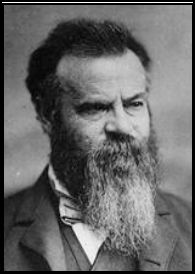
In the Book, Seeing Things Whole, The Essential John Wesley Powell, William deBuys in the Introduction, describes Powell in these terms:
“John Wesley Powell was an American original. He was the last of the nation’s great continental explorers and the first of a new breed of public servant: part scientist, part social reformer, part institution builder”… “What his work and life reveals to us is a way of thinking about land, water and society as parts of an interconnected whole.”… “Virtually alone among his late-nineteenth-century contemporaries, he saw that the character of western lands would shape-and in turn be shaped by the way in which those lands were settled.” “He further saw that the result of that interaction would ramify onward for generations and would have profound consequences for the land and for American society.”276
In the prologue to A River Running West, The Life of John Wesley Powell, Donald Worster provides this noteworthy insight into Powell’s life:
Like a great river in floodtide, America in the nineteenth century flowed across the continent with more power and force, much of it destructive, than any river of nature. Powell was part of that flow. He was enthusiastic and optimistic about where that river was heading. Although he dreamed of a different and better nation, he believed in its essential goodness. The expansion of America framed his child-hood experience, inspired his adult career, and even became, as it did for so many of his fellow citizens, a personal religion.277
Powell’s story must begin even before he was born, with his parents in England, members of an urban working class animated by evangelical faith, hopeful immigrants who came to America to rise out of obscurity, insecurity, and moral corruption. Long before the son dared to take on the formidable canyons and deserts of the West, he prepared himself in their adopted world- the back country of upper New York State, the thick green forests of Ohio, and the broad prairies of Wisconsin and Illinois. How that growing up shaped his outlook and charged him with hope and ambition is a story that has never been fully told.278
In England Powell’s parents had embraced an evangelical Methodist religion, a movement that stood in ambivalence to some of the social and economic changes that were taking place in Great Britain. It was a volatile mix of subservience and indifference to social reform, which would be handed down to their children, the fourth child being, John Wesley Powell, “who throughout his life exemplified the tensions within that working-class Methodist temperament born in the throes of British social and economic change.”279
This emerging Wesleyan Methodist religion came into being during a time of great religious reform, as truth seekers were looking to get out from under the suppressive rules of governments and the Church of England. Many of this new breed of Americans would do so under a new name-the Methodist Episcopal Church. The Joseph Powell family were part of those who “were determined to go and they would never return, even for a family visit. The wind filled their ship’s sails, blowing them into the Irish Sea and away from all they had ever known. Sailing across the Atlantic and around Sandyhook into one of the world’s great harbors, New York City, the doorway to a continent, docking in the forest of masts at the foot of the island called Manhattan, the Powell’s faced a few challenges that no book of advice could fully prepare them to meet. Was this a godly place? Would they find acceptable work and shelter?”280
“Their handsome churches would have reassured the travelers that here was a righteous land, but they tarried only a little while (in New York City) before pushing on to their chosen destination, the western canal town of Palmyra (New York).”281
Gathering their belongings, they took passage up the Hudson River to Albany, looking for a more promising situation. At Albany they shifted to a packet boat on the Erie Canal, the longest man-made river in the world, a forty-foot-wide ditch completed just six years earlier… Palmyra, like other canal-side settlements, had palpitated with extravagant hopes of becoming a major center of commerce, though by this point it was being overshadowed by the flour-milling center of Rochester a short distance farther west. The Powell’s liked what they saw, nonetheless, and invested their savings in a house of their own.282
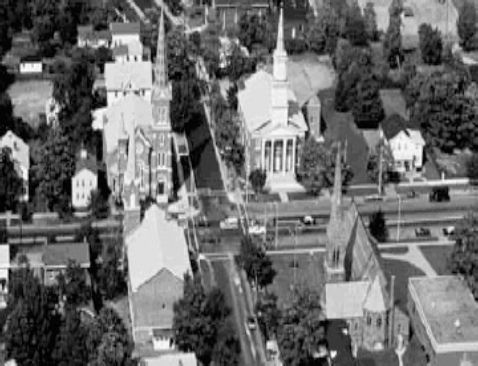
Palmyra, New York and the four churches
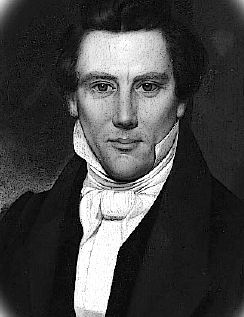
Joseph Smith
_______________________
276 deBuys: Powell, Seeing Things Whole, Introduction 1
277 Worster, xii.
278 Worster, xiii
279 Ibid., 12.
280 Ibid., 14.
281 Worster, On the effects of and debate over the canal, see Sheriff, Artificial River.17
282 Worster, 15