
CHAPTER 46

In America’s founding documents are declarations rooted in Natural Law, which form the foundational beginnings of America’s liberties. These foundational declarations, enshrined in the Constitution and Declaration of Independence, are based on the belief that rights are not endowed by man, but are granted by our Creator. These immutable laws, as expressed in the Constitution of the United States, are based on religious understandings into the origin and evolution of man and on society’s biblical assessment as to how the creation of this world came about. These foundational doctrines have provided the underpinnings for the creation of a free nation that throughout its short history has raised a mighty people, who have always been willing to pledge their allegiance to both God and Country.
Beginning with Morgan’s publication of Ancient Society, Powell and Morgan both went to work engineering and advancing linear theories of evolution, which provided for those in government a unifying justification for the removal of the Indians from their ancestral lands, for they would perceive it as for the betterment and advancement of society; on America’s journey forward towards a more civilized state. “He [Powell] had argued, all his professional life for government planning, government science, and the adoption of essentially communitarian forms of local government.”371
Powell and Morgan were not the first political theorists who would strive to provide a socially engineered model for the betterment of society, although in America they were some of the first to realize that neither “government nor citizens could afford to recognize Indian attainments, for it would call into question the moral and legal legitimacy of conquest.” 372
It is easy to see why Morgan’s theories appealed to Marx and Engels. They made private property an ephemeral incident in human history, they challenged the notion that any institution was either sacred or permanent, most of all they assumed a world-wide verifiable and inevitable progress from stage to stage of human society. Neither Morgan’s theories nor Powell’s slight modifications of them are unusual in their time. Not only Marx and Engels but Herbert Spencer and Lester Ward and a host of lesser thinkers were moving on roughly parallel tracks.373
Jean Jacques Rousseau and John Locke both introduced social contracts for the common good of mankind. John Locke was an English philosopher and physician born in 1632. He graduated from Oxford with a master’s degree in 1658 and served as Lord Chancellor of England in 1672. He became well known for his arguments against monarchy and his works on liberty, property and a number of social contract theories. His extensive writings would have a profound influence on a number of the Founding Fathers of the United States, such as Alexander Hamilton, James Madison and Thomas Jefferson.
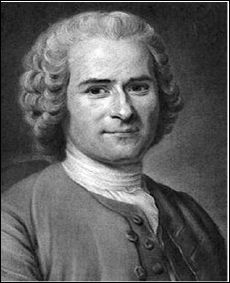
Jean Jacques Rousseau
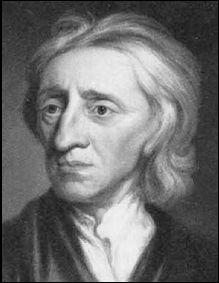
John Locke
“Locke’s writings were refined by Sir William Blackstone (1723-1780) and others until Thomas Jefferson made them the cornerstone of the Declaration of Independence. Jefferson claimed the Declaration [of Independence] is based entirely on the ‘Law of Nature and of Nature’s God.’ According to Locke “Government’s purpose is to join with others [to] unite, for the mutual preservation of their lives, liberties and estate, which are called by the general name, Property.”374
“Conversely, Rousseau [would advance a social contract that was] the foundational philosophy that spawned the bloody French Revolution and inspired the writings of Immanuel Kant, Georg W. F. Hegel, Karl Marx, Engels and others.”375
According to Locke, the primary reason for government ‘is the preservation of their property’…Most Americans today would be amazed to learn that the free right to own property represents the foundation upon which life and liberty depend…This fundamental principle became the cornerstone of the Declaration of Independence of 1776 and the United States Constitution…The Founders did not establish the Constitution to grant rights. Rather they established this government of laws in order to secure each person’s [rights granted by his] Creator [which are] endowed rights to life, liberty and property…These rights are not granted by government, which can take away what is granted. Instead, they are granted by God.376
Property, as Locke used it, meant far more such as the sovereignty of one’s self and the right to personal well being that tangible property can bring; Life, Liberty, Happiness and Property. A term that is still used in the Fifth and Fourteenth Amendments of the U.S. Constitution and the Declaration of Independence, which established that in America, each person has all the rights to which the laws of Nature and Nature’s God entitle them. In other words, God’s law is the ultimate source and established limit for all of man’s law. It is intended to protect each of these natural rights for all of mankind.
Central to natural law is the right to use one’s own property in the pursuit of happiness. Most people do not understand that the right to use their own property or “property rights” is far more important than “democracy” in maintaining liberty and in the building of wealth.
Why are property rights so critically important? The Fraser Institute of Canada publishes an annual Economic Freedom of the World report. One of the components of the report is an index of legally protected private property rights based on things like impartial courts, judicial independence, integrity of the legal system, protection of property rights, legal enforcement of contracts, and regulatory restriction on the sale of real property. Although somewhat subjective, when this index is compared with the per capita Gross Domestic Product (GDP) determined by the World Bank, an enlightening curve results [when graphed]. The lower the protection of property rights the lower the per capita GDP. Conversely, the higher the protection of property rights, the higher the per capita gross domestic product. While not statistically significant, the report clearly shows that well, defined, legal property rights are critical in a nation’s ability to create wealth.377
Gerald P. O’Driscoll Jr. and Lee Hoskins wrote an essay titled “Property Rights The Key to Economic Development.” In this study they affirm that:
Prosperity and property rights are inextricably linked. The importance of having well-defined and strongly protected property rights is now widely recognized among economists and policymakers as an essential component for prosperity. A private property system gives individuals the exclusive right to use their resources as they see fit. That dominion over what is theirs, leads property users to take full account of all the benefits and costs of employing those resources in a particular manner. The process of weighing costs and benefits produces what economists call efficient outcomes. That translates into higher standards of living for all.378
It is only in the last few decades, however, that economists have accepted the importance of property rights… Even stalwart supporters of the market economy glossed over the subject. Not surprisingly, much bad development policy resulted from that neglect. Even if policymakers in developed countries and international institutions now recognize the critical role played by a system of private property in economic development, they are limited in what they can do to help developing countries evolve such a system. Policymakers can, however, avoid recommending policies that undermine private property…without pride of ownership, there is no motivation to care for or optimize property held in common with the millions of other citizens. Everyone sinks to the lowest common denominator, the economic structure stagnates, and the infrastructure collapses. Although private property owners receive the blame for environmental destruction, ironically, Americans polluted their air and waterways because no one owned them.379
The inevitable adverse consequence of common ownership to a large degree explains why Communism and Marxism, both products of Rousseau ideology, have been such dismal failures. The environmental devastation found in Eastern Europe and Russia as the Iron Curtain and the Soviet Union collapsed in the early 1990s evidences a lack of motivation [for the advancement of industry or] to protect the environment.380
Would Powell and Morgan agree with Rousseau’s arguments or Locke’s views of private property rights, social empowerment as to what the role of government should be?
Jean Jacques Rousseau, a philosopher and political theorist, was born in Geneva, Switzerland on June 28th, 1712. His discourses on the Origin of Inequality made a strong case for social empowerment and for a more legitimate public order. The Social Contract was his most famous work on the subject.
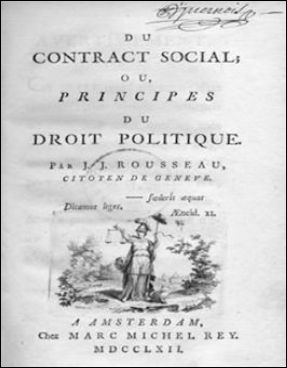
Rousseau would debate Locke's model by “arguing that individuality and property rights divide man by focusing on self-interest and greed rather than the good of society. He argues in his Social Contract for the creation of an abstract common good."381
It is not surprising that in following Rousseau's model, Morgan and Powell working for the government were continually pointing to the need for more pervasive controls by government over property and business. To create such a need would take fashioning a public paranoia, a mistrust of business, capitalism and a free market economy. By promoting a view that private enterprises are a cesspool for crime and corruption, they would create a greater need for government oversight and protection of the public good.
Rousseau's ideas were molded by the abuses he saw in the nobility that still ruled France in a feudalistic manner. While nobility still existed in England when Locke wrote his treatises, the evolution of the Magna Carta through the centuries had already broken the back of feudalism in England, if not the Colonies. Therefore, Rousseau's focus was on limiting the power of the nobility—something that had already happened in England centuries before. That difference had a huge impact on the model Rousseau proposed in his writings.
Rousseau sees man as a malleable creature to be molded by an enlightened government. Rather than privileged nobility, he favors primitive man, the noble savage who lives in simple equality with his fellow man, with few needs, a limited appetite, over man in civilized society…Rousseau seeks to achieve this equality through a vague socialist metaphysical concept called the "general will." The “general will” allegedly over comes the tension between individual interests and the community, by making community rights superior to the individual rights. The “general will” supposedly frees us from our subjective selves and personal interests.
In the Social Contract, individuals are part of a "collective body" that is called a "State" or "Sovereign." Citizens share in the sovereign power and subjects [are] under the laws of the State.
Rousseau goes on to say that raw force can bring consent to the general will. That whoever refuses to obey the general will shall be constrained to do so by the whole body…. In this lies the key to the working of the political machine; this alone legitimizes civil undertakings…Rousseau states the individual is supposedly "forced to be free" from his own selfishness. Does this sound like America today?…Rousseau was attempting to reign in the power of the nobility. Unfortunately, once the nobility was gone, all power was vested in the government with no real checks and balances.
This difference between Locke and Rousseau is enormous, and results in two diametrically opposed forms of government. It is rarely mentioned in the glamorized comparisons between Locke and Rousseau.
It must be repeated that it is the enlightened state, which determines the general will, or common good of the people in Rousseau's model. So while both Locke and Rousseau believed that a just government derives its power from the "consent of the governed," in application all rights are embodied in the State with Rousseau's model, while all rights belong to the individual in Locke's model.
The second major difference between Locke and Rousseau is property rights. Once again, Rousseau penned his writings before the French Revolution. Feudalism still ruled France and only a few wealthy noblemen could own property—They forced serfs to work the land for a pittance. Thus, Rousseau saw private property as an evil that repressed man. So much was Rousseau against property rights that he stated that no one should own anything; ‘You are undone if you forget that the fruits of the earth belong to us all, and the earth itself to no one.’ 382
The French Economist and liberal theorist Fredric Bastiat, [1801-1850] further clarifies the concept that government rights or laws are only an extension of individual rights:
What, then is law? It is the collective organization of the individual right to lawful defense.
Each of us has the natural right—from God—to defend his person, his liberty, and his property. These are the three basic requirements of life, and the preservation of any one of them is completely dependent upon the preservation of the other two. For what are our faculties but the extension of our individuality? And what is property but an extension of our faculties?
If every person has the right to defend—even by force—his person, his liberty, and his property, then it follows that a group of men have the right to organize and support a common force to protect these rights constantly. Thus the principle of collective right—its reason for existing, its lawfulness—is based on individual right. And the common force that protects this collective right cannot logically have any other purpose or any other mission than that for which it acts as a substitute. Thus, since an individual cannot lawfully use force against the person, liberty, or property of another individual, then the common force—for the same reason—cannot lawfully be used to destroy the person, liberty, or property of individuals or groups.383
Both Morgan’s and Powell’s families emigrated from Britain from places where they had experienced how an aristocracy can be created, and how that aristocracy, through the use of their wealth and property ownership, could repress others. In their ethnological studies they came to espouse Rousseau’s ideas that man shouldn’t become empowered through private property ownership, especially believing that primitive man should not have rights to land ownership as a way to greater social empowerment. Their beliefs favored and saw man as a malleable creature, which without private land rights could be more easily guided and governed. The idea of greater government control of the land, water and resources of a country would be the best path towards civilization. Common ownership would be as they would see it, for the common good. And government control and ownership of all the resources would make the management of the nations lands and resources much simpler.
_______________________
371 deBuys, 323.
372 Kehoe, The Land of Pre-History, 69
373 Stegner, 253.
374 Locke, John. Second Treatise on Government. ch. 9, (1690). www.constitution.org/jl/2ndtr09.htm)
375 Michael Coffman, Rescuing a Broken America: Why America is Deeply Divided, (New York: Morgan James Publishing, 2010) 8.
376 Ibid., 9.
377 See: Ibid., 10.
378 Gerald P. O’Driscoll Jr. and Lee Hoskins Driscoll & Hoskins: Property Rights the Key to Economic development, (Research Report)
379 Coffman, Saviors of the Earth: 273-274
380 Coffman, Rescuing, 15.
381 Rousseau, The Social Contract, or Principles of Political Right, Book I, Social Compact Par. 10-11, 1762 (Constitution.org)
382 See: Coffman, Rescuing, 12-15
383 Frederic Bastiat, The Law, 1850, Translated and Published by The Foundation for Economic Education, Inc. Irvington-on-Hudson, New York, 1979,6-7