
CHAPTER 4

Would a recent expedition shed greater light on how the Americas were populated? Did all the inhabitants of North and South America originate from a handful of people migrating across the Bering Strait tens of thousands of years ago? Or were there eastern migrations by way of watercraft that arrived in America well before Columbus?
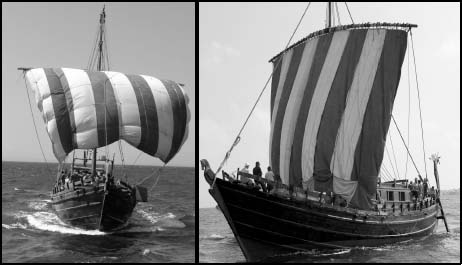
Photos courtesy of Phillip Beale, Phoenician Ship Expedition leader
The 2009 Phoenicia expedition, and the unintended results of this intriguing study, shows how ancient cultures could have landed on North American shores. This replica of an ancient Phoenician ship, which was built with the assistance and sponsorship of the British Museum, set sail with the intent to circumnavigate the continent of Africa, but after traversing the rough waters of the Cape of South Africa, the ship was commandeered by the prevailing winds and strong westerly currents, and was driven to within 400 miles of landing on the shores of the Americas.
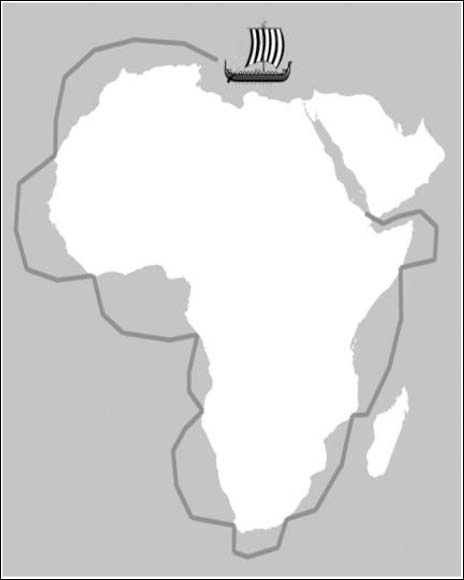
Proposed route of the Phoenicia 2009.
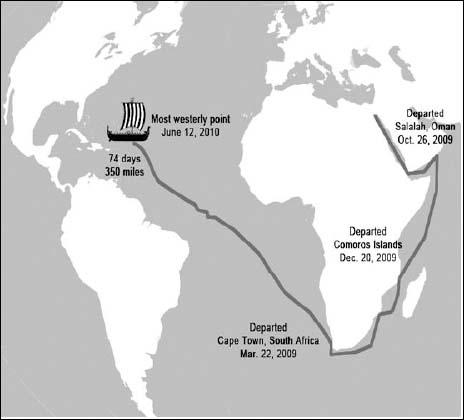
Actual route taken by Phoenicia 2010
The crew tells of the major forces that caused a westward detour of their ship, delaying their scheduled arrival back home to the Port of Sidon near Beirut, Lebanon until October 12, 2010. This is the story of a wooden Phoenician ship that was built from plans that dated to 600 BCE, and which was painstakingly constructed in Lebanon in early 2009.
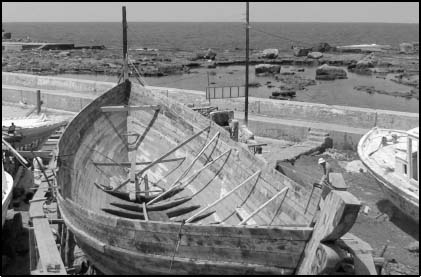
Courtesy of Phillip Beale, Phoenician Ship Expedition leader
In the British Museum’s research, they found records, which show that traders anciently were attempting to navigate around Africa in sailing vessels well before the time of Christ. It was from these original plans that the Phoenicia expedition was chartered to do likewise; to circumnavigate Africa, making eight stops along the way. However, their plans were significantly altered. After sailing down the east coast of Africa and making the turn around the Cape of Good Hope, prevailing winds and currents took over, preventing them from making their five scheduled stops up the west coast of Africa.
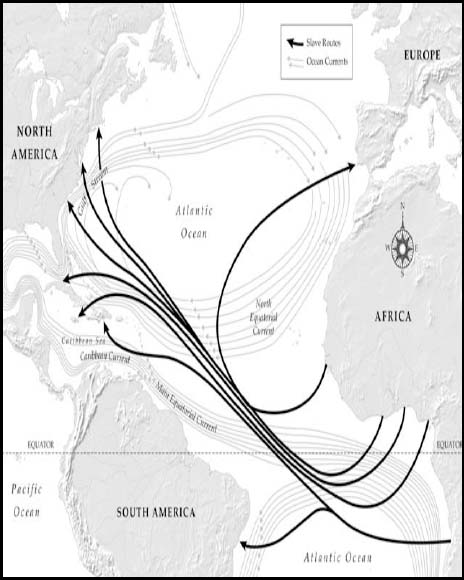
Ocean Currents and Slave Trade Routes
One of the significant problems was in the design of the ship. It had a shallow hull and a single large mast, neither of which were well suited to fighting the prevailing winds and currents. So, after putting to sea from Cape Town on March 22, 2010, powerful ocean currents took over driving them ever westward to the most westerly point of their journey, some 400 miles off Puerto Rico on June 12, 2010. This 74 day unplanned excursion brought them within a couple of weeks of landing on the mainland shore of North America.
So, what was learned from this recent sea faring adventure? Does it lend credence to the stories of the many ancient mariners who claimed they had made it to the shores of America? Does it give further evidence of how the continents of North and South America may have been populated?
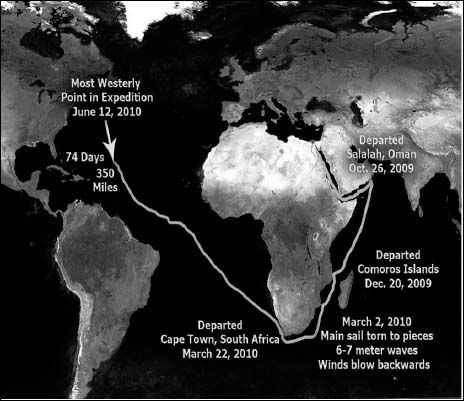
Route of the 2009 Sailing of the Phoenicia
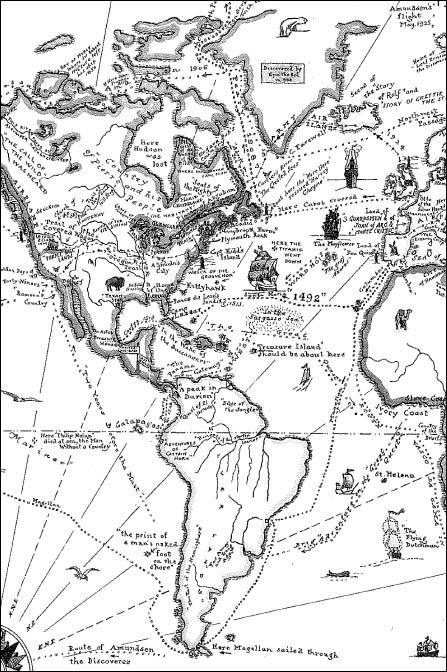
Map showing the sea travels of New World discoveries