
CHAPTER NINE

AIR PLANTS ARE incredible plants to look at and a real conversation starter. Their Latin name is Tillandsias but their common name ‘air plant’ feels much more suited to them. The beauty of an air plant, aside from the aesthetic, is that it does not need to be planted into a pot in soil as the plants absorb water and nutrients through their leaves.

Air plants are unusual looking and do not need to be potted in soil to survive.
In the wild, their roots attach to tree branches and other plants, and they grow alongside the plants they have attached to, taking in moisture and nutrients from the atmosphere. They are not a parasite, so they do not take anything from the tree or plant they are growing alongside; they grow in harmony with the plant they are attached to.
This means that in the wild, air plants are used to good light levels, the light that they receive is dappled, as it beams down on the air plant through the branches and leaves of the plant that they are growing alongside. It is worth considering this when planning on where to keep them in your home.
They can often flower. Their flowers are usually bright colours such as pink and purple, and although the blooms do not last for very long, they are extremely striking.
Types of air plants
There are over 500 different species of air plant, but here are two of the most common ones you will find in plant shops and garden centres.
Tillandsia xerographica is a large silver air plant also known as ‘Silver Queen’. It can reach up to 20cm. These air plants are striking and architectural looking and can be displayed in terrariums or on small plant stands or tripods. The mature plants will occasionally grow a purple flower when given the correct care. These can tolerate slightly brighter light levels than other air plant varieties.

Silver Queen (Tillandsia xerographica)

Tillandia ionatha – popular because of the pink leaves
Tillandsia ionatha is popular due to its pink tips. As the plant matures, the leaves become pinker. These plants will also flower, although their flowers do not last as long as the Silver Queen’s. As these are smaller (around 6cm long) you can be extremely creative in how you display them.
Care
Air plants are very low-maintenance plants and require little care. As with cacti and succulents some people believe you never have to water these. This is untrue the air plant will perish if you do not give it water.
Water
It is best to use filtered water or rainwater to water air plants, as calcium in tap water can leave deposits on the air plant and block their natural capacity to absorb water and nutrients through their leaves. Ideally the water should be at room temperature so as not to cause them any damage.
You have two options of how to water your air plant. You can mist them regularly (and make sure you keep an eye out for signs of dehydration if you are only misting your plant, such as leaves shrivelling or turning brown). Or you can soak them in a sink or a bowl of water once a week for half an hour so that they take in what they need. In summer months you may need to increase how often you do this, and in winter months you should decrease, depending on how much light/ heat the plant is getting.
In summer months, you should add a small quantity of plant feed to the water. Be very cautious with this so that you do not overfeed the plant and cause the leaves to burn. You should definitely make sure that you dilute the feed down more than the label suggests for your regular house plants (try using approximately 50 per cent of the suggested amount and see how you get along).
When you have finished watering your air plants, make sure that you give them the chance to dry off before placing them back where they live. You can do this by gently shaking off any excess, and by allowing them to dry off upside down to make sure no large droplets of water are caught in the folds of the leaves.
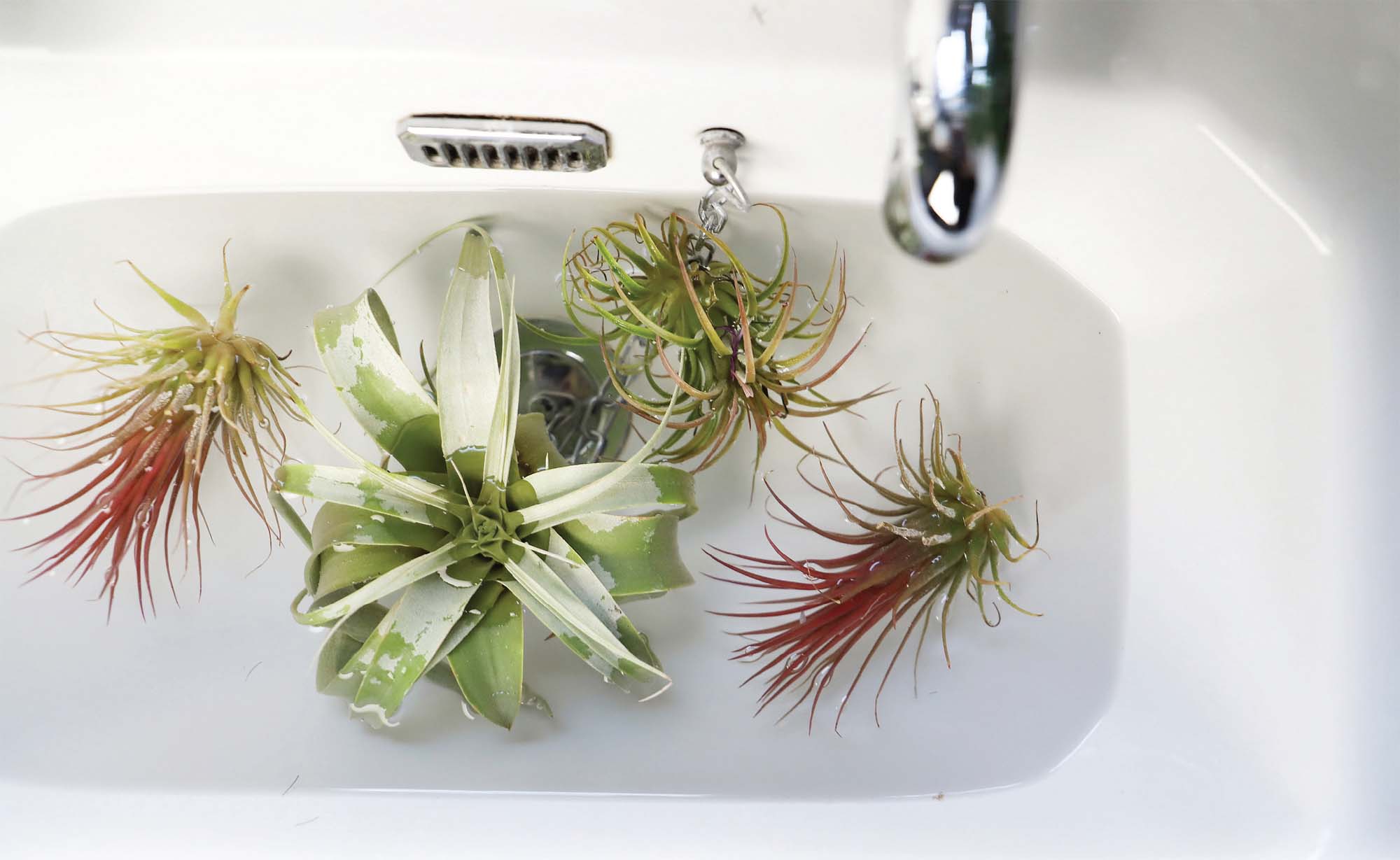
Air plants soaking in tepid water in the sink.
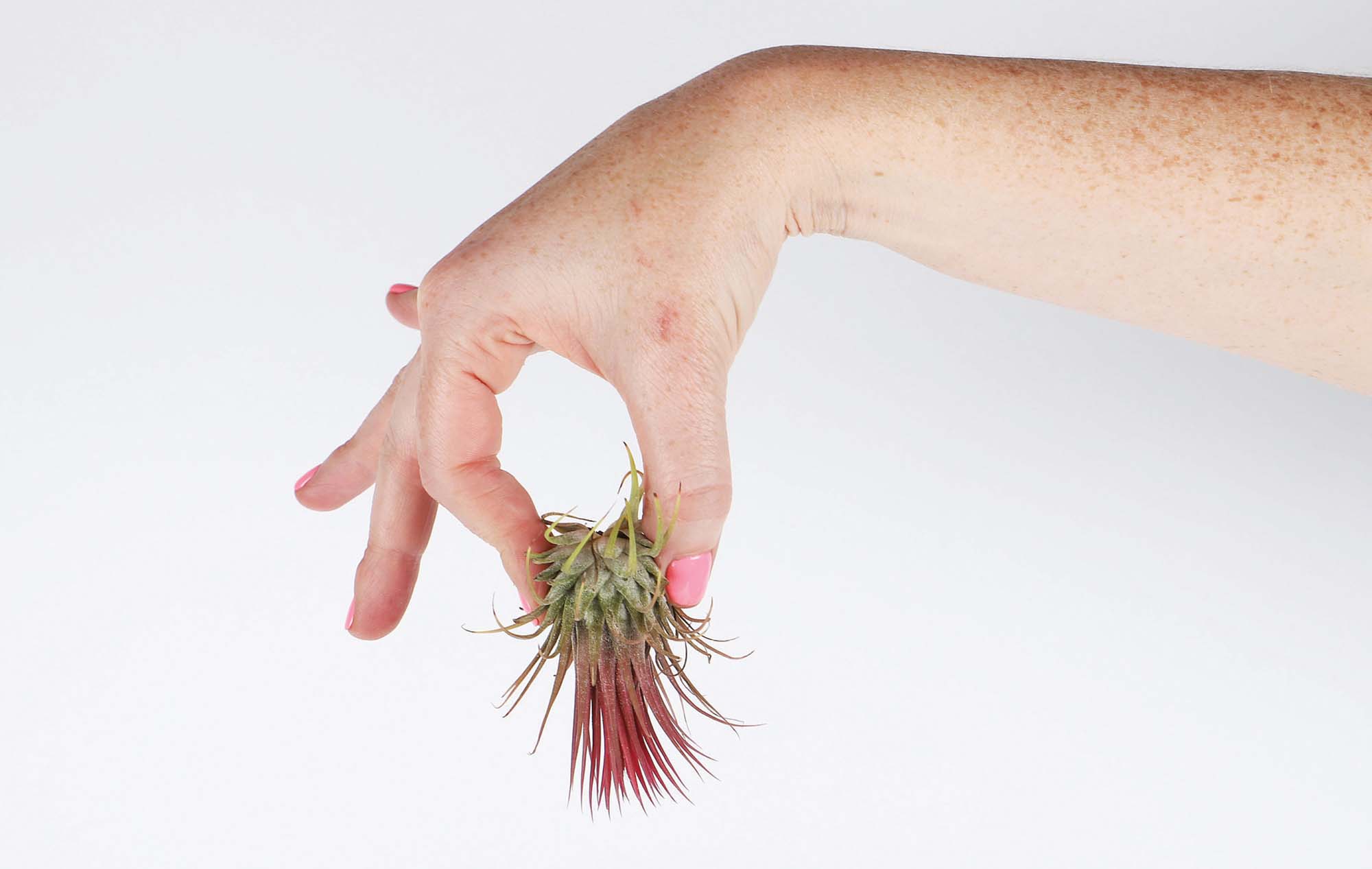
Dry your air plant upside down.
To allow the plant to dry out in the light before the light goes for the day, you should water your air plants in the morning, or at least before lunchtime, so that they do not end up wet and soggy overnight, which could potentially cause them to rot.
Light and Temperature
As already mentioned, air plants are used to dappled light in the wild, so they will not suit being sat on a south-facing windowsill receiving scorching sun all day long. You can place them in rooms where they are facing the window, or on windowsills where they will not scorch.
You can have a lot of fun creating interesting air plant displays or finding quirky pieces to stand your air plants in. I have seen them displayed on pieces of drift wood, in shells, in various ceramic and glass vessels and also in terrariums.
Making air plant displays
Because air plants do not need to be planted into a pot the same way that other house plants do, they are extremely versatile. Here are a few suggestions of how to display your air plants to create interest in your home.
Air plant terrarium
One simple way to display air plants is in an open terrarium. You won’t need lots of equipment for this as you will be layering the sand and pebbles and then placing your plants inside to make your display.
You’ll need
• Terrarium (open)
• Pebbles (a choice of colours will make your display more interesting)
• Sand
• Decorative pebbles or shells for surface
• Radiator brush to clean glass
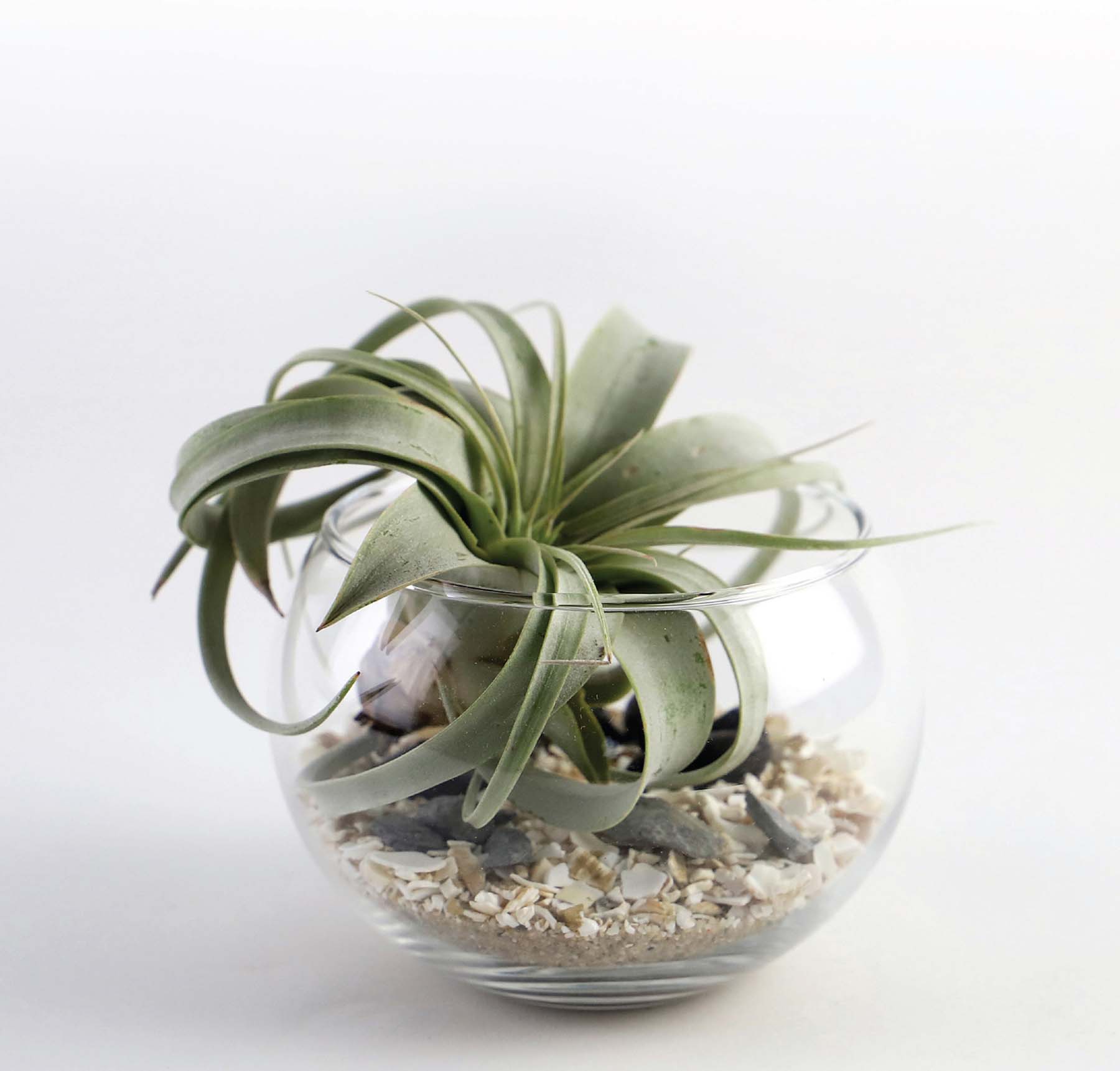
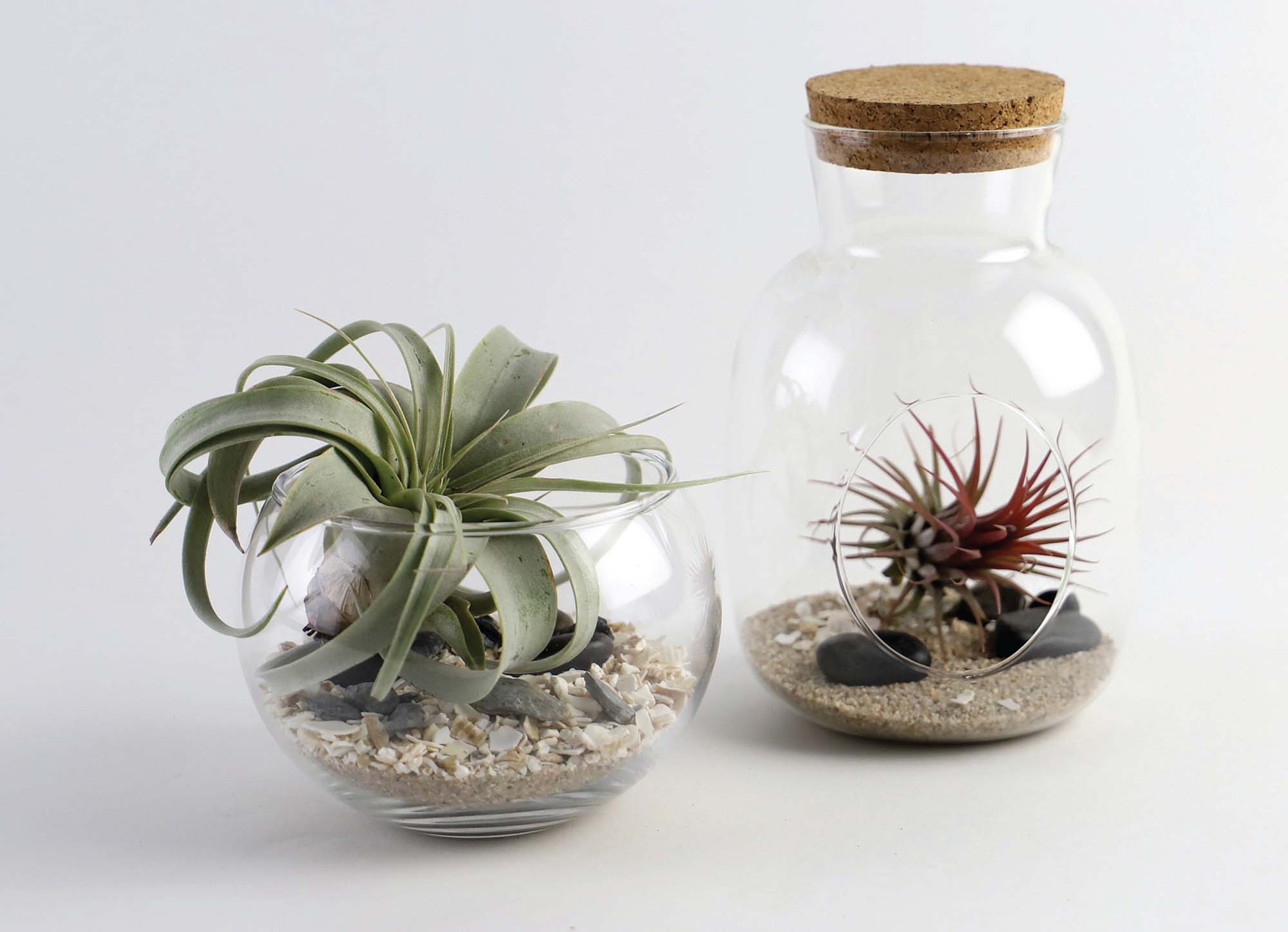
Make sure you choose a glass container with an opening so that your air plant gets air.
• Air plants
• Moss (optional)
1. Layer up your terrarium with a layer of sand and then a layer of pebbles
2. Clean the glass as you go
3. Place the air plants and moss inside to make your display
Aftercare
The air plant terrarium can be kept facing a window or in a well-lit room. So that it does not scorch, avoid placing the terrarium in direct sunlight.
You can mist directly into the terrarium to water it, or you can remove the air plants to give them a soak following the earlier instructions.
If you have moss inside the glass container and you mist your moss then this will create some humidity within the terrarium too.
Air plant hanging bauble
A really popular way to display air plants is in a glass bauble that can be hung facing a window. Again, you won’t need lots of equipment to create this.
You’ll need
• Glass bauble (to find a place to buy these simply search the internet for ‘hanging glass air plant vase/ bauble’)
• Pebbles (a choice of colours will make your display more interesting) and/or sand or shells
• Decorative pebbles for surface
• Radiator brush to clean glass
• Air plants
• Moss (optional)
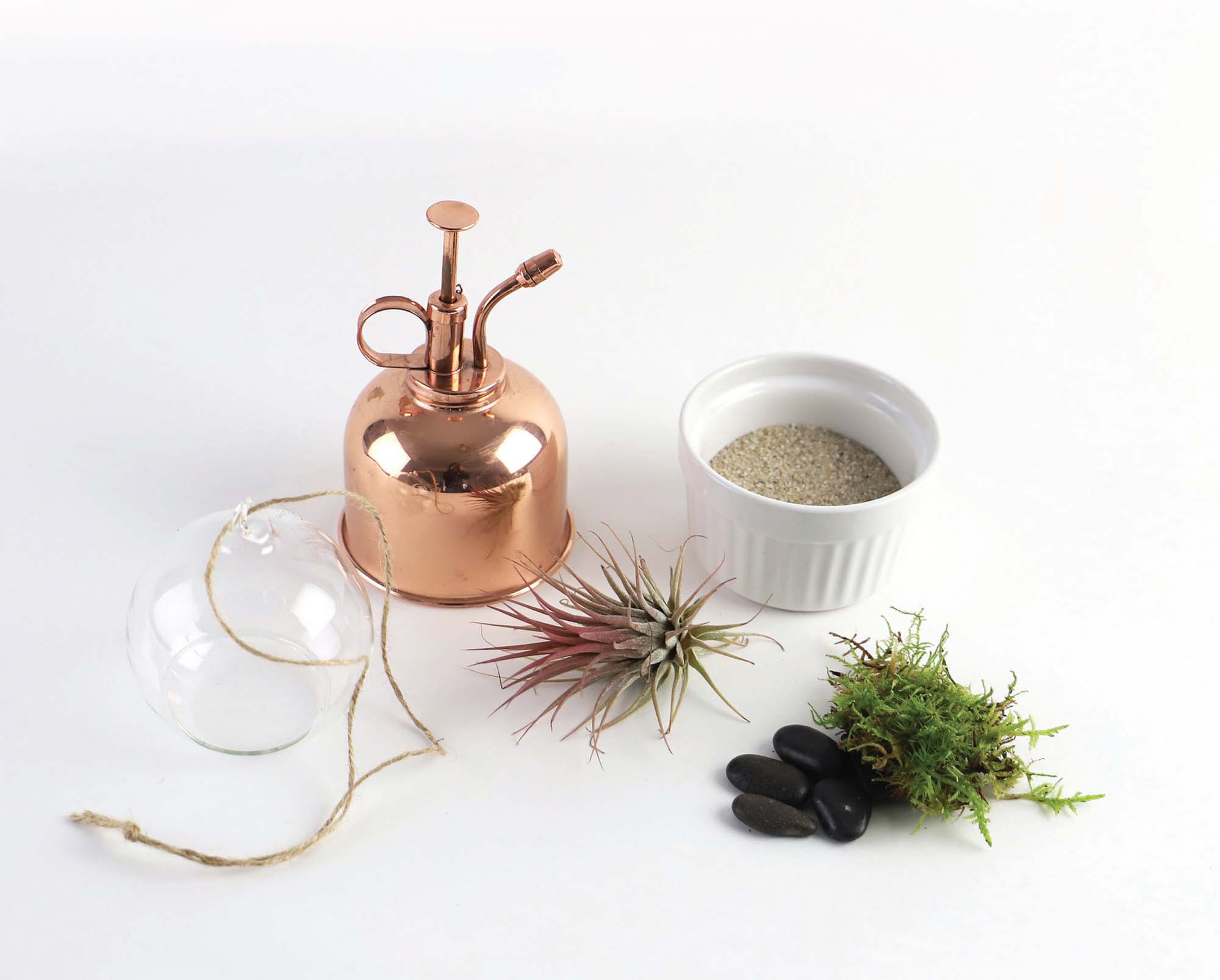
Equipment for making an air plant bauble.
1. Clean your bauble ready to start layering in a base for the air plant. Add approximately 1cm of sand to the bottom of the bauble.
2. Next, add a layer of pebbles.
3. Add a further layer of sand and one or two decorative pebbles for the air plant to sit on if you want to create a striped effect.
4. Gently manoeuvre the air plant inside the bauble. I like to go in by placing the bottom of the plant into the glass bauble first. If I take the plant out of the bauble, I then turn it inside the bauble and remove it bottom first too. This avoids any of the leaves getting damaged or breaking when you take it out to water.
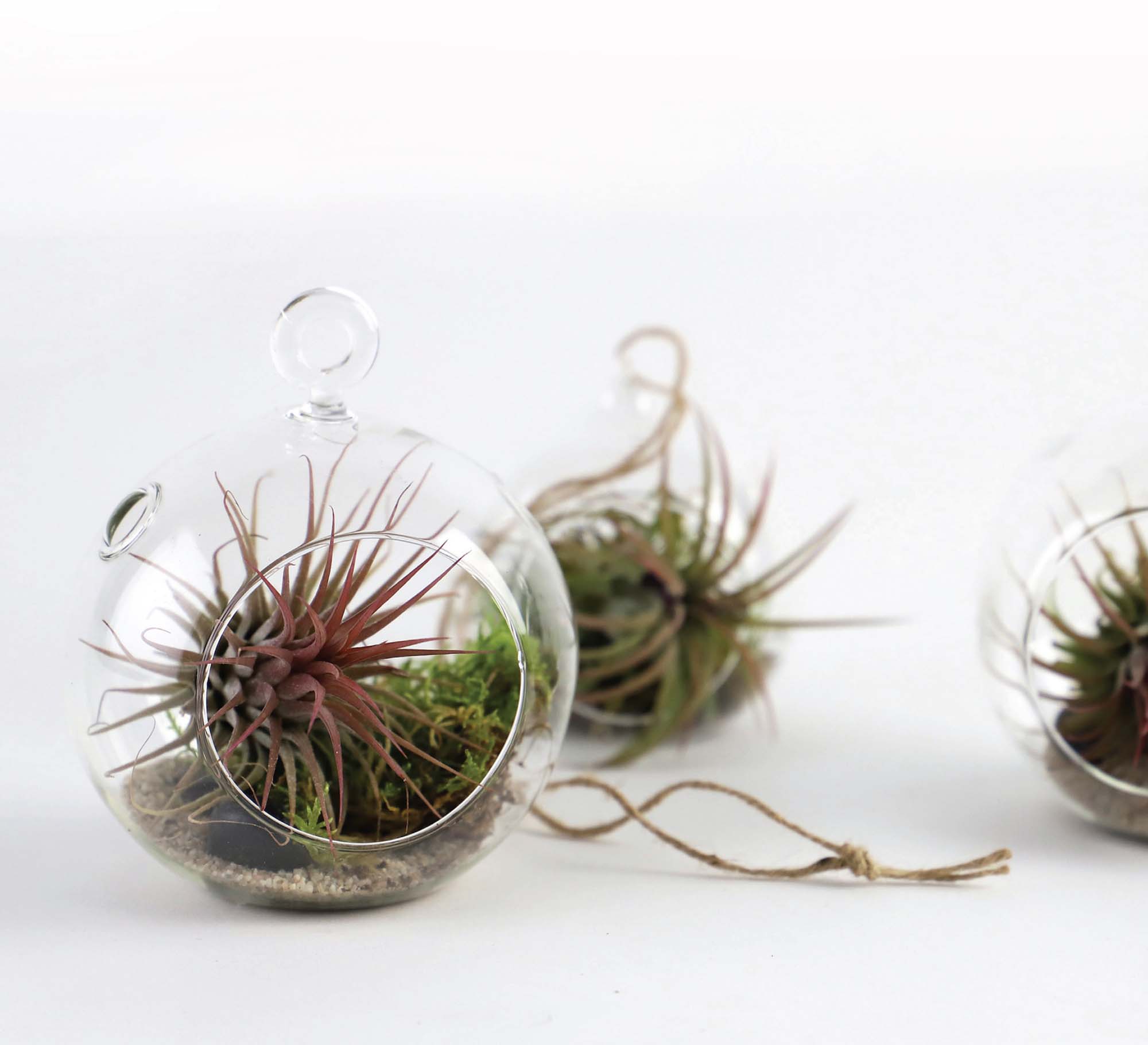
Air plant baubles are a great gift that you can make for friends and family.
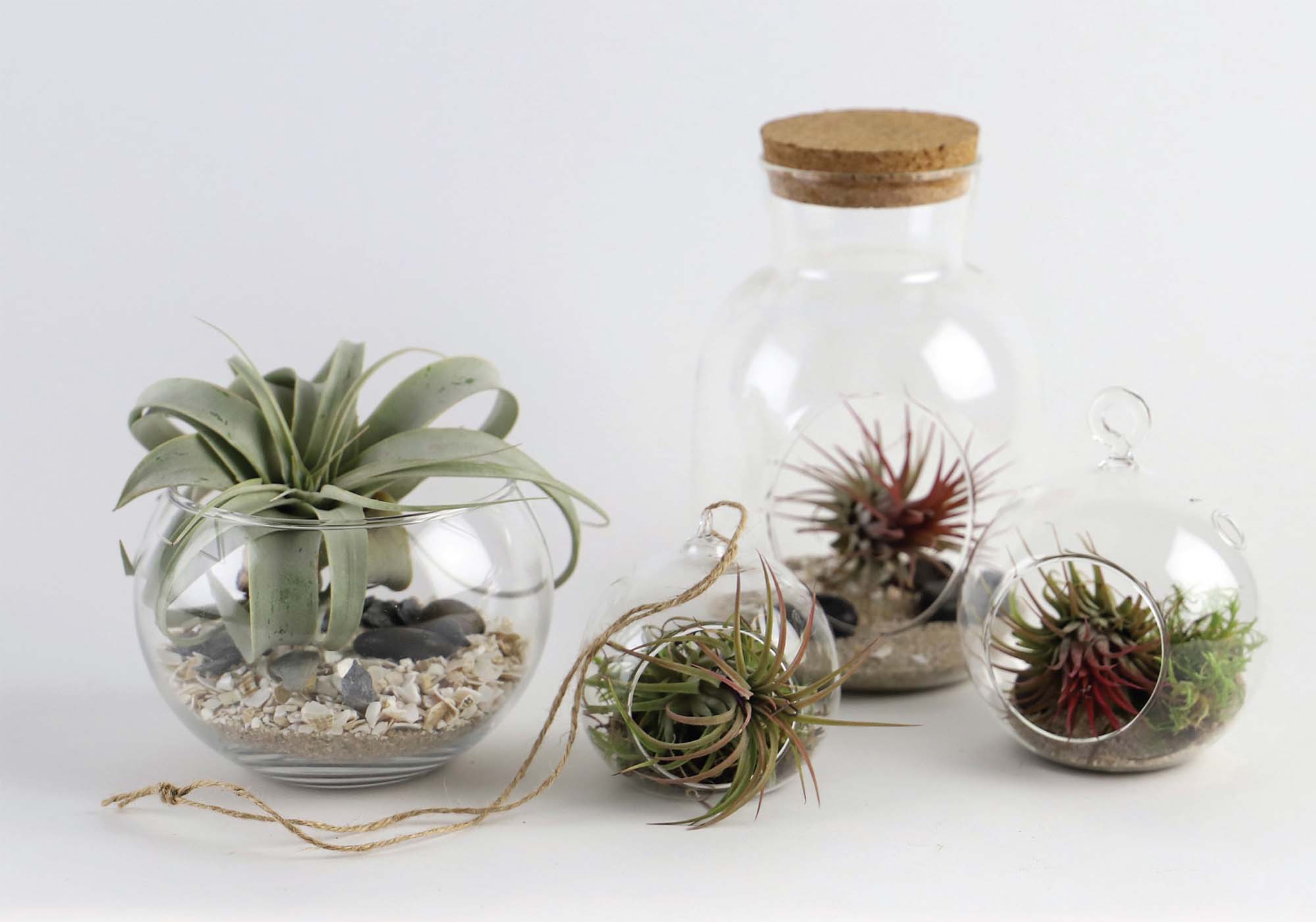
Air plant display ideas.
Aftercare
The air plant bauble can be kept facing a window or in a well-lit room. Avoid placing the bauble in direct sunlight, so that it does not scorch.
You can mist directly into the terrarium to water it, or you can remove the air plants to give them a soak following the earlier instructions.
These make a great gift at Christmas for your loved ones.