
CHAPTER EIGHT

THE WORD KOKEDAMA means ‘moss ball’ in Japanese. A Kokedama is a Japanese hanging plant display that is easy to make and it looks fantastic. If you travel to Japan you will see these hanging in lots of shops and apartments, usually grouped to create a hanging garden. Some will have extremely neat and precise string formations around the ball, and others will be slightly more rustic looking. Because the plants are suspended in the air surrounded only by moss and string, they feel luscious and natural and give the eye more greenery to look at because of the moss.
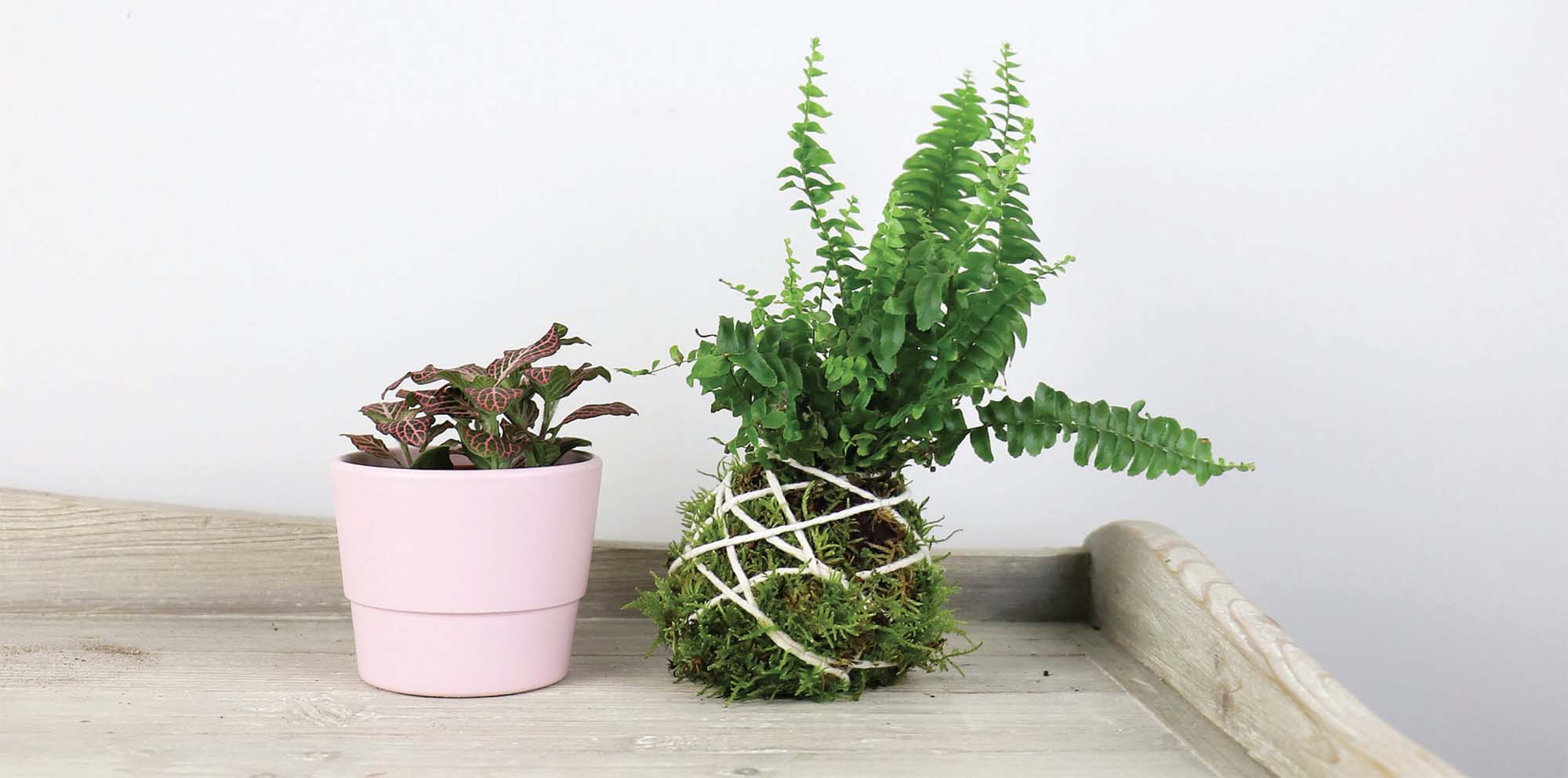
Kokedama can be displayed hanging or on a surface.
The concept is simple, you create a ball of soil around the roots of the plant, and then wrap the soil ball in moss. You then affix the moss around the plant using string, and then you can hang the Kokedama wherever your plant needs to be (i.e. a window for plants that need light, or a shadier spot for plants who want less light)
I love using ferns in Kokedama as they are happiest with constantly moist soil, and you can ensure that this is the case by giving your Fern Kokedama a quick poke to check that your moss ball feels damp and then soaking it every few days to maintain the levels of water that the plant needs. You can also use a mister to keep the moss and the fern leaves at a good level of humidity for the plant.
How to Make a Fern Kokedama
Surprisingly you don’t need very much equipment to make a Kokedama. The key thing is getting the correct soil for creating a ball shape and maintaining moisture.
What you will need
• Soil: a combination of bonsai soil and multi-purpose compost (it isn’t always possible to find bonsai soil so you can try making this with a coir soil mix which retains moisture.)
• Two Bowls – one for mixing the soil together and one to catch excess water.
• Sheet Moss
• Plant of choice – the one in this chapter is a Boston fern
• Scissors
• A ball of string. (You can use waxed string if you want to avoid it changing colour over time.)
Here’s how to create your Kokedama
1. Combine the bonsai soil and the multi-purpose compost in a bowl. You should use about 50/50 to create your soil mix. If you are using coir soil mix instead of bonsai soil you will need to add water to the mix first to ensure that it has absorbed the water it needs, and then add the multi-purpose mix.
2. Add water to the bowl to create a soggy soil mixture and then start to squeeze the excess water out into a sink or second bowl. You want your soil mix to be wet, but not too wet. Think of it as a ‘dough’ or ‘cake-mix’ consistency. Create a ball of soil using your hands to shape it. Next give the ball a twist to separate it into two halves.
3. Remove your plant from the plastic grower pot and using your fingers, gently remove the excess soil from around the roots. Place the roots in between each of the soil ball halves. Make sure that all the roots are nicely tucked in. You may need to add more compost to keep your ball shape or to fill in any gaps. You don’t want any roots to be poking out of the ball.

Make sure that the roots are covered.
4. Next, mist the inside of your moss sheet, and start to wrap this around your soil ball. You may need multiple pieces or if your sheet is large enough to wrap around the whole ball, scissors will help you to create the shape you want – or you can gently tear the moss sheet into shape. You will be fixing this with string so concentrate on making sure that you encase the soil, rather than expecting it to stick perfectly around the ball.
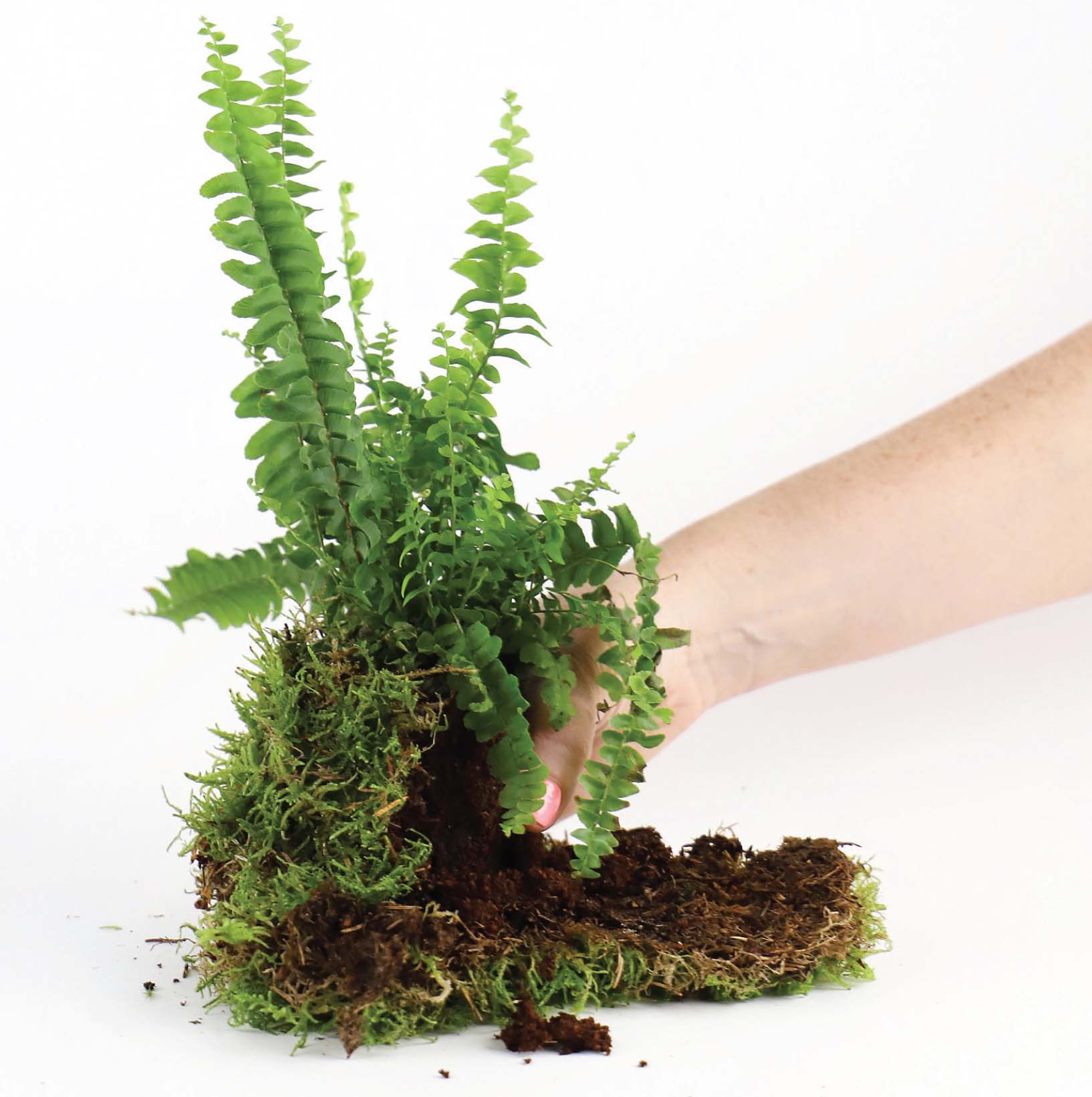
Wrap the ball in moss.
5. Using your string, start to fix the moss in place by wrapping string around the moss ball and tying it in place. You can start at the top, underneath where the leaves come out of the ball and affix the moss in place there if you find this easiest. I usually just start to wrap anywhere as I like my string pattern to be more random. Some people like to use lots of string and create precise, neat patterns, others like to keep more moss on show. This is entirely down to personal preference, but you do need to use enough string to keep the moss secure around the ball as this will prevent soil from spilling out.
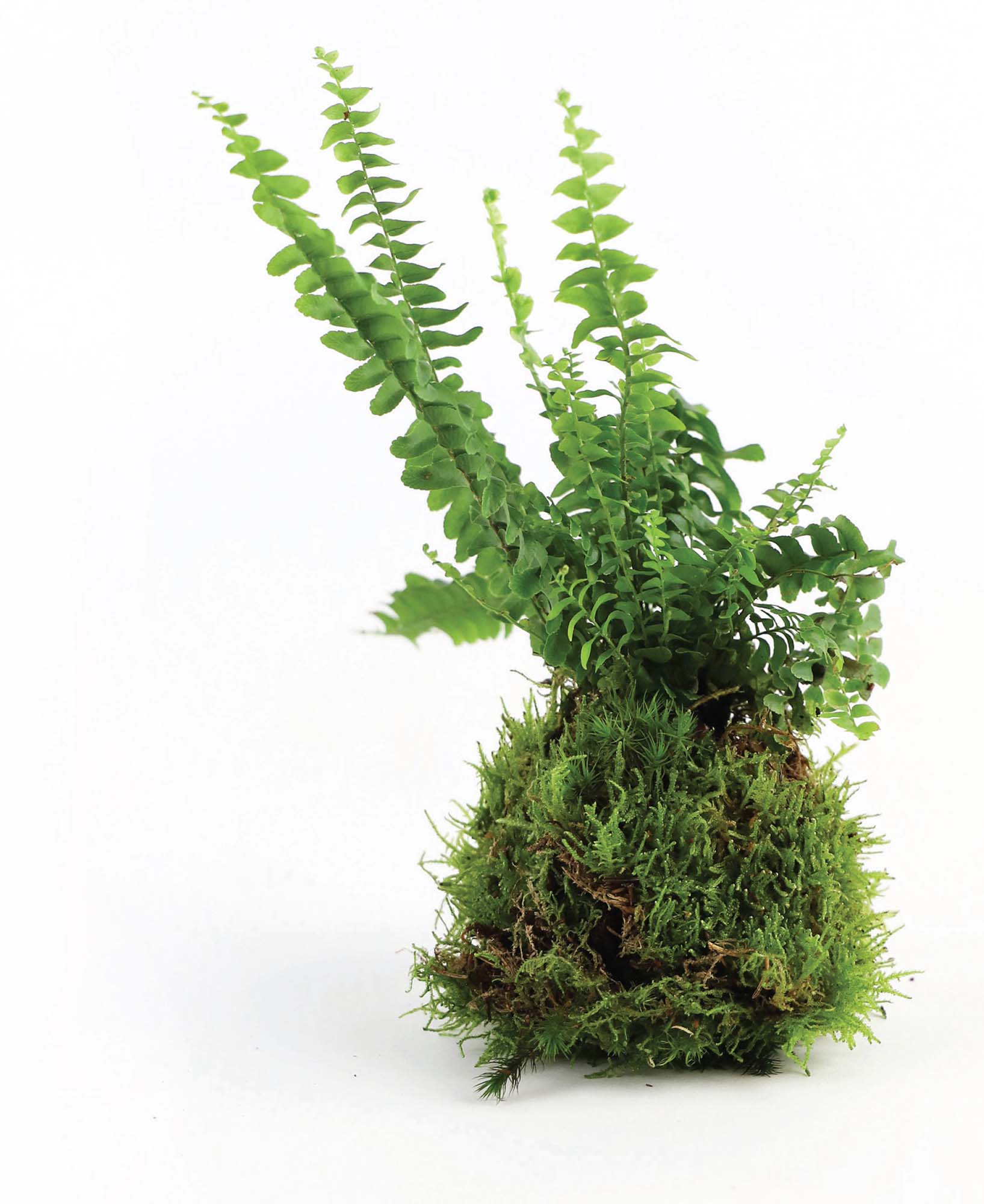
Ball covered in moss.
6. If you are hanging your Kokedama up, you will need to cut yourself a piece of string at the length you need to hang the plant. Attach this to any string at the base of the plant’s leaves so that you hang the Kokedama from the top of the ball. If you are standing the Kokedama in a certain place in your home remember that moss is a living thing and will stay wet, so you will need a nice saucer or piece of driftwood to stand the ball on.
How to care for your Kokedama
Water
You will know that your Kokedama needs watering by the fact that it feels lighter to hold, or by checking how the moss feels. You should mist your moss regularly to help maintain humidity around the plant.
To water your Kokedama, you can either stand it in a dish or tray of water to allow it to soak up what it needs or you can give it a soak in a bath or a sink for half an hour. When it stops bobbing and starts sinking then you know it is heavy with water.
You will want to have something underneath it to catch any drips if you are hanging it straight back up after watering.
You can add plant feed to the bath or dish of water once a month in summer months, and you may need to increase how often you water your Kokedama when temperatures increase.
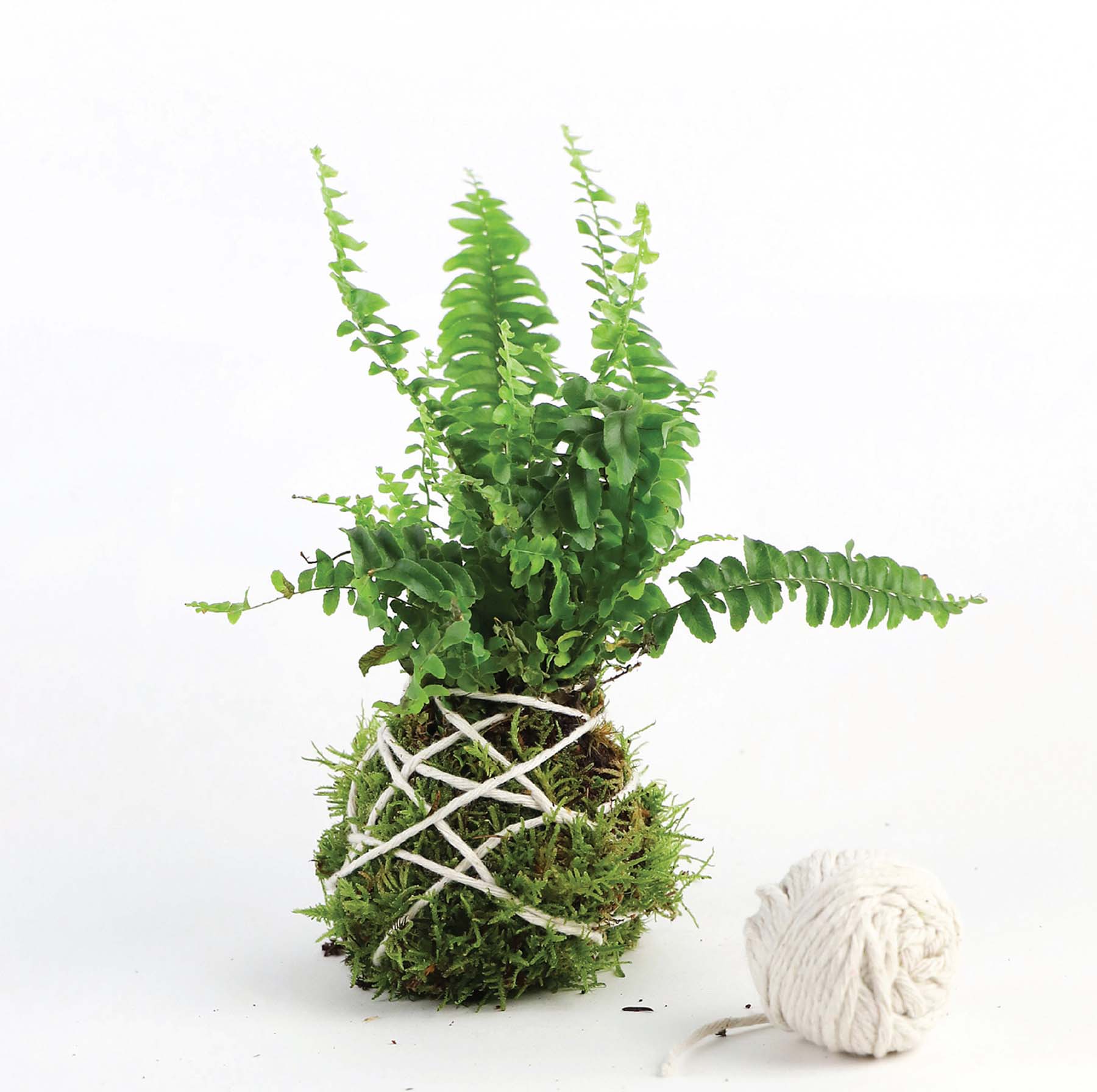
Fix the moss using string.
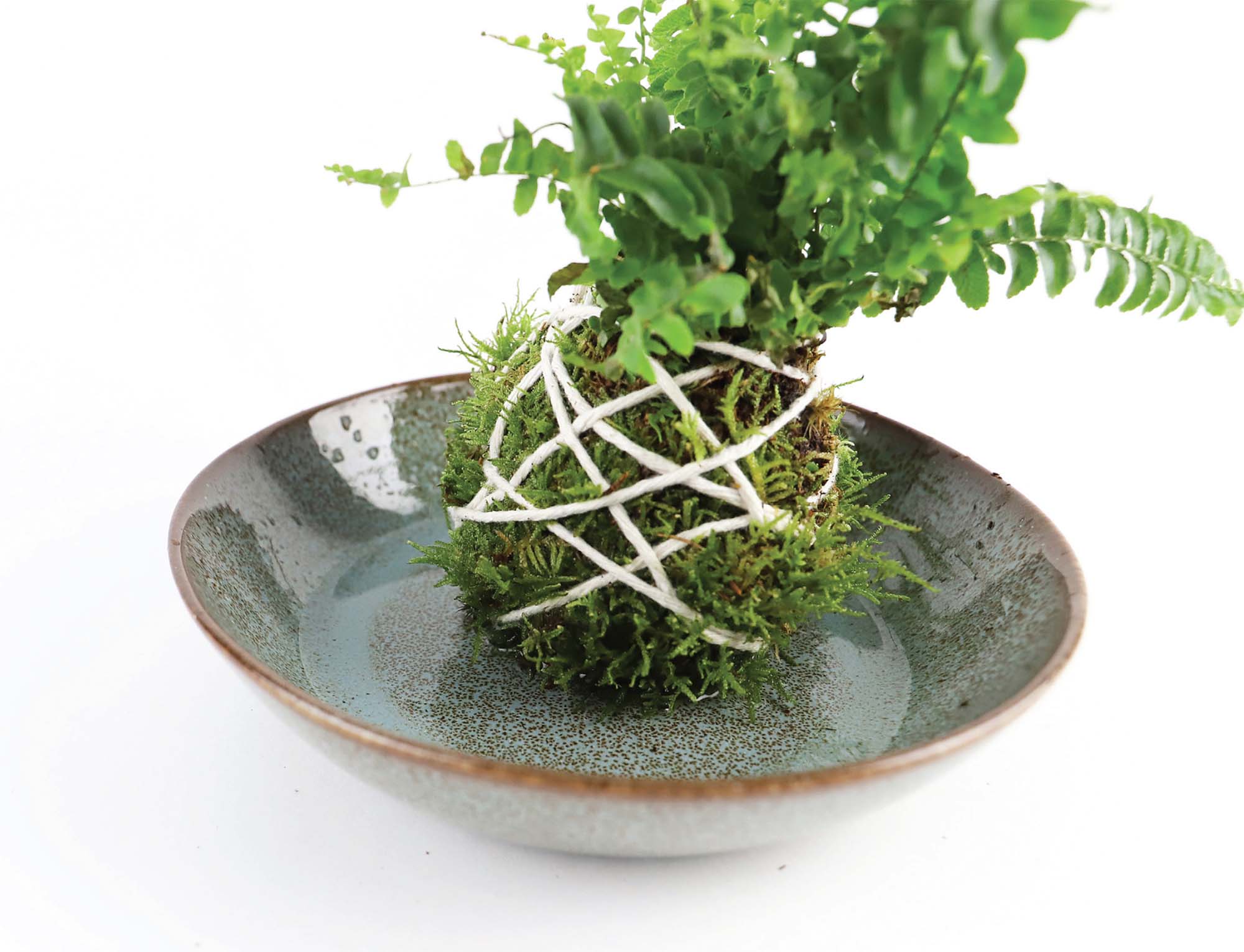
Watering your Kokedama – stand in a ball or soak in a sink.
Light and Temperature
Ferns require indirect light or light shade so place your Kokedama in a place where the sun will not beam down on it. Maintaining humidity is key for ensuring that the leaves of your fern do not crisp up and turn brown. They will be happy in a kitchen or a bathroom.
Other plants for Kokedama
I’ve suggested a fern for the Kokedama as I like the fact that the moss ball helps me to keep the fern alive and thriving by staying moist. You can use other plants too and a trailing plant that works well for people who may want a Kokedama that requires less watering than a fern is English Ivy – or you could try using a Philodendron Brasil or Devil’s Ivy.
As the ball of soil is usually kept pretty moist, I would avoid using succulents and cacti as they prefer to be in drier soil conditions.