
Art forgery is a criminal act. Yet in contrast to other types of crime, it is often perceived less harshly. There are mitigating factors that focus on the degree of harm to victims as well as the place of the forger in the social order and the overall economic effect of forgery. The parties tricked into buying forgeries are often thought of as well-heeled and unscathed. The special skill involved in making art objects that fool experts carries a mystique that draws respect, and artists known for that skill enjoy a degree of public approval, although the art dealers they connect with and who knowingly sell their fake works are treated with scorn. In sociological terms, forgery is sometimes perceived as an economic support for a large group or nation as a whole. And in following a particular brand of economic theory, the presence of fakes in the art world in general can be assessed as being more helpful than it is harmful.
According to some observers, and similar to comments by several forgers already mentioned, art forgery is a victimless crime or close to it. This idea circulates in the blogosphere, with statements like the following:
Art forgery is a victimless crime. It’s not like a rich person who buys a fake Rothko is making an investment for his retirement; he’s trying to impress his rich friends, who won’t know the difference. And if one day the rich person goes bankrupt, it’s the IRS that gets stuck with the fake.107
Art forgery should stay illegal but there shouldn’t be harsh punishments like jail time for it. . . . it isn’t a victimless crime but the victims are usually anything but.108
Well-known publications sometimes back up the perception that common people are unaffected by fake art, whereas the “victims” are financially impervious or deserving of their fate. In reporting the Beltracchi affair, the Frankfurter Allgemeine declared that “art forgery is the most moral way to embezzle €16 m,” and Der Spiegel asserted, “Compared with crooked bankers, Beltracchi and his co-conspirators haven’t swindled common people out of their savings, but rather people who may have wanted to be deceived.”109 Art crime expert Noah Charney holds a more scholarly and nuanced view:
Those damaged by art forgery tend to be collectors, wealthy individuals or institutions, or scholars without a trickle-down effect—the damage does not normally extend more than a step beyond the victim. . . . As an art scholar, I know there is indeed damage that forgers do, but as a criminolo-gist as well, I recognize that the damage is largely isolated. I’d be happy to go for a beer with just about any of the gentlemen in the art forger’s pantheon.110
In sum, this view sees art forgery as affecting only people who can afford to be tricked, and not the general population. It is nonviolent and not like other forms of swindling. It is white-collar crime of the least immoral type, so that punishment should be minimal. Its practitioners are not dangerous and would be interesting companions who deserve to be called gentlemen as much as transgressors.
Besides seeing mitigation in the harm of art forgery in terms of the wealth of its victims, looking in another direction finds favorable qualities in the forgers themselves and highlights how their underground activities reveal embarrassing weakness and vice in the art establishment. There is a perspective by which the forger, despite being a swindler, is found to have an endearing side that ranges from roguish trickery to antihero status. This attitude shows up in hoaxes from the Renaissance to modern times, biographical accounts of prominent forgers as they have been promoted through the media, and in imaginative literature. Giorgio Vasari was an early commentator promoting the light side of forgery, with stories of Michelangelo’s Sleeping Cupid fake of an ancient sculpture and Andrea del Sarto’s surreptitious copy of a Raphael portrait. Other stories of this kind continued throughout the centuries, such as of Louis XIV’s principal painter, Pierre Mignard, who made and sold a painting of Mary Magdalene as an original by Guido Reni, then revealed himself as the painter and proved it by uncovering an underpainted image he predicted was present, returned the buyer’s money, and reveled in the great fun of his trickery and demonstration of his talent. Another tale, from the eighteenth century, involves Giovanni Casanova (artist and younger brother of the famous lover), two of his friends, and art historian Johann Winckelmann as they deceived him with several paintings said to be ancient and to have been removed from Herculaneum. Winckelmann praised the pieces in his writings, only to find out later they were fakes. The upshot was that a pillar of art authority was embarrassed by a scam intended to promote faking.111
A notion of the forger as debunker has endured: a figure remembered for exposing the pretensions and missteps of art professionals and institutions, and especially for making fun of connoisseurial sophistication. An adventurous hoax from the early twentieth century demonstrates the spirit of mocking the authorities of the art world. Paul Jordan-Smith, an American writer and literary critic disenchanted with avant-garde movements in the arts, and having never painted in his life, created a purposely tawdry primitivist image of a wild-eyed native woman holding a banana skin with a skull in the background.112 He submitted Exaltation (see Figure 3.4) for exhibition in 1925 at the Waldorf Astoria Gallery in New York under the pseudonym of Pavel Jerdanowitch, and identified it as representing the Disadumbrationist school (another invented name). When a Paris critic asked for a biography and photograph, he submitted a scruffy, blurred image of himself with a fictitious life story including birth and early years in Russia, study at the Art Institute of Chicago, and life in the South Sea islands to recover from tuberculosis.113 The critic published a favorable article, and Jordan-Smith proceeded to paint and exhibit six more Disadumbrationist works that received rave reviews
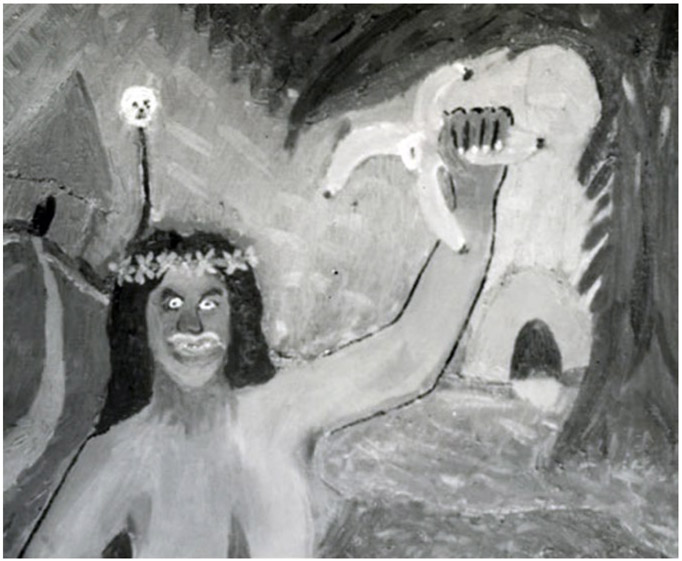
Figure 3.4. Exaltation by Paul Jordan-Smith under the pseudonym of Pavel Jerdanowitch, oil on canvas. Courtesy of Library of Special Collections, Charles E. Young Research Library, UCLA/Paul Jordan-Smith III
nationally and internationally. One French publication described Jerdanowitch as a “man who not only stands on the heights, but is bold enough to peer into the depths and is among the best artists of the advance guard,”114 while another said, “a seeker and unique spirit . . . symbolizing things from his own angle which puts him among the best artists of avant-garde by a formula excluding any banality.”115 Jordan-Smith reported being offered “a large sum of money” for two of his works, but refused to sell for fear it would tarnish his hoax.116 In 1927, he disclosed the whole affair to the Los Angeles Times, which published a full-page account.117 Major stories appeared in various American newspapers and in many cities internationally, with the art establishment ingloriously on display for the inability to distinguish genuine art from crude simulations. The notoriety Jordan-Smith accumulated during his venture into fake art drew hundreds of responses from admirers, including struggling artists expressing their appreciation and asking for advice, while some critics refused to recognize his paintings as the nonsense he intended and insisted that he had manifested latent talent.118 Satisfied that he had laid bare the hubris of the masters of art connoisseurship, he concentrated on his career as a writer, although his greatest acclaim was always for his brief time as a painter.
Jordan-Smith’s plan was to deceive the art world, but the Pavel Jerdanowitch affair is often described as a hoax and set in contrast to forgery in which the intention is to keep the falsity of the artwork secret for as long as possible rather than expose it voluntarily. There is, however, a gray area amid the difference, as spoken for by art historian Henry Keazor, who has coined the term “foax” to describe how a fake and a hoax can blend together. As an example he cites Tom Keating’s “time bombs,” which were meant to be discovered and embarrass art experts but were so well disguised as to remain undiscovered for many years.119 The paintings Keating explained as having this purpose failed to do so and ended up as fakes. His claim that he wanted to create a hoax is similar to appeals from Van Meegeren, De Hory, and others to describe their actions, although decades passed before their schemes were exposed. To the degree that forgers are able to promote their personas as hoaxers up against the establishment, they find a mitigating factor that plays well with the public.
In the latter twentieth and twenty-first centuries, the perception of art forgers as debunkers and antiheroes has inspired many books along with documentary films. These biographical and autobiographical accounts often skew the narrative in a way that criminality is overshadowed. Largely missing, however, are feature-length Hollywood biopics, although in 2020 Sony Pictures released The Last Vermeer about Van Meegeren.120 The lives and careers of several other figures would make fascinating stories, such as De Hory, Stein, Ribes, Perenyi, and the Myatt-Drewe partnership. On the other hand, Hollywood has presented an enchanting image of art forgery through fictional accounts. How to Steal a Million and The Thomas Crown Affair (original and remake), seen by many millions of viewers, offer lighthearted, romantic portrayals of forgery combined with theft as the heroes outsmart the art world’s established order. Novels, too, bring attention to art forgers, and have room to delve more deeply and seriously into the minds and motives of artists who enter the realm of fraud. Bestsellers The Art Forger121 and The Last Painting of Sara de Vos122 explore themes such as the fine line between copying and fraud, the temptation of the struggling artist to turn to fakes, and competing perspectives on the morality of doing so. In these books the forger is not made to appear glorified but conflicted, although the result is still a sympathetic rendering. The overall image is of an artist caught up in life’s complications and deserving of a humane response. Rather than gliding along breezily as in the movie scripts, from this perspective the forger’s life connects more closely to an everyman’s confrontation with discord and angst.
Beyond mitigation conceived as minimal financial harm to victims or as a compassionate treatment of forgers lies a perception of forgery in broader social terms. Rather than being thought of primarily as the acts of individuals affecting other individuals, forgery is sometimes assessed in a sociological sense as an institution functioning within a large group. In certain locales, the making and selling of fake art is an established practice that is accepted by many residents. Historian Carol Helstosky has described the phenomenon of art forgery in eighteenth- and nineteenth-century Italy, not to justify it but to point out that it was perceived by many people of that time and place as reasonable. Deceptive practices in art were considered in the context of consumer demand and national pride.
Tourism in Italy expanded during the eighteenth century with support from the popularity of the Grand Tour, and by the mid-nineteenth century drew even larger numbers of travelers as railway transportation became available. Given the reputation held by various centers of Italian art as pillars of art history, many tourists desired to purchase original historical works as souvenirs. The supply of originals dwindled to the point where some Italian art dealers traveled to other countries to find legitimate Italian works that had been exported and purchase them to replenish their inventories. But this strategy was far outdone by the more common approach of creating and marketing forgeries.123 As the quote in part I about a nineteenth-century tourist’s experience in Italy indicates, the completion of an art purchase often involved various interested parties. Experts, consultants, and connoisseurs assisted in the ritual of negotiation, and still other people might offer friendly voices to help the proceedings along. All of these people were aware that the items sold as originals were usually fakes, and it was common knowledge among buyers that the Italian art market had a reputation for being rife with fraud. Still, buyers persisted in their quest, while an uneasy intercultural dynamic played out. As described by Helstosky,
Italian dealers presumed their non-Italian customers understood the less tangible aspects of these transactions and essentially “played along” in the sometimes elaborate scenarios of discovery and purchase. Foreign customers were chagrined and even outraged that the Italians would knowingly deceive others with copies and imitations.124
From the vantage point of the Italian dealers, answering an international demand for a domestic product that was in limited supply supported the national reputation and avoided a negative reaction that could harm the tourist trade if the desired items were not available. Further, the claim that selling fakes was wrong was inverted. The reasoning was that tourists who wanted to buy genuine artworks at the cut-rate prices they were pleased with themselves to get through haggling—a small fraction of what a legitimate piece would sell for—were willfully entering into an immoral bargain. An example cited by one Italian commentator asked, if a dealer sold a Donatello to a tourist for 5,000 lire, and the tourist believed it to be genuine with a worth of 500,000 lire, who is being dishonest?125 Reflecting on the situation as a whole, an Italian art critic found the practice of selling fakes (in this case antiquities, although the point also would hold for other fakes) to foreigners not only not objectionable but also nothing less than noble:
The antiquarian accomplished a task that is ultimately humanitarian or almost social in that, on the one hand, it encourages the love of art, ennobling even the roughest spirit; and on the other hand it brings much-needed foreign currency into our country.126
The outlook described here—that art forgery can be an asset to the economy (suggesting patriotism as well as profit) and humanitarian—seems far-fetched in the grand scheme of moral judgments where fraud is considered reprehensible. But in the contextual perspective of a certain time and place, it may appear sensible to insiders. Beyond the period in Italian history described in which a favorable sentiment for selling fake art was held by a significant number of people (just how widespread it was can only be conjectured), it is possible to think of other situations that might harbor a similar view. The selling of fake antiquities was widespread in nineteenth- and early twentieth-century Egypt. Historian Jean-Jacques Fiechter notes that some of the forgery workshops made no secret of what they did, and that various parties involved in faking antiquities seemed to comprise an organized network.127 Although without direct evidence, it is not difficult to imagine that the notion of spurring the economy of one’s country as well as one’s personal fortune would have been attractive to a significant number of people. And in some situations, support for selling forgeries might involve tacit sanction from government officials. A story from Thomas Hoving relates his discussion with a Greek antiques dealer who owned a shop in Athens and who had knowingly purchased some fake ancient Tanagra figurines at a New York auction. The man’s explanation was that his government prohibited him from selling genuine Tanagra works but went along with his selling counterfeits of them.128 The Greek economy benefited as the government collected more taxes and dealers increased their profits, all while authentic antiquities, considered to be national treasures, remained under restricted status.
Cultural context, then, may become a mitigating force in making moral judgments about art forgery, along with the claim that forgery is a victimless crime and the notion of the forger as antihero. How well do these views stand up in light of the conventional notion of forgery as legally and morally wrong? All three views can be seen to bear at least some credence, although they are prone to being overstated and misleading. Regarding the claim that the victims of art forgery are wealthy parties who are not harmed financially, it is true that much of the total value lost in buying forgeries lies with high-value works purchased by wealthy individuals or by museums. However, it is not true that they are alone in purchasing art fakes. People from all walks of life buy art, and forgeries appear throughout the range of prices, from high to low. Buyers at all price points are subject to being taken in. Rank-and-file buyers who purchase randomly, as well as collectors who focus on items selling in the hundreds to a few thousand dollars, constitute a large portion of those who are victimized by forgeries. Popular prints bearing the names of Dalí, Miró, Chagall, and others, which are often fakes, usually fall in this range. The single raid by Operation Bogart of eighty thousand such works (many more were in circulation before and after) signals that estimates of hundreds of thousands of fake prints reaching the market are not an exaggeration. Consider also the number of “original” art objects sold to tourists—Pre-Columbian figures and African masks, to mention only a few examples—along with the many lesser-caliber fakes sold on eBay, and it becomes clear that being swindled through art forgery is far from the exclusive domain of a well-heeled elite.
If the assumption that art forgery scams affect only the wealthy is clearly mistaken, what about the reasoning connected to it that suggests it is less immoral to cheat buyers who can afford the loss than to cheat the rank and file? This sentiment is supported by a conception of fairness based on financial status and as being relative to an individual’s economic class, as opposed to fairness transcending economic classes and based on uniformity of respect for individuals per se. It may derive from a sense of social justice or from a personal jealousy of people who are financially successful. It relates to the image of the forger as an antiheroic figure. In recent years the epithet of “Robin Hood” has been used increasingly, especially in connection with Wolfgang Beltracchi.129 In the documentary Beltracchi: The Art of Forgery, the forger is given this label by a gallerist representing him and by an auctioneer who was interviewed for the occasion.130 One review of the film begins, “It’s not hard to admire Wolfgang Beltracchi, the documentary’s titular Robin Hood,”131 while another states, “He can be seen as the Robin Hood of the art world or someone who has wreaked untold havoc on the industry.”132 Invoking this fictional figure connects with a common human desire to cheer on illegal tactics that are envisioned as supporting forces of good against bastions of privilege. To quote Charney again,
We also like tales of hard-working everymen who make good, and it brings a measure of satisfaction when the high are laid low, the snooty elite cut down to size, a Robin Hood effect. We like to see magicians at work, to look on with wonder and ask “How did they pull that off?”133
The Robin Hood image, however, is deceiving. The fictional figure is famous for taking from the rich and giving to the poor, and half of that profile is fulfilled when wealthy buyers are duped by expensive fakes. But the income is not dispensed to the poor. It is held by forgers and their accomplices, and often much of it goes to dealers who knowingly sell fakes. Instead of redistributing wealth to have-nots, the art forgery industry concentrates its profits among a few culprits, some of whom go on to become part of the financial elite. Figures of renown in the history of art forgery exemplify this point. Those known to have made large amounts of money (such as Beltracchi, Van Meegeren, Ribes) spent it on personal pleasures and not on philanthropic endeavors. With those forgers who earned or spent lesser amounts (with the exception of Landis, who gave away his fakes, and Keating, who claimed to have done so on occasion), there is no evidence of charity in distributing the fruits of their labor. If there were a pattern of giving, it would have appeared in their defense at court proceedings, in the press, or in their memoirs and biographies.
While forgers are not Robin Hoods, they do follow the antihero profile by discrediting the art establishment. Although their claims that this is their purpose have been exaggerated to deflect attention from their motivation to make money, the effect is to expose the inability of experts to make accurate judgments about authenticity. Credit forgers get for debunking false claims and unfounded pretentions acts as a mitigating factor in assessing their offenses and in portraying them as pranksters more than criminals. The performance of a skill that has a recognizable and legitimate counterpart product, as opposed to such other white-collar crimes as documents forgery and embezzlement, also draws respect. Forgers can be thought of as misunderstood or misjudged artists who were not given their proper due, and when they are caught, it can be easily imagined that they will make a successful transition to lawfully plying their trade. Their skillful manipulation of originality in artworks, combined with the public personas they present through the media, may mask the significance of their criminality. And the items they create, once exposed as fakes, still possess a degree of desirability in their own right and may hold monetary value that counterfeit currency and documents (such as stock certificates and deeds) do not. Still, that value is minimal relative to the prices forgeries command when still disguised as originals. A more apt comparison, rather than to currency and documents, is to a material good such as a Rolex watch that after its discovery as a fake still functions as a timepiece and still has an attractive appearance, but with a drastically reduced commercial worth. Despite the portrayal of forgers as antiheroes and recognition of their brand of fraud as unique, they commit serious fraud nonetheless, and it causes losses to many people.
The sociological claim for mitigating the harm caused by forgery, as with portrayals of forgers as antiheroes, shifts the focus away from the effect of their actions on victims and toward a factor thought to balance against that effect. And similar to the notion that defrauding wealthy collectors bears minimal culpability, a relativist morality is assumed that makes group status the primary concern. But the victimized group, rather than being defined in economic terms, consists of foreigners, many of whom are not wealthy (although some are, and Grand Tourists were). The sociological argument overrides conventional moral thinking by asserting an extreme nationalist economics. Supporting the reputation of one’s nation for cultural greatness, and ensuring that it is a continuing economic asset, may be important enough to insiders to justify an industry of counterfeit art, but in the larger world it suggests an untenable system that endorses duplicity as a viable moral principle and invites other groups and nations to respond in kind in their actions. Selling forgeries under the banner of nationalism is difficult to defend in moral terms, although it may be a social and economic likelihood in some localities.
Still another perspective that weighs against the condemnation of forgery goes further than those addressed so far by asserting that the overall effect fake art has on society is more beneficial than it is harmful. This view looks beyond victims’ losses to other people who gain from them, beyond financial concerns to include aesthetic enjoyment, and beyond national interest to apply to the presence of forgery throughout the art world. The thrust does more than reduce the seriousness perceived in a wrongful act, and aims to locate the wrong within a larger positive outcome. The idea is not new and traces at least to the nineteenth century. A strand of social science promotes it in the twenty-first century.
In Wilkie Collins’s 1856 novella A Rogue’s Life, an established art forger recruits the main character to his profession, luring him with an inspiring speech about fooling collectors:
Give them a picture with a good large ruin, fancy trees, prancing nymphs, and a watery sky; dirty it down dexterously to the right pitch; put it in an old frame; call it a Claude; and the sphere of the Old Master is enlarged, the collector is delighted, the picture-dealer is enriched, and the neglected modern artist claps a joyful hand on a well-filled pocket. . . . Kindness is propagated and money is dispersed. Come along, my boy, and make an Old Master.134
Here, readers are invited to consider that the financial outcome of forgery moves beyond the obvious loss involved and includes profit as well, with the craftsmen and sellers of fake products as the beneficiaries. This idea opens discussion of the positive economic potential of forgery. And the quotation notes the advantages resulting from forgery that occur beyond economics. With more fakes in existence, more people have access to seeing works of revered artists without knowing they are only imitations. Although it is not said directly, the hint is that exhibitions, whether mounted by museums or commercial galleries, have more materials to include in their presentations to the public. And it is said clearly that more collectors can be made happy with the acquisition of works to add to their holdings.
The mindset conveyed by Collins finds a more complete expression in the twenty-first century by economist Bruno Frey, a leading proponent of “happiness economics.”135 This approach looks past analyzing income and wealth, which are the sphere of classical and neoclassical economics, to include other factors that make for overall human satisfaction. Through a broadly encompassing schema,136 Frey considers the effects of forgery on viewers, on artists in general (other than those who turn to forgery), on target artists who are forged, and on art experts. He also examines the harm done to buyers who are deceived by fakes as well as to the art market, arguing that this collective downside is not as great as generally believed and is outweighed in his comprehensive model. At some places in his analysis Frey speaks specifically of works of visual art, while in other places he includes examples of musical works, furniture, and writings as falling within the sphere he describes, but his arguments are all meant to be applicable to the visual arts. And although some of his discussion speaks to legitimate copying, he clearly has in mind forgeries as well.
Under the theme of “propagation effect,” Frey argues that copies of artworks, whether made legally or illegally, provide a “utility gain” to consumers. More consumers can be exposed to works by key artists if more copies of their works are available. Artists stand to gain from royalties on legal copying that is spurred on by having their name propagated through fakes, as their profile rises along with the prices their works command. Frey also notes that legitimate and illegitimate copying raises “artistic capital.” Artists are better trained when they learn to imitate the ways of other artists, and art experts are challenged to learn about authenticity. The presence of fakes constitutes a teaching device that prompts the connoisseurial mind to be on guard for fraud and to overcome shortsightedness by learning how to differentiate inauthentic works from their authentic counterparts. Further, allowing artists maximum room to create as they like is beneficial for society: “The smaller the barriers against imitating, the greater the scope for future artists to experiment.” This point is similar to the principle of fair use in copyright law (discussed in part II in regard to appropriation art), meant to encourage copying so as to promote progress in the arts.
As far as the harm done by forgery, Frey argues that buyers are indeed at risk due to fakes on the market, and they incur “resource costs” (time, effort, money) because of them. But the risk can be mitigated by buying from respected dealers who can be trusted and by securing legal guarantees (presumably a money-back pledge for works found to be inauthentic). The consequence is that “it is therefore wrong to think that buyers are solely the passive victims of forgers: on the contrary, they can react actively to the possibility of fakes.”137 And following up on his assertion that artists need free rein to produce as they like so as to encourage creativity, Frey tackles the counterargument that if artists’ financial interests are harmed by fakes on the market, they will have less incentive to be creative. Why should they be innovative if their innovations will be taken up by others who will reap the profits? His answer challenges the extent to which artists are motivated by money, suggesting that earlier in their careers they are driven by an intrinsic incentive, and later, when a monetary incentive is important, “it is often doubtful whether the art produced is really innovative.”138
One of the notable features of happiness economics is that it looks to psychology for explanations that traditional economic thought does not include. But Frey’s claim about early-career artists’ lack of monetary motivation makes a leap that is easily subject to challenge. Young artists may fit the “starving artist” profile when they are experimenting in an attempt to find a personal style or niche, but this does not mean they are not motivated by wealth, only that they have not achieved it. What reason is there to think they are not as desirous of making a good income from their chosen profession as people in other professions are of doing so? At a time when they are in need of money, they could be dissuaded from attempting creativity if they think their innovations will be taken over by others. This factor may contribute to the decision to follow an existing style or trend, perhaps as a copyist, or seek a means of income outside of art.
Frey’s perspective also faces other challenges. In his analysis, forgeries are combined with other copies in ways that overstate the case for the worth of forgeries in several ways. Following the methods and styles of successful artists is indeed an important way of learning, but the models used need not be the products of fraud; legitimate copies are just as good for this purpose. Training experts to recognize authenticity and inauthenticity makes good use of forgeries, but there is need for only a limited number. Having an adequate supply available for this function does not go far in offsetting the harm forgery causes. And with the gain artists are claimed to derive when their names are popularized by having works made by forgers expand the market, the presence of legitimate copies will accomplish this objective, although it can be argued that if it is known that forgeries have been made of a particular artist’s work, this factor can be a signal of popularity and contribute to a rise in reputation.
If claims about the advantages forgeries provide art professionals as a learning tool and branding device do not carry much weight what about the effect of propagation on the consumers of art? This is a much larger group of people, and it includes the victims of fake art. Frey points out, as Wilkie Collins does, that this group also stands to gain from forgeries: more people enjoy viewing works bearing the names of prominent artists. And more are able to purchase them when the number available for collectors to possess is increased. The argument to be made is that the collective happiness of the whole of consumers—both those who enjoy viewing art and those who also buy it—balances against the unhappiness of the much smaller number who find they have purchased fakes. The idea of balance is also key to the overall perspective that leads happiness economics to a different assessment of art forgery than is found in conventional thinking. The combined factors of good attached to forgery weigh against the combined factors of harm to yield a calculation that forgery is not overall an evil in society, and may be a benefit.
This line of thought, expressed in imaginative literature, the writings of economists, and elsewhere, is a version of the philosophy of utilitarianism, with its base premise of promoting the greatest happiness (sometimes stated as “pleasure” or “good”) for the greatest number. Utilitarianism faces certain standard criticisms, in particular the difficulty of quantifying and comparing specific goods, and how to reconcile a sacrifice by some people for the good of the whole. How much positive force is carried by the advantages that have been noted to derive from art forgery, including the income provided to forgers and art dealers from fakes, the enjoyment had by viewers and owners of fakes (not knowing they are fakes), the educational functions of fakes, and the incentive to be creative that is unfettered when faking is not renounced? If each of these factors could be calculated and they were tallied into a sum, does the total good outweigh the aesthetic disappointment and financial loss to owners when they discover fakes in their midst? How does the calculated collective good weigh against condoning a major form of fraud that threatens basic morality as it is commonly understood? Further, as for the viewers of fakes beyond collectors who purchase them—gallery and museum visitors, and others who see images in various publications—how much do they gain in enjoyment versus the loss they suffer from the inaccurate understanding of art history that is imposed on them? This last question strikes back at the favorable propagation effect claimed for fakes since it applies to a large number of victims beyond those who buy fraudulent art. It constitutes a key denunciation of forgery that will be discussed in the following section on the “perfect fake,” but is mentioned here as a counterpoint to the claims of happiness economics to assess forgery in favorable terms.