
CHAPTER 27
Thalia R. Goldstein and Kristen Hayes
Abstract
Theorists and practitioners have long proposed that theatre directly causes human flourishing. Yet as with any proposal of far transfer (especially from an art form to an unrelated psychological outcome), evidence is mixed or absent, and multiple questions remain: What kind of theatre, and what kind of flourishing? Under what circumstances and for whom? In this chapter, the authors propose that regardless of type of theatre or other contextual variables, the act of embodiment, of physicalizing emotions, mental states, and situations that are different from oneself, and the safe containment of those emotions and mental states for actor and audience, can lead to higher well-being. Flexibly—across professional and amateur theatre, for actors and audience, drama, comedy, and musical—it is this embodying and containment that may be mechanistically responsible for theorized and found links between theatrical engagement and flourishing outcomes such as empathy, sense of community, and emotional control.
Key Words: theatre, containment, embodiment, flourishing, psychological mechanism, transfer
Flourishing in and through the arts has been conceptualized broadly and in a number of disparate ways.1 This conceptualization is most typically expressed as a causal assertion such as “engaging in the arts leads to flourishing.” Yet this simple statement belies a host of other questions: What are the differences between flourishing in and flouring through the arts? How should theorists, practitioners, and researchers conceptualize “flourishing” and/or conceptualize the “arts”? What does “leads to” mean, and how does it function, behaviorally and psychologically? Are there multiple, flexible pathways from theatre to flourishing, or only one trajectory?
Engaging in theatre specifically (either as actor or audience) has also been long hypothesized to directly cause human flourishing. Yet even with this narrower focus, significant questions remain for each piece of this hypothesis, summarized in Figure 27.1.
What are the varieties of theatrical experience, types of theatre, and categories of engagement that may be associated with flourishing? What is the psychological or behavioral mechanism that causes transfer effects from theatre to flourishing, from flourishing back to theatre, or from a different, third variable, to both flourishing and engagement in theatre? What are moderating factors on this relationship: (1) demographics such as age, gender, socioeconomic status, experience, and personality, and (2) contextu(Bastién, 2016)al factors such as culture, time, and group dynamics in which the theatre occurs? Finally, what are the varieties of flourishing outcomes specific to the type of engagement theatre uses and primes? Is theatre directly causing flourishing? Or is theatre teaching other skills (such as empathy) that then lead to flourishing?
These questions are not unique to the idea that theatre leads to flourishing. Any activity which is theorized to lead to far transfer (that is, to learning and applying outcomes not directly related to the activity; Barnett & Ceci, 2002) requires deep thought into the relationship’s moderating factors, varieties of activity, and varieties of outcomes. The arts are a prototypical model of this problem, as they are often defined not as existing for their own sake, but for another construct or learning outcome (Burton, Horowitz, & Abeles, 2000; Catterall, 2005; Winner, Goldstein, & Vincent-Lancrin, 2013; Winner & Hetland, 2004).
In this chapter, we focus on elements that are unique to engaging in theatre and hypothesizing flourishing from the theatre, separating the multiple ways in which individuals engage in theatre and delineating how each might have differential effects for flourishing. We then discuss ways in which individual differences and characteristics may have moderating effects in various contexts. Finally, we focus on mechanistic pathways from theatre to flourishing, and difficulties with making and using strong claims. We discuss research where research exists, theory where it does not, and focus on open questions and future directions.
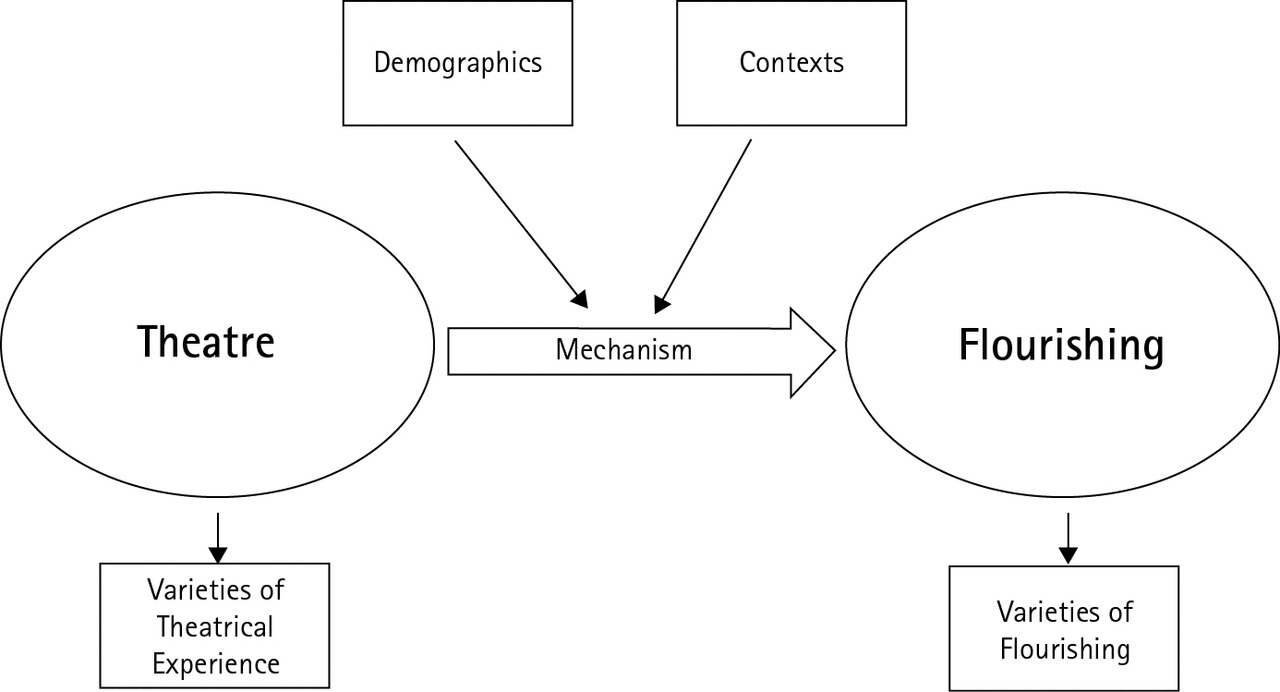
Figure 27.1. Factors in the relationship between Theatre and Flourishing.
Historical and Theoretical Perspectives
A reader with a theatre background may now be asking themselves why such a chapter and model even necessary? Theatre writers and theorists have always deliberated flourishing, since the first writings on Western theatre. Historical perspectives support this debate, from Aristotle and Cicero to Shakespeare and modern theorists and advocates (Wiles, 2011; Woodruff, 2008).
Beginning with Greek theatre, the most important Western theatre up to Shakespeare’s time, often playing to 25 percent of a city’s population at once (Brown, 2001), the theatre has been theorized to move viewers into comprehension by allowing them to express their emotions fully in the safe space of an audience (Halliwell, 1998). Aristotle, while claiming that theatre was tragic and deplorable, also believed that engaging in theatre provided a unique and necessary catharsis by which citizens could transform to lead fuller and better lives (Aristoteles & Hutton, 1982; Halliwell, 1998). A focus on the cathartic experiences at theatres improving well-being continues today, yet research has found that it may not actually help. Focusing on expressing anger or sorrow may instead increase negative emotions or cause heightened negative rumination (Bushman, 2002).
Theatre has also been proposed as harmful to its practitioners (e.g., Magelssen, in press). Because theatre is often focused on stories of tragedy and painful emotions, it might be dangerous to experience as an actor (Barish & Barish, 1981; Freeman, 2016). Acting training is rife with stories of actor burnout, of professional actors who suffer immensely for roles (although this is often a promotional technique for winning awards from films; e.g., Bastién 2016). Almost no research that we know of has investigated these claims, although one study finds that burnout experienced by actors is not overly difficult to overcome, nor is it particularly related to any element of acting itself (Orberndorf & Goldstein, 2017).
While the debate continues, we will join the majority of the literature in focusing on the hypothesis that theatre leads to flourishing for both actor and audience member. We propose that theatre provides flexible, multiple, unique experiences to encourage the expression of emotion and the exploration of human psychology specifically. These experiences then lead to flourishing in the actor and the audience. Regardless of performance goals, hierarchy, age, or level, theatre can provide two key psychological mechanisms to flourishing: (1) a safe space to engage with emotions, mental states, behaviors, and situations (containment); and (2) a technique to personalize and experience such states (embodiment). These two key elements exist across varieties of theatrical experiences. This flexibility in context allows for flourishing under many circumstances. However, their potency in regard to evoking human flourishing may vary.
Varieties of Theatrical Experience
Aesthetic, Informative, Transformative
Different types of theatre (i.e., whether is the goal of a work is aesthetic, informative, or transformative) may provide different types of emotional or cognitive containment for audiences and embodied experiences for actors.
Aesthetic theatre is theatre for its own sake, meant to provide an aesthetic experience for individuals to reflect on beauty, truth, or universality of human experience. Theatre attempts to be imaginatively rich and aesthetically compelling (Jackson, 2005). In defense of theatre’s intrinsic value (not simply as a conduit for other outcomes) McCaslin (2005) writes that the most important element to teach about theatre is: “it is an art and should be taught as an art form first and foremost” (p. 12). This aesthetic experience may produce (for both actor and audience) a sense of awe, a positive aesthetic emotion linked to a sense of well-being (Keltner & Haidt, 2003; Rudd, Vohs, & Aaker, 2012).
Informative theatre is theatre meant to teach the audience about a particular experience, time, or place using simulation and abstraction of the social world (Mar & Oatley, 2008). Storytelling with live humans in front of a live audience may activate autonomic psychological processes such as empathy (Goldstein, 2017). Thus theatre may serve as an entry point into different worldviews and perspectives, and ultimately lead to reflection or dialogue about the self, communities, or other cultures (Taylor, 2003). Various forms of Theatre for the Oppressed (Boal, 2000), or activist theatre, aim to inform audiences of and allow performers to experience what they may not otherwise have access to, such as homelessness, refugees (Day, 2002), genetic testing (Nisker et al. 2006), war (Redington, 2016), or hunting (Heide, Porter &, Saito, 2012).
Transformative theatre purposes to move the audience to action by changing their minds and actions about a situation. Beginning with Brecht and others, theatre is proposed to spur the audience to revolution (Behan, 2000; Leach, 2004; Symons, 1971). By seeing realities on stage in their harshest light, audience members should want to change their cultures and societies. Similarly, actors may be transformed by participating—either implicitly, through their engagement with the words, characters, and emotions they are portraying, or through deep understanding of a particular topic as a result of portraying it for an audience.
Actor and Audience
Within each of these goals, questions of what theatre is and what it does for people might be answered differently depending on whether the participant is a creator/practitioner of theatre (actors, directors, designers), or a receiver of theatre (audience). Audience members engage in theatre through reflection and analysis, while actors engage through embodiment and practice. Both may experience safe containment of their emotions, behaviors, and personality in different ways. Actors can learn about a variety of experiences and emotions through their portrayals, without facing consequences. Theatre can provide audiences a safe space of a contained emotional experience without immediate consequence—for example, experiencing disgust or a truly frightening moment from a horror scene without the reality of having to escape from danger (Hanich, 2011; Menninghaus et al., 2017; Rozin, Guillot, Fincher, Rozin, & Tsukayama, 2013). Emotions can be felt and processed, alternative mental states understood, and cultural and group phenomena explored, but then allowed to be left behind once the show is over.
For the actor, the multiple and flexible ways in which theatre can be practiced suggest a causal link from theatre to flourishing regardless of goal. Actors can be generative in improvisation or interpretive in understanding the work of others. From informal and commercial theatre, performers can explore other perspectives (Holdsworth, Milling, & Nicholson, 2017). Whether in performance or rehearsal, oriented around a common goal or individual-focused, flexibility in actors’ experiences can provide the benefits of embodiment regardless of many other adjustable variables.
For the audience, theatre is available to all ages, across developmental and ability spectrums. There is theatre for babies (Fletcher-Watson, 2013, 2016; Goldfinger, 2011), young children (McCaslin, 1971; Reason, 2010; Schonmann, 2006), adolescents and adults, = Autistic (Fletcher-Watson, 2015) and Down syndrome audiences. This flexibility across practices, applications, populations, and levels of agency allows for a range of contexts and opportunities to create safe containment and therefore possibly flourishing.
Yet multiple persistent questions remain: Within varieties of types and experiences with theatre, what are common and underlying factors that allow for or cause transfer to flourishing? Is it simply enough to be in the same space where something theatrical is occurring? Are there practice mechanisms that cause flourishing? Is it enough to experience containment, or to embody emotions? Could other factors, such as empathy, emotional catharsis, engagement with others, be necessary or specifically affected by theatre? If embodiment and containment are factors within theatre that can lead to empathy, catharsis, or a sense of community, is theatre merely a set of contexts for eudaimonia? And within those mechanisms, are there moderating factors of individuals or contexts that change, or mediate (that is, partially explain) the relationship between theatre and flourishing?
How Theatre Causes Flourishing
Because theorists, practitioners, and writers in theatre have for so long seen anecdotal exemplars of flourishing in their own lives, students, and stories, there is a general assumption that theatre causes, and has always caused, flourishing. For many practitioners and some current arts advocates, theatre checks all the boxes and key tenets of flourishing (Ryff & Keyes, 1995; Tay, Pawelski, & Keith, 2018). It is proposed to engage personal growth and autonomy (Barba, 2002; Hughes & Wilson, 2004), self-acceptance (Dubost, 2002; Manna, 1989), and the growth of human community (Byam, 1999; McCarthy, Ondaatje, Zakaras, & Brooks, 2004; Taylor, 2003). Theatre causes emotional understanding (Goldstein & Winner, 2012), and interpersonal connections (Mulinix, 2018, Wamsley, 2013). Theatre requires emotion regulation, competency, and relatedness (Carroll, 2015; Wamsley, 2013, taking on roles and identities (Blair, 2007; Tust-Gunn, 1995), and reflecting on oneself (Reason, 2010; Tust-Gunn, 1995). Yet many of these proposals and theories do not have experimental, causal, or even strong empirical evidence (Winner et al., 2013). Often there is a “black box” of causal change—a lack of clear mechanism for how theatre causes flourishing.
As a result, there is sometimes a grasp onto any psychological theory that sounds as though it would hold an appropriate explanatory value for the value of theatre, without a full realization or understanding of that psychological construct. The application and misapplication of theories rely on multiple factors: the misunderstanding of evidence behind a theory, the misappropriation of the theory beyond what the researcher believes it to hold, and the preservation of a theory that the field of psychology has shown false, or has moved away from. It is therefore only carefully that we propose our psychological mechanisms for flourishing from theatre.
While still in need of significant work, the two psychological constructs we believe hold the most promise for being mechanistically, causally able to link theatre and flourishing are embodiment, or the connection and engagement between the mind and body, and containment, or the ability to provide a safe psychological and physical space to contain emotional expression, exploration, and control. Both occur within the context of theatre in a way that is unique to theatre spaces. Both allow the theatre’s practitioners and audience members to engage with difficult topics and emotions. And both may provide the practice of skills such as mindfulness, community, empathy, and emotional control that can be learned, can be applied outside of theatre, and can help give audiences and actors a sense of flourishing.
Embodiment
“Embodiment” can refer to a variety of different concepts: how humans use language about the body to describe mental states and therefore form thinking (Gibbs, 2005); the fact that psychological processes are influenced by sensory and motor systems of the body (Glenberg, 2010); the fact that feeling an emotion is the process of understanding what is happening in one’s body (Prinz, 2004); or the idea that engaging in many activities that use psychological processes also use bodily processes simultaneously—the body is part of the activity (Lewis, 2000; Russ & Dillon, 2011).
Embodying an action can change cognitive function. When physical activity or gesture is integrated with mental activities, such as learning about math, language, or science, children learn more than when engaging mentally without the body (Goldin-Meadow, 2005; Goldin-Meadow & Beilock, 2010; Mavilidi, Okely, Chandler, Cliff, & Paas, 2015; Mavilidi, Okely, Chandler, & Paas, 2016; Mavilidi, Okely, Chandler, Domazet, & Paas, 2018; Toumpaniari, Loyens, Mavilidi, & Paas, 2015). Embodied practice of skills means that individuals are better able to learn those skills (Gallagher & Lindgren, 2015; Madan & Singhal, 2012a, 2012b).
Given the physical nature of theatre, theatre actors may benefit in a similar manner. As actors use their bodies to explore and discover a character, and then determine the best way to show that character to an audience, they may be learning about others’ mental and emotional states, and their own mental and emotional states, in a direct and deep way. Learning about cultures through embodied means may provide personal understanding. It is this learning that may then lead to higher levels of empathy, interpersonal understanding, mindfulness, and other aspects of well-being.
For an audience, the path through embodiment is not as clear. There may be unconscious mimicry of actors’ emotional portrayals occurring in the audience (Chartrand & Bargh, 1999), and we know that audience members have physiological reactions to watching live performance (Bläsing et al., 2012; Jola, Ehrenberg, & Reynolds, 2012; Latulipe, Carroll, & Lottridge, 2011; Martella, Gedik, Cabrera-Quiros, Englebienne, & Hung, 2015). Yet audiences are not having the same type of embodied experience as actors. Immersive theatrical experiences may provide a more embodied experience for audience members as they move throughout a space to experience a performance, which may heighten emotional reactions and mental-state processing (Biggin, 2017; Dinesh, 2016, 2019).
Furthering the idea that embodiment may be a pathway from theatre to flourishing, many well-being practices emphasize bodily awareness and integration of body and mind. Mindfulness teachings and mindfulness-based stress reduction focuses on paying attention to the body and its signals (Grossman, Niemann, Schmidt, & Walach, 2004; Kabat-Zinn, 2009). Many theatrical training techniques use body awareness, such as the Alexander Technique, to focus on the body’s relationship to mental and emotional states (Gelb, 1995). This integration of body, expression, and cognition is unique to theatre and has, importantly, a clear start and endpoint—it is contained.
Containment
Containment is a critical piece of the larger idea of theatre as a “safe space,” that is, a space where emotions can be expressed without fear of belittling or bullying, where ideas can be explored without real world consequences, and where risks can be taken for an individual’s identity and then left behind at the end of the theatre occurrence. The space held by theatre could therefore allow for emotional exploration and understanding, again leading to a better sense of community and self, and therefore flourishing.
The idea of theatre as containment has been explored in theoretical writing, often implicitly, in a few ways. Space can be thought of as an explicit physical setting in which people engage in activities, as a process itself, and as a performative location that the people create together (Lutterbie, 2001). Such space is protected, cathartic, and insular (Hunter, 2008). In a contained space, theatrical exploration can test new and potentially dangerous ideas before taking them out of a space to the real world (Lumsden, 2000). Theatre makers often have a goal of group familiarity where experimentation and innovation can take place for both actor and audience. Risky creativity and new performance are proposed to follow (Hunter, 2008).
Theatre can also be conceptualized as a space for fluid, different and non-assumptive meaning-making to potentially occur—a space as a “time bound affective experience” (Sloan, 2018). Theoretical writing describes theatre as healing through the space’s separation from the traumatic reality of a situation in order to process it (Biggs, in press). Containment could also be interpreted as the audience’s experience, such as in theatre of war where the audience is confined to the space with a forced, but also safe, confrontation (Lodewyck, in press). The cognizing of traumatic and difficult emotional events through writing about them helps heal trauma (Pennebaker, 1997), and repeated theatrical performance of traumatic events could cognitize emotional responses with enclosed beginnings and endings.
In psychology, the therapeutic room is often thought of as a safe space to explore and work through difficult emotions. Theories from psychoanalytic traditions and modern research support that both the therapist and physical room act as safe containers for the patient (Case & Dalley, 2014; Maliphant & Horner, 2016). For trauma and other issues, the therapeutic space provides specific spatial and temporal boundaries, free from interruptions, and linked with confidentiality (Bondi & Fewell, 2003). The psychological “container” and stability of the room contribute to trustful clinical relationships (Punzi & Singer, 2018), leading to a proposed healing process (Goodwin, 2006; (Brosan, Reynolds, & Moore, 2007)).
Similarly, fiction has often been thought of as a safe space for practicing emotions and exploring other situations through its use of mental simulation (Harris, 2000; Mar & Oatley, 2008). Fiction is specifically formatted to evoke certain emotions in audiences (Mar et al., 2011; Oatley, 1999, 2002), which can be put aside by putting aside the book or movie that caused it. Pretend play, too, is often thought of as a safe space for children to learn new concepts, act out new ideas, and feel emotions that they would not otherwise want to feel (e.g., pretending to cook a baby and then feeling horrified at a cooked baby—or delighted at a cooked baby!). This play allows for the modulation of emotion (Harris, 2000; Hoffmann & Russ, 2012; Moore & Russ, 2006; Russ, 2013). These theories of fiction and play are applied to theatre as well, although no work we know of has specifically tested these hypotheses.
Moderating and Mediating Factors on the Relationship between Theatre and Flourishing
While embodiment and safe containment are flexibly applied in theatre, personal and contextual characteristics likely moderate their efficacy for flourishing. Two primary types of moderating characteristics are: demographic characteristics of the individual, such as sex, age, personality, previous experience, type of acting technique, interest in theatre, or the types of theatre previously experienced; and contextual variables, particularly the context in which theatre is happening. Individuals can participate in theatre as actors, producers, performers, or other members of a theatre space. However, theatre can also reflect the stories of a community and illuminate similarities across different groups. At a cultural level, theatre portrays potentially unfamiliar cultures or explains a particular cultural or time-centered phenomenon. Other considerations are the broader context of the time in which the theatre takes place, and the ways groups interact. Any of these specific experiences may enhance, prevent, or help explain some of the relationship between theatrical engagement and flourishing.
Not only may theatre differentially lead to flourishing based on individual characteristics, but perhaps there is also an interaction between theatre topic and individual-level variables. Previous experience with theatre, individual levels of empathy, emotion regulation, emotional intensity, affect intensity, expressiveness, or other emotional factors could moderate this relationship, or even partially explain it. There are almost endless hypotheses here. Perhaps for those with high levels of empathy, watching theatre can change individuals’ sense of well-being about themselves, but for those with low empathy, it may make them feel worse as they reflect on their inability to connect with others. Perhaps with moderate levels of affect intensity and reactivity, theatre has a strong effect, but with very low or high levels, theatre either does not affect audiences or has such an effect that the audience member becomes deeply overwhelmed. Perhaps theatre reflective of distant human experiences actually prevents flourishing because it is not close enough to people’s lived realities. Perhaps well-trained and talented actors feel a sense of flourishing as a result of theatre, but non-talented actors cannot.
Types of Flourishing Specific to Theatre
Flourishing can encompass many behaviors, mental states, emotional states, feelings, and senses. So where specifically within flourishing does theatre lead? The causal pathway from theatre to flourishing may end at a general sense of flourishing, but more likely at specific psychological constructs within flourishing, separable both theoretically and empirically. Elements of social connections have been studied in relation to theatre, such as empathy and theory of mind, as well as personal and emotional skills that are associated with positive outcomes, such as self-concept, emotional control, and mindfulness. Generally, empirical evidence is mixed, but there are theoretical and small findings to suggest these connections should exist. Previous work has found that theatre games, readings, and improv can lead to a higher sense of fun, relaxation, group relationships, and a sense of resilience for medical students (Nagji, Brett-MacLean, & Breault, 2013). For empathy and higher levels of understanding of others, theatre has long been proposed to serve as a conduit to be able to feel the emotions of other people, and to therefore sympathize with those emotions (Verducci, 2000). Some evidence supports this theory for medical students (Dow, Leong, Anderson, Wenzel, & Team, 2007), and elementary and high school students (Goldstein & Winner, 2012; Goldstein, Wu, & Winner, 2009; Ng & Graydon, 2016). It is important to note that empathy may lead to well-being by way of connection with others (Davis, 2018), and is not necessarily a component of flourishing on its own (Bloom, 2017a, 2017b).
A second construct within flourishing that theatre might positively affect is mindfulness. Improvisational theatre in particular requires its practitioners to be fully present and paying close attention to a particular moment onstage (Spolin & Sills, 1999). Theatre is immediately engaging (McConachie & Hart, 2006), which may create an environment in which audience members and actors are fully present, with no distractions, mind wandering, or multitasking. From being in a mindful flow state, audience and actor may experience flourishing (Csikszentmihalyi, 2013; Ivtzan & Lomas, 2016).
Third, we look at self-awareness and self-concept. Some evidence supports the hypothesis that theatrical improv can help children gain self-concept (DeBettignies & Goldstein, 2019), reduce social phobia, and increase self-efficacy, particularly in their willingness to make mistakes (Felsman, Seifert, & Himle, 2020. Transformation and learning may occur intrinsically, and only upon reflection would an audience member or actor recognize that they have been absorbed in a performance, reflective of the performance, and therefore changed by the performance (Brown & Novak-Leonard, 2013).
Finally, the ability to control and think about emotions in oneself and in others may result from theatre (i.e., thinking about how emotions are processed, regulated, and expressed). There are positive links between knowledge, control, and well-being (Sanchez-Alvarez, Extremera, & Fernández-Berrocal, 2016). Some previous work has also shown that theatre may lead to higher levels of emotional knowledge and control, but this study was in children (Goldstein, Tamir, & Winner, 2013).
Taken together, mindfulness, connection to others through empathy, a better understanding of the self, and emotional control and understanding seem to be the best potential flourishing outcomes produced by theatrical engagement.
Conclusion
Embodiment of emotions through portraying them to an audience and having a set contained time and place to experience those emotions seem strong candidate pathways between engaging in theatre of all types and experiencing a variety of flourishing outcomes. Either as an audience or an actor, regardless of whether one is performing a Broadway play about a tragic family, or devising a work on your own personal history, theatre may lead to a greater sense of self-concept, a feeling of mindfulness about your body and mind, and a sense of connection with others. These pathways—from theatrical experience, through embodiment and containment—to flourishing outcomes are the most theoretically and empirically supported, and most likely to inform the hypothesis that “theatre causes flourishing.”
A central question still remains: Which activities within theatre lead to which outcomes within flourishing? It cannot be the case, for example, that improv classes lead to empathy in the same way that a scripted piece of theatre, deeply studied, about a culture unlike your own can foster empathy. Reverse causality (that having higher levels of empathy leads someone to register for an acting class) may also be true. The flexibility within theatre—differences in directors, actors and topics—may affect how and to what extent individuals flourish within theatre. Yet amidst this flexibility, we consider the key mechanisms to flourishing—embodiment and containment—to consistently appear. While the idea that theatre leads to flourishing is not new, the study of its mechanisms will allow us to demystify it and understand how it differentially affects audience and actor. Deconstructing how theatre works gives more insight into its importance. Future study of theatre will hopefully provide evidence of its benefits, and if supported, interventions in other contexts can incorporate mechanisms of theatre (embodiment, containment) to promote flourishing.
References
Aristoteles, & Hutton, J. (1982). Aristotle’s poetics. New York, NY: W. W. Norton.
Barba, E. (2002). The essence of theatre. TDR/The Drama Review, 46(3), 12–30.
Barish, J. A., & Barish, J. A. (1981). The antitheatrical prejudice. Berkeley: University of California Press.
Barnett, S. M., & Ceci, S. J. (2002). When and where do we apply what we learn? A taxonomy for far transfer. Psychological Bulletin, 128(4), 612–637. https://doi.org/10.1037/0033-2909.128.4.612
Bastién, A. J. (2016, August 11). Hollywood Has Ruined Method Acting. The Atlantic. https://www.theatlantic.com/entertainment/archive/2016/08/hollywood-has-ruined-method-acting/494777/ Accessed July 5, 2021.
Behan, T. (2000). Dario Fo: Revolutionary theatre. London, UK: Pluto Press.
Biggin, R. (2017). Immersive theatre and audience experience. Basingstoke, UK: Palgrave Macmillan
Biggs, L.L. (in press.) Teaching theatre and Detroit history for undergraduates to flourish. In H. Young (Ed.), Theatre and Human Flourishing. New York, NY: Oxford University Press.
Blair, R. (2007). The actor, image, and action: Acting and cognitive neuroscience. Routledge.
Bläsing, B., Calvo-Merino, B., Cross, E. S., Jola, C., Honisch, J., & Stevens, C. J. (2012). Neurocognitive control in dance perception and performance. Acta Psychologica, 139(2), 300–308.
Bloom, P. (2017a). Against empathy: The case for rational compassion. London, UK: Random House.
Bloom, P. (2017b). Empathy and its discontents. Trends in Cognitive Sciences, 21(1), 24–31.
Boal, A. (2000). Theater of the oppressed. London, UK: Pluto Press.
Bondi, L., & Fewell, J. 2003. “Unlocking the cage door”: The spatiality of counselling. Social and Cultural Geography, 4(4), 527–547.
Brosan, L., Reynolds, S., & Moore, R. G. (2007). Factors associated with competence in cognitive therapists. Behavioural and Cognitive Psychotherapy, 35(2), 179–190.
Brown, J. R. (2001). The Oxford illustrated history of theatre (Vol. 1). Oxford, UK: Oxford University Press.
Brown, A. S., & Novak-Leonard, J. L. (2013). Measuring the intrinsic impacts of arts attendance. Cultural Trends, 22(3–4), 223–233.
Burton, J. M., Horowitz, R., & Abeles, H. (2000). Learning in and through the arts: The question of transfer. Studies in Art Education, 41(3), 228–257.
Bushman, B. J. (2002). Does venting anger feed or extinguish the flame? Catharsis, rumination, distraction, anger, and aggressive responding. Personality and Social Psychology Bulletin, 28(6), 724–731.
Byam, L. D. (1999). Community in motion: Theatre for development in Africa. Greenwood Publishing Group.
Case, Caroline and Tessa Dalley, “The art therapy room”, in The Handbook of Art Therapy ed. Caroline Case and Tessa Dalley (Abingdon: Routledge, 11 Jun 2014 ), accessed 06 Jul 2021, Routledge Handbooks Online.
Carroll, N. (2015). Theater and the Emotions. The Oxford Handbook of Cognitive Literary Studies, 313–326.
Catterall, J. S. (2005). Conversation and silence: Transfer of learning through the arts. Journal for Learning through the Arts, 1(1), 1.
Chartrand, T. L., & Bargh, J. A. (1999). The chameleon effect: The perception-behavior link and social interaction. Journal of Personality and Social Psychology, 76(6), 893–910.
Csikszentmihalyi, M. (2013). Flow: The psychology of happiness. Random House.
Davis, M. H. (2018). Empathy: A social psychological approach. Routledge, New York, NY.
Day, L. (2002). “Putting Yourself in Other People’s Shoes”: The use of Forum theatre to explore refugee and homeless issues in schools. Journal of Moral Education, 31(1), 21–34.
DeBettignies, B. H., & Goldstein, T. R. (2020). Improvisational theater classes improve self-concept. Psychology of Aesthetics, Creativity, and the Arts, 14(4), 451–461. https://doi.org/10.1037/aca0000260
Dinesh, N. (2016). Memos from a theatre lab: Exploring what immersive theatre “does.” New York: Routledge.
Dinesh, N. (2019). Memos from a theatre lab: Immersive theatre & time. Wilmington, DE, USA: Vernon Press.
Dow, A. W., Leong, D., Anderson, A., Wenzel, R. P., & Team, V. T.-M. (2007). Using theater to teach clinical empathy: A pilot study. Journal of General Internal Medicine, 22(8), 1114–1118. https://doi.org/10.1007/s11606-007-0224-2
Dubost, T. (2002). Kilroy’s Theatre of the Conflicted Self. Irish University Review, 32(1), 10–17.
Felsman, P., Gunawardena, S., & Seifert, C. M. (2020). Improv experience promotes divergent thinking, uncertainty tolerance, and affective well-being. Thinking Skills and Creativity, 35. https://doi.org/10.1016/j.tsc.2020.100632
Fletcher-Watson, B. (2013). Child’s play: A postdramatic theatre of paidia for the very young. Platform, 7(2), 14–31.
Fletcher-Watson, B. (2015). Relaxed performance: Audiences with autism in mainstream theatre. Scottish Journal of Performance, 2(2). https://doi.org/10.14439/sjop.2015.0202.04.
Fletcher-Watson, B. (2016). “ More like a poem than a play”: Towards a dramaturgy of performing arts for Early Years (PhD thesis). The University of St Andrews.
Freeman, L. A. (2016). Antitheatricality and the body public. Philadelphia: University of Pennsylvania Press.
Gallagher, S., & Lindgren, R. (2015). Enactive metaphors: Learning through full-body engagement. Educational Psychology Review, 27(3), 391–404.
Gelb, M. (1995). Body learning: An introduction to the Alexander technique. London, UK: Aurum.
Gibbs, Jr, R. W. (2005). Embodiment and cognitive science. Cambridge, UK: Cambridge University Press.
Glenberg, A. M. (2010). Embodiment as a unifying perspective for psychology: Embodiment as a unifying perspective. Wiley Interdisciplinary Reviews: Cognitive Science, 1(4), 586–596. https://doi.org/10.1002/wcs.55
Goldfinger, E. (2011). Theatre for babies. In: Schonmann S. (eds) Key Concepts in Theatre/Drama Education. SensePublishers.https://doi.org/10.1007/978-94-6091-332-7_48.
Goldin-Meadow, S. (2005). Hearing gesture: How our hands help us think. Cambridge, MA: Harvard University Press.
Goldin-Meadow, S., & Beilock, S. L. (2010). Action’s influence on thought: The case of gesture. Perspectives on Psychological Science, 5(6), 664–674.
Goldstein, T. R. (2017). Live theatre as exception and test case for experiencing negative emotions in art. Behavioral and Brain Sciences, 40, DOI:10.1017/S0140525X17001704.
Goldstein, T. R., Tamir, M., & Winner, E. (2013). Expressive suppression and acting classes. Psychology of Aesthetics, Creativity, and the Arts, 7(2), 191–196.
Goldstein, T. R., & Winner, E. (2012). Enhancing empathy and theory of mind. Journal of Cognition and Development, 13(1), 19–37.
Goldstein, T. R., Wu, K., & Winner, E. (2009). Actors are skilled in theory of mind but not empathy. Imagination, Cognition and Personality, 29(2), 115–133.
Grossman, P., Niemann, L., Schmidt, S., & Walach, H. (2004). Mindfulness-based stress reduction and health benefits: A meta-analysis. Journal of Psychosomatic Research, 57(1), 35–43.
Halliwell, S. (1998). Aristotle’s poetics. Chicago, IL: University of Chicago Press.
Hanich, J. (2011). Cinematic emotion in horror films and thrillers: The aesthetic paradox of pleasurable fear. New York, NY: Routledge.
Harris, P. L. (2000). The work of the imagination. Blackwell Publishing.
Heide, F. J., Porter, N., & Saito, P. K. (2012). Do you hear the people sing? Musical theatre and attitude change. Psychology of Aesthetics, Creativity, and the Arts, 6(3), 224–230.
Hoffmann, J., & Russ, S. (2012). Pretend play, creativity, and emotion regulation in children. Psychology of Aesthetics, Creativity, and the Arts, 6(2), 175.
Holdsworth, N., Milling, J., & Nicholson, H. (2017). Theatre, performance, and the amateur turn. Contemporary Theatre Review, 27 (1), 4–17.
Hughes, J., & Wilson, K. (2004). Playing a part: The impact of youth theatre on young people’s personal and social development. Research in Drama Education, 9(1), 57–72.
Hunter, M. A. (2008). Cultivating the art of safe space. Research in Drama Education: The Journal of Applied Theatre and Performance, 13(1), 5–21. https://doi.org/10.1080/13569780701825195
Ivtzan, I., & Lomas, T. (Eds.). (2016). Mindfulness in positive psychology: The science of meditation and wellbeing. New York, NY: Routledge.
Jackson, A. (2002). Learning through theatre: New perspectives on theatre in education. Routledge.
Jola, C., Ehrenberg, S., & Reynolds, D. (2012). The experience of watching dance: Phenomenological–neuroscience duets. Phenomenology and the Cognitive Sciences, 11(1), 17–37.
Kabat-Zinn, J. (2009). Wherever you go, there you are: Mindfulness meditation in everyday life. New York: Hachette Books.
Keltner, D., & Haidt, J. (2003). Approaching awe, a moral, spiritual, and aesthetic emotion. Cognition and Emotion, 17(2), 297–314.
Latulipe, C., Carroll, E. A., & Lottridge, D. (2011). Love, hate, arousal and engagement: Exploring audience responses to performing arts. Proceedings of the SIGCHI Conference on Human Factors in Computing Systems (pp. 1845–1854). Vancouver, BC: ACM.
Leach, R. (2004). Makers of modern theatre: An introduction. New York: Routledge.
Lewis, V. (2000). Relationships between symbolic play, functional play, verbal and non-verbal ability in young children. International Journal of Language & Communication Disorders, 35(1), 117–127.
Lodewyck, L.A. (in press.) The potential of pain: Conflict dramaturgy and transformation in the theatre. In H. Young (Ed.), Theatre and Human Flourishing. New York, NY: Oxford University Press.
Lutterbie, John. 2001. Phenomenology and the dramaturgy of space and place. Journal of Dramatic Theory and Criticism, 16(1), 123–130.
Madan, C. R., & Singhal, A. (2012a). Encoding the world around us: Motor-related processing influences verbal memory. Consciousness and Cognition, 21(3), 1563–1570.
Madan, C. R., & Singhal, A. (2012b). Using actions to enhance memory: Effects of enactment, gestures, and exercise on human memory. Frontiers in Psychology, 3, 507.
Magelssen, S. (in press.) Actors as surrogate sufferers? Toward a model for well-being in acting training. In H. Young (Ed.), Theatre and Human Flourishing. New York, NY: Oxford University Press.
Maliphant, J., & Horner, T. (2016). Feeling at sea: The anchor of the therapeutic space. Infant Observation, 19(1), 24–41.
Manna, A. L. (1989). The Search for Self in Suzan Zeder’s Plays. Children’s Literature Association Quarterly, 14(3), 142–147.
Mar, R. A., & Oatley, K. (2008). The function of fiction is the abstraction and simulation of social experience. Perspectives on Psychological Science, 3(3), 173–192.
Mar, R. A., Oatley, K., Djikic, M., & Mullin, J. (2011). Emotion and narrative fiction: Interactive influences before, during, and after reading. Cognition & Emotion, 25(5), 818–833.
Martella, C., Gedik, E., Cabrera-Quiros, L., Englebienne, G., & Hung, H. (2015). How was it? Exploiting smartphone sensing to measure implicit audience responses to live performances. Proceedings of the 23rd ACM International Conference on Multimedia (pp. 201–210). Brisbane, Australia: ACM.
Mavilidi, M.-F., Okely, A. D., Chandler, P., Cliff, D. P., & Paas, F. (2015). Effects of integrated physical exercises and gestures on preschool children’s foreign language vocabulary learning. Educational Psychology Review, 27(3), 413–426.
Mavilidi, M.-F., Okely, A., Chandler, P., Domazet, S. L., & Paas, F. (2018). Immediate and delayed effects of integrating physical activity into preschool children’s learning of numeracy skills. Journal of Experimental Child Psychology, 166, 502–519.
Mavilidi, M.-F., Okely, A. D., Chandler, P., & Paas, F. (2016). Infusing physical activities into the classroom: Effects on preschool children’s geography learning. Mind, Brain, and Education, 10(4), 256–263.
McCarthy, K. F., Ondaatje, E. H., Zakaras, L., & Brooks, A. (2001). Gifts of the muse: Reframing the debate about the benefits of the arts. Rand Corporation.
McCaslin, N. (2005). Seeking the aesthetic in creative drama and theatre for young audiences. The Journal of Aesthetic Education, 39(4), 12–19.
McConachie, B., & Hart, F. E. (2006). Performance and Cognition: Theatre studies and the cognitive turn. Routledge.
Menninghaus, W., Wagner, V., Hanich, J., Wassiliwizky, E., Jacobsen, T., & Koelsch, S. (2017). The distancing-embracing model of the enjoyment of negative emotions in art reception. Behavioral and Brain Sciences, 40, 1–63.
Moore, M., & Russ, S. W. (2006). Pretend play as a resource for children: Implications for pediatricians and health professionals. Journal of Developmental & Behavioral Pediatrics, 27(3), 237–248.
Mulinix, F. (2018). The Actor Uncovered: A Life in Acting. Taylor & Francis.
Nagji, A., Brett-MacLean, P., & Breault, L. (2013). Exploring the benefits of an optional theatre module on medical student well-being. Teaching and Learning in Medicine, 25(3), 201–206.
Ng, H. C., & Graydon, C. (2016). In search of empathy in Playback Theatre: A preliminary study. Person-Centered & Experiential Psychotherapies, 15(2), 126–141.
Nisker, J., Martin, D. K., Bluhm, R., & Daar, A. S. (2006). Theatre as a public engagement tool for health-policy development. Health Policy, 78(2–3), 258–271.
Oberndorf, M., & Goldstein, T.R., (2017). Creating, Maintaining, and Releasing Characters: Predicting Burnout in Actors. Unpublished Honors Thesis, Pace University.
Oatley, K. (1999). Why fiction may be twice as true as fact: Fiction as cognitive and emotional simulation. Review of General Psychology, 3(2), 101–117.
Oatley, K. (2002). Emotions and the story worlds of fiction. Narrative Impact: Social and Cognitive Foundations, 39, 69.
Pennebaker, J. W. (1997). Writing about emotional experiences as a therapeutic process. Psychological Science, 8(3), 162–166.
Punzi, E., & Singer, S. (2018) “Any room won’t do”: Clinical psychologists’ understanding of the consulting room. An interview study. Psychodynamic Practice, 24(4), 319–333. doi:10.1080/14753634.2018.1526107
Prinz, J. (2004). Embodied emotions. In Thinking about feeling: Contemporary philosophers on emotions (pp. 44–58). Series in Affective Science, RC Solomon (ed). New York, NY: Oxford University Press.
Reason, M. (2010). The young audience: Exploring and enhancing children’s experiences of theatre. Stoke-on-Trent, UK: Trentham Books.
Redington, C. (2016). Can theatre teach? An historical and evaluative analysis of theatre in education. Elmsford, New York: Pergamon Press.
Rozin, P., Guillot, L., Fincher, K., Rozin, A., & Tsukayama, E. (2013). Glad to be sad, and other examples of benign masochism. Judgment and Decision Making, 8(4), 439.
Rudd, M., Vohs, K. D., & Aaker, J. (2012). Awe expands people’s perception of time, alters decision making, and enhances well-being. Psychological Science, 23(10), 1130–1136.
Russ, S. W. (2013). Affect and creativity: The role of affect and play in the creative process. Routledge.
Russ, S. W., & Dillon, J. A. (2011). Changes in children’s pretend play over two decades. Creativity Research Journal, 23(4), 330–338.
Ryff, C. D., & Keyes, C. L. M. (1995). The structure of psychological well-being revisited. Journal of Personality and Social Psychology, 69(4), 719.
Schonmann, S. (2006). Theatre as a medium for children and young people: Images and observations (Vol. 4). Dordrecht, The Netherlands: Springer.
Sloan, C. (2018). Understanding spaces of potentiality in applied theatre. Research in Drama Education: The Journal of Applied Theatre and Performance, 23(4), 582–597. https://doi.org/10.1080/13569783.2018.1508991
Spolin, V., & Sills, P. (1999). Improvisation for the theater: A handbook of teaching and directing techniques. Chicago, IL: Northwestern University Press.
Sánchez-Álvarez, N., Extremera, N., & Fernández-Berrocal, P. (2016). The relation between emotional intelligence and subjective well-being: A meta-analytic investigation. The Journal of Positive Psychology, 11(3), 276–285.
Symons, J. M. (1971). Meyerhold’s theatre of the grotesque: The post-revolutionary productions, 1920–1932. Miami, FL: University of Miami Press.
Tay, L., Pawelski, J. O., & Keith, M. G. (2018). The role of the arts and humanities in human flourishing: A conceptual model. The Journal of Positive Psychology, 13(3), 215–225.
Taylor, P. (2003). The Applied Theatre. Paper presented at the Arizona State University Department of Theatre Symposium: What is “Cinderella” Hiding? Theatre/Ideology/Young People (Tempe, AZ, February 20-22, 2003).
Toumpaniari, K., Loyens, S., Mavilidi, M.-F., & Paas, F. (2015). Preschool children’s foreign language vocabulary learning by embodying words through physical activity and gesturing. Educational Psychology Review, 27(3), 445–456.
Tust-Gunn, L. (1995). A mirror to nature: The theater actor’s relationship to characters and use of roles for self-exploration [PhD Thesis]. California School of Professional Psychology-Berkeley/Alameda.
Verducci, S. (2000). A moral method? Thoughts on cultivating empathy through method acting. Journal of Moral Education, 29(1), 87–99.
Walmsley, B. (2013). “A big part of my life”: A qualitative study of the impact of theatre. Arts Marketing: An International Journal.
Wiles, D. (2011). Theatre and citizenship: The history of a practice. Cambridge, UK: Cambridge University Press.
Winner, E., Goldstein, T., & Vincent-Lancrin, S. (2013). Art for art’s sake? The impact of arts education. Paris, France: OECD Publishing.
Winner, E., & Hetland, L. (2004). Cognitive transfer from arts education to nonarts outcomes: Research evidence and policy implications. In Handbook of research and policy in art education, E.W. Eisner & M.D. Day,(eds) (pp. 143–170). New York: Routledge.
Woodruff, P. (2008). The necessity of theater: The art of watching and being watched. Oxford, UK: Oxford University Press.
1 We thank Amanda Feinberg for her assistance with writing this chapter.