

TWELVE

None so deaf as those that will not hear.
MATTHEW HENRY (1662–1714)
Incredible as it may seem, it took only a small clique of hearing educators and businessmen, late in the last century, to release a tidal wave of oralism that swept over Western Europe, drowning all its signing communities. In America, the submersion of sign language was nearly as complete for, although the European wave reached our shores attenuated, Alexander Graham Bell and his speech association had cleared the way for its progress from east to west.
Now, one hundred years later, the waters seem to be receding ever so slightly in a few American states, in Denmark and Sweden, in France, allowing a glimpse of a few tentative stirring of life: here, the hands of an interpreter are seen to move; there, a deaf actress signs; elsewhere, a teacher signs to his class. Still, nowhere are signing communities granted the status of other language minorities, nowhere are the deaf allowed an important influence in the education of deaf children, nowhere are the deaf enabled to graduate from high school in substantial numbers, nowhere does national policy implement what national ideals demand: self-fulfillment for the deaf as for all other citizens.
How were the signing communities of the Western world laid waste? By a conspiracy I will describe that pursued personal self-interest through a series of self-styled congresses. The first such meeting in the recrudescence of oralism was a gathering of a few directors of private schools for the deaf in France and some others who dubbed themselves the “World Congress for Improving the Welfare of Deaf-Mutes.” It had been prompted by two Parisian railroad barons and financiers, Isaac and Eugène Pereire, son and grandson of Jacob Pereire, in an effort to secure at last their birthright, the recognition of their forebear as the savior of the deaf and the commercial exploitation of his miraculous but secret method.1
This uncanny resumption of the struggle between Pereire and Epée nearly a century after they were buried was precipitated by a coincidence. A relative of Eugène Pereire’s wife, visiting friends in Geneva, learned of a Frenchman exiled there directing a small school for the deaf in a way few others were then conducted—without using the language of the deaf. Eugène Pereire corresponded with the director, Marius Magnat, and arranged to hire one of his teachers to open a small oral school for the deaf in a Paris suburb in 1873. The following year, Magnat came to Paris and Pereire gave him a sheaf of his grandfather’s manuscripts and a copy of the biography by Edouard Séguin in the hope that Magnat would discover J. R. Pereire’s famous secret method, the secret that Eugène’s father, Isaac, had been unable to elicit from Marie Marois. Imagine Magnat’s pleasure at finding in those yellowed pages the very method he had been using all along at his school in Geneva—or so he said. He hastened to inform Eugène Pereire, who, naturally, hired him to give a normal course explaining his technique.
On the same trip, Magnat met a government inspector of primary schools named Félix Hément, who had under his aegis a small class of deaf pupils in a parochial school for hearing children, all that remained of Blanchet’s experiment. Hément introduced Magnat to the Brothers of Christian Schools, who taught the class and who agreed to have two of their order accompany Magnat back to Geneva to learn his methods, presumably with funding from Pereire; one of the brothers returned to Paris a convert to oralism and in turn converted the other brothers. When Magnat also returned with some of his pupils in tow, it was decided that, instead of training teachers, he would give a series of public lectures arranged by Hément. The public was astonished to learn, Magnat reports, that the “French method” of educating the deaf was not the silent method of Epée but the speaking method of Pereire.
The lectures were only one part of a carefully orchestrated plan “to erect a kind of monument to the memory of J. R. Pereire,” in the words of one of his biographers, retained by his grandson. Much as in America Bell would shortly create the Association to Promote the Teaching of Speech to the Deaf, and as in England St. John Ackers had just formed the Society for Training Teachers of the Deaf and Diffusion of the German System, so Eugène Pereire established the J. R. Pereire Society to propagate the oral method. He secured as vice-president of his society a Paris city councilman, Eugène Rigault. Like its English-language counterparts, the society published a bulletin and offered normal courses; graduates were given a diploma and a cash award. Next Pereire opened a private oral school named after his grandfather and hired Magnat, his lecture series completed, as the director. Like Hubbard, Bell, and Ackers, Pereire was determined to provide an alternative to the national schools, in which the lower classes and manual language predominated. He knew that upper-class parents, rarely deaf themselves, wanted their deaf children to speak the same language they did, and that money was no object. Pereire also hired Inspector Hément to write a second, more concise, biography of his grandfather, establishing that Magnat was following in his footsteps and announcing the opening of the Pereire school (where Hément became a member of the advisory board).2 Finally, Pereire arranged with Ernest La Rochelle of the national library to undertake a thorough scholarly analysis of his grandfather’s life and works with the aim of writing a third biography and finally resolving the issue of a secret method, and he hired him as general agent of the Pereire Society.
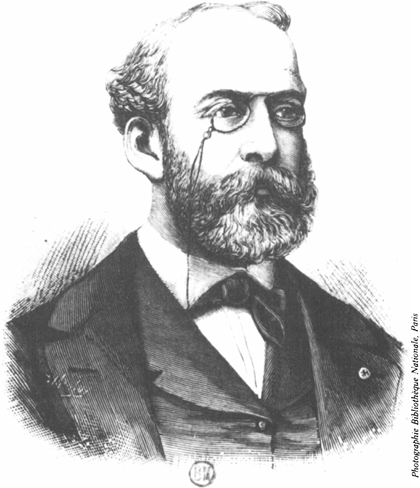
EUGÈNE PEREIRE
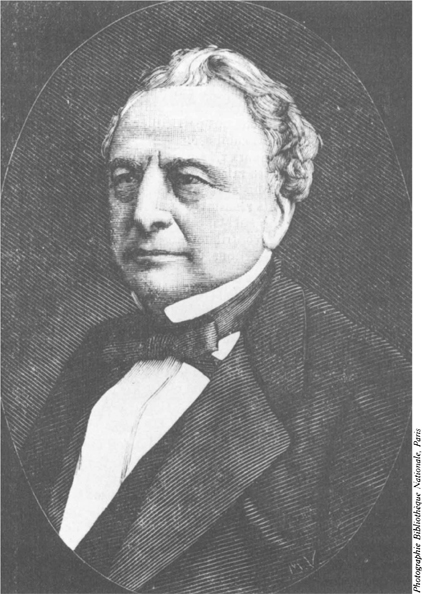
ISAAC PEREIRE
There were only four other small oral schools in France at this time, and their directors, with the exception of Benjamin Dubois, who was deaf, were naturally intimates of the Pereire clique. Dubois’s school, with some half-dozen pupils, was the oldest, although it had only recently been separated again from the National Institution. Then came the family school founded by Blanchet’s assistant, Auguste Houdin, with a score of pupils, followed by that at Saint-Hippolyte-du-Fort. The directors of both schools were to be seen at the annual banquet given by the Pereire Society to honor its namesake. Lastly, Magnat’s predecessor at Geneva, Jacques Hugentobler, had gone to Lyon to tutor the two deaf sons of the count of Monteynard, then opened his own school. A native of German-speaking Switzerland, he was an ardent oralist.3 The private oral schools of Magnat, Houdin, and Hugentobler reestablished the class structure in the education of the deaf that it had once had in the time of Jacob Pereire but had lost in the rapid expansion of national and parochial schools.4
As part of the Universal Exposition of 1878, several congresses and lectures would be held in Paris: Hément and Magnat arranged to give a lecture with pupils from the Pereire school. A month before the opening of the exposition, however, Magnat received a circular from its directorate announcing a forthcoming congress on the blind, which inspired him to organize a sister meeting on the deaf. Of course, it was very late in the day to launch a new congress but the instructions for the meeting of the blind provided for three sections on “special topics” and Magnat asked the secretary-general to allocate them to him. His appeals were refused until Hément persuaded his superior in the Ministry of Public Instruction to intercede in their behalf. Even then, the help from the exposition was grudging and in the end Magnat sent out his own circular—to a select group.5
Hément and Magnat went to see the director of the national school for the deaf in Paris, Martin Etcheverry, and asked him to serve as president of their meeting. Etcheverry was in several ways the French counterpart of Edward Gallaudet. He believed in the combined system; he claimed that a large school must have sign language as the basis of instruction and that German schools circumvented this requirement by admitting students who were only partially deaf. He affirmed that many of the Paris students, trained in their primary (manual) language, were accomplished teachers, artists, craftsmen; and he reminded his visitors that the congress of German deaf had recently reaffirmed—even in that land—the necessity of sign language in deaf education.6 When he learned, moreover, that the Pereire Society was arranging this rump meeting for self-serving purposes, he refused to have anything to do with it. It is puzzling that Magnat and Hément asked him, for they must have known his views. Perhaps they thought he would add legitimacy to their meeting, since Etcheverry held arguably the most prestigious post in deaf education in Europe. Or they may have thought that collaboration would bring him some way toward their position. Most likely, they asked him first, knowing that he would refuse, so they could then ask his disgruntled predecessor, Léon Vaïsse.
Vaïsse had tried to steer the Paris school on a middle course. He was fluent in French Sign Language and had helped to launch the New York school on its career of instruction using American Sign Language. But he was as well the first professor in the Paris school to teach the articulation course and the only one who had tried to implement Ordinaire’s oralist designs forty years earlier. Vaïsse had also developed a system of visible speech and had published several monographs on articulation, but his efforts after he had become director of the national institution to expand oral teaching beyond an hour a day for select students had been thwarted in several ways. There were not enough teachers to generalize the practice. Moreover, four of the six professors and all the assistants were deaf; they were joined by the hearing professors and the pupils in opposing more oralism. Finally, Vaïsse’s superiors in the Ministry of the Interior also denied him their support. In 1861, they had asked the Academy of Sciences to consider the vexed question of the relative roles of sign and speech in the education of the deaf, and it had concluded, in the words of the distinguished scholar Adolphe Franck, who wrote the report, that oral instruction “disturbs, more than it serves the development of relations between the deaf and hearing. Nothing can create speech in a child who has never known it…. What is taught him under the name of speech is merely a dangerous and useless sham.”7
Even so, Vaïsse had continued to press for more speech, eventually precipitating two revolts by faculty and students. Finally, the ministry, perhaps reminded too vividly of Ordinaire’s failure, had asked him for his resignation (he was by then seventy-five) and replaced him with Etcheverry, director of the Bordeaux school.8
The ministry appointed Vaïsse honorary director, but that could hardly salve his wounded pride. Magnat and Hément knew their man; he accepted their invitation with pleasure. The “congress” opened the last week in September at the Tuileries Palace, with all those I have named attending. Vaïsse’s vice-presidents were Councilman Rigault and a certain Emile Grosselin, a stenographer in the Chamber of Deputies whose father had developed a phonetic alphabet, a “reduction” of the letters of French.
Of the twenty-seven teachers attending the meeting, twenty-three of them French, one or two others merit particular notice. The superintendent of schools in Boston was there, representing the Horace Mann School. A dramatic actor by the name of Fourcade was present; some twenty years earlier, he had begun teaching voice to the deaf and aspired, without success, to an appointment at the Paris institution. Instead, he gave normal courses at Bordeaux and Toulouse for the Sisters of Nevers and the Brothers of Saint-Gabriel, who sent representatives to the meeting. Most recently, he had aided a disciple in establishing a little school in Avignon, for which he solicited the Pereires’ support, since his own methods, he said, were close to those of their famous ancestor.9
I have saved the most important and colorful figure for last. Don Seraphino Balestra, director of the deaf school in Como, near Milan, played a major role in the series of congresses establishing oralism. Balestra was tall, fine-figured, with a Roman face and an eagle eye. Pereire’s biographer La Rochelle called him “one of the most passionate apostles of speech.” Another oralist who knew him said he resembled “one of the warrior monks of olden times who threw the Christian armies on the shores of Palestine…. The Spanish blood that was in his veins gave him brio and Andalusian vigor.” Balestra loved the past, particularly its architecture, and taught at the diocesan seminary of Como. “But his excessive application to these studies endangered his mental life.” Possibly that is why he was made director of the deaf school, which had been languishing with a score of girls taught by two nuns. Balestra took a normal course at the Paris institution, returned to Como, and brought public attention and funds to his school. Then he visited far-flung European institutions in search of the best method not of educating the deaf but of “restoring them to society,” the catch phrase of those who put teaching their own language above all else. “On his return, like Peter the Hermit, he preached a crusade in all the institutions for the deaf in France and Italy along his route. La parola per la parola was his text.” Said a third oralist who knew him: “He was an ardent propagandist but he lacked science and patience.”10
As the congress unfolded, a consensus emerged that was surprisingly conservative compared with the position these very same persons would hold as they became increasingly caught up in the oralist tide. Gallaudet claimed the congress advocated the combined system, which is true, but with this important difference from the American understanding of the term: these oralists thought the national oral language should be the vehicle of instruction and that sign was a necessary auxiliary. Balestra fought this eclecticism with all his might, his arms flapping like the blades of a windmill, his body in perpetual motion, his face taking a thousand forms. “Everyone recognizes the superiority of the oral method over the sign method,” he said, and added disingenuously, “For the glory of France, choose one of these two doctrines.” But he did not prevail. Not then.
The congress members also agreed that the oral method was unsuitable for some of the deaf, for whom the language of instruction must be sign language. These were the pupils, they said, with inadequate intellectual training or, capacity. Because the teachers could identify these pupils only by their performance under the oral method, the resolution amounted to advocating sign for those who made no progress with speech. Perhaps Gallaudet was right after all; this policy comes very close to the one adopted by his conference of principals exactly a decade earlier, which he named the “combined system.”11 As oralism spread to growing numbers of institutions, the pupils who proved refractory, hence “retarded,” became legion and this clause took on great importance, particularly in government schools, which could not limit admissions.
Since this congress was composed largely of people outside the government-sanctioned system of educating the deaf in three national institutions and numerous regional schools under the Ministry of Interior (Department of Welfare), it is not surprising that all delegates agreed on the desirability of removing schools for the deaf from their present ministry and placing them instead under the Ministry of Public Instruction. But unquestionably, their most important act at this meeting was to plan a second and larger oralist gathering. Hugentobler suggested annual national meetings (he proposed Lyon for the next) and triennial international congresses, save that the next be held in two years. Balestra proposed convening the next congress in Italy, and Vaïsse was appointed honorary president of an organizing committee including Magnat, La Rochelle, and so on—with only one advocate of sign language, the chaplain at Saint-Jacques. Magnat urged a program committee for the Italian meeting; most thought it would be redundant but he insisted and the others conceded. As it turned out, this allowed Magnat to draw up singlehandedly a list of topics for the Italian congress, which he sent to school principals in Europe and America along with a request for written opinions on the issues. Then he wrote a report on the papers that were sent in, summarizing and discussing them while assailing views that left crawl space for the language of the deaf, and distributed his report to all congress delegates on their arrival.
It pleased the members and friends of the Pereire Society, who organized the national meeting at Lyon a year later, to entitle it the First National Conference for Improving the Lot of the Deaf. Houdin was president, Vaïsse, honorary president. As far as I can determine, no deaf people were present. The meeting reaffirmed the eclectic prescription of a year earlier but placed more emphasis, if anything, on the importance of sign language, “which must have a very large part in the education of the deaf,” and the resolution added that manual and oral methods, “far from excluding one another, support each other mutually and conduce toward the same end.”12 A second resolution affirmed the legitimacy of the German practice of screening admissions to oral schools.
Abbé Balestra had remained in Paris after the first Pereire reunion in the hope of convincing the ministry to hire him. He devoted eight months and countless visits to this attempt and prepared a report on the conversion of Italian educators to oralism, in which he had played a key role. It seems that up to the time of Gallaudet’s tour, most Italian instruction of the deaf had been in their manual language. The first school had been founded in Rome by a disciple of Epée’s, the abbé Sylvestri; the second in Genoa by one of Sicard’s, Ottavio Assarotti. Then came the school at Siena shortly after Sicard’s death, founded and directed for fifty years by the father of Italian education of the deaf, Thomas Pendola.13 Heavily influenced by the example of Genoa, Pendola’s books and practices were predicated on sign language. Next Balestra’s own school at Como was established and finally, among the key institutions, the Provincial School for the Poor opened in Milan under Giulio Tarra. Like all the other Italian directors, Balestra had been content to practice the French system, which had become generalized in the wake of Napoleon’s armies. Shortly after Gallaudet’s visit, however, he received a little brochure entitled Instruction of the Deaf by the German Method (Method Amman), which had been written by David Hirsch, the oralist director at Rotterdam, and sent broadcast to European schools for the deaf. It was this brochure in turn that sent Balestra on his own tour, in the course of which he visited Hirsch and observed his method firsthand.14 After his return to Como he taught a deaf class totally without sign, and found his efforts successful in a short five months. Then, he goes on to explain, he went around to the other institutions in Italy to convert them. In Milan, Tarra had told Gallaudet that no more than a third of his pupils could profit from speech instruction,15 but now he resolved that a mixture of methods was prejudicial to his goals and he would follow the prescription of “pure oralism.”16 Signs would be banished, and newcomers housed and taught apart from the old students until all the manually taught students had been graduated.17 There was a second school for the deaf in Milan, the Royal Institution, destined for the children of wealthy parents who could afford its fees. It, too, converted at about this time.18 The following year, Pendola at Siena followed suit. In his seventies when converted to oralism by Balestra, Pendola totally reformed his methods, launched an impassioned oralist journal, and convened the first national congress of Italian educators of the deaf. That meeting, held in Siena five years before the French congress in Lyon, had reached a similar consensus: sign language was essential for the instruction of the deaf initially but should be phased out as the pupils acquired speech and lipreading.
The oralist transformation of the Como and Milan schools triggered that, in turn, of all those in Lombardy and Venetia, while Siena’s conversion set the example for all the schools in central and southern Italy. So, by the end of 1871—as Balestra stated in his report to the French minister—Turin, Venice, Bologna, Rome, Naples, Palermo were all teaching in the Italian language. Now with Austria, Switzerland, Belgium, Holland, Norway, and Italy using oral methods, “the world is waiting for France.… It will be your glory, M. le Ministre, to instigate this reform by appointing me to the Paris institution.” Give me only two months, Balestra begged, and you shall speak with your deaf pupils.
When Balestra heard that the minister had agreed to his proposal in principle, he drew up a plan for the total reform of all deaf education in France—some eighty-five institutions including the parochial schools. But in practice, the minister had something less sweeping in mind. He created a commission and asked Balestra to teach a single demonstration class before them for their evaluation. The abbé appeared as requested and gave the commissioners a lecture on the order of teaching the sounds of French. Then he had some pupils blow out candles. The commission concluded, naturally, that it had too slender a basis to reach any conclusion and recommended an extension of the experimental class, provided it was short. Balestra asked for a fortnight but at the end of that time he asked for four months.
Balestra’s importunities led the minister to take several other steps. He sent his inspector-general, Oscar Claveau, on a three-week tour of fifteen oral institutions.19 Claveau returned only to set out again, this time with the mother superior and one of the sisters in charge of the national institution at Bordeaux (reserved for girls). Claveau had no familiarity with sign language, yet his report turned on that issue. He stated that sign could not be a trustworthy vehicle of instruction because it lacks precision: he claimed, quite mistakenly as it turns out, that a sign by itself does not indicate whether it is a noun or a verb; hence the language has no grammar and grammatical roles can be deduced only from the whole sentence. He went on to explain how Epée tried but failed to remedy this defect with methodical signs.
In Germany, the difficulties in the way of speech have been overcome, Claveau argued. “The schools showing the greatest progress are those where the use of sign is most severely proscribed.” The students are taught that people who gesture are inferior to the rest of mankind; the older students then help to repress signing among the younger. It is true that German and Swiss schools select their students, but we are assured that only a small percentage are rejected. Claveau concluded by recommending pure oralism; even if it be at the expense of general education, at least the pupils will have a means of communicating with the rest of society.20 Clerc’s old friend Forestier sent the minister a rebuttal based on fifty years of teaching the deaf: “Sign language is rich in its expressions, extremely simple in its forms; it meets all mental needs; there is no way more direct, certain, and effective to initiate the deaf-mute in the secrets of our [French] language.”21 The rebuttal was ignored.
The minister ordered the Bordeaux school to open as an oral school, just at the time the meeting was taking place in Lyon, and to isolate the old students from the new. After the meeting he met with Magnat, who cited the resolutions of the Paris and Lyon congresses and loudly assailed the reactionary stance of Etcheverry at the head of the Paris school. These developments took place in a period of rising nationalism following the founding of the Third Republic. France was beginning an era of colonization and diffusion of the French language. The minister ordered that oral French should be the sole language of instruction in all the schools under his control. He fired Etcheverry, replacing him with an otologist, Louis Peyron. Thus he sealed the fate not just of the six hundred pupils in the three national institutions but also of all pupils in the regional and departmental schools, and even in those private schools that received state subsidy.22 Scholarships for pupils attending Forestier’s school, for example, were presently cut oft.
Finally the moment came, after the fact, to evaluate Balestra’s class. Claveau was assigned the task. Apparently the results were unsatisfactory, but excuses were not hard to find. The pupils, drawn from Saint-Jacques, had not been segregated from their signing companions, they had received no oral instruction two days a week, and the trial had been too brief—so said Claveau.23 An idea of Balestra’s difficulties may be had from an account of one classroom incident published in the silent press:24 “The breath of this priest was extremely repugnant. Overwhelmed by the odor, one articulation pupil stood on his tiptoes, went to the blackboard, seized a piece of chalk, wrote in large letters NO MORE! and retook his place without a sound.” Etcheverry, when informed, deprived the whole class of their Sunday outing. Balestra requested a longer trial under better conditions but presently the Italian congress planned by the Pereire Society convened in Milan, and no one was interested any longer in Balestra’s success or failure.
At the Paris school recently, I saw a poster bearing a sketch of a casket and the words Milan 1880. Considering all the present bitterness of the French deaf toward the Congress of Milan, and all the anger among the deaf on both sides of the Atlantic just after the congress, I had imagined a substantial meeting, imposing sets of arguments, a body of findings at odds with deaf people’s steadfast espousal of their manual languages. The proceedings of the congress reveal nothing of the sort. In fact, the meeting was conceived and conducted as a brief rally by and for opponents of manual language. Setting aside the speeches of welcome and adieu, and the excursions and visits, we find that the Milan congress amounted to two dozen hours in which three or four oralists reassured the rest of the rightness of their actions in the face of troubling evidence to the contrary. Nevertheless, the meeting at Milan was the single most critical event in driving the languages of the deaf beneath the surface; it is the single most important cause—more important than hearing loss—of the limited educational achievement of today’s deaf men and women, eighty percent of whom, in America, are engaged in manual or unskilled labor.25
Writing from Milan to Harriet Rogers at the Clarke school, Susanna Hull exulted, “The victory for the cause of pure speech was in great measure gained, as many were heard to say afterwards, before the actual work of the congress began.”26 Similarly, Hull’s fellow oralist, the headmaster at the Royal School for Deaf Children, Richard Elliott, reported that the congress “was mainly a partisan gathering. The machinery to register its decrees on the lines desired by its promoters had evidently been prepared beforehand and to me it seemed that the main feature was enthusiasm and fervidly eloquent advocacy of the ‘orale pure’ rather than calm deliberation on the advantages and disadvantages of methods.”27 The Italian promoters, who, as Balestra explained, had been traveling the “pure oral” route for some years, had been dismayed by the eclectic resolution of the Paris congress and were frankly alarmed by the further backsliding at Lyon; this meeting must not be allowed to fail. The French delegation was of like mind. The minister had ordained pure oralism and fired the head of the Paris school; the minister’s representatives sought vindication by an international congress. The Pereire Society, like the Ackers group from England, were equally desirous of ringing acclaim for their position. The location chosen, the makeup of the organizing committee, the congress schedule and demonstrations, the composition of the membership, the officers of the meeting—all elements were artfully orchestrated to produce the desired effect.
In the report that Magnat distributed, dedicated to his employer, Eugène Pereire, he denies that oral instruction is expensive, that it succeeds only with the semi-mute, that its product is unnatural-sounding speech, that it slows mental culture. He ridicules the view that speech is merely an ancillary skill and an inappropriate vehicle for instruction. He rejects the claim that the deaf lipread only familiar people well. The advantages of articulation training, he argues, are that it restores the deaf to society, allows moral and intellectual development, and proves useful in employment. Moreover, it permits communication with the illiterate, facilitates the acquisition and use of ideas, is better for the lungs, has more precision than sign, makes the pupil the equal of his hearing counterpart, allows spontaneous, rapid, sure, and complete expression of thought, and humanizes the user. Manually taught children are defiant and corruptible. This arises from the disadvantages of sign language. It is doubtful that sign can engender thought. It is concrete. It is not truly connected with feeling and thought. It is a dialect you must learn, not universal, “and this alone condemns it.” It sets the deaf person apart, it lacks precision. Its syntax is in conflict with that of the occidental languages and it cannot help in the study of written language. Sign cannot convey number, gender, person, time, nouns, verbs, adverbs, adjectives, he claims. The teacher cannot genuinely communicate with his class in sign; it does not allow him to raise the deaf-mute above his sensations. In sign the deaf cannot link secondary ideas to the principal idea. Since signs strike the senses materially they cannot elicit reasoning, reflection, generalization, and above all abstraction as powerfully as can speech. The sign image takes up more space in the eye than the [labial] image of the spoken word and is not always clearly discernible. The deaf-mute does not perceive his own signs. Signs interfere with manual labor. And on and on.28
If the arriving congress-goer had any time remaining after digesting all this, he was urged to attend exhibitions of the achievements of the oral method. Saturday was reserved for the Provincial School for the Poor under Tarra, and Sunday for the Royal Institution under Eliseo Ghislandi. Moreover, all afternoon sessions were canceled to free delegates to visit these schools. It is clear from personal accounts of the congress that the speech and lipreading of the Italian pupils made a great impression on the observers previously uncommitted to oralism. The Italian promoters affirmed this themselves: the conclusions of the meeting were not based on this or that paper or person, they said, but on the facts to be seen in the Italian schools; this is the difference, they claimed proudly, between other conventions and Milan, and this is why some who voted against pure oralism at Lyon were converted in Italy.29
Yet there was reason to fear that the delegates were being hoodwinked in the Milan schools. One American observer of the exhibitions reports: “There was evidence of long previous preparation, of severe drilling and personal management to produce the most striking effect. There was an apparently studied absence of definite and all-important special information as each case came up for exhibition.… My neighbors, themselves Italian and articulation teachers, informed me that [the best pupils] were not congenitally deaf and had probably mastered speech before entering the institution.”30
Gallaudet agrees: “I found that many of the pupils exhibited as illustrating what the ‘pure oral method’ could accomplish with deaf-mutes had in fact learned to speak before losing their hearing.”31 The British headmaster Richard Elliott, although an advocate of oralism, similarly concluded “that everything had been carefully rehearsed beforehand.… [The pupils] did answer correctly—in fact, they answered too correctly for there were apparently no mistakes made nor was there any deliberation before the answers were given.” Indeed, pupils even began answering questions before they were completed.32 A few pupils were examined at great length, Gallaudet reported, while others were asked but a single question. Only the Italian teachers were allowed to direct the questions. “No information was given as to the history of any pupil—whether deafness was congenital or acquired, whether speech had developed before hearing was lost or not.”33 From a statistical report on deafness in Italy distributed during the congress, Elliott calculated that fifteen percent of the deaf in the province and eighteen percent nationwide were semi-mute, whereas sixty-three percent at the Royal School and seventy percent at the Provincial School were semi-mute. It certainly seemed likely that these schools were screening admissions and exhibiting primarily students who had learned to speak as every hearing child does.34
One observer, from the New York school, found the performances, even those of the semi-mutes, far from satisfactory. Although on the average there were only seven pupils to a teacher at the Milan schools, and sometimes as few as four,35 this delegate thought the exercises in lipreading “were very nearly a failure.” The teachers elaborately mouthed their words “and even then were not understood when off the beaten track”; and Italians unknown to the pupils who attempted to talk with them encountered great difficulty in communicating. He also found the quality of the articulation uneven, “as varied as the pupils.”36 Elliott asked to see the children lipread while an Italian stranger read a passage unknown to them. His request was refused.37
While the exhibitions of the “pure oral method” were going on in the Milan schools, James Denison, principal of the Columbian Institution and a deaf educator of many years’ experience, observed the pupils awaiting their turn outside. They were signing. “Two or three times a group, noticing the intentness with which I was watching their conversation, abruptly suspended the sign-making part of it.… I inquired in signs whether they ever used gestures. The response was a blank mystified look on each face, then a general shaking of heads. But when I reminded them of what I had just observed, they pleaded guilty, with a propitiatory smile, to having partaken of the forbidden fruit of the tree of knowledge.”38 Since signs were used so much outside the classroom, Denison concludes, they might not be entirely unknown inside.
Another exhibition was provided one evening when children from the Royal Institution performed two dramas. The stage was lavishly draped, the scenery effective, the costumes perfect. The parts were recited orally and between acts musical interludes were performed by pupils from schools for the deaf and for the blind. Scripts were provided to the delegates, and Elliott reports that he could follow the parts readily with the words before him.39 Yet another exhibition involved some thirty graduates of the Milan school, men and women who had become workers, accountants, farmers, fathers and mothers. They were questioned by Abbé Tarra on their professions, events in their lives, plans for the future. One broke into tears in the midst of his discourse. The abbé comforted him and kissed him on both cheeks. The audience applauded and Tarra explained that the speaker was overcome by the thought of an elder brother who was speechless because he had attended school before the oralist reform.40
The composition of the membership of the congress was another element ensuring the oralist outcome in advance. Of the 164 delegates, the Italians exceeded a majority by ten and there were fifty-six from France; the committed delegates from these two countries were seven-eighths of the membership. The amity between them went deeper than the desire of each group for language unification in its own country. The armies of Napoleon III had recently fought alongside Italian soldiers against Austria, and the French emperor had supported the Italian king in his struggle for national unity—as more than one delegate mentioned during the congress addresses. One writer quipped that British and French delegates there took German lessons from an Italian priest (the abbé Tarra).41 The Germans themselves had not been invited, for Prussia had recently trounced France, precipitating the flight of the emperor, the surrender of the French, and the founding of the Third Republic. The Italians would hardly persuade the French by aligning themselves with Germans.
Of the eight British delegates, six were brought by St. John Ackers.42 Only the American delegation of five was properly accredited (by the Conference of Principals). It included James Denison, the two Gallaudet brothers, the principal of the New York Institution, and a member of his board. All and any persons were welcome at the congress on payment of the fee, with the result that the five American delegates, who represented fifty-one schools and six thousand pupils—more than all the other delegates put together—were outvoted ten to one by congress-goers from the city of Milan alone!43
Among the French were Claveau, Peyron, and Adolphe Franck (the scholar whose skepticism about oral methods had helped to oust Vaïsse)—all representing the Ministry of the Interior. Houdin represented the rival Ministry of Public Instruction. And there were the Pereire Society group and Houdin’s family. There were also eighteen brothers of Saint-Gabriel, several of the whom told Gallaudet that signs “could not be dispensed with in the instruction of deaf-mutes,” that “not all deaf-mutes could succeed under the oral method,”44 and that they intended to say so before the end of the meeting. The first to speak, however, was their leader, Brother Hubert, the inspector of schools for the order. La Rochelle’s report to Eugène Pereire tells what happened: “Brother Hubert publicly thanked your family, Mr. President, for the liberality which enabled the brothers of his congregation to be present at Milan in considerable numbers, and closed by declaring himself today unreservedly in favor of the pure oral method.”45 Thereafter, all the brothers voted as a bloc for the pure oral method.
The British delegation included, apart from the Ackers group, a private teacher of the deaf and self-styled psychologist, the Reverend Thomas Arnold. Author of a monumental oralist history of deaf education, he was shortly to become the intellectual leader of his profession in Britain. “Articulate language is superior to sign,” Arnold told the congress, “because it is the method employed by nature. Modern science teaches us that what is natural ends up with the upper hand.” And: “No doubt signs are often animated and picturesque but they are absolutely inadequate for abstraction.” And much more of the same.46
The officers of the Milan congress—like the location, organizers, exhibitions, and membership—were chosen to ensure the oralist outcome. The organizers proposed to select Giulio Tarra as the president by acclamation. This rotund abbot in his late fifties, dressed in a black cassock and white collar, was called fervid by his supporters and rabid by his detractors when it came to the language of the deaf minority. For example, in one of his public lectures on the education of the deaf, he said, “Gesture is not the true language of man which suits the dignity of his nature. Gesture, instead of addressing the mind, addresses the imagination and the senses. Moreover, it is not and never will be the language of society.… Thus, for us it is an absolute necessity to prohibit that language and to replace it with living speech, the only instrument of human thought.”47 Tarra published his views at Milan in a pamphlet, which he distributed to the congress members. He proposed several honorary presidents: Pereire, Vaïsse, Balestra, Hirsch, and Augusto Zucchi, board president at the Royal School. Two professors at that school and Emile Grosselin, the stenographer, were appointed vice-presidents.
For the agenda of the meeting, the program committee had prepared a list of twenty-six questions. Since no one at the meeting had a method, strictly speaking, of teaching speech or lipreading, the congress could not and did not discuss language-teaching methods. What remained for the agenda were various parameters of education, such as class size, construction of buildings, age of admission and of graduation, the desirability of teacher training, and so on. These items did not fire the imagination of the congressgoers. For most, the burning need was to reaffirm the philosophy underlying their daily endeavors, the replacement of the language of the deaf minority with the national oral language. As Houdin reported to his minister, “The superiority of speech teaching was no longer the question.”48 A comparable modern spectacle might be a congress of European Africanists who knew no African languages reaffirming the necessity of occidental languages in Africa—in the absence of any Africans.
The opening address by Zucchi enjoined the delegates to “remember that living speech is the privilege of man, the sole and certain vehicle of thought, the gift of God, of which it has been truly said, ‘Speech is the expression of the soul / As the soul is the expression of divine thought.’”
Magnat was the first delegate to gain the floor and he proceeded to read his monograph, distributed in advance of the congress, with its litany of objections to sign. After twenty minutes, the president cut him off. Franck then rose to deny Magnat’s accusation that the French national schools still used sign: for many years they have been using Valade-Gabel’s method for teaching French by writing, without sign. Magnat insisted on his right to read his book. The president put it to the assembly, which voted him back into his seat. He retook his place, says one observer, “with utmost indignation, muttering threats of retaliation.”49 There were calls to proceed with the agenda, and countercalls. Finally Balestra took the floor, saying, “Here’s a book written in 1855 discussing the incontestable superiority of the oral method. Now those who agree with this opinion can vote yes and those who have another view can vote no.” That would dispose of the issue. However, the congress could not come to a close so soon after opening.
Mrs. Ackers (registered as the “mother of a deaf child”) read a paper on the advantages of speech over sign for the intellectual development of the deaf child. Critics who claim this is precisely its weakness have judged wrongly, she said: “Certainly we should not compare pupils from pure oral schools who have at most seven years in school … with pupils from mimic schools in America who have a longer education and are older when they leave school.”
Edward Gallaudet spoke in behalf of the combined system. Speech is important, he said, but no deaf person would change places with a speaking savage or a speaking derelict. Thousands of graduates of the signing schools in Britain, France, and America, “though not in the possession of speech, are living today as educated, intelligent, self-sustaining men and women, happy and prosperous in all the relations of life, useful citizens, grateful for the blessings they have received.”50
Balestra took the floor again with an impassioned appeal. Arnold said of Balestra that he was a rare man who dwelt apart, for he could find none who would share his ardor. “His gestures, his expressions, his fiery zeal with his vigorous Italian, made us first suspect the presence or absence of something that disturbed his mental balance. But we erred. The man was all there but possessed of a soul whose sympathy was with deaf-mutes. This was his ambition, his mission, and on it he lavished all his genius and affection.”51
“My friends,” Balestra said, “don’t vote if you cannot, but when you go home tell what you have seen here. The deaf-mutes of Italy speak. We are all children of the one Christ who gave us the example.… The minister of Christ must open the mouth of the deaf.… I will add that for a Catholic priest the mutes must speak, for we have confession and in the countryside the priest would get everything backwards that the deaf-mute tells him in sign.… I beg of you: vote for speech, always speech.”
Tarra gave a peroration that took most of two sessions and then was read to the congress again in French by a bilingual colleague. “The kingdom of speech,” he began, “is a realm whose queen tolerates no rivals. Speech is jealous and wishes to be the absolute mistress. Like the true mother of the child placed in judgment before Solomon, speech wishes it all for her own—instruction, school, deaf-mute—without sharing; otherwise, she renounces all.…”
Said Arnold, “Those who heard him the day he delivered his speech will remember it as one of the brightest days in their lives. His figure, countenance, eye and voice were to many their ideal of the teacher of a deafmute.” He had never heard so clear and melodious a voice, such convincing reasons. Tarra was short, stooped, plain, of ruddy countenance, “but his eye and look were as tender as a mother’s.… When I heard Tarra describe his conversion to oralism, shape his reasons, recite his practical proofs, in my heart I exclaimed Il Maestro: I, too, was justified. Such a time happens only once in life, but like the star that never sets, it shines on through the journey.”
“Let us have no illusions,” Tarra continued. “To teach speech successfully we must have courage and with a resolute blow cut cleanly between speech and sign.… Who would dare say that these disconnected and crude signs that mechanically reproduce objects and actions are the elements of a language? I know that my pupil has only a few imperfect signs, the rudiments of an edifice that should not exist, a few crumbs of a bread that has no consistency and can never suffice for nourishing his soul, a soul that cries out for a moral and social existence.”
The next day, Tarra came to what he called his fundamental argument. “Oral speech is the sole power that can rekindle the light God breathed into man when, giving him a soul in a corporeal body, he gave him also a means of understanding, of conceiving, and of expressing himself.… While, on the one hand, mimic signs are not sufficient to express the fullness of thought, on the other they enhance and glorify fantasy and all the faculties of the sense of imagination.… The fantastic language of signs exalts the senses and foments the passions, whereas speech elevates the mind much more naturally, with calm, prudence and truth and avoids the danger of exaggerating the sentiment expressed and provoking harmful mental impressions.” When a deaf-mute confesses an unjust act in sign, Tarra explained, the sensations accompanying the act are reawakened. For example, when the deaf person confesses in sign language that he has been angry, the detestable passion returns to the sinner, which certainly does not aid his moral reform. In speech on the other hand, the penitent deaf-mute reflects on the evil he has committed and there is nothing to excite the passion again. Tarra ended by defying anyone to define in sign the soul, faith, hope, charity, justice, virtue, the angels, God … “At this point the gesture he made,” said Denison, “was the unmeaning if not misleading one of pointing with the index finger to the ceiling.” He was convinced that the abbé Tarra did not know the language he was rejecting so resolutely. “No shape, no image, no design,” Tarra concluded, “can reproduce these ideas. Speech alone, divine itself, is the right way to speak of divine matters. Come to our schools and you will see.”
All but the Americans voted for a resolution exalting the dominant oral language and disbarring the sign language whatever the nation:
1. The congress, considering the incontestable superiority of speech over signs, for restoring deaf-mutes to social life and for giving them greater facility in language, declares that the method of articulation should have preference over that of signs in the instruction and education of the deaf and dumb.
2. Considering that the simultaneous use of signs and speech has the disadvantage of injuring speech, lipreading and precision of ideas, the congress declares that the pure oral method ought to be preferred.
In the closing moments of the congress, the academician Adolphe Franck cried from the podium, “Vive la parole!” This has been the slogan of hearing educators of the deaf down to the present time. But an American deaf leader has written: “1880 was the year that saw the birth of the infamous Milan resolution that paved the way for foisting upon the deaf everywhere a loathed method; hypocritical in its claims, unnatural in its application, mind-deadening and soul-killing in its ultimate results.”52
James Denison was the only deaf delegate in this congress on the deaf. In America, however, deaf people representing twenty-one states were gathered in Cincinnati at a meeting about the same size as that in Milan, and held at about the same time. They, too, sought to improve the welfare of deaf people, but they had an entirely different conception of what that was. “The meeting was called the National Convention of Deaf-Mutes,” said a deaf leader, “and that’s that. If oral magicians, who yank educational rabbits out of silk hats and pearls of speech out of the mouths of those who have never heard, choke over it, why bless ’em!”53 This group of educators, engineers, businessmen, and so on decided to form a permanent association of the deaf and set about drafting a constitution. Robert P. McGregor, the deaf principal of the Ohio school and then the Colorado school, the heir to Thomas Brown as a platform orator, was elected president. Here is what he had to say about the agenda at Milan. “The ascendancy of the pure oral method has been attained by methods that the deaf, as honest, law-abiding citizens abhor, detest, despise, abominate.… Must not that be false which required for its support so much imposture, so much trickery, so much coercion; which belittles, or utterly ignores, the opinions of its own output? … In the war of methods the verdict of the educated deaf the whole world over is this: the oral method benefits the few;the combined system benefits all the deaf.… Anyone who upholds the oral method, as an exclusive method, is their enemy.”54
In the aftermath of Milan, “pure oralism” washed over Europe like a flood tide. Many people and schools were swept up in its advance.55 There is no single explanation for such tides in human affairs. I have cited the confluence of nationalism, elitism, commercialism, and family pride. Another contributing cause was the educators’ desire for total control of their classrooms, which cannot be had if the pupils sign and the teacher knows none. The teacher then becomes the linguistic outcast, the handicapped. Nor can he or she acquire the necessary skill in a year, or even two, any more than an Anglophone teacher can so rapidly prepare himself to teach in French. This understandable reluctance of hearing teachers to master a language radically different from their own continues to have the greatest weight in what are misrepresented as pedagogical decisions. There was a time when teachers of the deaf could not practice without a knowledge of their pupils’ primary language. But the vast expansion of schools in Europe and America created more professional positions than there were educators and administrators fluent in sign. Increasingly, people with few ties to the deaf community dominated their education.
The Milan resolutions carry their own self-indictment, for if speech had all the advantages claimed for it and sign all the defects, there would be no need to banish sign from the classroom and the playground, to separate the older children who sign from the younger who do not; speech would be embraced as a matter of course, as it is with the hearing. Sign in class is an unwelcome reminder of another, much easier, route to the deaf child’s mind.
The oralist reports of Milan were jubilant. “All discussions have ceased,” Tarra wrote, “serious objections have of themselves disappeared, and the long struggle between systems has ended. Never perhaps has a scientific victory been proclaimed with less opposition.”56 Bell cited Milan as proof of natural selection: the oral method was fittest to survive.57 This decision, he wrote, “has been accepted as final by all subsequent conventions of teachers … and most of the sign and combined schools of the continent have since adopted the oral method.”58 Houdin announced victory to his minister and cited Franck’s impassioned account from the podium at Milan of how Mohammed entered Mecca, struck the heads off the 360 idols of the Kaaba, and cried, “Begone, useless fakes! The true God has revealed himself.”59
Franck himself reported to the minister of the interior: “As soon as possible, we must instruct orally all the pupils of our national institutions and not a select group. Speech training should be the general rule, the absolute rule.”60 Yet hadn’t Franck’s report blocked Vaïsse’s oralist reform at Saint-Jacques by calling deaf speech a sham and insisting on the merits of sign? “No,” Franck temporized, “with regard to sign I don’t have to change my opinion for I realized originally that it was a source of dangerous illusions for the pupil and had the serious drawback of disturbing and confusing his intellect.”61 But what he had written in the Academy of Sciences report originally was: “We cannot prohibit the use of sign, even if that were feasible, without forcing the pupil to struggle violently with himself, without abruptly stopping his intellectual development, disturbing and confusing it.”62 Since Franck had never taught the deaf, knew no sign language or even the manual alphabet, his opinion could not be firmly anchored.63
The first Milan resolution advocated oralism over manualism: the language of the classroom was to be the national oral language, not the manual one. Resolution two took the exclusion of sign a step further: it explicitly struck at any compromise in which the oral language was seconded by the manual one; the “pure” oral method was preferred. Yet another resolution explained to the educator how “pure” oralism was to be phased in, and signs out. The new pupils would form a class by themselves, to be instructed in speech. They would be entirely separated from the others, too far advanced to be taught orally, whose education would be completed in sign. Each year a new speaking class would be established; eventually all the pupils who were manually taught would have left. But separation of pupils was only one means of suppressing sign. Surveillance was another. These arrangements not only discouraged the acquisition of sign language by those children who did not already know it, but also ensured that they remained communicatively isolated, submerged as it were, for several years. It deprived them of deaf role models, alienated them from the deaf community.
Here is how one French school applied the Milan resolutions—and, to the best of my knowledge, still does. “The newcomers had a daily regime totally different from the old students, with whom they were not to have any relations whatsoever. To make a sign or even to look at one was to reach for forbidden fruit. Classes, play, meals were separate.… Nevertheless, the pupils succeeded in communicating and escaping surveillance, albeit vigilant. When the last pupil taught by sign left the institution, we redoubled our vigilance and tolerated not a single sign.”64 This professor describes the pedagogical measures for suppression in mild terms: the children were told to be ashamed of themselves for signing; rewards were given for not signing all week. But it is easy to imagine that more severe measures were taken. We know that holes were drilled in doors so the staff could detect signing in secret. The National Institution took similar measures, and within a year schools in Caen, Lille, Soissons, and other provincial cities were following the Paris lead.
The Milan resolution on phasing in the replacement of sign meant that deaf professors would be fired seven years later (the average length of studies less one year), and so it came to pass at scores of schools in Europe and America.65 The National Institution for the Deaf in Paris published a little brochure which was called in the preface, “a touching farewell by the director to the deaf professors who were leaving their posts at the school since as of this date it will no longer have students taught by the old method.”
“Ladies and Gentlemen:
“Progress cannot be accomplished, unfortunately, without some sacrifice.
“With the oral method, we will no longer see our pupils leave this school and spread throughout the world to found institutions for the deaf everywhere. It was a beautiful and touching thing to see these migrations of the deaf, called forth first, in the school founded by the abbé de l’Epée, from the shadows of their own ignorance, then to carry the light to their unfortunate fellows in all the countries of Europe and across the seas.
“This school, the oldest of them all, was like a mother church to all those created since 1760 in Europe, America, and Australia; and in nearly all of them the teachers began as pupils here. The oral method does not require hearing to learn speech but it does absolutely require hearing to teach speech. Hereafter, far from hoping to furnish the world with teachers from among our deaf pupils, we can no longer even have the satisfaction of keeping some for ourselves.
“No more graduates like Laurent Clerc, alumnus of this institution, founder of North American education of the deaf, which last year celebrated its centennial. No more like Berthier, who died a few months ago after eighty years in our institution as pupil, professor, and honorary professor. No more men like Messieurs Tessières and Dusuzeau, alongside me here, as professors in the institution where they began as pupils.
“The complete disappearance of mime has yet other sadnesses in store for us. We will have to discharge several teachers, as devoted as they are distinguished, whose only fault is to be deaf. It is not without great heartache—and I speak for all the institution—that we see step down from their chairs men like Tessières, Dusuzeau, and Théobald, like M. Tronc, our devoted writing teacher, like M. Simon, our excellent deputy headmaster.
“I know, deaf colleagues, with what selflessness you accede to this difficult sacrifice. You recognize that the welfare of the pupils is at stake and therefore you raise not a word of complaint in these painful circumstances. May I be allowed not to imitate your silent resignation but to recall aloud the value of the professors that we must lose today.
“It is you, M. Théobald, who, despite the absence of a sense, rendered so much service not only to your class but to the general progress of our teaching. None among your hearing colleagues contributed more to the preparation of our curriculum, of which we may be proud, since it is followed in almost all other French schools for the deaf.… Finally, it is you, M. Dusuzeau, who have for so long brought honor to this school. As a student you revealed that intelligence, energy, and perseverance that allow the deaf to acquire instruction, even with defective methods, and it is with understandable pride that your teachers saw you become a bachelor of science. Professor, you have repaid one-hundredfold your debt to this institution by giving in turn to the young generations who came after you the knowledge you acquired here. You, too, like M. Théobald, will go into retirement at the young age of forty after hardly twenty years of service.
“Dear colleagues: At the moment you are about to resign your duties as professors there is at least one consolation for us: the Ministry of the Interior has seen fit to appoint you honorary professors and thereby you will feel, I trust, always attached to this institution.… When steam navigation replaced sail, did the young captains, proud of the perfect instrument in their hands, have nothing to learn from the old-timers? Of course not.… Thus, let us always seek lessons from you, call on your knowledge, refer to your experience, even if we now say, Adieu.”66
In America, Bell’s oralist crusade reduced the number of deaf teachers to a slight fraction of the total, where it remains currently; in the European nations, where the control of education is centralized, the deaf teachers were eliminated to the last man. Soon there would be no need for laws to exclude them, for the reduced intellectual achievements attainable under the new oralist regime effectively prevented the deaf from aspiring to any such career. There is to this day no high school for the deaf in France, and when Gallaudet proposed at Milan a resolution calling for secondary education of the deaf, it was generally considered unrealistic and was dropped.
Milan, as the trail-blazing French sociologist Bernard Mottez has pointed out, moved the status of speech from a means of education to the end of education itself.67 If speech is the end, it must of course be taught. Schools were transformed into speech clinics. Tarra, Hull, and other speakers at Milan agreed that the first years of education, as many as necessary, must be devoted to articulation and lipreading, for oral instruction in a subject is futile when the child is unable to understand or reply to the teacher. However, the mediocre results in speaking and reading proved that, as a rule, it would be absurd for a deaf child to aim for lofty educational goals such as a high school degree. There is the occasional exception to this rule: generally, a postlingually deafened child of wealthy (hearing) parents who, like the Hubbards and the Ackers, provide intensive training early and continuously. A recent study by Gallaudet College of the scores of some 17,000 deaf students on the Stanford Achievement Test illustrates how oralism has reduced the educational achievement of the deaf since the days of Laurent Clerc and James Denison. As a benchmark, the achievement of the average hearing seventeen-year-old American student on the SAT is called twelfth-grade level. The achievement of the average deaf seventeen-year-old is sixth-grade level in arithmetic (their best subject), and fourth-grade level in reading (“paragraph meaning”).68
The situation in France is similar: according to a recent doctoral dissertation by Christian Cuxac, one of a group of young hearing and deaf people who are agitating for reform, “It is virtually impossible in the present oralist context for a profoundly deaf student, or even a severely but prelingually deaf student, to obtain a high school degree.”69 This state of affairs set in rapidly after Milan; by the turn of the century, an inspector-general for the Ministry of the Interior could find that the pupils, “after seven or eight years at the institution, were incapable, not only of speaking, but of writing the teacher’s name or even their own. No doubt some of them—not all—could, on graduating, earn a few coins in shoe repair or sewing but this is rather expensive training over eight years in the institution.” A dozen years after Milan a teacher at the Paris institution concurred: “Most of our students have such poor intelligence, are so inept at using the few phrases that they want to use, that their impoverished reflection and imagination are expressed only in virtually unintelligible language.”70 A fellow teacher wrote: “The first year our pupils spend at school must be devoted essentially to the study of articulation and lipreading.” The second year was devoted to practicing simple sentences, describing tangible objects and events, for “we cannot expect anything more from our pupils, since they do not know enough language to express themselves in other ways.… As for abstract nouns we can teach them in the fifth or sixth year as derivations from known adjectives or adverbs. In the sixth year we give them elementary notions of measuring and counting.” Students in the sixth year were fifteen years old!
Some years ago on a mission for UNESCO two colleagues and I visited many high schools in English- and French-speaking West Africa, where children were being taught in their second, third, or even fourth language. Teachers there voiced many complaints like those of their counterparts in deaf education. They said that the teaching of French, for example, left little room for instruction in arts and sciences: because the students’ poor performance in those subjects was the result of an inadequate command of the language in which they were taught, instruction in that language had to come first, and remain first. Now the deaf student has a predicament similar to that of these African students. Only a few grains of instruction pass through the filter of his poor reading skills and incomprehension of the teacher’s language (exacerbated by the necessity to divine it from the movement of his lips). So speech teaching receives top priority and all educational goals are reduced.
As oralism became the rule, teachers and administrators increasingly referred to the cost of educating the deaf, as did the inspector-general decrying the expense of training deaf shoemakers. Thirty years after Milan, the psychologists Binet and Simon conducted the first systematic evaluation of oral education of the deaf by examining the fate of graduates of the Paris and Asnières institutions. “We conclude that the deaf-mutes whom we have examined are not able to carry on a conversation with those around them, but they can understand those they know intimately and be understood by them sufficiently for the satisfaction of their immediate wants, by employing a means of communication composed of words, lipreading, and expressive gestures.… People are mistaken about the practical result of the oral method. It seems to us a sort of luxury education, which boosts morale rather than yielding useful and tangible results. It does not enable deaf-mutes to get jobs; it does not permit them to exchange ideas with strangers; it does not allow them even a consecutive conversation with their intimates; and deaf-mutes who have not learned to speak earn their living just as easily as those who have acquired this semblance of speech.”71
The increased cost of education resulting from the very small classes required if the pupil is to lipread (and receive instruction in speech and lipreading) was but one motive for turning away those students expected to make the least progress under the oral regime. Another was the natural desire of teachers and administrators to favor the population—semi-mutes and semi-deaf, to use Clerc’s terms—that would bring them a few pupils who would perform well. The result was that after Milan schools for the deaf were increasingly attended by the least deaf, while the “core” deaf community, deaf children of deaf parents whose maternal language was sign language, were largely excluded. At the Paris institution, for example, admission after Milan was contingent on a medical certificate testifying good sight and aptitude to learn, but also on the finding by a special commission of teachers that the pupil was able to make progress orally. This certainly held the door open to the abuse of admitting the semi-mute and semi-deaf and excluding the rest. Even among those who once heard or still do, many are refractory to oralism; for them the school created a lower division that progressed even more slowly.72
What happens to the rejects? The physician of the Paris institution, Dr. Ladreit de Lacharrière, who would head the Paris congress of 1900 that finally sealed the fate of the deaf, affirmed that the rejects were not retarded in the usual sense of the term, they were diminues. For them he asked special schools where they could be taught reading and writing and where, “without wasting time trying to teach them to speak,” they would be taught in sign language ideas of everyday things, responsibility to oneself and to others, respect, and social discipline. “In these special schools they would be taught manual labor as early as possible.” He advocated gardening and field work as the first choice of profession.73 It is probable that Laurent Clerc, had he attended Saint-Jacques after Milan, would have become a field laborer.
Thus the border between mere deafness and mental debility is determined by fluency in the majority language. Medicine, or more exactly the medico-psychological model, is the shield the oppressor holds in front of himself as he advances. The niggardly inspector-general from the Ministry of the Interior wrote of the Paris institution: “It should begin by purging itself of a dead weight of twenty-five percent composed of the incapable and the semi-retarded.… To classify pupils accordingly, which is difficult in only a few cases, all the children should spend two years at the institution, and only after this delay would the retarded clearly recognized as such be sent to an agricultural institution. The idiots and the semi-idiots should be shipped out [sic] immediately.” He adds: “I am not opposed to teaching the weak-minded, after they are isolated, using the oral method. People can do what they like, provided they do not burden the teachers, who are always very expensive, and provided they keep the general expenses at the lowest possible level.”74
In the aftermath of Milan, the conception of the deaf as a social class regressed to the view that had prevailed a century earlier, when Epée was beginning his labors: as their poor achievement confirmed, they were defective. “Everyone knows,” said our inspector-general, “that the deaf are inferior in all respects. Only professional philanthropists have said they are men like everyone else…. Similar to homo-alalus, to man without speech in prehistoric times, yet even more retarded since they cannot hear, they pass among like men as their shadows, without hearing them, without understanding them: all human things are foreign to them.”75 The suppression of sign, the firing of deaf faculty, the retrenchment of educational goals, and the medical model of the deaf as defective all conduced to Milan’s last catastrophic effect: the infantilizing of deaf young men and women. For the oralist teachers, childishness and docility were desirable qualities in a pupil, as Tarra explains: “The habit of full dependence, which the deaf-mute contracts in catching what is said from the lips and communicating ideas by the orderly, rational, and tranquil means of oral conversation, takes from them that indocile and wild spirit peculiar to those who express themselves by the fantastic and passionate method of gestures, and always renders them more obedient, respectful, affectionate, sincere, and good.”76 The orally taught deaf child of hearing parents generally finds that only his parents can understand him, and this aggravates and prolongs his dependence and narrows his circle.
Shortly before his death Vaïsse surveyed all the “reforms” that followed Milan and their consequences and, to the horror of the Pereire Society, published a disavowal, in a major Paris newspaper, of the pure oralist cause associated with his name. The occasion was the publication of La Rochelle’s adulatory biography of Jacob Pereire, commissioned by his grandson. In his review of the book, Vaïsse affirmed that Pereire’s pedagogical principles—which included dactylology, pantomime, writing, and articulation (but not lipreading)—clearly placed him in the camp of Edward Miner Gallaudet, among the followers of the combined system. “We, who do not believe in the possibility of absolutely excluding sign language in the education of the born deaf, cannot but applaud teachers who, like Pereire, make use of all the means of teaching that nature places at their disposal.”77 Adolphe Franck, too, soon reverted to his original anti-oral position. But these were only two voices, too few, too late. The oralist tide continued to swell.
Three national conferences of hearing educators of the deaf in France contributed to the growth of the oralist movement. The one in Bordeaux not long after Milan resolved in favor of teaching the deaf to perform manual labor, especially in agriculture, and of encouraging them to stay with their families and away from large cities (hence, away from each other).78 Other resolutions reaffirmed pure oralism and the importance of treating deaf children like the hearing and of encouraging them to mix with the hearing. The next two conferences occurred in Paris a year apart. The first was organized by a renegade group loyal to Pereire. Several deaf professors, now forcibly retired, attended the meeting. Théobald, for example, urged that deaf teachers have a place in a model school for the deaf, one of the items on the agenda, but all the hearing professors there disagreed with his proposal. He also asked to read a paper on the role of the teacher outside the classroom, having ceded the ground inside to his hearing counterparts, but the president ruled the paper out of order and the request stricken from the minutes. Poor M. Théobald also tried to explain the value of ancient history for the curriculum in the deaf school, but his remarks were ignored, somewhat in the way indulgent parents would seek to ignore their child’s inopportune remarks, and the group voted for more and earlier instruction in manual skills. Another concern of this meeting was the total eradication of signing, which continued to appear like an obtuse and uninvited guest. “The congress, considering the importance of banishing the use of signs,” reads the resolution unanimously adopted, “invites the teacher to allow only oral communication in class, in study hall, and in recreation and to provide his pupils, as they may require them, the necessary oral expressions they lack. It will facilitate his task to group the pupils according to their degree of development.”79
A national congress the following year was likewise concerned with the large numbers of retarded pupils turning up in the schools since the advent of oralism.80 For example, Dr. Ladreit de Lacharrière warned, “Children with all the signs of intelligence prove sometimes totally incompetent. After a year in our institutions they have learned nothing.” Consequently, the congress voted for the establishment of special classes for the retarded.81 Another deaf professor, Henri Gaillard, had prepared a paper on the use of sign with the retarded. He was forbidden to read it, but it appears in an appendix to the proceedings. The national conferences were also a battle ground for the two opposing ministries, Public Instruction and Interior: their representatives maneuvered to elect or defeat certain candidates for office, to insert or delete items on the program, to call or postpone the next meeting, to include or exclude various groups from the voting membership. After each meeting, pamphlets flew in all directions accusing the other side of treachery. On one side of the contest were the private schools serving the upper class, most with fealty to Pereire, who wanted to seize control of the state and parochial institutions, transferring them to the Ministry of Public Instruction. On the other side were the larger group of civil servants and religious and laicized teachers, who feared a loss of perquisites and enrollments if they left the aegis of the Ministry of the Interior.82
This issue dominated the third international congress, held in Brussels three years after Milan, which had to be aborted because of the strife that it and nationalist sentiment engendered. Milan had been enjoyable for the hearing teachers. It was for many their first conference and their first trip abroad and they wanted to continue holding such meetings. Two hundred and fifty came to Brussels, the largest congress yet. The majority wanted to avoid reopening the question of methods, the more so as the local Belgian president of the meeting avowedly favored the combined system and many local schools followed that method. But the minority also wanted silence, for fear of a reaffirmation of Milan. All agreed to pretend the emperor was wearing clothes. Few other questions were of general interest, although the congress did call for “agricultural asylums” where “the deaf of little intelligence, unable to receive the usual instruction, can at least learn a trade.” Many delegates desired a resolution affirming the right of every deaf child to an education, and some wanted model schools and teacher-training programs and evaluation. But the clerical majority saw that these were steps along the way to urging that deaf schools come under ministries of public instruction—indeed that was the logical outcome of the hearing-oriented pedagogy since Milan—and they fought bitterly to prevent these questions from reaching the floor. The meeting degenerated into a brawl: speakers were ignored or shouted down, groups met impromptu in the audience, and all this even in the presence of the king of Belgium. His Majesty remarked that teachers of the deaf reminded him of his own parliament, and he left. Little was achieved in the first few days of the meeting, and when the German delegation proposed Frankfurt as the site of the next congress, the French sent up such an uproar that the chairman was powerless to bring the meeting to order. He finally ended the congress two days early, ordering that his farewell speech be printed in the minutes. As far as I can tell, there were no deaf voting members, but one hard-of-hearing man, a graduate of the Rotterdam school under Hirsch, did speak on instruction in trades, and a deaf artist submitted a memoir in which he called for greater use of sign language. There were no interpreters provided, so I presume there were no deaf people in the audience.83
Nevertheless, the educated deaf, taught under the old system in French Sign Language, were not silent. They expressed their views in periodicals addressed to the deaf and in congresses of their own. One particularly frank spokesman for the deaf, L. Limosin, published a description of his classes under Vaïsse: “Sometimes the old man made us speak with our mouths open, sometimes he made us pronounce the expressions written on the board. Then, having uttered that spoken language which we were a thousand leagues from understanding, we asked each other in sign language the meaning of what he made us say. Having vainly queried each other on the matter, we confronted the imperious necessity of asking him for a sign language explanation of what it was all about.”84 The silent press labeled oralism the method of “violence, oppression, obscurantism, charlatanism, which only makes idiots of the poor deaf-mute children,” and called Magnat, “the inventor of this torture of the tongue, nose, throat, and eyes called the pure oral method.”85 Claveau and Franck were “reactionaries who throw dust in the eyes of the minister of the interior, exaggerating the so-called advantages of the pure oral method. His first duty is to fire them.” Claveau relied on all these congresses “in order to retain his shameful post of murderer of the intelligence and soul of deaf children.”86 Another deaf leader, Victor Chambellan, urged the authorities to “stop tying the hands of the deaf, proscribing that vivid language which alone can restore them to moral life and the bosom of society.”87
The international congresses of the deaf were launched in reaction to the banishment of their language decreed by the hearing in Milan. The first was held in Paris, on the centennial of Epée’s death, under the presidency of Ernest Dusuzeau, one of the deaf professors forced into retirement a few years earlier. The American delegation, twenty-three in all, included a deaf author, a professor at Gallaudet College, two of the faculty of the New York school, the missionary Job Turner, the current president of the National Association of the Deaf, and Edward Miner Gallaudet. In all there were about 150 delegates at the congress.
The first speaker was Thomas Fox (educator, editor, next president of the National Association of the Deaf): “Suppress the language of signs and the deaf man is excluded from all society, even that of his brothers in misfortune; he will be more isolated than ever.” O. H. Regensberg (journalist, publisher): “Everywhere we see deaf-mutes associating exclusively among their own society and almost never in that of hearing society. It is natural for the deaf man to seek the society of those … who have the same means of communication and approximately the same tastes. I doubt he can ever be forced to change.” Victor Chambellan (dean of deaf professors forced into retirement from the Paris school): “At the end of his studies, the young deaf-mute seeks above all the society of other deaf-mutes. That’s understandable: those who can communicate with each other, gather with each other. Let us spread our sign language among the hearing. Then the deaf man will be torn from his isolation, the prejudices that victimize him will fall away, sympathetic communication will develop between him and society … new progress will be made, and a real service done for humanity.” Claudius Forestier (school principal, author): “I was sharply pained to learn that people with no experience have the audacity to propose the interdiction of sign language. This would be to tear it from our very soul since it is a part of our nature, the life of our thoughts. Sign remains the one true means of leading our younger brethren to a knowledge of the national language.”
From sign language and the goals and conduct of education, the deaf delegates proceeded to discuss marriage, the teaching profession, deaf gatherings and organizations, law and the deaf. Of all the conclusions on these issues reached by hearing professionals in Paris, Milan, and Brussels, not a single one agreed with the views of the deaf themselves meeting in Paris. Their congress ended with quite a different set of resolutions for promoting their welfare. Here is the first: “The congress proclaims the infallibility of the method of the abbé de TEpée, which, without excluding the use of speech, recognizes manual language as the most suitable instrument for developing the intellect of the deaf.” The congress closed to cries of: “Long live the emancipation of the deaf!”88
The second international congress of the deaf was held four years later in Chicago, in connection with a meeting of the National Association of the Deaf. Nearly two thousand deaf men and women from various schools, regions, occupations were present. At the opening banquet, Edward Miner Gallaudet addressed the gathering with a signed discourse on the deaf and the power of their organizations. He called the propagation of oralism disastrous for their education, and said it had gained the upper hand in Italy and France by “accidental means;”—a remark greeted with wild applause. “The majority of parents,” Gallaudet said, “seem to prefer that their children speak imperfectly than that they acquire intellectual knowledge.” All intelligent and fair-minded people who have worked for our cause agree that the language of signs is the most essential element in the complete education of the deaf, even on the oral plan. He gave long and detailed praise of deaf teachers and attacked their exclusion from schools for the deaf. The president of the congress, a deaf chemist, called attention “to the greatest menace confronting the American deaf, pure oralism.” French delegates were particularly struck and humiliated (their term) by the participation of many intelligent and charming deaf women; deaf women were still interned in France and were allowed no part in social or political gatherings.
The Chicago congress of the deaf, like its successor in Geneva three years later, in 1896, resolved in favor of the combined system of instruction.89 The Geneva meeting also called for the rehiring of deaf professors and for an end to the teaching of manual labor in deaf schools. An Italian delegate at Geneva described Italy as “weeping at the sight of so many poor deaf-mutes who leave school speaking like parrots with no understanding of what they are saying,” and a German delegate asked if the time had not passed for resolutions and the time had not come for the use of power. It was unclear what more forcible actions could be taken, however. The respective ministries that controlled deaf education listened only to hearing educators. The congress elected an international commission to visit their ambassadors at Bern and present its resolutions. It also planned the next meeting, which, as it turned out, was held in conjunction with the fourth international congress on the education and welfare of the deaf, convened in Paris in 1900 by hearing professors.90
When Edward Miner Gallaudet arrived in Paris for this momentous occasion in the history of the deaf, his diary records, he first paid a sentimental visit to the rue Saint-Jacques, where it had all begun over a century earlier. He stood in the courtyard of the national school, and while the statue of the abbé de l’Epée looked benevolently down on him, he imagined his father arriving to attend one of Massieu’s classes, he imagined Dr. Itard crossing the courtyard on some urgent errand from the infirmary to Sicard’s apartment, he imagined Clerc standing before the gate, bracing himself before striding through on his way to Hartford in the New World. Then Edward wheeled, braced himself for the last great battle of his life (he was sixty-three), and he, too, strode through the gates.
He descended the rue Bonaparte as far as the church of Saint-Germain, where the abbé Sicard had been held during the Reign of Terror, and took the wide boulevard that leads to the Seine and the immense Place de la Concorde. He proceeded along the Right Bank and finally he arrived at the Palace of Congresses. Nine immense bays of glass, two stories high, dominated the façade. They were divided into three groups by two tall pylons on which festoons had been sculpted over a sphere containing a star. Garlands of leaves crowned the bays from one end of the long rectangular building to the other. Edward entered through a wide portal on the façade opposite the Seine. Two enormous halls lay to either side of him and directly ahead, grand stairways that rose majestically with three landings to the second floor. They emptied into a vast gallery running the length of the building overlooking the Seine on one side, giving access to several congress halls on the other. He made his way along the gallery, checking the signs on each door: “Congress on the Welfare of Deaf-Mutes—Hearing Section”; “—Deaf Section”; “—Joint Opening Session”; he entered the last to find himself at the back of an auditorium that could seat eight hundred. On the platform was the president of the meeting, Dr. Ladreit de Lacharrière, portly and self-important, his face sporting much of the hair that his scalp lacked: bushy eyebrows and mustache, and abundant side-whiskers. He looked down at nearly two hundred hearing delegates, about half in clerical garb, and more than two hundred deaf delegates from all over the Western world.
In a sketch of the president, Alexander Graham Bell described him as a doctor of authority and wealth who came from one of the oldest families of the department of Ardèche. At thirty-four he became chief physician of the Paris institution for the deaf, where he had remained for as many years again; he also founded a French journal of otology.91
In the preface to a textbook on speech teaching, Ladreit de Lacharrière later wrote: “The deaf-mute is by nature fickle and improvident, subject to idleness, drunkenness, and debauchery, easily duped and readily corrupted.”92 The faculty of the Paris institution were so aggrieved by his appointment to head the organizing committee, and thus the congress, that teachers from all three national institutions walked out on the planning meetings and boycotted the congress.93
A much graver irregularity was the decision, a year before the congress, to separate the deaf from the hearing meeting. The ministerial delegate for all congresses at the exposition stated that he regretted the planning committee’s decision; rather than a deaf section and a hearing section, he would have preferred one on teaching and another on welfare. The deaf spokesman, Henri Gaillard, editor of a newspaper for the deaf, warmly agreed with this plan, but Ladreit de Lacharrière refused integrated sessions, arguing that they would be too long and confusion would arise from the near-simultaneous translation of sign to speech and vice versa. Gaillard then proposed a common meeting at the end of the congress merely to debate and vote on the resolutions. The doctor rejected that as well. Then the deaf planners met and decided that their choice was to acquiesce or attempt to disrupt plans for the congress; they chose to acquiesce.94
In fact, the president had little choice. The great preponderance of deaf delegates over hearing meant that, in a joint meeting, the deaf could obtain the endorsement of the congress for any resolution on which they were united, and they were united—almost to a man—on the evils of pure oralism, the merits of sign, the wisdom of deaf marriages, the need for deaf teachers. The entire scaffolding of Milan could be torn down! Then, too, even if the hearing delegates had outnumbered the deaf, most of their leaders were vehemently opposed to an airing of the wishes of the deaf concerning their own welfare. Consider, for example, the attitude of G. Ferreri, who, with the deaths of Balestra and Tarra, had emerged as the leader of Italian educators of the deaf. In the leading Italian journal on deaf education, Ferreri wrote that he planned to withdraw from the congress if the deaf were allowed into the hearing meetings. “I have always claimed that the deaf, even well instructed, can in no way be put on the same plane with their hearing educators.” It is easy to imagine how the infantilizing of many deaf students by Italian oralism gave Ferreri daily evidence for his belief. “Since they lack from earliest childhood,” he continued, “the element that shapes intelligence, namely the mother tongue, they always remain inferior in their psychological development even when the most patient and skillful art renders them speech. What can one say of these very deaf who, lacking an education that would give them a clear and exact appreciation of the great gift of speech, persist in considering as a natural language their violent and spasmodic miming, which can at best simply establish their kinship with the famous primates.”95 A professor at Siena put more pithily the representative view of the hearing delegates: “Since when do we consult the patient on the nature of his treatment?”96
EDWARD MINER GALLAUDET
The opening ceremonies of the congress were held jointly. “Although there are no more adversaries of the oral method,” Dr. Ladreit de Lacharrière told his hearing and deaf audience of some four hundred, “we cannot ignore the fact that many are asking why the method hasn’t produced everything expected of it.” But in public schools, he argued, we do not indict the method if some pupils do not learn to read. We blame the inadequacy of the pupils. Whence he concluded that educators need to make a better selection of their deaf pupils. He held forth as the goal of the congress the establishment of a triage of the deaf, based on intelligence. First, the inferior students would be turned toward agriculture. (Under oralism these would tend to be, as I have told, the core deaf community, deaf at birth or before attaining full mastery of the oral language.) Then, those with mediocre aptitude would be trained for artisanal jobs as at present (shoemaking, woodworking, and the like). Finally, the gifted students should be prepared for higher instruction. (An oral criterion of “gifted” selects the semi-mute and semi-deaf.) Let us be realistic, he said. In the last twenty years I have found this rare, third type of pupil only in the private schools, which are inaccessible to the social class with modest means.
“If the program of the deaf section differs from our own,” the president said, “we will have no difficulty showing who has the truth on his side.” Many deaf people here were educated, he explained, before the advent of oralism. Their tendency is to isolate themselves from the world of speaking people, and everyone recognizes that they are slowing down the progress we desire for their class. We cannot criticize the use of sign among them “any more than we can criticize those who speak Provençal, Basque, or Breton dialects [sic], but that does not prevent us from reserving for our schools the language of Bossuet, Corneille, and Victor Hugo.”97 “But I want to stress,” he added, “that we walk hand in hand with the deaf section.”
Then came the turn of Ernest Dusuzeau, head of the deaf section, who spoke in French Sign Language and was translated into French. “There have been many congresses aimed at improving our lot,” he said, “but none of them has been satisfactory.” He asked the audience to join him in homage to Dr. Ladreit de Lacharrière. We have no objection, he explained, to the search for improvements in the oral method. Why would we? Speech is obviously the greatest gift of all gifts for us who do not hear. “We ask only one thing: that our natural language, the language of signs, be not sacrificed for spoken language.
“A bird am I!
Behold the wings by which I fly,
Nor, cruel, them to me deny.”
(“It is fortunate,” wrote Ferreri in his account, “that the great majority of our pupils now understand how short these wings are, how inadequate for the requirements of social life, and how necessary the maintenance of speech is, not to fly high, for the truly deaf will never fly, but to extricate themselves from difficulty in the simplest matters of everyday life.”)
Right from the first session of the hearing section on Monday morning, Gallaudet and Bell traded blows. Among others, including Ferreri, they were elected honorary presidents of the meeting, and Bell took the occasion to affirm the growth of oralism in the United States. Gallaudet claimed it was not pure oralism that was growing but rather the combined system of educating the deaf, which was spreading to formerly manual schools. Bell, like Ferreri, agreed with excluding the deaf from the congress deliberations: “It goes without saying that those who are themselves unable to speak are not the proper judges of the value of speech to the deaf.” Four oralists were elected as vice-presidents, including the omnipresent Eugène Pereire and Auguste Houdin. Gallaudet rose to call the Milan declarations a great error. He showed how unrepresentative that congress had been, yet “its decisions have been cited for twenty years as if they had the weight of a judgment of the Supreme Court.” Now this congress, he said, is no more representative: anyone with ten francs can vote. Milan decided nothing, for the controversy rages. Nor can this congress decide such issues. There should be an open exchange of ideas and the use of friendly persuasion without voting. He read a resolution to that effect and asked the endorsement of the congress. Whereupon Dr. Ladreit de Lacharrière declared—while giving no one else an opportunity to express an opinion, or submitting the proposal to a vote—that the proposition was rejected by the congress, which was forthwith adjourned until the afternoon.
At the start of the second of six sessions, Oscar Claveau, now promoted to inspector of welfare establishments for the French Ministry of the Interior, asked as a point of order for the congress to reaffirm explicitly that the right to vote was reserved to hearing delegates and any speaking deaf. “This principle is no doubt already in the minds of everyone as it is inadmissible to grant the right to vote to people who cannot follow the discussions.” He then launched into a long discourse whose purpose was to delete the first question from the agenda of the congress: it asked whether institutions for the deaf were to be considered as schools or as welfare programs. This was the ticklish issue of ministries that Claveau had been beating down successfully for some thirty years. There arose a furious debate in which Claveau was opposed by the president, Ferreri, La Rochelle, and others, but he was the spokesman for the religious establishment, whose delegates were in the majority, and in the end he had his way.
The third session opened with a paper by Gallaudet. He asked to read it to a joint session of the two sections; the leaders of the deaf section supported this request but Dr. Ladreit de Lacharrière demurred. He also earned Gallaudet’s ire by cutting off his remarks without previously informing him of a time limit.98 This was Gallaudet’s bitterest and most incisive attack on oralism since he had helped launch it by introducing the combined method in America almost a half-century earlier. He claimed that oralism had not fulfilled its promises and he raised the question of whose testimony should carry the most weight in determining whether it had kept its promises or not. The teachers’? But they are partisan and too familiar with their own pupils’ speech to make an accurate judgment. The testimony of friends and acquaintances of the deaf? But they, too, adjust to the poor speech and gestures of the orally taught pupil. The opinions of strangers? Their testimony is more important. But the greatest weight should be given to the views of the deaf themselves. You can imagine how those remarks were greeted by oralist teachers, who had repeatedly excluded the views of the deaf! But even harsher words were to come: Gallaudet raised the question whether oralist educators were defective morally. He stated that they were engaged in a cover-up. It was hardly possible that these teachers were deceiving themselves about the poor fruits of oralism, so it must be that they intended to deceive everyone else. Swiss and German delegates followed him in affirming that oralism has no application to the truly deaf, that it had not kept its promises.
In the afternoon, oralists and their opponents exchanged blows. Claveau appealed for “the same cry that rang out twenty years ago: Long live speech!” Finally Edward Fay, vice-president of Gallaudet College and editor of the American Annals of the Deaf, presented a resolution in behalf of the combined system: choose the method to suit the pupil but teach speech to all who can profit. The director of the oral school at Asnières began by reading the conclusions of the Milan congress and then presented a resolution of his own reaffirming pure oralism. When the question was called, the combined system received only seven votes while nearly everyone else voted for the second resolution: “The congress, considering the incontestable superiority of speech over signs for restoring the deaf-mute to society and for giving him a more perfect knowledge of language, declares that it maintains the conclusions of the Milan congress.”
A letter from the deaf section was read proposing that they present their resolutions for review by the hearing, and vice versa, in a joint session. Ladreit de Lacharrière refused, stating that it would be a waste of time, since there was no easy and useful way for the two sections to meet together. Gallaudet rose trembling with rage: “If I am in the minority of the hearing section, I am in the majority in the section of the deaf, and proud of it. It is inadmissible that you refuse to speak with the deaf. They have as much awareness of their rights, as much discernment, and as much determination as you do! They are the first to be affected by these proceedings, they have the right to be heard. I protest your attitude!”99
The last day of the congress opened with a motion by Gallaudet to alter the resolutions to read correctly: it is not the congress that considers speech incontestably superior to sign but the hearing section that does. The motion was defeated. Gallaudet then proposed a joint final session with the deaf. Refused. He asked permission to read the resolutions of the deaf section. Refused.100 The final session was devoted to “protecting” the deaf. Ferreri explained that deaf women need asylums after school since they cannot marry and no employment is open to them. But males also need protective organizations, the discussants agreed. Some wanted demands made of the government for shelters and special workshops for school graduates; others saw such resolutions as legitimizing the involvement of ministries of welfare and were opposed. All seemed to have forgotten that oralism was supposed to restore the deaf to society.
Most of the deaf at the congress had been taught that sign was contemptible and should be shunned. Thirteen of the fifteen leaders of the deaf section could speak and had been educated in oral schools. Yet the deaf all communicated in sign language. Likewise, the hearing members had to rely on the language of the deaf, had to find an interpreter, when they wanted to converse with a deaf person. “Nevertheless, these hearing men were too obtuse, too self-satisfied, too blind,” wrote an American deaf leader, “to see what consummate fools they were making of themselves.”101The deaf section debated and resolved on a score of issues, among them the exclusion of the deaf from joint meetings with the hearing section, methods of instruction, art and industrial teaching in the schools, higher education, the deaf as teachers, homes for the aged, results of pure oral teaching, careers and professions for the deaf, and many more. But the first resolution and the one clearly dearest to all hearts was a call for the combined system of education; it was virtually identical to Fay’s resolution, which had been rejected almost unanimously by the hearing section, and it was adopted unanimously by the deaf.102
James L. Smith, a professor at the Minnesota school, captured the sentiment of the deaf delegates when he cited the Declaration of Independence, affirming, “Government derives its power from the consent of the governed—but not when it comes to the affairs of the deaf.” Here there are two congresses, he said, and two conclusions; the governed demand one thing, the governing authority, another. “We protest in vain. Our petitions addressed to governments receive no response, our resolutions at national and international congresses are ignored.… If you ask hearing educators how they can act in utter disregard of the wishes of the deaf, they answer that we do not know our own best interest. If that were true, then they have failed in the first objective of education, which is to enable the student to think and judge for himself.… In fact, the deaf are in a better position to judge these issues than the hearing. They know what it is to be deaf, they know what it is to have only a single method available for education, they know what it is to be forever blocked in their legitimate demands.
“Let us join together as one,” Smith appealed, “to protest these educators who would fix our destiny without consulting us, without hearing us. Here in the greatest republic of the Old World, the delegates from that in the New ask all present to join together to affirm a new declaration of human rights, the right of the deaf to life, liberty, the pursuit of happiness, and the education of their children on a plan they accept. Let us declare to the entire world that the deaf will not be crucified on the cross of a single method.”103
But the deaf did not have—do not have—the final word. The final word, as always, came from their hearing benefactors. As the new century dawned on deaf education after the Paris meeting, a representative report came from the principal of the Nebraska school, Frank Booth. His credentials as well as his words were symptomatic of the revolution that had taken place since the death of Laurent Clerc. Booth’s father, Edmund, was that pioneering deaf journalist and organizer of the first convention of American deaf people whose trials in the West and achievements throughout the land Clerc described so lovingly. The hearing son had become not only principal of one of the largest schools for the deaf but also secretary-treasurer of Bell’s American Association to Promote the Teaching of Speech to the Deaf. At the recent Paris congress, Booth wrote in the Association Review, “the oral method has been weighed in the balance—and it may be believed weighed conscientiously and with all fairness—and it is not found wanting.” Whereas Milan was a hope, he said, Paris was a conclusion—a verdict after trial. “The action of Paris will have the chief effect… to confirm the faith of those who practice … oral education of the deaf.… The question of methods,” he concluded, “is practically retired from the field of discussion.”104
And the silence fell.