CHAPTER 31
IN THIS CHAPTER
Summary: Although the Industrial Revolution generated overall improvements in living standards, it also caused atmospheric pollution in industrialized cities. Environmental challenges of the twentieth and twenty-first centuries included efforts to resolve poor environmental quality from industrial and automobile emissions. Potential threats to the environment also resulted from oil spills, the devastation of warfare, and the danger of meltdowns from nuclear plants.
Since 1914, warfare, famine, disease, and migration have affected global population distribution. Most migrants moved from developing to developed nations in search of improved economic opportunities.

Key Terms
Green Revolution*
guest workers*
ozone depletion*
xenophobia*
War Years
World War I resulted in the deaths of 10 million Europeans and eliminated nearly a generation of young European men. The lack of potential husbands forced many European women to remain unmarried. The drastic decline in marriages lowered the European birth rate and population growth in future generations. Bombs and troop movements destroyed cities, factories, and agricultural land. Another 35 million people lost their lives in World War II. Because of postwar boundary changes, hundreds of thousands of displaced persons were forced to relocate.
Population Changes
Rapid population growth, especially in developing nations, became a persistent concern of the twentieth and twenty-first centuries. Sometimes religious and cultural beliefs prohibited efforts at population control. In the early twentieth century, efforts to eradicate disease and improve sanitation led to marked population increases in developing nations in Asia. In Africa, which began the century with low population levels, high birth rates, and lower mortality rates resulted in significant population increases. These population trends continued in spite of the high incidence of AIDS in Africa.
Despite advances in health care, those living in poverty continued to struggle with diseases such as cholera, tuberculosis, and malaria. New epidemics emerged, such as the influenza pandemic of 1918 to 1919, Ebola, and AIDS. The incidence of diseases such as Alzheimer’s disease, heart disease, and diabetes increased because of increases in life expectancy and lifestyle changes.
In Europe, the population decline and labor shortages of the 1950s and 1960s caused Western European governments to seek workers from southern Europe and the non-Western world. Many of these guest workers migrated to Western Europe from the West Indies, North Africa, Turkey, and Pakistan. Guest workers received very low wages and were often subjected to discrimination and violence from Western Europeans. This discrimination heightened in the 1980s because of a slowdown in European economies and the growing size of the guest worker population. Not all immigrants were welcomed. Xenophobia , an intense fear of foreigners, often was shown in protests, race riots, and government policies restricting citizenship.
In contrast to European demographic patterns, East Asian countries experienced high population growth. By the 1980s, for example, South Korea had the highest population density in the world. As a result, many South Koreans migrated to other countries. The government of South Korea encouraged its people to limit the size of their families, while the Japanese government addressed its ever-increasing population by promoting birth control and abortion.
The People’s Republic of China attempted to control its huge population by instituting policies designed to limit family size. In the 1960s, rural couples were limited to one child and urban couples to two. By the 1980s, only one child per family was allowed. These programs greatly reduced the Chinese birth rate at the expense of forced abortions and sterilizations. Female infanticide increased. Other infants were hidden among family members in rural areas where recordkeeping was not as accurate as in urban areas. By 2007, the one-child policy had relaxed in some regions of China to permit urban couples who themselves were only children to give birth to two children.
In Central Asia, the Soviet Union experienced ethnic divisions as a result of population changes. By the 1970s, the Muslim population in the southern Soviet republics had grown rapidly and presented a threat to the dominance of the Russian culture.
Efforts to Improve Agricultural Production
One of the solutions to growing population concerns was to improve agricultural productivity in developing nations. The Green Revolution was a program that increased crop yields through the use of high-yield, disease-resistant crops, as well as fertilizers, pesticides, and efficient irrigation methods. Especially effective in India and other parts of Asia, it also experienced some success in Latin America. The Green Revolution was criticized for its use of pesticides and fertilizers that caused pollution and cancer. Also, chemicals were expensive, making the program more accessible to large landowners and agricultural businesses.
In Egypt, President Nasser attempted to improve agricultural productivity through the construction of the Aswan Dam. Although the project provided additional farmland, its interference in the normal flood patterns of the Nile River deprived the land of the fertile silt deposited by the Nile’s flooding. Also, parasites that caused blindness appeared in greater numbers, and increased deposits of salt were found in the soil.
Migration Patterns
After World War I, the population of Latin America swelled as immigrants continued to pour into Argentina and Brazil as well as into other Latin American countries. Urban areas grew rapidly. Latin America experienced sizable migration within the continent as the inhabitants of rural areas migrated to urban regions in search of employment. Newcomers often were forced to live in shantytowns on the outskirts of urban areas. Sometimes these settlements were incorporated into urban areas, resulting in somewhat improved living conditions within the former shantytowns.
In the 1920s, workers from Mexico crossed into the United States at the same time that Central Americans were crossing into Mexico in search of employment. During the 1940s, the United States set up programs with Mexico to provide workers. Hundreds of thousands of migrants, both legal and illegal, continued to cross the border into the United States. Throughout Latin America, migration in search of employment occurred across national borders. Other migrants reached, or attempted to reach, the United States to escape political oppression and warfare. This last group included immigrants from Cuba, Haiti, Nicaragua, and El Salvador.
Population flight from countries undergoing ethnic or religious strife or alterations in political boundaries remained an issue in the period since 1914. The largest displacement of people in history occurred in South Asia in 1947 and 1948, when the partition of India and Pakistan produced a major migration of Muslims to Pakistan and Hindus to India. The first Arab-Israeli War in 1948 created hundreds of thousands of Palestinian Arab refugees. In 1998, in the Balkan region of Kosovo, thousands of ethnic Albanians of the Muslim faith fled the region in the face of Serbian massacres. From 2000 to 2004, religious conflict in Nigeria caused Christians and Muslims to flee to areas where their religion was the majority faith. In the Sudan, inhabitants of the southern region of the country, most of them Christians or practitioners of native religions, were displaced from their homes when Sunni Arabs from the northern regions of Sudan attempted to impose Islamic law upon the southern regions. By 2004, the Sudanese conflict focused on the region of Darfur and involved a conflict between Arab and non-Arab Muslims.
Another pattern of migration involved the movement of South Asians and Arabs toward the oil-producing regions of the Middle East. Also, workers from developed nations including the United States sought employment with their own nation’s companies in the oil fields of the Middle East.
Environmental Concerns
The world faced a number of environmental issues: damage to marine life from oil spills, the danger of meltdowns from nuclear plants, and the devastation of warfare. During the Vietnam War, for example, the United States employed chemical defoliants in South Vietnam. During the Persian Gulf War, Iraq’s Saddam Hussein spilled huge amounts of oil into the Persian Gulf and set fire to Kuwaiti oil fields. Industrial pollution and human waste continued to plague many of the world’s waterways. In Eastern Europe industrialization severely polluted half the area’s rivers and endangered farmland. Pollution was responsible for respiratory diseases and higher rates of infant mortality. Population growth in rural areas of Africa and Asia often led to overgrazing and deforestation; depletion of the rainforest was a factor in global warming.
Some progress in protecting the environment was made. Governments of industrialized nations identified the chemicals that cause ozone depletion in the upper atmosphere and limited their use. Antipollution devices were installed on automobiles, planes, and industrial smokestacks.
 Rapid Review
Population issues in the period since 1914 have revolved around migration and control of population growth. Migration in the period has most frequently been from developing to developed nations and, second, from rural to urban areas. The latter often has resulted in the establishment of shantytowns along the perimeters of major urban areas. Guest workers often became the victims of discrimination, especially in Europe. Although some government programs limited population growth, many rural areas in Africa and Asia suffered from depleted farmland insufficient to handle their populations. Issues of poor air and water quality, global warming, and the devastation wrought by warfare remained.
Review Questions
1 . Which of the following is the least common migration pattern from the 1960s to the present?
(A) From Asia to Europe
(B) From Europe to the United States
(C) From Mexico to the United States
(D) From the Middle East to Europe
2 . The largest displacement of people in the twentieth century was
(A) Albanian refugees leaving Kosovo
(B) the exchange between Muslim and Hindu areas after the partition of India
(C) illegal Mexican immigrants to the United States
(D) displaced persons after World War II
3 . Which of the following is true of population growth since 1914?
(A) The AIDS crisis has produced a marked decline in African population.
(B) Religious opposition has caused China to abandon its one-child policy.
(C) Population growth is not detrimental to rural environments.
(D) Cultural traditions and religious beliefs often promote population growth.
4 . The key pattern of migration in the twentieth and twenty-first centuries has been
(A) from war-torn areas to those at peace
(B) from rural to urban areas
(C) from urban to rural areas
(D) from developing to developed nations
5 . Which of the following was NOT true concerning the Green Revolution?
(A) It was highly ineffective in increasing agricultural yields.
(B) It reinforced class distinctions.
(C) It disseminated pollutants.
(D) It was an expensive solution to crop improvements.
Answers and Explanations
1 . B Since the most common pattern of migration in the twentieth century has been from developing to developed nations, migration from Europe to the United States would be the least common of the patterns listed. The remaining answer choices describe migrations from developing to developed countries.
2 . B The migration of Hindus to India and Muslims to Pakistan after the creation of those independent states in 1947 was the largest exchange of peoples in the twentieth century.
3 . D Cultural and religious traditions often oppose efforts to curb population growth. African population continues to grow in spite of AIDS (A). Religious opposition was not the cause of China’s abandonment of its one-child policy (B). Population growth has caused improper land usage, including overgrazing (C).
4 . D The main migration pattern has been from developing to developed nations in search of better economic opportunities.
5 . A The Green Revolution was successful in its goals, especially in India. The expense of the program often led to more benefits for elite than for lower classes (B). Pesticides used in the program caused pollution (C), and the program was expensive (D).
PERIOD 6 Summary: Accelerating Global Change and Realignments (c. 1900 to the present)
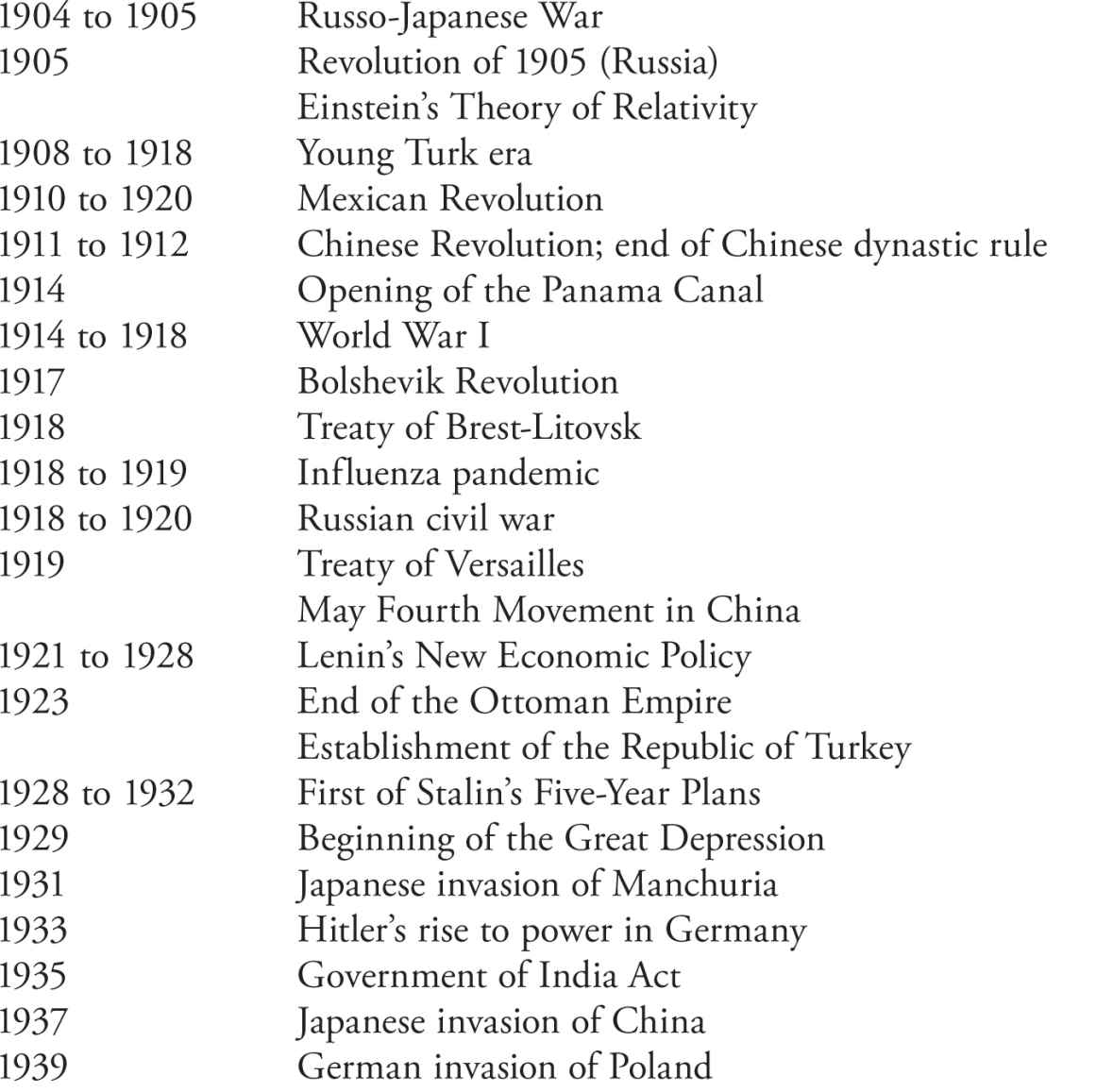
Timeline


Key Comparisons
1. Postwar governments of Western nations versus the Soviet bloc
2. Decolonization in Africa versus India
3. Effects of World War I versus the effects of World War II
4. Russian Revolution versus the Chinese Revolution
5. Reactions of Western versus non-Western nations to U.S. consumer society
6. Female roles in China and the West
7. Patterns of immigration in the Eastern versus the Western hemispheres
8. Patterns of economic development in Africa versus Latin America
9. Global trade in the Pacific Rim versus the West
10. Political and economic conditions in Russia before and after communism
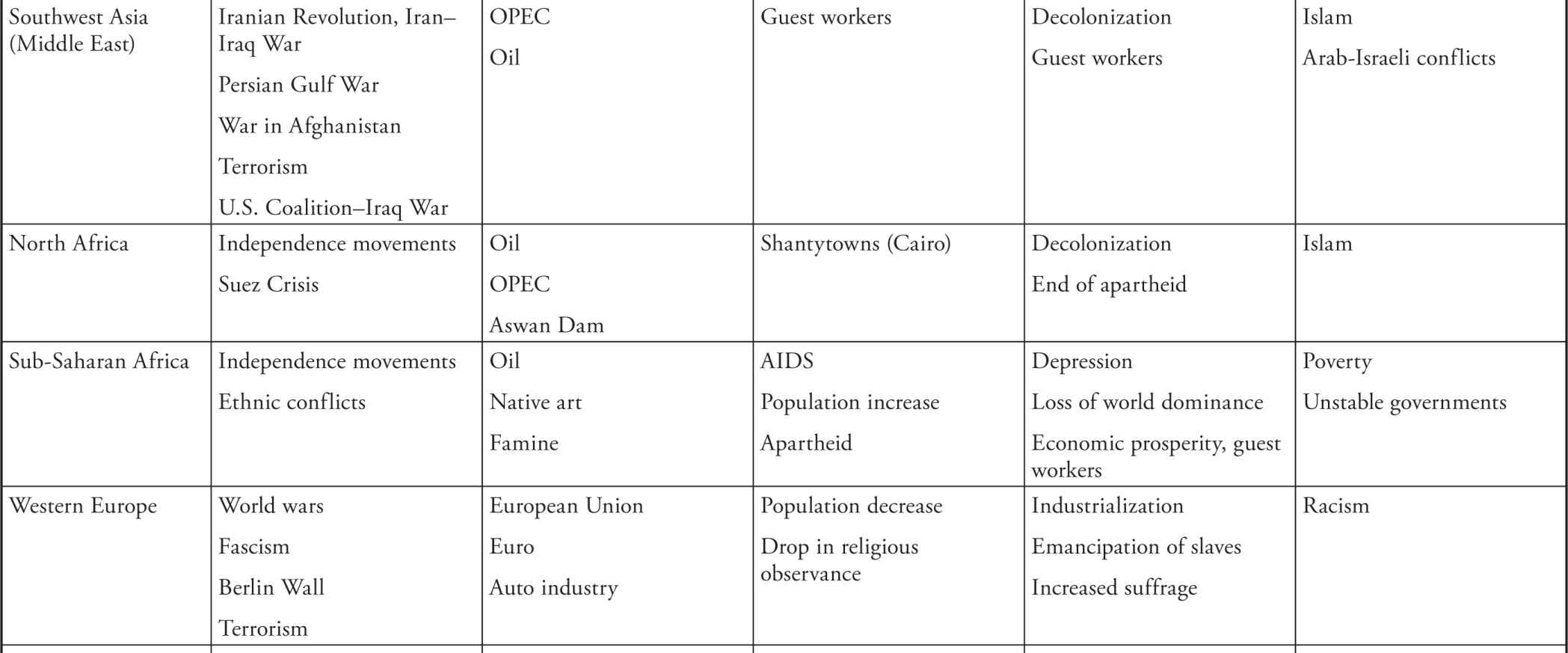
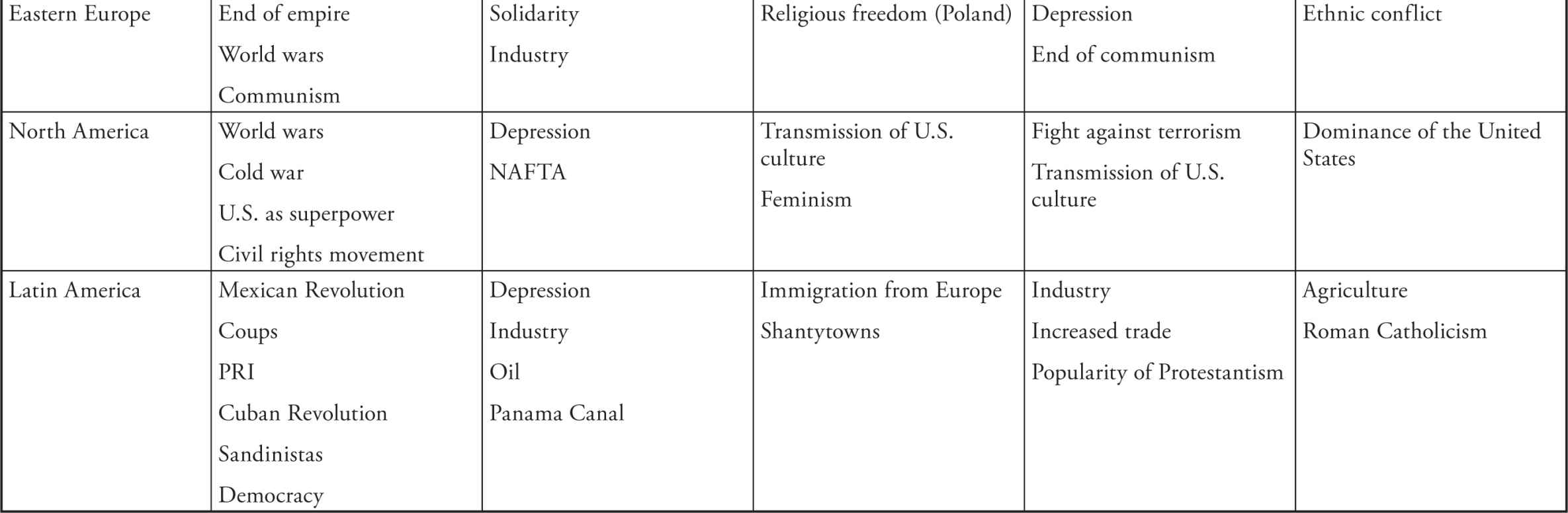
Change/Continuity Chart