
The most common drug recreationally and medicinally in early America was alcohol. Distillation of alcohol became ubiquitous in Europe shortly before the colonization of the Americas, and North American colonists drank all types. Still, other drugs also existed that were used medicinally. Healers, usually women, of all ethnicities and races used cures from native as well as European and African transplanted plants to combat disease and injuries. By far the most universally and successfully used were opium and its derivatives, but the dark side of addiction and overdoses was commonly recognized as well.
Almost all female householders possessed sufficient herbal knowledge to make their own medicines. Women grew needed herbs such as sorrel, sage, anise, marigolds, and thyme among rows of vegetables just as their medicinal formulas lay intermingled with recipes in family cookbooks. All healers, whether elite physicians, journeymen doctors, midwives, or household healers, used herbs in their medicines. Some elite physicians, trained in the method of Paracelsus, the sixteenth-century alchemist and physician, included metals in their formulas. Midwives possessed special recipes containing pennyroyal, juniper, rue, and other herbs to provide additional strength and induce labor and sometimes to induce abortion through miscarriages.
Plants varied widely depending on geographic area, and thus herbal medicines had strong regional differences. Native Americans, African Americans, and Europeans all contributed to the shared knowledge. Native Americans were the most respected of all the groups. Local inhabitants taught French explorers along the St. Lawrence River the curative properties of willow bark for scurvy. Traditional African cures often included food ingredients like licorice, yams, okra, and sesame seeds. Although blacks were commonly denigrated as inferior, many whites sought medical help from them. In one famous case a South Carolina slave was given his freedom for the recipe to his secret cure for rattlesnake bite.
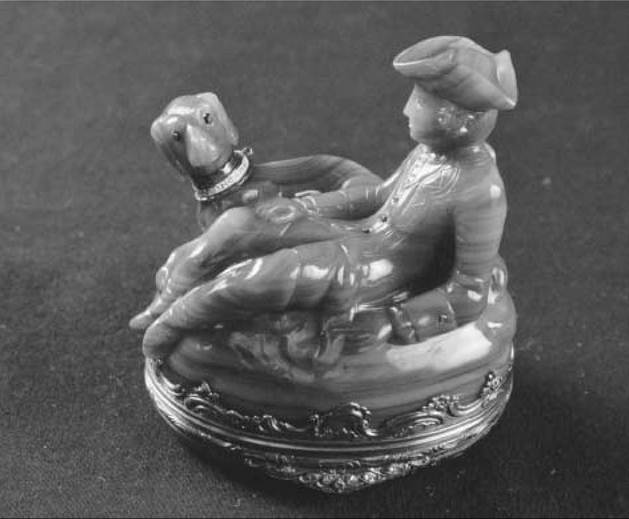
Gold and Agate Snuff Box. Circa 1760.
The key medicinal drug was clearly opium. Although poppies were grown throughout the country, only during the War of 1812 were they commercially viable. Otherwise, Americans imported opium in cakes from the Near East, especially Turkey, where rich syrups and juices were used to make the opium product palatable and easy to cut. The thick resinous type of opium used for smoking did not make it to America during this period. Although available in gum and powdered form, opium was mostly mixed with alcohol or water to form laudanum. Physicians prescribed opium for pain relief, anxiety, dysentery, rheumatism, and, among the wealthy, to regulate and control the feelings of women thought to be unruly or hysterical. Most Americans obtained opium not through physicians' prescriptions but in patent medicines (trademarked nonprescription drugs whose contents were in part undisclosed) and homemade herbal cures.
Physicians had long recognized the existence of addiction and tolerance but did not understand their causes or why many addicts were able to remain healthy. Americans did not criticize individuals suffering from addictions. During the early 1820s English Romantics like Thomas De Quincey (whose Confessions of an English Opium Eater made him famous) and the poet Samuel Taylor Coleridge popularized opium's recreational use. In America opium was used by artists like the poet and author Edgar Allan Poe, who began to use opium excessively, and the well-to-do.