
John Adams (1735-1826), was born in Braintree, Massachusetts. A graduate of Harvard College (1755), he became a lawyer. Adams served in the First and Second Continental Congresses (1774, 1775-1777), in diplomatic missions to France, the Netherlands, and Britain (1778-1788), and as the first vice president (1789-1797) and second president (1797-1801) of the United States. He married Abigail Smith of Weymouth, Massachusetts, in 1764, one of the singular women of the era. He died on 4 July 1826.
John Adams's political career began in earnest in 1765. In response to that year's Stamp Act, which required that the colonists pay a "stamp fee" for all legal documents (in addition to some other items), Adams penned a series of essays published later as the Dissertation on the Canon and Feudal Law (1768). Just as no man was born with the keys to heaven, so too, Adams argued in the Dissertation, was no man born in possession of the right to rule others on earth. Adams also made his first major appearances on the public stage in 1765. In the autumn of that year, he wrote several resolutions in response to the Stamp Act and presented them to his local town meeting. The Braintree Resolves, as they became known, soon spread throughout the colony. Not long thereafter, the leaders of Massachusetts's "patriot party" asked Adams to join the colony's other top lawyers in making their case to the governor. In early 1766 he also published a series of newspaper essays in defense of colonial rights, "From the Earl of Clarendon to William Pym."
The repeal of the Stamp Act in 1766 heartened Adams, but when Britain's Parliament the following year passed the Townshend Acts, which placed duties on glass, lead, paper, paint, and tea, Adams realized that the strife between the colonies and the mother country would not end anytime soon. He served as John Hancock's lead counsel in the Liberty trial of 1768, named after John Hancock's ship, the Liberty, which British customs agents had seized. In 1770 Adams defended the British soldiers who stood accused of murder in the Boston Massacre trial. Not long after the soldiers were set free with a mild reprimand, Boston selected Adams as one of its representatives in the colony's assembly.
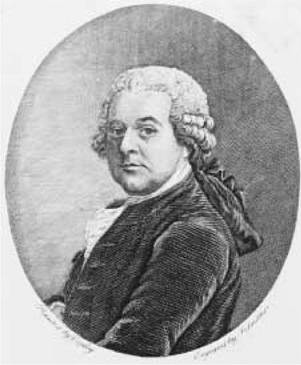
John Adams. The first vice president and second president of the United States, depicted in an engraving (1797) by James Smither, after a painting by John Singleton Copley. library of congress.
In the fall of 1774 Massachusetts sent Adams to the first Continental Congress, where he helped to draft the declaration of rights. Massachusetts included Adams in its delegation to the Second Congress, which convened in the spring of 1775 in the wake of the battles of Lexington and Concord. Adams thought the time had come to declare independence. For over a year he pushed, cajoled, and lobbied his colleagues, until events and changes in the membership of Congress conspired to give his side a victory. On 1 July 1776, Adams gave a great speech in defense of the resolution that "these colonies are and of right ought to be free and independent states." That speech clinched his status among his countrymen as the leader of the independence forces. Two of his peers dubbed him the "Atlas of Independence" for his efforts. The resolution carried on 2 July. Congress approved the public Declaration of Independence two days later.
After the colonies declared independence, Adams remained one of the most active men in Congress, serving as chairman of many committees, including the congressional War Committee. From early in 1776 until the Battle of Saratoga in October 1777, that made Adams a one-man war department. For most of the decade following 1777, Adams served the United States in Europe. In 1778 Congress sent him to France to help negotiate an alliance with that nation. He arrived after the treaty was signed and returned home in the early summer of 1779. Later that year Adams returned to France with powers to negotiate a treaty to end the war with Britain. He remained in Europe until 1788, serving in the Netherlands and in Britain, in addition to France.
Adams's tenure in France is best remembered for its stormy nature. Most historians explain Adams's difficulties in Paris by highlighting his sensitivity to personal slights, along with his tempestuousness. The charge is not entirely unfair, but they seldom note that the British spy cell in the American legation stirred up a good deal of the trouble. To his credit, Adams saw quite clearly that American and French interests were only aligned against Britain, not in favor of a free and independent United States. France wanted to make the United States a dependent client state. Naturally, the French wished to replace Adams with someone more pliable. Frustrated in Paris, Adams went to the Netherlands in an effort to open a second diplomatic front that would lessen America's dependency upon France. Ultimately, he secured official recognition of the United States by the Dutch government and loans from the bankers in the Netherlands. In 1782 he returned to Paris to help John Jay and Benjamin Franklin negotiate a peace treaty with Britain. They secured land clear to the Mississippi and preserved the right to dry fish on the shores of Newfoundland. In 1785 Adams became the first American minister to Britain.
Adams's other preoccupation between 1776 and 1789 was the theory and practice of constitution writing. When he returned home in the summer of 1779, Massachusetts happened to be drafting its new state constitution, and Adams became its primary draftsman. The Massachusetts constitution was the first to be drafted by a special convention called by the people for that purpose and then ratified by the people. Adams heartily approved of that system of ratification. Massachusetts's constitution was also the first to feature two tripartite sets of checks and balances: among the legislative, executive, and judicial branches of government, and between the three branches of the legislature (a lower house, an upper house, and an executive with a qualified veto). Adams was also the best-known advocate of such political architecture in his era.
Since Adams's lifetime, his constitutional thought has been a matter of controversy. In early 1776 his influential pamphlet, Thoughts on Government, was printed. Partly written to correct what he considered to be the excessive democratism of Thomas Paine's Common Sense (1776), Adams's Thoughts on Government advocated the model of government he would enshrine in the Massachusetts constitution a few years later, featuring separations of power and checks and balances. The pamphlet, which was both popular and influential, laid the seeds of the controversy that was to engulf Adams's political thought.
Unlike most of his contemporaries, Adams defined the term "republic" according to its ends, rather than its means. In Thoughts on Government, Adams wrote that "there is no good government but what is republican" and "the very definition of a republic is 'an empire of laws and not of men.'"
He made similar statements in 1787 and 1788 in the three-volume Defence of the Constitutions of Government of the United States of America, his contribution to constitutional reform in America and Europe in the 1780s. Good republican governments could not be simple, representative democracies, he asserted, since a majority "may establish uniformity in religion; it may restrain trade; it may confine the personal liberty of all equally, and against the judgment of many, even of the best and wisest, without reasonable motives, use, or benefit." The way to prevent these dangers was by checking and balancing power. To ensure liberty under law, "orders of men, watching and balancing each other, are the only security; power must be opposed to power, and interest to interest." Many people mistook Adams's discussion of the defects of popular government for an argument against popular government.
Not long after his return from Europe, Adams became the first vice president elected under the new federal Constitution. He soon became a lightning rod for criticism from Thomas Jefferson's party. From his post as president of the Senate, Adams lectured his colleagues about the need for high-toned titles to attract capable men to government and to secure respect for American officials in European courts. Instead of carrying the issue, Adams became the butt of jokes about his own air of superiority and endured accusations that he secretly supported monarchy and aristocracy. That Adams criticized the French Revolution from the start only added fuel to the fire. Since the French called their new regime a republic, most Americans believed that the cause of the France was the cause of America.
In 1790 and 1791 Adams published a series of essays that are known to history as the "Discourses on Davila." The basic point of the "Discourses" was that political men were driven by the "passion for distinction" (or spectemer agendo)—the desire to be seen and loved by others. This passion led men to do both grand and unspeakable things. The only way to secure peace in society was to manage conflict; the attempt to escape it was futile. Thomas Jefferson, then serving as secretary of state, denounced Adams's ideas as "heresies." After publishing the "Discourses," Adams rode out the remainder of Washington's terms outside the limelight. He supported the Jay Treaty of 1795 with Britain because it was better than war, but he was not closely associated with it. Adams remained the man most likely to succeed Washington, and he did so in 1797. Unlike Washington, who was elected unanimously, Adams won the presidency by a mere three electoral votes.
Around the time Adams became president, France reacted to the Jay Treaty by attacking American ships on the high seas. Adams responded firmly. When French agents (code-named X, Y, and Z) demanded a bribe before the start of negotiations, Adams was furious, as were most Americans. The XYZ affair inflamed opinion against France, and Adams used American anger to rally his countrymen to oppose French depredations in the Quasi-War with France. A firm believer in the old adage that "if you wish peace, prepare for war," Adams used American resistance to France to bring about a settlement, which was negotiated in Paris. News of it arrived in America in the fall of 1800, too late to keep Adams from losing the presidential contest by eight electoral votes.
Caught in the middle of a struggle between Federalists and Republicans, Adams's presidency was a political disaster. He alienated the Republicans by warring with France and alienated the Federalists by making peace. He upset the Republicans by signing the Alien and Sedition Acts and angered the Federalists by pardoning John Fries after the rebellion he led had been stopped. Just before leaving office, President Adams appointed John Marshall, then serving as secretary of state, as the chief justice of the United States, and several lesser officials. These "midnight appointments" angered Thomas Jefferson, who viewed them as politically unfair and personally unkind.
In his last quarter century, Adams remained on or near his farm in Quincy, as his part of Braintree, Massachusetts, had been renamed. He watched with pride as his eldest son, John Quincy Adams, rose in the nation's political firmament. In addition to walking about town and working the land, Adams read and wrote a great deal. When Massachusetts called a convention to revise its constitution in 1820, the town of Quincy sent Adams. He hoped that the state was finally ready to get rid of its religious establishment, but to his chagrin, he could not convince the convention on that point.
Adams made some efforts to vindicate his reputation. He started and abandoned an autobiography a few times. When his erstwhile friend Mercy Otis Warren published a history of the American Revolution, Adams fired a barrage of letters at her, complaining that she had attacked his character and slighted his accomplishments. In 1810 and 1811 he published a series of essays in the Boston Patriot that defended his presidency against criticism by Federalists and suggested that many of them were not committed to the Union. In 1812 Adams resumed contact with Thomas Jefferson. Before they died, the aged patriarchs would exchange more than one hundred and fifty letters. These letters were Adams's final effort to explain his republican faith and to vindicate his reputation before the court of history. He wrote his final letter to Jefferson in April 1826, a few months before he died, only a few hours after Jefferson, on 4 July 1826.