
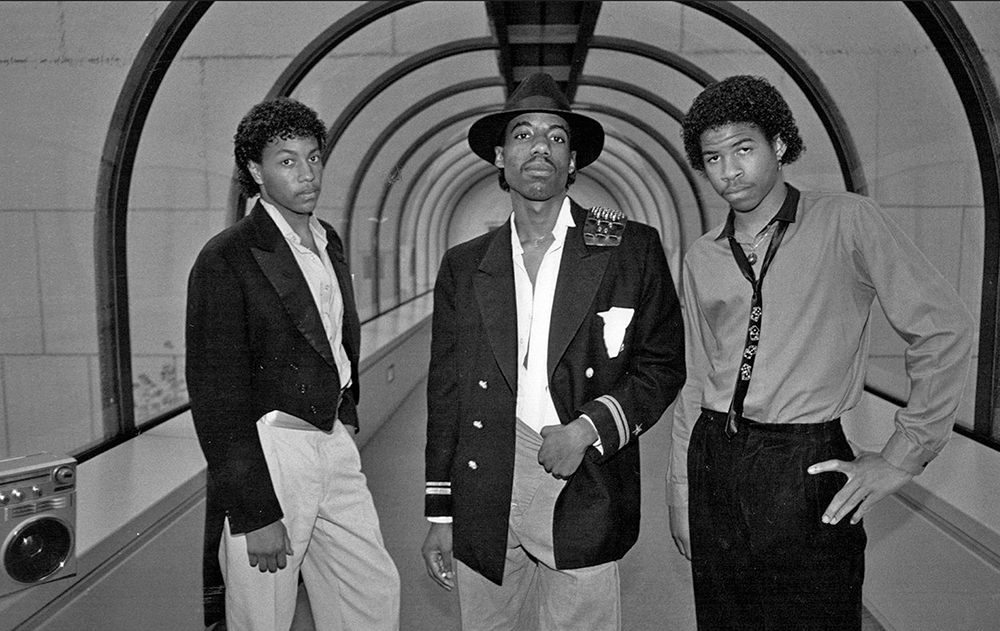
In the early 1980s DJs and MCs such as the Emerald Street Boys, Jam Delight, West Coast Funk Brigade, 3D, Duke and Double Rock, Silver Chain Gang, and the Emerald Street Girls helped lay the foundation for a dynamic local scene. (left to right) Emerald Street Boys’ Edward “Sugar Bear” Wells, James “Captain Crunch” Croone, and Robert “Sweet J” Jamerson. Courtesy of Kristine Larsen.
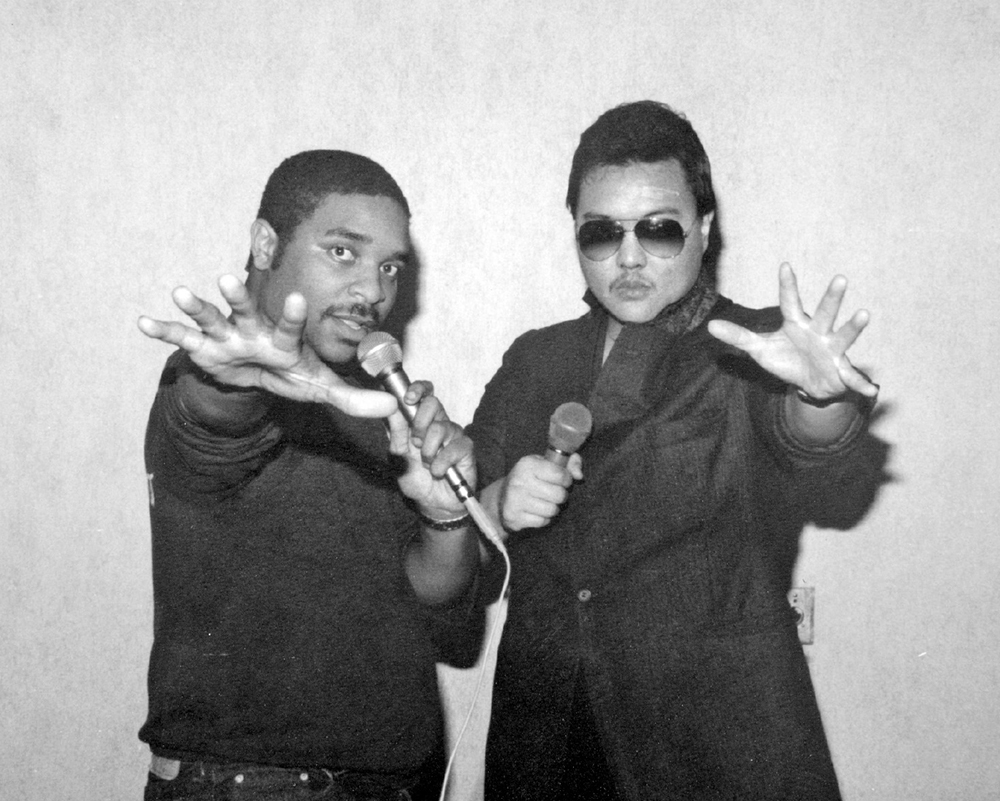
“Nasty” Nes Rodriguez (right), DJ at radio station KKFX (KFOX), meets Anthony “Sir Mix-A-Lot” Ray (left) at the Boys and Girls Club in the Central District, and the Seattle rap scene grows. They founded NastyMix Records in 1985 with partners Ed Locke and Greg Jones. Courtesy of Sheila Locke.
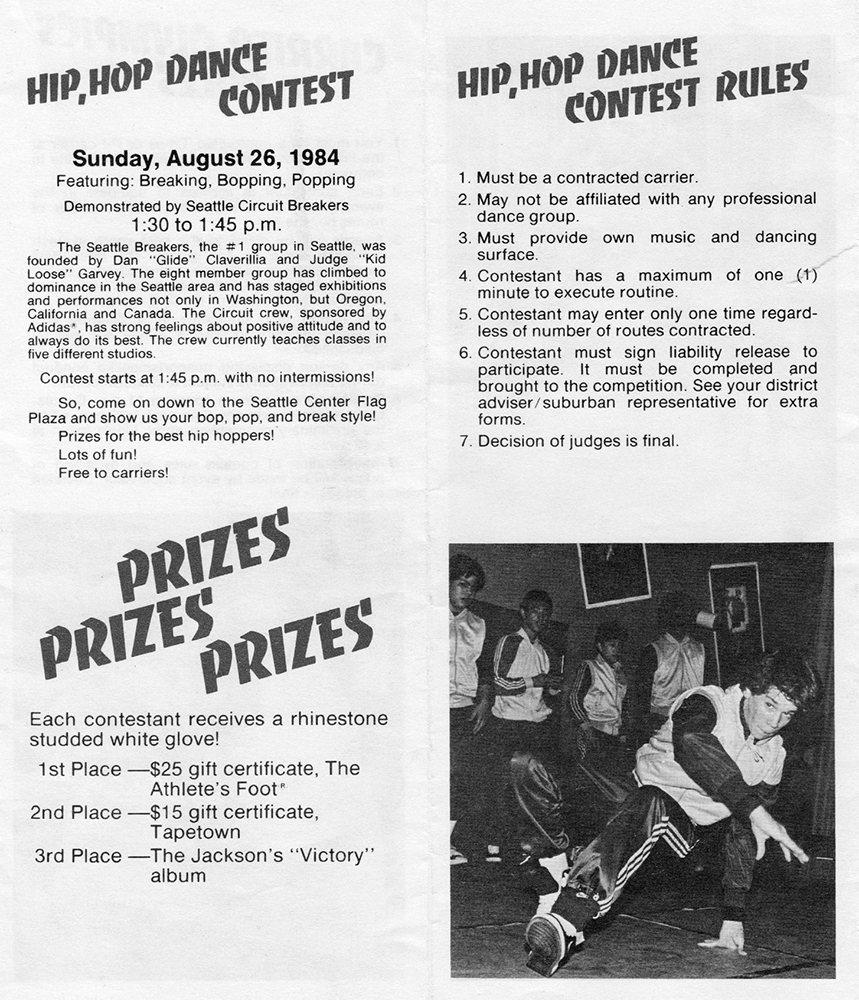
Hip, Hop Dance Contest, 1984. Hip-hop dance contests and gatherings like the one advertised in this 1984 poster served as sites of community and creativity for local talent. Courtesy of Supreme.
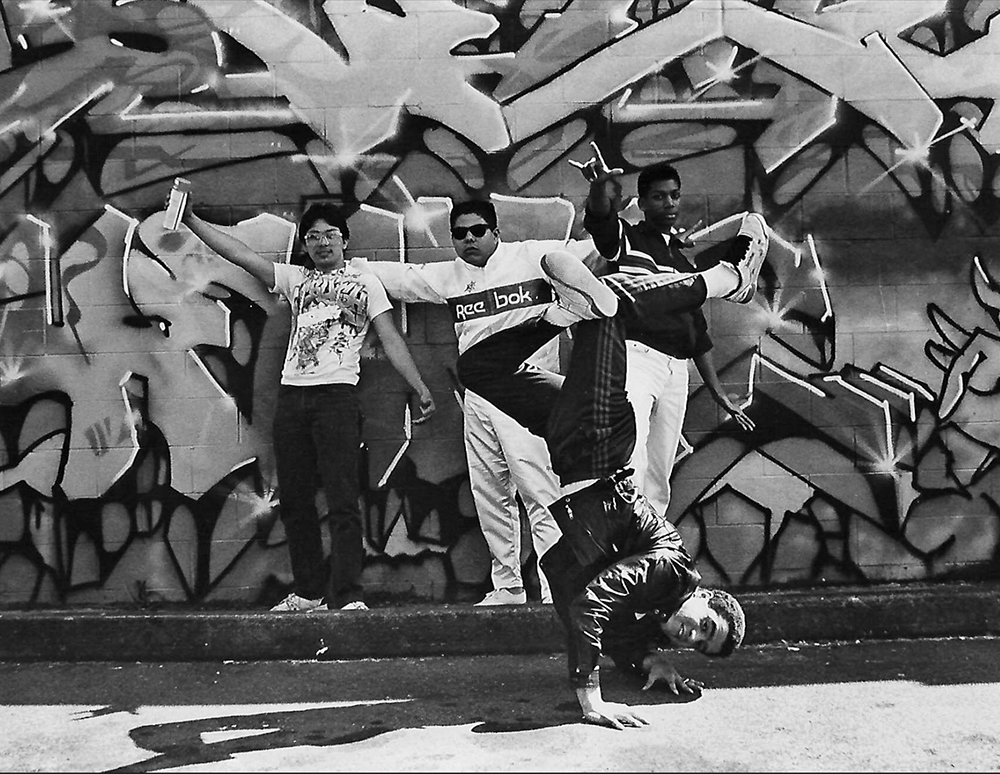
Posing in front of local graffiti, 1988. (left to right) Stash, Supreme La Rock, and CMT. (front) Icey Ice. Danny “Supreme” Clavesilla’s contributions as a DJ, producer, label founder and owner, and overall industry connector have spanned decades. Courtesy of Supreme.
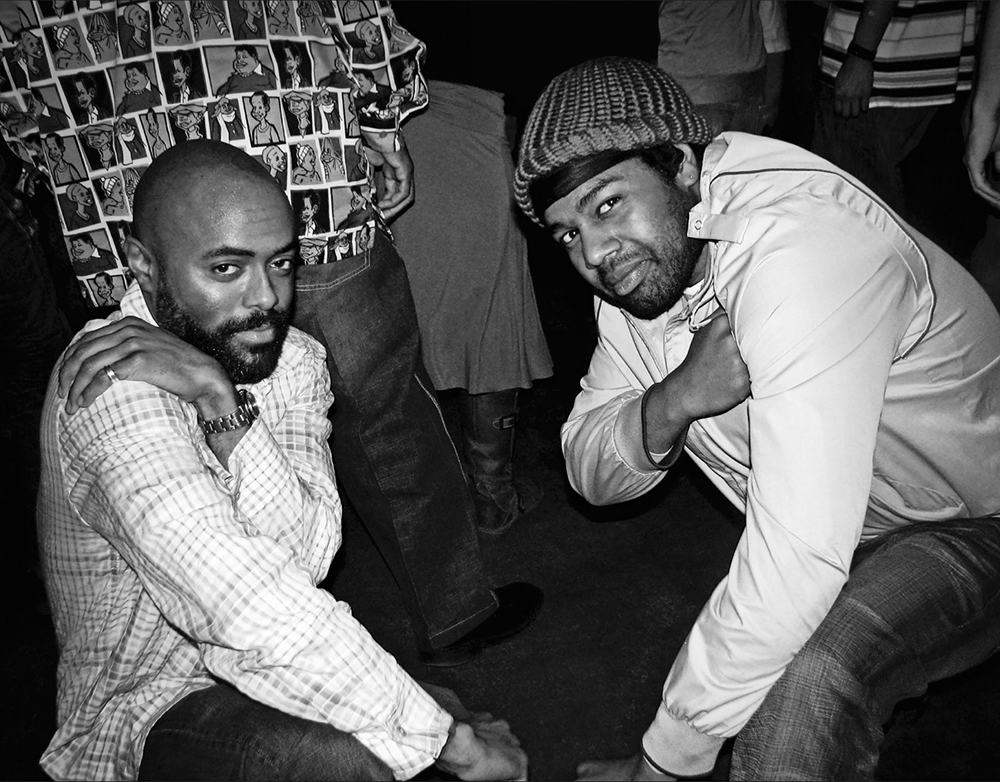
Jonathan “Wordsayer” Moore of Jasiri Media Group (left) with Damisi Velasquez of Tribal Music (right). Both operated independent record labels in the 1990s, further expanding participation expectations in local hip hop beyond simply performing. Courtesy of Kelly O Photography.
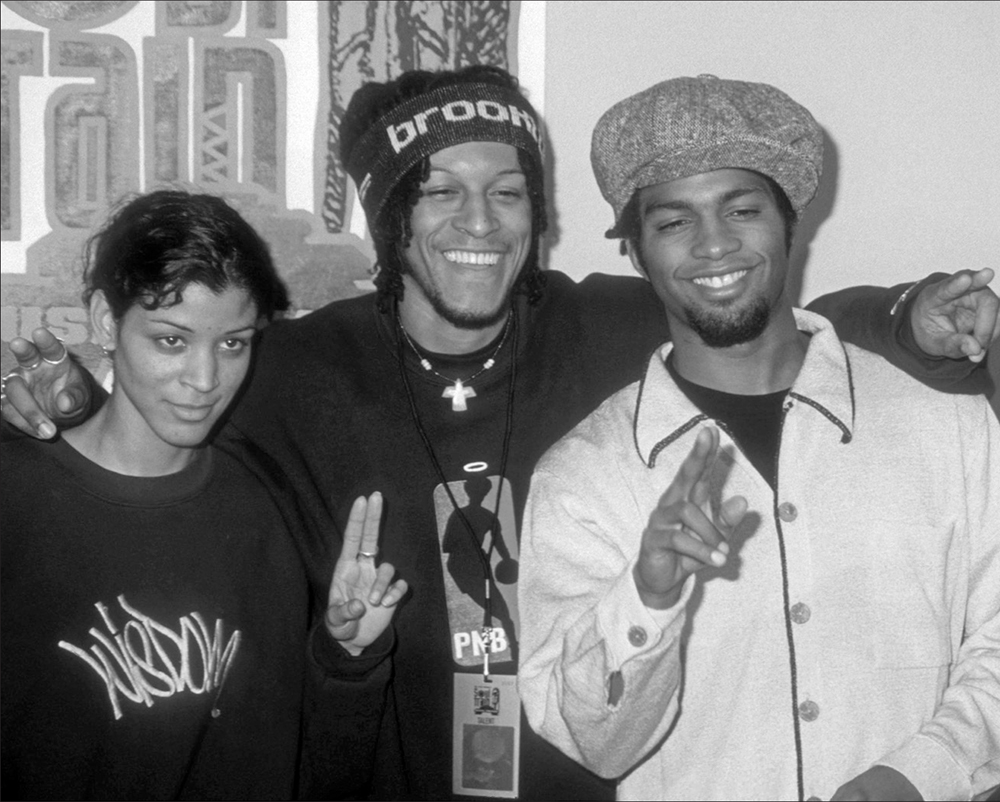
After graduating from Garfield High School and moving to New York, Ishmael Butler, aka Butterfly (right), joined with Craig “Doodlebug” Irving (center) and Mary Ann “Lady Bug Mecca” Vieira (left) to form Digable Planets. The group’s debut album was titled Reachin (A New Refutation of Time and Space), and its lead single, “Rebirth of Slick (Cool Like Dat),” won Best Rap Performance by a Duo or Group at the Grammys in 1994. Photo by Barry King, Alamy Stock Photos.
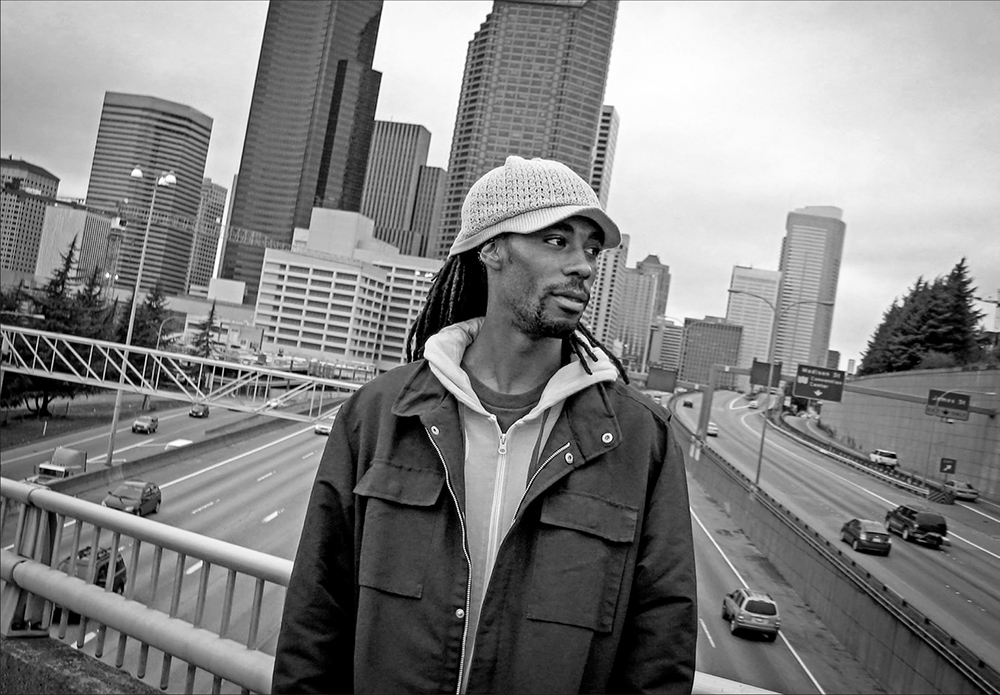
Record producer, DJ, MC, musician, audio engineer, and creator of the 1990s basement recording studio “The Pharmacy,” Derrick Brown, aka Vitamin D, is widely known as one of the most important contributors to the Seattle hip-hop scene. Courtesy of Kelly O Photography.
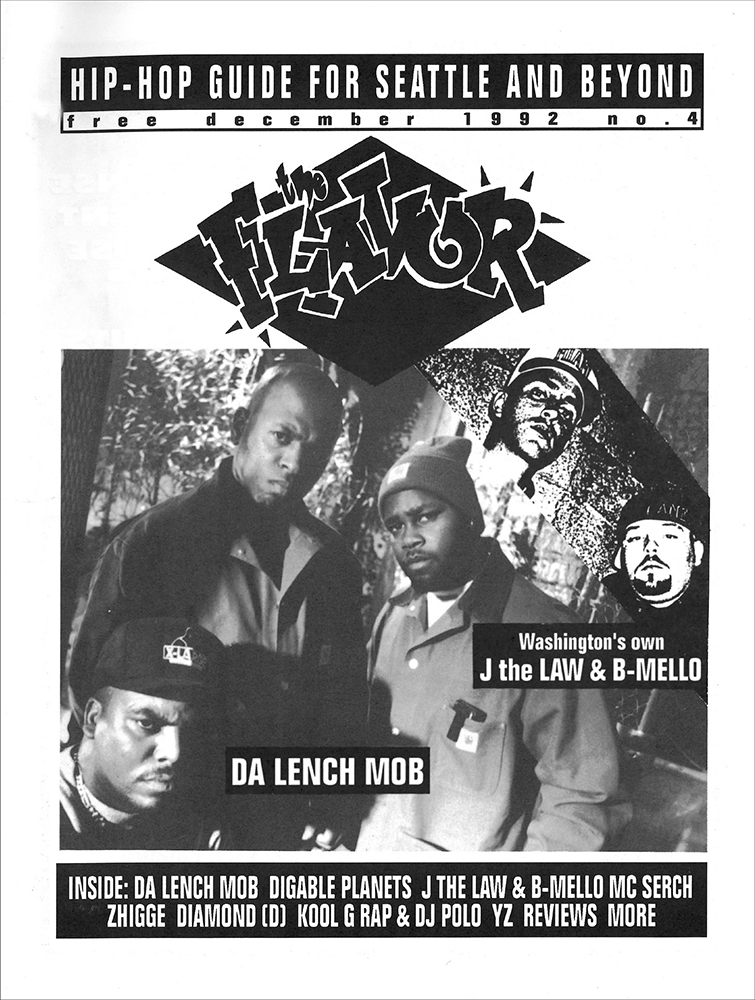
Seattle-based monthly hip-hop magazine The Flavor, founded by Allison Pember and Rachel Crick, focused on the music scene in the Pacific Northwest and beyond, opening a space for local and nationally renowned artists while being distributed at record stores across the United States and in several European countries. The cover of the December 1992 issue featured Da Lench Mob. Courtesy of Allison Pember.
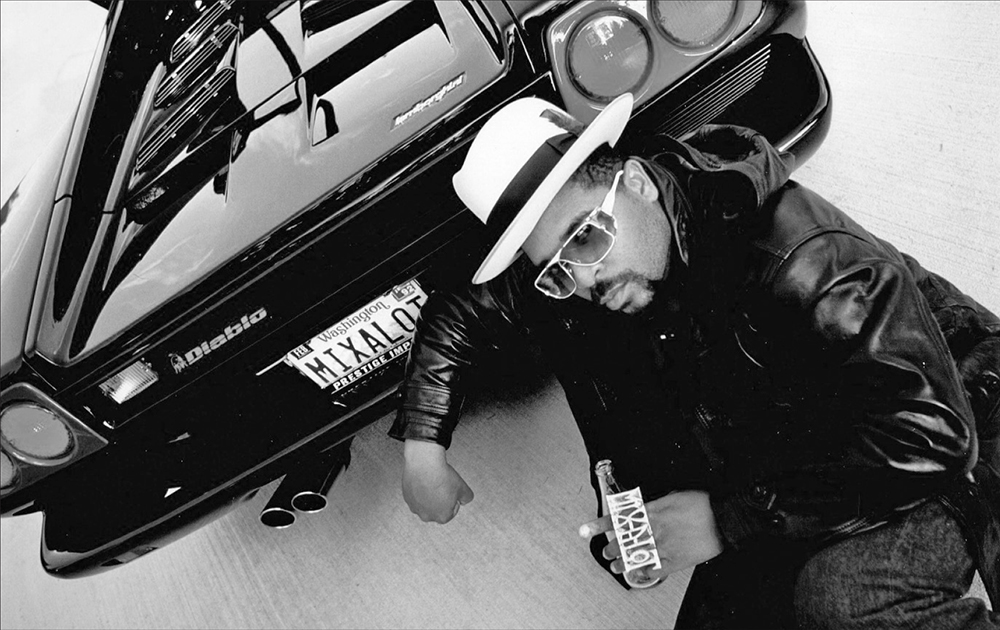
Sir Mix-A-Lot poses with his signature Lamborghini Diablo. One of three Seattle-bred artists to win a Rap Grammy, Sir Mix-A-Lot and his song “Baby Got Back” brought unprecedented global attention to local hip hop in 1993 by beating out the likes of MC Hammer, LL Cool J, Mark “Marky Mark” Wahlberg, and Queen Latifah in the Best Solo Rap Performance category. Courtesy of Ricardo Frazer.
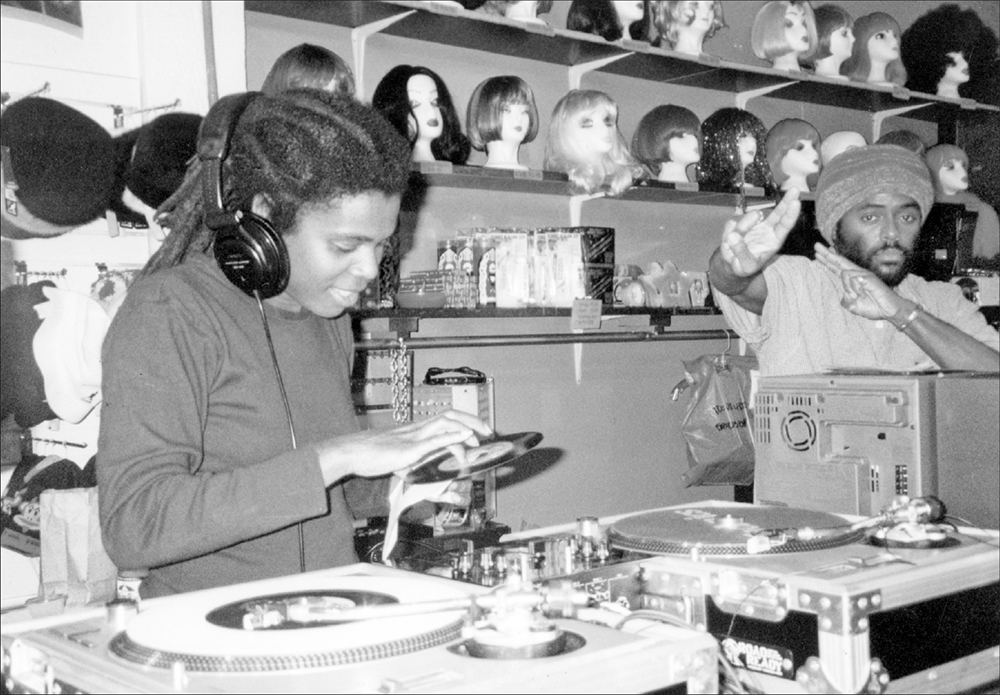
Erika “Kylea” White (left) and Jonathan “Wordsayer” Moore of Jasiri Media Group perform a DJ set at the opening of a clothing boutique on Broadway in 1999. White has been called the “Godmother” of Seattle hip hop, while Moore performed, managed artists, and in the 1990s fought to bring local hip hop to downtown venues that were hesitant to embrace live rap shows. Courtesy of Erika White.
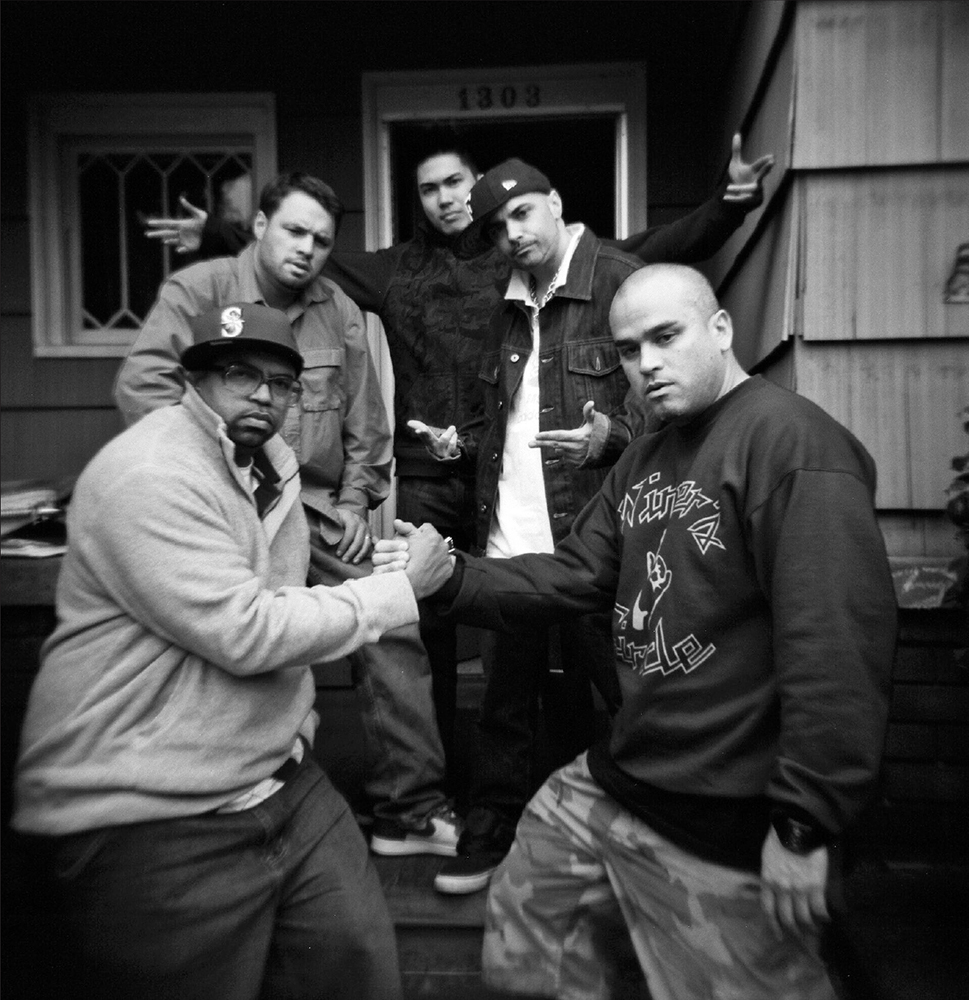
(clockwise from bottom left) Sneke, Hews, Jeromeskee, Fever One, and Soul One, photographed on the stairs of Soul One’s North Beacon Hill house. Fever One, who grew up in the local scene before joining the world-famous Rock Steady Crew in New York City, returned to Seattle in the late 1990s to mentor youth with Soul One and others at what would become the mecca of breaking in Seattle, Jefferson Community Center on Beacon Hill. Courtesy of Matthew Chernicoff.
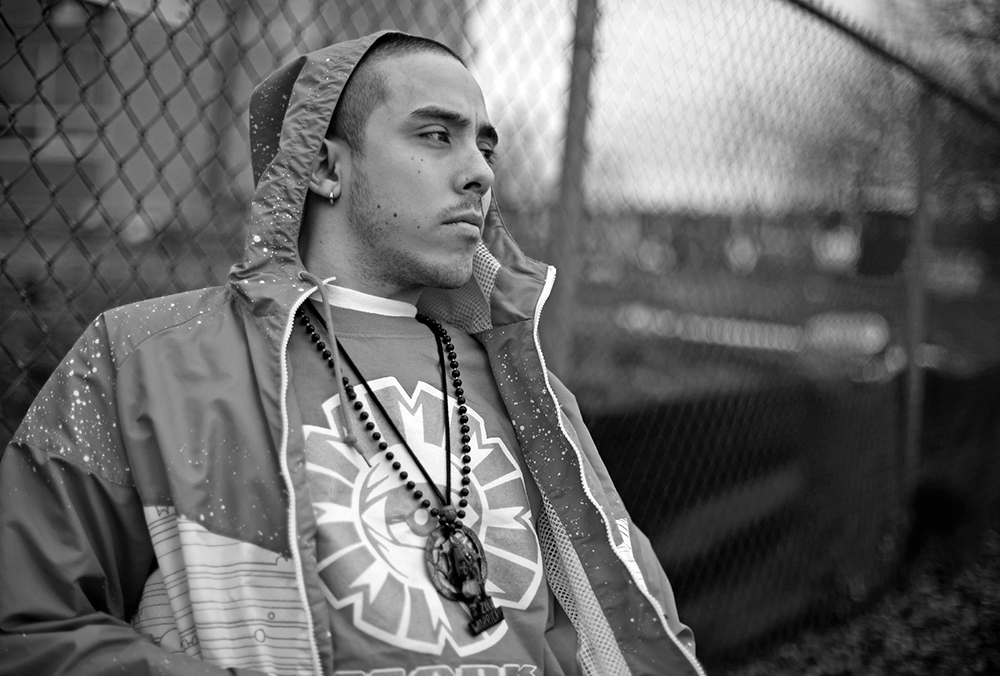
Hip-hop artist, organizer, activist, educator, community leader, and founder of 206 Zulu, Daniel “King Khazm” Kogita. Courtesy of the artist.
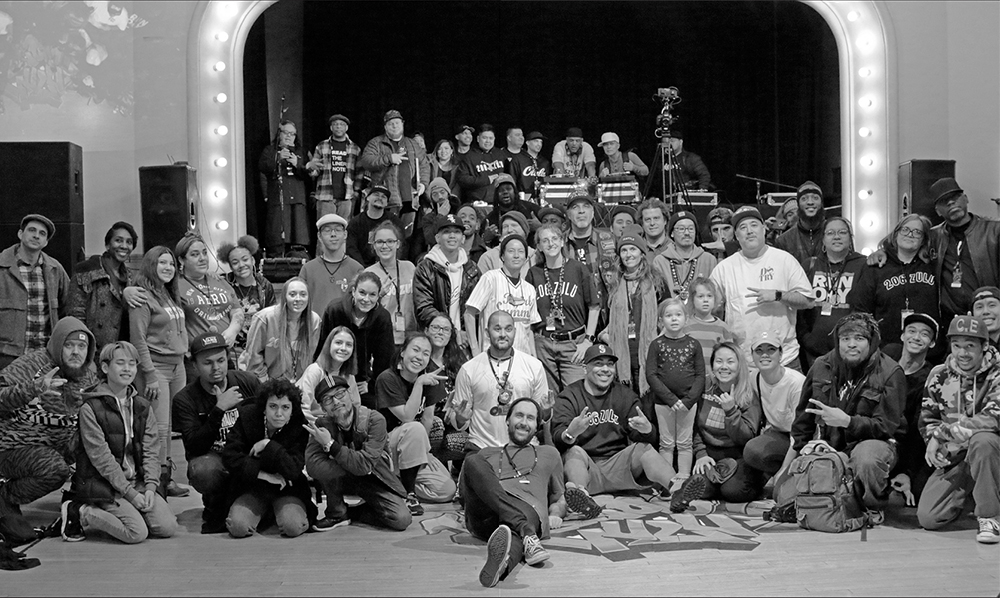
206 Zulu is a Seattle-based non-profit established in 2004 that uses hip-hop culture and arts as a path to community empowerment, education, and social change. Pictured here is the 206 Zulu family inside historic Washington Hall. Courtesy of King Khazm.
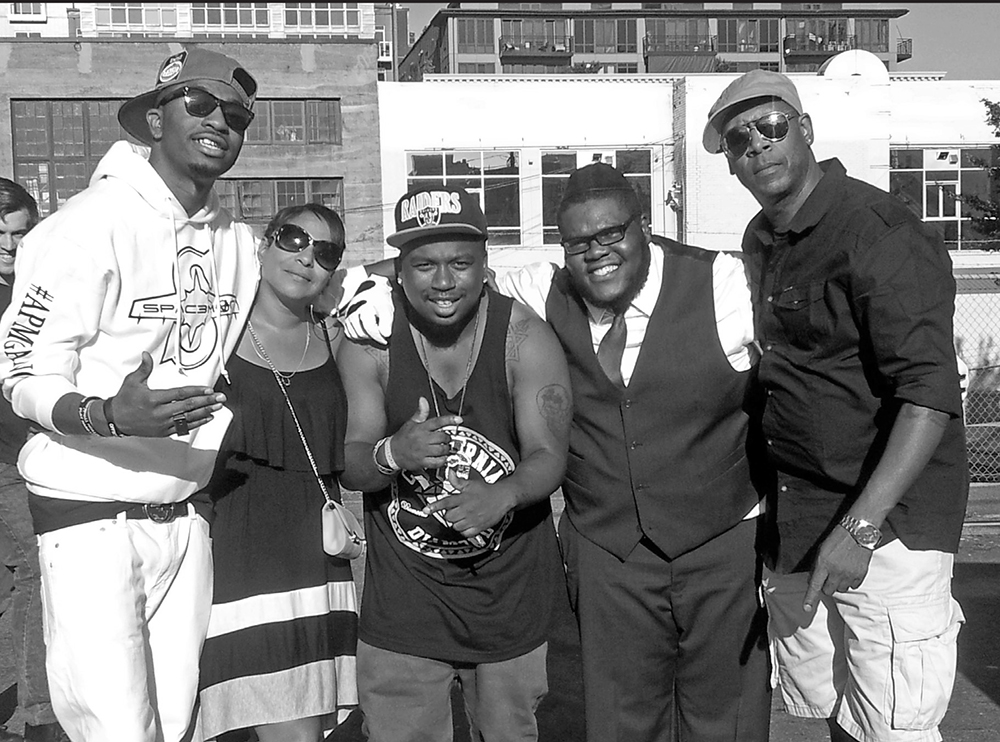
Sportn’ Life Records’ (left to right) Spac3man (artist), Jennifer Petersen (staff), Fatal Lucciauno (artist), Nissim Black (artist, formerly D. Black), and DeVon Manier (owner), following a performance by Nissim Black at the 2010 Capitol Hill Block Party. Established in 2002, Sportn’ Life’s goal was to produce authentic, street-based Seattle hip hop. Courtesy of Sportn’ Life Music Group.
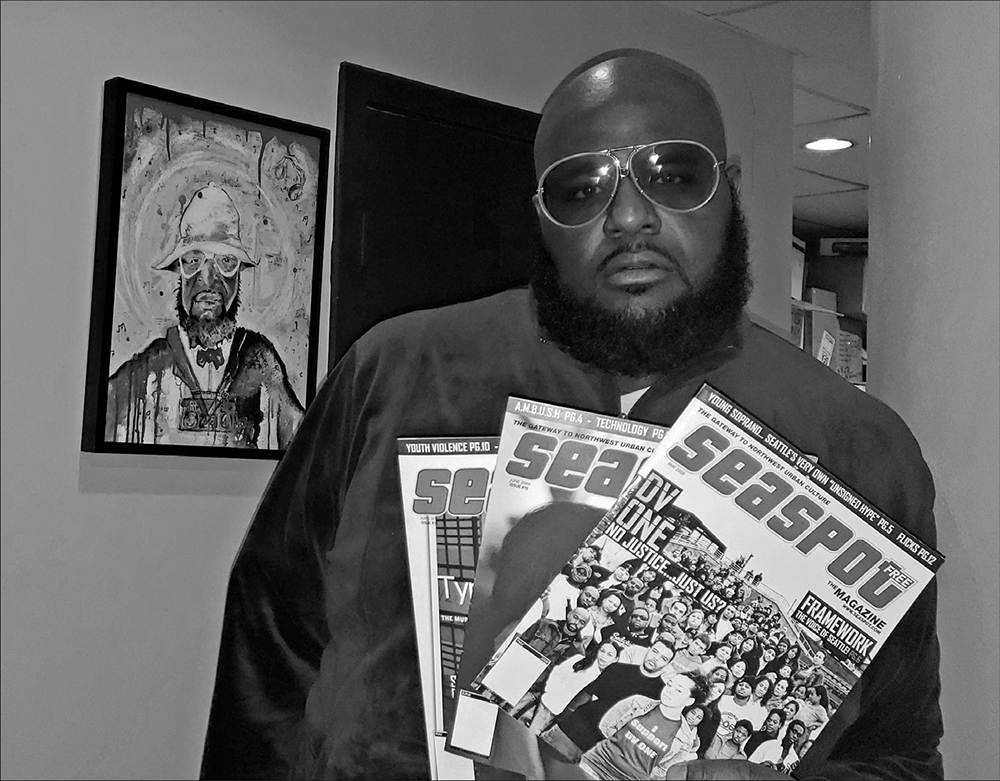
A native of Seattle’s Central District, in 1998 Chukundi “DJ Kun Luv” Salisbury launched Seaspot, a multimedia platform that included a community-focused glossy, full-color magazine and an expansive website billed as “The Gateway to Northwest Urban Culture.” Courtesy of Chukundi “DJ Kun Luv” Salisbury, Seaspot Media Group.
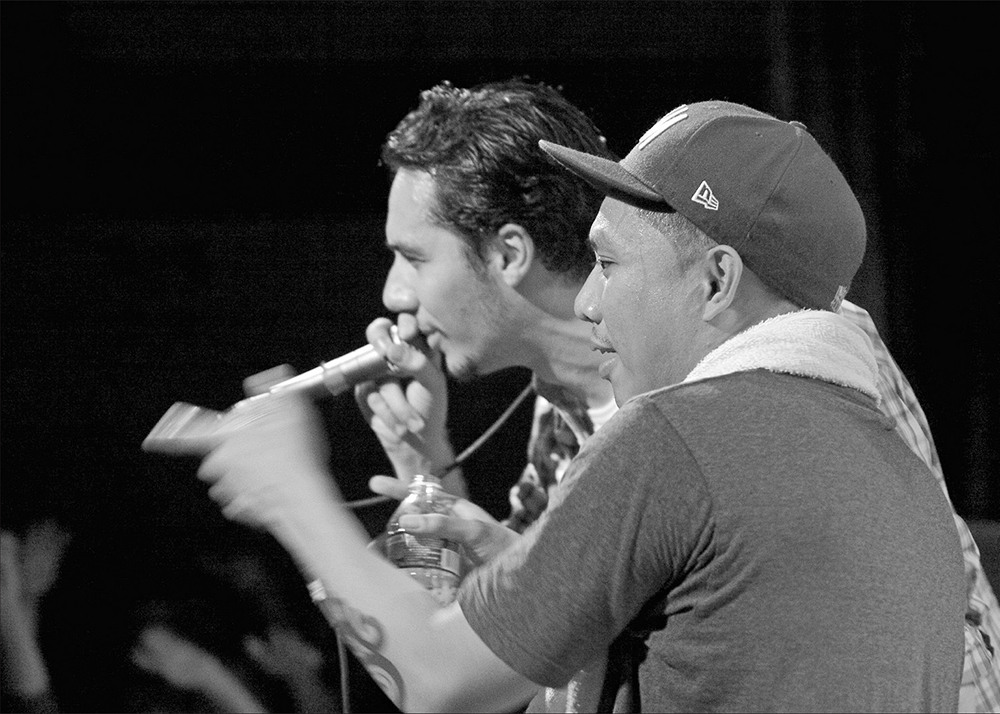
Alexei Saba “DJ Sabzi” Mohajerjasbi (left) and George “MC Geologic/Prometheus Brown” Quibuyen (with hat) met as students at the University of Washington and formed Blue Scholars in 2002. Based out of southeast Seattle, their music touches on issues of social justice, class struggle, and youth empowerment. Courtesy of Tone Photography.
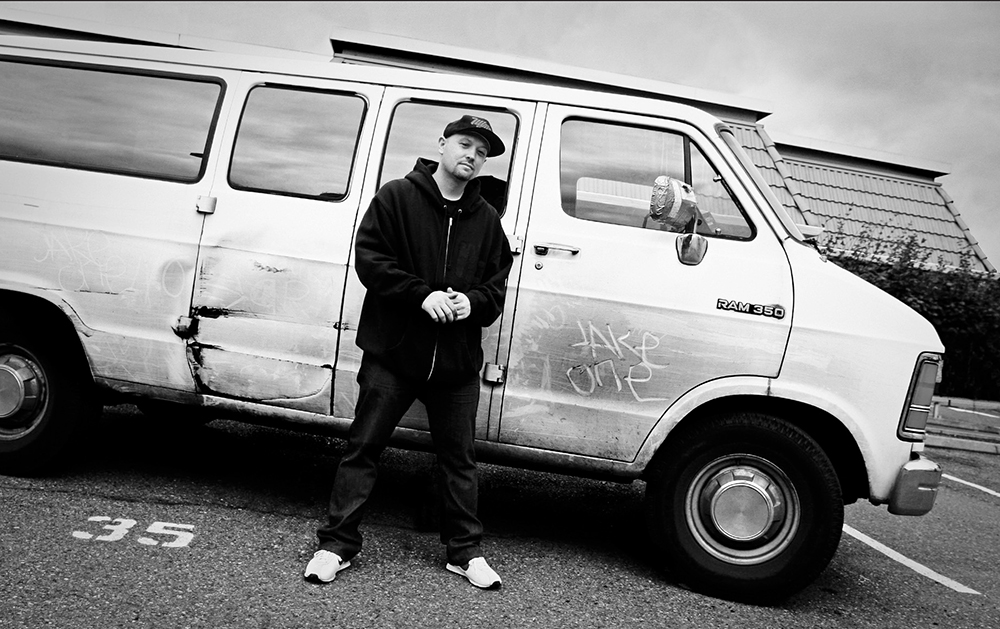
Raised in the Central District, Jake One became part of 50 Cent’s G-Unit production team, the Money Management Group, in the early 2000s. The multiple Grammy Award–nominee has produced music for the likes of De La Soul, E-40, Tupac Shakur, 50 Cent, Rakim, Cypress Hill, T.I., Pitbull, Ghostface Killah, Snoop Dogg, Rick Ross, Drake, and Fun. Courtesy of Kelly O Photography.
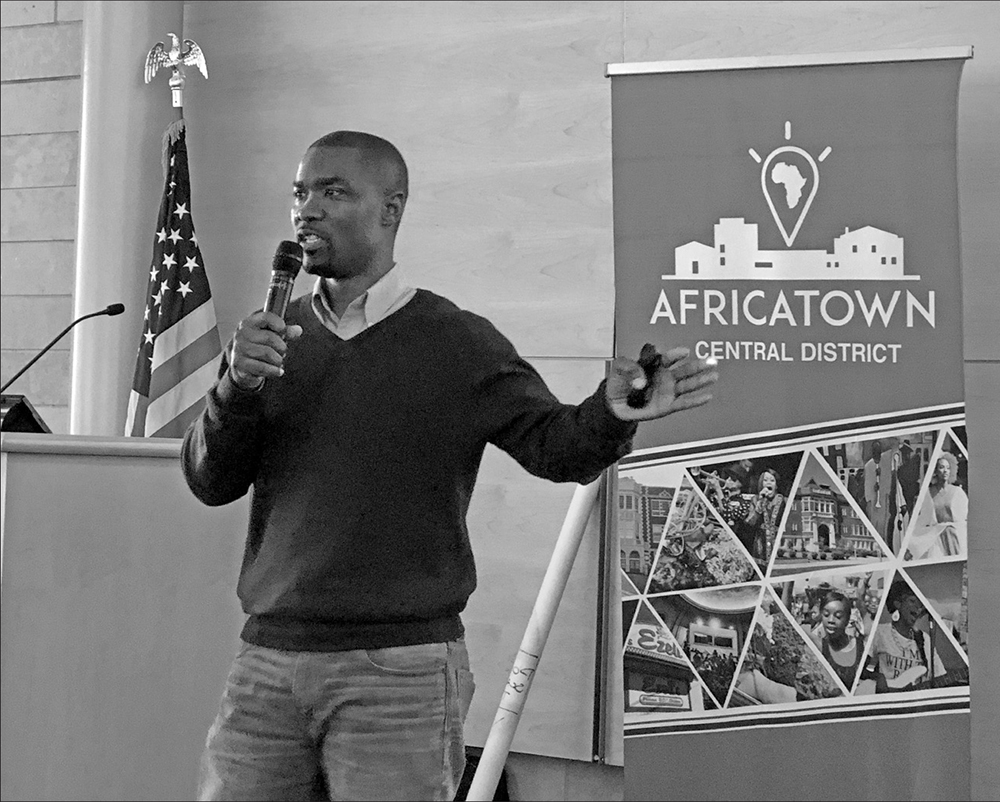
A third-generation Central District community builder, mayoral candidate, and founder of the local chapter of the Hip Hop Summit Action Network, Wyking Garrett, is president and CEO of Africatown Community Land Trust and a founding director of Seattle’s African American Heritage Museum and Cultural Center at Colman School. Courtesy of Geekwire.
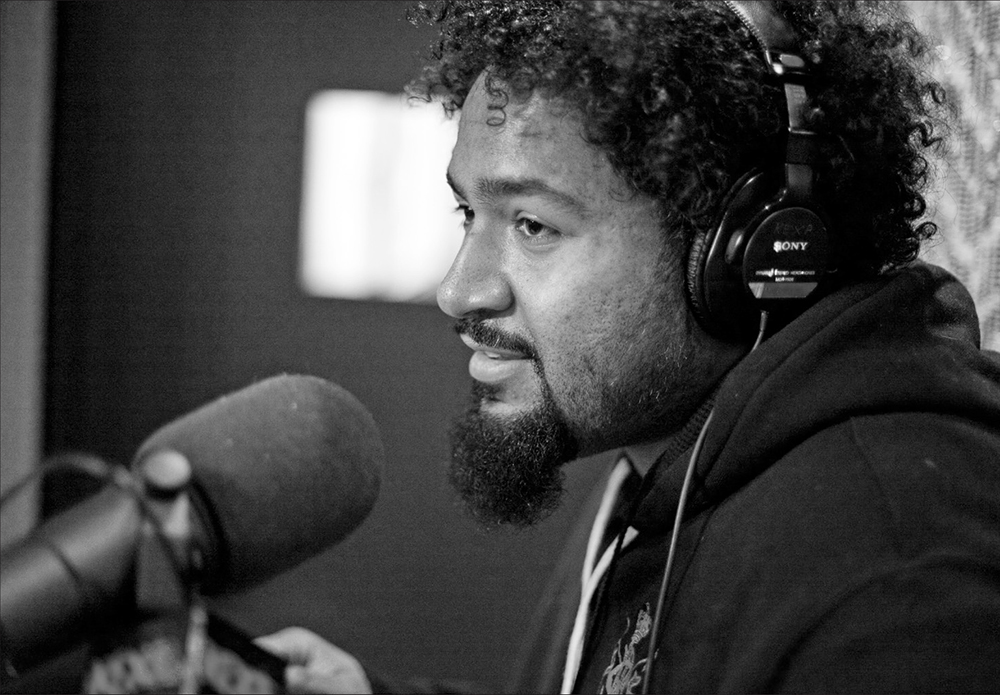
Beginning in 2004, Larry Mizell Jr. had a long-running weekly column in local alternative newspaper The Stranger and later a show on KEXP. Through his extensive work in print and radio, Mizell was a key observer and critic of Seattle’s varied and vibrant hip-hop community. Courtesy of Larry Mizell Jr.
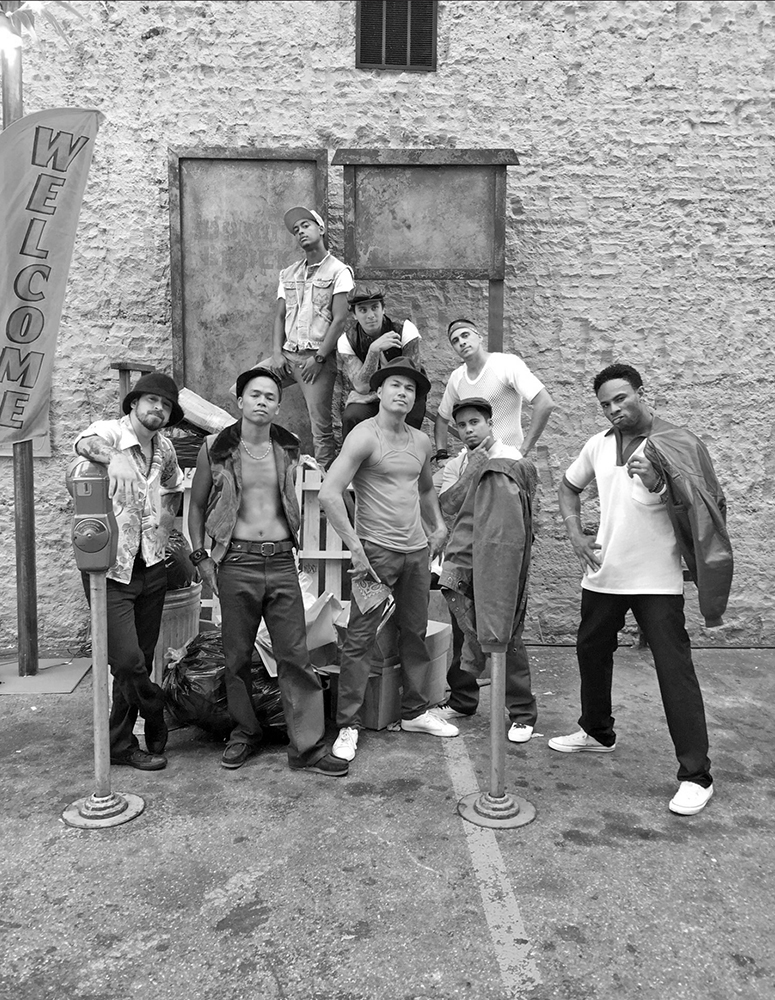
Hip-hop and breaking crew Massive Monkees was formed at Jefferson Community Center in 1999. Massive would go on to win the 2004 World B-Boy Championships in London, England, and the 2012 R16 World B-Boy Masters Championship in Seoul, South Korea. Courtesy of Jeromeskee.
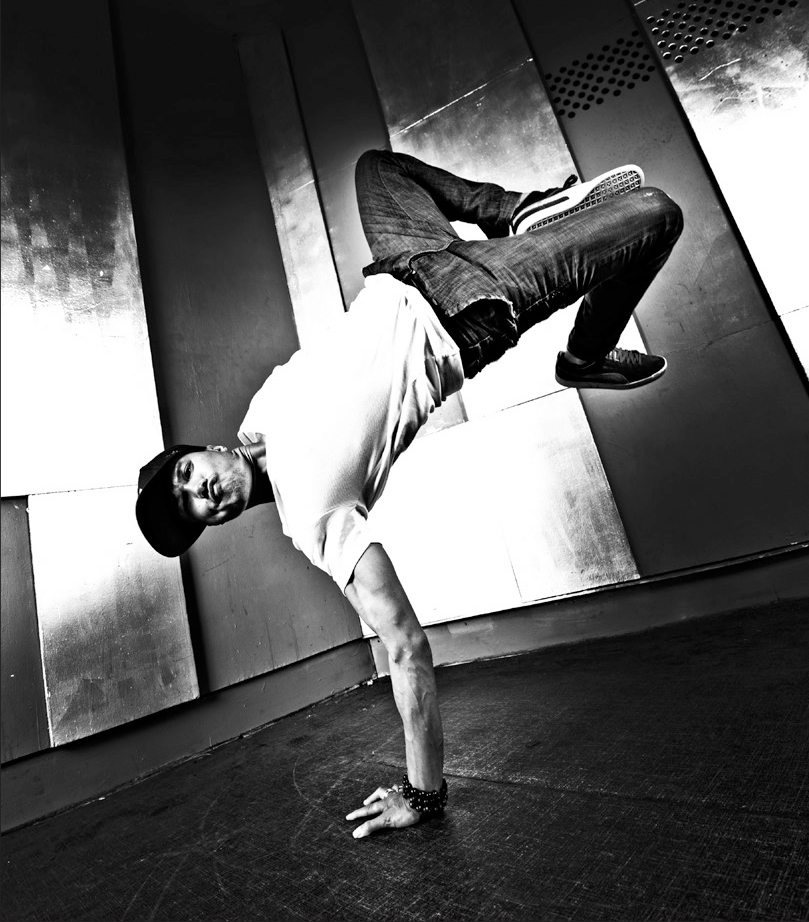
Jerome “Jeromeskee” Aparis started b-boying at Jefferson Community Center in the late 1990s as Fever One and Soul One were mentoring young dancers there. Jeromeskee is a founding member of two-time world champions Massive Monkees and their studio, the Beacon. Photographer unknown.
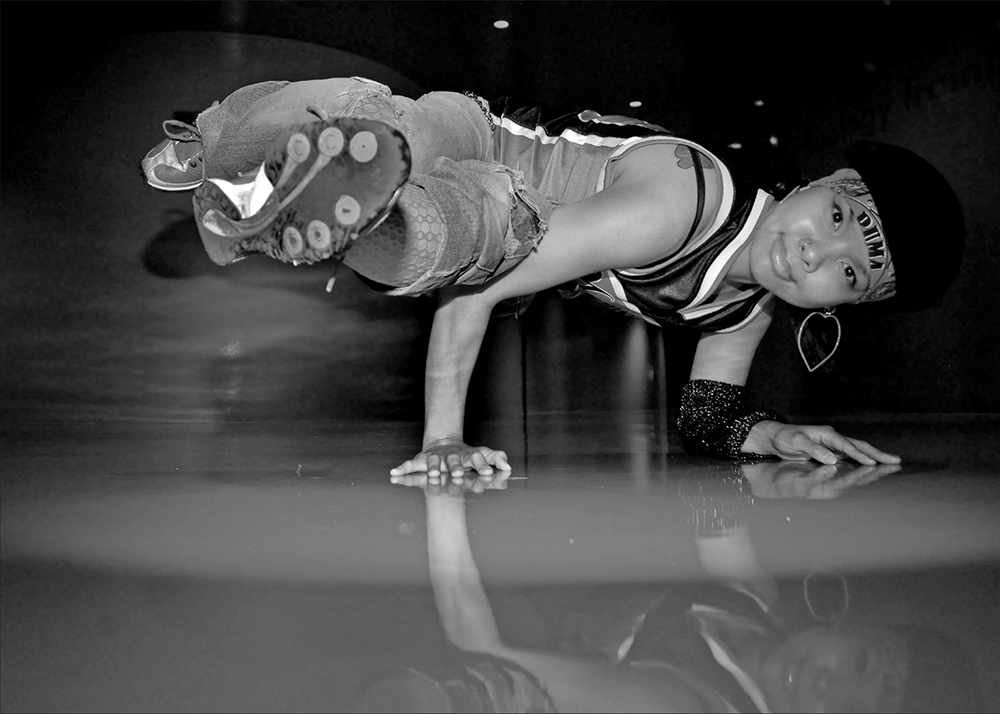
Fides “Anna Banana Freeze” Mabanta is a Filipina American b-girl and teaching artist from Seattle’s Beacon Hill neighborhood. She is the founder and instructor of classes such as “Way of the B-Girl” and programs like Mini BREAKS dance, and is the only active b-girl in the world-renowned Massive Monkees crew. Courtesy Vivian Hsu Photography.
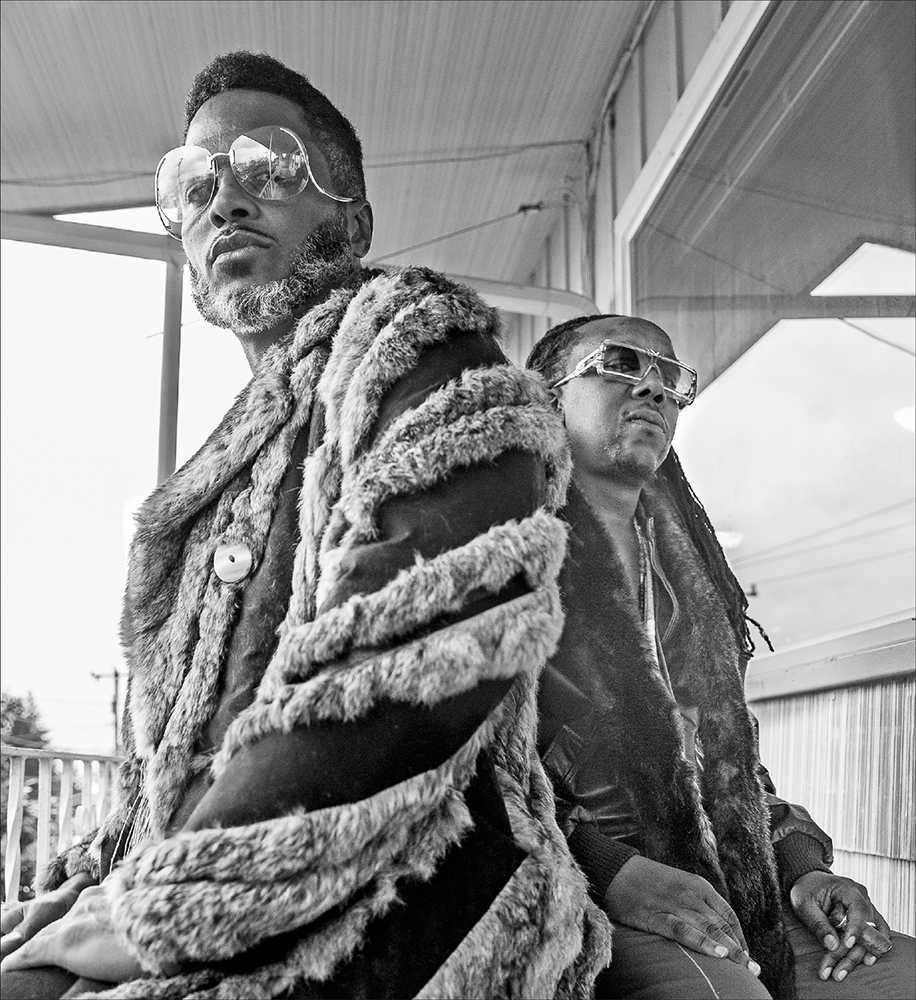
Ishmael Butler, aka Palaceer Lazaro (left, formerly Butterfly of Digable Planets), and Tendai “Baba” Maraire (right), son of mbira master Dumisani Maraire, make up hip-hop duo Shabazz Palaces. Initially shrouded in mystery, this duo has engaged in genre-defying creations such as “boho-gangster,” which covered “gun talk and atmospheric rain sticks,” according to the Seattle Times. Courtesy of SUBPOP.
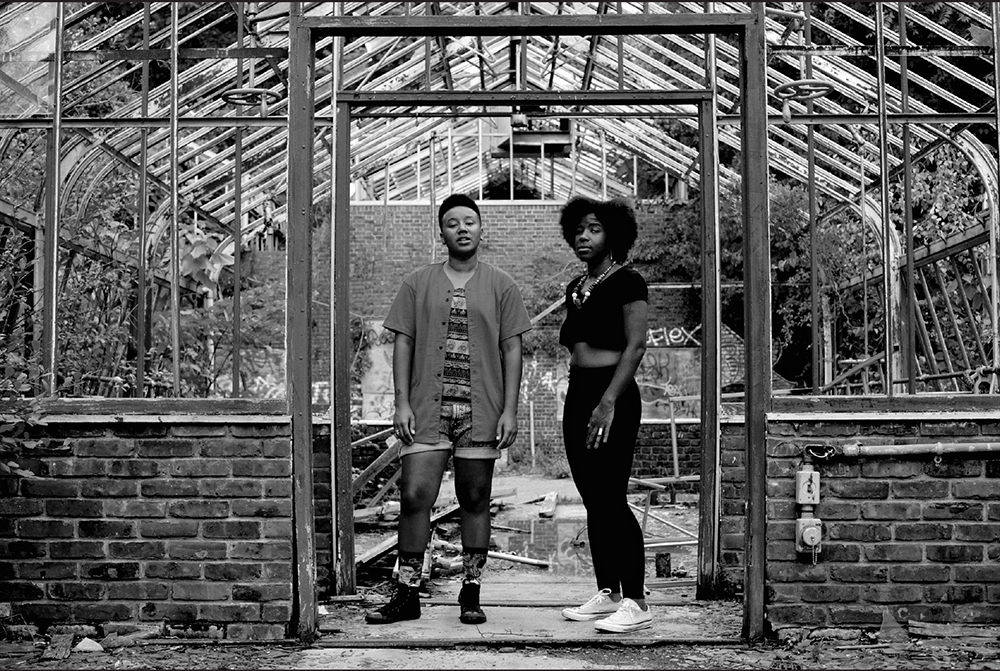
Stasia “Stas” Irons (left) and Catherine “Cat” Harris-White (right) came together as THEESatisfaction in 2008 and continued Seattle’s practice of going against traditional hip-hop norms as LGBTQ-identifying artists on a major label. Courtesy of SUBPOP.
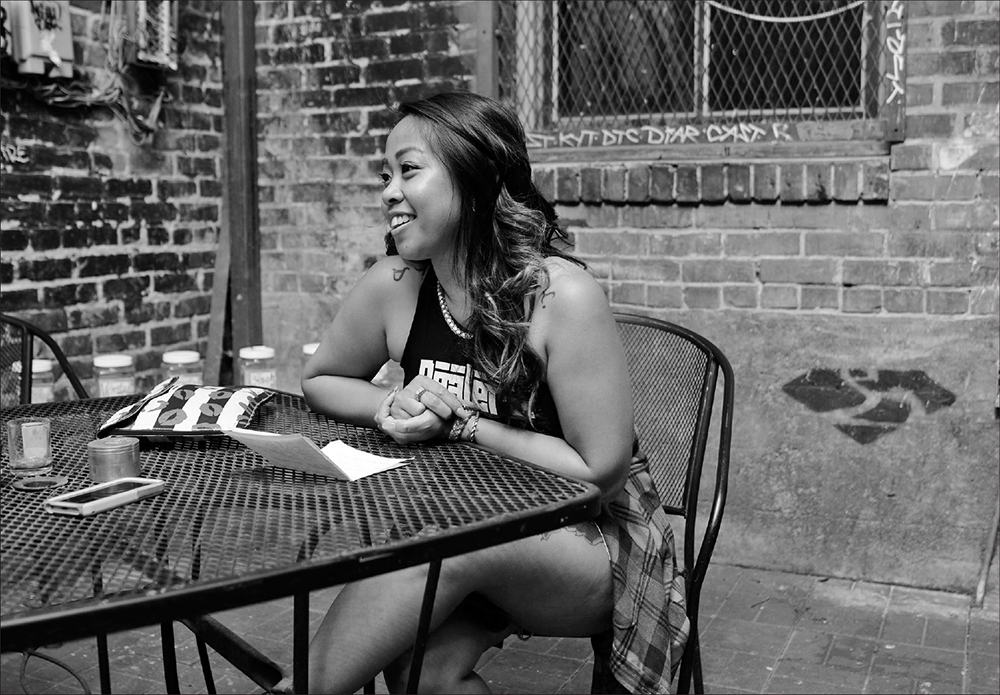
Blogger, event producer, and content creator Miss Casey Carter is the host of KUBE 93.3’s The Come Up, home to new and local music in the Pacific Northwest. Courtesy of Ivan Mrsic Photography.
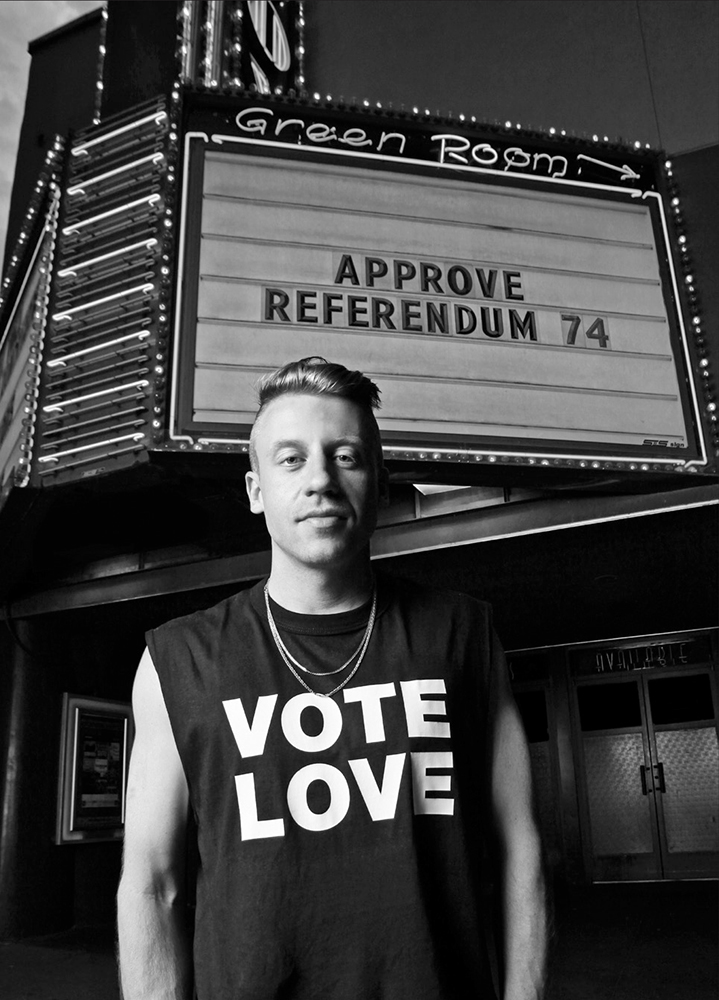
Macklemore and Ryan Lewis’s 2012 hit single “Same Love” was the first song explicitly embracing and promoting same-sex marriage to make it into the Top 40 nationally. Here Macklemore poses in front of the Green Room in support of marriage equality for the August 1, 2012, cover of The Stranger. Courtesy of Kelly O Photography and The Stranger.
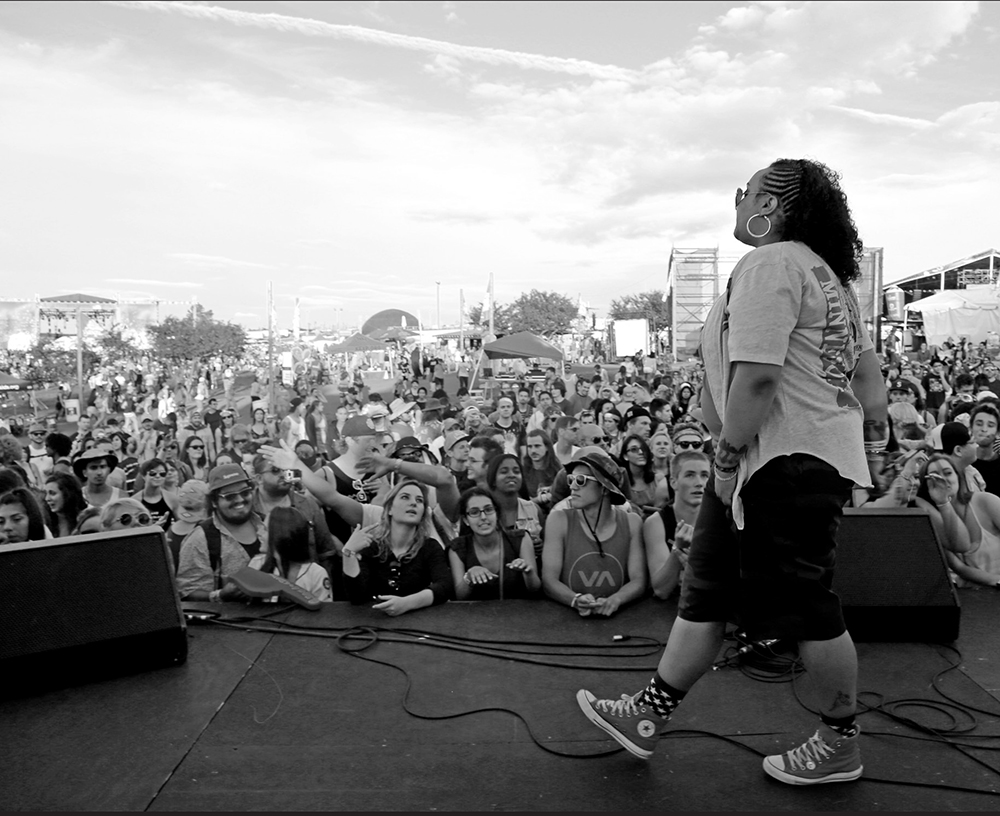
Local MC “Gifted” Gab Kadushin commands the stage while performing at the 2014 Sasquatch! Music Festival. Courtesy of Connor Jalbert.
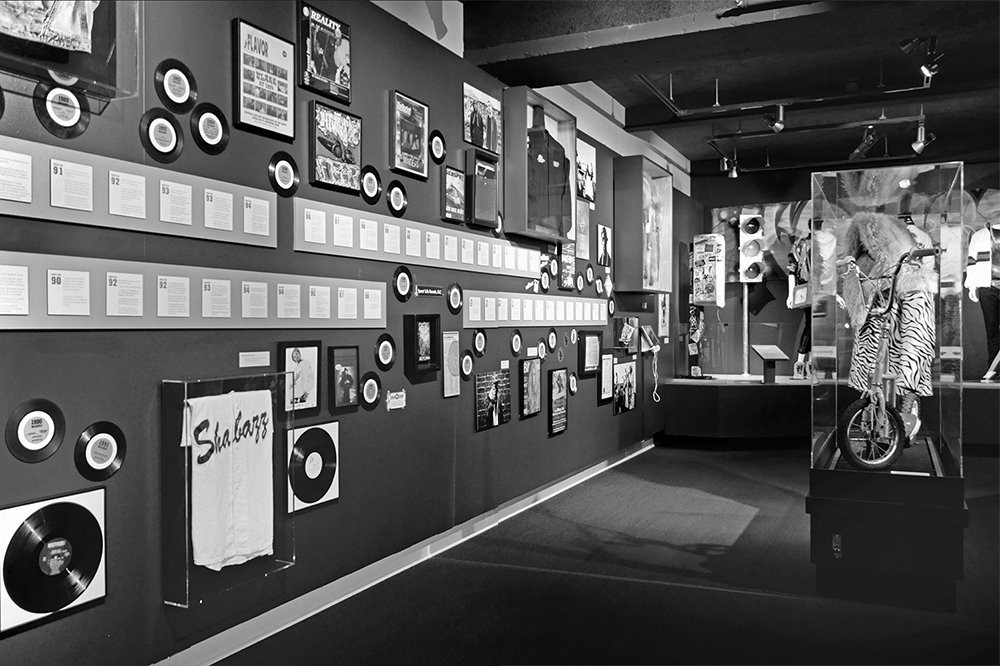
The Legacy of Seattle Hip-Hop exhibit (Museum of History and Industry, September 2015 to May 2016), curated by Jazmyn Scott and Aaron Walker-Loud, featured items such as custom-made Massive Monkees graffiti jackets, a local hip-hop timeline, a hands-on production workstation featuring music from Vitamin D and Jake One, and the fur coat worn by Macklemore in the “Thrift Shop” video. Courtesy of Museum of History and Industry (MOHAI).