
CHAPTER THREE

Even though a vizcaíno finds himself absent from his patria, he always finds himself in it when he meets a fellow countryman. They have among themselves such unity, that the best recommendation one can have for another is the simple fact of being vizcaíno.
—JOSÉ CADALSO, CA. 1774
 TO UNDERSTAND POWER YOU HAVE TO STUDY SOCIAL NETWORKS. This was especially true in the eighteenth century, before the rise of institutions like state bureaucracies and business corporations. The safest way to undertake any risky, long-distance, or long-term enterprise—whether trading merchandise across oceans or administering distant corners of empire—was to rely on trusted friends and kinfolk.1 And to forge a career, one looked first to one’s own community. For Francisco Xavier de Gamboa, that meant members of the Basque diaspora in New Spain. The Basques, originating in northeastern Iberia, had laid out an extensive network that spanned the Atlantic and covered the entire Spanish Empire. Its anchor in New Spain was the religious confraternity of Nuestra Señora de Aránzazu, where merchants, clerics, and officials of Basque descent came together to worship, solidify ethnic ties, and talk business.2 Gamboa joined Aránzazu as a young lawyer and met the men who would propel his career, none more important than Manuel Aldaco, a consulado merchant, silver banker, and acknowledged leader of the Basque community in Mexico City. Gamboa acted as the lawyer of Aránzazu in their project to open an independent residential school for girls, known then and now as the Vizcaínas. This pitted Gamboa for a second time against the formidable archbishop of Mexico City, Manuel Rubio y Salinas, whose approval was necessary to exempt the school from episcopal control. Then in 1755 the Basques on the consulado chose Gamboa as one of two deputies to send to Madrid to represent the body before the royal court. Gamboa would spend nine years in Spain, before returning to Mexico City as an audiencia judge.
In this chapter I examine Gamboa’s connection with the Basque community, in particular the powerful Basque merchants, like Aldaco, who largely controlled overseas commerce in the mid-eighteenth century. Gamboa embraced the classic Basque understanding that local autonomy was a right earned by proven loyalty to the larger entity. For instance, eighteenth-century Basques revered their ancient fueros, which guaranteed a large degree of self-government for the Basque country; they believed they earned these rights by virtue of their long loyalty and service to the Castilian monarchy.3 This worked in religious matters as well. As Old Christians of impeccable racial purity, Basques had played prominent roles in the Catholic Church, perhaps most notably as founders of the Jesuits. They thus expected to be trusted to manage their own religious affairs without interference from the Church hierarchy. This notion of the complementarity of local autonomy and imperial loyalty informed Gamboa’s work for the Basques of New Spain and surely influenced his own thinking about the relationship between New Spain and the Spanish Empire.
Gamboa’s work for the consulado deserves attention. He has been maligned as the spokesman of monopolistic Spanish-born merchants, who were supposedly more interested in extracting profit from New Spain than helping their adopted country develop on its own. Yet in the submissions he made to the crown on behalf of the consulado, including his proposal for a consulado-led mining bank, Gamboa advanced a vision of the novohispano economy consistent with Basque thinking: the autonomous development of New Spain would benefit rather than hurt the larger Spanish Empire. For instance, he advocated the resumption of the fleet system for overseas trade since he argued it retained capital in New Spain, which stimulated mining, agriculture, and commerce. The consulado mining bank he proposed would be a powerful engine of autonomous development. At least in the 1750s and 1760s, the Basque merchants who controlled the Consulado of Mexico saw their economic interests in keeping their money at work in New Spain. They wanted to loosen not tighten colonial controls. There was thus nothing contradictory about a patriotic novohispano like Gamboa acting as the lobbyist of Spanish-born consulado merchants. One could be a local patriot, a transatlantic Basque, and a loyal subject of the Spanish monarchy all at the same time.
The Imperial Basques
Basques have long thought of themselves as exceptional among the people of the Iberian Peninsula. The Basque language, Euskera, is unique, with no relationship to the Indo-European linguistic family. In the seventeenth century, Baltasar de Echave, a Basque priest living in New Spain, proposed that Euskera must have been one of the languages that originated from the Tower of Babel.4 Basques were presumed to be the first Spaniards, descendants even of the first humans to make the peninsula home. From their rocky enclave in northeastern Spain (and southwestern France) they had resisted all invaders, from the Celts and Romans to the Visigoths and Moors. They had maintained their racial purity, making them the oldest of the Old Christians of Spain. In 1590 the Castilian crown recognized this supposed limpieza de sangre by declaring the universal nobility of the Basque people.5
The privilege of universal nobility opened doors for the Basques. They could aspire to the highest offices of Castilian government and the Catholic Church without having to worry about proving their racial bona fides. Basques from Navarre, for instance, dominated the administration of Castilian royal finances in the late seventeenth and early eighteenth centuries.6 Basques played pivotal roles in the church. Juan de Zumárraga, a native of Durango from Biscay, was the first bishop of Mexico in 1527. Ignatius de Loyola, a former soldier from Gipuzkoa, founded the Jesuit order in 1539 with his fellow Basque Francisco Xavier. The ties between Basques and Jesuits remained intimate in the eighteenth century. Universal nobility also inoculated Basques from the stigma of having to use their hands to make a living. Basques hunted whales and fished cod, shepherded and sheared sheep, navigated ships, mined iron and silver ore, and handled cargos of merchandise and bills of lading across the empire. In the eighteenth century, when the crown sought to put to rest old prejudices attached to ignoble manual trades, the industrious Basques were held up as models for the rest of the monarchy.7
No matter how much Basques cherished their mountainous homeland, many had to emigrate to make a living. The Basque country lacked much arable land, and the non-partible inheritance system, in which only one son took over the family homestead, or beserri, meant that there were always young people looking for opportunities far from home.8 This was one reason Basques put a premium on education, including the teaching of Castilian, or Spanish, in Basque schools.9 An anonymous member of the Real Sociedad Bascongada de Amigos del País (RSBAP), the Basque economic society, joked in 1775 that “in the limited, mountainous and sterile territory of the Basque country, from no other branch of business could one extract such profits than the distribution of young men to Andalusia and America, preparing them first with a careful instruction in the use of the pen and arithmetic.”10
Emigrant Basques especially gravitated to commerce as a profession.11 Basque family enterprises shipped wool and iron to England out of Bilbao and imported English cloth and North Atlantic codfish. Bilbao itself was barred from direct trade with America due to its status as a duty-free port under the terms of the fueros.12 But capitalizing on the old trade of Basque iron for Andalusian farm products, Basque merchants established themselves in Seville and then Cadiz to take advantage of imperial trade. These mercantile Basques laid out extended family networks throughout the Spanish Empire, from Cadiz, Havana, and Mexico City to Caracas, Lima, and Manila.13 In the eighteenth-century Basques formed the dominant party in the consulados of Mexico City and Lima.14
Nuestra Señora de Aránzazu
In 1469, the Virgin Mary appeared to a shepherd boy in the mountains near the village of Aránzazu, close to where the three Basque provinces of Álava, Biscay, and Gipuzkoa adjoined. Speaking Euskera, the Virgin pledged her special love for the Basque people. The cult of Our Lady of Aránzazu spread to America in the seventeenth century, with the first confraternity founded in Lima in 1635.15 In Mexico City the Basques founded a brotherhood in honor of Aránzazu in 1681. A few years later, in 1686, Juan de Luzuriaga, a Basque Franciscan friar, published in Mexico City a panegyric that explained that the Virgin had appeared in Aránzazu to sanctify the universal nobility of the Basques and to promote national unity.16 In 1696 the archbishop of Mexico recognized the legal status of the confraternity of Nuestra Señora de Aránzazu and conceded the right to choose its own chaplain and maintain its own financial accounts without ecclesiastical interference.17 By the mid-eighteenth century, Aránzazu had 120 members, including women and a few non-Basques.18 All of the established Basque families in Mexico City belonged. Its leadership in the eighteenth century was dominated by consulado merchants.19
Aránzazu combined religion with banking. On August 16 its members celebrated the feast of Nuestra Señora de Aránzazu with a solemn mass and fireworks. Throughout the year they honored the Basque saints Ignacio de Loyola, Francisco Xavier, and Fermín, the patron of the Basques of the kingdom of Navarra. On December 12 the Basques of Aránzazu, many of them Spanish-born, celebrated the patroness of New Spain, the Virgin of Guadalupe. On the financial side, the confraternity covered dowries and funeral expenses for poorer members. It owned property in its own name and received testamentary bequests. Its directors lent out this accumulated capital at interest to members.20 Business was typically done before mass, held at the sprawling San Francisco monastery complex across the street from what is now the Casa de los Azulejos in downtown Mexico City. A notary would be on hand to record transactions. The financial clout of Aránzazu explains why even non-Basques, such as José González Calderón, a montañés merchant from Santander, sought membership.21
As an ambitious young lawyer without family in Mexico City, Gamboa naturally joined Nuestra Señora de Aránzazu as soon as he could. Perhaps his close friend from San Ildefonso, Miguel de Berrio, a scion of an immensely rich Basque American family, sponsored him. By 1745, at the age of twentyseven, Gamboa was already putting his name forward as a candidate for its board of directors.22 He was not successful the first time but did win election the following year. He represented the American Basques on the board from 1746 to 1750.23
Gamboa was also starting a family of his own. On October 14, 1747, two months before his thirtieth birthday, Gamboa married seventeen-year-old María Manuela de Urrutia. Like her husband, María Manuela was an American-born Basque, born in Chihuahua in 1730. She was probably related to the Urrutia family of Guadalajara, perhaps a younger relative of Maria de Urrutia, who had married Gamboa’s old mentor, José Mesía de la Cerda, in 1734. There was nothing unusual about the large age difference between Gamboa and his wife. White men in Spanish America who did not come from rich families typically had to establish themselves financially before they could compete in the tough marriage market for respectable young women. The couple had five children in their first decade together, three girls and two boys. Gamboa also supported in his household his sisters and widowed mother from Guadalajara.
The most important person Gamboa met through Aránzazu was Manuel Aldaco. Born in 1696 in Oiartzun, a Basque village with a strong link to the New World, Aldaco arrived in Mexico City in 1715.24 He came from humble stock, allegedly the illegitimate son of a father studying for the priesthood and a mother who ran a tavern.25 Aldaco joined the business empire of his relative Francisco de Fagoaga, who imported merchandise from Spain, ran a silver bank, and managed the Mexico City mint, at least until the government took back control in 1727. Aldaco married Fagoaga’s daughter, a typical way to maintain wealth within extended families. Upon his father-in-law’s death in 1736, Aldaco assumed control of the mining bank while Ambrosio de Meave, a younger kinsman from Durango in Biscay, took over the trading company. As a well-connected and trusted businessman, Aldaco served as the executor of many Basque estates, particularly those that required the transfer of large sums of money across the Atlantic. And he never forgot his hometown, leaving funds in his will to establish an altar dedicated to the Virgin of Guadalupe in the parish church of Oiartzun. Aldaco was the epitome of the transatlantic Basques, with one foot in his ancestral village and another in his adopted home of New Spain. Thanks to his support, Gamboa’s career took off.
The Controversy over the Vizcaínas
In the early 1750s Aldaco was both rector of Aránzazu and prior, the elected chief executive, of the consulado. It was his task to see through the completion of the great project of the confraternity, a residential school for girls, known officially as the Colegio de San Ignacio de Loyola but colloquially, from the start, as the Vizcaínas. Construction of the school, a massive Baroque-style structure of red tezontle and limestone covering an entire city block and containing a lavish Churrigueresque chapel, began in 1734, in a ceremony presided over by Juan Antonio de Vizarrón, the Basque-born archbishop of Mexico and the viceroy of New Spain from 1734 to 1740.26 Aldaco, Meave, and fellow merchant Francisco de Echeveste oversaw the fundraising campaign.27 The main purpose of the Vizcaínas was to shelter and educate poor girls and unmarried women of Spanish descent, to protect their honor from the evils that abounded in the streets of Mexico City.
As construction neared completion in 1750, Aldaco tasked Gamboa, Aránzazu’s lawyer, with writing a charter for the new college to set out its rules and procedures.28 Since the main objective was to instill Christian virtue in the girls and women it sheltered, residents followed a strict regime patterned on convent life. Every morning they would rise before dawn to attend 6:00 a.m. mass. Once or twice a year they would undertake the spiritual exercises of San Ignatius. The girls would learn how to read, write, and count but would not get the humanistic education offered in Jesuit schools for boys. They did not study, for example, Latin, rhetoric, or philosophy. Instead, they concentrated on the skills expected of honorable ladies in society, such as sewing, embroidery, and singing. The older residents, mainly widows and spinsters, were expected to look after the young girls, creating a family atmosphere within the imposing walls of the college.29
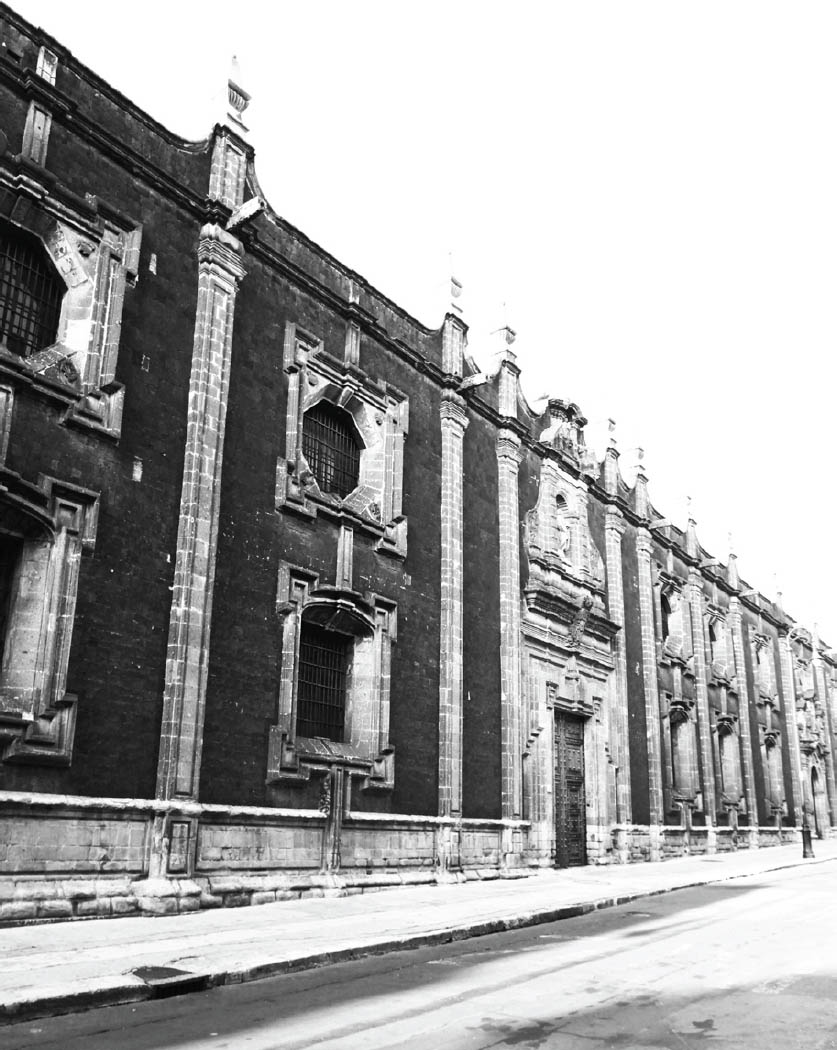
Figure 3.Colegio de San Ignacio de Loyola, Las Vizcaínas. The school remains in operation today, educating boys and girls of modest means and still managed by a board of Basque businesspeople. Photograph by Sandra Guerrero.
The second article of Gamboa’s constitution declared that the Vizcaínas would operate with “total exemption and absolute independence” from the jurisdiction of the church. The Basques on the board of Nuestra Señora de Aránzazu wanted to manage the school themselves, without the obligation to pay fees or report to the archdiocese of Mexico City. This was essentially the same demand made by the abbot and canons of the Colegiata de Guadalupe, also represented by Gamboa. This was a bold provision to include in the charter of a school. Education was unquestionably under the jurisdiction of the church, even though there were exceptions, such as the Colegio de la Caridad, a school for orphan girls founded in the sixteenth century by another confraternity, Santísimo Sacramento. The call for autonomy was consistent with the Basque devotion to self-rule. Just as Basques claimed their service to the Castilian crown earned them the right to self-government in their homeland, protected by their fueros, they also believed their exemplary devotion to Catholicism should excuse them from strict ecclesiastical supervision.30
The problem in the early 1750s, as we have seen in the previous chapter, was that the episcopal palace in Mexico City was occupied by Manuel Rubio y Salinas, a canon lawyer determined to defend ecclesiastical authority against all comers. He had already defeated Gamboa in the fight over the Colegiata de Guadalupe. Was there any hope for the Vizcaínas?
The board of Aránzazu, led by Aldaco and advised by Gamboa, first tried a conciliatory approach. They invited the archbishop to visit the almost-completed school in September 1751. But right after this cordial encounter, Rubio informed Aldaco that he would never surrender his rights over the school. He demanded the power to inspect it whenever he wanted and oversee all religious services through the nearby parish of Veracruz.31 The board of Aránzazu offered to compromise. In exchange for accepting the school’s exemption, the brotherhood would compensate the archdiocese for the fees it would forego as well as allow the archbishop an annual inspection. This was still not enough for Rubio. He told Aldaco that only a papal bull, a direct order from the pope, could make him surrender his jurisdictional rights. After one more fruitless exchange of letters with the archbishop, Aldaco asked Meave to relay to Gamboa that “insofar as it is in my power, not another word will be spoken, only to the royal court and to Rome.” Aldaco then added ominously, “if we come out of this badly we will set fire to what has cost us our fortune.”32
Aldaco and the board of Aránzazu appealed for help in Madrid. They could count on powerful friends in the Congregation of San Ignacio, the Basque religious brotherhood in the imperial capital. Since 1729 the two organizations were formally linked, with the Madrid Basques handling transatlantic financial matters for their cousins in Mexico City and helping them with business in the royal court.33 Members of San Ignacio included some of the most important men in government, including Sebastián de la Cuadra, the Marqués de Villarias, a key minister under Philip V. Villarias had been the patron of Zenón de Somodevilla, the Marqués de la Ensenada, the chief minister of Ferdinand VI from 1746 to 1754.34 In the 1750s, Ensenada’s most loyal collaborator, Agustín Pablo de Ordeñena, the secretary of the Council of State, served as rector of San Ignacio.35 Many crown officials of Basque descent, after service in America, joined San Ignacio on their return to Madrid. At least three, all members of the Council of the Indies, served as rectors of the congregation in later years, Tomás Ortiz de Landázuri in 1766, Francisco Antonio de Echavarri in 1772, and Francisco Leandro de Viana in 1782.36
Aldaco wrote to San Ignacio to explain their predicament.37 Ordeñena, the confidante of Ensenada and rector of the congregation, promised his help.38 He quickly got Ensenada to issue a royal cédula dated March 31, 1753, that authorized the opening of the Vizcaínas according to the original terms of Gamboa’s charter. The crown would grant the school royal patronage in order to protect it from the jurisdiction of the archbishop.39 Ensenada also wrote directly to Rubio in September 1753 in the name of the king to “request and order you very particularly that in respect to the exemptions and prerogatives that the cited board and congregation [Aránzazu] desire and request for the named college . . . that you ratify and enforce in this case the orders that are sent to you through prudent and pious conduct, whose particular service will be very much to my royal pleasure.”40 But the bishop simply ignored this royal order, just as he had in similar circumstances in the case of the Colegiata de Guadalupe. Only a command from the pope, he repeated, would force him to relax his jurisdictional claim. With the board of Aránzazu equally stubborn, the huge, recently finished building remained empty as the Basques of Mexico City and Madrid began the arduous process of securing the papal bull demanded by Rubio.
Basques on the Consulado
The stalemate over the Vizcaínas was just one headache for the Basque merchants at the time. Business, they complained, was also bad. The core problem was the change in the organization of Atlantic trade since hostilities began with Britain in 1739, in the confrontation now known as the War of Jenkins’ Ear. This had forced Spain to suspend the dispatch of fleets from Cadiz. Instead, licensed ships (registros sueltos) left Cadiz alone or in small groups throughout the year. The end of the so-called fleet system fundamentally transformed Atlantic commerce, as Xabier Lamikiz has demonstrated in his insightful study of Basque merchants in the eighteenth century.41 It greatly increased market risk for all participants and put a higher premium on accurate commercial intelligence. The Consulado of Mexico complained frequently to Madrid about the disruptions caused by the unexpected arrival of registros, bringing merchandise for which there was no demand.42 Merchants in Cadiz did not like the situation either. Both sides yearned for a return to the more predictable fleet system. Historians have focused on the official abolition of the Cadiz monopoly in 1778 as the turning point for Spanish imperial trade; far more consequential, it would seem, was the move decades earlier to replace the flotas with registros sueltos.43
Making a bad situation worse, in the eyes of the Consulado of Mexico, were the actions of the viceroy of New Spain from 1746 to 1755, the Conde de Revillagigedo. He systematically favored Cadiz-based merchants at their expense. He allowed the sales agents from Cadiz to set up shop in Mexico City in violation of the established rules of the Jalapa trade fair. According to the 1729 regulations, merchants from Spain were supposed to transact business exclusively in Jalapa and then return promptly home, in respect of the Consulado of Mexico’s legal monopoly over wholesaling in New Spain.44 Revillagigedo also violated the consulado’s jurisdiction over the adjudication of commercial cases to help Spanish parties involved in disputes. He refused to enforce the consulado’s established exemption from paying sales taxes on goods brought into Mexico City for resale; in their view, this amounted to double taxation.45 The most damaging measure came in 1753 when the viceroy revoked the consulado’s old contract to collect the alcabala sales tax in Mexico City.46 This lucrative concession had funded many of the consulado’s activities, including public works, like construction of Mexico City’s drainage system. It also channeled capital to the silver banks run by Aldaco and other consulado merchants. With the loss of alcabala income, the consulado had no choice but to draw upon funds from a smaller tax concession, the avería import duty, which was supposed only to be used to fund the consulado’s operating expenses, like the salaries of its executives.
In early 1755 the consulado received some good news and some bad news. The good news was that the crown had finally decided to resume the dispatch of fleets.47 The bad news was that the first fleet in decades would set sail the following year, even though inventories in Mexico City remained high. The consulado, led by Aldaco, decided in a general meeting on March 18, 1755, to send representatives to Madrid at once to plead for a delay in the fleet for at least one year. At the same time, these deputies could bring to Madrid’s attention all the problems caused by Revillagigedo’s constant interference. They might even be able to rescind his order taking away the alcabala contract. On May 16 the consulado met again to choose the deputies. The Basque party nominated Gamboa while the montañeses chose Francisco de la Cotera, the son-in-law of Gamboa’s former client Manuel de Rivas Cacho. Gamboa and Cotera received a general power of attorney to pursue all of the consulado’s business in Spain.48 As the trusted lawyer of both factions on the consulado, Gamboa would take the lead. For travel and living expenses, as well as for any gifts or gratifications that might be necessary, the consulado authorized Gamboa and Cotera to draw as they saw fit from the 400,000 pesos remaining in alcabala funds.49
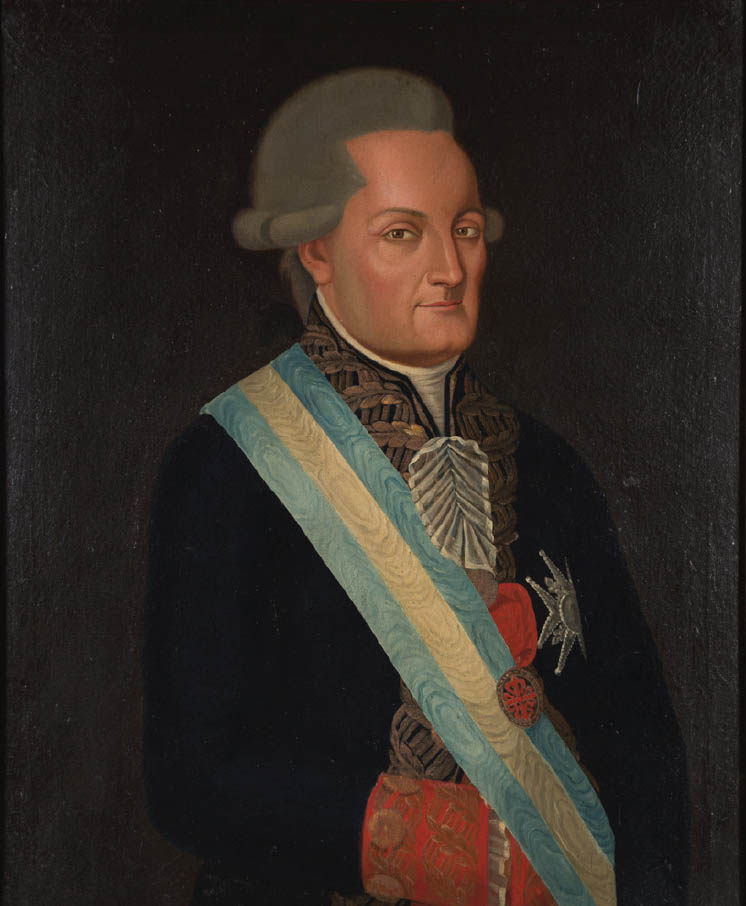
Figure 4.The first Conde de Revillagigedo, viceroy of New Spain from 1746 to 1755, an assertive reformer willing to breach established jurisdictional boundaries. Photograph by Leonardo Hernández; reproduced by permission of the Instituto Nacional de Antropología e Historia.
Gamboa of course was also the lawyer of Nuestra Señora de Aránzazu. He could thus keep Aldaco, Meave, and the other Basque merchants apprised of ongoing negotiations in Madrid and Rome to secure the papal bull necessary to open the Vizcaínas. Aldaco wrote a particularly warm letter of recommendation for Gamboa to the Congregation of San Ignacio:
I hope that you will extend to him all the influence in his favor, as our business demands, and for being the son and grandson of countrymen. He knows how to handle himself with the highest honor; and his accomplishments, long personal experience and most honorable conduct have earned the confidence of this mercantile community, especially my own. He will know how to instruct and inform you up to the latest particulars of our negotiation over San Ignacio [Vizcaínas].50
There was a third reason for Gamboa to go to Madrid. It was the only realistic way to win a seat on the audiencia. After the crown stopped the sale of judicial seats in 1750, candidates had little choice but to present themselves in Madrid before the ministers of the Council of the Indies who made the selections. This, as intended, gave the advantage to Spanish-born candidates. The Basque merchants in Mexico City expected their friends at San Ignacio in Madrid to do what they could to help Gamboa beat the odds. Having a friend like him on the bench, one who understood their business concerns, would be of immense value.
Enlightenment Madrid
Gamboa was thirty-seven when he set off for Madrid in the fall of 1755. He left behind his wife, Maria Manuela, then twenty-five, their eldest son Juan José, not quite six, and four younger children, including an infant son. Perhaps he expected that his wife and children would join him at a later date. On the other hand, it was hardly uncommon in this era for men to endure long absences from their families. Typically, they left Europe for the economic opportunities available in America. Gamboa went in the opposite direction. He brought with him from New Spain a black domestic slave, Nicolás Márques, which would have marked him out conspicuously as a prosperous indiano.51
In the fall of 1755 Gamboa landed in the bustling port of Cadiz. The merchants there built towers above their homes to spot ships approaching from the west, still a charming architectural feature of the city. We don’t know how long Gamboa remained in Cadiz. Presumably he set off as soon as he could for Madrid. He thus likely missed the horrific events of November 1, 1755. First, a massive earthquake, felt in much of the Iberian Peninsula, shook the city for nine terrifying minutes. Then came a tsunami, which battered the exposed Atlantic coast of Portugal and Spain. Compared to Lisbon, where ninety thousand people died, and most of the buildings were destroyed by the combination of earthquake, fire, and tsunami, Cadiz fared relatively well. Its stout seawalls managed to break the force of the tsunami, and then—at least according to pious gaditanos—the Virgen de la Palma stopped the seawater from inundating the city. Only about twenty people died in Cadiz.
We know little about Gamboa’s life in Madrid; any letters he wrote to his wife and children have disappeared. He had friends in the city, such as Santiago Saenz, the long-time agent of the Consulado of Mexico. In addition, the Basque members of San Ignacio would have welcomed him, as would the members of the confraternity of the Virgin of Guadalupe, established in 1741 for Americans in the capital. In fact, this brotherhood had been founded by acquaintances of Gamboa, Francisco de Berrio, the older brother of Miguel, and Juan de Alarcón, the abbot of the Colegiata de Guadalupe.52 Gamboa likely rented rooms in Madrid’s crowded center, perhaps with his fellow deputy Cotera. He would then have been within walking distance of the Plaza Mayor, with its shops and taverns; the Church of San Felipe el Real, whose front atrium was a popular gathering spot to catch the latest news and gossip; and the new royal palace, whose construction was just nearing completion. Madrid was larger than Mexico City, with approximately 150,000 residents. Like Mexico City, it was dirty and dangerous, with poor sanitation and haphazard security. Although there is no indication that Gamboa ever strayed from the straight and narrow, he would have had no difficulty finding occasional sexual companionship. Prostitutes abounded, with numerous brothels concentrated along the Calle Mayor.53
Gamboa would have found the cultural and intellectual life of Madrid in the 1750s invigorating.54 It was the heyday of the Spanish Enlightenment.55 In Spain, one of the most important advocates of intellectual renewal, the Benedictine monk Benito Jerónimo Feijóo y Montenegro, was at the height of his influence. Since the 1720s he had been writing short essays, collected in Theatro crítico universal (1726–1739) and Cartas eruditas y curiosas (1742–1760), both bestsellers of their day. Feijóo skewered scholasticism, superstition, and archaic customs. Influenced by the English empiricism of Francis Bacon and Robert Boyle, both instrumental in laying out the scientific method, Feijóo promoted a more rational, skeptical approach to knowledge.56 As an ordained priest, he was obviously not against religion or Catholicism but, like other Spanish ilustrados, did oppose the more exuberant and emotional forms of religious practice. Ferdinand VI, king from 1746 to 1759, so appreciated Feijóo’s writings that in 1750 he tried to ban criticism of them, a rather ironic tribute to an advocate of rational inquiry.57 In the Comentarios a las Ordenanzas de Minas Gamboa called Feijóo “our Spanish sage.”58
The Catholic Church played an ambivalent role in this intellectual ferment. Clerics in Spanish universities continued to defend scholasticism, which regarded Aristotle, for example, as the highest authority in questions of cosmology. The entrenched conservatism of Spanish universities led many ilustrados to support the establishment of independent academies to educate young men in useful sciences, whether medicine, navigation, or even metallurgy. On the other hand, many priests, especially among the Jesuits, advocated for Enlightenment thinking, especially in the physical sciences. The Inquisition, renowned for its harsh enforcement of religious orthodoxy, in fact did little to staunch the flow of new ideas into Spain. While maintaining its list of prohibited books, it also issued licenses for people to read them. Gamboa got his permit while in Spain. In Cadiz, booksellers openly displayed prohibited titles published in Paris, Geneva, and Amsterdam.59 The Republic of Letters was thriving in mid-eighteenth-century Spain, with religious authorities apparently no more effective there in limiting free discussion than in Britain or France.60
Spain saw a particular upsurge in economic writing in mid-century, another hallmark of a wider Enlightenment phenomenon. The most important Spanish book of political economy in the first half of the eighteenth century, Gerónimo de Uztáriz’s Theórica y práctica de comercio y la marina of 1724, gained readers across Europe after its translation into English in 1751 and French in 1753.61 It was the only book by a Spanish author cited by Adam Smith in The Wealth of Nations.62 Uztáriz offered a well-informed program to boost Spanish manufacturing. He urged tariff reform and government concessions to protect domestic factories. He did not think that an overhaul of the colonial trading system was necessary; he endorsed the existing fleet system and the Cadiz monopoly, albeit with changes to the tariff regime. The Spanish republication of Uztáriz’s book in 1757, the edition Gamboa cited in the Comentarios, reflected the growing fascination with political economy. Everyone aspiring to a high government position felt obliged to put pen to paper to offer the crown their invaluable insights on the big economic problems of the day. José de Gálvez, a lawyer from Málaga, wrote Discurso y reflexiones de un vasallo sobre la decadencia de Nuestras Indias in 1759 and Pedro Rodríguez de Campomanes, a lawyer from Asturias, wrote Reflexiones sobre el comercio español a Indias in 1762. Both tracts advocated reform of the imperial trading system as the starting point for Spain’s own revival. Newspapers in Madrid at this time, like Discursos mercuriales económicospolíticos, edited by Juan Enrique de Graff, and El Pensador, edited by José Clavijo y Fajardo, also beat the drum of social and economic reform. They carried news from abroad, with the implicit message that Spain should emulate its European rivals to overcome its presumed backwardness.63 In the Basque country, the first economic society in Spain, founded officially in 1765 as the Real Sociedad Bascongada de los Amigos del País, had been meeting informally since the early 1750s under the leadership of Xavier María de Munibe e Idiáquez, Conde de Peñaflorida. Gamboa would become a charter member of its novohispano branch in the early 1770s.64 As the representative of the Consulado of Mexico in Madrid, responsible for articulating its position on a host of economic issues, Gamboa naturally listened to this lively conversation about economics.65 His Comentarios a las Ordenanzas de Minas of 1761, although ostensibly about mining law, dealt extensively with economic questions, such as the role of silver mining in the novohispano economy and the best ways to encourage investment.
Gamboa enjoyed the lively Enlightenment culture of Madrid at the highest levels. Perhaps through Jesuit friends, he met Juan de Iriarte, the royal librarian and a renowned scholar of Latin and Greek. Iriarte had studied in Paris at the Jesuit college Louis-le-Grand in the 1710s, where he met Voltaire. He then lived in London before returning to Madrid in the 1720s. Decades later, in a letter to Iriarte’s nephew, Bernardo de Iriarte, Gamboa recalled his halcyon days in Madrid and “your dignified uncle, whose respect and friendship was constant and reciprocated during my long stay at the court. I will never forget that exemplary scholar who knew how to combine profound erudition with profound humility, and with the graciousness and wit that I remember so well.”66 In Madrid Gamboa met the teenaged Bernardo de Iriarte, who would later serve as a Spanish diplomat and member of the Council of the Indies, as well as his younger brother Tomás de Iriarte, who became one of the most popular Spanish literary figures in the late eighteenth century.
In contrast to the bright intellectual and cultural scene, the domestic political situation in Spain in the mid-1750s was murky. In July 1754, a palace coup backed by the British ambassador, Benjamin Keene, ousted the reformist chief minister of Ferdinand, Zenón de Somodevilla, Marqués de la Ensenada. Ricardo Wall, a conservative French-born Irishman who had risen up the ranks of the Spanish military, took over as the king’s chief minister. Wall and Keene had managed to convince Ferdinand and his formidable Portuguese wife, Barbara de Braganza, that Ensenada wanted to end Spain’s policy of neutrality, which had kept it out of war and restored the health of state finances.67 They bundled Ensenada off to internal exile in Granada and sent his closest collaborator, Agustín Pablo de Ordeñena, who had helped Aránzazu secure the royal cédula in favor of the Vizcaínas, to Valladolid. The fall of the government of Ensenada marked the end of a fruitful period of domestic reform in Spain. Ensenada had tried to restructure the tax system, increase trade, and rebuild the navy. The new government drew support from more conservative sectors of society, including the merchants of the Cadiz consulado. It was not surprising therefore, with the veteran Julián de Arriaga at the helm of the ministry of the Indies, that the crown announced in late 1754 the resumption of fleet sailings from Cadiz to New Spain, a policy opposed by reformers.
Gamboa and Cotera, once established in Spain, did manage to delay the departure of the first fleet in decades for at least one year.68 They then prepared a long submission, Gamboa presumably the lead author, explaining the benefits of maintaining the fleet system and detailing the damage done to commerce in New Spain by registro sueltos and the interference of viceroy Revillagigedo. This was Gamboa’s most explicit economic writing. Employing the standard rhetoric of doom and gloom used for centuries by advocates of reform, Gamboa characterized the powerful Consulado of Mexico as “that stricken body,” which sees itself “at the brink of ruin due to the repeated dispatch of registros sueltos and the great confusion with which they have transacted business.”69 Merchant ships from Cadiz arrived without notice laden with goods that buyers did not want. Revillagigedo’s decision to allow Spanish sales agents to set up shop in the interior of the country to offload unsold inventory exacerbated the problem. This competition, contrary to the rules of the Jalapa trade fair, had driven a number of Mexico City wholesalers into bankruptcy. This in turn hurt religious institutions, which invested capital with Mexico City merchant houses.
Gamboa set forth an ingenious defense of the fleet system. It started with the recognition of the peculiar nature of New Spain’s economy. Because silver was its principal export commodity, New Spain literally exported money. The continual coming and going of registros meant that merchants in Mexico City had to keep silver bars and pesos on hand at all times. This limited their ability to put their capital to work in other sectors of the economy, such as mining, agriculture, and manufacturing. The fleet system, on the other hand, with ships arriving predictably every two or three years, with a well-organized trade fair in Jalapa, ensured that New Spain’s silver pesos circulated widely and for a longer duration. Merchants could make bigger, longer-term investments, and consumers and small shopkeepers benefited from the larger supply of legal tender in circulation. The fleet system thus worked to slow the outflow of capital, which allowed the novohispano economy to develop at its own pace. On behalf of the merchants of the consulado, who obviously stood to gain the most, Gamboa defended the fleet system on the grounds that it fostered the autonomous economic development of New Spain.70
Were Gamboa’s arguments against the registros and for the flotas just self-serving justifications for consulado power? Not if we take the word of Revillagigedo, the nemesis of the consulado. Even before Gamboa and Cotera tabled their submission to the crown on the fleet system, the viceroy had made substantially the same points in his 1755 instructions to his successor. He agreed that the constant arrival of registros had caused severe disruptions in the domestic novohispano market. Supply of merchandise exceeded demand, causing prices to fall to unprofitable levels for all. This limited what merchants could invest in mining, “the primary spring that waters all of commerce.”71 This hurt the crown, which collected less tax revenue than it would have with more managed trade. Revillagigedo did not mention the actions he had taken that had outraged the consulado, such as granting licenses to Spanish-based sales agents to set up shop in Mexico City. But he did refer to the rescinded alcabala contract. He declared it had been managed by the merchants of the consulado with “purity, good faith, and legality.”72 The outgoing viceroy endorsed the consulado’s desire for greater economic autonomy for New Spain within the Spanish Empire. For example, New Spain should be allowed to trade directly with Peru. This would support textile manufacturing in Mexico City and Puebla, which would create much needed jobs and displace foreign imports.73 Here was a major official of the crown, on the cusp of returning to Spain to advise the crown on colonial affairs, who agreed with Gamboa and the consulado that the Spanish monarchy would be best served if New Spain had greater freedom to develop its economy on its own, rather than subordinate it to the needs of the mother country.
The Consulado’s Mining Bank
As the argument in favor of the fleet system showed, a major preoccupation of consulado merchants was the future health of the silver-mining industry. Merchants had always been the principal financiers of the mines, whether as local aviadores, supplying working capital in exchange for discounted silver bars, or as Mexico City-based silver bankers, who invested in large-scale works like drainage tunnels. Merchants needed a secure supply of silver to buy imported merchandise to wholesale in New Spain. But this was threatened, it would seem, first by the commercial disarray caused by the registros and then by the cancellation of the consulado’s alcabala concession. The silver banks of Aldaco and Francisco de Valdivieso, Conde de San Pedro del Álamo, had used the profits from the consulado tax contract to fund mining loans.74 In the 1756 submission on the fleet, Gamboa admitted that both silver banks were on the brink of ruin, owed more than one million pesos by delinquent borrowers. Meanwhile, mining projects in New Spain were scaling up. The Valenciana mine in Guanajuato, for example, boasted the deepest shaft in the world and employed thousands of workers. It was clear to the businessminded Aldaco, who had invested and lost a fortune in the drainage of Real del Monte, that a new type of mechanism was required to finance such gargantuan projects.
In his 1761 Comentarios a las Ordenanzas de Minas, Gamboa included a plan for a chartered, joint stock company under the management of the consulado to invest in mining projects. The consulado, he wrote, was the ideal institution to oversee such an enterprise, since it was made up of “subjects with intelligence, judgment, maturity, and capital, the last of which they have known how to earn through prudent and well-governed economy, without a note of indecency, as well as from the experience of a century and a half administering the alcabala sales tax.”75 Various schemes for mining banks had been proposed over the decades. In the early 1740s, an Italian immigrant miner, Domingo Reboreto, pitched a plan received favorably by the viceroy. The problem with Reboreto’s plan, according to Gamboa, was not the concept but the promoter, a foreigner with no capital or track record. In 1743 Aldaco opposed Reboreto’s proposal, but he nevertheless embraced the idea of a chartered mining bank.76 He surely instructed Gamboa to propose it in Madrid. Under the plan as set out in the Comentarios, the consulado would raise four million pesos in share capital, including from outside investors like religious communities and landowners. This capital would then be put to work on the rehabilitation of established mines, those with proven reserves but operational difficulties, like flooded or burned-out galleries. To give the fledgling bank credibility from the start, Gamboa requested from the crown three privileges: a fee of one real for every mark of silver the bank delivered to the mint, the right to import mining supplies duty-free, and the provision of mercury at cost.77 These were essentially the same demands made by Reboreto two decades earlier.
Historians have not looked favorably on Gamboa’s plan. According to David Brading, Gamboa, as the advocate of Mexico’s monopolistic merchants, wanted to subject the entire mining industry to their control.78 Stanley and Barbara Stein agreed, seeing the consulado bank as a naked power grab over mining by the privileged merchants, advised by their crafty creole lawyer.79 Yet these condemnations fundamentally misrepresent Gamboa’s proposal. First, the bank would not have extended the consulado’s legal monopoly over wholesale commerce to mining. The bank had the limited purpose of rehabilitating old mines, not developing new ones. Second, consulado merchants were already the principal lenders to miners, as Revillagigedo had acknowledged in his 1755 instructions.80 Gamboa’s plan would just have institutionalized an existing relationship. It would have given New Spain its first banking corporation, with the capacity to pool capital from a wide variety of investors to undertake the expensive rehabilitation of mines.
Madrid rejected Gamboa’s banking plan not because they thought it would fail but because they feared the consequences of success. Pedro Rodríguez de Campomanes, the influential crown attorney for the Council of Castile, read Gamboa’s Comentarios as soon as it was published. He praised the book as “truly very useful and the study employed in its composition immense.”81 He particularly appreciated the detailed information it contained on the economics of silver mining in New Spain. But Campomanes vigorously opposed the mining bank. First, like Feijóo and other eighteenth-century Spaniards, Campomanes thought that American precious metal mines had fundamentally stunted the Spanish economy. They had contributed to inflation and the decline of manufacturing and craft production. He compared Spain’s situation to that of England: “Gold and silver are not necessary for human life, like manufactured goods, and therefore a country can live without these metals, as happens in England and its colonies, where bank paper replaces them and is legal tender, even if of no intrinsic value.”82 While Campomanes knew the Spanish treasury still relied on New Spain’s silver mines, he saw no reason for additional state assistance. “When a branch of industry produces with liberty, it is a fundamental maxim of government,” Campomanes wrote, “not to interfere, especially if it is destructive of liberty.”83 Finally, Campomanes believed Gamboa’s proposed bank was dangerous since it would make the Consulado of Mexico “the strongest in all of the Monarchy and would impose the law on the metropole itself.”84 For all his talk of economic liberalism, Campomanes ultimately still saw New Spain and the other American dominions in colonial terms. Spain could not allow them to outshine the metropole.
The Doors Open at the Vizcaínas
The members of Nuestra Señora de Aránzazu had to wait over a decade before they could open the doors of their school for girls. Unlike the canons of the Colegiata de Guadalupe, the Basques of Mexico City refused to bend to the will of archbishop Rubio y Salinas. Negotiations in Rome over the papal bull dragged on for years. By the time the pope’s order finally arrived in Mexico City in 1767, which accepted the exemption of the Vizcaínas from episcopal jurisdiction, Rubio was dead. The new prelate, Francisco Antonio de Lorenzana, an avowed regalist, would likely have approved the school on the basis of the original royal cédula of 1753. There was an even greater irony about the opening of the Vizcaínas: Lorenzana presided over the inauguration of a school officially named after San Ignacio de Loyola, the founder of the Jesuit order, just a few weeks after he had cooperated with civil authorities to expel the Jesuits from New Spain. Until the Jesuits returned to Mexico in 1816, welcomed back incidentally by Gamboa’s son Juan José, a canon at the cathedral, the Vizcaínas remained a covert center of Jesuit devotions. The school remains in operation today, in the same building constructed by Nuestra Señora de Aránzazu. It now educates boys and girls of low-income families, making money on weekends by hosting society weddings in its magnificent chapel and spacious patios. It houses the archive for the Basque community in Mexico, and an independent board of Basque businesspeople still oversee its operations, independent of course from the jurisdiction of the archbishop of Mexico.