
CHAPTER SEVEN

Perhaps you knew there the regent of this Audiencia, Gamboa, when he was the deputy of the Consulado in charge of pursuing various matters before the court and then certainly when he was ordered out of this kingdom at the time of the Jesuit expulsion; in sum, all of his sorry history, as he has proven to be disobedient, petulant, and not at all loyal to the interests of the king, and therefore extremely dangerous in these kingdoms, for which he was made to leave and should not have returned except for Porlier.
—CONDE DE REVILLAGIGEDO, VICEROY OF NEW SPAIN, 1790
 FRANCISCO XAVIER DE GAMBOA PROVED AS TOUGH AS THE LEGAL order he long served. He survived five long years in Santo Domingo, separated from his family and friends in Mexico City. There he joined an ambitious if frustrated attempt to revitalize the Dominican economy. He outlasted his nemesis José de Gálvez, who died in 1787. The following year Antonio de Porlier, the new minister of the Indies in charge of matters of justice, named Gamboa to the regency of the Real Audiencia of Mexico, a rather remarkable turn of events for a judge so often at odds with the Spanish Empire’s top policy makers. His appointment, however, proved that the old juridical order of local custom, casuistic adjudication, and judicial independence had largely withstood the challenges of Gálvez and the Bourbon reforms.1 In a diverse, far-flung empire, with a state far weaker than ambitious imperial reformers cared to admit, a flexible approach to law was simply a necessity. It was impossible to enforce strictly written law made in Spain by ministers who lacked practical knowledge of conditions on the other side of the ocean. Justice and mercy, rooted in a Christian conception of human society, remained values the Spanish crown could not abandon if it wanted to maintain order and sovereignty in America.2
Yet some things did change for the worse, especially in the eyes of jurists like Gamboa. The already complex jurisdictional matrix of Spanish America became even more bewildering, thanks to the proliferation of exemptions to ordinary jurisdiction promoted by Gálvez. In this sense, Bourbon or Galvesian reform in New Spain did more to fragment than consolidate authority. It was only natural that Gamboa and other magistrates would fight tooth and nail to defend their jurisdictional turf; after all, their power and prestige depended on it. But others without such obvious self-interest raised the same alarm. In his 1794 instructions to his successor, the viceroy of New Spain, the Conde de Revillagigedo, argued that the erosion of ordinary jurisdiction due to the proliferation of exemptions undermined public respect for the law and legal system. Litigation became even more tortuous as parties fought increasingly over questions of jurisdiction. Everyone, Revillagigedo claimed, now presumed to enjoy some waiver from ordinary civil and criminal laws. Gamboa exasperated Revillagigedo. As regent, Gamboa constantly challenged the much younger viceroy. They fought over the proper honors audiencia magistrates should receive at the viceregal palace and the quantity of barley consumed by horses in Mexico City. The viceroy thought the crown should never have let Gamboa back into New Spain, let alone to head the audiencia. But Revillagigedo did agree with Gamboa on one fundamental question of government: justice would best be guaranteed by maintaining, rather than restricting, the ordinary jurisdiction exercised by the audiencias.
Going to Santo Domingo
Santo Domingo, Spain’s first American colony, founded by Christopher Columbus in 1493, was nearly forgotten by the eighteenth century. In contrast, its neighbor on the western side of the island of Hispaniola, French Saint-Domingue, was the most valuable piece of colonial real estate in the world. Its plantations, worked by African slaves, produced half of the world’s sugar and coffee and a third of France’s total overseas trade. By the 1780s the French were bringing to the colony over thirty thousand African slaves a year. About 90 percent of Saint-Domingue’s total population of half a million were enslaved Africans.3 Although the first place in America to employ African slaves in sugar production, Spanish Santo Domingo never became a full-fledged sugar colony or slave society. Only about 15 percent of its population of around sixty thousand were slaves.4 It was known more for its runaway slave communities than its plantations. Its most important economic activity was cattle ranching. The Spanish crown maintained it thanks to a 200,000 peso annual transfer from New Spain. But it remained the seat of an audiencia, the oldest in America, exercising jurisdiction over the entire Spanish Caribbean, including the more dynamic Spanish colonies of Cuba, Puerto Rico, and Venezuela.
Just as Gamboa arrived, the Spanish crown was finally turning its attention to Santo Domingo. Inspired by the success of French Saint-Domingue, Spain belatedly wanted to turn its side of the island into another sugar plantation colony, with an enslaved African work force. The effort began in the early 1780s when a Spanish entrepreneur, Juan Bautista de Oyarzabal, purchased an old sugar mill. To rehabilitate it, he sought concessions from the Spanish crown, including preferential access to African slaves. He was sufficiently connected in Madrid to spur the Council of the Indies to action. Bernardo de Iriarte, a minister de capa y espada of the Council (a councilor without judicial responsibilities), saw Oyarzabal’s request as an opportunity to formulate a more general economic plan for Santo Domingo, similar to what the crown had implemented with success in Cuba after 1763.
Bernardo de Iriarte was the nephew of Juan de Iriarte, the classics scholar and royal librarian under Philip V, and the older brother of the poet Tomás de Iriarte, the author of Fábulas literarias, a Spanish best seller in the early 1780s.5 He coincidently already knew Gamboa. In his first letter, apprising him of the project, Iriarte asked the new regent if he remembered him from Madrid.6 Gamboa replied to Iriarte that “your image remains so fresh in my memory that I could paint it with a brush.” 7 He recalled meeting the two Iriarte boys in the house of their uncle Juan, which he had frequented during his time as the deputy of the consulado in Madrid. He also told Iriarte how much he enjoyed his brother’s Fábulas literarias, which poked fun at Spanish literary personalities. Gamboa pledged to help Iriarte in any way possible. Work on the project, he said, might help to provide “the exhilarating spirit to revive this cadaver.” 8
Gamboa included with his March 1785 reply to Iriarte his own assessment of the island and the work done so far on the project.9 He praised the new slave code drafted by a young Basque oidor on the audiencia, Agustín de Emparán.10 This was the centerpiece of the entire project. Gamboa, who owned domestic slaves in Mexico and surely employed them in Santo Domingo as well, judged Emparán’s proposed law more humane that the famous 1685 Code Noir of the French Caribbean. He did propose one interesting modification: the crown attorney of the Audiencia of Santo Domingo should act as the official protector of the blacks on the island, both free and enslaved, just as crown attorneys on the mainland served as protectors of the Natives in matters before the audiencias.
Gamboa was hardly optimistic, however, about the prospect of success in making over the economy of Santo Domingo. The big problem, he said, was the large population of free blacks and escaped slaves, living entirely “outside of justice and religion” in the mountains. They would have to be forcibly resettled before a stable plantation society could be established. He thought that the people living in the coastal lowlands, whether white, black, or mulatto, were hardly more industrious than the escaped slaves in the mountains. They survived, he claimed, on bananas and cassava and the export of cattle illegally to the British and French islands. Gamboa believed it would be necessary to bring European immigrants to Santo Domingo to make its fertile but neglected river valleys and coastal plains flourish. In his disdain for the local people of Santo Domingo, Gamboa sounded a lot like one of the arrogant Spanish officials sent to New Spain at the time of the visita.
Throughout 1785, the effort to reform Santo Domingo gathered momentum. In the city of Santo Domingo, the cabildo and audiencia agreed on a plan to improve public security. It divided the city into four precincts, each headed by an audiencia magistrate and patrolled by two alcaldes de barrio. This reform had already been implemented in Madrid and Mexico City.11 In addition, the freed blacks who lived around the city—described uncharitably by the magistrates of the audiencia as “beasts, savages, runaways, who had robbed from their inattentive masters their freedom”—would be resettled in the nearby town of San Lorenzo de las Minas.12 Meanwhile, in Madrid in June 1785, Iriarte submitted his plan to the Council of the Indies for its consideration and sent a copy to Gamboa.13 On April 12, 1786, the crown issued a royal cédula approving the plan. It provided for the tax-free importation of slaves and equipment for sugar mills into Santo Domingo, the enactment of Emparán’s draft slave code, the rounding up and resettlement of runaway slaves, tax exemptions for planters, regulations to prevent the contraband trade of beef products, and the legalization of mahogany exports and rum production.14
There was just one catch. No one had bothered to consult the locals. They wanted nothing to do with the makeover of their island home. According to Gamboa, the bishop of Santo Domingo almost had a heart attack when he learned that the church would have to lower the interest rate it charged on loans from 5 to 3 percent in order to jumpstart development. The powerful cattle ranchers attacked the proposed price control on beef, which was intended to encourage domestic consumption over contraband exports. Even the local military commanders objected. They had been assigned the formidable task of capturing escaped slaves and resettling them in towns under government control. How could you reimpose slavery in a society full of people who had already escaped its shackles? Without a strong local constituency in favor of the plan, it didn’t stand a chance. Gamboa sympathized more with the outside reformers than the local population. Throwing up his hands, he confessed to Iriarte “this island is utterly miserable in all its actions.”15 Of course, the failure to go forward with the plan soon proved to be a blessing. Just a few years later French Saint-Domingue, the model for the new Santo Domingo, erupted in the largest and most consequential slave rebellion in history.16
The Audiencia of Santo Domingo
Gamboa occupied most of his time on the island supervising the small but busy audiencia. It employed four royal magistrates and one crown attorney. In the mid-1780s, the court handled several hundred civil and criminal cases a year.17 They ran the gamut from property disputes between heirs to contested sales of slaves to charges of illicit sexual relationships. Many were causas de oficio, cases originated by government officials rather than private individuals. While the court exercised first instance jurisdiction in Santo Domingo, the majority of the cases came from off island, especially from Venezuela and Cuba. In these cases, the audiencia mostly exercised its review and appeal functions, examining the writs and documents relating to cases decided by local justices or determining legal questions referred by local officials.
In 1786 the audiencia complained to Madrid that it needed help to handle its heavy caseload. The court asked for funds to hire local lawyers to assist the crown attorney.18 Some relief came when the new Audiencia of Caracas began operations in 1787 to handle all Venezuelan cases. In 1788 the Council of the Indies did approve the hiring of one local lawyer of good reputation to assist the crown attorney.19 But it was unwilling to spend more in Santo Domingo, such as on a new courthouse. By the end of the eighteenth century, military spending clearly took priority over the administration of justice, especially in a Caribbean colony like Santo Domingo.
Like elsewhere, the military fuero, the exemption that soldiers enjoyed from ordinary jurisdiction, caused trouble for judges in Santo Domingo. A case in early 1786 illustrated how jurisdictional exemptions complicated the administration of justice. One of the new alcaldes de barrio appointed under the 1785 municipal reform, Antonio González Cobos, arrested two fishermen, Bernardo Guzmán and Pedro de la Cruz, for failing to deliver their catch to the public market as required by local regulation. Instead, they sold their fish directly to a shopkeeper at a higher price. The interim military governor of Santo Domingo, Joaquin García, came to the men’s defense, claiming they enjoyed the protection of the military fuero since Guzmán belonged to the local militia, and Cruz served as an ensign in the navy.20 Gamboa refused to relinquish the audiencia’s authority over the men or release them from jail.21 He probably remembered his own days patrolling the streets of Mexico City as an alcalde del crimen in the 1760s; the military fuero then had blocked him from arresting soldiers who had caused a drunken ruckus in front of a pulqueria.22 García, the military governor, complained to José de Gálvez about Gamboa’s refusal to respect the military fuero. Gálvez, if he took any notice of the case, might have agreed with Gamboa for a change. The Council of the Indies as a whole did. In its opinion, it ruled that the military fuero should not protect militiamen and sailors when they broke the law in activities unrelated to their military service.23 This decision, however, set no binding precedent in a legal system with a casuistic orientation.
Life in Santo Domingo must have been extremely lonely for Gamboa. He enjoyed the company of Emparán but missed his family in Mexico City. Letters from home would have reminded him of the poor health of his wife and daughters. Just like during his exile in Valladolid in the early 1770s, Maria Manuela wrote plaintive letters to crown officials, including Gálvez, begging for the return of her husband. In late 1785 she told the minister of the Indies that she yearned for “the sweet company of my husband, whose memory, day and night, in every moment, crucifies me in the midst of the grave sufferings of myself and those of my poor daughters.” 24 In 1786 an opportunity arose to return Gamboa to New Spain when the regency of the Real Audiencia of Mexico became vacant. But Gálvez chose instead Eusebio Sánchez Pareja, a veteran Spanish judge, as the new regent of the court.25 This might have closed the door on any hope Gamboa entertained that he would live to see his family again.
His despair might explain but hardly justified his harsh treatment of the Labastida family. Juan Labastida, the father, was a treasury official and former lawyer on the Audiencia of Santo Domingo. His son was also lawyer while his daughter, Manuela, was married, unhappily, to the porter of the court. One night Manuela fled her abusive husband and returned to her father’s house. Gamboa intervened, insisting he had authority over the matter as the regent of the audiencia, and forced the young woman to return to her husband. When she ran away again, Gamboa, accompanied by the sheriff of the court, arrested her and fined her father 200 pesos for contempt of court. He claimed the whole family was notorious for making trouble and deserved no sympathy. The Labastidas complained to the Council of the Indies. Its crown attorney criticized Gamboa but reserved judgment until additional documentation arrived from Santo Domingo.26 From the evidence at hand, it would appear Gamboa put a young woman at risk of serious harm simply to exercise his authority as the regent of the audiencia.
On June 17, 1787, just as this disturbing matter reached the Council of the Indies, José de Gálvez died in Madrid. He had undoubtedly accomplished a lot in his government career. In New Spain as visitor general he established the lucrative crown tobacco monopoly and pushed through reductions in mercury prices, which boosted silver production. As minister of the Indies, he oversaw the creation of the Viceroyalty of Rio de la Plata in 1776 and the end of Cadiz’s monopoly over imperial trade with the libre comercio decree of 1778.27 He could take some credit for soaring crown revenue from the Indies, although the administrative reforms he pushed through were probably less important than general demographic and economic growth. But he did not come close to accomplishing all he set out to do. There were always too many contradictions in his approach. For instance, Gálvez might have railed against nepotistic creoles but relied on his own kin from Málaga, who proved just as determined to enrich themselves in royal service as the men they replaced.28 It took over twenty years for the intendancy reform, presented as a priority in 1765, to finally be implemented in New Spain and South America in diluted form. The jurists he convened in Madrid to rewrite the 1680 Recopilación de las leyes de Indias, which he thought would be a simple job, made scant progress in turning it into a decisive law code for America.29 The visita to Peru he authorized, headed by José Antonio de Areche, who had served in the Sala de Crimen with Gamboa in the 1760s, triggered a cascade of indigenous rebellions in the Andes, the biggest threat to Spanish rule in colonial history.30 In New Spain, Gálvez’s attempt to tighten his personal control failed when both his brother Matías and then nephew Bernardo died shortly after taking office as viceroy.31
The death of Gálvez upturned Gamboa’s fortunes. Gálvez was succeeded by Antonio de Porlier in a reorganized ministry of the Indies, exercising authority over matters of justice and grace. Porlier had served for almost twenty years in the audiencias of Charcas and Lima. He was another of the veteran Spanish officials, like Tomás Ortiz de Landázuri and Antonio María de Bucareli, who saw little reason to renovate the legal regime of Spanish America. When an opportunity to return Gamboa to New Spain unexpectedly arose, with the retirement of Eusebio Sánchez Pareja after just one year as regent of the Real Audiencia of Mexico, Porlier named Gamboa to the position.32 Gamboa was overjoyed. He called Porlier “my redeemer,” who had silenced “the clamors of my family anguished by my absence.” 33 After a stop in Havana, where more misfortune struck—a servant absconded with over 2,000 pesos, set aside for travel expenses and the media anata tax he owed upon assuming the regency—Gamboa made it back to Mexico City in April 1788.34 In forty years of marriage, Gamboa had lived apart from his wife María Manuela for eighteen of them. He was at least with her at the end; she died in 1789 at the age of fifty-nine.35
The Regency of Mexico
Gamboa took the oath of office as the regent of the Real Audiencia of Mexico on April 29, 1788. It was an astonishing comeback for a judge twice exiled from New Spain due to his differences with the government. All the same, even though he had reached the top of the judicial hierarchy, he still feared, he confessed to Porlier, the “pens of the Indies.” His enemies had attacked him in the past with scurrilous charges and they were likely do so again. He mentioned two likely adversaries, Pedro de Moncada y Branciforte, the estranged husband of Mariana de Berrio, the daughter of Gamboa’s close friend Miguel de Berrio. Moncada was still furious that Gamboa had helped Berrio set up the entailed estate that denied him and his former wife the family’s fortune.36 More dangerous still was the archbishop of Mexico, Alonso Núñez de Haro y Peralta. He had nothing personally against Gamboa, but the imperious cleric, who briefly served as viceroy after the sudden death of Bernardo de Gálvez in 1786, still demanded to be treated with the full honors of the office. According to Gamboa, all audiencia magistrates kept their heads down and votes secret when dealing with the irascible Núñez de Haro.37
The crown introduced the position of regent in 1776 to improve the internal administration of the high courts.38 The regent handled work formerly done by the president, which in the case of the Real Audiencia of Mexico was the viceroy himself, and the senior oidor, or décano. Since Madrid appointed the regent while the décano gained his position through seniority, the reform promised the crown greater royal control over the audiencias. But it did not work out quite this way. Most regents defended their institutions against any measures, including reform initiatives, they thought might compromise their jurisdiction and power.
Before Gamboa, the most notable occupant of the regency of Mexico was Vicente de Herrera, who served from 1782 to 1786. Herrera, born in Santander in northern Spain, had quickly risen up the judicial ladder, starting off in 1764 as the crown attorney in the Audiencia of Santo Domingo. He then served in the Real Audiencia of Mexico, first in its criminal chamber and then, from 1774 to 1776, beside Gamboa in the civil chamber. In 1776 the crown named him the first regent of the Audiencia of Guatemala. Before assuming the same position in Mexico in 1782, Herrera sent Gálvez a long memorandum on the administration of justice in Spanish America.39 Gamboa would have agreed with almost all of it.
The worst problem for Herrera was the continual shrinkage in the jurisdiction of the audiencias. Echoing Solórzano, who had called them “the stone fortresses of the Indies,” Herrera described the high courts as “bulwarks of justice, which are as necessary for the survival of the Republic as is the heart for man and the sun for the day.” 40 Yet the crown had created numerous exceptions to their authority that hampered their effectiveness in delivering justice. In Herrera’s opinion, the diminution of the jurisdiction of the audiencias was “the surest beginning for the disorder and ruin of a Republic.” 41
Herrera pleaded for more support from the Spanish crown for the court system of northern Spanish America. In New Spain, he recommended the creation of two new high courts, one in Sonora to handle the northern provinces of the viceroyalty and another in Oaxaca in the south, where Native farming villages had long handled their own matters of justice with little involvement by royal judges. Herrera thought these new audiencias should have separate civil and criminal chambers like the Real Audiencia of Mexico. To relieve the burden of the Audiencia of Santo Domingo, he called for new courts in Caracas (which was done in 1787) and Havana. He also suggested an audiencia in Nicaragua, which was then under the Audiencia of Guatemala. There is little doubt that the expansion of the audiencia system would have made the delivery of justice faster and more effective. After all, the vast swath of territory from California to Venezuela, despite dramatic demographic and economic expansion, still had the same judicial infrastructure as two hundred years earlier. But cost remained the issue. The crown had to prioritize military spending at a time of increasing imperial competition in the Atlantic world.
Herrera also proposed an intriguing reform for local justice administered by the alcaldes mayores. Since the late sixteenth century, no one had a kind word to say about these officials, entrusted with hearing cases in first instance as well as general administrative duties, such as the collection of tribute. In 1641 Juan de Palafox, the bishop of Puebla and scourge of the Jesuits, complained to the king that “in the high courts some justice is done, but the alcaldes mayores do little justice or none at all. . . . [They] are the ruin of these provinces and the least necessary magistrates.” 42 Many of these local judges supplemented their incomes by acting as agents of city merchants, providing credit and goods to people in their districts, a practice known as the reparto or repartimiento de mercancías.43 To combat their veniality and motivate them to administer justice more conscientiously, Herrera proposed not just paying them better salaries (hardly a novel suggestion) but creating a new promotion ladder.44 Just as the hope of rising up the ranks in the audiencia hierarchy helped to keep alcaldes de crimen and oidores in line, the same would presumably work for local judges. They would be more likely to administer justice diligently in the provinces if they knew their reward would be a promotion to a more attractive place in time. Such a reform, incidentally, would also make the proposed intendancy system unnecessary; no audiencia magistrate contemplated that reform with equanimity.
Herrera made one especially curious recommendation in his report to Gálvez. The crown should positively encourage audiencia magistrates to marry into families in their districts. Since the sixteenth century, the crown had tried, mostly in vain, to keep judges detached from local society to protect their impartiality. Audiencia judges and even their children needed royal permission to marry within district. Yet even Gálvez admitted in his final report as visitor general in 1771 that the fear behind this rule was overblown; magistrates recused themselves in any cases in which their personal or family interests were at stake.45 Herrera argued that marriages between Spanish audiencia magistrates and American women served a political purpose: they united families across the ocean and thus promoted greater imperial cohesion. This turned out to be a rather self-serving argument. Once Herrera arrived in New Spain from Guatemala, he met a young woman, none other than the daughter of Pedro Romero Terreros. Although she was apparently reluctant to marry the much older Spanish judge, Herrera received the crown’s permission, the couple married, and he immediately became a very rich man.46
Herrera’s report represented the view of most legal professionals in New Spain, especially those in higher judicial positions. It was a warning to the crown not to take the administration of justice for granted. Rather than seeing the power of the audiencias as a problem that impeded economic and administrative reforms, Herrera held to the older idea that the delivery of justice, handled by strong and autonomous institutions, was the best way for Spain to govern its American dominions.
The Intendancy Reform
There was little prospect of Madrid acting on Herrera’s proposals as long as Gálvez remained minister of the Indies. He would not give up on the intendancy system. The idea of appointing royal intendants, who would report directly to Madrid rather than the viceroy or audiencias, was first raised in the early 1740s in the Nuevo sistema de gobierno económico para América attributed to José Campillo.47 The plan entailed dividing New Spain up into twelve or so departments, each one under an intendant. These officials would exercise broad jurisdiction over judicial, economic, and military affairs. They would appoint subdelegates to handle the tasks formerly assigned to alcaldes mayores, such as first instance adjudication and the collection of Indian tribute. The system, based on the French system of provincial administration, was implemented in Spain in 1749 and in Cuba in 1764. In January 1768, when he first presented the plan for New Spain, Gálvez sold it as a way to restore order to colonial administration. He proclaimed that those opposed to it “were only interested in anarchy and disorder, and others who did not take the trouble of examining the abuses, but rather venerated them in the name of the old system.” 48
Intendants would wield immense power in their districts with little oversight. According to Gálvez’s original plan, a person would not be able to appeal a decision by an intendant to the audiencia, even though one could still appeal a viceregal decision to the audiencia. This reform would decisively shift power away from the judiciary in New Spain to executive-style administrators accountable only to the minister of the Indies. Most veteran officials condemned the plan. According to Juan Pizarro de Aragón, the president of the Council of the Indies in 1768, the scheme would “change a method of government observed since the conquest, sanctioned by numerous laws, ordinances, and royal cédulas issued by ministers endowed with the greatest intelligence and prudence.” Pizarro wrote there was no need to standardize administration across the empire since “the diversity of nations calls for differences in government and the remedies appropriate for the head do not always benefits the other parts of the body.” 49 This might have come straight from the pen of Solórzano, who had urged the Spanish monarchy to celebrate the variety of its American domains.50
Viceroy Bucareli of New Spain helped to keep it off the table throughout the 1770s. He counted on the firm support of the Real Audiencia of Mexico. The Basque oidor Francisco Leandro de Viana, who arrived in New Spain in 1768 after a stint in Manila, wrote a particularly scathing critique of the intendancy plan, focusing on its fiscal implications.51 There was simply no need, he said, to make radical changes in tax collection; revenue was flowing better than ever. Viana, married to a rich pulque heiress, knew that the crown was reaping higher profits every year from taxes on New Spain’s most popular alcoholic beverage.52 According to Viana, the intendancy system would cost more money than it would bring in. As for the much-derided repartimiento de mercancía, by which alcaldes mayores profited from the sale of goods, Viana defended the practice. He said it served the essential function of drawing Natives into the cash economy. If the crown really wanted to stop abuses against the poor Natives, the solution was not to deny them goods and credit from local officials but to give them more land, as the original plan of Campillo had proposed.53
Another notable critic of the intendancy plan was Antonio de Ulloa, the main author of the Noticias secretas, which had exposed the corruption of government in Peru in the 1740s.54 As a young naval officer accompanying the French geodesic mission to South America, Ulloa shared the assumption among enlightened thinkers in Madrid that the system of government in the Indies needed urgent repair. But after a long career as an imperial administrator, which included controversial stints as the administrator of the Huancavelica mercury mine in Peru and as the first Spanish governor of Louisiana, Ulloa had come to appreciate the old system. However improvisationally, it managed to balance the differing interests of the crown and local subjects. While in New Spain in 1778 as the commander of the last fleet dispatched from Cadiz, Ulloa confided to his friend Bucareli that he failed “to understand what improvement [the Intendancy] will bring the King. In order to support the loyalty of the subjects here, we must respect their distinct liberties.” 55 He predicted that intendants and their subdelegates would enrich themselves, just like the alcaldes mayores they would replace, but with even more tools at their disposal. This would surely alienate the local population and destroy New Spain’s two greatest assets, its silver mines and its Native population.56
Why did the crown finally approve the intendancy system in New Spain and South America if so many respected and veteran officials rallied against it? Just as with the Mining Tribunal, the answer seems to be simply that Gálvez had the power as minister of the Indies to push it through. To be sure, in most matters he had the backing of José Moñino, Conde de Floridablanca, the chief minister of Charles III since 1777. For Gálvez, the intendants offered him another way to control New Spain after the deaths in quick succession of his brother and nephew as viceroys. He handpicked all of the new officials, who arrived in New Spain 1786 and 1787.
Just like the Mining Tribunal, the intendancy reform failed to live up to the expectations of its backers.57 To begin with, the crown failed to fund it properly. The local subdelegates who answered to the intendants and handled local matters received as salary just 5 percent of the Native tribute they collected. This varied greatly across districts and was rarely enough to deter them from engaging in the same practices as alcaldes mayores: they signed up as agents for city merchants to distribute goods and credit to the people in their local districts.58 After the death of Gálvez in 1787, the crown heeded the advice of critics like Porlier and created in New Spain a supervisory board to oversee the intendants, made up of the viceroy, the regent of the audiencia, the crown attorney for Hacienda, and other senior treasury officials.59 In the end, as David Brading pointed out, the old Habsburg institutions of viceroy and audiencia managed to remain on top.60
Gamboa thus found himself as regent exercising significant influence over the new officials he considered totally unnecessary. It is hard to think of better revenge against the legacy of his long-time nemesis Gálvez. Gamboa resisted every push by the intendants to exercise their authority at the expense of the high courts. For example, he opposed their attempt to take over the administration of intestate estates, a job long handled by audiencia magistrates.61 Gamboa also insisted that an audiencia magistrate, not an intendant, should continue to serve, as he had in the 1770s, as supervisor of New Spain’s state lottery.62 He pushed back on efforts by intendants to assert themselves as superior in rank to ordinary audiencia members. He demanded that in public ceremonies intendants accord magistrates the traditional honors they received as representatives of the king in matters of justice. He was appalled by the presumption of the intendant in Mexico City to demand notification of resolutions taken by the audiencia.63
Gamboa’s intransigence especially exasperated Manuel de Flon, the intendant of Puebla and brother-in-law of Gálvez’s nephew Bernardo de Gálvez. In a letter to Diego de Gardoqui, the minister of finance in Madrid, Flon asked, “what will we say about America, whose inhabitants have the misfortune of living so far from the Sovereign and can not count on any other protection than the exact and punctual compliance with the written royal will?” He then attacked Gamboa:
This man, who as a native of this kingdom and for his advanced age, should not command in it, let alone lead it, is the decisive vote in many deliberations. Because of his character, fertile in machinations, he easily attracts others to his side and uses them for whatever mischief he finds convenient. This evil would not be so bad if this minister conducted himself in all things with a loyal and sincere desire to carry out the great responsibilities with which the king has entrusted him. Disgracefully, however, he instead commonly favors the worst interest.64
Fortunately for Gamboa, Spain was far more concerned at the time with revolution in France than bickering among its officials in America.
Revillagigedo the Younger, the Last of the Bourbon Reformers
Gamboa’s tenure as chief justice of the Real Audiencia of Mexico coincided with the government of Juan Vicente de Güemes, the second Conde de Revillagigedo, the son of the first, viceroy of New Spain from 1746 to 1755. If his father can be considered the first of the Bourbon reformers in New Spain—an assertive army general who oversaw tax reform (ending the consulado’s collection of the alcabala), promoted Spanish economic interests (allowing Cadiz merchants to establish themselves in Mexico City), and challenged the authority of the audiencias (inviting the Acordada to patrol Mexico City and stripping the Audiencia of Guadalajara of jurisdiction over Bolaños)—his son can fairly be seen as the last of the breed. But if they lacked reverence for the established customs and institutions of America, both understood, unlike Gálvez, the necessity of good relations with creoles. In the opinion of the second Revillagigedo, Gálvez had “completely exasperated the hearts of people born in America.”65 He heard through Thomas Jefferson, the envoy of the United States government in Paris at the time, that Britain was waiting to pounce on New Spain at the first sign of disaffection with Spanish rule. Revillagigedo’s two governing maxims as viceroy were to restrict all contact between New Spain and Britain’s remaining Caribbean colonies and to foster genuine love for the Spanish crown among its American subjects.66
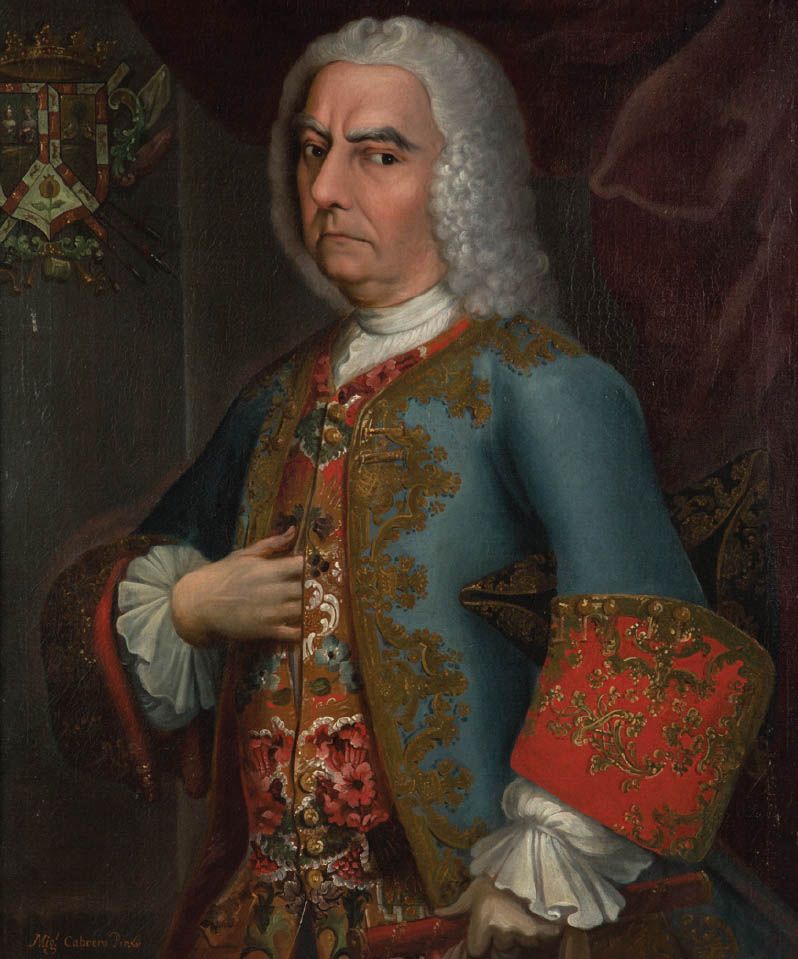
Figure 12.Juan Vicente de Güemes, the second Conde de Revillagigedo, viceroy from 1789 to 1794. If his father was the first, he might be considered the last of the Bourbon reformers in New Spain. Photograph by Leonardo Hernández; reproduced by permission of the Instituto Nacional de Antropología e Historia.
Despite his avowed concern to keep Americans happy, his relationship with Gamboa, the most senior creole official in New Spain’s government, got off to an inauspicious start. Soon after taking power on October 17, 1789, Revillagigedo notified Gamboa and Archbishop Núñez de Haro that the palace guards would no longer do them the honor of performing a military salute when they arrived for ceremonial occasions.67 The raising of guns and beating of drums were reserved, he said, for the viceroy alone in his capacity as captain general of New Spain. He cited written law, the military ordinances of 1728 and 1768, in support of this position.68
Gamboa immediately protested to the king. The military salute accorded to all audiencia magistrates by the palace guards was an ancient custom that recognized the dignity and power of the high court. The high court, in his reckoning, was not just independent of the viceroy but even superior. “This audiencia is the supreme tribunal of the kingdom and does not recognize any superior other than your Sovereign, whom it directly represents and, in matters of justice, it hears appeals from the decisions of the viceroy.”69 Denying magistrates the same honor as the viceroy would diminish the high court in the eyes of the public. Revillagigedo replied to this in the typical style of a Bourbon reformer: it did not matter if “customs were immemorial, as long as they are contrary to royal determinations.”70 Archbishop Núñez de Haro also complained that people would lose respect for him and his ecclesiastical office if the military salute ceased.71 The Council of the Indies decided that, in this case, local custom should prevail over royal statute. It urged Revillagigedo to restore the honorary salute.72
Revillagigedo seemed to learn a lesson from this initial fracas with Gamboa: it was better to consult the cranky old regent before taking any action that might incur his wrath. Over the next few years, the viceroy asked Gamboa’s opinion, often obsequiously, on a plethora of questions. Handled properly, the regent could be an invaluable resource. For instance, in October 1789, the viceroy asked Gamboa to look over a new manuscript on the history of New Spain written by Diego Panes, a military officer. Perhaps making a tongue in cheek reference to Gamboa’s age, Revillagigedo praised Gamboa’s “high character and the Enlightenment that you famously possess on the antiquities and events of this New Spain before and after the conquest.”73 In his discussions with Gamboa over urban reform Revillagigedo said “I am persuaded that your talent, application, and practical knowledge of this city and experience in this government must have provided you with the wisdom that is not easy to acquire.”74 When Revillagigedo asked him to comment on proposed revisions to the legislation regulating pulquerías, Gamboa could reply “I was there at their formation,” and could recite from memory what the viceroy’s father had done forty years earlier.75 The two men ended up communicating with each other almost daily, even if their relationship was frosty to say the least.
Cleaning Up Mexico City
Like almost all people not born and raised in New Spain, Revillagigedo was appalled by the conditions he found in Mexico City. The magnificence of its palaces, churches, and convents clashed with the ramshackle poverty of many of its inhabitants. It was a city of wealthy merchants and filthy beggars. The main square was packed with makeshift market stalls, a single fountain used by poor women to clean the diapers of their babies, and a public lavatory that gave off an unbearable stench. One corner was used by thieves to sell pilfered merchandise and another by the Sala del Crimen to punish criminals.76 The streets radiating out from the square were littered with household waste and dead animals. Summer downpours flooded the canals that intersected the city, washing raw sewage back into the streets. Even the viceregal palace was little more than “a fancy tenement,” according to the chronicler Francisco Sedano. Night and day people gathered within its patios to eat, drink, gamble, and draw graffiti on its walls.77
In the fall of 1789 Revillagigedo initiated an ambitious program of urban renewal, beginning with the refurbishment of the main square, now known as the Zócalo.78 After clearing out all the market stalls and other structures, work crews lowered the level of the plaza by more than a meter. In so doing they unearthed a massive stone disc, now known as the Piedra del Sol, or Aztec calendar stone, as well as a statute of Coatlicue, the Aztec earth goddess.79 They then installed a drainage system, erected ornate fountains at each corner of the square, and covered the vast expanse with new paving stones. The market was relocated to the nearby Volador plaza. Revillagigedo also ordered repairs to the city’s aqueducts and the construction of new neighborhood fountains. He instituted the first regular garbage collection for the city.80 Thirty years after Madrid was cleaned up in the early years of the reign of Charles III, Mexico City received the same treatment. Gamboa, incidentally, was present for both.
The problem was how to pay for these desirable civic improvements. The municipal government complained that the viceroy had left it with the bill for the resurfacing of the plaza, which they estimated cost five or six times the 23,000 pesos claimed by the viceroy. In the summer of 1790 Revillagigedo sought Gamboa’s advice on how to raise revenue to pay for street paving and illumination. The viceroy proposed a new tax on barley, the main feed for horses, since these animals caused the most damage to the streets. To pay for streetlights, he suggested a surcharge on rents. Gamboa disagreed vehemently with both ideas. “Believe me, your Excellency, a tax on barley is a despicable measure, not to say an act of robbery.”81 He said it would hurt the poor Natives who brought it into the city and the tocineros, or pork butchers, who needed barley to fatten their pigs before slaughter. According to Gamboa’s informant on the matter, Antonio Bassoco, the prominent Basque merchant and a main provisioner of meat for the city, butchers in Mexico City purchased over ten thousand bushels of barley a year to feed their pigs.82 As for the viceroy’s proposed surcharge on rents, Gamboa claimed that it would hurt poor residents the most. It would be better to raise the existing property tax, already authorized by law, to pay for both street paving and lights. For several weeks the viceroy and regent exchanged almost daily letters on such topics as pigs, barley, and street cleaning. Despite their disagreements, Revillagigedo reassured Gamboa that “I have read with pleasure your thinking and have seen with satisfaction that it manifests the desires to alleviate the burden on the public, which is the only thing I desire.”83
At the same time Revillagigedo was flattering Gamboa, he was denouncing him to José Moñino, Conde de Floridablanca:
Perhaps you knew there the regent of this Audiencia, Gamboa, when he was the deputy of the Consulado in charge of pursuing various matters before the court and then certainly when he was ordered out of this kingdom at the time of the Jesuit expulsion; in sum, all of his sorry history, as he has proven to be disobedient, petulant, and not at all loyal to the interests of the king, and therefore extremely dangerous in these kingdoms, for which he was made to leave and should not have returned except for Porlier.84
Floridablanca would certainly have remembered Gamboa. In 1768 he and Campomanes, then crown attorneys on the Council of Castile, had recommended that Gamboa be removed from New Spain because of his hostility to the government. In 1772 they allowed his return but warned him to keep his mouth shut in the future and stick to his judicial duties. Somehow this troublesome figure was now the top judicial official in Spain’s most important American viceroyalty. In a subsequent letter to Floridablanca, Revillagigedo confessed “I will never have confidence in the regent because, as you know and as I have presented to you, he has been and still is a disobedient spirit, full of pride . . . and it is almost impossible to correct these defects now at his advanced age.”85 Gamboa was protected by his position at the top of the audiencia, which endowed him with independence, as well as the support of Porlier. All Revillagigedo and Gamboa’s other enemies could hope for was that death would soon remove him from the field of battle.
Viceroy and regent went at it again in the spring of 1791. This time the issue was jurisdiction over the theater in Mexico City, which Revillagigedo wanted to refurbish after decades of neglect. The problem, however, was that the theater, known as the Coliseo Nuevo, inaugurated in 1753 under Revillagigedo’s father, operated as a commercial arm of the Real Hospital de Indios, which was under the jurisdiction of the audiencia.86 Revillagigedo argued that as viceroy he should exercise authority over the theater. After all, just a few years earlier, in 1786, Viceroy Bernardo de Gálvez had issued new regulations for theatrical productions, in an attempt to improve decency, decorum, and order. Gamboa rejected Revillagigedo’s position and compared him unfavorably to his father, who always respected the jurisdiction of the audiencia over both the hospital and the theater. Gamboa admitted that he himself had little interest in the theater and never used the seats reserved for him as regent.87
Gamboa’s refusal to consider any compromise to the audiencia’s jurisdiction, which thus frustrated the viceroy’s plan to remodel the theater, infuriated the touchy Revillagigedo. This time he complained to Porlier about Gamboa’s “disrespectful tone, his lack of obedience to my commands, and the bad example of insubordination of a minister who should be the first to show his respect and submission to the superior head of the kingdom.”88 The theater needed repairs but Gamboa refused to allow them as long as his authority was not recognized. For Gamboa, it was more important to protect the audiencia than to fix up the theater. The Council of the Indies had to resolve the dispute. The Council recommended that the audiencia continue to exercise jurisdiction but only so that oidores could monitor theatrical productions, as their counterparts already did in Madrid.89
Revillagigedo’s Reflections on the Justice System
In early 1794 Revillagigedo began to write the report that viceroys left their successors. It turned out to be the most extensive ever written by an outgoing viceroy. It covered every aspect of his government and gave frank opinions on what deserved the most attention in the future. Although his experience with Gamboa had evidently soured him on the office of regent—“I do not understand the need or utility of such magistrates”—he did share with Gamboa a deep preoccupation with the future of the administration of justice in New Spain. He echoed Herrera from a decade earlier in stating that the increase in jurisdictional exemptions constituted “a great nuisance and obstacle for the administration of justice, creating much delay with the frequent motions to deny a court’s jurisdiction made by parties, more to gain time than to pursue justice in the action.”90 Besides the ecclesiastical exemption and the military fuero, whose beneficiaries had multiplied many times since the 1760s, Revillagigedo mentioned the specialized tribunals for Hacienda, the Tribunal de Cuentas, the Casa de la Moneda, and even the gunpowder and playing cards monopolies. Even the heirs of Hernán Cortés still enjoyed jurisdictional privileges. He criticized the adjudicative system of the Mining Tribunal, declaring that the local deputies had proven incapable of handling the responsibility. Revillagigedo told the crown that in his opinion the profusion of privileges and specialized tribunals had sapped public confidence in the law.
Revillagigedo also shared Gamboa’s old concerns for the state of criminal justice in New Spain. Although like all viceroys before him, especially his father, Revillagigedo appreciated the effectiveness of the Acordada in fighting crime, he felt it needed judicial supervision. He praised the creation in 1787 of the panel to review its death sentences.91 He also objected to the frequency of forced labor at the presidios as punishment. These were nothing better than “schools of criminality.”92 Thirty years earlier the viceroy of New Spain, the Marqués de Croix, had ordered the Sala de Crimen and the other criminal courts to send all their prisoners to the fortresses of Veracruz, Havana, and Manila; now the viceroy of New Spain was saying that Madrid should invest for the first time in the construction of prisons to house dangerous criminals. Coming from a military man, Revillagigedo’s grim assessment of the justice system lends credence to what Gamboa, Herrera, and others had been saying for decades.
Revillagigedo was also critical of the intendancy system. Gálvez had botched the reform, he said, first by dividing the viceroyalty into too few districts. Rather than twelve intendancies, the crown should have created at least twenty. Secondly, Gálvez had selected men whose highest qualification was their loyalty to him. He should have “chosen persons knowledgeable about these kingdoms and the character of their inhabitants, and even experience in government matters.”93 Here in the words of the last dedicated reformer to occupy the viceregal palace in New Spain was one of the main weaknesses of the Galvesian style of imperial reform. Gálvez lacked confidence in local experts, especially creoles like Gamboa, because he thought they were just defending a system that served their own interests above those of Spain and the monarchy. So he had to rely on relatives, fellow malagueños and other Spanish outsiders, few of whom took the trouble of studying the place they were entrusted to administer. As for the intendancy system, Revillagigedo believed it had made no improvement at all at the local level. The new subdelegates under the intendants were no better than the old alcaldes mayores, unschooled in the law and focused primarily on self-enrichment.
The Death of the Regent
Gamboa’s health had been in decline for years. By the evidence of his increasingly shaky handwriting, he suffered from tremors, perhaps even Parkinson’s disease. The forced sojourn in Santo Domingo must have taken a heavy toll. Life tenure for audiencia magistrates had its obvious advantages but it also meant they had difficulty getting permission to retire at the end. Gamboa likely did not have the savings that would have allowed a comfortable retirement. His fortune, built up painstakingly in the 1740s and 1750s, had been drained by the crushing expenses incurred in his transfers to Spain in the early 1770s and Santo Domingo in the 1780s. His library, once one of the best in New Spain and a great source of personal pride, had been sold off piece by piece to pay his bills. He was still supporting his sick and unmarried daughters.
On June 4, 1794, Gamboa passed away at the age of seventy-six. Nuestra Señora de Aránzazu, the Basque lay brotherhood he joined as a young lawyer fifty years earlier, celebrated a funeral mass for him on June 17, in the chapel of the Vizcaínas, the residential school for girls whose charter he had written forty years earlier. He left behind at least four children but no grandchildren. His oldest daughters Gertrudis, Josepha, and Francisca, born in 1749, 1750, and 1753 respectively, had all suffered from poor health that prevented both marriage and convent life. Two of them might have predeceased their father. His oldest son Juan José, born in 1751, educated in Spain, enjoyed a long career as a canon in the cathedral chapter of Mexico City. In 1816 he sponsored the return, almost fifty years after they had been expelled, of the Jesuit order to New Spain.94 Another son apparently died shortly after birth in 1754 and a third, Manuel, born in 1765, would marry Mariana Sandoval de la Vega in 1796. The couple would baptize eleven children between 1800 and 1824.95 Gamboa’s youngest child, Maria Dolores, was born in 1770. His son Manuel and two unmarried daughters applied for financial assistance as survivors from the Junta de Montepíos de ministros, the retirement fund established in 1770 for audiencia magistrates.96
José Antonio de Alzate published an obituary of Gamboa in his Gacetas de México.97 Alzate had little to work with because “the Señor Regente always had a life full of work and other occupations, he never had time to organize the innumerable and valuable papers of his office.”98 Due to the lack of written sources, Alzate could only provide the broad-brush strokes of Gamboa’s life and career. He noted that Gamboa, a brilliant student of jurisprudence, “dedicated himself to all sciences with equal ardor and looked in them for new lights to illuminate his understanding.”99 Gamboa’s love of geometry, according to Alzate, sharpened his analytical thinking, his ability “to deduce from a single factor many consequences.”100 His immersion in philosophy, poetry, and history accounted for his eloquence as a jurisconsult. Drawing from the 1757 official curriculum, Alzate reviewed Gamboa’s legal career, including his early courtroom triumph after the death of his mentor Méndez (whom Alzate mistakenly identified as Martínez); the various commissions he carried out for top viceregal authorities, including the Real Audiencia of Mexico and cathedral of Mexico City; and his published defense of Manuel de Rivas-Cacho. “It should not be surprising,” he said, “that everyone saw him as the first lawyer of the kingdom.”101 Alzate especially paid homage to Gamboa’s Comentarios a las Ordenanzas de Minas. He described it as “a volume of medium size that contains a library where one can find all the useful information spread out in a multitude of Spanish and foreign books.”
As for Gamboa’s three decades on the audiencias of Mexico and Santo Domingo, Alzate knew or revealed little. He did mention Gamboa’s dedication to fighting crime in Mexico City as an alcalde del crimen, his compassion for poor convicts enslaved by owners of obrajes (he mistakenly attributed the abolition of the collera to his representations), and his mediation of the labor strife at Real del Monte. Alzate said nothing about Gamboa’s expulsion from New Spain in 1769. As for his years as an oidor in the 1770s, Alzate only highlighted his work saving the former Jesuit schools of San Gregorio and Guadalupe from financial distress. His opposition to the Mining Tribunal was not mentioned. Alzate wrote, rather vaguely, that in Santo Domingo Gamboa created “new regulations for the government of that royal audiencia.” As for his final years as regent of the Real Audiencia of Mexico, Alzate wrote there was no reason to get into details because “everyone knows his integrity in the administration of justice, his zeal for the public good, and his care in handling all matters, in spite of the unavoidable ailments of his advanced age.”102 With his death, the public could be consoled, Alzate wrote, that all of the remaining magistrates on the audiencia were capable of “administering justice with all the rectitude and integrity that the laws provide.”103