
CHAPTER SIX

Being that Mining is the Origin and unique source of the monetary wealth that gives spirit and movement to the other occupations of men and to universal commerce of the known world, justice demands that it receives the principal attentions of the Government; and that it should always be treated with the particular care and attention that Our Majesty the King is showing it today.
—JOSÉ DE GÁLVEZ, 1771
 WHAT SHOULD THE GOVERNMENT HAVE DONE TO REVITALIZE SILVER mining in New Spain? In 1761 Francisco Xavier de Gamboa painted a depressing picture of the industry in his Comentarios a las Ordenanzas de Minas. Due to backward technical practices and shortages of capital, promising veins of silver ore remained unexploited, submerged by flood waters or simply abandoned by helpless miners. Gamboa set out a few ideas to restore vigor to the industry, starting with a mining bank managed by the merchants of the consulado. He also proposed the liberalization of the crown mercury monopoly, the establishment of a second mint in Guadalajara, direct state aid for those excavating drainage tunnels, and the creation of a corps of licensed mining technicians. He did not call for radical reforms to the legal or financial structure of the industry. He endorsed the old Royal Mining Ordinances of 1584 and the jurisdiction over mining by the audiencias. José de Gálvez brought Gamboa’s book with him to New Spain in 1765.1 One of his instructions as visitor general was to stimulate silver mining, whose revenue, after two hundred years, remained indispensable to the financial health of the Spanish crown.
If Gálvez found time to read the Comentarios of Gamboa, he did not agree with its conclusions. For instance, Gamboa lamented the irresponsibility of miners, a bunch of spendthrifts who ignored the law and rational mining techniques. Gálvez, on the other hand, saw miners as an oppressed professional group, who would thrive only if they were freed from the clutches of merchant-financiers and audiencia magistrates. The visitor general backed the creation of an independent guild for miners, with its own adjudicative system, bank, and technical college. The so-called Mining Tribunal, officially authorized by the Spanish crown in 1776 after Gálvez became minister of the Indies, has generally been considered by historians as a paradigmatic case of enlightened Bourbon reform in New Spain and a main reason for the increase in silver production in the remaining decades of Spanish rule.2
In this chapter, I present the case against the Mining Tribunal from the perspective of Gamboa and his allies. The tribunal went against everything he had recommended in the Comentarios. Undoubtedly one reason he opposed the tribunal was that it blocked his own scheme for a consulado mining bank. But that was not the principal reason for his hostility. Since 1764 he was no longer the paid advocate of the consulado but a magistrate on the Real Audiencia of Mexico. Gamboa attacked the tribunal primarily for the harm he believed it would cause to the administration of justice in New Spain. Endowing miners with exclusive jurisdiction over the adjudication of their own disputes was to him a terrible idea. In the Comentarios, while acknowledging problems at the local level of justice, he strongly defended the role that the audiencias of Mexico and Guadalajara played in administering mining justice. They provided impartial, expert adjudication and offered all miners the opportunity to appeal unfavorable local decisions to the most authoritative courts in the viceroyalty. For Gamboa and many other veteran officials, the Mining Tribunal was yet another of the poorly conceived reforms championed in New Spain by Gálvez. It would disrupt institutions and practices that, however imperfectly, had served the interests of both New Spain and the Spanish monarchy.
This chapter also surveys Gamboa’s career as a civil court magistrate in the Real Audiencia of Mexico. He returned to New Spain in 1773, after three years of exile in Valladolid. He quickly put behind him the ignominy of his 1769 forced departure from the Sala de Crimen and, over the next decade, emerged as a leader on the Real Audiencia of Mexico. He became a trusted collaborator of Viceroy Antonio María de Bucareli, the veteran colonial official who headed New Spain’s government from 1772 to 1779. But largely due to the controversy over the Mining Tribunal, Gamboa’s career was once again threatened in the early 1780s, when José de Gálvez was at the peak of his power in the ministry of the Indies.
Gamboa’s Spanish Exile
Gamboa and his teenage son Juan José arrived in Vigo in April 1770. He had obviously decided on the long Atlantic crossing that he was not going to humbly accept his fate as he had earlier promised. As soon as he landed in Spain, he sent a letter to Julián de Arriaga, the minister of the Indies, defending himself once again from the accusation that he had obstructed the visita. How could Gálvez have accomplished so much in so little time in New Spain, Gamboa asked, from expanding militias, establishing the tobacco monopoly, raising taxes, and leading an expedition to the north, if he faced the opposition alleged by Viceroy Croix? “There is not a minister or any individual there that has the hand or the will to frustrate anything,” he told Arriaga. If there were any concrete evidence of his lack of loyalty to the king and government, he would like to see it.3 From Vigo, Gamboa and his son traveled to the old royal city of Valladolid, where Juan José entered university, and Gamboa launched a campaign to clear his name and return as soon as possible to New Spain.
By June 1770, Gamboa had assembled a package of over forty notarized documents attesting to his loyal service to the king. They covered his success in quelling disturbances on the streets of Mexico City, his efforts in combatting the sale of illegal liquor, his protection of Native convicts confined to Mexico City’s bakeries, and his willingness to mediate disputes out of court to save parties time and money. He included copies of the letters by Croix and Gálvez that commended him for resolving the labor conflict at Real del Monte. He also forwarded letters of recommendations from the Discalced Carmelites and the Augustinians, two religious orders he had represented in the 1740s and 1750s. Letters from the scribes of the audiencia described his modest lifestyle, how he kept his distance from the social whirls of Mexico City, preferring quiet study and the company of his wife and children, model behavior for a royal judge. How could he have found the time to “encourage movements and conspiracies against the government” when he devoted night and day to his duties as alcalde del crimen? He blamed his woes again on the malicious tongues of the enemies he had made as an alcalde del crimen working to expose “scandals, greed, abuses, crimes, and illegal gaming.”4
The response from Madrid was not what he was hoping for. In August he received notice of his appointment to the Audiencia of Barcelona. This would fulfill the recommendation of the crown attorneys of Castile, Pedro Rodríguez de Campomanes and José Moñino, that he be placed in an equivalent post in Spain to what he had left in Mexico City. They had also suggested in 1768 that more creoles should come to the mother country, to study in its universities, serve in the military, and join the government. This would supposedly build a stronger feeling of Spanish unity across the Atlantic. Gamboa and his son Juan José were apparently the unwitting guinea pigs for this farfetched experiment.
Gamboa acknowledged receipt of the notice of his appointment to Barcelona but refused to budge from Valladolid. Instead, he ramped up his campaign to return to New Spain. He enlisted his wife, Maria Manuela, to write letters on his behalf. In her first letter of December 1770, she pleaded with Arriaga, “in the name of the most precious blood of Christ and the Lady of the Sorrows,” to bring the plight of her family to the attention of the king, who might “allow our sad family to be reunited in this city, and if that is not possible, then that the pity of our charitable sovereign provide for our travel expenses, so that we can follow my husband, even at the risk of our own lives.”5 A year later, in November 1771 she confessed to Arriaga that she was on the verge of having to beg “from door to door to support the family.”6 This wording, nearly identical to what Gamboa had used in his official résumé to describe the hardships of his childhood, suggests that he might have been secretly drafting his wife’s letters from afar.
The End of the Visita
Meanwhile, in New Spain, the visita of Gálvez was coming to an anticlimactic close. In 1768 he had presented his intendancy plan, which immediately raised bureaucratic resistance in Madrid and Mexico City. He then set off on his great American adventure, an expedition to the far northwest of New Spain. Fancying himself a modern-day conquistador, Gálvez oversaw an ambitious campaign of exploration, conquest, and settlement.7 In Baja California he handed over the old Jesuit missions to the Franciscans, led by Junípero Serra. He coordinated land and sea missions up the Pacific coast as far north as San Francisco Bay. His young nephew Bernardo de Gálvez, who later became the governor of Louisiana and viceroy of New Spain, accompanied him. Gálvez’s main task was to create a new administrative unit under military control, a captaincy general, to govern the territory encompassing Alta and Baja California, Sonora, Sinaloa, and much of Chihuahua. Only a military government, it was believed, could secure Spanish sovereignty in lands still contested fiercely by Apaches and Comanches.
In the summer of 1769, while Gálvez and his nephew were waging war against the Apache in Sonora, the strain of the past few years caught up with him. He suffered what appeared to be a serious nervous breakdown. From July 1769 to the spring of 1770, he lay incapacitated. At one point, delirious, he raved that he was the king of Prussia and would bring an army of apes from Guatemala to subdue the Indians of northern New Spain. He claimed St. Francis of Assisi—of all people—gave him military advice. When he recovered his wits, he took vengeance on anyone who dared to speak of his mental illness, including his private secretary, Juan Manuel de Viniegra, and a young military officer and future viceroy of New Spain, Miguel José Azanza. Both were imprisoned without charge and expelled from New Spain.8
Back in the capital, Gálvez accomplished little of note in the final year of the visita. He backed the creation of a bakers guild, the very thing Gamboa had stopped five years earlier with his order to release Natives confined to bakeries under the collera. Gálvez, however, saw the value of guilds: through them the crown could reward favored subjects while simultaneously curtailing the jurisdiction of older, more autonomous institutions, like the audiencias. In November 1770 he issued a set of detailed regulations for the bread market. It proposed that anyone not inscribed in the new bakers’ guild who attempted to sell flour or bread to the public would be subject to imprisonment, a 200 peso fine, or banishment for up to five years. The plan would also reduce the number of licensed bakeries in Mexico City, another measure to limit competition. To show their gratitude for these privileges, the bakers were expected to contribute 6,000 pesos annually to the upkeep of the hospital for the poor.9 Naturally, Croix, the deferential collaborator of Gálvez throughout the visita, endorsed the plan. Everyone else thought it was dangerous in the extreme. The audiencia, Archbishop Lorenzana, and the Mexico City council all sent protests to Madrid pointing out the harm that would befall consumers in Mexico City if a self-serving cartel was put in charge of the bread supply. On the street, a popular verse accused Gálvez of acting like a Persian tyrant, resorting to the ultimate evil, taking bread away from the people.10 The crown wisely rejected the plan.
In September 1771 Antonio María de Bucareli, a former naval officer from Seville and captain general of Cuba since 1766, arrived in Mexico City to replace Croix as viceroy.11 Bucareli was a particularly honest and dedicated administrator. In Cuba he had ably managed the crown’s tobacco monopoly, which supplied the raw material for the Seville cigar factory. He had kept a wary eye on developments in New Spain, unimpressed by Croix and disdainful of Gálvez’s heavy-handed approach to reform.12 Once in office, he met regularly with Gálvez as the visitor general worked on his final report. Bucareli confessed to Arriaga that Gálvez was proposing things, like the intendancy system, not at all suited to American conditions. “Not everything that looks possible on paper can be put into practice.”13
With the exit first of Croix and then of Gálvez in early 1772, the coast was clear for the return of Gamboa. Before leaving New Spain, Croix had assured Gamboa’s wife that he would not stand in the way of her husband’s return.14 In Madrid, Campomanes and Moñino, the crown attorneys of Castile, again reviewed the case. They acknowledged that legal charges had never been leveled against Gamboa; his offense was strictly political, speaking up too frankly against the visita. With Gálvez’s mission wrapped up, they felt it was safe if Gamboa returned to his old seat on the Sala de Crimen. They were confident that “the measure taken against Gamboa and the time that has transpired since he left Mexico should make him more cautious and moderate in the future, not just in regard to his free talk but also to his peculiar handling as an alcalde del crimen, which has made him despised among the public of that capital.” In approving his return to the Sala de Crimen, they warned Gamboa that in the future “he should abstain from interfering and speaking openly about matters of government, restricting his actions to those pertinent to his judicial position.”15
Gamboa got the good news in August 1772. He wrote to Arriaga to thank him for approving the transfer but also to let him know how much the ordeal had cost; he claimed to have spent 26,000 pesos, more than six times his annual salary as an audiencia magistrate, for travel and living expenses. Whatever fortune he had accumulated as a private lawyer, before he had joined the audiencia, was gone. On December 11, 1772, Gamboa set sail from Cadiz, accompanied by Juan Manuel de Perón, who had been acting as his private secretary in Spain, and one domestic servant, Francisco Cobian.16 His son Juan José remained behind in Valladolid to finish university. Four months later Gamboa arrived home. He met his new daughter for the first time, born shortly after his 1769 departure. If in 1764 he had returned to New Spain full of confidence, this time he knew he should keep his head down and watch his back.
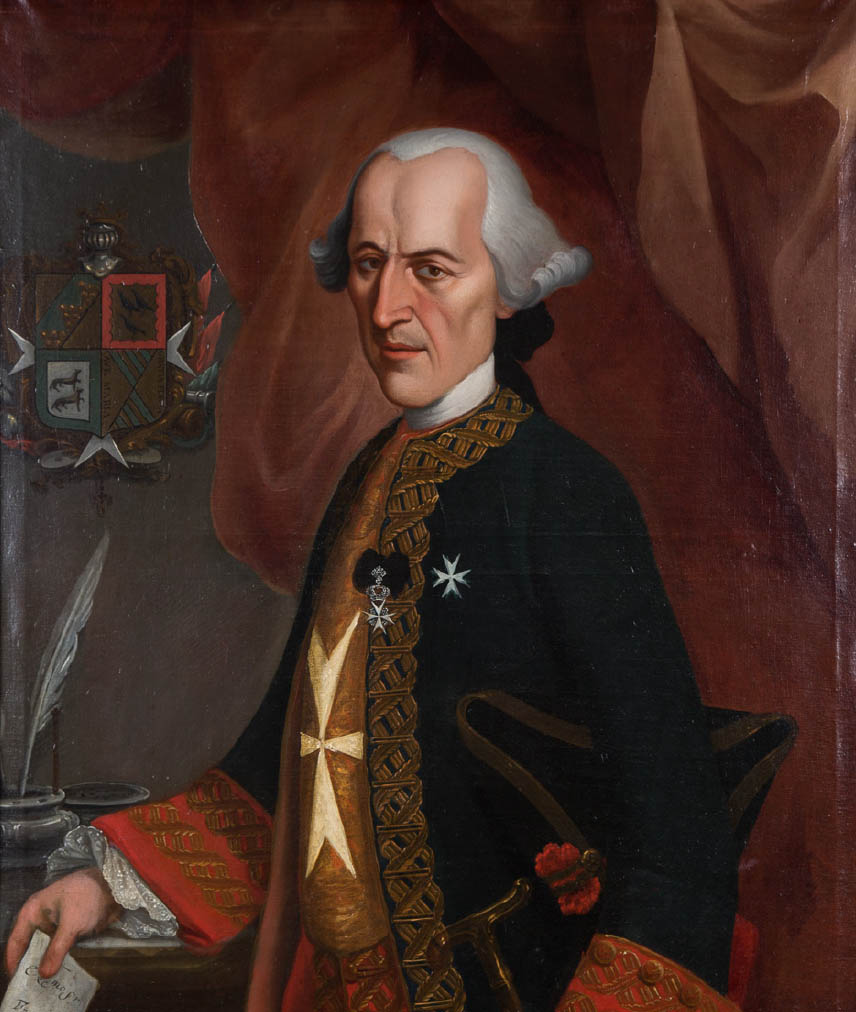
Figure 9.Viceroy Antonio María de Bucareli, the veteran official who brought calm to New Spain after the visita of José de Gálvez. Photograph by Leonardo Hernández; reproduced by permission of the Instituto Nacional de Antropología e Historia.
The Administrative Duties of an Oidor
One year after returning to Mexico City, on March 16, 1774, Gamboa received a promotion to the Sala de lo Civil of the Real Audiencia of Mexico. The Spanish crown usually forgave the transgressions of competent officials. In fact, even when he faced sanction from the crown for his opposition to the visita, he received votes from some members of the Council of the Indies for a vacant seat on the civil bench.17 To serve as an oidor on the Real Audiencia of Mexico represented for most judges the pinnacle of their careers. Until the creation of the office of regent in 1776, the only rung higher than the civil division of the Real Audiencia of Mexico was the Council of the Indies itself. The eight oidores of the audiencia were powerful figures.18 They reviewed decisions by lower level judges, advised the viceroy sitting in the Acuerdo, and carried out numerous administrative functions. They had the power to challenge viceregal decisions they considered contrary to the best interests of justice. They saw themselves as akin to Roman senators, the guardians of the constitutional order.
A thorn in the side of Viceroy Croix, as oidor Gamboa became a trusted collaborator of Bucareli. The viceroy handed him several important administrative tasks, such as supervising Temporalidades, the office in charge of administering ex-Jesuit properties. His first action was to investigate accusations of fraud and embezzlement against Alejandro Paleani, the manager of the large hacienda of Xalpa, located in the municipality of Huehuetoca north of Mexico City. Its annual profits of over 20,000 pesos had supported Jesuit schools, in particular the nearby Seminary of Tepotzotlán. Gamboa audited the books and found sufficient evidence to charge Paleani on both civil and criminal grounds. Paleani died in custody and in 1776 none other than Pedro Romero Terreros, now ennobled as the Conde de Regla, purchased the Xalpa property from the government.19 The savvy Terreros took advantage of the Jesuit expulsion to accumulate a portfolio of the order’s former estates. By the 1770s he was not only producing silver but also pulque, another lucrative novohispano commodity.20
Gamboa also assumed responsibility over two former Jesuit schools for Native children, the Colegio de San Gregorio for boys and the Colegio de Indias Doncellas de Nuestra Señora de Guadalupe for girls. When Gamboa first examined the books of San Gregorio in 1774, he discovered the boys’ school only had about 6,000 pesos in assets. Fortunately, the college could still draw upon the income of the hacienda of San José de Oculmán, left by a Basque benefactor, Juan de Echeverría. After restoring San Gregorio’s finances, Gamboa approved some 13,000 pesos worth of repairs. He also ordered the return to the college’s chapel of an image of Nuestra Señora de Loreto, which had been installed in the Convento de Nuestra Señora de la Encarnación for safekeeping. The nuns of Encarnación put up a fight to keep the sacred image but in the end it was returned to San Gregorio.21 By the early 1780s, San Gregorio was once again solvent, with an endowment of 35,000 pesos and a student body of about fifty.22
Gamboa found particular satisfaction in his work to save the Colegio de Indias Doncellas de Nuestra Señora de Guadalupe. This unique school for indigenous girls had been founded in 1753 by the Jesuit priest Modesto Martínez Herdoñana. At Guadalupe, Native girls learned to read and write in Spanish, studied the catechism, and honed useful skills for poor women, such as sewing and cooking. When Gamboa took charge of the school in March 1774, it was insolvent. After taking care of immediate needs, in 1777 he launched an ambitious fundraising campaign. He wrote to his acquaintances among the miners, merchants and landowners of New Spain. He reminded them that the school of Guadalupe was “almost the only refuge for the honest maidens of this miserable nation.”23 Gamboa’s compadre Miguel de Berrio pledged 8,000 pesos. The students raised funds themselves by taking in sewing and selling sweets. The campaign succeeded in raising over 20,000 pesos. Under Gamboa’s direction, the school purchased land for new classrooms, a garden, and a chicken coop. By 1781, after the work was complete, the school could accommodate twenty-six boarders and sixty-four day students.24 It was a modest establishment compared to the Vizcaínas, which Gamboa had helped to establish almost thirty years earlier, but it might have brought him even more satisfaction. He remained involved in the school for the rest of his life.25
Bucareli also assigned Gamboa the task of supervising New Spain’s first state lottery, founded in 1769 by Francisco Xavier de Sarría, a Spanish immigrant close to Gálvez. As judge-conservator Gamboa oversaw the weekly draws and his name was printed on the lottery tickets. The operation had succeeded in raising over 450,000 pesos from 1774, when Gamboa assumed oversight, to 1780. But in August 1779, he discovered a shortfall of almost 26,000 pesos in the books. He laid criminal charges against the director, Sarría, the chief accountant, Pedro Noble, the collector general, Antonio Vertiz, and the assistant accountant, Santiago Vander Eynden. To cover the loss, he ordered the seizure of Sarría’s hacienda in Chalco.26 Sarría complained bitterly to Gálvez, by then the minister of the Indies, of Gamboa’s “cruel and despotic spirit.”27 Gálvez sided with Sarría and forced Gamboa to drop the case. From this distance it is impossible to know whether Gamboa’s case against Sarría was substantiated. Gálvez might have seen it as a deliberate attack by Gamboa on a member of his old circle in New Spain. Sarría later turned up in northern New Spain in search of mining opportunities and even wrote a book on metallurgy, published in Mexico City in 1784.28
Mercury and the Gremio de los Mineros
Gálvez arrived in New Spain in 1765 with the directive to pay “particular attention to the equipment and working of the mines, their condition, the care taken in the collection of the royal fifths, and whether the supplies of mercury are furnished to mines as they are necessary, and by what means the production of precious metals may be made more copious.”29 The supply of mercury, used in the amalgamation process to refine silver, was a crucial issue. Miners and refiners had been demanding a reduction in the official price for decades. In 1743, José Antonio Fabry, an official at the Mexican mint, calculated that if the crown cut the price by 50 percent, silver production would rise so substantially that increases in other revenue lines would more than compensate for the decline in mercury profits. Manuel Aldaco, Gamboa’s early patron and New Spain’s principal silver banker, contributed a laudatory preface to Fabry’s book.30 José Antonio de Villaseñor, the head of New Spain’s mercury monopoly, managed to stop the price reduction at the time, but advocates of cheaper mercury continued to press their case.
Gálvez was convinced of the merits of lower mercury prices. He mentioned in his 1759 policy paper that the crown sold mercury in New Spain at four times cost.31 In his first mining initiative as visitor general, he endorsed a March 1767 petition by Joaquín Velázquez de León, Juan Lucas de Lassaga, and José de la Borda to lower the official price by 50 percent from eighty to forty pesos per hundredweight. They also asked the crown to relax its prohibition on mercury mining in New Spain, something Gamboa had recommended in the Comentarios a las Ordenanzas de Minas. While their demands were hardly novel, how the petitioners identified themselves certainly raised eyebrows. The three signatories, Velázquez de León, Lassaga, and Borda, called themselves the spokesmen for the gremio de los mineros. This was presumptuous on two counts. First, no gremio, or formal organization for miners, even existed. Second, what right did they, especially the first two, have to represent miners as a body? Velázquez de León, although from a mining family, was a lawyer mostly interested in astronomy. Lassaga was a recent immigrant from Spain. Only Borda, whom Gamboa had described as “the first miner in the world for his vast knowledge and great enterprises,” could honestly hold himself up as a spokesman for the industry.32 He was likely asked to sign the petition for this very reason. Also noteworthy was the encomium at the end of the petition, which praised the zeal and dedication of Gálvez.33 Already, it seemed, a plan was being hatched by Velázquez de León, Lassaga, and Gálvez to create a corporate body for the mining industry.
In Madrid, the request to lower prices and relax the mercury monopoly reached the desk of Tomás Ortiz de Landázuri, the contador general of the Council of the Indies. Landázuri was a veteran official, who had spent twenty years in New Spain. He knew silver mining and conditions in the viceroyalty extremely well. From 1747 to 1749 he served as corregidor of Zacatecas, with responsibility for the adjudication of mining cases. He participated in the opening up of Bolaños, the site of a major bonanza in the 1740s and early 1750s. His last stop in New Spain was Guadalajara, Gamboa’s hometown, where he spent most of the 1750s as a member of its city council. He married a tapatía, Josefa de Sierra, and developed a lasting concern for the city’s welfare.34 Recalled to Spain in the early 1760s, the crown chose him to serve on the select committee considering changes to imperial trade policies.35 He drafted the 1764 report that recommended opening up the ports of the Caribbean to direct trade with Spanish ports.36 In 1765 the crown named him to the Council of the Indies. He brought a wealth of first-hand knowledge of America to a body that had, up until then, mostly served as a stepping-stone for ambitious Spaniards on their way to the Council of Castile.37
Landázuri and Gamboa had much in common, beginning with their Basque heritage. Upon his return to Spain in the early 1760s, Landázuri joined the Congregación de San Ignacio de Loyola, the confraternity in Madrid formally linked to Nuestra Señora de Aránzazu in Mexico City. In 1766, he was elected prefect, a key position for Basques in Madrid. If the two men did not already know each other in New Spain, they certainly met in Madrid. In 1761 Gamboa wrote a short treatise on pearls, in which he mentioned seeing a beautiful string of black pearls and several pearl bracelets brought to Spain by “Don Thomas de Landázuri, regidor of Guadalajara, capital of the kingdom of New Galicia.”38 He probably wrote this paper at the behest of Landázuri. Both men knew that Guadalajara, as a center of commerce in western New Spain, would benefit from the development of the pearl fishery in the Gulf of California.
Besides their common Basque heritage and loyalty to Guadalajara, Landázuri and Gamboa shared similar ideas about silver mining. In 1764 Landázuri submitted to the crown his own report on the industry in New Spain.39 It echoed many of the points Gamboa made earlier in the Comentarios a las Ordenanzas de Minas. Landázuri took the same jaundiced view of miners, accusing them of ignoring the law and engaging in frivolous lawsuits. Although not a lawyer himself, Landázuri strongly believed, like Gamboa, that mining should remain in the hands of the judges of ordinary jurisdiction. He criticized how the former viceroy, the Conde de Revillagigedo, had seized jurisdiction over the boomtown of Bolaños from the Audiencia of Guadalajara. He suggested that Revillagigedo profited personally from this maneuver. While Landázuri’s paper was more descriptive than prescriptive, he did include the recommendation that the crown lower the price of mercury.
Like Gamboa, Landázuri saw no need for radical reform in America.40 He represented many veteran officials in Madrid and throughout Spanish America skeptical of Gálvez and his approach to imperial renovation. Landázuri valued empirical knowledge, acquired from personal experience, and understood that the distinct conditions in America meant that a one-size-fits-all legal and administrative approach would never work in the Spanish Empire. Landázuri’s attitude was neatly encapsulated in an opinion he wrote against a May 1767 measure supported by Croix and Gálvez to prohibit the use of raw or unminted silver in commercial transactions in New Spain.
It frequently occurs that a general provision, sound and just in its origin, is not appropriate for certain provinces and countries, for the diversity of uses and practices in their economy and in the arrangement of things that necessity introduced and authorized. This obliges a tempering of things in prudent proportion to the constitution, state and nature of such places. In this way, what in some places is opportune, useful and proper, in others is impractical, prejudicial and ruinous, as happens every day with new measures that do not proceed from a mature examination and consultation with wise and expert people who know through experience the quality and situation of the countries and their inhabitants.41
This statement can be taken as an indictment of the whole Galvesian reform project. Landázuri followed Solórzano’s line that Spanish law had to accommodate the diversity of America and this required experience to know the peculiarities of each place.42 In the case of the proposed ban on the use of unminted silver in transactions, Croix and Gálvez were making the classic mistake of trying to impose a law that looked good in theory but would wreak havoc in practice. People in northern New Spain, Landázuri explained, used raw metal in transactions not to cheat the government but because they had no choice. There just was not sufficient legal tender in circulation. This was the reason both Landázuri and Gamboa recommended the establishment of a second mint in Guadalajara, to supply silver coins to the mining and agricultural communities in northern New Spain. In the meantime, the crown should simply tolerate the practice. Dissimulation, whereby the crown agreed to overlook a violation of its laws, as Landázuri understood, was sometimes the best strategy.43 Most of the raw silver eventually made its way back into official channels anyways, where it was assayed, taxed, and minted into peso coins.
Landázuri did agree with Gálvez on the benefits of lowering mercury prices. He knew this was the simplest and most direct way to boost silver output. But he mocked the pretension of the petitioners for portraying themselves as the representatives of the gremio de los mineros. Like Gamboa, he knew from experience the lack of associative behavior by miners. As for the request to allow mercury mining in New Spain and end the monopoly the Spanish mine of Almadén controlled, Landázuri rejected it on colonialist grounds. “Prudence and politics dictate that as long as there remains an abundance of the material in Almadén, it should be provided from here, to maintain the dependence of those dominions to its Head.” As a top official at the Council of the Indies, Landázuri was not willing to severe one of the most vital links binding New Spain to the mother country: the mercury supply.44
The crown was only prepared to reduce the official price by 25 percent, even though recent cost savings at Almadén would have made a bigger reduction feasible.45 Miners in New Spain still felt the benefit. In 1776, after Gálvez became minister of the Indies, he managed to put through another price cut, which brought the official price down to forty pesos per hundredweight, what was originally sought in 1767. By then the evidence was clear that lowering mercury prices, as experts had been predicting for decades, boosted production and thus raised overall crown revenue. The whole point of the mercury monopoly, after all, was not to serve as a profit center in itself but as a mechanism to distribute the material quickly and equitably to New Spain’s miners. The crown’s decision to reduce mercury prices was likely the most consequential reason for the health of the industry until the end of Spanish rule. This was Gálvez’s great contribution to the industry, not the creation of the Mining Tribunal.46
Real del Monte and the Birth of the Mining Tribunal
To understand the origins of the Mining Tribunal we have to return to Real del Monte, the site of so many pivotal events in the history of Mexican mining, from the invention of the patio method of mercury amalgamation by Bartolomé de Medina in the 1550s to the first significant public-private rehabilitation scheme headed by José Alejandro de Bustamante in the 1740s. The story begins with the strike of 1766, when the workers of Pedro Romero Terreros went on a violent rampage because of his attempt to end the partido. It was Gamboa who attempted to restore peace to the district. His settlement, documented in a new labor code, recognized, on the one hand, the legality of the partido and, on the other, the need for tougher penalties against worker theft. Terreros refused to accept Gamboa’s resolution. For the next five years or so, he turned his back on his mining operations and concentrated on his agricultural estates. One way the crown tried to coax him back to active management was by fast-tracking his application for noble status. The former shopkeeper from Andalusia became the Conde de Regla. Yet he continued to insist that he would not return to Real del Monte until the government outlawed the partido. By 1770 he had managed to convince both Croix and Gálvez. Gálvez recommended to the crown in February 1771 that the partido should be prohibited throughout New Spain. Gálvez’s protégé, Juan Antonio de Areche, a crown attorney on the Real Audiencia of Mexico and the future visitor general of Peru, blamed Gamboa—then exiled in Valladolid—for all the trouble. Gamboa should have crushed the rebellious workers at Real del Monte with military force when he had the chance, just like Gálvez did without compunction a year later against the rebels who rose up in the Bajío.47 Encouraged by this show of support in New Spain, Regla submitted a formal request to Madrid in September 1771 to abolish the partido and revoke Gamboa’s labor regulations for Real del Monte. He also took the opportunity to demand that the government provide him with additional Native draft labor and mercury at cost before he resumed full operations at Real del Monte.48
Bucareli, who had replaced Croix as viceroy just when Regla submitted his petition, was outraged by Regla’s extravagant demands. In a blistering letter to the crown at the end of December 1771, the new viceroy strongly endorsed the partido: “While it is true that mine workers have no legal right to partidos, it is what custom dictates and there is no law or ordinance prohibiting them.”49 In the absence of Gamboa, Bucareli probably consulted with Domingo Valcárcel, the senior oidor, long-time administrator of the mercury monopoly in New Spain, and close ally of Gamboa. Valcárcel might have explained to the viceroy how the partido benefited small miner owners, who lacked cash to pay wages, and the independent refiners, who bought ore from the workers. This made for a more stable and diversified industry. Bucareli predicted that if the crown moved to outlaw the partido, as Regla requested with Gálvez’s backing, the mining districts of New Spain would rise up in rebellion, repeating on a massive scale the uprising that had taken place in Real del Monte in August 1766. Bucareli ended his letter by suggesting the need for miners to gather in Mexico City to discuss labor and other issues of mutual concern.50
In Madrid Landázuri, the accountant general of the Council of the Indies, agreed wholeheartedly with Bucareli. He too was shocked by the brazen request to outlaw the partido. “There is nothing more useful and reasonable in practice, for being the only effective way to stimulate poor people to undertake the hard and risky work” of mining.51 Landázuri and Bucareli, if they knew it or not, were echoing what Gamboa had written ten years earlier in the Comentarios a las Ordenanzas de Minas. The prosperity of silver mining in New Spain depended on the willingness of mine owners to share their ore with their workers. This minimized cash outlays and incentivized the back-breaking work of underground labor. Landázuri reckoned that the real problem at Real del Monte was not the partido but the fact that Croix had failed to enforce the arrest warrants Gamboa had issued back in 1766 against the ringleaders of the violence. With the leaders of the revolt still at large, no wonder Regla refused to return to Real del Monte. Landázuri also agreed with Bucareli that it would be a good idea to convene miners in Mexico City to discuss labor and other issues of mutual interest. In July 1773 the invitation went out to miners across New Spain.52
The Mining Tribunal Proposal
Joaquín Velázquez de León and Juan Lucas de Lassaga seized upon this opportunity to pitch their plan for a formal organization for miners. The time had come to make their dream of a miners’ guild, suggested in their 1767 submission on mercury, a reality. Velázquez de León, born in the mining town of Sultepec in 1732, had studied law at the University of Mexico. No one in New Spain, in the opinion of José Antonio de Alzate, the priest best known for his journalism and interest in science, better combined the theory and practice of mining than Velázquez de León.53 Gálvez had taken Velázquez de León on his expedition to the northern New Spain. There he investigated potential mineral deposits in Sinaloa and Sonora and observed the 1769 transit of Venus across the sun.54 Velázquez de León may have convinced Gálvez of the merits of a miners’ guild patterned on the merchants’ consulado.
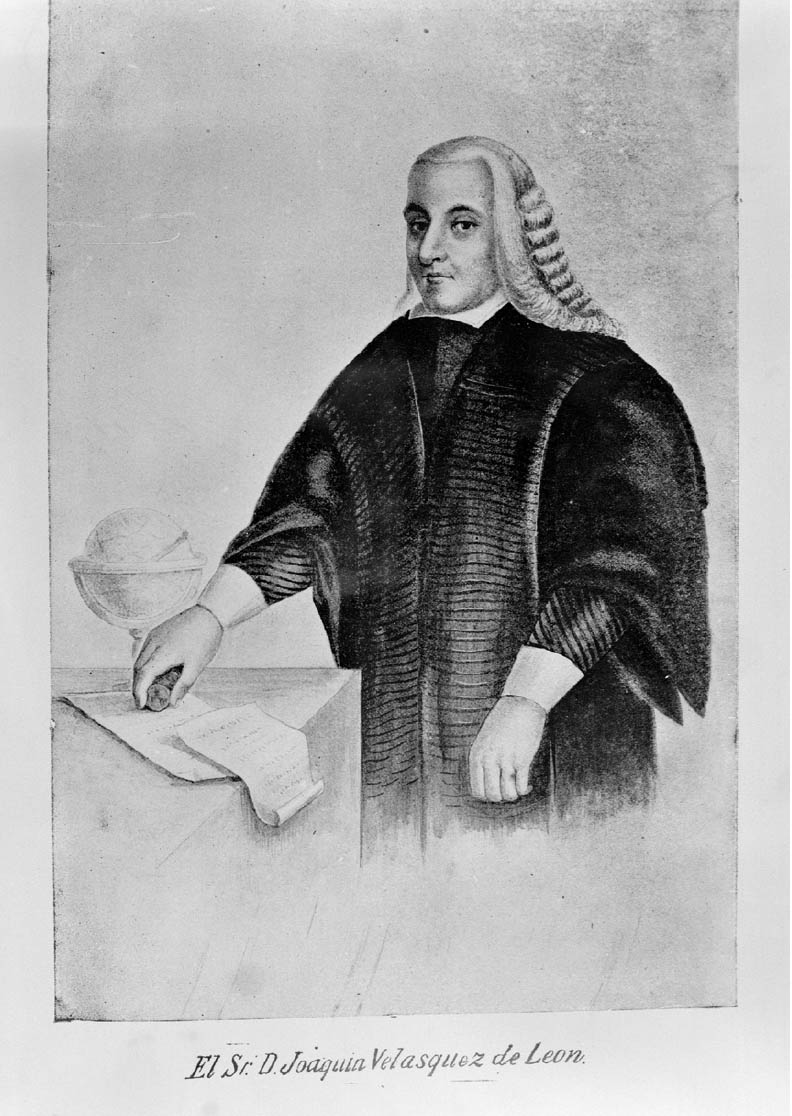
Figure 10.Joaquín Velázquez de León, the founder of the Mining Tribunal. Reproduced by permission of the Instituto Nacional de Antropología e Historia.
In February 1774 Velázquez de León and Lassaga submitted their formal proposal to the crown, presumably written by Velázquez de León alone.55 The fact that the plan was published by Felipe Zúñiga y Ontiveros, one of the viceroyalty’s leading printers, showed that the government acknowledged its importance. The proposal opened by painting the typically bleak picture of mining conditions in New Spain. Just as Gamboa had written in 1761, Velázquez de León asserted that too many good mines had been abandoned due to flooding. There was little capital for rehabilitation, especially since the death of Aldaco in 1770, the last of the private silver bankers. But whereas Gamboa suggested reforms that could fit under the existing legislation, Velázquez de León thought the ordinances of 1584 were obsolete. He took a gratuitous swipe at Gamboa. “A few years ago,” he wrote, “we received a Commentary, erudite and extensive, of our Ordinances. But the author was unable to supply what was missing in them or erase what was superfluous or enter into that high realm of interpretation reserved to the legislator.”56 Velázquez de León boldly called for the repeal of the 1584 statute and its replacement by a new code that he would happily write himself. These new mining ordinances, besides updating the substantive rules governing the industry, would authorize a self-governing corporate body for miners, with control over its own bank, its own adjudicative tribunal, and its own technical college. Miners deserved these expansive powers because only they could truly understand the intricacies of the industry. “The science of mining is too vast, obscure, and complicated to acquire easily. It demands an untiring study, experience, and thus a lifetime’s dedication.”57 The logic of this argument was that because judges of the ordinary jurisdiction had never descended into the pit of a mine, they lacked the requisite knowledge to administer justice for miners. In the same way, because merchants did not know how to refine silver through mercury amalgamation, they had no right to be involved in mine finance.
The new organization would consist of a board of directors based in Mexico City and local deputies elected by miners in each district in New Spain. The deputies would handle the adjudication of disputes at first instance, with streamlined procedures that would do away with the need for meddlesome lawyers. Appeals of local decisions would go to the board in Mexico City, which would consist of an administrator general and two deputy generals, assisted by a legal advisor and scribe. Velázquez de León and Lassaga graciously offered to serve on this board for life. They would also manage the mining bank and technical college. Funding for the tribunal would come from seignorage, the fee collected at the mint. It had been doubled in the 1740s to meet wartime expenses and had remained at the same rate after hostilities ceased. Velázquez de León proposed that the tribunal receive the half still allotted to the military. They estimated this would bring in 200,000 pesos annually, enough to cover operating expenses and provide sufficient income from the start to pay investors 5 percent interest. They estimated the new body would be able to raise at least two million pesos in share capital from outside investors.
The only part of their proposal with genuine Enlightenment inspiration was the technical college. At the time, the only school of this sort was the mining college of Freiberg in Saxony, founded in 1765. The proposed mining school in Mexico City would teach young men geology, chemistry, physics, mathematics, and other useful subjects, including French. In the summers students would venture out into the field to serve practicums in mining districts. The hope was that the college would not only help to modernize novohispano mining practices but encourage the sons of miners to follow in their fathers’ footsteps rather that seek safe careers as lawyers or priests.
The Case against the Mining Tribunal
The 1774 plan, so confidently presented by Velázquez de León and Lassaga, was shredded to pieces by top officials in Mexico City and Madrid. They saw it as impractical, grandiose, and manifestly contrary to the public interest. Gamboa, back in Mexico and promoted to oidor in March 1774, kept his head down at first but could not avoid becoming the intellectual author of the case against the tribunal. He had anticipated it in his 1761 book on mining. The Acuerdo, made up of the oidores of the Real Audiencia of Mexico sitting in their capacity as political advisors to the viceroy, thought it was ridiculous, as Gamboa had in the Comentarios, to equate miners with the merchants of the consulado. Merchants lived in Mexico City and had a long history of collaboration on important projects, such as the Mexico City drainage project.58 Miners, in contrast, lived isolated throughout New Spain, with no history of association. The oidores attacked the banking plan for failing to provide any oversight, an invitation for fraud and self-dealing. They were understandably outraged by the proposed adjudicative system, which would strip them of any role in mining cases. At the local level, they said, it would be nearly impossible to find a mining deputy without some economic interest in the disputes he was supposed to adjudicate. They would be in effect both judges and parties in disputes. At least alcaldes mayores, for all their faults, were supposed to be impartial and their mistakes could be corrected by the audiencias of Mexico and Guadalajara. The Acuerdo concluded it would be best to leave things as they were.59
Valcárcel, the décano of the audiencia as its most senior oidor, the director of the mercury monopoly, and Gamboa’s friend, submitted his own scathing review of the tribunal plan. He pronounced it “so unlawful and confused that it could only be enforced with a total upheaval of the laws.” Valcárcel defended Gamboa from Velázquez de León’s veiled attack, declaring that “only one ignorant of what is the Royal Audiencia and its mode of government and operation could proffer propositions so contrary to those expressed by the Author of the Comentarios, a subject who defended in the Royal Audiencia of Mexico many arduous and intricate cases of Mining law.”60 According to the veteran magistrate, outsiders would be reluctant to invest in the industry under a scheme that gave miners exclusive authority over adjudication. There would be no appeal to the audiencias in the event of bad local decisions. As for the bank, the proposal reminded Valcárcel—who was old enough to remember—of the rejected plan of 1743 by Domingo Reborato, the enterprising but penniless immigrant from Genoa. Who would trust miners, a group notorious for their reckless and extravagant spending, to manage their money? Valcárcel even deemed the mining school a waste of money. All one had to do, he said, was read Gamboa’s Comentarios; it contained all the technical information miners needed.
Viceroy Bucareli, in an opinion that Lassaga later claimed had in fact been written by Gamboa, agreed with the oidores of the audiencia that the Mining Tribunal plan was both impractical and contrary to the public interest.61 He recommended that the crown have another look at Gamboa’s plan to create a mining bank under the auspices of the consulado.62 Gamboa’s thinking also shaped the opinion of the Council of the Indies in Madrid. Did it make sense, the council asked, to “create a guild for subjects so dispersed and scattered in the vast extension of the whole kingdom and who are judged essentially unsocial, or if it would be more opportune that the merchants of the Consulado, who generally finance mining and the rehabilitation of old mines,” be put in charge of a bank?63 Landázuri, the council’s contador general, who shared most of Gamboa’s ideas about mining, also thought the tribunal was completely unnecessary. Lowering mercury prices, he wrote, was “the most just, natural, and gentle way of all those imaginable to encourage that crucial body of vassals and to increase the royal treasury.”64
Besides the practical objections raised by the officials in Mexico City and Madrid, there was another problem with the proposed Mining Tribunal: it violated the principles of economic liberalism then gaining traction in Spain and the rest of Europe. Liberals considered privileged artisans’ guild, like the proposed tribunal, as dangerous constraints on individual economic liberty and competitive markets. In 1774, the same year as the tribunal proposal, Campomanes, the foremost economic liberal among the advisors of Charles III, wrote in his Discurso sobre el fomento de la industría popular that “nothing is more contrary to popular industry than the erection of guilds and privileged jurisdictions, which divide people into small societies often exempt from ordinary justice.”65 Campomanes did not advocate the outright abolition of guilds, as Adam Smith did in 1776, but he did oppose their exemptions from ordinary jurisdiction. If guilds were to survive, their members should be subject to the same laws and justice system as everyone else.66
As the crown attorney of Castile, Campomanes was not called upon to review proposed legislation for the Indies. But we can guess what his opinion of the tribunal would be from his 1762 critique of Gamboa’s Comentarios a las Ordenanzas de Minas. In rejecting Gamboa’s idea of a consulado mining bank, Campomanes declared that any government help for silver mining was unnecessary: “When a branch of industry produces with liberty, it is a fundamental maxim of government not to interfere, especially if it is destructive of liberty.”67 Campomanes pointed to the example of England as a country wealthy due to its productive population rather than precious metal mines. Adam Smith in The Wealth of Nations stated it plainly that state aid for silver and gold mines was economically counterproductive:
Of all those expensive and uncertain projects, however, which bring bankruptcy upon the greater part of the people who engage in them, there is none perhaps more perfectly ruinous than the search for new silver and gold mines. . . . They are the projects, therefore, to which of all others a prudent law-giver, who desired to increase the capital of his nation, would least choose to give any extraordinary encouragement, or to turn towards them a greater share of that capital than what would go to them of its own accord.68
Although The Wealth of Nations did not appear in Spanish until the early 1790s, many of the ideas it articulated were already taking hold in Spain. Campomanes pushed them at the highest level of the Spanish government. He had no say, however, in the deliberations over the Mining Tribunal.
But perhaps the biggest problem with the Mining Tribunal was that it was based on a false premise. Mining was not in crisis in New Spain. It was flourishing, although that might have been difficult for contemporaries to see. Bad news about flooded miners captured more attention than incremental increases in production. But since the late seventeenth century, production had increased steadily decade after decade, from 1.3 million kilograms in the 1670s to 2.9 million in the 1750s, a 223 percent increase. The drivers of this growth were a revival in demand in China and general population growth on both sides of the Atlantic. There was indeed a slump in production in the 1760s—when Gamboa wrote the Comentarios—but the industry quickly recovered in the 1770s, up 34 percent from the previous decade and 21 percent from the 1750s.69 Economic historian Richard Garner estimated that silver production increased an average of 1.4 percent per year over the course of the eighteenth century, somewhat faster than overall economic growth.70 A more recent estimate put the average annual growth rate of 1.8 percent. For every flooded or abandoned mine, entrepreneurs discovered new deposits, such as at Bolaños, or dug deeper at existing operations, like in Zacatecas. The rise in production of Guanajuato, where the gargantuan Valenciana mine became a must-see attraction for visitors to New Spain, was probably the primary reason for the prosperity of the industry.
So if the viceroy of New Spain, the Real Audiencia of Mexico, and the Council of the Indies, including the respected Landázuri, all opposed the Mining Tribunal, how did it receive royal approval on July 1, 1776? It always had one very ardent supporter, José de Gálvez. He had backed the idea of a gremio de los mineros since at least 1767. In his final report as visitor general in December 1771, he had recommended that all the miners of Spanish America be organized into “privileged bodies, like the consulados of commerce.” Only then would miners overcome:
The prejudicial discredit in which they find themselves as a profession, the affronts and extortions they suffer from the ordinary judges and their subalterns in legal matters they pursue before them, the losses they continually live exposed to from the ignorance, disorder and thievery of mine workers, and, above all, the fatality of the best mines being suddenly abandoned for the lack of capital.71
Gálvez could see that a formal organization of miners would not only protect them from arrogant judges, thieving miners, and skinflint merchants but also serve other important purposes: it would trim the sails of the audiencias, which would lose jurisdiction over mining cases; it would lessen the merchants’ dominance of financing; and, perhaps most significantly, it would provide the crown a new mechanism to tap the silver wealth of New Spain. On February 19, 1776, Charles III named Gálvez to succeed Julián de Arriaga as the secretary of state for the Indies. Gálvez could count on the strong support of José Moñino, Conde de Floridablanca, formerly Campomanes’ partner as crown attorney of Castile and now the king’s chief minister. Gálvez thus had amassed the power by 1776 to override the well-founded concerns of the opponents of the tribunal and get the king’s signature on a cédula authorizing it. Velázquez de León and Lassaga immediately showed their gratitude to the crown: in early 1777, even before the tribunal’s first general meeting, they arranged a 300,000 peso loan, secured by the tribunal’s income from the seignorage fee, to build a naval shipyard in Coatzacoalcos. They later approved a 4,000 peso annual payment to Gálvez and his heirs in perpetuity. The tribunal’s bank immediately showed its effectiveness, not in supplying badly needed capital to its constituents, the miners of New Spain, but in funding the government and its ministers.
Gamboa Returns to the Fight
Although relieved to operate behind the scenes at first, in early 1778 Gamboa made his feelings about the Mining Tribunal abundantly clear. He took advantage of a lawsuit before the Real Audiencia of Mexico. At the time, before the new law code promised by Velázquez de León could be enacted, the old 1584 ordinances and old adjudicative system remained in effect. The dispute involved Tomás de Liceaga, the tribunal’s deputy in Guanajuato and a member of its board of directors in Mexico City. In order to retain title to a mine in Guanajuato, which had been revived by another operator, José Muñoz Castelblanque, after Liceaga and his partner Vicente Maldonado had abandoned it, Liceaga and Maldonado argued that the buscones, or scavengers, who had invaded the property after they had abandoned it but before Muñoz Castelblanque could register the claim, were in fact their employees. According to ordinance thirty-seven of the 1584 statute, titleholders had to keep at least four workers active on site to maintain title.72 By claiming the scavengers were their employees, Liceaga and Maldonado would be able to retain title to the now valuable mine and oust Muñoz Castelblanque. They won their case at first instance in Guanajuato. Muñoz Castelblanque then appealed the decision to the Real Audiencia of Mexico, which found in his favor.
Gamboa wrote a letter to the Council of the Indies, the highest authority for judicial matters in America, excoriating the behavior of Liceaga and his partner. What hope could there be for the administration of justice under the tribunal if “the first Deputy of the most famous and opulent mining district in the kingdom approves as legal and consistent with the ordinances the fraud of claiming scavengers as proper workers?” He then broadened his attack to the tribunal’s board. Its two senior directors, Velázquez de León and Lassaga, were self-appointed and not even active miners. Of board members, only Liceaga and Marcelo de Anza operated mines, and that latter was too infirm, according to Gamboa, to be able to sign his own name. What made the situation even more outrageous was that Liceaga, as an ordinary director of the tribunal, received an exorbitant salary of 13,000 pesos annually, far more than that earned even by the regent of the Real Audiencia of Mexico. The mining industry of New Spain, Gamboa predicted, would be ruined if “illiterates, without judgment, discretion, or experience” were put in charge. He asked the crown to stop the transfer of jurisdiction from the audiencias for “the extremely grave difficulties that would result not just in the opulent mining district of Guanajuato but in all the rest if jurisdiction were conceded over mining cases to the Administrator-general, Director, and Deputies.”73
Gamboa’s attack on the tribunal did not go unnoticed. Lassaga wrote to Gálvez to warn him that Gamboa was up to his old tricks. “In spite of the well-known protection that the mining profession owes Your Excellency,” Lassaga wrote in June 1778, “a few judges of the Audiencia attack us through various means. In the last post, they sent a representation to the Council, promoted and dictated by the oidor Don Francisco Xavier de Gamboa (signed as well by señor Don Domingo Valcárcel, who in these matters will never be retired). They add nothing new this time, but if Your Excellency does not see fit to show them your displeasure, they will continue in their conduct and thwart whatever provisions Your Excellency may take to benefit this body.”74
Gamboa was safe as long as Bucareli remained viceroy of New Spain. But on April 9, 1779, the sixty-two-year-old Bucareli died after a short illness. Gálvez had been planning to put his brother Matías de Gálvez on the viceregal throne. But Bucareli’s sudden death upended this plan. According to the terms of Bucareli’s appointment, he would be replaced—if his successor had not yet been officially named—by Martín de Mayoraga Ferrer, the captain general of Guatemala.75 Gálvez had no choice but to accept Mayoraga but he did place a trusted confidante, Pedro Antonio de Cossío, in the viceregal palace. Cossío sent Gálvez a steady stream of acerbic letters about the politics and personalities of the government of New Spain.76 He particularly targeted Gamboa. Cossío claimed that the oidor used his knowledge of the levers of powers to thwart Gálvez’s reforms. For instance, he “carried the banner” for all those opposed to the government’s plan to consolidate the cash accounts of the church and government in the Mexico City mint. This plan would have made it easier for the crown to obtain capital in the event of a crisis but at the cost, as Gamboa recognized, of running roughshod over the established jurisdictions of New Spain.77 Gamboa had also resisted Madrid’s attempt to allow treasury officials to audit estates, with the goal of increasing tax revenue, on the grounds that audience magistrates exercised primary jurisdiction over the matter.78
Gamboa stood firm in defending the old ways and jurisdiction of the audiencias, even if it made it harder for the crown to access the wealth of New Spain. In 1780, when Cossío was reporting to Gálvez on Gamboa’s maneuverings, Spain needed cash from New Spain more than ever. It was supporting North American rebels fighting against the British crown while simultaneously trying to suppress Andean rebels fighting against the Spanish crown in Peru. In the end, the crown managed to collect over four million pesos from New Spain to fund the independence of the United States. Meanwhile, trade between New Spain and South America, especially the cacao trade from Ecuador to Acapulco, helped to prop up the Peruvian economy and prevent imperial collapse in the Andes.79 At the end Spain did meet both challenges but that was far from certain in 1780, when Gamboa’s jurisdictional preoccupations seemingly made it more difficult for the Spanish crown to draw upon the wealth of New Spain in the case of emergency.
Gálvez finally delivered his strike against Gamboa at the end of 1780. He appointed him as regent, or chief justice, of the Audiencia of Santo Domingo, the oldest but least prestigious high court in America.80 Santo Domingo was a colonial backwater by the eighteenth century, its stagnant economy of cattle ranching and contraband in stark contrast to the wealth of its French neighbor, the sugar dynamo of Saint Domingue. Plagued by malaria, yellow fever, and hurricanes, the island of Hispaniola understandably repelled people of European descent. Gamboa saw the transfer as a death sentence. At sixty-three years old, he claimed he was “more ready for the tomb than voyages by sea and land.”81 Dr. José Ignacio Bartolache, New Spain’s most celebrated physician, certified that Gamboa looked ten years older than his true age. Worse off were his wife, María Manuela, who suffered from chronic digestive problems, and his three adult daughters, Gertrudis, Josefa, and Francisca, all still unmarried, living at home, and enduring an assortment of afflictions, including “vapor hystérico.”82 Gamboa sought permission to retire from the bench rather than report to duty in Santo Domingo. Viceroy Mayorga supported his request.83 Even Cossío recommended that Gamboa be allowed to retire honorably.84 But Gálvez was adamant. He wanted Gamboa out of New Spain for good. The minister of the Indies still had a lot of unfinished business in the viceroyalty, such as the consolidation of the Mining Tribunal and the implementation of the intendancy system. He rightfully considered Gamboa a formidable obstacle to the realization of these plans.
For more than two years Gamboa resisted the appointment to Santo Domingo. He claimed only a personal order from the king would change his mind. In the meantime, he had legal matters to take care of in Mexico City, none more complicated than the disposition of the estate of his old compadre, Miguel de Berrio y Zaldívar, Marqués de Jaral del Berrio and Conde de San Mateo Valparaíso, who had died on November 23, 1779.85 Presumably following the advice of Gamboa, Berrio had set up a mayorazgo, or entailed estate. This allowed him to designate his grandchildren as his primary heirs instead of his two sons and daughter. The main reason for skipping a generation was Berrio’s intense dislike for Pedro de Moncada y Branciforte, the husband of his daughter Mariana. The Moncadas blamed Gamboa for the loss of their expected inheritance. Mariana wrote to Gálvez, with allegations that even the minister of the Indies must have found ridiculous: “Señor Gamboa enriches himself, lives leisurely, with abundance, with splendor, with ostentation, receiving the praise of everyone, for taking what is properly mine. He laughs, and I cry; he dresses up elegantly, I wear mourning clothes; he has his fill, I go hungry.” As long as he remained in Mexico City, she told Gálvez, he would continue to “plant discord in the heart of my gullible mother, as he did for my father.” 86
It took Gamboa until the end of 1782 to finish his work as executor of the Berrio estate. As he explained in a letter to Gálvez, it was hugely complicated. Berrio left a vast collection of urban and rural properties, including assets in Spain and Cuba. Gamboa had to go through more than a century of documentation to produce an inventory. Meanwhile, Mariana and her mother were receiving generous annual allowances of 11,000 pesos; the daughter, he said, had nothing to complain about.87 In December 1782 he reported to Viceroy Mayoraga that his work on the estate was done. He hoped Gálvez would show his appreciation by relieving him of the obligation to serve in Santo Domingo.88
Gálvez was implacable. He did make one concession, however, to help the Gamboa family: he approved the appointment of Gamboa’s son Juan José to the cathedral chapter of Mexico City.89 After an absence of more than thirteen years in Spain, where he finished university and entered the priesthood, Juan José arrived home in May 1783. The condition of his parents and sisters shocked him. He reported to Gálvez: “All are transformed: my father old, ruined, almost dead; my mother and sisters finished, so full of ailments I don’t know how they survive. . . . I see the destruction of my household if the mercy of our lord the king does not exonerate my father from the Regency of Santo Domingo.” 90 But the door had already shut. Gálvez had finally placed his brother Matías as the new viceroy of New Spain. The time had come to push through the last items on his old reform agenda in New Spain. In October 1783 Gamboa, now almost sixty-six years old, finally accepted his fate and set off for Santo Domingo.
The Failures of the Mining Tribunal
It is hard to understate the failure of the Mining Tribunal in its first decade of operations. The trouble began at the top with the leadership of Velázquez de León. Cossío, always dependable for a caustic comment on a fellow official, told Gálvez in 1781 that the “apathy and neglect” of Velázquez de León was providing fuel for the enemies of the tribunal, especially the oidores of the audiencia.91 Pedro María de Monterde, the first independent auditor to examine the Tribunal’s books, said Velázquez de León “seemed to work with greater effort to ruin mining than to establish and adorn its Tribunal.” 92 Velázquez de León’s untethered self-regard was on full display in a dispute in 1784 with José Antonio de Alzate, the scientifically minded priest who once held Velázquez de León in high regard. Alzate had proposed several commonsense modifications in the design of the malacate, the mechanical winch used in New Spain to haul water and ore from mines. The main wheel, for instance, should be circular instead of octagonal. Velázquez de León rebutted all of Alzate’s suggestions, for no other reason, it would seem, than to assert his standing as New Spain’s leading mining expert.93
The management of the mining bank was particularly lax. By lending to favored insiders instead of miners with sound projects, the bank managed to lose 800,000 pesos by 1786.94 The directors also spent lavishly on salaries for themselves, commemorative medals, bullfights, and other frivolities, seemingly to prove Gamboa correct in his view that miners were irredeemable spendthrifts. They also made large loans to the crown without consultation with their members. In 1782 leading figures in the mining industry, including the Fagoaga brothers, the son of José de la Borda, and Miguel Pacheco Solís, complained to the viceroy of the directors’ financial management. For instance, Velázquez de León and Lassaga first approved a one-million-peso loan to the government for war expenses without seeking approval from members of the tribunal and then unilaterally imposed a new charge on miners delivering metal to treasury offices. The senior miners contrasted the tribunal’s management to that of the consulado, which consulted its members before approving loans to the crown and then found the least onerous ways to fund them.95
Velázquez de León and Lassaga died within one month of each other in 1786, which allowed the government to rethink the whole Mining Tribunal concept. Many officials thought the best solution to the financial catastrophe was to return to Gamboa’s original plan of twenty-five years earlier: give the merchants of the consulado responsibility for running the mining bank. Ramón de Posada, the respected crown attorney for treasury matters in New Spain, thought Gamboa’s idea made the most sense in the circumstances.96 The crown did appoint in 1786 a prominent consulado merchant, Antonio Bassoco, a Basque close to Gamboa, to the board of directors of the Mining Tribunal. In 1790, the viceroy of New Spain, Juan Vicente de Güemes, Conde de Revillagigedo, the son of the first Revillagigedo who had served as viceroy in the 1750s, proposed a joint venture between the consulado and tribunal. By then, as we will see, Gamboa was back on the Real Audiencia of Mexico and a member of the committee considering whether the tribunal should survive or not. In his opinion, he said he stuck to “my old thinking, modified for the present state of things and situation of mining.” 97 Only the consulado, he insisted, could provide the expert and responsible management to operate a mining bank. He admitted, however, that he had little hope the crown even then would follow his advice.
While not as clear a failure as the mining bank, the new adjudicative system of the tribunal did not bring any appreciable benefits to miners. In 1785, when the new system finally went into operation, the local deputies of the tribunal did hear cases at first instance, but regional panels consisting of two miners and an experienced civil judge heard appeals. For the Guadalajara and Mexico City regions, these appeal judges remained audiencia magistrates. Thus while mining was no longer in the ordinary jurisdiction, magistrates of the audiencias continued to play a role. But there was still no right to appeal local mining decisions to the full panel of the audiencias, a significant loss considering the quality of justice at the local level. Gamboa did not hold back in his 1790 opinion on the reorganization of the tribunal. He wrote “it causes me sadness and pain to see the rights of vassals of His Majesty sacrificed to a bunch of ignoramuses, not to say idiots, which without a doubt describe the deputies.”98 Even Fausto de Elhuyar, the distinguished Basque mining expert who took over as the director of the tribunal in 1787 admitted that the local deputies were next to useless.99 They were often failed miners, more interested in collecting their salaries than serving the interests of other miners. While the intention had been to speed up litigation by excluding lawyers and reducing formality, miners in disputes still felt compelled to hire lawyers. This caused new problems, Gamboa argued, since lawyers advising miners in secret could not be held accountable for their actions. It is hard not to conclude that it would have been better for everyone, especially the miners, if the old system of adjudication within the ordinary jurisdiction had survived.
Velázquez de León had managed to draft a new mining code before his death, promulgated in 1783, to replace the 1584 ordinances. However, according to Audiencia of Mexico magistrate Balthazar Ladrón de Guevara, all Velázquez de León did was follow “the light of the erudite and learned commentary, the only one on the subject, of Señor Don Francisco Gamboa.”100 Indeed, the new code drew heavily from the Comentarios a las Ordenanzas de Minas, no matter how much Velázquez de León had belittled its importance in 1774. As a creole lawyer, he shared Gamboa’s appreciation of the importance of local customs. When he submitted his draft in 1778, Velázquez de León wrote that “many [customs] are healthy, useful and well prescribed and we judge that they should be authorized and secured.”101 One such custom enshrined in the new code was the partido. The draft legislation received extensive revisions in Madrid at the hand of Antonio Porlier, a former audiencia magistrate in Peru and later the successor to Gálvez as the minister of the Indies.102 By 1790 Gamboa himself conceded the 1783 code was superior to the old 1584 ordinances. He nevertheless had his criticisms. For example, he saw no reason for the prohibition on priests operating mines, especially considering their distinguished history in the industry.103 He also disapproved of the new crown monopoly over salt, a crucial element in the mercury-amalgamation process. This measure hurt both the muleteers who shipped the salt and the native communities who produced it. He had defended the old ordinances in his Comentarios because they created a framework that encouraged entrepreneurialism; he feared the new code was overly restrictive in this regard.
Perhaps the most surprising failure of the tribunal was in technical matters. The experts it brought to New Spain from Europe to enlighten the benighted American miners quickly discovered that novohispano methods were in many cases equal or even better than their own. Frederick Sonneschmidt led the team that arrived in 1788 to introduce the Born technique of refining silver, developed with great acclaim in Vienna by Baron Ignaz von Born. But he realized that miners in New Spain already knew the basic technique, which they called beneficio por cazo, or the cauldron method of beneficiation. In fact, it had been described by Barba in 1640 in El arte de los metales and by Gamboa himself in the Comentarios. Sonneschmidt, who settled in New Spain, later wrote a book about the patio method of mercury amalgamation, so he could “do justice to this outstanding method that Europeans had treated with great disdain.”104 Alzate, who in the 1760s and 1770s had assumed like everyone else the laggardness of mining in New Spain, acknowledged in the late 1780s that the artisanal knowledge produced in America was in many cases superior to the formal science of Europe.105 “Those known as scavengers here for their practice of digging in outcroppings and scouring hills from top to bottom,” he wrote, “could be professors at the College of Freiberg.”106
Fausto de Elhuyar, who had studied at Freiberg, finally established the mining college in 1793. It was an expensive endeavor, requiring the importation of scientific equipment and the hiring of professors from Europe. Few of its graduates, however, wanted to get their hands dirty in actual mine work. The sons of miners who attended the college still preferred to pursue professional careers in Mexico City. Gamboa opposed the college from the start. He thought it would be far cheaper to endow a chair at the University of Mexico, at the cost of just 700 pesos a year, for the teaching of the requisite technical subjects. Mine surveyors could be trained in draftsmanship at the new Academy of San Carlos, established in 1781 to support the fine arts. After all, the tribunal was already contributing 5,000 pesos a year to support this school. Celebrating the mining college as the paradigmatic case of enlightened Bourbon reform ignores the fact that technical and scientific subjects could have been taught at much lesser cost at existing institutions. One of the most distinguished graduates of the mining college, the nineteenth-century statesman Lucas Alamán admitted that it failed to live up to expectations: “its utility never matched its cost.”107
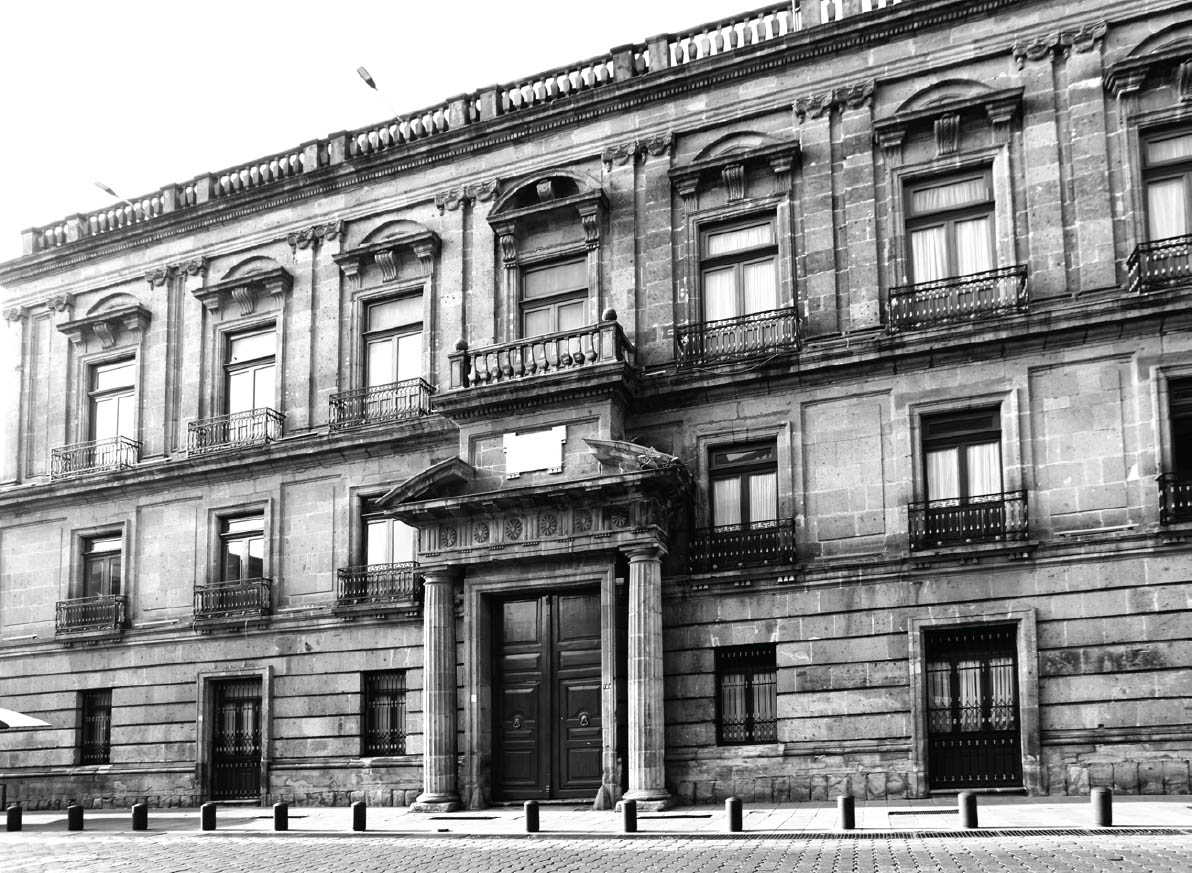
Figure 11.Photograph of the Palacio de Minería, where Mining Tribunal was held. One of the landmarks of downtown Mexico City, its durable grandeur obscures the failings of the organization it once housed. Photograph by Sandra Guerrero.
The Mining Tribunal survived its late 1780s crisis. It continued to receive a share of the seignorage fee, which assured it a steady income. But even Elhuyar was ready to concede in 1813, as the rebellion that would lead to Mexican Independence gathered force, that the Mining Tribunal had done next to nothing to contribute to the prosperity of mining. “Its income,” he wrote, “has served rather as a recourse for the Government than as the fund which the miners hoped would be used for their benefit.”108 The main beneficiary of the tribunal, it turned out, was the cash-strapped Spanish crown, which found it a useful intermediary to raise loans and donations.109 Perhaps this had been its purpose all along.
Fortunately, mining prospered in New Spain in spite of the tribunal. It continued to attract entrepreneurs, including many immigrants from Spain, eager to stake claims or take over old mines. The rising population of New Spain assured that operators rarely lacked workers willing to risk life and limb for partidos and above-average daily wages. Merchants still financed mining projects. And big miners continued to receive government support without any assistance from the tribunal. In fact, in the late 1780s, agreements like that pioneered by José Alejandro Bustamante and Pedro Romero Terreros at Real del Monte became standard in the industry. Beneficiaries included the Fagoaga family at Sombrerete, Juan Francisco Echarri in Oaxaca, Juan de Sierra y Uruñuela at Bolaños, and Miguel Pacheco Solís in Real del Monte.110 These men were all major operators, many of Basque descent, with good relationships with merchant-financiers and proven records of success. They were also among those who first criticized Velázquez de León and Lassaga back in 1782. By 1790 the crown had processed enough applications to develop a formula for these public-private arrangements. For instance, miners would receive reductions in royalties owed until the completion of a specific project, such as the excavation of a drainage adit. They received blasting powder at cost but not discounted mercury.111 This casuistic approach was what Gamboa had recommended in the Comentarios of 1761; the crown should support miners on a case-by-case basis.112 There was no need for a guild for miners, especially one with exclusive jurisdiction over legal matters. Perhaps its magnificent neoclassical headquarters, designed by Manual Tolsá and completed in 1813, known today as the Palace of Mining, has always given the false impression of the stature of the organization it once housed.