
At home, World War II transformed the role of the national government. FDR created federal agencies like the War Production Board, the War Manpower Commission, and the Office of Price Administration to regulate the allocation of labor, control the shipping industry, establish manufacturing quotas, and fix wages, prices, and rents. The number of federal workers rose from 1 million to 4 million, part of a tremendous growth in new jobs that pushed the unemployment rate down from 14 percent in 1940 to 2 percent three years later.
The government built housing for war workers and forced civilian industries to retool for war production. Michigan’s auto factories now turned out trucks, tanks, and jeeps for the army. By 1944, American factories produced a ship every day and a plane every five minutes. The gross national product rose from $91 billion to $214 billion during the war, and the federal government’s expenditures amounted to twice the combined total of the previous 150 years. The government marketed billions of dollars worth of war bonds, increased taxes, and began the practice of withholding income tax directly from weekly paychecks. Before the war, only the 4 million wealthiest Americans paid income taxes; by 1945, more than 40 million did so. The government, one historian writes, moved during the war from “class taxation” to “mass taxation.”
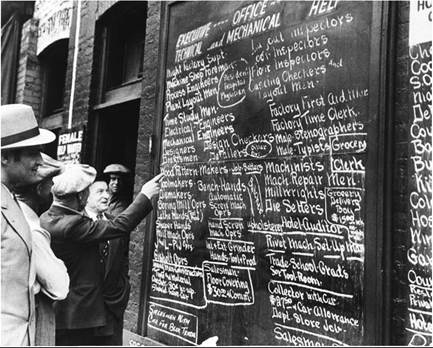
A list of jobs available in Detroit in July 1941 illustrates how war-related production ended the Great Depression even before the United States entered the conflict.