

In the last half of the twentieth century, the United States experienced profound changes both at home and in its role in the larger world. The Cold War produced increasing American involvement in the affairs of other nations across the globe. Sometimes indirectly, sometimes through direct military intervention, the United States sought to prevent the further spread of communism and to ensure the existence of governments friendly to American strategic and economic interests. The sudden and unexpected collapse of communism in the Soviet Union and eastern Europe between 1989 and 1991 left the United States by far the world’s foremost military power. At home, these years witnessed far-reaching changes in the nature of American society and a dramatic expansion in the rights of American citizens and their understandings of freedom.
On the surface, the decade of the 1950s seemed uneventful. It was a time of widespread affluence in the United States, the beginning of an unprecedented economic expansion that lasted until the early 1970s. Millions of Americans moved to the suburbs, where they enjoyed access to an astonishing array of consumer goods that poured out of American factories, including cars, television sets, and household appliances. The postwar “baby boom” dramatically increased the population. American understandings of freedom centered on the enjoyment of economic affluence and consumer choice within the context of traditional family life, with women finding fulfillment within their suburban homes.
Even during this time of “consensus,” when sharp political divisions and economic strife seemed to have vanished from American life, seeds of discontent sprouted. A few artists and social commentators began to criticize the stifling atmosphere of conformity. The Supreme Court’s decision in 1954 outlawing racial segregation in public schools, justified, in part, by the damage Jim Crow inflicted on the world standing of the United States in the Cold War, helped to inspire the revival of the struggle for racial justice. The Montgomery bus boycott of 1955 launched the southern phase of the civil rights movement, which forced the entire country to rethink whether the United States could genuinely call itself “the land of the free” if it confined millions of Americans to second-class citizenship.
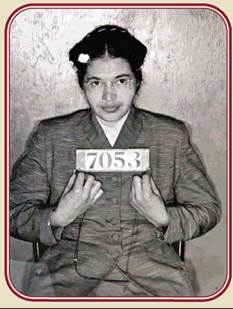
These seeds of protest flowered in the 1960s, a decade of social conflict and of dramatic expansion of the boundaries of American freedom. The civil rights revolution reached its climax with demonstrations throughout the South and the passage in 1964 and 1965 of national laws protecting blacks’ civil rights and restoring to them the right to vote in the South. Although the movement splintered thereafter and the nation failed to address adequately the economic plight of non-whites trapped in decaying urban ghettos, the 1960s ended with the structure of legal segregation having been dismantled. The black movement inspired other aggrieved groups—Latinos, Indians, homosexuals, and women—to press their own grievances and claim their own “liberation.” Their efforts further enlarged freedom’s boundaries and helped to propel the idea of freedom into the most intimate areas of life. Under the leadership of Chief Justice Earl Warren, the Supreme Court gave constitutional recognition to the “rights revolution.” By the end of the decade, both the meaning and the boundaries of freedom had expanded enormously.
At the same time, the country became more and more deeply involved in the Vietnam War. In this Cold War conflict, American policymakers viewed the nationalist movement in Vietnam, led by homegrown communists, as part of a worldwide conspiracy directed from Moscow. As the United States committed hundreds of thousands of soldiers to Vietnam in the mid-1960s, the foreign policy consensus disintegrated. For the first time in American history, college students took the lead in radical protest, organizing massive protests against the war. Political disaffection helped to spawn the counterculture, a youth rebellion against prevailing middle-class mores. Having brought twentieth-century liberalism to its high point with his Great Society programs that sought to uplift the poor, encourage the arts, and provide medical care to the aged and needy, President Lyndon B. Johnson saw his party split over the war and his public support disintegrate.
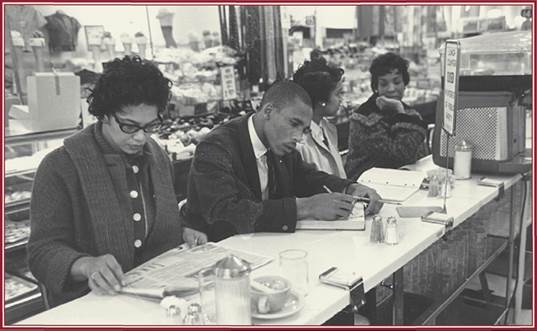

Known as a time of radical protest, the 1960s also spawned a conservative backlash against the civil rights movement, the sexual revolution, public disorder, and the expansion of federal power. During the 1970s and 1980s, businessmen, antigovernment activists, a Christian Right that sought to restore what it considered to be traditional moral values, and Cold Warriors who desired a reinvigorated anticommunist crusade came together in an increasingly powerful conservative coalition. Their rise to power was hastened by the end of the postwar economic boom in 1973 and the inability of President Jimmy Carter to address the slump effectively. In 1980, conservative Ronald Reagan was elected president, ushering in the Reagan Revolution.
Reagan drastically increased military spending, cut funding for some social programs, reduced taxes, and attacked labor unions. Like Franklin D. Roosevelt, he consciously sought to redefine the meaning of freedom, associating it with anticommunism, free enterprise, and reduced government intervention in the economy. Although he put into effect conservative economic policies, Reagan failed to halt the rights revolution that had begun in the 1960s. Throughout the 1980s and 1990s, many conservatives lamented the fact that fewer and fewer women were embracing the traditional role of homemaker and that gays were gaining more and more recognition of their rights. Although conservatives launched a furious campaign to overturn the Supreme Court’s 1973 decision legalizing abortion, they failed to achieve success. Moreover, thanks to a 1965 law that ended the national-origins quotas for immigrants, newcomers from Asia and Latin America poured into the United States, setting off political battles over the country’s increasingly visible racial and ethnic diversity.
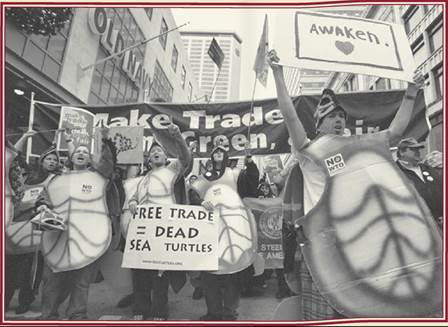
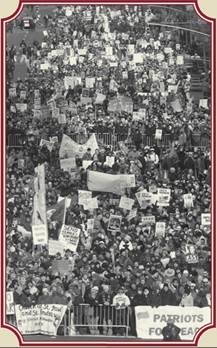
The abrupt end of the Cold War between 1989 and 1991 left the United States as the world’s lone superpower. This reinforced prevailing American understandings of freedom, emphasizing political democracy, free markets, and unrestrained individual choice in personal matters. During the 1990s, Americans became increasingly aware of the process of “globalization”—the international flow of people, investment, goods, and information across national boundaries. Some welcomed it as an expansion of economic freedom. Others worried that manufacturing jobs were leaving the United States for low-wage areas abroad and that crucial decisions affecting people’s day-to-day lives were being made by institutions like the World Bank and World Trade Organization, over which no democratic control existed.
Events at the dawn of the twenty-first century revealed the extent and limitations of American power. The attacks of September 11, 2001, which killed some 3,000 persons, highlighted the nation’s vulnerability at a time when terrorists, like goods and money, seemed able to cross national boundaries with ease. In response, President George W. Bush committed the United States to a “war on terrorism,” a war without easily definable enemies, a predictable timetable, or a clear definition of victory. The federal government claimed the power to arrest persons suspected of involvement with terrorism, primarily individuals of Middle Eastern origin, without charge and to hold them indefinitely. The 2003 Iraq War, launched by the United States and Great Britain over the opposition of most members of the United Nations, suggested that in the post-Cold War world, America no longer needed to build alliances or concern itself with world opinion. Although the invasion successfully overthrew the Iraqi dictator Sadaam Hussein, an anti-American insurgency soon developed, along with strife between Iraq’s Shiite and Sunni Muslims. By the end of 2006, the United States was bogged down in a seemingly interminable war, which was soon becoming increasingly unpopular at home.
These events raised anew vital questions already debated many times in the country’s history. What is the balance between civil liberties and security in times of crisis? What are the economic conditions of freedom? Should the country consider itself a democracy or an empire? Should certain groups have their rights diminished because of their racial or ethnic origins? The answers to these questions would go a long way toward defining the meaning and boundaries of American freedom in the twenty-first century.




• What were the main characteristics of the affluent society of the 1950s?
• How were the 1950s a period of consensus in both domestic policies and foreign affairs?
• What were the major thrusts of the civil rights movement in this period?
• What was the significance of the presidential election of 1960?
In 1958, during a “thaw” in the Cold War, the United States and the Soviet Union agreed to exchange national exhibitions in order to allow citizens of each “superpower” to become acquainted with life in the other. The Soviet Exhibition, unveiled in New York City in June 1959, featured factory machinery, scientific advances, and other illustrations of how communism had modernized a backward country. The following month, the American National Exhibition opened in Moscow. A showcase of consumer goods and leisure equipment, complete with stereo sets, a movie theater, home appliances, and twenty-two different cars, the exhibit, Newsweek observed, hoped to demonstrate the superiority of “modern capitalism with its ideology of political and economic freedom.” Yet the exhibit’s real message was not freedom but consumption—or, to be more precise, the equating of the two.
When Vice President Richard Nixon prepared for his trip to Moscow to launch the exhibition, a former ambassador to Russia urged him to emphasize American values: “We are idealists; they are materialists.”
But the events of the opening day seemed to reverse these roles. Nixon devoted his address, entitled “What Freedom Means to Us,” not to freedom of expression or differing forms of government, but to the “extraordinarily high standard of living” in the United States, with its 56 million cars and 50 million television sets. The United States, he declared, had achieved what Soviets could only dream of—“prosperity for all in a classless society.”
The Moscow exhibition became the site of a classic Cold War confrontation over the meaning of freedom—the “kitchen debate” between Nixon and Soviet premier Nikita Khrushchev. Twice during the first day Nixon and Khrushchev engaged in unscripted debate about the merits of capitalism and communism.

Vice President Richard Nixon and Soviet premier Nikita Khrushchev during the “kitchen debate,” a discussion, among other things, of the meaning of freedom, which took place at the 1959 American National Exposition in Moscow.
The first took place in the kitchen of a model suburban ranch house, the second in a futuristic “miracle kitchen” complete with a mobile robot that swept the floors. Supposedly the home of an average steelworker, the ranch house was the exhibition’s centerpiece. It represented, Nixon declared, the mass enjoyment of American freedom within a suburban setting—freedom of choice among products, colors, styles, and prices. It also implied a particular role for women. Throughout his exchanges with Khrushchev, Nixon used the words “women” and “housewives” interchangeably. Pointing to the automatic floor sweeper, the vice president remarked that in the United States “you don’t need a wife.” Nixon’s decision to make a stand for American values in the setting of a suburban kitchen was a brilliant stroke. Nixon recognized that “soft power”—the penetration across the globe of American goods and popular culture—was an even more potent form of influence than military might. Indeed, his stance reflected the triumph during the 1950s of a conception of freedom centered on economic abundance and consumer choice within the context of traditional family life—a vision that seemed to offer far more opportunities for the “pursuit of happiness” to men than women. In reply, Khrushchev ridiculed consumer culture and the American obsession with household gadgets. “Don’t you have a machine,” he quipped, “that puts food in the mouth and pushes it down?” Many of the items on display, he continued, served “no useful purpose.” Yet, in a sense, the Soviet leader conceded the debate when he predicted—quite incorrectly—that within seven years his country would surpass the United States in the production of consumer goods. For if material abundance was a battleground in the Cold War, American victory was certain.
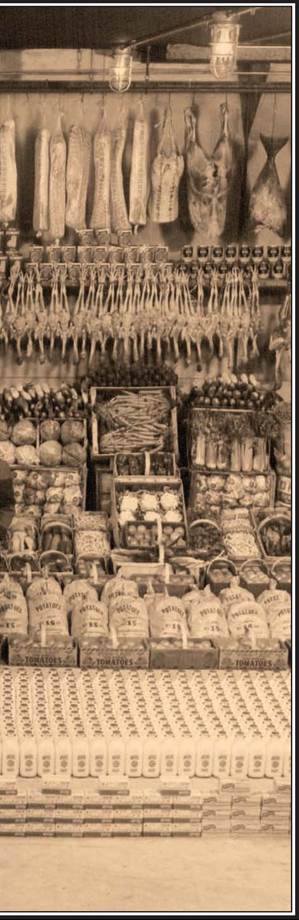
The end of World War II was followed by what one scholar has called the “golden age” of capitalism, a period of economic expansion, stable prices, low unemployment, and rising standards of living that continued until 1973. Between 1946 and 1960, the American gross national product more than doubled and much of the benefit flowed to ordinary citizens in rising wages. In every measurable way—diet, housing, income, education, recreation—most Americans lived better than their parents and grandparents had. By 1960, an estimated 60 percent of Americans enjoyed what the government defined as a middle-class standard of living. The official poverty rate, 30 percent of all families in 1950, had declined to 22 percent a decade later (still, to be sure, representing more than one in five Americans).
Numerous innovations came into widespread use in these years, transforming Americans’ daily lives. They included television, home air-conditioning, automatic dishwashers, inexpensive long-distance telephone calls, and jet air travel. Services like electricity, central heating, and indoor plumbing that within living memory had been enjoyed only by the rich and solidly middle class now became features of common life.
Despite the economic recovery of western Europe and Japan after World War II, the United States remained the world’s predominant industrial power. Major industries like steel, automobiles, and aircraft dominated the domestic and world markets for their products. Like other wars, the Cold War fueled industrial production and promoted a redistribution of the nation’s population and economic resources. The West, especially the Seattle area, southern California, and the Rocky Mountain states, benefited enormously from government contracts for aircraft, guided missiles, and radar systems. The South became the home of numerous military bases and government-funded shipyards. Growth in the construction of aircraft engines and submarines counterbalanced the decline of New England’s old textile and machinery industries, many of which relocated in the South to take advantage of low-cost nonunion labor.
In retrospect, the 1950s appear as the last decade of the industrial age in the United States. Since then, the American economy has shifted rapidly toward services, education, information, finance, and entertainment, while employment in manufacturing has declined. Even during the 1950s, the number of factory laborers fell slightly while clerical workers grew by nearly 25 percent and salaried employees in large corporate enterprises rose by 60 percent. Unions’ very success in raising wages inspired employers to mechanize more and more elements of manufacturing in order to reduce labor costs. In 1956, for the first time in American history, white-collar workers outnumbered blue-collar factory and manual laborers.
The long-term trend toward fewer and larger farms continued. During the 1950s, the farm population fell from 23 million to 15 million, yet agricultural production rose by 50 percent, thanks to more efficient machinery, the application of chemical fertilizers and insecticides, increased use of irrigation to open land to cultivation in the West, and the development of new crop strains. The decade witnessed an acceleration of the transformation of southern life that had begun during World War II. New tractors and harvesting machinery and a continuing shift from cotton production to less labor-intensive soybean and poultry raising reduced the need for farm workers. More than 3 million black and white hired hands and sharecroppers migrated out of the region. The center of gravity of American farming shifted decisively to Texas, Arizona, and especially California. The large corporate farms of California, worked by Latino and Filipino migrant laborers, poured forth an endless supply of fruits and vegetables for the domestic and world markets. Items like oranges and orange juice, once luxuries, became an essential part of the American diet.
Figure 24.1 REAL GROSS DOMESTIC PRODUCT PER CAPITA, 1790-2000
