
The high point of protest came in the spring of 1963, when demonstrations took place in towns and cities across the South, dramatizing black discontent over inequality in education, employment, and housing. In one week in June, there were more than 15,000 arrests in 186 cities. The dramatic culmination came in Birmingham, Alabama, a citadel of segregation. Even for the Deep South, Birmingham was a violent city— there had been over fifty bombings of black homes and institutions since World War II. Local blacks had been demonstrating, with no result, for greater economic opportunities and an end to segregation by local businesses.
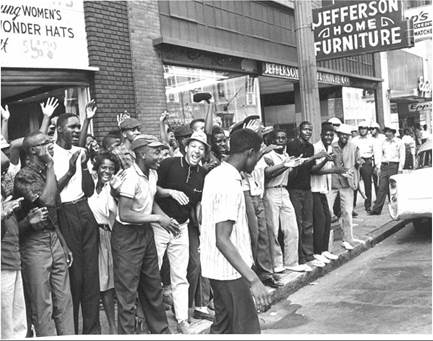
Demonstrators in downtown Birmingham, Alabama, during the civil rights campaign of 1963.
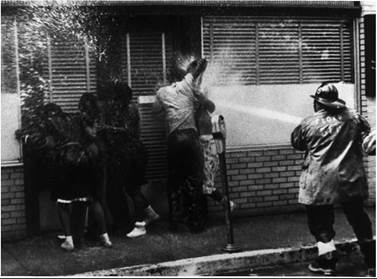
A fireman assaulting young African-American demonstrators with a high-pressure hose during the climactic demonstrations in Birmingham. Broadcast on television, such pictures proved a serious problem for the United States in its battle for the “hearts and minds” of people around the world and forced the Kennedy administration to confront the contradiction between the rhetoric of freedom and the reality of racism.
With the movement flagging, some of its leaders invited Martin Luther King Jr. to come to Birmingham. While serving a nine-day prison term in April 1963 for violating a ban on demonstrations, King composed one of his most eloquent pleas for racial justice, the “Letter from Birmingham Jail.” Responding to local clergymen who counseled patience,
King related the litany of abuses faced by black southerners, from police brutality to the daily humiliation of having to explain to their children why they could not enter amusement parks or public swimming pools. The “white moderate,” King declared, must put aside fear of disorder and commit himself to racial justice.
In May, King made the bold decision to send black schoolchildren into the streets of Birmingham. Police chief Eugene “Bull” Connor unleashed his forces against the thousands of young marchers. The images, broadcast on television, of children being assaulted with nightsticks, high-pressure fire hoses, and attack dogs produced a wave of revulsion throughout the world and turned the Birmingham campaign into a triumph for the civil rights movement. It led President Kennedy, as will be related later, to endorse the movement’s goals. Leading businessmen, fearing that the city was becoming an international symbol of brutality, brokered an end to the demonstrations that desegregated downtown stores and restaurants and promised that black salespeople would be hired.
But more than these modest gains, the events in Birmingham forced white Americans to decide whether they had more in common with fellow citizens demanding their basic rights or with violent segregationists. The question became more insistent in the following weeks. In June 1963, a sniper killed Medgar Evers, field secretary of the NAACP in Mississippi. In September, a bomb exploded at a black Baptist church in Birmingham, killing four young girls. (Not until the year 2002 was the last of those who committed this act of domestic terrorism tried and convicted.)