
In a decade full of surprises, perhaps the greatest of all was the emergence of the movement for gay liberation. Efforts of one kind or another for greater rights for racial minorities and women had a long history. Homosexuals, wrote Harry Hay, who in 1951 founded the Mattachine Society, the first gay rights organization, were “the one group of disadvantaged people who didn’t even think of themselves as a group.” Gay men and lesbians had long been stigmatized as sinful or mentally disordered. Most states made homosexual acts illegal, and police regularly harassed the gay subcultures that existed in major cities like San Francisco and New York. McCarthyism, which viewed homosexuality as a source of national weakness, made the discrimination to which gays were subjected even worse. Although homosexuals had achieved considerable success in the arts and fashion, most kept their sexual orientation secret, or “in the closet.”
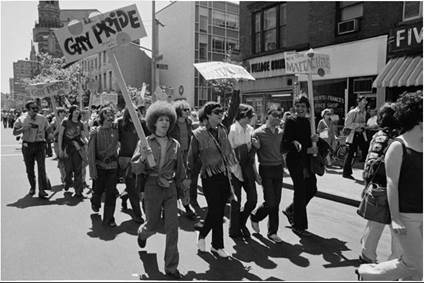
Part of the Gay Liberation Day demonstration in New York City in June 1970.
The Mattachine Society had worked to persuade the public that apart from their sexual orientation, gays were average Americans who ought not to be persecuted. But as with other groups, the Sixties transformed the gay movement. If one moment marked the advent of “gay liberation,” it was a 1969 police raid on the Stonewall Bar in New York’s Greenwich Village, a gathering place for homosexuals. Rather than bowing to police harassment, as in the past, gays fought back. Five days of rioting followed, and a militant movement was born. Gay men and lesbians stepped out of the “closet” to insist that sexual orientation is a matter of rights, power, and identity. Prejudice against homosexuals persisted. But within a few years, “gay pride” marches were being held in numerous cities.