
11
It was never my intention in this book to provide an up-to-date region by region summary of sites and sequences nor to promote a preferred interpretation for the Acheulean at any point in its long existence. Both would date very quickly. My goal was instead to provide students of the Palaeolithic with a fuller appreciation of the history of the subject, how the things archaeologists (and others) have said about handaxes and other palaeoliths–and the humans behind them–must be seen in both the empirical and theoretical context in which they were uttered, and how some ideas might still have relevance and resonance today. In other words, a guidebook to interpreting the Lower Palaeolithic. Some form of conclusion is still required, however, and a brief précis of the modern global Lower Palaeolithic and the types of major, global questions we still need to ask seems to be appropriate, even if just for those who have skipped to the last chapter looking for a modern synthesis.
African Origins and Evolutions
The earliest Acheulean is currently found in East Africa at Kokiselei (Lepre et al. 2011) dated to 1.76 ma BP, with LCTS at Konso-Gardula (Beyene et al. 2013), Olduvai Gorge FLW West (Díez-Martín et al. 2015), Gona (Semaw et al. 2013), Peninj (Torre et al. 2008), Gadeb (Torre 2011b) and Melka Kunture (Gallotti et al. 2014; Gallotti and Mussi 2017) dating to a slightly younger 1.7–1.5 ma BP. At present, it seems that the Acheulean developed ~200, 000 years after the appearance of Homo erectus, the earliest of which are currently the ~2 ma BP DNH134 skull from Drimolen (Herries et al. 2020) and disputed 1.87 ma BP occipital fragment KNM-ER 2598 from Turkana (Lepre and Kent 2015).
These early localities contain LCTs including handaxes, cleavers and picks, made using both large flakes and cobbles of a range of local materials, are within 1,000km of each other and overlap with sites attributed to the Oldowan and DOB. Despite being generally described as crude, a small number of early handaxes show a definite concern for form and symmetry (Lepre et al. 2011), and at FLK West crude LCTs were found in the same horizon as well made bifacial handaxes, showing that by 1.7 ma BP hominins at Olduvai could produce very sophisticated tools if they so desired (Díez-Martín et al. 2015). The variable frequency and type of handaxes in two different areas of the TK site at Olduvai Bed II (TKLF and TLSF) was similarly explained in terms of flexible technology that varied according to raw materials, activity differences and duration of occupation, rather than cultural or species differences (Dom et al. 2015; Rubio-Jara et al. 2017). Sharon (2007 inter alia) has labelled these early African Industries and their regional counterparts the Large Flake Acheulean.
In southern Africa, the Early Acheulean is found by ~1.7–1.5 ma BP at Sterkfontein (Kuman and Clarke 2000; Herries and Shaw 2011), 1.57 ma BP at Rietputs (Gibbon et al. 2009) and by 1.5 ma BP at Wonderwerk Cave (Chazan 2015) and Canteen Koppie (Lotter 2020). In unit 2b at the last site, dated to ~1.2 ma BP, the Victoria West and Levallois techniques were already in use to strike large flakes for handaxes and cleavers (Sharon and Beaumont 2006; Li et al. 2017b). The current age of the first Acheulean industry in North Africa, on the other hand, is still only ~1.3 million years old (Gallotti et al. 2021), although this will probably increase again.
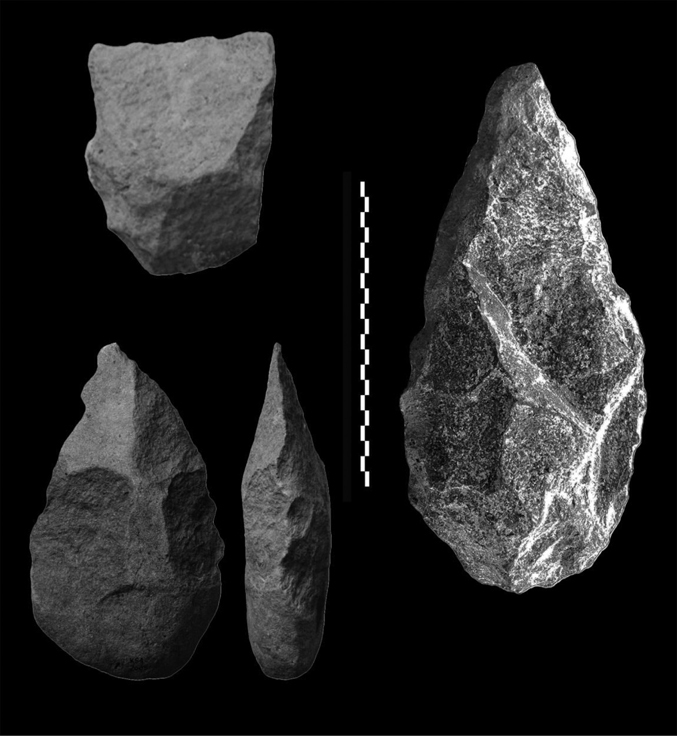
Figure 11.1 1.75 ma BP LCTS from the Early Acheulean of Africa. Top left: cleaver from Konso (after Beyene et al. 2013); bottom left: Kokiselei (after Lepre et al. 2011); right: FLKW L6 Olduvai (after Díez-Martín et al. 2015).
There can be little serious question that the Acheulean evolved from simpler Oldowan-style technologies that stretch back at least as far as 3.3 ma BP, although transitional industries have not yet been identified, with the possible exception of Kokiselei 5 (West Turkana) which has been suggested to show technological features that developed into the Acheulean (Texier et al. 2006). Gowlett (1986) argued that the bifacial flaking of discoidal cores in the Oldowan shared many of the procedures and templates as LCT manufacture and might have provided the inspiration for them. Such cores provided a ‘compactness’ of form from which to draw the ‘design imperatives’ shared by all LCT: a globular butt, forward and lateral extension and thickness adjustments, producing supports for robust cutting edges and sitting comfortably in the hand (Gowlett 2006a). If, however, the key development between the Acheulean and Oldowan was the ability to strike large flakes (>10cm) then, as Isaac (1969) argued, the transition depended on a single technological step, which by its very nature could not have been discovered gradually but must have been almost instantaneous. The Acheulean thus involved two innovations, two-phased production and imposition of form, with hominins first using a large core to strike a large flake, and then imposing a specific form onto the resulting blank.
Cognitively this should not be underestimated, as it shows levels of planning and design not present in the Oldowan (Wynn 1979; Gowlett 2006a). Neural imaging studies using modern experimenters have shown that the frontal and parietal regions of the brain are fired during knapping, with greater bilateral activity in the two hemispheres when making handaxes than when making Oldowan cores (Stout et al. 2008, 2011, 2014; Hecht et al. 2015). Morphometric studies have also shown that these same two regions experienced greater relative growth compared to the rest of the brain during the Lower and Middle Pleistocene (Bruner 2010; Bruner and Holloway 2010). As both tasks require comparable manipulative complexity using a variety of grips in both hands, the differences in brain activation probably relates to the greater cognitive loads imposed by the hierarchical and structured organisation of handaxe manufacture (Faisal et al. 2010; Shipton 2018): the Acheulean was cognitively demanding. The ability to strike large flakes was further facilitated by the modern hand and wrist morphology (Ward et al. 2014) and large body size seen in Homo erectus, which gave them the dexterity and strength to create large flakes in the first place (Key and Lycett 2017b). It is possible, then, that the absence of any transitional Oldowan-Acheulean core-tool is because handaxes evolved out of developments in debitage, as a way of trimming the innovative large flakes to a suitable size and shape, as ‘supports for tools’ (cf. Boëda 1997). The form was then perhaps retrofitted onto other blank types (cobbles), in doing so creating the new technological system of façonnage as well as the ‘handaxe as a tool’.
Few workers would today uphold any technological, typological, chronological or theoretical reasons to maintain the distinction between the Developed Oldowan B and Acheu-lean: both contain LCTS and both are considered to belong to a diverse Early Acheulean which saw the contemporaneous use of different and flexible chaînes opératoires across the landscape (Semaw et al. 2009; Torre and Mora 2005, 2014). This might also be true of the non-LCT industries that occurred contemporaneously with the Acheulean, such as the Karari Industry from Koobi Fora (Harris and Isaac 1976), where the famous core-scrapers have recently been re-interpreted as single platform cores (Braun et al. 2008), and other Developed Oldowan-like core and flake assemblages from West Turkana (Delagnes et al. 2006; Roche 2011); Koobi Fora (Isaac et al. 1997); Chesowanja (Gowlett et al. 1981); Olorgasailie (Isaac 1977a); Peninj ST (Torre et al. 2008); Nyabusosi (Uganda: Texier 1995, 2001); Mwanganda’s Village, Malawi (Clark and Haynes 1970); and the Middle Awash in Ethiopia (Heinzelin et al. 2002; Schick and Clark 2003).
Several authors have argued that while a single handaxe or other LCT is enough to assign an assemblage to the Early Acheulean, in their absence it should still be possible to distinguish the Oldowan from Acheulean occupations that left no handaxes behind, because of the increase in structured methods of small debitage production and modification (Gowlett 1986; Torre 2009, 2011a, 2011b; Torre et al. 2008). Of the sites mentioned, de la Torre (2016) suggests Chesowanja, Nyabusosi and Peninj show the use of more structured systems of small and large debitage that connect them to the flaking strategies of the early Achuelean.
The LCT might be the hallmark of the Acheulean, but it was by no means its only novel feature, although like handaxes, structured systems of small debitage were not always present; sometimes LCTS occurred with only simple systems of debitage (Torre 2011a, 2016). It is thus vital to study the composition of the whole assemblages in order to classify the technological strategies employed on each site before making interpretations. The Early Acheulean also differed from the Oldowan in terms of greater levels of mobility, raw material selection and management, spatial separation of different activities and higher-intensity stone tool manufacture (Roche et al. 2003; Harmand 2009; Torre 2009; Gallotti et al. 2010,2014; Raynal et al. 2001, 2011). The possibility remains, however, that some of the variation was not related to activities and individuals spread across a landscape but involved different groups or different species who co-existed at this time (cf. Torre 2016).
There is still debate concerning the supposedly monotonous nature of the African Acheu-lean. There is undoubtedly considerable variation in the shape, refinement, symmetry and general finesse of handaxes over the 1.5-million-year span of the Acheulean, but opinion differs whether there is a gradual improvement in knapping techniques over time, or if variation is unrelated to age but pertains to materials and economic factors. In a comparison of Lower and Middle Pleistocene handaxes from South Africa and Britain, ranging in age from 1.5 ma BP to ~300 ka BP, McNabb (2013) found no evidence that hominins paid greater attention to shape and morphological regularity over time, with no diachronic trends on either continent. Li et al. (2018a) likewise found that Acheulean handaxes from Rietputs and the Cave of Hearths in South Africa were metrically indistinguishable, despite being separated by 800 ka, although the later sample did show a greater investment in shaping that did not register on statistical analyses.
If South Africa remained a conservative outpost, other regional studies have detected a significant shift around 1 ma BP to 850 ka BP, when rudimentary LCTs were replaced by more elaborate handaxes, as seen at Konso-Gardula (Kenya) (Dom et al. 2017) and Melka Kunture (Ethiopia) (Gallotti and Mussi 2017). Shipton (2018) compared refinement, edge straightness and symmetry, variables thought to reflect ‘difficult’ aspects of handaxe manufacture, in assemblages from Olduvai Gorge, Olorgesailie and Kariandusi. He found that over short timescales factors such as rock type, blank type, reduction intensity, knapping errors and invasive flaking obscured any temporal developments, but over longer timescales trends were apparent. This was also the period when hominin brain size began to exceed 1,000cc, without any increase in body size (Rightmire 2001, 2009), and when hominin life-history began to include a longer childhood and adolescence (Nowell and White 2010).
At Melka Kunture, Gallotti and Mussi (2017) have identified ‘two Acheuleans’ that could not be considered to be part of a single uniform entity but showed strong technological discontinuities within the period 1 ma BP to 850 ka BP. At 1.5 ma BP LCTs were rare and were often little more than minimally retouched large flakes that had been produced from local rocks with limited control over size and volume. Hominins took advantage of flakes with inherent bifacial and bilateral ‘equilibrium’ and two convergent edges. By 1 ma BP, there was a surge in production of handaxes and cleavers, made from a range of novel debitage systems including Kombewa and Victoria West, which controlled the shape and size of the flakes. Shaping was aimed at maximising bilateral/bifacial equilibrium. Later Acheulean hominins were also more selective in the use of fine-grained raw materials, which they transported up to 15–20km. They suggested that these steps marked the evolution of Homo heidelbergensis from Homo erectus.
A similar pattern of developments has been reported from the Awash Valley, Ethiopia (Schick and Toth 2017), where after 1 ma BP handaxes became smaller, more refined and less elongated, were more heavily flaked and showed greater attention to symmetry and shape standardisation. The use of soft hammers and Kombewa method of flake production also increased. Schick and Toth also linked this shift to the transition from Homo erectus to Homo heidelbergensis, which they regarded as a more intelligent hominin possessed of more technological flair and the ability to maintain stronger social rules and traditions.
First Steps Out of Africa
Hominins with a recognisable Lower Palaeolithic toolkit first appear outside of Africa ~2.2 and 1.8 ma BP at sites such as Riwat (Pakistan), the Nihewan Basin (China), Java and Dmanisi (Georgia), part of a dispersal event that took place prior to the emergence of the Acheu-lean and which is marked across the Old World by Mode I core and flake assemblages. At Dmanisi, this assemblage is associated with five small-brained and highly dimorphic human skulls of controversial taxonomic status, and it has been suggested that they represent more than one palaeodeme (Rightmire et al. 2006; Martinón-Torres et al. 2007, 2008). Rightmire et al. (2006) suggested that despite some habiline characteristic they were best placed within Homo erectus, proposing the sub-species designation Homo erectus georgicus. De Lumley et al. (2006), on the other hand, considered them to be closest to Homo rudolfensis. More recently Rightmire et al. (2017) have proposed that the Dmanisi fossils are an intermediate stage in an evolving lineage from Homo habilis-Homo erectus but could not unequivocally be assigned to either (Vallverdú 2014). According to Dennell, these early human travellers moved through the Levant and along corridors of familiar grassland habitats into Asia (Dennell 2006, 2011) before moving into Mediterranean Europe between 1.6–1.2 ma BP.
The oldest European sites likewise contain only Mode I industries and are united by a lack of LCTs and the use of opportunistic unifacial and multiple platform methods, with occasional bipolar and discoidal flaking (Moncel et al. 2015). The oldest claimed sites are currently Lézignan-le-Cébe, Hérault, France, which has been dated by Ar-Ar on overlying basalts to at least 1.57 ma BP (Crochet et al. 2009), and Pirro-Nord, Italy, dated to ~1.6–1.3 ma BP on biostratigraphical grounds (Arzarello and Peretto 2010; Arzarello et al. 2012, 2015, 2016). Other sites dated to >1 ma BP include Fuente Nueva 3 and Barranco León 5 at Orce, Spain (~1.4–1.2 ma BP; Oms et al. 2000a, 2000b; Moyano et al. 2011; Blain et al. 2016); Sima de Elefante TE9, Atapuerca, Spain (~1.2 ma BP; Carbonell et al. 2008); and Pont-de-Lavaud in the Creuse Valley (~1.1 ma BP; Despriée et al. 2006). Semi-continuous occupation of these Mediterranean and southern European landscapes is further attested by a series of sites dating to between ~1 ma BP and ~800 ka BP the Trinchera Dolina Levels 6 and 4 at Atapuerca, Spain (~960 ka BP; Berger et al. 2008); Vallparadis, Barcelona, Spain (~830 ka BP; Martínez et al. 2010); Ca’ Belvedere di Monte Poggiolo, Italy (~1 ma BP; Gagnepain et al. 1999; Peretto et al. 1998); Lunery-Rosières, Cher Valley and Pont-de-la-Hulauderie, Loire Valley, France (~930 ka BP and ~980 ka BP respectively; Voinchet et al. 2010). At 850 ka BP and again at 750 ka BP, these Mode 1 using hominins reached northern Europe, with a presence at Happisburgh 3 and Pakefield in the British Isles (Parfitt et al. 2005, 2010).
The only human fossils found in association with the western European Mode I Early Palaeolithic are from Trinchera Dolina Level 6 and Sima de Elefante Level TE9 at Atapuerca, Spain. These have been classified as Homo antecessor and Homo sp. cf. antecessor, with Bermúdez de Castro et al. (2010) arguing that they represent an Early Pleistocene dispersal from the east, having evolved from the Dmanisi humans. They are further considered the probable ancestor of the European Middle Pleistocene hominin lineage that includes Homo heidelbergensis and Homo neanderthalensis, and the last common ancestor between the Neanderthal and modern human lineages, later inbreeding notwithstanding (Bermúdez de Castro et al. 1997, 2010; Carbonell et al. 2008; Martinón-Torres et al. 2008).
The challenges that these humans needed to overcome in order to colonise the northern latitudes of Eurasia–reduced temperatures, reduced daylight hours, periods of snow and freezing conditions, highly seasonal resources, high energetic costs and a potentially poor diet–should not be underestimated (White 2006b; Hosfield 2016, 2020). Some of the issues could be solved by logistical mobility, long-distance annual shifts, a varied fat and plant-rich diet or by just accepting poor general health, but winter survival depended on more than physiological toughness or high tolerance to cold and must have included a range of cultural solutions. This is difficult to reconcile with the currently accepted models that humans did not have control over fire before 400 ka BP (Roebroeks and Villa 2011), did not construct artificial shelters and possessed only simple, untailored clothing at best (Gilligan 2010; Wales 2012). As I have argued elsewhere (Pettitt and White 2012), the absence of fire in Europe is likely to be an artefact of preservation. With the claims for hearths at Schöningen now retracted (Stahlschmidt et al. 2015), all known instances of humanly controlled fire are in calcareous environments with exceptional preservation. Fire traces would tend not to preserve on most normal sites–those situated along the banks of rivers–and while the preservation at Boxgrove and Schöningen is potentially good enough to preserve evidence of burning, had it been taking place, I have a hunch that its absence is not because hominins could not control fire, but because a hunting ground was not considered a good place to start one, especially if you didn’t want to provide your intended prey with clear visual, aural and olfactory evidence of your presence.
Other factors may have made Europe an attractive place. Contrary to Turner (1992), who argued that the diverse range of carnivore taxa in Europe during the Lower Pleistocene would have provided stiff competition for dispersing hominins, Rodríguez and Mateos (2018) have suggested that while carnivore diversity was high, in southern Europe they occurred at much lower densities than in contemporaneous African savannah ecosystems. This suggests that hominin-carnivore encounter rates would have been lower in Europe, providing an ideal habitat for an opportunistic omnivore.
The Acheulean World
The first handaxes to occur outside of Africa appear in the archaeological record after 1.6 ma BP. The oldest known are currently those from Attirampakkam, India, dated by palaeo-magnetism and cosmogenic nucleotides to 1 to 1.5 ma BP (with a pooled age of 1.51 ma BP,Pappu et al. 2011), a discovery which has put an end to an emergent Long vs Short Chronology debate in India (Mishra et al. 2010; Chauhan 2010; Gaillard et al. 2010a, 2010b), and made the 1.1 ma BP age of LCTS and giant cores from Isampur (Paddayya et al. 2006) less of an outlier. At Attirampakkam, the Early Pleistocene sequence showed that technological behaviour was already well-organised across the landscape, the site representing a place where large flakes and preforms were brought from a quarry site and finished into a range of LCTs and small tools. There was long-term continuity in the methods employed, suggesting that populations were stable–the only differences were in the proportion of waste, which probably related to changes in the organisation of technology over time (Akhilesh and Pappu 2015). Crude, heavy handaxes (often little more than bifacial cores) dated to 1.4–1.2 ma BP are also found at ‘Ubeidiya in Israel, while Homo erectus had certainly passed into Turkey by 1.2 ma BP, as shown by the human fossils from travertine deposits at Kocabaş (Lebatard et al. 2014), although most of the known handaxes and cleavers finds from Anatolia have no context, and none are certainly older than ~400–500 ka BP (Taşkıran 2018).
Despite the fact that hominins with a Mode I technology were already in Eurasia, and that these populations show some evolutionary continuity with Middle Pleistocene Europeans, the appearance of handaxes outside of Africa is most commonly regarded as signalling a second dispersal from Africa by an evolved form of Homo erectus (such as Homo heidelbergensis) with knowledge of handaxe manufacture, beginning around 1.5 ma BP. This dispersal appears to have been restricted to the Eastern Mediterranean and India, presumably passing through Arabia, Iraq, Iran and Pakistan along the way, although a lack of dated sites on the predominantly deflated surfaces (the oldest of which is presently 300,000 years old: Shipton et al. 2018; Scerri et al. 2018) obscures the picture.
In Western Europe the earliest LCTs are those from Barranc de la Boella, Spain, palaeo-magnetically dated with certainty to >781 ka BP, and which could be as old as 960 ka BP (Vallverdú et al. 2014). Two LCTs have been found, a crude pick made on a split cobble and a cleaver on a flake, both made of local schist and associated with the butchering of an elephant carcass (Mosquera et al. 2015a, 2015b, 2016). Typologically and technologically these would sit well within the Early Acheulean of Africa and Western Asia, they are isolated cases that may represent the ad hoc production of unusual tools, rather than a part of a longer lasting tradition (Moncel et al. 2015). Other claims for an Early Acheulean in Spain, at the supposedly ~760 ka BP site at Solana del Zamborino, and ~900 ka BP occurence at Estrecho del Quípar in the Guadix-Bazo Basin (Scott and Gibert 2009), have recently been redated to between 300 and 480 ka BP (Álvarez-Posada et al. 2017; cf. Jiménez-Areans et al. 2011).
Later Acheulean assemblages in India and the Eastern Mediterranean show a similar pattern of development to that seen in Africa. By 750 ka BP at GBY in Israel, different types of handaxes were being made on different raw materials using specific châine opératoire, those on flint being particularly well-made (Sharon 2010). Shipton et al. (2014) have also statistically demonstrated the differences between the Indian Early Acheulean handaxes (Morgaon, Isampur, Singi Talav, older than 600 ka), and Indian Later Acheulean handaxes (Bhimbetka, Teggihalli, Mudnur and Patpara, younger than 600 ka). Trends over time included increases in refinement (TH/B), in flake-scar density, in the use of prepared flake blanks, in the selection for cryptocrystalline rocks and in biface size variation, accompanied by decreases in LCT size, elongation, handaxe frequency and shape variation. In both regions it is possible that these developments occurred in situ among existing Acheulean populations, although the clear African affinities of the Large Flake Acheulean, Kombewa and Levallois techniques at GBY has led Goren-Inbar (Goren-Inbar and Saragusti 1996; Goren-Inbar et al. 2000) to suggest that in the Levant the two Acheuleans represent two distinct waves out of Africa, the second part of the widespread Large Flake Acheulean also found in India, Arabia and Spain with clear affinities to African Middle Pleistocene assemblages (Goren-Inbar and Sharon 2006; Sharon 2007, 2009, 2011; Mishra et al. 2010).
Some regions of Spain show a more-or-less continuous record of Large Flake Acheulean with African affinities from MIS 15 to MIS 6, joined ~400 ka BP by Early Middle Palaeolithic technologies arguably deriving from northern Europe (Ollé et al. 2016; Rubio-Jara and Panera 2019; Méndez-Quintas et al. 2020). The continuous occupation throughout the Galleria and Gran Dolina at Atapuerca reveals a general stability in technology and behaviour from MIS 15 to MIS 9, although there were clear developments in size, shape and technology over time. In the older Acheulean layers, LCTS were mainly oval, made on quartzite cobbles that had been worked only at the margins and tip, but showing clear attention to ‘the silhouette’ (i.e. symmetry) with fine finishing removals. Cleavers were common. In the younger Acheulean layers, by contrast, handaxes were smaller, most often made on large flakes and showed less attention to the silhouette; the modal form was more triangular, cleavers were absent (García-Medrano et al. 2015). The industry from TD10 showed a greater frequency of small and medium sized flake tools compared to LCTs, which may have resulted from an emphasis on different activities in the two caves. Ollé et al. (2016) note that the lithic changes in TD10 were accompanied by other developments, including regular monospecific hunting, the long term use of the cave as a base camp, and hafting of stone tools. In general, the Spanish Acheulean is characterised by frequent handaxes and cleavers, often made on coarse-grained non-flint raw materials, and forms part of the Large Flake Acheulean (Preysler et al. 2018; Santonja and Villa 2006; Sharon and Barsky 2016). The 400 ka BP Acheulean industry from Gruta de Aroeira, Portugal, associated with a human skull showing the mosaic of morphological characteristics typical of European Middle Pleistocene hominins, also has elements of the Large Flake Acheulean, and although it lacks cleavers, these are present in other assemblages in the region (Daura et al. 2017, 2018).
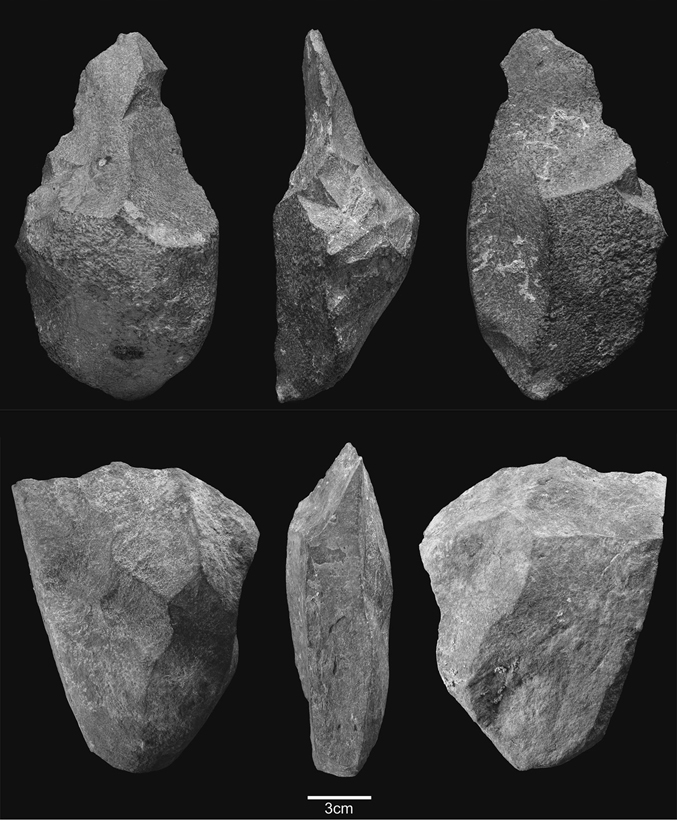
Figure 11.2 Early Acheulean LCTs from Barranc de la Boella, Spain (after Mosquera et al. 2016). Cleaver-like tool and pick are both made of schist and both from Layer 2 (© Andreu Ollé IPHES-CERCA).
The site of La Noira in the Cher Valley of Central France has also been dated to 700 ka BP (MIS 17; Moncel et al. 2013, 2015, 2018a, 2020). Here debitage was structured around the production of large flakes for heavy-duty tools and small flakes for light-duty tools, with handaxes on naturally flat slabs of millstone (one of the better rock types used at the site) and showing the use of soft hammer, clear attention to symmetry and regularisation of the edges by retouch; they were associated with two flake cleavers. Moncel et al. (2020) detected a number of typical ‘African’ characteristics not shared with the European Early Palaeolithic Mode I assemblages, including hierarchical bifacial cores, diverse core technology and the variety of heavy-duty tools, again leading them to suggest an African origin for the la Noira assemblage, part of a dispersal event that saw Homo heildelbergensis spread from Africa into Europe, although the morphological diversity of the European fossils suggests a more complex picture (Bermúdez de Castro and Martinòn-Torres 2013).
Handaxe sites become far more numerous in Western Europe after 650 ka BP, with MIS 16–15 occupation testified in the south of France at Arago Levels P-T (Falguères et al. 2015) and all four caves at Atapuerca (Ollé et al. 2016). The Acheulean that appeared in Italy, northern France and Britain during ~MIS 16–15 (~650 ka BP), however, is markedly different from the Large Flake Acheulean, and has more in common with nodule-based assemblages of the east (Sharon and Barsky 2016). The earliest Acheulean settlers here would have had to adjust to different raw material packages, flint nodules and cobbles, that required new systems of façonnage and which might help explain why the MIS 15 Acheulean handaxes in Britain (Warren Hill, Brandon, Farnham, Fordwich: White et al. 2018b; Moncel and Ashton 2018), northern France (Abbeville: Antoine et al. 2016) and Italy (Notarchirico: Moncel et al. 2019) are all cruder than their age would really demand, but from MIS 13 onwards handaxe assemblages are finely crafted with a soft hammer and specialised finishing techniques. When flake blanks were employed, they were generally treated in the same fashion as any other roughout, with intensive bifacial working on both sides and a tendency towards plano-convexity. The differences between the Large Flake Acheulean of Spain and southern France and the ‘original’ St Acheul nodule-based Acheulean clearly mirror those between Bordes’s southern and northern Acheulean, which Villa (1983) has previously explained as the result of raw material differences.
After 500 ka BP the Acheulean is present in southern Europe during every climatic cycle until MIS 6 and in northern Europe during intermediate and interglacial periods until MIS 7, almost always alongside assemblages in which handaxes are absent or rare, such as the British Clactonian, the Colombanien of western France, and particular levels at Notarchirico and Arago, the latter two sites carrying sampling-size caveats (cf. White 2000; Pettitt and White 2012; Moncel et al. 2018a; Ravon 2019). Occupation in the north-west zone was not continuous but formed a biotidal zone into which humans ebbed and flowed depending on climate (Gamble 1986, 2009). Handaxes are present in small numbers in Greece, the Aegean (perhaps requiring a sea-crossing) and the Caucasus, all younger than 400 ka BP (Tourloukis and Karkanas 2012; Tourloukis and Harvati 2018; Sirakov et al. 2010; Runnels 2014; Runnels et al. 2014), but they are unknown in Russia, Central Asia and the Balkans. They are also absent from central and south-east Europe for the entire Middle Pleistocene, although the region still has only a handful of sites, the best known and studied of which are the Mode I assemblages from Beroun, Prezletice, Brno and Stránská skála (Czech Republic); Vértesszöllös (Hungary); Deleal Garun (Romania); Koralevo (Ukraine); Schöningen and Bilzingsleben (Germany) (Valoch 1995; Stepanchuk et al. 2010; Rocca 2016; Iovita et al. 2012). It is probably still premature to argue that the Acheulean was never present, but bifaces are yet to be identified in contexts older than MIS 7, when they are associated with a Mode 3 technology (Svoboda 2018). Early Middle Pleistocene assemblages in these regions tend to be focussed on the modification of small blanks into small tools, and have recently found themselves variously assigned to a non-Acheulean ‘Lower Palaeolithic Microlithic Tradition’, the Taubachian (named after the MIs 5e site at Taubach, Ilm Valley Germany) or the Buda industry (after Vértesszöllös) (Moncel 2001; papers in Burdukiewicz and Ronen 2003; Rocca et al. 2016).
In the 110 years since it was first noted, there is still no good evidence that the Acheulean penetrated central Europe east of the Rhine (Bosinski 2006), perhaps because of established Mode 1 populations who were now well-adapted to more continental conditions and raw material peculiarities of the region, or perhaps because Acheulean populations who reached this far from Africa were too small and disconnected to sustain handaxe technology (cf. Mithen 1994a; Lycett and Cramon-Taubadel 2008).
One Acheulean or Many?
Once humans of the Homo erectus grade left Africa around 1.8 ma BP, there were few technological or cognitive impediments to regional groups independently developing handaxes from the same Oldowan technological substrate. Yet due to technological and typological similarities, it is more usual for archaeologists to regard the appearance of the Acheulean as marking a second dispersal event from Africa, by an evolved form of Homo erectus carrying the Large Flake Acheulean. Likewise, although it is entirely feasible that the later Acheu-lean found in western and northwestern Europe represents a dispersal from Israel, India or anywhere else an Early Acheulean population had become established, the more-or-less simultaneous, or perhaps phased, emergence of Mode 3 technologies such as Victoria West and Kombewa and other advances in form and manufacture, have tended to point to another dispersal from Africa, this time by Homo heidelbergensis.
There were several routes by which these more sophisticated humans may have reached Europe and Asia from Africa. The easiest would have been via the Levantine corridor, passing through GBY, although Sharon (2011) has made a convincing case that the use of Mode 3 ‘Entame’ flakes in LCT manufacture at Ternifine, Algeria (currently dated to ~700 ka) and in the Iberian Acheulean, but in no other Large Flake Acheulean occurrences to the east, suggests it was a local practice that crossed the Strait of Gibraltar rather than going the ‘long way round’. Even during low-sea-level events, this would have required a hazardous sea-crossing. Martínez and Garriga (2016), however, prefer to see the Iberian Acheulean as evolving from older autochthonous Mode I technologies, more in keeping with the anatomical evidence for population continuity in Europe. Island hopping from Tunisia to Southern Italy is another potential fourth route, but there is no evidence that Acheulean humans made this journey. It is therefore probable that the Middle Pleistocene Acheulean assemblages of Europe were derived from at least two different populations on different sides of Africa, one from north-west via the Mediterranean Sea and one from the north-east via the Levant.
The position of India in the evolution of the later Acheulean is an intriguing one. A Large Flake Early Acheulean had been present on the subcontinent since 1.5 ma BP and was replaced after 600 ka BP by a Later Acheulean, more similar to that seen in Africa after ~750 ka BP. While the dating game would suggest African derivation, there are simply too few well dated sites in India to make this judgement. The same is true of the Levant–there is just no compelling way of deciding which direction the movement (if any) might have occurred, and whether the Later Acheulean developed in India or the Levant rather than Africa (Mishra et al. 2007, 2010; Dennell et al. 2011a, 2011b). The fossil record currently holds few clues, but it is quite possible that Europe welcomed a number of different regional populations of handaxe-using hominins.
Data points are (as always) too few to draw firm conclusions but by 500 ka BP the Acheu-lean in Europe appears to have divided into a number of regional ‘dialects’ with significant technological and typological differences between the Acheulean in the south-west, and those in the south-east and north-west. The low frequency high amplitude climatic cycles of the Middle Pleistocene (cf. Gamble 1995a), which triggered the familiar pattern of prolonged glacials and interglacials in Europe, are often implicated in a rise in archaeological visibility and increase in population size, as they provided long periods of relative stability during which populations could establish a prolonged presence in an area (Gamble 1995a; Pettitt and White 2012; Ollé et al. 2016; Ashton 2017; Moncel et al. 2018d; Davis and Ashton 2019). During the onset of glacial conditions, the most northern populations were either gradually extirpated or pushed south, until they met the (probably rather unwelcoming) resident populations surviving in the climatically more stable refugia zones in Iberia, southern Italy, the Levant, south-east Europe and the Balkans. Evidence from the last two regions is still sadly lacking.
As global climates ameliorated, recolonisation of the depopulated zones potentially took place from the margins of several regional metapopulations, including those from refugia in south-east Europe, where no handaxes have ever been found. The character of the European Lower Palaeolithic might therefore reveal the complex comings and goings of different groups, explaining the bewildering variety and providing a key to unlocking it (Moncel et al. 2015, 2018c). There is no evidence that the Acheulean in Europe shows progressive directional change over time, in terms of refinement, symmetry or style (Moncel et al. 2018a; White and Foulds 2018; Hoggard et al. 2019), crude pieces can be found in most assemblages, but the patterning within handaxe assemblages is not entirely haphazard but is geographically and temporally structured. Nowhere is this better highlighted than in Britain, a region that saw multiple and fairly predictable periods of abandonment, colonisation and settlement linked to global climatic fluctuations and sea levels, and where each new group of settlers had their own signature handaxes that defined their identity and their presence (e.g. White et al. 2018).
In such a reading of the record, there are multiple and complex migrations within Europe, as well as from without. The same is true in the Levant, India and Africa, creating not one Acheulean but many, all of which ultimately trace their origin to East Africa, however many times removed through a web of population expansion, contraction, dispersal and local extinctions. In this respect the Acheulean is a genuine tradition, with an overall ‘bauplan’ that was socially conserved, even if it was differently expressed by its many practitioners (see Lycett and Gowlett 2008; Moncel et al. 2018c; Shipton 2020). At no point in any of this do I think that handaxes were intended to fly.
The argument that the Acheulean is simply a flag of convenience that links independently invented assemblages (Nicoud 2013a, 2013b) remains for me unconvincing. This is not to say that the handaxe is so unique and so unlikely that it could only ever have been invented once, quite the contrary. It was likely a technological step that could have been reinvented many times on every continent, and given the enormous gaps in the record and variation in patterns of façonnage and systems of debitage, there is little way of directly demonstrating continuity anywhere. The diversity of the record does not, however, demand that we regard the Acheulean as a completely plural (and meaningless) entity, merely that over a large geographical and temporal range, Acheulean hominins were flexible in their technological responses to the different climates and environments they encountered, leading to local practices. Shipton (2020) suggests that Acheulean handaxes are hard to invent, or even emulate, but are easy to imitate. So, the question is, which do we consider more parsimonious, that the later Acheulean occurred in Europe from 700 ka onwards because after it arrived it was preserved in some form on or near the continent, or to invoke hundreds of identical reinventions by hundreds of inspired individuals?
Neither am I persuaded by arguments that non-handaxe assemblages that define entire regions, such as central and southwest Europe, and at certain times Britain, should be included in the Acheulean (e.g. Rocca et al. 2016) simply because they share some fundamental technological practices or behaviours in common. The Acheulean included a range of structured systems from the start (Torre 2016), some of which it shared with the Oldowan and thus with the Mode I populations that exited Africa prior to 1.7 ma BP. These populations were probably never numerous, but they were successful, and they persisted in East Asia long after the Acheulean had spread to Europe. Arguments involving the loss of handaxes due to regional functional differences, raw material inadequacies, or a breakdown in the channels of social learning among small and isolated groups, do not explain cultural differences, they describe the conditions for culture change. If an Acheulean group loses the knowledge of the handaxe are they still Acheulean, do they become the rather oxymoronic non-handaxe Acheulean (or slightly better ‘non-Acheulean Mode 2’), or have they become something else? However loud the call to give more attention to the systems of debitage, the common factor linking all Acheulean industries is the handaxe; a single handaxe manufacturing flake is often enough evidence that an Acheulean group was present (Torre 2016; Ollé et al. 2016). Again, if handaxes should subsequently reappear in a region, is it more parsimonious to argue for in situ re-invention or contact with/migration by another group who had preserved the practice?
Archaeologists have been re-working these tales for over 150 years–ever since Mortillet proposed the Acheulean as the first universal cultural epoch–and we still don’t seem any closer to a definitive telling. Technological readings can differ according to their author’s subtext, especially in the finer details of the chaïne opératoire, and can appear both mystical and semantic. Despite the preceding rhetorical posturing, the truth is we have no way of knowing if the group of assemblages collectively known as the Acheulean represents a single phenomenon linking hominins and ideas to an ultimate African source, or whether handaxe technology was locally reinvented many times (cf. Villa 2001; Nicoud 2013a, 2013b; Ollé et al. 2016; Gallotti 2016; Moncel et al. 2018c). We continue to have problems defining our terms because we still have no real way of answering this fundamental question.
East-West Relations
In Indonesia and China, two species were present during this time period, Homo erectus and an archaic form of Homo sapiens (Moncel et al. 2018b, 2018c). Large cutting tools, including handaxes, cleavers and picks, are currently known from 12 locations in China, one in South Korea and several Patjitanian localities in Indonesia (the last being known to both Movius and von Konigswald). The Chinese sites are distributed in a north-south crescent along the eastern margins of the Gobi Desert and Tibetan Plateau, with two salients extending along the Yangtze and Pearl River valleys (Figure 11.3). The Korean sites are restricted to several localities in the the Imjin/Hantan River Basin (IHRB). A bone handaxe made on the mandible of a Stegadon (elephant) and dated to 170 ka BP has also recently been reported from Chinquing, on the Yangtze River in southwest China (Wei et al. 2017, Figure 11.4).

Figure 11.3 Map of East Asia showing key sites and the distribution of bifacial tools.
Figure
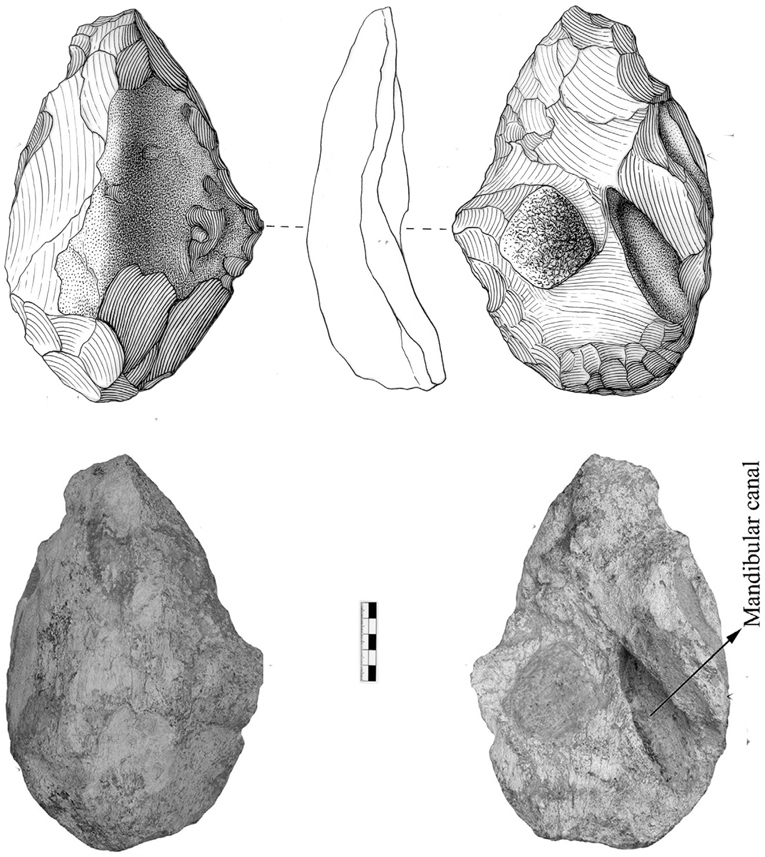
Figure 11.4 A Chinese bone handaxe from Bashiyi, Jiulongpo (after Wei et al. 2017).
The current understanding of the temporal distribution of Asian handaxes would appear to show that they were not isolated, fleeting or late occurrences (Table 11.1). LCTs appear in China earlier than they do in Europe, and at Dingcun they were found in the deposits of three different terraces, showing that handaxe-making humans persisted in the region over several climatic cycles and 200 ka (Yang et al. 2014).
|
Table 11.1 Chinese sites with LCTs, with proposed ages. |
|||
|
Site |
Age (ka BP) |
Method |
Reference |
|
|
|||
|
Shingou-Huisinggou, Sanmenxia Basin |
900 |
Palaeomagnetism |
Li et al. 2017a |
|
Bose Basin |
803 |
Ar-Ar dating of tektites |
Yamei et al. 2000; Zhang et al. 2010; Wang et al. 2014; although see Langbroek 2015 |
|
Danjiankou Reservoir Region (DRR) |
780 |
Palaeomagnetism ESR |
Li et al. 2014a, 2014b |
|
Luonan |
625-581,575-568 |
Loëss stratigraphy |
Lu 2011; Sun etal. 2014 |
|
Dingcun |
336-128 |
U-series |
Yang et al. 2014 |
|
Loëss Stratigraphy |
|||
|
IHRB |
>350 MIS 4 |
K-Ar and Fission Track dating of underlying basalt |
Danhara et al. 2002 Yoo 2019 |
|
K-Ar, OSL, C14 |
|||
There remains, however, significant debate whether these artefacts provide evidence that the Acheulean tradition spread into China at one or several points in the past, whether handaxe-like tools were independently invented in Asia on different occasions, and whether the Movius line remains a useful concept. Technological and typological analyses of the Asian LCTs have produced a number of different conclusions.
Norton et al. (2006) compared the length, width and thickness of handaxes from IHRB with examples from India (Hungsi/Baichbal valleys) and Kenya (Olorgesailie), concluding that the Korean handaxes were statistically different from the classic western Acheulean forms, particularly in terms of thickness, although this might have been caused by the use of different blanks (flakes in Africa and India, pebbles in Korea). In the strictest sense of absolute presence/absence of handaxes, the Movius Line was clearly invalid, although Norton et al. (2006; Norton and Bae 2009) argued that there were still important differences, in terms of LCT morphology, the frequency of handaxe sites and the percentage of typical handaxes within them. While Africa, India and Europe contained hundreds of handaxe sites with hundreds of typical handaxes, Asia had only a handful of either. They showed that East Asian hominins could make sophisticated bifacial tools, that they were not cognitively or culturally retarded compared to the Acheulean as Movius had suggested, but they did not demonstrate that East and West were the same. For Norton et al. (2006; Norton and Bae 2009), the Movius Line sensu lato was still a valid concept.
In various collaborations with Norton and colleagues, Lycett and von Cramon-Taubadel have conducted multivariate analyses comparing material from IHRB, Luonan and Bose with the Western Acheulean (Lycett and Bae 2010; Wang et al. 2012). They found that while East Asian bifaces showed overlap with western Acheulean handaxes in the range of shapes presented, they differed significantly in thickness and refinement (thickness/length). East Asian biface assemblages also showed a higher degree of variability than their western counterparts although they formed a statistically valid group within themselves. The rather isolated and sporadic appearance of bifaces and the general predominance of core-flake tool industries led Lycett and Bae (2010) to the apparently parsimonious conclusion that bifaces in Asia were a plesiomorphic trait that emerged as a product of techno-functional convergence from a common Acheulean root. They were not evidence of an intrusion of western Acheulean populations into East Asia during the Middle-Late Pleistocene.
Expanding on his earlier idea, Lycett (Lycett and Cramon-Taubadel 2008; Lycett and Bae 2010; Lycett and Norton 2010) suggested that the predominant Mode 1 technology east of the Movius line could represent instances where effective population size in colonising or peripheral groups dropped below levels where handaxe technology could be socially maintained, because of limited population size, population density and network strength on social learning. During much of the Pleistocene, they hypothesised, “a combination of biogeo-graphical, topographical, and dispersal factors is likely to have resulted in relatively lower effective population sizes in East Asian hominins compared with western portions of the Old World, particularly Africa” (Lycett and Norton 2010, 56). Such handaxes that do occur beyond the Movius Line sensu lato would therefore represent the crossing of a demographic threshold that facilitated greater levels of innovation and led to the (short-lived) invention of biface technology, rather than a population dispersal from the west. Assuming the technological methods underlying Mode 2 technologies were an essential prerequisite to the development of Mode 3, then the absence of a developed or persistent Acheulean in East Asia would also explain the absence of Levallois technology in the region before 30 ka BP, when it appears at Shuidonggou in the Ningxia Autonomous Region of Northern China (Brantingham et al. 2000; Madsen et al. 2001; Gao and Norton 2002; Lycett and Norton 2010). In other words, as a consequence of smaller effective population size during the Middle and Late Pleistocene, there was no Acheulean presence and no Middle Pleistocene population growth to trigger the in situ evolution of Levallois. Africa, on the other hand, exhibited major technological innovations during the Early to Middle Pleistocene due to a constant source of population and growth through time (Lycett and Norton 2010).
In a separate comparative analysis using bifaces from IHRB, Bose and Luonan, Petraglia and Shipton (2008; Shipton and Petraglia 2010) similarly found them to be a consistent group that was relatively thick and poorly refined compared to handaxes from Africa, India, Arabia, Europe and the Levant, although there was a degree of overlap with the thickest and least refined localities from Africa and India. The Bose LCTS were rarely bifacial and were much heavier and thicker than Acheulean handaxes; they possibly served a different function. Bose also lacked the other hallmark of the Acheulean–cleavers (ibid.). The LCTs from this site were probably the product of morphological convergence. The same was true of the IHRB sample which largely consisted of thick and poorly refined bifaces that were possibly no more than 70 ka BP old (Shipton and Petraglia 2010; Yoo 2019). Their analysis of the Luonan basin material, however, showed a different picture. Not only did the handaxes from this locality fall ‘comfortably’ within the Acheulean range of variation (ibid., cf. Wang 2005), but these were accompanied by large numbers of cleavers (n=119). This, they suggested, provided evidence for intermittent dispersals of western Acheulean populations into East Asia, as much a part of the Acheulean Tradition as those from India and Arabia (Shipton and Petraglia 2010). The East Asian biface phenomena might therefore represent convergence at Bose and IHRB but hominin dispersal at Luonan. As Lycett and Norton pointed out, however, the frequency of cleavers was vanishingly small, less than one per site on average, all of which were surface finds without secure context.
Robin Dennell (2016) has been most emphatic in rejecting the Movius Line and its evolutionary implications. Most Palaeolithic archaeologists, Dennell observed, tended to accept the reality of the Movius line and attempt to explain it, usually in terms of raw material availability, ecology, cultural choice, population site and density (Watanabe 1985; Pope 1989; Pope and Keates 1994; Schick 1994; Lycett and Bae 2010; Lycett and Norton 2010). Physical anthropologists, on the other hand, drew attention to the similarities between Chinese and non-Chinese hominin fossils and the diversity of the Chinese record, which showed the comings and goings of Homo erectus, Homo heidelbergensis, the Denisovans and archaic Homo sapiens1 (Rightmire 2001; Reich et al. 2011; Dennell 2016). There was little reason to doubt that China had been isolated for much of the Middle Pleistocene, Dennell argued, because of the many geographical barriers to dispersal: the Tibetan Plateau, the Gobi and Taklamakan Deserts, the Himalayas, Pamirs and mountain ranges of Myanmar and northern Thailand. This isolation would have been especially felt during cold periods, when increased aridity would have caused the expansion of deserts. During warm periods, however, there would have been greater opportunity for hominins to move in and out of China.
Dennell (2016) outlined several fundamental issues with Movius’s concept in China: poor contextual integrity, inadequate dating and the use of cave sites, which were notoriously lacking in handaxes, even in the western Acheulean heartlands. He further noted that objects identical to those which archaeologists now lumped together as Large Cutting Tools, an inclusive term designed to capture the full range of Acheulean variation while at the same time masking it, were found in numerous Chinese sites. Why were these not considered Acheulean?
Hao and Chaorong Li from the Institute of Paleontology and Palaeoanthropology in Beijing and Kathleen Kuman from Witwatersrand University asked the same question (Li et al. 2014a, 2014b, 2014c, 2018b). Their fieldwork in the Danjiankou Reservoir Region (DRR) produced an assemblage of handaxes (n=36), cleavers (n=6), picks (n=21) and other LCTs (n=6) made on five different local raw materials and which included a number of classic Acheulean forms. The Acheulean was rare in East Asia, but it was undeniably present. The low number of artefacts and sites was no reason to suppose that they did not represent a ‘true’ Achuelean tradition, it seemed more likely that relatively small populations led to less intensive hominin activity, which resulted in fewer bifaces being discarded. They also noted that previous interpretations of technological convergence had failed to consider a raft of fundamental factors. A detailed stepwise analysis of LCTS from DRR, Luonon and Bose (Li et al. 2014c) suggested that raw materials, blank selection and reduction intensity had played a significant role in shaping the East Asian handaxes. There was also a possible functional or ecological difference. The handaxes at Bose had been made in a tropical environment, and their weight and form suggested that they may have been used for splitting and chopping vegetal materials. DRR and Luonan were in subtropical environments and had lighter thinner handaxes. The picks, with their robust tips, may have served some digging function (Wang 2005). Even accounting for all these factors, however, it was still clear that the East Asian handaxes were part of a cultural tradition, one that included the knowledge of handaxe manufacture (Li et al. 2014c, 721). In a hierarchical cluster analysis of East Asian, African and European biface assemblages, Li et al. found that while Bose formed its own group, the other East Asian handaxes clustered with North and South African assemblages. Handaxes from East Asia were not significantly different from the western Acheulean, and the perceived differences in thickness was not sufficient to assign them to an independent tradition. They were not impressed by arguments based on the frequency of sites and frequency of handaxes, which if not an artefact of sampling was a behaviourally significant issue that needed addressing in demographic terms. Whether one regarded the initial origins of Chinese Acheulean technology as indigenous vs. intrusive “the transmission of [LCT] technology from a regional source (in or outside of China) is the most likely explanation, rather than the repeated invention of Acheulean technology in different regions” (Li et al. 2018b, 127). The Movius Line, with all its technical, cultural and cognitive implications, was a moribund concept that hindered progress (Dennell 2016; Li et al. 2018b).
These conclusions have been bolstered by a French-style technological re-analysis of the Dingcun industry (Yang et al. 2016) which identified two distinctive chaînes opératoires, one focussed on the production of small to medium debitage to obtain flakes for light duty tools, the other geared towards the production of large flake blanks modified by systems of façonnage into LCTs. Experiments showed that hard hammers had been used to produce the blanks, and that soft hammer technique was not used. This mirrored the centuries-old distinction between Chellean and Acheulean and was yet another reason why the Chinese LCTs appeared thick and unrefined. They concluded that a Large Flake Acheulean, like that seen in India and Africa (Sharon 2007) was well-developed on the loëss Plateau of China in the Late Middle Pleistocene (Yang et al. 2014, 2016). Mishra et al. (2010) also suggested assigning the assemblage from Ngebung, Java to the Large Flake Acheulean, on the basis that the production of large flakes (>10cm) was one of the hallmarks of the Acheulean that distinguished it from simple Mode 1 production (Isaac 1984; Sharon 2007), even though the site in question contained no bifaces. Simanjuntak et al. (2010, 420) also concluded that many Patjitanian (and other Indonesian) bifaces were typical handaxes.
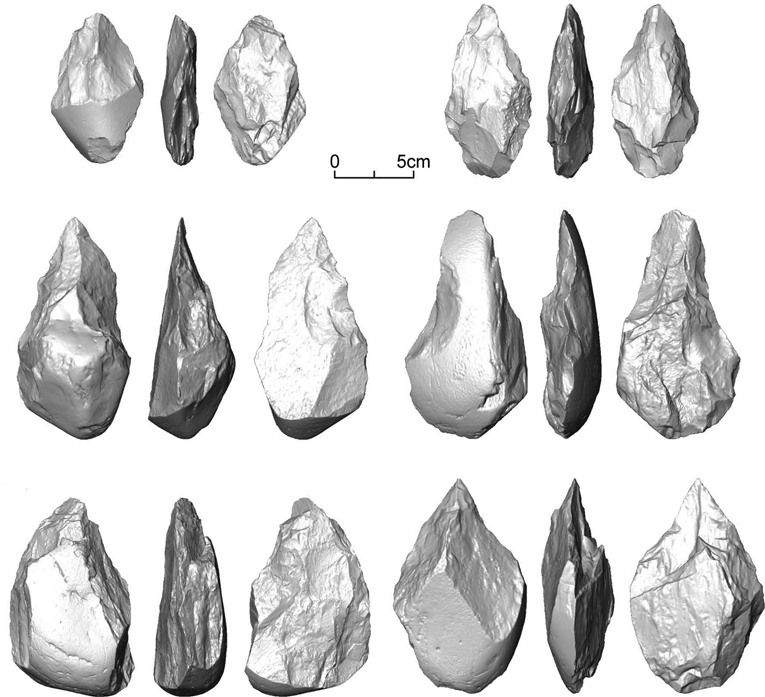
Figure 11.5 Large bifacial cutting tools from the DRR, China (after Li et al. 2014a).
This does not, however, imply that the entire Old World was one homogenous Acheulean empire from 1 ma BP onwards. The basic feature of the Chinese Early Palaeolithic was the persistent and conservative use of pebble tools and flake tools, the use of poor-quality local raw materials, opportunistic flaking, simple modification and the lack of temporal trends (Gao 2013), although the last was open to question. There was evidence for increased raw material selection through time, accompanied by an increased use of free-hand percussion, greater regularisation of end-products and more tool type. There were also hundreds of later Early Palaeolithic Mode 1 sites in the 300–400 ka BP time range, Zhoukoudian, Dali and Jinnuishan being among the most well-known localities. Jia and Huang (1985) had argued for the presence of two separate lithic traditions in northern China, the Kehe-Dingcun tradition, characterised by large chopping tools and triangular points, and the Zhoukoudian-Shiyu series, marked by small flake tools. Gao (2013) furthered these conclusions, suggesting that these industries reflected stable environments and stable populations, which lead to stable traditions based on low-intensity resource exploitation and the use of a disposable, least-effort tool kit. Furthermore, handaxes have not yet been reported from southeastern China, despite some relatively extensive surveys at the Qiliting site and its environs (Guan et al. 2018). Acheulean populations may have reached China but they did not extend everywhere. As Gao (2013, S369) concluded:
understood within a broad framework of universal cultural diversity, it should be realized that while ancient hominins in different parts of the world shared some basic lithic technologies and produced and utilized similar stone tools, each group was unique in its methods of survival and adaptation.
Brumm (2010) has recently taken another look at whether one of these unique adaptations might have involved the extensive use of bamboo at the expense of sophisticated lithic tools. It was, Brumm (2010) conceded, an attractive hypothesis, especially for those seeking a politically correct explanation for the Movius Line, one that maintained the division but quietly dropped the racist undertones of cultural degeneracy among Asian populations (Pawlik 2004). It was also regarded as untestable, given the inherent unlikelihood of such an object surviving long in a tropical forest; even if such objects were to be discovered it was unclear how many would be needed to constitute a regional bamboo tradition. And while experiments had demonstrated that bamboo working with simple stone tools was eminently possible and that it left characteristic use-wear patterns on lithic tools and cut-marks on animal bones (West and Louys 2007), this has yet to be examined in the archaeo-logical record.
Rainforests were also climatically sensitive environments and during the height of the arid cold periods would have had a greatly reduced distribution, perhaps restricted to isolated refugia (Brumm 2010; Roberts and Amano 2019). The patchy palaeo-environmental evidence available suggested that biogeographically Homo erectus and the Indonesian island hominin Homo floresiensis were part of a grassland-woodland-dry forest fauna. Homo erectus was often associated with lacustrine and riverine forests, but these always existed as part of wider ecological mosaics in which more open environments and dry woodland dominated (Roberts and Amano 2019). Dense tropical rainforests may have persisted in parts of East Asia during the Early and Middle Pleistocene (Sémah et al. 2002, 2010; Sémah and Sémah 2012), but there was no evidence that hominins occupied these habitats (Brumm 2010; Roberts and Amano 2019). It was also clear that no Early or Middle Pleistocene hominin had made the water crossing to Oceania. As Dennell and Roebroeks (2005) noted, hominin expansion in the Early and Middle Pleistocene tended to track onto familiar ‘savannah’ environments, which provided corridors though unfamiliar landscapes with potentially naive and easy to kill fauna (Dennell 2017). It therefore seemed most likely that while perhaps exploiting elements of the tropical rainforests, hominins were largely adapted to hunting and scavenging large grassland-woodland animals, across the Movius Line and across the Wallace Line (Roberts and Amano 2019).
Weaving the various threads togethers, it remains obvious that there is a quantitive and qualitative difference in the number of biface sites and number of bifaces either side of the Movius Line, if taken at the scale of the Early and Middle Pleistocene over three continents. At finer temporal and geographical scales, however, the pattern resolved into microregional groupings, in Asia and in the western Acheulean heartlands of Europe, Africa and the Levant. Demographic modelling by Romanowska et al. (2017) has great relevance to understanding these patterns. They examined the hypothesis that during early ‘Out of Africa’ events human groups experienced lower population density and greater social fragmentation the further they moved from their point of origin, with the most distant populations in Central and East Asia and Europe unable to sustain the technological knowledge required for handaxe manufacture and so reverting to simple Mode 1 technologies. Using a dynamic environmental reconstruction of Old-World vegetation from 2.5 to 0.25 million years ago, and a standard biological model for population growth and dispersal, they found that the demographic consequence of dispersal was not “a gradual attenuation of population size away from the point of origin, but a pattern of ecologically driven local variation in population density” (Romanowska et al. 2017, 52). The occurrence of handaxes east of the Movius Line might thus represent pockets of more favourable open conditions that promoted population growth and technological innovation, or dispersals from the west that involved enough connected people to maintain sophisticated technological practices (Romanowska et al. 2017; cf. Lycett and Norton 2010).
Recent research has cast further doubt on the validity of the Movius Line in Myanmar and the western Himalayas, where questions of different activity facies versus cultural differences had dominated debate over the Acheulean and Soanian (Chauhan 2003). Chauhan attributed part of the variation to the differential abundance of large quartzite cobbles and boulders across the Siwalik range (Chauhan 2003), handaxes only being made when larger materials were available. Where pebbles and cobbles of more limited size were used, a Soanian assemblage was produced. Any temporal trends might further reflect the variation in blank size over time. Lycett’s (2007) morphometric analysis of Soanian cores found them to be much closer in form to Middle Palaeolithic Mode 3 cores than Lower Palaeolithic Mode 1 cores, a finding that fits well with the technology and much younger ages for Soanian assemblages (Soni and Soni 2005, 2017; Chauhan 2008; Gaillard and Mishra 2001). At an even more basic level, the frequency of handaxes in these industries could be nothing more than a sampling error. The Anyathian of Myanmar was based on a woefully small collection, as few as 23 rolled pieces in the case of the Early Anyathian, none of which had ever been demonstrated to be Middle Pleistocene (Dennell 2014).
Dennell (2014, 2016) declared the Movius Line dead and best forgotten, arguing that it offered no insights into the complexity and variety of assemblages either side of it. We needed a fresh start. I think it is probably time to redraw the map of the Lower Palaeolithic Old World, dismantling the walls of empires built on modes and techno-complexes, and creating new boundaries based on regional communities. Taking a series of time slices across the Old World may provide very few sites in each time-range but can hardly do harm to our understanding of the cultural biogeography of the Pleistocene, and may greatly improve it. Whether we use the term Acheulean to describe the Asian handaxes very much depends on what we mean by Acheulean.
Nevertheless, it should be clear enough that the palaeogeography of the Old World was not split along linear frontiers but involved a network of interlocking yet isolated worlds. Even within Europe it is possible to draw boundaries around regional expressions of the Acheulean, reflecting different demographic histories. Glimpses of shifting nonlinear traditions can be confidently identified, even if only at the local level (Bridgland and White 2014, 2015; Moncel et al. 2015). If the Chinese Acheulean represents an independent invention rather than the spread of Western Acheulean populations connected via a recent African origin, then it cannot by the definition preferred here, be regarded as Acheulean. They would represent an example of cultural parallelism, emerging at different times from the same Oldowan substrate (Shipton 2020) and perhaps best termed Asian Acheulean-like Industry. East Asian bifaces thus provide our only model of what a non-Acheulean large cutting tool assemblage actually looks like (Shipton 2020). If Luonan represents a dispersal of the Western Acheulean into China, then this would represent the Acheulean in Asia (Shipton and Petraglia 2010), although given the probable longevity of the Asian Acheulean-like industry, I see no reason why it should not reflect local evolution.
The End of the Lower Palaeolithic
The Lower to Middle Palaeolithic/ESA to MSA transition marks the end of a 1.5 million year long, near global mode of adaptation, and the beginnings of another (Malinsky-Buller 2016a). Archaeologically it is most readily recognised by changes in lithic technology and typology, typically involving the demise of handaxes, cleavers and other LCTs, the emergence of Levallois technique as the dominant mode of flaking, and a general shift towards small flake tools, flake-cores and points (Tryon and Faith 2013; Malinsky-Buller 2016a, 2016b; Akhilesh et al. 2018). Behind these lithic transformations lies a web of social, cognitive, environmental and behavioural shifts, heralding a process of increasing ‘Neanderthalisation’ in Europe (e.g. White and Ashton 2003; White et al. 2006, 2011; Scott 2011; Moncel et al. 2005, 2011, 2012) and the emergence of anatomically Homo sapiens and a deeply rooted trend towards a suite of ‘modern’ human behaviours across Africa (e.g. McBrearty and Brooks 2000; Tryon et al. 2005; McBrearty and Tryon 2006; Brooks et al. 2006, 2018; McBrearty 2013; Tryon and Faith 2013; Hublin et al. 2017; Deino et al. 2018; Henshilwood et al. 2002; Herries 2011; Wadley et al. 2020).
It is perhaps unsurprising that archaeologists should have focussed on these characteristic lithic types, which have featured in every definition of the Acheulean and Mousterian since 1872. What is remarkable, is that archaeologically speaking this transition occurred almost simultaneously across the Old World, the process beginning in Africa >320 ka BP, in India by ~325 ka BP and in Europe by ~325 ka BP, and culminating with fully fledged Levallois everywhere by 250 ka BP (MIS8–7). Rather than just being a break in the monotony, this transition is now seen as a critical phase in prehistory, not only in the story of archaic extinct hominins, but in that of the most ancient members of our own species, Homo sapiens.
The main models to explain this patterning that have developed over the past 20 years are divided by the familiar and practically irresolvable problem of multiple vs single origins. As discussed in Chapter 10, Foley and Lahr’s (1997, 2003) Mode 3 Hypothesis argued that Levallois appeared in Africa and spread to other parts of the world during an unrecognised Out-of-Africa dispersal during MIS 8, as a response to climatic deterioration. Foley and Lahr originally identified the Florisbad (South Africa) hominin Homo helmei as the hominin responsible for this introduction of Levallois, although recent work at Jebel Ihroud in Morocco (Hublin et al. 2017) has shown the presence of anatomically modern humans with an MSA industry ~320ka. If the Middle Palaeolithic package did emerge in Africa, then it is most likely to have been invented by Homo sapiens– a designation to which the Florisbad specimen has in any case been re-assigned (ibid.). European and Indian archaeologists, on the other hand, have argued that Levallois evolved autochthonously in disparate hominin populations from an elaboration of existing Acheulean core and handaxe technology, beginning in MIS 10–9 with a series of simple prepared or hierarchically organised surface cores,2 and concluding with fully fledged Levallois in later MIS 8 and MIS 7 (White and Ashton 2003; Moncel et al. 2005, 2011, 2012; Adler et al. 2014; DiModico and Pirson 2016; Malinsky-Buller 2016b; Peretto et al. 2016; Soriano and Villa 2017; Akhilesh et al. 2018; Méndez-Quintas et al. 2019; Lombrera-Hermida et al. 2020; Moncel et al. 2020).
It seems indisputable that Mode 3 core preparation evolved in Africa before it appeared in Europe. Simple prepared cores with hierarchically worked surfaces but no management of convexities have been reported from 1.3 ma BP Acheulean contexts at Rietputs 15 in South Africa (‘organised core flaking strategies’: Leader et al. 2018) and at the 1.4 ma BP Early Acheulean site of Peninj, Tanzania (de la Torre 2009). In both cases, the small size of the flakes produced suggests that they were not intended for biface production, but small tools. The use of the Victoria West technique to produce blanks for handaxes and cleavers is known from Canteen Koppie in South Africa by at least 1 ma BP (McNabb and Beaumont 2012; Li et al. 2017b), although there is no obvious evolution in any of the Mode 2 or Mode 3 technologies found at this site (McNabb 2013). Victoria West is also found in the Acheulean at Wonderwerk Cave MU7 and Kathu Pan 1:4b in sediments dated to ~800 ka BP, and by 600–500 ka BP Levallois flakes, points and blades characteristic of the Fauresmith industry were present at Wonderwerk Cave MU4, Kathu Pan 1:4a and Rooidam Strata 2 (Beaumont and Vogel 2006; Herries 2011).
In the Kapthurin Formation, Kenya, Levallois occurs discontinuously in Acheulean contexts from as early as 510 ka BP (Tryon 2006; Tryon et al. 2005; Tryon and Faith 2013), while sites around the Casablanca area in Morocco also contain Levallois and other Mode 3 technology in contexts ranging from 500–320 ka BP (Raynal et al. 1995, 2001, 2002). In fact, as demonstrated by Sharon (2007, 2010), prepared-core techniques are a ubiquitous feature of the Large Flake Acheulean across Africa and the Levant from 1ma BP to 750 ka BP and beyond. Furthermore, while the Acheulean, Sangoan, Fauresmith and other LCT industries disappeared in Kenya after 285 ka, they persisted in Ethiopia, the Sudan and South Africa until ~260 ka BP or beyond, and at Herto were associated with early Homo sapiens fossils (White et al. 2003; Tryon and Faith 2013).
The feature really distinguishing the Acheulean and MSA seems to be the purpose to which hominins put the products of Mode 3 cores, the manufacture of handaxes and cleavers in the former, and a variety of small, retouched tools (on flakes, blades and points) in the latter (Tryon and Faith 2013). From a purely technical point of view the transition in Africa thus boils down to two factors, the disappearance of LCTS and the re-purposing of existing Mode 3 technologies to small tool production, both related to the miniaturisation of technology.
Given its proximity to Africa (and instigating role in the original theory) the evidence from the Levant naturally supports the idea that Levallois arrived from Africa (Malinsky-Buller 2016b; Zaidner and Weinstein-Evron 2020). Several species of African hominin passed through the Levant during the Pleistocene. Homo erectus sensu stricto presumably left the Early Acheulean at ‘Ubeidiya ~1.4 ma BP; Homo heidelbergensis is a possible author for the Mode 3 technology and the Large Flake Acheulean at GBY ~750 ka, while modern humans were present at Misliya Cave ~240 ka BP and at Skhul and Qafzeh ~110–100 ka, on each occasion associated with a Levallois Mousterian along with their mortal remains (Zaidner and Weinstein-Evron 2020). Recent success in extracting the Neanderthal Y-chromosome from European fossils (2020) has shown that interbreeding between Modern human and Neanderthals between ~100 ka and possibly as early as 370 ka BP led to the replacement of the Neanderthal Y-chromosome. This is perhaps evidence that the geologically simultaneous appearance of Levallois was not necessarily a dispersal nor a local invention, but part of a genetic and cultural network that spread from Africa, the Levant and southern Europe.
|
Table 11.2 Attribute comparison of the type of Levallois technology used in the Acheulean and early MSA in the Kapthurin Formation (after Tryon and Faith 2013). |
||
|
Variable |
Acheulian Levallois Technology |
Early MSA Levallois Technology |
|
Raw material |
A single type of phonolitic lava |
A range of fine grained lavas |
|
Levallois surface preparation |
Centripetal |
Centripetal or unidirectional |
|
Technique |
Hard-hammer direct percussion, hammers 200g to 2.5kg |
Hard-hammer direct percussion, hammers 200-800g |
|
Methods |
Preferential |
Preferential or recurrent |
|
Flake morphology |
Large elliptical flakes, ~10-20cm |
Small elliptical flakes (~5cm) or large triangular flakes and points (~10cm) |
|
Flake modification |
Either unretouched, ventrally thinned or laterally retouched with scraper-like edges |
None |
The end of the Lower Palaeolithic in the Levant, between 400 and 250 ka, is characterised by the unique regional variant, the Acheulo-Yabrudian (Barkai et al. 2003; Mercier and Valladas 2003; Rink et al. 2004; Gopher et al. 2010; Mercier et al. 2013; Valladas et al. 2013; Zaidner and Weinstein-Evron 2016, 2020). The three elements of this complex share common technological features with the Acheulean and with each other (Barkai and Gopher 2011; Shimelmitz et al. 2011; Malinsky-Buller 2016a), and were regarded by Jelinek (1990) as a highly variable complex within which extreme facies can be identified. At Qesem Cave, technology and typology of the industries varied laterally as well as stratigraphically (Barkai et al. 2009; Gopher et al. 2010). There is no clear chronological pattern and variation probably emerged from other operational factors (Malinsky-Buller 2016a).
The Late Acheulean and Acheulo-Yabrudian of the Levant has yielded no evidence of Levallois, but most sites do contain hierarchically organised surface cores similar to those found in Europe (Malinsky-Buller 2016a; Zaidner and Weinstein-Evron 2016, 2020). Mismaya Cave in Israel preserves a rare sequence spanning the transition from the final Lower Palaeolithic Acheulo-Yabrudian (~350–250 ka) to the Early Middle Palaeolithic (~240 ka) (Zaidner and Weinstein-Evron 2016, 2020). The Acheulo-Yabrudian here was characterised by rough bifaces, Quina scrapers and hierarchically organised surface cores, but these three technologies were all absent from the EMP, which was based on Levallois points, flakes and blades, cores-on-flakes and characteristic retouched Abu Sif points. Almost all Levantine EMP sites dated to 250–240 ka BP show the same technological turnover (Malinsky-Buller 2016a; Zaidner and Weinstein-Evron 2020, and references therein), which in regional context has been interpreted as a major conceptual shift marking rupture not continuity. The association of the maxilla of an early Homo sapiens with the EMP industry at Misliya, supports the contention that modern humans made and probably introduced the EMP from Africa.
The EMP in the Levant shows a number of features in common with Africa, particularly the disappearance of the handaxes, the appearance of fully fledged Levallois, and the overall miniaturisation of the toolkit, although the morphology of the lithic points found in each region is different (Tryon and Faith 2013; Malinsky-Buller 2016a).
In northern Europe, handaxes disappear and fully fledged Levallois becomes dominant in late MIS 8 and Early MIS 7 (White and Ashton 2003; White et al. 2006, 2011; Hérisson et al. 2016a; Malinsky-Buller 2016b), a climatic cycle after the appearance of hierarchically organised surface cores that resemble Levallois but which are geared towards increasing the number of serviceable flakes per core rather than predetermining their form. This latter technology has been described from several Acheulean contexts dated to between 350 and 320 ka BP (MIS 9 or MIS 10), for example at Purfleet, England (White and Ashton 2003); Cagny L’Epinette, Gouzeaucourt and Etricourt-Manancourt, Somme, France (Hérisson et al. 2016b; Lamotte and Tuffreau 2016); Petit-Spiennes, Kesselt-Op de Schans and Mesvin, Belgium (DiModico and Pirson 2016); Markkleeberg, Germany (Picin 2018); and Korolevo L15–17, Ukraine (Adamenko and Gladiline 1989).
All these sites, though, fall within Gamble’s (1996, 2009) biotidal zone, and there is no evidence that humans were present in the north during the height of the MIS 8 glaciation, when ice extended as far south as the English Midlands and North European Plain (T.S. White et al. 2010, 2017; Hérisson et al. 2016b, although see Malinsky-Buller 2016b for occasional and doubtful exceptions). The most probable fate of these northern European hominins was partial or complete extirpation through extinction rather than survival through southerly migrations (Hublin 2009; Hublin and Roebroeks 2009). These northern European examples of hierarchically organised surface cores can only be seen as part of a more general global trend among late Lower Palaeolithic hominins towards more controlled methods of debitage. They are evidence that the technological and cognitive requirements for Mode 3 technologies were already present in the Acheulean in Europe, and although they may include rare (and probably fortuitous) examples of fully fledged Levallois in both MIS 9 and earlier contexts they cannot provide evidence for an independent in situ evolution of the Middle Palaeolithic package. This must have arrived fully formed in late MIS 8 from the south or east. Whether the MIS 9 examples should be regarded as final Lower Palaeolithic or Early Middle Palaeolithic rather depends on whether they contain any other evidence for major social or behavioural changes, such as greater mobility, more expansive social networks, greater raw material selectivity, hunting intensity, or if they are just a more flake-intensive part of the Acheulean.
Palaeolithic sites of MIS 10–9 age in the Mediterranean zone of southern Europe show a range of LCTs, cores-on-flake, laminar technologies and hierarchically organised surface cores (Malinsky-Buller 2016b). Orgnac 3 has yielded evidence of human occupation over 10 levels dated to between 350–298 ka BP (Moncel et al. 2005, 2011, 2012), with the basal levels (8–6) showing a variety of non-Levallois methods, including a hierarchically organised centripetal technique, with prepared core technology first appearing as a numerically low ‘complementary method’ in Level 5b. In its earliest manifestation it is generally unipolar or bipolar, its overall configuration suggesting to the primary workers a method that was controlled but whose rules were ‘ not fully standardised’ (ibid.). By Levels 4a and 4b, fully fledged and formalised Levallois technology is seen, with a diversification in the method to include most of the variants identified by Boëda. What we seem to have at Orgnac 3, then, is the gradual emergence, diversification and standardisation of an evolving technological practice in Europe, as a selective elaboration of methods already in place.
In Italy, the first evidence of Levallois production is recorded at Torre in Pietra d, dated to the early part of MIS 7 and San Bernardino Cave, which belongs to the end of MIS 7, between 270 and 240 ka BP (Soriano and Villa 2017). Levallois has also been claimed from MIS 11–10 contexts at Guado San Nicola, central Italy. At this site, Peretto et al. (2016) described an Acheulean industry with handaxes alongside unstructured cores, a range of hierarchically organised surface cores and rare Levallois cores, the latter increasing in both frequency and level of predetermination through time. Soriano and Villa (2017), on the other hand, regard most of the material from Guado San Nicola as hierarchically organised surface cores, assigning the first occurrence of Levallois sensu stricto to 295–290 ka BP at Sedia del Diavolo and Monte delle Gioie, near Rome, the first of which had also produced a Neanderthal femoral diaphysis and metatarsal.
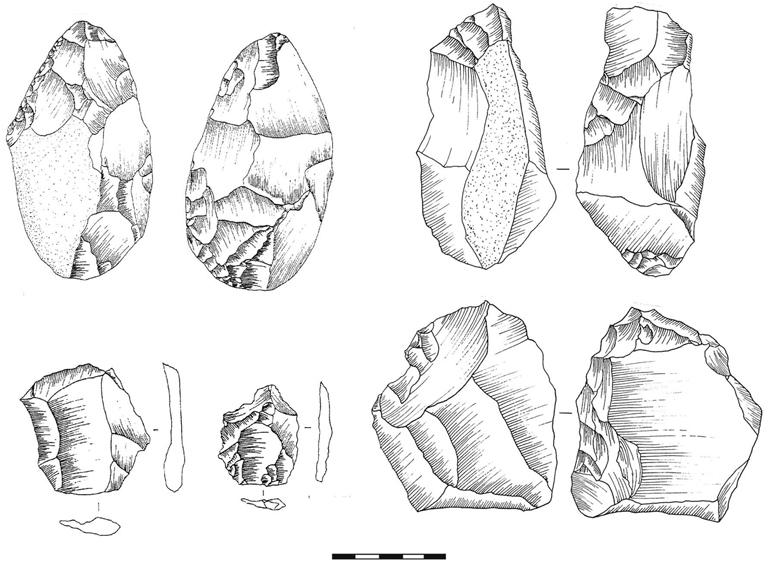
Figure 11.6 MIS 9 archaeology at Orgnac 3. A biface, flakes and hierarchical cores from Layer 5b (after Moncel et al. 2005). Scale = 5cm.
The same hierarchically organised technology has been reported from Level TD10 at the Gran Dolina at Atapuerca, northern Spain (Lombera-Hermida et al. 2020), dating to ~385 ka BP. The cores from this level fit with Levallois in all bar the management of convexities and preparation of platforms (which is not essential anyway) but were aimed at maximising core productivity not the production of predetermined flakes. Similar technologies occur in other MIS 10–9 contexts at Bolomor Cave, Cueva del Angel, Ambrona and Solana de Zamborino (ibid.). The classic Middle Palaeolithic, in terms of the loss of handaxes and appearance of Levallois, is seen from at least terminal MIS 9, but the Large Flake Acheulean does not disappear until MIS 6, with unequivocal Acheulean assemblages found in the Basins of the Tagus Duero and Mino, and possibly also southern France (Santonja and Villa 2006; Santonja and Pérez González 2010; Santonja et al. 2014, 2016; Ollé et al. 2016; Méndez-Quintas et al. 2019, 2020). The techno-typological and chronological pattern has suggested to some that two different traditions co-existed in Spain during the late Middle Pleistocene, an Acheulean population that had originated from Africa via the Strait of Gibraltar, and a Middle Palaeolithic population who had come from the north during MIS 9 (Santonja et al. 2014, 2016; Méndez-Quintas et al. 2019). Santonja and colleagues have also suggested a third possible origin for the European Middle Palaeolithic, that it evolved from the Mode 1 non-handaxe industries that arrived in Europe ~1.2 ma BP, and which persisted in central and eastern Europe (e.g. Bilzingsleben. Schöningen, Clacton) throughout the Middle Pleistocene, an explanation that would have more than satisfied Henri Breuil and Hugo Obermaier (see Chapter 6), although others have explained it as changes in landscape use (Chazan 2009).
There is generally little evidence of rupture in the Lower-Middle Palaeolithic transition of the Mediterranean zone of Europe, which is instead characterised by a gradual elaboration of core organisation from hierarchical forms to full Levallois, and the loss of LCT. In this zone, at least, the Mode 3 hypothesis is poorly supported, although it is important to note that Homo sapiens fossils have been identified in Greece, at the site of Apidima, by at least MIS 7 (Harvati et al. 2019). The Aegean/Balkan refugium therefore seems an unlikely source population for the MIS 7 northern Neanderthals, as does the Levant, if occupied by modern humans at the time. It is not presently possible to isolate a specific technological or typo-logical trait that would allow the source populations in continuously Neanderthal-occupied refugia in France, Spain or Italy to be firmly identified (cf. Malinsky-Buller 2016b).
The European Middle Palaeolithic thus still appears to be indigenous to that continent, emerging in the south, possibly as a result of more densely packed populations in refugia facilitating the invention and spread of novel ideas (Hopkinson 2011; Hopkinson et al. 2013), although the close proximity of contemporaneous Homo sapiens, who shared their Y-chromosome with Neanderthals, means it is impossible to rule out modern human involvement, of terms of phenotypic, genetic and cultural introgressions. Demographic factors are probably a significant driver (Hopkinson et al. 2013), even if the number of sites in southern Europe belonging to this phase is not currently large enough to assess population densities (Malinsky-Buller 2016b), we must now also consider the possibility that the regional meta-populations were made up of different species.
The picture is today not very different in India, where the earliest Middle Palaeolithic at Attirampakkam has been dated to 385±64 ka BP (Akhilesh et al. 2018). As already noted, the Indian Late Acheulean is a Large Flake Acheulean that used a variety of giant and large core reduction techniques, including Kombewa and Levallois, to produce large blanks for fashioning into handaxes and cleavers. The principal defining characteristics of the Indian early Middle Palaeolithic is the gradual or abrupt disappearance of these large cutting tools and a shift towards Levallois strategies geared towards small flake tools. Unlike many other regions, handaxes and cleavers diminish in frequency, but they do not entirely disappear. They persist in more diminutive forms (usually <10cm in length) throughout the early Middle Palaeolithic of India, where a distinction is often made between EMP sites with high and low frequencies. In India, handaxes and cleavers are an integral part of the EMP, showing a continuation of Acheulean practices (Akhilesh et al. 2018), with no evidence of a rupture in culture or population.
Akhilesh et al. (2018) concluded that the structure of the Indian EMP reflected the shift towards greater mobility, with smaller, more mobile cores breaking the former tethers that tied humans to raw material outcrops. The adoption of a toolkit dominated by Levallois technology and small flake production probably marked a change in hunting strategies to stone-tipped spears, and increase in hafting technologies recognised worldwide (e.g. Shea 2006; Villa and Lenoir 2009; Barham 2013; Shipton 2020). It marked a threshold in proximity (cf. Gamble 1998a, 1999), in terms of both physical and social landscapes.
Discussions on the Early Middle Palaeolithic naturally focus on the introduction of novel lithic technologies and their behavioural, functional or economic consequences. Few have really speculated on the social ramifications of this transition, notable exceptions being Kohn and Mithen’s (1999) suggestion that in contrast to the sexually charged handaxe, Levallois was an entirely functional technology, devoid of social resonance, or Lewis Abbott’s (1911) ridiculed proposal that they were tokens used to seal a social bargain such as marriage. Given the more socially orientated frameworks of the past 20 years, and the prominence within this of the Social Brain Hypothesis (Gamble 1999; papers in Dunbar et al. 2014), it is worth looking back and viewing the question from the perspective of what was lost.
If, as many have now accepted, handaxes were not merely functional but part of a social technology, their manufacture in social contexts transmitting information about the identity and character of the individual makers, how was this information passed when handaxes disappeared? Was it the appearance of more complex language combined with wider ranging patterns, facilitating the maintenance of social relationships with many people at once and, by word of mouth, over greater distances. Or had Levallois-tipped spears replaced the handaxe as the key metaphor for social, sexual and selective fitness, with formidable stone-tipped-spear rattling having a similarly dramatic impact on the social fabric of Middle Pleistocene Homo, as the terrifying din created by banging metal fuel cans together had on the Chimpanzees of Gombe (Goodall 1971, 1990). Or did identity move to the body, ornamentation and more overt forms of symbolism? And in India, where handaxes and cleavers persist in a miniaturised form, did this change occur at all, or were handaxes and cleavers now also hafted as knives or just used as talismen, a relict of an older social world?
Not the End for the Lower Palaeolithic
I am afraid that having reached the end of the book I have few if any concrete conclusions in contrast to the early part of my career. I still have numerous questions, many of which, as we have seen, have roots reaching back to the very beginning of the subject, and which for 200 years archaeologists have struggled to answer. Technologically we stand at the cusp of a new digital world in which handaxes (as well as our brains) can be 3-D imaged and interrogated by ever more powerful computers, providing a much-needed update to the methods archaeologists use to construct their groups and ideas (Shipton and White 2020). Hopefully, this will not entail computer models of their aerodynamic properties.
The history of Palaeolithic archaeology and archaeological thought contains many blind alleys, many circular and ‘figure-of-eight’ perambulations to arrive back at the same point, with apparent disciplinary memory loss and arguments that resurface time and again. Ideas lose currency, but never really lose value. Ultimately, it is our archaeological imaginations that will shape the future of the past, set within the values, context and discoveries of our times, just as it has always been.
Notes
· 1 The Denisovans are a group of hominins from the site of Denisova Cave, in south-central Siberia. They are known only from a few teeth, a partial mandible and post-cranial remains and through their genetic code (Reich et al. 2011). Dating suggests they were present in Russia as early as ~200 ka BP (Jacobs et al. 2019; Douka 2019). Denisovan mitochondrial DNA has also been found in the ~525 ka BP Early Neanderthal/Homo heidelbergensis fossils from Sima de los Huesos (Meyer et al. 2014), a population whose nuclear DNA was clearly Neanderthal (Meyer et al. 2016). This suggested to Meyer et al. (2016) that the Neanderthal mitochrondrial (female derived) lineage turned over later in the history.
· 2 After Malinsky-Buller 2016a. These cores have been given a variety of names including ‘simple prepared cores’ (White and Ashton 2003), ‘central surface cores’ (Barzilai et al. 2006; ‘cores with two surfaces perpendicular to each other with hierarchy’ (Malinsky-Buller et al. 2011); ‘preferential surface debitage systems’ (Zaidner 2014) ‘organised core flaking strategies’ (Leader et al. 2018) and ‘hierarchized unidirectional cores’ (Picin 2018) among others. They generally show five out of the six criteria demanded by Boëda for the full Levallois Concept, but lack management of convexities on the flaking surface, using the natural convexities of the raw materials instead. They seem to be geared towards maximising flake production rather than controlling for size and shape. Flaking is controlled but not predetermined.