
6
We seem to have come full circle. In February 1947 Dean Acheson saw in the fall of Greece the fall of Western civilization as a whole and urged the US establishment to provide aid to Greece and intervene there, because the ‘fall of Greece will contaminate the whole of Europe and the Middle East’ benefitting the Eastern Soviet enemy. Today, Greece’s fall is also imminent challenging the survival of the entire European architecture whereas the entire Middle East is up in flames, yet no analogous plea has been made by the USA. The American president, Barack Obama, even warned the British PM, David Cameron, not to put in jeopardy Britain’s position in the EU by calling a referendum.1 An unprecedented decision by the ‘troika’ in March 2013 forced the restructuring of the financial system of Cyprus, liquidating Laiki Bank and imposing a ‘haircut’ of up to 60 per cent on any deposit above 100,000 euros. Why is all this happening? Is Greece (and Europe) no more important for the USA to necessitate a kind of a new Marshall Plan to solve Europe’s and Greece’s financial woes? We argue that the USA does what it does today not because it considers Greece and Europe insignificant, but because it is no longer the power it used to be in the 1940s and 1950s. Our thesis will become clearer by looking briefly at the main tendencies and processes of the international system since the 1970s, processes and tendencies that affect or even condition the preferences of the various political agencies and national states today. The section that follows lists and comments upon three such processes, all of which are strictly interlinked, thus exemplifying further our theoretical discussion in Chapter 2.
6.1 Greece, the Euro-Atlantic world and the power-shift to the ‘global East’
The first process is the crisis and slow and protracted decline of the position of the US empire-state in the international system. We contend that this decline has its origins in the events of the 1960s and 1970s and that at the root of it is the downward pressure on profitability under conditions of sharply increased competition between US, West European and Japanese capitals. It is important to note that European capitalist interests, under France’s initiative at the time, in order to protect themselves after the massive losses they suffered with the dollar’s devaluation, produced the so-called ‘Werner Report’, which described a policy ‘process by which monetary union could be achieved by 1980’. But the project did not go ahead. Moving forward in time, competitive pressure on US capital in the 1980s came also from South-East Asia, whereas in the 1990s and 2000s China, Russia, and the EU under Germany’s drive could be added as competitors to the USA. We also contend, contrary to a number of other significant contributions on the subject, that neo-liberalism/supply-side economics and financialization/globalization have failed to arrest both the decline of the US empire-state and the fall in profitability in the productive economic sector. In fact, financialization/globalization are policies heralding the weakness and irreversible decline of the hegemonic power – Giovanni Arrighi would say: ‘terminal decline’ – as its power base no longer rests on real value-creation but on fictitious value-creation (see also Chapter 2). Systemic fault-lines, antagonisms and global competition are constantly in operation leading to the collapse of neo-liberal financialization today, one of the victims of which is Greece. The tragedy with Greece and other peripheral countries is that they entered the regimes of financialization and neo-liberal accumulation from an already weak position, inasmuch as real value creation there (and the periphery) was either being appropriated by imperial undertakings (e.g., loans) or had always been weak in terms of production of capital goods, etc., issues that we have examined in previous chapters.
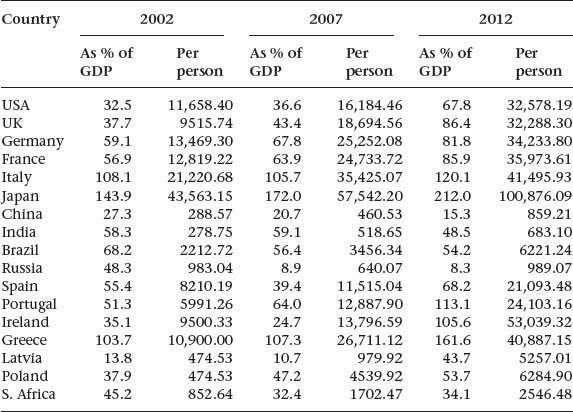
But the decline of US hegemony, which is consubstantial with the decline of mass material production in the Euro-Atlantic world, should be seen in parallel with an equally slow and protracted power-shift to the ‘global East/South’, that is to say to countries, regional caucuses and societies such as China and South-East Asia, India, Russia, South Africa, Indonesia, Turkey and Brazil. In this context, the most important feature of international politics since the 1970s is not the collapse of Soviet Communism but the transition to capitalism of such countries as Russia and China, inserting new matrixes of economic and geo-political antagonism to the clumsy expansion of the Euro-Atlantic core in Eurasia since the fall of the USSR. China is the world’s second largest economy, with an annual economic growth of more than 8 per cent – it overtook Japan in February 2011. It dominates the world market on rare earth elements (REE) – europium, gadolinium, dysprosium, terbium, etc. – supplying 95 per cent of the world’s consumption. This means that China has the potential to control the future of consumer electronics and green technology. Chinese textiles have dominated Latin America, and Chinese oil companies have now penetrated Africa’s hydrocarbons market.2 The evolution of public debt in the traditional capitalist core is deeply worrying, whereas the new emerging economies of the ‘global East/South’ present a much healthier record over the time span of a decade (2002–12, Table 6.1). China’s industrialization goes hand in glove with its demand for oil and other hydrocarbons. It became the world’s second largest consumer of petroleum products in 2004, having surpassed Japan for the first time in 2003, with a total demand of 9.7 million barrels per day.3 Given that Eurasia as a whole accounts for 75 per cent of the world’s energy resources and 60 per cent of its gross national product (GNP) and with 60 per cent of the world’s proven oil reserves residing in the Middle East alone, one can easily grasp why there has been a ‘new great game’, involving all major Eurasian powers as well as the US. As we have shown elsewhere, Greece, Turkey, Cyprus and the Balkans have been partaking in this ‘new great game’ in a variety of ways: from their participation in the Black Sea Economic Cooperation (BSEC) initiative in the 1990s, to a number of oil and gas pipelines projects connecting the Caspian Sea region with the Black Sea and the Aegean/Southern Balkans, the list is long enough.4 Greece, an almost bankrupt state by the early 1990s, was nevertheless viewed by NATO powers, together with Turkey, as ‘a zone of stability’, an ideal launching pad for a variety of western financial operations that could use their Greek counterparts to penetrate the Balkan economies from the South. Greek rentier and financial interests would act as conduits of the big Western capital interests in this new scramble for the Balkans and, at times, in direct competition with Russia. This, in our view, coupled with the country’s new, post-Cold War, geo-political importance, averted the bankruptcy of the country in the early 1990s rendering it with another 15 years of fictitious prosperity and growth. In fact, as we shall show in this chapter, the growth registered in Greece in the 1990s and 2000s was debt-driven. Financialization increased the global debt in the time span of a decade (2002–12) in every country on the globe except China, India, Brazil, Russia and South Africa. This, apart from being an indication of the slow global shift taking place, at the same time points to a policy of international seisachtheia (global cancellation of debt) as the only feasible policy of relief for the working masses across the world in order, among others, to boost their purchasing power and drive them out of poverty and deprivation.
Table 6.1 Evolution of public debt in selected countries as percentage of GDP and per person, in nominal USD (2002, 2007 and 2012)
Source: Data drawn from the Economist Intelligent Unit www.economist.com/content/global_debt_clock (accessed on 8 January 2013).
The third important process, obviously, was the end of the Cold War. It was an event with massive geo-political and economic consequences: it opened the door to Germany’s re-unification; prompted NATO’s eastward enlargement followed by that of the EU, thus turning East-Central Europe – as Peter Gowan put it – ‘into a kind of passive, support hinter-land for West European multinationals’.5 In retrospect, however, NATO’s and the EU’s expansion projects seem also to have benefitted the ‘loser’ (USSR/Russia) and not just the ‘winner’ (USA/Europe): with the exception of the 1990s, Russia has today become a respectable Eurasian power; re-asserted its influence in Ukraine and Belarus; regained its position in the Caucasus after the successful suppression of Chechen and Georgian nationalism; and it is the key force with China in the Shanghai Cooperation structure going as far as to organize joint military exercises, whether around Taiwan or in the Caucasus/Caspian zones. But there is also something else. The collapse of Soviet Communism removed the ideational peg for the USA upon which its Cold War discourse was based: it could no longer exaggerate the threat of the USSR/Russia upon Europe or itself, nor could it exaggerate the vulnerability of itself. This had seriously begun undermining the ideational pillars of US hub-and-spoke imperialism in Europe. True, 9/11 provided a substitute, the ‘war against terror’, but it had neither the ideational force nor the material-power backing to support the USA’s vain neo-imperial drive in the Middle East and Central Asia under Bush Jr. It is no accident that Obama abandoned frequent references to ‘America’s global war on terrorism’, although the scheme may well re-enter US hegemonic discourses under a new Republican administration. This is why we argued that the USA’s power-projection in Eurasia after 9/11 was not a sign of strength, but a sign of weakness, especially economic weakness.6
The Cold War was not just a ‘war’ of the West against the USSR, a deterrence policy to avert the Soviet invasion of Europe. As William Appleman Williams, Gabriel Kolko, Walter LaFeber and many other revisionist historians have argued, the Cold War had primarily been a US-induced strategic undertaking to secure the unity of the Western core (Western Europe, Japan, USA) under the primacy of the USA. Or, as NATO’s first secretary, Lord Ismay, put it when asked in 1949 what NATO is about: ‘NATO is being founded in order to keep the Americans in, the Russians out and the Germans down’.7 That is why NATO did not dissolve after the collapse of the ‘Soviet enemy’ and the dissolution of the Warsaw Pact. Quite the opposite. Ultimately in the service of US hub-and-spoke strategy, NATO expanded eastwards to fill in the power void created by the withdrawal of the Soviet power from East-Central Europe, the Balkans and Central Asia, all the while keeping its grip on Germany and Europe. A politically united Europe under Germany’s or Franco-German hegemony has never been a good prospect for two main reasons: first, because European interests could have shut out US exporters from entering European markets; second, a politically united Europe would have duplicated NATO turning it into a redundant security actor in Eurasia.
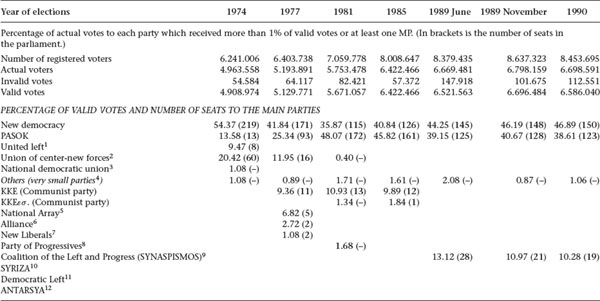
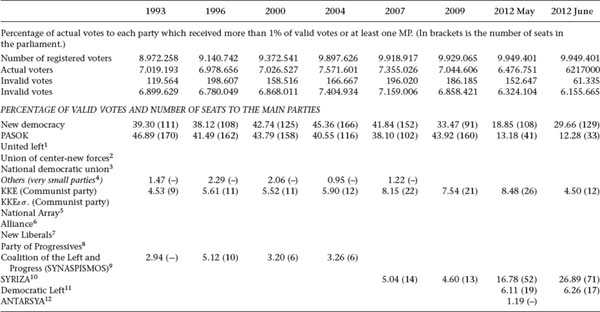
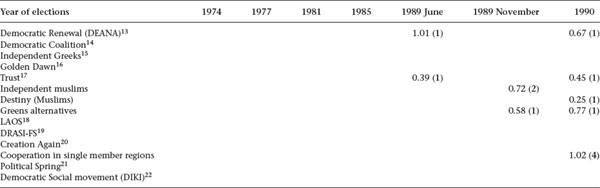
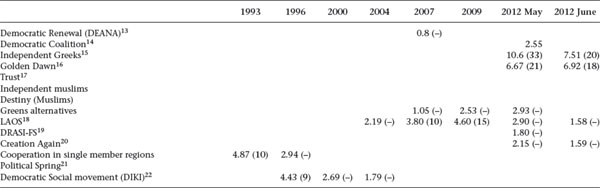
The essays in this final chapter of the book offer our empirical explanation of the Greek (and European) debt crisis that began in earnest in 2009–10. The generic argument is that the European cum Greek debt crisis can only be conceived of in the framework of a power-shift to the ‘global East/South’, a process conditioned by historical and systemic fault-lines.8 We draw on specific and original quantitative data to proceed with an analysis that goes beyond the structural parameters of the crisis, identifying the class and political profiles of agencies responsible for the crisis. Our main specific argument is that the causes of the Greek debt crisis, today, as in the past, embrace both external and domestic deficiencies of the Greek social formation. Thus, we counter arguments that see as the main cause of the Greek malaise the external environment of the Greek state (e.g., large and unsustainable current account deficit, financial inflows), especially since its entry into the eurozone in 2001; and arguments that source the crisis domestically, viewing it primarily as a fiscal crisis (e.g., tax evasion, large defence spending, public sector profligacy). In doing so, we shall become aware of Greece’s geo-political significance for the Euro-Atlantic core in the new constellation of forces in the Balkans and the Near East, as well as identify the profile of the new bourgeoisie, which has been the key mediating agent in bringing about neo-liberal financialization in the country. This chapter illustrates further the main theoretical points we made in the first part of our work, namely that the debt is the result of the asymmetry between the monies/paper circulating within a given social formation, on the one hand, and the real values produced within that social formation, on the other. Finally, we shall examine changes in the class stratification of Greek society, the result of three rounds of harsh austerity measures since 2010 imposed by the troika and slavishly followed by pro-bailout cabinets (see Timeline at front of book). These cabinets, it should be noted, represent the old, post-1974 regime. At present, the debt crisis seems to have wiped out the bipartisan ruling class of PASOK and ND almost entirely, although they managed to cling together and form a government in the wake of the June 2012 election, with the radical Left of Syriza missing the first position by a whisker (see Table 6.2 and Timeline). For all intents and purposes, the post-1974 kampfplatz is dying.
6.2 The Greek workshop of debt and the profile of the new bourgeoisie
The strict monetarist criteria of the Maastricht Treaty – under negotiation since Delors’ Single European Act in 1986 – and later of the so-called ‘Stability Pact’, coupled with the end of authoritarian socialism over Greece’s northern borders, undermined the political, economic and ideational bases of the peculiar bipartisan ruling class formed in the 1970s and 1980s. This unleashed all forces hitherto ‘suppressed’. Deregulation of markets, privatizations and liberalization of banking and financial capital began pace slowly but steadily after 1991–92, while accelerating under the ‘neo-revisionist PASOK’ of Costas Simitis after 1996, when Simitis succeeded the ailing Andreas Papandreou.9 At the time, the mantra in Greece was ‘modernization’ against Papandreou’s ‘populism and clientelism’. Accordingly, from the mid-1990s onwards, the (dependent) ruling class of the previous decades began transforming itself into a new agent adapting to, and taking advantage of, domestic and international circumstances. Increasingly, this class began assuming the features of a ‘broker’ between international/European financial capital, on the one hand, and government, on the other. Thus, whereas the formation of the (dependent) ruling classes in the 1970s and 1980s was primarily sourced from within the domestic environment of the state, the transformation of these classes into a new hegemonic agent was primarily induced from without, owing to the new constraints imposed by the internationalization/Europeanization of the Greek state. In this respect, the structures of political and economic dependency of Greece, themselves made up of exogenous agents and structures, grew even deeper roots than hitherto. Simitis’ vague ‘modernization’ agenda meant, above all, acceleration of the disintegrative tendencies of Greece’s productive base (textiles, cement, agriculture, foodstuff, etc.). All in all, the structural asymmetries and fault-lines between the European core – especially after Greece joined the eurozone in 2001 – and its periphery, first and foremost Greece, became astoundingly pronounced.
Table 6.2 National Elections in Greece, 1974–2012
1 Coalition of the two communist parties and EDA (Democratic Left).
2 In 1977 renamed EDIK.
3 Radical Right.
4 Included, also the parties that do not gain more than 1% of the national votes or the parties that do not elect at least one member in parliament.
5 Radical Right.
6 KKEεσ., EDA and some other socialists.
7 The party of the future leader of New Democracy and Vice President Constantine Mitsotakis.
8 Successor of the National Array.
9 The successor of the United Left.
10 The successor of Synaspismos.
11 Euroleft Separated from Syriza.
12 Radical Left and leftists separated mainly from the Communist party(KKE).
13 The party of the future President Constantine Stephanopoulos.
14 Liberals separated from New Democracy.
15 Radical Right-Nationalists separated from New Democracy.
16 Radical Right-Nationalist Nazi orientation.
17 Political Party of Muslims in Thrace.
18 Radical Right-nationalists.
19 Liberal Right.
20 New party: Liberal Right based on internet advertisement and Facebook.
21 The political party of the current leader of New Democracy Adonis Samaras.
22 Socialists separated from PASOK under the leadership of the ex-minister of finance Dinitris Tsovolas.
6.2.1 Three views on the crisis
The most authoritative view that considers the external environment of the peripheral/debtor state as the main cause of the debt crisis in Europe comes from Martin Wolf. In a lecture he gave in London on 3 October 2012, the chief economics commentator of the Financial Times argued:
This is not, in its origin, a fiscal crisis, but a balance of payments cum financial crisis. In the run up to the crisis, there were huge internal capital flows. These opened up current account imbalances and generated huge divergences in competitiveness. After 2008, cross-border private financial flows suffered a series of ‘sudden stops’. These caused, or aggravated, a fiscal crisis.10
An almost identical thesis was advanced by Costas Lapavitsas et al., at least as far as the origins of the crisis was concerned: ‘The crisis’, it is argued in a Report produced by the group ‘Research on Money and Finance’ based at SOAS, University of London, ‘is not due to fiscal profligacy [ ... ]. Its roots lie in the loss of competitiveness by the periphery coupled with an enormous financial expansion in the 2000s’.11 Germany, due to its suppression of wages, became far more competitive than any other European country, a fact that enabled it to recycle its financial surpluses across Europe rendering especially the periphery and Greece with huge financial account surpluses. In short, this tendency sees the crisis emanating from the financial sector, which facilitated borrowing for the periphery via low interests rates, especially in the 1990s and early 2000s. But when this came to an end from the mid-2000s onwards, and especially with the onset of the financial crisis in summer 2007, the equilibrium was destroyed. With the global financial crisis setting in, rising interest rates exposed the public and private sectors, which were now in possession of large amounts of bad securitized paper/debt that belonged to the periphery. Lapavitsas, in addition, goes as far as to argue that the EMU has created a split between core and periphery, creating discriminatory and hierarchical relations between the two. The cure, in this respect, is a debtor-led default and exit from the eurozone, imposition of exchange controls followed by a new industrial policy and the introduction of a new national currency. As far as the banking sector is concerned, it should be nationalized. This Left strategy would have the additional benefit of breaking the yoke of austerity in the rest of Europe, especially Germany, which would be forced to boost aggregate demand and raise wages in order to boost domestic consumption. For all intents and purposes, the underlying assumption here is going back to the autarky of the 1930s, although it is never explicitly said.
These analyses make a lot of sense especially from a technical, ‘structuralist’ point of view. Technically, there is no doubt that the debt crisis in the periphery was triggered from outside the periphery state. But this was the trigger, for the underlying causes are much more diverse and complex. The thesis is vulnerable especially when we bring into the picture agency and history. As we have already shown, the split between core and periphery in Europe has not been caused by the introduction of the EMU. Rather the opposite is true: the EMU was introduced in order to bring about economic and developmental cohesion across Western Europe, overcoming the gap between core and periphery. This, of course, was an illusion; it was wishful thinking, the intention of Europe’s policy-makers. The reason why this did not happen has to do with the way in which real value creation, exchange and distribution unfolds across states, regions and societies, pertaining to uneven development and a number of other parameters captured by the concept of ‘global fault-lines’. Monetary unions, as with the operations of the gold standard, do not, and did not, cause the gap between core and periphery either in Europe or globally. To give one example only, Italy’s monetary union in the 19th century did not cause the economic gap between the North and the South. This had pre-existed Italy’s unification and reproduced itself over time and space to the present day by way of integrating into its historical movement the capitalist relations of production operating under the new common currency, the Italian lira.
Core-periphery relations are enshrined in the structural and historical reproduction of Greek capitalism as a social formation and pertain to Greece’s peculiar forms of dependency and subordination upon the core. Greece and other periphery countries in Europe and the world do not need to participate in any monetary union whose usurious and imperial effects would be to lead them to bankruptcy and default. As we have seen, Greece has defaulted several times in its history and has constantly been in a debt spiral without participating in any currency union – indeed having its currency pegged to an imperial currency was good enough to trigger bankruptcy given the vulnerability and weaknesses of the country’s productive and technological sectors. Most likely, and for reasons we have already mentioned, it would have defaulted on its debt obligations even without participating in the EMU since 2001, and it could have defaulted earlier, in the late 1980s or early 1990s, had it not been for the challenges created in its northern borders by the collapse of the Soviet Union (NATO’s and EU’s eastward expansion, oil and gas pipeline projects, projection of financialization into the Balkans, etc.). Both financialization and the collapse of ‘really existing socialism’ in its northern borders had simply given Greece another 15 years lease of life. Bankruptcy would have happened anyway, with or without participation in the EMU. In the end, the forms of dependency and subordination of Greece are not just economic. They are primarily political.
The second tendency in the recent literature on Greece sees the fiscal component of the state as the main culprit for generating the unprecedented debt crisis of 2010–13. The focus here is on the institutional weakness of the Greek state, its fiscal malaise and inability to enforce tax collecting mechanisms, the issue of political clientelism, etc. As two representatives of this tendency put it:
The capacity of the Greek economy to exercise effective counter-cyclical expansion has been fatally undermined by its chronic inability to exercise fiscal discipline when the economy was still expanding [ ... ] The inadequate progress in improving long-term fiscal sustainability is demonstrated in a public debt to GDP ratio [ ... ] Excessive public indebtedness reflects diachronic weaknesses including inefficient public administrative and budgetary structures, inadequate collection of revenues and tax evasion, high defence spending, and a tradition of clientelistic appointments in the public sector.12
Other similar views come from assessors and researchers from the Economic Research Department (ERD) of the Bank of Greece, experts and assessors of the ECB, and think-tanks around the Directorate-General for Economic and Financial Affairs of the European Commission:
[ ... ] Deep-seated problems in the Greek economy remained unad-dressed, reflecting a pro-cyclical fiscal policy; as a result, the country continued to run large fiscal and external deficits [ ... ] The widening of the deficits was mainly expenditure-driven [ ... ] The large and widening fiscal deficits contributed to growing current-account deficits [ ... ] In the case of Greece, the widening of the current account deficit was caused entirely by the behaviour of the public sector.13
It is interesting here to note how this tendency minimizes the external dimension of the crisis (low interest rates and high borrowing, financial flows, etc.) in order to attribute to the state primary responsibility for causing the Greek debt problem. The second extract, in particular, considers the current account deficit as driven entirely by the state, a thesis which is rather flippant. As one of the two main expressions of the balance of payments – the other being ‘capital/financial account’ – the current account does straddle the domestic and external environments of the state, the determining factor being the social productive basis of the state. Germany was in a position to recycle its financial surpluses, which were constantly entering and exiting the periphery states’ accounts proliferating their debt ratio, precisely because it had the strongest industrial/institutional structure in the eurozone (and not just stagnant wages, as Martin Wolf and Costas Lapavitsas et al., argue: stagnant wages is just one factor among many others). The aspect of social relations of production is wholly ignored by this tendency. Together is also ignored the real interaction between the domestic and external sources of debt. External disequilibria may have domestic sources, such as the current account. But this regards ‘cross-border’ competition among various class fractions: if European companies, for example, out-compete Greek ones, resulting in a trade deficit for Greece, this is sourced domestically owing to the weakness of Greek business and economy as a whole, which cannot balance competitively against the core. This can happen regardless of the shape of the public sector and its fiscal condition. The solution proposed by this tendency is close to that of the troika: strict anti-inflationary policies, harsh austerity measures, cutting down the size of the public sector, complete welfare state retrenchment – the aim being the creation of primary surplus acquiring certain freedom of movement. As an editorial of the Financial Times put it: ‘Athens will soon reach primary balance, where the state’s revenues suffice to pay for its expenditures apart from debt service. This changes the political calculus. It ends Athens’ financial dependence if it chooses to default.’14
The third tendency/view, around which a number of European economists, neo-Marxists and various Europeanists converge, is that the European project has been deficient from its birth and the real problem is ‘neither Greece nor Germany but the system of the Euro’.15 Despite the variations and tensions within this current, they all seem to accept that the real cause of the crisis lies at the heart of the European project, which also becomes the privileged terrain of political struggle for overcoming the crisis. In this respect, one of the most interesting and progressive approaches comes from John Milios and the group around the journal Thesseis (‘Positions’) based in Greece.
According to Milios et al., neo-liberal globalization has not only solved the problem of capitalist profitability which dominated the stagflation period,16 but also facilitated real economic convergence between centre and ‘periphery’, especially within the eurozone.17 This can be seen from the high rates of growth and profitability in the ‘periphery’ – Milios et al., do not accept ‘world systems and dependency’ theories, hence their usage of inverted commas for the term ‘periphery’ – ten years before the crisis and the large financial surpluses circulating in Greece and other ‘periphery’ states. In fact, it was the high rates of development in the ‘periphery’ which ‘attracted “savings” from the “centre”, financing increased demand.’ This view was first formulated in 1990 and argues that Greece’s current account deficit is sustainable to the extent that the conditions of profitability for capital are good and Greece attracts foreign investments and invisible earnings (e.g., emigrants’ remittances).18 The authors assumed that the conditions that prevailed in the 1960s will continue to be the same, now under the aegis of German capital:
The perspective of Common European Market [ ... ] is expected to boost the inflow of foreign (investment) capital in Greece to such a degree that: (a) it will boost the penetration of foreign commodities in the Greek market and (b) it will be accompanied by a corresponding augmentation of the marginal efficiency of concrete domestic business units and branches.19
On the basis of this assessment, this tendency argues that Germany’s ‘economic locomotive’ in Europe would bring about positive results for the Greek economy in the 1990s, whereas European capitalism as a whole does not generate internal tendencies of disintegration of its exchange rate system.20 This view proved to be short-sighted, for the authors disregarded completely uneven development and the fact that the growth registered was unsustainable and artificial because it was debt-driven. As we shall show below, the ‘German economic locomotive’ and the EMU contributed to the further disintegration of Greece’s and the European periphery’s productive base. In the end, this tendency illustrates that ‘financial account surpluses in the periphery are responsible for the ballooning of current account deficits’.21 It is herein, moreover, that lies the innate deficiency and contradiction of the euro-project:
On the one hand, the symbiosis within the eurozone has until now been built upon persistent financial account imbalances mostly due to different rates of growth and profitability. On the other hand, without the latter it would be difficult for the eurozone to exist, because it is at the same time a way of offsetting the pressures imposed upon labour.22
But this argument is cyclical because the ‘surplus’ which is enshrined in the structure of financial (capital) account is in fact a form of debt with claims on the assets and individuals of peripheral countries via borrowing, credit default swaps (CDS), etc. As we shall try to show below, financial surpluses circulating in Greece and the periphery were not going into investment projects and the real economy, but into consumption and easy profiteering via the banking system (portfolio investment, mortgages, loans, etc.). Moreover, this form of debt was calculated into the GDP and GDP per capita, presenting as ‘convergence’ a process that was really and truly profoundly uneven and divergent, widening the gap between core and periphery within the EU instead of diminishing it.23 However, what is really interesting in this approach is that it turns its back on nationalism, protectionism and a return to the autarky of the 1930s, viewing a nonchalant European polity as a field of social struggle unifying the fragmented social tissue of European societies. From this perspective, it would be a serious mistake for the Left to advance a strategy based on going back to national currencies.24
A significant variant of this point of view comes from the Institute of Labour of the Greek trade unions and one of its best researchers, Savas Robolis. According to Robolis, the EU Treaties incorporate not a solution to core-periphery cleavage but a perpetuation of it.25 Research carried out by the Institute examining inter-branch relations of the Greek economy using input–output techniques and backward and forward multipliers argues that the economy was in an upward spiral because, despite the challenges of uneven development, inflation and debt, the growth recorded was based on domestic consumption and demand. However, the research comes to conclude, this type of growth was eventually based on large volumes of imports, disintegrating inter-branch production units and sapping endogenous sustainable development.26 This view, led by Robolis and other political economists within Syriza, argues for a radical political reform of the EU Treaties so as to overcome the consequences of uneven development which takes place at the expense of the periphery.27 Other more modest and functionalist approaches within this tendency come from such Europeanists and political economists as Stuart Holland and Yannis Varoufakis, who argue for a restructuring of Europe’s debt through the issuing of Euro-bonds on a three-act programme (ECB intervention to recapitalize insolvent banks; ECB-issued Euro-bonds to cover all member-states’ Maastricht-compliant sovereign debt; and a pan-European investment recovery programme led by the European Investment Bank (EIB).28
Obviously, the approaches we have just reviewed are but a fraction of the growing scholarly literature on the subject of Greece/eurozone debt crisis.29 However, they are indicative of what dominates the current scholarly debates, thus offering readers the necessary yardstick to assess our own analyses. Our main concern is to identify the causes of the current crisis and the agencies driving it. Looking at the structural/technical parameters of the crisis as economists usually do is not good enough for us: (class) agency, history and comparison hold the keys to a holistic understanding of our subject-matter, and indeed every subject matter at least in the field of social sciences. Also, we will move on to look at the main consequences of the crisis and austerity policy that ensued.
6.2.2 Stock exchange bonanza and banks
As we saw earlier, Greece did not simply have a problematic structure of public debt that appeared in the 1980s, something which was also true in the case of Italy, Belgium and other countries at the time. Greece had also tried to resist neo-liberalism and financialization, but all the while lacking robust export-orientated sectors to buttress sustainable levels of development, thus matching the rising trend of its debt structure and the borrowing requirement. As Greece was moving out of the domain of Keynesian policy, and entering the structures of neo-liberalism in the 1990s, a new policy framework of speculative and rentier activities became entrenched, contributing to making even more problematic, unsustainable and unmanageable the domestic structures of debt by the ruling parties of PASOK and ND. The comprador element in the Greek social formation is the key in grasping the origins of the crisis as an articulation of domestic and external factors in the generation and mismanagement of the debt problem.
In the beginning it was asset capitalization, equity and profits through the share price index in the Athens Stock Exchange (ASE). The bubble of the ASE was largely buttressed by privatizations and the underground economy, as those positioning themselves in the ASE and buying and selling shares were not required to prove their income status, or where their income came from (Table 6.3).30 The bubble burst in September 1999, never to reach that level again. As elsewhere in the West, the result of this speculative boom and bust cycle was to circulate paper assets and liquidity away from production, while concentrating wealth in the hands of very few speculators who ‘cashed out and got out’, switching the focus of their speculative activities elsewhere, mainly abroad. The loser, as usual, was the small investor – some 10 per cent of Greeks had bought shares on the stock market, an apotheosis of Greek ‘popular capitalism’, what Tony Blair in the late 1990s used to call the ‘stakeholder society’, the pillar of his ‘Third Way’. European funds continued strengthening this fictitious liquidity by boosting the stock market with more than 3500 million euros every year since 1988. This chorus of shares and paper assets increased in the 2000s as more businesses entered the market and ramified their activities in the banking, financial and other services. Large amounts of accumulated income on the part of middle and lower middle classes were taken away, free of tax, from the financial capital through the ASE and without adding one iota to the competitiveness of the Greek economy. It is no accident that from the mid-1990s onwards hitherto unknown businessmen and companies appeared amassing a number of activities in Greece, the Balkans and the Near East, in the field of banking, construction, defence equipment and procurement (including offset agreements), large-scale import–export, mass media, informatics and energy, all phenomena that should be seen in conjunction with the policies of privatization and deregulation – the essence of Costas Simitis’ ‘modernization’ agenda after he assumed power in 1996 just before the death of Andreas Papandreou.
Table 6.3 Athens Stock Exchange share price indices, 1980–2002
|
Year |
Share Price Indices |
Annual change in price indices |
|
1980 |
74.9 |
|
|
1985 |
50.4 |
−24.5 (’80–’85) |
|
1990 |
488.3 |
437.9 (’90–85) |
|
1995 |
914.15 |
425.85 (’90–95) |
|
1996 |
933.48 |
19.33 |
|
1997 |
1479.63 |
546.15 |
|
1998 |
2737.6 |
1257.97 |
|
1999 |
5535.1 (on 17–9–1999 it peaked at 6335) |
2797.5 |
|
2000 |
3388.9 |
−2146.2 |
|
2001 |
1748.4 |
−1640.5 |
|
2002 |
2263.6 |
515.2 |
Source: Concise Statistical Yearbooks for the respective Years, Hellenic Statistical Agency (ELSTAT).
From 1994 to 1999 more than 100 companies had been privatized, the most important being AGET-Hercules, the cement company; Hellenic Shipyards; Peiraiki Patraiki (textiles) and a number of banks, including Hellenic Industrial Development Bank (ETCA). The privatization of Olympic Airways, the country’s loss-making airline carrier, was blocked by its workers, but was eventually carried out in the late 2000s.31 Given the small size of the country, an unusual number of new commercial banks sprang up, including European and international banks and their subsidiaries. In the end, however, following privatization, the Greek banking sector pursued a triple strategy.
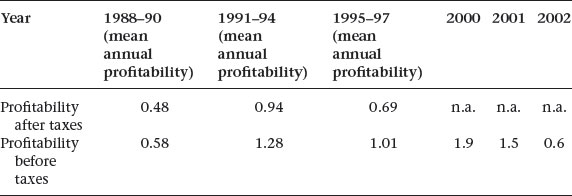
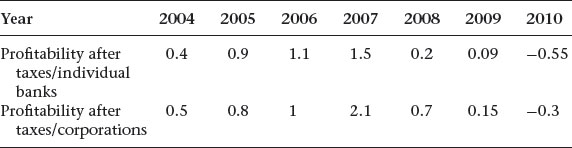
First, instead of adopting an expansionary investment strategy to deal with increasing international competition vis-à-vis the country’s entry into the eurozone, the Greek banks pursued an aggressive policy of mergers and acquisitions bringing about an oligopolistic condition to the Greek financial sector and high profits. This was the case as much before (Table 6.4) as after (Table 6.5) the entry into the eurozone. As a result, at the time of writing (December 2012), Greece has some 61 banks of which 34 are Greek, 33 branches which belong to banks from EU countries and five banks from outside the EU. But only five commercial banks control nearly 70 per cent of the liquidity market in Greece of which 80 per cent is owned by Greek banks (Table 6.6).32
Table 6.4 Profitability of Greek banks as a percentage of their assets, 1988–2003
Source: Data based on the annual reports of the Governor of the Bank of Greece, Athens.
Table 6.5 Profitability of Greek banks as a percentage of their assets, 2004–10
Source: Data based on the annual reports of the Governor of the Bank of Greece, Athens.
It is worth noting that, according to the Governor of the Bank of Greece in 1998, the profitability of the Greek banks was much higher than in other European countries. But this happened due chiefly to the second type of strategy adopted by the banks, which was massive lending to the Greek government.33 For more than ten years (1999–2009), the Greek banks, through lending to the Greek governments, presented massive profits on their balance sheets, and at the expense of the Greek taxpayer.
According to an original research paper published by Constantine Manolopoulos,34 in 2010 the National Bank of Greece had an accumulated holding of Greek debt of 17.9 million euros, or 88.6 per cent of its investment portfolio; Piraeus Bank (of Sallas family) 7.3 million euros or 83 per cent of its investment portfolio; EFG-Eurobank (of Latsis family) 7.3 million euros or 97.1 per cent of its investment portfolio; Greek Postal Services (state-owned) 5.6 million euros or 98.5 per cent of its investment portfolio; Alpha Bank (of Kostopoulos family) 4 million euros or 87 per cent of its investment portfolio; Ate Bank (state-owned)3.4 million euros or 75.6 per cent of its investment portfolio; and the Commercial Bank, which is owned by the French Credit Agricole, 1.7 million euros or 83.2 per cent of its investment portfolio.
Table 6.6 Mergers and acquisitions in the Greek banking sector, 1997–2010
|
Piraeus Bank |
1997 acquisitions of |
Chase Manhattan’s activities in Greece |
|
1998 acquisitions of |
Bank of Macedonia-Thrace Credit Lyonnais Greece Chios Bank |
|
|
1999 acquisitions of |
UK national Westminster’s branches in Greece |
|
|
2001 acquisitions of |
ETVA (Greek bank for industrial development) |
|
|
EFG-Eurobank |
1996 acquisitions of |
Interbank |
|
1998 acquisitions of |
Bank of Athens |
|
|
Bank of Crete |
||
|
1999 acquisitions of |
Bank of labour |
|
|
Dorian Bank |
||
|
2001 merger of |
Telesis investment Bank |
|
|
Alpha Bank |
1999 acquisitions of |
Ionian Bank |
|
National Bank of Greece |
1998 acquisitions of |
National Mortgage Bank which acquired national Dwelling Bank in 1997 |
|
2006 acquisitions of |
Turkish Finansbank |
|
|
Marfin Bank |
2003 merger with |
Investment Bank |
|
2007 merger with |
Egnatia Bank that acquired the Bank of central Greece a popular bank in 1997 |
|
|
Societe generale |
2003 acquisitions of |
General Bank |
|
Credit agricole |
2000–10 step-by-step acquisition of |
Commercial Bank of Greece (Emporiki) |
|
Aspis Bank |
2002 acquisitions of |
ABN AMRO’s branches in Greece |
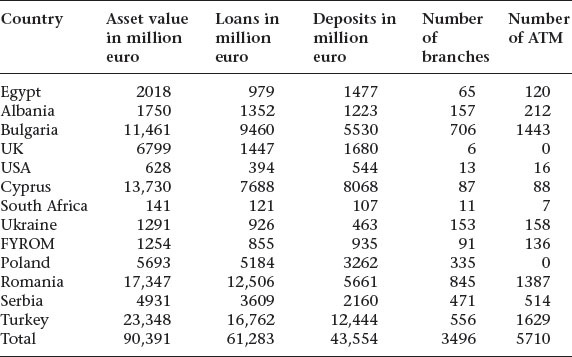
The third strategy pursued by the banks under this new regime of neo-liberal financialization in order to increase their speculative profits and assets was the aggressive promotion of ‘new products’, such as mutual funds. These funds absorbed a significant amount of savings of ordinary people. The asset value of mutual funds in Greece was 1.1 per cent of GDP in 1990, 5 per cent in Portugal, 3.1 per cent in Spain, 5.5 per cent in Ireland and 3.7 per cent in Italy. But seven years later in 1997, the asset value of mutual funds soared to 22.4 per cent of GDP for Greece, 26 per cent for Portugal, 34.9 per cent in Spain, 69.9 per cent in Ireland, 18.9 per cent in Italy and 24.7 per cent in prudent Germany.35 We can see here the bubble of financialization in the 1990s getting almost out of hand across Europe and not only in Greece, as well as Ireland standing out as a peculiar case with a highly vulnerable banking sector. It is those paper assets (debt) which had been inserted in the statistics, appearing as ‘real’ GDP growth, yet what in fact had been debt, portfolio and bond activity, as well as other services and products circulating in Greek, European and global markets. This all went hand in glove with the destruction of the productive (primary and secondary) sectors of the economy, which were now completely unable to compete internationally. Thus, when the crisis kicked in and blew up the chain of debts and paper assets across the European banking sector, the IMF and the ECB were among the first to step in to recapitalize them defending their Balkan kin. By that time Greece had amassed an amazingly brave operation in the financial and security markets of the Balkans and the Near East (Table 6.7).36 By the end of 2011, the Greek banks had received 86.8 billion euros from the ECB and nearly 30 billion euros from the Greek government. But this is now taxpayer money that the Greek citizens have to pay. The troika supports this solution because the assets of the Greek banks do not belong to any public utility whose main shareholders are the Greek people, but to investment funds and foreign interests holding nearly 82 per cent of their shares, whereas their official owners own less than 10 per cent and the Greek insurance fund less than 5 per cent.37
Back in December 1996 cotton growers protested violently against the government, for refusing to reschedule about $1.3 billion in debt owed to the state-controlled Agricultural Bank and to obtain reinstatement of a tax break on fuel. Strong protests also took place in Athens in 1998, when PASOK Finance Minister, Yannos Papantoniou, in coordination with the managing directors of the Commercial Bank, announced the tendering of a majority stake in its Ionian subsidiary.38 In 1998, the drachma was devalued by 12.1 per cent against the ecu, as the price of entry to the ERM. By the end of the millennium, Greek state authorities were presenting highly positive statistical data vis-à-vis the country’s entry into the eurozone, which was scheduled for 1 January 2001, two years after the launch of the euro for the core of Europe: GDP was around 3.5 per cent, one of the highest in Europe; inflation was down to 4 per cent and the budget deficit had shrunk to 1.9 per cent of GDP, well below the Maastricht convergence ceiling of 3 per cent; the interest rate of 12-month Treasury bill in 1997–98 ran at 9.5 per cent, with the EMU fluctuating criterion being 7.8 per cent. Meanwhile, international lenders began bidding for contracts with the Greek government in the run up to the Athens Olympics of summer 2004, just as Greek rentier/financial capital penetration into the new Balkans/Near East assumed enormous proportions.
Table 6.7 International activities of Greek banks in 2010
Source: Our own estimates based on data from the Union of Greek Banks (2011).
6.2.3 The new comprador element and the collusion between ‘modernization’ and corruption
Companies, such as the Alpha Group, Mytilineos S.A., Bobolas S.A., Intracom Holding S.A., Marfin Bank, MIG and the Sfakianakis Group, began dominating the new business environment. The Sfakianakis Group, for instance, which started in the early 1960s manufacturing buses, saw its profits declining in the 1980s and quickly diversified into comprador activities, becoming Greece’s prime car importer from Germany, France, Italy and the USA. Greece’s telecommunications operator, OTE, while under a programme of partial privatization, bought Romania’s Rom Telecom defeating Telecom Italia, the only other bidder.39 US companies provided technology and other capital for further modernization. The Mytilineos business group bought Romanian SC Somerta Copsa Mica, a lead and zinc smelter company, with a view to expanding it into metal processing, boosting its supplies to Kosovo and Macedonia/Former Yugoslav Republic of Macedonia (FYROM). Cement manufacturing Titan, in a joint venture with Holderbank of Switzerland, acquired Macedonia’s plant Cementamica USJE. Latsis, a London-based shipping company, participated in investment ventures in Bulgaria and Romania through the ‘Euro-merchant Balkan Fund, operated by Global Finance, a Greek venture capital fund manager’.40 Around the same time, Spiro Latsis set up Eurobank EFG in Greece, the third largest private bank in Greece, recycling paper and values stemming from oil trade and equity investment in Poland, the Ukraine, Turkey, Serbia, Romania and Bulgaria. In this delirium, divided Cyprus, an EU member state since 2004, was an offshore paradise and tax haven accommodating rentier and financial activities, whether of Greek, British, Russian, Serbian or Persian Gulf origin.41 At the same time, Cypriot banks, which have a significant presence in the Greek market, kept buying Greek debt in increasing quantities. Thus, straight polygonal lines connect Dubai, Cyprus, London, Athens, Cairo, Sofia, Belgrade, Damascus and Moscow, reflecting the new geography of parasitic capital with no growth prospects in the carriage bag of its travellers. In this Eastern and Middle Eastern geographical architecture, Athens was a key pawn and conduit in the service of financialization and neo-liberalism. It should be noted that the amount of tax evasion of this new super-rich comprador along with financial class was enormous.42
None of the above activities was conducive to real growth. Greek investments in the real economy involved small- and medium-sized enterprises in the textile and brewing industries in Greece and the Balkans, but this could neither offset nor arrest the new domination by financial and rentier/comprador capital, that is, the capital of debt, corruption and tax evasion.43 Simitis’ ‘modernisation’ and ‘anti-populist’ programme co-constituted this new reality, which penetrated deeply into Greece’s social tissue, destroying the social mores and culture of working-class and agrarian communities. As the organic produce became increasingly replaced by the imported GM product of the core, the best the local producer could do was to embrace the international domination of his/her market becoming a petty comprador. At the same time, Simitis created a new type of social alliance, the ‘social alliance of modernization’, gathered around the ‘party of the stock exchange’ and unified via a complex paralegal corruption network forming a new bipartisan consensus across the trembling kampfplatz of post-1974 Greek politics. PASOK and ND were now united behind a range of wheeling and dealing related to acts of privatization, management of state financial flows and recycling of debt, defence expenditure (see below), re-arrangement of privileges and re-distribution of benefits and political clientele.44 It can be argued, therefore, that despite the fact that the class determinants of the Greek bourgeoisie had been changing, the coalition of power and the structure of the ruling bipartisan class, including the large number of civil servants, remained unaltered. The structures of dependency and subordination of the Greek state elites to Euro-Atlantic power centres also remained the same.
Neither Simitis’ ‘modernisation’ and ‘anti-tax evasion’ programme (1996–2004), nor the similar ‘modernization’ programme pursued by the ND cabinet under Karamanlis Jr. (2004–09) brought any benefit to state finances. According to multiple announcements by the Ministry of Finance in September–October 2011, more than 6000 individuals owe more than 150,000 euros, each one of them to the Inland Revenue. For the sake of comparison, the total amount these individuals owe to the tax authorities is in the region of 30 billion Euros, whereas the annual spending of the Greek state for wages is less than 23 billion Euros. No accident, therefore, that the public debt doubled from 2000 to 2009, and at the expense of the average Greek consumer. Yet this abrupt rise was not accompanied by an increase in the productive output of the economy, as the country’s GDP presented a less dynamic structure (Table 6.10). Interestingly, if we also factor in defence spending, which was justified purely on ideational rather than real grounds, this dimension of public spending did not only add onto the debt structures of the country, but also extended corrupt practices to the heart of the state.
One of the reasons why France, in the first place, and Germany are the main holders of Greek debt is because Greek political elites, in their ‘patriotic attempts’ to move away from the USA’s pro-Turkish grip, began using French and German weapons suppliers. By exaggerating both the threat coming from Turkey and Greece’s and Cyprus’s own vulnerability, the ‘realists’ of the Greek cabinets could bid for high-tech expensive military gear: in 2009 defence expenditure in Greece was over 3.3 per cent of GDP, as opposed to 2.4 per cent for France, 2.7 per cent for Britain, 2 per cent for Portugal, 1.4 per cent for Germany, 1.3 per cent for Spain and 4.7 per cent for the USA. At the beginning of the fully fledged crisis of 2010, Greece bought six warships from France at a cost of 2.5 billion euros and six submarines from Germany at 5 billion euros. Between 2005 and 2009 Greece was one of the largest European importers of weaponry.45 During that period, the purchase of 26 F-16s from the USA and 25 Mirage-2000 from France represented nearly 40 per cent of the total import volume of the country. According to Stockholm International Peace Institute (SIPRI) data for 2006–10, Greece is the fifth weapons importer of the world, with a global quota of 4 per cent, about half that of India (9 per cent), and two thirds of China’s imports (6 per cent) – it is worth noting that the Chinese GDP is about 20 times bigger than Greece’s nominal GDP.46 Most of these transactions took place through the Greek state issuing debt, that is, pieces of paper. In Greece, there is no such thing as an ‘industrial-military complex’, but rather a comprador-military complex, a key faction within the wider financial/comprador oligarchy network, which is dominated by the Ministry of Defence, doing all sorts of wheeling and dealing under the radar of a liberal Constitution and the taxpayer. In 2011–12, for example, Akis Tsochatzopoulos, a highly regarded PASOK cadre who challenged Simitis in the party leadership in 1996, was being investigated and imprisoned with regard to his activities as Minister for National Defence between 1996 and 2001. Accusations against him include bribes he and his associates received for defence systems – mainly submarines and Patriot batteries – that were bought under his leadership. Thus, the entire security of the country is a dependent spoke of the Euro-Atlantic core, whether American or Franco-German. But there is also something else we wish to mention.
Not all defence deals had been, or are being, dealt with by issuing state bonds/debt. Offset regulation became part of the official Procurement Law, 3433/2006. The Greek Ministry of Defence is in charge through the department of the General Armaments Directorate (GAD), and the Division of Offsets (DO). Offsets and procurements are a complicated method of purchasing weapons and military technology, involving, primarily, barter agreements. This means that private interests in Greece can barter all sorts of assets, including land and infrastructure, on the altar of corrupt defence deals and hot money. The threshold for offset request is 10 million euros. Much is done for the defence of Cyprus and the Aegean islands against the ‘Turkish enemy’.47
6.2.4 EU transfers to Greece and the PIGS cannot stop the debt spiral
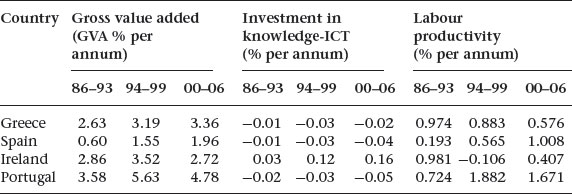
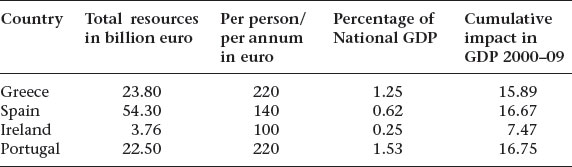
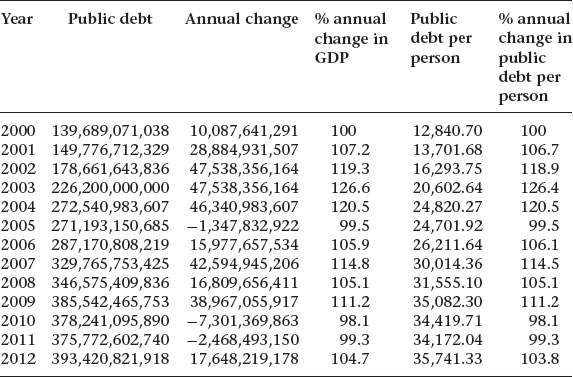
Having said this, the doubling of the Greek public debt from 2000 to 2009 (Table 6.10) should not be surprising. In addition, we can see from the table the increase of extra charges for the Greek taxpayer (5th column) all of which had been happening without any corresponding increase in productivity and output. The Greek GDP has been growing at a much slower pace than the debt (4th column). The ruling parties of ND and PASOK became increasingly unable to manage the debt. The structural funds coming from the EC/EU also did very little, if anything at all, to improve social cohesion and productivity in Greece and other PIGS (Tables 6.8 and 6.9).48 A careful look at the empirical evidence we possess suggests that during 2000–09 EU transfers towards the PIGS never went above 1.53 per cent of GDP, or 220 euros per person per annum. In fact, the so-called structural and cohesion funds disintegrated the productive structures of the PIGS even further, instead of advancing sustainable development, real growth and socio-economic cohesion.
Table 6.8 Impact of the EU structural funds on Cohesion (PIGS) Countries, 1986–2006
Source: GHK (2002) ‘The thematic evaluation on the contribution of the structural funds to sustainable development; synthesis report’, DG Regio, E.C., pp. 54–7; and GHK, PSI, IEEP, CE (2003) ‘The contribution of the structural funds to sustainable development; a synthesis report’ (Volume 1), DG Regio, EC, Chapter 4.
Table 6.9 EU cohesion funds committed to PIGS, 2000–09 (in 1999 prices)
Sources: EU (2010) ‘Ex-post evaluation of cohesion policy programs 2000–06 co-financed by EFDF; Synthesis report’ pp. 115–17; Reiner Martin (2003) ‘The impact of the EU’s structural and cohesion fund on real convergence in the EU’, European Central Bank, p. 5.
Moreover, the import/export ratio from 1994 to 2009 shrank at the expense of exports and despite significant growth (Table 6.12). Thus, the international competitive position of Greece worsened, the export-led manufacturing sector disintegrated further, and all this despite high borrowing and the rise in the share price index of the ASE (Table 6.12). Further, the structure of exports over imports shows the magnitude of the problem, caused by a combination of the uneven development between the core and the peripheral Greek state and of the policies pursued by the ‘new’ coalition of power (PASOK + ND + new financial comprador bourgeoisie) straddling the geo-political fault-lines of the country. From 1994 to 2009 the Greek economy lost almost 40 per cent of its competitiveness despite the fact that GDP growth remained relatively good, whereas the period 1999–2004 was the highest in the EU; domestic and external borrowing increased (Table 6.11); and the ASE’s price index was doing quite well. In this respect – manipulation of statistics apart – the relatively wealthy picture of the Greek economy before the current crisis was not because of the improvement of the real economy, but rather to the speculative, rentier and consumerist activities of the new business and middle classes, coupled with the recycling of European/German financial surpluses in the country’s account and banking system. In other words, as elsewhere in the West, especially in the USA and the UK, the growth registered was debt-driven, whereas the disintegration of the domestic economy from the mid-1990s onwards went hand in glove with the relative growth of comprador together with financial elements – substantial increase of imports of financial products and increase of financialization through the ASE and external and domestic borrowing via banking mediation. The aim of the Euro-Atlantic powers was crystal clear: use the new bipartisan power coalition of ‘modernizers’ in Greece to penetrate the Balkans and the Near East not just for financial/speculative purposes, but also for geo-political reasons. These involve, for example, the contribution of Greece to the stabilization of Albania, Bulgaria and FYROM/Macedonia, while maintaining the balance of power in the Aegean and Cyprus. In this context, the crisis that broke up in 1996 between Greece and Turkey over the uninhabited islands of Imia/Kardak, as well as over the transfer of S-300 Russian missiles to Cyprus, not to mention the case of the Kurdish rebel, Abdullah Ocalan in 1999, or the crisis over FYROM’s name, still lingering, need to be remembered. Moreover, financialization and expansion of banking capital across South-east Europe from the mid-1990s onwards induced a policy of rapprochement between Greece and Turkey, which was short-lived and opportunistic as indeed were all arrangements sponsored by comprador capiral and financiers.49 All of these problems, of course, and despite the fact that none of them benefitted Greece’s geo-political and security interests, had been duly exploited by the bipartisan power bloc pushing for an increase in defence spending, that is the purchasing of weaponry by issuing pieces of paper (debt). During the era of neo-liberal financialization, Greece’s dependent/subaltern position in international and European politics deepened further along with the disintegration of the productive base of the country (Table 6.10).
Table 6.10 Evolution of the Greek public debt and its relation to GDP in USD, 2000–2012
Source: www.economist.com/content/global_debt_clock. And Hellenic Statistical Agency (ELSTAT), 2011.
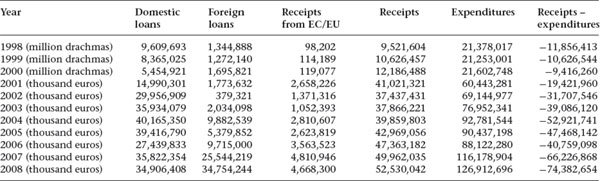
The borrowing requirement of the Greek state increased rapidly after 2001. This was a result of further internationalization/Europeanization of the Greek state with the insertion of the country into this peculiar form of world money, the euro (Table 6.11). We see that whereas the initial loans were sourced domestically, this ceased to be the case after 2007, as the 2007–08 financial crisis wiped out the accumulated wealth of small paper-asset investors, while at the same time the Greek state was forced to pump money into the banks degrading the structure of the budget deficit. This, in turn, could not have been offset by European funds whose volume was not sufficient (Table 6.11, column 4). It is clear to us that from 2007 onwards the Greek debt has been split between national and international/European agencies and structures. Thus, the ‘haircut’ agreed at the end of October 2011 and effected in the second Memorandum of February–March 2012, applied to the Greek banking sector, which found it impossible to survive without substantial recapitalization from European Financial Stability Facility (EFSF) funds. Greek Cypriot banks operating in Greece were also affected by the ‘haircut’, adding on to the malaise of Cyprus’s financial sector. Time and again, this recapitalization was being carried out at the expense of the taxpayer, leading mathematically to a creditor-led default, as initially pushed for by Germany and as the third round of austerity in Fall 2012 showed, followed by another bailout (see Timeline at front of book). Greece is unable to service its debt or ever pay back some of the principal as the actual and projected rate of growth from 2010 to 2013 ranged between –2.5 per cent and –7.5 per cent, whereas the interest rate for borrowing has always been above 3 per cent. Moreover, the European banking system, too, seems to be unable to cope with the stress on its peripheral banks and pension funds inasmuch as the degree of leveraging takes on enormous proportions. Greek banks alone, for example, are dependent on ECB credit lines that amount to over 100 billion euros.50 The new ruling classes of Greece, together with their Western masters, have failed spectacularly to deliver growth and sustainable development to the Greek population. What they deliver, though, is a peculiar form of ‘creative destruction’, whereby the mechanism of national and international debt generates forms of primitive accumulation, that is, social destruction and pauperization, as Marx foresaw more than 150 years ago.
Table 6.11 Annual loans of the Greek State, state receipts, receipts from EC/EU and expenditures, 1998–2008
Source: Calculations based on data from the Concise Statistical Yearbooks of ELSTAT for the respective years. Hellenic Statistical Agency (ELSTAT).
Table 6.12 Annual change of exports over imports, the share prices in Athens stock exchange and GDP in market prices, 1994–2010
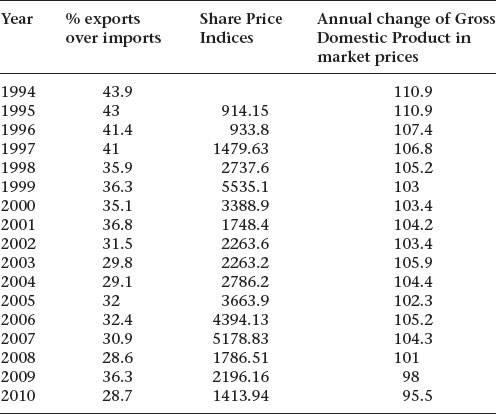
Source: Data compiled from the Concise Statistical Yearbooks of ELSTAT and the National Accounts of Greece for the respective years. Hellenic Statistical Agency (ELSTAT).
There is no doubt, therefore, that whereas the trade deficit and various forms of external borrowing especially during the period of low interest rates are substantial sources of the overall Greek debt, numerous other factors, mainly of domestic origin, have to be factored into every calculation. Trade deficits are articulated in the current account, and especially in the structure of the unequal/un-equivalent trade interaction between Greece and the European core, particularly Germany, Italy, France and the Netherlands. Approximately 70 per cent of Greek imports come from Europe, whereas about 55 per cent come from EU member states. Germany’s share of total imports is 12 per cent, Italy’s 11 per cent and France’s 6 per cent. Of the total of Greek exports, some 64 per cent goes to EU member states (11.5 per cent to Germany, 11 per cent to Italy, 4.2 per cent to France). On the surface, it appears that the import/export relation is in equilibrium, but this is not the case. In terms of absolute value, Greek exports to Germany are in the region of 1.9 billion euros, whereas the value of German exports to Greece are in the region of 7.2 billion euros.51 But there is also the dimension of financial account. This can take various forms: Foreign Direct Investment, portfolio flows and other flows driven by the banking sector of the core. Recycling of German surpluses becomes clear from the overall composition of German exports over imports, thus accelerating the pace of concentration of the overall debt. In this context, the analyses by Lapavitsas et al., are meaningful:
[I]nternational transactions of eurozone countries have been driven by the requirements and implications of monetary union. Peripheral countries have lost their competitiveness relative to Germany because of initially high exchange rates as well as because of the ability of German employers to squeeze workers harder. The result has been a structural current account surplus for Germany, mirrored by structural account deficits for peripheral countries. Consequently, German FDI and bank lending to the eurozone have increased significantly. ‘Other’ flows to peripheral countries rose rapidly in 2007–08 as the crisis unfolded, but then declined equally rapidly. That was the time when peripheral states were forced to appear in credit markets seeking funds.52
Thus, the overall Greek debt today after the ‘haircut’ of February–March 2012 – about 281 billion euros outstanding, down from 350 billion euros – stems both from domestic (private and public) and external (international and European) sources. It is the articulation and interaction of those two sources that should be considered carefully, and which should account for any meaningful auditing effort leading to debt cancelation. Companies and business ‘territorialized’ in the peripheral state cannot compete, let alone out-compete, the companies and business capacity and dynamism of the core. But what can happen, and did, especially in the case of Greece, is that companies, financial or otherwise, of the core use local comprador agents to penetrate regional markets. The context, at all times, remains geo-political and security always matters (the Macedonian issue, the case with Russian S-300 missiles, the Aegean issue with its most recent highlight about the Exclusive Economic Zones [EEZ]53, etc.). Even during the current crisis, geo-politics held some pride of place.54
6.2.5 Some concluding points
Our main findings in this section are as follows:
(a) The high growth rates of the post-1995 period in Greece are not a result of the improvement of the real economy (productivity, technological innovation, output and valorization), but due to the speculative and consumerist activities of middle-to-upper middle classes and the comprador together with financial elements that have dominated the Greek social formation since then. Thus, a pronounced fault-line was being created between the real commodity values circulated in the Greek market, on the one hand, and the large amount of bad money, or debt, collateralized by pieces of paper (fictitious values). The Athens Stock Exchange and off-shore business interests escaping taxation, coupled with aggressive penetration of the Greek banking sector in the Balkans/Near East/North Africa – which was basically used as a conduit of German and French financialization plans for the region – constituted the form that ‘asset price Keynesianism’ (Robert Brenner) assumed in Greece. Alongside this picture one can draw the profile of the new comprador bourgeoisie, the main agent of dependency for the country. The main difference with the comprador element of the past is that this time around the commodity traded is primarily, but not exclusively, fictitious rather than real. Financialization and neoliberalism have shattered the country’s already weak productive-material base, including its small commodity base of production.
(b) The entry of the country into the eurozone has accelerated the proliferation of the country’s debt via the mechanism of uneven/un-equivalent development but, as such, it did not cause it. Our historical investigation indicates that a Greek bankruptcy would have happened anyway, as it happened in the past and when the country was not participating in any currency union – having its currency pegged to an imperial currency was enough to cause havoc. Greece has never really been solvent. Bankruptcy was bound to happen much earlier had it not been for the geo-political and security circumstances of the end of the Cold War and the need for the Euro-Atlantic powers – especially the US – to have (and use) Greece and Turkey as anchors of stability in the Balkans and the Near/Middle East.
(c) The sources of the Greek debt crisis are both internal and external and, in general, pertain to the historical fault-lines of the country: a weak capitalist economic structure relative to the advanced core; and a relatively important geo-political/regional position relative to its real economic assets and industrial/technological base. The management of those fault-lines by the coalition of PASOK-ND in the post-1974 period – the fourth Greek kampfplatz – proved, as in the past, to be subordinate to the class and security interests of the core, unable to articulate independent national/class claims against it. The kampfplatz of the fourth period remained a wholly dependent spoke of the Euro-Atlantic hub and a corrupt administrator in managing the relation of representation between itself and civil society. Myriad of financial, geo-political and class interests, hemmed in by corrupt deals, cut across the vertical articulation of corporatist interests between PASOK-ND and civil society, on the one hand, but also the horizontal articulation between PASOK-ND and the Euro-Atlantic core, on the other. From this perspective, as we have argued elsewhere, this Greek tragedy is the making of the Greek and Euro-Atlantic ruling classes.55 Thus, the sinking of Greece in a mountain of debt is not bringing down only the post-1974 ruling coalition of PASOK-ND, but it is also likely to drag down with it the entire Euro-Atlantic architecture built alongside the Achesonian principles of hub-and-spoke US neo-imperialism. And because the stakes are very high, our speculative point is that the Obama administration has instructed privately Germany to keep Greece in the euro-fold at all costs, as it has done with the British premier, David Cameron, publicly in January 2013, when Cameron contemplated having a referendum over Britain’s EU membership. But if this is the case with the horizontal articulation of class and security interests, what about the vertical one, that is the nexus between the Greek state/political system, on the one hand, and civil society, on the other?
To answer this question we need to consider changes in the structure of the middle and lower-middle classes, which constitute – or used to – the main electoral base of the two ruling parties – classes that Marx, in his analysis of Bonapartism in the 18th Brumaire (1852), called ‘classes-pillars of the regime’. We will argue that the current crisis has eroded key electoral constituencies of those parties, as delivery of clientelistic/corporatist strategic undertakings of regime reproduction are no longer possible. Neither PASOK nor ND can manage the crisis, let alone provide a progressive exit from it.
6.3 The disintegration of the middle classes
First, we will present some empirical data on the occupational structures of Ireland, Portugal, Greece, Italy and Spain from 1999 to 2010 in order to decipher possible changes in the class stratification of the European periphery following their entry in the eurozone. Second, we will provide an interpretation of those data, also by way of bringing up some more evidence concerning changes in the annual expenses of the Greek state, so as to show the extent to which social income reduction is related to state expenditure before and during the crisis. We will then consider the impact of three austerity rounds upon Greek society, the weakest of all periphery social formations and the one that has suffered most from the policies imposed by the troika and their local agents. We do not wish here to enter into a theoretical discussion about the definition of class.56
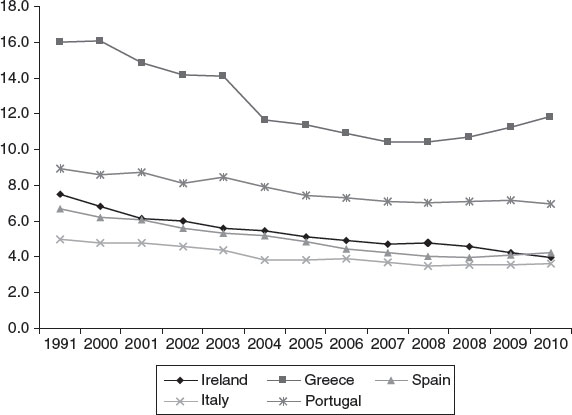
Figure 6.1 Percentage of employment in agriculture, hunting and forestry. Ireland, Greece, Spain, Italy and Portugal, 1999–2010
Source: Calculations based on data from Eurostat.
We can read here a very interesting set of data. In Figure 6.1 we can see that occupation in the primary economic sector is relatively high in all periphery states, but after their entry into the eurozone the trend is downwards. Interestingly, the crisis seems to have stabilized employment in the Greek primary sector, whereas in all other countries the trend continues to be downwards also during the crisis. Figure 6.2 shows that wage labourers increased across the periphery after their entry into the eurozone, even in Greece, a country with high numbers of self-employed people. Figure 6.3 shows that the number of self-employed people in the periphery, although shrinking, is rather high. The exception here is Italy where the numbers of the self-employed increased after 2003. In Ireland, Portugal and Spain, self-employed occupational structures follow a downward spiral. Figure 6.4 confirms that we are witnessing the same trend towards an increase in the numbers of waged labour and this, especially in Greece and Italy, takes place at the expense of small family businesses. From Figures 6.5, 6.6, 6.7, 6.8 and 6.9 we can infer that EMU entry boosted the position of middle classes in Greece, as opposed to Spain and Ireland, whereas in all other countries except Italy the number of middle classes remains stable. In Portugal (Figure 6.10), the weight of family-based business shrank at the expense of waged labour. What is the primary sociological inference that can be made? In all periphery countries the EMU contributed to an expansion of waged labour, primarily at the expense of family business, the sole exception being Italy. This means that neo-liberal financialization under the EMU regime contributed significantly to sapping social solidarity that is represented, especially in the periphery, by the family unit as a business unit. However, as we shall see, a number of other factors – culture, inheritance – have somewhat counter-balanced extreme forms of social poverty and pauperization. The high levels of unemployment and a number of other consequences that appeared as a result of the harsh packages of austerity, especially in Greece, become nevertheless difficult to be handled by social agencies (families, local communities, small professional associations, etc.) and barter has appeared in big cities and among the poor. The state cannot really offer any help because it is committed to the programme of the troika, that is, paying back the debt by squeezing out the taxpayer and selling off the public assets of the country. At the same time, it undermines its own fundamental function as an employer of last resort and as a provider of basic needs: medicine, pensions, salaries, education; and we refer only to those, because the Greek ‘welfare’ state never really provided significant housing and unemployment benefits to those really in need. The following evidence is very suggestive (Table 6.13):
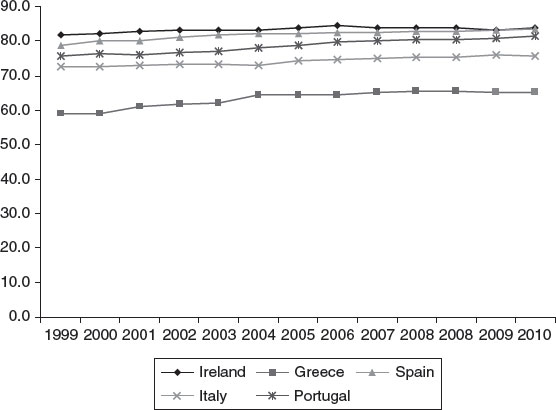
Figure 6.2 Percentage of employees in total employment. Ireland, Greece, Spain, Italy and Portugal, 1999–2010
Source: Calculations based on data from Eurostat.
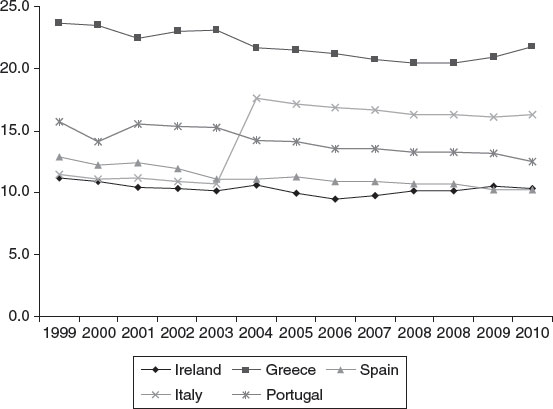
Figure 6.3 Percentage of self-employed persons without employees (own-account workers). Ireland, Greece, Spain, Italy and Portugal, 1999–2010
Source: Calculations based on data from Eurostat.
We can see that before and after the entry of the country into the eurozone the largest expense of the state was the servicing of debt (interest payments and amortizations). Moreover, servicing the debt was by far the largest expenditure rather than, for example, payment for salaries and pensions. This means that even if the current Greek government stops completely payment of salaries and pensions, even in this extreme case, the money that will be saved will not be enough to service the debt. It is clear that the dependence of Greece on its lenders deteriorated after the entry into the eurozone. As we noted earlier, the strategy of the lenders is to transfer the debt from the private to the public sector, onto the shoulders of the taxpayer. The narrative as told by the Governor of the Bank of Greece, George Provopoulos, is as follows.57
In 2005, Greece’s external debt was 114.4 per cent of GDP, of which 145,230 million euros was the debt of the general government, 7217 million euros the debt of the Bank of Greece and 52,499 million euros the debt of other credit institutions of the country. But in 2011, when the country’s debt soared to over 160 per cent of GDP, the debt of the general government was 156,995 million euros, the debt of the Bank of Greece 104,750 million euros and the debt of other banks and credit institutions 91,191 million euros. With the restructuring of the Greek debt and the ‘haircut’ which was inherent in the strategic intent of the Memoranda, the debt was indeed transferred onto the public sector, with the recapitalization of banks becoming the main concern of the troika all the while leaving the ownership status of the banks untouched. The debt has been socialized/nationalized but not the banks. This has had some unbearable consequences for the post-1974 PASOK-ND regime.
Figure 6.4 Percentage of contributing family workers in total employment. Ireland, Greece, Spain, Italy and Portugal, 1999–2010
Source: Calculations based on data from Eurostat.
Throughout the post-1995 period of neo-liberal pandemonium in Greece, and despite the high rates of growth – which, as we have seen, were debt-driven – the Greek economy failed to create employment (Table 6.14). The economically active part of the population amounts to less than 60 per cent of the total population, whereas unemployment remains high. For instance, the entry of migrants, especially Albanians, into the Greek labour market cannot be measured well, as most of them are illegal and employed in the informal sector (others, such as Pakistanis and Bangladeshis or Afghans enter mainly via Turkey). During the 1990s and 2000s a major trend reversed, accentuating the fault-lines on which the Greek economy rests: from a migrant-sending country in the 1950s and 1960s, Greece became a migrant-receiving one, eliminating one source of invisible earnings that had a positive effect on the balance of payments. Instead, large numbers of migrants from the Balkans, the Middle East and Central Asia poured into Greece after the collapse of ‘really existing socialism’, only to find themselves in a hostile and rather racist social environment, which was partly due to the inability of the formal Greek economy to create permanent employment and equal opportunity – something which is not unique across the Euro-Atlantic core.58
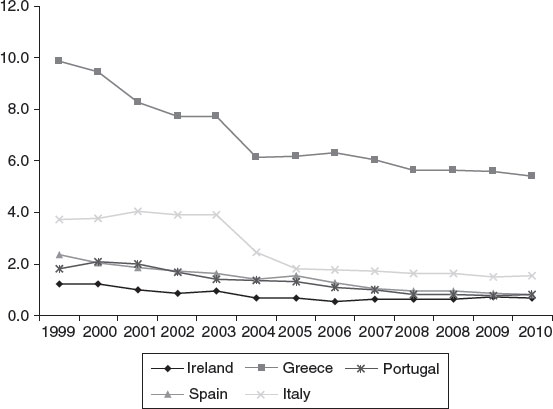
Figure 6.5 Percentage of self-employed persons with employees (employers). Ireland, Greece, Spain, Italy and Portugal, 1999–2010
Source: Calculations based on data from Eurostat.
As we have seen, the structural and historical features of the Greek economy are shallow: a nonchalant industrial and agricultural sector that cannot compete with the core, and a large public sector all topped with the activities of comprador (import–export) and micro-comprador (small local traders) capital in its fusion with the ruling political parties of PASOK and ND. But post-1995 developments have moved economic activities away from the ‘real’ economy into the fictional and parasitic wealth of financialization, transforming the comprador trader of real commodities into a comprador trader of fictitious commodities. Yet this and other transformations did not severely challenge the class and income structure of Greek society apart from eroding traditional family business. But how could a society operating alongside a neo-liberal model and internationalized through financialization and Europeanization be viable if almost 50 per cent of its population is idle or unemployed (Table 6.14)? Yet, from the fall of the Colonels to the eve of the current crisis, the Greeks survived and even thrived negotiating new social and political contracts with the ruling classes via electoral cycles. This was feasible for a number of reasons, of which two stand out: the strong inheritance structure of Greek society, coupled with strong family ties; and the large number of civil servants.
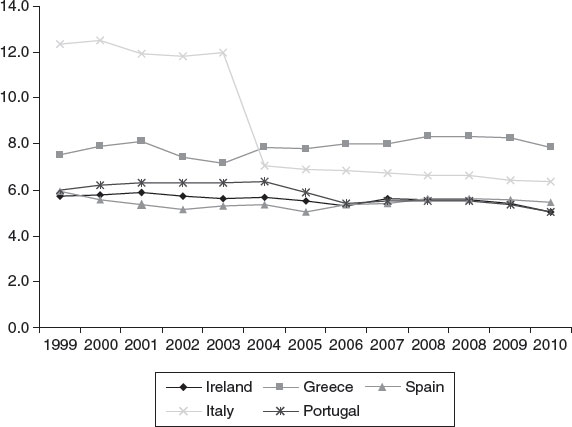
Figure 6.6 Occupational structure of Italy, 1999–2010
Source: Calculations based on data from Eurostat.
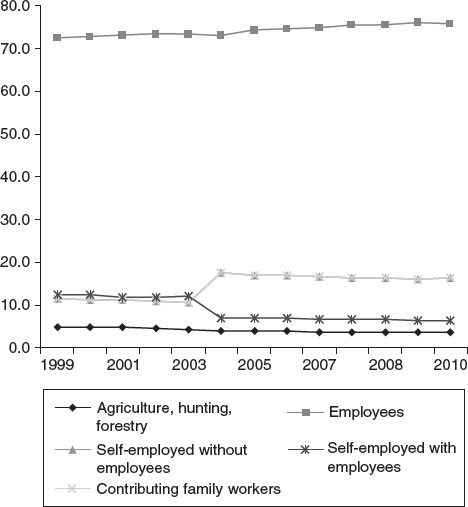
Figure 6.7 Occupational structure of Greece, 1999–2010
Source: Calculations based on data from Eurostat.
Roughly speaking, from the late 1970s 2010 the middle and petty bourgeois class composition of Greek society remained structurally unaltered. Just as ND’s and PASOK’s policies in the 1970s and 1980s failed to add an iota in the country’s economic development prospects, so the new parasitic forms of capital accumulation and the shift to financialization caused neither widespread proletarianization nor a reduction of state personnel.
A key sociological feature of Greece, perceptively captured by the work of Constantine Tsoukalas in the 1980s and 1990s, is the large number of its civil servants, micro-proprietors renting studio flats to tourists, petty-merchants, shopkeepers, lawyers, doctors, taxi-drivers, hoteliers, seasonal professions related to tourism and builders and car engineers of all sorts. Underground economic activities are also thriving. The size of the black economic sector has been estimated to be as high as 45–50 per cent of GDP. The two ruling parties provided special regulations for the expansion and reproduction of those strata, and especially for chemists/pharmacists, taxi drivers, judges, constructors, public works builders,59 providers of social services and lawyers. This large middle – yet diversified – class constituted the key pillar of the two-party rule alternating in office since 1974 – ND and PASOK. One would expect that a radical change in the structure of market and production would affect the class positions of those strata, yet nothing of the sort happened. As we have seen, neo-liberalism and the peculiar type of financialization introduced since at least the mid-1990s altered the profile of the Greek bourgeoisie, yet no substantial change appears in the composition of middle and lower-middle classes, which form the largest voting bloc of both ruling parties par excellence.
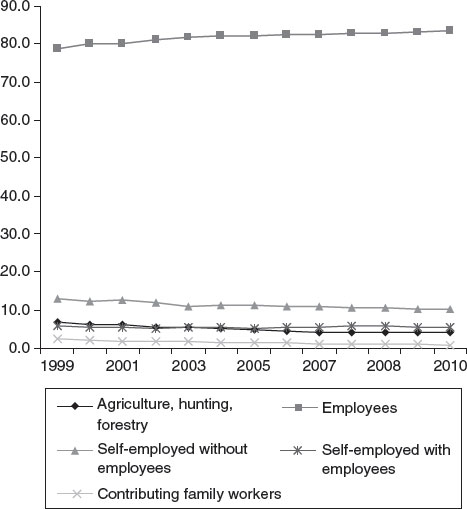
Figure 6.8 Occupational structure of Spain, 1999–2010
Source: Calculations based on data from Eurostat.
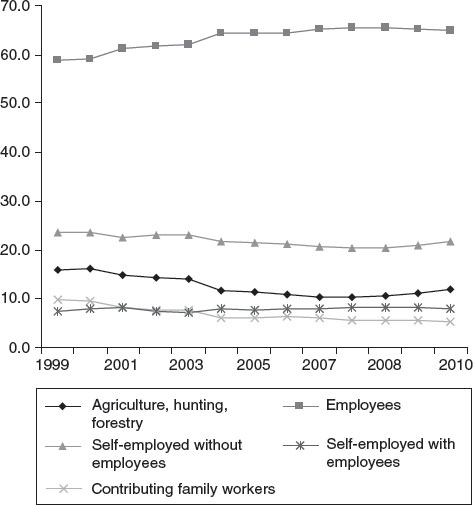
Figure 6.9 Occupational structure of Ireland, 1999–2010
Source: Calculations based on data from Eurostat
According to Greek Labour Force Surveys (Table 6.15), the self-employed with employees (small business) amounted to 262,900 in 1991 and 354,900 in 2010, the petty bourgeoisie (‘own account workers’) decreased slightly from 1,095,200 in 1991 to 975,300 in 2010, whereas the high number of unpaid family members remained almost unchanged. Importantly, salary and wage earners rose from 2,270,900 in 1991 to 2,660,100 in 2010, an increase mainly owing to the rise in the number of civil servants. In other words, the party-state machinery, despite all these projects of privatization and restructuring that took place under Europe’s Stability Pact programme and Simitis’ ‘modernization’, did not stop recruiting state personnel. Thus, no substantial changes occurred and no proletarianization took place. This is another way to see how the rates of growth achieved during the post-1995 period were debt-driven. In fact, the accumulation of capital in Greece during that period took the form of external and domestic borrowing and speculation and boom and bust cycles in the Stock Exchange. This is how Greece’s new bourgeoisie, in its fusion with the two governing parties of ND and PASOK, retained its voting bloc and influence inside and outside the parliament and reproduced the consensus achieved under the old Papandreou and Karamanlis in the 1970s and 1980s.
Figure 6.10 Occupational structure of Portugal, 1999–2010
Source: Calculations based on data from Eurostat
Table 6.13 Annual expenses of the Greek state in million euros, 1995–2011

Source: Calculations based on data from the annual reports of the Governor of the Bank of Greece (1995–2011). The figures before 2001 have been converted according to the official exchange rate of the entry of the drachma into the EMU (1 euro=340.75 drachmas).
Table 6.14 Population +15th years and employment in Greece in thousands, 1998–2010
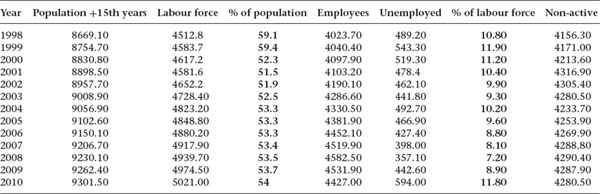
Source: Greek Labour Force Surveys, 2nd quarter of each year, Athens 2011.
Table 6.15 Employees according to their occupational status in thousands, 1998–2010
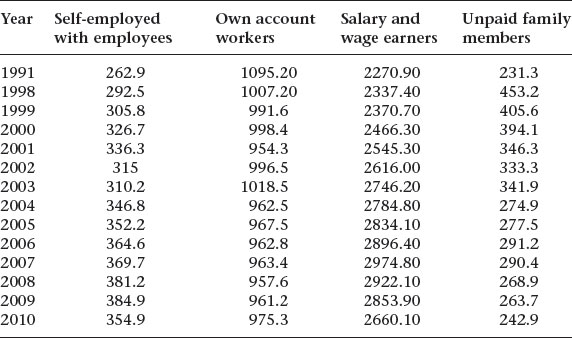
Source: Labour Force Survey 2nd quarter of each year.
The expansionist reproductive ability, therefore, of middle and lower-middle classes is remarkable: they adapted to the new economic environment by negotiating new clientelistic and corporatist contracts with the ruling parties. Apart from the state’s traditional role as clientelistic recruiter, the regeneration and financialization of social economy allowed a high level of consumption via the domestic mechanisms of consumer debt creation (consumer loans, credit card facility, share-buying, etc.). Money became cheap, and was recycled through the new private commercial banks, which wanted to take advantage of and capitalize on, the consumer’s modest wage or property ownership as collateral. In this respect, Greek society did not differ from other states of the Euro-Atlantic core. House mortgages played a role in the boom-bust cycle of 1995–2010, but not a significant one as in Spain, the UK or the USA. This is in large part the result of the inheritance structure of Greek society – the result of reforms effected in the Venizelos era and the institution of dowry that is still operational, especially in the countryside – as well as the family culture. Owning at least one house in the countryside and one in the city, mainly Athens or Salonica, the average petty bourgeois Greek family would hoard money to buy their children a small flat in the city, but they would never really encourage them to take out a mortgage. Athenian and other urban families would rather have their children live with them until they get married – yet this is something we find extensively in other societies too, that is, Italy – rather than pushing them to become independent and lead their own lives. Taking out a home mortgage is a rather new, post-1995 phenomenon in Greece. It, together with a wide range of loans available, began with the ‘new economy’ and became somewhat popular in the 2000s, but never really threatened the balance sheets of the banks in case, for example, of a consumer default as a result of an increase in interest rates. Arguably, as elsewhere, all these activities, a mix of old and new attitudes in society, did anything but contribute to the productive output of the country as a whole.
The above euphoria lasted until the new Papandreou government, elected in October 2009, announced that statistics regarding debt and GDP growth had been manipulated. Greece, immediately, became a hotbed for speculation as its debt was due to mature by 2013–14. In 2009, Greece’s growth crashed, unemployment was rising sharply, the public debt-to-GDP ratio stood at 127 per cent and the budget deficit was 15.4 per cent of GDP. Turning to the IMF and the ECB for assistance spelt disaster. As we know from the Latin American (1980s) and East-Central European (1990s) experiences, the IMF’s expertise is not how to help ‘poor nations in need to go back on a path of recovery’, but how to exploit the debt mechanism to deplete the resources of those states and repatriate the much needed cash for the Treasuries of the core, especially the US Treasury.60 The ECB is no better. It does not accept state bonds, but lends out to commercial banks at 1 per cent interest. These banks, in turn, multiply the interest rate to lend out to the European periphery states with debt problems. This is straightforward usury creating conditions of primitive accumulation, inasmuch as the employees of financial capital, that is the political personnel of the vassal and beyond, are forced to implement policies that lead to pauperization. In the case of Greece, these policies are enshrined in the Memorandum of Understanding (May 2010), the IMF Country Report on Greece (February 2011) and all the other Memoranda that followed (see Timeline at front of book). Over time, the austerity measures become all the more unbearable. The combined policies of the IMF and the ECB are leading the Euro-Atlantic economies as a whole, not just the periphery, into the abyss. The Cyprus crisis of March 2013 brings the German-led EU into confrontation with Russian interests and Near Eastern geo-politics and security issues. Almost one third of the Cypriot bank deposits to be levied belong to Russian interests. The geo-political dimension sees Germany raging at Russia in order to have the Russians excluded from the division of spoils over the Cypriot gas bonanza discovered within the jurisdiction of the Republic of Cyprus. Russia has port facilities in Tartus, Syria, but it could be interested in financing alternative facilities in Cypriot ports owing to the unstable political situation in Syria. Cyprus, on the other hand, is already in advanced talks with the US energy company ‘Noble’ over the construction of a liquid gas terminal (LNG). Before the eruption of the crisis, it had also granted exploration rights to the French oil company Total to search blocks 10 and 11 of the Cypriot EEZ. Construction of the terminal is about to start in 2016 and the terminal, capable of delivering up to 6 million tonnes of LNG per year, will be fully operational by 2019. Turkey opposes Russia’s overtures, a stance reinforced by the parlous state of affairs in the Republic. It claims co-ownership of the gas reserves via the Turkish Cypriots, while pushing for the abandonment of the LNG terminal and opting instead for an underwater pipeline connecting the gas field with southern Turkey. Germany is pushing for the pipeline option that connects the field directly with Turkey, but France and, to a certain degree, the USA, opposes this. Greece’s interest stands for designating its Exclusive Economic Zone (EEZ) together with Cyprus, thus extending its sovereign rights around the Cypriot continental shelf and acquiring a stake in Cypriot gas, but Greece’s ruling elites at the time of writing – a coalition of PASOK, ND and DIMAR – are too subservient to the troika to even contemplate such a move that would anger Turkey. If anything, the Cyprus crisis shows that geo-political competition accentuates the crisis of the EU, driving its member-states further apart, splitting effectively the North from the Mediterranean South.
Middle and lower-middle classes, especially the self-employed, are now faced with extraordinary policy measures. Reduction in social spending (health care, pensions, education) has already had a very damaging effect, and the Value Added Tax (VAT) for bars and restaurants has increased from 13 per cent to 23 per cent, threatening one of the mainstays of the Greek way of life. Some 150,000 jobs are to be cut in the public sector. Emergency taxation and extra property taxation, the latter inserted into the individual’s electricity bill, have already been enforced. Cuts in pensions and salaries have been as high as 40–50 per cent. Unemployment currently stands at 1.0 million and is projected to exceed 1.3 million, out of a total population of 11 million. In February 2013, Greece’s unemployment reached 26.8 per cent, the highest in Europe, whereas youth unemployment soared to 57.6 per cent. From 2010 to early 2013 more than 3500 people committed suicide for reasons related to the economic crisis. Because of the banking crisis and loss of confidence, by June 2012, Greek banks have seen deposits drop by 87 billion euros.61 Greeks have begun emigrating abroad and Albanians started going back to Albania. Barter agreements have appeared in working-class and peasant communities in urban centres and the countryside, and racism and xenophobia are on the rise. The neo-Nazi Golden Dawn party is also on the rise. Hospitals cannot cope with emergencies, soup kitchens have appeared in all major cities and the university system is on the brink of collapse. For more than four years (2008–12), all major Greek cities, especially Athens, have been war zones: no ordinary rule of ‘rallies’ or ‘marches’ applied and the country, being under the constant threat of the ‘troika’ not to release the next ‘tranche’ of money, had been entirely paralysed. Thus, as purchasing power was constantly on the wane, the GDP fell by a further 7.4 per cent in the second quarter of 2011 and remains at the same level during the second quarter of 2012. This reverses all the gains made by Greek labour and the progressive socialist movement since 1974. The conditions of primitive accumulation that are being created, have also demolished the very political constituency of the post-1974 Greek kampfplatz. The policies imposed by the ‘troika’ and implemented by PASOK and ND undermine their very political existence. The ‘classes-pillars’ of the regime, as Marx put it, are no longer providing political and electoral support. PASOK and ND, as party formations, need a major overhaul by their masters if they want to play some political role in the future of Greek politics. Especially, they need the support of the EU and German capital. In this context, it should be noted that the corporatist-clientelistic apparatus of the Greek political system is undergoing a profound crisis itself. True, the ruling classes of the post-1974 bipartisan regime are currently trying to hold onto power and contain their fall by forming ‘emergency governments of national unity’. But these governments are in fact very close to the definition of a Bonapartist regime, in which the executive becomes a puppet in the hands of financial oligarchy manipulated by exogenous class agencies at will. The concept of ‘authoritarian statism’ elaborated by Nicos Poulantzas in his last theoretical statement, State, Power, Socialism, by which he meant a shift of power from the legislative to the executive at the state level, it can now be seen in a much broader and complex context in which the executives of the European periphery are being transformed into puppets in the hands of Euro-Atlantic financial capital in the midst of its agony to survive collapse.
Some of the main conclusions of this chapter have already been presented above. However, we would like to stress here the following two themes. First, any understanding of the Greek and European financial/debt crisis at present, as indeed of the global financial crisis that lit up in summer 2007, should be examined against the background of a power-shift to the ‘global East/South’, especially against the background of a protracted and slow decline of the USA, matched by a concomitant protracted and slow rise of China and other populous states in global affairs. To us, this seems to be the real issue dominating international politics over the last two decades, and not the collapse of the Soviet Union or the terrorist attacks on the USA on 9/11. As argued, the most important events since the stagflation of the 1970s have been the transition of Russia and China to capitalism and not just the collapse of the Soviet empire. Small states, such as Greece, remain pawns, at times indispensible ones, in the greater schemes of the global powers.
Second, Greece, as opposed to other peripheral European powers (e.g., Spain), embraced financialization and neo-liberalism with some 15 years in delay (since mid-1990s). We have argued that this was partly a result of geo-politics, because Greece (and Cyprus and Turkey) entered the power calculus of the Euro-Atlantic core as ‘capitalist zones of peace and stability’, eager to act as conduits of Western financial interests in the Balkans/Near East. New oil and gas pipeline projects connecting the Caspian Sea region with the Black Sea, Balkan and Aegean zones made Greece (Cyprus and Turkey and indeed the entire Balkan peninsula) indispensible for the Euro-Atlantic core in this new environment of transition to capitalism and financialization. Thus, although Greece was on the verge of bankruptcy in the early 1990s, it was saved by the opportunities opened up for Western finance in the Balkan and East European markets following the collapse of the USSR. As Greece embraced financialization and neo-liberalism under the Socialist cabinets of Simitis, a new comprador class began dominating Greece’s economic-political scene, while pushing for a rapprochement with Turkey. The main feature of this class is not the trading of real commodities (e.g., importing cars from Germany), but the trading of fictitious commodities (e.g., setting-up AIG insurance subsidiaries in Greece and the Balkans, or trading CDS and other financial ‘products’ via banks). It is this new comprador element in its fusion with the political phenomenology of PASOK-ND which, together with the Euro-Atlantic elites, compose the agencies that are primarily responsible for the current debt crisis.