
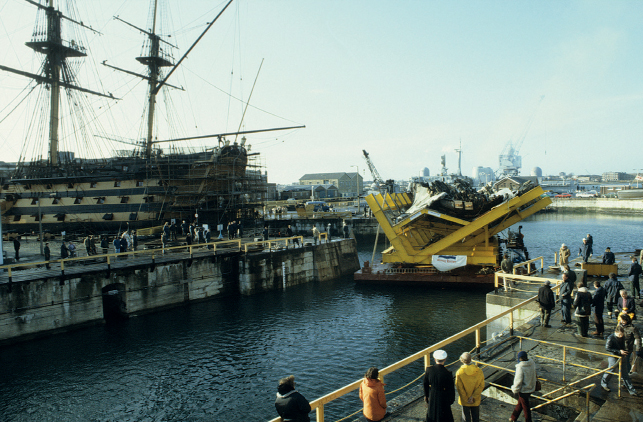
11 October 1982. Mary Rose entering No. 3 Dock within HM Naval Base Portsmouth, close to where she was built, taking up station alongside HMS Victory. (Mary Rose Trust)
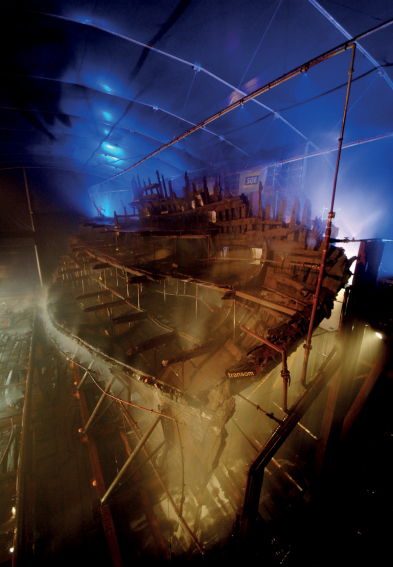
Mary Rose, upright again after 440 years, being sprayed with chilled water to remove salts from her timbers. (Peter Langdown)
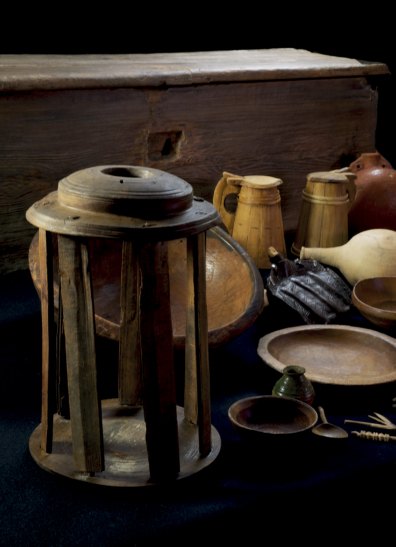
Chest, lantern, tankards, bowls, spoons and leather costrels: some of the 25,000 objects preserved by the Solent silts and recovered during the excavation. (Stephen Foote)
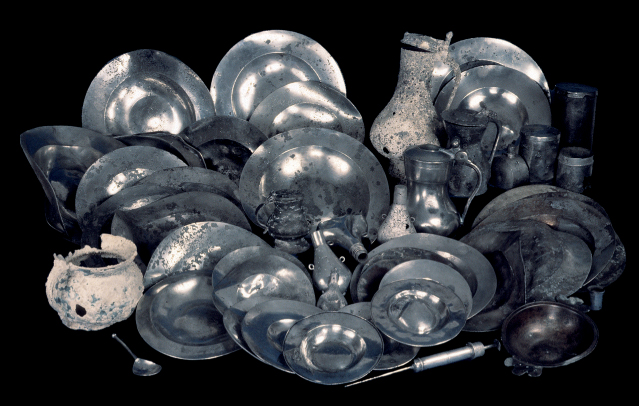
Pewter service bearing the initials of the captain, Sir George Carew. Flagons, spoon and chamber pot together with containers and a urethral from the surgeon’s cabin. (Mary Rose Trust)
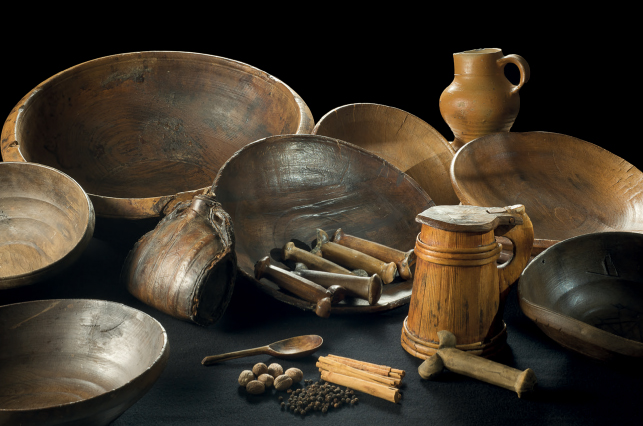
Mundane domestic and personal objects of wood, which rarely survive. The nuts and spices are modern. (Stephen Foote)
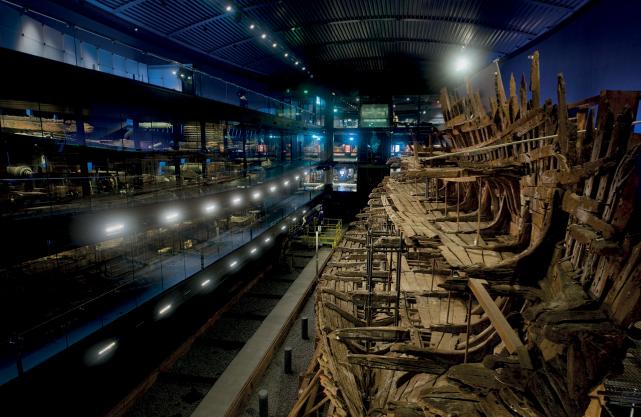
Stern to bow view with galleries on three levels dressed with objects placed exactly opposite the places where they were found. (Hufton+Crow)
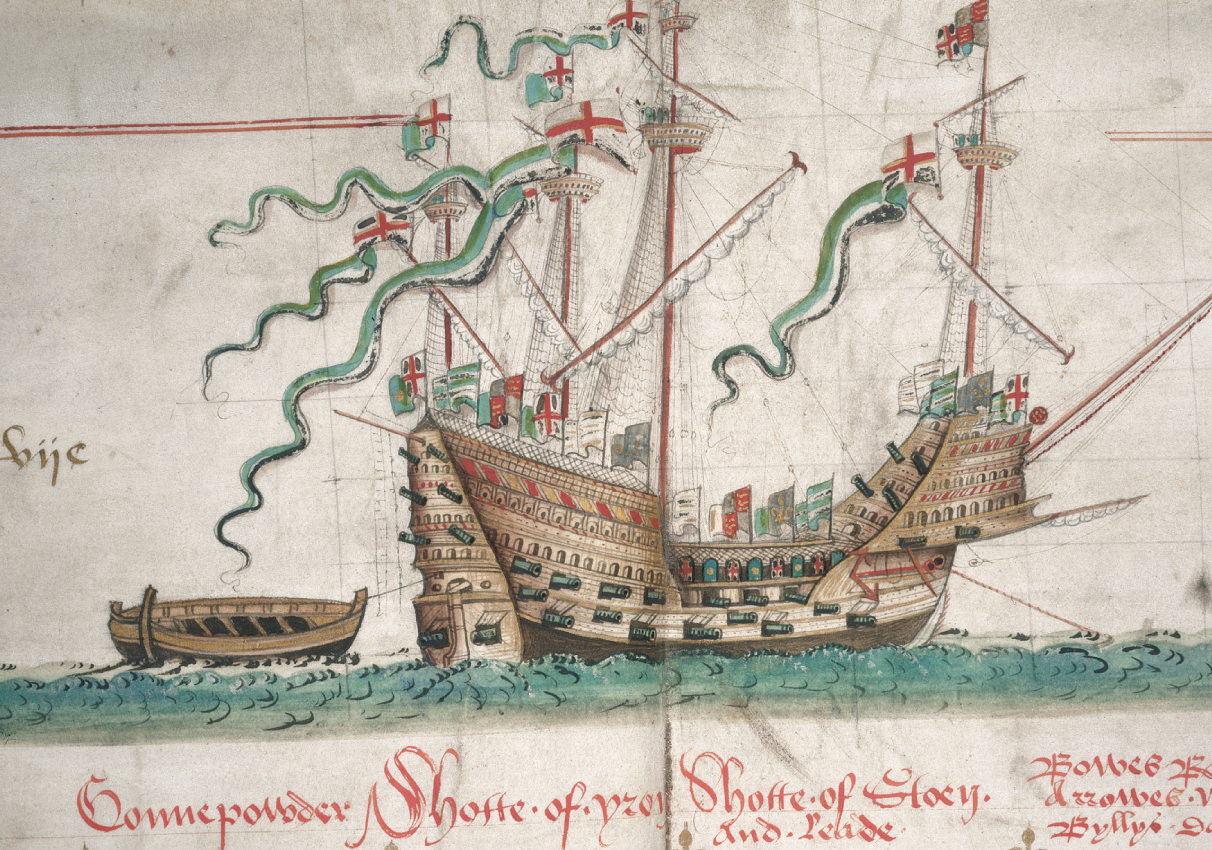
The Mary Rose in the Anthony Roll. Anthony Anthony, a clerk of the Ordnance Office, completed his illuminated munitions inventory of Henry VIII’s fifty-eight ships in 1546, by which time the Mary Rose was at the bottom of the Solent. This is the only contemporary image of the ship, distinguished by the rose emblem at the bow. The MS was given by Charles II to Samuel Pepys, in whose library at Magdalene College, Cambridge, it is preserved. This illustration accompanies document 58. (The Master and Fellows of Magdalene College, Cambridge)
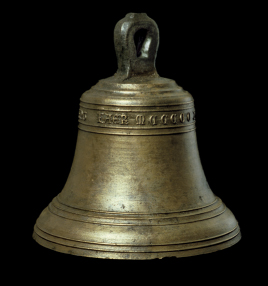
The ship’s watch bell. Cast in bronze with the Flemish inscription ‘IC BEN GHEGOTEN INT YAER MCCCCCX’ (‘I was made in the year 1510’), this was probably with Mary Rose throughout her serving life. The bell can be heard in the galleries opposite the ship, rung every half hour to mark time. (Mary Rose Trust)
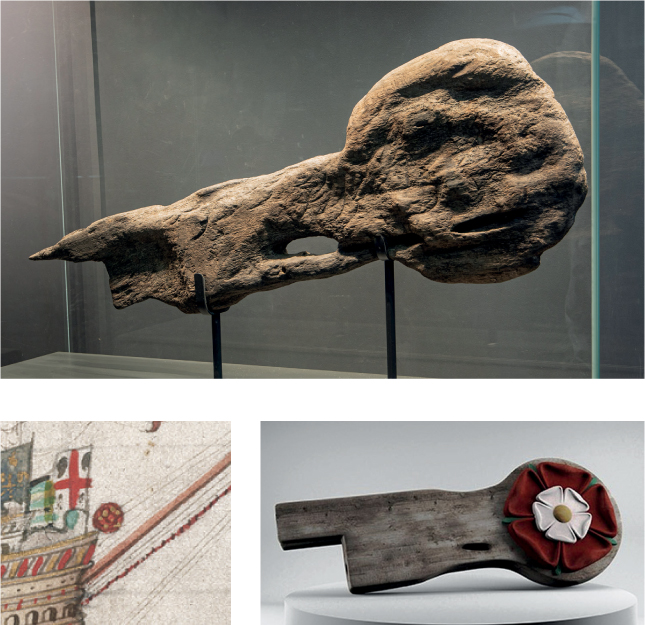
Eroded and worn, the ship’s emblem – the carved Tudor rose depicted in the Anthony Roll. Together with the stem of the ship, this was one of the many Tudor objects found between 2003 and 2005 during excavations searching for remains of the detached forecastle. Shown below it is a modern reconstruction. (Mary Rose Trust)
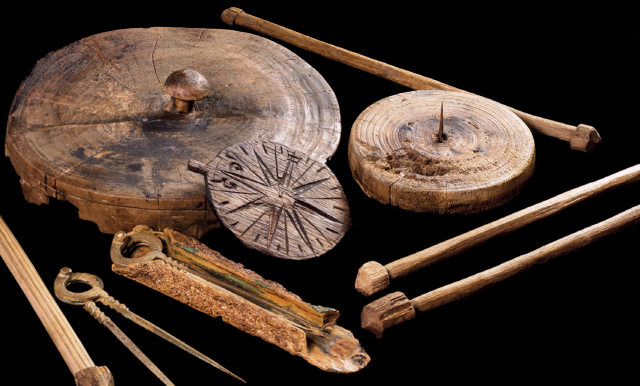
Wooden cover and base for a compass, chart sticks and dividers with their case. (Stephen Foote)
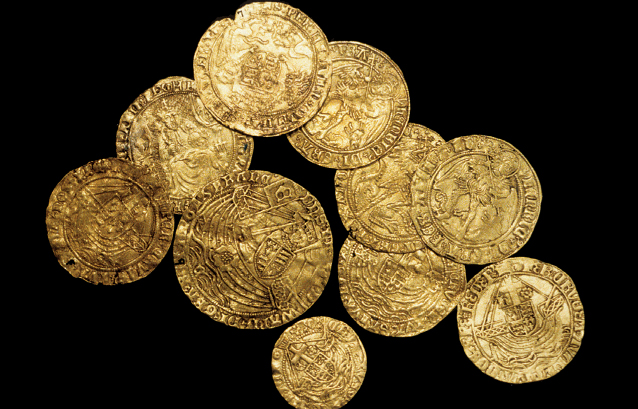
Gold angels of 23 carats depicting a ship on the reverse, produced between 1542 and 1545. Each was worth 8s, much the same as an ordinary seaman’s monthly pay, and the relatively few that were found must have belonged to the officers. (Mary Rose Trust)
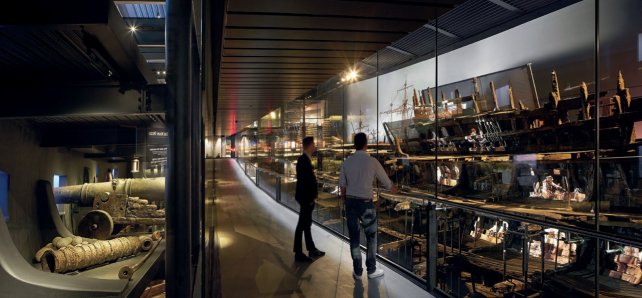
View from main deck walkway. On the left the main gun deck. To the right, sixty-six short projections show Mary Rose Trust staff and volunteers at rest, work and at action stations, using reproductions of objects found in context. (Hufton+Crow)
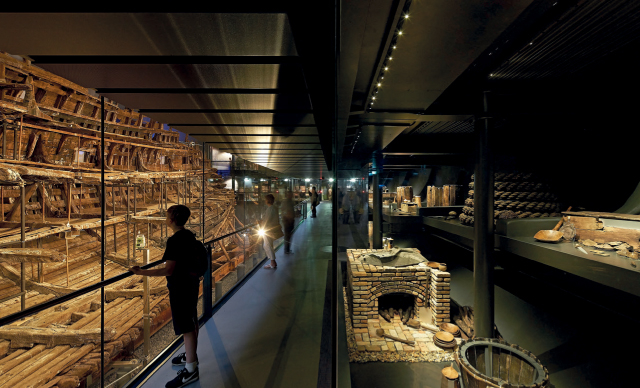
The lower decks. The brick galley, dismantled underwater in 1982, was reconstructed for display. Everything within these glazed galleries is authentic, with acrylic representing missing portions. (Hufton+Crow)