
CHAPTER 4
During 1933 changes of a fundamental character occurred in the monetary system of the United States, the most important of which was suspension of gold payments.
Twentieth Annual Report of the Federal Reserve Board Covering Operations for the Year 19331
Three waves of bank failures during the early 1930s culminated in the worst depression in US history. The Fed had been created to prevent liquidity shortages from developing into full-blown banking panics. Yet, between 1930 and 1933, the Fed failed to supply sufficient funds to keep America's banks solvent; and in early 1933 a third of the banking system collapsed.
The Fed was severely criticized for not preventing the banking crisis of the early 1930s and the Great Depression that resulted from that crisis. In its own defense, the Fed claimed that the Federal Reserve Act placed limitations upon it that had made it impossible for the Fed to take the steps required to contain the crisis. The Glass-Steagall Act of 1932 lessened those limitations and expanded the Fed's powers to create Federal Reserve Credit. However, the huge inflow of gold into the United States beginning in 1934 made the Fed's enhanced powers superfluous – at least during the rest of that decade.
This chapter analyzes the evolution of the Fed's balance sheet to explain the most significant monetary developments between the beginning of the Great Depression and the United States' entry into World War II.
Total Assets
From the beginning of 1930, when the economic collapse began, to the end of 1941, when the United States entered World War II, the Fed's total assets increased from $5.5 billion to $25 billion, as shown in Chart 4.1.

CHART 4.1 The Fed's Total Assets, 1914 to 1941
Source: Data from “The Federal Reserve System’s Weekly Balance Sheet Since 1914” and accompanying spreadsheet. Johns Hopkins University, SAE/No.115/July 2018. See Bibliography.
The surge in the Fed's total assets occurred for two reasons. First, in 1932 and 1933, the Fed purchased government securities on a large scale through open market operations. Second, a tidal wave of gold entered the United States beginning in 1934. The gold inflows were, by far, the more important factor behind the growth in the Fed's assets during this period. Nevertheless, the Fed's purchases of government securities were also an important development in Federal Reserve policy.
The Great Depression
The US stock market peaked in September 1929. On October 28, the Dow fell 13%. The following day, it fell 12% more. By the time it hit bottom in July 1932, it had lost 89% of its value. The first wave of bank failures began in November 1930. A second followed in mid-1931 and a third in early 1933. By the end of 1933, the total loans and investments of commercial banks had contracted by 38%. Between 1929 and 1933, the size of the US economy shrank by 26% in real terms. In nominal terms, in other words, not adjusting for the change in the price level, the outcome was much worse: the economy contracted by 45%.2
As the economic crisis began to unfold, the Fed was slow to respond. The Fed's total assets contracted at the beginning of the Great Depression, from a peak of $5.9 billion in November 1929 to as low as $4.7 billion in February 1931, a 20% drop. Federal Reserve Credit contracted even more, by 47%, from $1.6 billion in November 1929 to $850 million in March 1931, as banks repaid their loans from the Fed and the bills discounted on the Fed's balance sheet shrank (see Chart 4.2).
A second wave of bank failures during the second half of 1931 saw the banks turn to the Fed for loans once again. Consequently, Federal Reserve Credit expanded back to $2.2 billion in October, before falling back again to $1.6 billion in March 1932, when that panic subsided.
Eventually, the Fed began buying government securities on a large scale. Between March and June 1932, the Fed's holdings of government securities increased from $800 million to $1.8 billion, an increase of 125%, as can be seen in Chart 4.2.
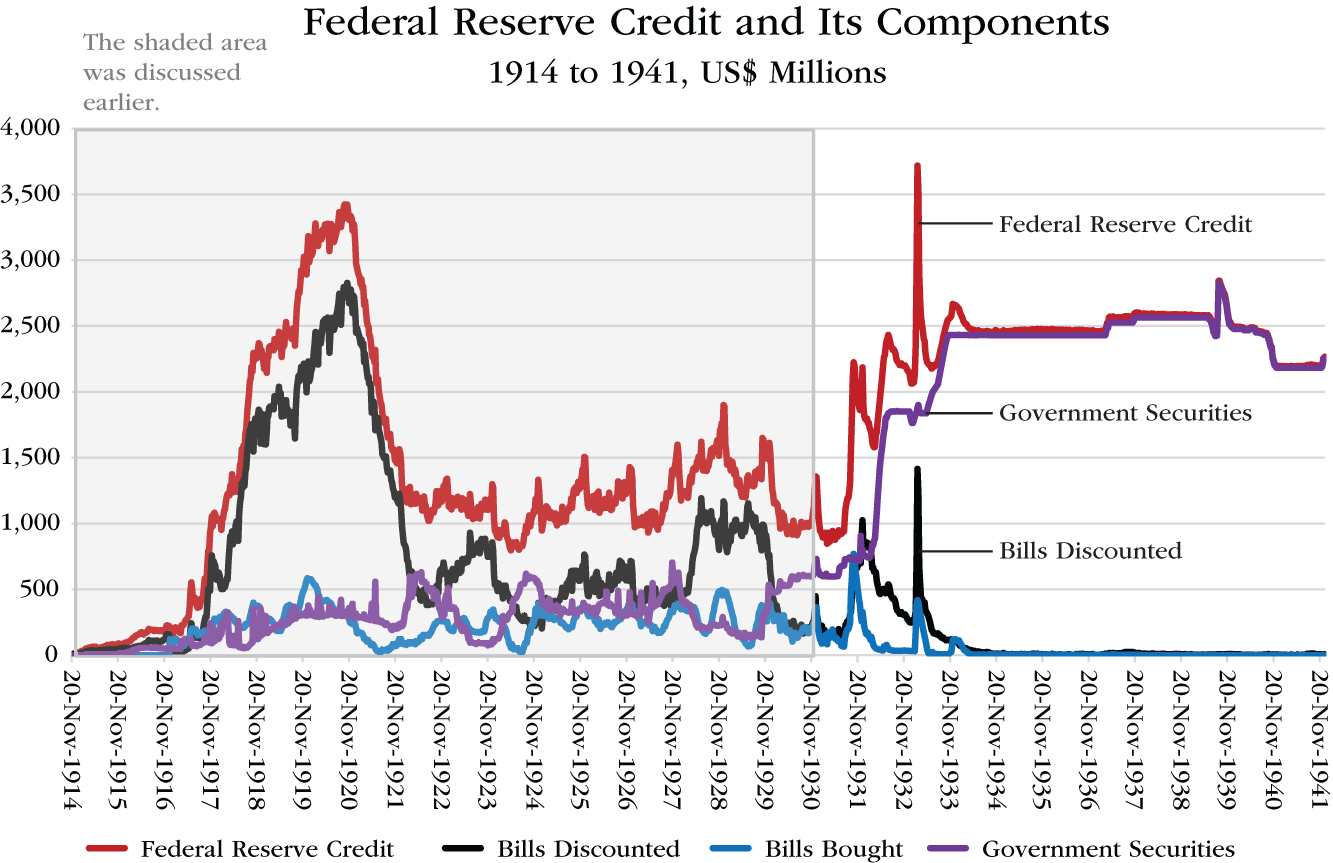
CHART 4.2 Federal Reserve Credit and Its Components, 1914 to 1941
Source: Data from “The Federal Reserve System’s Weekly Balance Sheet Since 1914” and accompanying spreadsheet. Johns Hopkins University, SAE/No.115/July 2018. See Bibliography.
This was the first time in the Fed's history that it acquired such a large amount of government debt. It was also the first time the Fed had carried out open market operations on such a large scale.
In early March 1933, at the peak of the third wave of bank failures, bills discounted, reflecting the amount the banks borrowed from the Fed, spiked to $1.4 billion. This drove total Federal Reserve Credit up to $3.7 billion, above the record high of $3.4 billion set in the aftermath of World War I. However, when that bank panic subsided following Franklin Roosevelt's inauguration, bills discounted declined rapidly back to $400 billion by mid-April, bringing total Federal Reserve Credit back below $2.5 billion.
In May, the Fed began purchasing government securities aggressively for a second time, taking its total holdings of government debt up from $1.8 billion in mid-May to $2.4 billion in October.
As the Fed's holdings of government securities increased, its holdings of bills discounted and bills bought declined. When the Fed purchased the government securities, it paid for them by making deposits into the reserve accounts at the Fed belonging to the commercial banks from which it had acquired the government bonds. Those banks, seeing no viable investment opportunities in the midst of the Great Depression, simply used the funds they received from the Fed, to pay off the loans they had borrowed from the Fed. Consequently, the bills that they had offered as collateral for those loans were removed from the Fed's assets when those loans were repaid; and the Federal Reserve Credit that had been created when the Fed had discounted those bills was extinguished. The bills bought by the Fed also declined to almost zero after the Fed began to buy government bonds on a large scale, extinguishing still more Federal Reserve Credit.
Therefore, although the Fed did increase its holdings of government securities by $1.6 billion between March 1932 and October 1933, Federal Reserve Credit did not increase by a similar amount. As shown in Chart 4.2, Federal Reserve Credit only increased from $1.6 billion in March 1932 to $2.5 billion in October 1933. From there, it remained relatively flat for the rest of the decade.
Chart 4.3 presents the annual change in Federal Reserve Credit each year. During this period, there was only meaningful growth in 1931, 1932 and 1933.
Friedman and Schwartz argued persuasively in A Monetary History of The United States that the Fed could have prevented what was still a recession in 1930 from becoming the Great Depression by 1932 if it had bought government bonds through open market operations earlier and much more aggressively than it eventually did. That would have injected large amounts of Federal Reserve Credit (i.e., newly created base money) into the economy and the financial system. Had it done so, the Fed's total assets would have expanded rather than contracting by 20% between November 1929 and February 1931.

CHART 4.3 Federal Reserve Credit, Annual $ Change, 1915 to 1941
Source: The Federal Reserve3
The Fed, however, stated in its 1932 Annual Report4 that it had been unable to undertake a more expansionary monetary policy (i.e., to extend more Federal Reserve Credit) during the early 1930s because its holdings of gold and eligible paper would not have been sufficient to allow it to meet the 100% collateral obligation it was required to hold against Federal Reserve Notes.5
Recall from Chapter 1 that the Federal Reserve Act required the Fed to hold gold to back the currency it issued (Federal Reserve Notes) as well as to back the credit it created by making deposits into the reserve accounts that member banks held at the Fed as reserves. The Fed was required to hold 40% gold backing for the Federal Reserve Notes and 35% gold backing for the Bank Reserves. For Federal Reserve Notes, however, in addition to maintaining 40% gold backing, the Fed was also required to hold 60% additional collateral comprised of gold or “eligible paper.”6 Eligible paper was defined as commercial, agricultural, or industrial loans, or loans secured by US government securities rediscounted by member banks; loans to member banks secured by paper eligible for rediscount or by government securities; and bankers' acceptance, i.e., “bills bought” in the terminology of Federal Reserve accounts.7 However, government securities owned by the Fed were not permitted to be used as eligible paper to serve as collateral for Federal Reserve Notes.
At the beginning of the economic crisis, the Fed had more than enough gold and eligible paper to meet its obligation to back Federal Reserve Notes. In other words, it had excess gold. However, its level of excess gold declined as the depression worsened. A large number of banks failed during 1931. As a result, the public withdrew cash from their banks to protect their savings. Consequently, Federal Reserve Notes in circulation increased as shown in Chart 4.4. The increase in Federal Reserve Notes in circulation is reflected in the Fed's balance sheet as growth in Federal Reserve Note liabilities.
The increase in Federal Reserve Notes in circulation required the Fed to set aside additional gold and collateral backing, which reduced the Fed's excess gold. At the same time, the amount of eligible paper held by the Fed declined. This occurred because member banks borrowed less from the Fed through discounting. After the stock market crash in October 1929, commercial bank lending began to contract. The reduction in bank credit caused the deposits of the commercial banks to contract, as well.
Consequently, the commercial banks had less need to borrow from the Fed. This is reflected in the reduction in the bills discounted held by the Fed during 1930, as shown in Chart 4.2. As a result, the Fed lacked sufficient eligible paper to carry out a more expansionary monetary policy. In other words, the Fed could not conduct large-scale open market purchases because that would have caused an equivalent increase in member bank reserves at the Fed, deposits that required more gold backing than the Fed possessed.
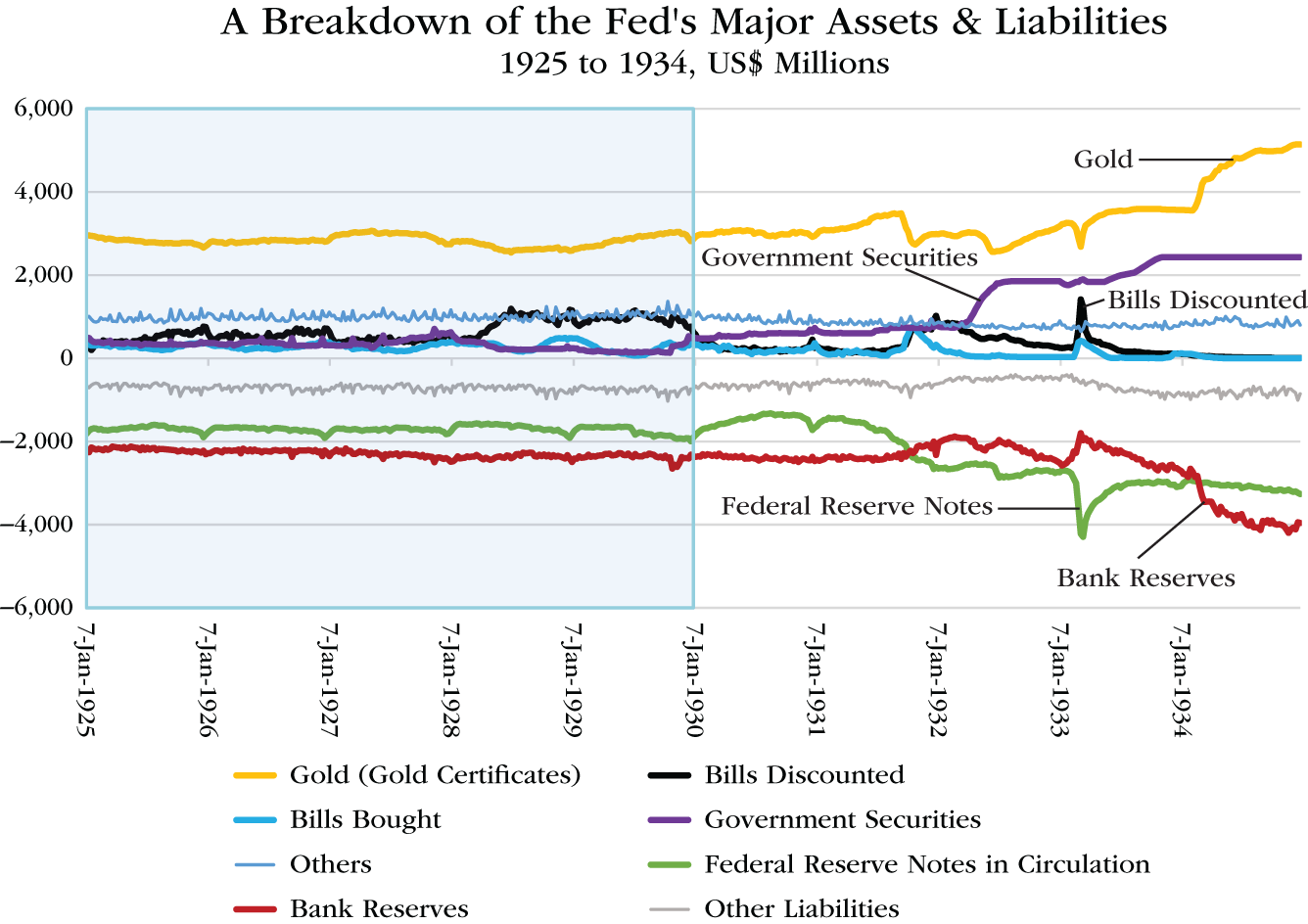
CHART 4.4 A Breakdown of the Fed's Major Assets & Liabilities, 1925 to 1934
Source: Data from “The Federal Reserve System’s Weekly Balance Sheet Since 1914” and accompanying spreadsheet. Johns Hopkins University, SAE/No.115/July 2018. See Bibliography.
The Glass-Steagall Act, enacted on February 27, 1932, removed that problem by making government securities owned by the Fed eligible as collateral to back Federal Reserve Notes. This enabled the Fed to acquire more government securities through open market operations since, thereafter, those government securities could serve as the necessary collateral to back Federal Reserve Notes. It was only after the passage of Glass-Steagall (in fact, immediately after) that the large-scale purchases of government securities discussed above began.
This was the first significant revision to the Federal Reserve Act that expanded the Fed's ability to extend Federal Reserve Credit. It greatly increased the Fed's power to conduct expansionary monetary policy through credit creation.
The authorization for the Fed to use government securities as collateral to back Federal Reserve Notes was initially intended to be only a temporary emergency measure that would expire after one year. However, it was extended every year, until 1945, when it was made permanent by an act of Congress. Had the Fed not been allowed to hold government securities as collateral against Federal Reserve Notes, it would not have been possible for the Fed to supply all the currency that was required during World War II.
In 2008, when the United States was once again on the brink of a new Great Depression, Fed Chairman Ben Bernanke followed Friedman's advice and flooded the financial markets with Federal Reserve Credit through three rounds of Quantitative Easing.8 We'll consider the results of that experiment in Chapter 12.
Turning to the liabilities side of the Fed's balance sheet, the most important development during the early part of the decade was the jump in currency held by the public. When banks began to fail across the country, individuals withdrew their cash from their bank accounts while they still could. At that time, bank deposits were not insured by the government. If a bank failed, its depositors stood to lose all their savings. Federal Reserve Notes in circulation jumped from $1.4 billion in October 1930 to $4.3 billion in March 1933. This can be seen clearly in Chart 4.4, which highlights changes in the Fed's balance sheet during the early years of the Great Depression.
As the public withdrew its cash, the commercial banks were forced to obtain more Federal Reserve Notes from the Fed. Consequently, their reserves at the Fed contracted as the Fed debited their reserve accounts in exchange for the Federal Reserve Notes the Fed provided them. Member bank reserves actually contracted during this time even though the Fed had made deposits into those accounts in payment for the large amount of government securities it had purchased in 1932.
The public run on the banks only ended when President Roosevelt declared a national “bank holiday” during his first days in office and the public became convinced that the new administration would resolve the banking crisis. From January 1, 1934, the government guaranteed all bank deposits up to the amount of $2,500 per depositor. On July 1, 1934, the amount of deposits guaranteed by the government was increased to $5,000 per depositor.9
Once the banking crisis ended, the public redeposited the Federal Reserve Notes they had withdrawn from the banking system. The commercial banks returned the unneeded Federal Reserve Notes to the Fed. In exchange, the Fed credited the commercial banks' reserve accounts at the Fed, causing Bank Reserves to expand again, as the Fed's Federal Reserve Note liabilities contracted.
Federal Reserve Notes expanded gradually through most of the rest of the decade. However, the amount of currency in circulation grew significantly again beginning in August 1940 when World War II, already underway in Europe, caused the US economy to heat up and the need for cash to rise. Then, as the commercial banks requested additional cash from the Fed, their reserves began to dip as the Fed debited their reserve accounts in exchange for the Federal Reserve Notes it provided to them. Chart 4.5 best illustrates these changes in the Fed's liabilities after 1933.
Gold
Between the end of January 1934 and April 1941, the Fed's gold holdings increased by more than 450% from $3.6 billion to $20 billion. Chart 4.5 shows that the surge in gold holdings was the outstanding development on the assets side of the Fed's balance sheet during this period.
Greed and fear explain the flood of gold into the US beginning in 1934.
Here some background information is required. During the nadir of the Great Depression, Franklin Roosevelt was elected President in November 1932. He took the oath of office on March 4, 1933.10 Afterwards, he quickly introduced a series of measures that took the United States off the gold standard.
On March 10, an executive order made it illegal to export gold. On April 5, the president issued Executive Order 6102, which prohibited American citizens from owning gold.11 Every American was required to hand over their gold to the Federal Reserve by April 28, 1933, or face a fine of up to $10,000 or imprisonment of up to 10 years or both. They were compensated at the prevailing statutory rate of $20.67 per ounce of gold.

CHART 4.5 A Breakdown of the Fed's Major Assets & Liabilities, 1914 to 1941
Source: Data from “The Federal Reserve System’s Weekly Balance Sheet Since 1914” and accompanying spreadsheet. Johns Hopkins University, SAE/No.115/July 2018. See Bibliography.
In late January 1934, Congress passed the Gold Reserve Act of 1934. It was signed into law by President Roosevelt on January 30. It required the Fed to transfer all of its gold holdings to the US Treasury Department (i.e., the government). In exchange, the Fed was given irredeemable gold certificates. Afterwards, rather than holding gold to back the money it created, as it had been required to do up until then, the Fed was required to “maintain reserves in gold certificates or lawful money of not less than thirty-five per centum against its deposits and reserves in gold certificates of not less than forty per centum against its Federal Reserve Notes in actual circulation.”12
The Gold Reserve Act of 1934 also gave the president the authority to devalue the dollar against gold. On January 31, the day after the Fed turned over all of its gold to the Treasury Department at the price of US$20.67 per ounce, President Roosevelt devalued the dollar relative to gold by 41%. The dollar price to acquire an ounce of gold increased from $20.67 to $35. This had the effect of also devaluing the dollar against all other currencies that were pegged to gold.13
This devaluation of the dollar meant that the gold held by the Treasury Department became much more valuable when measured in dollars. These extraordinary gains, which amounted to $2.8 billion, according to 1934 Annual Report of the Federal Reserve System (p. 3), were set aside in what came to be known as the Exchange Stabilization Fund. This pool of money was available for the government to use without having to seek permission from Congress. For instance, it was used by the Clinton administration in 1994 to provide loans to Mexico so that country would not default on the debts it owed to US banks and other investors.
The 41% devaluation of the dollar on January 31, 1934, almost immediately resulted in a surge in foreign investment entering the United States. After all, for foreign investors with gold, the dollar devaluation made everything in the United States 41% cheaper.14
Capital flight from Europe and Asia also led to much more gold entering the United States as the 1930s progressed. Hitler's rise to power in Germany and Japan's growing aggression in China caused many investors in Europe and Asia to ship their gold to the United States where they believed it would be safe.
These developments explain the sharp rise in the Fed's holdings of gold certificates beginning in 1934, as shown in Chart 4.5.
Before the passage of the Gold Reserve Act, when gold entered the United States, it was deposited into the owner's commercial bank account. The growth in deposits required that bank to add to its gold reserves at the Fed to maintain an appropriate level of required reserves. Therefore, the Fed's gold holdings rose as gold entered the country.
After the passage of the Gold Reserve Act neither private individuals, commercial banks, or the Fed were allowed to own gold. The Treasury Department bought and held all the gold entering the country. The entity selling the gold to the Treasury received Federal Reserve Notes, while the Fed received gold certificates from the Treasury rather than actual gold.15
Between the end of 1933 and the end of 1941, the gold stock of the United States increased by 463%, from $4 billion to $18.7 billion, while the gold reserves of the Fed, in the form of gold certificates from February 1934, rose by 450%, from $3.8 billion to $20.8 billion.
Therefore, it was the accumulation of gold certificates rather than the creation of Federal Reserve Credit that drove the surge in the Fed's Total Assets during the 1930s. Chart 4.6 illustrates this point.
Gold Coverage
In mid-1931, the Fed's gold coverage ratio was at 84%, far above the statutory minimum. In August, however, that ratio began to plunge precipitously as the public, fearful that the banking system was not sound, began withdrawing large amounts of Federal Reserve Notes from their banks. Between then and March 1933, when the banking panic subsided, the number of Federal Reserve Notes in circulation increased by roughly $2.5 billion or nearly 150%.
The increase in the Fed's Federal Reserve Note liabilities pulled the Fed's gold coverage ratio down to a low of 51% the month the panic ended, as shown in Chart 4.7.
When the banking crisis ended, the public redeposited much of the cash they had withdrawn from the banks, causing the Fed's gold coverage ratio to rebound to 68% by August 1933. The ratio continued to improve as gold flooded into the US during the rest of the decade. It ended 1941 above 90%.

CHART 4.6 The Fed's Total Assets: Gold vs. Assets Acquired with Federal Reserve Credit, 1914 to 1941
Source: Data from “The Federal Reserve System’s Weekly Balance Sheet Since 1914” and accompanying spreadsheet. Johns Hopkins University, SAE/No.115/July 2018. See Bibliography.
Excess Reserves
One final development during the 1930s deserves attention, particularly as it represents a precedent the Fed would be wise to adopt today.
As discussed above, the devaluation of the dollar in January 1934 was followed by an unprecedented inflow of gold into the United States. That gold was acquired by the Treasury Department. The Treasury paid for that gold by drawing upon its balances in its account at the Fed. This transferred funds from the Treasury account at the Fed to the reserve accounts that member banks held at the Fed. Consequently, the level of bank reserves rose rapidly in line with the surge of gold entering the United States.16
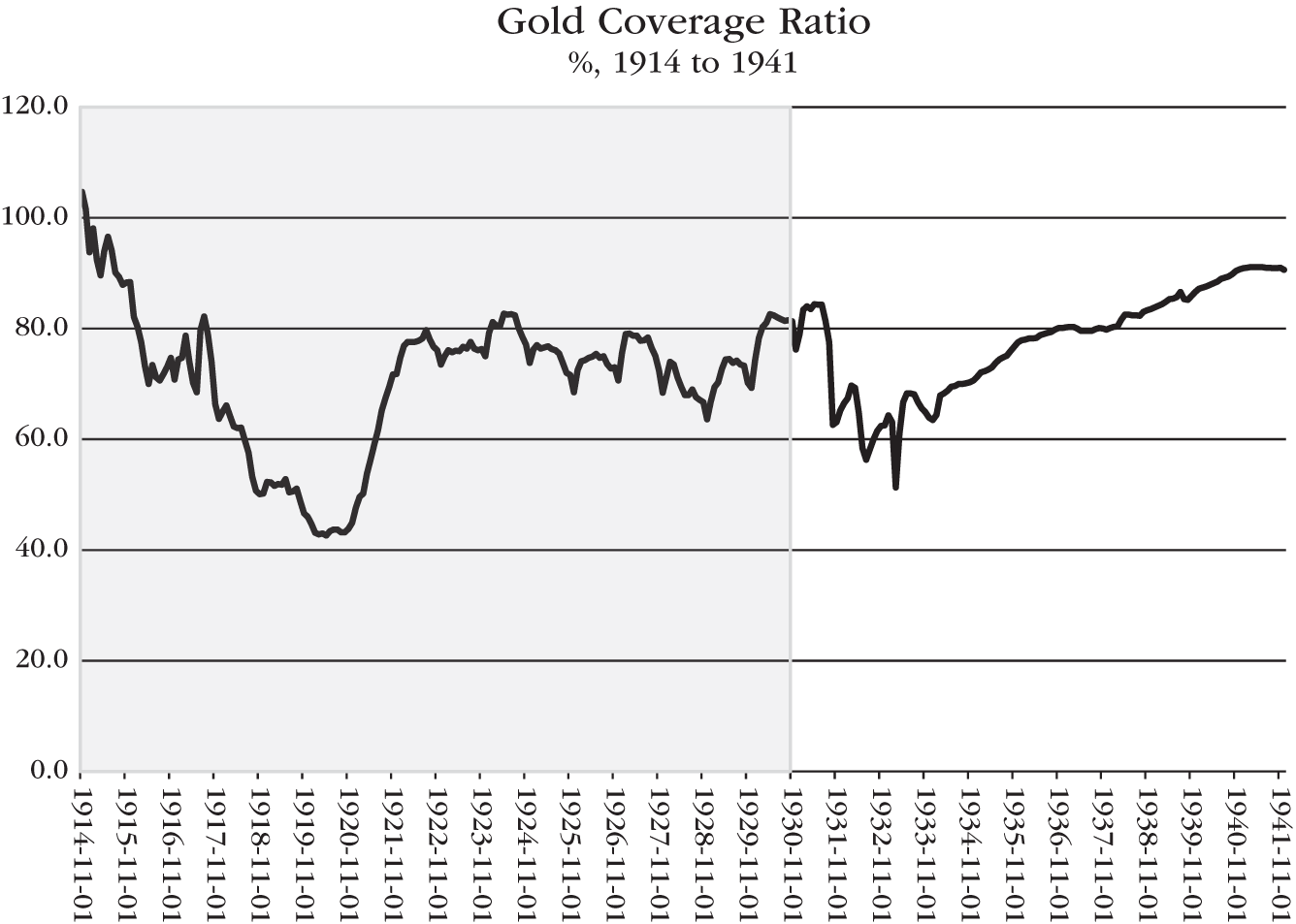
CHART 4.7 Gold Coverage Ratio, 1914 to 1941
Source: Data from Ratio of Reserves to Note and Deposit Liabilities, Federal Reserve Banks for United States, St Louis Fed, 1914 to 1948
Soon, the level of reserves far exceeded the amount commercial banks were required to hold as reserves against their deposits. By late 1935, total reserves had climbed to more than $6 billion, whereas the amount of reserves the banks were required to hold was somewhat less than $3 billion. In other words, the banking system held excess reserves of more than $3 billion.
The Fed became concerned that such a high level of reserves could result in a dangerous expansion of bank credit. The Fed's 1936 Annual Report noted:
On the basis of these excess reserves and the legal reserve ratios then in effect, bank credit could have been expanded to twice the volume in use at the peak of business activity in 1929; and the gold inflow was still in progress.17
TABLE 4.1 Member Bank Reserve Requirements
Source: The 1936 Annual Report of the Board of Governors of the Federal Reserve System, p. 11
|
MEMBER BANK RESERVE REQUIREMENTS [Percent of deposits] |
||||
|
Classes of deposits and banks |
June 21, 1917, to Aug. 15, 1936 |
Aug. 16, 1936, to Feb. 28, 1937 |
Mar. 1, 1937, to Apr. 30, 1937 |
Beginning May 1, 1937 |
|
On net demand deposits: |
||||
|
Central reserve city banks |
13 |
19½ |
22¼ |
26 |
|
Reserve city banks |
10 |
15 |
17½ |
20 |
|
Country banks |
7 |
10½ |
12¼ |
14 |
|
On time deposits: |
||||
|
All member banks……………… |
3 |
4½ |
5¼ |
6 |
To preclude that possibility, the Fed doubled the required reserve ratio between July 1936 and May 1937, thereby sharply reducing the level of excess reserves and, by extension, the possibility of excessive credit creation by the banking sector. The increase was implemented in stages. In July 1936, the Fed increased the required reserve ratio by 50% effective August 15, 1936. Then, in January 1937, the Fed raised the required reserve ratio by an equivalent amount again, with one half of the second increase becoming effective on March 1, 1937, and the second half becoming effective on May 1, 1937. These changes are presented in Table 4.1.
In practice, this doubling of the required reserve ratio did not meaningfully influence the amount of credit created by the commercial banks during the rest of the decade. First, demand for loans remained weak and the banks' willingness to lend was also lackluster. Moreover, since gold continued to flood into the United States, soon there was once again a very large level of excess reserves in the banking system even after the required reserve requirement had been doubled.
This episode is nevertheless noteworthy. It shows that the Fed does have the power to reduce excess reserves in the banking system by raising the required reserve ratio. That is important because, today, banks in the United States are once again inundated with excess reserves, this time as the result of the large-scale open market purchases (i.e., Quantitative Easing) the Fed conducted in response to the financial crisis of 2008, and, more recently, the much larger purchases of government securities and mortgage-backed securities in response to the coronavirus crisis. The Fed began paying the banks interest on those reserves in 2008 in order to control the federal funds rate. With that rate now close to 0%, the cost of paying interest on reserves is not very high at present. However, when the Fed eventually does hike the federal funds rate again, the costs to the Fed (and, therefore, US taxpayers) could climb to tens or even hundreds of billions of dollars a year.
The experience of 1936 and 1937 demonstrates that a much less expensive alternative exists. The Fed could simply raise the required reserve ratio high enough to absorb all the excess reserves in the banking system and, thereby, save US taxpayers vast sums of money each year. This subject will be revisited in Part Three.
Next, we turn to the Fed's role in helping to finance World War II.
Notes
1. Twentieth Annual Report on the Federal Reserve Board Covering Operations for the Year 1933, Washington Printing Office, dated May 28, 1934, p. 2.
2. St. Louis Fed.
3. Data for 1914 to 1917 from “The Federal Reserve System’s Weekly Balance Sheet Since 1914” and accompanying spreadsheet. Johns Hopkins University, SAE/No.115/July 2018. See Bibliography.
Data for 1918 to 1941 from The Fed’s 2017 Annual Report, page 306
4. Nineteenth Annual Report of the Federal Reserve Board covering operations for the year 1932, p. 16
5. “Each Federal Reserve Bank is required by law to pledge collateral at least equal to the amount of currency it has issued into circulation.” Source: The Federal Reserve Bank of New York, “How Currency Gets into Circulation.” https://www.newyorkfed.org/aboutthefed/fedpoint/fed01.html
6. The Fed must pledge 100% collateral for all the Federal Reserve Notes it obtains from the Treasury Department' Bureau of Engraving and Printing. Source: “How Currency Gets into Circulation,” The Federal Reserve Bank of New York. https://www.newyorkfed.org/aboutthefed/fedpoint/fed01.html
7. Friedman and Schwartz (1963), A Monetary History of the United States, 1867–1960. First Princeton Paperback Printing Edition, p. 400.
8. A fourth round began in October 2019. It was expanded significantly in response to the coronavirus crisis beginning in March 2020.
9. Friedman and Schwartz (1963), A Monetary History of the United States, 1867-1960. First Princeton Paperback Printing Edition, p. 435.
10 The presidential inauguration was moved from March 4 to January 20 beginning in 1937.
11 Americans were allowed to keep gold jewelry, rare gold coins for collections and up to $100 worth of ordinary gold coins. On December 28, the secretary of the treasury issued an order revoking the $100 exemption in connection with the holding of gold coin by the public, and from that date no gold coin (except rare coins) could be legally held. Source: The 1933 Annual Report of the Federal Reserve Board, p. 27.
12 The Gold Reserve Act of 1934, pp. 1 and 2. https://fraser.stlouisfed.org/scribd/?title_id=777&filepath=/files/docs/meltzer/sengol34.pdf
13 “The International Gold Standard and U.S. Monetary Policy from World War I to the New Deal,” The Federal Reserve Bulletin, June 1989. https://fraser.stlouisfed.org/files/docs/meltzer/craint89.pdf
14 The 1936 Annual Report of the Board of Governors of the Federal Reserve System, p. 5.
15 The 1936 Annual Report of the Board of Governors of the Federal Reserve System, p. 8: “The Treasury pays for gold by drawing upon its balance with the Federal Reserve banks, thus transferring funds from Treasury account to member bank account at the Federal Reserve banks. The Treasury's balance is reduced by the operation and member bank reserves are correspondingly increased … it was the practice of the Treasury to replenish its balance with the Federal Reserve banks by utilizing the newly purchased gold to give the Federal Reserve banks equivalent credits in the gold-certificate account. Replenishment of its balance in this manner had no effect upon member bank reserves, which therefore retained the increase that had occurred when the gold was sold to the Treasury.”
16 The 1936 Annual Report of the Board of Governors of the Federal Reserve System, p. 8.
17 The 1936 Annual Report of the Board of Governors of the Federal Reserve System, p. 1.