

CHAPTER 14
–
‘Euthanasia – that sounds good A neutral Alpine neighbourhood Then back to Britain all dressed in wood Things were going to get worse – apparently’
–
John Cooper Clarke, ‘Bed Blocker Blues’
MY FATHER ASKED me to kill him. He was 74 years of age, had suffered a stroke at 71 and couldn’t speak properly. He also had paralysis on his left side. He was a widower and was in a nursing home. We had tried home helps who came in every day, but he was also severely depressed, which made things difficult. He would say to me in his slurred voice: ‘You work in a lab. You have the chemicals to do it.’ He also regularly said, ‘If I were a horse, you’d shoot me.’ My father had a dark sense of humour that I loved, so I used to brush these conversations off as gallows humour, but I knew he meant it. I would sometimes cry when I left him in his room, in his own separate hell.
Should I, out of sympathy and love, have bumped him off? That would have been murder. But what if the law had allowed me to help him die? How would that have worked and would I have had the guts to do it? So, let’s look at euthanasia: how it’s done and what the safeguards are. Will a time come when it will be as routine as childbirth, as we head towards a population where the majority are sick and old, with lots of older people actually wanting to die? Or will medical advances, both in the discovery of new treatments for diseases and better palliative care, make euthanasia unnecessary? As scientists, we must shirk from nothing and face this topic head-on, from as scientific a point of view as possible.

LOGAN’S RUN, A 1976 MOVIE SET IN THE 23RD CENTURY, DEPICTED A SOCIETY WHERE EVERYONE IS KILLED AT THE AGE OF 30.
There are plenty of stories in science fiction featuring euthanasia. Most famously, in the 1976 film Logan’s Run, a dystopian world is described in the year 2116 (which isn’t that far away). In order to maintain equilibrium in the consumption of resources, when people reach the age of 21, they must die by euthanasia. Their 21st birthday is known as ‘Lastday’. Instead of getting the key to the door, they report to the ‘Sleepshop’ and are given a pleasure-inducing toxic gas. Their age is revealed by a crystal in the palm of their right hand. This crystal changes colour every seven years, blinking red and black on Lastday – before finally settling on black. Our world won’t become like Logan’s Run, but the prospect of euthanasia becoming common is not as unlikely as it once would have seemed.
Euthanasia comes from the Greek for ‘good death’. There are two types: in the first type, active euthanasia, one person performs the act of euthanasia on another, who has given their consent; the second type is called ‘assisted suicide’, in which everything up to the last step is provided by the other person.1 The distinction is important, with assisted suicide being defined as ‘intentionally helping a person die by suicide by providing drugs for self-administration, at that person’s voluntary and competent request’. Effectively, euthanasia is suicide by someone who is too infirm to kill themselves without someone else’s help. Somewhat pointlessly, suicide remains a crime in some countries, which has consequences for things like the fate of the dead person’s estate. The British House of Lords Select Committee on Medical Ethics defines euthanasia as ‘a deliberate intervention undertaken with the express intention of ending a life to relieve intractable suffering’. Yet in the Netherlands and Belgium it is defined slightly differently as ‘termination of life by a doctor at the request of the patient’. This means that it doesn’t necessarily have to involve the relief of suffering, which is an important distinction. The medical understanding of what suffering is can be hard to pin down. Does psychological suffering count, and how would that be measured? Perhaps the Dutch and Belgians have simplified the definition for that reason.
Active euthanasia is legal in Belgium, the Netherlands, Luxembourg, Colombia and Canada. Assisted suicide is legal in Switzerland, Germany, the Netherlands, the State of Victoria in Australia and the US states of California, Oregon, Washington, Montana, Washington DC, Colorado, Hawaii, Maine, Vermont and New Jersey.2 It is illegal in all other countries, as is non-voluntary euthanasia (where the patient is unable to give consent). Although legal in the countries mentioned above, it is only allowed under certain circumstances and requires the approval of two doctors and in some places a counsellor. Treatment or medical support being withdrawn because it is considered futile will also hasten death but is not illegal. Ethically, what distinguishes euthanasia from murder is intentionality. The intention of the person who is performing euthanasia is to relieve suffering in as painless a way as possible for a person who has given their consent. It all seems so reasonable, doesn’t it? And countries like the Netherlands have always been reasonable when it comes to how humans should and shouldn’t behave, treating adults like adults (as we saw in Chapter 7).
What about Ireland? Three legal cases are informative about where Ireland might be going. In 1995 the Supreme Court gave permission for a feeding tube to be removed from a woman who was in a persistent vegetative state for over 20 years so that she could die a natural death. The court, however, stressed that it would not condone any attempt to end a person’s life through positive action.3
In another case, Marie Fleming, a lecturer in University College Dublin, was in the final stages of multiple sclerosis.4 She and her husband mounted a legal challenge against the state. Marie could no longer use her limbs and said she wanted to die at a time of her own choosing with the assistance of her partner since she was not physically able to take direct action herself. They lost their case. The court ruled that the Constitution does not contain either a right to suicide or to arrange for the end of one’s life. The case attracted great attention, and Marie’s courage drew a lot of admiration. During the court case, Marie said, ‘I’ve come to court today, while I can still use my speech, to ask you to assist me in having a peaceful, dignified death in the arms of Tom and my children.’ Marie was challenging the absolute ban on assisted suicide in the Criminal Law (Suicide) Act 1993. She made the case that the law disproportionately infringed her personal autonomy rights under both the Irish Constitution and the European Convention on Human Rights. Marie subsequently died a year later of natural causes.
In 2013 a woman called Gail O’Rourke was charged with assisting the suicide of her friend Bernadette Forde between 10 March and 6 June 2011.5 Bernadette died in 2011 after taking a lethal dose of barbiturates ordered by Gail on her behalf from Mexico. There were three charges against Gail: ordering the drug which Bernadette would take to kill herself; arranging Bernadette’s funeral ahead of time; and planning a trip to Zurich, where Bernadette hoped to die. The plan was prevented when the travel agent informed the Garda. Gail O’Rourke was acquitted in 2015 of three counts of assisting the suicide of Bernadette Forde.
The current situation in Ireland is that both euthanasia and assisted suicide are illegal under Irish law. Euthanasia is regarded as either manslaughter or murder. The Health Services Executive provides a list of alternatives to euthanasia in Ireland.6 First, a patient can refuse treatment. If a person knows that their capacity to consent may be affected in the future, they can pre-arrange a legally binding advance decision (called a living will) that sets out the treatments that they do not consent to. If a patient is undergoing surgery that could cause respiratory or cardiac arrest, they have the option of making it clear that they do not want to be treated with cardiopulmonary resuscitation. The legal basis for this is not clear in Ireland, but most doctors are likely to respect it. This is known as ‘do not resuscitate’, or DNR. This is allowed because of the low success rate of resuscitation, and the likelihood of serious complications, including brain damage, and is usually allowed for patients that have a terminal illness. A second alternative to euthanasia is palliative sedation. This involves giving a person medication that will make them unconscious, unaware of the pain and ultimately hasten their demise by affecting their breathing. It carries the risk of shortening life but is widely used. Third, doctors can withdraw life-sustaining supports if it is clear that the prospects of the patient recovering are nil. Patients are usually heavily sedated when life support is withdrawn, allowing them to die peacefully.
The debate around euthanasia in Ireland continues with no apparent change on the horizon. The discussion on euthanasia began in the mid-1800s when morphine began to be used to ‘ease the pains of death’. Anna Hall is famous as an early strong advocate for euthanasia in the USA.7 She had watched her mother die after a long battle with liver cancer and dedicated her life to ensuring that others would not have to endure the suffering of her mother. In 1906 she pressed for legislation in Ohio but was unsuccessful. The UK also had strong proponents for euthanasia, with The Voluntary Euthanasia Legalisation Society being founded in 1935 by Charles Killick Millard – it’s now known as Dignity in Dying. An early case of euthanasia happened in the UK when King George V was given a fatal dose of morphine and cocaine to hasten his demise from cardio-respiratory failure, although this wasn’t made public until 50 years later.8 That it happened suggests that the practice of euthanasia might not have been a rare event in the UK. In 1949 the Euthanasia Society of America sent a petition to the New York State Legislature requesting that euthanasia be legalised. It was signed by 379 leading Protestant and Jewish ministers.9 A similar petition had been sent in 1947, signed by over 1,000 New York doctors, but no legal changes happened.

KING GEORGE V (1865–1936) WAS GIVEN A FATAL DOSE OF MORPHINE AND COCAINE, WHICH HASTENED HIS DEATH FROM CARDIO-RESPIRATORY FAILURE.
Since then euthanasia has been debated from time to time, and it is highly likely that the question will come up more and more as the population continues to age. The debate centres on four issues: the right of people to choose their fate; that helping someone to die is better than leaving them to suffer; that the ethical difference between the commonly practised ‘pulling of the plug’ and active euthanasia is not substantive; and that permitting euthanasia will not necessarily lead to unacceptable consequences. This is certainly the case in countries like the Netherlands and Belgium, where euthanasia has mainly been unproblematic (although, as we will see, problems might be emerging).
One of the more common issues that arises during debates on legalising euthanasia is problems around consent. Perhaps the person is not competent to make the decision (determining competence is not straightforward). Perhaps the person feels that they are a burden on medical services or on their family. How do we know unscrupulous friends or relatives aren’t pressing the person towards it? Do hospital personnel have an economic incentive to encourage consent? Shouldn’t better palliative care make euthanasia unnecessary? And what about medical advances that are making previously incurable diseases now potentially curable? A good example of this is melanoma, a type of cancer that is now curable in some cases because of a process called checkpoint blockade.10
Religious views on euthanasia vary.11 The Catholic church condemns it as morally wrong, as do several Protestant churches, including the Episcopal, Baptist, Methodist and Presbyterian churches. The Church of England accepts passive euthanasia but is against active euthanasia. Islam opposes the taking of life whatever the reason, while in Judaism it remains unacceptable, although hotly debated.
Euthanasia is an important topic for ethicists. It raises several tortuous moral dilemmas, including whether there is a moral difference between killing someone and letting them die. The core of the ethical issue is different ideas on the meaning and value of human existence. Apart from ethical considerations, the main thing holding back legislation to allow for euthanasia may be one of squeamishness as a result of the complexity of the issues and fear of attack from voters. Some countries may simply not want to legislate for something which feels wrong or is unpleasant, or the issues raised during the debate are difficult to resolve. And so euthanasia remains illegal in the majority of countries.
But there is a growing acceptance of euthanasia in the general public. Numerous surveys have been done in many countries and opinion in favour of assisted suicide appears to be on the increase. In 2013 a massive survey (scientists like large surveys because they are likely to give a more accurate picture) was carried out in 74 countries.12 Overall, 65 per cent voted against physician-assisted suicide but in 11 of the 74 countries, the vote was mostly in favour. In 2017 a Gallup poll found that 73 per cent of US participants were in favour – a clear majority.13 Fifty-five per cent of weekly churchgoers were in favour, while the number was 87 per cent in favour for non-churchgoers. In a 2019 survey of 2,500 people14 in the UK, more than 90 per cent believed that assisted euthanasia should be legalised for those suffering from a terminal illness. Eighty-eight per cent believed that it was acceptable for people living with dementia to receive help to end their lives, provided that they consented before losing their mental capacity. Such a high level of support is likely to put pressure on politicians to legislate. In another survey in the UK, 52 per cent of people said they would feel more positive towards their MP if they supported assisted dying, compared to just 6 per cent who said they would feel more negative.15 In Ireland, a recent poll revealed that 63 per cent of the population was in favour of euthanasia – not that dissimilar to the 64.5 per cent who voted to change legislation on abortion.16 Younger people were less likely to be supportive: 48 per cent of 18–24-year-olds were supportive, contrasting with 67 per cent of 35–44-year-olds. For people aged over 55, support dropped to 49 per cent.
So what concerns people, apart from reasons to do with religious belief? Guidelines and safeguards are important.17 Physicians and counsellors are all involved in assessing people requesting euthanasia. These vary in the countries where euthanasia is practised. In the US, Canada and Luxembourg, the person must be over 18. In the Netherlands, the age is 12, while in Belgium there is no age limit as long as the person has the capacity for discernment. As regards safeguards, these also differ. In the US, there is no need for unbearable pain or any symptoms. In the Netherlands, Belgium and Luxembourg, patients must have ‘unbearable physical or mental suffering’ with no likelihood of improvement, although the person doesn’t have to be terminally ill. One issue that may emerge is that there is a danger that people with severe long-standing depression might want to have their life ended if they are terminally ill. This might be difficult to evaluate, as many with a terminal illness may also be clinically depressed. There are also differences when it comes to procedural requirements. In the US, assisted suicide must involve a 15-day period between two oral requests, and a 48-hour waiting period after a final written request. In Canada, there is a ten-day waiting period after a written request. In Belgium, there is a one-month waiting period. The Netherlands and Luxembourg do not have any waiting period. Studies have shown that across all places where it is legal, around 75 per cent of people who undergo assisted suicide are suffering from terminal cancer.18 The next-highest condition on the list is amyotrophic lateral sclerosis (also called motor neurone disease) at 10–15 per cent. Pain is not that common as a motivating factor, with issues such as loss of autonomy and dignity being more important.
How is it done? Euthanasia is performed by a doctor administering a fatal dose of a suitable drug to the patient. Assisted suicide involves the doctor supplying the person with the drug to self-administer it. The group of drugs most commonly used is barbiturates,19 which work by causing the brain and nervous system to slow down. This causes the respiratory system to fail, leading to death, with the person fully sedated. The same drugs used in small doses are used to treat insomnia, but the dose is so high in euthanasia that you never wake up. Barbiturates target GABA receptors by acting like GABA, the primary inhibitory neurotransmitter in the brain.20 When this receptor is turned on by GABA or barbiturates, it moves chloride through the membrane of neurons, which dampens their activity. Barbiturates bind to several pockets within the GABA receptor, which are different from where GABA itself binds. They also bind to and inhibit receptors for excitatory neurotransmitters, including the AMPA and kainite receptors. In short, they have a double-whammy effect: mimicking the inhibitory neurotransmitter (GABA) and blocking excitatory neurotransmitters. It’s a bit like applying the brakes on a car while releasing the accelerator. As a result, the brain starts to slow down, and this leads to respiratory failure.
The name ‘barbiturate’ was coined by the German chemist Adolf von Baeyer, who made the first one (barbituric acid) in 1864;21 Baeyer and his colleagues went to a local tavern to celebrate their discovery, where there was a celebration going on for the feast of St Barbara. Another story says that Baeyer synthesised barbituric acid from the urine of a Munich waitress called Barbara. It took until 1903 for barbituric acid to find a use, when it was found to be effective at putting dogs to sleep. During World War II, soldiers in the Pacific region were given barbiturates (nicknamed ‘goofballs’) to allow them to tolerate the heat and humidity, as even at low doses barbiturates reduce the respiration rate, making working in the heat less stressful for the lungs and heart. Many soldiers returned with a lifelong addiction, made worse by doctors continuing to prescribe barbiturates. In the 1950s and 1960s, barbiturates were prescribed for anxiety and insomnia, but because of their addictive nature, they were increasingly replaced with another drug type called benzodiazepines, which include Valium, the tradename for diazepam. Marilyn Monroe, Brian Epstein and Judy Garland all died of a barbiturate overdose.
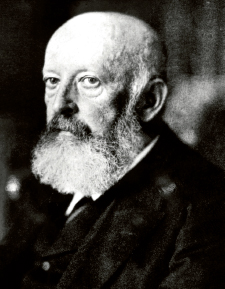
GERMAN CHEMIST ADOLF VON BAEYER (1835–1917) MADE THE FIRST BARBITURATE IN 1864. THE NAME WAS TAKEN FROM ST BARBARA, WHOSE FEAST DAY FELL ON THE DAY THE DRUG WAS DISCOVERED. ANOTHER STORY IS THAT HE SYNTHESISED IT FROM THE URINE OF A MUNICH WAITRESS CALLED BARBARA. HE MIGHT NOT LOOK IT, BUT ADOLF CERTAINLY KNEW HOW TO PARTY.
The main types of barbiturates that are used for euthanasia are secobarbital and pentobarbital. Pentobarbital is also used in the execution of convicted criminals in the USA. These can be used alone or in combination. They are safe (in the sense that there are no obvious side effects) and cause a peaceful, swift and uneventful death.
So how likely is it that the rest of the world will follow the likes of the Netherlands and Belgium and relax the laws around euthanasia? Baby boomers who campaigned so vigorously for contraception and abortion have become old, with debilitating illnesses. Will they now campaign for their own deaths? What will our society be like if we become like the Netherlands, where almost everyone knows someone who has died by euthanasia? Some doctors there are starting to worry that things have gone too far.
A journalist named Christopher de Bellaigue recently reported on how a doctor in the Netherlands, Bert Keizer, was called to the house of a man dying of lung cancer.22 The man had felt his time had come. Keizer arrived with a nurse to assist him, and they found 35 people around the bed, drinking, laughing and crying. The man cried out ‘OK guys!’ and everyone fell silent. Small children were taken from the room and the doctor administered the lethal injection. This is apparently a typical scenario. Dr Keizer works for the End of Life Clinic in the Netherlands, which in 2017 performed euthanasia on 750 people out of a total of 6,600 in the country as a whole. He is of the view that euthanasia is much better than regular suicide, which leaves deep wounds in loved ones left behind. In 2017, 1,900 Dutch people committed suicide – but a further 32,000 died under palliative sedation. The future may well look like the Netherlands.
But the situation in the Netherlands is also raising concern. Where do you draw the line? This was always a concern in debates on euthanasia. The idea that allowing it is a slippery slope, where a measure which aims to provide relief from suffering for cancer patients is expanded to include people who might otherwise live for many years. In the Netherlands, an ethicist called Theo Boer was given the task of reviewing every act of euthanasia between 2005 and 2014.23 He is openly critical of euthanasia in the Netherlands, especially since the law changed in 2007 to include a range of conditions, while the term ‘unbearable suffering’ as a reason for euthanasia was loosened. Many Dutch people now legally state that they are to be euthanised if their mental state deteriorates beyond a certain point – say, unable to recognise relatives. This has given rise to euthanasia in dementia patients, and some are uneasy at this development.
Medical ethicist Berna Van Baarsen resigned as a euthanasia review board member because of the growing numbers of dementia sufferers who were being euthanised based on a prior instruction. He resigned because of one horrible case. A patient who had instructed that she should be euthanised prior to dementia resisted when the time came (as judged by her having advanced dementia) and had to be restrained by her family while the doctor administered the lethal injection.24 The issue of conditions which aren’t terminal being the reason for euthanasia is currently being debated in the Netherlands, yet it’s unlikely that the law will change to prevent euthanasia for dementia. In other countries that are considering making euthanasia legal, perhaps the Dutch experience will lead them to restrict it to terminal patients only.
Public and legal opinions might be shifting among the Dutch. Recently, a doctor was tried for failing to verify consent before performing euthanasia on a patient with dementia.25 The 74-year-old patient, who died in 2016, had previously stated in writing that she wanted to be euthanised. The judges ruled that the doctor was acting on the woman’s instructions, but prosecutors argued that the doctor had failed to ensure the consent of the woman, who might have changed her mind. They said a more intensive discussion should have taken place. The trial is considered an important test case, as there are likely to be more cases of patients suffering from diseases such as Alzheimer’s disease who have requested euthanasia when fully compos mentis. The issue came down to whether someone who makes a choice when they are of sound mind should be held to that choice when they no longer are. The judges in the case said that they should be held to that choice, and there was a small round of applause in the courtroom when the verdict was read out.
The question now becomes: at what point do you stop checking if someone wants to die, and should they still have the power to do so even when they are no longer in control of their mental functions?
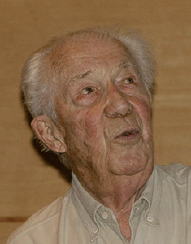
CHRISTIAN DE DUVE (1917–2013) WON THE NOBEL PRIZE IN 1974 FOR THE DISCOVERY OF THE LYSOSOME, A KEY PART OF EVERY CELL. AT THE AGE OF 95 HE WAS DIAGNOSED WITH TERMINAL CANCER AND DECIDED TO DIE BY EUTHANASIA.
When I think about the rights and wrongs of euthanasia, I think about two people. First, Christian de Duve, a famous Belgian biochemist26 who won the Nobel Prize in 1974 for the discovery of the lysosome, a tiny sack full of enzymes that is inside all cells. The lysosome is the garbage disposal system for cells: it destroys parts of the cell that are old or worn out and can digest a cell whole when it becomes old or damaged. Lysosomes are a bit like a euthanasia machine for the cell. I had the pleasure of hosting de Duve at a conference that commemorated the 50th anniversary of the ‘What is Life?’ lectures given by Erwin Schrödinger in Trinity College Dublin in 1943. These lectures had sparked a revolution in biology that gave rise to many advances. Christian died by euthanasia in Belgium at the age of 95. He had been suffering from a number of ailments, including terminal cancer. A friend and colleague, Günter Blobel, said de Duve wanted to make the decision while he was still able to do it and not to be a burden on his family. Christian spent the last month of his life writing to friends and colleagues to tell them of his decision to end his life. In an interview with the Belgian newspaper Le Soir, published after his death, he said he intended to put off his death until his four children could be with him.27 He also said he was at peace with his decision, saying, ‘It would be an exaggeration to say I’m not afraid of death, but I’m not afraid of what comes after, because I’m not a believer.’
The bottom line is that euthanasia, when properly regulated, can give us hope of a better quality of death. We must also strive for scientific advances in bringing better treatments or palliative care for those who suffer.
I will leave you by telling you about the second person who is on my mind when I think of this topic. I go back to my father. During the winter of 1995–6, Dad suffered several bouts of pneumonia, almost dying on one occasion. In January of 1996 his GP asked to see me. He suggested that perhaps he wouldn’t prescribe another course of antibiotics and would see if my Dad could fight the latest bout on his own. I knew what he was saying by the way he looked at me. My dad died peacefully of pneumonia (or ‘the old man’s friend’ as he used to call it) in his sleep on 20 February 1996, with me sitting beside his bed, holding his hand.
Not a bad way to go, Dad.