

CHAPTER 15
–
‘It’s tough to make predictions, especially about the future.’
–
Yogi Berra, baseball player
WHEN I WAS a boy, I really wanted a jetpack. I’d seen one in a cartoon called The Jetsons where Elroy spent most of his time floating around in one. I used to imagine jetpacking my way to school. I really believed that I might get one in the future. My father (who was born in 1921) used to tell me how when he was a boy there were no jet planes and, unimaginably for me, he grew up with no television. I used to think that when I grew up and had kids, I would tell them how unbelievably in my own childhood there were no jetpacks – and no mobile phones. I have told them about that last one and they still refuse to believe me. Sadly, jetpacks have yet to become commonplace.
But most of all I thought maybe the future would be like Star Trek. The writers tried hard to imagine what technology might look like for each series. One of the most interesting episodes, at least from an Irish perspective, was ‘High Ground’, broadcast in 1990. A crew member is taken hostage by rebels on the planet Rutia IV. One of her colleagues draws an analogy with a conflict on earth several centuries earlier – the Troubles in Northern Ireland – making the comment that they were ultimately resolved by ‘the Irish unification of 2024’. Did they get it right? Might Brexit lead to a United Ireland? Star Trek managed to get several things right about technologies we now have. Futurologists are always trying to predict the future, and science fiction has a part of play in that enterprise. What might our future look like?

STAR TREK: THE NEXT GENERATION
I’d love to move through time to the future and see how many of the things I’ve covered here will have become true because of science. Wouldn’t it be great if all my bottom lines came true? As yet, a time machine hasn’t been invented, although according to some physicists that is not completely beyond the bounds of possibility.1 Will vaccination be made mandatory and will we defeat most infectious diseases? What will our addiction to technology look like? Will all drugs be legalised for adults? Will euthanasia be widely available, with clear regulation? Will there be no more bullshit jobs as automation becomes the norm, and major changes happen in the way we work and the kinds of jobs we do? Will the idea of men and women as different types of human be superseded by a more complex and nuanced view of humanity? Will obesity no longer exist (because of medical intervention or better nutrition)? Will many diseases (including mental health conditions, addiction and cancer) be distant memories, like TB and polio are now, in the developed world at least? Will we save the planet? If all those things come to pass, won’t the world be a much better place for all humans and shouldn’t we aim to achieve each of them?
It’s worth looking at Star Trek, and indeed other science fiction stories such as Black Mirror, a bit more closely, to see if we can save the world. Instead of being predictive of the future, they are sometimes commentaries on the present. If we disregard aliens and spaceships, a lot of science fiction is about the pressing concerns of today. The impact of artificial intelligence. The dangers of the ecological crisis. How power can be misused in totalitarian regimes that control technology. Another common theme in science fiction is changing attitudes to gender politics – a world in which gender doesn’t matter and can be chosen or modified at will. What science fiction can help us with is a guide to the future, given what is happening now.
Perhaps somewhat surprisingly, science fiction can help governments and corporations plan for the future. The French government have set up the Defence Innovation Agency,2 which has a team of science fiction writers proposing scenarios for the future. The engineering firm Arup have commissioned writers to describe four scenarios that might happen as a result of climate change.3 Google, Microsoft and Apple all employ science-fiction writers as consultants. For businesses, science fiction can free up the mind from constraints. Science fiction can inspire people who work in the technology sector to come up with new products and services. Motorola have stated it was the hand-held wireless communicators used in Star Trek that motivated them to make the first mobile phone.4 Amazon’s Alexa voice assistant was inspired by the talking computer on the Starship Enterprise.5 The Kindle was inspired by an electronic book that featured in a novel by Neal Stephenson.6 Instagram CEO Adam Mosseri has said that an episode of the science fiction series Black Mirror inspired him to hide public-facing likes on Instagram posts.7 An episode called ‘Nosedive’ has a storyline involving a world where people rate one another on a scale from 1 to 5 based on their interactions with one another. Your score influences how people in society treat one. In the episode, the main character spends most of her time obsessing with improving her rating to improve her real-world opportunities with disastrous consequences for her mental health. The technology innovators of the future would do well to read the science fiction of today.
The politics of Star Trek is also interesting. Its main creator, Gene Rodden-berry, had fought in World War II, and at the time he created Star Trek, he was horrified that there might be another war, this time with Russia. Several episodes involve totalitarian regimes, sometimes run by computers, which rob people of their liberty. This is not too far from the situation today, where Russia has been accused of influencing the US presidential election and the Brexit vote of 2016 (see Chapter 1) by using computer technology. In Star Trek, planets joined together into a United Federation in the year 2161. The Federation has a key technology – warp drive – described as ‘superluminal spacecraft propulsion’. It allows spacecraft to travel at speeds many orders of magnitude faster than light. Space is warped to allow this to happen. Scientist Zefram Cochrane discovered the space warp in 2063. The first test of warp drive led to first contact with aliens, the Vulcans.
The United Federation of Planets is headquartered in San Francisco. Roddenberry had NATO in mind when he described it, with the Klingons representing the Soviet Union. It presents an optimistic view of the future. The economy in the Federation is described as ‘post-scarcity’ and has evolved beyond government-controlled monetary systems. Money is obsolete because of replicator technology. Many goods and products are easy to make with replicators. The Federation has a president, a cabinet and a supreme court. The Federation’s military/exploration arm is Starfleet Command. The council is made up of delegates from member sovereignties. In 2267 Captain Kirk says there are a thousand planets in the Federation, which continues to expand.
The two key technologies that define the Federation are warp drive and replicators. How likely is it they will come true? The only means of space transport that we now have is rocket propulsion, which hasn’t changed much since the 1960s. This means space travel is constrained by chemistry. Burning combustible fuel with storable or cryogenic oxidisers remains the only way to boost rockets. In 2018 the US Defence Intelligence Agency made public a 2010 report, which described possible approaches to travel faster than light.8 It was met with scepticism. There may be other options: nuclear-powered engines might be used. Space infrastructure has also got much better. The international space station has been called ‘Starfleet in gestation’. The next step is the lunar gateway, which is planned for 2026.9 It will orbit the moon and allow astronauts to return to the moon’s surface.
Whatever about warp speed, a lot is happening in the aviation industry – but if a time traveller from 1968 visited an airport today they wouldn’t notice much difference in the aeroplanes, although they would notice a huge difference in social distancing as a result of COVID-19. The 1970s looked promising with the advent of supersonic jets like Concorde, but they proved to be uneconomic. If the aviation industry was a country, it would rank among the worst countries in the world for carbon dioxide emissions. These have risen by 70 per cent since 2005, with a further seven-fold increase predicted by 2050.10 There are currently around 200,000 pilots and this is predicted to increase to 600,000, unless flying is restricted because of the damage it is doing to the planet or because of the constraints imposed by COVID-19.11 It’s likely that pilotless aeroplanes will become more of a reality as artificial intelligence is used to fly aeroplanes, although a fully pilotless aeroplane isn’t envisaged yet. A frequent flyer tax might be imposed but this would discriminate against poorer countries (where the growth in flying is happening). Flight rationing might be an option, where people will have a limit on kilometres they can fly per year. High-speed rail lines might replace flying. Electric aeroplanes are being developed, with more powerful batteries and lighter, more powerful engines, which are less harmful to the environment.12 Electric flying taxis are being developed, which may eventually lead to a future often seen in science-fiction films – flying cars in the skies of cities. Solar-powered airships are also being developed – and may usher in an era of slow travel. An airship would take 44 hours to cross the Atlantic.

THIS IS WHAT THE DART WILL LOOK LIKE IN 2050.
One of the more outlandish ideas is to build an orbital ring around the earth.13 This would comprise a strong steel cable about 80 km above the earth. It rotates, creating a force. Two magnetic levitation (Maglev) train tracks on the underside of the ring would transport passengers at incredible speeds. It is currently envisaged that a Maglev on an orbital ring would allow passengers to get to Australia from Europe in 45 minutes.14 Who knows, COVID-19 might well hasten its development, as we might no longer be able to take long-haul flights.

ELON MUSK, SOUTH AFRICAN ENTREPRENEUR. HE FOUNDED TESLA, AN ELECTRIC VEHICLE COMPANY, AND SPACEX, THE FIRST PRIVATE COMPANY TO TAKE ASTRONAUTS TO THE INTERNATIONAL SPACE STATION.
New supersonic aeroplanes are also being developed. There’s no doubt that when it comes to speeds, aeroplanes have actually gone backwards since the heyday of Concorde. New companies are emerging to bring supersonic flight back. Boom Supersonic is developing a commercial aeroplane that will fly at over twice the speed of sound, or Mach 2.2, with lower running costs than Concorde.15 The Space Liner is being developed by the German Aerospace Center (DLR) and is predicted to fly at 25 times the speed of sound.16 This will travel on the edge of space and get you from London to Australia in 90 minutes, much faster than the current best travel time from London to Perth, which takes 16 hours and 35 minutes. I took that flight. It was horrendous.
Elon Musk’s company, SpaceX, is at the forefront of developing spacecraft.17 It became the first to deliver cargo to the International Space Station in 2012. He has built the Crew Dragon, with help from NASA, which has flown astronauts to the space station. He has also built a large number of communications satellites, and has launched 122 of these in a constellation called Starlink.18 In total, SpaceX says that 12,000 satellites will be deployed by the mid-2020s. Musk hopes that Starlink will revolutionise broadband communications, providing it to underserved areas on earth and beyond into space, including to Mars. He is also co-funding with Microsoft (who provided $1bn) a major initiative in artificial intelligence called OpenAI and is helping the establishment of a base on the moon, called ‘Moon Base Alpha’.19 His main ambition, though, is to get a spaceship to Mars. NASA have the aim to get humans to Mars by 2030. Musk feels that humans must become an interplanetary species to combat the threat of asteroids and the risk of human-created catastrophes on earth, notably nuclear war or engineered viruses, the latter becoming all the more relevant since COVID-19. His company recently announced their new starship, SN1, which will start test flights soon. It is 165 feet tall with a giant rocket called Super Heavy. A Japanese billionaire has booked an around-the-moon voyage on the craft in 2023 and is already looking for a female life partner to go with him.20 Any takers?
Although we may be a long way from developing warp speed, we may be closer to the replicators that were used in Star Trek. 3D printing technologies are proceeding apace. This is described as additive production. Traditional production involves cutting away materials to make the final product. 3D printing adds layers of material to build the object. It is being used to make medical prosthetics, food including chocolate, crackers, pasta and fibrous plant-based meat, clothes including shoes and dresses, and even components for cars, planes and boats. 3D printing is likely to advance even further, with proposals to print whole houses and their contents. Who knows where it might lead?
Apart from warp speed and replicators, the other striking thing about Star Trek is medical procedures. When Dr McCoy visits a hospital in the 1980s by travelling back in time in Star Trek IV: The Voyage Home, he compares the medical procedures he sees to the Dark Ages. Geordi La Forge wears a visor that allows him to see, despite being blind from birth. A device somewhat similar to the visor has been invented. In 2005 a team at Stanford University used a combination of a microchip implanted behind the retina of a mouse21 and goggles with LED readouts linked to a small camera that allowed mice to distinguish black from white. This device was subsequently used by a woman who had lost her sight in a car crash, which allowed her to see object outlines and differences in light intensity. But we are some way off a device like Geordi’s.
Injections in Star Trek are given by ‘hypospray’, which doesn’t involve a needle and can be used through clothing. The FDA recently approved a device that can use ultrasonic waves to open pores in the skin, allowing liquids, including vaccines, to be injected without needles.22 A device with a high-pressure jet is also being developed, which is being tested as a way to deliver vaccines in powdered form. This will mean no injections for vaccines and no need to keep vaccines at a low temperature to preserve them, which is an issue in the developing world.
Star Trek: Voyager also has an emergency hologram doctor who is an expert in all fields of medicine. Then there’s the famous medical tricorder, which can diagnose diseases and collect other information about a patient by holding the device over someone’s body. We are a long way off robotic doctors, although there are robots that can perform some types of surgery. In diagnosis artificial intelligence is being increasingly used, most recently in the diagnosis of breast cancer, where the technology outperformed humans.23 Ultimately, it may well be a computer that will diagnose illness and provide treatment. There are, of course, scanners like the MRI imager, which can see inside our heads using magnetic resonance, but these are a long way from being hand-held. But there is the Standoff Patient Triage Tool (SPTT), which is being developed by the US Department of Homeland Security.24 This device can take vital signs from up to 40 feet away – another highly clinically relevant device in the age of COVID-19. The National Space Biomedical Research Institute is developing a device that can use light to measure blood and tissue chemistry.25 It needs to be placed on the skin, so isn’t quite like the tricorder, but it’s moving in that direction. There is also a device called DxtER, which can diagnose 34 conditions including diabetes, atrial fibrillation, urinary tract infection and pneumonia. It uses artificial intelligence, patient questionnaires and sensors to provide a quick assessment of a patient’s health.26 It won the top prize ($2.6m) in the annual competition for companies coming up with a device that will do what the tricorder does at a recent American Association for Clinical Chemistry meeting.
We can anticipate a large amount of progress in what medicine will look like in the future. Vast amounts of money and resources are currently being spent on medical research and the effort to develop new medicines (see Chapter 3). There is no doubt that we will continue to see tremendous progress. A useful website to keep up with all this activity is www.clinical-trials.gov, run by the National Institutes of Health in the US.27 It currently lists 326,147 separate studies, running in all 50 states in the US and in 209 other countries. Think about that number for a minute: over 300,000 clinical trials, most of which are aiming to combat disease. In 2019 the page had 215 million views per month, with 145,000 unique visitors daily. In June 2020, over 300 trials for COVID-19 treatments were taking place. That gives you an idea of the scale of the enterprise.
The breakdown of numbers is interesting. Of the studies, 144,342 involve a new medicine being tested against a specific disease. Some of these are small molecules (tablets that are taken) and some are biologic agents that are injected: 82,880 trials are called ‘behavioural’ where the trial involves modifying some behaviour of the subjects on the trial (this could be dietary or life-style-based) and looking for an effect on a specific disease or condition. A further 27,041 trials are for new surgical procedures, and 32,929 involve a new medical device, usually being implanted into the bodies of the subjects involved. The number of trials running has increased four-fold since 2010.28
Treatment for many major diseases is often inadequate or entirely absent. These are diseases for which there is an ‘unmet medical need’. They include-neurological disorders like Alzheimer’s disease and Parkinson’s disease, many types of cancer, heart disease, mental health disorders like depression, schizophrenia and psychosis, inflammatory diseases like osteoarthritis and inflammatory bowel disease and infectious diseases like malaria and TB and, of course, COVID-19. There are also a whole host of rare diseases (sometimes called orphan diseases because they have been neglected). Many approaches are being tested, including more recent technologies such as gene therapy, which involves replacing a faulty gene that is causing a specific disease. There are currently 25 promising trials running in gene therapy, and some therapies have already been approved. Diseases where gene therapy appears to be working include conditions that cause blindness and muscle-wasting in children.
A key question (as discussed in Chapter 3) is who will pay for these treatments, as they are extremely expensive. Given the level of activity, we are bound to see progress in most of the major diseases that continue to afflict humanity. My own research is currently trying to unravel the role metabolism plays in inflammatory diseases, as we’ve found that during inflammation, immune cells in your body burn nutrients in an unusual way. We think that targeting that deviant process might be a whole new way to treat diseases like arthritis, inflammatory bowel disease and maybe even Alzheimer’s disease. I predict that we will look back on the main diseases that kill us or make us very sick currently (cancer and heart disease) as diseases of the past, with many of us living into a healthy old age. We will all die one day, and may eventually fade gracefully away, having lived a long and hopefully prosperous and fulfilled life.
What about other technologies in Star Trek, like the holodeck, which was invented by the time of Star Trek: The Next Generation? This lets people enter into a simulated virtual reality situation. Imagine if that came true? We could all end up living virtual lives. This technology is getting closer, driven mainly by the gaming industry, but businesses are also interested. Wall-to-wall high-depth monitors, sophisticated projectors, motion sensors and other technologies are becoming more commonplace. Microsoft recently announced the Illumiroom,29 which is said to augment the space around a TV such that the boundary between the virtual and the real is blurred. There are virtual or augmented reality headsets (such as Microsoft’s Hololens or Facebook’s Oculus Rift), but the design isn’t lightweight or comfortable for prolonged use. The holodeck is still some way off.
A whole range of other technologies in Star Trek are, however, close to reality. The technology that was always mentioned as coming true first was sliding doors, which in Star Trek were operated with ropes. These are now commonplace. Star Trek also had hand-held touchscreen ‘data slates’ known as personal access display devices (PADDS), which we now use in the form of iPads. The universal translator was able to scan brain waves to interpret unknown languages into the user’s own language. Skype Translator Preview currently translates ten voice languages. . There are many apps that allow us to have conversations with others, using real-time translators, notably iTranslate, which has 42 languages. Google sells Pixel Buds, which are somewhat akin to the famous Babel Fish in Douglas Adams’s The Hitchhiker’s Guide to the Galaxy. In the book, these fish are placed in the ear and will translate any language.
Perhaps it will be in robotics that we will see the biggest advances in the coming decade. ‘Data’ is the name of the robot in Star Trek: The Next Generation. He is a synthetic life form with artificial intelligence, whose positronic brain allows him to be self-aware. In his early years he had trouble understanding various aspects of human behaviour and was unable to feel emotion. His creator, Dr Noonien Soong, added an ‘emotion chip’ to remedy this. In one episode, called ‘In Theory’, Data falls in love with Jenna D’Sora, a crew member, by creating a romantic subroutine for the relationship. He downloads masses of romantic novels and movies to learn about love. At one point he purposely provokes an argument with Jenna. When Jenna asks him why, he says based on his analysis of thousands of relationships, it was the optimum time for them to have a ‘lovers’ tiff’. Needless to say, the relationship doesn’t last.
Then there’s the question of sex robots.30 Several are under development. One of the most advanced is called Harmony and is described as a ‘home pleasure unit’. The industry is predicting a market size of €25 million, based on the demand for existing ‘smart sex toys’. The robots are predicted to become more lifelike and will have artificial intelligence. At last, you can have an intelligent conversation with your partner before or after sex, even if he or she is a robot! There may even be different settings – compliant, argumentative, silent, Irish. A strange world is emerging when it comes to sex robots, which is raising ethical concerns. Will they make us more selfish? Will they lead to more sex addiction? Should there be limits on what they might look like (ethicists are wondering if you should be allowed to have a robot with a face like your ex)? Will they dehumanise us and lead to more deviant behaviour with real people?
We are a long way off a ‘Data’ although robotics is currently a much-researched area. In 2018, $4.9 billion in venture capital investment was made in 400 separate deals in the US.31 A similar amount has been invested in China. But an Irish robot garnered a lot of attention in 2019. Robotics engineers Conor McGinn, Eamonn Bourke, Andrew Murtagh, Michael Cullinan, Cian Donovan and Niamh Donnelly from Trinity College Dublin unveiled a robot called Stevie, who has been described as Ireland’s first socially assistive robot with advanced artificial intelligence.32 Stevie was designed to support caregivers and older adults in senior living communities and other types long-term care settings. He is mobile, dextrous and can use sensing technologies like rangefinders, depth cameras and tactile and vision sensors to perceive and interact intelligently with his environment. He has also been given what the engineers who designed him call ‘enhanced expressive capabilities’, which facilitates more natural and intuitive communication with users.
The team consulted with a range of stakeholders during Stevie’s development, including older adults, nurses and caregivers. ALONE, a major charity that supports older people in Ireland, was a key partner in its development. Stevie is now being tested in senior living communities in the US and UK. His initial jobs involved assisting care staff in performing group activities like bingo and quizzes, freeing them up to spend more and better quality-time with older adult residents. He has also been helpful in connecting residents to their families through a video call interface that overcomes some of the usability issues with conventional tablet and smart phone applications. The experience of interacting with Stevie, enabled through an artificial intelligence system that uses advanced computer vision and language understanding algorithms, has proven to be especially engaging, with many residents and staff taking pleasure in the conversations they have with the robot. His inventors say that a key goal for future development is to enable Stevie to engage in small talk or the craic, which will presumably make him truly Irish.

STEVIE, A SOCIALLY ASSISTIVE ROBOT CREATED BY A TEAM IN TRINITY COLLEGE DUBLIN. HE’S THE ONE NOT WEARING A TIE.
Moving away from Star Trek and science fiction, futurologists spend a lot of time crystal-ball gazing (not literally of course). There are a number of predictions being made to add to the ones discussed above. In the 1920s a series of books entitled To-Day and To-Morrow predicted the future and some of the predictions made were remarkably accurate. The mobile phone was predicted in 1924 by Archibald Low who wrote: ‘In a few years’ time we shall be able to chat to our friends in an aeroplane and in the streets with the help of a pocket wireless set.’ J.D. Bernal, who was a Tipperary-born pioneer in the use of X-ray crystallography in molecular biology in the 1930s, predicted the World Wide Web. He wrote a book, which discussed the future, called The World, the Flesh and the Devil.33 One wonders if his publisher came up with that title to ensure healthy sales. No less a figure than the eminent science fiction writer Arthur C. Clarke, writer of perhaps the greatest work of science fiction, 2001: A Space Odyssey, called the book ‘the most brilliant attempt at scientific prediction ever made’. Bernal also speculated on how just before death, the brain might be saved and transferred into a machine host. He was a fan of what became known as transhumanism – the idea that humanity should improve its species. He predicted a small sense organ for detecting wireless frequencies, enhanced vision (to allow us to perceive infra-red and ultraviolet light, and even X-rays) and ears that can detect a broader range of frequencies. He predicted how humans would be able to communicate with each other across vast differences using wireless technology. He didn’t predict the computer as the main technological development of the twentieth century, which was partly because, at that time, computers (and they weren’t even called that then) were run on punch cards and were analogue rather than digital. Nobody predicted the advent of electronic computers.
This, of course, gives us a warning as to how we might try and predict the future. If no-one predicted computers, which have had such a major effect on our lives, what else are we missing? And what about COVID-19? Although scientists had predicted another pandemic, nobody anticipated that. We’re only now coming to terms with what COVID-19 might mean for the future. Who knows what blind spots we might have? Notwithstanding that, a timeline of what might happen over the remainder of this century has been constructed.34 It is a likely scenario for what will happen, based on the current situation we find ourselves in. The starting point is how the world is now. Digital technology is clearly a dominant aspect of our lives with 5 billion of us (out of a total population on earth of 7 billion) having smartphones that we use constantly.35 Twitter currently has 330 million active users, of which 66 per cent are male and 34 per cent female, and 500 million tweets are sent every day.36 The face-with-tears-of-joy emoji alone has been used 2 billion times.37 Facebook has 1.5 billion daily users.38 A current key concern is the stress and anti-sociality that the overuse of smartphones is causing. There are also concerns about excessive surveillance and privacy intrusion.
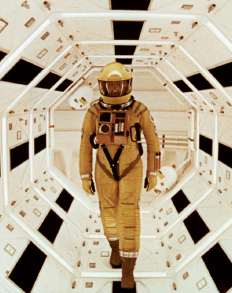
A SCENE FROM THE GREATEST SCIENCE FICTION MOVIE EVER MADE: 2001: A SPACE ODYSSEY (1968), DIRECTED BY STANLEY KUBRICK.
What else have we got to worry about when it comes to the future? In the 2020s climate change will likely become more and more of a concern, given current trends, and will begin to threaten food and water supplies (see Chapter 13). The 2030s will finally see a substantial shift towards renewable energy supplies because of breakthroughs in nanotechnology, which will make such supplies cheaper and more efficient. Nuclear fusion will also be used more and more as a source of energy. In the 2040s the interface between genetics, nanotechnology and robotics will lead to more and more examples of transhumanism. Devices will be implanted into the human body to help combat disease, enhance our senses, allow for different forms of communication and provide entertainment. There will be colonies on Mars, and on the moon. Artificial intelligence will play a much bigger role in how businesses and governments make decisions and will supersede human decision-making. By 2060 the world’s population will have reached a plateau and will start to decline. By the 2070s a full-scale environmental catastrophe will have happened, because in spite of our best efforts, climate change has still been occurring. Large-scale evacuations of cities will have happened because of rising sea levels. By the 2080s, though, scientific discovery will massively accelerate because of artificial intelligence. By the 2090s, Homo sapiens is no longer the dominant species on earth. The day-to-day running of countries will be done by ultra-fast, supremely intelligent robots and virtual entities. Most of the world’s languages will no longer be in widespread use. English, Mandarin and Spanish will be the three dominant languages. The average employee will be working for fewer than 20 hours per week. Western Antarctica will become one of the fastest-developing regions in the world. It will have a climate similar to Alaska today, the icecaps there will have melted and immigration from regions damaged by climate change will be encouraged and incentivised. The cities there will become artistic melting pots, given the diversity of the population. How do you think that future sounds? Our children and grandchildren may well live to see it.
We humans are a curious species. We evolved from more ‘primitive’ life forms according to the laws of natural selection. Life is a biochemical machine. Intensely complex chemistry, the right conditions, the dinosaurs being wiped out by an asteroid (which made room for our ancestor, a small shrew-like creature, to thrive) and a long, long time was all that was needed to get to us. Our curiosity led to us inventing science and we found out a large number of interesting things about the world we live in. We continue to make discoveries at an incredible rate, enhanced by the machines we invented, especially in the past ten years or so as the digital age has taken off. As the cosmologist and science communicator Carl Sagan once said: ‘Somewhere, something incredible is waiting to be known.’ We are the only species (as far as we can tell) who can look inward and figure out what makes us tick. And then we use all this science to invent new technologies, few of which most of us understand. A curious business indeed, that will continue apace as we head towards an uncertain future.
When I was training to be a research scientist in Cambridge in the late eighties I was working for an outstanding scientist and rheumatologist called Jerry Saklatvala, who is my most important mentor. He was working on a protein made by your immune system called TNF. At that time, TNF was linked to cancer. As often happens in science, as more experiments are done, this link turned out to be limited. But Jerry found that when TNF was added to cartilage prepared from pig’s trotters (a good source of cartilage) it caused the cartilage to be destroyed. We thought, hmmm … Jerry’s discovery might be interesting. Cartilage breakdown is a key feature of rheumatoid arthritis and was the reason why people ended up with bent fingers, using walking sticks or in wheelchairs. It is a disease which left untreated unrelentingly eats away at your joints. Medical research has many false dawns. Although Jerry’s findings were interesting, few dared hope that TNF would turn out to be an important target for medicines to treat rheumatoid arthritis. But that is exactly what has happened. The medicines that block TNF stop joint destruction and help many millions of people, preventing it from being a painful disease. Jerry’s observation turned out to be very important for the development of these new medicines. Who knew? And who knows where all the research that’s going on right now in labs all over the world will lead?

THE CLOSING SCENE OF 2001: A SPACE ODYSSEY. ASTRONAUT DAVID BOWMAN IS SENT BACK TO EARTH BY ALIENS AS A SUPERBEING TO START HUMANITY ON ITS NEXT JOURNEY.
My final bottom line: I remain optimistic that things will continue to improve for humanity. Let’s keep that dream alive.
I can’t wait to see what happens next.