

CHAPTER 2
–
‘I knew they wouldn’t play it when I wrote it.’
–
Ian Dury, who had polio, on his song ‘Spasticus Autisticus’
IHAVE TWO SONS, Stevie and Sam, and they have both been vaccinated with every vaccine available. It’s simple. I love them and want to protect them. No doubts, no fears.
If you really want to annoy an immunologist, tell them that you haven’t vaccinated your child. Vaccines against infectious diseases have saved more lives than any other single intervention in medical history.1 They prevent an amazing two to three million deaths per year around the world. This is a scientific fact.2 So is the fact that before vaccination, around 500,000 people caught measles in the US, with three in ten having permanent hearing damage as a result.3 And yet growing numbers of parents and guardians are refusing to vaccinate their children. The situation has become so bad that the WHO, which has the health of people as its main concern, listed vaccine hesitancy as one of the top ten threats to global health in 2019, as dangerous to our health as pandemic influenza, Ebola virus and antibiotic resistance.4 We can add the latest member of the virus rogues’ gallery, SARS-CoV-2, the coronavirus that causes COVID-19, for which we desperately need a vaccine.
How could vaccine hesitancy have happened in the first place? How could one of the greatest advances in medicine have become so problematic for many people, especially when the evidence in favour of vaccination is so overwhelming? How can we convince parents who are reluctant to vaccinate their child that they risk not only their own children becoming sick, but also that they are putting others at risk? And what difference has COVID-19 made? Will the greatest pandemic since the Spanish flu of 1918 win over hearts and minds, and decrease vaccine hesitancy among worried parents?
In some ways, a distrust of vaccines is understandable. A young mother goes into her GP’s surgery, carrying her lovely, healthy baby. She tells her GP, whom she likes and trusts, that she doesn’t want a needle stuck into her baby, who isn’t sick. She’s heard scary stories. She wants none of it. At the height of the MMR (measles, mumps and rubella) vaccine scare, friends of mine asked if they should vaccinate their children. Friends with law degrees and business degrees. My answer: unequivocally, yes. Where’s the evidence that made me say yes, I hear you ask? Well, here it is.
Take measles. This disease is caused by a highly contagious virus. Initial symptoms are a fever (which can run as high as 40°C and cause convulsions in children), a runny nose, a cough and inflamed eyes. A flat red rash then appears and spreads all over the body. Common complications include diarrhoea and ear infections. Less common ones include blindness and death; One to two in 1,000 will die.5 Nine out of ten people sharing a living space or a school with an infected person will catch measles. In 1980, 2.6 million people died of measles. They were mostly under the age of five. By 2014, following global vaccination programmes, this number fell to 73,000.6 The introduction of the vaccine has had a remarkable effect. In the US, before vaccination, the annual rate of measles stood at 3–4 million cases per year. After vaccination, this number fell to almost zero.7 All that sickness, lifelong complications and even death, prevented by a simple jab in the arm.
Or take polio, another viral disease. Infected people can have minor symptoms that clear up quickly, including sore throat and fever. However, for one person in every 150 people infected, the virus enters the nervous system, where it can wreak havoc. Initial symptoms include headache, back pain, lethargy and irritability. Some people will go on to develop paralysis, with muscles first becoming weak and floppy before complete paralysis. The virus is usually spread in faecal matter or via mouth-to-mouth transmission. The famous rocker Ian Dury contracted polio at the age of seven from, he believed, a swimming pool in Southend-on-Sea during the 1949 polio epidemic. In endemic areas (i.e. areas where the virus is common) it infects everyone in the population. It was a disease that every parent feared. Author Richard Rhodes has written, ‘Polio was a plague. One day you had a headache, and an hour later you were paralysed. Parents waited every summer to see if it would strike. One case turned up and then another. We all stayed indoors, shunning other children. Summer seemed like winter then.’ Again, the introduction of the polio vaccine had a remarkable effect. Before vaccination in the US, there were around 15,000–20,000 cases of paralytic polio per year. After vaccination? That number fell to fewer than ten.8 No more people were becoming paralysed. No more summers like winters. In 2002, Europe was declared polio-free, and that remains the case. Today, only three countries are not free of polio: Pakistan, Afghanistan and Nigeria.

WELLBEE WAS USED TO PROMOTE PUBLIC HEALTH IN THE US IN THE 1960S. HERE HE IS ENCOURAGING THE UPTAKE OF THE POLIO VACCINE. BRING WELLBEE BACK TO HELP FIGHT COVID-19!
Clearly, then, if safe and effective vaccines are developed, they can spell the end for infectious diseases that were a cause of much fear, suffering and death. So what are these wondrous things called vaccines? A vaccine is defined as a biological preparation that provides immunity to disease. The term ‘immunity’ comes from the Latin word immunis, meaning ‘exemption’. In Roman times this usually meant an exemption from paying taxes, which was granted to certain Roman citizens (for example, returning soldiers). In the case of infectious diseases, immunity means exemption from getting the disease again. This had been noticed in ancient times. After someone got sick from a disease, they rarely got it again, and so would care for those who had the disease for the first time. The first written description of the concept of immunity might have been by the Greek historian Thucydides, who in 430 BC wrote that when a plague struck ‘the sick and dying were tended by the pitying care of those who had recovered, because they knew the course of the disease and were themselves free from apprehensions. For no one was ever attacked a second time.’ This was believed to be magical or God-given. An early clinical description can be found in the writings of Islamic physician al-Razi, who described smallpox and how exposure to smallpox conferred lasting immunity. Smallpox was feared because it was highly contagious, killed one third of people who contracted it, and badly disfigured another third (and left the final third unharmed because their immune systems fought it off effectively).

THE REMARKABLE LADY MARY WORTLEY MONTAGU (1689–1762). SHE ADVOCATED SMALLPOX INOCULATION USING PUS FROM SMALLPOX LESIONS. THIS WAS AN IMPORTANT FORERUNNER TO THE WORK OF EDWARD JENNER.
The effort to prevent smallpox is important for the history of vaccines and the science of immunology, because it revealed a way to prevent infections. Around 1000 CE the Chinese began using dried crusts from skin lesions of patients with smallpox, which, when inhaled, provided some protection. Inoculation (meaning using a needle to insert material from smallpox lesions into the skin) was used in India and East Africa and introduced to the West in 1721 by Lady Mary Wortley Montagu.9 Lady Mary was a remarkable woman. She was the daughter of a duke and had been due to marry an Irish aristocrat named Clotworthy Skeffington. Poor Clotworthy was dumped, and Mary eloped with Edward Wortley Montagu, who became the British ambassador to Turkey. While in Turkey, she recorded how smallpox inoculation was practised; the procedure involved taking pus from a smallpox blister in a mild case of the disease and then applying it to a scratch on the skin of an uninfected person. She had two of her own children inoculated in this way. To bring inoculation to the attention of people in England, she gave seven prisoners who were awaiting execution in Newgate prison the chance to undergo inoculation instead of execution. All seven survived and were released. The disease would have been close to her heart as she had a brother who had died of smallpox and she herself had survived it. Yet in some cases this method of inoculation actually gave people smallpox, because it sometimes contained live infectious virus.
In 1798 Edward Jenner, a Gloucestershire doctor, tried a far safer method by deliberately infecting people with cowpox, which caused a mild infection but showed remarkable protection against smallpox. The idea of using cowpox in this way probably originated in the observation that milkmaids (as women who milked cows were called at the time) often had beautifully smooth skin. This was put down to the fact that they rarely got smallpox and so didn’t have the so-called ‘pockmarks’ on their skin, but yet would have caught cowpox from the cows they were milking. Might having cowpox somehow have protected the milkmaids from contracting smallpox? In fact, people who had cowpox usually cared for people with smallpox, since they were known to be unlikely to catch the disease. This approach of using cowpox to protect against smallpox was tried by at least five other investigators, including a farmer named Benjamin Jesty, who was a neighbour of Jenner’s and who might have given him the idea.10 When Jenner subsequently became famous for vaccination and had been granted £30,000 as a reward, Jesty sought compensation and was finally given two golden lancets as his reward. The credit had gone to Jenner partly because of an experiment he performed on an eight-year-old boy called James Phipps. Jenner scraped pus from the cowpox blisters on the hands of a milkmaid called Sarah Nelmes, who, history records, had caught cowpox from a cow called Blossom. He inoculated Phipps with the pus, which gave Phipps a mild fever. Jenner then injected Phipps with material from smallpox lesions (which would have been used for inoculation against smallpox) and the boy developed no symptoms of any kind. Normally that would have caused mild symptoms of infection. Jenner’s key contribution here was the demonstration that cowpox pus could be used from one human to another and that the boy was protected from disease when challenged. Jenner used the term ‘vaccination’, from the Latin vacca, meaning ‘cow’. Rather unexpectedly, scientists now think that Jenner might have used horsepox that had infected a cow – something Jenner himself believed. So perhaps we should call it ‘equination’? He followed up the Phipps study with 23 more cases, including his 11-month-old son Robert. This is an important part of medical science: to repeat an anecdotal observation with a study in multiple patients. Whatever the original source of the cowpox vaccine, vaccination was adopted widely in England. Jenner became famous all over Europe. The Empress of Russia sent him a diamond ring out of gratitude. Napoleon said he ‘could refuse this man nothing’ even though France and England were at war.

EDWARD JENNER (1749– 1823) VACCINATING A BABY AGAINST SMALLPOX. JENNER GETS THE CREDIT FOR AN EXPERIMENT THAT INDICATED THAT COWPOX MIGHT PROTECT AGAINST SMALLPOX.
In a forerunner of the modern anti-vaccination movement, many spoke out against the smallpox vaccination.11 Clergymen felt that smallpox was a God-given fact of life and death, and any attempt to subvert this divine intention was blasphemy. Some religious people felt that smallpox was a force sent by God to cull the poor. Doctors also joined this nascent anti-vax movement. Many made a good living from quack treatments for smallpox and vaccines threatened their livelihoods. Strange reports began to appear in medical journals, telling how vaccination could transmit bovine traits, such as children making mooing noises and running around on all fours. The ridiculous contention that vaccination turned children into cows became widespread.
In 1906 a woman called Lora Little, who was described as a ‘natural therapist’, claimed that vaccination was a scam set up by doctors, vaccine-makers and the government. She described 300 cases where vaccination against smallpox had been harmful, including the tragic case of her seven-year-old son who died after being forcibly vaccinated. (He actually died of diphtheria.) In England, notable people spoke out against vaccination. Even George Bernard Shaw was against it, describing vaccination as ‘a peculiarly filthy piece of witchcraft’. In another precursor to what is happening today, parents who refused to vaccinate against smallpox were fined or sent to prison. So anti-vaxxers are not new, and neither are attempts to deal with them.
Following Jenner’s success, many other vaccines were developed. In the 1880s French scientist Louis Pasteur introduced vaccines for chicken cholera and anthrax, infectious diseases that afflicted farm animals. It was Pasteur who suggested in 1891, in honour of Jenner, that the term ‘vaccination’ be more widely used to describe inoculation against infectious diseases. Other vaccines soon followed: in 1884 for rabies, in 1890 for tetanus, in 1896 for typhoid fever and in 1897 for bubonic plague, also known as the Black Death. That disease had been the scourge of Europe, killing as many as 60 per cent of the population in the fourteenth century, but a vaccine finally vanquished it. From the late 1800s, vaccination became a matter of national pride, with countries boasting about protecting their people from horrible diseases. In the twentieth century, new vaccines came thick and fast: for tuberculosis, or TB (another scourge of many counties, including Ireland where it killed at least 10,000 people per year in the early part of the twentieth century), for diphtheria, scarlet fever, yellow fever, influenza, polio, measles, mumps, rubella, meningitis and hepatitis B. One by one, diseases that killed millions were beaten by the power of vaccines.

WHAT HAPPENS WHEN YOU DON’T VACCINATE AGAINST SMALLPOX. THIS PHOTOGRAPH WAS TAKEN IN THE EARLY 1900S BY DR ALLAN WARNER. THE BOY ON THE RIGHT WAS PROTECTED AGAINST SMALLPOX BECAUSE HE WAS VACCINATED IN INFANCY.
It’s abundantly clear why vaccines are seen as the greatest contribution to medicine. Following on from Jenner’s work, the scientific question became: how do these wondrous things work? Inoculation with smallpox was viewed as a folk remedy of uncertain provenance. The study of what Jenner and Pasteur had achieved gave rise to the field of immunology. The efficacy of cowpox as a preventive against smallpox provided the first clue as to how a vaccine might work. We now know that the cowpox virus is similar to the smallpox virus and yet doesn’t cause that disease. The similarity means that when injected with cowpox, the body mounts an immune response to it and clears the mild infection. When someone is subsequently infected with smallpox, the immune system has been trained by its prior exposure to cowpox and kills the smallpox, because it recognises the parts of smallpox that are similar to cowpox. If the body hasn’t seen cowpox, smallpox will run amok as the immune system hasn’t been trained to recognise and kill it, causing disease. It’s a bit like a nightclub where, let’s say, boisterous fans of a football team wearing their team colours try to gain entry. The bouncers stop them. More fans then turn up wearing the same colours as the previous fans, but this time perhaps carrying weapons. They are immediately stopped from gaining access because the bouncers recognise them by their team colours. Cowpox and smallpox wear the same colours (meaning they have similar components) but smallpox is better armed and can cause more severe disease. Cowpox and smallpox are in the same family of viruses and so can be recognised by the same parts of the immune system.
Vaccines today are mainly of two types: dead or inactivated infectious organisms (weakened football fans wearing their team’s shirt), or purified products from them (the shirt alone). Pasteur was the scientist who came up with inactivation as a method. He was studying chicken cholera, an infectious disease in the poultry industry at the time. In one experiment, he infected chickens with a batch of cholera, mixed into a broth, that had been left out and had spoiled. When he then tried to infect the chickens with fresh cholera, he noticed that they were protected. The cholera bacteria that had gone off had been weakened in some way and no longer caused disease but had components in common with the regular bacteria: it trained the immune system to respond to the more virulent bacteria. The first vaccines were therefore similar to the chicken cholera that had spoiled. They were somehow inactivated, or as it is usually termed ‘attenuated’, by chemicals or heat. These include vaccines against polio, hepatitis A, rabies, yellow fever, measles, mumps, rubella, influenza and typhoid. Jonas Salk inactivated the polio virus with the chemical formalin, whereas Albert Sabin discovered in infected animals a weakened version of the polio virus, which was less toxic. Both of these worked well against polio. The vaccine against typhoid was invented by Almroth Wright, who had studied medicine in Trinity College Dublin. It saved tens of thousands in World War I: before the vaccine was introduced, more soldiers had died of typhoid than in combat. For TB, a vaccine termed BCG (named after its inventors Calmette and Guerin; the B stands for ‘Bacillus’, the genus of bacteria that TB belongs to) has been used for decades, and it was introduced into Ireland by Dorothy Stopford Price in the 1950s, again saving many lives. BCG also causes a non-specific boosting of the immune system, meaning that it can put up a barrier (involving immune cells called monocytes) that can repel other infections, including viruses (e.g. the measles virus) and possibly SARS-CoV-2. BCG may well be useful as a way to protect against COVID-19, and at the time of writing, is undergoing testing.
A wide range of vaccines use component parts from the infectious agent. This can include inactivated toxic components (called toxoids) and includes vaccines against tetanus and cholera. Subunit vaccines comprise proteins from the infectious agent and include vaccines for hepatitis B, influenza and human papilloma virus (HPV) – the latter protects against cervical cancer, which is caused by HPV.12 Influenza is a major focus for health authorities as it can cause death in the vulnerable, mainly the old, sick and very young. There are four types of influenza – A, B, C and D. All have proteins in their coats called hemagglutinin (H) and neuraminidase (N). There are different types of H and N and the virus can change from season to season, hence each flu season might have a different vaccine. Much effort is going into the search for vaccines for diseases like malaria (caused by the parasite Plasmodium falciparum) and AIDS (caused by the human immunodeficiency virus). These are proving difficult to vaccinate against, although there is some progress, particularly with malaria.13 One of the most recent vaccine successes has been against Ebola virus, which causes a highly lethal disease in parts of West Africa, with an overall mortality rate of up to 90 per cent. A major effort to develop a vaccine began following outbreaks in 2013 due to the high mortality rate and symptoms, which include internal and external bleeding and organ failure. A vaccine against Ebola was developed in 2015, and new ones are still in development.14 The COVID-19 pandemic led to an unprecedented effort to find a vaccine, with at least 41 candidates in development in April 2020.15 Every possible strategy is being tested: dead virus, live weakened virus and also components from the virus. The components include the protein in the spikes of the virus, which it uses to penetrate lung cells. Even RNA from the virus that encodes the spike protein is being tested. If it is injected into your arm muscle, your body then makes the spike protein and your immune system can then make antibodies that will bind to the spike protein like Blu-Tack, bunging it up and stopping the virus entering cells. These antibodies will hopefully protect you when the real virus comes along. It takes time and it is unlikely that a vaccine will be ready before 2021. This is because vaccines have to be carefully checked to see if they have any side effects, and then checked again in trials to see if they actually work.
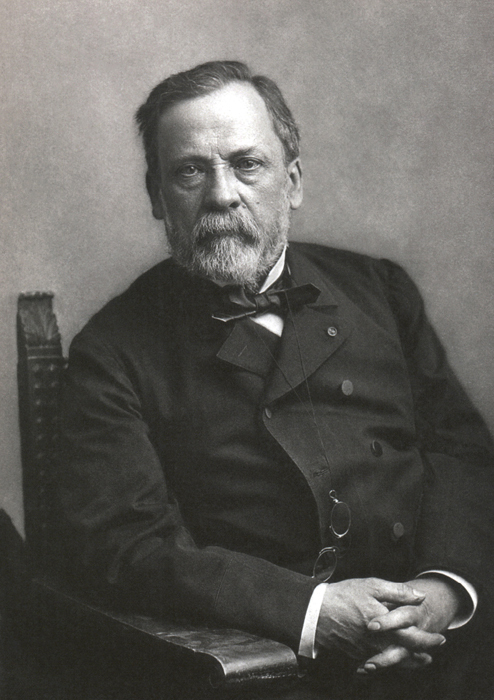
LOUIS PASTEUR (1822–1895), FRENCH MICROBIOLOGIST AND CHEMIST WHO INVENTED VACCINES AGAINST RABIES, ANTHRAX AND CHOLERA.
Although the main part of a vaccine is a microorganism that has been weakened or a part thereof, another important part is called the adjuvant. This is a chemical that can boost the immune response, and most vaccines don’t work without it. Adjuvants are akin to jump leads to get a car engine going. Widely used adjuvants include the chemical aluminium hydroxide (Alum).16 Other examples include a chemical called monophosphoryl lipid A (MPL), which is used in the hepatitis A vaccine. These agents will stimulate the immune response, and in the case of MPL this involves the triggering of an immune system protein called TLR4, which boosts immune cell activation. Research into new adjuvants aims to boost vaccines for diseases yet to be conquered including AIDS and malaria, and there is great progress in determining what parts of the immune system might need boosting to enhance vaccine efficacy. New adjuvants are also being tested with vaccines for COVID-19, including an adjuvant called AS03, which might hold particular promise.
The use of adjuvants or other additives has added to concerns that vaccines can be harmful. The decrease in vaccine use is known as vaccine hesitancy, which is defined as a ‘delay in acceptance or refusal of vaccines despite the availability of vaccination services’. It has been reported in more than 90 per cent of countries in the world. In the UK, for instance, coverage of the MMR vaccine has dropped to 91.2 per cent and is at its lowest level since 2011–12.17 There is no doubt that vaccines can be harmful in some individuals although the incidence is rare; and given the overwhelming benefits to humanity of vaccination, adverse events are not sufficient to prevent vaccine use. Obviously, though, any harm caused by a vaccine can be devastating for the affected person or parents of a child who had a bad reaction. So what is the exact situation regarding harmful vaccines?
A recent study revealed how rare injury is. Over the past 12 years, 126 million doses of the measles vaccine have been given in the US. During that period, 284 people filed claims of harm from those immunisations, through a proactive federal programme created to compensate people injured by vaccine. Of those claims, 143 were compensated, giving a 1 in 818,119 chance that the measles vaccine will harm you. The data come from the National Vaccine Injury Compensation Programme, a no-fault system that began in 1988.18 This contrasts with a 1 in 500 chance of an unvaccinated child dying of measles, rising to 1 in 10 for a malnourished child. It also contrasts with a 3 in 10 chance of ear infections leading to permanent hearing loss.19 Overall, when billions of vaccine doses have been given to hundreds of millions of Americans, only 6,600 people needed to be compensated for harm, with $4.15 billion dollars being paid out in compensation. Meanwhile, the Center for Disease Control in the US has estimated that vaccines have prevented more than 21 million hospitalisations in the US, and 732,000 childhood deaths.20 All those children are still alive because of vaccines.
Vaccines can still have minor side effects – a sore arm, or low-grade fever. Other slightly more serious side effects include seizures in response to the MMR vaccine, which occurs in 1 in 4,000 children,21 and with the HPV vaccine against human papilloma virus, which in one study of almost 200,000 girls caused 24 cases of fainting.22 One reason why there has been a concern is that sometimes children become ill soon after vaccination, but in the vast majority of cases this is a coincidence: one example of this coincidence is Sudden Infant Death Syndrome (SIDS), which cannot be linked to vaccination – it happens, at the same rate, in unvaccinated children.
The anti-vaccination movement got a major booster shot in the arm in 1998 when Dr Andrew Wakefield published a paper, which stated that the MMR vaccine was linked to autism.23 This study is likely to have been responsible for serious illness and even death in many children, because it scared parents into not vaccinating their children. Numerous flaws were found in the study including the small numbers of patients studied. Wakefield took money from solicitors who wanted to sue vaccine manufacturers, constituting a major conflict of interest for his publication linking the MMR vaccine to autism. The Lancet retracted the study in 2010 and the General Medical Council (GMC) in the UK struck Wakefield off. The council concluded that Wakefield had acted against ‘his patients’ best interest’ and been dishonest in his research. Elements of his publication had been falsified and the British Medical Journal stated that his work was ‘an elaborate fraud’. Wakefield was also found to have used children who showed signs of autism as guinea pigs, putting them through invasive procedures including colonoscopies and painful lumbar punctures. He went to a children’s party and paid some children £5 for blood samples. Many scientists further explored the possible link but study after study was then published showing no link between the MMR vaccine and autism. The Center for Disease Control, the American Academy of Pediatrics (which has 62,000 paediatricians as members) and the FDA (the Food and Drug Administration – the US government agency that must give ultimate approval to a new drug) has stated that the MMR vaccine is safe.24
Fears against vaccines were also stoked by Robert F. Kennedy, son of Bobby Kennedy, who stated that people were becoming sick from a vaccine additive, thimerosal, which contains mercury. Kennedy has an autistic son. He and actor Robert De Niro offered a prize of $100,000 for anyone publishing a study proving thimerosal to be safe. This is almost impossible to achieve – could you prove that water is safe? One study in 2014 reviewed ten separate studies involving over 1.25 million children and concluded that there was no relationship between the MMR vaccine or thimerosal and developing autism.25 Good enough for me. As for Wakefield, he continues to defend his findings and has reportedly given lectures on the Conspire-Sea cruise ship, sharing the platform with crop-circle obsessives, a woman who claims to have visited Mars and a man who insists that he has died and been reborn three times.26
The anti-vax movement continues to make its case against vaccines. This has led to a re-emergence of measles, including cases in Ireland, which more than doubled last year.27 UNICEF has reported that 169 million children globally missed out on their first dose of the measles vaccine between 2010 and 2017. Cases of measles have increased in 98 countries. Why would parents hesitate when it comes to vaccines? Internet-based advocacy against vaccination is likely to sow fear and doubt. Should vaccinating your child be a legal requirement, as it was in the early twentieth century for smallpox? Some argue this infringes human rights, but others state we do this kind of thing already in different contexts. Seatbelts are compulsory, even though they might harm you by rupturing your spleen. It is public health for the public good, just like the drink-driving laws.

ROBERT F. KENNEDY (SON OF BOBBY KENNEDY) AND ROBERT DE NIRO. WHAT IS IT ABOUT ROBERTS THAT MAKES THEM VACCINE-DENIERS? YOU TALKIN’ TO ME, ROBERT?
Let’s look at ‘herd immunity’ to explain why parents should vaccinate their children. Over 95 per cent of people need to be vaccinated to stop the measles virus – it will then have nowhere to hide.28 If you don’t vaccinate your child, you are putting other people at risk – people who have a weakened immune system because they are on immunosuppressant drugs (given to people who have had organ transplants or are being treated for an inflammatory disease like rheumatoid arthritis) or because they have diabetes or heart disease or simply because they are an older person, since like everything else, their immune system gets less agile as they age. These vulnerable groups can of course be vaccinated, as happens with the flu vaccine, but to decrease the risk of them becoming infected, herd immunity provides another safeguard. COVID-19 is especially severe in older people and people with these underlying conditions,29 making vaccination and herd immunity all the more important to protect the vulnerable against SARS-CoV-2.
What can be done to educate parents? The best way is for a doctor to approach a reluctant parent or guardian with empathy and humility (as should be the case for every doctor–patient interaction). The doctor might begin with: ‘We all love our children. We all want the best for them. I understand that you’re not trying to hurt your child. Now let’s talk.’ Tone of voice is everything. If you ask ‘Why do you think that?’ make sure you don’t say ‘Why do you think that?’ Concerns should be acknowledged. Personal stories should be shared as these can create an emotional resonance. Roald Dahl, the beloved children’s writer, described how his seven-year-old daughter caught measles. He wrote about how she seemed to be recovering, sitting up in bed. He began teaching her how to make farm animals from pipe cleaners, and then he noticed how she had trouble coordinating her finger movements. One hour later, she was unconscious, and 12 hours later she was dead. This happened a year before the measles vaccine was developed. Telling parents this story or showing them the essay Dahl wrote after her death, is likely to work more effectively than facts on those more likely to respond to fear than to reason.
But others disagree: fear might make things worse. One study in 2015 split 315 people into three groups.30 They showed one group information debunking the link between MMR vaccines and autism. They gave another group scientific information not related to vaccines, and they showed the third group pictures of children suffering from mumps, measles or rubella. When asked, the third group viewed vaccines more favourably than the other two groups, which was seen as a good result. But in another study, people were shown scary pictures of infections and tragic stories, which put them off vaccines. There is some evidence that an action that might cause harm (say, giving a child a vaccine) is viewed as worse than inaction causing harm, as the latter is seen as fate and not the fault of the parent.

SHARE OF PEOPLE WHO BELIEVE VACCINES ARE SAFE (%). SOURCE: WELLCOME GLOBAL MONITOR.
The aim then is to try to overcome vaccine hesitancy using multiple approaches. It’s vital for the doctor or scientist never to be judgemental. One helpful tactic is to state consensus among scientists, for example, ‘Ninety per cent of medical scientists agree that vaccines are safe and that all parents should vaccinate their children’31 or ‘Children are 10,000 times more likely to be brain-damaged by measles than by vaccination.’ These kinds of statements avoid repeating myths in an attempt to debunk them.
Anthony Fauci, the director of the National Institute for Allergies and Infectious Diseases (NIAID), who is on the front line in the fight against COVID-19 in the US, recently told a US Congress hearing that the main issue causing vaccine hesitancy is misinformation. Vaccine-hesitant parents are more active in searching for information online than vaccine-compliant parents. This has led Facebook to announce that groups and pages sharing anti-vaccine misinformation will be removed from its recommendation algorithm. Medical professionals who are trying to increase vaccine compliance see this as a crucial move since it will promote the spreading of evidence-based information explaining the benefits of vaccination. And what does that evidence-based information tell us? Overall, serious allergic reactions occur in one in 1 million doses of vaccines. Some of the specific concerns raised can be addressed as follows:32
Getting too many vaccines will overwhelm my baby’s immune system. The real situation: it’s true that children are being given more vaccines than before and sometimes in combination, but overall the amount of material in each vaccine is a lot less than before so in fact the overall exposure is less. The amount of material in vaccines is in fact trivial when compared to what children get exposed to in the natural world every day.
My baby’s immune system is immature so it’s safer to delay some vaccines. The real situation: this is not true – delaying vaccines increases the risk of infection and, in the case of the MMR vaccine, might increase the risk of febrile seizures.
What’s in vaccines anyway? Don’t they contain chemicals and toxins? The real situation: vaccines do contain things like aluminium and formaldehyde but at levels much lower than what your child will pick up in the environment.
The side effects of some vaccines seem worse than the actual disease. The real situation: vaccines have all been through rigorous safety testing, which can take 10 to 15 years. The FDA in the USA and the European Medicines Agency (EMA) in Europe monitor and scrutinise all the tests: only then, if all is well, will they grant approval. No company would invest in a product that would cause more serious health problems than it prevents.
If all else fails, we might need to make it illegal not to vaccinate. In the US, parents have to get an exemption, on medical or religious grounds, if they want to send their unvaccinated child to school. This has been shown to definitely increase the rate of vaccination. France has made 11 vaccines mandatory in order for children to be enrolled in school. Although draconian, perhaps that is the best way to protect our children. COVID-19 will make this all the more likely, given the devastation it has wreaked, both for human health and the world economy. The consequences of a serious infection for which there is no vaccine are now obvious – mass isolation, disruption of normal activities and an enforced but accepted cessation of human rights for the common good. Because of their great success rate at preventing millions of people from becoming sick and dying, work into vaccines continues apace. There are massive efforts afoot to develop new vaccines for all kind of diseases, including cancer. Imagine that – a vaccine to prevent cancer, which is already there for cervical cancer with the HPV vaccine and could be a reality for many other cancers. The Center for Disease Control in the US says that the HPV vaccine could prevent 90 per cent of the 32,100 cases of cervical cancer. All those people cancer-free. Many infectious diseases remain high on the agenda, as mentioned above, with a big effort into developing vaccines against malaria and AIDS, and new and better vaccines against diseases like TB and, of course, COVID-19. Progress is happening and the future looks bright. Bottom line: my children were fully vaccinated. All health agencies in all countries agree: vaccinate your child.