
CHAPTER 5
–
‘Nothing is funnier than unhappiness, I grant you that. Yes, yes, it’s the most comical thing in the world.’
–
Samuel Beckett, Endgame
IHAD A MILD bout of depression when I was 33. My first son, Stevie, had just been born and I had a health scare (which thankfully didn’t turn out to be serious), and I think it was a combination of these two things that got me over-ruminating, worrying about not being there for my son and generally feeling hopeless about the future. My sleep was badly disrupted, I had no appetite, and the joy had gone from my life. I would hold my little boy in my arms and think, Why can’t I feel the joy of this? Why am I crying? I was lucky though. It was never so bad that I couldn’t go to work, but it shook me. I went to see my GP who gave me antidepressants and something to help me sleep. The medication and a bit of talk therapy helped, and I began to come out of it after four months or so, to my relief. I can remember the actual moment when the fog began to clear. We went on a short holiday to Malaga in the spring to escape the damp of an Irish winter. I remember sitting on the balcony of the apartment we had rented, drinking a cup of tea with my mother-in-law, Desiree, in the morning sun. I saw the sunlight sparkle on the sea, and it made me feel good. The episode gave me insight into how others suffer with depression. What happened to me, and why is it that depression has become such a problem for so many of us?
We live in an age when, on the face of it, things have never been better. Men no longer live lives of quiet desperation, spending every waking hour toiling in the fields or down coal mines, dying in wars. Women, at least in western countries, can now live almost as full a life as they want to, free from a cycle of pregnancy and birth, infant mortality and discrimination. And yet the number one fear of teenagers in a recent survey is not the old fear of teen pregnancy or being caught smoking and drinking, but fear of anxiety and depression.1 A large proportion of adults – as many as 18 per cent – have had at least one major episode of serious depression (defined as requiring treatment – counselling and/or medication) in their lives.2 And for college students, the numbers seeking help for mental health issues are growing. In Ireland almost 12,000 students sought counselling in 2018, up from 6,000 in 2010.3 In the US the rate of moderate to severe depression among students rose from 23.2 per cent in 2007 to a whopping 41.1 per cent in 2018. Studies are reporting a prevalence of depression or anxiety at above 35 per cent.4 College counselling services are overwhelmed. Depression is a serious problem that deserves our closest attention, given the amount of suffering it causes as well as the total tragedy of suicide. Where could it have all gone so horribly wrong? All the promise of good health, enlightenment and freedom has come to a sorry pass. A large proportion of our species are yet again living lives of desperation, although not so quietly as our ancestors.
If you have been depressed, you’re in good company. You’re in a club that includes Caroline Ahern, Buzz Aldrin, Hans Christian Andersen, Marlon Brando, Kate Bush, Johnny Cash, Leonard Cohen, Charles Darwin, Charles Dickens, Bob Dylan, Stephen Fry, Lady Gaga, Martin Luther King, Stephen King, John Lennon, Abe Lincoln, Spike Milligan, Jim Morrison, Morrissey, Dolores O’Riordan, Sting, Wolfgang Amadeus Mozart, Isaac Newton, Brad Pitt, Sylvia Plath, Edgar Allan Poe, Jackson Pollock, Sergei Rachmaninoff and Bruce Springsteen. And those are just my heroes. They’ve all had bouts of clinical depression. It’s perfectly understandable why Sting would get depressed – anyone who wrote ‘Fields of Gold’ would have to consider medication. But Brad Pitt? Or Hans Christian Andersen, the writer of those wonderful children’s stories that have brought so much joy to the rest of us? This tells us one thing: depression spares no one. And guess what? Success can bring it on or make it worse.5 Becoming chief executive officer in a company can induce depression. In fact, CEOs have double the rate of depression when compared to the general public.6

SPIKE MILLIGAN (1918–2002). COMIC GENIUS, WRITER OF THE 1950S RADIO COMEDY-SHOW THE GOON SHOW AND MANY BOOKS. SPIKE SUFFERED FROM BIPOLAR DISORDER HIS WHOLE LIFE, AND YET MANAGED TO BRING SUCH JOY TO MILLIONS IN HIS WRITING AND ACTING.
So what exactly is depression (also known as major depressive disorder)? It’s defined as a persistent state of low mood and aversion to activity. These two features go together. A depressed person will feel low and will also not want to do the activities that they normally do. If someone goes to their GP and says they are suffering from it, the GP will ask them a range of questions. Key indicators are used, the main one being that the person must be suffering from five of the following eight symptoms, and at least one of the first two, nearly daily for at least two weeks: sadness or depressed mood most of the day or almost every day; loss of enjoyment in things that were once pleasurable; a major change in weight or appetite; insomnia or excessive sleep almost every day; physical restlessness that is noticeable by others; fatigue or loss of energy almost every day; feelings of hopelessness or worthlessness, or excessive guilt almost every day; problems with concentration or making decisions almost every day; recurring thoughts of death or suicide.7 The length of time is what is important here, as we all have these feelings from time to time, but they go away. They will come back, but there will be lots of time without them. Other measures can be used, including the Beck Depression Inventory-II and the nine-item depression scale, the PHQ-9. These measure the severity of the depressed state. Yet no physical or blood test or scan can diagnose depression. Some things can be ruled out by measuring thyroid hormones, as a deficiency can cause depression, but no other test will measure, say, a biochemical in the bloodstream that causes depression.

PLACEBO PROPERLY RUN CLINICAL TRIALS MUST BE DOUBLE BLIND (MEANING NEITHER PATIENT NOR SCIENTIST KNOWS WHO IS BEING TREATED WITH THE NEW MEDICINE) BUT ALSO PLACEBO-CONTROLLED (MEANING AN UNTREATED PATIENT MUST RECEIVE A ‘DUMMY PILL’ THAT IS IDENTICAL IN LOOK AND TASTE TO THE MEDICINE BEING TESTED).
This makes clinical trials for antidepressants difficult, as whether a drug is working or not can only be evaluated by the patient. Patient reporting (which means a patient filling in a form) is a notoriously uncertain business. Sometimes, patients fill in a form incorrectly or exaggerate or play down how they’re feeling. And all the drug tester has to go on is the patient reporting on how they feel. Patient reporting might be one reason why trials for antidepressants have only shown marginal effects. A recent analysis indicates that most (if not all) of the benefits of antidepressants are due to the placebo response.8 What is going on here? It seems that just talking to the patient and giving them attention, or the very fact of them being in the trial, lifts their mood. Whatever the chemical imbalance in their brain might be (and the widespread belief is that depression is a chemical imbalance), it might be restored to normal by medication, or by a range of other non-medical interventions, such as a placebo. It’s important to stress that placebo is not an absence of intervention. It’s an intervention because the patient knows they are in a trial, even though they aren’t being treated directly.
Major depressive disorder is a common illness. The percentage of sufferers varies from country to country, with an occurrence ranging from 7 per cent in Japan to 21 per cent in France.9 In most countries the incidence ranges from 8 to 18 per cent, depending on the study. This means that in a room of 100 people, somewhere between 8 and 18 will have suffered at some point in their lives from depression. Major depression is twice as common in women as it is in men, although it is not clear why this is the case. People are most likely to develop their first episode of depression between the ages of 30 and 40, with another smaller peak between the ages of 50 and 60. The risk of depression significantly increases if you have an underlying neurological disorder such as Parkinson’s disease, stroke or multiple sclerosis, following a heart attack, and during the first year after childbirth. Postnatal depression is a serious disorder affecting 10 to 15 per cent of women.10 It is thought to be caused by the hormonal changes that happen during and after childbirth and the pressures of being a parent. Several studies have shown that the incidence of depression is lower in the elderly, although the reason for this is not known. One theory is that as you get older, you gain more perspective on life and you no longer sweat the small stuff.
The centre of depression is in our brain, although the Ancient Greeks thought it was to do with the bile duct. They thought that our mental state was driven by the balance of four fluids or ‘humours’ in our bodies: black bile, yellow bile, phlegm and blood. Black bile was the one you didn’t want out of kilter. The Greek word for black is melan – this gave rise to the term ‘melancholia’, which referred to the idea that an imbalance in black bile was the cause of depression. The term ‘humour’ (as in mood) also comes from this idea. We now know it is the mind that counts in depression, and the mind is located in the brain. That being said, we still don’t know what the mind is. At its simplest, it’s to do with neurons in our brains forming complex circuits, although neuroscientists warn us not to think of it as a computer. It’s much more complicated.
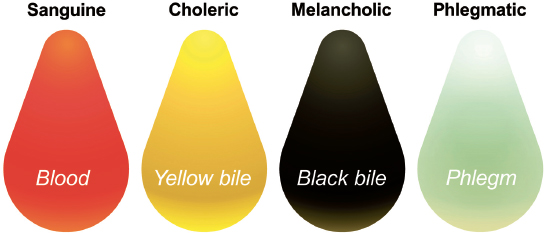
THE ANCIENT GREEKS BELIEVED THAT MOOD WAS CONTROLLED BY THE BALANCE OF FLUIDS IN OUR BODIES. THIS LED TO THE THEORY OF THE FOUR TEMPERAMENTS: SANGUINE (OPTIMISTIC), CHOLERIC (PASSIONATE), MELANCHOLIC (SENSITIVE) AND PHLEGMATIC (COMPOSED).
There are 100 billion neurons in your brain, all cracking and firing. It is the interplay between these neurons that is thought to explain things like memory, intelligence and personality, although we’re clueless as to how this complex cellular biochemical machine might work. The assumption when it comes to depression is that some imbalance happens in the workings of our minds, which leads to the changes that characterise this disease. Results from attempts to measure differences in the brains of depressed people have revealed some differences. Depressed patients have been shown to have increased volume in a part of the brain called the lateral ventricles and smaller volumes in other brain regions, such as in the thalamus, hippocampus and frontal lobe.11 This suggests that there are indeed changes in brain structures in depressed patients. Scans that measure brain activity also show some differences in depressed patients, but results are mixed, and brain scans are not routinely used to diagnose depression or follow its course.
Neurons connect to each other by releasing chemicals called neurotransmitters. These are like batons in a relay race with one runner (the neuron) passing the baton (the neurotransmitter) to the next runner. There are lots of different types of batons, including serotonin, noradrenaline, acetylcholine, dopamine and glutamate. And although we talk about some of these, such as serotonin, as being disturbed and needing to be restored with drugs, evidence that they are off-kilter or that they actually change in someone taking antidepressants is largely missing. In one way, this is outrageous. Ed Bullmore, professor of psychiatry at the University of Cambridge, has written that when a depressed patient asks a psychiatrist what is wrong with them, the psychiatrist will tell them about disturbed brain chemicals and how the drugs can fix them. But when the patient presses the doctor, asking if these chemicals can be measured, either to help with diagnosis or to show that a treatment is working, the doctor will say no.12 Both doctor and patient take these things on faith to some extent – hardly ideal for the twenty-first century, where we think science is all-pervasive. There is evidence, of course, for neurotransmitters affecting mood, but this has been shown mainly in animals, or based on genetics, where genetic variants that give rise to proteins that regulate levels of neurochemicals, such as serotonin, can be linked to depression. Nothing definitive has emerged for doctors to use diagnostically to confirm that a patient is depressed and to indicate a course of action to help that patient.
Serotonin is a fascinating neurotransmitter. It is of interest here because serotonin selective reuptake inhibitors (SSRIs) are a mainstay treatment for depression. SSRIs include drugs like Prozac, the wonder drug of the 1990s. In 2017, almost 22 million prescriptions for Prozac were written in the US, with a similar number over the previous 10 years.13 A recent study revealed that the number of prescriptions of antidepressants in England has almost doubled in the past decade. In 2018, 70.9 million prescriptions were given out compared to 36 million in 2008.14 SSRIs are the main type prescribed. Other antidepressants include monoamine oxidase inhibitors. These block the breakdown of monoamines, including serotonin, in the brain. In Ireland, prescriptions are up by two-thirds since 2009, with Ireland’s most common antidepressant, Lexapro (another SSRI), being prescribed 609,655 times in 2017.15 That’s an awful lot of tablets for an awful lot of depressed people. But do the drugs work? They certainly seem to work for some, with an overall response rate of a 50 per cent reduction in depression scores for moderate to severe depression.
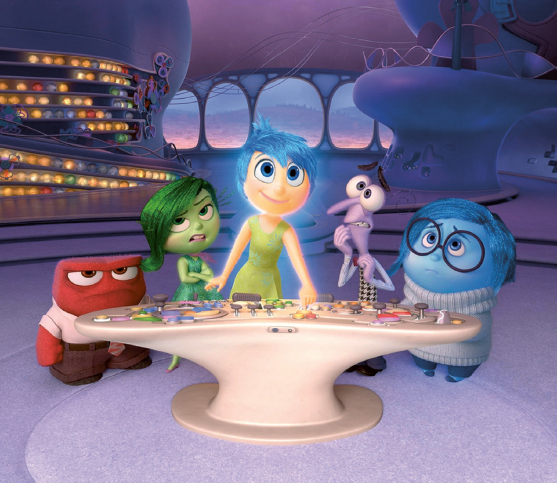
INSIDE OUT (2015) IS A FILM ABOUT THE MIND OF A YOUNG GIRL. HER EMOTIONS ARE CONTROLLED BY 5 CHARACTERS: JOY, SADNESS, ANGER, FEAR AND DISGUST.
Serotonin affects approximately 40 billion brain cells: this includes brain cells involved in mood, sexual desire, appetite, sleep, memory and learning, social behaviour and even temperature regulation in your body. There are, however, no ways to measure it in a living brain, although this may be because any changes might only be evident in a tiny part of the brain. And there is no evidence linking the level of serotonin to depression or any mental illness. It can be measured in the blood, and there is some evidence of it being lower in the blood of depressed people, but that might be due to the depressed state rather than the drop causing depression. The bottom line is that SSRIs supposedly work by increasing serotonin levels in the brain, but exactly how they work is not fully understood. Another one of the big mysteries of SSRIs is why they can take a month or more to have an effect. Nor is there evidence that exercise – a proven way to treat depression – boosts serotonin levels. The FDA carried out a systematic review of clinical trials, which revealed that antidepressants stave off depression by 52 per cent overall,16 and a major study revealed that in 522 trials anti-depressants were more efficacious than placebo.17
Currently, brain chemistry and functioning let us down when it comes to a physical explanation for depression. Another key area where there are ideas but no clear conclusions is the question of what causes depression in the first place. Again, the comparison with other diseases is stark. We have a much better idea what causes, say, infectious diseases, which are caused by bacteria or viruses, or Type 1 diabetes, which is caused by lack of insulin, or cancer, which is caused by mutations in genes that control the growth of cells or that prevent tumours from growing. Treatment can then be deployed based on this knowledge. But for depression, the causes can be many and varied.18 Clearly, life events play a major role. These include bereavement, financial difficulties, unemployment, a medical diagnosis, bullying, rape, social isolation, romantic disasters, major injury or even success, as mentioned above. These events trigger a sense of loss – be it the loss of a loved one, or our health, or our freedom. Or they make us worry, which gives rise to rumination, which then leads to a depressive episode. Can it be that all these things lead to an imbalance of neurochemicals in our brains that can then be fixed with a drug? This seems unlikely, and yet that is the best we’ve got as an explanation. For many, the depression eases with time, or we learn to live with the feelings we have – our brain adapts to the new circumstances. But many people need treatment and, most important, should be encouraged to get help. Even though we might not know the exact cause, and even though we might not be able to measure things in the brain or body of someone who is suffering, everyone must be encouraged to seek help, since depression, like any other disease, can be helped.

A SCENE FROM THE HANGOVER (2009), DIRECTED BY TODD PHILLIPS.
Although many different life events can cause depression, adversity in childhood, particularly physical or sexual abuse, is a major predictor of depression later in life. Drugs, including alcohol, sedatives and stimulants such as cocaine or amphetamines, can also either exacerbate or cause depression. These drugs affect the brain, and during withdrawal, it is thought that the brain compensates for being disturbed, and this compensation can somehow lead to depression. Perhaps the drug lowers neurotransmitters linked to anxiety, and during withdrawal from the drug, these neurotransmitters bounce back but overshoot, causing the anxiety. During a hangover, when the alcohol wears off, the euphoria is over and the parts of your brain that were switched off by the alcohol (which is thought to be those parts of the brain that provoke feelings of anxiety) become more active as they rebound, so you feel way more anxious and depressed until everything returns to normal. These events even have a name – they are called ‘the glutamate rebound’.19 Glutamate is an excitatory neurotransmitter, which means it stimulates the brain, and alcohol is thought to lower the level of it (which is one reason why anxiety eases when we drink), but glutamate then bounces back to a higher level, giving rise to anxiety. There is even a term for the anxiety that comes with a hangover: ‘hangxiety’. People who are shyer and more introverted have been shown to have much higher levels of anxiety during a hangover than the people who weren’t shy to begin with. Overall, alcohol can have a profound effect on people prone to depression. Alcoholics are also prone to depression. Life events can cause people to become alcoholics, and then the alcohol leads to an exacerbation in the underlying depression.
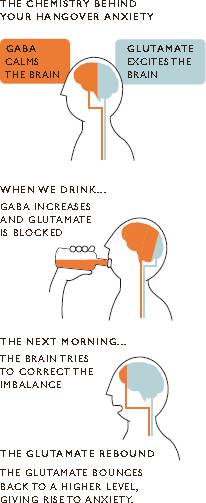
ALCOHOL IS THOUGHT TO BOOST THE CALMING NEUROTRANSMITTER GABA WHILE SUPPRESSING THE EXCITATORY NEUROTRANSMITTER GLUTAMATE. THIS IMPROVES YOUR MOOD. AFTER A NIGHT ON THE LASH, HOWEVER, THE BRAIN FIGHTS BACK. GLUTAMATE GOES BACK UP, BUT OVERSHOOTS. RESULT: HANGXIETY, ONE OF THE SYMPTOMS OF A HANGOVER, THE MEDICAL TERM FOR WHICH IS VEISALGIA (WHICH MIGHT COME IN USEFUL IF YOU WANT TO GIVE YOUR BOSS THE REASON WHY YOU CAN’T COME TO WORK).
The genetic basis for depression has also been an area of intense investigation. Family and twin studies have revealed that almost 40 per cent of the risk of becoming depressed is down to our genes.20 This is a high percentage when it comes to implicating genetics in a given condition and indicates that if a near relative has had depression, there’s a reasonable chance that you will too. The overall risk of depression in the general population is about one in four, but if your parents have been depressed that risk jumps threefold, with grandchildren of depressed grandparents also being at an increased risk.21 Children of depressed parents have a 75 per cent chance of being depressed. Having a sibling with depression increases your chance two- or threefold. Identical twins, who share 100 per cent of their DNA, are at a higher risk of developing depression than fraternal twins, who only share 50 per cent. This is important as the reasonable assumption is that both sets of twins will be raised in the same environment. If it were purely environmental, then both identical and fraternal twins would have the same risk of depression, which is not the case. However, depressed parents or siblings might create an environment where depression is more likely, and so the environment will also have an influence. Depression is thus likely to be the result of a complex interplay between genes and environment.
The genetics behind depression is complex and it’s difficult to pinpoint which genes are involved. In 2019, 102 variants in genes that increase the risk of depression were identified.22 Genes like 5-HTTLPR, CRHR1 and BDNF have variants that have been linked to the risk of depression, which means if you carry those particular variants, your risk is higher than someone with a different variant. Given their function, the link is somewhat plausible: 5-HTTLPR is known to control serotonin (which SSRIs boost), CRHR1 has been linked to how the body responds to stress (a cause of depression) and BDNF helps neurons grow. One theory of depression posits that an impairment in neuronal growth might be a cause. Neurons die in our brains all the time, and recent studies suggest that they are replaced. A defect in this replacement might be a reason for depression but these genetic associations have proven difficult to confirm in subsequent studies, and so the jury is still out.
Another study may be more robust: in this major study involving multiple centres around the world, out of 20,000 genes, 44 have been identified that increase the risk of depression.23 This number is important but equally presents a challenge, because it is highly unlikely that there will be a single gene variant. Depression will involve multiple genes, each contributing a small amount to the overall risk. Several of the genes code for proteins involved in brain function, and so it’s no surprise that they might be involved in depression; this provides yet more evidence that the roots of depression lie in the mind. It is likely that one day it will be a combination of genetic variants that will be used to predict the risk of depression and even point to possible treatments. It will, however, most likely be a combination of carrying certain variants of genes in a particular environment or in someone who has suffered in various ways that will lead to depression.
Why college students are at a higher risk of depression has also been the focus of much analysis. Risk factors are thought to include pressures linked to social media, personal and family expectations over academic success, and poor sleep quality. One study has found that almost 50 per cent of college students indicated that they woke up during the night to answer text messages.24
Treatments for depression vary widely. In the UK, the recommendation is that antidepressants, with SSRIs being the main option, should not be used initially, especially in the case of mild depression, because the risk– benefit ratio is poor (risk in this case meaning side effects). SSRIs should be used for moderate or severe depression and should be continued for at least six months. Apart from medication, doctors can recommend psychotherapy, exercise (which has been shown to be as effective as medication or talk therapy) and when the depression is severe and not responding to other approaches, electroconvulsive therapy (ECT). This involves electrocuting the brain and has been shown to bring remarkable results in some patients, with a response rate of 50 per cent in patients who don’t respond to other treatments. It is especially useful in the severely depressed, but exactly how it works is unclear. Cognitive behavioural therapy (CBT) has the most evidence for being efficacious.25 It consists of teaching patients to challenge their thinking patterns and also change counterproductive behaviour, and it appears to be especially effective at preventing relapses. The programmes that best prevent depression need more than eight sessions, each lasting between 60 and 90 minutes. A Dutch programme, known as the ‘Coping with Depression’ course, has seen notable success, reducing risk by 38 per cent.26
Pioneered by Sigmund Freud, psychoanalysis is an approach that tries to resolve unconscious mental conflicts, which are revealed upon questioning by the therapist. It must be stated that there is no evidence for any of the ideas that Freud came up with about the mind. We can’t detect the unconscious mind or confirm scientifically any of his theories about the mind, in which he famously came up with the idea of the id and the ego. (Freud is also alleged to have said that the Irish are the only people who are impervious to psychoanalysis.) There is evidence that psychotherapy is beneficial, at least as beneficial as medication for mild to moderate depression. Psychotherapy and cognitive behavioural therapy may simply be another example of the placebo effect in action.
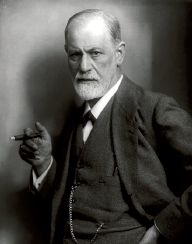
SIGMUND FREUD (1856–1939). THE DADDY OF THEM ALL WHEN IT COMES TO PSYCHOANALYSTS. NO SCIENTIFIC BASIS FOR HIS THEORIES HAS BEEN FOUND.
On average, a depressive episode will last three months, so there is always a light at the end of the tunnel.27 Yet there is a risk of recurrence, with 80 per cent of people having at least one more episode in their lifetime, with a lifetime average of four episodes. Around 15 per cent of people suffer chronic recurrence. The recommendation is for patients to continue on antidepressants for four to six months after recovery, as this will reduce the chance of relapse by 70 per cent. Sadly, depression is a risk factor for suicide. Up to 60 per cent of people who die by suicide have had a mood disorder but the overall risk of a depressed person committing suicide is quite low, standing at a 2 per cent risk for those ever treated in an outpatient setting. This rises to 4 per cent for those treated as an inpatient, indicating that the risk is related to severity of depression. There are also gender differences, with about 7 per cent of men with a lifetime history of depression dying by suicide, compared to 1 per cent for women (although suicide attempts are more common in women).28 The suicide rate in the general population stands at about 0.01 per cent.29 Interestingly, the rate of suicide is dropping in most countries, with notable decreases in Russia where between 2000 and 2012 it fell by 44 per cent, in the UK by 21 per cent and in Ireland by 38 per cent.30 One country bucks this trend: in the US it increased by 24 per cent in that period, and it’s not fully known why.
An important question is whether the incidence of depression is on the rise. Several studies are underway into the mental state of so-called millennials – people born in the 1980s and 1990s. Studies indicate that this generation are much better educated than their parents, less hedonistic, better behaved – but also lonelier than previous generations; and this in a world that has never been more connected, what with smartphones and social media. The eminent Pew Research Center carried out a poll of 920 Americans aged 13–17 about problems among their peers.31 They are far less concerned about things like their parents finding out that they drink alcohol, or unwanted pregnancy. Instead, 70 per cent of respondents said anxiety and depression were the most important issues among their peers. Fifty per cent also said that fear of drug addiction was a major concern. Issues that are worrying teens include fear of letting down their parents (since parents are more connected than ever to their children) and also the pressures of social media.
Where are we likely to see progress when it comes to treating depression in the future? An interesting development concerns the emerging role of the immune system as a cause of depression. At first, this might seem surprising – your immune system is all about fighting infection by using white blood cells that home in on and attack bacteria, viruses and parasites. Why would such a beneficial system make you depressed?
This idea began with the realisation that when you have a cold or a flu you are inclined to show the symptoms of depression: these include lack of appetite, social withdrawal (you crawl under the duvet) and a low feeling (only exacerbated by watching daytime TV). It’s likely that this response is an evolved one: it allows your body to recuperate but also removes you from active contact with the rest of the herd so that you don’t spread the infection to others and wipe out the whole community. This response goes by the name of ‘sickness behaviour’ and is common in infection but also in inflammatory diseases such as rheumatoid arthritis or Crohn’s disease. For unknown reasons these diseases of the immune system attack your own tissues, which in the case of arthritis means your joints and in Crohn’s disease means your digestive system. So what is going on here? The sickness symptoms are being driven by immune molecules called cytokines. These are the wake-up call of the immune system, mobilising the troops to fight the invader, but some of them cause sickness behaviour. A good example are cytokines called interferons, molecules that are made in response to viral infections. Interferons are good at promoting the killing of viruses and are sometimes used to treat patients with viral infections, such as hepatitis C. But when doctors gave patients interferons, they noticed that the patients were inclined to become depressed. And then doctors working on rheumatoid arthritis noticed the ‘Remicade High’. Remicade is a treatment for rheumatoid arthritis that works by blocking another cytokine, called TNF. This cytokine is important in arthritis as it causes many of the symptoms of that disease, including joint pain and destruction. For some patients, blocking TNF relieves these symptoms. But doctors noticed that patients not only rapidly felt better on the treatment – they also had more energy, their ‘brain fog’ cleared and their mood lifted. Again, this indicated that TNF was responsible for these symptoms. Doctors used to think that the depression that goes along with diseases like arthritis was because of sore joints and an inability to do things that gave pleasure before, like taking exercise. But it turns out they were wrong: TNF also has effects in the brain and promotes sickness behaviour. The depression that is a feature of infections, which is designed to stop the infection spreading and makes sure you rest, goes rogue in inflammatory diseases, because in both cases cytokines are being made. All of this strongly points to cytokines as a new target to go after in fighting depression.

Could ‘regular’ depression, which happens in people without infections or inflammatory diseases, also involve cytokines? The trigger here might actually be stress, which is a major risk factor for depression. It turns out that stress causes inflammation in our bodies too, just like an infection or injury. This provides another missing link – stress will elevate certain cytokines that then cause depression. The link between stress and cytokines is likely to be due to evolution, as the stress response evolved in part to respond to danger. During a moment of danger (e.g. an encounter with a tiger) you might get hurt, so your immune system is at the ready to fight any infection that might come with the injury and then repair you. The problem is, the stressors we now have aren’t necessarily tigers, but instead are the threat from your angry boss or argumentative friend or annoyed spouse. That stress is then interpreted as a cytokine response, and that might in turn lead to depression.
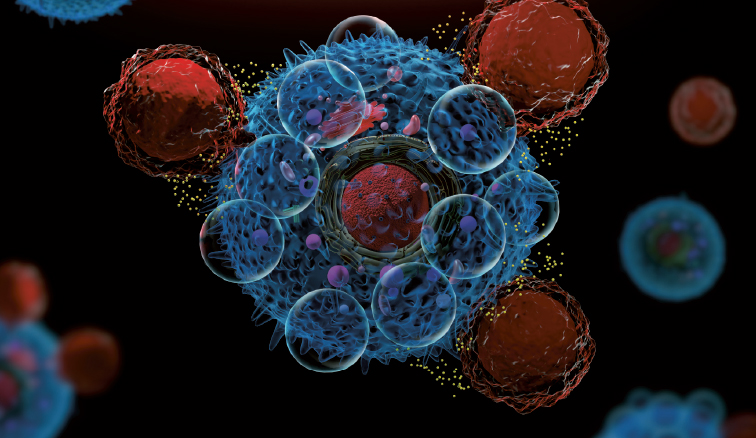
CYTOKINES (THE SMALL YELLOW DOTS) ARE MESSENGER MOLECULES MADE BY YOUR IMMUNE SYSTEM THAT HELP YOU FIGHT INFECTION. SOME OF THEM, HOWEVER, CAN CAUSE DEPRESSION. THEY MAY BE A NEW TARGET IN THE EFFORT TO DEVELOP BETTER ANTIDEPRESSANTS.
This idea that depression is some kind of inflammation of the mind is creating great excitement, and clinical trials are underway to test how useful cytokine targeting might be. They might give rise to a whole new class of antidepressants based on strong scientific evidence: such drugs would represent the first major advance in the treatment of depression in 30 years. Apart from the prospect of new therapies, work on the link between the immune system and depression is providing new insights into what is going wrong. Of the 44 genes associated with risk of depression, several are in the immune system, providing further evidence for an immune component and further justifying the targeting of immune factors to treat depression. Immune system proteins might also prove useful in the diagnosis of depression. In one study, patients with major depressive disorder who have high suicidal ideation had higher levels of certain inflammatory proteins than those with low suicidal ideation.32 These kinds of studies might give rise to tests to identify depressed people who are especially at risk of suicide, which could prove to have major benefits by preventing the tragedy of suicide.
Another area generating great interest is the idea that gut bacteria are a cause of depression. It’s been shown that in people with major depressive disorder, the bacteria in their gut differs from that in people without depression, with several species missing. When the mix of bacteria that are there are transplanted into rats, the rats become depressed.33 The missing bacteria might be a new treatment for depression.
Two other new approaches are also of interest and come from another most unexpected place: recreational drugs. The drug ketamine is a powerful tranquiliser, used clinically on farm animals requiring surgery. Its secondary use, at lower doses, is as a party drug, creating what is known as ‘a dissociative state’ in the minds of those who take it. But evidence also indicates that it could relieve the symptoms of depression and clinical trials confirm this.34 What makes it different to SSRIs is that it acts rapidly – patients don’t have to wait a month to see any benefit. How it works is not known but it has been called the single most important advance in treating depression in 50 years.35 Ketamine was recently approved as an antidepressant by the FDA for patients not responding to other antidepressants. Let’s see how useful it will be.
Psilocybin is another drug which might have anti-depressant properties. Guess what this is the active ingredient in? Magic mushrooms. These give people who use them psychedelic experiences, similar to LSD. However, low-dose psilocybin has also been shown to relieve depression and it is currently being extensively studied.36 It may provide doctors with another weapon to use in their efforts to come up with a treatment for patients who are suffering. People with depression shouldn’t take magic mushrooms outside of a clinical setting as the amount of psilocybin will vary from mushroom to mushroom, and they may end up exacerbating their condition. But psilocybin could provide doctors with another weapon to use in their efforts to come up with a treatment for patients who are suffering.
Given the increasing incidence of depression, especially among the young, and given how it robs people of the joy of life, the disease needs our closest attention. We’ve only got one life, and we must do everything we can to live it to the full and help those who are struggling. There are, in fact, a range of things that lift people’s moods and help stave off the dreaded black dog, as Churchill used to call it. We’re told that in order to be happy we actually need to make an effort. This could be because our brains are inclined to default into worry and anxiety as a protective mechanism against harm. We’re also inclined to overthink things, again presumably as a survival mechanism.
But we are not powerless. We can fight these tendencies. Some are obvious, such as trying to maintain a positive outlook, hanging out with positive people and being part of a positive community. All of these help us not to descend into a slough of despond. Equally, regular exercise and enjoying the natural world have all been shown to bring benefits. In one enormous study involving 1.2 million people, on average people reported 3.4 days per month of poor mental health.37 This was reduced by 1.5 days in those who took regular exercise. Having a pet has also been shown to be remarkably beneficial in improving our mood. Pets give us a focus, get us to take exercise and are an opportunity to socialise with others. Interacting with your pet dog has been shown to boost oxytocin, the love hormone, in both the dog and the owner. Volunteering has also been shown to be remarkably effective, as has having a job that gives us meaning (which usually means a job that helps our fellow human beings). Ultimately, there are things we can do either to stave off depression or to stop it happening again. The bottom line: by following the guidelines above and with help from your doctor, you can beat depression. You’re not here to live in pain and fear. Depression, be gone!