

CHAPTER 8
–
‘If you’re low-income in the United States, you have a higher chance of going to jail than you do of getting a four-year degree. And that doesn’t seem entirely fair.’
–
Bill Gates
IN APRIL 2019 I was invited into Mountjoy Prison in Dublin, one of Ireland’s largest prisons, to give a talk to some prisoners who had read and enjoyed my book Humanology. The day before I was due to go in, Anne Keenan, the teacher who had invited me, reminded me not to bring my mobile phone or laptop as they would be kept by security on the way in. She wrote: Hope you’re not scared coming in to visit us! I emailed back: I am now! I spent three hours in the jail, talking to around a hundred prisoners about the origin of life, how humans evolved, what makes us human and where we might be going as a species. I told them that the earth was 4.5 billion years old and said that this was a very long time. A prisoner shouted out ‘Not as long as three years in here!’ Of all the things I did regarding Humanology, this was the most vivid and rewarding. I had a tremendous time, was heckled constantly and got a tiny sense of what it’s like to be in prison.
On my way out I asked the teacher what the men who had come to my talk were in jail for. She didn’t specify but said something interesting. She said some of them had committed serious crimes but that the vast majority were ‘just like you’. This struck a chord. Why was it me standing up there giving a talk to them about my book, as opposed to one of them standing in front of me, sitting there as a prisoner? Why do some of us commit crime and some of us do not? And what can we do about crime in our society? As discussed in the last chapter, will making drugs legal and controlled hugely decrease the crime rate? Will we ever live in a world free of crime?
People are sent to jail because they commit a crime and are found guilty in a court of law. Crime is defined as an unlawful act punishable by a state or other authority. Definitions are important when it comes to the law. Something is a crime if designated as such by the law. The term ‘criminal offence’ is also used, which is an act that is harmful, either to an individual but also a community, society or the state itself. The idea of having laws to govern society goes back a long time. It most likely began when tribes grew in size and laws were needed to regulate behaviour. The history of law is closely linked to the development of civilisation. Ancient Egyptians had a civil code, divided into 12 books. Sumerians were the first to systematically write down laws over 4,000 years ago. The Old Testament dates back to 1280 BC and was full of laws, the most important being the ten commandments, which covered the main crimes at that time. A famous joke goes: Moses was summoned by God to receive the laws. He was gone for some time and finally arrived back, carrying two large tablets of stone on which were carved the ten commandments. He said to his people: ‘I have good news and bad news. The good news is, I got Him down to ten. The bad news is … adultery is still in.’
All religions describe sin, which is a crime against divine law – a law provided by whichever god you believe in to make sure humans behave themselves. Experts on the origin of religion have suggested that when tribes were small (say 100 people or fewer), the leader (or elder) could keep control of things. Once the tribe grew in number, however, an all-seeing supernatural being (perhaps originally consisting of elders who had died) was needed to keep an eye on you and make sure you behaved. This might prevent you from committing a crime. It is possible that crime becomes a feature of society when it reaches a certain number of people. You might be more likely to commit a crime against someone you don’t know, and laws may in part have been configured to prevent this. But if you did commit a crime, then the law would come in to play. Many civilisations provide laws and codes of conduct. Apart from the ten commandments, another well-known list is the seven deadly sins. This became part of Christian teaching and defined behaviours or habits that might directly give rise to crime or sin. The seven deadly sins are pride, greed, lust, envy, gluttony, wrath and sloth. Any one of these might make you commit a crime, although I’m not quite sure how sloth fits in – surely you are too lazy to do much? Maybe you’re too lazy to pay your tax return, which constitutes a crime.

AN ENGRAVING FROM 1879 DEPICTING THE SEVEN ‘CAPITAL’ SINS. FROM THE TOP MOVING RIGHT: PRIDE, GREED, LUST, ENVY, GLUTTONY, WRATH AND SLOTH. ENVY IS DEPICTED AS WRITING PAMPHLETS – SOCIAL MEDIA TROLLS, BE WARNED. YOU ARE SINNING!
Laws are made to ensure people behave themselves in society. If they step out of line and break the law, punishment must be meted out. Laws fall under different categories including offence against the person, violent offences, sexual offences, offences against property, offences against the state, forgery, use of drugs designated as illegal, public order offences and financial offences. Some crimes involve actual harm to others (such as assault), while others are about compliance to decrease the risk of harming others (such as traffic offences). For someone to be found guilty of a crime, there must be either an admission of guilt or presentation of evidence. This is where science comes in: science is all about providing evidence, and this also applies to evidence that a crime has been committed. Forensics involves scientific tests or techniques used for crime detection. Sometimes a decision on whether someone is guilty has to be made ‘beyond reasonable doubt’. Forensic evidence can prove problematic, which happened in the case of the Birmingham Six. In 1975 these six Irishmen were each sentenced to life imprisonment following false convictions for bombing two public houses in Birmingham, which killed 21 people and injured 220 others. The true perpetrators were likely to be members of the Provisional IRA, the Irish paramilitary organisation that used terrorism to fight British rule in Northern Ireland. During the trial, scientist Frank Skuse presented forensic evidence that two of the men had handled explosives. In a subsequent appeal, new scientific evidence was presented, which placed ‘grave doubt on Dr Skuse’s evidence’; the chemicals detected on the hands of the men could have been from other sources, such as playing cards.1 This was part of the case that led to the men being released after 16 years in jail.
Some countries have laws built on religious beliefs. Abortion was illegal in Ireland because it went against Catholic teaching. A major function of the law is to maintain social order, which basically means protecting others from harm or lack of consideration. A government may also impose laws as a means of social control. If a government wants to force people to behave in a certain way, it will pass a law to make this happen. Once cars were invented, for example, a whole set of laws were needed to regulate behaviour. In 2004, Ireland, to the rest of the world’s surprise, passed a law banning smoking in the workplace: the goal was to protect people from second-hand smoke. Given Ireland’s well-known pub culture, many were amazed that this would stick, and many publicans were up in arms over the ban. To make sure people complied, a fine of €3,000 was set for those who transgressed. Fines exploit the fact that many worry about their pocket more than they do about harming others. There were exemptions, notably in prisons, but only in a prisoner’s cell or in the exercise yard, which were deemed similar to the prisoner’s home – the ban doesn’t extend to smoking in the home. A total ban on smoking in prisons might have created tension in an already tense environment. This has been an extremely successful law, with only a handful of convictions and fines each year. It is seen as a great success in terms of health,2 with people being protected from the damaging effects of passive smoking – almost as dangerous as smoking itself.
This brings us to the question of why people defy the law and commit a crime. If someone is brought up to be able to tell the difference between right and wrong, why would they defy this and commit a crime? Whether humans are born with a moral compass or whether they learn this from their parents is still a matter of debate among psychologists and philosophers. Current evidence suggests that babies are in fact born with an innate sense of morality, which parents and society can help develop. Scientists at Yale University performed a recent study that gave a fascinating insight into this question.3 They studied babies at 5 months of age to see how much they could appreciate the difference between good and bad behaviour. They began with a puppet show. In the show, a grey cat is seen trying to open a plastic box. The cat tries and tries but fails. A rabbit then appears in a green T-shirt and helps the cat open the box. The scene is repeated, but then a rabbit comes along in an orange T-shirt and closes the box and runs off. The green rabbit is helpful and the orange rabbit is mean. The baby is then presented with the two rabbits from the show. A staff member who doesn’t know which rabbit is mean or nice presents the rabbits to the baby at the same time. Just under 75 per cent of the babies prefer the good rabbit. It’s pretty amazing that a five-month old can tell the good rabbit from the mean one. Babies seem to have an inbuilt sense of justice.
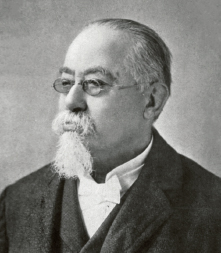
CESARE LOMBROSO (1835–1909), THE ITALIAN CRIMINOLOGIST WHO CAME UP WITH THE TERM ‘ANTHROPOLOGICAL DETERMINISM’, THE COINING OF WHICH SHOULD HAVE BEEN A CRIME IN ITSELF.
In ancient times, the explanation for why someone would commit a crime was known as demonology: this is the idea that criminal behaviour is the result of the person being possessed in some way and obviously has its origins in superstition and religion. The first scientific attempt to explain why someone might commit a crime was in 1876, when Cesare Lombroso, an Italian criminologist, came up with the theory of ‘anthropological determinism’.4 (It should be a crime to come up with long words to explain something to boast how smart you are. I would never do that because I suffer from sesquipedalophobia.) This stated that criminal behaviour was inherited and that there were ‘born criminals’ who could be identified from physical features alone. According to Lombroso, these included large jaws, low sloping foreheads, handle-shaped ears, a hawk-like nose and long arms – and that was just the men. Lombroso also studied female criminals and concluded that they showed fewer signs of ‘degeneration’ because they had ‘evolved less than men due to the inactive nature of their lives’. He was of the view that women weren’t intelligent enough to be criminals. Some man, our Lombroso.

CRIMINOLOGIST CESARE LOMBROSO WAS OF THE VIEW THAT THE SHAPE OF SOMEONE’S FACE CORRELATED WITH DIFFERENT CRIMINAL TENDENCIES. CAN YOU GUESS WHAT HEINOUS CRIMES EACH OF THESE CRIMINALS COMMITTED? ONE IS OBVIOUS: HAVING A MULLET (GUY ON THE BOTTOM RIGHT).
Inevitably, Sigmund Freud also weighed in with his opinion. He said that deviant behaviour (meaning deviation away from social norms and the law) came from an excessive feeling of guilt as a result of an overdeveloped superego.5 He argued that criminals carry large amounts of guilt and commit crimes in order to be punished. Freud was also of the view that humans respond to ‘the pleasure principle’.6 They need to get pleasure from things like food and sex, and if they can’t get them, they will commit crimes to obtain them. He was of the view that these urges can be controlled in childhood, and that if such instruction is missing because of poor parenting, the child would grow up into being less able to control these natural urges, and will be more likely to commit crimes to satisfy the needs of the pleasure principle.
Lots of sociologists, psychologists and neuroscientists have since joined the debate on why some people commit crimes and others don’t. Sadly, the science behind what they conclude is often badly presented or missing. The area has also been dogged with bias – as we can see in the conclusions of Lombroso, who was clearly a misogynist – and racism. They have, however, managed to clearly define the problem. It is now widely accepted that the reason why someone commits a crime is rarely down to one thing, but is rather a combination of factors, making it difficult to unravel.
The statistics of who is in prison for what crime can be revealing when it comes to trying to understand why people commit crimes in the first place. In 2019 there were 3,996 people in jail in Ireland. This gives a rate of imprisonment of 81 per 100,000. This is pretty average. The USA has one of the highest rates, at over 500 per 100,000.7 It costs the Irish state an average of €73,802 per year per prisoner. Prisoners serving sentences of fewer than 12 months amounted to 3,559. The majority of people in prison in Ireland have never sat a state examination, and over 50 per cent left school before the age of 15. From 1996 to 2017 the numbers in custody rose by 68 per cent. The average number of females per annum was 165, which fits with international norms. Prisoners are 23 times more likely to come from a deprived area than an affluent one. Around 20 per cent cannot read or write and 30 per cent can only sign their names.8
From these kinds of numbers, trends begin to emerge as to who is likely to commit a crime. The first thing that stands out is that a lot more men commit crimes than women. There may be several reasons for this, including social or cultural factors, crimes not being reported and biological factors, such as higher testosterone, which might lead to aggression. The US has some of the most extensive analysis of the gender issue in crime. As many as 14 times more men are in jail in the US than women.9 In 2014, 73 per cent of people arrested in the US were men, with 80.4 per cent arrests for violent crime and 62.9 per cent arrests for property crime being men.10 In Ireland, most of the women in jail are there for petty crime; 95 per cent of them are incarcerated for shoplifting or handling stolen goods. As well as committing a crime, men are also much more likely to be victims of crime. In an international 2013 study,11 78 per cent of homicide victims were male with the perpetrator being male in 96 per cent of cases. In Ireland in 2018, 77 per cent of homicide and 59 per cent of assault victims were male, but the majority of victims of sexual violence (82 per cent) were women.
The first clue as to why men commit more crimes than females begins in childhood. Boys are much more likely to be delinquent than girls.12 Studies have shown that overall girls are less likely than boys to have learning difficulties and behavioural problems in childhood.13 These may set boys on a different life course when compared to girls. ‘Life-course-persistent’ antisocial behaviour originates in early life and is strongly exacerbated by a high-risk social background, which mainly constitutes a lack of parental support. Testosterone may play a part in making men more aggressive: levels in prisoners were highest in the most violent criminals.14 Testosterone will drive males to be more competitive, obtain more resources and seek a mate. This, in turn, can lead to crime, including theft and violence; crime might be an extreme form of adaptation whereby a man commits a crime to obtain resources and status. Inter-male competition for resources and a mate may also play a role here. There is a correlation between delinquency and fathering of a child at a younger age.15 When it comes to aggression, many studies show that men are much more likely to use verbal and physical aggression. Interestingly, an analysis comprising 122 separate studies also found that men are much more likely to be cyberbullies than women.16
A final reason for the crime gender gap might be economic. The high crime rate among young men might in part be due to the fact that adverse labour-market opportunities lead to men working in low-paid jobs and as a result, these young men may be swayed by opportunities to commit economically advantageous crimes.17 Several studies have shown that as the rate of unemployment increases, so does the crime rate – this opportunism may apply to women as well.
We’re still left with the question as to why one person, be they a man or a woman, will commit a crime and another not. As with most complex traits in humans, the answer will lie somewhere on the continuum between nature and nurture. In terms of nurture, several things stand out from multiple studies that lead to a person ultimately becoming a criminal.18 Fear of punishment or rejection keeps most of us from bad behaviour. During childhood, most people take on board society’s standard of conduct and will feel guilt, shame and low self-esteem if they commit a crime. For those who commit crimes, several environmental features stand out. The first is antisocial values, also known as criminal thinking. This can happen because of peer pressure, which is itself an important risk factor for someone committing a crime. Belonging to a gang is considered a predicator of future criminal behaviour. Teenagers in particular are prone to peer pressure. Witnessing violence as a child can also have a desensitising effect. A key risk factor is a dysfunctional family, which can mean neglect or an inability to express emotions or communicate effectively in the family environment or at its worse physical or sexual abuse. Someone who has been rejected by their family can find great succour in a criminal gang. These are all environmental factors that can lead to criminal behaviour. But as stated above, it is highly likely that the environment will combine with underlying genetics to give rise to criminal behaviour.

RONALD ‘RONNIE’ KRAY (1933–1995) AND REGINALD ‘REGGIE’ KRAY (1933–2000) WERE IDENTICAL TWIN BROTHERS FROM LONDON’S EAST END. WITH THEIR GANG (KNOWN AS ‘THE FIRM’) THEY WERE INVOLVED IN ARMED ROBBERY, ARSON, PROTECTION RACKETS AND MURDER IN THE 1950S AND 1960S. THEY WERE GIVEN LIFE SENTENCES IN 1969. (ACCORDING TO MONTY PYTHON, HARRY ‘SNAPPER’ ORGANS EVENTUALLY CAUGHT THEM.)
This leads to the question as to what the genetic basis, if any, to criminal behaviour might be? Are people born under a bad sign? This has been the subject of much analysis,19 including major research into twins. There are studies comparing the criminal behaviour of identical and fraternal twins. Identical twins will have the exact same genetic make-up, whereas fraternal twins are like regular siblings. If the crime rate between identical twins is the same as between fraternal twins, then it’s likely that environmental factors are important, since both sets of twins will have grown up in highly similar environments. If, however, the crime rate is higher between identical twins then fraternal twins, then that would suggest genetics plays a bigger role. Even better if identical twins are separated at birth and brought up in a different environment. If they end up having the same criminal tendencies, then again genetics will trump environment as a causative factor. Overall, the current bottom line is that twin studies support the notion that genetics is an important determining factor in who will become a criminal. This is similar to the risk of devloping an addiction, as we discovered in Chapter 6.
What does the evidence look like? In a Danish study of 3,586 twin pairs (which is a large number for these kinds of studies and so probably gives an accurate result), there was a 52 per cent concordance between identical twins in terms of being a criminal, whereas in fraternal twins this only stood at 22 per cent.20 The only issue with this and other studies is the possibility that identical twins share an environment more closely than fraternal twins for whatever reason. Overall, though, twin studies support the notion of a strong genetic component in criminality. Another study looked at 31 sets of identical twins and one set of triplets who were all raised apart.21 Again, evidence was found for concordance between identical twins raised apart and criminality.
Another approach has been to examine children who are adopted. These studies are somewhat more feasible given the rate of adoption in many countries. The first study of this kind was carried out in Iowa and involved 52 adoptees who had been born to women in prison.22 A group of control adoptees whose mothers weren’t in prison, and who were matched for age, sex, race and time of adoption, were also studied. Seven of the 52 adoptees had a criminal record as adults, whereas only one of the control adoptees had. This further indicated a strong genetic influence. In a Swedish study, 2,324 Swedish adoptees were studied and checked for a criminal record.23 The study found that there were twice as many criminal sons of criminal fathers than criminal sons of non-criminal fathers, which again pointed to genetics. In a Danish study, 14,427 Danish adoptees were analysed.24 They found that children who had a parent with a criminal record, and who were adopted into non-crime families, had a higher rate of being a criminal themselves. These independent studies allow us to conclude that criminal behaviour has a strong genetic component. The next question then is what the genes that give people a higher risk of being a criminal might be, and what might these genetic variants be doing to increase that risk?
The strongest evidence for a genetic link to criminal behaviour has been found in a gene encoding an enzyme called Monoamine Oxidase-A (MAO-A).25 This enzyme is a key modulator of normal brain function. It controls the levels of three important neurotransmitters in the brain: dopamine, norepinephrine and serotonin (as we saw in previous chapters). These neurotransmitters have various functions, with dopamine being especially important for what is termed reward-motivated behaviour. The anticipation of most types of rewards increases dopamine levels in the brain and this makes us feel good. The main role of norepinephrine is to increase arousal and alertness. Serotonin in popular culture is seen as the happy neurotransmitter, though its functions are more complex, being involved in reward sensations, memory and learning. It’s the job of MAO-A to keep this stew of neurotransmitters in check.
The first indication that something might be wrong with MAO-A in criminal behaviour was in a study of a large Dutch family who had a history of impulsive aggression and antisocial behaviour.26 They carried a mutation in the MAO-A gene, which produced a form of MAO-A with lower activity than the normal form. Subsequent studies confirmed that having a less active form of MAO-A made people hypersensitive, and so were affected more by negative experiences and would act aggressively in defence. More importantly, those with the less active MAO-A who had also been abused as children were much more likely to commit crimes.27 Other genes involved in controlling the same neurotransmitters as MAO-A have also been implicated in aggression and criminal behaviour, but MAO-A stands out because a large number of independent studies has supported its role with some truly excellent science performed in this area. The current challenge is to explain exactly why people with less active MAO-A have a propensity to be more aggressive and to commit more crimes.

THE ACTIVITY OF A BRAIN ENZYME CALLED MONOAMINE OXIDASE-A HAS BEEN LINKED TO IMPULSIVE AGGRESSION AND ANTISOCIAL BEHAVIOUR. LOW LEVELS COMBINED WITH ADVERSE LIFE EVENTS IN CHILDHOOD IS A STRONG PREDICTOR OF THESE BEHAVIOURS. MIGHT CRIMINAL TENDENCIES BE WRITTEN IN OUR GENES?
Let’s take a closer look at the evidence. The first thing that needed to be established to make the science robust was to actually define what is called the ‘phenotype’. In this context, the phenotype is defined as ‘the set of observable characteristics of an individual resulting from the interaction of its genotype [i.e. the genetic makeup] with the environment’. It means that the genetics of a person interacts with the environment that person is in to give rise to some characteristic. In this case, the characteristic that is used is aggression in response to an environmental trigger. It could be someone cutting into your lane if you’re driving and you then respond aggressively. Aggressive behaviour is an important response to measure as it’s easy to observe. It is also important to study, because of the devastating effects aggression has on society. For example, each year in the US, there are over five million incidents of non-fatal violent crime, costing over $200 billion, which include direct costs such as legal fees, medical expenses and incarceration costs. In Ireland in 2018 there were 19,995 non-fatal assaults.28 Current treatments for pathological aggression are also limited, involving antidepressant medication and cognitive/behavioural therapy.
Studies into the aggressive phenotype start by classifying aggressive behaviour. There are two main types: proactive and reactive. Proactive is initiated by the offender and is directed towards a positive outcome for the aggressor, which could be dominance or theft. Psychologically, proactive aggression has been linked to what are called ‘callous-unemotional traits’, which include a lack of empathy and remorse. Reactive aggression involves an uncontrolled or exaggerated response to a perceived provocation or threat. People who react aggressively to a situation are said to exhibit ‘hostile attribution bias’, whereby they perceive provocation or threat to a situation that isn’t especially threatening. It is common in people who have been maltreated as children.
As mentioned above, the first indication that something might be going on in the MAO-A gene was the Dutch family who had a mutation in the MAO-A gene. The men with this mutation were characterised by abnormal levels of disruptive, violent outbursts, often triggered by frustration, anger or fear. This in turn led to criminal behaviour, which in the family in question included attempted murder, rape and arson. Scientists noted other traits in the affected men, which included intellectual disability, sleep disturbance and a strange feature involving unusual hand movements. This finding was important for biological criminology and led to a resurgence in the field: but this particular mutation turned out to be extremely rare, and a second case was only found in 2014, 20 years after the first report.29
However, the spotlight was firmly on the MAO-A gene in criminal behaviour. The next important step came when scientists deleted the MAO-A gene in mice.30 These mice were highly aggressive, similar to the humans who express low levels of MAO-A.31 The scientists also observed higher levels of dopamine, norepinephrine and 5-HT in the brains of the mice. The levels of 5-HT reached a level ten times higher than in normal mice. The behaviour of the mice was interesting. In the first week of life they nodded their heads repeatedly and trembled. This was followed by hyperlocomotion and hyperreactivity and the onset of aggressive biting. The mice also exhibited exaggerated defensive responses to innocuous stimuli. Overall, studies in these mice strongly support the notion that the reason why the Dutch males were aggressive with criminal tendencies was in large part due to the defect in their MAO-A gene.
Other studies on the MAO-A gene have further strengthened its role as being involved in aggression. Numerous variants in the gene have been reported since the Dutch study, and the next best study reported on a version called uVNTR.32 This version also leads to a lot less MAO-A being made. Several studies have shown an association with uVNTR and a tendency towards aggression, hostility and an antisocial personality. People with the variant are also less able to process facial expressions in others. Importantly, they also have a tendency towards reactive rather than proactive aggression.
In spite of the strong genetic link provided by studies into MAO-A, the environmental influence on people must also play a key role. The problem here is parents who carry the genetic variant that their sons inherit might be bad parents and this might affect behaviour. At a minimum, the environment is likely to interact with the genetics, which is termed ‘nature via nurture’, as we saw in the chapter on addiction. A son may be carrying the defective gene, and the subsequent behaviour of that son will be revealed by how they are brought Up. A study in New Zealand has supported this, where male carriers of a defective MAO-A gene with a history of child abuse or neglect had a much higher incidence of antisocial behaviour than those who didn’t have that history.33 This was then confirmed in studies in the US, UK and Sweden. The New Zealand study was carried out over a 30-year period (psychologists need to be patient) and showed that children with the low-activity version of MAO-A who had been abused developed behavioural problems at the age of 16.

MACAQUE MONKEYS WHO HAVE LESS MAO-A AND WHO ARE RAISED WITHOUT THEIR MOTHERS ARE MORE AGGRESSIVE.
Studies in primates have also provided additional evidence that MAO-A levels are important for aggression.34 There is variability in the MAO-A gene in many species, including macaques, gorillas, orangutans, chimpanzees and bonobo monkeys. Macaques in particular have been extensively studied, and those with a version that produces less MAO-A who were raised without their mothers exhibit much more competitive behaviour and aggression.35 This provides striking confirmation of what is being reported in humans.
Curiously, studies have shown that a different version of MAO-A, which shows higher expression than normal, predicts risk of aggressive antisocial behaviour in females.36 This is difficult to explain as based on the data in males, where lower expression of MAO-A links to aggressive behaviour, the expectation would be that females with higher levels should be a lot less aggressive. This illustrates the difficulty in these kinds of studies which are probably due to what are called modifiers: things that modify the effect of a given version of a gene. Testosterone could be a modifier here. Men have higher levels of testosterone and this may mean more aggression if the men have lower MAO-A. If there is less testosterone, as occurs in females, perhaps high levels of MAO-A become problematic. The gene for MAO-A is expressed on the X chromosome (of which females have two copies), which might also be important. Overall, this makes the study of the role of MAO-A in female aggression and criminal behaviour difficult to assess.
Given the strength of association between the MAO-A gene and the tendency towards aggressive behaviour leading to criminal activity, should genetic data be used in the courtroom to provide extenuating circumstances for criminal behaviour? A study in 2017 examined cases between 1995 and 2016 to identify how many court cases used low expression of MAO-A as mitigation for crimes committed.37 It found nine US cases and two in Italy where MAO-A was used. Overall, two cases resulted in a lesser charge. In addition, five of the cases used MAO-A in appeals and two of these were granted sentence reductions. The authors concluded, however, that it was difficult to gauge the effect of the evidence on MAO-A on the outcomes.
One problem is that the strongest evidence for MAO-A genetics being important for aggression occurs when there is also an adverse childhood, which can be difficult to assess. There was a famous case in the US in 2009 when an argument was made that a combination of the person carrying the low expression version of MAO-A and a history of child abuse predisposed the person standing trail to commit murder.38 As a result, the defendant in the case was spared the death penalty but was sentenced to 32 years in prison. Overall, however, there is no evidence that genetic evidence affects whether the judge or jury think the person being tried is culpable or not. They might conclude, though, that the defendant is guilty partly because of their genetic make-up, making them more likely to offend, and so they should be found guilty and jailed.
It has also been argued that people don’t believe that genetics is a sufficient justification for why a crime is committed. Clearly if someone is deemed to have what is termed ‘reduced behavioural control’, either because they have a mental illness or because they are young, then there can be a justification for why a crime is committed, and that might in turn give rise to a different outcome – for example a custodial sentence in a mental health institution. This, however, is still a work in progress. If more research can be done on the mechanism whereby a defective gene impacts on behaviour and responsibility, as is happening with MAO-A, it may change how such genetic differences are viewed.
Although MAO-A has been the subject of the majority of studies examining the genetic basis for aggression and criminal behaviour, a host of other genes are being considered; these genes include those encoding proteins called TPH2, 5-HTT, the D4 receptor and COMT.39 Similar to MAO-A they all impact on the neurotransmitters serotonin, dopamine and norepinephrine, further emphasising the potential importance of these neurotransmitters in criminal behaviour.
Given all of the above, I am still left with the question – why it is that I wasn’t an inmate in Mountjoy listening to someone give a lecture? The answer probably lies in the fact that I had a loving and stable upbringing, didn’t suffer any hardships as a child, had a peer group that didn’t have any criminal tendencies (probably thanks to my mother, who made sure I went to a good school and always kept an eye on who my friends were) and lastly, in all likelihood had a genetic makeup that didn’t predispose me to becoming a criminal, given more adverse circumstances. In other words, I was lucky. What can we do to help others who are not so lucky, either to decrease the chances of them becoming criminals or to try and be sure that they won’t re-offend? We have to support those in need of help and to try to reduce the emotional pain that might lead to criminal behaviour. It has to start with our children.
In 2015 experts were asked what we need to do to decrease the crime rate in the world’s most violent cities, which are mainly in Latin America and the developing world.40 Their suggestions, which could be applied anywhere in the world, make for compelling reading. We need to treat violent behaviour as a public health concern, using technology to reach every child so that they all feel cared for through parenting interventions and early childhood education. Family and community support are essential. Overly repressive and punitive policies don’t work, and governments must go beyond law enforcement and criminal justice. Proactive community and school programmes must be supported and encouraged. Worryingly, having fallen for some years, crime rates appear to be on the increase again in Ireland and it’s not clear why that is.41 But it must take our closest attention. The bottom line: no one – victim, perpetrator or society as a whole – wins when it comes to crime, so we need to do more to understand why it happens and try to prevent it from happening in the first place.