
6
When Leonid Brezhnev took power in October 1964, he did so as the inheritor of Khrushchev’s reforms, rather than their gravedigger. Scientific decision-making, cybernetics, and advanced technology had been part of the social imaginary of the Khrushchev era; the reforms of the Brezhnev era saw an intensification of this technocratic rhetoric.1 The new leadership’s objection to their now-ousted colleague—at least as far as the public narrative went—was not so much the fact of reform but its erratic implementation: ‘hare-brained scheming’ and ‘armchair methods’ as a Pravda editorial put it.2 This and other articles suggested that the Brezhnev era would be a period of pragmatism in which Khrushchev’s conviction-based reforms, such as the Virgin Lands Campaign, would be replaced with a more rational approach. Inspired by the promises of a ‘scientific-technological revolution’, a language of rationality and calculation came into play.
Soviet citizens had little inkling in 1964 that the country’s decision-making apex would be occupied by one man for the next eighteen years, nor that the country’s domestic politics would be free of major upheavals. Experience had taught them otherwise: the two post-war decades had seen three leaders, two palace coups, and a speech which shook the country’s political foundations—not to mention the acquisition of an Eastern European empire and the advent of a Cold War. Schools correspondent Elena Bruskova, speaking at a meeting in 1967, warned of the destabilising effects of these rapid changes on the young psyche:
[T]oday’s 20-year-old studied in the First Grade and read ABCs in which the name of Stalin appeared on almost every page, then it disappeared, then Stalingrad was renamed as Volgograd and then Stalingrad again. Then there was the time when we took our children by the hand to see Our Dear Nikita Sergeevich. And then it turned out that it was a time of voluntarism. Then the eleven-year school programme appeared. And then it turned out that the eleventh year was pointless. All of that cannot but leave an imprint on a young 20-year-old.3
For this reason, Bruskova claimed, it had become more difficult to write for 20-year-olds in 1967 than before the war: the implication was that young people exposed to rapid shifts in the Party line had become less inclined to trust official sources. To mitigate this lack of trust, articles needed to be as ‘sincere and truthful as they can be’ [predel’no iskrennymi i pravdimymi]. Young people needed a ‘compass in the sea of life’ which would help them to come to terms with issues in their own lives, as well as events taking place in their own society and the world beyond.4 Bruskova’s comments were motivated by continuing fears about the political mood of the country’s youth. Spooked by music fans listening to western radio, and young intellectuals advocating political reform, the Party began once again to clamp down. While the Party and intelligentsia’s relationship during the Khrushchev era had been rocky, the attacks on the writers Andrei Siniavsky and Yuli Daniel, and subsequent campaigns against so-called ‘dissidents’, showed that the screws were tightening on the holders of nonconformist ideas.
This was the paradox of the early Brezhnev era: optimistic statements about modernisation and openness to experiment alongside anxiety about the political moods of young people and intellectuals. Grass-roots ideas that were once indulged or even supported by the authorities were now dangerously radical. But there was another danger, less immediately evident perhaps, but threatening in its own way to erode communist belief. This chapter will argue that modernisation, and the sober rhetoric that accompanied it, called into question the revolutionary optimism of the previous decade. Were romanticism, adventure and asceticism appropriate for a modern economy guided by the scientific-technological revolution? And if, as many journalists believed, romanticism’s maximalism might even be harmful, how would young people be inspired to build communism?
The chapter is situated at the nexus of social science and the socialist individual during a period we might, for heuristic purposes, call ‘Brezhnev’s Thaw’. Technocracy brought to the fore a new subject. Thoughtful, analytical, and sober, the new Soviet person was expected to display expertise and use that knowledge in the service of society. This description equally applied to journalists, who were expected to become ‘researchers of reality’ and improve their ‘coefficient of performance’, [Koeffitsient poleznogo deistviia, KPD].5 The scientisation of Soviet society created a split between experts and the masses: the former could see the future; the latter would be its object. The technocrat looked on the public as a force to be measured and managed, rather than a co-creator of a revolutionary new society. The paper’s Institute of Public Opinion was at the forefront of this drive to harness the social mood, but the journalist and the sociologist also wanted to describe a changing social reality. If worker, peasant, and intellectual no longer adequately described Soviet society, how should it be represented? This chapter’s exploration of journalism during late socialism suggests that the country’s transformation from revolutionary proletarian society to modern industrial nation changed the way the Soviet Union talked about itself, and the way journalists understood their role.
‘Don’t Whistle!’
By the end of 1965, the country’s three leading newspapers—Pravda, Izvestiia and Komsomol’skaia pravda—were headed by new editors. The first wave of dismissals took place at the October Plenum in 1964, as figures too closely associated with Adzhubei were summarily removed. Pavel Satiukov, editor of the country’s leading newspaper Pravda, found himself demoted to an unglamorous journal for propagandists, while Mikhail Kharlamov, head of the State Committee for Radio and Television, was shunted into a lesser role at the publishing house Politizdat.6 As Khrushchev’s close ally and family relation, Aleksei Adzhubei was the media figure who attracted the most attention from the plotters. Khrushchev was accused of using his son-in-law’s role at Izvestiia to ferment his personality cult and of circumventing normal protocols in using Adzhubei as a de facto foreign envoy. In doing so, he turned Soviet politics into, to use the Central Committee’s term, a ‘family affair’.7 Though Adzhubei denied the allegations, he was unceremoniously fired as editor of Izvestiia and excluded from the Central Committee after a unanimous vote.8 Rumours swirled about Adzhubei’s fate, with some speculating he’d been exiled to Kazakhstan and others that he’d committed suicide.9 In reality, he was assigned to work at the lowly promotional journal Soviet Union, writing under a pseudonym, and later eked out an existence writing scripts for educational films.10 Not until the end of the 1980s was he permitted to publish under his own name.
Komsomol’skaia pravda’s Iurii Voronov escaped the blood-letting that afflicted Pravda and Izvestiia, despite his membership of Adzhubei’s prestigious ‘Press Group’. Born in 1929 in Leningrad, Voronov was a survivor of the Blockade who saw his brother and younger sister die when debris fell on their house. He was awarded a medal ‘For the Defence of Leningrad’ at the age of 14, and for the rest of his life wrote poetry about his wartime experiences.11 After the war, Voronov studied journalism at Leningrad State University and worked at Leningrad’s youth journal Smena until the mid-1950s. Aleksandr Shelepin, the then-head of the Komsomol, approved of a speech Voronov gave and brought him to Komsomol’skaia pravda.12 He served as Deputy Editor under Adzhubei, before acceding to the editor’s chair in 1959, a position he occupied until 1965, this six-year tenure making him the longest-serving editor in the paper’s tumultuous history.
Voronov’s career offers a useful window into the professional economy of Soviet journalism. Stephen Parker and Matthew Philpotts have argued that to be a successful socialist editor, periodicals needed to balance the support of Party officials with the confidence of colleagues.13 The two demanded different approaches. Politicians needed constant demonstrations of political orthodoxy, while journalists wanted proof of professional credentials—evidence that their editor was ‘one of us’. Early in Voronov’s time as Deputy Editor, colleagues were wary: who was this outsider from Leningrad, promoted by Shelepin, instantly promoted to second-in-command, who rarely put pen to paper?14 Boris Pankin, who would later serve as Deputy Editor under Voronov, suggests that ‘Iu.P.’ (as he was known on the sixth floor) was initially an unimpressive figure, who displayed little authority in editorial meetings and was overly cautious.15 Il’ia Shatunovskii was so adamant about Voronov’s unsuitability that he wrote a thinly-veiled feuilleton about ‘editors who do not write’ and tried to publish it in Krokodil.16 Over time, however, Voronov won over colleagues through his collegial style and willingness to support their experiments. This was a key characteristic of a successful editor: the ability, to put it in Bourdieusian terms, to ‘gamble’ a journal’s symbolic capital by publishing risky articles while simultaneously maintaining the confidence of the authorities.17 Veer too far in the direction of orthodoxy, and one might lose the confidence of colleagues, veer too far in the other direction, and one might lose one’s job.
Risk would come to define Voronov’s editorial career. As was the case for Dmitri Goriunov, who edited the paper after the Secret Speech, Voronov’s support for critical articles meant laurels from colleagues and occasional brickbats from the authorities. Though the critical flame of the Twentieth Party Congress soon dimmed, the paper continued to attack bureaucratic misdeeds, and these criticisms, while often successful, still missed the mark sometimes. But despite the endless investigations, reports and meetings, for the most part, even in the case of an unsuccessful attack, the worst a journalist or editor could expect would be a reprimand.18 As long as Adzhubei or Voronov didn’t make the same mistake as Goriunov, turning criticism into an editorial line, the paper was generally left in peace.
The Party’s frequent reassertions of the need for criticism makes this indulgence understandable. In 1962, the Central Committee issued a resolution that aimed to ‘improve the efficiency of the Soviet press’. The resolution criticised newspapers for failing to follow up on their critical articles and called for ‘brave and demanding’ criticism, ‘without regard for position’.19 An article in the professional press published a few months later suggested that criticism was not simply a question of ‘efficiency’, but also a matter of journalistic honour.20 Readers put their trust in journalists to defend them against the attacks of self-interested bureaucrats; journalists needed ‘to justify that belief’.21 This swashbuckling defence of criticism was undermined by prohibitions, however. The resolution upheld the importance of press criticism, but it also warned against ‘nit-picking’ and ‘provocation’. While criticism was a legitimate tool, it was not acceptable to do so with ‘philistine relish, aiming at a sensation’.22 As ever, the boundary between legitimate criticism and ‘philistine relish’ was unclear: officials upheld the need for ‘negative’ articles but continued to fear their social impact.
Two years on, perhaps the country’s new leaders would recognise the value of ‘efficient’ criticism? Brezhnev’s ascent to the country’s leadership prompted optimistic statements, both in public and private, about the importance of criticism—ideas that Voronov took seriously.23 ‘At Sea and After’, an article by one of the paper’s most popular publicists, Arkadii Sakhnin, appeared in print on 21 July 1965.24 Already in his fifties, Sakhinin was a veteran at the paper by the time the article was published. He had by then become a well-regarded figure, making his name with ‘The Echo of War’, an article about the heroism of bomb-disposal experts defusing unexploded World War II ordinance.25 ‘At Sea and After’ became the second great success of Sakhnin’s career. It told the story of a whaling captain, Aleksei Solianik, who ordered his fleet, prepared for Antarctic conditions, to sail in tropical waters in search of a bigger catch. Conditions on deck became intolerable, and many men collapsed from the heat; one committed suicide. To make things worse, Solianik brought his young wife onto the voyage, along with his son and his daughter-in-law, creating fictitious positions on the mission to pay for them. He even had a luxury swimming pool constructed on deck, delighting western journalists who, when the fleet docked, took paparazzi shots of his wife in a swimsuit.
The article’s resonance had much to do with Solianik’s high status as a well-known Hero of Socialist Labour. Solianik’s fame meant the article was discussed all over the Soviet Union, and even cited as an example of the freedom of the Soviet press to a delegation of visiting British trade unionists.26 Within the paper, too, the article was considered a radical step forward, a crystallisation of everything journalists had tried to achieve since Khrushchev’s ouster, giving rise to a ‘festival atmosphere’ at the paper.27 Sergei Goliakov, the paper’s reviewer, gave a rousing speech, in which he placed the article within the context of attempts to overcome ‘bad management, indifference, bureaucratism, and a lack of principle’. But the article was also a rallying call for a new kind of journalism, which would benefit the Soviet people and the cause of communism. Doing so would help to unite the forces of good against evil, and help to form a new, principled public opinion:
there are far more like-minded people than enemies, and that should give us new strength. The things that we write about with a heavy heart will become the object of concern for a large number of people. And that means that every one of us will become more interested in what is happening in our own surroundings, and be more intent on looking in our hearts and more decisive in uprooting the shoots of injustice.28
In these words we see a continued belief in the purifying value of criticism, and a nod to the power of the press in rousing public opinion. Goliakov’s subsequent references to management and economic efficiency show that the article was enlisted in service of the Brezhnev leadership’s new priorities.29
But the paper’s attack on a high-profile figure was not free from danger, as Sakhnin implied in the article.30 The journalist had been around long enough to work that out for himself: he cannot have failed to recall the Komsomol’s attacks on Goriunov and Pankin in 1956, a controversy over Kim Kostenko’s critical article about the construction of Bratsk, as well as an unfortunate occasion when his story about an abduction nearly caused a diplomatic incident.31 Sakhnin seemed to anticipate this: as ballast for his attack he wrote that his article had been based on fifty-three different testimonies and ‘thousands of pages’ of letters, meeting transcripts, and reports.32 But very soon, there would be hundreds more pages of paperwork, as affected state bodies and ministries began to dispute less the facts of the case than the political expediency of recounting it in public.
The drama that unfolded over the course of 1965 did so along lines both familiar and unfamiliar. Familiar was the reaction of local authorities in Odessa who, in a meeting with representatives of the paper, subjected it to insults, and intimated that Solianik’s actions were justifiable as long as the plan was fulfilled.33 Many years later, at the height of Perestroika, Sakhnin would reveal that the local Party hierarchy, the Fisheries Committee, and Solianik were involved in a mutual-protection ring, which explains the depth of official hostility to the article.34 However, reformists within the Kremlin apparatus saw the paper’s attack as justified, and insisted that the paper had been right to attack a ‘high-handed leader who has lost his feeling of Party responsibility’. They criticised local party and economic bodies, as well as the Fisheries Committee, for not taking action, and suggested that corruption was at play.35
Such intrigues were familiar; less typical was the stir Sakhnin’s article caused at the highest levels of power.36 On the one side there was Shelepin’s group, including figures like Voronov who had either benefited from the former Komsomol leader’s patronage, or who shared his Russian nationalist views.37 For them, the article was a means of putting pressure on another powerful grouping—the so-called ‘Dniepropetrovsk mafia’ grouped around Leonid Brezhnev, which included Petr Shelest and Nikolai Podgornyi.38 For this latter group, the attack on Solianik, a figure with powerful protectors in the Ukrainian Party structures, was an attack on them. At a meeting of the Central Committee they offered only perfunctory criticism of Solianik’s behaviour, but focused their attacks on Komsomol’skaia pravda for stirring up trouble.39 However, Sakhnin’s article also offered an opportunity for Shelepin to strike against Brezhnev: he argued that corruption was corruption, and that the article was either true, in which case Solianik should be punished, or false, in which case the paper should be punished. Sensing a deadlock, Mikhail Suslov was also moved to express his support for the paper: ‘Of course, the paper could have asked for advice before publication, but, judging by the results of the inspection, everything was laid out correctly’.40
Had the story ended there, we might conclude that the paper won a hard-fought victory. Against a heavy bombardment from officials, the Politburo had recognised Solianik’s crimes and punished him. But Brezhnev, who had stayed Sphinx-like during the meeting, was to have the last word. Calling both Voronov and Agitprop Head Aleksandr Iakovlev over, he barked: ‘And as for you, don’t whistle!’ [‘A vy ne podsvistyvaite!’].41 The paper may have secured the removal of Solianik, but within weeks found itself under fire for ‘certain deviations from the truth and the distortion of certain facts’.42 This time, Voronov’s miscalculation had serious consequences. The Party made him an offer that could not be refused: a promotion to Deputy Editor of Pravda. After Voronov had accepted, however, the paperwork was amended to place him at the lower rank of Responsible Secretary. By the end of the year, Voronov had said his tearful farewells to colleagues at Komsomol’skaia pravda before, a few years later, being dispatched to Berlin as foreign correspondent. There, he languished unhappily for fourteen years, refusing to learn German because of his traumatic memories of the Leningrad Blockade.43 A similarly unhappy fate would befall Shelepin’s group, who were demoted from their high-ranking positions. One of them was Dmitrii Goriunov, Voronov’s former boss at Komsomol’skaia pravda, who lost his position at the head of TASS and was posted to Kenya as Soviet ambassador.44 Solianik, on the other hand, lost his job as Captain, but was neither prosecuted nor expelled from the Party, and instead assigned to a new fishing route.45
It is unclear whether Voronov knew that Sakhnin’s article would become part of a power struggle, but he was punished as if he was. His removal from the editor’s chair and effective banishment from the country once again illustrates the gap between written and unwritten rules. If the Party’s commitment to ‘criticism and self-criticism’ meant anything, it was surely designed for cases such as Solniak’s, where a high-handed leader had engaged in nepotism, corruption, and disregard for workers’ safety. By publicising the case, Voronov had secured the dismissal of a despotic individual, made his newspaper part of the public conversation, and improved his standing with colleagues. But righteousness and courage were not the only criteria for an editor. Voronov increased the paper’s cultural capital, but exhausted its fund of political capital: the article destabilised public opinion and—the worst sin of all for Brezhnev—unsettled the status quo in the Kremlin.46 The editor’s connection to Aleksandr Shelepin helped Voronov reach the editor’s chair, but it also proved to be his undoing.
‘More realistic, more sober, more dialectical’: Economic Reform and the Expert Public
By September 1965 it was becoming clear that the country’s future would not be liberal. The arrests of Andrei Siniavsky and Iulii Daniel’ for publishing their ‘anti-Soviet’ work abroad was accompanied by intensified attacks on Novyi mir, while the removal of Iurii Voronov demonstrated the narrowed limits of discussion. The same month, Aleksei Rumiantsev departed the scene. A year earlier, liberal intellectuals had interpreted his appointment as editor of Pravda as a highly auspicious sign, with Vladimir Lakshin, Tvardovsky’s deputy at Novyi mir, describing Rumiantsev’s appointment as evidence of a ‘liberal wind’.47 The new editor did his best to justify those hopes, publishing articles which criticised Khrushchev’s meddling in intellectual matters, and advocating an ‘atmosphere of searching, experimentation, free expression, and the clash of opinions’. When opinions differed, the individual—and not the Party—should be the ultimate arbiter of quality, he argued.48 But it soon became clear that Rumiantsev’s line was not the Party’s: other newspapers—and even Pravda itself—published articles that contradicted his views. Once Rumiantsev was out of the picture, it was easy for his successor to change course. Tellingly, his replacement was not a journalist but a high-ranking bureaucrat: Mikhail Zimianin, who had once been Beria’s hand-picked successor to lead Belarus in 1953.49 He succeeded in turning Pravda into a newspaper of low readability, but high authority.
Outside the realms of politics and cultural policy, however, there were still spaces for reformist ideas to blossom. The day after Khrushchev’s ouster, Pravda spoke of the need to ‘analyse a situation soberly and objectively, to assess successes achieved without arrogance, and to see shortcomings and eliminate them quickly, once and for all’.50 The message was that the new leadership team would overturn the voluntarism of the Khrushchev era and draw on advances in academia, science, and technology. The Brezhnev era seemed to be conservative in the realm of cultural policy and politics, but technocratic in the sphere of economics and labour. Plenums in November 1964 and March 1965 focused on developing the country’s flagging agricultural and industrial sectors, while the much-heralded September 1965 Plenum discussed economic management, planning, and new incentives for Soviet industry.51
Though scholars now see the reforms as unsuccessful, that was far from evident at the time as newspapers resounded with the specialist language of output indicators and pricing formulae.52 This new direction offered opportunities to a new wave of essayists, including Izvestiia’s Gennadii Lisichkin and Otto Latsis. These so-called ‘publicist-technologues’, experts in the fields of economics and agriculture, sought to communicate technical ideas to a broader public and to turn abstract numbers into real-life scenarios.53 It is into this context that we should understand the growing popularity of essayistic writing [publitsistika]—which is usually identified with the Khrushchev era, but which, judging by the column inches devoted to it in the professional press, really seemed to blossom in the early Brezhnev era.54 The situation between 1964 and 1966 bears some similarities with the press’s role at the time of Khrushchev’s education reforms in 1958, or in the mid-1950s, when leading newspapers discussed the merits of agricultural policy.55 The media became a public forum where questions of economic policy and planning were made available to the Soviet public—not just in obscure corners of Economic Gazette and Questions of Economics, but in leading newspapers too.56
These transformed priorities caused a significant change in the journalistic imaginary. Just as the economy was to become more efficient, so, too, would the journalist. In Goriunov’s view the gazetchik should possess ‘the ability to use every newspaper page for maximum benefit and peak productivity’.57 It was now common to hear the practice of journalism described not only as a creative skill but also as a ‘science’; articles as the product of ‘research’.58 The term ‘masterstvo’ [skill, craftsmanship, mastery] had been frequently employed by journalists since 1956, but it peaked in the period after 1964.59 The term became a form of self-celebration through which journalists could suggest they were both artists and intellectuals, enjoying the fruits of artistic skill and intellectual rigour. As an article published in Sovetskaia pechat’ in 1966 stated:
[A]bove all, literary skill [masterstvo] includes a deep understanding of the subject we are writing about, skill in taking care of facts and observations, skill in searching for an original theme, skill in acquiring from facts and phenomena their innate significance, and, of course, the ability to use all the riches of language, originality of style, the ability to compose one’s work.60
To achieve such a change required journalists to work on themselves.61 In a speech at the Union of Journalists in December 1965, Dmitri Goriunov, the outgoing head of TASS, foresaw a need for journalists who would ‘analyse more deeply, and pose more sharply the important, pressing problems that life throws up’.62 At Izvestiia, new editor Vladimir Stepakov called on them to ‘find [a] rational path’ which would ‘nourish the reader with the necessary complement of knowledge’. This new newspaper, its Party committee argued, should be ‘vivid in form and deep and serious in content’.63 At Komsomol’skaia pravda, too, editor Boris Pankin demanded that the paper become ‘more realistic, more sober, and more dialectical’ (Figure 6.1).64
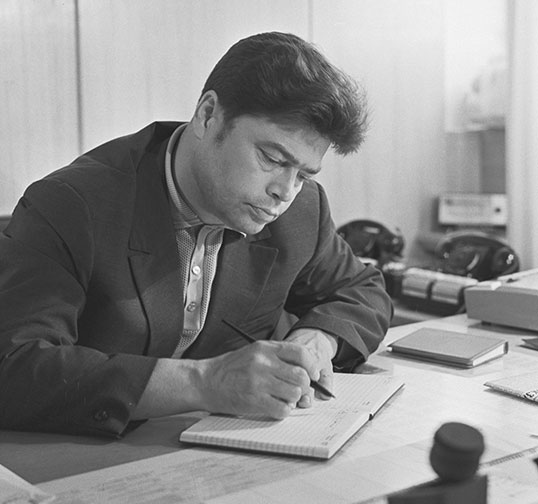
Figure 6.1 Soviet journalist Boris Pankin (Vladimir Savostyanov/TASS)
Journalists tried to master this new language. Ekonomicheskaia gazeta partnered with the Academy of Science to discuss ‘Economic laws and economic leadership’, a meeting to which academics, economists, propagandists, journalists and editors, and production workers were invited.65 At Komsomol’skaia pravda, meanwhile, the paper held two ‘scientific seminar’ series, led by the IOM’s Valentin Chikin in 1965–1966. The seminar included sessions on ‘technophilia and technophobia’, econometrics, cybernetics, economic reform, optimal planning, as well as ‘Consumer production, consumer economics, and market automatism’.66 This change in the journalistic imaginary was accompanied by a wave of new features dealing with economic progress (‘Calendar of Economic Reforms’), work at factories and building sites (‘Work Planning Meeting’), but also social issues (‘Problems, Polemic, Search’) and youth work (‘“Roundtable” of Komsomol Problems’).67
Reforms, meetings, searches, round-tables: the new language is telling, for it shows how transformation was to come about through analysis and calculation. But, as journalists’ cool reaction to the IOM’s provocative survey on industrial management suggested, sobriety and realism were suspended when they threatened the foundations of Party control.68 We might look at the technocratic turn less for what it meant economically and instead ask what it meant for the Soviet metanarrative. Transformations of journalistic discourse and the profusion of seminars and meetings that accompanied it didn’t revolutionise industry, but they did suggest a change in the imagined public. If the paradigmatic innovation of the Thaw era was the discussion club, based on frank exchange of ideas and open to all, the Brezhnev era favoured the round-table, where only experts were invited to speak. Soviet obschestvennost’ was reconfigured: it now signified expert, qualified opinion, rather than popular opinion. A report from the paper’s Party Committee illustrates this shift:
Round-tables have become a kind of council with the competent reader, the specialist; a form of searching for the truth in an argument, in the identification and clash of different points of view. Put simply, we have started a new life, an efficient form of work with readers, and this is welcome.69
This liberal conception of discussion (ideas contend in the marketplace of ideas; truth wins out) indicates a crucial shift in the locus of truth under Brezhnev. Support for grassroots initiatives and openness to discussion were symptomatic of Khrushchev’s belief that wisdom came from below. This was no longer taken for granted under Brezhnev. ‘The reader is not just a subscriber, but also a qualified author’, read a Sovetskaia pechat’ editorial of 1965. ‘[T]hrough the newspaper, they express their opinion, participate in discussions of economic, cultural, and social questions, and this is one of the ways they participate in the workings of the state [uchastvuet v upravlenii gosudarstvom]’.70 On the surface, this statement appears to open up governance to a broader public of readers—it could almost belong to the Khrushchev era. Yet at the same time, the reference to the ‘qualified author’ signals that government was open only to experts—not necessarily those in the Politburo or in scientific institutes, but certainly those with the expertise to speak authoritatively. In-depth discussions of differential wage scales many have found advocates among the paper’s graduate readership but most were left behind. In autumn 1965, the paper seemed to admit as much, founding a ‘University for All’ to help readers get up to speed, with features on plan indicators, credit, stimuli, and profitability.71 But a survey conducted a year later by Grushin’s Institute of Public Opinion suggested that this remedial work had gone unappreciated: the paper’s round-tables were readers’ least favourite features. ‘Calendar of Economic Reform’ was read regularly by only one in five readers, ranking last of the paper’s forty-nine regular rubrics; most likely the same 20 percent were readers of ‘Work Planning Meeting’, which ranked forty-eighth.72 Given readers’ evident lack of interest, it was evident that wonkery was an unstable foundation upon which to rebuild the youth press: within a year, most of these round-tables and forums had folded.
The Kosygin Reforms and Reader Sociology
It is telling, nevertheless, that by 1966 the paper’s editors felt compelled to tabulate the preferences of readers, if only for internal use. Turn the clock back even two years and such polling was unheard of, even though the paper had a ready-made institute in the form of the IOM. But Kosygin’s reforms changed the nature of the newspaper market, abolishing subscription and circulation limits and allowing readers to freely subscribe to any title.73 Although only a handful of journalists were old enough to remember, the 1964 reform mirrored the situation during NEP under which newspapers were told they needed to break even [khozraschet].74 Editors used readers’ letters and sociological studies to learn more about their readers’ preferences, a move which prefigured the emergence of a new kind of mass journalism.75 But since the late 1920s, central newspapers had been insulated from profit motives: their circulations were set by central planners for whom profits were only one factor in deciding which titles should be awarded precious supplies of newsprint. Circulations were not meaningless in understanding a newspaper’s popularity, but existed more as a marker of political importance than as proof of appeal to readers.
The abolition of circulation limits created a new incentive for newspapers to reach out to their audience. Officials now had a new metric to measure a paper’s success that was quite different from the prevailing practice of counting letters. This change mattered because it changed the way editors justified their work to authorities, and it also had implications for journalists’ pay packets, since officials used increased circulations to justify salary increases.76 Given the new-found importance—both for officials and journalists—of readerships, newspapers’ increasing reliance on advertising and promotion is little surprise. Komsomol’skaia pravda launched numerous promotional campaigns, ranging from newspaper, radio and TV advertisements to touring agit-buses which roamed the country alongside travelling brigades of poets.77 The paper could also rely on its institutional connection to the Komsomol. Activists pressured the rank-and-file to subscribe to youth publications, with the most successful receiving prizes and even laudatory articles in the press.78 Laggards were reminded that these subscriptions were crucial for ‘replenishing’ the Komsomol budget.79
It would be wrong, however, to suggest that newspapers were concerned only with ruses to maximise their readership. On a professional level, journalists saw the new campaign as an examination of their work. According to Pankin, the move to open subscriptions was a test of ‘how readers judge the work of our paper, and the work of every one of us. It is an all-Union election, if you like.’80 Leningrad sociologist and media executive Boris Firsov similarly argued in a 1967 article that ‘by depositing their money for subscriptions, readers in some way give their vote to the publications which answer most keenly to the themes of the day, stand at the centre of events, and answer the multi-faceted demands of readers’.81 By calling the battle for sales an ‘election’ and referring to readers as voters, Pankin and Firsov illustrated the changed, and by implication democratic, relationship between reader and journalist. Like politicians, journalists would listen to the views of their ‘voters’ and act on their suggestions. In October and November 1965, at the beginning of the second subscription campaign, the paper created a kind of ‘manifesto’ addressed to readers, asked for comments, and printed their responses in the paper.82 One consequence of the campaign, then, was to make journalists more responsive to their audience.
Like elections, the results of the subscription campaigns were unpredictable. Though circulations for most publications rose, illustrating that national newspapers were a deficit commodity, readership could also go in the other direction. This was most notably the case at Pravda, where journalists engaged in a bout of soul-searching after the paper ceded its position to Izvestiia and Komsomol’skaia pravda as the country’s most-read title.83 Readers’ unpredictable actions made it increasingly important for journalists to understand their audience—a lacuna the paper’s journalists had long complained about.84 Reader conferences and letters were the time-honoured means of learning about readers, but the relationship between the readership and those who wrote to the paper—or the narrower cohort of local officials and exemplary workers who participated in conferences—was unclear. In the absence of reliable data, journalists resorted to improvised survey methods: observing the preferences of the buying public at a Soiuzpechat’ kiosk, gauging readers’ behaviour on a tram, or conducting straw polls in a local apartment block.85 None of these were capable of unlocking the secrets of the paper’s audience, however.
By the mid-1960s, the increasing acceptance of sociological media research opened up new possibilities. At Central Television, the Scientific-Technological Division began to conduct sociological surveys in a bid to organise its schedule in the most viewer-friendly way.86 Cinema, too, saw sociology as a tool for maximising box-office receipts.87 The country’s leading newspapers all commissioned surveys to adapt to the brave new world of the newspaper market. One of the sociologists who carried out these surveys, Vladimir Shliapentokh, dismissed the more exaggerated claims for the importance of reader studies, claiming that they existed as a statement of a paper’s ‘progressive’ orientation, and were not a genuine catalyst for change.88 He conceded nevertheless that journalists were surprised by his findings, which overturned many ingrained stereotypes.89 This was certainly the case at Komsomol’skaia pravda, where Boris Grushin’s IOM was the natural choice to conduct such research.90 Take, for example, the first of the IOM’s reader studies, which examined the views of almost five hundred readers who had decided not to renew their subscriptions.91 The fact that a third of them felt the paper had become less interesting was taken by journalists as an indictment of their work; they launched a heated discussion on whether the paper’s material was appropriate for its young readers. Editor-in-Chief Iurii Voronov believed that the paper was losing subscribers because it was trying too hard to ape newspapers like Literaturnaia gazeta, an intellectual newspaper with a circulation of around a tenth of KP’s: ‘We are a mass newspaper and we need every one of us, every worker, to learn to look at the paper through the eyes of the mass reader’.92
To do so would not be simple, for the mass reader was an unstable category open to interpretation based on journalists’ own preconceptions. In the 1920s, the paper was initially conceived as a title for the aktiv and the mass reader, but by the 1930s the pendulum had swung decisively towards the activist—a state of affairs that continued until the 1950s.93 Even before Stalin’s death, however, journalists were sure that this activist focus made the paper less readable. It necessitated wordy editorials, propaganda articles with statistics, and reports on conferences: the sort of material an agitator could use in a speech, but did little to entertain most readers. Frustrated journalists argued for a recalibration of content towards a broader audience; Stalin’s death had allowed them to put this into practice.94 Now, it seemed, the split wasn’t between activists and the mass reader, but between intellectuals, represented by Litgazeta, and the broader audience.
Was there a single ‘mass reader’, or were there groups of readers? Sociologists suggested that newspapers were read by ‘a concrete person, of a particular age, of a particular profession, occupying a particular social position’, and that their reception of the paper depended on a combination of these characteristics.95 Similar sentiments could be heard in the corridors of power: a 1966 Komsomol report stated that ‘Today’s newspaper can no longer orient itself towards the “average” reader. It simply doesn’t exist. There are defined groups of youth with professional, age, and educational differences’.96 The implication, here, was that content should be differentiated for various audiences, rather than targeted to a vague ‘mass reader’. Despite these observations, what is most striking at Komsomol’skaia pravda was journalists’ reluctance to target readers by demographic. Their professional identity depended on a relationship between an imagined reader, ideologically committed and intellectually capable, and a journalist who could help this reader to navigate the world—their ‘compass in the sea of life’, to use Bruskova’s term.97 This is how a senior journalist, Grigorii Oganov, was able to claim in 1962 that the paper’s reader was ‘first, active and ready for action; second, a thoughtful person; third, a person with a critical disposition; and fourth, a person who is more intellectual than we thought’.98
This portrait of the reader as a young intellectual endured even after the introduction of sociological research. There was, for example, much pride in a survey that showed that the paper’s readers considered Kozintsev’s adaptation of Hamlet to be the best film of recent times, unlike readers of other papers, who preferred the blockbuster Amphibian Man.99 But what about the others, who answered ‘wrongly’ and preferred to watch a blockbuster with a hero who was half-man, half-fish? It was impossible, argued Kim Kostenko, to ‘sink to the level’ of its viewers. Instead, those readers would need to be trained ‘in the same way that schoolchildren are taught to read’, while others could be offered more challenging material.100 Sociologists urged journalists to recognise the diversity of their readership; Kostenko only recognised levels of intellect. But, having imbibed the journalistic atmosphere, even the IOM’s sociologists, who otherwise urged a more differentiated approach to the audience, agreed that the ultimate goal of the paper’s work was to produce a ‘serious reader’, and that a good newspaper, like a good novel, should always be ‘a bit boring’.101 Sociological research did not make journalists abandon their educational role. They were willing to concede that the paper should become more engaging to attract new readers, but this did not mean abandoning the idea of the reader as an individual to be transformed.
Journalists didn’t so much reject the results of sociological surveys as interpret them in ways that caused the least dissonance with own identity. They were, however, prepared to debate the sort of journalism that the reader would require. Despite the protests of the paper’s literary journalists, the IOM’s research provided ballast for attacks on belletristic writing. Grigory Oganov, an adherent of the idea of the reader as ‘intellectual’, came under attack for his highbrow style, and was asked to ‘write so that articles are addressed to as wide an audience as possible’.102 Surveys suggested widespread dissatisfaction with journalists’ long-windedness, with one lapsed subscriber commenting that he had ‘no time to read a paper’ which was ‘full of long articles’.103 Yet journalists liked their freedom to write at length, which was a marker of journalistic status, as well as a path to a higher honorarium.104 ‘If a piece is long I don’t read it, but I go and congratulate [the journalist]: “well done, it’s good”’, joked one journalist. He contrasted journalists’ ‘psychological attraction to large pieces’ with their condescending attitude to shorter items, which were considered as a mere ‘trifle’ or ‘garnish’.105 To this extent, the IOM’s research prompted an important change: one journalist even claimed that a ‘psychological revolution’ was taking place at a paper where the rule for drafts had always been ‘twelve pages; never write less’.106
One alternative to the obligatory twelve pages was to provide entertainment. Correspondent Vladimir Orlov argued that Soviet audiences were now part of a world in which they were bombarded with information from all directions and were forced to choose between them. ‘Through their selection’, argued Orlov, ‘readers spontaneously define what is most interesting for them’.107 This imagined reader showed discernment choosing between different content and their choice should not be denigrated. But what sort of content was appropriate for this mediatised world? Surveys showed that audiences wanted news, human-interest stories, and entertainment-led material rather than economic and industrial discussion or anything that reeked too strongly of ‘education’.108 The mid-1960s saw an explosion of debate about the paper’s news coverage, with some staff speaking in favour of the American ‘inverted pyramid’ and others lauding ‘sensations’—the sort of material that would ensure that, as Kondakov put it, readers were ‘tearing the paper from [each other’s] hands’.109 Reprimands handed out to journalists for articles on kidnapping and drug addiction showed how journalistic values were changing under the pressure of reader demand.110 An editorial published in Sovetskaia pechat’ in 1966 criticised the ‘dark sides’ of this ‘pursuit of subscriptions’.111 While agreeing that it was ‘completely natural and correct’ for publications to make a profit, the editorial wondered whether commercial considerations should be the only criteria:
What won’t journalists do for an ‘increase’ in circulation? They look for any old oddity so as to capture the imagination of the reader. The saddest thing is that the creative pen of certain capable journalists gradually begins to adjust to this demand: to attract readers, to strike them with an unusual photograph, to please them with something peculiar, to satisfy what are, in effect, sometimes backward interests.112
Articles like these betrayed a fear that journalists might pander to the public’s seemingly endless appetite for sensations.113 Yet this is clearly what readers wanted: the IOM’s survey suggested that readers were interested, more than any other feature, in court reports—an ideologically problematic genre given its appeal to readers’ more salacious instincts.114 Such forms of mass journalism were neither ‘positive’ nor unifying, offering readers no visions for the future or edifying ideas for moral improvement. In this respect, they contradicted the ethos of Soviet mass media as it had existed since the late 1920s.115
It is little surprise, then, that there were few takers for this bold attempt to rethink the newspaper’s relationship to readers. Journalists were prepared to concede the importance of audience research, seeing in it a means for maximising circulations and getting closer to the reader, but it did not lead to the ‘psychological revolution’ that some journalists had imagined. Though newspapers increased the quantity of news material and tried to curb their graphomaniac tendencies—two main findings to come from the IOM’s research—news stories continued to lack timeliness (something which, admittedly, they had little control over) while lengthy articles were still the road to journalistic prestige, and would remain so until the fall of the Soviet Union. While political constraints undoubtedly played a role, journalists’ ingrained notions of professional excellence prevented them acting on Grushin’s findings more fully, with many journalists fighting to retain their own vision of the ‘mass reader’, even if studies challenged its existence. Perhaps this is why the simultaneous shift from demotic knowledge to expert knowledge, displayed in the paper’s numerous ‘round-tables’ and ‘discussion forums’, was easier for journalists to accept. It was so much simpler to look at the parade of economists, sociologists, sociologists, and cyberneticians on the newspaper and see them as kindred ‘researchers’ of Soviet reality—even if such material could never appeal to any kind of ‘mass reader’.
A Post-Heroic Age?
Sociology, as practiced by Grushin, Shliapentokh, and others, was simultaneously an exercise in simplification and complexification. On the one hand, they turned a world of ‘perhaps’ and ‘maybe’ into a world of ‘yes’ and ‘no’. What should journalists’ main task be, asked one of Grushin’s surveys. An open-ended question with myriad potential answers, to which respondents were offered a free choice in response. But somehow Grushin’s team managed to distil their responses into two main tendencies: the journalist should express their own point of view even if it doesn’t coincide with the official one (52 percent); and the journalist should express the official point of view (40 percent).116 By reducing heterogeneity to sameness, sociologists didn’t just identify pre-existing opinions, they also created them.117 But as they searched for new ways of understanding Soviet society, sociologists also made it appear more complex. One of Grushin’s surveys, conducted in 1968, identified at least nine social groups: workers, engineers, service sector employees, bureaucrats, soldiers, students, pensioners, householders, and the intelligentsia.118 The survey further divided them by age, by education, by salary, family situation, Party status, and social responsibilities. This was a far more complex envisioning of society than the traditional categories of ‘worker’, ‘peasant’, and ‘intellectual’. Just as Soviet society was becoming knowable through surveys, it was also, conversely, appearing more fractured.
Juliane Fürst has asked where, in a world of norm-defying practices, the ‘normal people’ of the 1970s went.119 We might trace the beginnings of this process of de-normalisation to the sociological revolution of the 1960s, where the ‘average’ citizen became divided across lines of age, class, and education, washing away any illusion of social homogeneity. Those tables, with their neat rows of categories and percentages, left little room for the outlier. The individual whose actions didn’t meet expectations, and who maintained their heterodox views in the face of Soviet obshchestvennost’, was liable for re-education. But journalists’ pedagogical mission, as they saw it, had always been based on positive outliers, whom they called extraordinary individuals: heroes. We have seen how journalists harnessed readers’ own autobiographical writings to create a new kind of protagonist: unassuming, shy, and tongue-tied and yet, in the end, confident, self-assured, and heroic. But in an era of averages, percentages, and scientific rationality, was there still room for heroism and romance?
One does not need to read between the lines for evidence of a change in attitudes after Khrushchev’s ouster. In June 1965, an article by writer Leonid Zhukhovitskii took explicit aim at the media’s ‘abstract romanticism’.120 He focused on two disillusioned teenagers from a small town who wanted ‘dangerous work, romantic work, like in books, like in films’. Despite their lack of qualifications, they dreamed of taking part in a geological mission. Zhukovitskii believed that their rejection of everyday life in a suburban town was attributable to the lazy education they received from teachers and the mass media, who had failed to prepare young people for real-life problems. It could also be ascribed to the baleful influence of romanticism: ‘Romantika! How many honourable, but still very naïve, children furiously idolise its extremely hazy form? And how many lazy managers, negligent educators, untalented film directors and literary commentators try to cash in on it with neither rhyme nor reason?’ According to Zhukovitskii, the romance of the taiga was a flight from reality:
Get a ticket, leave for the hazy faraway expanses, and all questions will solve themselves! For there, in the faraway expanses, is the authentic life (obviously very different from the inauthentic one here). There, you find genuine people (again, as opposed to the philistines and stiliagi here). So pack up your suitcase and run fast to the ticket office—perhaps also from all difficult problems and, at the same time, from your own personal shortcomings.121
For Vitalii Ignatenko, a recent graduate from MGU and later to become Director of TASS, Zhukovktskii’s article showed the ‘side effects’ of the paper’s unthinking romantika. He suggested that success or failure in the periphery depended ‘not on distance…but…the person themselves’. Without ‘forg[ing] character’, one’s journey east would come to nothing.122
Journalists’ uncomplimentary tone towards ‘romantics’ is palpable when one reads the transcripts of editorial meetings. In October 1965, the paper printed a diary by Vera Trotskaia, a 34-year-old philologist from MGU, working as a builder, electrician, and bricklayer in Aramil’, a small settlement in the Urals.123 It is a rousing document, full of battles with the elements, sweat and toil on construction sites, and the romance of wild nature. A few years earlier, journalists might have sung her praises and placed her in the pantheon of Soviet heroes alongside Valia Chunikhina and Rita Vlasova. Now, however, the stakes had changed. Kira Nikiforova, who worked in the Department of Letters, conceded that Trotskaia might well be ‘an absolutely pure, sincere, inspiring person’ but nevertheless felt that this life of toil was misplaced. ‘Reading…these rapturous lines, these difficulties in a rosy haze…I felt an ever-growing sense of pity for the author’, said Nikiforova.124 What was a graduate of MGU doing in such a backwater? Why had she abandoned her career? ‘Is this a search for the self or something that benefits the cause? Is it a desire for a change of scene or civic consciousness? An escape from an unhappy life or a search for personal happiness?’, she asked.125 Nikiforova thus upended the entire premise of the ‘Contemporaries’ rubric, claiming that Trotskaia’s diary, despite her spirited sacrifice for the communist cause, was now atypical and should not have been printed:
Is the true young hero of our time a personally unsettled, disordered person, without their own home, without their own family, for whom the whole poetry of life is in difficult, sometimes unjustified and back-breaking hard work? I don’t agree with this. I don’t agree with the raising of personal disorder and asceticism into typical features of the contemporary, leading, young person.126
Whether the speaker intended it or not, this statement amounts to a stunning renunciation of socialist realism, which was based on the idea that the future in the present was ‘typical’. Now, it seemed, typicality was not about heroes who would illuminate the present through extraordinary acts of renunciation, but belonged to those who longed to settle down in Moscow and enjoy the fruits of their education. Just as Soviet film-makers inaugurated a process of ‘deheroisation’ by depicting ordinary individuals and their personal crises, journalists also started to ask questions about the need for heroes.127 But if the self-sacrificing hero was out, what should the Soviet ‘contemporary’ look like? According to Vitaly Ignatenko, the problem was that romantic heroes came from a narrow sphere of society: ‘steeplejacks, plumbers, constructors—people who must perform great feats’. But, in doing so, the paper was focusing on individuals ‘outside the material sphere, the sphere of everyday life.’128 Those seized with the spirit of romance were driven by pure sentiments, but they no longer displayed the characteristics of the ‘contemporary’—in fact, they no longer existed within ‘everyday life’.
From the mid-1960s onwards, journalists began to fancy themselves as researchers of reality, who could capture this changing social terrain. Between 1967 and 1969, the paper published a series of ‘Social Portraits’, which profiled individuals working in a wide range of professions—especially those unheroic individuals who resided within ‘everyday life’.129 Taxi drivers, shepherds, stevedores, and waiters joined the familiar cast of steel workers and engineers, doctors, and teachers. The ultimate aim was to profile a sociologically ‘typical’ cross-section of the country’s workers, and find out about their lives, their hopes, and their everyday lives. Articles detailed the minutiae of protagonists’ everyday routines, from the daily habits of a fuel truck driver from Saratov to the administrative burdens of young scientists.130 Unlike the heroes of the ‘Contemporaries’ series, these ‘Social Portraits’ were pitched somewhere between character study and scientific research: in many ways, they functioned as a kind of time-budget study of the type favoured by many Soviet sociologists of the time.131 Journalists portrayed their subjects not as heroes, sacrificing all for the common cause, but as ordinary workers, whose main concerns were their families and the rouble in their pocket. Authors found old habits were hard to dispense with: Ivan Ziuziukin admitted that his instinct had been to write a ‘hymn to the teacher’ but vowed to examine his subject ‘without romantic embellishment’.132 Some admitted that, far from heroes, their protagonists might also exhibit negative characteristics: Ziuziukin’s taxi driver, had picked up several reprimands and was ‘far from a saint’, but was nevertheless ‘uncommonly sincere, and able to be himself from beginning to end’.133
Authors selected their protagonists not because of their virtues, but rather their ‘normality’—an ordinariness which defined by sociological data. The paper’s first portrait referred to the process of finding a subject: ‘Earlier, in the editorial offices, looking through columns of statistics we calculated a portrait of the “average” driver, whom I now had to find. Age: 25–35 years old, education: 7 years; work experience: no less than 5 years, etc.’134 The author of another portrait claimed it was based on sociological research conducted by the Komsomol, interviews with 900 young scientists, 100 ‘expert conversation-interviews’, statistical data, and transcripts of conferences and meetings.135 The paper thus swapped one kind of ‘typicality’ for another: heroes had once been typical because they displayed talents that were exceptional but would one day be ubiquitous. The paper’s social portraits, by contrast, understood ‘typical’ as ‘ordinary’.
The rubric is indicative of a crucial shift in the image of the Soviet person during the 1960s: dedicated, self-sacrificing idealists at the beginning of the decade; ordinary workers, with their humdrum concerns, by the end. If at the start of the decade the idea of working for the ‘long rouble’ was depicted as uncultured and shameful, by 1967 the idea that workers might be motivated by their pay packet was uncontroversial. ‘Do drivers take money into account? Yes, and there’s nothing wrong with that’, wrote Valerii Agranovskii; Ivan Ziuziukin’s portrait of a taxi driver implicitly endorsed the idea that his hero’s main motivation was financial.136 The portraits were full of discussion of the kinds of consumer items citizens could now enjoy: televisions, washing machines, wardrobes, pianos, furniture suites, TV sets, and cars.137 This was a portrait not just of the Soviet Union at work but also a snapshot of the country relaxing at home (‘two rooms, 28 metres’).138
Now it was the idealists, not the careerists, who seemed strange. Journalists began to question the motives of these idealistic wanderers as well as the social consequences of their actions. Through the eyes of those living in the periphery, the paper’s romantic focus of seemed more like ‘exoticism’ than a truthful portrayal of their lives. Journalists travelling to the Arctic, claimed science correspondent Vladimir Gubarev, were little more than tourists, who ‘get on a plane, stay for three days, run around, take a look, and go home’. Because journalists saw ‘only the exotic side of things’, they failed to touch on the everyday issues faced by long-time residents, who subsequently lost respect for journalists.139 The newspaper also called the economic worth of the romantics into question. A 1966 article about the construction of a new hydro-electric power station had tempted readers to make their way east on spec, only to find that there was no job waiting for them.140 The paper later printed an apology, and admitted that non-specialists were a burden, rather than a benefit, to the Soviet economy.141
A year later, in 1968, Mikhail Briman, the Deputy Editor of the newspaper Krasnoe znamia, argued that journalists’ embellished descriptions of the Arctic had a damaging social effect.142 His article contradicted the implicit message of the ‘Contemporaries’ rubric: that, at the end of their struggles, individuals might find happiness, self-understanding, and maturity. Talk of open skies and difficulties to be surmounted might tempt people to travel north, Briman suggested, but once those difficulties had been overcome, boredom soon set in. Work was not fulfilling in itself: it required a particular kind of person, with a particular cast of mind, to feel happy in the Arctic. Instead of offering romanticism, the author called on journalists to use more sociological research to investigate the life plans of young people, so that the press could avoid printing similarly damaging articles.
With these views becoming increasingly prominent, it is little surprise that some journalists wanted to end the ‘Contemporaries’ rubric that had done so much to define the romantika of the early 1960s. At a letuchka in October 1969, a correspondent in the Department of Propaganda, Tamara Gromova spoke of a diary that had caused her to think ‘melancholy thoughts’.143 In the past, she argued, such diaries had been positive for the paper. She talked of the diaries of Viktor Golovinskii and Valia Chunikhina, which, she said had been valuable because they contained a ‘spiritual portrait of our contemporary. A whole epoch.’144 Now, however, they were an anachronism because the paper needed a ‘more analytical relationship to the world.’ Once the paper had found this new ‘vein’ it was time to end the rubric, Gromova suggested.145 And while a group commissioned to discuss the paper’s future work disagreed, it admitted that the rubric needed to be revamped so that it existed ‘in correspondence with the time in which we live’.146 At a ‘production meeting’ at the end of 1969, correspondent Kapitolina Kozhevnikova suggested that the ‘romantic enthusiasm’ of the past had given way to new values of ‘efficiency and pragmatism’. The paper’s task should be to ensure that today’s pragmatists did not turn into amoral ‘cynics’ and ‘careerists’ but ‘harmonious individuals’.147 The idea of the ‘harmonious individual’ was central to the newly-emerging language of the ‘Socialist Way of Life’, which held that the country had already made enough progress to have created a new kind of individual, and rendered romantic gestures unnecessary.
But if romantika was to cede its place to the everyday, what could young people strive for? While the vast majority of urban youth were uninterested in exchanging comfort, culture, and companionship for adventure and romanticism, there were still restless idealists who sought something more than a comfortable career, fashionable trinkets, and sanatoriums on the Black Sea. The loss of the self-sacrificing hero meant that young people lacked a goal in life. Inna Rudenko asked what the paper should do with an ‘avalanche’ of anguished letters, confessing that they ‘wanted to do something great, something extraordinary’, but instead lived to ‘eat, sleep, and work’.148 What could the paper do, she asked, to ensure that ‘young people [possessed] a craving, not just for ideas, but for a concrete ideal’? As the 1970s dawned, the answer to that question was unclear, and illustrated a growing gap between the Brezhnev leadership’s vision of the future, and the ability of Komsomol’skaia pravda journalists to turn it into a vision of the Soviet person in a post-heroic age.
The Death of Brezhnev’s Thaw
The period between 1964 and 1968 found Komsomol’skaia pravda at a moment of transition between the romanticism of the Khrushchev era and the conservatism of the later Brezhnev era. Journalists were enthusiasts for the experiments of the Brezhnev leadership, and tried to re-orient the newspaper in the technocratic direction suggested by Kosygin’s reforms. The romantic hero was seemingly consigned to the dustbin of history, to be replaced by the statistically ‘average’ individual. However, the brave new world was blocked by two unwieldy obstacles: first, journalists’ own journalistic instincts, which had been honed in the 1950s and 1960s, and which relied on providing readers with heroic exemplars for the future (alongside a rather heroic vision of their own readership); second, by that perennial hindrance: a lack of clear rules, which meant that advocacy for Party-minded criticism in principle was contradicted by the Party’s actions in practice. Voronov’s sacking was an obvious example of the gap between written and unwritten rules.
Any lingering optimism about the possibility of a new, reformist socialism dissolved over the course of 1967 and 1968. As the power of the Kremlin’s reformers waned, the new thinking on agriculture and economics became subject to sharp criticism from members of the Central Committee, including Petr Shelest, who in 1968 noted the resonance of Liberman’s ideas in ‘imperialist and Maoist propaganda’, and urged the Central Committee to ensure that his ideas were no longer welcome in the press.149 Such comments suggest, not only that Kosygin’s reformist path was flagging by 1968, but how leading politicians connected reform to international tensions both to the east and west. Fears about subversive views within the intelligentsia were yoked to anxieties about foreign incursion over the radio-waves and political ferment in Eastern and Central Europe. It cannot have soothed their disquiet that some intellectuals were openly sympathetic to Czechoslovakian reform efforts. In February 1967, writer Aleksandr Bek cited the country’s new press law, which loosened censorship, as a model for the Soviet Union.150 The professional journal Zhurnalist published the text of the law in response to reader demand later that year.151
That the law was even mentioned in the professional press owed much to a change in emphasis at the Union of Journalists. In Autumn 1966, Egor Iakovlev, former editor of the innovative Sovetskaia Rossiia, became the editor of Sovetskaia pechat’, the official organ of the Union of Journalists. Though it published the occasional interesting dispatch, the title was generally ignored by journalists, and was losing subscribers at such a rate that mischievous staff plotted a graph to see when the circulation would reach zero.152 Under Iakovlev’s leadership, the journal, renamed as Zhurnalist, became more outspoken in its attempts to outline a professional ethos and the press’s civic role. It also ventured into controversial areas such as cultural policy. In April 1967, the critic Feliks Kuznetsov argued controversially that only those with specialist knowledge should judge artistic questions. Journalists at Pravda, under whose authority the journal was published, interpreted the article—not without justification—as an outright attack on workers’ competence to adjudicate on literary matters.153
Such discussions were not confined to Zhurnalist. Two months later, Pravda journalists Len Karpinskii (an ally of Iakovlev) and Fedor Burlatskii published an article in Komsomol’skaia pravda attacking theatre censorship, arguing that such questions should be placed in the hands of experts.154 At a closed Party meeting of Pravda staff a week later, the pair were accused of advocating ‘“absolute” freedom of artistic creation’ and attacking Party control over theatre and drama.155 Once again, the meeting contained frequent reference to the international climate: one Pravda journalist mentioned that the article had been discussed by the BBC and the Voice of America, and thus ‘aided imperialist propaganda, the bitterest enemy of our party and our Soviet homeland.’156 For their incorrect ideological position, and also for resorting to subterfuge in publishing their work in different newspaper to ensure publication, Karpinskii and Burlatskii were forced to leave Pravda. The transcript of the paper’s Party Meeting shows that Iurii Voronov, now unhappily employed as Pravda’s Responsible Secretary, refused to endorse the pair’s departure and was sharply censured for his act of dissent.157 The article’s publications had repercussions at Komsomolka, too: the head of the Department of Literature was demoted and new editor Boris Pankin received a severe reprimand.158 Discussion of Kuznetsov’s article would wait another year, but met with similarly negative results.159
By 1968, as in 1956, journalists were split into two distinct factions: one advocating greater intellectual freedom and a more central role for the intelligentsia, and another seeking to maintain ideological stability in the face of international tensions. Once again, it was fears over the intelligentsia’s restive mood, anxieties over youth (and its consumption of western media), and the uncertain international situation that promoted the Party to act. In late March, Pravda published a hard-line speech by Brezhnev at a conference of the Moscow gorkom where he claimed that intellectuals were aiding the forces of ‘imperialism’ with their ‘ideological immaturity’.160 At a Central Committee Plenum a few weeks later, Brezhnev reiterated the importance of eliminating ‘bourgeois’ ideology within the arts as a means of maintaining international solidarity.161 Days after that, the Central Committee produced a resolution about the work of Zhurnalist.162 It stated that the journal had made ‘serious errors’, which cast into doubt the Party’s right to direct media policy, and published ‘ideologically weak materials’ that had provided an ‘incorrect’ orientation for journalists. By August, the editors of Zhurnalist were forced to recant, its editorial warning of the ‘enormous propaganda apparatus of imperialism’ which had the capacity to ‘weaken [socialism’s] influence and authority, inflict losses on it and, if it succeeds, defeat’.163 Officials swiftly removed Iakovlev from his position as Editor-in-Chief and from the Editorial Board of Pravda.164 ‘Youth’, commented Pravda’s editor Mikhail Zimianin on the affair, ‘sometimes sound the tribune when they do not have the right to do so’.165
Later that month, Warsaw Pact troops invaded Czechoslovakia, a move accompanied by the return of radio jamming.166 Zhurnalist soon returned to its former role as a rather dull trade magazine, spouting received truths about the practice of Soviet journalism, while the press also began to shift course. Rocked by events in Czechoslovakia, the Party demanded constant repetition of the signs and symbols of communist rule, while newspapers were enjoined to speak out against ‘manifestations of bourgeois ideology’.167 Partiinost’ would now be the main criterion for judging a newspaper’s work, not sales.168 In December 1969, Pankin announced that paper’s main tasks in the coming year would be to cover the centenary of Lenin’s birth, the twenty-fifth anniversary of victory in the Great Patriotic War, and Komsomol elections, and this litany of anniversaries and parades occupied increasing amounts of column space in the years to come.169 As the Soviet Union entered a new decade, and a new era of ‘developed socialism’, newspapers would now focus their energy on consolidation rather than revolution.170
News from Moscow: Soviet Journalism and the Limits of Postwar Reform. Simon Huxtable, Oxford University Press. © Simon Huxtable 2022. DOI: 10.1093/oso/9780192857699.003.0007
1 Mark Sandle, ‘Brezhnev and Developed Socialism: The Ideology of Zastoi?’, in Brezhnev Reconsidered, ed. by Edwin Bacon, Mark Sandle (Basingstoke: Macmillan, 2002), 165–87.
2 Nezyblemaia Leninskaia general’naia liniia KPSS’, 17 Oct. 1964, 1.
3 KP letuchka na teme: ‘Molodezhna li Komsomol’skaia pravda?’, 17 Oct. 1967, d.455, l.52.
4 Ibid.
5 L. Barustin, ‘Chelovek v gazetnoi publitsistike’, Sovetskaia pechat’, 9 (1963), 24–8 [25]; M. Cherepakhov, ‘KPD Anatoliia Agranovskogo’, Sovetskaia pechat’, 4 (1964), 27–34.
6 Nikita Khrushchev 1964. Dokumenty (Moscow: Rossiia XX vek, 2007), 536, 545.
7 ‘Doklad Prezidiumu TsK KPSS na oktiabr’skom plenume TsK KPSS’ (variant), 13 Oct. 1964 in ibid., 203.
8 ‘Stenogramma zasedaniia plenuma TsK KPSS (nepravlenaia)’, 16 Nov. 1964, in ibid., 409–10.
9 Diaries of Roman Nazirov (17, 25 Oct. 1964), Viktor Starikov (28 Oct. 1964), prozhito.org.
10 Nikolai Dolgopolov, ‘Narod ustal’, Rosiiskaia gazeta, 8 Oct. 2019, https://rg.ru/2019/10/08/padenie-nikity-hrushcheva-glazami-ego-ziatia-alekseia-adzhubeia.html [Accessed: 13 Mar. 2020].
11 O.N. Shetinskii, ‘Iurii Petrovich Voronov. Vospominanie o druge’, in Zhurnalisty XX veka: liudi i sud’by (Moscow: Olma-press, 2003), 350–1.
12 Boris Pankin, Preslovutaia epokha: V litsakh i maskakh, sobytiakh i kazusakh (Moscow: Voskresen’e, 2002), 97–8.
13 Stephen Parker, Matthew Philpotts, Sinn und Form: The Anatomy of a Literary Journal (Berlin: De Gruyter, 2009); Matthew Philpotts, ‘The Role of the Periodical Editor: Literary Journals and Editorial Habitus’, Modern Language Review, 107.1 (2012), 39–64.
14 Pankin, Preslovutaia epokha, 98.
15 Ibid.
16 Ibid.
17 Parker, Philpotts, Sinn und Form, 167–218.
18 E.g., the controversy around Kim Kostenko’s article on Bratsk: A. Glazov, K. Kostenko, ‘Byt’ li gorodu Bratsku’, 16 Oct. 1963, 2, discussed in Pankin, Preslovutaia epokha, 86–91.
19 ‘O povyshenii deistvennosti vystuplenii Sovetskoi pechati’, 18 Sep. 1962, in Spravochnik partiinogo rabotnika. Vyp. 4 (Moscow: Gospolitizdat, 1963), p. 452.
20 Magomet Khunkaev, ‘Sovest’ i muzhestvo korrespondenta’, SP 12 (1962), 25.
21 Ibid.
22 ‘O povyshenii deistvennosti’, 452.
23 Pankin, Preslovutaia epokha, 100.
24 Arkadii Sakhnin, ‘V reise i posle’, 21 Jul. 1965, 2, 4.
25 A. Sakhnin, ‘Ekho voiny’, 8 Dec. 1957, 2. For reactions see 16 Dec. 1957, d.198, ll.49, 63–4, 82; Boris Pankin, ‘Slovo ob Arkadii Sakhnine’, in Zhurnalisty XX veka, 522–5.
26 Ilya Gerol, Geoffrey Molyneux, The Manipulators: Inside the Soviet Media (Toronto: Stoddart, 1988), 89–90.
27 21 Jul. 1965, d.384, l. 25.
28 Ibid.
29 Ibid.
30 Sakhnin, ‘V reise i posle’, 4.
31 Pankin, Preslovutaia epokha, 92.
32 Sakhnin, ‘V reise i posle’, 4.
33 See Kim Kostenko’s report, 6 Aug. 1965, ‘Kitoboinia Solniaka’, Rodina 7, No.719 (Jul. 2019). https://rg.ru/2019/07/17/rodina-rassledovanie-gromkogo-korrupcionnogo-skandala-1965-goda.html [Accessed: 26 Jul. 2019].
34 Arkadii Sakhnin, ‘No eto bylo tol’ko nachalo’, Izvestiia, 23 Sep. 1988, 3.
35 Sakhnin, ‘No eto bylo’, 24 Sep. 1988; Aleksandr Iakovlev, Omut pamiati (Moscow: Vagrius, 2000), 168.
36 Nikolai Mitrokhin, Russkaia partiia: Dvizhenie russkikh natsionalistov v SSSR, 1953–1985 gody (Moscow: Novoe literaturnoe obozrenie, 2003), 110–13.
37 On the Shelepin group see Mitrokhin, Russkaia partiia, 98–118.
38 Viacheslav Ogryzko, ‘Zhertva apparatnykh intrig’, Literaturnaia Rossiia, 15 (16 Apr. 2010), https://litrossia.ru/item/4284-oldarchive/ [Accessed: 27 Oct. 2020]; Pankin, Preslovutaia epokha, 103.
39 An extract from the meeting transcript is published in ‘Kitoboinia Solniaka’.
40 Iakovlev, Omut pamiati, 169–70. Brezhnev would return to the case of Solianik as a cautionary tale in a later Politburo meeting, suggesting that he took the case seriously. See ‘Rabochaia zapis’ zasedaniia Sekretariata TsK KPSS’, 5 Jan. 1966 in Sekretariat TsK KPSS. Zapisi i stenogrammy zasedanii 1965–1967 gg. (Moscow: IstLit, 2020), 21.
41 Leonid Mlechin, Zheleznyi Shurik (Moscow: Iauza, 2004), 412; Iakovlev, Omut pamiati, 170; Pankin, Preslovutaia epokha, 107. Different eyewitness accounts have different wording but similar phrasing. In a published excerpt of the meeting transcript, Brezhnev says: ‘We don’t need to talk about the fact that certain things were said with a whistle [govorilos’ s podsvistom]. We’ll find some time to talk about that separately.’ (See ‘Kitoboia Solniaka’).
42 Pankin, Preslovutaia epokha, 106–7.
43 Shetinskii, ‘Voronov’, 350.
44 Mitrokhin, Russkaia partiia, 113.
45 ‘Kitoboia Solniaka’.
46 On Brezhnev’s consensual leadership style, see Susanne Schattenberg, ‘Trust, Care, and Familiarity in the Politburo: Brezhnev’s Scenarios of Power’, Kritika, 16.4 (2015), 835–58.
47 Diary entry for Vladimir Lakshin, 9 Nov. 1964, prozhito.org. See also Petr Kapitsa’s letter to Rumiantsev, 14 Sep. 1965, in Pressa v obshchestve (1959–2000): Otsenki zhurnalistov i sotsiologov. Dokumenty, ed. A. Volkov, M. Pugacheva, S. Iarmolliuk (Moscow: Moskovskaia shkola politicheskikh issledovanii, 2000), 530–3.
48 A KGB report on ‘anti-Soviet activity among the Soviet creative intelligentsia’ singled out Rumiantsev’s article and criticised it for supporting the idea of ‘pan-humanism’ [obshchechelovecheskoi gumannosti]. See ‘Zapiska KGB pri Sovete Ministrov SSSR v TsK KPSS ob antisovetskoi deiatel’nosti tvorcheskoi intelligentsii’, 11 Dec. 1965, in Pressa v obshchestve, 539–45.
49 Michel Tatu, Power in the Kremlin: From Khrushchev’s Decline to Collective Leadership, trans. Helen Katel (London: Collins, 1969), 465.
50 ‘Nezyblemaia leninskaia general’naia liniia’.
51 A. Kosygin, ‘Ob uluchshenii upravleniia promyshlennost’iu, sovershenstvovanii planirovaniia i usilenii ekonomicheskogo stimulirovaniia promyshlennogo proizvodstva’, 28 Sep. 1965, 1–4. On the effects of the Plenum see Vladimir Zubok, Zhivago’s Children: The Last Russian Intelligentsia (Cambridge, MA: Belknap Press, 2009), 276.
52 Jan Adam, Economic Reforms in the Soviet Union and Eastern Europe since the 1960s (Basingstoke: Macmillan, 1989), 40–54.
53 Boris Kagarlitsky, The Thinking Reed: Intellectuals and the Soviet State, 1917 to the Present, trans. Brian Pearce (London: Verso, 1988), 192–5; Mary-Catherine French, ‘Reporting Socialism: Soviet Journalism and the Journalists’ Union, 1955–1966’, Unpublished PhD dissertation, University of Pennsylvania, 2014, 415–18; G. Lisichkin, ‘“Plan i rynok”: nauchnaia diskussiia dlia massovoi auditorii’, in Pressa v obshchestve, 66–82 and A. Volkov, ‘Iz publitsistov-tekhnologov my prevrashchalis’ v obshchestvovedov’, in ibid., 93–107.
54 On publitsistika as a Khrushchev-era impulse see Thomas C. Wolfe, Governing Soviet Journalism: The Press and the Soviet Person after Stalin (Bloomington, IN: Indiana University Press, 2005), 71–103; Anatoly Pinsky, ‘The Diaristic Form and Subjectivity under Khrushchev’, Slavic Review, 73.4 (2014), 805–27.
55 Sidney I. Ploss, Conflict and Decision-Making in Soviet Russia: A Case Study of Agricultural Policy, 1953–1963 (Princeton, NJ: Princeton University Press, 1965); Laurent Coumel, ‘Rapprocher l’école et la vie?’ Une histoire des réformes de l’enseignement en Russie soviétique (1918–1964) (Toulouse: Presses universitaires du Mirail, 2014), 253–308.
56 Zubok, Zhivago’s Children, 277.
57 Goriunov, ‘Glavnaia tema’, 6. For examples of this changed ‘imaginary’ see V. Golubev, ‘Pobol’she dela!’, Sovetskaia pechat’, 7 (1965), 1–2; V. Khanenko, ‘Stat’ia na ekonomicheskuiu temu. Kak ona rozhdaetsia?’, Sovetskaia pechat’, 4 (1965), 20–3; A. Agranovskii, ‘Tam, gde est’ mysl’…’, Sovetskaia pechat’, 4 (1965), 9–10; ‘Ideinost’, partiinost’, delovitost’’, Sovetskaia pechat’, 12 (1964), 1–3.
58 Iu. Krikunov, ‘Slozhna nauka chelovekovedeniia!’, Sovetskaia pechat’, 7 (1965), 5–6; E. Lazebnik, ‘I talantu nuzhna nauka’, Sovetskaia pechat’, 1 (1966), 7–11 [8].
59 The most detailed discussion of this trend is in French, ‘Reporting Socialism’.
60 E. Lazebnik, ‘I talantu nuzhna nauka’ Sovetskaia pechat’, 1 (1966), 7.
61 ‘Pomogat’, uchit’’, Sovetskaia pechat’, 8 (1965), 1–2; Lazebnik, ‘I talantu nuzhna nauka’, 9–10.
62 D. Goriunov, ‘Glavnaia tema’, Sovetskaia pechat’, 1 (1966), 1–6 [5].
63 ‘Otchet o rabote partiinogo biuro redaktsii “Izvestiia” s noiabria 1963 g. po dekabr’ 1964 g.’, n/d 1965, TsGAM, f.453, op.2, d.35, ll.14–15.
64 Closed Party Meeting, 29 Sep. 1965, d.40, ll.19–21.
65 ‘Trud vdokhnovennyi’, Sovetskaia pechat’, 12 (1965), 2.
66 ‘Otchetnyi doklad o rabote partiinoi organizatsii Komsomol’skoi pravdy s 29 sentiabria 1965 goda po 12 oktiabria 1966 goda’, 12 Oct. 1966, TsGAM, f.1968, op.1, d.41, ll.63–5.
67 A. Shcherbakov, ‘Rabochaia planerka’, 2 Nov. 1965, 2; ‘Povestka dnia: podrostok’, 27 Jul. 1966, 2; ‘Problemy, polemika, poisk’, 15 Sep. 1966, 2; ‘Pervaia vstrecha’, 5 Oct. 1966, 1, ‘Chelovek i zakon’, 6 Oct. 1966, 2–3; B. Rakitskii, ‘Uroki khozrascheta’, 19 Oct. 1966, 1–2; S. Sorokin, ‘1. Schet—v pol’zu peremen’, 29 Nov. 1966, 1; V. Kitaev, ‘2. Bez synkov i pasynkov’, 7 Dec. 1966, 2.
68 See Chapter 5.
69 ‘Otchetnyi doklad o rabote partiinogo biuro KP, 1965–66’, l.54.
70 ‘Novyi, zavershaiushchii’, 2.
71 E.g. V. Beshenkovskii, ‘Balansovyi metod planirovaniia’, 15 Oct. 1965, 1; ‘Zakonodatel’nye garantii prav predpriatii’, 26 Oct. 1965, 1; V. Shchegolev, ‘Kredit’, 11 Nov. 1965, 1; A. Kubarev, ‘Moral’nye stimuly’, 13 Nov. 1965, 2; V. Starodubrovskii, ‘Planovyi pokazatel’’, 20 Nov. 1965, 1; D. Oparin, ‘Pribyl’ i rentabel’nost’’, 17 Dec. 1965.
72 IOM survey of readers’ preferences, 1966, Boris Grushin Papers, HIA, Box 4, Folder 5.
73 ‘Million obshchestvennykh rasprostranitelei pechati’, Pravda, 18 Oct. 1964, 6. On the broader context of periodical circulation, drawing on discussions at Soiuzpechat’, see Denis Kozlov, The Readers of Novyi mir: Coming to Terms with the Stalinist Past (Cambridge, MA: Harvard University Press, 2013), 27–37.
74 Matthew Lenoe, Closer to the Masses: Stalinist Culture, Social Revolution, and Soviet Newspapers (Cambridge, MA: Harvard University Press, 2004), 47–53.
75 Ibid.; Jeffrey Brooks, ‘Studies of the Reader in the 1920s’, Russian History, 2–3 (1982), 187–202; Evgeny Dobrenko, The Making of the State Reader: Social and Aesthetic Contexts of the Reception of Soviet Literature, trans. Jesse Savage (Stanford: Stanford University Press, 1997); Michael S. Gorham, Speaking in Soviet Tongues: Language Culture and the Politics of Voice in Revolutionary Russia (De Kalb: Northern Illinois University Press, 2003), 22–37.
76 Pavlov to TsK KPSS, 5 May 1965, RGANI, f.5, op.33, d.224, ll.15, 41.
77 V. Solov’ev to TsK VLKSM, 13 Dec. 1965, RGASPI, f.1M, op.32, d.1213, ll.145–51; ‘Ob itogakh podpiski na 1965 god na molodezhnye izdaniia v Orenburgskoi oblastnoi komsomol’skoi organizatsiia’, 12 Jan. 1965, d.1213, ll.176–81; B. Pankin to TsK VLKSM, 1965, RGASPI, f.98M, op.1, d.440, ll.1–2; Proizvodstvenno-tvorcheskogo soveshchaniia o rabote ‘Komsomol’skaia pravda’ v 1968 g., 16 Nov. 1967, RGASPI, f.98M, op.1, d.458, l.68.
78 ‘O khode podpiski na tsentral’nye molodezhnye izdaniia’, 29 Oct. 1966, RGASPI, f.98M, op.1, d.419, l.14; V. Solov’ev to TsK VLKSM, 13 Dec. 1965, RGASPI, f.1M, op.32, d.1213, ll.145–51.
79 ‘O khode podpiski’, l.13.
80 21 Sep. 1965, d.385, l.68.
81 B. Firsov, ‘Massovaia kommunikatsiia’, Zhurnalist, 2 (1967), 51. See also ‘Chitatel’ progolosoval’, Sovetskaia pechat’, 2 (1965), 47–8.
82 ‘K chitateliam “Komsomolki”’, 7 Oct. 1965, 4; ‘Gazeta, 1966 god’, 26 Oct. 1965, 2, 12 Nov. 1965, 2.
83 E.g. Pravda Party Meeting, 15 Oct. 1965, TsGAM, f.3226, op.1, d.74, l.136.
84 8 Oct. 1956, d.126, ll.127–9, 132, 146; 6 May 1957, d.193, l.38; 17 May 1957, d.194, l.50.
85 9 Apr. 1956, d.171, l.43; 4 Aug. 1964, d.365, l.38; 6 Dec. 1956, d.177, l.200; Party-Komsomol meeting, 13 Dec. 1961, d.35, ll.161–2.
86 Christine Evans, Between Truth and Time: A History of Soviet Central Television (New Haven: Yale University Press, 2016), 47–81. Radio producers also commissioned surveys: Stephen Lovell, Russia in the Microphone Age: A History of Soviet Radio, 1917–1970 (Oxford: Oxford University Press, 2015), 207–8.
87 Joshua First, ‘From Spectator to “Differentiated” Consumer: Film Audience Research in the Era of Developed Socialism (1965–80)’, Kritika, 9.2 (2008), 317–44; Marko Dumančić, Men Out of Focus: The Soviet Masculinity Crisis in the Long Sixties (Toronto: University of Toronto Press, 2021), 47–53.
88 Chitatel’ i gazeta. Vyp. 1: Chitateli Truda, ed. by Vladimir Shliapentokh (Moscow: IKSI, 1969), 11–12; V. Shliapentokh, ‘Ia znal, chto dumaiut chitateli Izvestii, Pravdy, Truda, Literaturnoi gazety’, in Pressa v obshchestve, 113.
89 Shliapentokh, ‘Ia znal’, 110–11.
90 Few reader surveys survive in documentary form, so the account that follows relies on results discussed in editorial letuchki.
91 7 Sep. 1965, d.385, ll.58–62.
92 Ibid., ll. 60–2. Similar scenes took place at other papers: see Shliapentokh, ‘Ia znal’, 111.
93 Stanislav Gol’dfarb, Komsomol’skaia pravda’ 1925–2005 gg.: Ocherki istorii (Irkutsk: Irkutskaia oblastnaia tipografiia No.1, 2008), 36; Lenoe, Closer to the Masses, 145–81.
94 25 Jun. 1951, d.107, ll.126–7; 25 Jun. 1951, d.107, l.123; 12 Nov. 1951, d.112, ll. 69, 79, 83, 85; Party Meeting, 23 Jan. 1950, d.25, ll.1, 4; Party Meeting, 26 Jan. 1951, ibid., d.26, ll.4–5.
95 Iu. Kurganov, T. Kharlamova, ‘Anketa protiv mifa’, Zhurnalist, 7 (1967), 32.
96 ‘Zadachi komitetov komsomola po usileniiu rukovodstva molodezhnoi pechat’iu, redaktsiami radio i televideniia’, 1966, RGASPI, f.1M, op.34, d.52, l.22.
97 17 Oct. 1967, d.455, l.52.
98 Party Meeting, 29 Jun. 1962, d.37, l.17.
99 12 Apr. 1967, d.449, ll.14–15.
100 Ibid., l.15.
101 16 Nov. 1967, d.458, ll.82, 86–8. See also 18 Sep. 1966, d.438, ll.35–6.
102 Ibid., 17 Aug. 1965, d.385, l.15.
103 7 Sep. 1965, d.385, ll.58–9.
104 ‘Proizvodstvenno-tvorcheskogo soveshchaniia o rabote KP’, 16 Nov. 1967, RGASPI, f.98M, op.1, d.458, l.174.
105 Ibid., l.118.
106 Ibid., l.116.
107 18 Sep. 1966, d.439, l.2.
108 See also V. Shliapentokh, Sotsiologiia dlia vsekh (Moscow: Sovetskaia Rossiia, 1970), 176.
109 26 Apr. 1966, d.427, l.47. On discussions of news coverage see Simon Huxtable, ‘Making News Soviet: Rethinking Journalistic Professionalism Under Stalin, 1953–1970’, Contemporary European History, 27.1 (2018), 59–84 [75–82].
110 Wolfe, Governing Soviet Journalism, 112–13.
111 ‘Otvetstvennost pered chitatelem’, Sovetskaia pechat’, 7 (1966), 1–2.
112 Ibid., 2.
113 Film critics were also anxious about ‘filmmakers who stud[ied] the audience’s habits only to exploit them’ (First, ‘From Spectator to “Differentiated” Consumer’, 330). Similarly, Gosteleradio Chairman Nikolai Mesiatsev was reluctant to ‘chase after majority tastes’ (Evans, Between Truth and Time, 62).
114 HIA, Box 4, Folder 5. Court reports could, however, be used to assuage public fears about crime: see Miriam Dobson, Khrushchev’s Cold Summer: Gulag Returnees, Crime, and the Fate of Reform After Stalin (Ithaca: Cornell University Press, 2008), 44–8, 179–84.
115 Journalists’ discussions mirror the responses of cultural producers in the 1920s and 1930s, who, in the absence of exemplary responses to their offerings, sought to remake the audience in their own image (see Evans, Between Truth and Time, 49–50).
116 ‘Naselenie o sredstvakh massovoi kommunikatsii kak istochnike informatsii’, Oct–Nov 1968, HIA Box 9, Folder 6.
117 Pierre Bourdieu, ‘L’opinion publique n’existe pas’, in Questions de sociologie (Paris: Éditions de Minuit, 1984), 222–35.
118 ‘Naselenie o sredstvakh massovoi kommunikatsii’. Grushin later commented that in his later work at the IOM he refused to generalise, and tried to show how different groups exhibited different opinions (Chetyre zhizni Rossii v zerkale obshchestvennogo mneniia. Zhizn’ 2-aia. Epokha Brezhneva. Tom 1 (Moscow: Progress-Traditsiia, 2003), 19).
119 Juliane Fürst, ‘Where Did All the Normal People Go? Another Look at the Soviet 1970s’, Kritika, 14.3 (2013), 621–40.
120 Leonid Zhukovitskii, ‘Kto podnimaet parus?’, 2 Jun. 1965, 2. See also ‘O nepodvlastnom vremeni i smerti’, 5 Nov. 1966, 2.
121 Ibid.
122 8 Jun. 1965, d.383, ll.1–2.
123 Vera Trotskaia, ‘Ia za polnyi spektr’, 30 Sep. 1965, 3–4.
124 12 Oct. 1965, d.386, l.20.
125 Ibid., l.21.
126 Ibid.
127 On ‘deheroisation’ see Dumančić, Men Out of Focus, 215–53.
128 8 Jun. 1965, d.383, ll.1–2. On this point see Boris Pankin, ‘Effekt romantiki’, 20 Jul. 1965, 2–3.
129 For a more detailed analysis of these portraits see Simon Huxtable, ‘In Search of the Soviet Reader: The Kosygin Reforms, Sociology, and Changing Concepts of Soviet Society, 1964–1970’, Cahiers du Monde russe, 54.3–4 (2013), 633–41.
130 V. Agranovskii, ‘Shofer’, 9 Feb. 1967, 2; V. Kondakov, ‘M.N.S.’, 26 Sep. 1967, 2.
131 Elizabeth Weinberg, Sociology in the Soviet Union and Beyond: Social Enquiry and Social Change (Aldershot: Ashgate, 2004), 103–34.
132 I. Ziuziukin, ‘Uchitel’’, 6 Jun. 1967, 2.
133 I. Ziuziukin, ‘Taksist’, 16 Aug. 1968, 4.
134 Agranovskii, ‘Shofer’, 2.
135 Kondakov, ‘M.N.S.’, 1.
136 Agranovskii, ‘Shofer’, 2; Ziuziukin, ‘Taksist’, 4.
137 M. Sokol, ‘Slesar’’, 3 Sep. 1967, 2; V. Liashenko, ‘Chaban’, 19 Mar. 1967, 2; A. Korolenko, ‘Inzhener’, 19 Mar. 1968, 2.
138 Korolenko, ‘Inzhener’, 2. On the Soviet Union’s changing priorities see Amir Weiner, ‘Robust Revolution to Retiring Revolution: The Life Cycle of the Soviet Revolution, 1945–1968’, Slavonic and East European Review, 86.2 (2008), 208–31.
139 Ibid., l.7.
140 G. Viatkin, O. Krat, ‘Stroika bez palatok’, 26 Oct. 1966, 1.
141 G. Boshchkin, ‘Na Enisei za pirogami?’, 11 Jan. 1967, 2.
142 Mikhail Briman, ‘Romantika bez prikras’, Zhurnalist, 8 (1968), 18–19, 26–7.
143 Aleksandr Iur’ev, ‘“Eto ia bez stepi ne mogu…”’, 12 Oct. 1969, 2.
144 23 Oct. 1969, RGASPI, f.98M, op.1, d.488, l.72.
145 See also Oganov’s remarks, ibid., l.83.
146 ‘Proizvodstvennoe soveshchanie KP—“Komsomolka-70”’, 15 Dec. 1969, RGASPI, f.98M, op.1, d. 491, ll.87–90.
147 Ibid., ll.126–9.
148 Ibid., ll.28–9.
149 Shelest to TsK KPSS, 25 Jun. 1968, in Pressa v obshcheste, 495–7 and, for a selection of documents, 474–99.
150 Aleksandr Bek, ‘Shosse dokumentalista’, Zhurnalist, 2 (1967), 15.
151 ‘Zakon o periodicheskoi pechati i o drugikh sredstvakh massovoi informatsii ot 25 oktiabria 1966 goda’, Zhurnalist, 6 (1967), 48–9.
152 Egor Iakovlev, ‘Pressa ravna obshchestvennomu sostoianiiu’, in Pressa v obshchestve (1959–2000): Otsenki zhurnalistov i sotsiologov. Dokumenty, ed. by A. I. Volkov, M. G. Pugacheva, S. F. Iarmoliuk (Moscow: Moskovskaia shkola politicheskikh issledovanii, 2000), 258–71.
153 Felkis Kuznetsov, ‘Dvizhenie prozy i kritiki’, Zhurnalist, 4 (1967), 28–31.
154 F. Burlatskii, L. Karpinskii, ‘Na puti k prem’ere’, 30 Jun. 1967, 4. See M. Zezina, Sovetskaia khudozhestvennaia intelligentsia i vlast’ v 1950-e – 60-e gody (Moscow: Dialog-MGU, 1999), 339–40. The article was published in KP because it had been rejected by the Pravda editorial board, which was one of the reasons for their colleagues’ anger.
155 Pravda Closed Party Meeting, 7 Jul. 1967, TsAOPIM, f.3226, op.1, d.78, ll.118–19.
156 Ibid., l.121 (see also ll.122–5).
157 Ibid., l.130.
158 Stanislav Gol’dfarb, ‘Komsomol’skaia pravda’ 1925–2005 gg.: Ocherki istorii (Irkutsk: Irkutskaia oblastnaia tipografiia No.1, 2008), 330–1.
159 Pravda Party Meeting, 6 May 1968, TsGAM, f.3226, op.1, d.79, ll.123–5.
160 L. Brezhnev, ‘Speech at 19th Conference of Moscow City Party Organization’, Current Digest of the Soviet Press, XX/13 (April 17, 1968), 3–7 [6].
161 Frederick C. Barghoorn, ‘Trends in Top Political Leadership in USSR’, in Leadership in East European Communism, 1945–1970, ed. by R. Barry Farrell (Chicago: Aldine Publishing, 1970), 71.
162 ‘O zhurnale Zhurnalist i osvobozhdeniii E.V. Iakovleva ot dolzhnosti glavnogo redaktora’, in Pressa v obshchestve, 577.
163 ‘Vsem serdtsem’, Zhurnalist, 8 (1968), 2.
164 Pravda Party Meeting, 6 May 1968, TsGAM, f.3226, op.1, d.79, ll.123–5.
165 Ibid., l.124.
166 On the relationship between domestic reform and international affairs see Jeremy Suri, ‘The Promise and Failure of “Developed Socialism”: The Soviet “Thaw” and the Crucible of the Prague Spring, 1964–1972’, Contemporary European History, 15.2 (2006), 133–58.
167 ‘O povyshenii otvetstvennosti rukovoditelei organov pechati, radio, televideniia, kinematografii, uchrezhdenii, kul’tury i iskusstva za ideino-politicheskii uroven’ publikuemykh materialov i reperturara’, 7 Jan. 1969, in Istoriia sovetskoi politicheskoi tsenzury. Dokumenty i kommentarii, ed. by Tat’iana Goriaeva (Moscow: Rosspen, 1996), 189.
168 Media research slowed after 1968, mirroring the situation at Central Television under Sergei Lapin (Christine Evans, Between Truth and Time: A History of Soviet Central Television (Ithaca: Cornell University Press, 2016), 76–81).
169 ‘Stenogramma proizvodstvennogo soveshchaniia Komsomol-70’, 15 Dec. 1969, d.491, ll.1–2.
170 It is telling that the ‘Contemporaries’ rubric, threatened with termination in the previous section, received a second lease of life in climate of orthodoxy, and continued to exist well into the 1970s.