
5
In his manual for law-enforcement agencies titled Sexual Perversions and Criminal Liability (1972), scholar Boris Daniel’bek made a striking statement: ‘As is well known, in the Soviet Union, if a person suffering from homosexuality goes to a medical institution (meditsinskoe uchrezhdenie), doctors are obliged to provide medical aid, and this cannot be considered a reason for starting a criminal prosecution’.1 Indeed, throughout his text Daniel’bek argued that homosexuality should be dealt with not only by punitive measures, but with the help of ‘medical intervention’ (lechebnoe vozdeistvie). What was the meaning of Daniel’bek’s statement that homosexuals could avoid criminal prosecution if they sought medical help? Did it signal a shift from a ‘criminal’ to a ‘disciplinary’ approach to homosexuality within the MVD, that is, from their understanding of it as a crime to that of a medical condition? What was the role of Soviet sexopathology in this shift? And how did the medical understanding of male homosexuality square with the existing penal sanctions for it?
Daniel’bek’s statement encapsulates the peculiar kind of sexual modernity that was taking shape in the USSR in the 1970s – officially a crime, homosexuality was increasingly viewed as a medical problem. Indeed, the officials of the Soviet Interior Ministry were reluctant to admit that homosexuality was solely a medical issue and underscored its status as a criminal act. Yet, at the same time, the growing body of work of Soviet sexology exerted a significant influence on their views. In the 1970s MVD officials began to engage with the nascent sexopathological expertise on homosexuality, inviting Soviet sexologists to undertake scientific investigation of prison same-sex activity and write up the results of their research in specialised brochures for MVD personnel. This new willingness of the MVD officials to incorporate medical knowledge in efforts to combat prison homosexuality rendered the Soviet penitentiary a site where a new form of sexual modernity was being forged and new discourses on homosexuality were produced. Male prisoners engaging in homosexual acts were becoming objects of growing medical attention: sexologists observed their homosexual behaviour, subjected them to medical examinations and interrogated them about manifestations of homosexuality in their childhood. Doctors demanded constant and thorough examination of homosexual prisoners, pressed for precise diagnoses and emphasised the importance of their expertise in this matter, thereby pushing the issue of homosexuality further into the medical domain. Importantly, unlike GULAG doctors of the 1950s who focused mainly on lesbianism, sexologists of the 1970s turned their attention to male homosexuality. They espoused somewhat sympathetic approaches to the issue: they acknowledged the psychological suffering of those convicts who were the victims of homosexual assault at the hands of fellow prisoners and the importance of providing psychological assistance to them. Likewise, they did not impose medicalisation on the prisoners, but suggested that they should decide whether they wanted to undergo treatment or not.
Elsewhere, beyond the barbed wire, sexologists also continued to engage with the issue of same-sex desire. Although much is to be discovered about their practices, we know that in the 1970s some of them continued to offer treatments for homosexuality in the consultation rooms of the clinics where they worked, albeit unofficially. Introducing new classifications of sexual perversions and designing new drugs and therapies for homosexuality, these doctors continued their attempts to bring the issue of homosexuality under the authority of medicine.
Soviet sexopathology and homosexuality in the 1970s
In a foreword to a compendium of works on sexopathology published in 1972, Anatolii Portnov, director of the Moscow Research Institute of Psychiatry, within which the Department of Sexopathology was situated, solemnly announced: ‘There is no question that sexopathology is becoming an independent medical discipline.’2 He then went on to explain why this was the case: ‘The fact is that any sexual disorders are both biological and social deviations. For example, male sexual impotence is not only one man’s illness, it is often a direct cause of dissolution of the family, which is the unit of the society (yacheika obshchestva).’3 As is evident from the quote, male impotence continued to be a primary focus of Soviet sexological science. Yet, for the first time, sexologists highlighted the problem of sexual perversions as a matter of priority: ‘Sexual perversions are not merely an affliction of certain individuals, they threaten to afflict other healthy and predisposed (predisponirovannykh) individuals.’4 Such an observation was a new note in the discussions of homosexuality among Soviet sexopathologists: not only was homosexuality here presented as a disease which afflicted unfortunate individuals, it was also considered a condition that could be passed on to others (GULAG psychiatrists, as I showed in Chapter 1, held similar views).
Portnov’s description of the establishment of Soviet sexopathology as an ‘independent medical discipline’ came at a time widely regarded as a period of stagnation. But recent scholarship on the Brezhnev era has demonstrated that, despite the moral and economic decline regarded as axiomatic for this period, there were developments in political, cultural and social realms along with genuine attempts by the state to initiate and lead changes.5 The development of Soviet sexopathology during the 1970s appears to have been marked with similar tendencies, seesawing from progress to neglect. On the one hand, as Igor Kon has argued, Soviet sexopathology was very slow in its development and was ‘an outcast in Soviet medicine’.6 The training in the profession was unsystematic and many sexopathological positions were filled by psychiatrists with no relevant education.7 On the other hand, Soviet sexopathologists did their best to underscore the importance of sexopathology for society, challenging its status as an ‘outcast’ and arguing that its underdevelopment might have grave implications. Some sexopathologists even argued that there was a direct link between the growing divorce rates and the poor administration of sexological health services in the country. For example, Ivan Yunda from Kiev contended that growing divorce rates recorded in the 1960s were largely due to reasons pertaining to the field of sexopathology – infertility of one of the spouses, ‘physical dissatisfaction’ and adultery due to sexual incompatibility.8 He also noted that the number of patients with sexual disorders was growing.9 Other sexopathologists complained that many republics did not yet have sexological consultation rooms and training of a new generation of specialists was urgently needed.10
Against a backdrop of a deteriorating demographic situation in the early 1970s, the arguments for improving the sexological services available to the population began to hit home with the officials of the Soviet Health Ministry.11 On 22 November 1973 the ministry issued a decree titled ‘On measures to improve therapeutic-prophylactic [lechebno-profilakticheskaya] aid to patients suffering from sexual disorders.’12 The decree deplored the poor state of Soviet sexopathological research and treatment: ‘the state of therapeutic-prophylactic aid to patients with sexual disorders is still unsatisfactory. Research on the pathogenesis … of sexual disorders is conducted by separate, unrelated research institutes. There is a lack of coordination of scientific research and of specialist training programmes.’13 To address this problem, the Ministry of Health mandated that major improvements in sexological science be initiated. First and foremost, it ordered the opening of specialised consultation rooms in oblast’- and republic-level clinics, where patients with sexual disorders could receive medical help.14 Second, it ordered that the Academy of Medical Sciences of the USSR consider expanding scientific research on sexopathology. Finally, it ordered the inauguration of an All-Union Scientific Methodological Centre for Issues of Sexopathology (Vsesoyuznyi nauchno-metodicheskii tsentr po voprosam seksopatologii), which was to operate alongside the already existing Department of Sexopathology.15 The centre was to become the leading research institute on sexopathology in the Soviet Union with a range of functions, including coordination of research in the field, incorporation of sexopathological findings into clinical practice, preparation and organisation of seminars and symposia on sexopathology across the Soviet Union, and dissemination of sexopathological expertise throughout the country and abroad.16
Soviet sexopathologists interested in the issue of homosexuality continued to publish their research on the issue, framing it as a treatable disease. Their views significantly diverged from the view that homosexuality was a normal variant of human sexuality, which underpinned the decision of the American Psychiatric Association to remove homosexuality from the Diagnostic and Statistical Manual of Psychiatric Disorders in 1973.17 Among Soviet sexopathologists practising medical treatment of homosexuality in the 1970s, there were three leading experts – Pavel Posvyanskii, the head of the Department of Sexopathology in Moscow, Yan Goland from the Gorkii Medical Institute and Abram Svyadoshch, who had moved to Leningrad by 1973 to establish his sexological practice. Goland continued to advocate for non-medicated approaches to homosexuality, arguing that psychotherapy was the most efficient means of treatment.18 By contrast, Svyadoshch believed that homosexuality could be treated successfully only with a combination of psychotherapy and medication, a view he presented in his book Female Sexopathology (1974).19 Although discussions of homosexuality in the book largely drew on the dissertation produced by Elizaveta Derevinskaya – formerly Svyadoshch’s trainee – and dealt with lesbianism, there was also a passage in the book describing a case of medical treatment of a homosexual man.20 The treatment of male homosexuality proposed by Svyadoshch was akin to ‘aversion therapies’ provided by British psychiatrists to homosexuals in the 1960s: vomit-inducing drugs (emetics) were paired with psychotherapy, whose goal was to create an aversion to homosexuality in the patient.21 During this stage, the patient would be invited ‘to look at a photo of the object of his homosexual affection or to imagine homosexual liaisons’.22 In his book Svyadoshch explained that ‘the nausea and vomiting caused by apomorphine are gradually associated with homosexual fantasies, forming a patient’s negative attitude to them’.23 He also noted that this method ‘had been successfully implemented to eliminate homosexual affection in a man who was an active homosexual’.24
Pavel Posvyanskii, the head of the Department of Sexopathology in Moscow, not only discussed possible treatments of homosexuality, but sought to introduce a uniform classification of sexual perversions that every doctor could bear in mind when dealing with such patients. He presented this classification in a lengthy article entitled ‘Introduction to the Contemporary Study of Sexual Perversions’ (1972). Its goal was apparently to educate Soviet sexopathologists about the nature of sexual perversions and draw their attention to this problem. In his introduction to the article, Posvyanskii deplored the fact that not all sexual therapists were familiar with perversions: ‘Unfortunately, wide circles of psychiatrists, sexopathologists and other specialists do not have sufficient information on these questions [sexual perversions]. This, of course, has a negative effect on both theoretical work on the problem of perversions and practical work.’25 According to Posvyanskii, a more careful consideration of these phenomena was needed in medical practice, since patients who suffered from them were not a rarity: ‘In recent years in the Department of Sexopathology of the Moscow Research Institute of Psychiatry we have had the chance to observe and examine a quite large number of patients suffering from perversions of various forms.’26
Posvyanskii maintained that there was a special cluster of ‘sexual perversions’ which he referred to as ‘genuine’ (istinnye). These he said were ‘unchangeable’ (neizmenyaemye) and ‘irresistible’ (neodolimye).27 Although such individuals could consciously control their desires and abstain from acting on them, their desires would stay perverse notwithstanding.28 Sexual fulfilment for them could be achieved only in the form they genuinely preferred, while any other forms of sexual satisfaction would remain ‘profoundly alien’ or simply impossible to carry out. To make his point clear, Posvyanskii quoted one of his homosexual patients, who said: ‘Sexual intimacy with a woman for me is disgusting – if I had to do it, it would be indeed a genuine perversion.’29 Yet, despite the fact such so-called perversions were ‘genuine’ and, therefore, incurable by implication, Posvyanskii still maintained that they were to be treated: ‘Therefore, individuals suffering from genuine forms of perversions should be the object of medical intervention, provided that their behaviour does not violate the existing laws.’30
What, then, was the relationship between these medical understandings of homosexuality and the law-enforcement agencies? Were they known to the Soviet police? Did Soviet sexopathologists, like Soviet jurists, try to argue for decriminalisation of sodomy on medical grounds? Little has been said in the existing scholarship on this problem: all we know is the account of Igor Kon, who tells us that Grigorii Vasil’chenko, the head of the All-Union Scientific Methodological Centre for Issues of Sexopathology, raised the issue of decriminalisation with the Health Ministry, but the latter was ‘always against’.31
New evidence shows that Pavel Posvyanskii did discuss homosexuality at his meetings with officials from the MVD and the KGB in 1973. The interactions between the Department of Sexopathology and the law-enforcement agencies and the organs of state security come as little surprise if we consider that sexopathology, after all, was a branch of psychiatry, and the main Soviet sexopathological centre was headquartered within the formidable Moscow State Institute of Psychiatry of the Health Ministry of the RSFSR. Furthermore, scholars have shown that, by the end of the 1960s, the Soviet authorities had begun to rely on psychiatry as an effective means of repressing Soviet dissidents – those Soviet citizens who challenged the political regime.32 During this period, the latter were diagnosed with concocted psychiatric disorders without any clinical evidence and subjected to compulsory hospitalisation.33 These practices represented, in Mark Field’s words, a ‘deliberate collusion between the Soviet regime and psychiatry’ and were most evident in the fact that, for instance, some psychiatrists working at the Serbskii Institute had Interior Ministry police ranks.34
Harvey Fireside tells us that Professor Lunts, a senior psychiatrist from the Serbskii Institute, was both a psychiatrist and a KGB colonel.35 Fireside presents a quote from the recollections of Petro Grigorenko, a former Soviet general who eventually became a dissident. Recalling his internment at the Serbskii Institute, Grigorenko asserted: ‘I myself, on more than one occasion, have seen Professor Lunts arrive at work in the uniform of a KGB colonel. True, he always comes into the department in his white coat. I have seen other doctors of this institute in KGB uniform.’36 This fact should be considered when examining the written accounts of the meetings between Posvyanskii and the MVD and KGB officers regarding the problem of homosexuality.
We know from a routine annual report on the activities of the Department of Sexopathology, produced by Posvyanskii, that on 1 November 1973 he presented a paper, ‘On the Issue of Sexual Perversions, Primarily Homosexuality’ (K probleme seksual’nykh perversii, preimushchestvenno gomoseksualizma), at a conference that brought together doctors and administrative personnel of the MVD and the KGB (konferentsiya vrachei i administrativnogo personala MVD i KGB).37 In his report Posvyanskii did not elaborate on how his paper was received by the MVD and KGB staff. The historian is also left to speculate on the subject matter of Posvyanskii’s paper – yet it would be reasonable to assume that it was concerned with the issues raised in Posvyanskii’s published work on homosexuality, namely his contention that homosexuality was a ‘genuine perversion’ requiring medical care, rather than police attention. According to Yan Goland, who knew Posvyanskii personally, Posvyanskii approached the MVD several times, suggesting that criminal sanctions for consensual homosexuality were unnecessary.38 As Goland noted, the reaction of the MVD officials had always been the same – they merely said that they ‘would take it into consideration’ (primem k svedenyu).39 In the same report Posvyanskii also listed other conferences in which he had participated. For example, the report tells us that in May 1973 he delivered a paper, ‘Medical and Juridical Aspects of Sexual Perversions’, at a ‘meeting of Moscow advocates’.40 Again, we do not know any details regarding the content of this paper, but decriminalisation of consensual sodomy might have been a possible topic.
Apart from engaging with lawyers and MVD and KGB officers, Posvyanskii taught a course titled ‘Contemporary Problems of Sexopathology: On the Study of Sexual Perversions’ at the Department of Psychotherapy of the Central Institute for Doctors’ Advanced Training (Tsentral’nyi institut usovershenstvovaniya vrachei).41 The institute had been the leading Soviet institution responsible for providing Soviet doctors with up-to-date medical knowledge and incorporating recent developments of Soviet medical research into wider medical practice.42 The implications of Posvyanskii’s lectures on homosexuality within the institute are difficult to establish due to the absence of relevant evidence, yet they certainly would have further promoted medical models of homosexuality beyond the narrow circle of Soviet sexologists.
From ‘police’ to ‘science’: shifting approaches to homosexuality within the MVD
Paradoxically, although in the 1970s MVD officials apparently took no heed of either doctors’ or legal scholars’ calls to abolish criminal penalties for homosexuality on medical grounds, they did frame homosexuality as a medical problem in their secret reports and even turned to the help of sexopathologists to address the problem of homosexuality in prisons. A new willingness of MVD staff to use medical knowledge in the struggle with homosexuality suggests the strengthening within its ranks of an alternative understanding of homosexuality as a medical problem, in parallel with its official stance on homosexuality as a crime.
First mentions of the fact that the Department of Sexopathology began to cooperate with the officials of the MVD on the issue of homosexuality in prisons appear in Posvyanskii’s report examined above. There, Posvyanskii claimed that the department was given ‘a whole range of tasks commissioned by the Sanitary Directorate of the USSR MVD (Sanitarnoe upravlenie MVD SSSR)’.43 Among these tasks was a close study of homosexuality with a view to designing methods for its medical treatment in prisons: Posvyanskii’s report featured an attached copy of a plan with related tasks for department doctors to complete in 1973 and 1974. These tasks included clinical examination of prisoners engaging in homosexual relations, publication of a handbook for MVD officials on preventing homosexuality and organisation of a series of lectures on homosexuality for the doctors working within the MVD. The whole plan is presented below.
PLAN
of activities on the problem of homosexuality in places of confinement for 1973
Tasks: Study of the problem of homosexuality in places of confinement to design recommendations concerning prophylaxis and treatment of homosexual acts among prisoners
|
Activities |
Executant |
Deadlines |
|
1. Clinical examination of individuals, with histories of homosexual actions and conditions, conducive to the emergence and spread of these actions in places of confinement |
Department of Sexopathology of the Moscow Institute of PsychiatryRSFSR Ministry of HealthDirectorate of the Medical Service USSR MVD |
During 1973 |
|
2. On the basis of the conducted examination to design methodical instructions (a letter) on prophylaxis and treatment of homosexual actions among convicts |
Same |
IV quarter December 1973 |
|
3. Organisation of tutorials with the doctors of the Directorate of the Medical Service and Central Medical Institutions of the MVD on the subjects: contemporary state of debates on aetiology, pathogenesis, clinical picture and treatment of homosexuality |
Head of the Department of Sexopathology, Prof. Posvyanskii P. B. |
II quarter |
|
Compile and circulate the text of the lectures on the subject to medical institutions of the MVD-UVD |
Prof. Posvyanskii P. B. |
|
|
4. Receipt and circulation of the collection of works on contemporary sexopathology |
Directorate of the Medical Service of the MVD |
I–II quarter 1974 |
|
DIRECTOR OF THE MOSCOW STATE INSTITUTE OF PSYCHIATRY RSFSR MINISTRY OF HEALTH |
HEAD OF THE DIRECTORATE OF THE MEDICAL SERVICE USSR MVD |
|
|
Prof. A. Portnov |
V. Strusov44 |
Homosexual activity in Soviet prisons was certainly not a new phenomenon, and the active struggle of Soviet officials with homosexuality in places of confinement can be traced as far back as the beginning of the Khrushchev era. As reform of the GULAG was under way in the late 1950s, the MVD leadership resorted to the help of psychiatrists and involved them in their struggle with homosexuality. Since that time the Soviet penitentiary system had undergone significant changes: the previously existing GULAG system disintegrated and was turned into a network of light regime penal institutions called ‘colony settlements’.45 These were introduced in a move to make the Soviet system of punishment more progressive, rewarding prisoners for good behaviour and preparing them for release.46 The reforms of the 1950s also introduced improvements in the lives of the prisoners: their nutrition improved, cultural opportunities expanded and medical services became more responsive to their needs.47
Yet as far as prison homosexual activity was concerned, in Dan Healey’s words, ‘the late Soviet decades appear to have hardened the homophobia in prisoner subcultures, especially among male convicts’.48 Homosexual violence continued to be part of late Soviet prison life: existing accounts point to the commonplace practices of homosexual rape and physical abuse which prisoners inflicted on ‘degraded’ prisoners from the lowest caste.49 ‘Degraded’ referred to those known to play a receptive role in anal intercourse and those convicted under sodomy laws.50 Some ‘degraded’ prisoners would be forcibly given a shaming tattoo, which would expose their status to other prisoners.51 It was homosexual violence and the proliferation of criminal subcultures associated with it that led MVD officials to look for new and more effective ways of dealing with this phenomenon. The appearance of the new science of sexopathology in the 1960s, with its studies of or focus on homosexuality, was apparently seen as a viable solution.
A special department within the Interior Ministry coordinated the work between Soviet sexopathologists and the MVD officials – the Directorate of Medical Service.52 One of the department’s responsibilities was apparently the provision of medical services to prisoners, so the problem of homosexuality would naturally be in its purview. The list of tasks put before the Department of Sexopathology by the Directorate of Medical Service, presented above, cannot be characterised beyond the obvious observation that MVD officials were very eager to put Posvyanskii’s knowledge of sexual perversions into practice; they were apparently also willing to assist him with his ‘fieldwork’ by providing him with unfettered access to prisoners. The findings of Posvyanskii’s study were to be disseminated through tutorials delivered across various medical institutions of the MVD; in these lectures, Posvyanskii was to educate MVD officials on the ‘contemporary state of debates on aetiology, pathogenesis, clinic and treatment of homosexuality’.53 Posvyanskii was also expected to produce official guidelines on how to treat and prevent homosexuality in places of confinement, which would be subsequently used by prison officials. I have been unable to find any published results of Posvyanskii’s studies; apparently, all of them are still held in the specialised libraries of the MVD institutions or closed medical archives of the still existing Department of Sexopathology. Some of Posvyanskii’s studies are likely to contain personal histories of examined prisoners, which means that these files will not be divulged in the foreseeable future.
In his report Posvyanskii also revealed that the Department of Sexopathology was cooperating with the Laboratory of Psychiatric Endocrinology – both were parts of the larger Moscow Research Institute of Psychiatry – on development of a new drug for medical treatment of sexual perversions: ‘The Department is working in close contact with the laboratory of psychiatric endocrinology… We have started a joint study of a new anti-androgenic drug for treatment of a range of sexual disorders (homosexuality, transsexuality, nymphomania).’54 Although Posvyanskii did not elaborate further on the success of these experiments or give any other information on the use of this drug in practice, by the end of the 1970s, as I will show, this drug would have already been used in the medical treatment of homosexuality by the Department of Sexopathology and offered to MVD officials as an effective means of combating homosexuality in prisons.
Although the cooperation between Soviet sexopathologists and MVD officials was mostly focused on male homosexuality, female homosexual activity in prisons was also considered by MVD officials. For example, it was briefly discussed at the All-Union conference for the deputy chiefs of female penal colonies held in Moscow in 1973, the proceedings of which are contained in a brochure entitled Contemporary Problems of Correction and Re-education of Convicted Women (1974).55 Participants of the conference included the minister of internal affairs of the USSR, Nikolai Shchelokov, and the head of the Medical Directorate of the USSR MVD, Vadim Strusov (the latter had commissioned the Department of Sexopathology with tasks related to male homosexuality in the same year).56 The conference was devoted to the problems of improving the work of female penal colonies and the re-education of female prisoners.57
The problem of ‘sexual perversions’ with reference to female penal colonies was briefly mentioned in a report, ‘Medical Service for Individuals Deprived of Freedom’, presented by V. N. Popov, deputy head of the Medical Directorate of the USSR MVD.58 Popov highlighted the role of doctors working in prisons, whose task was to ‘return to society not only an honest, but a physically healthy person, capable of actively participating in productive labour and the social life of the workers’ collectives’.59 He suggested equipping female colonies with more medical specialists so that all morbid phenomena existing in the colonies could be tackled effectively: ‘It is necessary to consider the issue of staffing medical departments of the ITU (ispravitel’no-trudovoe uchrezhdenie, corrective labour institution) with doctor-psychoneurologists, given that in places of confinement there is a certain proportion of individuals with psychiatric disorders, suffering from psychopathy, alcoholism, drug addiction and sexual perversions.’60 Popov’s report also featured a vague statement on the necessity to ‘strengthen the prison regime to identify individuals engaging in sexual perversions’.61 Popov’s discussion of the role of medical professionals in supplying society with ‘healthy’ former convicts, along with suggestions that more doctors were needed to tackle sexual perversions, indicates, albeit implicitly, a familiar concern about the possibility of homosexuality spreading into wider society. As demonstrated in Chapter 1, this fear was palpable in the reports of GULAG officials and doctors in the late 1950s. Likewise, as we know from Francesca Stella, it was not uncommon in the 1970s for women practising homosexual relations in places of confinement to return to their homes after their release with their lovers from prison.62
We know very little about cooperation between Soviet sexopathologists and MVD officials regarding lesbianism in the 1970s. It is possible that the Medical Directorate of the MVD displayed little interest due to already existing studies on lesbianism by Elizaveta Derevinskaya (discussed in Chapter 3) which prison officials could consult for guidance.63 Svyadoshch’s book Female Sexopathology (1974), which drew extensively upon Derevinskaya’s dissertation, also provided ample examples of how treatment of female homosexuality could be conducted in confinement.64 It is also possible that the MVD directly approached Svyadoshch for guidance on lesbianism, as it did with doctors from the Moscow Department of Sexopathology, yet we need more evidence to substantiate this claim.
Further evidence of the MVD’s inclination in the 1970s to regard homosexuality as a medical problem can be found in the handbook Recommended Methods on Prophylaxis of Homosexual Behaviour in the Corrective Labour Institutions (1978).65 This manual was a product of the collaboration of doctors affiliated to different institutions – sexopathologists Nikolai Kibrik and Aina Ambrumova from the Moscow Department of Sexopathology; P. M. Rybkin from the Medical Directorate of the USSR MVD; jurists I. Karetnikov, Alevtin Markov and L. Gavrilov from the All-Union Research Institute of the USSR MVD; and G. Rublinskii from the Main Directorate of the Corrective Labour Institutions of the USSR MVD.66 The introduction of the manual underscored the importance of educating Soviet gaolers on homosexuality and equipping them with the necessary knowledge on how to address this problem in places of confinement.67 Interestingly, the book’s authors acknowledged that homosexuality was not only a problem for the socialist way of life, but a negative factor affecting cohorts of prisoners – it was an instrument of establishing informal criminal hierarchies in prisons. Male prisoners who were forced to engage in homosexual activity by physically stronger prisoners were then put into the caste of the ‘offended’ (obizhennnyi) and were ostracised by the prisoner’s collective. The authors readily acknowledged this problem:
A group of convicts held in the ITU in one of the oblasts complained to the Ministry of Internal Affairs that they were persecuted and constantly abused by negatively characterised convicts (otritsatel’no kharakterizuyushchikhsya lits). The inspection has shown that, indeed, by forcing each of the convicts of the indicated group to engage in homosexuality, negatively characterised convicts created an environment around them in which the ‘offended’ were forced to go to the bathhouse, canteen and eat separately from other convicts.68
The handbook drew extensively on the existing discussions of homosexuality among Soviet sexopathologists – their proposed treatment methods and theories regarding its origin. The authors argued, for example, that there were cases of homosexuality deemed as ‘genuine perversions’; here they repeated verbatim parts of Pavel Posvyanskii’s research article ‘Introduction to the Contemporary Study of Sexual Perversions’ (1972). These ‘genuine perversions’, they contended, were to be treated medically – through pharmacotherapy (farmakoterapiya) and psychotherapy. The former, they wrote, could be performed only with the prisoner’s consent: ‘It is important to remember that medicated therapy (medikamentoznaya terapiya) as a measure of influence (vozdeistviya) on prisoners is admissible only in relation to the individuals who have given their voluntary consent (dobrovol’noe soglasie).’69 It is difficult to establish with certainty whether prison officials carefully followed this advice and resorted to medication only on occasions when prisoners consented to it. It may well have been possible that prisoners caught for homosexual acts were presented with a choice – either to have their sentence extended or to undergo medical treatment ‘voluntarily’. I showed in Chapter 3 that when faced with such a dilemma – criminal prosecution or medical treatment – some homosexual men opted for treatment rather than incarceration. I have also noted above that it was not uncommon for the KGB to resort to punitive psychiatry, making individuals with no objective signs of psychiatric illness undergo medical treatment; the objects of such treatment were the opponents of the Soviet regime.
The authors of the manual – apparently these were the voices of sexologists Kibrik and Ambrumova – recommended submitting homosexual prisoners to meticulous medical examination with the aim of identifying the signs of sexual perversions in their early childhood:
When collecting the patient’s anamnesis, it is necessary to pay attention to the stages of his sexuality’s development and its first manifestations. Doctors also should try to ascertain whether various exogenous/external factors could influence the appearance of homosexual desire. It is necessary to find out what the patient’s childhood affections (privyazannosti) and hobbies were, what games he played and with whom he preferred to play them, with whom he was friends, whom he dreamt of becoming … whether he engaged in cross-dressing (pereodeval’sya li v zhenskuyu odezhdy) and what he felt when doing it, whether he was a witness to somebody’s sexual intercourse, whether he willingly engaged in women’s activities (zhenskie zanyatiya) … and other questions related to the patients’ sexual development.70
The manual also strongly suggested that homosexuality should move into the jurisdiction of the medical profession. Doctors with special knowledge were to take the lead in the resolution of the problem of prison homosexuality:
It is also important to remember that homosexual behaviour can be a symptom of a variety of diseases and have a different aetiology and pathogenesis. Only a thorough study of each case at the level of our knowledge (endocrinological, psychiatric, neurological, genetic, sexological) can correctly qualify this condition, predict its dynamics, suggest pathogenetic therapy and outline prophylactic measures.71
According to the brochure, doctors with sexological expertise were instrumental in managing the issue of homosexuality in prisons. Their role was crucial in delivering lectures on sex education among juvenile prisoners: ‘Work on sex education should be conducted … by experts with specialist training on psychiatry, sexopathology and social psychology.’72 Likewise, medical workers assisted the colonies’ operatives in conducting medical examinations of newly arrived convicts and helped identify homosexuals among them.73 Gaolers were apparently expected to comply with doctors’ assessments and were to address the problem of homosexuality on their basis:
Forms of individual preventive work in relation to such convicts in certain circumstances can also be selected in agreement with medical workers who determine the form of homosexual behaviour. In particular, people with a forced (passive) form of homosexual behaviour need medical assistance first of all. Convicts with sexual pathology, along with operative-regimen (operativnykh-rezhimnykh) measures, are consulted by psychiatrists in order to identify the degree of alteration of their psyche, orientation of their sexual desire, persistence of sexual deviations, and conduct treatment.74
Kibrik and Ambrumova recommended conducting individual psychotherapy with prisoners and in doing so they apparently drew on Goland’s texts on the treatment of homosexuality; they invoked his methods of autogenic training, helping the patient to get into a special state of mind called a ‘sexual-psychological vacuum’, characterised by the disappearance of both homosexual and heterosexual desire (examined in Chapter 3). They also offered to use psychotropic drugs to help prisoners achieve this state more quickly, noting that a similar tactic was applied to homosexual patients receiving medical treatment in the Department of Sexopathology: ‘In the Moscow Research Institute of Psychiatry, for the creation of a “sexual-psychological vacuum”, psychotropic drugs (psikhotropnye sredstva) – “behaviour correctors” (korrektory povedeniya) – have been successfully used.’75 Among the drugs listed by the authors was ‘antiandrogen’ (antiandrogen), which, as they noted, ‘led to a quick and stable decrease in sexual desire’.76 This drug was apparently the one Posvyanskii noted in his 1973 report to the Health Ministry discussed above.77 Apparently the invention and implementation of this drug to treat homosexuality was successful and in 1978 Soviet sexopathologists recommended its use in places of confinement for homosexual prisoners. Homosexuality could be especially amenable to psychotherapeutic treatment if it was ‘acquired’.78
A handbook for MVD penal workers titled Psychological Aspects of Re-education of Convicts in the Labour Corrective Colonies (1979), written by MVD expert Viktor Pirozhkov, provides additional evidence of the growing willingness of the MVD officials to incorporate new knowledge on ‘sexual perversions’ into the struggle against homosexuality in prisons.79 The manual instructed penal officials on how to facilitate ‘re-education’ of inmates in juvenile colonies and aimed to equip them with the necessary knowledge of the convict’s ‘personality’.80 Pirozhkov examined the young convicts’ homosexual behaviour in the chapter titled ‘Characteristic features (kharakteristika) of the young convicts (vospitannikov) suffering from sexopathology: the struggle with sexual perversions’.81 The title suggests his awareness and acceptance of the existing Soviet sexopathological studies. Indeed, Pirozhkov often reaffirmed the link between ‘sexual pathology’ and homosexuality: ‘Sexual pathology comprises various deviations (otklonenie) in the sexual development of an individual. In VTK (corrective labour colonies) various cases of sexopathology can be encountered, but it is most evident in homosexuality (cohabitation of the individuals of the same sex).’82 Pirozhkov also provided lengthy excerpts on the origins of homosexuality, borrowed from Abram Svyadoshch’s Female Sexopathology (1974).83
Pirozhkov’s discussion of homosexuality displayed a familiar concern about its role in the proliferation of criminal subculture in the penal colonies. This anxiety was akin to those expressed by GULAG officials in the 1950s, and stemmed from the awareness that more experienced prisoners, associated with the criminal underworld, often raped newcomers, converting them into ‘passive’ homosexuals. Just like Ambrumova and Kibrik, who acknowledged the predicament of prisoners who played a ‘passive’ role in sexual intercourse, Pirozhkov discussed a similar problem among juvenile inmates. He deplored the prevalence of these practices in juvenile colonies: inmates with multiple convictions, so-called ‘offenders’ (obidchiki), raped and abused the ‘offended’ (obizhennyi) – prisoners without any such history. He demanded that the workers in juvenile colonies display greater care and discretion when dealing with ‘offended’ inmates in order not to worsen their situation: ‘In working with homosexuals, educators (vospitateli) should be extremely tactful … they should keep a secret the fact that a particular inmate was seduced by active homosexuals.’84 Pirozhkov also urged the workers of the colonies not to openly protect passive homosexuals since such actions would only hurt them:
Sometimes open protection leads to grave consequences, as active homosexuals begin to take revenge on the ‘offended’ for trying to find protection from educators … bringing the ‘offended’ to the point that he shuns any help of educators. If the ‘offended’ is nevertheless trying to turn to the educator, then in accordance with existing traditions, he falls into the category of not only ‘offended’ but also … informers (donoschikov). And in this case, unofficial public opinion will be on the side of the offender.85
Pirozhkov lamented that the penal officials’ approach to the problem was often simplistic – most often, trying to resolve the situation, they just sent the ‘offended’ to another colony. Such measures often failed to produce the desired effect, since the remaining ‘offenders’ often found new victims to abuse.86 According to Pirozhkov, medical professionals could offer more effective solutions to the problem. They were able to identify ‘offended’ prisoners and boost their moral state in psychotherapeutic sessions: ‘It is necessary to conduct psychotherapy sessions with “passive” male homosexuals to eliminate their state of anxiety rather than their sexual desire, boost the strength of their personality and inspire self-confidence.’87 Such help was important since many of the ‘offended’ prisoners experienced serious distress, resulting in a desire to inflict harm on themselves, escape and even commit suicide.88 Some of these prisoners also ‘sought revenge’ for their status, trying to oppress weaker prisoners.89
Doctors were also able to prevent homosexual activity from arising in the colonies by conducting medical examination of the newly arrived convicts and identifying homosexuals among them, or at least those individuals who could potentially be a source of ‘sexual perversions’ in the future. Those convicts who were established to have previously engaged in an ‘active sexual life’ or masturbation were deemed to be most prone to homosexual behaviour: ‘All inmate newcomers are subject to medical examination, in the course of which individuals previously leading an active sexual life and suffering from masturbation (onanism) are identified. These are registered as individuals from whom sexual perversions may be expected.’90 Once the convicts susceptible to sexual perversions were identified, they were to be registered in the colony’s medical department and subject to periodic medical examinations: ‘Underage inmates registered by the medical department are periodically examined by a psycho-neurologist and urologist; they are instructed on the questions of sex education, physiology of the organism and the harm of the premature sex life, dangers of venereal disease, the harmlessness of sexual continence, sexual perversions and their influence on morality and mental health.’91 This strategy of preventing sexual perversions was essentially a reflection of the premises of Soviet sex education manuals, which, as I showed in Chapter 2, suggested that ‘premature sex life’ along with ‘masturbation’ put youth on the slippery slide to homosexuality.
Those inmates who could not be helped with sex education were to be provided with medical treatment. Pirozhkov was optimistic about the outcomes of such an enterprise: he confidently stated that ‘both pathological and situational homosexuality is curable’.92 The most important means of medical treatment was psychotherapy, during which the doctor provided the patient with therapeutic suggestions on the ‘inadmissibility of sexual desire in a perverted, pathological form’.93 The patients were also to be provided with ‘detailed instructions on how to adhere to a work–rest routine (rezhim truda i otdykha), [on how to] engage in physical training, on the importance of being tired before going to bed and on the importance of total abstinence from various sexual incidents until the next appointment with the doctor’.94 Pirozhkov’s knowledge of the existence of such treatments also stemmed from Svyadoshch’s book Female Sexopathology. For example, Pirozhkov suggested that ‘conditional treatment of homosexuality’ (uslovno-reflektornoe lechenie) with the help of emetics could also help the inmate eliminate their homosexuality: the inmate was to be shown a photo of the object of his homosexual desire while being administered emetics.95
Throughout the 1970s the Medical Directorate of the MVD continued to approach Soviet sexopathologists directly, commissioning them with specific research tasks on homosexuality. Both doctors of the Moscow Department of Sexopathology and Yan Goland of the Gorkii Medical Institute received such tasks in 1979 in a request in the following form (see Figure 15):
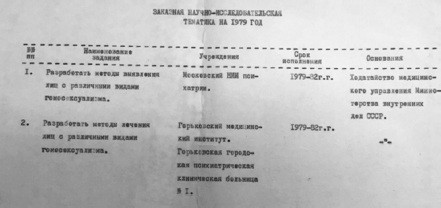
Figure 15 ‘Requested Research Topics for the Year 1979’
REQUESTED RESEARCH TOPICS FOR 1979
|
Name of the task |
Institution |
Deadline |
Basis |
|
|
1. |
to design methods of identification of individuals with various types of homosexuality |
Moscow Research Institute of Psychiatry |
1979–82 |
Request of the Medical Directorate of the Interior Ministry of the USSR |
|
2. |
to design methods of treatment of individuals with various types of homosexuality |
Gorkii Medical Institute. Psychiatric clinical hospital 1 of the city of Gorkii96 |
1979–82 |
The tasks assigned to doctors from the Moscow Department of Sexopathology and Yan Goland were different: while Goland was expected to provide methods of treatment of homosexuality, the Moscow sexopathologists were expected ‘to design methods of identifications of individuals with various types of homosexuality’ – a new task for the Department of Sexopathology. Considering the context of MVD manuals on homosexuality in prisons, these methods were apparently required to identify homosexuals in the cohorts of prisoners with a view to conducting individual educative work with them or providing medical treatment. It is also possible that a request for ‘methods of identification of individuals with various types of homosexuality’ was due to the MVD’s desire to equip police and investigators with not only physical but psychiatric evidence of the suspect’s homosexuality. Such evidence was important to secure a sodomy conviction, especially under the campaign for ‘socialist legality’.
Dan Healey tells us that in the 1970s the number of forensic examinations of homosexuals increased and forensic experts sought to come up with new methods of identifying homosexuals.97 One such expert was Il’ya Blyumin of the Moscow Bureau of Forensic Medical Expertise, whose speciality was the forensic detection of sodomy. Blyumin offered to measure sphincter muscle tone to identify receptive partners and take swabs from the suspect’s penis for chemical analysis.98 The growing availability of this forensic medicine, as Healey argues, could account for the increase in convictions for sodomy observable from the late 1960s.99 It may well be possible that requests from the Medical Directorate to design methods of identifying homosexuals were dictated by a similar willingness to assist regular police in capturing homosexuals.
Between private and public: Yan Goland’s medical treatment of homosexuality in the 1970s
The ambiguous understandings of homosexuality in the MVD texts and correspondence paralleled a similar ambiguous standing of homosexuality in Soviet society – male homosexuality was criminalised, but medical treatments for it were available nevertheless, albeit unofficially. Yan Goland’s medical practice of treating homosexuality was not unique in its contradiction with official ideology – other health practices, inconsistent with the official Soviet views, existed during this time. For instance, Larisa Honey tells us that during the 1970s ‘alternative group health clubs’ began to emerge in Soviet society: the members of these clubs studied ‘everything that was forbidden to study’, including astrology and yoga, and these clubs ‘existed half-legally’.100 New members of the clubs were invited by ‘word of mouth’ and although their activities were forbidden, ‘they were somehow available and actively pursued’.101
Goland’s practice appears similar to the health clubs described by Honey: although medical treatment of homosexuality was not an institutionalised practice, his prospective patients managed to find their way to his consultation room. They did so either through mutual acquaintances or by a recommendation from the doctors working in the Department of Sexopathology, where they first went to seek medical help. One of Goland’s patients recalled in his diary his visit to the Department of Sexopathology, where Pavel Posvyanskii advised him to go to Gorkii and seek help from Goland:
He [Posvyanskii] listened to me, asked several questions and said that he was very optimistic. He said that I needed to go to Gorkii, where a very good doctor Y. G. Goland lived and who had ‘an elaborate system of treatment’ and ‘good results’. I was so happy – a famous sexologist from Moscow told me that I could still be rescued!102
Goland’s practice of medical treatment of male homosexuality stood in contrast not only with its official status as a crime: it was also different from the practices of other sexopathologists, who believed that medication was an important part of medical treatment for homosexuality. Although we still need to learn a lot about these practices, from existing accounts we know that it was not uncommon for Soviet psychiatrists to rely heavily on medication when treating homosexuality. Its use was advocated by Svyadoshch and Derevinskaya, and acknowledged by doctors from the Department of Sexopathology. Masha Gessen has documented the use of heavy medication in medical treatment of lesbians.103 Against the backdrop of all these personally invasive practices, Goland’s practice stood out as more ‘lenient’ and ‘alternative’. Goland knew too well what crass and barbaric treatments his patients had been offered by doctors in their cities’ local clinics. In one of his unpublished reports, presented at a conference in Tambov in 1974, Goland quoted a patient: ‘When my parents learnt about my malady, they offered to castrate me and in the clinic where I went I was offered to be made sexually impotent (predlozhili sdelat’ impotentsiyu). I spent one month in a psychiatric hospital without receiving any treatment.’104
Honey tells us that the alternative health clubs in the 1970s were ‘a collective space’ that offered ‘support for people to develop their individual talents and personalities’.105 Similarly, in the 1970s Goland began group sessions of psychotherapy for homosexuality, as opposed to administering it individually to each patient. In one of his reports produced in the 1970s, Goland explained why group psychotherapy was more effective:
We believe it is expedient to begin the first group session by introducing to the group a patient who had completed his psychotherapy course for homosexuality and who is leading an active heterosexual way of life. Such an introduction is a powerful psychotherapeutic factor. It breaks the silence between the members of the group; they become active at once. Soon patients get out of their state of hesitation, getting into productive work (vklyuchayas’ v produktivnuyu raboty). A working and optimistic atmosphere is created in the group; medical re-education (lechebnoe perevospitanie) in the collective and with the help of the collective starts from the first session … A feeling of belonging to the group is being formed in each patient.106
Yet unlike Honey’s alternative health clubs, Goland’s group psychotherapy sessions were not about promoting individuality. The very goal of the treatment, the suppression of the individual’s desire and its subordination to the needs of society, implies that individuality was supressed rather than encouraged. Goland seemed relatively intolerant of those who failed to actively participate in the collective treatment and branded such individuals as ‘passive, weak-willed, unenergetic patients’ – these were unsuitable for his psychotherapy.107
Health clubs as described by Honey and Goland’s medical practice both thrived in their unique positions on the borders of public and private, official and unofficial. Both benefited from the process of ‘privatisation’, which, as Vladimir Shlapentokh has argued, had been under way in Soviet society since the mid-1950s.108 Such ‘privatisation’ manifested itself in the emergence of ‘totally private institutions’ of family and friends, the growth of ‘unofficial public life’ in civil society and the exploitation of Soviet citizens’ positions for personal gains.109 Goland’s practice is also evidence of the recent scholarly consensus about the fluidity of public and private boundaries in Soviet society, where, as Lewis H. Siegelbaum has argued, ‘the private is neither hermetically sealed nor necessarily in antagonistic relation to public spheres’.110
On the one hand Goland’s practice was a totally private enterprise. It was in the interest of both the doctor and the patient that what was going on in Goland’s consultation room did not transcend its borders. Goland carefully selected his patients to make sure that they would be genuinely committed to the goal of elimination of their homosexuality and that they would be unlikely to experience a ‘relapse’. The latter, as Goland explained to me, was very undesirable, since if the patient got caught by the police, it could create unnecessary trouble for him. Therefore, before starting the treatment Goland conducted a short interview with his patients to establish the seriousness of their intentions, asking his patients whether they would come to him for treatment if homosexuality was not punishable in the Soviet Union. A negative answer would signal the patient’s scepticism and lack of commitment, making him unsuitable for treatment. If a patient hoped that his involvement in psychotherapy would render him immune to the police or at least moderate his sentence in case of his getting caught, then he would also be turned down.111
Both Goland and his patients understood the importance of keeping the patients’ identities anonymous. Going to the doctor might be a risky affair – especially if the local law-enforcement agencies knew about the kinds of treatment Goland offered. When writing to Goland, his patients were apprehensive about the possibility of their homosexuality becoming known to their peers and they asked him to be careful in his responses. Indeed, as Arthur Clech has shown, many gay men feared that their homosexuality would be made public – they feared both criminal prosecution and the publicity given to their homosexuality.112 Goland understood the predicament of his patients, and elsewhere in his papers argued that privacy was the main prerequisite for successful treatment. In one of them, for example, he insisted that the true diagnosis of homosexual patients should not be known to anyone but the doctor. If anyone else enquired about the diagnosis of homosexual patients, the doctor was supposed to say that they were ‘neurotics’: ‘A patient has to be sure that nobody, except for his doctors, knows about his true diagnosis. For everyone else he is merely a neurotic.’113
While Goland spared no efforts to maintain the privacy of his patients, he attempted to institutionalise his practice as an official enterprise, making it public. Such balancing between public and private was characteristic of many unofficial entities and enterprises that had appeared in Soviet society since the 1950s. Juliane Fürst tells us about kompaniya – a network of like-minded friendship circles among Soviet youth in the 1950s and 1960s.114 These were not random gatherings of acquaintances, but ‘friendship circles with a spirit of political and social reawakening’.115 The very nature of these networks meant that they would be ‘relegated to the private sphere’ (in a customary interpretation of the public and private divide), but at the same time the members of these networks ‘demonstrated a desire to be’ or ‘create a public sphere’.116 Regarding the informal health clubs of the 1970s, Larisa Honey notes a similar tendency to ‘create’ a public sphere: she tells us that despite the fact that these clubs existed ‘half-legally’, their members had a ‘certain modicum of officialdom’ by the introduction of a system of membership cards.117
Yan Goland also desired to ‘create’ a public sphere and add a sense of officialdom to his practice. He had tried this in 1969, by suggesting to Pavel Posvyanskii that a specialised health centre providing treatment of sexual perversions should be inaugurated in Gorkii. Back then, his plan failed due to allegedly insufficient funding. On 24 August 1974 Goland made another attempt to institutionalise his practice and bring the problem of treating homosexuality into the public domain; this time he wrote to a major health journal, Zdorov’e, asking to advertise his services on the medical treatment of homosexuality (Figures 16 and 17). Writing to the journal, with a print run of ten million copies, he framed the problem of sexual perversions as a public concern which needed to be addressed.118 His letter is rare evidence of how Soviet doctors attempted to frame homosexuality as a medical rather than a police problem, and aimed to present this point to a wider readership (as opposed to merely discussing it with their peers in specialist literature):
Dear editors!
Our sexological consultation room provides treatment for sexual perversions; perhaps we are the only specialists who provide such treatment – we do that not episodically, but systematically. Over the past eight years we have examined several dozen patients – thirty patients out of them were cured. We have designed a method of psychotherapy of sexual perversions, which has been described in a number of articles, published in various editions.
Our address to you is inspired by the following considerations. In the milieu of homosexuals (this is the most common type of perversion) there is a widespread opinion that sexual deviations are congenital and cannot be eliminated. These opinions have nothing to do with reality, and most importantly, they prevent homosexuals from seeking medical help and therefore facilitate the reinforcement of a homosexual lifestyle and, possibly, the spread of homosexuality. The persistence of such a view (as well as of other misconceptions) is underpinned by the absence of accessible scientific information on the nature of this disease and possibilities of its treatment. Unsuccessful treatment may also be the reason for it. Besides, the search for medical help often yields no results, since most doctors, including psychiatrists and sexopathologists, have no experience in treatment of such disease and do not even know where their patients could be referred. Many of our patients spent several years seeking help before they reached us. Some of them wrote letters to the editors of Zdorov’e magazine and in most cases they received no response.
In view of the above, we think it is useful for Zdorov’e magazine, the only popular science journal covering the problems of sexopathology, to publish an article on sexual perversions, whose task would be to raise correct awareness (pravil’no orientirovat’) of the aforementioned patients on the questions of origin as well as possibility of treatment of sexual perversions.
For your information: according to the foreign data, the number of homosexuals alone is about 4 per cent of the whole population. Even if we assume that this figure is lower under our conditions, although the foundation for such an assumption would be minimal, nevertheless, behind this figure there stand a great many tragic and crippled lives and even suicides.
If you share our opinion about the usefulness and relevance of such an article in your magazine and if you do not refuse to accept it from us, then we ask you to inform us on the size and tone in which this article should be written.
One more important aspect of this publication – (if all aspects can be squeezed into one article) – is to indicate to parents the possible consequences of their mistakes and blunders (promakhi) in their education of their children, which often seem rather innocuous.
Regards, Yan Goland, Head of the Department119
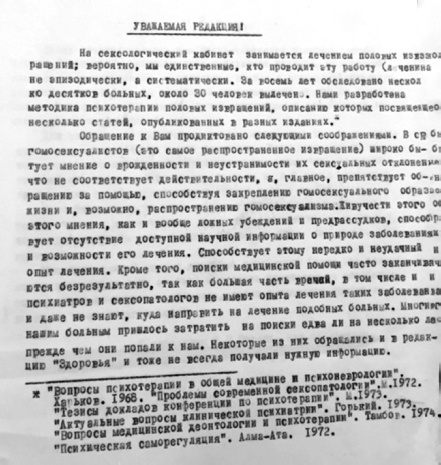
Figure 16 Yan Goland’s letter to Zdorov’e journal (1974), p. 1

Figure 17 Yan Goland’s letter to Zdorov’e journal (1974), p. 2
In his letter Goland argued that the medical treatment of homosexuality was meant for the public good – if left untreated, homosexuals could facilitate dissemination of a ‘homosexual lifestyle’ and could even ‘spread’ it further. Another aspect of his argument – presentation of homosexuality as a disease that crippled one’s life and led one to suicide – was presented as a matter of public significance. Like male impotence, framed by sexopathologists as an issue with deep societal implications, homosexuality was presented by Goland as an issue meriting similar concern. The allusion to suicide appears to be an especially compelling argument – in the Soviet context such an act would be construed as an affront to the socialist system, which had failed to provide all the necessary conditions for an individual to have a fulfilling life. Kenneth M. Pinnow has noted that in the Bolshevik cosmology of the early Soviet years, suicide violated ‘idealised conceptions of the collective as a space where the individual would achieve genuine self-realisation as a member of the group’.120 Goland’s argument had similar undertones and can be interpreted as a tacit suggestion about the relevance of his enterprise to the plans of the Soviet state to sustain a society with productive citizens untroubled by sexual disorders.
Yet Goland was treading on dangerous ground. As shown in Chapters 2 and 3, most sex educators and sexopathologists sought to downplay the prevalence of homosexuality in the Soviet Union. Goland, in contrast, suggested that the rates of homosexuality in the Soviet Union were akin to elsewhere in the world, thereby challenging the officially authorised discourses. This, apparently, was one of the reasons why his letter was never published. Indeed, from the point of view of the official policy on homosexuality, medical treatment of such individuals in Soviet society was completely unnecessary. Every possible measure had already been taken by the Soviet government to prevent homosexuality from arising – sex education was implemented to discourage children from lust, which could, in turn, lead to homosexuality. Various collectives existed to discourage the citizen from thinking about his sexual urges, even more so homosexual ones, and rechannel them for the benefit of society. Last but not least, criminal sanctions were in place to make sure that those who decided to live out their homosexuality were not left unpunished. With so many existing preventative options, the advertisement of a medical treatment of homosexuality would be an official acknowledgment that all these measures had failed.
We still have a lot to learn about the attempts of Soviet sexopathologists to convert their unofficial practice of treating homosexuality into an official enterprise; to do so would have legitimised homosexuality as a medical matter and would have inevitably challenged the official framing of homosexuality as a crime. Another sexopathologist whose practice would be worth investigating was Abram Svyadoshch. In 1972 he inaugurated the country’s first family guidance centre, whose aim was to consult families and assist them in having a happy family life.121 A wide range of specialists was to attend to the needs of the centre’s prospective patients: sexopathologists (among them Svyadoshch himself), psychotherapists, psychologists and gynaecologists.122 According to Literaturnaya gazeta, matters between the doctor and the patient would be discussed in private settings and the patients’ anonymity would be a priority: ‘There are consultation rooms designed for private conversations (doveritel’naya beseda) with the doctor … And one more important detail – patients will not be asked to provide documents. Not even a last name.’123 The author of the article noted that such anonymity inclined patients to a greater confidence and trust in their doctor: ‘The anonymity of the appointment allows for the patient to ask questions bravely.’124 Unquestionably, the centre’s emphasis on privacy and anonymity was an act of continuing ‘privatisation’ in Soviet society in the 1970s, and such privatisation would certainly attract homosexuals seeking treatment while escaping the gaze of the state. The relationship between doctor and patient, bound by shared secrecy and commitment to keep matters private, was an effective push against that state’s desire to intervene in private life.
Lev Shcheglov, a Soviet and Russian sexologist and former Svyadoshch trainee, has confirmed this. As Shcheglov has revealed, Svyadoshch actively defended the privacy of his patients. One day a KGB officer turned up on the doorstep of Svyadoshch’s office, demanding to see a medical file of a former patient who apparently interested the KGB.125 Svyadoshch refused to comply, referring to ‘patient confidentiality’ (vrachebnaya taina).126
Conclusion
In the 1970s discussions of homosexuality among MVD officials were increasingly influenced by the medical findings of Soviet sexopathology. From 1973 onwards, MVD officials consistently consulted Soviet sexopathologists, commissioning them with scientific projects on designing methods for the medical treatment of homosexuality. In their discussions on the struggle with homosexuality in prisons, MVD officials also drew on existing sexopathological texts, acknowledging that homosexuality was in fact a disease. Yet, despite the MVD’s drift towards medical approaches to homosexuality, police methods remained relevant – in their discussions MVD officials stated that homosexuals should be both treated and prosecuted.
Perhaps, animated by the MVD’s interest in the medicalisation of homosexuality, Soviet sexopathologists sought to push the issue of homosexuality further into the medical domain. In their behind-the-scenes interactions with MVD officials, they argued that consensual sodomy should be decriminalised on medical grounds, yet to no avail (the subject matter of these off-the-record discussions remains obscure and the answers are likely to lie in classified MVD and KGB archives). Likewise, in their manuals on instructions for MVD officials on how to deal with same-sex activity in prisons, they insisted on the utility of their sexological expertise in efforts to combat homosexuality and suggested that prison officials heeded them. The growing influence of sexological expertise on homosexuality appears to have implications for Soviet homosexual men and women who now were under threat of not only prosecution, but also being subjected to medical treatment. The evidence for this claim can be found in the perestroika press; for example, in December 1988, the Soviet youth journal Molodoi kommunist published a letter sent by a homosexual man who identified himself as ‘Volodya’. The young man confessed that he had ‘spent a year and a half in prison and was on “chemo” (khimiya) there’.127 Although doctors warned that the medical treatment of homosexuality in prisons could be conducted only if the prisoner’s consent was secured, and insisted on the utility of psychotherapeutic conversations with prisoners, apparently these recommendations were not always observed.
The ambiguous understanding of homosexuality in the MVD texts throughout the 1970s paralleled a similarly contradictory standing of homosexuality in Soviet society at large (although this was certainly not unique to the Soviet case). Although homosexuality was a crime, some doctors provided medical treatment for it. Their enterprise thrived on the growing privatisation of Soviet society and the blurred boundaries between public and private borders. Locating their practices in the private realm, some Soviet sexologists attempted to go public – they wanted to institutionalise their practice and claim their medical authority over the issue. One such doctor was Yan Goland, who attempted to bring the issue of the absence of medical treatment of homosexuality into the public realm of newspapers. The initiation of such public discussion might have triggered an evolution of social values and understandings of homosexuality, and such evolution, in its turn, could have brought the issue of the decriminalisation of sodomy to the fore. Possibly cognisant of the consequences of such discussions, the editors of the newspapers chose not to publish Goland’s article, and, as I showed in Chapter 4, this was a typical response of the Soviet state to any grassroots initiatives regarding homosexuality.
Notes
1Daniel’bek, Polovye izvrashcheniya, p. 91.
2Anatolii A. Portnov, Predislovie to Problemy sovremennoi seksopatologii: Sbornik trudov, ed. Anatolii A. Portnov (Moscow: Moskovskii nauchno-issledovatel’skii institut psikhiatrii, 1972), p. 5.
3Ibid.
4Ibid.
5Edwin Bacon and Mark Sandle, eds, Brezhnev Reconsidered (Basingstoke: Palgrave Macmillan, 2002); Dina Fainberg and Artemy Kalinovsky, eds, Reconsidering Stagnation in the Brezhnev Era (New York and London: Lexington, 2016).
6Kon, Sexual Revolution in Russia, p. 94.
7Ibid.
8Ivan F. Yunda, ‘Sostoyanie i perspetkivy izucheniya polovykh rasstroistv urogenital’nogo geneza’, in Problemy seksopatologii i besplodiya, ed. Ivan F. Yunda (Kiev: Zdorov’ya, 1973), p. 3.
9Ibid.
10V. I. Myasyuk and L. P. Pavlova, ‘Spetsializirovannaya pomoshch’ bol’nym stradayushchim polovymi rasstroistvami’, in Problemy seksopatologii i besplodiya, ed. Ivan F. Yunda (Kiev: Zdorov’ya, 1973), p. 17.
11Michele Rivkin-Fish tells us that ‘in the early 1970s, demographers announced that below-replacement fertility rates in European regions of the USSR amounted to an urgent “demographic crisis”’. See: Michele Rivkin-Fish, Women’s Health in Post-Soviet Russia, pp. 97–8.
12Prikaz ministra zdravookhraneniya  920 ot 22 noyabrya 1973 goda. Collection of the Department of Sexopathology of the Moscow Research Institute of Psychiatry.
13Ibid., 1–2.
14Ibid., 2.
15Ibid.
16Prilozhenie k prikazu Ministerstva zdravookhraneniya SSSR 920 ot 22 noyabrya 1973 goda. Polozhenie o Vsesoyuznom nauchno-metodicheskom Tsentre po voprosam seksopatologii, 4. Collection of the Department of Sexopathology.
17On the dispute over homosexuality within the American Psychiatric Association, see: Bayer, Homosexuality and American Psychiatry.
18Goland, ‘O stupenchatom postroenii psikhoterapii’, pp. 473–86.
19Abram M. Svyadoshch, Zhenskaya seksopatologiya (Moscow: Meditsina, 1974).
20Ibid., p. 164.
21Dickinson, Curing Queers, pp. 66–7.
22Svyadoshch, Zhenskaya seksopatologiya, p. 164.
23Ibid.
24Ibid.
25Posvyanskii, ‘Vvedenie v sovremennoe uchenie’, p. 79.
26Ibid.
27Ibid., p. 82.
28Ibid., p. 83.
29Ibid.
30Ibid.
31Kon, Klubnichka na berezke, p. 359.
32The Soviet dissident movement arose in the late 1960s. On Soviet dissidents, see: Philip Boobbyer, Conscience, Dissent and Reform in Soviet Russia (New York: Routledge, 2005).
33Among more recent works, see: Rebecca Reich, ‘Inside the Psychiatric Word: Diagnosis and Self-Definition in the Late Soviet Period’, Slavic Review 73, no. 3 (September 2014): 563–84. For earlier works on Soviet psychiatric abuse, see: Sidney Bloch and Peter Reddaway, Psychiatric Terror: How Soviet Psychiatry Is Used to Suppress Dissent (New York: Basic Books, 1977).
34Mark Field, ‘Commitment for Commitment or Conviction for Conviction: The Medicalisation and Criminalisation of Soviet Dissidence, 1960–1990’, Soviet and Post-Soviet Review, no. 3 (1995): 289; Healey, ‘Russian and Soviet Forensic Psychiatry’, 79.
35Harvey Fireside, Soviet Psychoprisons (New York: Norton, 1979), pp. 36–7.
36Ibid., p. 37.
37Pavel Posvyanskii, ‘Moskovskii nauchno-issledovatel’skii institut psikhiatrii MZ RSFSR. Otdelenie seksopatologii’, 1973. Archive of the Department of Sexopathology.
38Interview with Yan Goland, 1 April 2017, Nizhnii Novgorod.
39Ibid.
40I have been unable to find any minutes or transcripts of this meeting in the Central Archive of Moscow (TsMAM).
41Posvyanskii, ‘Moskovskii nauchno-issledovatel’skii institut’, 4.
42M. D. Kovrigina, ‘Tsentral’nyi Institut Usovershenstvovaniya vrachei’, in Bol’shaya sovetskaya entsiklopediya, 3rd edn, vol. 27 (Moscow: Sovetskaya entsiklopediya, 1986), pp. 482–3.
43Posvyanskii, ‘Moskovskii nauchno-issledovatel’skii institut’, 7. In his report, Posvyanskii also referred to the Sanitary Department as the ‘Directorate of Medical Service of the Ministry of Internal Affairs of the USSR’ (Upravlenie Meditsinskoi Sluzhby – UMS MVD SSSR).
44Posvyanskii, ‘Moskovskii nauchno-issledovatel’skii institut’, 10.
45Hardy, GULAG after Stalin, p. 194.
46Ibid., p. 195.
47Healey, Russian Homophobia, p. 45.
48Ibid., p. 45.
49In his memoirs Mikhail Stern, who served a sentence in one of the Soviet colonies in the 1970s, remembered that ‘homosexual violence was a routine part of life in the camps’. He recalled: ‘At night in the barracks we could hear screams that quickly went away as a gang of rapists threw a blanket over a fresh victim and smothered his face. There were usually five of them – four to hold the victim’s arms and legs while the fifth raped him. An inmate who had been forcibly sodomised by other inmates was referred to as a “pederast”, and the word itself was the deadliest of insults.’ See: Mikhail Stern and August Stern, Sex in the USSR (New York: New York Times, 1980), p. 261. For other mentions of homosexual violence in late Soviet prisons, see: Kozlovskii, Argo russkoi gomoseksual’noi subkul’tury, pp. 95–110.
50Healey, Russian Homophobia, p. 45.
51Ibid., pp. 45–6.
52For a brief history of the department, see: N. N. Romanov and V. F. Nekrasov, ‘Meditsinskoe Upravlenie’, in MVD Rossii: Entsiklopediya, ed. Vladimir F. Nekrasov (Moscow: Olma, 2002), p. 269.
53Posvyanskii, ‘Moskovskii nauchno-issledovatel’skii institut’, 10.
54Ibid., 7.
55S. A. Shchelkunov, Aktual’nye problemy ispravleniya i perevospitaniya osuzhdennykh zhenshchin: Sbornik materialov Vsesoyuznogo soveshchaniya politrabotnikov zhenskikh ITK (Moscow: Politotdel ITU MVD SSSR, 1974).
56Ibid., p. 3.
57Ibid., pp. 4–5.
58V. N. Popov, ‘Meditsinskoe obsluzhivanie lits, lishennykh svobody’, in Aktual’nye problemy ispravleniya i perevospitaniya osuzhdennykh zhenshchin, ed. S. A. Shchelkunov (Moscow: Politotdel ITU MVD SSSR, 1974), p. 105.
59Ibid., p. 103.
60Ibid., p. 105.
61Ibid., p. 108.
62Stella, Lesbian Lives, p. 48.
63Derevinskaya, ‘Materialy k klinike’. Derevinskaya also presented the findings of her dissertation in her conference papers. See: Abram M. Svyadoshch and Elizaveta M. Derevinskaya, ‘K probleme patologii vlecheniya’, in Materialy vyezdnoi sessii prezidiumov Vsesoyuznogo i respublikanskikh obshchestv nevropatologov i psikhiatrov Kazakhstana i respublik Srednei Azii, 21–23 aprelya 1964 g. (Alma-Ata: Kazakhskoe respublikanskoe obshchestvo nevropatologov i psikhiatrov, 1964), pp. 64–7.
64Svyadoshch, Zhenskaya seksopatologiya, pp. 161–7.
65Aina G. Ambrumova and Nikolai D. Kibrik, Metodicheskie rekomendatsii po profilaktike gomoseksual’nogo povedeniya v ispravitel’no-trudovykh uchrezhdeniyakh (Moscow: Glavnoe upravlenie ispravitel’no trudovykh uchrezhdenii MVD SSSR, 1978).
66Ibid., p. 1.
67Ibid.
68Ibid., p. 4.
69Ibid., p. 12.
70Ibid., p. 7.
71Ibid., pp. 8–9.
72Ibid., p. 26.
73Ibid.
74Ibid., p. 27.
75Ibid., p. 13.
76Ibid.
77Posvyanskii, ‘Moskovskii nauchno-issledovatel’skii institut’, 7.
78Ambrumova and Kibrik, Metodicheskie rekomendatsii, p. 14.
79Viktor Pirozhkov, Psikhologicheskie osnovy perevospitaniya osuzhdennykh v vospitatel’no-trudovykh koloniyakh (Moscow: Akademiya MVD SSSR, 1979).
80Ibid., p. 3.
81Ibid., p. 186.
82Ibid., pp. 186–7.
83Ibid., p. 187.
84Ibid., p. 190.
85Ibid.
86Ibid., p. 189.
87Ibid., p. 192.
88Ibid.
89Ibid.
90Ibid., p. 191. Pirozhkov suggested that such medical examination with a view to identifying homosexuals was common practice in penal colonies.
91Ibid., p. 192.
92Ibid.
93Ibid.
94Ibid.
95Ibid.
96Zakaznaya nauchno-issledovatel’skaya tematika na 1979 god. Yan Goland’s Archive.
97Healey, Homosexual Desire, p. 232.
98Ibid., p. 239. Blyumin wrote up all his findings in a dissertation, which he defended on 29 November 1970 in the Medical Research Institute of Forensic Medicine of the MZ USSR. See: Il’ya G. Blyumin, ‘Materialy k ekspertise polovykh sostoyanii: Obosnovanie sudebnomeditsinskikh kriteriev nekotorykh polovykh situatsii muzhchin’ (Dissertatsiya na soiskanie uchenoi stepeni kandidata meditsinskikh nauk, Glavnoe Upravlenie zdravookhraneniya mosgorispolkoma byuro sudebnomeditsinskoi ekspertizy, 1970). New evidence shows that Ivan G. Blyumin received training at the Department of Sexopathology in 1973. A report titled ‘A list of doctors who underwent specialisation in the Department of Sexopathology in 1973’ lists his name. See: Anonymous, Spisok vrachei, proshedshikh spetsialisatsiyu v otdele seksopatologii za 1973 god. Archive of the Moscow Department of Sexopathology.
99Healey, Homosexual Desire, p. 262.
100Larisa Honey, ‘Pluralizing Practices in Late-Socialist Moscow: Russian Alternative Practitioners Reclaim and Redefine Individualism’, in Soviet Society in the Era of Late Socialism, 1964–1985, ed. Neringa Klumbyte and Gulnaz Sharafutdinova (New York and London: Lexington, 2014), p. 136.
101Ibid.
102Anton’s diary, 1971. Written account of Goland’s former patient about the treatment for homosexuality that he was administered. Yan Goland’s collection.
103Gessen, Rights of Lesbians and Gay Men.
104Yan Goland, ‘Metodika psikhoterapii gomoseksualizma’, unpublished paper presented at a conference in Tambov, April 1974. Yan Golland’s collection.
105Honey, ‘Pluralizing Practices in Late-Socialist Moscow’, p. 139.
106Yan Goland, ‘Kompleksnaya sistema psikhoterapii gomoseksualizma’. Goland’s unpublished and undated conference paper, 4.
107Ibid.
108Shlapentokh, Public and Private Life of the Soviet People, p. 153.
109Ibid., p. 154.
110Siegelbaum, ‘Introduction: Mapping Private Spheres’, p. 3.
111Interview with Goland, 1 April 2017.
112Clech, ‘Between the Labor Camp and the Clinic’, 19.
113Yan Goland, ‘Metodika psikhoterapii gomoseksualizma’.
114Fürst, ‘Friends in Private, Friends in Public’, p. 230.
115Ibid., p. 244.
116Ibid.
117Honey, ‘Pluralizing Practices in Late-Socialist Moscow’, p. 136.
118Anonymous, ‘Zdorov’e’, in Bol’shaya sovetskaya entsiklopedia, 3rd edn, vol. 11 (Moscow: Sovetskaya entsiklopediya, 1972), p. 442.
119Yan Goland, letter to Zdorov’e journal with a proposal to advertise his medical services for the treatment of homosexuality, 24 August 1974. Yan Goland’s archive.
120Kenneth M. Pinnow, Lost to the Collective: Suicide and the Promise of Soviet Socialism, 1921–1929 (Ithaca and London: Cornell University Press, 2010), p. 63.
121A. Zakharov, ‘Sem’ya zhdet soveta’, Literaturnaya gazeta 14 (5 April 1972): 13.
122Shcheglov, ‘Medical Sexology’, p. 156.
123Zakharov, ‘Sem’ya zhdet soveta’, 14.
124Ibid., 14.
125One of the Soviet homosexual men interviewed by Sonja Franeta had been in the KGB’s lists of homosexuals from the age of sixteen: Franeta, Rozovye flamingo, p. 122.
126Interview with Lev Shcheglov by telephone, 7 March 2017.
127Novikov, ‘Sindrom “Trekh obez’yanok”’, 68–70.