
4
Those few historians who have attempted to write the history of Soviet sexuality concur that, from the 1930s through to the Soviet collapse, Soviet society and especially the Soviet state were deeply hostile to anything that deviated from ‘traditional’ sex in the bedroom.1 Sex was generally deemed a topic unfit for public discussion, and any deviations from ‘normal’ sexuality were condemned and criminalised by Soviet law.2 And yet, despite these long-standing and institutionalised prudish attitudes towards sex and hostility towards homosexuality, during the late Soviet period a group of legal scholars spoke out in favour of decriminalising consensual sodomy. This is in sharp contrast to the conventional view of the Brezhnev period as a time of stagnation and sexual conservatism and offers a window onto a very different dimension of that period – and yet we know very little about it. The fact that these debates took place has been noted by pioneering scholars of Soviet sexuality Igor Kon and, more recently, Dan Healey, yet neither has discussed them in much detail.3
The emerging scholarship on the Brezhnev era offers a more nuanced account of this period, challenging its characterisation as a time of mere stagnation. Mark Sandle has argued that although scholars customarily view the Brezhnev years as ‘an era dominated by the orthodox platitudes of the official ideology’, intellectual life during this time was characterised by ‘struggle, conflict and creativity’.4 More recent studies have also emphasised that the Brezhnev era was accompanied by ‘the liberalisation of social, economic, and political life’ and ‘a dialogue among different socialist publics as well as state authorities’.5 This chapter will add to this perspective, showing that similar trends were evident among legal scholars who discussed and challenged the criminal status of homosexuality in their manuals, textbooks and dissertations on sex crimes in the period from 1959 to 1975.
Proponents of decriminalisation of consensual sodomy based their arguments on the nascent expertise of Soviet sexology, positing that the regulation of same-sex desire should be assigned to the realm of medicine rather than law. Some of these scholars went so far as to argue that homosexuality was not a medical issue at all, but a natural variant of human sexuality and hence did not require medical intervention. These arguments invited sharp criticism from conservative scholars, who asserted that homosexuality violated socialist morality and therefore should be punishable by law (some of them even insisted on criminalising lesbianism). In this chapter I will argue that the positions of these two groups of scholars regarding the anti-sodomy statute and criminal status of lesbianism were becoming more pronounced and elaborate under Brezhnev. While proponents of criminalising homosexuality demonstrated increasing hostility towards the idea of relegating the issue of same sex to medicine, strongly opposing any push for decriminalisation, their opponents fiercely argued the opposite, denying that consensual sodomy was a threat to Soviet society.
By examining the debates over the criminal status of homosexuality from the late 1950s up to the mid-1970s, this chapter first contributes to our understanding of the interplay between the broader European movement towards decriminalisation of sodomy and related debates in the Soviet Union. Second, it sheds light on the extent to which Soviet jurists were willing to accept medical knowledge as another form of control over the homosexual body, apart from legal oppression. Third, it challenges the existing scholarly consensus whereby lesbianism was a completely taboo topic in professional and academic circles under Khrushchev and Brezhnev, demonstrating instead that, like male homosexuality, it was a highly debated topic.6 Finally, it lends fresh insight into the events which preceded the Russian Federation’s eventual decriminalisation of sodomy in 1993, showing that calls for decriminalisation had in fact been present for decades in Soviet juridical discourse.
In this chapter I seek answers to the following questions. Did the arguments about decriminalisation of consensual sodomy, which liberal scholars promoted, constitute calls for a genuine liberation, or merely a reassignment of the issue to the realm of medical controls? How did Soviet jurists conceptualise female homosexuality in legal terms and what was their understanding of it? How strongly did a medical view of homosexuality influence legal opinions and shape legal discussions? Why had these debates resulted in decriminalisation of homosexual activity elsewhere in the communist bloc but not in the Soviet Union? I will begin this chapter by looking at the brief discussions of the law on sodomy that took place in the late 1950s in the RSFSR and in the early 1960s in the Latvian SSR during the drafting of new criminal codes in these republics. I then examine the discussion between civilian and MVD scholars of the criminal status of homosexuality in the USSR in the period from 1965 to 1975. The chapter concludes by reflecting on the implications of the discussion and the possible reasons why it did not result in the decriminalisation of consensual sodomy in the Soviet period.
‘The article stays, then’: Soviet jurists and Stalinist sodomy law (1959)
In 1956, three years after Stalin’s death, Khrushchev launched his de-Stalinisation campaign, highlighting the necessity to restore ‘socialist legality’. The terror of the Stalin era was now curbed, and as part of this process, scholars and officials were encouraged to contribute to the liberalisation of Soviet criminal law.7 The study of criminology, which had been effectively proscribed under Stalin, was now gradually reviving, allowing for fresh criminological empirical research to emerge within the MVD as early as 1955.8 This period also witnessed the preparation of new republican criminal codes, as legislative commissions including top Soviet specialists in crime and law were set up and entrusted with the task of reviewing the Stalin-era laws to decide which should remain in force.9 As we shall see, the members of these commissions also discussed the law on sodomy at their meetings; in fact, it seems that there were attempts to moderate the penalty for consensual sodomy, by reducing the maximum sentence prescribed by Article 154a-I from five to three years. Most importantly, at this time there was a possibility that the article criminalising consensual homosexual acts between men could have been abolished, at least in the RSFSR.
References to possible liberalisation of the law first appear in the minutes of a meeting of a subcommittee of the RSFSR Legislative Commission held on 23 July 1959. This subcommittee comprised seven distinguished jurists and legal scholars, and was chaired by Boris Sergeevich Nikiforov.10 As a recommendatory body responsible for proposing changes to the law, the subcommittee put forward a list of reforms of the existing Stalin-era laws, including the law on sodomy.11 The new version of the law, which the Nikiforov commission proposed, read as follows:
Article 100.
In the first part of article 100 to introduce sanction [ustanovit’ sanktsiyu] – deprivation of liberty for the term of up to three years or exile for the same term.
For the second part of article 100 the draft as formulated is as follows:
‘Sodomy committed with means of violence or in relation to a minor or with the use of dependent position is punishable by deprivation of liberty for the term from three to eight years with exile or without.’12
This new version of the law would have reduced the maximum sentence for consensual sodomy from five to three years with no minimum sentence. The proposed amendment to the second article of the law, which penalised aggravated sodomy, would have retained the maximum sentence of eight years but reduced the minimum from five to three years.
One month later, on 27 August 1959, a Commission of Legislative Propositions (Komissiya zakonodatel’nykh predpolozhenii), consisting of fourteen distinguished jurists and criminologists of the RSFSR, chaired by Aleksei Gertsenzon, gathered to approve the draft prepared by the Nikiforov commission.13 The archival transcript of this discussion reveals that at this stage a proposal emerged to abolish the law on consensual sodomy altogether, despite the reduced maximum sentence for consensual sodomy already proposed by the Nikiforov commission:
GERTSENZON – […] Article 100 – sodomy.
Any suggestions regarding the first part [on voluntary sodomy]?
NIKIFOROV – The first part of the law is totally incomprehensible.
STEPICHEV – The first part can be abolished.
GERTSENZON – There are suggestions to abolish the first part. I am opening this up to a vote. Does anyone support the abolition of the first part?
KOROTKOV – We can’t abolish this norm. On what grounds do you want to do that?
GERTSENZON – Are we going to open up a discussion or not? Who is in favour of opening discussion of the article? (2)14 We are not going to discuss it, then. The article stays, then. What are the suggestions regarding the essence of the Article? Here the punishment (repressiya) is to be reduced compared to the previous penalty. Deprivation of liberty for up to three years or exile for up to three years. So, comrades, are we approving the first part of the Article? We’re approving it.
The second part: Any suggestions? No.
The whole article is approved.15
The brevity of the minutes leaves the participants’ motives largely opaque and it is difficult to say whether other members, apart from Nikiforov and Stepichev, who expressed support for decriminalisation, were of a similar opinion, since almost none of them had previously spoken out on this issue. Nikiforov’s role as chair of the subcommittee which proposed reducing the severity of the law and his comment that the law was ‘totally incomprehensible’ would appear to indicate that he was a strong proponent of abolishing the law entirely.
Judging by the reticence of other participants in the discussion of the sodomy law, compared to their extensive contributions on other articles of the Criminal Code, we might speculate that most of the scholars present found detailed discussions uncomfortable. As legal experts they would most likely have been inadequately prepared to objectively examine the issue. As Igor Kon has noted, the ‘suppression of sexual culture’ and absence of ‘adequate understanding of sexuality in the public consciousness’, peculiar to the Stalin era and certainly still prevalent during the early years of Khrushchev’s rule, would have inhibited open discussion.16
Interestingly, despite the Gertsenzon commission approving Nikiforov’s recommended version of the sodomy law, which reduced sentences for both consensual and aggravated sodomy, the proposed changes never became law. The archival sources are silent on the fate of the proposed reforms, which may either have been further reviewed and rejected or quashed by intervention of a higher-level authority. Yet the final version of the law, adopted by the Supreme Soviet of the RSFSR in 1960, differed from the version first proposed by the Nikiforov commission and later approved by the Gertsenzon commission. It read:
Article 121. Sodomy
Sexual intercourse between a male and a male (sodomy) is punishable by deprivation of freedom for a term of up to five years.
Sodomy committed with the use of physical violence, threats or in relation to a minor, or with the use of the dependent position of the victim, is punishable by deprivation of freedom for a term of up to eight years.17
While minimum sentences both for consensual and aggravated sodomy were eliminated altogether, the maximum penalty for consensual sodomy was increased from three years (as the version approved by the Gertsenzon commission had proposed) to five years.
The Latvian case: attempts to criminalise lesbian sexual activity
New sources suggest that the process of revising the sodomy laws of the Stalinist Criminal Code in each of the Soviet republics varied. For instance, in Latvia, discussions about revising the legal treatment of homosexuality had a very different focus. On 24 March 1960, during drafting of the Criminal Code of the Latvian SSR, the head of the Latvian SSR’s law commission considered a proposal from the Riga city directorate of the militia to extend the legal definition of sodomy and to criminalise female same-sex relations. The proposal noted that ‘in practice one may encounter cases of satisfaction of sexual desire between persons of the same sex which do not fall under the definition of “sodomy”, yet these activities also pose a danger to society’.18
The commission reconvened on 14 October 1960, but the minutes of this meeting make no reference to the militia’s proposal. The minutes record that Fridrikson, the chair of the meeting, noted that all the proposals presented to the commission’s meeting in March had been sent to Moscow for review: ‘As you remember, in March we discussed the draft Criminal Code, which was subsequently discussed by academics in Moscow at a meeting in the Juridical Department of the Presidium of the Supreme Soviet of the USSR.’19 He also acknowledged the significance of the RSFSR draft revised Criminal Code as a template for revising the LSSR’s Criminal Code: ‘In our work we were essentially using the RSFSR Code; we were borrowing from the RSFSR draft, which has been approved everywhere.’20 It therefore seems probable that the proposals to criminalise lesbianism were rejected, perhaps by the authorities in Moscow.
The Latvian militia’s proposal to criminalise same-sex relations between women represented a significant shift from the existing Stalin-era sodomy statute, which did not criminalise female homosexual acts.21 Interestingly, the moves to liberalise the law in the early years of Khrushchev’s rule seem to have had a paradoxical effect on the discussion of lesbianism: although lesbianism became the subject of legal discussion for the first time since Stalin’s death, at no point did the liberalising tendencies of Khrushchev’s era encourage, or lead to acceptance or tolerance of, female homosexuality.
On the contrary, the first years of Khrushchev’s rule saw a number of proposals to criminalise female same-sex relations. We can find advocates of such measures in the ranks of Soviet law-enforcement agencies, the GULAG camp directors and the GULAG camp doctors. As noted in Chapter 1, support for these proposals continued through the late 1950s. In 1958 the head of the Siberian GULAG, I. M. Velikanov, concerned about the increasing incidence of sexual relations between women in the Siberian GULAG, petitioned the Presidium of the Supreme Soviet of the USSR with a proposal to impose a criminal penalty for lesbianism.22 Such propositions were the result of a curious amalgam of Khrushchev-era liberalisation and Stalin-era attitudes to sexuality still fresh in people’s minds. Velikanov’s proposal and similar calls to criminalise female same-sex relations were, however, never taken up.
In his more recent work Dan Healey has identified that the Soviet authorities preferred to deal with lesbianism in a medical context, rather than through the criminal law.23 He also noted in his previous work that although female homosexuality was not criminalised by Stalin, the motherhood cult was an important reminder of the purpose of women’s sexuality and thus a deterrent to sexually deviant practices.24 The motherhood cult persisted during the Khrushchev period. The sex education campaign launched under Khrushchev constantly reminded women about their role as mothers, and doctors who attempted to ‘treat’ lesbianism seemed to believe that female homosexuality could be ‘cured’ if a woman succumbed to the instinct of motherhood.25
Homosexuality and debates on its legal status in the 1960s
Discussion of the anti-sodomy law between legal scholars continued after Khrushchev’s removal from power and unfolded against the backdrop of the gradual revival of professional and academic expertise in Soviet criminology, a field of social science effectively proscribed under Stalin.26 As this expertise revived and developed under Brezhnev, so did the range of activities in which Soviet legal and law-enforcement experts were involved. These included efforts to improve criminological expertise within the MVD on how to handle sex crimes. MVD officers were often completely unskilled in the investigation of these crimes and lacked much needed training and expertise.27 In response to these deficiencies, the MVD commissioned several universities to write training manuals for criminal investigators and for its schools. It was in one such manual that the first scholarly examination of the anti-sodomy statute was undertaken.
The manual, titled Investigation of Sex Crimes and published in 1965 by criminologist Mikhail Nikitovich Khlyntsov of the Saratov Legal University, was specifically intended for students and lecturers of the MVD schools. The author depicted the dangers of sodomy in the following terms: ‘The extreme danger of this crime lies in its encroachment on the moral foundations of society and demoralising influence on the psyche of the members of society … The victim of this crime is the prevailing mode of sexual relations in our country, which the law seeks to safeguard.’28 Such an interpretation of the utility of the law on sodomy was consistent with the Soviet public discourse on sex and sexual morality, first widely promulgated by the Khrushchev regime and further promoted under Brezhnev. As Deborah A. Field has shown, the focal point of this discourse was the necessity to prevent Soviet children and adolescents from engaging in sexually immoral behaviour, including casual sexual relations, premarital sex and promiscuity.29 Khlyntsov justified the sodomy law because it upheld communist morality and the very ‘moral foundations’ of Soviet society, which homosexuals, with their ‘debauchery’, threatened to disrupt: ‘The propensity for sodomy in certain individuals can be explained by … their lack of fulfilment with normal means of satisfying sexual desire and the pursuit of new sensations, which attests to their debauchery (razvrashchennost’) and their contempt for moral norms.’30
However, not all scholars specialising in crime and law espoused similar views. During the 1960s some Soviet jurists started to suggest that homosexuality was not necessarily a result of moral perversion and called for a more careful enforcement of the sodomy law. Aleksei Nikolaevich Ignatov (Figure 13) was one such scholar whose pragmatic approach to the law on sodomy was reflected in his manual Liability for Crimes against Morality (1966).31 Ignatov, who later obtained a PhD in jurisprudence from Moscow State University, had taught criminal law at various universities in Moscow since 1953.32 Although he did not suggest in his manual that the law on consensual sodomy be abolished, Ignatov did argue that not all homosexual liaisons between men should be criminalised under the existing legislation. He contended that since Soviet law only criminalised sodomy – or ‘pederasty’ (pederastiya) – then other sexual activities between two men should not be deemed illegal. Ignatov directly criticised Soviet judicial decisions on this issue, in a statement that is surprisingly frank:
We cannot approve of the tendency of some courts to expand the notion of sodomy, placing any satisfaction of sexual desire between men within this category. If two men commit consensual depraved acts between one another [without engaging in anal intercourse], thereby satisfying their sexual desire, they should not be subjected to a criminal penalty, since such actions are not perceived by the Soviet Criminal Code as a crime.33
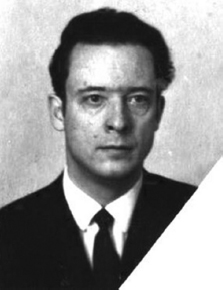
Figure 13 Aleksei Nikolaevich Ignatov
Ignatov had essentially identified a legal loophole: in theory, homosexual men were allowed to engage in any form of sexual activity other than anal intercourse, since the latter was the only practice to be criminalised by law. However, as this passage suggests, judges tended to overlook this fact, and homosexual men were frequently brought before court even for technically legal activities. We know that this was the case under Stalin: Dan Healey tells us about a sodomy trial in 1939, in which the advocate of a defendant accused of sodomy argued that his client may have committed depraved acts, but that these did not constitute sodomy and hence were not illegal. In this case, however, the court rejected this argument, asserting that the act of sodomy had nevertheless taken place (but without specifying how sodomy was defined here).34 Apparently, such incorrect enforcement of the sodomy statute was continuing under Khrushchev; Ignatov was the first jurist to request publicly that its enforcement be brought in line with the law.
Unlike Khlyntsov, who asserted that homosexuality was a result of ‘debauchery’ (razvrashchennost’), Ignatov encouraged his readers not to jump to conclusions, and to consider whether other factors could contribute to the development of homosexuality. In doing so, he presented his readers with arguments derived from the pre-revolutionary Russian forensic and medical literature which suggested that congenital factors could be responsible for homosexuality.35 Ignatov argued that the nature of homosexuality should be explored further in order to ascertain whether it was indeed a ‘pathological phenomenon’; if so, the existing criminal law penalising it should be reviewed accordingly. He argued that ‘the examination of homosexuality’s nature will help to establish the extent to which it ought to be punishable and to facilitate the correct application of the criminal law to it, especially given that the inexpedience of criminal punishment for consensual homosexuality has been repeatedly expressed in the literature’.36 Thus, instead of solely relying on ‘communist morality’ in his approach to homosexuality, as scholars like Khlyntsov had done, Ignatov preferred to ground his arguments in scientific knowledge, reaching back to the pre-revolutionary period to do so.
Ignatov’s tentative suggestion that homosexuality could be a matter of therapeutic, rather than police, concern coincided with the emergence of Soviet sexology or ‘sexopathology’ (seksopatologiya) in the early 1960s, which focused on sexual health issues, including ‘sexual perversions’.37 This development came late, compared to some countries in Eastern Europe, where sophisticated knowledge of sexology had already proven instrumental in calls by legal scholars and sexologists for decriminalisation of sodomy. As I showed in Chapter 3, Czechoslovakian sexologists’ argument that homosexuality was incurable had helped them convince government authorities to cease all forms of legal sanctions applied to homosexual people; this eventually resulted in the decriminalisation of consensual sodomy in 1961.38 The German Democratic Republic followed suit in 1968. There, and one year later in West Germany, homosexual consensual acts between men ceased to be a crime on the grounds that homosexuality was a medical condition and therefore should not be subject to police action.39 Finally, medical arguments framing homosexuality as a disease facilitated the decriminalisation of consensual sodomy in Bulgaria the same year.40
In contrast to the success of sexologists in the socialist bloc countries, the findings of Soviet sexological studies were not yet sufficiently influential to provide a rationale for decriminalisation of sodomy in the USSR. Long-standing negative attitudes towards sexuality and the consequent unwillingness of Party officials to endorse Soviet sexology significantly encumbered its development as a full-fledged science. In Igor Kon’s words, sexopathology was ‘an outcast in Soviet medicine’, and this status affected its research output, which in the 1960s was limited to a modest range of scholarly works.41
In 1966 Pavel Pavlovich Osipov, a jurist from Leningrad University, defended his PhD dissertation ‘Sex Crimes’, which contained a section discussing the law on sodomy.42 In this section Osipov explicitly stated that the biological nature of homosexuality warranted decriminalisation of consensual homosexual acts between men. Unusually for the time, Osipov did not rely on communist ideology in his reasoning; in fact, in the introduction to his dissertation he came close to dismissing communist ideology as a reliable tool of scientific inquiry, arguing that ideology alone could not be the cornerstone of legal research. He wrote: ‘In light of contemporary requirements put before legal science, the study of matters relating to the special part of the Soviet Criminal Code [dealing with sex crimes] should not be confined by a dogmatic analysis of contemporary legislation.’43
Osipov’s preference for an empirical rather than ideological approach was consistent with a new strategy of ‘rationalisation’, which the Soviet leadership adopted in the mid-to late 1960s. This strategy called for the revival of a scientific ethos and encouraged scholars to use ‘scientific methods’ in their research. As Peter Solomon has pointed out, the rationale for this strategy was that it would facilitate the development of society and help the government to address immediate problems through the use of rational and credible expertise.44
The influence of this new ‘rational’ approach extended to legal scholarship and was at the core of Osipov’s arguments for decriminalisation of consensual sodomy. His dissertation offered an elaborate and substantiated argument as to why the law on consensual sodomy should be abolished:
First of all, the desire to satisfy sexual need in a homosexual way may be congenital in nature, that is, conditioned by the biological peculiarities of an organism … As a result, for people endowed with this anomaly, homosexuality is a natural means of sexual fulfilment. That is why the widespread contention, according to which sodomy is always a result of moral depravity, cannot be regarded as valid.45
Such arguments appear to be a call for a genuine liberation – Osipov did not insist that homosexuals should be subject to medical treatment: instead he suggested that homosexual desire is a natural one that does not require any medical intervention. While his colleague Ignatov had tentatively suggested that criminal prosecution of men for their congenital homosexuality might be futile, Osipov further emphasised the futility of criminalisation by explicitly and unequivocally asserting that it was pointless to punish people for desires that were conditioned by nature:
One may ask what goal the legislator pursued when criminalising non-forcible homosexuality, if at issue here are the people with a biologically distorted sexual instinct. There is no doubt that with the help of criminal law it is impossible to rectify this biological anomaly and encourage the individuals in question to satisfy their sexual need in a heterosexual way.46
Similarly, Osipov dismissed communist morality as an adequate frame of reference: ‘In the Soviet legal literature there has never been an attempt to justify criminal liability for consensual sodomy, and the only argument which is usually offered against it – the [resulting] individual’s depravity and his violation of communist morality – cannot be regarded as sufficient.’47
An important pillar of the argument that Osipov advanced in his dissertation was that intimate relations between two consenting adults were very difficult to investigate.48 This was a new note in the debate, and it reflects a significant broader shift in the public and private divide within post-Stalin Soviet society. Osipov’s emphasis on ‘intimacy’ is additional evidence of this change. The growing body of recent scholarship on this issue has challenged the customary understanding of Soviet society as a place where private spheres were impossible. It has demonstrated that these private spheres did exist in the Soviet Union and that the expansion of the private domain was actively taking place under Brezhnev.49 As Lewis H. Siegelbaum shows, the growing Soviet economy of the Brezhnev era facilitated this expansion. This economic growth led to increased availability of separate apartments and individual cars, for example.50 Expansion of private spaces offered new opportunities for people to pursue their private lives – in Steven E. Harris’s words, separate apartments ‘introduced privacy on a mass scale’, while the interiors of parked cars, according to Lewis H. Siegelbaum, ‘might have been used for heterosexual rendezvous and associated activities’.51 It was this Brezhnev-era renegotiation of private and public boundaries within Soviet society and the diminishing ability of the state to intervene in the private domain that appear to underpin Osipov’s argument:
Taking into consideration the exceptionally intimate nature of actions directed at the satisfaction of sexual desire and hampering the effective control over behaviour of the subjects involved, the legislative ban on homosexuality cannot be effective in preventing undesirable forms of sexual desire satisfaction from arising, nor can it stimulate people to behave properly.52
Osipov’s arguments were not unique: elsewhere in the world jurists appealed to the legal concepts of consent and privacy when arguing for decriminalisation of consensual homosexual acts between two adult males.53
Arguments for decriminalisation of consensual sodomy also came from jurists in other Soviet republics, including Yakov Mikhailovich Yakovlev from the Tajik SSR. Like Ignatov and Osipov, Yakovlev was a jurist by training – he graduated from the Department of Soviet Law at Moscow State University in 1933. Subsequently he taught judicial law in various universities across the Soviet Union.54 In his article ‘Liability for Sodomy according to the Soviet Penal Law’ (1968) he supported his argument for decriminalisation of consensual sodomy with references to the experiences of other socialist countries, such as Czechoslovakia and the German Democratic Republic.55 Yakovlev noted that over thirty countries in the world had already abolished anti-sodomy legislation and then wrote: ‘Proposals in favour of elimination of criminal penalties for “consensual homosexuality” between two adults have also been made in our literature. We also believe that criminal liability for homosexuality should be eliminated.’56 In addition Yakovlev argued that homosexuals posing no threat to society should be referred to doctors: ‘Homosexuals, whose sexual perversion was due to pathological alterations of their organism, should be rendered medical help.’57 The basis of these arguments appears to derive from Yakovlev’s awareness that in the city of Gorkii such ‘treatment’ was available – he apparently learnt of this from the treatise Questions of Psychotherapy of Functional Sexual Disorders (1966)58 published by Professor Ivanov, one of the few Soviet sexologists who specialised in the treatment of ‘sexual perversions’ (see Chapter 3). Yakovlev replicated Ivanov’s contention that an ‘unfavourable environment’ and ‘incorrect upbringing’ could trigger homosexual desire.59 He went on to conclude that the effective struggle against deviance could be successful through pre-emptive measures and not legal repression: ‘the fight against homosexuality in the absence of aggravating circumstances has to be conducted not through legal repression, but through correct sex education in family and school’.60
Thus, with the slow development of Soviet expertise in sexology, which framed homosexuality as a matter of therapeutic concern, legal scholars arguing for decriminalisation of sodomy could rely on sexology’s findings to lend scientific credence to their arguments. That appears to be the case with Yakovlev’s arguments. The writing of his article coincided with the publication of Ivanov’s recent work, while previous arguments for sodomy decriminalisation as promoted by Ignatov and Osipov were grounded in outdated sources.
‘The author considers it necessary to criminalise tribadism’: Boris Daniel’bek and his views on homosexuality (1970)
Not all jurists and criminologists supported arguments for decriminalisation. Many of them believed that homosexual relations were a threat to Soviet sexual morality and therefore should not be legalised. In 1970 the Procuracy of the Soviet Republic of Lithuania hosted a conference devoted to sex crimes, which brought together forensic experts and criminologists from various corners of the USSR.61 In his introductory paper, one of the speakers spelled out the fundamental preconditions on which Soviet sexual morality rested:
[At the basis of socialist society] there is socialist morality, that is, the complex of rules and principles defining the citizen’s behaviour in all spheres, including that of sexual relations. Sexual morality is one of the facets of socialist moral consciousness and to deny it means to deny the necessity of moral regulation of the relations between man and woman … The fundamental rules of sexual morality, which determine the mode of sexual relations in the USSR, are the following: sexual relations are permissible only between individuals of the opposite sex.62
This statement gives us a better understanding of what motives lay beneath some legal scholars’ opposition to the decriminalisation of consensual sodomy. It is difficult to say whom the speaker had in mind when mentioning individuals ‘denying’ sexual morality; yet we have already seen that one of the proponents of decriminalisation of consensual sodomy, Pavel Osipov, had indeed stated that outlawing homosexuality solely due to its ostensible infringement of communist morality was not justifiable.63 The paper’s stress on the impropriety of same-sex relations in the Soviet Union and ‘denial’ of sexual morality could represent unspoken anxieties associated with the growing voices of the proponents for decriminalisation of consensual sodomy among some legal scholars.
The introductory statement of the conference also suggests that by 1970 the communist concepts of sex and love, introduced under Khrushchev, had evolved and become more complicated. The Khrushchev-era discourse did not clearly delineate the limits of admissible sexual behaviour – sex educators expressed a variety of opinions as to what the demands of sexual morality were. These demands, as Field tells us, generally revolved around the idea that one had to practise ‘sex within marriage, accompanied by love, preferably for the purposes of procreation’.64 Homosexuality was mentioned only rarely and Soviet moralists never explained its relationship to communist morality.65 However, the conference paper of 1970 clearly defined what sexual practices were permissible in the USSR. It seems plausible that once these rules were clearly defined, they became a frame of reference for conservative scholars which would require them to oppose the arguments of proponents for sodomy decriminalisation more strongly.
One of the most outspoken opponents of decriminalisation was Boris Vasil’evich Daniel’bek (Figure 14) from Azerbaijan State University. He criticised Osipov’s and Yakovlev’s proposals to legalise consensual sodomy in his doctoral dissertation ‘Criminal and Legal Struggle with Sex Crimes’, defended in November of 1970 at the MVD Higher School.66 In his dissertation Daniel’bek drew on a wide variety of sources, including files from the Supreme Court of the USSR, as well as other Soviet Republics and materials from the Procuracy and the Ministry of Interior Affairs. He also made use of ‘philosophical, sociological, medical, psychological, pedagogical, legal literature’.67 Daniel’bek’s dissertation is stored in the library of the MVD Higher School and, unfortunately, is unavailable for viewing, yet its elaborate abstract (avtoreferat) stored at the National State Library of St Petersburg and his subsequently published monograph Sexual Perversions and Criminal Liability (1972) based on his dissertation shed light on its content.68

Figure 14 Boris Vasil’evich Daniel’bek
In his monograph, invoking Osipov’s contention that violation of communist morality was not a sufficient reason to criminalise consensual sodomy, Daniel’bek argued: ‘Negative personality traits, if they infringe on the principles of socialist morality, may be viewed as criminal.’69 He also questioned Osipov’s argument that consensual sodomy should be decriminalised, arguing that: ‘The intimate nature of homosexual acts, conducted on a consensual basis, indeed hampers the prosecution of people involved in it; however, it does not mean that the law against consensual sodomy should be eliminated.’70 Finally, Daniel’bek disagreed with Osipov’s contention that the anti-sodomy law failed to encourage homosexuals to practise heterosexual sex, conceding that: ‘criminal prosecution of homosexuality is not the most effective means of its prevention. Indeed, in order to curb this immoral inclination a combination of societal and medical intervention is needed in the first place; however, one cannot dismiss the educational importance of criminal prosecution.’71
Osipov was not the only target of Daniel’bek’s attack. Jurist Yakovlev from the Tajik University also received his share of criticism. As noted above, Yakovlev had stated that proper sexual education was a better strategy to deal with homosexuality than criminal punishment and that crimes of consensual sodomy were very hard to investigate. Daniel’bek disagreed:
The correct sexual upbringing is indeed an important means of sodomy prevention, including prevention of any other crime in the sphere of sexual relations. However, no matter how tempting it is to base the decriminalisation of sex crimes on this assumption, such a proposition is ill-timed. The contention that criminal cases involving sodomy are rarely encountered is rather controversial … Criminal punishment plays an important role in homosexuality prevention and constitutes a restraining factor on those inclined to such vice. Summing up, we express our strong conviction that the criminalisation of consensual sodomy in our legislation is justified and there are no reasons to alter the existing legislation.72
Underlying Daniel’bek’s arguments was the familiar premise that homosexuality was a vice which law-enforcement agencies had to control:
Homosexuality in the absolute majority of cases is a result of negative conditions which formed a personality … These very conditions lead some people to such a degree of perversion, when normal satiation of sexual desire does not give them normal satisfaction any more and they resort to perversions in order to experience extra thrills (ostrye oshchushcheniya).73
It seems that medical knowledge of sexual perversions which the proponents of decriminalisation readily embraced had not altered Daniel’bek’s opinion. Nor was he willing to take into account the fact that by 1970 consensual homosexual acts had been decriminalised in many countries, or to entertain the possibility that the Soviet Union might follow suit. Instead, he preferred to categorise homosexuality as a crime against morality and consider it a threat to the moral foundations of Soviet society.
More than ten distinguished jurists from various Soviet universities reviewed Daniel’bek’s dissertation and expressed their suggestions and criticism regarding the arguments it proposed. These reports reveal a striking detail about Daniel’bek’s thesis: he argued for criminalising consensual lesbianism and, apparently, due to the reviewers’ disapproval of this idea, this proposal never became part of the published abstract and the subsequent monograph. Daniel’bek’s call for outlawing lesbianism, and the examiners’ various responses to it, constitute rare evidence of ongoing behind-the-scenes debates on the issue. These debates were not confined solely to academic circles but went beyond them to involve high-ranking judicial officials, and therefore could have potentially affected the legal status of female homosexuality in the USSR.
Invoking Daniel’bek’s proposal to criminalise female homosexuality, V. I. Kurlyandskii argued that lesbianism was not as prevalent as sodomy and therefore should not be considered a crime:
So despite the very limited prevalence of tribadism (as evidenced by the data cited by the author), the dissertation proposes to introduce punishments for actions in which this type of sexual anomaly is present. The analogy drawn by the author between tribadism and pederasty is not convincing given the prevalence of the former.74
Another distinguished jurist, Mark Yakubovich, expressed a similar view: ‘The author of the dissertation considers it necessary to introduce criminal liability for tribadism, whose harm he considers to be equivalent to that of sodomy. The argument that tribadism is equal to sodomy is controversial – it is less common than pederasty.’75 Jurist Grigorii Anashkin stated in his report that he and his colleagues disapproved: ‘In our opinion, there are not sufficient grounds for criminalising tribadism between adult women, especially since there is no evidence of the prevalence of this phenomenon, while the author of the dissertation advocates its criminalisation.’76 Finally, the chairman of the Supreme Court of the Azerbaijan SSR, A. G. Ibragimov, stated: ‘The author’s many conclusions should be accepted, with the exception of his proposal to criminalise voluntary tribadism. In our republic, we do not have data on the prevalence of this type of perversion and it cannot be considered so dangerous as to be classified as a criminal act.’77
Surprisingly, none of the reviewers offered to relegate lesbianism to the realm of medicine, instead unanimously arguing that it was a rare phenomenon and therefore did not merit attention. Dan Healey argues that Stalin and his henchmen dismissed the issue of lesbianism as unimportant because same-sex-attracted women had failed to exploit urban spaces for socialising and sexual activity the way homosexual men did. If a strong lesbian culture had existed, Healey’s argument goes, lesbians would also have become the object of criminal prosecution.78 Under Brezhnev such a subculture failed to materialise too: unlike same-sex-desiring males, who, despite the existing criminal penalties, continued to inhabit public spaces in pursuit of socialisation and sex in the 1970s, same-sex-attracted women mostly came to their queer self-realisation in isolation.79 The only place where lesbian relationships enjoyed visibility and were a concern to the authorities was prison, as jurist I. M. Tkachevskii noted: ‘The conclusions made in the dissertation are important for the fight against homosexuality in prisons. Due to the concentration of the members of one sex in isolation from the other, in correctional labour institutions the problem of combating tribadism and sodomy is quite acute.’80
Daniel’bek’s monograph Sexual Perversions and Criminal Liability (1972) did not propose the criminalisation of lesbianism. Apparently influenced by the opinions of his reviewers on the issue, he posited that female homosexuality was not prevalent in the USSR: ‘Soviet law does not criminalise lesbianism and it seems to us … that this is because tribadism is not widely spread and that it is, in essence, a special kind of depraved action.’81 Reducing female homosexuality to merely a type of depraved act, Daniel’bek argued that it was ‘the result of a deep moral corruption’ and even ‘psychopathy’, which should be dealt with by societal and psychotherapeutic intervention. Yet, in his view the issue still merited attention, because sometimes instances of such relationships between women could lead to fatal consequences. To illustrate his point, he provided a brief case study – a nineteen-year-old female G. from Tbilisi, who was found to have a romantic relationship with another female, twenty-four years old. When this fact came to the attention of G.’s stepfather, he promptly married her off to a man and on their wedding night G. committed suicide. Daniel’bek condemned the stepfather’s decision, arguing that he should have invited a psychiatrist first to talk to his stepdaughter. Investigators, he revealed, proved that everybody knew about G. and Y.’s close friendship – G. often stayed overnight at Y.’s flat, colleagues at work also knew about their ‘romance’ (vlyublennost’) but didn’t pay attention to it. Considering the dearth of information on lesbian relations under Khrushchev and Brezhnev, Daniel’bek’s case study is revealing in that it shows that lesbians constructed their relationships veiled as simple friendships. His remark that everybody was aware of G. and Y.’s relationship may also attest to the fluidity of public and private boundaries under Brezhnev and the relative tolerance of same-sex relationships in the milieus where such relationships existed. However, such relationships were not likely to be tolerated by parents, who believed that heterosexual marriage and the nuclear family were the only ways for their daughters to be socialised as ‘respectable’ females, hence G.’s stepfather decision to marry her off.82
At least as striking as the experts’ discussions of lesbianism were their responses to Daniel’bek’s criticism of Osipov’s and Yakovlev’s arguments for decriminalising consensual sodomy. V. Kirichenko, professor and head of the Department of Criminal Law of the Higher School of the MVD, noted that Daniel’bek’s arguments for retaining the law criminalising consensual sodomy between males were ‘not convincing enough’.83 Yakubovich also noted that Daniel’bek failed to sufficiently refute Osipov’s and Yakovlev’s arguments for decriminalisation. Depicting homosexuals as innocent victims of unfortunate circumstances, leading them to same-sex desire, Yakubovich contended that they could not be held legally responsible:
The solution to the problem of voluntary sodomy presented in the dissertation is far from indisputable. It seems that the dissertation has not refuted with sufficient persuasiveness the statements of a number of authors who argue against punishability of voluntary sodomy. Decriminalisation of voluntary sodomy will undoubtedly allow [homosexuals to] fearlessly seek medical help for their perversions … It is difficult to say what can be more beneficial for society – to treat these people or punish them.84
The examination of criminal cases on sex crimes, [and] conversations with the individuals convicted in such cases, the author writes, allows us to conclude that the cause of sexual perversions is sexual education and poorly developed living conditions, which in turn lead [homosexuals] to such a degree of perversion that the normal realisation of sexual needs does not provide the necessary satisfaction. Well, one can agree with these conclusions of the dissertation. But why do we need to prosecute individuals because of the unfortunate circumstances in their lives, instead of taking appropriate measures to prevent perversions from arising?85
Jurist Yakovlev, who proposed to decriminalise consensual sodomy in his article ‘Liability for Sodomy according to the Soviet Penal Law’ and whose arguments Daniel’bek criticised, was also among the experts who reviewed the dissertation. He reiterated the point about the need to tackle homosexuality with sex education and expressed disagreement with Daniel’bek’s criticism:
Elaborating on controversial issues of criminal responsibility for sodomy, Daniel’bek is proving the need to maintain criminal responsibility for consensual pederasty between adult men without aggravating circumstances. He notes that supporters of the abolition of such responsibility, among whom is the author of this review, consider ‘homosexuality to be a specific type of sex drive characteristic of some individuals and embedded in them by nature itself’. Meanwhile, none of the modern Soviet medical scientists and lawyers adhere to such an opinion. They believe that the biological forms in which sexual intercourse occurs between adults should be subject to legal regulation only if it affects the social side of sexual relations, that is, impinges on sexual freedom, sexual integrity or normal sexual development and upbringing of minors. At the same time, they emphasise that homosexual relations certainly contradict socialist morality and it is necessary to fight them. However, this struggle should not be carried out in the form of criminal repression, but through proper sex education in the family and at school.86
The experts’ opinions on the issue of consensual sodomy and lesbianism, as well as ongoing discussions on some of its most contentious aspects, reveal the complexity of intellectual thinking of the Brezhnev-era intelligentsia with its crosscurrents and conflicting perspectives, which scholars have only recently turned their attention to.87 These discussions attest to the existence of a certain degree of dissent in Soviet academic circles in the 1970s and they also demonstrate that apart from the exalted Soviet dissidents, there were many other individuals who challenged the system. Academics such as Yakovlev and Osipov were far from being publicly known figures and they did not broadcast their opposition to the regime, yet they carefully and selectively questioned its individual aspects. Their views displayed both conformity and dissent, and in communicating these views they had to resort to a complex way of intellectual expression – paying lip service to Party tenets on the one hand and promoting their fresh and bold ideas on the other. Such an approach shielded them from the opprobrium and criticism of their conservative colleagues and did not jeopardise their privileged positions within the academic community.
Not all of the reviewers were in favour of legalisation of consensual sodomy – two of them maintained that Daniel’bek’s critique of Osipov’s and Yakovlev’s arguments for decriminalisation was well justified. V. P. Kagramanov, head of the Department of Criminal Law at Azerbaijan State University, wrote: ‘Citing the opinions of individual Soviet jurists (P. P. Osipov, I. M. Yakovlev) about the necessity to decriminalise consensual sodomy, the author convincingly proves them wrong, by critically analysing the arguments of his opponents.’88 B. Purtzkhvanidze, the head of the Department of Criminal Law at Tbilisi State University, argued likewise: ‘Many proposals of the author of the dissertation are justified and acceptable, in particular, the unacceptability of some authors’ view that consensual sodomy should not be a matter of criminal law.’89 It is notable that those reviewers who were intolerant of the idea of decriminalising consensual sodomy came from the USSR’s southern regions – including Daniel’bek himself (with the exception of Yakovlev, of course). Dan Healey notes that as early as the beginning of the twentieth century, in Russia’s ‘European’ part, experts viewed homosexuality as either a biological or a psychological anomaly, and as a result of these understandings ‘the homosexual … was becoming a public personality imbued with a specific sexual desire’.90 By contrast, same-sex desire in Russian’s southern regions was perceived differently – not as a psychological or natural phenomenon, but as a result of local cultures and traditions and primarily Islamic customs of female seclusion. Experts observed that same-sex relations in these regions were often coercive, with abduction of male youths and boys for sexual purposes and prostitution among them being normal practices.91 Perhaps it was these local and historically entrenched understandings of homosexuality that shaped Daniel’bek’s views on the inadmissibility of removing criminal penalties for consensual sodomy. Possibly he and scholars with similar views perceived the existing sodomy law as an important instrument for breaking with the perverse traditions of the past and ensuring the purity of sexual relations in their regions.
‘Public consciousness is not ready for such a decision’: Aleksei Ignatov and his dissertation (1974)
Proponents of the decriminalisation of consensual sodomy constantly updated their arguments, making adroit use of the increasing medical discussions on the issue of homosexuality at home as well as developments abroad. The anonymous author of the manual Course in Soviet Criminal Law, published in 1973, expressed ‘serious doubts regarding the expediency of keeping criminal liability for consensual sodomy’.92 The author listed three arguments, summarising the contentions previously expressed by Osipov and Yakovlev (it is possible that the author of the entry was Osipov himself), in favour of reconsideration of the anti-sodomy statute. In addition to existing arguments highlighting the ‘biological’ nature of homosexuality and the impossibility of controlling it due to its intimate nature, the author invoked decriminalisation of consensual homosexual acts outside the Soviet Union:
Thirdly, the development of criminal legislation over recent years testifies to the gradual departure from criminalisation of consensual sodomy, not only in capitalist countries (England and West Germany), but also in socialist countries (East Germany, Hungary, Czechoslovakia, Bulgaria, Poland). The aforementioned arguments testify to the expediency of the exclusion from the existing legislation of the article criminalising consensual sodomy.93
In 1974 Aleksei Ignatov advanced a more explicit and elaborate argument for the decriminalisation of consensual sodomy in his doctoral dissertation ‘Problems of Criminal Liability for Sex Crimes in Soviet Criminal Law’ at the All-Union Institute for the Study of Causes of Crime and Developing Measures of Crime Prevention.94 Unlike his previous treatise Liability for Crimes against Morality (1966), whose arguments for decriminalising sodomy relied on Russian books on forensic medicine and on the medical literature of the pre-revolutionary period, Ignatov’s doctoral dissertation saw his contentions firmly grounded in the expertise of contemporary Soviet sexology. As I will show in Chapter 5, from 1970 to 1974 Soviet sexology yielded a number of works which encompassed a wider range of topics, including a more elaborate examination of ‘sexual perversions’, and methods for treating homosexuality.95 Unlike American psychiatrists, who excluded homosexuality from the list of mental illnesses in 1973, Soviet doctors demonstrated their support for the idea that homosexuality was a pathological condition.96 Yet even such an outdated perception of homosexuality offered a justification for the elimination of sodomy from the Soviet legal code to which Ignatov and other legal scholars could resort. Drawing on fresh evidence, Ignatov advanced his argument that homosexuality was an inherent disposition and should be of therapeutic rather than police concern:
At present, we may consider it to be an established fact that a certain number of people suffer from a congenital perversion of sexual desire … As it stands, people with psychological deviations are most predisposed to homosexuality. Therefore, criminalisation of homosexuality is not just a matter of law. It goes without saying that such perversion is of a pathological nature and legal sanctions are not only useless, but unjust. The fear of criminal punishment prevents homosexuals from resorting to medical help. In the medical and legal literature, it has been stated multiple times that consensual homosexual liaisons between adults neither pose societal danger nor damage the state … With all this in mind, the dissertation proposes the exclusion from Soviet legislation of the article criminalising consensual sodomy. This opinion also gained support in Soviet legal scholarship (P. P. Osipov, I. M. Yakovlev).97
On 6 May 1974 Ignatov presented his dissertation for defence before a panel of experts, including prominent Soviet jurists Igor Karpets, Mikhail Adveev, German Kriger and Mark Yakubovich.98 The archival file on Ignatov, unlike that of Daniel’bek, contains only three reports from his reviewers and one of them, written by Professor Stanislav Borodin, offered feedback on Ignatov’s ideas regarding decriminalisation of consensual sodomy. Borodin criticised Ignatov’s proposal: ‘The author of the dissertation, without any argumentation, contends that homosexual relations between both men and women, which are either a congenital or an acquired pathology, should not be classified as criminal acts. I doubt that the “innate” or “acquired” propensity for homosexuality is relevant to the issue of criminal responsibility for sodomy.’99 Although Mikhail Avdeev, a prominent Soviet forensic expert who classified consensual sodomy as a crime in his numerous books and manuals, was on the panel of experts present during the defence of the dissertation, I was unable to find his review of it. Avdeev’s opinion on Ignatov’s proposals regarding sodomy would have been revealing, demonstrating to what extent forensic experts were accepting of such ideas.
Although there were only a small number of reviews in Ignatov’s file, it did contain a revealing transcript of the proceedings of his dissertation defence. Ignatov’s defence commenced with the chair reading out his biography to the panel of experts and then Ignatov took the floor to give a lecture about his dissertation, summarising its main findings and proposals. Interestingly, he avoided mentioning the suggestions to decriminalise consensual sodomy. After his lecture, the experts began to ask questions about the content of the dissertation and some of these questions concerned the issue of homosexuality. Ignatov’s discussion of homosexuality with the members of the commission is intriguing and illuminating in many important ways, and thus worth quoting at length:
CHAIR
In criminal law, does homosexuality violate the basic norms [of socialist morality]?
A. N. IGNATOV
The issue of homosexuality is very complex and very difficult to solve. My thesis proposes the elimination of criminal responsibility for consensual sodomy between adult men. On the other hand, criminal liability should be imposed for all types of homosexual behaviour associated with the use of violence against a person. I receive both support and criticism in response to my abstract (avtoreferat) and dissertation and these have made me think through and consider this issue once again. It seems to me that the problem of responsibility for homosexuality and, in general, the issue of sodomy should be addressed comprehensively. It goes beyond the scope of a purely legal perspective and required a further, deep and comprehensive study. It seems premature to put forward a proposal to eliminate the criminal responsibility for sodomy. Public consciousness and public opinion are not yet ready for such a solution to the problem. And in this regard, you correctly said that indeed this act is condemned by socialist morality and that our criminal code considers it as a violation of the basic principles of socialist morality.100
CHAIR
You are proposing to establish responsibility for homosexual behaviour not only for men, but also for women. What is the practical need for this? How often can such cases be encountered?
A. N. IGNATOV
Unfortunately, quite often. The administration of one of the women’s colonies contacted me with a request to assist in the elimination of such cases. There were cases with violence, serious injuries and even murders committed because of jealousy. And they didn’t know how to deal with them.101
After the questions, the examiners read out their reviews, which unfortunately are not part of Ignatov’s file. However, it appears that some of them did comment, negatively, on Ignatov’s proposals to decriminalise consensual sodomy. After the reviews were read out, Ignatov was given further opportunity to comment on the experts’ remarks and this time he touched on the issue of sodomy (apparently in response to criticism voiced by one of the experts):
Under current Soviet criminal law, only sodomy is criminalised. My dissertation puts forwards the thesis that criminal liability should be imposed for all types of homosexual behaviour associated with the use of violence against a person, involving minors in homosexual relations and organising mass debauchery (brothels). At the same time, the dissertation makes a proposal to eliminate criminal liability for voluntary sodomy between adult men. This issue is being discussed in legal, sociological and medical science both abroad and in our country.102
The timeliness of this question is also evidenced by the responses to it in the reviews. Professor M. I. Yakubovich and the organisations he is affiliated with – the Sverdlovsk Law Institute, the All-Union Institute of Soviet Legislation, the Prosecutor’s Office of the Georgian USSR – are in favour of eliminating punishment for voluntary sodomy. In a number of other reviews (Professor G. A. Kriger, Supreme Court of the USSR, Prosecutor’s Office of the Ukrainian SSR, Kiev Higher School of the Ministry of Internal Affairs), the proposal to abolish the punishment for voluntary sodomy is criticised. As far as I know, the Legal Department of the Presidium of the Supreme Soviet of the USSR does not support this proposal either.103
Studying the reviews and their arguments made me once again carefully think over this problem and led me to the conclusion that the proposal to completely abolish criminal liability for voluntary sodomy was put forward somewhat prematurely. It seems to me that public consciousness is not ready for such a decision.104
Ignatov’s backtracking on the arguments concerning consensual sodomy demonstrate the permissible limits of liberal thought within intellectual circles and the adamant opposition of Soviet officials to the idea of decriminalising consensual sodomy. His bold proposals put the successful defence of his dissertation in jeopardy – Masha Gessen tells us that when Ignatov’s arguments came to the attention of the Party leadership, officials accused him of ‘propagating immorality’ and ‘undermining the foundations of socialist law in the country’. Only through Ignatov’s own connections and perseverance did he manage to defend his dissertation.105 Perhaps Party officials saw Ignatov as a particularly threatening figure for the legal status quo: other scholars who argued for decriminalisation of sodomy did so in a very minimal way and behind closed doors – Pavel Osipov’s dissertation (1966) never became a monograph, while Yakovlev expressed his opinion on the necessity to decriminalise sodomy in only one article. By contrast, Ignatov worked and wrote his dissertation at the All-Union Institute for the Study and Prevention of Crime, which operated under the auspices of the USSR Procuracy and Supreme Court.106 Peter H. Solomon argues that scholars at such formidable institutes treated policy-related work as an important component of their own professional activity.107 Indeed, as a scholar physically present in Moscow, Ignatov may have had better opportunities for extended participation in the policy-making process via frequent oral communications with Procuracy and Supreme Court chiefs and could even speak with them privately.108 Despite his admission that the proposal to decriminalise consensual sodomy was ill-timed, his monograph Classifying Sex Crimes (1974), based on his dissertation, still openly recommended the decriminalisation of consensual sodomy.109
New attempts to make punishments more severe (1975)
While Ignatov proposed to eliminate legal penalties for consensual sodomy, his opponents continued to argue that sodomy laws should be kept in place and, most importantly, made more severe. A 1975 manual for law-enforcement agencies, Sex Crimes: Criminals and Victims by scholar Yurii Valerianovich Aleksandrov, from the Kiev MVD School, contained a lengthy nine-page entry on the crime of sodomy, which eloquently explained why homosexuality was dangerous:
Sodomy is not an illness. It is … determined by social factors of negative personality formation … apart from moral degeneration and degradation of the individuals involved in such abnormal sexual liaisons and their breakaway from social activity … sodomy infringes on the health of homosexuals, facilitates the widespread dissemination of venereal diseases.110
Aleksandrov argued that the existing law criminalising consensual sodomy in the Ukrainian SSR should be revisited with a view to introducing stricter penalties: ‘Our experience has proven that milder penalties (up to one year’s imprisonment) in the majority of cases do not have the desired effect on this cohort [homosexuals]. The deterrent value of such measures is also insignificant.’ Following that contention, the author proposed that the penalty for consensual sodomy in the Ukrainian SSR be elevated to five years’ imprisonment.111 Aleksandrov also restated the commitment of Soviet criminal law to penalise consensual sodomy: ‘It is known that Soviet penal law insists on penalising consensual sodomy. Given the high degree of social danger posed by this crime, one cannot but agree with such a stance.’112 Aleksandrov was aware of the view promoted by Osipov, since he noted that Soviet legal schools had suggested decriminalising consensual sodomy, referring to Osipov’s dissertation of 1966.113 Aleksandrov expressed his dissatisfaction at the absence of penalties for other forms of same-sex relationships apart from sodomy, echoing the long-standing inclination of law-enforcement agencies to criminalise female same-sex relations: ‘Sodomy is only one of the different displays of homosexual relations. Other forms of these displays should be considered no less immoral, cynical and corrupt, and therefore as carrying no less societal danger than sodomy. Yet these forms of sexual relations are not penalised.’114
Sex Crimes: Criminals and Victims seems to be the last public source to discuss the value of the law on sodomy in a series of manuals and dissertations produced in the period from 1965 to 1975 by Soviet legal and MVD scholars. Although this discussion then disappeared from public sources, legal scholars made some offstage attempts to push the Interior Ministry for change. Igor Kon tells us that in 1979 Ignatov sent a memorandum to the MVD, listing arguments for decriminalisation of consensual sodomy. However, he never received a response.115 The meaning of this silence was plain: MVD officials were not going to introduce any changes to the existing legislation.
Fresh evidence suggests that the attitudes of some influential members of the Soviet establishment towards perceived deviant sexual behaviour remained extremely conservative. For instance, on 27 June 1977 the Supreme Court of the Latvian SSR advocated for stronger penalties for sex crimes, including for ‘perverted’ sexual practices such as oral and anal sex. The Supreme Court proposed introducing a new article to the Latvian SSR Criminal Code under the title ‘Satisfaction of sexual desire in perverse forms.’116 This article would criminalise coercive oral and anal sex as part of rape, and coercive oral sex accompanying sodomy. The proponents of the new law argued that ‘forcible satisfaction of sexual desire in perverse form presents no less danger than rape or sodomy and attests to the utmost cynicism and depravity of the criminal’.117 The emphasis on the ‘perverted nature’ of oral and anal sex, expressed by describing these practices as ‘disgusting’, ‘cynical’ and simply as ‘sexual perversions’, as well as attempts to distinguish ‘natural’ forcible sex from ‘perverted’ forcible sex, demonstrate the extent to which some Soviet authorities were guided by their prudish attitudes and their own perceptions of ‘normal sexuality’.118 Clearly, as long as these perceptions held sway, the decriminalisation of consensual sodomy was apparently out of the question. Yet, despite extensive discussion about the proposed law, the draft was eventually rejected on the grounds that it needed further consideration.119
Conclusion
Although it may appear extraordinary, the first attempts to decriminalise consensual sodomy in the Soviet Union were undertaken in the late 1950s, shortly after Stalin’s death, when new criminal codes for the Soviet republics were drafted. The different drafts varied considerably. While there was discussion in the RSFSR regarding the possibility of decriminalising consensual sodomy, in the Soviet republic of Latvia the legislators instead considered introducing criminal penalties for female same-sex relations. In any event, ultimately neither of these proposals was implemented.
In the 1960s, with the development of Soviet criminology and jurisprudence, a new round of discussions on decriminalisation of consensual sodomy ensued. One of the first scholars to broach the issue was Aleksei Ignatov, who tentatively suggested that same-sex desire should be regarded as a sexual pathology rather than a crime. Another scholar, Pavel Osipov, made even more striking statements regarding the issue in his dissertation ‘Sex Crimes’ (1966) – he contended that homosexuality was a phenomenon conditioned by nature, which required no medical intervention. He also noted that sexual relations between two consenting males were often very difficult to investigate due to their very intimate nature, suggesting that they were not harming anyone and were a private matter between the men who cultivated them. Osipov’s arguments appear therefore to be calls for genuine liberalisation: he did not argue that homosexual desire should be controlled by medical intervention, instead suggesting that homosexual desire was a natural one that should not be considered a criminal act. Other scholars who supported decriminalisation argued that homosexual desire should be relegated to the realm of medicine and sex education, with doctors treating homosexuals and educators working with children to prevent homosexual desire from arising in adolescents. Their views were informed by the rise of sexopathology.
Not all legal scholars were in favour of decriminalisation – a significant faction of them argued that sodomy laws were essential to prevent homosexuality from growing and even to uphold communist morality. In the 1970s one such scholar, Boris Daniel’bek, expressed his opposition to Osipov’s and Yakovlev’s proposals on decriminalisation in his dissertation. Although he admitted that medical intervention was also a viable solution when it came to dealing with homosexuality, criminal punishment was, he claimed, a more efficient measure. He also proposed to criminalise lesbianism, yet his examiners – distinguished scholars and judicial officials – concluded that such a measure was not necessary because female homosexuality was not as widespread as male. Daniel’bek subsequently published his dissertation as a monograph, having removed his ideas about the necessity to criminalise lesbianism.
Opponents and proponents of the decriminalisation of sodomy continued to engage in discussion throughout the 1970s. Some of them published views in manuals and textbooks for jurists and lawyers, but much of the crucial discussions on the issue took place behind closed doors. Most importantly, debates on the legal status of male and female homosexuality were not solely confined to a handful of academics and their published pronouncements on the issue, but were taking place among high-ranking judicial officials from different republics as well. The retention of the Stalin-era sodomy laws was not a result of neglect on the part of judicial experts and officials, but the product of heated behind-the-scenes debates on the issue from the 1960s to the 1980s. Entrenched homophobic sentiment among the Soviet judicial establishment, which actively defended and justified sodomy laws, criticised those who expressed support for their removal. Proponents of decriminalisation, however, persevered and the issue continued to trouble them. For example, in a memorandum written to the Interior Ministry in 1979, Ignatov again argued for the decriminalisation of sodomy, but received no reply.120 As he later explained, personal distaste for homosexuality, particularly among many Soviet officials, never predisposed them favourably towards decriminalising sodomy.121 We still have much to learn about the neglected history of these debates.
Notes
1See for example: Kon, Sexual Revolution in Russia, p. 85; Rotkirch, ‘What Kind of Sex’, pp. 93–199.
2Kon, Sexual Revolution in Russia, p. 85. See also: Rotkirch, ‘What Kind of Sex?’, pp. 93–199. On the criminalisation of homosexuality, see: Healey, Homosexual Desire.
3Kon, Sexual Revolution in Russia, p. 244. Healey, Homosexual Desire, pp. 247–8.
4Mark Sandle, ‘A Triumph of Ideological Hairdressing? Intellectual Life in the Brezhnev Era Reconsidered’, in Brezhnev Reconsidered, ed. Edwin Bacon and Mark Sandle (Basingstoke: Palgrave Macmillan, 2002), pp. 135–6.
5Neringa Klumbyte and Gulnaz Sharafutdinova, ‘What Was Late Socialism?’ in Soviet Society in the Era of Late Socialism, 1964–1985, ed. Neringa Klumbyte and Gulnaz Sharafutdinova (New York and London: Lexington Books, 2014), p. 2.
6See for example: Stella, Lesbian Lives, p. 35.
7Peter H. Juviler, ‘Criminal Law and Social Control’, in Contemporary Soviet Law: Essays in Honour of John N. Hazard, ed. Donald D. Barry, William E. Butler, and George Ginsburgs (The Hague: Springer Netherlands, 1974), p. 21.
8Peter H. Solomon Jr., Soviet Criminologists and Criminal Policy: Specialists in Policy-Making (New York: Columbia University Press, 1978), p. 53.
9GARF, f. A-385, op. 26, delo 152, ll. 292–4.
10Among other participants were: P. A. Astakhov, Z. A. Vyshinskaya, A. A. Plankin, T. L. Sergeeva, V. I. Kurlyandskii and M. F. Orlov.
11GARF, f. A-385, op. 26, delo 153, ll. 182–3.
12Apparently the reference number of the article changed from ‘154-a’ to ‘100’ due to the removal of unneeded articles and inclusion of new ones. Ibid., l. 183.
13Aleksei Adol’fovich Gertsenzon was a professor of juridical science. From 1931 he was professor in the Institute of Soviet Law. Throughout his career, he wrote more than 250 research papers and publications on the theory of criminal law and history of criminal sociology. From 1963 until his death he directed the All-Union Institute for the Study and Prevention of Crime, founded in the same year. See the entry for Aleksei Adol’fovich Gertsenzon (1902–1970) in V. M. Syrykh, ed., Vidnye uchenye yuristy Rossii (vtoraya polovina XX veka): Entsiklopedicheskii slovar’ biografii (Moscow: Rossiiskaya akademiya pravosudiya, 2006), p. 98. Among other participants, the following persons were listed (without initials): Astakhov, Avdeev, Gertsenzon, Grishaev, Durmanov, Kopylovskaya, Korotkov, Mikhailov, Nikiforov, Poretskaya, Stepichev, Starikov, Urakov, Orlov.
14Apparently this number refers to the votes in favour of continued discussion of the law. Presumably the two people voting in favour were Stepichev and Nikiforov.
15GARF, A-385, op. 26, delo 152, ll. 292–3.
16Kon, Sexual Revolution in Russia, p. 85.
17Boris S. Nikiforov, Nauchno-prakticheskii kommentarii Ugolovnogo Kodeksa RSFSR (Moscow: Yuridicheskaya literatura, 1964), p. 281.
18State Archive of Latvia, f. 938, op. 6, delo 66, l. 82.
19Ibid., delo 64, l. 1.
20Ibid., l. 71.
21For a discussion on why female same-sex relations were not prohibited, see: Healey, Homosexual Desire, pp. 196–202.
22GARF, f. P-9414, op. 1, delo 2882, l. 144. I was first alerted to the existence of this document by Dan Healey’s work: Dan Healey, ‘From Stalinist Pariahs’.
23Healey, ‘From Stalinist Pariahs’, p. 99.
24Healey, Homosexual Desire, p. 204.
25Field, Private Life and Communist Morality, pp. 51–65.
26Peter H. Solomon, ‘Soviet Criminology: Its Demise and Rebirth, 1928–1963’, in Crime, Criminology and Public Policy: Essays in Honour of Sir Leon Radzinowicz, ed. Roger Hood (London: Heinemann Educational, 1974), pp. 571–95. See also: Louise Shelley, ‘Soviet Criminology: Its Birth and Demise, 1917–1936’ (PhD dissertation, University of Pennsylvania, 1977), and Sharon A. Kowalsky, Deviant Women: Female Crime and Criminology in Revolutionary Russia, 1880–1930 (DeKalb: Northern Illinois University Press, 2009), pp. 187–92.
27Khlyntsov, Rassledovanie polovykh prestuplenii, p. 4.
28Ibid., p. 141.
29Field, ‘Communist Morality and Meanings of Private Life’, 116.
30Khlyntsov, Rassledovanie polovykh prestuplenii, p. 145.
31Aleksei N. Ignatov, Otvetstvennost’ za prestupleniya protiv nravstvennosti: Polovye prestupleniya (Moscow: Yuridicheskaya literatura, 1966).
32Syrykh, Vidnye uchenye yuristy Rossii, p. 507.
33Ignatov, Otvetstvennost’ za prestupleniya, p. 180.
34Healey, Homosexual Desire, p. 221.
35Ignatov, Otvetstvennost’ za prestupleniya, p. 181.
36Ibid., p. 182.
37On the history of Soviet sexopathology, see: Kon, Sexual Revolution in Russia, pp. 90–102. See also: Lev Shcheglov, ‘Medical Sexology’, in Sex and Russian Society, ed. Igor Kon and James Riordan (London: Pluto Press, 1993), pp. 152–64. On medical discourse on ‘sexual perversions’ in the Soviet Union, see: Volodin, Kvir-istoriya Belarusi; Ivanov, Voprosy psikhoterapii, p. 4.
38Jan Seidl, ‘Decriminalisation of Homosexual Acts in Czechoslovakia in 1961’, in Queer Stories of Europe, ed. Kārlis Vērdiņš and Jānis Ozoliņš (Newcastle upon Tyne: Cambridge Scholars, 2016), pp. 174–95. See also: Sokolová, ‘State Approaches to Homosexuality’, pp. 85–108.
39Josie McLellan, Love in the Time of Communism: Intimacy and Sexuality in the GDR (Cambridge: Cambridge University Press, 2011), pp. 114–18. On decriminalisation of male homosexuality in West Germany, see: Robert G. Moeller, ‘Private Acts, Public Anxieties, and the Fight to Decriminalise Male Homosexuality in West Germany’, Feminist Studies 36, no. 3 (2010): 528–52.
40Monika Pisankaneva, ‘The Forbidden Fruit: Sexuality in Communist Bulgaria’, LiterNet.bg, 68, 7:1–10, http://liternet.bg/publish14/m_pisankyneva/forbidden.htm (accessed 25 February 2016).
41Kon, Sexual Revolution in Russia, p. 92.
42Pavel P. Osipov, ‘Polovye prestupleniya: Obshchee ponyatie, sotsial’naya sushchnost’ i sistema sostavov’ (Dissertatsiya na soiskanie uchenoi stepeni kandidata yuridicheskikh nauk, Leningrad, 1966).
43Ibid., 5.
44Solomon, Soviet Criminologists and Criminal Policy, pp. 63–4.
45Osipov, ‘Polovye prestupleniya’, 202.
46Ibid.
47Ibid.
48Ibid., 204–5.
49See for example: Lewis H. Siegelbaum, ed., Borders of Socialism: Private Spheres of Soviet Russia (New York: Palgrave Macmillan, 2006).
50Lewis H. Siegelbaum, ‘Cars, Cars and More Cars: The Faustian Bargain of the Brezhnev Era’, in Borders of Socialism: Private Spheres of Soviet Russia, ed. Lewis H. Siegelbaum (New York: Palgrave Macmillan, 2006), pp. 83–103.
51Steven E. Harris, ‘I Know All the Secrets of My Neighbours’: The Quest for Privacy in the Era of the Separate Apartment’, in Borders of Socialism, ed. Lewis H. Siegelbaum (New York: Palgrave Macmillan, 2006), p. 172; Siegelbaum, ‘Cars, Cars and More Cars’, p. 96. Dan Healey justly suggests that the Soviet car owner’s world might have been used for ‘homosexual trysts’ as well: Healey, ‘From Stalinist Pariahs’, p. 114.
52Osipov, ‘Polovye prestupleniya’, 204.
53This was the case for example in the UK. See: Dagmar Herzog, Sexuality in Europe: A Twentieth-Century History (Cambridge and New York: Cambridge University Press, 2011), p. 125.
54Syrykh, Vidnye uchenye yuristy Rossii, p. 507.
55Yakov M. Yakovlev, ‘Otvetstvennost’ za muzhelozhstvo po sovetskomu ugolovnomu pravu’ in Voprosy kriminalistiki i kriminologii (Dushanbe, 1968), p. 38.
56Ibid., p. 45.
57Ibid.
58Ivanov, Voprosy psikhoterapii, pp. 128–39.
59Yakovlev, ‘Otvetstvennost’ za muzhelozhstvo’, p. 42.
60Ibid., p. 45.
61Some of the conference’s papers were included in a conference brochure: Fedor Arkhipov, ed., Prestupleniya protiv nravstvennosti: Materialy nauchno-prakticheskoi konferentsii (Vilnius: Prokuratura Litovskoi SSR, 1970).
62Ibid., p. 10.
63Osipov, ‘Polovye prestupleniya’, 202–3.
64Field, ‘Communist Morality and Meanings of Private Life’, 123.
65Iosif Gyne, Yunosha prevrashchaetsya v muzhchinu (Moscow: Meditsina 1960), p. 36. See also: Artem’ev et al., Gigiena polovoi zhizni, p. 20.
66Boris V. Daniel’bek, ‘Ugolovnopravovaya bor’ba s polovymi prestupleniyami’ (Avtoreferat dissertatsii na soiskanie uchenoi stepeni doktora yuridicheskikh nauk, Moscow, 1970).
67Ibid., p. 4.
68Daniel’bek, Polovye izvrashcheniya. This textbook appears to be based on Daniel’bek’s dissertation ‘Criminal and Legal Fight with Sex Crimes’ (Ugolovno-pravovaya bor’ba s polovymi prestupleniami), which he defended in 1970 in the MVD Higher School. I was able to find only the abstract of his dissertation (avtoreferat dissertatsii), which is available in the Russian National Library.
69Ibid., p. 89.
70Ibid., p. 90.
71Ibid.
72Ibid., pp. 91–2.
73Ibid., p. 87.
74GARF, f. P-9506, op. 75, delo 57, l. 35–6.
75Ibid., l. 97.
76Ibid., l. 81.
77Ibid., ll. 104–5.
78Dan Healey, Homosexual Desire, p. 199.
79Healey, Soviet Homophobia, pp. 98–103. Also see: Stella, Lesbian Lives, p. 52.
80GARF, f. P-9506, op. 75, delo 57, l. 85.
81Daniel’bek, Polovye izvrashcheniya, p. 104.
82On lesbian lives, compulsory heterosexuality and respectable femininity in the late Soviet era, see: Stella, Lesbian Lives, pp. 45–67.
83GARF, f. P-9506, op. 75, delo 57, l. 110.
84Ibid., ll. 86–7.
85Ibid., 87.
86Ibid., ll. 125–6.
87Sandle, ‘A Triumph of Ideological Hairdressing?’, p. 136.
88Ibid., l. 116.
89Ibid., l. 130.
90Healey, Homosexual Desire, p. 96.
91Ibid.
92Nikolai A. Belyaev and Mikhail D. Shargorodskii, eds, Kurs sovetskogo ugolovnogo prava: Chast’ osobennaya, tom tretii (Leningrad: Izdatel’stvo Leningradskogo universiteta, 1973), p. 646.
93Ibid., p. 647.
94Aleksei N. Ignatov, ‘Problemy ugolovnoi otvetstvennosti za prestupleniya v oblasti polovykh otnoshenii v sovetskom ugolovnom prave.’ Avtoreferat dissertatsii na soiskanie uchenoi stepeni doktora yuridicheskikh nauk (Moscow: Vsesoyuznyi institut po izucheniyu prichin i razrabotke mer preduprezhdeniya prestupnosti, 1974). I was able to find only the abstract of the dissertation.
95Pavel B. Posvyanskii, ‘Vvedenie v sovremennoe uchenie o seksual’nykh perversiyakh’, in Problemy sovremennoi seksopatologii: Sbornik trudov, ed. Anatolii A. Portnov (Moscow: Moskovskii nauchno-issledovatel’skii institut psikhiatrii, 1972), pp. 79–100; Yan G. Goland, ‘O stupenchatom postroenii psikhoterapii pri muzhskom gomoseksualizme’, in Problemy sovremennoi seksopatologii, ed. Portnov, pp. 473–86.
96On the struggle to eliminate homosexuality as an illness from the Diagnostic and Statistical Manual of the American Psychiatric Association, see: Bayer, Homosexuality and American Psychiatry. On the argument of Soviet sexologists that homosexuality was a medical problem, see: Posvyanskii, ‘Vvedenie v sovremennoe uchenie’, pp. 88–91.
97Ignatov, ‘Problemy ugolovnoi otvetstvennosti’, 28–9.
98GARF, f. P-9506, op. 75, delo 296, l. 51–2.
99Ibid., l. 21.
100Ibid., l. 80.
101Ibid., l. 81.
102Ibid., l. 104.
103Ibid., l. 105.
104Ibid.
105Gessen, Rights of Lesbians and Gay Men, p. 10.
106Solomon, Soviet Criminologists, p. 57.
107Ibid., p. 108.
108On the extent of scholarly participation in the practical decision-making process, see ibid.: pp. 107–25.
109A. N. Ignatov, Kvalifikatsiya polovykh prestuplenii (Moscow: Yuridicheskaya literatura, 1974), pp. 231–7.
110Aleksandrov, Polovye prestupleniya, p. 38.
111Ibid., pp. 87–8. In the Ukrainian SSR, consensual sodomy was punishable with up to one year of imprisonment and exile for up to three years. Ibid., p. 87.
112Ibid.
113Ibid., p. 88.
114Ibid.
115Igor S. Kon, Klubnichka na berezke: Seksual’naya kultura v Rossii (Moscow: OGI, 1997), p. 359.
116State Archive of Latvia, f. 938, op. 6, delo 1188, l. 10.
117Ibid., l. 11.
118Ibid., ll. 20–4.
119Ibid., l. 1.
120Kon, Klubnichka na berezke, p. 359.
121Aleksei Novikov, ‘Sindrom “Trekh obez’yanok”’, Molodoi kommunist no. 12 (December 1988): 71.