
BY COLLECTION
The Anti-Slavery Harp (1848)
1. We’re Coming! We’re Coming!
2. A Song for Freedom
3. Flight of the Bondman
4. Right On
The Emancipation Car (1854)
5. The Underground Railroad
6. To the White People of America
7. Song of the “Aliened American”
8. The Voice of Six Hundred Thousand Nominally Free
9. The Band of Thieves
10. The True Spirit
The Liberty Minstrel (1845)
11. Come Join the Abolitionists
David Ruggles Center
12. Woman’s Rights
The Sacred Harp (1844)
13. Liberty
American Anti-Slavery Songs (1836)
14. What Mean Ye?
Digital Library of Appalachia, Berea College Collection
15. Stole and Sold from Africa
WE’RE COMING! WE’RE COMING!
Sung to tune of “Kinloch of Kinloch” (traditional).
Source: The Anti-Slavery Harp by William Wells Brown.
Author: George W. Clark.
We’re coming, we’re coming, the fearless and free,
Like the winds of the desert, the waves of the sea!
True sons of brave sires who battled of yore,
When England’s proud lion ran wild on our shore!
We’re coming, we’re coming, from mountain and glen,
With hearts to do battle for freedom again;
Oppression is trembling as trembled before
The slavery which fled from our fathers of yore.
We’re coming, we’re coming, with banners unfurled,
Our motto is FREEDOM, our country the world;
Our watchword is LIBERTY—tyrants beware!
For the liberty army will bring you despair!
We’re coming, we’re coming, we’ll come from afar,
Our standard we’ll nail to humanity’s car;
With shoutings we’ll raise it, in triumph to wave,
A trophy of conquest, or shroud for the brave.
Then arouse ye, brave hearts, to the rescue come on!
The man-stealing army we’ll surely put down;
They are crushing their millions, but soon they must yield,
For freemen have risen and taken the field.
Then arouse ye! arouse ye! the fearless and free,
Like the winds of the desert, the waves of the sea;
Let the north, west, and east, to the sea-beaten shore,
Resound with a liberty triumph once more.
A SONG FOR FREEDOM
Sung to tune of “Dandy Jim”—no known composer, published 1844 by A. Fiot (Philadelphia).
Source: The Anti-Slavery Harp (1848).
Author: unspecified.
Come all ye bondmen far and near,
Let’s put a song in massa’s ear,
It is a song for our poor race,
Who’re whipped and trampled with disgrace.
Chorus:
My old massa tells me O
This is a land of freedom O;
Let’s look about and see if ’tis so,
Just as massa tells me O
He tells us of that glorious one,
I think his name is Washington,
How he did fight for liberty,
To save a threepence tax on tea.
Chorus:
And then he tells us that there was
A Constitution, with this clause,
That all men equal are created,
How often have we heard it stated.
Chorus:
But now we look about and see,
That we poor blacks are not so free;
We’re whipped and thrashed about like fools,
And have no chance at common schools.
Chorus: Still, my old massa &
They take our wives, insult and mock,
And sell our children on the block,
Then choke us if we say a word,
And say that “niggers” shan’t be heard.
Chorus: Still, my old massa &
FLIGHT OF THE BONDMAN
In original: “Dedicated to William W. Brown, and sung by the Hutchinsons (Silver Moon).”
Source: The Anti-Slavery Harp (1848).
Author: Elias Smith.
Composer: “Roll On, Silver Moon,” Jane Sloman, 1841 (adapted by Mat Callahan).
From the crack of the rifle and baying of hound,
Takes the poor panting bondman his flight;
His couch through the day is the cold damp ground,
But northward he runs through the night.
Chorus;
O, God speed the flight of the desolate slave,
Let his heart never yield to despair;
There is room ’mong our hills for the true and the brave,
Let his lungs breathe our free northern air!
O, sweet to the storm-driven sailor the light,
Streaming far o’er the dark swelling wave;
But sweeter by far ’mong the lights of the night,
Is the star of the north to the slave.
Chorus:
Cold and bleak are our mountains and chilling our winds,
But warm as the soft southern gales
Be the hands and the hearts which the hunted one finds,
’Mong our hills and our own winter vales.
Chorus:
Then list to the ’plaint of the heart-broken thrall,
Ye blood-hounds, go back to your lair;
May free northern soil soon give freedom to all,
Who shall breathe in its pure mountain air.
Chorus:
RIGHT ON
Sung to tune of “Lenox” by Lewis Edson (1782).
Source: The Anti-Slavery Harp.
Author: unspecified.
Ho! children of the brave,
Ho! freemen of the land,
That hurl’d into the grave
Oppression’s bloody band;
Come on, come on, and joined be we
To make the fettered bondman free.
Let coward vassals sneak
From freedom’s battle still,
Poltroons that dare not speak
But a their priests may will;
Come on, come on, and joined be we
To make the fettered bondman free.
On parchment, scroll and creed,
With human life blood red,
Untrembling at the deed,
Plant firm your manly tread;
The priest may howl, the jurist rave,
But we will free the fettered slave.
The tyrant’s scorn is vain,
In vain the slanderer’s breath,
We’ll rush to break the chain,
E’en on the jaws of death;
Hurrah! Hurrah! right on go we,
The fettered slave shall yet be free.
Right on, in freedom’s name,
And in the strength of God,
Wipe out the damning stain,
And break the oppressor’s rod;
Hurrah! Hurrah! right on go we,
The fettered slave shall yet be free.
THE UNDERGROUND RAILROAD
Sung to tune of “Nancy Till” (traditional).
Source: The Emancipation Car (1854), pp. 147–48.
Author: Joshua McCarter Simpson.
Don’t you hear the steam cars,
Don’t you hear them hum?
Get your hat and shoes on—
Be ready when they come.
Master’s fast asleep now—
I hope he’ll not awake;
For here’s an invitation now
To go across the Lake.
Chorus
Come boys, come, and go along with me,
And I’ll take you up where colored men are free
Come, boys, come—make no delay,
And I’ll take you up to Canada.
I hear old master say,
Just a day or two ago,
That he was going to sell us all,
Down to “’Tucky ho;”
But here’s the Underground Horse,
A very noble nag;
“A free ride to colored men,”
Is written on his flag.
The Underground Railroad,
Is a queer machine;
It carries many passengers,
And never has been seen,
Old master goes to Baltimore,
And mistress goes away,
And when they see their slaves again
They’re all in Canada.
Uncle Sam has tried hard
To find the mystic route;
But well do our engineers
Know what they are about.
While he is sleeping soundly,
They are wide awake,
And firing up the engine,
That runs across the Lake.
The Underground Railroad
Is doing mighty well;
The number of her passengers
Is very hard to tell.
When once they ship for Canada,
It’s hard to bring them back,
For “Johnny” runs a strong race,
And never flies the track.
TO THE WHITE PEOPLE OF AMERICA
Sung to tune of “Massa’s in the Cold, Cold Ground” by Stephen C. Foster (1852).
Source: The Emancipation Car (1854), pp. 13–14.
Author: Joshua McCarter Simpson.
O’er this wide extended country,
Hear the solemn echoes roll,
For a long and weary century,
Those cries have gone from pole to pole;
See the white man sway his sceptre,
In one hand he holds the rod—
In the other hand the Scripture,
And says that he’s a man of God.
Hear ye that mourning?
’Tis your brothers’ cry!
O! ye wicked men take warning,
The day will come when you must die.
Lo! Ten thousand steeples shining
Through this mighty Christian land,
While four millions slaves all pining
And dying ’neath the Tyrant’s hand.
See the “blood-stained” Christian banner
Followed by a host of saints
While they loudly sing Hosannah,
We hear the dying slave’s complaints:
Hear ye that mourning?
Anglo-sons of God,
O! ye Hypocrites take warning,
And shun your sable brothers blood.
In our Legislative members,
Few there are with humane souls,
Though they speak in tones of thunder
’Gainst sins which they cannot control,
Women’s rights and annexation,
Is the topic by the way,
While poor Africa’s sable nation
For mercy, cry both by night and day.
Hear ye that mourning?
’Tis a solemn sound,
O! ye wicked men take warning,
For God will send his judgment down.
Tell us not of distant Island—
Never will we colonize: Send us not to British Highlands,
For this is neither just nor wise,
Give us equal rights and chances,
All the rights of citizens—
And as light and truth advances,
We’ll show you that we all are men.
Hear ye that mourning?
’Tis your brothers sigh,
O! ye wicked men take warning,
The judgment day will come by and by.
SONG OF THE “ALIENED AMERICAN”
Sung to tune of “America (My Country, ’Tis of Thee),” traditional melody derived by lyricist Samuel Frances Smith from “God Save the Queen.”
Source: The Emancipation Car (1854), pp. 17–18.
Author: Joshua McCarter Simpson.
My country, ’tis of thee,
Dark land of Slavery,
In thee we groan,
Long have our chains been worn—
Long has our grief been borne—
Our flesh has long been torn,
E’en from our bones.
The white man rules the day—
He bears despotic sway,
O’er all the land.
He wields the Tyrant’s rod,
Fearless of man or God,
And at his impious nod,
We “fall or stand.”
O! shall we longer bleed?
Is there no one to plead
The black man’s cause?
Does justice thus demand
That we shall wear the brand,
And raise not voice nor hand
Against such laws?
No! no! the time has come,
When we must not be dumb,
We must awake.
We now “Eight Millions Strong,”
Must strike sweet freedom’s song
And lease ourselves, our wrong—
Our chains must break.
THE VOICE OF SIX HUNDRED THOUSAND NOMINALLY FREE
Sung to tune of “The Marseillaise” by Claude-Joseph Rouget de Lisle (1792).
Source: The Emancipation Car (1854), pp. 27–28.
Author: Joshua McCarter Simpson.
Come, friends, awake! The day is dawning,
’Tis time that we were in the field;
Shake off your fears and cease your yawning,
And buckle on your sword and shield,
And buckle on your sword and shield,
The enemy is now advancing,
The Tyrant-Host is great and strong
But ah, their reign will not be long,
We shrink not at their war-steeds prancing.
Stand up, stand up my boys,
The battle field is ours;
Fight on! Fight on! all hearts resolved,
To break the Tyrant’s power.
The men of God have quite deserted
The battle-field and gone their way;
The world will never be converted,
While tyrants bear despotic sway;
While tyrants bear despotic sway;
The infidels are quite astounded,
And Atheists do speechless stand,
To see God’s image wear the brand,
While with God’s word, they thus surrounded,
Stand up! Stand up! my braves,
The army ne’er forsake;
March on! March on! all hearts resolved,
The tyrant’s power to break.
We boast not of our might in number;
Our weapons are not carnal steel;
The weight of arms does not encumber
Our progress in the battle field;
Our progress in the battle field;
But truth, the mighty arm of power,
Shall smite the great Goliath down,
And pluck from Monarch’s head the crown
Which o’er our race has long been towering.
Be brave! Be brave my boys!
March on! March on! all hearts resolved
To leave the ranks no more.
’Tis true that we are few in number,
And yet, those few are brave and strong,
Like Athens’ mighty sons of thunder,
Upon the plains of Marathon;
Upon the plains of Marathon;
With courage bold, we’ll take our station,
Against the mighty host of whites,
And plead like men for equal rights,
And thus exalt our fallen Nation.
“To arms! To arms! my braves,”
The sword of truth unsheath.
March on! March On! all hearts resolved,
On Liberty or death.
THE BAND OF THIEVES
Sung to tune of “Scots Wha Hae” (traditional).
Source: The Emancipation Car (1854).
Author: Joshua McCarter Simpson.
Who are those who loud declare
All mankind their rights should share;
But the slaves their chains should wear?
’Tis the band of thieves.
Who are those who rule and reign—
Bind the black man down with chain—
Then his prayer and groans disdain?
’Tis the band of thieves.
Who are those who preach and pray
On the Holy Sabbath day;
Yet for slaves have naught to say?
’Tis the band of thieves.
Who are those who whine and sing
Praises to their Heavenly King;
Yet, will call the slave a “thing”?
’Tis the band of thieves.
Who so gentle meek and mild,
Say that they are undefiled;
Yet will steal their brother’s child?
’Tis the band of thieves.
Who are those that’s free from strife
Would not quarrel for their life,
Yet will sell their brother’s wife?
’Tis the band of thieves.
THE TRUE SPIRIT
Sung to tune of “Rosin the Bow” (traditional).
Source: The Emancipation Car (1854), pp. 86–87.
Author: Joshua McCarter Simpson.
Come all ye true friends of your Nation,
Awake from stupidity’s grave,
Come join in your country’s salvation,
And free the American slave.
And free the American slave
And free the American slave
Come join in your country’s salvation,
And free the American slave.
Come all of you half hearted freemen,
Your honesty now is at stake,
While over the slave you are dreaming,
Your government’s standard will break.
We wish not to sever the Union,
But rather in love to unite;
We hold not from our communion.
No man who will strive to do right.
We loathe the bare name of man-stealing,
And all who will aid in its cause,
And we are intent on repealing
That outrageous Fugitive Law.
We’ll sacrifice time and our money,
And life, too, if it is required,
While the blood of our brethren is running
We’ll flinch not nor ever grow tired.
COME JOIN THE ABOLITIONISTS
Sung to tune of “When I Can Read My Title Clear” (traditional), original lyricist Isaac Watts (1724).
Source: The Liberty Minstrel (1845), pp. 96–98.
Author: unspecified.
Come join the Abolitionists,
Ye young men bold and strong,
And with a warm and cheerful zeal,
Come help the cause along:
Come help the cause along,
And with a warm and cheerful zeal,
Come help the cause along
Oh that will be joyful, joyful, joyful,
Oh that will be joyful,
When slavery is no more
When slavery is no more
When slavery is no more
’Tis then we’ll sing and offerings bring,
When slavery is no more
Come join the Abolitionists
Ye men of riper years,
And save your wives and children dear
From grief and bitter tears
From grief and bitter tears
And save your wives and children dear
From grief and bitter tears
Oh that will be joyful, joyful, joyful,
Oh that will be joyful,
When slavery is no more
When slavery is no more
When slavery is no more
’Tis then we’ll sing and offerings bring,
When slavery is no more
Come join the Abolitionists,
Ye dames and maidens fair;
And breathe around us in our path
Affection’s hallowed air.
Oh that will be joyful, joyful, joyful,
Oh that will be joyful,
When woman cheers us on,
When woman cheers us on,
To conquests not yet won
’Tis then we’ll sing, and offerings bring,
When woman cheers us on.
Come join the Abolitionists
Ye sons and daughters all;
Of this our own America,
Come at the friendly call.
O that will be joyful, joyful, joyful
O that will be joyful,
When all shall proudly say,
This, this is Freedom’s day,
Oppression flee away!
’Tis then we’ll sing and offerings bring,
When Freedom wins the day.
WOMAN’S RIGHTS
Sung to tune of “The Indian Philosopher” by Amzi Chapin (c. 1798).
Source: display at the David Ruggles Center, Florence, Massachusetts.
Author: David Ruggles.
Come heavenly muse, inspire my song
To whom the arts divine belong,
And whom I now invoke
Say, wait it e’er by fate designed,
To crush a free, immortal mind
Beneath a tyrant’s yoke?
Was woman formed to be a slave—
To sink in thralldom to the grave,
And freedom never know?
Say, must she toil and sweat and bleed
A pampered lordling’s pride to feed,
And every joy forgo?
Ah, yes! McDuffie, Southern King,
Has taught the fact, and made it ring
From southern plains to northern hills
That woman’s hands were made to wear
The accursed chain! Her for to bear
Life’s heaviest-direst ills.
But, Tyrant King, avaunt I pray;
Humanity demands a stay
Til she address the nation:
And plead the cause of woman’s right,
By urging on in Pharaoh’s spite
INSTANT EMANCIPATION.
LIBERTY
Sung to tune of “Liberty” by Stephen Jenks.
Source: The Musical Harmonist (1800).
Author: unspecified.
No more beneath th’oppressive hand
Of tyranny we groan.
Behold the smiling, happy land
That freedom calls her own.
WHAT MEAN YE?
Also known as “Where Is Thy Brother?”
Sung to tune of “Ortonville” by Thomas Hastings (1837) from The Sacred Harp.
Sources: Anti-Slavery Melodies (1843), Hymn 10; The Liberty Minstrel (1845), p. 182; and The Harp of Freedom (1856), p. 318.
Author: unspecified.
What mean ye that bruise and bind
My people, saith the Lord,
And starve your craving brother’s mind,
That asks to hear my word?
What mean ye that ye make them toil
Through long and dreary years,
And shed like rain upon your soil
Their blood and bitter tears?
What mean ye that ye dare to rend
The tender mother’s heart;
Brothers from sisters, friend from friend,
How dare you bid them part?
What mean ye, when God’s bounteous hand
To you so much has given,
That from the slave who tills your land
You keep both earth and heaven?
When at the judgement God shall call,
Where is thy brother? say,
What mean ye to the Judge of all,
To answer on that day?
STOLE AND SOLD FROM AFRICA
Source: The Digital Library of Appalachia, Berea Collection.
Notes furnished by Rich Kirby, grandson of Addie Graham: “Addie Graham’s repertoire included several extremely common songs such as ‘We’re Stole and Sold from Africa,’ an anti-slavery song which seems to have originated in the antebellum Abolitionist movement. She also sang a number of songs of African American origin, many of which she learned from black railroad builders.”
We’re stole and sold from Africa
Transported to America
Like hogs and sheep we march in drove
Suffer the heat, endure the cold.
We’re almost naked, as you see
Almost bare-footed as we be
Suffer the lash, endure the pain
Exposed to sun, both wind and rain.
See how they take us from our wives
Young children from their mother’s side
They take us to some foreign land
Make slaves to wait on gentlemen.
Oh Lord, have mercy and look down
Upon the race of the African kind
Upon our knees pour out our grief
And pray to God for some relief.

Union sailor. Unidentified photographer. Library of Congress Prints and Photographs Division, Liljenquist Family Collection of Civil War Photographs.
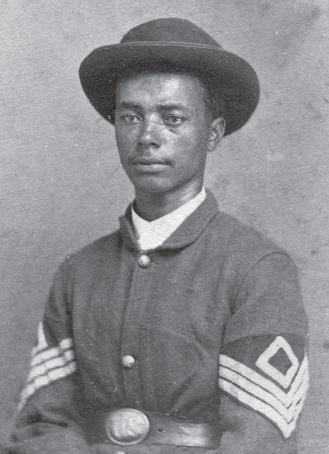
1st Sergeant Octavius McFarland, formerly a slave from Missouri. Unidentified photographer. Collection of the Gettysburg National Military Park Museum.

Genius of Universal Emancipation. Benjamin Lundy’s newspaper (1821–1839).

Susie King Taylor, born into slavery, became a teacher and nurse. Author of Reminiscences of My Life in Camp with the 33d United States Colored Troops, Late 1st S.C. Volunteers, she was the only African American woman to publish a memoir of her wartime experiences. Unidentified photographer. Library of Congress.

African American laborers on wharf, James River, Virginia. National Archives, Mathew Brady Photographs of Civil War-Era Personalities and Scenes, 1921–1940.

“Photograph taken while colored infantry was moving to the battleground.” District of Columbia, Company E, 4th U.S. Colored Infantry, at Fort Lincoln. Photo by William Morris Smith, Library of Congress.

African American students enrolled at Berea College, 1901. Berea College, founded in 1855 by abolitionist John Fee, was the first interracial and coeducational college in the South. Berea has faced fierce opposition over the years, from armed, proslavery militias to segregation imposed by the state legislature. Despite physical, financial, and legal risk, Berea College has continued in its mission to educate students of all races. The motto “God has made of one blood all peoples of the earth” has inspired this historic institution for generations. Berea College Special Collections and Archives, RG 8 BC PH Box 94, Folder 4—Student Groups (pre-1904): Black Student Groups, c. 1870–1904.

Gerrit Smith, abolitionist, member of the Secret Six who financially supported John Brown’s raid on Harper’s Ferry. Photo by Matthew Brady. Brady-Handy photograph collection, Library of Congress, Prints and Photographs Division.

Harriet Tubman, abolitionist, led many slaves to freedom on the Underground Railroad, was a spy and scout for the Union Army, and was later active in the movement for women’s suffrage. Unidentified photographer.

”Slavery Is a Hard Foe to Battle,” sheet music for a song written by Judson Hutchinson of the Hutchinson Family Singers. Library of Congress, Music Division.
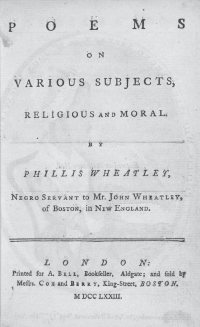
Phillis Wheatley’s book of poetry: Poems on Various Subjects, Religious and Moral (London, 1773). Houghton Library, Harvard University.

The Liberator, William Lloyd Garrison’s newspaper, masthead motto: “OUR COUNTRY IS THE WORLD—OUR COUNTRYMEN ARE MANKIND.” Massachusetts Historical Society.

William Lloyd Garrison. Unidentified photographer. Library of Congress.

W. E. B. Du Bois, historian, socialist, cofounder of the NAACP. Photo by Cornelius Marion Battey. Library of Congress, Prints and Photographs Division.
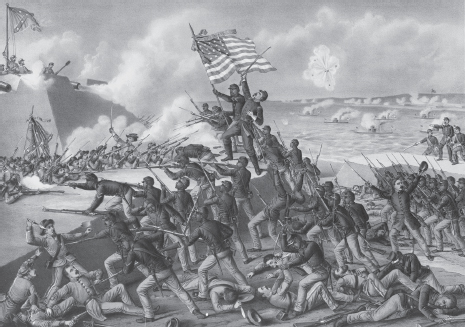
Storming Fort Wagner, Robert Gould Shaw (the battle portrayed in the film Glory). Chromolithograph on paper, Kurz & Allison Lithography Company, c. 1880–1899. National Portrait Gallery, Smithsonian Institution.
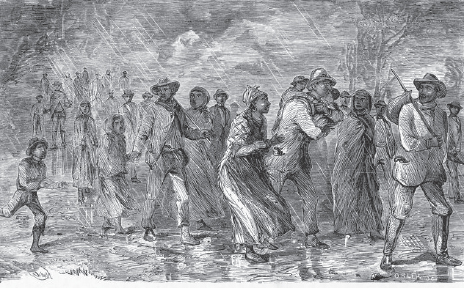
“Twenty-eight fugitives escaping from the Eastern Shore of Maryland.” Illustration from William Still’s The Underground Railroad, published 1872. Schomburg Center for Research in Black Culture, Manuscripts, Archives, and Rare Books Division, The New York Public Library.

”A Bold Stroke for Freedom.” Illustration from William Still’s The Underground Railroad, published 1872. Schomburg Center for Research in Black Culture, Manuscripts, Archives, and Rare Books Division, The New York Public Library.

Frederick Douglass in 1894, the struggle continues. Address by Hon. Frederick Douglass, delivered in the Metropolitan A.M.E. Church, Washington, DC, Tuesday, January 9, 1894. Daniel Murray Pamphlet Collection, Library of Congress.
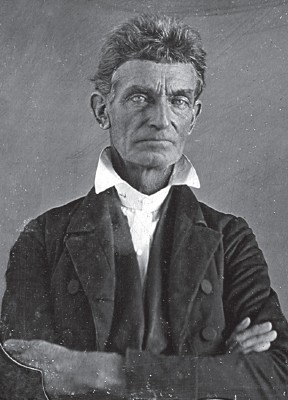
John Brown, hanged by the US government in 1859; Two years later Union soldiers marched to battle singing “John Brown’s Body.” His soul is marching on. Daguerreotype. Collection of the Boston Athenaeum.

The Anti-Slavery Harp: A Collection of Songs for Anti-slavery Meetings. Compiled by William Wells Brown, Boston, 1848. Library of Congress, Music Division.

Sheet music for the “Recognition March for the Independance of Hayti.”

Joshua McCarter Simpson, abolitionist and author of The Emancipation Car, Being an Original Composition of Anti-Slavery Ballads, Composed Exclusively for the Under Ground Rail Road, 1854. Norris Schneider Collection, Ohio History Connection.

Lawrence Gellert published Negro Songs of Protest and collected “Uncle Gabriel” and “Nat Turner,” songs in the present volume.
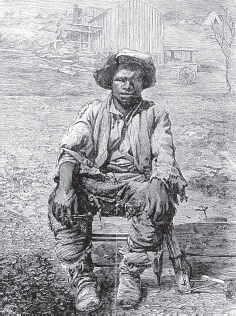
Gabriel Prosser (1775–1800), leader of unsuccessful slave revolt in Richmond, Virginia, in 1800. Drawing. Artist unknown.

Vincent Ogé, who led a rebellion in French Saint-Domingue from October to December 1790. The Ogé revolt of 1790 foretold the massive slave uprising of August 1791 that eventually led to the Haitian Revolution. Portrait drawing, 1790. The event was commemorated in a poem “Vincent Ogé” by Oberlin College graduate George Vashon (1824–1878). Vashon was a free man of color, an abolitionist, lawyer, and poet.

James Monroe Trotter, who was born into slavery, served in the Union Army, and published Music and Some Highly Musical People. Collection of the Gettysburg National Military Park Museum.

1811 slave uprising on the German Coast near New Orleans.

”Babylon Is Fallen.” Henry C. Work, 1863. Greer Music Library Historic Sheet Music Collection, Connecticut College.

Tacky’s Revolt, Jamaica, 1760. From Slavery Images: A Visual Record of the African Slave Trade and Slave Life in the Early African Diaspora, http://www.slavery images.org/s/slaveryimages/item/1211.
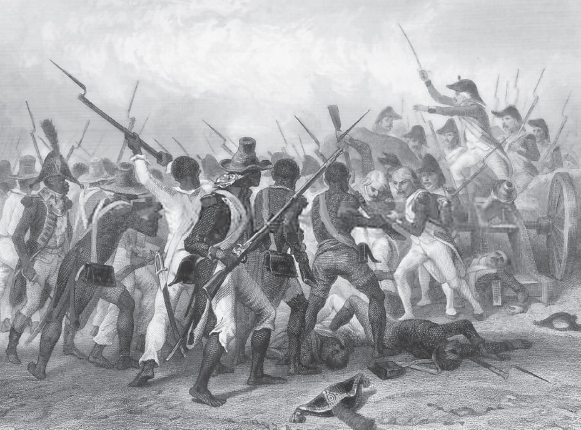
Haitian Revolution, 1791–1804. From Histoire de Napoléon, by M. De Norvins, 1839, https://www.britannica.com/topic/Haitian-Revolution/images-videos.

Joshua Bryant, “Account of an insurrection of the negro slaves in the colony of Demerara, which broke out on the August 18, 1823.”
ACKNOWLEDGMENTS
SONGS OF SLAVERY AND EMANCIPATION IS MADE UP OF THREE COMPONENTS: a book, two hours of recorded music, and a film. Many people contributed, including musicians, technicians, researchers, family, and friends. Among the more than fifty individuals directly involved, there are a number without whom I could not have brought this project to fruition.
With the support of the National Abolition Hall of Fame (NAHOF), Peterboro, New York, and Berea College, Berea, Kentucky, my colleagues and I successfully recorded thirty slave and abolitionist songs. Dorothy Willsey and Norman K. Dann of NAHOF provided crucial practical assistance, introducing us to Alden “Max” Smith. Smith is himself a descendant of enslaved people, and he performed the song “Agonizing, Cruel Slavery Days,” composed by recently emancipated people in the decade following the Civil War. This was the first recording we made.
Next, Dorothy Willsey introduced me to President Lyle D. Roelofs of Berea College. Roelofs gave his endorsement and introduced me to Dr. Kathy Bullock, head of both the Berea College Music Department and the Black Music Ensemble. Bullock holds a doctorate in African American music, and her leadership was decisive in bringing together the appropriate group of singers to perform the majority of the slave songs. She also provided choral arrangements, played piano on “Recognition March of the Independance of Hayti,” and lent her own powerful voice to the choir.
Kathy Bullock provided further assistance by coordinating with her colleagues in the music department, Professors Al White and Elizabeth DiSavino, who accompanied several of the slave songs and organized performances of several abolitionist songs.
I also received the invaluable assistance of Dr. Timothy Eriksen in Amherst, Massachusetts. Eriksen is the leader of a shape-note singing group, the members of which enthusiastically agreed to participate in this project. It was Eriksen’s timely intervention that brought the importance of shape-note singing to my attention, greatly expanding the scope, musically and historically, of the project. (Shape-note is a style of choral singing widely popular in early nineteenth-century New England, and many abolitionists were involved in shape-note singing groups. A Library of Congress description reads: “Nineteenth century American song books that used notes in different shapes to aid singers and teach singing came to be known as ‘shape-note hymnals’ and the style of singing from these ‘shape-note singing.’ Christian hymnals using this system were among the most enduring uses of this notation. Among the most popular was The Sacred Harp by B. F. White, first published in Georgia in 1844. As a result of this popularity, the style of singing is also sometimes called ‘sacred harp.’”)
Finally, two people made contributions, musically and administratively, that shaped this project from beginning to end. Eli Smith was one of the first to join in, introducing me to several key musicians and technicians as well as performing himself. Eli’s dedication and judgment helped overcome many obstacles encountered along the way. Yvonne Moore was a cofounder of the project, helping both to initiate and determine its course. She furthermore contributed musically with her singing while playing a decisive role in raising the funds necessary to sustain all our efforts. Yvonne’s guidance and steadfast commitment kept an unwieldy and complex process on course.
These organizations and individuals made the recording of this music possible. As music, it is beautiful; but as evidence, it is indispensable. These songs are living proof of a body of musical literature, originating among enslaved people and carried forth by supporters of their struggle to abolish slavery, that has too long been denied.