
Foreword
by HRH The Duke of Cornwall

CLARENCE HOUSE
Nowhere is far from the sea in Cornwall and, indeed, as is so often said, Cornwall is all but an island. Cornish history has been largely shaped by this maritime environment from early links with the Celtic, Mediterranean and Atlantic worlds to the global reach achieved in modem times by Cornish seafarers and emigrants to distant lands. Fishing, shipbuilding, maritime trade, tourism and a host of other Cornish commercial and leisure activities - including the fact and fiction of smuggling and wrecking - have been dependent upon the ever-present sea.
Fowey and Falmouth, Padstow and Polperro, Bude and Boscastle, and a great many other ports and harbours around the Cornish coast, have all played their part in this rich history and are justly famous far beyond the Tamar border.
It is curious, then, given the fundamental importance of the sea in Cornwall's story, that there has never before been a Maritime History of Cornwall. But now, at last, this glaring gap is filled admirably by this present volume. Edited by historians at the University of Exeter's Centre for Maritime Historical Studies and the Institute of Cornish Studies (the latter based at the new Cornwall Campus at Penryn), the Maritime History of Cornwall presents world-class research in a manner made easily accessible to the general reader.
As The Duke of Cornwall, and as one who experienced the Cornish sea in all its moods during my time in the Royal Navy, I am delighted that we now have a Maritime History of Cornwall that tells so ably the story of this distinctive and so very special part of Britain.

___________________________________
Cornwall is quintessentially a maritime region. Almost an island, it is surrounded by water and nowhere in the region is further than twenty-five miles from the sea – most places are a good deal closer. Cornwall’s often distinctive history – from earliest times to the present day – has been moulded by this omnipresent maritime environment, while its strategic position at the western approaches – jutting out into the Atlantic, and with long-standing maritime links throughout the British Isles and northwestern Europe – has lent a strong comparative strand to the region’s maritime history: British, European and often global.
It is surprising, then, that – despite the central place of the sea in Cornwall’s history – there has not yet been a full maritime history of Cornwall. This is doubly so given the existence of recent maritime histories for neighbouring Devon and Somerset and the Channel Islands. Indeed, it was following the successful publication of The New Maritime History of Devon that the project to produce such a volume for Cornwall was first proposed by the late Dr Stephen Fisher.1 Stephen pursued the project by organising two conferences, one at Exeter and one in Truro, and began the process of enlisting potential authors. Sadly, his untimely death in 2002 brought the project to an abrupt end. Subsequently, the three current editors decided to see Stephen’s wish fulfilled and began the project anew. Meanwhile, some progress was made with the publication of a small introductory book giving an overview and with the establishment of an online journal, Troze, devoted to Cornish maritime history, which has encouraged contributions from both academic and keen amateur researchers.2
All three editors have long associations with both History and Cornish Studies at the University of Exeter, in one instance dating back to the mid 1960s. Since the 1960s maritime history, including naval history, has been actively promoted at Exeter through conferences, courses, research and publication, activities in which many of the contributors to this volume have also been associated. Indeed, our publisher’s back-list attests to Exeter’s significant contributions to maritime history over many years.3 Likewise, historians connected with Exeter’s Centre for Maritime Historical Studies have made an important contribution to the ongoing debate about the nature and scope of Maritime History. In 1992 Stephen Fisher and the other editors of the Devon volumes argued that ‘few would quarrel with a definition which views maritime history as being the study of all things associated with man’s relationship with the sea’.4 It was an opinion that Stephen was always happy to repeat, and in 1997 he was pleased to note in his edited volume Recreation and the Sea that the boundaries of maritime historical research had expanded still further in recent years to encompass leisure and recreational activities.5
However, not all definitions have been so wide-ranging. Robin Craig, introducing the new journal Maritime History in 1970, focused his attention on the mercantile marine and explicitly excluded naval history and marine archaeology from his purview. The objective of the publication, he explained, was to examine the ‘maritime implications of trade and seaborne commerce, the life of the seamen and maritime communities ashore, the development of docks, harbours and cargo handling’. This would include, he added, ‘the development of maritime law, marine insurance, shipping documentation and international regulation no less than shipbuilding, ship operation and the world of the shipowner’.6 Yet it soon became clear that this definition, broad though it was, had created artificial barriers and was not equipped to encompass all the rapidly emerging areas of maritime historical research.
Basil Greenhill, for example, insisted upon the inclusion of ‘naval enterprise’ within any working definition of maritime history and saw that the subject was about ‘more than just ships and seafarers’. It ranged, he said, across ‘trade and merchants, shipbuilders, financiers, fishing and fishermen . . . seaside tourism and other sea-related leisure activities, and [is] always about people and the ways in which they lived’. The emphasis on ‘people’ was an important corrective for those maritime historians who were inclined to focus on artefacts and technical innovations at the expense of the human dimension. Similarly, Greenhill considered it vital to recognise that maritime history did not exist in isolation: ‘It is not so much a subject in its own right as one which has an important bearing on other fields of study such as economic, social or political history.’7
More recent assessments have echoed Greenhill’s perspectives. John B. Hattendorf, writing in the Oxford Encyclopedia of Maritime History (2007), argued persuasively that ‘maritime history is a broad theme in global history that cuts across the standard boundaries of academic disciplines.’ Moreover, he added, ‘it is this common maritime element . . . that becomes a revealing and important extension of broad aspects of national and international events ashore.’8 More recently still, David Williams has emphasised the centrality of the naval dimension within maritime history, seeking – somewhat controversially, as he admits – to equate naval and economic power. He has also pointed out the social aspects of maritime history, especially the development since the eighteenth century of maritime leisure pursuits and the sea as provider of health and other benefits. Likewise, he has highlighted the strong maritime environmental concerns that emerged in the twentieth century. Additionally, he has emphasised the importance and diversity of popular interest in maritime history today, from tall ship races, underwater archaeology and dockland redevelopment to historic vessels, maritime museums and more.
Yet, alongside this burgeoning historic interest, Williams detected a real decline in the awareness of the sea and its continuing importance in national life. For example, he saw that the movement of trade shipping away from major concentrations of population to specialised container ports had resulted in its disappearance from the public gaze. The resultant ‘Sea blindness’, in which everyday maritime activity had thus been obscured from view, was complemented now by what he called ‘the Romance of the sea’.9 This was an opinion echoed by Sarah Palmer, who pointed out that for many people in Britain today travel by sea was connected only to cruise ships, and that few were aware of the impact of the sea on their everyday lives. ‘In 2009’, she wrote, ‘approximately eighty percent of the world’s traded goods moved by sea’.10 This was understood today by few people, in marked contrast to as recently as the mid-twentieth century, when people in Britain – and especially in maritime regions such as Cornwall – were only too aware of the significance of the sea to their livelihoods and well being.
In answering the question ‘what is maritime history?’ we also need to ask ‘why maritime history?’ David Williams and Sarah Palmer have provided part of the answer, pointing to the continuing significance of the sea in British life and explaining why it is important to understand and appreciate this maritime inheritance. But, ultimately, ‘why maritime history?’ is a cultural question. Our ancestors knew from experience the very different nature of the sea from the land. Even today, with modern communications, working at sea still seems ‘to set seafarers and fishermen apart from landsmen’.11 It was a distinction that extended to those who lived by the sea.12 Until the twentieth century even the smallest of ports had international connections, while many of those inhabitants on shore had more in common with a similar port across the sea than an inland village that moved to a different life rhythm and language. In presenting this Maritime History of Cornwall we are keenly aware of the significance of the sea in Cornish cultural as well as economic history, and of the pressing need to offer this history in its widest possible comparative context and to the widest possible audience – in Cornwall, and far beyond.
In this volume we subscribe to the breadth of vision adopted by Stephen Fisher, Basil Greenhill and the other editors of the Devon volumes, adopting their inclusive definitions of maritime history while at the same time incorporating the perspectives of later writers such as Hattendorf, Williams and Palmer. However, our approach has been consciously different from that adopted in the two Devon volumes. In Devon, the new history was already building on a previous maritime history written by M.M. Oppenheim in the early twentieth century.13 Here, with Cornwall, we were beginning something wholly new, and were aware that individual articles dealing with particular topics needed to be set within an overall narrative. This led, therefore, to the writing of five substantial introductory chapters, each dealing with a particular period and attempting to outline the key maritime themes within that period. In each section of the book the introductory chapter is then followed by selected contributions from specialist authors which expand specific relevant topics. Our aim here is to provide a coherent view of Cornwall’s rich and varied maritime history over time accessible to both the specialist and the newcomer. A second aim is to expand the general perception of Cornwall’s maritime past and take it beyond the popular themes of smuggling, wrecking and fishing to show a more complex international maritime industry.
This volume has been possible thanks to funding support from University of Exeter, the Cornwall Maritime History Link and the South West Maritime History Society. Our thanks must go to the contributors, both speakers and audience, at the annual University of Exeter Maritime History conferences. These began in 1967 and can rightly claim to be the longest running series. The enthusiasm for maritime history generated by the conferences has inspired many publications and this book is the most recent. It has been a long process and the editors are particularly grateful to the distinguished contributors who have been patient in the extreme. And, last but certainly not least, we are indebted to HRH The Duke of Cornwall for his gracious Foreword.
Philip Payton, University of Exeter and Flinders University
Alston Kennerley, University of Plymouth
Helen Doe, University of Exeter
Notes
1 Michael Duffy, Stephen Fisher, Basil Greenhill, David J. Starkey, Joyce Youings (eds) The New Maritime History of Devon, Vol. I: From the Earliest Times to the Late Eighteenth Century (London: Conway, 1992); Vol. II: From the Late Eighteenth Century to the Present Day (London: Conway, 1994).
2 Helen Doe, The Maritime History of Cornwall: An Introduction (Redruth: Tor Mark, 2006); Troze, www.nmmc.co.uk, online journal of the National Maritime Museum Cornwall.
3 See also Celia King and Alston Kennerley, Maritime History at the University of Exeter: A Bibliography of Writings Since 1964 (Exeter: Centre for Maritime Historical Studies, 2006)
4 David M. Williams and Andrew P. White, A Select Bibliography of British and Irish University Theses about Maritime History, 1792–1990 (St John’s Newfoundland: International Maritime Economic History Association, 1991), pp. iv–v.
5 Stephen Fisher (ed.), Recreation and the Sea (Exeter: University of Exeter Press, 1997), p. 1.
6 Robert Craig, ‘Editorial’, in Robert Craig (ed.), Maritime History, Vol. 1 (Newton Abbot: David & Charles, 1971), p. 2.
7 B. Greenhill, ‘Epilogue: The New Maritime History of Devon and The Maritime Aspects of History’, in Duffy et al (eds), The New Maritime History of Devon, Vol. II, p. 268.
8 John B. Hattendorf (ed.), Oxford Encyclopedia of Maritime History, 4 vols (Oxford: Oxford University Press, 2007), Vol. 1, pp. xvii–xxii.
9 David Williams, ‘Humankind and the Sea: The Changing Relationship since the Mid-Eighteenth Century’, International Journal of Maritime History 22:1 (2010), pp. 1–14.
10 Sarah Palmer, ‘The Maritime World in Historical Perspective’, International Journal of Maritime History 23:1 (2011), pp. 1–12.
11 Ibid.
12 Helen Doe, ‘The Long Reach of the Small Port: Influences and Connections in Small English Ports in Nineteenth Century’, in M. Schulte Beerbuhl (ed.), Cosmopolitan Networks in Commerce and Society, GHIL Bulletin No. 2 (London: German Historical Institute, 2011), pp. 133–50; Helen Doe, ‘Travelling by Staying at Home: Women in Small Ports and their Overseas Connections in the Nineteenth Century’, Journal of Transport History 30:2 (2009), pp. 183–89.
13 Michael Oppenheim, The Maritime History of Devon (University of Exeter, 1968) [the manuscript dates from the early twentieth century].
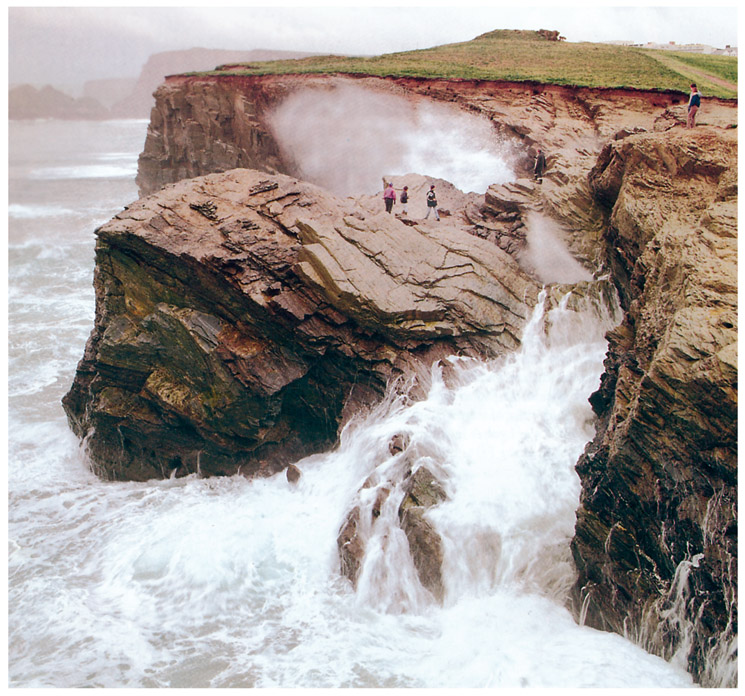
1 Trevealgue, near Newquay, a promontory fort (Philip Payton)
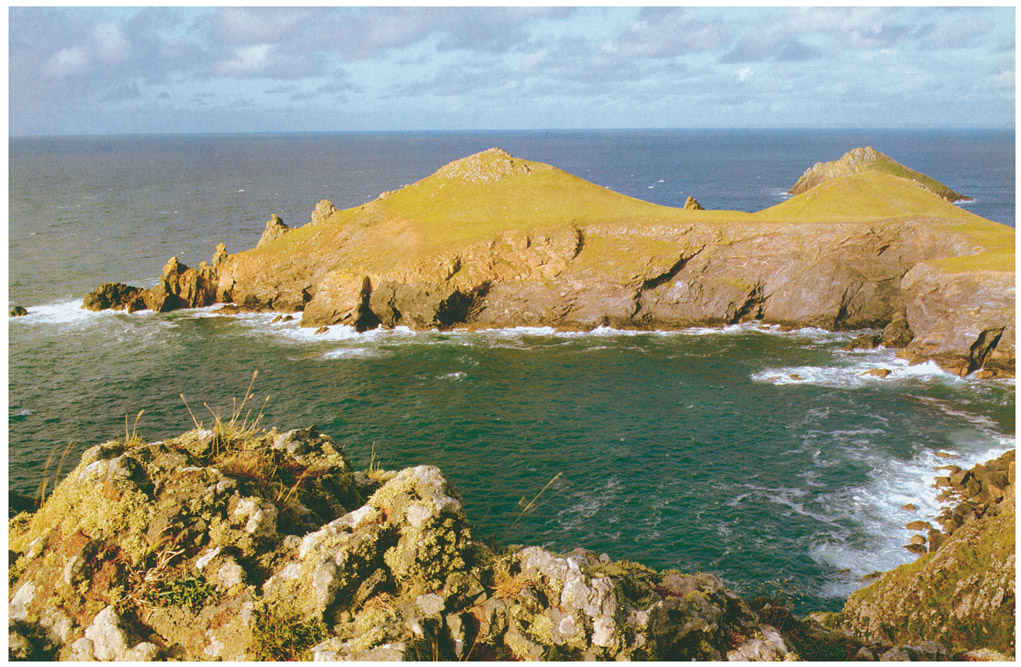
2 Rumps Iron Age hill fort (Philip Payton)
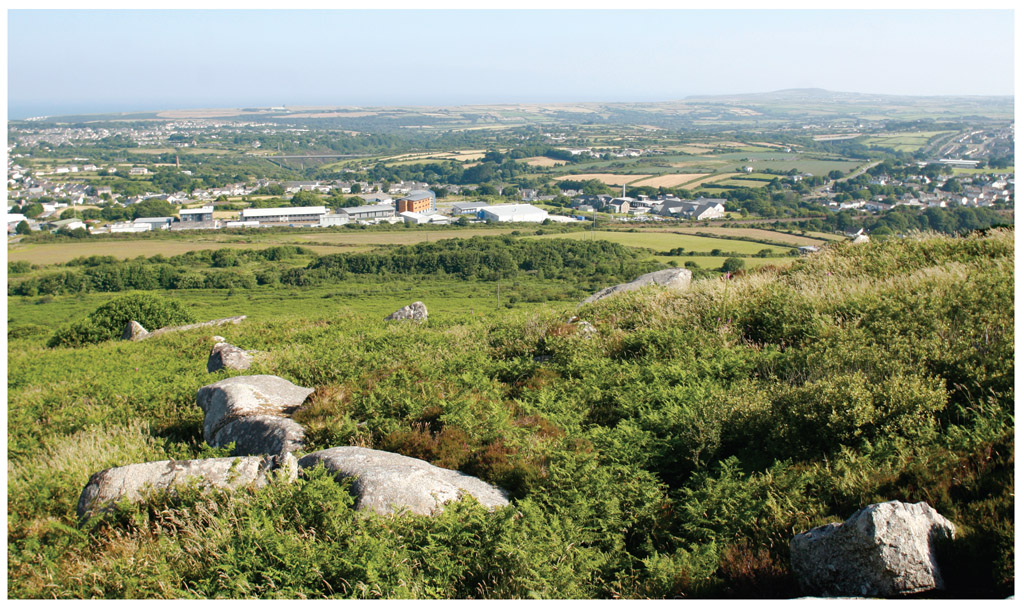
3 View from Carn Brea (Caradoc Peters)

4 Tintagel, an early medieval castle on a site with links to the Roman period (Philip Payton)

5a. Detail from medieval window in St Neot’s Church (Michael Swift)

5b. Detail from medieval window in St Neot’s Church (Michael Swift)

6 The harbour of Fowey guarded by its medieval blockhouses (Christian Browning)
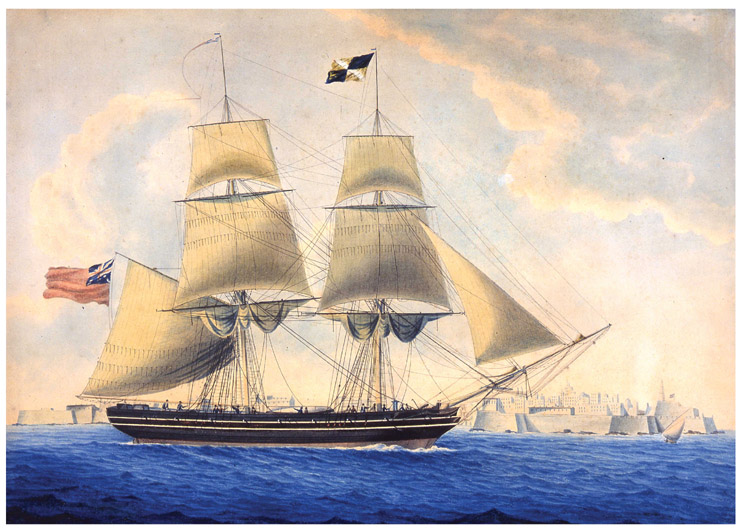
7 Swiftsure, Falmouth Packet ship (National Maritime Museum Cornwall)

8 Duchy Palace in Lostwithiel (Purcell © Josephine Collingwood)

9 Bedruthan Steps, linked with wrecking (Philip Payton)
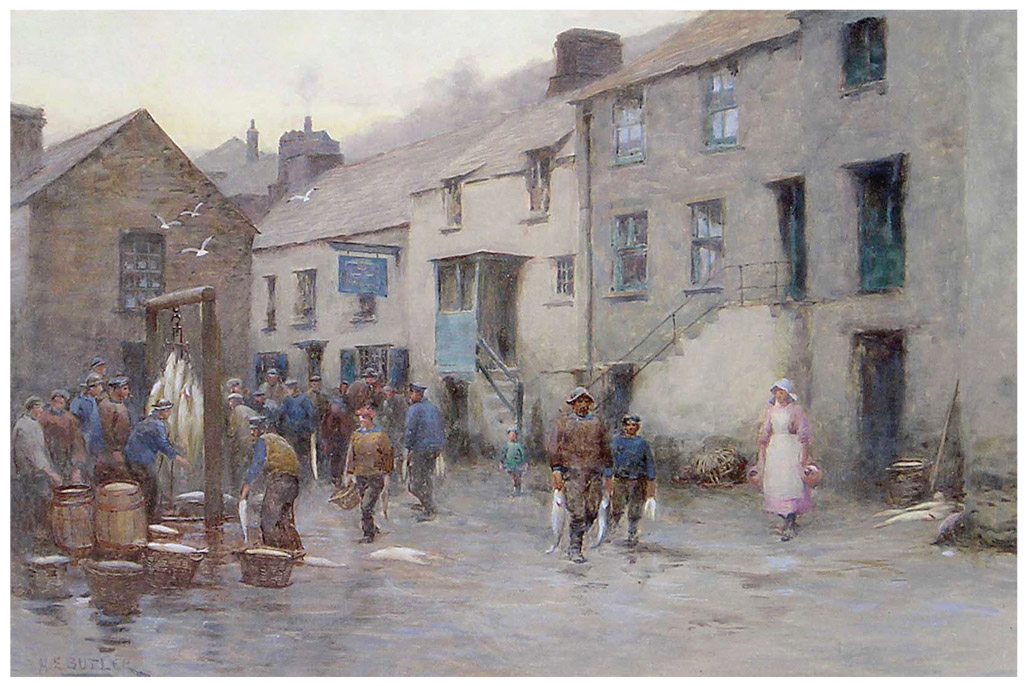
10 Weighing the Catch, Polperro, by Herbert Edward Butler (1861–1931), Watercolour (Elford Fine Art)
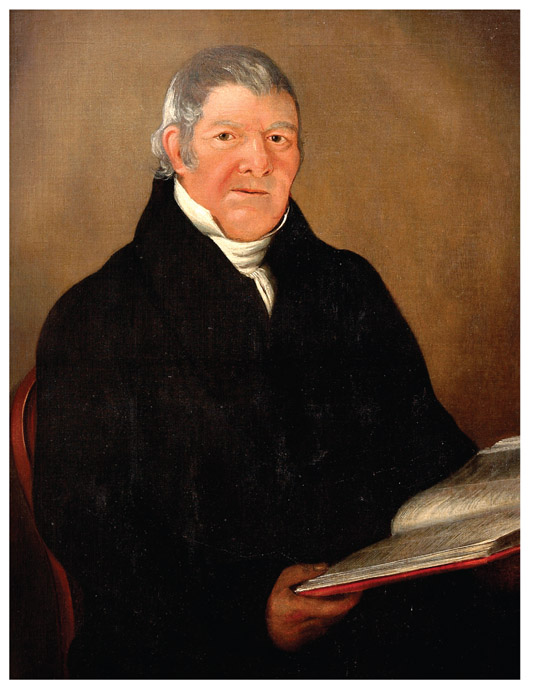
11 James Dunn of Mevagissey (1757–1842), shipbuilder and smuggler (Charles Francis)

12a A Newlyn Fisherwoman, by Walter Langley (1852–1922), Watercolour (Elford Fine Art)

12b A Newlyn Fishwife, by Walter Langley (1852–1922), Watercolour (Elford Fine Art)

13 Leaving Carrick Roads, by Arthur Wilde Parsons (1854–1931), Oil on canvas dated 1902 (Elford Fine Art)

14 The Crowns engine houses, Botallack Mine, West Penwith (Ainsley Cocks)

15 The launch of the Henry from Caffa Mill, Fowey (George Hogg)

16 Barquentine Ada Peard of Fowey, by Reuben Chappell (1870–1940), Watercolour and bodycolour (Elford Fine Art)
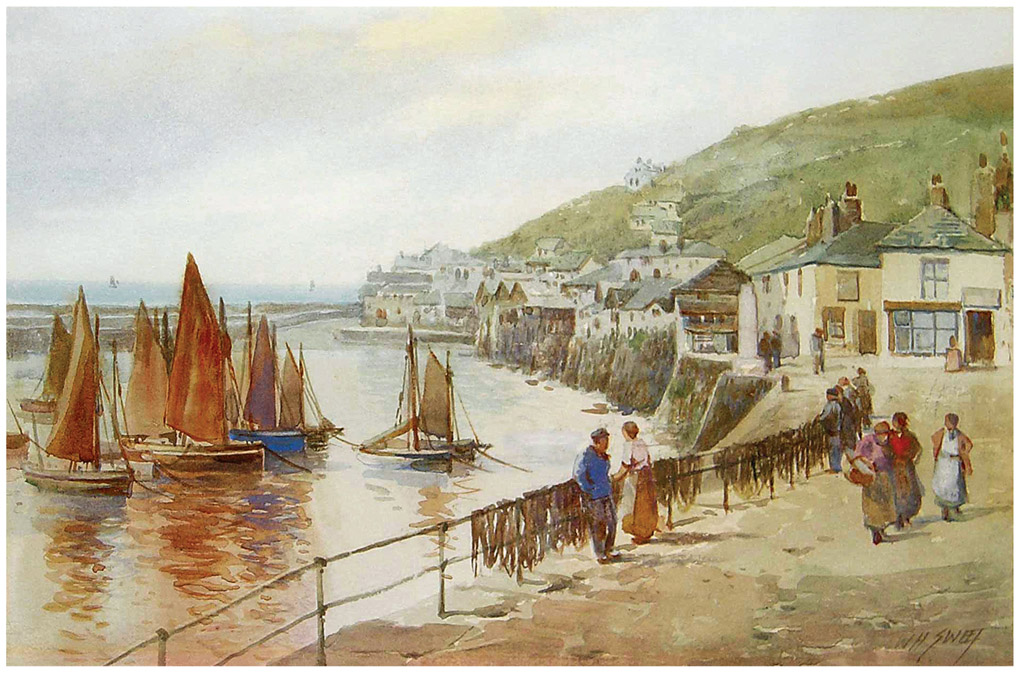
17 Mousehole, by Walter Henry Sweet (1889–1943), Watercolour (Elford Fine Art)
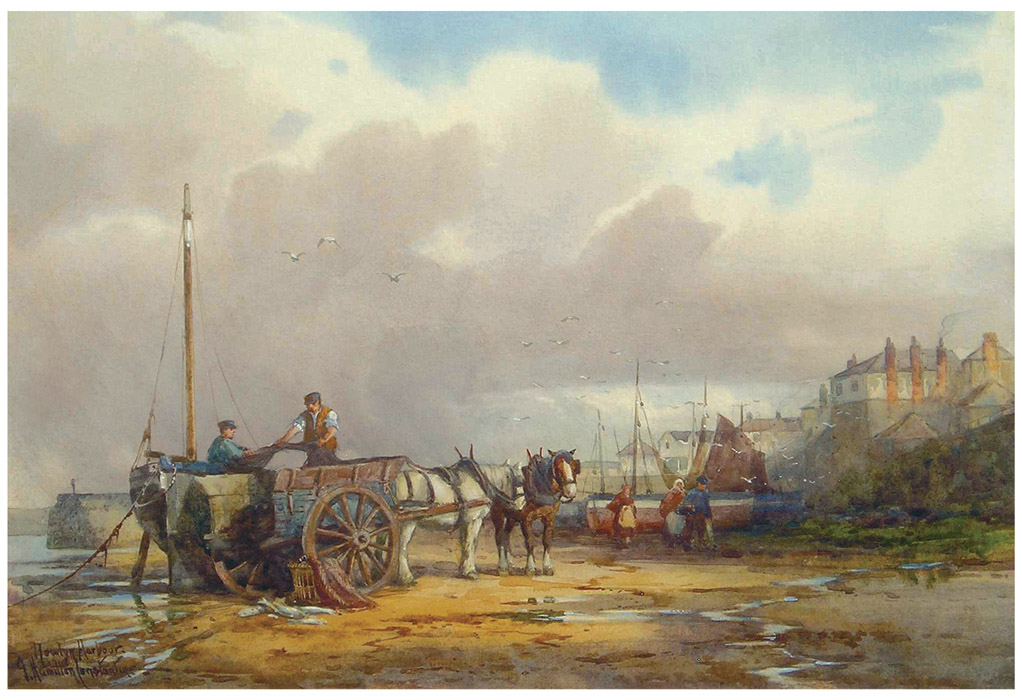
18 Unloading the Catch, Newlyn, by George Hamilton Constantine (1875–1967), Watercolour (Elford Fine Art)
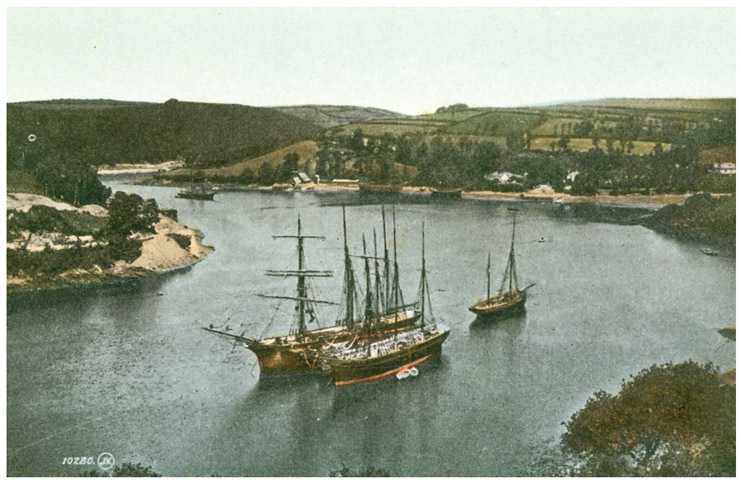
19 Postcard showing ships waiting to load clay in Fowey Harbour (Helen Doe)

20 A sailing ship comes in to Polruan, Evening Tide, by Mark Myers (Mark Myers)
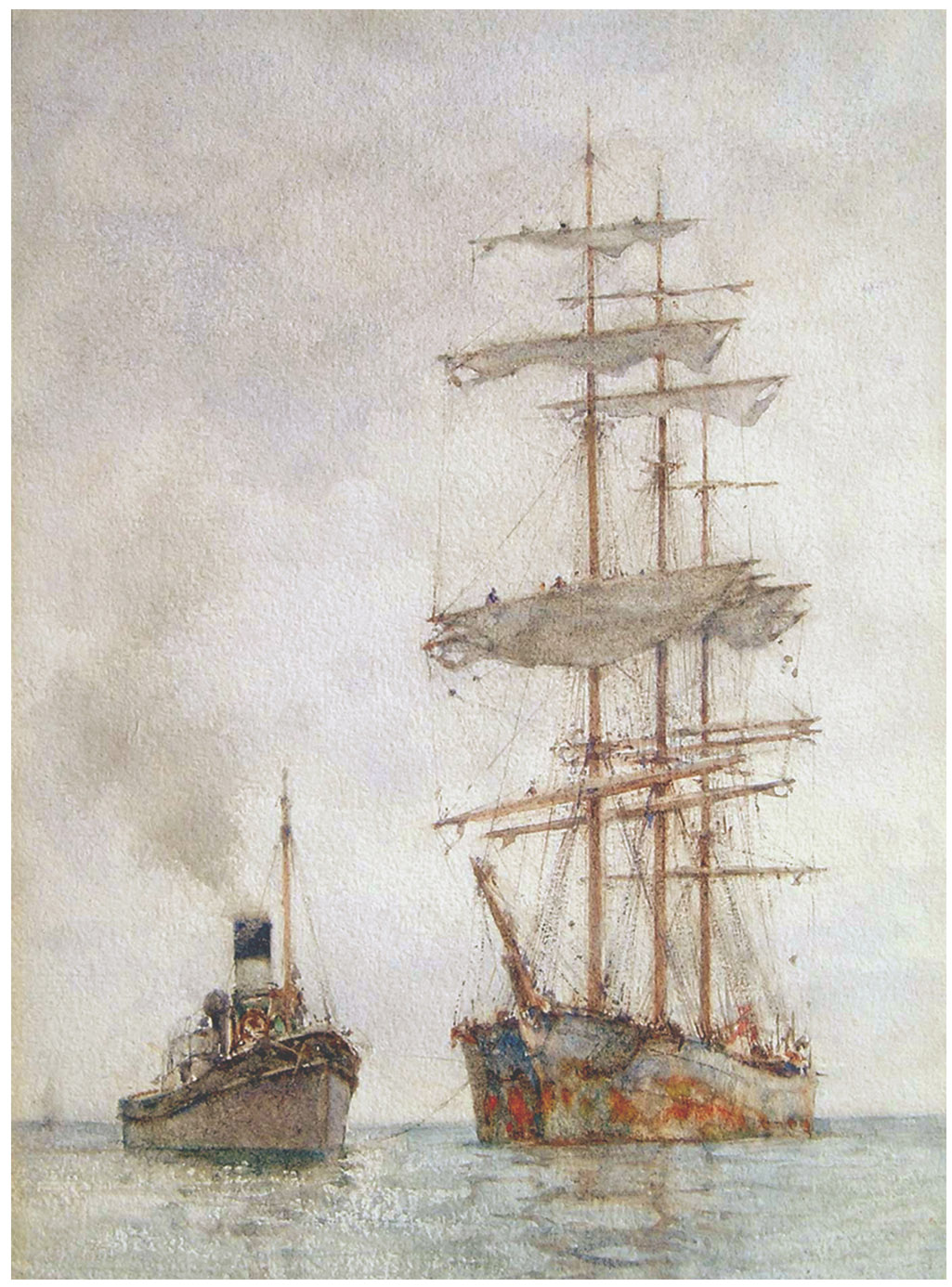
21 Towing in, Carrick Roads, by Henry Scott Tuke (1858–1929), Watercolour dated 1921 (Elford Fine Art)
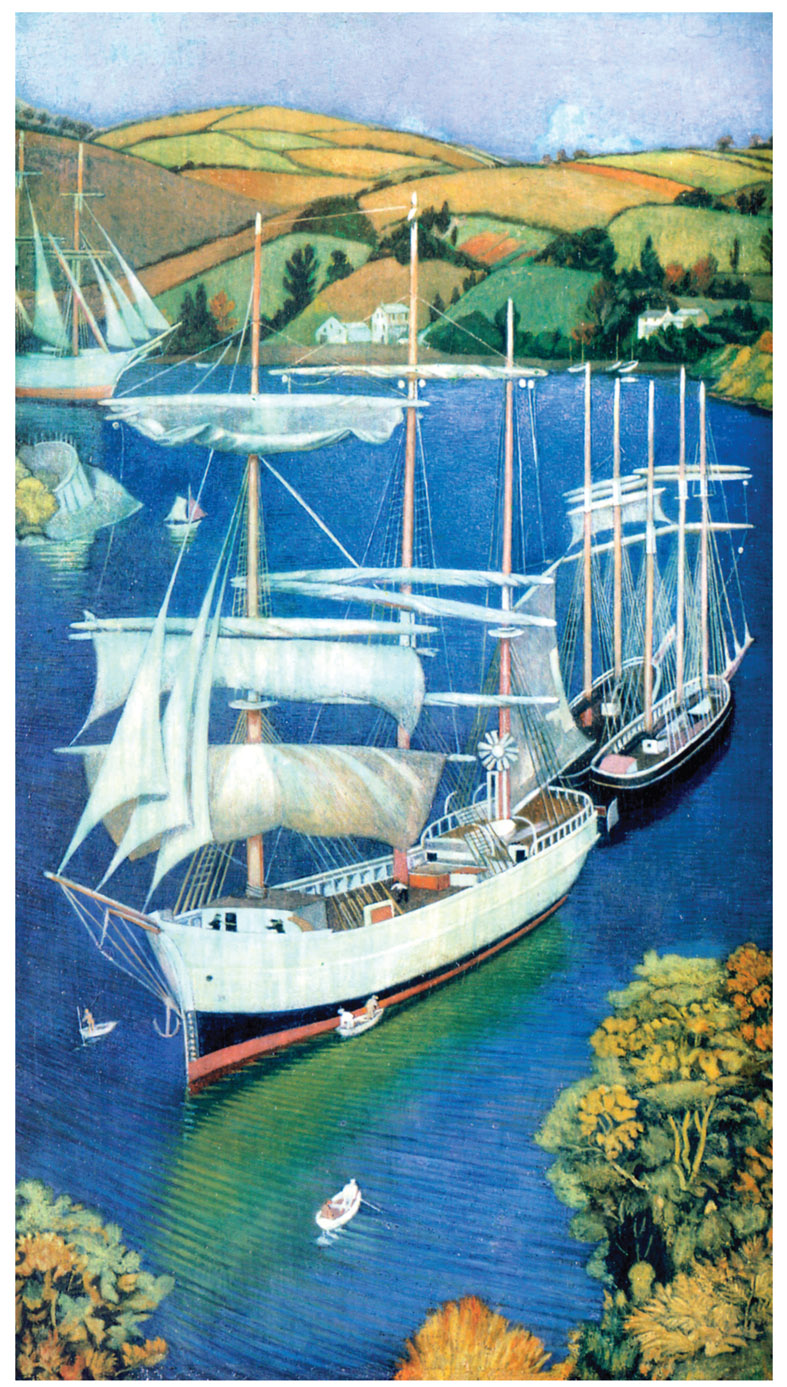
22 Sailing ships off the jetties in the upper reaches of the Fowey River, by Joseph Southall (Fine Arts Society)
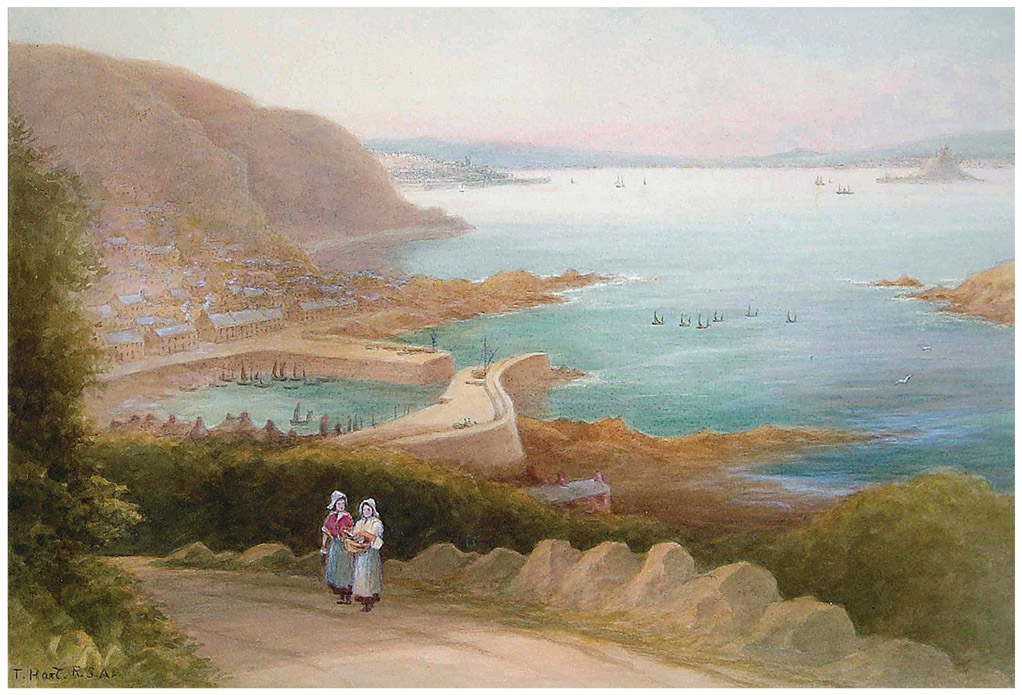
23 Mount’s Bay from Raginnis Hill, by Thomas Hart (1830 – 1916), Watercolour (Elford Fine Art)

24 Safe Haven, Par, by Arthur Wilde Parsons (1854–1931), Oil on canvas dated 1921 (Elford Fine Art)

25 North Cornwall by Southern Railway (National Railway Museum)

26 Remains of Second World War coastal defences at Perranporth (H. Bennett)

27 Falmouth docks c.1990, still an active site for ship repair (Philip Payton)

28 Newlyn fishermen in 1995 showing solidarity with Canada (Philip Payton)