
ROBERT BICKERS
With the 1858 Treaty of Tianjin, ratified by the 1860 Convention of Peking, Qing China was exposed to a bumptiously confident and increasingly widespread and diverse foreign presence. Foreigners came to serve even at the heart of the state; overseas nationals took their trading or proselytizing enterprises across the realm; treaty ports increased in number, size, and sophistication; information about China was collated and circulated as never before; subjects of the Qing migrated overseas as free or indentured labor. To counter this new wave of concessions to foreign powers—or at least to manage it adequately—new offices of state were created, foreign skills and knowledge were sought, and arsenals and shipyards were built. It is known that in many ways the victory of the British in the first “Opium War” had not greatly disturbed Qing bureaucrats. But by the end of the nineteenth century, despite a program of “self-strengthening” and reform, discussion of the possibility of the extinction of China at the hands of foreign aggressors was being widely discussed both within and outside the state. These discussions took place in a range of new public forums that had not existed in 1860. With so much change and innovation, how had this come to pass: why were many Chinese still predicting an imminent apocalypse?
With the cessation of hostilities against the British and French, the Qing could turn back to concentrate on the Taiping and the congeries of other revolts that they faced. Unlikely as it seemed, officials now found the Europeans, their recent opponents, intent on becoming their allies. While foreign observers had once greedily explored the possibilities that a Han Chinese Christian revolt seemed to offer, the Taiping were now largely deemed to be people that no one could do business with, and a greater menace to foreign ambitions than the Qing. Moreover, while the rebels had proved too weak to win, they were still too strong to be defeated. In the aftermath of the victory in north China, foreign diplomats and officials, while maintaining (generally) a formal policy of public neutrality, nevertheless indirectly supported military action against the rebels, especially in the Shanghai region. The recruitment of units of foreign-trained and foreign-led Chinese soldiers was approved, and on occasion foreign forces engaged the Taiping directly. The greatest contribution came in the form of a cadre of foreign nationals serving in the rapidly developing Imperial Maritime Customs Service, which delivered to the Qing a steadily increasing revenue stream that allowed the state to invest in particular in acquiring new military technology to defend itself against internal and external threats.
Taiping strategy, and their lingering hopes of foreign interest in displacing the Qing (or at least their hopes of foreign neutrality), were dashed most notably at Ningbo in May 1862, when British forces dislodged the rebels who had seized the city six months previously (and who many foreign observers thought had administered it quite irreproachably). It was, however, the devolution of military and revenue-raising responsibilities to provincial administrators, notably the Hunanese official Zeng Guofan and his acolytes, such as Li Hongzhang, which ultimately proved decisive in defeating the Taiping rebels. This devolution of responsibilities led to the raising and deployment of new armies that by the summer of 1864 had re-conquered most Taiping-held territory. In July of that year they besieged and captured Nanjing, the capital of the rump Heavenly Kingdom of Great Peace. Few of those remaining in the city survived its fall. Hong Xiuquan had died six weeks earlier. His son and other leaders who escaped were hunted down, and by the end of the year had been captured and killed. Central and eastern China had been devastated by the fourteen-year civil war. Estimates of the scale of the impact of the rebellion have ranged as high as 100 million (and this for just five of the affected provinces): 70 million dead from war, hunger, or disease, and a 30 million depression of expected population figures as a result of all the destruction and turmoil. Many cities and towns never recovered; others took decades. And the devolution of military power from the center that had been central to Qing victory was to have bloody and destabilizing consequences for its successor state in the twentieth century. Although the rebels were annihilated, and nearly all traces of their kingdom were effaced, the legacy of the Taiping rebellion was to prove long lasting.
The Qing state was emboldened by the defeat of the rebels. It was also stronger at the center now, for in November 1861 the regency appointed by the late Xianfeng emperor to guide his son and heir was deposed in a coup d’état that saw the public execution of the Grand Councilor Shusun. Power was now lodged in the hands of Xianfeng’s brother Yixin—Prince Gong—and his widow, best known in the West as Cixi (Tzu-hsi, the Empress Dowager), as well as his senior consort Cian. Prince Gong and Cian would eventually be sidelined, and court politics would be dominated for much of the remainder of the century by Cixi, an adept at political manoeuver, and in the balancing coalitions of often mutually hostile factions. Under the banner of a “Restoration,” the child Qixiang emperor’s reign (1861–75) was renamed “Tongzhi”: “return to order.” Restoration meant restoring state capacity, and where that required institutional or other innovation this was in many instances undertaken. Debate would continue within the Qing administration about the relative merits of different approaches to building state power in an era of new threats and an unwelcome international environment. How far and in what ways might indigenous learning and thinking have to adapt to a world in which the Qing was threatened by foreign power (and by the legal, political, ideological, and organizational foundations on which it was based)? A formulation that would later become common was in all practical ways already being deployed: “ti/yong” (essence/use). Chinese learning would provide an intellectual foundation on and through which Western learning would be used. But this pragmatic approach also had its entrenched opponents.
At the heart of the restoration initiative was a new central state office for dealing with foreign relations, known in short as the Zongli Yamen. This was less a “foreign office”—though this was how foreigners often referred to it—than a coordinating bureau for dealing with foreign matters, which would include for example initiatives in the fields of technology transfer, the acquisition of foreign expertise, and the employment of foreign experts. The existing central state Board structure was not affected by the establishment of this new office, and its leading officials generally held concurrent posts elsewhere in the administration as well, but it became the core focus of the postwar consolidation of state capacity. The Zongli Yamen was the body that oversaw the establishment and development of new shipyards and arsenals; the creation of the Tongwenguan (the interpreters’ college); the dispatch abroad for education of a small cohort of students (whose impact in many areas far outweighed their numbers); the sending overseas of investigation and diplomatic missions, translation and information gathering projects; and the wide range of activities undertaken by the Foreign Inspectorate of the Maritime Customs Service. The revenue for much of this activity was delivered by the Customs Service, and in essence the Foreign Inspectorate of the Maritime Customs Service became the operational arm of the Zongli Yamen. Through the Foreign Inspectorate and the enterprises that it helped oversee and fund, a cadre of useful foreign nationals now came to serve at the heart of the Qing state, and their impact was highly significant.
Effectively leading the Customs Service from 1861 onwards was a man Prince Gong was heard to describe as “Women de Hede”—“Our Hart”—Ulster native Robert Hart, a 26-year-old former British consular officer, who had joined the Foreign Inspectorate in 1859. Hart’s linguistic and cultural skills were to underpin the very good relationships he built up with key figures in the Zongli Yamen. The Irishman was initially one of two officials acting for fellow Briton Horatio Nelson Lay, a much more brittle personality, who had failed to demonstrate any understanding that either he or his office were subordinate to his Qing superiors, preferring instead to present himself as some sort of independent power in the land. Robert Hart, however, parlayed his sensitive handling of interpersonal relations with officials into establishing a position of great trust and autonomy that turned the Customs Service into the single most important institution in Qing foreign relations down to the end of the century. Money also talked, and while a China trade bubble burst in the aftermath of the end of the Taiping rebellion—and of the American Civil War—the Customs facilitated a steady increase in Sino-foreign trade that brought in the resource that paid for self-strengthening. It did this through rationalizing procedures, collating and disseminating data and information, initiating infrastructural projects such as aids to navigation and coastal lighting systems, meteorological work, and organizing the representation of China at international exhibitions. There was little it seemed that the rapidly increasing number of foreign nationals brought to China by Hart’s organization did not get involved in, and Hart would joke privately in his diary about becoming “Inspector General of Everything.” His most important skill, however, lay in remembering his subordinate place in the Qing state, and in fostering within the Customs Service an ethos that made loyal servants of China—in most cases—out of his polyglot recruits.
Significant tensions between the Qing and the foreign powers remained, but a new era appeared to have commenced, and the disaster of 1860 was to recede. Foreign diplomats established their legations in Peking, at the heart of the empire, and China was increasingly better understood overseas. Through its extensive publication program—which included a series of medical reports, and even a monograph on Chinese music—the Customs made a great range of knowledge about Chinese society, culture, trade, and politics accessible in English, as well as raw scientific data about the lands of the Qing. In these endeavors, Hart and his leading associates were important interlocutors for and interpreters of Western interests and ambitions to the Zongli Yamen, often acting as a foil to the less trusted foreign diplomats in the capital. The ambiguities of his position were considerable, however, and even at his death in 1911, there were foreign observers not reconciled to the vision of a British national so smoothly serving his “Asiatic” masters.
Almost comically central to the new treaties signed in 1858 and ratified in 1860 was a pedantic foreign insistence that the Qing recognize the foreigners as equals. This accorded with developing and strengthening notions of the formal relationship between states in the international order, but it also had a long history in foreign representations of Qing attitudes towards outsiders. The issue of Macartney and the “kowtow” in 1793 remained live, and would continue to do so for decades yet. The new treaties also enjoined the Qing to forgo any use of the term “yi” to describe foreigners, even in internal communications. The British and others interpreted this as meaning “barbarian,” and could not be shaken from this view. Its meaning remains today a source of scholarly dispute, but this is somewhat irrelevant: this is how it was understood by the foreign powers at the time, and the British—for all that they sought to establish relations on the basis of mutual equality—aimed to do so by intervening in the internal procedures of the Qing and imposing their understandings of the meaning of the term. The agreements also stipulated the precise and equal relationship between different ranks of foreign diplomats and Qing officials. This also created a further source of friction, as the diplomats, having secured their legations in the heart of Peking, next lobbied to be formally presented to the emperor, in conformity with accepted practice in the European world. It was another thirteen years before this was granted, and even then it was concluded by foreign observers that an insulting sleight of hand meant that the diplomats had not secured their audience with the emperor in precisely the appropriate place. A readiness to find offence and complain officially about it characterized the world of the foreign diplomats at Peking.
The foreign establishment in China was now spreading far beyond the initial five opened ports and Hong Kong. The opening of the Yangzi River to foreign trade and navigation was accompanied by the establishment of Hankou, Jiujiang, and Zhenjiang as treaty ports. In north China, Yingko (Niuzhuang) and Tianjin were opened, as were ports in the southeast and Taiwan. Foreign traders, who had been pushing for an extended range of ports, rapidly established new offices and businesses. This increase in geographical reach was accompanied by developments in the internal administration of the opened ports, and a steady increase in the numbers of foreign residents and firms, as well as in the diversity of their operations. The treaty ports were not formal colonial possessions, and foreign residents largely administered their own affairs, bringing a touch of European and North American local government practices and assumptions to cities in the heart of Qing China. They built sewers, established police forces, and enacted regulations to prevent cruelty to animals. By the end of the century local government reformers in cities as diverse as Shanghai and Chengdu would look for inspiration to the practices and structures of the foreign concessions.
While industrial manufacturing was to remain prohibited until 1895, foreign entrepreneurs established shipyards, brewed beer, established service industries and banks, newspapers and recreation clubs. Most treaty ports looked largely indistinguishable from formal colonies in south and Southeast Asia. All of this was undertaken in collaboration with Chinese partners, and often using Chinese capital. Initially this came via collaborations mediated between foreign firms and their compradors (their Chinese partners and agents). From the early 1860s, notably in Shanghai, it also came through the formation of joint stock companies incorporated under English company law and operating through what became the Shanghai Stock Exchange. While land speculation had always been a factor in the laying out and development of a treaty port, the flight of refugees from civil war irrevocably turned the settlements at Shanghai and other treaty ports into sites of significant Chinese residence, and of a Chinese market for land and property, and also for services to support that community and deploy its capital to potentially profitable or other use. These included newspapers: a functional “Shipping List and Advertiser,” Shanghai xinbao, began publication in 1863, and in 1872 two Britons, Ernest and Frederick Major, began publication with Chinese partners at Shanghai of a much more ambitious Chinese newspaper, Shenbao (Shanghai News), which was to become a hugely influential vehicle for the development of Chinese public debate and opinion forming. Thereafter, new titles began to be established across China and in Hong Kong.
As in 1842, opium was not explicitly mentioned in the treaties that brought to an end the second of the wars that bears its name. That was left to a subsidiary tariff conference in 1858, which legalized and set tariffs for a range of goods whose import or export had hitherto been prohibited. As with the Tianjin Treaty itself, the provisions accorded the British were largely copied into treaties subsequently negotiated with the United States. Most agreements embedded “most favored nation” clauses into their text, so that in most respects all foreign powers securing a treaty with the Qing were accorded very similar rights. The opium trade, in which American firms had also always been involved, was no exception. The legalization of imports heralded the onset of a decade in which the opium trade was at its most profitable. Imports soared and were to peak in 1879, but in fact rising costs, and steadily increasing competition from domestic production, resulted in firms such as Jardine, Matheson & Co. diversifying their operations and moving to other business areas. Nevertheless, consumption of opium continued to rise. Current estimates put the proportion of adult males who in any fashion consumed the drug at about one in five, but most of these used it moderately. Probably only a very small percentage were heavy users. The perceived evils of opium and its impact on society and on individuals remained a constant, however, in the minds of foreign critics of either British policy, or Chinese culture, or both. A missionary-dominated Society for the Suppression of the Opium Trade was established in Britain in 1874, and lobbied constantly for a change in policy. It would succeed eventually in prompting the convening of a Royal Commission to investigate the trade in 1893–95, but this simply concluded that the drug, especially in the way it was actually consumed, was mostly harmless—and the evidence then, as now, largely supports the view—and that its importance in the finances of the Government of India was such, that unless there were sound practical grounds for discontinuing the trade, it might as well continue. An international movement would continue to grow to suppress the trade, but the British and others, however, simply shifted ground. What was the point of suppressing the trade, they argued, when China produced so much of its own opium? If the Qing were to suppress domestic cultivation, then and only then would they curtail imports from India.
A more effective drug on which to hook the Qing proved to be finance. Jardine, Matheson & Co. pioneered the provision by foreign firms of private loans to the Qing Court. The Hongkong & Shanghai Bank—one of a number of new institutions established after 1860 to service the increasingly sophisticated market—floated the first public loan to the Chinese government on the London market in 1874, to raise funds during the crisis caused by the Japanese intervention in Taiwan. The Imperial Maritime Customs provided the obvious security for such loans, for its efficiency was seen in the eyes of foreign lenders to be guaranteed by the fact that it was led and staffed by their fellow foreign nationals. As conflicts with foreign powers began to take on a quite predictable course, it was to become routine for the Qing to borrow to finance development of their military capacity, as well as the use of it during a crisis, and then payment of an indemnity afterwards. The ease with which finance was raised was also to underpin the issuing of loans for other purposes as well, not least in the 1890s for railway development. The international politics of financing development loans to China was to become quite fraught. Banks and dedicated finance combines formed part of the repertoire of tools used by different powers jockeying for advantage in China. Even a small power like Belgium could attain an influential position through the growth of its financial interests in the Qing empire. But the surrender of sovereignty that this financial securitization represented proved increasingly politically problematic for the Qing. For instance, the assigning of China’s railways as security for loans outraged widening circles of public opinion, while also fueling what would be termed “rights recovery” agitation.
The embedding of the Qing yet more deeply in internationalized circuits of diplomacy, finance, and trade was not simply a product of foreign action. Many expatriate Chinese had also come back to the domain of the Qing as foreign colonial subjects, thereby being both protected by and benefiting from the principle of extraterritoriality. This provided flashpoints for diplomatic controversies well into the twentieth century, but the commercial and later the cultural, educational, and political activities of these “Overseas Chinese” would come to be significant elements in China’s development. Conversely, Chinese merchants used the new infrastructure underpinning regional interconnections to move out themselves, settling or sojourning in the treaty ports opened in Japan after 1858, and in Korea. People, goods, and ideas flowed in all directions. The role of the treaty ports in modern China’s development has been the subject of some controversy, ranging from views of them as central drivers in China’s emerging modern economy, to being simply irrelevant to the broader picture, mere flies on an elephant’s back in one view. Hostile political criticism has viewed them as bridgeheads of foreign invasion, although their leading interests were characteristically quite insecure about their relationship to the formal worlds of imperial power. Shanghai, for example, was never marked red on maps of the reach of the British empire.
It should be remembered here that Britain loomed much larger as a factor in Chinese history than China did in Britain’s. The relationship was always asymmetrical. China was for the most part, most of the time, a minor factor in the global interests of Britain, the United States, France, Russia, or other powers. A more accurate assessment of the treaty ports would highlight the diverse range of influences they had on China (which were out of all proportion to their size), as well as their minor share of the overall Chinese economy of the time (though not, of course, their near-monopoly of what might be termed the “modern” economy: overseas trade, manufacturing). It would also acknowledge, moreover, that the treaty ports were in fact places of collaboration between Chinese and foreigners. Sino-foreign collaborations in various forms shaped their functions, despite what most foreign nationals thought and claimed to the contrary. Foreign enterprise alone did not deliver the gains demonstrated through the developments of the treaty ports. Foreign legal systems and other practices were vital, but these provided the basis upon which Sino-foreign collaboration and enterprise flourished.
The global context was important. Developments in China remained inextricably bound up with broader changes internationally; not least the steady growth of various intertwined processes of globalization in the latter half of the nineteenth century. Technological innovation delivered faster and more programmable communications—shipping and the telegraph bound Qing China more closely into faster and more intense global flows of goods, information, and people. Maritime safety initiatives, hydrographic surveys, and the spread of British naval power in particular, as well as piracy suppression initiatives, helped make transoceanic and regional maritime highways much more secure. While it would take hostile foreign observers decades yet to accept the fact, Chinese from all walks of life, in the rapidly growing treaty ports and far from them in the countryside, would happily adopt most imported innovations. The steamship and the telegraph are a case in point. The purchase and dismantling by Qing officials in 1877 of the first railway line built in China was undertaken not because of any resistance to foreign technology, but as a matter of principle. No permission had been sought for its construction, let alone granted. While it ran, Shanghai residents eagerly took rides on the line, which ran from the city to the port of Wusong, in the same way that they made use of other new inventions such as steamships and the telegraph. Once dismantled, the Shanghai track and equipment were shipped to Taiwan, and there left to rust. Railway lines would start to be developed on a small scale, however, within less than a decade after this inauspicious start. Qing officials also experimented with a new strategy to lessen the stranglehold that foreign firms quickly established on internal transport communications: the China Merchants Steam Navigation Company. This represented an innovative form of state enterprise, known as the Guandu Shangban system, in which merchant management was combined with official supervision. Although beset with a range of problems, such initiatives were emblematic of the range of experiments adopted by some leading officials to deal with the challenges the Qing faced.
A further local consequence of wider global developments was the growth of an evangelical Christian missionary presence across China. This too had specific origins in the treaties of 1858/60, as these permitted the purchase of land or buildings anywhere in China by foreigners from the signatory powers, and free travel (subject to consular permission) throughout the country. They also removed Qing prohibitions against the practice and proselytizing of Christianity. At the same time, the Protestant Evangelical movement in Europe and North America provided the “Christian soldiers”—the hymn itself was composed in 1865—who shaped and staffed the increasing number and variety of missionary initiatives across the non-Christian globe. The new treaty provisions delivered the legal grounds upon which missions already active in China, and new arrivals—notably the evangelical China Inland Mission (Zhongguo neidi hui) led by James Hudson Taylor—penetrated into cities, towns, and counties that had no previous settled foreign presence.
Since 1843, and the arrival of the first Congregationalist missionaries under the banner of the London Missionary Society, evangelists had been persistent in pushing beyond the geographical bounds laid down by locally agreed regulations at the treaty ports. They had also developed a range of medical and educational activities to attract potential converts, as well as straightforwardly evangelical tactics. The last proved slow-going, but there was an appetite for some elements of foreign medicine and education, and missionary societies of all stamps found it relatively easy to interpolate themselves into circuits of charity, social welfare provision, or disaster relief. Some of these activities were to have a profound impact on elements of rural as well as urban Chinese society. But the politics of the missionary presence remained potentially explosive. The French had identified themselves with the protection of the historic Roman Catholic communities in China—their involvement in the second “Opium War” was based on the murder of a French priest in Guangxi province—and the identification in Chinese official and popular minds of foreign missions with foreign power was to prove troublesome. This was not least the case for British diplomats, who were largely antipathetic to the mission enterprise, on the grounds of realpolitik, as well as simple snobbery—for missionaries did not on the whole emerge from the same strata of society as they did. Nevertheless, in spite of this, consuls on the ground found themselves compelled to support the rights and interests of their nationals wherever these were protected by treaty.
Mission problems proved essentially threefold. As they moved to new locales missionaries needed to acquire sites, and this often quickly led to conflicts with local elites and officials (as happened to James Hudson-Taylor’s China Inland Mission at Yangzhou in 1869). Secondly, conversion involved the rupture of relations between individuals and their family, and with their local communities. In one sense this was quite routine, for a revolution of the person lay at the heart of Christian conversion. But as was the case in other areas of encounter between Christianity and indigenous societies, most missionaries proved hostile to the cultural and social norms that glued communities together: shared involvement in annual rituals around temples and local deities, and filial expectations and responsibilities. Converts essentially removed themselves from society; and their behavior in relation to perceived responsibilities towards existing norms and expectations often seemed shockingly heterodox. This sometimes had paradoxical consequences: in more than a few instances, already-marginalized groups and individuals found succor and power, as well as new identities, through conversion. Thirdly, social welfare initiatives, and medicine, could be disastrously misunderstood. Orphanages were to suffer from an eagerness, for example, to baptize young children (which could mean in practice taking in the dying to allow their salvation to be guaranteed). They also suffered from low standards of care and poor hygiene. Death rates could consequently be high in such institutions; but even if they were not, the power of rumor and fear of difference could be potent. Underlying all of this (as well as more than a few instances of the aggressive assertion of missionary rights) was the poisonous legacy of the Taiping rebellion, and the propaganda war against these indigenous Christians. In Hunan province, in particular, anti-Taiping pamphlets and ideas found continuing life in anti-Christian and anti-mission activity.
In this wider context of tension, the Yangzhou incident led to the British Consul at Shanghai securing a Royal Navy show of force at the mouth of the Grand Canal, then still the conduit for Peking’s grain supplies, which passed through the city. And at Tianjin in June 1870 fear and rumor around the activities of the French Association de la Sainte Enfance (Holy Childhood Association) and the impetuous and violent response of the French Consul led to a serious riot, the killing of sixty foreign nationals and Chinese Christians, and the burning down of the newly built Roman Catholic cathedral. Qing and other officials feared war, and only the more pressing problems that France brought on itself in July 1870 (with Napoloen III’s declaration of war against Prussia and resulting rapid defeat) took the edge off the dispute. The Tianjin Massacre was only the most dramatic of the steady procession of “incidents,” missionary and otherwise, disputes, riots, and disagreements that kept the diplomatic temperature hot. A sort of predictable script developed, and all knew their parts. A foreign national somewhere outside the treaty ports was killed; the circumstances would be ambiguous enough for both Qing officials and his own diplomats to both feel that they were on firm ground in their representations of it; the foreigners demanded redress, and punishment of the allegedly guilty. Dire consequences would be threatened; sometimes, as in the 1875 crisis (known, after the murdered British consular officer involved, as the “Margary Affair”), the foreign ambassador would withdraw from the capital. Foreign naval vessels were likely to be dispatched along the coast or rivers to the site. A commission of enquiry might eventually convene, including foreign representatives, and a report was often issued. Those guilty, or near enough guilty, or unluckily close to hand at the wrong time, might be punished. But foreign diplomats proved consistent in their habits of extracting new concessions from the Qing with every unhappy incident—another treaty port, for example, a change in this regulation or that one.
Learning the rules of the foreign diplomatic game was a priority for the Qing; but the foreign powers concerned were inconsistent in how they abided by these. Robert Hart and others encouraged the Zongli yamen to consider posting representatives overseas, or sending missions, and this started to happen. Facilitated by the Customs, Qing officials went on missions to investigate the conditions of expatriate Chinese labour in Cuba, and in South America in 1873–75; consuls would be appointed in the Dutch East Indies and in San Francisco in 1878, reflecting the pattern of the distribution of Chinese overseas; and Ministers (ambassadors) were sent abroad after 1877 to a number of European countries, starting with Britain, as well as the United States and Japan. But the realities of an asymmetrical and unpredictable power relationship were highlighted by the intense negotiations with British Minister Sir Rutherford Alcock that led to the signing in Beijing of the 1869 “Alcock Convention,” which included various measures reforming the 1858 treaty, and codifying some agreements made in the period since. The draft convention was rejected by London after a great deal of lobbying by British commercial and missionary interests, who felt that it did not go far enough. Qing officials had negotiated in good faith in the ways expected of them by British diplomats like Alcock, but found that even this was to no avail. Many foreign interests were not interested in actually treating the Qing as diplomatic equals after all: they saw the empire as a site in which to make new gains at China’s expense. “Foreigners are unreasonable,” concluded one Chinese ambassador, Zeng Jize, during an 1878 audience with Cixi befre his departure to take up his post, “while Chinese are ignorant of current events and circumstance.” The sentiments might be formulaic, but they were not inaccurate, and the combination remained an unhealthy one.
The assumptions underpinning the Qing view of the world were also unsettled further by the arrival on the scene of a new and awkward power, Japan. The Meiji restoration in 1868 heralded an intense program of Westernization within Japan, which affected the diplomatic sphere no less than many others. It was the Japanese foreign minister Soejima Taneoni who arrived in Peking in June 1873 to take precedence over all the Western diplomats in the capital at the first formal audience with the 17-year-old Tongzhi emperor. This took the diplomats aback as well. Arising from discussions held during this visit was the Japanese military expedition to the southeast coast of Taiwan in May 1874. Ostensibly the objective was to “punish” Taiwanese indigenes who had attacked and killed shipwrecked Okinawan sailors, but it was in fact a practice run for empire building. The discussions in 1873 between Soejima and Li Hongzhang had included what the Japanese felt were the ambiguities of the status of Chosŏn Korea, Okinawa (one of the islands known as the Ryukyus), and Taiwan. The Qing mobilized for war over the Taiwan expedition; the Japanese were persuaded to leave, having extracted suitable punishment (though at great cost, mostly through disease, of their forces), and in the aftermath the Qing reformed and strengthened their administrative presence in Taiwan. The apparently “ambiguous” status of relations between the Qing and their neighbors, most of whom had recognized some form of at least nominal subordinate relationship to Peking in the past, was now exploited and “clarified” by the foreign powers. The British moved to assert control over Burma; the French over Annam; the Russians, having quietly secured an enormous tract of maritime northeast Asia in 1858, asserted themselves in central Asia. There were a number of crises that threatened war—in Taiwan and in Xinjiang with the Russians—and a crisis that actually led to war with France in 1884–85.
In that military conflict, barring the sinking in seven minutes of a Chinese fleet of Western-style vessels at Fuzhou as the war commenced, the Qing and their allies largely fought the French to a standstill, although they had failed to counter a naval blockade and the seizure of the Penghu islands and Taiwan ports. But if they did not lose the war, they did not win the peace. The diplomatic result in the 1885 Treaty of Tianjin allowed the French free rein in northern Vietnam, and paved the way for a full colonial occupation there. Moreover, during the war the Japanese engineered a coup in Korea to further their own interests. The destruction of the fleet on August 23, 1884, and of the French-built shipyard and arsenal at Fuzhou, however, was a sharp blow to the self-strengthening movement. Tensions over strategy in the face of the steadily widening range of foreign pressures had already frayed the entire project. The influence of Prince Gong had been steadily whittled away by Empress Dowager Cixi over the previous two decades, and the defeat set the seal on his fall from power. Simple technology transfer—the acquisition of the means to construct modern warships, for example—had proved insufficient. For some, this meant that such initiatives needed to be greatly expanded and intensified, and backed up with new techniques and institutional initiatives to underpin them. For others, it exposed “Westernization” as a fallacy, and pointed to the need to seek an alternative strategy for strengthening the Qing that was more strongly rooted in Chinese norms. Those “norms” themselves came under intense scrutiny. A Cantonese scholar, Kang Youwei, deeply troubled by the failure to counter Western aggression, and especially aggrieved (as were many others) at the 1885 settlement, put forward bold claims in a series of books published in the 1890s that examined the texts underpinning Qing state practice and ideology. Kang argued that there was no unmediated classical canon, and that Confucius himself was an innovator and reformer. Where some found the prompt for wholesale reform in the crisis of the present alone, Kang found his mandate for dramatic institutional change in the past. This was a critical intellectual intervention, which was to directly influence one of the most dramatic political episodes of the 1890s.
In the meantime, concern about the foreign challenge was not confined to the court or to students and scholars. Grassroots tensions over the foreign presence continued to find sporadic expression in violent confrontations. There were occasional clashes in the treaty ports—a riot in the British concession at Zhenjiang in 1889 over policing for example, and violent agitation against a tax on wheelbarrows in Shanghai’s international settlement in 1894 (these were a popular and cheap form of urban transport). Missionaries, more vulnerable, and more embedded in localities in which they aimed to effect change, remained a source of disputes. One noticeable new development was demonstrated in 1891 with a series of anti-foreign riots targeting missionaries in several Yangzi towns and cities. Still-circulating anti-Taiping propaganda was a factor there, but so was anti-Qing activism. A secret anti-dynastic organization, the Gelaohui (Elder Brother Society), organized and led the attacks, and the events highlighted the slow but steady growth of an incipient and violent resistance to the Qing.
Of course, most of the time, in most places, there was no conflict. This was not only because lower-level administrators did their best to bring disputes to a quick resolution, to avoid internationalizing local disputes that threatened to escalate their way up through chains of reporting to the Zongli Yamen and foreign diplomats in the capital, and thereby to draw unwanted attention to themselves from on high. There were also more positive reasons why conflict was the exception rather than the norm. To view relations between all Chinese and all foreigners as suffused with tension, with imperialist arrogance and attitudes on the one hand and nationalistic zeal on the other, is simply ahistorical. It is a picture that does still retain a hold on understandings of Sino-foreign relations, but it is important to remember in spite of this that most interactions between Chinese and foreigners remained peaceable and of largely mutual benefit.
But the “foreign” certainly remained conspicuous. The distinction people routinely made between foreign and domestic, or foreign and “Chinese” remained strong, rooted as it was in a confident cultural insularity and patterns of thinking based on such binary assumptions as “inner” and “outer” (nei and wai). Yet while remaining conspicuous, the “foreign” was increasingly on display in a steadily increasing number of treaty ports, and at mission stations—in terms of architecture for example—and more widely through the circulation of foreign goods, many of which were adopted with alacrity by Chinese consumers. The “foreign” was also increasingly widely represented in print, in both image and text. This process of integration was steady and persistent, even if tensions obviously remained. It also served to generate new questions, which began to be asked about Han Chinese identity, and the place of the people of the Qing in the world more widely. A visitor could as a matter of easy routine enter most treaty port concessions or settlements, and see on display there electric or gas-lit builtscapes that would not be out of place in British or American towns and cities. As new communities of foreign nationals grew and asserted their own identity, Russian, or Italian or German architecture might be viewed as well. The world of the West was on permanent display in Chinese cities.
A visitor would find himself in a new soundscape as well. Macadamized roads changed the sounds that might be expected to be heard in cities from carriages and horses. Church bells and police whistles, as well the horns of ships, added new sounds to the auditory environment. There were public performances of Western music in the open air at city parks in summer. There were private performances at circuses (which Chinese urban audiences readily took to) and at foreign theatres (which they did not). Drilled troops or police marched along the roads, often led by military brass bands. A new machine, the rickshaw (which was invented in Japan and added Western-style wheels to the sedan chair, dispensing with the rear shafts), spread rapidly across Asia after the late 1860s. The padding of the rickshaw puller’s feet added yet another dimension. A small cannon was fired every day at noon in Shanghai, for mariners to check their timepieces. On the coast, powerful lighthouse fog-horns could disturb the air. Much of this was intensely foreign, and equally as intensely absorbed into the evolving urban culture of late imperial China. The brass band, for example, was rapidly appropriated, and elaborate funerals in Shanghai’s streets often boasted as many bands as the organizers could afford. They did not play in step with each other: this will have been a novel and singular auditory experience for all concerned.
A new commercialized urban leisure culture evolved, and in places grew quite rapidly. Sites of commercial activity were also sites of conspicuous consumption. Shanghai often led, but other cities also followed, or moved quickly in line. “Traditional” forms of leisure evolved to suit new tastes and market demands, and were often at least inflected by their foreign equivalents. Ideas about what was “Chinese” or “traditional”—areas as diverse as music and medicine—came often to be driven by comparison or contrast to their foreign equivalents. New sites of leisure and interaction also emerged, such as the hotel, the theatre, the opium house, the carriage promenading on a public road, steamships, and railways. A new butt for jokes, or target for social criticism, arrived: the “foreignized” comprador, near-illiterate in his own language (at least, in the caricature) and a slave to foreign fashions and fads. Few societies have ever liked the nouveaux riches, and Qing China was no exception. But a wider tranche of urban society participated in the creation of this new urban culture and the spaces in which it was played out than simply those Chinese working with foreign firms, and it was intensely permeated by new goods and practices from overseas: clocks, watches, and photography amongst them.
This diverse new range of goods and practices permeated far beyond the towns and cities. Missionaries would deploy photography, for example, through the medium of magic lantern shows, to drum up crowds for proselytizing. Although there was an increasing commercialization of agriculture during the nineteenth century, China overwhelmingly remained an agrarian society. Work on the land remained generally labor intensive, and was supplemented by handicraft production and seasonal migration to find other work. There were significant developments, such as the rise of silk production—for some decades after 1887 silk was China’s leading export commodity by value—but evidence of any shattering and destructive impact on the rural economy arising from imports of foreign manufacturers remains elusive. China’s population continued to grow, and it also largely continued to feed itself, expanding the acreage of land that was cultivated. Migration took place internally, notably into Manchuria from Shandong, and of course into the areas devastated by the Taiping war. Despite the formal prohibition on emigration remaining in force until 1893, large numbers of people did move overseas to work, or to settle.
Rural life remained vulnerable to the vicissitudes of the weather, or in north China to the unpredictable and ultimately unmanageable Yellow river. The El Niño cycle of climate change delivered a debilitating drought to north China in the years 1875–79 that led to successive crop failures and a famine that took an estimated 9.5 million lives, despite the efforts of state and private relief initiatives, in which foreign missionaries and others played a role. The state’s preparedness to counter famine had been weakened, as it had diverted resources over recent decades to counter rebellion and foreign threats. This was not lost on the newly emerging forums of public discussion that revolved around such newspapers as Shenbao, which was to play a critical role in disseminating information about the disaster and in mobilizing relief. The idea of China as a “land of famine” came to have a powerful hold on the foreign imagination, but the evidence suggests that China’s agrarian economy largely remained robust, and that life in the countryside was not set in any static, unchanging mode. One significant transformation, for example, came through the rapid spread of the use of imported kerosene to light houses, even of the very poor. Nonetheless, rural life could be hard (but urban life could be hard, too). The population continued to increase, and famine was the contingent exception, not a rule.
The rise of Shanghai also subverted the geography of power in China, as did the growth in influence of provincial power-holders such as Li Hongzhang. Existing relationships and hierarchies more widely were definitively reshaped by the power of capital, and this caused intense cultural anxiety. But some of these traditional relationships were themselves questioned by critics who saw them as impediments to any process of cultural or political rejuvenation which might help counter the existential threat posed by foreign power. One area in which there was debate and activism was around the status of women, and one site of controversy was foot-binding. This once-elite practice had penetrated all levels of Han Chinese society. A group of emerging reform-minded scholars, such as Kang Youwei and Liang Qichao, were amongst those who formed groups to encourage the discontinuation of the practice. There was support for this from missionaries but at the same time contrary arguments were advanced by foreign cultural relativists who opposed interference in “traditional” Chinese practices. The movement was to build some momentum and secure notable high-level endorsements throughout the 1890s. It was notable also that it placed the position of China’s treatment of women at the heart of thinking about reform, and about the nation. Foreign observers would routinely factor in a society’s treatment of women as emblematic of its level of “civilization.” Setting aside the inconsistencies and hypocrisies this involved, it formed a powerful discourse, and it was one that increasingly mirrored the thinking of China’s own home-grown critics. And the number of these continued to grow.
Self-criticism was also prompted by the indignities of colonialist attitudes and practices amongst foreign residents in China. A visitor to a treaty port would find that his status as a Chinese excluded him from any full enjoyment of the benefits of residence in a place like Shanghai’s International Settlement. For all that it was grounded fundamentally on a coalition with Chinese interests, Chinese residents found themselves excluded from its representative institutions, treated separately through its taxation regime, and prohibited from enjoying such facilities as its parks or riverside laws. As early as 1881, elite Chinese residents complained formally about such treatment, but while some concessions were made, in general this pattern of racist discrimination was to continue. It was later to generate moments of intense and sometimes violent conflict locally, but it also served to spark reflection on the place of the Chinese and of China in a world dominated by foreign empires.
The world of those empires grew more brittle throughout the last three decades of the nineteenth century. The rise of Prussia and its unification of Germany after its defeat of France in 1870–71 brought on to the scene an ambitious new power. A general acceleration of European colonial expansion was accompanied by challenges to the existing order from both Japan and the United States. For the Qing this came to a head in 1894–95 when Japanese ambitions in Korea (in which the Qing had been reasserting its presence) led to war, and to victory for Tokyo. This defeat was yet more appalling for the Qing because of Japan’s still recent subordinate status in the scheme of regional relationships within which the Qing worked. It marked a further failure of the modernized armies and navy of the empire to counter foreign aggression. A land campaign fought in Korea and Manchuria, and in the province of Shandong, which came to threaten the capital, led the Qing to sue for peace.
The terms of the Treaty of Shimonoseki were shocking: Korea was definitively removed from the orbit of the Qing; Taiwan was surrendered to Japanese colonial control; the Penghu islands and part of the Liaodong Peninsula were transferred to Japan; a large indemnity was demanded; new treaty ports on the Yangzi, and Hangzhou and Suzhou were to be opened. The Japanese triumph led to an imperialist feeding frenzy. Russia, France, and Germany cooperated in a “Triple Intervention” to demand that Japan surrender its Manchurian acquisition. For much of the rest of the decade the powers went knocking on China’s door: in 1898 Germany seized on a routine pretext—a fatal missionary incident—to seize Jiaozhou Bay in Shandong province, and established a colony there. Russia itself took the Liaodong Peninsula. The British expanded their territory at Kowloon by acquiring the “New Territories,” and took their own port in Shandong province (Weihai). The French established a new leased territory west of Canton at Guangzhouwan. Only Italy failed in its attempt to gain territory. The broader context was provided by the “New Imperialism” generated by the rise of German ambition, and of Russo-British antagonism, and by the emergence of notions of declining nations and “races” derived from vulgar understandings of Social Darwinism. The question of the “break-up of China” seemed to be one of “when,” not “if.” Popular resistance to the new developments was not entirely new. At the very least, Chinese populations in newly opened treaty ports had at times passively resisted the newly arriving foreigners. But in the New Territories, in the countryside around Jiaozhou Bay, and most defiantly in Taiwan, where a short-lived republic was proclaimed, there was violent (if unsuccessful) struggle. More was to come. Meanwhile reform newspapers and study groups spread rapidly.
Defeat in 1895, and then the rapacity of the “scramble for concessions” after the German seizure of Jiaozhou, prompted an extraordinary moment of frenetic but ultimately defeated reform at the heart of the Qing state. The Tongzhi emperor had died in 1874, and the Empress Dowager Cixi chose as his successor her nephew, a boy barely 3 years old, who was given the reign-title Guangxu (1875–1908). This was problematic, for it was contrary to succession rules for the emperor’s successor to come from the same generation, and it exacerbated problems of legitimacy posed by Cixi’s female regency. In June 1898 Guangxu, having now assumed his majority, seized his day, and issued a stream of decrees that outlined a break with the past that was all the more revolutionary for being so rapidly proclaimed. Education, the military, and the structure of government were to be reformed; the reform-minded were promoted, opponents dismissed. Commerce and industry were to be encouraged. The influence at Guangxu’s court of a group of scholars centering around the Cantonese scholar Kang Youwei lay at the heart of this “Hundred Days” reform, and Kang himself drafted many of the decrees. But this was too much, too quickly, for more conservative elements, and Cixi stepped out of formal retirement and with conservative allies struck back. The emperor was seized, numbers of his new advisers were arrested and executed, and the decrees annulled. Many of those had been ignored anyway by many provincial governors. Kang Youwei escaped, evading capture with British help, to take up a banner of loyal opposition to the Qing overseas, travelling the world to raise support amongst overseas Chinese communities for his Baohuang hui (Society to Protect the Emperor).
The influence of Kang’s brand of loyalist, constitutional monarchy was steadily to be supplanted by more radical thinkers, however, such as Sun Yat-sen, outraged at the weakness of the Qing, and the failure of reform. The Guangxu emperor lived out his days under close house arrest, and, at least according to rumor, was murdered at his aunt’s orders as she herself lay dying in 1908. This was all high political drama of a type that could hardly have been better scripted. The most significant legacy of the Hundred Days, however, was that it took place in public, and was debated and discussed in the new press, and in debating clubs and circles. There had now evolved in China a public opinion that nestled wherever a newspaper circulated and scholars and students gathered. It was increasingly national in form and reach, and also clearly transnational. China had partly been turned inside out by the internationalizing changes of the previous four decades, and the movement of its people across the seas. From Japan, from Hong Kong, from Southeast Asia, the United States, and elsewhere, expatriate Chinese took note of what was happening to their nation, and felt involved in its survival during a time of great weakness and danger. The next great shock delivered to the Qing, however, came not from the scholars or expatriate reformers, but out of the rural heartlands and from communities that had barely encountered the foreign threat directly. In these areas, it was rumor, fear, and a sense of the world turned upside down that prevailed. The consequence was cataclysmic.
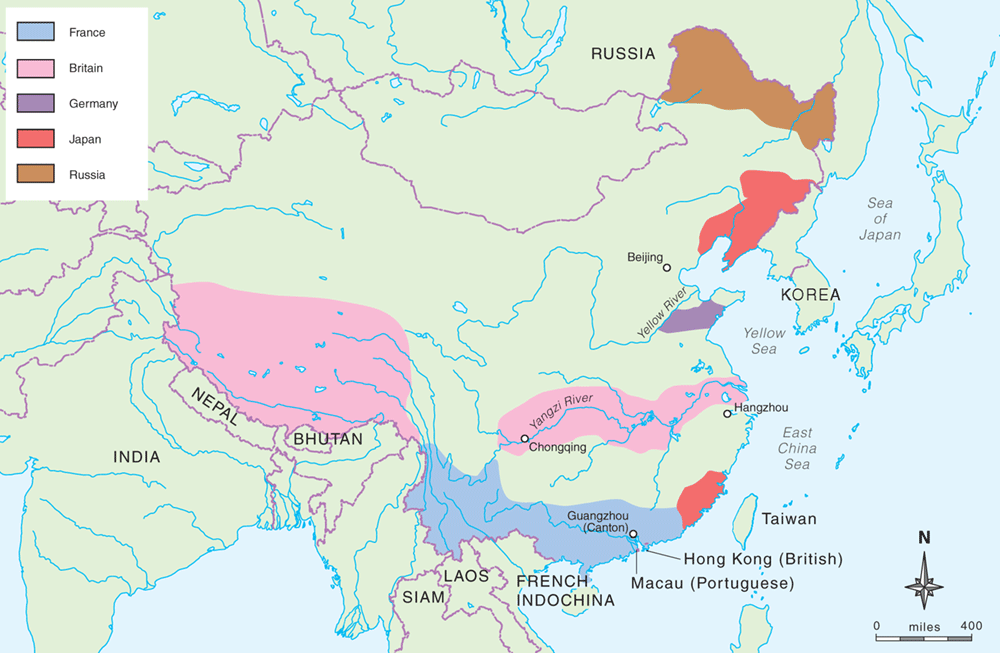
6. Foreign spheres of influence during the late Qing.