
9
Michael G. Esch
The history of migrations from Eastern Europe to South America is comparatively underexposed in historiography outside of the sometimes extensive, ethnonationally coded works on traditional diaspora research. This is certainly due to the fact that, in terms of the number of immigrants, Latin America pales in comparison to the other transatlantic migration destination, North America. Whereas millions of people from Eastern Europe – especially Poles and Eastern European Jews but also Czechs, Slovaks, Hungarians, and Balts – permanently or temporarily migrated to the USA before the First World War, there were only several hundred thousand in Latin America at this time, to which tens of thousands more were added in the interwar period. This does not mean, however, that migration to South America is only of anecdotal interest: rather, I will try to show that it is both instructive and indispensable in terms of processes of globalization and interdependence as well as of the change in meaningful and structuring contexts to add a southern dimension to the North Atlantic migration system.1 I am less concerned with a quantitative reconstruction of the migrations from Eastern (mostly the later East-Central)2 Europe to South America than with some examples of their character; social, economic, and cultural contexts; and effects. The main focus will be on migrant and non-migrant actors and the relationship between discursive representations and migrant practice.
The presence of (predominantly male) migrants from Eastern Europe in South America can be detected relatively early: according to Krzysztof Smolana, individual inhabitants from Polish-speaking areas migrated to the Spanish and Portuguese colonies as early as the late sixteenth century; Jaroslav Vaculík names 27 Czech missionaries who went to what was to become Paraguay around 1700.3 Migrants from Eastern Europe, especially missionaries from the Polish and Bohemian-Moravian regions, were also in the Jesuit missions and reducciones (reductions) in the seventeenth and eighteenth centuries. There is no agreement in the literature concerning the moral, social and cultural assessment of these “Jesuit states”. On the one hand, the reducciones protected the actual natives, particularly the Guarani in the Brazilian state of Parana and the Adipon in Argentina and later Paraguay, from being deported as slaves or being killed. The reducciones helped to make the land arable and tried to transform the tribes, who had been living as hunters and gatherers, into sedentary Christian farmers – with some success. On the other hand, this was the result of a disciplinary turn to obedient labour, which, as argued by Paul Lafargue in 1895, distinguished the actions of the Jesuits from that of the slave traders at best in the degree of violence against the natives and the fact that the natives could remain in familiar surroundings.4 The author of one of the first reports on the remainders of the Jesuit state in Paraguay from 1783, Martin Dobrizhoffer, possibly came from Bohemia.5 Because of his report, he is considered a precursor of modern ethnography.6
It can hardly be assumed that the actors were interested in having made an independent, politically or culturally specific contribution to the activities of the Jesuits. As Markéta Křižová has shown, such missionaries did not appear as Czechs or Poles but as members of the universalistic Societas Jesu and as members of a transnational, elitist European-Catholic reference area: as subjects of the Habsburg Empire, Bohemia, Moravia, and Poland were involved in the global expansion of Catholic Europe as well as in the expansion of the Russian Empire to the east.7 Like their colleagues traveling across the globe, these Jesuit missionaries reported on the peculiarities they observed regarding the environment and culture in general as well as the slave trade to superiors and relatives in their places of origin, thus creating a link, albeit a selective one, that led to a little-by-little increasing migration from Eastern Europe to South America.8 This prehistory is interesting because, in addition to the affiliation of these actors to expansionist European elite circles, it anticipated to a certain extent the later ambivalences and transnational or transregional and translocal characteristics of the migratory connections between Eastern Europe and South America.
1 Second Globalization and Transatlantic Migration
In the second globalization in the course of the nineteenth century,9 the circumstances surrounding migration across the Atlantic changed significantly in several ways. The modernization of European societies; the sometimes catastrophic, but always transforming economic and sociocultural effects of capitalization and industrialization on rural subsistence economies; the globalization of the commodity, capital, and workforce markets; and the increasing implementation of the nation-state in this process10 – additionally enforced by the apparently unlimited availability of land in the colonized areas and decolonized states of America engendered growing migration flows that connected Western and increasingly Eastern Europe with the Americas and created what Hoerder and others call the North Atlantic migration system.11 However, any enthusiasm about the integration of Eastern Europe into this migration and economic system and the new links emerging between Eastern Europe and South America should not obscure several structural facts: the phenomenon of mass migration across the Atlantic affected large parts of Eastern Europe (except Silesia)12 much later than it had affected other European regions – one reason for this was the high cost of crossing the Atlantic until the end of the nineteenth century. It was not until the 1890s that this obstacle was overcome due to the governments in South America instigating an active policy of internal colonization by promising individuals, families, and groups willing to settle in the country to finance the crossing and to facilitate the acquisition of land and residency titles. Further delays resulted from the fact that subsistence farming and paternalistic farmers’ associative practices were still functioning to some extent in many places throughout Eastern Europe – which meant that potential emigrants lacked both the possibility and the will to undertake such long-distance journeys. In this context, South America seemed even further away from Europe than the USA, both geographically and mentally speaking.
This perspective remained the case even after the reduction in the cost of sea travel across the Atlantic from the 1880s onwards not least because of the transnational or transregional agendas of most migrants: after the US government repealed the Homestead Acts, and thus the “free soil” policy in the country, the relatively high degree of industrialization made transatlantic migration attractive for rural migrants who wanted to spend a few months or years overseas and then return home with their savings. Ultimately, temporary migration to North America was a new and promising opportunity for classical employment migration, which expanded and partially replaced more traditional forms, such as seasonal migration from Galicia to Saxony and Prussia.13 The vast majority of migrants to the USA tried to save as much money as possible in as short of a time as possible through dependent work in industry – money that was then to be used to expand the house or the area under cultivation, as well as to buy a wide variety of items, in the place of origin.14 However, a move to South America, subjectively and often also in practice, implied not only a permanent settlement with dependent or self-employed activity in agriculture but also often a pioneering activity in presumed and actual wilderness. The vast majority of migrants thus headed to the northern part of the double continent, and only relatively few ventured to its more southern parts.
A second essential factor was the nationalization of the world in direct connection with the second globalization. As Benedict Anderson has shown, the invention of the modern nation-state set in motion a process of transformation that not only encompassed the already-existing Western European states and the empires dominating East-Central Europe but also led to foundations of post-colonial states and nations in South America from the early nineteenth century onwards – notably because of the legitimizing construct of “popular sovereignty” and the associated promises of political and cultural participation.15 Paraguay became independent in 1811, Argentina in 1816, Brazil in 1822, and Uruguay in 1825 (with international legal recognition following in 1828) – to name only the later main destination countries of migrants from Eastern Europe. The transformation of European and American communities from colonialist, institutionalized territorial states of the ancien régime to sometimes expansive nation-states or multiethnic empires with increasingly ethnonationally segregated subjects had significant effects on the genesis and course of migration both within Europe and in a transatlantic perspective.
No later than the 1850s had several South American states favoured the immigration even of Europeans, who – such as the Irish or Italians – were already deemed undesirable in other destination countries. In the Argentine constitution of 1853, for example, there is a paragraph stipulating the promotion of all European immigration to enhance the country’s economic and intellectual culture.16 Most South American countries – for example, Uruguay around 1865 and Argentina in 1869 – consequently established immigration offices and agencies dedicated to the promotion and the more targeted management of migration from Europe.17 The fact that groups already deemed dangerous or detrimental further north were not excluded had less to do with post-colonial anti-racism than with a different demarcation between the desirable and the undesirable, which principally affected the possibilities and representation of East-Central European immigrants: this group, including Eastern European Jews, were desirable in the context of the “whitening” of the national population, that is to say, the statistical and spatial displacement and marginalisation of the indigenous.18 We will see later that an internal differentiation of the basically white segments of the population also occurred in some circumstances in South America.
2 Migration and Discourse in the late Nineteenth and early Twentieth Centuries
Migration from Eastern Europe to transatlantic areas was affected by these paradigm shifts and adjustments in a specific way and to a certain degree because it developed into a mass phenomenon precisely at a time when the nationalization of the masses via the ethnic reformation of the nation and the parallel establishment of the class-reconciling welfare state had reached their peak in Europe and were also progressing rapidly in North America.19 For this very reason, the case of South America is of considerable value for the investigation of the polyvalence of the positioning of migrants and migration in the ever-hegemonic discourses.
The convergence of political, hygienic, and ethnonational discourses across Europe in the course of the nineteenth century ultimately led to the conclusion that immigration from the “East” was fundamentally undesirable and dangerous. With the Polish Uprisings (1830/31 and 1863/64) and the transnationalization of the Russian social revolutionary movement and its transition to terrorism in the 1870s and 1880s, politically motivated emigration – which had originally been welcomed by liberals and democrats acting in solidarity because of its anti-Russian character when it came to the Poles and because of its moral integrity when it came to Russian revolutionaries – was increasingly identified as a catalyst of potential unrest in host countries. Consequently, the characterization of Eastern European refugees and economic migrants as troublemakers was extended to include educational and economic migrants from the same regions. In the German Reich, events in the countries of origin such as the Polish January Uprising (1863/64), the successful assassination of Tsar Alexander II in May 1881, or the Russian Revolution (1905) were used to restrict the entry of any migrants from the “East”. These restrictions and similar measures played a major role in encouraging people that were willing to emigrate to look for other opportunities, even though immigration regulations in countries such as France and Great Britain remained liberal, and the restrictive approach of the Prussian central authorities was occasionally mitigated by subordinate regional and local authorities.20
In the USA, individual domestic political incidents were decontextualized and used to enforce restrictive measures that went far beyond the narrower circle of the scandalized actors. The assassination of American President William McKinley by Leon Czołgosz, a descendant of Polish immigrants, in 1901 was used two years later as an argument for the adoption of the Anarchist Exclusion Act, which, in fact, was directed primarily against politicized and poor migrants, characteristics shared by many migrants from Eastern Europe.21 As early as 1896, the introduction of literacy tests had rendered the entry into the US exceedingly difficult for Italian, Eastern European, and Asian migrants.22 After 1917 and until the early 1920s, the almost global “Red Scare” caused continuing mistrust against proletarian and peasant immigrants from Eastern Europe, which also found expression in the infamous quota system that severely restricted immigration from Eastern and Southern Europe and Asia.23
The nationalization of European and transatlantic societies especially affected emigrant nations because emigration was seen, on the one hand, as a social and economic opportunity and, on the other hand, as a threat to the ethnonational structure of a country’s population. Particularly in the interwar period, this debate led to a transnationalization of the nation at the level of the emerging national elites at home and abroad. The emergence of an independent national liberation movement in the form of Zionism also affected the Jewish segments of the population: as Tara Zahra aptly recognizes, regarding migration, Jews differed from the Christian East-Central Europeans only in so far as they hoped to achieve a nation-state by emigrating, while the gentile social reformist factions were concerned with transforming migrants into outposts of already territorially fixed nations and their state.24
The enforcement of the hygienic-bacteriological principle of disease control and its connection with ethnonational attributions from the 1890s onwards and especially during the First World War ultimately had similar effects.25 Paul Weindling has described in detail how the enforcement of the bacteriological discourse, as a shift from a holistic to a symptomatic approach for explaining diseases, led to the identification of Eastern Europe and, within this region, specific segments of the population as carriers and transmitters of infectious and sometimes fatal diseases.26 In 1892, Robert Koch, the father of modern bacteriology, suspected that the Hamburg cholera epidemic was caused by Russian migrants,27 which resulted in migrants, especially from Eastern Europe, being equated with epidemics.28 From 1916 onwards, the identification of the impoverished Jewish population in Eastern Europe as carriers of the typhoid bacterium contributed to anti-Semitic representations of Jews as a plague, which, under German occupation, provided significant additional medical justification not only for the ghettoization of Polish Jews but also for their deportation to the extermination camps.29
3 Colonization, Capitalist Penetration, and Epidemics
The increasing limiting of temporary and permanent emigration options changed in the wake of new initiatives meant to support internal colonization in some South American countries, which, in some respects, were an echo of mercantilist population policies and a forewarning of its modern descendant.30 When Brazil offered in 1890 free passage to all European settlers, in the two years that followed more than 100,000 volunteers of all ethnic and denominational affiliations were found throughout the Russian and Habsburg parts of East-Central Europe. The “Brazilian fever” quickly reached such proportions amongst the rural population that the Hungarian government, under pressure from landowners, banned emigration to Brazil completely in 1892.31 A similar “Argentine fever” was raging at about the same time. In Galicia, too, around 1890, concern grew about an impending economic and demographic loss by emigration to South America.32 Despite such measures, emigration from the Hungarian parts of the dual monarchy to South America, especially Brazil, far exceeded that from Cisleithania. According to a count of the passenger lists, only 94,047 Cisleithanians (“Austrians”), in comparison to 264,460 Transleithanians (“Hungarians”), left the empire for Argentina between 1876 and 1910. By contrast, only 8,500 Transleithanians found their way to Brazil in the same period, in addition to 55,870 Cisleithanians, probably because of the already mentioned ban of 1892.33 Although no ethnolinguistic data are available on the composition of the emigrants, it can be inferred that a large proportion of the former spoke Slovak or Slovene as a mother tongue and the latter spoke Polish: according to estimates, more than 100,000 people migrated from “Polish territories”, that is to say, the ethnically mixed former territories of the Polish aristocratic republic, to Brazil alone between 1890 and 1914.34
The will to emigrate was certainly, to a large degree, a sign that the capitalization of the world had already structurally and mentally penetrated even the most remote areas of East-Central Europe. Instead of coming to terms with static conditions, medium-plot and small-plot farmers developed an individualized desire for social advancement and material prosperity, which was further reinforced by the fact that globalization was affecting the social economies of East-Central Europe. The latter led to a sustained weakening of subsistence economies and paternalistic models of wealth and, at the same time, to an increasing identification of social position and happiness with ommodified status symbols and participation in the commodity economy. In other words, the desire to improve one’s own situation through temporary or permanent emigration had not only been made possible by globalization and its instruments – economic interdependence and acceleration of news and transport – but also had ultimately been created by it. The extent to which these developments meant a sustainable transformation of the sociocultural shape of the village revealed itself not least by the numerous conflicts between traditional church, landowning authorities, and the numerous returnees: the latter brought with them not only money but also goods and acquired attitudes towards life as well as behaviours that were hardly compatible with traditional village life.35
In the case of North Atlantic migration, an important role in this process was played by private entrepreneurs who arranged crossings and occasionally jobs or settlements, luring migrants with prospects of prosperity. How this business was conducted transnationally is illustrated by the photograph of Ivan Kraker’s travel agency in Ljubljana (see Figure 1):36 the presumably Jewish-Slovenian travel agent advertised himself as being a representative of French shipping lines that called at destinations in South America, namely Argentina and Uruguay, as well as Canada, via French (Le Havre) and North American ports.
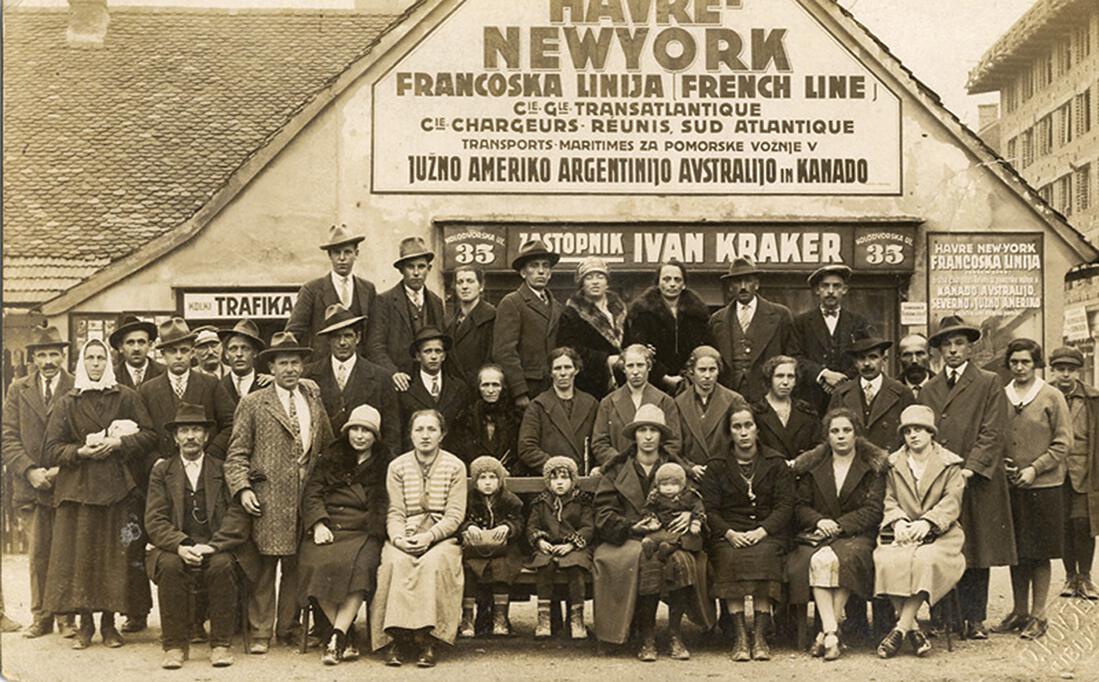
Figure 1: Ivan Kraker’s travel agency in Ljubljana, ca. 1924.
This photograph is also interesting because the Compagnie Chargeurs Réunis Sud Atlantique had emerged from a shipping company founded in 1872 by some bankers who mainly sought postal licences from the French government. Moreover, despite a monopoly of traffic from French ports to South America, the company could barely compete with German and British lines in the area of passenger transport even after being taken over by the Compagnie Générale Transatlantique.37 It is also remarkable that Argentina is mentioned amongst the promoted destinations, but Brazil is not. A second photo, probably taken four years later, mentions Uruguay instead of Australia. It cannot be clarified here if this expressed the changing preferences of the emigrants or if these preferences were conversely influenced by changing offers of the shipping companies – which then,again, might have been stimulated by the immigration policy of the respective governments. We do know, however, that the more established businessmen and residents of Ljubljana complained about the migrant clientele: South-eastern Europe was drawn into the maelstrom of transatlantic migration relatively late, and Ljubljana was a latecomer as an emigration bridgehead and port.38 Obviously, however, the establishment of this new emigration port was met with such keen interest that a large number of travel agents and the number of emigrants were attracted by it, for whom no adequate accommodation was available and who occasionally violated certain rules of decency and could only be controlled by cordoning off the road in question by the police.39
Furthermore, the photograph – as well as similar others – illustrates that emigration to South America became a specific line of business for Ljubljana in the 1920s: according to the original caption, Kolodvorska ulica – the street by the railway station – was a “street of emigration offices, hotels and emigrants”.40 It also suggests the above-mentioned fact that emigration to South America had, to a large degree, become a migration of entire families. This also remained so until later and in other parts of Eastern Europe: according to the Pamiętniki Emigrantów, a collection of autobiographical reports that was created in the 1930s of Polish migrants from all over the world, one-third of the families living in South America had been recruited by travel agents and had travelled as family units.41
Finally (to follow on from a statement by Ulf Brunnbauer),42 the view from the periphery changes the overall picture in this case. Police measures to contain the disorder caused by migrants like in Ljubljana were also to be found in large emigration ports, such as Hamburg, Liverpool, or Le Havre, which had developped and perfected specific containment infrastructures. In the port areas – which were themselves neatly separated from the rest of the city – “emigrant hotels” were set up in addition to check-in halls, providing mass accommodation where migrants could spend the time between their arrival in the port city and their departure and which, ultimately, also served as quarantine stations. These facilities were not necessarily run by the state but sometimes responded to official requirements: in Hamburg, for example, Hamburg–American Line shipowner Albert Ballin initially had a number of barracks built directly on the quay, which were replaced in 1901 due to port expansion by several large halls in which emigrants had to spend 14 days. It was not by chance that these halls were erected on an island in the river Elbe and, thus, at a safe distance from the Hamburg population.43 The other European, American, and Asian ports carried out similar operations in the period around 1900.44 From 1911 to 1955, the Argentine government operated the huge Hotel de Inmigrantes (see Figures 2a, 2b),45 where new arrivals were accommodated for up to five days free of charge in communal dormitories and fed in large dining halls. A forerunner facility, whose construction was reminiscent of Jeremy Bentham’s Panopticon, had existed since 1888 and basically served as a quarantine station. Here, as in Europe, immigration was identified for a long time with the risk of epidemics, although the yellow fever epidemic of 1851/52, which had originally legitimized the quarantine of immigrants, had been of domestic origin. The new building was a response to the desired increase in European immigration and it transformed both the architectural appearance and the internal organization of the quarantine. The new hotel was now more reminiscent of a spa hotel than a converted silo. Accordingly, it expressed the Argentine state’s commitment to its new citizens by welcoming them, at least architecturally and materially.
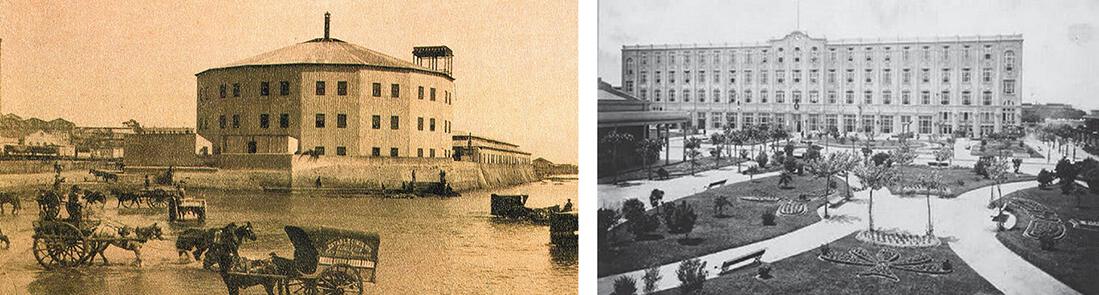
Figures 2a, b: Hotel de Inmigrantes before (left) and after (right), 1911.
The quarantine was instigated by Europeans, and it was originally intended to protect immigrants and professional travellers: German and German-Austrian medical observers had quickly established that the more northern the origin of a sick person was, the more serious an infection with the yellow fever disease was. It could become particularly severe and often fatal for Finnish and Russian seafarers, whose ships brought emigrants in addition to goods to Brazil. The German-Brazilian physician Avé Lallemant intervened several times, together with the German consul general, initially against the conditions in a makeshift quarantine station in a garden house. They favoured complete isolation of the sick, which, in addition to better treatment, was intended above all to protect Europeans from further infection. In fact, Lallemant was honoured by the Swedish, Austrian, and Russian governments and the Hamburg Senate for his services to their subjects.46 However, when yellow fever seemed to be finally defeated around 1910, typhoid fever and the above-mentioned spotted fever had been firmly established as epidemics of eastern origin spread by migration. Thus, although the perspective was somehow reversed, the inauguration of a hygienic anti-epidemic discourse caused the spatial discrimination and isolation of immigrants.
4 “Free” and Organized Settlement
Overall and structurally, migration to South America differed little from migration between East-Central Europe and North America. One distinguishing feature was that some South American states promoted rural settlement at a time when the “free soil” policy in the USA had already come to an end. This settlement migration was different from other forms of betterment migration: the migrants needed much larger amounts of money – if not for the crossing, then for the initial arrival period – and the settlement was usually planned as final, which also meant that entire families migrated more frequently to South America than within Europe or to North America. Settlement was riskier because it took place in regions not previously cultivated with European methods, where the usual agricultural techniques were only applicable in an adapted form or even did not work at all. Added to this was the threat, exaggerated or real, of diseases against which European settlers had not yet developed any resistance. Both particularities – the confrontation with “wilderness” and the threat of new diseases – accordingly circulated in media coverage and informal reporting (as well as rumour mongering) about conditions in South America.
Because of the expected difficulties following migration, usually several families – sometimes from one village – joined together to found entire villages: in 1897, 14 families with 69 members established the first Polish-Catholic settlement in the Argentine district of Misiones, the former area of the Jesuit reducciones. Further, similarly structured groups of settlers, especially from the Polish-speaking areas, followed.47 It was not until 1913 that a Czech settlement, only six hectares at that time, was established in the Argentine province of Chaco.48 These and other “colonies” would not grow considerably until the 1920s: according to estimates, in the 20 years between the world wars, about 40,000 Poles and 1,600 Czechs emigrated to Brazil and 28,000 Czechs to Argentina. Consequently, in 1934, the Polish Republic established a consulate in Posada, the administrative centre.49
5 Emigration, Nationalization, and Socioeconomic Transformation
As early as 1900, Russian-Polish and Habsburg social reformers, such as the Lviv-born economist and migration researcher Leopold Caro, considered permanent migration to be both a danger as well as an opportunity on multiple accounts: emigration to South America unloaded social conflict potential onto rural areas and in the best case promoted the development of national consciousness, thus perhaps becoming a welcome substitute for colonialism. Initially, however, Caro conjured up the dangers of a wrongly pursued migration policy: in his paper from 1909 on Austria’s emigration policy, he criticized German nationalism, especially the nationalism against Slovaks that pushed them to emigrate, to an extent leading to a shortage of labour inland.50 Emigration, originally considered as a discharging of “overpopulation” in order to transform and integrate a then intensive agriculture into the capitalist domestic markets, could, if not sufficiently curbed, hinder the increase and even maintenance of globally competitive agricultural production as well as the domestic recruitment of surplus agricultural workforce for industrialization. Concerns about the recruitment of efficient soldiers and the lack of national awareness, especially amongst farmers, were also raised.51 The Czech lawyer and statistician Jan Auerhan had similar concerns around 1906 about Bohemia, Moravia, and Slovakia.52
It therefore comes as no surprise that even in East-Central Europe with the absence of modern nation-states civil society actors engaged in harnessing migration for the desired purposes and in the right directions – and simultaneously to use the very concept of betterment migration for the advancement of their own livelihood and prosperity: private companies were set up to organize emigration in both Poland and Slovakia. These enterprises contributed to a peculiar transnationalization of the ethnic and political nation, first amongst ethnic Poles: the Polish Emigration Society (Polskie Towarzystwo Emigracyjne), founded in Galicia in 1908, set itself the task of providing social care for (ethnic) Poles living abroad and of ensuring permanent ties to their homeland. The emerging civil society also set out to explore possibilities of seasonal migration to South America as a sort of external co-financing for the economic transformation of the countryside.53
The tension between eugenic, economic, and demographic considerations concerning overpopulation, ethnic homogenization, and labour requirements as well as the desire to secure global raw material deposits and sales markets intensified after the division of East-Central Europe into nation-states after World War I. The obvious tension between an ethnically defined titular nation and a multiethnic reality even in these nation-states found early expression in the establishment of Polish and Czech ministerial institutions in 1918, which organized and controlled the remigration of former forced labourers and other migrants.54 Institutions concerned with outward migration followed shortly after. Such institutions – and increasingly the respective national governments – had multiple concerns. The main task was to control emigration, which was supposed to contribute to an improvement of the demographic basis for the capitalization of the domestic economy – as a prerequisite for its international competitiveness – by unloading “population surpluses”, a policy that on the other hand threatened to withdraw particularly active components from the titular ethnic nation.
The intended response was a thorough nationalization of the emigrants, to the extent that they would become colonial outposts of the nation-state: after the Paris Peace Conference had rejected the transfer of former German colonies to the newly founded states in East Central Europe, the establishment of settler colonies in South America, Asia, and Africa provided the desired colonial55 enlargement areas. The emigration policies now initiated by the successor states – namely Poland, Czechoslovakia, Hungary, and Yugoslavia – were based on the dialectics of promotion and obstruction that characterizes most state intervention. On the one hand, the abolition of and distinction from the old regime as well as the factual economic and legal integration into the global world of nation-states demanded the free movement of goods and people, especially in the successor states. Poland, Czechoslovakia, and Yugoslavia, for example, complied with this demand by already declaring emigration “free” in their draft constitutions.56 Nevertheless, there was a growing need for state control: the otherwise quite liberal Czechoslovakian government, for instance, tried to limit emigration by sometimes charging exorbitantly high fees for issuing passports and, from 1928, reserved the right to refuse exit visas on political and economic grounds. In practice, this mostly affected Czechs who wanted to emigrate to the Soviet Union but also concerned certain craftsmen and other specialists to some degree. From 1936 onwards, an amendment to the emigration law stipulated that the recruitment of overseas settlers had to be approved beforehand by the Ministry of Social Affairs.57
Poland did not impose any significant restrictions on overseas migration, but it hindered the return of ethnically non-Polish minorities; it even expatriated them collectively in October 1938.58 Neither of these issues affected the migration to South America, as settlement here in was specifically promoted, again within the structural framework and logic of the nation-state. Similar to Polish and Czech social reformers and national politicians around 1900, state authorities specifically endorsed closed settlements in ethnically homogeneous colonies. In 1919, the Polish Emigration Office (Polish Urząd Emigracyjny) was founded to take care of those Poles “to whom the mother country could not yet offer a roof over their heads”. As early as 1921, an interministerial State Emigration Council (Państwowa Rada Emigracyjna) was set up, which had to examine draft laws for their compatibility with a migration policy that had not even been clearly formulated. In 1925 followed a ministerial department that managed the establishment and supervision of extraterritorial schools.59 Sometimes, state control was not established directly but rather through the state-sanctioned if not initiated establishment of private-sector institutes and associations. The Czech Office for Economic Aspects of Emigration and Colonisation (Ústav pro hospodářské styky emigrační a kolonizační) was established in 1923 upon the suggestion of the Ministry of the Interior and the Ministry of Foreign Affairs after the two ministries had proved unable to agree on the division of their competences when it came to emigration policies. As early as 1924, the institution presented a detailed memorandum recommending comprehensive state control over immigration and emigration, including financing, which from 1928 was handled by a new department of the Bank of the Czechoslovak Legions (Banka československých legií), which had been founded in 1919 in Irkutsk and had moved its headquarters to Prague in 1921.60
Unlike in Europe and North America, where ethnic Poles, Czechs, and especially Jews sometimes were not considered to be real Europeans, South American governments welcomed them as white settlers suitable to displace the indigenous population. As a result, the East-Central Europeans, who were used to discrimination, were suddenly recognized as Europeans here.61 East-Central European specialists on migration were not strangers to this kind of European chauvinism, but they in turn considered the “whites” of South America as inferior. In 1919, Zygmunt Gargas, an economist from Cracow, declared in a statement for the State Emigration Council that Brazil was suitable for emigration from Poland precisely because of the lower overall cultural level of its partially “savage” population, which in turn meant that the national consciousness of Polish settlers was less endangered in Brazil than in the USA, with its predominantly Anglo-American – and thus superior – culture.62 In 1925, a commission of experts at the Ministry of Labour and Social Affairs followed the same principles when it determined certain destinations for emigration that allowed for continuous state control of the identity and thus loyalty of Polish settlers. In addition to Brazil, the commission included Argentina as well as Turkey, the Dutch East Indies, and – astonishing in this context, but for different reasons – southern France. In 1937, the Polish Republic signed a migration convention with Bolivia.63 In other words, while US demographers and migration politicians postulated that East-Central European migrants were culturally and socially inferior, some of their East-Central European colleagues declared that they were at least better than the South Americans.
In another take on the principle of ethnic nationality, the Polish Emigration Society, in the 1930s, promoted the emigration of ethnic and social undesirables and wanted to keep the desirable ones in the country as much as was possible; at the same time, the society was involved in negotiating certain social and labour standards for labour migrants, especially, but not only within Europe.64 After independence, however, the perspective changed: the migration of settlers to South America now played an important role in coping with (and participating in) globalization to the extent that its promotion by the governments there seemed particularly suited to establish ethnonational bridgeheads that would ensure both access to raw materials and privileged access to markets for domestic products.65
The connection between the desire for additional colonial space and migration management became most obvious in the case of the Maritime and River League (Liga Morska i Rzeczna), established in 1924. At first, the organization seemed to be primarily concerned with the promotion of access to waterways and the seven seas as well as the integration of the Polish Republic into the world market via the oceans. The renaming of the organization to Maritime and Colonial League (Liga Morska i Kolonialna) in 1930 indicated a shift in priorities. In 1934, the Liga bought land for settlement in the Brazilian state of Paraná, where a veritable Polish colony had been living, in the administrative centre of Kurytyba and its vicinity, since the 1890s. Supported by the Polish state, the Liga linked a Polish civilization mission with the attachment of the settlers to the Polish Republic by establishing partially state-funded schools and “agricultural” training centres named “Espírito Santo”. However, the Liga’s disciplining and supervising intentions were not always met with the approval of the emigrants: both the pressure on the previous generation of emigrants and the attempt to transform the now numerous settlements of Poles in Brazil at the Foz do Iguaçu into a Nowa Polska faced resistance from the settlers and in the end failed.66 In Poland itself, the Liga became one of the largest Polish mass organizations before 1945, but this did little to change the fact that the 121,000 emigrants in Argentina around 1930 and the 29,000 in Brazil were everything but eager to be pawns in national expansion plans.67
The essentially political colonialist agenda behind this form of expansion through emigration from 1930 onwards also aroused suspicion among local political elites. Under the presidency of Getulio Vargas, there was a growing number of voices considering that the Polish settlers having their own schools and marrying mostly endogenously were proof of political unreliability, the lack of willingness to integrate, and their contempt for the Brazilians.68 Certainly, such ideas were related to the fact that migration to South America was more often than elsewhere aimed at permanent settlement – because of the distance, because it demanded a certain taste for challenges, and because of the necessary financial means. Things were still more in flux there than in the USA of the late nineteenth and early twentieth centuries: urbanization and industrialization had only just begun and still promised substantial potential. However, this state of becoming could also be seen as an opportunity. The borderlands between Argentina, Paraguay, and Brazil – a region that had not yet been touched by the developmental embrace of capitalism and nation-states after their “renaturalization” following the fall of the Jesuit statehoods – invited fantasies of civilizing missions and cultural or even national autonomy.
Not fundamentally different but to a lesser degree and with a somewhat shifted geographical focus, emigration policy developed in Czechoslovakia. The Czechoslovak Foreign Institute (Československý ústav zagraniční), which had been part of the Bank of the Czechoslovak Legions since 1929, in principle pursued the same policy but focused on France and Argentina in its efforts to mediate emigration and the acquisition of soil. In fact, by 1930, about 30,000 citizens from Czechoslovakia had emigrated to Argentina, but only 6,000 to Brazil.69
However, Czechoslovakia took state intervention some steps further than Poland, in that it cooperated very closely with the regional land offices in the selection of subsidized settlers.70 This was especially significant for entrepreneurs residing in Argentina, who repeatedly requested the immigration of individual Czech specialists (such as glassblowers), whose departure had to be approved – and could be impeded – by these authorities.71 Here, too, the founding of the Nová vlast settlement project in Brazil was met with more demand from eager emigrants than what the organization was able to cope with.72 In Czechoslovakia, as well, the desired state monopoly over migration failed because the number of potential emigrants could not be managed without private facilities.73
Jewish immigration from Eastern Europe to South America was, in principle, very similar; along with associations such as Jewish Central Emigration Society JEAS in Poland (Żydowskie Centralne Towarzystwo Emigracyjne “JEAS” w Polsce), founded in 1924, organizations were formed to support migrant workers and settlers. In accordance with the overall extremely transnational and supranational character of many Jewish organizations (which again corresponded to the lack of an accordingly denominated nation-state), JEAS was merely a branch of the humanitarian Hebrew Immigrant Aid Society, founded in New York in 1909. Support for emigrants was also supplemented by charitable and social reform foundations such as the Jewish Colonization Association of Baron Maurice de Hirsch. After Hirsch’s death, the association operated as a public limited company, in which JEAS was also a shareholder.74 Internationalization and transnationalization through mergers replaced the support by an “own” nation-state.
Just as Polish, Czech, and Slovak emigration politicians combined support for compatriots willing to migrate with the desire for social and political reform, the settlement of Jews in South America also pursued broader goals: while Christian migrants from East Central Europe had often already been farmers in their place of origin, Jews were mainly an urban or small-town population, who, due to its exclusion from land ownership, was mainly engaged in crafts and trade. The training of pioneer farmers, which was run by the foundations, was thus designed to adapt the social structure of Jews to that of their surroundings. One of the most important transnational organizations dedicated to this goal was ORT (Obščestvo Remeslennogo i Zemledel’českogo Truda sredi Evreev), an organization founded in 1880 in Vilna (now Vilnius), which promoted the proliferation of agricultural (and craft) skills amongst Jews throughout Europe in the 1920s.75
Since the late nineteenth century, these considerations – which had initially been intended to eliminate socioeconomic differences between Jews and Christians and facilitate their coexistence – merged with the Zionist project: it was not without reason that the debates at the first Zionist Congress, held in Basel in 1897, also revolved around the question whether a national home for Jews should be established in the historical settlement area (i.e. Palestine) or in “uncultured”, colonized regions. Theodor Herzl himself imagined a Jewish state either in Palestine or Argentina. He assumed that the previous and ongoing immigration – which he categorized as “infiltration” – would not lead to the desired goal since it depended on the goodwill of the receiving states and could be stopped at any time “when the native population feels itself threatened”.76 He, therefore, called for prior sovereignty of a Jewish society as a national representative over such territories, although said territories already belonged to a sovereign state. Herzl assumed that Argentina “would derive considerable profit from the cession of a portion of its territory to us [Jews]”. He, too, assumed a Jewish-European cultural superiority and mission: the neighbouring countries would gain from the emergence of the Jewish state since “the cultivation of a strip of land increases the value of its surrounding districts in innumerable ways”.77
This ambitious project had to compete ideologically and literally with the more practical approach of the non-Zionist Jewish Colonization Association of Baron Maurice de Hirsch. Hirsch was committed to providing protection and adequate housing after a group of more than 800 Jewish immigrants had been cheated by their Argentine agent: after a failed attempt to obtain funds for a settlement in Palestine from Baron Rothschild in Paris, some 130 families from what is now Ukraine had been recruited by an Argentine information office for a settlement in the San Cristobál area. However, as land prices had risen considerably on their arrival, the agent now refused to fulfil the contract. Replacements could be obtained but in a completely undeveloped territory; also, neither tools nor livestock were provided as had been promised. The organization of relief again happened transnationally: a Romanian doctor who lived in Berlin was, while dwelling in Paris, commissioned by the Argentine government to examine hygienic-bacteriological conditions amongst European settlers in Argentina. He found the conditions untenable and informed the responsible ministry and the Alliance Israélite Universelle; he proposed to provide each settler family with 50 to 100 hectares of land as well as with financial aid. The proposal was accepted and implemented by Hirsch. From 1890 onwards, the Jewish Colonization Association accommodated more than 30,000 Jewish settlers in the Buenos Aires area and founded six autonomous villages. Some additional settlements were established in the rest of Argentina and Brazil.78
This does not mean, however, that the Jewish and Christian colonies functioned as intended. Many settlers found themselves in situations that had little, if anything, to do with what they had been promised. Land proved unsuitable for settlement, especially when it had been acquired and provided by private organizations; in most cases, settlers struggled with unfamiliar soil and weather conditions. Many hopeful settlers, therefore, were disappointed, exhausted, and impoverished and as a result returned – if possible – to their home villages. Nevertheless, many of these colonies consolidated – ironically exactly in those areas where the Jesuits had created ‘free’ spaces for the Guarani, that is to say, in the Argentine district of Misiones and the Brazilian state of Paraná more than 100 years before. Of not only anecdotal interest but also an indicator for the integration of immigrants into regional and national folklore are sociocultural figures like the Jewish gaucho.79
6 Sex, Tango, and Deviance
Migration from Eastern Europe to South America was also intertwined with as well as an intrinsic part of the globalization of labour exploitation and of the formation of specific urban subcultures: besides the organized settlement of agricultural pioneers and colonists, the large plantations and developing industries for their part also recruited labour force from Southern and Eastern Europe. Here, we mostly find chain migration, in which letters from migrant workers encouraged others to cross the ocean. Immigration to South America therefore was not limited to the colonization of areas not yet exploited in a modern (i.e. market-oriented) way and/or extent. Although the availability of “undeveloped” land continued to make pioneer settlement possible and necessary, labour immigration was also growing: with an increasing demand for labour, migrants also sought and found their way to the growing cities such as São Paulo, Buenos Aires, or Montevideo.80 As with other waves of migration and colonization, actors, especially in port cities, were predominantly young and male – which, as in all major cities of the nineteenth and twentieth centuries, although not creating a market for sexual services, surely expanded it.
As early as the 1860s, some Jewish migrants chose prostitution as a line of business. The Jewish pimps organized their segment of the field on a translocal basis, enjoyed an extremely poor reputation, and nevertheless were a significant actor in the development of one of South America’s most important contributions to world music. Since 1867, there had been a pimp ring in Buenos Aires, which, in 1906 not unlike many Jewish “compatriots” in less despicable industries, founded a society, under the name Varsovia, for the provision of mutual help with its own synagogue and cemetery. While in most cases, religious scissions amongst Jewish and other migrants derived from the discontent of more recently arrived “shakers” with already all-too-accommodated practices of those that were longer established,81 here it was different.
The foundation of an autonomous congregation became necessary because the rest of the Jewish community in Buenos Aires did not want to have anything to do with the organizers or the subordinated employees of prostitution. Respectable Jews refused donations from the organization and denied pimps and whores access to the synagogue and even burial in the community cemetery. The nascent Jewish women’s and workers’ movement also sharply and aggressively opposed the organization and the prostitution of Jewish women, at times with different and at other times with similar arguments and often in opposition to anti-Semitic identifications.82 In the interwar period, the new Polish Republic, too, was somewhat uncomfortable that such an organization named itself after the Latin name of the capital Warszawa. Remarkably, the pimps obliged and changed the name of their organization to Cvi Migdal in 1927.83
This particular economic sector was attractive not only because of existing demands but also because prostitution was legal in Argentina from 1875 to 1955 (with restrictions from 1923 onwards).84 Estimates indicate several hundred, mostly male, members of the Cvi Migdal who controlled 2,000 brothels and several thousand women in Argentina, Brazil, and Uruguay. These members provided the supply of mostly Jewish prostitutes, some of whom were recruited by force; others were recruited fraudulently in their places of origin and the European and North American centres of Jewish immigration or entered this profession of their own accord. Buenos Aires also became a destination for pimps who had to leave the USA and South Africa when repression against prostitution was intensified.85 A social and ethnic hierarchy, however, applied even in this sector: apart from simple brothels for workers and petty bourgeois, there were finer establishments for the upper classes, and while a French prostitute in the 1920s cost three pesos, a polaca (Pole) cost two and an Indian woman only half a peso.86 The organization remained active until the conviction of 108 members in 1930.87
It was in this milieu of port pubs and brothels that the tango was born as a peculiar mixture of Spanish, African, and Eastern European musical elements and dances. Very similar to jazz, it is today considered a musical art form but was deemed vulgar and obscene until the 1930s because of its origins in the brothels and the way it was danced. How the tango was then spread worldwide and reinterpreted, especially in post-modern feminist theory,88 would be worth a separate discussion; unfortunately, we do not have space here. However, its reinterpretation is interesting because it, in a way, reverses the discursive transformation of a successful business model of some Eastern European Jewish immigrants into a specifically and typically Jewish migrant demoralizing and disintegrating project.
This transformation began as early as 1892, when a trial in Lviv against 17 Jewish men and ten Jewish women for procuring women for Istanbul brothels caused a sensation far beyond Eastern Europe. At the end of the 1890s, a first congress was held against the so-called “white slave trade”. Around 1906, Protestant activists in the USA launched a campaign that scandalized the recruitment of young women for North American brothels, which presumably were mostly run by migrants. Another campaign – which directly addressed the corrupt cooperation of local authorities with the Cvi Migdal and, later on, some cases of forced prostitution that became public – followed from 1927.89 In a sense, the public-induced crackdown on prostitution and its attendant phenomena had exacerbated the situation in a way that could only end in the destruction of the Cvi Migdal. But restrictions and regulationshad been far from bettering the situation of the women. Instead they led to an increased intensity and violence of male access to women in the brothels – and thus created the conditions that had been fantasized about in the early campaigns.90
The most important point for us is that the anti-migrant discourse against prostitution in these campaigns anticipated the later discursive construct of Jewish male lechery and female depravity as a particularly dangerous assault on the moral and biological integrity of the white race. The film The Inside of the White Slave Traffic (see Figure 3), from 1913, states at the beginning that the pimps’ favourite pastime was Stuß, a card game with a Yiddish name that was also known as “Jewish Faro”. Pimping was thus sufficiently identified as Jewish.91 The film is interesting in that it was secretly shot in red-light districts, and some women who involuntarily were shown in the film apparently sued the producers for indemnities.92 The film The Slave Market, shot in 1921, had similar anti-Semitic connotations, with the figure of the procurer being strongly reminiscent of caricatures of the typical Jew.93
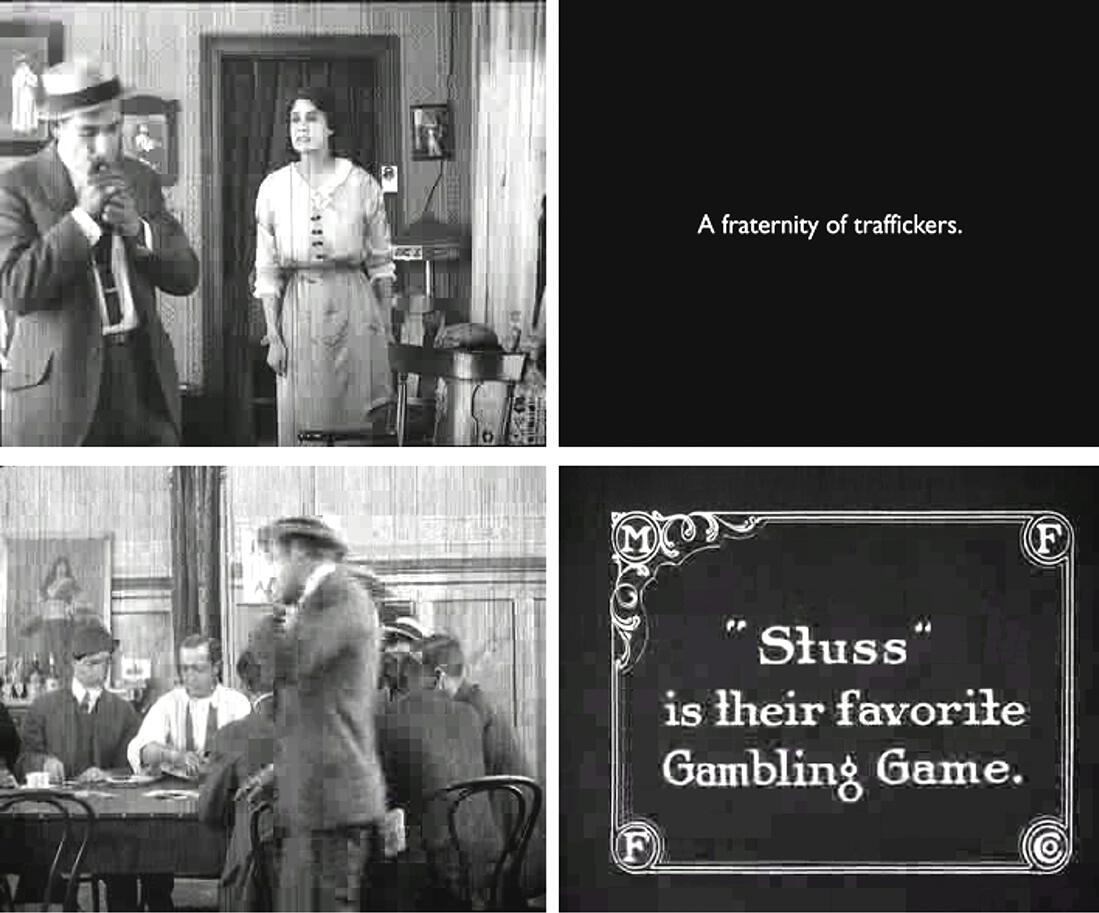
Figure 3: Scenes from The Inside of the White Slave Traffic, USA 1913.
It is remarkable from a film-historical and transnational perspective that the production of blue movies (i.e., erotic and pornographic films) began at the same time as the above-cited cinematic creations. These blue movies utilized the same motifs, and again both Argentine brothels and East-Central Europe – in this case, the emigration country Austria – were involved: Austrian film production began in 1906 with Am Sklavenmarkt (At the slave market), a film that was intended for closed men’s evenings and that showed young women scantily clad in an oriental setting. The presumably first pornographic film, El Satario (or El Sartorio), was probably shot sometime between 1907 and 1915 with (white) actresses from brothels in Buenos Aires.94 The impressive range of representations and discursive definitions from the notion of abducted and raped innocence to the promise of ecstatic corporeality is found even more clearly in pictorial representations. Both ends can, however, be contrasted (as in Figure 4)95 with the presumably far less glamorous (but also mostly less violent) reality of everyday brothel life.96
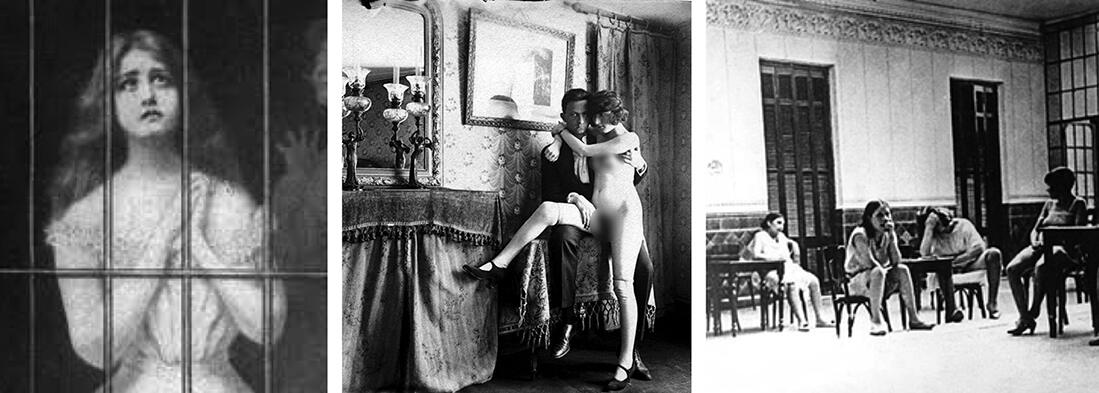
Figure 4: Representations: Prostitutes as victims; glamour girls; sex workers.
In fact, the campaigns against the white slave trade were often less concerned with protecting young women from violence and humiliation than with effectively normalizing their behaviour. In this discourse, the “fallen girl” was considered to be as needy as she was stained, damaged and irreparable. The call for state intervention and help overlooked the fact that Galician prostitutes in Istanbul and Bombay refused to be rescued by the Habsburg legation and that the milieu – despite obvious humiliation and suffering – opened up its own affiliations, obligations, social practices (including certain pension payments), and career paths.97 The discourse against prostitution allowed sexuality only as a precondition for biological reproduction in marriage and only in certain forms. It was also directed against all those who were defined as strangers: any initiation of sex by women or men, for example in ice-cream parlours or other establishments run by immigrants, was criticized.98 The book Fighting the Traffic in Young Girls (1910), by Ernest A. Bell, was dedicated to an “Army of Loyal Workers” who were concerned about the “Safety and Purity of Womanhood”. The impetus of the campaign and the measures that followed it were mixed with racist motives from the very beginning, especially in the USA: the North American Mann Act (1910), a law against trafficking women for prostitution, was formulated in such a way that it could also be used, until the 1960s, against black persons who took white companions on trips over state borders.99 The focus on female behaviour – that is to say, the mistrust of single women – had repercussions right up to the legislation of the countries of origin, since women who migrated alone in the interwar period needed the informal approval of a male caretaker to obtain a visa to travel to France or across the Atlantic.100 Finally, South American, North American, and European physicians and eugenicists linked the campaign against trafficking of women to their own considerations on how to ensure the biological optimization of desired populations. This was also true in East-Central Europe: it was not without reason that Leon Marek Wernic, the Polish minister of health, who from 1922 until 1939 was chairman of the Polish Eugenic Society (Polish Towarzstwo Eugeniczne) and deputy secretary of the International Eugenic Society, was also one of the spokespersons of the campaign against trafficking of women in Poland.101
The trial of Cvi Migdal, in the early 1930s, focused upon the postulated (and sometimes surely actual) coercive nature of recruitment, initiated a campaign against prostitution in general (and thus reinforced bourgeois morality) that finally legitimized a limiting of prostitution in 1936. This abolition happened in an increasingly repressive and xenophobic political discourse that was subsequently replaced by a campaign against homosexuals under the slogan “worse than whores”.102 The main theme of the anti-prostitution discourse in Argentina was the complicity of Jewish pimps, the police, and the administration – ultimately, the corruption of the Argentine state and the depravity of the pueblo hebreo (Jewish people).
7 Conclusion
So to what end do we make this connection between Eastern Europe and South America? What can be shown here that we did not already know? Firstly – but I am probably preaching to a choir of specialists and an already pre-informed readership – it shows that East-Central Europe was an essential part of the world and its cumulating interconnections in the nineteenth and early twentieth centuries. Secondly, it shows how diverse the contexts were in which migration from Eastern parts of Europe to South America took place, contexts that charged this migration with signification and were shaped by it: colonialism, racism, the modern nation-state, the globalization of the exploitation of labour, and the hybridization and globalization of cultural resources and sexual morality. We also see the extent to which economy, migration, colonialism, nationalism, and culture have intertwined under the global condition.
Strangely enough, the migration I have been writing about here is only partially placed in these contexts in the literature, while works devoted to such contexts often ignore East-Central European migration and migrants. What is regrettable about this is that it disregards an opportunity to take a closer look at entanglements of social, ethnonational, as well as hygienic and migration-related discourses and policies in their functioning and their manifold effects, which are not strange to other regions but are hard to be found elsewhere in such concentration, range, and ambiguity. Here, as elsewhere, the view from the periphery, with East-Central Europe and South America being positioned on opposite fringes, may provide insights into contexts and interactions and – an aspect I had to omit mostly – their effects on the subjects, historically relevant aspects that are lost when only looking at the large structures. The history of migrations from East-Central Europe to South America invites us to consider a histoire croisée that seems capable of questioning old and new normative certitudes (which are, of course, always simplifications). To go into this questioning at greater length would be a delightful but also quite challenging task.
Notes
1
D. Hoerder, “Segmented Macro Systems and Networking Individuals. The Balancing Function of Migration Processes”, in: J. Lucassen/L. Lucassen (eds.), Migration, Migration History, History: Old Paradigms and New Perspectives, Bern: Lang, 1997, pp. 73–84.
2
The terms “Eastern” and “East-Central Europe” are, as I am aware of, problematic and charged with identitarian and political meanings. For this article, East-Central Europe is considered geographically as a part of Eastern Europe, but it will be used for the region consisting mainly of the new nation-states formed in the aftermath of the First World War.
3
K. Smolana, “Polska diaspora w Ameryce Południowej, Środkowej i Meksyku” [The Polish diaspora in South and Middle America and in Mexico], in: A. Walaszek (ed.), Polska Diaspora [The Polish diaspora], Kraków: Wydawnictwo Literackie, 2001, pp. 130–148, at 130; J. Vaculík, České menšiny v Evropě a ve světe [Czech Migrants in Europe and the World], Prague: Libri, 2009, p. 267.
4
See also, e.g. P. Caraman, Ein verlorenes Paradies. Der Jesuitenstaat in Paraguay, München: Kösel, 1979; P. Lafargue, Der Jesuitenstaat in Paraguay, Stuttgart: Dietz, 1895. A sort of mediating stand takes W. Reinhard, “Gelenkter Kulturwandel im 17. Jahrhundert. Akkulturation in den Jesuitenmissionen als universalhistorisches Problem”, Historische Zeitschrift 223 (1976), pp. 535–575.
5
According to the Biographisches Lexikon des Kaiserthums Österreich, Vol. 3, Wien: Hof- und Staatsdruckerei, 1858, p. 333, Dobritzhofer was born in Freiberg, Bohemia (today Příbram) in 1717. The ADB (Vol. 47, 1903, p. 735), on the other hand, insists that Dobritzhoffer came from Styria in Moravia (today Příbor), not from Freiberg. The NDB (Vol. 4, 1959, p. 6) does not specificy a place of birth. A German translation of his Latin script was available shortly after the first edition: M. Dobrizhoffer, Geschichte der Abiponer, einer berittenen und kriegerischen Nation in Paraguay, Wien: Kurzbek, 1783.
6
A. Kitzmantel, “Die Jesuitenmissionare Martin Dobrizhoffer und Florian Paucke und ihre Beiträge zur Ethnographie des Gran Chaco im 18. Jahrhundert”, PhD thesis, München, 2004, https://edoc.ub.uni-muenchen.de/388 6/1/Kitzmantel_Angelika.pdf (accessed 30 September 2019).
7
See the overall presentation by W. Reinhard, Geschichte der europäischen Expansion. 4 Vols, Stuttgart: Kohlhammer, 1983–1990, and Die Unterwerfung der Welt. Globalgeschichte der europäischen Expansion 1415–2015, München: Beck, 2016.
8
M. Křížová, Problem of (proto)National/Ethnic/Regional Identities of Jesuit Missionaries from Central Europe in America (Working Paper Series of the Centre for Area Studies, 5), Leipzig: Leipziger Universitätsverlag, 2015.
9
Cf. on this, despite their apologetic and eschatological tendencies, E. S. Rosenberg (ed.), A World Connecting 1870–1945, Cambridge: Cambridge University Press, 2012, and J. Osterhammel, Die Verwandlung der Welt. Eine Geschichte des 19. Jahrhunderts, München: Beck, 2009.
10
On the intertwining of nationalization and globalization and their effects on migration and migration policy, see S. Conrad, Globalisierung und Nation im Deutschen Kaiserreich, München: Beck, 2006.
11
Hoerder, “Segmented Macro Systems”, pp. 73–84; D. Hoerder, Cultures in Contact. World Migrations in the Second Millennium, Durham: Duke University Press, 2002; D. Hoerder, “Makrosoziologische Ansätze in der Bevölkerungssoziologie: Migrationssysteme und Migrationsregimes”, in: Y. Niephaus et al. (eds.), Handbuch Bevölkerungssoziologie, Wiesbaden: Springer VS Verlag, 2015, pp. 1–19.
12
Cf. M. Kula, “Polska Diaspora w Brazylii” [The Polish diaspora in Brazil], in: Walaszek, Polska Diaspora, pp. 118–129, at 118f; and the essay by Andrzej Michalczyk in the present volume.
13
Ultimately, these were new and promising opportunities for classical employment migration, which expanded and partially replaced more traditional forms, such as seasonal migration from Galicia to Saxony and Prussia.
14
Cf. in addition to M. Wyman, Round-Trip to America. The Immigrants Return to Europe, 1880–1930, Ithaca: Cornell University Press, 1993, most recently M. G. Esch, “Migration: Transnationale Praktiken, Wirkungen und Paradigmen/Zugänge zur Migrationsgeschichte und der Begriff des Transnationalen in der Migration”, in: F. Hadler and M. Middell (eds.), Handbuch einer transnationalen Geschichte Ostmitteleuropas, Vol. I. Von der Mitte des 19. Jahrhunderts bis zum Ersten Weltkrieg, Göttingen: Vandenhoeck & Ruprecht, 2017, pp. 131–188, 457–488 and the literature listed there.
15
B. Anderson, Imagined Communities. Reflections on the Origin and Spread of Nationalism, New York: Verso, 1983; W. Reinhard, Geschichte der Staatsgewalt: Eine vergleichende Verfassungsgeschichte Europas von den Anfängen bis zur Gegenwart, München: Beck, 1999.
16
“The Federal Government shall encourage European immigration, and it may not restrict, limit, or burden with any tax whatsoever the entry into Argentine territory of foreigners whose purpose is tilling the soil, improving industries, and introducing and teaching the sciences and the arts.” Constitution of the Argentine Confederation of 1 May 1853, Art. 25, cit. n. https://www.constituteproject.org/constitution/Argentina_1994?lang=en (accessed 27 May 2020).
17
A. Windus, Afroargentinier und Nation: Konstruktionsweisen afroargentinischer Identität im Buenos Aires des 19. Jahrhunderts, Leipzig: Leipziger Universitätsverlag, 2005, pp. 95ff.
18
Kula, “Polska Diaspora w Brazylii”, pp. 118–129, at 119.
19
G. Noiriel, Réfugiés et sans papiers. La République et le droit d’asile, XIXe–XXe siècles, Paris: Pluriel, 1998; G. Noiriel, Etat, nation et immigration, Vers une histoire du pouvoir, Paris: Belin, 2001; G. L. Mosse, The Nationalization of the Masses: Political Symbolism and Mass Movements in Germany from the Napoleonic Wars through the Third Reich, New York: Howard Fertig, 1975; A. Gyory, Closing the Gate: Race, Politics, and the Chinese Exclusion Act, Chapel Hill: University of North Carolina Press, 1998; M. Schulze-Wessel (ed.), Nationalisierung der Religion und Sakralisierung der Nation im östlichen Europa, Stuttgart: Steiner, 2006.
20
Cf. D. Gosewinkel, Einbürgern und Ausschließen. Die Nationalisierung der Staatsangehörigkeit vom Deutschen Bund bis zur Bundesrepublik Deutschland, Göttingen: Vandenhoeck & Ruprecht, 2001; H. R. Peter (ed.), “Schnorrer, Verschwörer, Bombenwerfer?” Studenten aus dem Russischen Reich an deutschen Hochschulen vor dem 1. Weltkrieg, Frankfurt am Main et al.: Peter Lang, 2001; M. G. Esch, “Fundstück: Zentrale Diskurse und lokale Praxis in der Flüchtlingskrise 1906”, Mitropa 2017 (Jahresheft des Leibniz Instituts für Geschichte und Kultur des östlichen Europa), pp. 40–43, etc. See most recently M. G. Esch, “Refugees and Migrants: Perceptions and Categorizations of Moving People 1789–1938”, in: W. Borodziej/J. von Puttkamer, Immigrants and Foreigners in Central and Eastern Europe during the Twentieth Century, London: Routledge, 2020, pp. 7–32.
21
Esch, “Refugees”; E. P. Hutchinson, Legislative History of American Immigration Policy, Philadelphia: University of Pennsylvania Press, 1981, pp. 127–133, 150–158, 423–427.
22
Ibid., p. 482.
23
B. O. Hing, Defining America through Immigration Policy, Philadelphia: Temple University Press, 2004; R. J. Goldstein, “The Anarchist Scare of 1908: A Sign of Tensions in the Progressive Era”, American Studies 15 (1974) 2, pp. 55–78; Hutchinson, Legislative History.
24
T. Zahra, The Great Departure. Mass Migration from Eastern Europe and the Making of the Free World, New York/London: Norton & Co., 2016, p. 77.
25
S. Berger, “Narrative Etablierung einer Kriegswissenschaft. Die deutsche Bakteriologie am Vorabend des Ersten Weltkriegs”, in: U. Caumanns, F. Dross, and A. Magowska (eds.), Medizin und Krieg in historischer Perspektive – Medycyna i wojna w perspektywie historycznej (= Medizingeschichte im Kontext, 17), Frankfurt am Main et al.: Peter Lang, 2012, pp. 359–371.
26
P. Weindling, Epidemics and Genocide in Eastern Europe, 1890–1945, Oxford: Oxford University Press, 2000.
27
A. Fahrmeir, O. Faron, and P. Weil, “Introduction”, in: A. Fahrmeir, O. Faron, and P. Weil (eds.), Migration Control in the North Atlantic World. The Evolution of State Practices in Europe and the United States from the French Revolution to the Inter-War Period, New York/Oxford: Berghahn, 2003, pp. 1–7, at 5; T. Brinkmann, “Why Paul Nathan Attacked Albert Ballin: The Transatlantic Mass Migration and the Privatization of Prussia’s Eastern Border Inspection, 1886–1914”, Central European History 43 (2010), pp. 47–83.
28
Weindling, Epidemics, pp. 49–72; 139ff.
29
Ibid., pp. 273–277; M. G. Esch and U. Caumanns, “Fleckfieber und Fleckfieberbekämpfung im Warschauer Ghetto und die Tätigkeit der deutschen Gesundheitsverwaltung 1941/42”, in: W. Woelk and J. Vögele (eds.), Geschichte der Gesundheitspolitik in Deutschland im 20. Jahrhundert – von der Weimarer Republik bis in die Frühgeschichte der “doppelten Staatsgründung”, Berlin: Duncker & Humblot, 2002, pp. 225–262.
30
Cf. here U. Niggemann, “‘Peuplierung’ als merkantilistisches Instrument: Privilegierung von Einwanderern und staatlich gelenkte Ansiedlungen”, in: J. Oltmer (ed.), Handbuch Staat und Migration in Deutschland seit dem 17. Jahrhundert, Berlin: De Gruyter, 2016, pp. 171–218.
31
Zahra, Great Departure, p. 74.
32
J. Mazurek, Kraj a emigracja. Ruch ludowy wobec wychodźstwa chłopskiego do krajów Ameryki Łacińskiej (do 1939 roku) [Homeland and Emigration. The Peasants Movement and Peasant Emigration to the Countries of Latin America (until 1939)], Warszawa: PWN, 2006, p. 119f.
33
G. Neyer, “Auswanderungen aus Österreich. Von der Mitte des 19. Jahrhunderts bis zur Gegenwart”, Demographische Informationen (1995/96), pp. 60–70, at 69.
34
J. E. Bor, Slováci v Argentine [Slovaks in Argentina], Buenos Aires: Stanislav Hlucháň, 1986, pp. 8–16; [Antoni Olcha], Emigracja Polska w Brazylii. 100 lat osadnictwa [Polish emigration in Brazil. 100 years of settlement], Warszawa: Lud, 1971; K. Głuchowski, Materjały do problemu osadnictwa polskiego w Brazylji [Materials for the problem of Polish settlement in Brazil], Warszawa: Instytut naukowy do badań emigracyjnych i kolonizacyjnych, 1927, p. 45.
35
Wyman, Round Trip; R. Kantor, Między Zaborowem a Chicago, Kulturowe konsekwencje istnienia zbiorowości imigrantów z parafii zaborowskiej w Chicago i jej kontaktów z rodzinnymi wsiami [Between Zaborów and Chicago. Cultural Consequences of the existence if an Immigrant Community from the Parish of Zaborów in Chicago], Wrocław: Zakład Narodowy im. Ossolińskich, 1990; M. M. Stolarík, Immigration and Urbanization: The Slovak Experience, 1870–1918, New York: AMS, 1989.
36
Source: http://ljubljana-kps.zrc-sazu.si/en2-13.html.
37
A. Croce, La société générale des transports maritimes à vapeur, Paris: MDV, 2002; J. Beaugé and R-P. Cogan, Histoire maritime des Chargeurs Réunis et de leurs filiales françaises: Compagnie Sud-Atlantique, Compagnie de Transports Océaniques, Compagnie Fabre, Société Générale des Transports Maritimes, Nouvelle Compagnie de Paquebots, Barré et Dayez, Paris: Barré-Dayez, 1984.
38
U. Brunnbauer, Globalizing Southeastern Europe. Emigrants, America, and the State Since the Late Nineteenth Century, London: Lexington Books, 2016, pp. 37ff., 80 et passim follows (in principle correctly) the dominance of German shipping lines to such an extent that it does not even mention the French competition.
39
M. Denovšek, Ljubljana: Križišče na poti v svet. Množično izseljevanje Slovencev v Ameriko/Lubljana [Crossroads on the Way to the World. Mass Emigration of Slovenians to America], pp. 7 et passim. http://ljubljana-kps.zrc-sazu.si/Brosura/Ljubljana%20-%20Krizisce%20na%20poti%20v%20svet.pdf (accessed 24 October 2019).
40
Cited ibid.
41
Instytut Gospodarstwa Społecznego (ed.), Pamiętniki Emigrantów. Ameryka Południowa, no 1–27, Warszawa 1939, p. ix.
42
Brunnbauer, Globalizing, p. 8.
43
R. Evans, Death in Hamburg. Society and Politics in the Cholera Years 1830–1910. Oxford: Clarendon Press, 1987.
44
See in general J. Vögele and H. Umehara (eds.), Gateways of Disease. Public Health in European and Asian Port Cities at the Birth of the Modern World in the Late 19th and Early 20th Century, Göttingen: Cuvillier, 2015.
45
Source: http://www.apellidositalianos.com.ar/inmigracion/fotografias-inmigrantes.html; https://www.ciudadaniaitaliana.com.ar/historia/hotel-de-inmigrantes/.
46
H. Wätken, “Die Gelbfieberepidemien in Brasilien um die Mitte des 19. Jahrhunderts”, Ibero-amerikanisches Archiv 1 (1925) 2, pp. 131–144, esp. 137.
47
Olcha, Emigracja Polska.
48
Vaculík, České menšiny, p. 234.
49
A. Dembicz (ed.), Relacje Polska-Argentyna. Historia i współczesność, Warszawa: CSL UW, 1996.
50
L. Caro, Auswanderung und Auswanderungspolitik in Österreich, Berlin: Duncker & Humblot, 1909.
51
L. Caro, Wychodźstwo polskie, Kraków: Ojczyzna, 1911.
52
S. Brouček and T. Grulich, Domácí postoje k zahraničním čechům v novodobých dějinách (1918–2008) [Opinions at Home about Czech Emigrants in the Contemporary History (1918–2008)], Prague: Public History, 2009, p. 26.
53
Cf. Mazurek, Kraj, pp. 140f.
54
Cf. most recently M. G. Esch, “Refugees and Migrants: Perceptions and Categorizations of Moving People 1789–1938”, in: W. Borodziej and J. v. Puttkamer (eds.). Immigrants and Foreigners in Central and Eastern Europe during the Twentieth Century, London and New York: Routledge, 2020, pp. 7–32.
55
Matthias Middell, amongst others, speaks in this context of “imperial supplementary spaces” and, in particular, regarding German expansion and conquest plans in World War II, implies a restoration of the empires nominally dissolved in 1918, which conceptually contradicts the enforcement of the principle of the nation-state otherwise stated for 1918ff. Although a detailed discussion of the scope of such a concept would certainly be appealing, it is not to be undertaken at this point. At this point, I prefer that of the colonial enlargement area, since – as I hope to show – it is more suitable and more appropriate to the intentions of the political actors. Cf. S. Marung, M. Middell, and U. Müller, “Territorialisierung in Ostmitteleuropa bis zum Ersten Weltkrieg”, in: Hadler and Middell (eds.), Handbuch einer transnationalen Geschichte Ostmitteleuropas, pp. 37–130, at 45ff.; “Internationale Organisationen und das Prinzip des Nationalen: Bündnispartner oder Gegenspieler? Ein Gespräch der Herausgeberinnen mit Susan Zimmermann, Marcel van der Linden und Matthias Middell”, in S. Marung and K. Naumann (eds.), Vergessene Vielfalt. Territorialität und Internationalisierung in Ostmitteleuropa seit der Mitte des 19. Jahrhunderts, Göttingen: Vandenhoeck & Ruprecht, 2014, pp. 240–251.
56
J. Rychlík, Cestování do ciziny v habsburské monarchii a v Československu. Pasová, vízová a vystěhovalecká politika 1848–1989 [Travelling Abroad in the Habsburg Monarchy and in Czechoislovakia. Passport, Visa and Emigration Policies 1848–1989], Prague: Ústav pro Soudobé Dějiny, 2007, pp. 12–25.
57
Brouček and Grulich, Domácí postoje, p. 20.
58
On the Expatriation Decree of 1938 and its application to Jews, Ukrainians and Germans, see also J. Tomaszewski, Preludium zagłady, Wygnanie Żydow polskich z Niemiec w 1938 r. [Prelude to Extinction. The Deportation of Polish Jews from Germans in 1938], Warszawa: PWN, 1998: M. G. Esch, “Die Politik der polnischen Vertretungen im Deutschen Reich 1935–1939 und der Novemberpogrom 1938”, Jahrbuch für Antisemitismusforschung 8 (1999), pp. 131–154.
59
A. Walaszek, Reemigracja ze Stanów Zjednoczonych do Polski po I wojnie światowej (1919–1924) [Reemigration from the United States to Poland after the First World War (1919–1924)], Kraków: Nakład Uniwersytetu Jagiellońskiego, 1983, p. 119; M. Wieliczko, “Z dziejów Polaków żyjących w sąsiedztwie ojczyzny” [From the History of Poles Living in the Neighbourhood of their Homeland], in: A. Koprukowniak & W. Kucharski (eds.), Polacy w świecie. Polonia jako zjawisko społeczno polityczne, Cz. 1–3 [Poles in the World. The Polonia as a Social and Political Phenomenon], Lublin: Uniwersytet Marii Curie-Skłodowskiej w Lublinie, 1986, cz. 1, pp. 81–308, at 182.
60
Brouček and Grulich, Domácí postoje, pp. 19–25.
61
Kula, “Polska Diaspora w Brazylii”, pp. 119f.; Zahra, Great Departure, p. 282.
62
Zahra, Great Departure, pp. 77f.
63
D. Gabaccia, D. Hoerder, and A. Walaszek, “Emigration et construction nationale en Europe (1815–1939)”, in: N. L. Green and F. Weil (eds.), Citoyenneté et émigration. Les politiques du départ, Paris: Éditions de l’École des hautes études en sciences sociales, 2006, pp. 67–94, at 89f.
64
Ibid., p. 90; Zahra, Great Departure, pp. 82f.; J. Plewko, Sprostać migracji. Pomoc migrantom ekonomicznym z ziem polskich (połowa XIX – początek XXI wieku) [Facilitating Migration. Aid for Economic Migrants from the Polish Lands (mid 19th c.–early 20th c.)], Lublin: Wydawnictwo KUL, 2010, pp. 129–133; M. Gmurczyk-Wrońska, Polacy we Francji w latach 1871–1914. Społeczność polska i jej podstawy materialne [Poles in France between 1871 and 1914. The Polish community and its material basis], Warszawa: Neriton, 1996, p. 256.
65
Mazurek, Kraj, pp. 141–162.
66
Kula, “Polska diaspora w Brazylii”, p. 122; Plewko, “Sprostać”, p. 89; Zahra, Great Departure, p. 125 (with some errors concerning data and names). Rather apologetically: T. Białaś, Liga Morska i Kolonialna 1930–1939 [The Maritime and Colonial League], Gdańsk: Wydawnictwo Morskie, 1983.
67
Plewko, “Sprostać”, p. 89; Walaszek, Reemigracja, p. 119; Zahra, Great Departure, p. 72.
68
Kula, “Polska diaspora w Brazylii”, p. 122.
69
Brouček and Grulich, Domácí postoje, p. 21–23.
70
Ibid., pp. 30; 35f.
71
V. Klevetová, “Emigrace českých a slovenských sklářů ve 20. a 30. letech 20. Stoleti” [The Emigration of Czech and Slovak Glass Blower in the 1920s and 1930s], in: Češi v cizině 1 [Czechs Abroad], Prague: Národopisná knižnice, 1986, pp. 138–152, at 140f.
72
Brouček and Grulich, Domácí postoje, p. 42.
73
Ibid., p. 42f.
74
Zahra, Great Departure, passim.
75
See on the ORT: L. Shapiro, The History of ORT. A Jewish Movement for Social Change, New York: Schocken, 1980.
76
T. Herzl, Der Judenstaat. Versuch einer modernen Lösung der Judenfrage, Leipzig/Wien: Breitenstein, 1896, here quoted after the english translation from 1896, https://en.wikisource.org/wiki/The_Jewish_State_(1896_translation)/The_Jewish_Question (accessed 22 May 2020).
77
Ibid.
78
E. Zablotsky, “The Project of the Baron de Hirsch: Success or Failure?” (May 2005). CEMA Working Papers: Serie Documentos de Trabajo No. 289, pp. 7ff. (https://ssrn.com/abstract=998626, accessed 31 October 2019); D. Stone, “Diaspora Żydów Polskich”, in: Walaszek, Polska Diaspora, pp. 420–446, at 426f.
79
E. Aizenberg and A. Gerchunoff (eds.), Parricide on the Pampa? A New Study and Translation of Alberto Gerchunoff’s ‘Los gauchos judíos’, Frankfurt am Main/Madrid: Vervuert/Iberoamericana, 2000.
80
Kula, “Polska Diaspora w Brazylii”, pp. 119ff.; Wyman, Round Trip, p. 74; Stone, “Diaspora Żydów Polskich”, p. 434ff.
81
Cf. M. G. Esch, Parallele Gesellschaften und soziale Räume. Osteuropäische Einwanderer in Paris 1880–1940, Frankfurt am Main: campus, 2012; T. Brinkmann, Von der Gemeinde zur “Community” – Jüdische Einwanderer in Chicago 1840–1900, Osnabrück: V&R unipress, 2002.
82
Cf. E. J. Bristow, Prostitution and Prejudice. The Jewish Fight Against White Slavery 1870–1939, New York: Schocken, 1983.
83
D. J. Guy, Sex and Danger in Buenos Aires: Prostitution, Family, and Nation in Argentina, Lincoln/London: University of Nebraska Press, 1992, pp. 121–123.
84
Ibid.; Stone, “Diaspora Żydów Polskich”, p. 426.
85
Bristow, Prostitution, pp. 309f.
86
T. Fischer, “Der Weg nach Buenos Aires – Frauenhandel und Prostitution in den 1920er Jahren”, Comparativ 13 (2003) 4, pp. 138–154, at 138.
87
I use and mention here only the part of the pertinent literature that concentrates on evaluation and differentiation rather than demagogy and moralization: Bristow, Prostitution; Guy, Sex; D. Barrancos, D. Guy, and A. Valobra (eds.), Moralidad y comportamientos sexuales (Argentina, 1880–2011), Buenos Aires: Biblos, 2014. On the transnational impact of Cvi Migdal or prostitution in Buenos Aires as an alternative life strategy, see also Esch, Parallele Gesellschaften, pp. 91f.
88
See, above all, P.-I. Villa, “Bewegte Diskurse, die bewegen. Überlegungen zur Spannung von Konstitution und Konstruktion am Beispiel des Tango Argentino”, in: R. Gugutzer (ed.), body turn. Perspektiven der Soziologie des Körpers und des Sports, Bielefeld: transcript, 2015, pp. 209–232; P.-I. Villa, “Bewegte Diskurse, die bewegen. Warum der Tango die (Geschlechter-)Verhältnisse zum Tanzen bringen kann”, in: A. Wetterer (ed.), Körper Wissen Geschlecht. Geschlechterwissen und soziale Praxis II, Sulzbach: Helmer 2010, pp. 141–164.
89
Bristow, Prostitution, pp. 313ff.; Guy, Sex, pp. 109–135.
90
Bristow, Prostitution, pp. 312–317. Bristow suspects that even without state repression, the Cvi Migdal would probably have dissolved soon due to changed conditions and ageing. In fact, despite trials and deportations, it continued to exist until 1939 and then disintegrated.
91
The Inside of the White Slave Trade, USA 1913. Here cited in The.Inside.of.the.White.Slave.Traffic.1913.72–0p.BluRay, Available 21 March 2013 from Adrian Mihai, https://www.youtube.com/watch?v=ZZHihjo_eBQ (accessed 24 October 2019).
92
https://www.imdb.com/title/tt0003016/, (accessed 24 October 2019).
93
The Slave Market, USA 1921, here cited in The Slave Market, downloaded 25 May 2017 from EYE. https://www.youtube.com/watch?v=TdgC1uGCPvE (accessed 24 October 2019).
94
D. Thompson, Black and White and Blue: Erotic Cinema from the Victorian Age to the VCR, Toronto: ECW, 2007; M. Achenbach, P. Caneppele, and E. Kieninger (eds.), Projektionen der Sehnsucht. Saturn. Die erotischen Anfänge der österreichischen Kinematographie, Wien: Filmarchiv Austria, 1999. The film itself can be viewed under “Am Sklavenmarkt” (Österreich 1906), https://www.youtube.com/watch?v=GZOS9-IPYAY (accessed 31 October 2019); “El Satario oder El Sartorio! (Argentinien 1907?)”, https://www.youtube.com/watch?v=nY_T7OGA-rY (accessed 31 October 2019).
95
Source: E. A. Bell, Fighting the Traffic in Young Girls. Or War on the White Slave Trade (1910), cover; https://k62.kn3.net/taringa/A/4/A/A/6/B/Pizzaymoscato/E87.jpg (ca. 1920); https://gcdn.emol.cl/patagonia/files/2016/10/1932_cro_1b_gr.jpg (ca. 1929).
96
The author is currently only aware of a few autobiographical portrayals – and mostly by then young men – relating to everyday life in brothels: L. Armstrong, Armstrong, Satchmo: My Life in New Orleans, New York: Prentice-Hall, 1954; Driss Ben Hamed Charhadi. Ein Leben voller Fallgruben, trans. P. Bowles, A. R. Strauss, Nördlingen: Greno, 1985.
97
Bristow, Prostitution, pp. 311; 316–317; Fischer, Weg, pp. 145ff.
98
E. A. Bell, Fighting the Traffic in Young Girls or War on the White Slave Trade, o. O. 1910, Frontispiece and passim.
99
D. J. Langum, Crossing Over the Line: Legislating Morality and the Mann Act, Chicago: University of Chicago Press, 1994.
100
Zahra, Great Departure, p. 120.
101
Fischer, Weg, p. 140; Guy, Sex, pp. 130ff.; 186–199; Bristow, Prostitution, p. 306. On Wernic as a eugenicist, cf. T. Rzepa and R. Żaba, “Leon Wernic jako zwolennik i propagator eugeniki” [Leon Wernic as a Supporter and Propagator of Eugenics], Postępy Psychiatrii i Neurologii 22 (2013) 1, pp. 67–74.
102
K. Ramacciotti and A. Valobra, “‘Peor que putas’. Tríbadas, safistas y homosexualidad en el disrurso moral hegemónico del campo médico, 1936–1954”, in: Barrancos et al., Moralidad, pp. 195–216.