
5
Based on our projected densities, we estimate that over 15 billion trees are cut down each year, and the global number of trees has fallen by approximately 46% since the start of human civilization.
Crowther et al., 2015
Deforestation in the tropics is not only responsible for direct carbon emissions but also extends the forest edge where trees suffer increased mortality. Fragmentation substantially augments carbon emissions from tropical forests.
Brinck et al., 2017
5.1Introduction
In Chapter 4, interactive biogeochemical and biophysical factors that affect tree function in relation to atmospheric cooling and warming were considered. Biogeochemical factors include photosynthesis and biogenic hydrocarbons. Biophysical factors include albedo, evapotranspiration, and ozone. How growth, photosynthesis, transpiration, and ozone affect trees due to increasing changes in atmospheric temperature and composition will be considered here.
Trees establish and exist in place. Their success is determined by how well they continually adapt to their variable immediate environment through morphological and physiological changes. The environment changes the expression of the tree’s genotype, which makes appropriate changes possible. This inherent ability is called phenotypic plasticity (Bradshaw, 1965). Adaptation lies within ranges for factors such as light, carbon dioxide, temperature, water, nutrition, ozone, and herbivory. A warmer, drier environment may make further adaptation difficult and result in genetic maladaptation (Frank et al., 2017). The climate is getting warmer and affecting the adaptation of trees to their environment. The growing season is getting longer and warmer (Linderholm et al., 2006; Penuelas et al., 2009); spring is coming sooner and winter starting later. Warmer temperatures and a longer growing season are often accompanied by increasing aridity, which is affecting adaptation of forests worldwide. Tree declines, caused by warmer temperatures and drought, with secondary stressors such as wildfires, insects, pathogens, and ozone, are increasing (Allen et al., 2015; Trumbore et al., 2015; Clark et al., 2016; Li et al., 2017). This is reducing carbon dioxide sequestration, transpiration, and air cooling, and affecting the hydrological cycle. Deforestation for land clearing for agriculture, industry, and housing is accelerating to meet the needs of an ever-increasing world population (Hansen et al., 2013; Crowther et al., 2015; Lewis et al., 2015). In addition to removing trees that fix carbon, burning, logging and land clearing of biomass and debris, and decomposition of plant remains result in substantial releases of carbon dioxide to the atmosphere (van der Werf et al., 2009).
5.2Forest Decline and Loss
Keeling et al. (1996) concluded that increased summer concentrations of carbon dioxide in the Northern Hemisphere caused increased vegetative growth, indicating an increased sink for carbon dioxide. Since then, many satellite observations, forest inventory data, and models have been used to estimate increased GPP (global greening) for all vegetation (Pan et al., 2011; Zhu et al., 2016; Campbell et al., 2017) and trees (Fang et al., 2014). Zhu et al. (2016) used global satellite observations and models to determine growing-season increases in greening (LAI) for 25– 50% of all global vegetation areas. Less than 4% of all global vegetation surveyed showed as “browning,” a decrease in LAI. The massive amounts of global deforestation and dead and dying trees that have been occurring, and continue to occur, did not seem to appear in their results. Hansen et al. (2013), however, were able to use high-resolution satellite imagery to construct maps to show where worldwide forest losses were occurring.
5.2.1Deforestation
Using 429,775 ground measurements of tree density and generated regression models, Crowther et al. (2015) completed the first complete global map of the density of the world’s forests. They estimate that there are 3.04 trillion trees in the world. Approximately 1.30 trillion are in tropical and subtropical forests, 0.74 trillion in boreal-region forests and 0.61 trillion in temperate-region forests. The total number of global trees has been reduced by approximately 46% since the beginning of human civilization. They estimate that from the total of 3.04 trillion trees worldwide, 15 billion trees are removed each year. Hansen et al. (2013) used high-resolution satellite data to map global forest loss for the Earth from 2000 to 2012. They estimated a loss of 2.3 million square kilometers and a gain of 0.8 million square kilometers. In the tropics, loss was increasing by 2,101 km2 per year. Forest loss is increasing in Indonesia, Malayasia, Paraguay, Bolivia, Zambia, and Angola. Some reduction in the rate of rainforest clearing in Brazil was noted. The highest loss to gain ratio (where “gain” means reforestation), due to land-use change and forest harvest, was observed in subtropical areas. In the temperate domain, increased fires, beetles, disease, and logging resulted in high loss. Logging and fire and slow tree regrowth are very significant factors in deforestation in boreal forests. Loss to gain can be high, especially in Russia.
Land-use changes can make reforestation difficult or impossible. Lewis et al. (2015) examined land-use changes in tropical forest areas (an example of a newly cleared area in Brazil is shown in Figure 5.1). Forests are being converted to agricultural land to grow crops and pasture to graze beef cattle. From 1960 to 2012, approximately 100 million hectares of tropical forests were deforested for agriculture, especially for soybeans, corn, avocados, bananas, citrus, and palm trees for oil. Selective logging also occurs for valuable wood, such as teak. They assessed the condition of tropical forests as being 24% intact, 46% fragmented, and 30% generally degraded. The World Wildlife Fund (Schwartz, 2015) has identified 11 regions where the greatest forest losses can be expected by 2030. A 25% loss in forests in the Amazon is predicted as clearing progresses for agriculture and cattle pasture. Only 33% of forests in Borneo will remain, owing primarily to clearing for palm oil production. Forests in the Cerrado region of Brazil will be cleared for soybean culture and cattle pasture. Forest clearing for power lines, mining, oil production, and roads will reduce forests in the Pacific Northwest of South America. East African forests will continue to be removed for cash crops for export and livestock. Land converted from forest in Eastern Australia will be changed to pasture for livestock. In the Greater Mekong, forests are removed for rice, sugar, rubber, and biofuels culture. Forest loss for agriculture continues in New Guinea. Land clearing for palm oil plantations continues in Sumatra. Harvesting wood and biomass, from natural and plantation forests, for firewood and wood pellet production in the United States and elsewhere, for domestic use and export, is expanding dramatically. Much has been written promoting this as a carbon-neutral fuel source, but the energy used to harvest, process, and transport firewood and pellets negates this neutrality. Fixed carbon is lost in combustion and from harvest debris. New replacement seedlings or saplings will take many years to replace woody biomass. Purpose-planted plantation trees store less carbon than natural forest trees (Schlesinger, 2018). In Africa, South America, and parts of Asia, rapidly increasing production of charcoal for cooking is widely degrading forests, with increasing populations driving demand. Even trees in reserved areas are being cut and burned (Sedano et al., 2016). Burning wood for charcoal releases carbon dioxide and toxic compounds from incomplete combustion. Forest deforestation for many reasons is increasing and will continue to decrease the carbon sink capacity of the world’s forests.

Figure 5.1
Deforestation and edge effects, Amazon, Brazil.
Credit: luoman / E+ / Getty Images
5.2.2Forest Fragmentation
Intact forests all over the world, especially in the tropics, are being fragmented as part of global deforestation. Loss of tree biomass during fragment and edge formation results in additional release of carbon dioxide and reduction in transpiration. Creation of an edge effect is illustrated in Figure 5.2. Using remote sensing, Taubert et al. (2018) found that there are 130 million forest fragments distributed over three continents. They suggest that the rate of fragmentation will increase in the future.

Figure 5.2
Deforestation, Amazon, Brazil.
Credit: luoman / E+ / Getty Images
Brinck et al. (2017) used high-resolution satellite maps to examine the condition of tropical forests. They estimated that there are 50 million forest fragments, and that across all tropical forests, 19% of intact forests were 100 m from a forest edge. Edge effects were concluded to cause 31% of estimated annual carbon dioxide release from deforestation of tropical forests. Trees along edges are exposed to a different environment than when they were in forests. Increased tree mortality may be due to increased wind speed, changes in vapor pressure deficit, and greater exposure to human contact and disturbances (Brinck et al., 2017). Tree mortality is higher along forest edges. More large trees die, opening space for rapidly growing species that are not long-lived (Laurance et al., 2000). Putz et al. (2014), using remote sensing analysis, investigated long-term carbon loss from fragmentation and resulting forest edges for neotropical forests within the next 10 years (2014–2024). They estimated a loss of 69 Tg (1 teragram =1 million metric tonnes CO2 equivalents) for Brazilian Atlantic Forest and 599 Tg for the Amazon, as a result of forest fragmentation alone. Estimates of emissions for all tropical forests were 0.2 Pg (petagram or gigatonne = 1 billion metric tonnes CO2 equivalents) per year, or 9–24% of annual carbon loss from deforestation.
5.2.3Forest Growth Decline
Forest growth declines are becoming evident in several parts of the world. Decreasing forest growth is considered to be caused by various physical and biotic stress factors that lead to reduction in forest tree canopy and cover, and that may result in an increase in tree decline and mortality. Mortality rates that occur exceed those that are considered typical for an area (Cohen et al., 2016).
An example of this was the sudden and widespread decline of aspen (Populus tremuloides) that began in southwestern Colorado in 2004. Tree crowns died back, or trees died. Warming temperature and water shortage appeared to be the cause (Worrall et al., 2010). Slow growth declines that do not result in mortality also occur. These are often determined by evaluating measurements of trees in forests or comparisons with past forest inventory data.
Zimmermann et al. (2015) used tree ring analysis (dendrochronology) to determine radial growth of European beech (Fagus sylvatica), sycamore maple (Acer pseudoplatanus), Norway maple (A. platanoides), sessile oak (Quercus petrae), and European ash (Fraxinus excelsior) growing along a precipitation gradient in three mixed forests. Radial growth was reduced in the driest stand for F. sylvatica since approximately 1980, but not for the other four species. Using forest survey data in California, McIntire et al. (2015) found that between the 1930s and 2000s, tree density increased by 30%. Basal area, however, was reduced by 19%. This was due to a decline in larger trees and greater incidence of smaller trees, especially in drier areas. Forest composition also changed during that period, with oak (Quercus) species increasing and dominating, and pine (Pinus) species declining. Nabuurs et al. (2013) examined stem volume increment data for all of Europe between 2005 and 2010. He concluded that total stem volume had decreased and that this could be an early indication of a decrease in the forest tree carbon sink for Europe. Cohen et al. (2016) used Landsat data to determine forest disturbance and decline in forests in the United States from 1985 to 2012. They concluded that forest decline increased extensively in forests in the Mountain West and lowland west, attributing this to large increases in climate-related stress and secondary stress (insects, pathogens, fire). Liu et al. (2013) reported extensive tree decline in semi-arid forests in inner Asia since 1994, due to warmer temperatures, a longer growing season, and increasing water stress. Brienen et al. (2015) evaluated tree growth measurements for three decades obtained from 321 long-term plots in the Amazon. A long-term one-third decline in carbon sequestration was identified since the 1990s. Growth rates are levelling off and mortality is increasing, possibly owing to shortened tree longevity related to climate variability.
5.2.4Case Study of a Forest Decline due to Disease
It is evident that forest growth declines do not have a single cause. Reductionist approaches that consider only a primary environmental factor, without inclusion of what are often considered secondary or interacting biotic factors, such as insect herbivory, plant disease, and fire, will not present a clear or complete causal result. There are examples where an inclusive analysis was done, and one is presented here. Wong and Daniels (2017) have analyzed the findings from their study of the long-term decline of whitebark pine (Pinus albicaulis) in the southern Canadian Rocky Mountains. They used tree ring analysis to determine rates of long-term tree growth. Prior to the 1940s, tree growth was limited by cool temperatures. They found that tree decline began in the late 1940s. Between 1947 and 1976, drought limited the growth of healthy trees. During this time, drought stress may have enabled a non-native blister rust fungus (Cronartium ribicola) to infect trees. Later, declining snowpack, resulting warming temperatures, and blister rust infections may have weakened tree resistance to bark beetles (Dendroctonus ponderosae and Ips species). The trees were killed by a combination of climate, blister rust, and bark beetles.
5.2.5Endangered Species
A number of tree species appear to be at risk for survival under forest conditions. Habitat degradation, deforestation, warming, drought, herbivory, and disease and other factors can lead to decline and eventual extinction. The International Union for Conservation of Nature (IUCN) is an international organization that determines the endangered status of species, including trees. They publish Red Lists from time to time (Newton and Oldfield, 2008). They list trees as: critically endangered – extremely high risk of extinction in the wild; endangered – very high risk of extinction; and vulnerable – high risk of extinction. Forest trees on the Red List include: ash (four to five species of Fraxinus), coast redwood (Sequoia sempervirens), Fraser fir (Abies fraseri), giant redwood (Sequoiadendron giganteum), longleaf pine (Pinus palustris), Port Orford cedar (Chamaecyparis lawsoniana), and Serbian spruce (Picea omorika). Using IUCN Red List criteria for determination of endangered species, ter Steege et al. (2015) evaluated 15,000 species and concluded that at least 36% and possibly as many as 57% of all of the tree species in the Amazon were endangered. Some species will likely persist in protected forest areas and some in areas where indigenous people live and there is less forest disturbance.
5.2.6Invasive Species
Insects and pathogens have co-evolved with forest trees and are associated with them. Understory plants are also characteristic of different forest types. As world commerce and travel increased, non-native insects, pathogens, and plants from other parts of the world were inadvertently introduced to forests. Lacking co-evolution with the local trees, and biological factors reducing their impact in their native locales, introduced or alien species can become invasive and cause extensive damage and decline of native forests. There are very many examples of the effects of introduced invasive species in forests. Some are given here.
Three non-native forest tree pathogens were introduced to North America in the early twentieth century. Introduction of the chestnut blight fungus (Cryphonectria parasitica) from Asia resulted in the elimination of a dominant forest tree, the American chestnut (Castanea dentata), from Eastern North American forests. C. parasitica is still present and active in forests, preventing any chestnut tree regeneration. Disseminated during beetle feeding, the Dutch Elm disease fungus (Ophiostoma novo-ulmi) eliminated most elm (Ulmus americana) trees in Europe and the United States. O. novo-ulmi is still present and reduces elm regeneration. The white pine blister rust fungus was imported from Europe to North America and remains a disease of white pine (Pinus strobus). The introduced fungal pathogen Hymenoscyphus fraxinenses was found causing leaf blight and branch dieback of European ash (Fraxinus excelsior) in Poland in the 1990s. It has rapidly spread throughout Europe and raised concern about possible extinction of European ash (Pautasso et al., 2013). Movement of infected nursery stock between countries and regions aids in pathogen dissemination.
One of the oldest and most well-known and successful forest invading insects is the gypsy moth (Lymantria dispar) from Europe. Following accidental release, it spread rapidly and continues to cause periodic extensive outbreaks, especially on oak trees. The wooly adelgid (Adelges tsugae) was introduced from Japan and causes extensive losses to hemlock (Tsuga canadensis). Fraser fir (Abies fraseri) is on the IUCN Red List of endangered species because of susceptibility to A. tsugae. Mech et al. (2018) report that higher summer temperatures can reduce survival of the dormant stage of A. tsugae. The emerald ash borer (Agrillus planipennis) from Asia is active in Europe and more recently in the United States. It causes dieback and death of all ash species. The Asian longhorned beetle (Anoplophora glabripennis) recently arrived in the United States, primarily in New England and the Midwest. Hardwood deciduous trees, especially maples, are destroyed.
Insects move easily or can be moved easily from place to place by air currents, and especially in wood and wood products. It has been proposed that warming temperatures will increase insect activity and ranges.
Invasive trees, shrubs, and grasses can invade forests and colonize burned or denuded forest areas. Forest fragment edges and adjacent interiors and roadsides often serve as entry points for invasive species entry (Yates et al., 2004). Some trees introduced to new areas for ornamental purposes or as potential new forest species can become invasive. Black cherry (Prunus serotina), a forest tree in North America, was imported into Europe as an ornamental tree and a potential addition to European forestry. It has become a common invader of European forests. It forms single-species stands and alters soil fertility to its advantage to exclude native tree species (Aerts et al., 2017). The shrubs multiflora rose (Rosa multiflora), honeysuckle (Lonicera japonica), and eleagnus (Eleagnus umbellata) are common invaders of forest edges and disturbed or new forest areas (Yates et al., 2004; Meiners, 2007). Meiners (2007) found indirect effects of invasive multiflora rose and Lonicera maackii. Seed predators associated with the invasive species decreased tree seed germination and establishment of seedlings under invaders’ canopies. Burned black spruce areas in Alaska were colonized by more non-native than local plants (Spellman et al., 2014). While not alien or non-native species, aggressive perennial vines are invading open disturbed areas and developing young forests in tropical forests in the Amazon. Vines can reach the tops of tree canopies and reduce sunlight. Reduction in biomass and carbon content for trees colonized by vines may be as high as 20% (Schnitzer et al., 2014; McDowell et al., 2018). Alien vines, imported to North America as ornamental plants, have spread to forest areas where they pull down small trees and cover taller trees. In the northeast United States, oriental bittersweet (Celastrus scandens) and porcelain berry vine (Ampelopsis pedunculata) are rampant and widely invasive. Some forests in North America and Europe are being invaded by native and non-native perennial grass species. This alters soil fertility and soil carbon, and may affect tree seed germination and seedling success (Strickland et al., 2010). The non-native grass Microstegium vimineum was able to colonize within closed canopies in shade (Huebner, 2010). Invasive plants that are shade-tolerant might be able to successfully invade interiors of closed canopy forests. Asner et al. (2008) used remote sensing to survey 221,875 hectares of Hawaiian rainforests. They concluded that non-native plant species were changing the structure of the forests. Native tree species were being replaced by five invasive species. With a warming climate, the role of non-native plant species invasions may be expected to increase in importance.
5.2.7Tree Species Distribution and Range Shifts
A warming and often drier climate requires trees and forests to adapt to their local environmental conditions. Tree populations with specific requirements, and little genetic variation, may decline in growth and in seed formation and dispersal, in response to climatic changes, resulting in genetic maladaptation (Aitken et al., 2007; Frank et al., 2017). Representatives from 77–92 local populations of Norway spruce (Picea abies), silver fir (Abies alba) and European beech (Fagus sylvatica), from all over Switzerland, were grown in a common garden experiment. Cumulative data was obtained for growth rates, phenology, and genetic variation. The conclusion was that by the end of this century, genetic maladaptation may only affect beech and spruce (Frank et al., 2017).
Numerous models predict extensive shifts in northern latitudinal range and tree species redistribution within this century (Aitken et al., 2007; Coops and Waring, 2011; Boisvert-Marsh et al., 2014; Fei et al., 2017). Environmental factors include temperature, soil moisture, and photoperiod. Successful adaptation and migration develops along the northern edges of populations that may slowly shift northward (Aitken et al., 2007; Boisvert-Marsh et al., 2014; Fei et al., 2017). The southern end of the ranges may contract. It has been suggested that in future, the species composition of New England forests will resemble those of current forests in Pennsylvania. Trees such as sugar maple (Acer saccharum) may shift to Quebec, Canada. The temperature increases from warming can be higher at high altitudes.
Boisvert-Marsh et al. (2014) used models to predict temperature effects on latitudinal shifts for 11 tree species from northern temperate and boreal forests from 1970 to 2002. Northern migration was by young trees on the leading northward edges of species ranges. Northern migration was noted for red maple (Acer rubrum), sugar maple (A. saccharum), white birch (Betula papyrifera), and aspen (Populus tremuloides). Southern migration occurred for balsam fir (Abies balsamea), white spruce (Picea glauca) and black spruce (P. mariana). Tree species may also shift range edges laterally as well as vertically. Examination of range edge changes for 86 tree species, during the last 30 years in the eastern United States, indicated that more tree species shifted westward than north (poleward). Most were deciduous species. Available soil moisture was considered to be more important than temperature (Fei et al., 2017).
There is considerable interest in using models to predict tree vulnerability to climate warming. Coops and Waring (2011) used models to predict the vulnerability of 15 forest tree species within their ranges in the northwest United States. Their baseline for comparison was cool weather climate beween 1950 and 1975. Most models were run between 1976 and 2006. They defined and mapped the present distribution of each tree species based on how drought, day temperatures, high evaporation rates, and incidence and frequency of frost affected photosynthesis. This enabled them to determine areas that would remain suitable for each species and those where they would be vulnerable. They concluded that 70% of the species would remain in suitable areas, while 30% would be vulnerable. Vulnerable trees included grand fir (Abies grandis), noble fir (A. procera), lodgepole pine (Pinus contorta) and ponderosa pine (P. ponderosa). Using model predictions, Hamann and Wang (2006) predicted that trees at their northern range limits in British Columbia, Canada, would advance their range at approximately 100 km per decade. They expressed concern that important conifer species in sub-boreal and montane regions might disappear. Dyderski et al. (2017) used three climate change scenario models to predict future distribution and success for common European tree species from 2061–2080. Winners were considered to be mostly late successional species. They included: white fir (A. alba), beech (Fagus sylvatica), European ash (Fraxinus sylvatica), English oak (Quercus robur), and sessile oak (Q. petrae). Introduced alien species from North America were also considered to be winners. They included Douglas fir (Pseudotsuga menziesii), red oak (Q. rubra), and black locust (Robinia pseudoacacia). Losers were early pioneer species. They included: white birch (Pendula pendula), larch (Larix decidua), Norway spruce (Picea abies), and white pine (Pinus strobus), an alien from North America.
5.3Environmental and Biotic Factors Affecting Forest Decline and Loss
Many environmental and biotic factors, such as drought, bark beetles, and fires, cause forest disturbances and forest decline and loss. Increasing temperature in a warming climate is a key interacting or driving factor, and its influence continues to increase. Sommerfeld et al. (2018) concluded that increasing forest disturbance is caused by warming and drying conditions that exceed global averages. Warming interacts in various ways with and influences all of the forest decline factors given separately here. The following quote from Neumann et al. (2017) is appropriate here, as it summarizes the current state of knowledge about why trees die: “Tree death remains one of the least understood process of forest dynamics.”
5.3.1Drought
Drought, influenced by temperature, causes increasing, large-scale, unprecedented worldwide forest tree deaths (Adams et al., 2009; Allen et al., 2015; Doughty et al., 2015; Greenwood et al., 2017; Penuelas et al., 2017). Warmer temperatures may not cause drought directly, but it is likely to occur faster and be more severe at higher temperatures (Trenberth et al., 2014; Allen et al., 2015). Tree mortality caused by drought, enhanced by warmer temperatures, reduces photosynthesis and the uptake and sequestration of carbon, reduces transpiration and air cooling, and affects the hydrological cycle (Bonan, 2008; Doughty et al., 2015). Drought-caused tree mortality is continuing and is expected to increase worldwide (Peng et al., 2011; Trenberth et al., 2014; Bennett et al., 2015; Neumann et al., 2017). Peng et al. (2011) project future annual rates of mortality in Canadian boreal forests.
Drought occurs when transpiration rates exceed available soil water. Decreased rates of precipitation and the resulting decrease in available soil water, together with warming temperatures, can cause either chronic or sudden tree death. Neumann et al. (2017) concluded that warmer summers and variable rates of precipitation were causing tree mortality across Europe. Adams et al. (2009) proposed two mechanisms to explain the incidence of drought-caused tree mortality: carbon starvation in response to temperature and a period of prolonged water stress; or sudden death not affected by temperature, but due to rapid failure from extreme lack of water. They explored the effects of exposure of seedlings of pinyon shortened pine (Pinus edulis) seedlings to warmer temperature (4 °C above ambient) on drought-caused mortality. Time for drought mortality to occur was one-third faster than for the ambient control. Higher respiration rates over time for seedlings in the warming treatment indicated that carbon starvation was the cause of increased mortality. Large forest trees may be more susceptible to hydraulic water stress and drought than smaller trees. Bennett et al. (2015) consider that older trees play an important role in forest structure and function. Cieslik et al. (2009) proposed that leaves regulate their internal temperatures through transpiration by opening their stomates, which allows water vapor to diffuse outward. This promotes cooling, which protects leaves from high-temperature injury. Under moisture stress conditions and high air temperatures, stomata tend to close to prevent water loss. Internal leaf temperature may increase, and severe leaf injury and defoliation may result, hastening tree decline and death. Anderegg et al. (2018) found that differences in hydraulic conductance rates for trees in temperate and boreal forests affected the buffering of forest ecosystem response and resilience to drought. Specific leaf area and wood density were not predictors of drought response.
Tree mortality due to drought has been occurring with regularity over wide areas of the western United States. Deaths of conifers of all ages and types have doubled compared to past decades (van Mantgem et al., 2009). A survey in 2016 revealed that more than a million trees had been killed by drought in California. Between 2010 and 2016, 7.7 million acres of forests were affected by drought. Millions more affected trees were expected to decline and die slowly. This increases the risk of wildfires considerably (US Forest Service, 2016).
There is much interest in the incidence and significance of drought in tropical forests in the Amazon Region. Drought occurs there periodically, but the effects of two huge droughts in 2005 and again in 2010 are of particular significance. Millions of trees were killed by both episodes. Extensive increases in release of carbon dioxide occurred after the 2005 drought. Tree mortality continued between the 2005 and 2010 droughts (Doughty et al., 2015; Feldpausch et al., 2016). Fires also burned 12% and 5% of trees in the southeast Amazon forests in 2005 and 2010, respectively (Brando et al., 2014). Doughty et al. (2015) have observed that currently trees in the Amazon are growing and dying faster, with faster death than growth rates. They estimate that rate of carbon dioxide uptake is now less than it was in the 1990s. Fu et al. (2013) related the length of drying season in the South Amazon to increased risk for tree dieback and susceptibility to fire. They concluded that the longer the dry season, the greater the risk. Length of the wet season was not a factor.
Forest trees in temperate climate zones may experience low-level chronic water stress. The effects of this stress are not well known. In the United States, this is most likely to occur in deciduous forests in the eastern and midwest regions. Trees that are affected by chronic water stress are called mesophytic species (Brzostek et al., 2014). Chronic water stress was estimated to reduce the carbon sink of a forest in Indiana by 17%. Wood and plant biomass production was reduced by 41%. Such reductions would reduce the ability of chronically water-stressed trees to reduce global warming and climate change. Zhang et al. (2018) examined forest tree inventories for the eastern United States from the 1980s to the 2000s and concluded that long-term soil water deficits reduced overall forest biomass and changed forest species composition by favoring establishment of drought-tolerant species with slower growth rates. Drought-tolerant trees usually store more carbon in fine root systems and less in leaves, branches, and wood. Slower growth rates result in lower uptake and storage of carbon. Abrams and Nowacki (2016) found considerable variability in 22 eastern North American tree genera in terms of temperature range, shade tolerance, drought tolerance, and longevity. High-level subalpine regions may experience periodic soil moisture deficits that may inhibit establishment of tree seedlings (Andrus et al., 2018). This occurs in the United States in the Colorado Front Range of the Rocky Mountains. Snowpack has declined during the past 40 years, and summers have become drier. It has only been possible in 3 of the past 40 years for seedlings of Engelmann spruce to become established.
5.3.2Warming
Increasing atmospheric warming and carbon dioxide may not continue to increase tree growth. Temperature interactions with other environmental and biotic factors might reduce biomass growth of forest trees, lower their carbon sink, and result in some negative climate feedback from forests. Acclimation to higher temperatures could reduce possible negative climate feedback. Determination of tree responses to higher temperatures will help to determine the extent of acclimation. Oren and Way (2010) examined data for tree growth (shoot height, stem diameter, and biomass) in relation to temperature from 63 reports in the literature, using a meta-analysis. They determined how trees responded to temperature in relation to functional groupings. They decided that growth responses were stronger for deciduous trees than for evergreen trees. Temperature increases affected tropical tree species more than temperate and boreal species. Adaptation to higher temperatures could be possible by respiration acclimation. Respiration acclimation was stronger than photosynthetic acclimation. High-altitude trees might benefit from warming. Boisvert-Marsh et al. (2014) indicated that warming at high altitudes is increasing, and that there is evidence of species adaptation and movement.
Aspinwall et al. (2016) investigated the role of temperature acclimation in the gum tree Eucalyptus tereticornis in whole-tree field chambers. Trees were exposed to either ambient air temperature or ambient plus 3 °C. Net photosynthesis and dark respiration both acclimated to warming. Pedlar and McKenney (2016) used data from provenance trials for black spruce (Picea mariana) and jack pine (Pinus banksiana), and data from other published trials for other conifers, to assess the potential responses from warming. Trees from cold areas are expected to benefit from warming, while those from warm areas might decline. Results indicated that both cold-origin and warm-origin trees grew well at temperatures typical of the southern parts of their ranges. The conclusion was that trees from the cold-origin areas might benefit from warming.
Global warming has caused increases in air temperature. Because of the reradiative (greenhouse) effect, night temperatures are increasing faster than daytime temperatures (Davy et al., 2016). Turnbull et al. (2002, 2004) exposed Populus deltoides to different day and night temperature regimes, and determined the rates of photosynthesis and respiration. Elevated night temperature increased photosynthetic capacity in daylight in the following daytime. Their rationale was that dark respiration the night before increased respiration, leading to reduction in carbohydrate levels in leaves which stimulated photosynthesis the next morning. Similar experimentation with elevated carbon dioxide reached the same conclusions.
5.3.3Wildfires
Wildfires that burn and consume forests are started by lightning strikes or accidentally and deliberately by humans. Half of the increases in wildfires are estimated to be caused by humans (Abatzoglou and Williams, 2016). Wildfires in forests are increasing all over the world and are expected to continue in the future. Huge fires have recently burned millions of hectares of forests in temperate, tropical, and boreal areas in Calfornia, Siberia, Alaska, Indonesia, Chile, and Portugal (Turetsky et al., 2010). An example of a forest fire is shown in Figure 5.3. Fire is thought to be the major determinant of carbon balance now in many boreal forests (Bond-Lamberty et al., 2007), and future fires are predicted to eliminate as much as half of the boreal forests in Alberta, Canada (Stralberg et al., 2018).
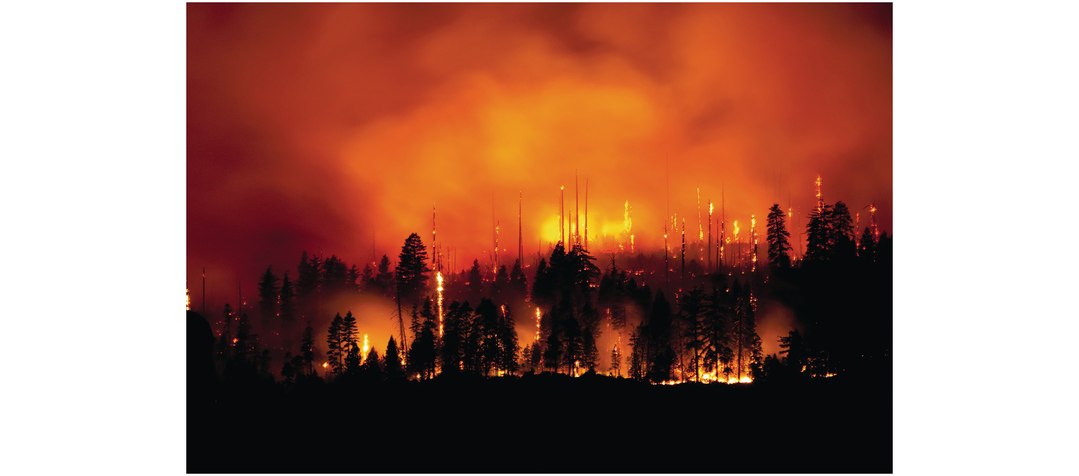
Figure 5.3
Fire in the forest, Yellowstone National Park, USA.
Credit: Kip Evans / Design Pics / Getty Images
Warming temperatures are increasing evaporation from soil and litter, drying soils, and affecting tree growth. Earlier spring times, combined with earlier mountain snowpack melts in mountain areas, also dry soils (Westerling, 2016). Warmer temperatures increase insect activity and shorten reproductive cycle times, and this can result in large numbers of dead and dying trees to burn. A very long fire suppression policy has resulted in thick layers of accumulated combustible debris from trees on the forest floor (Abatzoglou and Williams, 2016).
A forest fire is incomplete combustion. Smoke, aerosols, and gases are emitted in very large quantities, influencing air quality. Ash is deposited on the ground. Much of the carbon in the biomass of the burned trees and organic debris on the forest floor is emitted as carbon dioxide from stored carbon. Methane and oxides of nitrogen are also released. Trees that are not completely burned slowly decompose over time, releasing carbon dioxide (American Forest Foundation).
Fires that burn the surface debris down to the underlying mineral soil layer make it extremely difficult for tree seeds to germinate and seedlings to grow to regenerate the forest. Ash from the fire may provide some initial elements to promote growth, but it may not be enough. Warmer conditions may cause soil drying and water deficits. Stevens-Rumann et al. (2017) consider that the success of forest restoration to a pre-fire condition, by a process called forest resilience, depends on enough tree regeneration. Regeneration after a fire may be slow and difficult.
5.3.4Insects and Large Herbivores
In Section 5.2.6, the involvement of introduced invasive alien species of insects and pathogens in large-scale and persisting forest decline was considered. Native forest trees also have natural associations with a variety of insects and pathogens that, depending on temperature, moisture, and tree vigor, can cause periodic episodes of decline and mortality. Climate change might affect periodic episodes of native insects and pathogens. Climate change and increases in temperature and drought, now and in the future, may increase the incidence, duration, and extent of tree decline and mortality incited by insects and pathogens (Anderegg et al., 2015; Katz, 2017). Temperature-limited insects and pathogens may expand into new areas (Lesk et al., 2017). Continuing globalization may facilitate introduction of new insects and pathogens (Ramsfield et al., 2016). The species composition of planted forests also influences the incidence and severity of insect- and pathogen-caused declines. Non-native species may avoid native insects and pathogens, but this may not last, or they may be affected by other different native insects and pathogens. A limited number of tree species is being used worldwide to establish large planted forests. Species in the genera Picea, Pinus, and Populus are frequently used in the Northern Hemisphere. Species in the genera Acacia, Eucalyptus, and Pinus are frequently used in the Southern Hemisphere.
Bark beetles are commonly found in forests where they usually feed on trees weakened by high temperature and drought, leaf and root diseases, and foliar ozone injury and defoliation. As insects, their populations expand and contract with temperature. Cold winters may kill many overwintering larvae. Warm summers allow feeding activity and reproduction. Warming temperatures have changed bark beetle incidence and extent of tree destruction through reduction of winter kill of larvae, earlier emergence in spring, more frequent reproductive cycles, and range expansion. Increasing temperature has also increased heat stress and drought, predisposing the affected trees to beetle feeding. The result has been widespread massive incidence of numbers of beetles and beetle-killed trees on a scale never seen in history (Katz, 2017). An example of trees killed by bark beetles in Colorado is shown in Figure 5.4.

Figure 5.4
Beetle-killed pine trees.
Credit: R_Koopmans / iStock / Getty Images Plus
The mountain pine beetle (Dendroctonus ponderosae) has caused massive destruction of lodgepole pine (Pinus contorta) and ponderosa pine (Pinus ponderosa) forests in the western United States and Canada. High-elevation spruce (Picea engelmanni) have been killed by the spruce beetle (Dendroctonus rufipennis). If warming continues, conditions will be appropriate for increases in both of these beetle species in western North America (Bentz et al., 2010). Several species of beetles are killing Norway spruce (Picea abies) in Europe, and Serbian spruce (Picea obovata) in Siberia (Katz, 2017). Of major concern in eastern United States and Canada is the rapid range expansion northward by the southern pine beetle (Dendroctonus frontalis) into New York, New Jersey, and Connecticut, in response to warming temperatures. This poses a threat to northern pine forests (Lesk et al., 2017).
Deer and other herbivores can also reduce forest regeneration by feeding on tree seeds, seedlings, and young trees. Deer populations in the United States have expanded as predators and hunting have decreased.
A very interesting and significant example of herbivory and forest regeneration has been documented in South Central Utah in the USA. An old and famous forest of trembling aspen (Populus tremuloides), known as “The Pando Clone”, is under increasing herbivory pressure. This is a single-genotype forest, 43 ha in size, and includes approximately 47,000 genetically identical shoots. Some consider it to be the largest single organism on Earth. Regeneration involves emergence of new clonal shoots. Several large herbivores feed on these new shoots. The principal herbivore seems to be mule deer (Odocoileus hemiionus). Mule deer feeding is increasing, and there is concern for the successful regeneration of this ancient forest (Rogers et al., 2018).
5.3.5Forest Tree Diseases
In addition to the invasive pathogens previously presented, trees have foliar pathogens associated with them that may cause low-level disease with occasional increases. An example is anthracnose disease of American sycamore (Platanus occidentalis) caused by the fungus Apiognomonia veneta, which survives in twig cankers. As leaves of sycamore trees unfold in rainy weather, at temperatures below 50 °F, the fungus sporulates, and the spores germinate and cause leaf and twig blight. Defoliation can be dramatic and can be nearly complete. With warmer drier temperatures (above 60 °F), trees completely refoliate and grow, sometimes living to very old age. Earlier, warmer, drier spring weather could change this co-evolved tree/pathogen cycle. Red band needle blight of conifers is caused by the fungus Dothistroma septosporum. The fungus is widely found in both the Northern and Southern Hemispheres. It is considered to be a weak pathogen commonly associated with conifers, causing leaf symptoms that may result in some defoliation. Climate change is increasing temperature and precipitation, and this is increasing the incidence and severity of needle blight (Worrall et al., 2010). Forest trees also experience root diseases that can slow them or kill them. Several species of the root rot fungus Armillaria are commonly associated with dying trees. Trees stressed by drought and insect defoliation are more susceptible to Armillaria (Moorman, 2017). Foliar pathogens require moist conditions/water for sporulation and spore germination and infection. Warmer and wet conditions should increase foliar diseases, while decreased precipitation should decrease disease. A drier, warmer climate might cause water stress in trees and increase root diseases.
5.3.6Phenology and Growing Season
Phenology is the study of the occurrence and timing of biological events as affected by environment. For deciduous temperate-zone trees, the start of budburst and leaf unfolding in spring depends on having experienced a required number of winter chilling hours, enabling them to overcome environmentally imposed dormancy with increasing temperature and day length (Korner and Basler, 2010). Leaf senescence in fall can be delayed by warmer temperatures than usual. This may lengthen the growing season for some tree species. It has been confirmed that spring is occurring earlier and fall occurring later (Penuelas et al., 2009) and that the growing season is increasing as a result (Linderholm, 2006; Schwartz et al., 2006; Elmore et al., 2016). Piao et al. (2008) suggest that this has happened in just the past few decades. Korner and Basler (2010) estimate that the growing season has increased at a rate of 2.5 days per year since 1971. Way (2011) concludes that the growing season has increased by 11 days since the 1960s. Linderholm (2006) estimated a 10–20 day increase in the growing season. The consensus is that the growing season is getting longer, and that this is important. A longer growing season is of great interest as it should affect rates of growth, photosynthesis, respiration, and carbon sequestration. An increase in growth and net carbon sequestration would provide stronger negative climate forcing for forests. This would be particularly important in boreal forests (Stinziano et al., 2015). Piao et al. (2008) modeled temperature effects on photosynthesis and respiration in spring and autumn. They concluded that in autumn, the increase in respiration was greater than the increase in photosynthesis. Warming increased photosynthesis more than respiration in the spring. Reduction in uptake of carbon dioxide and sequestration in autumn was estimated to offset 90% of the carbon dioxide captured in spring. A longer growing season could increase requirements for soil water and nutrients, especially nitrogen which might reduce growth and carbon sequestration (Elmore et al., 2016).
Shorter, warmer winters may lead to longer warmer growing-season effects on leaf growth and senescence. Trees require continued exposure to cold temperatures for a certain length of time in winter to complete dormancy requirements (Korner and Basler, 2010). Warmer temperatures in shorter winters could delay the timing of spring budburst and leaf unfolding, delay the start of the spring growing season, and reduce carbon sequestration (Piao et al., 2008; Fu et al., 2015). The importance of the timing of spring budburst for possible increases in carbon sequestration was determined by Keenan and Richardson (2015) who correlated its timing with the timing of autumn leaf senescence in the eastern United States.
5.3.7Ozone
Ozone formation and some general effects were covered in Chapter 4. The emphasis here is on assessing current and predicted effects of ozone as a stress factor for trees and forests. Unlike carbon dioxide, ozone is present as background and periodic elevated events during the warm months of the year, coincident with the growing season for trees. With a warmer climate and longer growing seasons, the incidence of ozone concentrations that can cause tree injury may increase (Wittig et al., 2009). Parrish et al. (2014) conclude that there is quantitative disagreement between ozone measurements and modeled determinations. Models significantly underestimated ozone changes in northern midlatitudes for the last 50–60 years. Future ozone levels may be higher than predicted by models.
Foliar ozone injury is likely to begin on deciduous tree leaves when they are approaching full expansion and progress from first-emerging to later-emerging leaves. Injury that occurs then may not appear as distinct visible symptoms on leaves until late summer (Manning and Godzik, 2004). Leaves of determinate tree species may stop growing as early as late June, and their reponse to ozone may be diminished as photosynthesis also declines with slowed leaf function and age. Other tree species may stop growing in early August. Leaf response to ozone depends on stomatal conductance during photosynthesis and is affected by water stress, drought, and high temperatures that affect photosynthesis. Tree also differ in their sensitivity to ozone with tree age and within and between species (Wang et al., 2015).
Air quality regulations have reduced oxides of nitrogen and small hydrocarbons from combustion, and this has reduced the number of high-concentration incidents in Europe, the United States, and Canada that cause visible injury to leaves. Remaining chronic lower-level exposures, however, can cause less dramatic chlorosis and long-term growth reductions. Rapid expansion of industry and vehicles, with few regulations, in China, India, and other areas in Asia, has resulted in very high levels of ozone, with frequent high-concentration events. Ozone and its precursors move across the Pacific Ocean to the west coast of the United States and across as far as Europe, increasing ozone there.
Abundant ambient air monitoring data imply possible adverse effects of ozone on trees. Exposure does not equal response. The effects need to be determined, and a causal relationship should be determined before the data have any biological significance for trees (Manning, 2003, 2005). Toxicologists do this with dose/response curves to determine the effects of a toxicant over time on growth, decline, and death of an organism under controlled conditions. Constructing a dose/response curve for ozone and trees under controlled conditions can be done by using small seedlings. Extrapolation of results to complex, variable, large trees in a forest under ambient conditions is impossible. The results are only relevant to the chamber environment and are only indicative of what might possibly occur. This has posed problems for research on ozone effects on trees. Trees are difficult organisms for experimentation. Cailleret et al. (2008) point out that we have a good understanding of ozone effects at the leaf level, but knowledge declines at the whole tree level. By necessity, movement has been away from small-chamber dose/response curves to the use of large growth chambers, a variety of field chambers, and open exposure (FACE) systems, resulting in ever-decreasing environmental control and greater variability (Manning, 2005). Hundreds of papers on ozone effects on trees have been published from the results of experiments using these methods. Such results are also used to model current and predicted ozone/tree risk. Some research has also been done under completely ambient conditions, and examples are presented here. More discussion of methods and results will be found in Chapter 7.
Wittig et al. (2009) used a meta-analysis of experiments on trees in chambers with ambient and elevated ozone. It was concluded that in most cases, ozone affected growth rates and biomass accumulation, accompanied by foliar injury symptoms, chlorosis, and leaf area reduction. Karnosky et al. (2005) led the world’s largest and longest FACE experiment, AspenFACE. Sapling-stage trees were exposed to ozone and carbon dioxide. White birch (Betula papyrifera), aspen (Populus tremuloides), and sugar maple (Acer saccharum) growth was decreased by elevated ozone over time. Many models indicate current negative and predicted future effects of ozone on NPP. Cailleret et al. (2018) found them to be inaccurate in Europe, owing to the complexity of forests and confounding factors such as differing tree sizes, species, drought, soil nitrogen, tree acclimation, and growth compensation. Ozone effect data from chamber experiments were used in the models, and this led to overestimation of the negative effects of ozone. Some slight ozone effects may occur in European forests. Proietti et al. (2016) used data from 37 European forest sites from 2000 to 2010 to model ozone effects on GPP along a northwest European transect. Predictors for ozone effects at each site along the transect were soil water content and relative humidity. They found a negative ozone impact on GPP ranging from 0.04% to 30%. Ozone levels are high in China and most of Asia. Li et al. (2017) found that the AOT40 exposure standard for ozone was exceeded 65 times in 2015–2016. Ozone risk was estimated to be higher for northern temperate forests than southern subtropical and tropical forests. Subtropical evergreen broadleaved forests dominate in Chinese forests. They are less ozone-sensitive than temperate deciduous trees. Park et al. (2018) estimate that NPP of Korean forests has been reduced by 8.25%. Reductions of 8.47% to 10.55% are projected for the 2050s.
Dendrochronological methods can be used to correlate radial growth with ozone data (Manning, 2005). Braun et al. (2014) obtained stem diameter data from permanent plots of beech (Fagus sylvatica) and Norway spruce (Picea abies), established in 1984. A good ozone dose/response agreement was obtained for beech, but not spruce. Ozone injury was detected and confirmed on three tree species in remnants of the Tropical Atlantic Forest, influenced by proximity to Sao Paulo, Brazil (Moura et al., 2018).
Trees can be adversely affected by ozone under experimental conditions, but the effects of ozone on carbon sequestration in large complex forests is more difficult to determine. People have proposed that ozone has either a small negative effect or no effect on carbon sequestration by forests. The size and complexity of forests makes determination of ozone effects difficult. Cailleret et al. (2018) suggest possible small negative effects. Wang et al. (2015) agree with Cailleret et al. (2018) and propose that ozone may not appreciably decrease the carbon sequestration capacity of forests. Their proposal is based on the premise that tree species in forests differ in sensitivity to ozone. Ozone could act as a selective agent for tree species that are less sensitive to ozone. Over time, the more susceptible trees would be replaced with tolerant trees, and ozone would not appreciably affect carbon sequestration. The ozone-tolerant trees, however, may emit more BVOCs than susceptible trees. Increased isoprene emissions could influence the photochemical oxidant cycle and lead to increased ozone. Ozone is an important greenhouse or reradiative gas.
5.3.8Urban Trees and Forests
The definition of urban forest can be somewhat elastic, expanding and contracting without clear definition. “Urban” includes the well-defined densely settled and developed core of a city or town, but when urban expands to include outward gradations of less dense, poorly defined and diffuse suburban or periurban development, expanding outward and around the core city, the term then expands to the collective term “urban area”. Urban here will refer to city cores. With this in mind, urban forests can be considered to be all the publicly and privately owned trees along streets and in parks and relic original forest areas in core cities. It has been estimated that, as of 2010, there were 3.8 billion trees in urban forests in America (Nowak et al., 2010).
Large-scale tree planting is occurring in cities large and small all over America and in other countries. More than a million new trees are planned for New York and Los Angeles. Even the small town of Amherst, Massachusetts (population 33,000), is planting 2,000 new trees. The primary motivation for this is to do something to increase carbon sequestration and help to mitigate global warming. The slogan “Plant a Tree and Save the Planet” has strong motivational value. Other benefits of urban trees include cooling from shade and transpiration, reduction in energy use, improvement in air quality, and reduction of storm water runoff. Aesthetic values include increased life quality (Nowak et al., 2010). For many city people, trees are the only contact that they have with the natural world.
Nursery-grown trees used in city plantings, especially along streets, may have a very difficult period of adjustment and establishment. Root space may be limited, resulting in chronic water stress or drought affected by high air temperatures in the city. Many newly planted trees die from lack of care or from vandalism. Larger plantings of older trees may be affected by invasive plant species, such as English ivy (Hedera helix) and buckthorn (Rhamnus cathartica) (Nowak et al., 2010). Temperature and water stress may predispose trees to insects and pathogens.
The most successful trees in cities are often widely occurring non-native invasive species. They do not need to be planted or receive care. The Tree of Heaven (Ailanthus altissima) will grow well anywhere in cities. It is scorned as a noxious weed tree and slated for eradication. The large numbers of A. altissima and other non-planted trees that occur in cities are not included in city tree inventories.
Tang et al. (2016) assessed tree growth and estimated carbon storage for street trees in Beijing, China, using tree growth measurements and statistical yearbooks. They estimated that Beijing street trees sequestered and stored about one-third to one-half of the carbon of similar trees in a forest. When total carbon sequestration was compared to carbon dioxide emissions from total energy consumption, they concluded that Beijing’s street trees reduced only 0.2% of total emissions.
Pretzsch et al. (2017) used increment core sampling and tree ring analyses to determine radial growth of mature trees in ten very large world cities. They concluded that most trees had increased since 1960. An increase in tree growth of 35% was attributed to climate change (21%) and heat island effects (14%). This increased tree growth increased carbon sequestration. Meineke et al. (2013, 2016) identified areas of Raleigh, North Carolina, that had higher or lower temperatures due to the urban heat island, determined by the extent of paving and building infrastructure. They determined the effects of temperature in these areas on water stress and stomatal conductance and photosynthesis for willow oak (Quercus phellos) street trees. Photosynthesis was reduced in the warmest areas of the city. They estimated that this caused a 12% reduction in carbon sequestration by trees in the warmest areas. Incidence of scales and mites on leaves and small branches also occurred in the warmest areas, but their direct effect on carbon sequestration was considered not to be significant. Dale and Frank (2014) found that high heat areas in Raleigh, NC, were encouraging persistent infestations of scales and mites on red maple (Acer rubrum) street trees which were slowly causing the trees to decline and die. Unlike Pretzsch et al. (2017), Meineke et al. (2013, 2016) and Dale and Frank (2014) conclude that increasing temperatures in cities will result in reduction of the carbon sink of the urban forest.
5.4Summary
Trees grow in place, within ranges of environmental parameters and limitations. Continuous adaptation to a changing environment is necessary for growth and the realization of genetic potential. Inherent genetics and phenotypic plasticity facilitate adaptation to some changes. When maladaptation occurs, trees decline and may die. Trees and forests normally adapt to many environmental factors and co-evolved organisms. The impact and extent of these factors and organisms has increased hugely and is projected to increase more in the future.
Forest maladaptation is occurring widely on a global scale, due to global warming and other climate change factors. Forest cover is declining, and the trend will continue. Forests are being fragmented, especially in the Amazon, and this affects their function and opens them to invasive plant species and vines. Forest cover decline and fragmentation reduces carbon sequestration and the carbon sink value of forests.
Deforestation is increasing because of demand for wood, firewood and wood pellets, and land for agriculture for crops, high-value export foods and palm oil, grazing for cattle, housing, and other purposes. Trees and forests are in the way of the needs of a current very large human population, projected to increase by 2 billion or more people by 2050. Globalization and world trade have enabled the entry of highly destructive invasive insects, such as the wooly adelgid, which kills hemlock trees, and the emerald ash borer, which kills ash trees. One result is that hemlock, Fraser fir, ash, and several other forest tree species are listed as in danger of extinction.
Warming temperatures have increased incidence of chronic moisture stress and prolonged severe drought worldwide. Millions of trees have died in western America, and large numbers in the Amazon and other world regions. Water stress and drought cause increases in wildfires. Unprecedented numbers of bark beetles are killing water-stressed conifers. The generational time for beetles has been shortened due to warming. Longer growing seasons seem to have the potential to increase photosynthesis and carbon sequestration.
Ozone effects on growth of trees, under experimental conditions, are well documented, but ozone effects on forest growth and productivity are not clear, as variables such as tree age and diversity of tree species may negate any long-term effects on whole forest growth.
There is considerable interest in tree planting and urban forests. Trees in urban forests, especially street trees, are affected by heat island effects and water stress. Photosynthesis, tree growth, and carbon sequestration may be reduced by warming. Susceptibility to insects and pathogens may increase. The interacting physical and biological factors that affect tree growth and carbon sequestration, and tree responses to them, are not unique or unusual. What is unusual is the increased frequency and duration of occurrence, and the magnitude of lasting negative results.
Having explored factors that cause forest decline and loss in this chapter, we will examine in the next chapter the types of world forests and how their location, nature, condition, and future outlook would affect their contribution to cooling or warming.
REFERENCES
Abatzoglou, J. T. and Williams, A. P. 2016. Impact of anthropogenic climate change on wildfire across western US forests. Proceedings of the National Academy of Sciences 113: 11770–11775. www.pnas.org/cgi/doi/10.1073/pnas.160771113.
Abrams, M. D. and Nowacki, G. J. 2016. An interdisciplinary approach to better assess global change impacts and drought vulnerability on forest dynamics. Tree Physiology 36: 412–427. doi: 10.1093/treephys/tpw005.
Adams, H. D., Guardiola-Claramonte, M., Barron-Gafford, G. A. et al. 2009. Temperature sensitivity of drought-induced tree mortality portends increased regional die-off under global change type drought. Proceedings of the National Academy of Sciences 106: 7063–7066 www.pnas.org/cgi/doi/10.1073/pnas.0901438106.
Aerts, R., Eswald, M., Nicolas, M. et al. 2017. Invasion by the alien tree Prunus serotina alters ecosystem functions in a temperate deciduous forest. Frontiers in Plant Science 8: article 179. doi: 10.3389/fpls.2017.00179.
Aitken, S. N., Yeaman, S., Holliday, J. A., Wang, T. and Curtis-Lane, S. 2007. Adaptation, migration or extirpation: climate change outcomes for tree populations. Evolutionary Applications February 1: 95–111. doi: 10.1111/j.1752-4571.2007.00013.
Allen, C. D., Breshears, D. D. and McDowell, N. G. 2015. On underestimation of global vulnerability to tree mortality and forest dieoff from hotter drought in the Anthropocene. Ecosphere 6: article 129. doi: 10.1890/ES15=00203.13.x.
American Forest Foundation. Wildfires and climate change. www.forestfoundation.org/wildfires-climate-change (accessed 18/03/2018).
Anderegg, W. R. L., Hicke, J. A., Fisher, R. A. et al. 2015. Tree mortality from drought, insects, and their interactions in a changing climate. New Phytologist 208: 674–683. doi: 10.1111/nph.13477.
Anderegg, W. R. L., Koning, A. G., Trugman, A. T. et al. 2018. Hydraulic diversity of forests regulates ecosystem resilience during drought. Nature 561: 538–541. doi: 10.1038/s41586-018-0539-7.
Andrus, R. A., Harvey, B. J., Rodman, K. C., Hart, S. J. and Veblen, T. T. 2018. Moisture availability limits subalpine tree establishment. Ecology 2018. doi: 10.1002/ecy.2134.
Asner, G. P., Hughes, R. F., Vitousek, P. M. et al. 2008. Invasive plants transform the three-dimensional structure of rain forests. Proceedings of the National Academy of Sciences 105: 4519–4523..
Aspinwall, M. J., Drake, J. E., Campany, C. et al. 2016. Convergent acclimation of leaf photosynthesis and respiration to prevailing ambient temperatures under current and warmer climates in Eucalyptus tereticornis. New Phytologist 212: 354–367. doi: 1111/nph.14035.
Bennett, A. C., McDowell, N. G., Allen, C. D. and Anderson-Teixeira, K. J. 2015. Larger trees suffer most during drought in forests worldwide. Nature Plants 1: article 15139. doi: 10.1038/nplants.2015.139.
Bentz, B. J., Regniere, J., Fetig, C. J. et al. 2010. Climate change and bark beetles of the Western United States and Canada: direct and indirect effects. BioScience 60: 602–613. doi: 10.1525/bio.2010.60.8.6.
Boisvert-Marsh, L., Perie, C. and de Blois, S. 2014. Shifting with climate? Evidence for recent changes in tree species distribution at high latitudes. Ecosphere 5: 1–33. doi: 10.1890/ES14-00111.1.
Bonan, G. B. 2008. Forests and climate change: forcings, feedbacks, and the climate benefits of forests. Science 320: 1444–1489.
Bond-Lamberty, B., Peckham, S. D., Ahi, D. E. and Gower, S. T. 2007. Fire as the dominant driver of central Canadian boreal forest carbon balance. Nature 450: 89–92. doi: 10.1038/nature06272.
Bradshaw, A. D. 1965. Evolutionary significance of phenotypic plasticity in plants. Advances in Genetics 13: 115–155. doi: 10.1016/S0065-2660(08)60048-6.
Brando, P. M., Nepstad, D. C., Morton, D. C. et al. 2014. Abrupt increases in Amazonia tree mortality due to drought–fire interactions. Proceedings of the National Academy of Sciences 111: 6347–6352. doi: 10.1073/pnas.1305499111.
Braun, S., Schindler, C. and Rihm, B. 2014. Growth losses in Swiss forests caused by ozone: epidemiological data analysis of stem increment of Fagus sylvatica L. and Picea abies Karst. Environmental Pollution 192: 129–138. doi: 10.1016/j.envpol.2014.05. 016.
Brienen, R. J. W., Phillips, O. L., Feldpausch, T. R. et al. 2015. Long-term decline of the Amazon carbon sink. Nature 519: 344–348. doi: 10.1038/nature14283.
Brinck, K., Fischer, R., Groeneveld, J. et al. 2017. High resolution analysis of tropical forest fragmentation and its impact on the global carbon cycle. Nature Communications 8: 14855. doi: 10.1038/ncomms14855.
Brzostek, E. R., Dragoni, D., Schmid, H. P. et al. 2014. Chronic water stress reduces tree growth and the carbon sink of deciduous hardwood forests. Global Change Biology 20: 2531–2539. doi: 10.1111/gcb.12528.
Cailleret, M., Ferreti, M., Gessler, A., Rigling, A. and Schaub, M. 2018. Ozone effect on European forest growth – towards an integrated approach. Journal of Ecology. doi: 10.1111/1365-2745.12941.
Campbell, J. E., Berry, J.A., Seibt, Y. et al. 2017. Large historical growth in global terrestrial gross primary production. Nature 544: 84–87. doi: 10.1038/nature22030.
Cieslik, S., Omasa, K. and Paoletti, E. 2009. Why and how terrestrial plants exchange gases with air. Plant Biology 11: 24–34.
Clark, J. S., Iverson, L., Woodall, C. W. et al. 2016. The impacts of increasing drought on forest dynamics, structure, and biodiversity in the United States. Global Change Biology. doi: 10.1111/gcb.13160.
Cohen, W. B., Yang, Z., Stehman, S. V. et al. 2016. Forest disturbance across the continuous United States from 1985–2012: the emerging dominance of forest decline. Forest Ecology and Management 360: 242–252. doi: 10.1016/j.foreco.2015.10.042.
Coops, N. C. and Waring, R. H. 2011. Estimating the vulnerability of fifteen tree species under changing climate in Northwest North America. Ecological Modeling 222: 2119–2129. doi: 10.1016/j.ecolmodel.2011.03.033.
Crowther, T. W., Glick, H. B., Covey, K. R. et al. 2015. Mapping tree density at a global scale. Nature 525: 201. doi: 10.1038/nature14967.
Dale, A. G. and Frank, S. D. 2014. The effects of urban warming on herbivore abundance and street tree condition. PLoS One 9. doi: 10.1371/journal.pone.0102996.
Davy, R., Esau, I., Chernolkulsky, A., Outten, S. and Zilitiinkevich. 2016. Diurnal asymmetry of the observed global warming. International Journal of Climatology. doi: 10.1002/joc/46888.
Doughty, C. E., Metcalfe, D. B., Girardin, C. A. J. et al. 2015. Drought impact on forest carbon dynamics and fluxes in Amazonia. Nature 519. doi: 10.1038/nature14213.
Dyderski, M. K. 2017. How much does climate change threaten European forest tree species distributions? Global Change Biology 24: 1150–1163. doi: 10.1111/gcb.13925.
Elmore, A. J., Nelson, D. M. and Craine, J. M. 2016. Earlier springs are causing reduced nitrogen availability in North American eastern deciduous forests. Nature Plants 2: 1–5. doi: 10.1038/nplants.2016.133.
Fang, J., Kato, T., Guo, Z. et al. 2014. Evidence for environmentally enhanced forest growth. Proceedings of the National Academy of Sciences 171: 9527–9532.
Fei, S., Deperez, J. M., Potter, K. M. et al. 2017. Divergence of species responses to climate change. Science Advances 3: e1603055.
Feldpausch, T. R., Phillips, O. L., Brienen, R. J. W. et al. 2016. Amazon forest response to repeated droughts. Global Biogeochemical Cycles 30. doi: 10.1002/2015GB005133.
Frank, A., Howe, G. T., Sperisen, C. et al. 2017. Risk of genetic maladaption due to climate change in three major European tree species. Global Change Biology 23: 5358–5371. doi: 10.1111/gcb.13802.
Fu, R., Yin, L., Li, W. et al. 2013. Increased dry-season length over southern Amazonia in recent decades and its implications for future climate change projection. Proceedings of the National Academy of Sciences. doi: 10.1073/pnas.13302584110.
Fu, Y. H., Zhao, H., Piao, S. et al. 2015. Declining global warming effects on the phenology of spring leaf unfolding. Nature 526. doi: 10.1038/nature15402.
Greenwood, S., Paloma-Ruiz, B., Martinez-Vilialta, J. et al. 2017. Tree mortality across biomes is promoted by drought intensity, lower wood density and higher specific leaf area. Ecology Letters. doi: 10.1111/ele.12748.
Hamann, A. and Wang, T. 2006. Potential effects of climate change on ecosystem and tree species distribution in British Columbia. Ecology 87: 2773–2786.
Hansen, M. C., Popatov, P. V., Moore, R. et al. 2013. High resolution global maps of 21st-century forest cover change. Science 342: 850–853. doi: 10.1126/science.1244693.
Heubner, C. D., 2011. Establishment and spread of Microstegium vimineum (Japanese stiltgrass) in closed canopy forests. In: McManus, K.A. and Gottschalk, K.W. (eds) General Tech Report NRS_P-75, Newtown Square PA, USDA Department of Agriculture Forest Service, Northern Research Station: 29.
Karnosky, D. F., Pretgitzer, K. S., Zack, D. R. et al. 2005. Scaling ozone responses of forest trees to the ecosystem level in a changing climate. Plant, Cell and Environment 28: 965–981.
Katz, C. 2017. Small pests, big problems: the global spread of bark beetles. Yale Environment 360. https://e360.yale.edu/features/small-pests-big-problems-theglobal-spread-of-bark-beetles.
Keeling, C. D., Chin, J. F. S and Whorf, T. P. 1996. Increased activity of northern vegetation inferred from atmospheric CO2 measurements. Nature 382: 146–149.
Keenan, T. F. and Richardson, A. D. 2015. The timing of autumn senescence is affected by the timing of spring phenology: implications for predictive models. Global Change Biology 21: 2634–2641. doi: 10.1111/gcb.12890.
Korner, C. and Basler, D. 2010. Phenology under global warming. Science 327: 146–147. doi: 10.1126/science.1186473.
Laurance, W. F., Delamônica, P., Laurance, S. G., Vasconcelos, H. L. and Lovejoy, T. E. 2000. Conservation: Rainforest fragmentation kills big trees. Nature 404: 836.
Lesk, C., Coffel, E., D’Amato, A. W., Dodds, K. and Horton, R. 2017. Threats to North American forests from southern pine beetle with warming winters. Nature Climate Change 7. doi: 10.1038/nclimate3375.
Lewis, S. L., Edwards, D. P. and Galbraith, D. 2015. Increasing human dominance of tropical forests. Science 349: 827–831.
Li, P., de Marco, A., Feng, Z. et al. 2017. Nationwide ground-level ozone measurements in China suggest serious risks to forests. Environmental Pollution. doi: 10.1016/j.envpol.2017.11.002.
Linderholm, H. W. 2006. Growing season changes in the last century. Agricultural and Forest Meteorology 137: 1–14. doi: 10.1016/j.agrformet.2006.03.006.
Liu, H., Williams, P. A., Allen, C. D. et al. 2013. Rapid warming accelerates tree growth decline in semi-arid forests of inner Asia. Global Change Biology 19: 2500–2510. doi: 10.1111/gcb.12217.
Manning, W. J. 2003. Detecting plant effects is necessary to give biological significance to ambient ozone monitoring data and predictive ozone standards. Environmental Pollution 126: 375–379.
Manning. W. J. 2005. Establishing a cause and effect relationship for ambient exposure and tree growth in the forest: progress and an experimental approach. Environmental Pollution 137: 443–454. doi: 10.1016/j.envpol.2005.01.031.
Manning, W. J. and Godzik, B. 2004. Bioindicator plants for ambient ozone in Central and Eastern Europe. Environmental Pollution 130: 33–39.
McDowell, N., Allen, C. D., Anderson-Texeira, K. et al. 2018. Drivers and mechanisms of tree mortality in moist tropical forests. New Phytologist. doi: 10.1111/nph.15027.
McIntyre, P. J., Thorne, J. H., Dolanc, C. R., et al., 2015. Twentieth-century shifts in forest structure in California: Denser forests, smaller trees, and increased dominance of oaks. Proceedings of the National Academy of Sciences 112(5): 1458–1463. https://doi.org/10.1073/pnas.1410186112.
Mech, A. M., Tobin, P. C., Teskey, R. O., Rhea, J. R. and Gandhi, K. J. K. 2018. Increases in summer temperatures decrease the survival of an invasive forest insect. Bio Invasions 20: 365–374. doi: 10.1007/s10530-017-1537-7.
Meineke, E. K., Dunn, R. R., Sexton, J. O. and Frank, S. D. 2013. Urban warming drives insect pest abundance on street trees. PLoS One. doi: 10.1371/journal.pone.0059687.
Meineke, E., Youngstead, E., Dunn, R. R. and Frank, S. D. 2016. Urban warming reduces carbon storage. Proceedings of the Royal Society B 283: 1–9. doi: 10.1098/rspb.2016.1574.
Meiners, S. J. 2007. Apparent competition: an impact of exotic shrub invasion on tree regeneration. Bio Invasions 9: 849–855. doi: 10.10007/s10530-006-9086-5.
Moorman, G. W. 2017. Armillaria root rot of trees. https://extension.psu.edu/armillaria-root-rot-of-trees (accessed 15/03/2018).
Moura, B. B., Alves, E. G., Marabesi, M. A. et al. 2018. Ozone affects leaf physiology and causes injury to foliage of native tree species from the tropical Atlantic Forest of Southern Brazil. Science of the Total Environment 610–611: 912–925. doi: 1016/j.scitotenv.2017.07.130.
Nabuurs, G.-J., Lindner, M., Verkerk, P. J. et al. 2013. First signs of carbon sink saturation in European forest biomass. Nature Climate Change 3: 792–796. doi: 1038/nclimate1853.
Neumann, M., Mues, V., Moreno, A. and Hasenauer, H. 2017. Climate variability drives recent tree mortality in Europe. Global Change Biology 23: 4788–4797. doi: 10.1111/gcb.13724.
Newton, A. C. and Oldfield, S. 2008. Red Listing the world’s tree species: a review of recent progress. Endangered Species Research 6: 137–147.
Nowak, D. J., Stein, S. M., Randler, P. B. et al. 2010. Sustaining America’s urban trees and forests. US Forest Service General Technical Report NRS-62.
Pan, Y., Birdsey, R. A., Fang, J. et al. 2011. A large and persistent carbon sink in the World’s forests. Science 333: August 19 doi: 10.1126/science.121609.
Park, J. H., Lee, D. K., Gan, J. et al. 2018. Effects of climate change and ozone concentration on the net primary productivity of forests in South Korea. Forests 9: 112. doi: 10.3390/f9030112.
Parrish, D. D., Lamarque, J.-F., Naik, V. et al. 2014. Long-term changes in lower tropospheric baseline ozone concentrations: comparing chemistry-climate models and observations at northern midlatitudes. Journal of Geophysical Research: Atmospheres. 119: 5719–5736. doi: 10.1002/203JD021435.
Pautasso, M., Aas, G., Queloz, V. and Holdenrieder, O. 2013. European ash (Fraxinus excelsior) dieback – a conservation biology challenge. Biological Conservation 158: 37–49. 10.1016/j.biocon.2012.08.026.
Pedlar, J. H. and McKenney, D. W. 2016. Assessing the anticipated growth response of northern conifer populations to a warming climate. Scientific Reports 7: 43881. doi: 10.1038/srep43881.
Peng, C., Ma, Z., Lei, X. et al. 2011. A drought-induced pervasive increase in tree mortality across Canada’s boreal forests. Nature Climate Change 1: 467–471. doi: 10.1038/nclimate1293.
Penuelas, J., Rutishauser, T. and Filella, I. 2009. Phenology feedbacks on climate change. Science 324. doi: 1126/science.1173004.
Penuelas, J., Sardans, J., Iolanda, F. et al. 2017. Impacts of global change on Mediterranean forests and their services. Forests 8: 86. doi: 10.3390/f8120463.
Piao, S., Ciais, P., Friedlingstein, P. et al. 2008. Net carbon dioxide losses of northern ecosystems in response to autumn warming. Nature 451: 49–52. doi: 10.138/nature06444.
Pretzsch, H., Biber, P., Enno, U. et al. 2017. Climate change accelerates growth of urban trees in metropolises worldwide. Scientific Reports 7: 1–10. doi: 10.1038/s41598-017-14831-w.
Proietti, C., Anav, A., de Marco, A., Sicard, P. and Vitale, M. 2016. A multi-site analysis of the ozone effects on gross primary production of European forests. Science of the Total Environment 556: 1–11. doi: 10.1016/j.scitoenv.2016.02.187.
Putz, S., Groeneveld, J., Henle, K. et al. 2014. Long-term carbon loss in fragmented neotropical forests. Nature Communications. doi: 10.1038/ncomms6037.
Ramsfield, T. D., Bentz, B. J., Faccoli, M., Jactel, H. and Brockerhoff, E. G. 2016. Forest health in a changing world on forest insect and pathogen impacts. Forestry 89: 245–252. doi: 10.1093/forestry/qpw018.
Rogers, P. C. and McAvoy, D. J. 2018. Mule deer impede Pando’s recovery: implications for aspen resilience from a single-genotype forest. PLoS ONE 13: e0203619. doi: 10.1371/journal.pone.0203619.
Schlesinger, W. H. 2018. Are wood pellets a green fuel? Science 359: 1328 doi: 10.1126/science.aat2305.
Schnitzer, S. A., van der Heijden, G. M. F., Mascaro, J. and Carson, W. P. 2014. Liana in gaps reduce carbon accumulation in a tropical forest. Ecology doi: 10.1890/13-1718.1.
Schwartz, J. D. 2015. Eleven regions of the world where most forest loss is expected to occur by 2030. World Wildlife Report. www.worldwildlife.org/stories/11-of-the-world-s-most-threatened-forests (accessed 18/03/2018).
Schwartz, M. D., Ahas, R. and Aasa, A. 2006. Onset of spring starting earlier across the Northern Hemisphere. Global Change Biology 12: 343–351. doi: 10.1111/j.1365-2486.01097.x.
Sedano, F., Silva, J. A., Machoco, R. et al. 2016. The impact of charcoal production on forest degradation: a case study in Tete, Mozambique. Environmental Research Letters 11: 094020. doi: 10.1088/1748-9326/11/9094020.
Sommerfeld, A., Senf, C., Buma, B. et al. 2018. Patterns and drivers of recent disturbances across the temperate forest biome. Nature Communications 9: 4355. doi: 10.1038/s41467-018-06788-9.
Spellman, K. V., Mulder, C. P. H. and Hollingsworth, T. N. 2014. Susceptibilty of burned black spruce (Picea mariana) forests in interior Alaska. Bio Invasions 16: 1879–1895. doi: 10.1007/s10530-013-0633-6.
ter Steege, H., Pitman, N. C. A., Killeen, T. J. et al. 2015. Estimating the global conservation status of more than 15,000 Amazonian tree species. Science Advances 1: e1500936. doi: 10.1126/sciadv.1500936.
Stevens-Rumann, C. S., Kemp, K. B., Higuera, P. E. et al. 2017. Evidence for declining forest resilience to wildfires under climate change. Ecology Letters 2017. doi: 10.1111/ele.12889.
Stinziano, J. R.., Huner, N. P. and Way, D. A., 2015. Warming delays autumn declines in photosynthetic capacity in a boreal conifer, Norway spruce (Picea abies). Tree Physiology 35(12): 1303–1313. doi: 10.1093/treephys/tpv118.
Stralberg, D., Wang, X., Pariesien, M.-A. et al. 2018. Wildfire-mediated vegetation change in boreal forests of Alberta, Canada. Ecosphere. doi: 10.1002/ecs2.2156.
Strickland, M. S., Devore, J. L., Maerz, A. C. and Bradford, M. A. 2010. Grass invasion of a hardwood forest is associated with declines in belowground carbon pools. Global Change Biology 16: 1338–1350. doi: 10.1111/j.1365-2486.2009.02042.x.
Tang, Y., Chen, A. and Zhou, S. 2016. Carbon storage and sequestration of urban street trees in Beijing, China. Frontiers in Ecology and Evolution 4: 1–8. doi: 10.3389/fevo.2016.00053.
Taubert, F., Fischer, R., Groeneveld, J. et al. 2018. Global patterns of tropical forest fragmentation. Nature 554: 519–522. doi: 10.1038/nature25508.
Trenberth, K. E., Dai, A., van der Schrier, G. et al. 2014. Global warming and changes in drought. Nature Climate Change 4: 17–22. doi: 10.1038/nclimate2064.
Trumbore, S., Brando, P. and Hartmann, H. 2015. Forest health and global change. Science 349: 314–318. doi: 10.1126/science.aac6759.
Turetsky, M. R., Kane, E. S., Harden, J. W. et al. 2010. Recent acceleration of biomass burning and carbon losses in Alaska. Nature Geoscience 5. doi: 10.1038/ngeo1027.
Turnbull, M. H., Murthy, R. and Griffin, K. L. 2002. The relative impacts of daytime and night-time warming on photosynthetic capacity in Populus deltoides. Plant, Cell and Environment 25: 1729–1737.
Turnbull, M. H., Tissue, D. T., Murthy, R. et al. 2004. Nocturnal warming increases photosynthesis at elevated CO2 partial pressure in Populus deltoides. New Phytologist 161: 819–816. doi: 10.1111/j.1469-8137.2004.00994.x.
US Forest Service News Release 2016. Aerial survey identifies more than 100 million dead trees in California. www.fs.fed.us/news/releases/new-aerial-survey-identifies-more-than-100-million-dead trees in California (accessed 05/03/2018).
van der Werf, G. R., Morton, D. C., DeFries, R. S. et al. 2009. CO2 emissions from forest loss. Nature Geoscience 2: 737–738.
van Mantgem, P. J., Stephenson, N. L., Byrne, J. C. et al. 2009. Widespread increase of tree mortality rates in the Western United States. Science 323: 521–524.
Wang, B., Shugart, H. H., Shuman, J. K. and Lerdau, M. T. 2015. Forests and ozone: productivity, carbon storage and feedbacks. Scientific Reports 6: 22133. doi: 10.1038/srep22133.
Way, D. A. 2011. Tree phenology responses to warming: spring forward, fall back? Tree Physiology 31: 469–471. doi: 10.1083/treephys/tpr044.
Way, D. A. and Oren, R. 2010. Differential responses to changes in growth temperature between trees from different functional groups and biomes: a review and synthesis of data. Tree Physiology 30: 669–688. doi: 10.1093/treephys/tpq015.
Westerling, A. L. 2016. Increasing western US forest wildfire activity: sensitivity to changes in timing of spring. Royal Society Proceedings B 371: issue 1696. doi: 0.1098/rstb.2015.0178.
Wittig, V. E., Ainsworth, E. A., Naidu, S. L., Karnosky, D. F. and Long, S. 2009. Quantifying the impact of current and future tropospheric ozone on tree biomass, growth, physiology and biochemistry: a quantitative meta-analysis. Global Change Biology 15: 396–424. doi: 10.1111/j.1365-2486.2008.01774.x.
Wong, C. M. and Daniels, L. D. 2017. Novel forest decline triggered by multiple interactions among climate, an introduced pathogen and bark beetles. Global Change Biology 23: 1926–1941. doi: 10.1111/gcb.13554.
Worrall, J. J., Marchetti, S. B., Egeland, L. et al. 2010. Effects of and etiology of sudden aspen decline in southwestern Colorado, USA. Forests Ecology and Management 260: 638–648. doi: 10.1016/j.foreco.2010.05.020.
Yates, E. D., Levia, D. F. and Williams, C. L. 2004. Recruitment of tree non-native plants into a fragmented forest in southern Illinois. Forest Ecology and Management 190: 119–130. doi: 10.1016/j.foreco.2003.11.008.
Zhang, T., Niinemets, O., Sheffield, J. and Lichstein, J. W. 2018. Shifts in tree functional composition amplify the response of forest biomass to climate. Nature 556: 99–102. doi: 10.1038/nature26152.
Zhu, Z., Piao, S., Mynenei, R. R. et al. 2016. Greening of the Earth and its drivers. Nature Climate Change 6: 791–795. doi: 10.1038/nclimate3004.
Zimmermann, J., Hauck, M., Dulamsuren, C. and Leuschner, C. 2015. Climate warming-related growth decline affects Fagus sylvatica, but not other broad-leaved tree species in Central European mixed forests. Ecosystems 560–572. doi: 10.1007/s10021-015-9849-x.