
2
ON ELECTION DAY, despite the many differences in the way people actually live in any given democracy, millions perform the same ritual in more or less the same way. I wanted to see this for myself and to hear what was on the minds of the very diverse citizens at the precise time that they were finally being forced to make this important decision. Using the geo-coordinates of the polling stations posted online by the electoral commission (IEC), I planned a tour of Mogale City. I set out to trace the history of the development of the area, while trying to minimize driving distance between stops. In preparation, I charged two mobile phones, one with an American SIM card, one with a local SIM. These devices would guide me throughout the day, and I needed some redundancy in case one failed or got poor service, eventualities I had previously experienced. I also brought a notebook that fit in my back pocket and a few pens. A friend and colleague who is an expert on election observation advised me to wear neutral colors, to carry a clipboard, and to review an election observation handbook.1
During the previous few days, the weather had been absolutely stunning: warm, with clear skies—winter in Gauteng is nothing like its Boston counterpart. On this morning, however, it was distinctively chilly and overcast. Adding to my sense of apprehension, as I departed from my guesthouse at about 6:45 a.m., I saw that several birds had decided to mark this special day by crapping all over my white rental car.
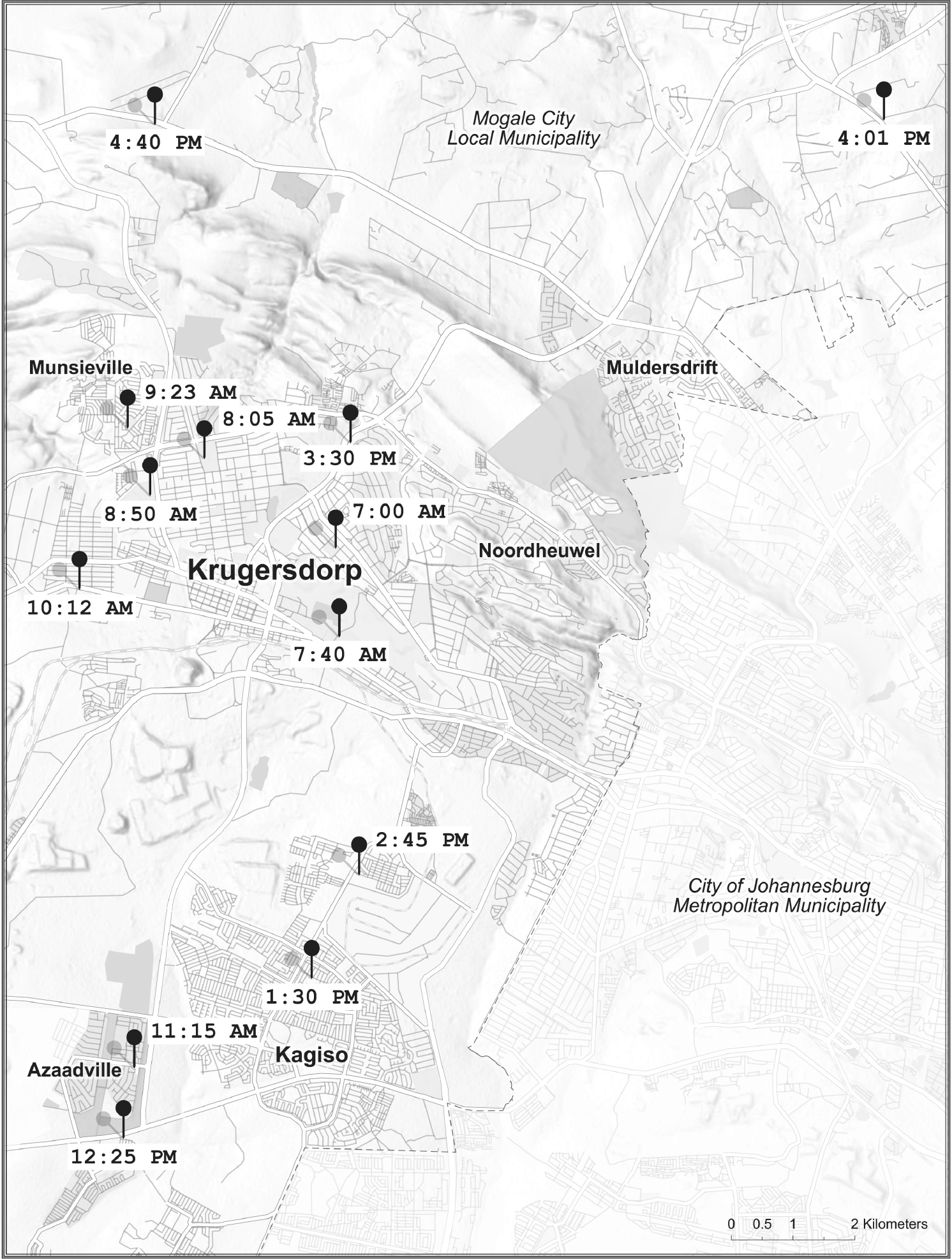
FIGURE 2.1. My election day route, Mogale City, May 8, 2019.
MONUMENT PRIMARY SCHOOL, KRUGERSDORP WARD 37, 7:00 A.M.
My first stop was Monument Primary School. Although I had hoped to get there a bit before the election station was set to open, I arrived at exactly 7 a.m. Monument refers to the Paardekraal Monument, just half a mile away, where almost 139 years earlier Paul Kruger and approximately 6,000 fellow Afrikaners built a cairn—a large statue of stones—to mark their unity and common cause in resisting British rule.2 Always a group to mix religion and politics, they declared it a symbol of their covenant with God, recalling unlikely past victories against their foes.3
Monument Primary School sits just a block away from Voortrekker Road—yet another nod to the Afrikaner legacy. In Ward 37, just shy of 50 percent of households speak Afrikaans at home. It had grown to be a solid DA constituency, and in the 2016 local election, that party raked in over 83 percent of the vote here.
In this well-manicured neighborhood, large but hardly ostentatious homes are mostly visible from the street. Outside the gates of the school, the DA set up what looked like a small office, with a canopy and a table. I didn’t see any other parties. Either they were conceding this ward, or—more likely—they just had not gotten their acts together to arrive before voting began.
Election day is a national holiday in South Africa—a simple tribute to its importance that some have advocated for in the United States.4 But that doesn’t mean everyone had the day off from work, and in any case, many people like to vote early. About sixty people were standing in line outside when I arrived. Apart from one woman, everyone I saw was White; there was a fairly good mix of young and old, and many people came with their kids. A few pulled up in high-end “bakkies,” white, tricked-out pickup trucks, with stainless steel crossbars in the front.
One DA sign said, “Stop the ANC and EFF.” In other words, stop the two Black parties. There were no ANC signs around here. In the last election, the ruling party barely eked out 7 percent of the vote in this ward, even though almost 30 percent of the population was Black. On the one hand, because today’s elections were for the provincial and national legislatures, it was not as if a vote in one part of the municipality would have a greater impact than anywhere else in the province. On the other hand, local party officials would be held accountable for each polling station, and the returns in this election would serve as a benchmark for local contests scheduled for two years in the future. The respective parties would make decisions about which local officials could stand in those elections with this information in mind.
I found a spot that was outside the IEC’s taped-off boundaries but close enough that I could greet exiting voters. At 7:15, just fifteen minutes after the school opened to voters, I approached a White woman, probably in her thirties, who spoke quickly with a strong Afrikaans accent. “Aagh, they weren’t quite ready for us,” she told me. “The left hand doesn’t know where is the right hand. But it was not too much of a holdup.”
She was skeptical that the vote would be totally free: “I think they will try to put in votes,” she said, which I took to mean that the ANC would stuff ballot boxes with fraudulent ballots. Of her friends and family she said, “Most will vote. Some will say it’s not worth it. But we need to try.” When I asked about possible problems so far, she said she was not aware of any vote buying or intimidation.
Just before 7:20, I saw that a few ANC party representatives had arrived to set up shop near where the DA decamped. The major parties set up these small booths outside the election stations to provide a last bit of party marketing, to stand by to monitor for any funny business, and to allow party supporters to come by to check in. The actual vote is secret, but this system allows the parties to keep track of who actually shows up on election day.
Next, I spoke with a forty-something White man who described the process as very efficient and recounted that he had voted in every previous election. “I think you need a strong opposition … and I think the fear factor of the EFF is what’s causing a lot of people to vote.”
A young woman, probably in her early twenties, came out with her father, and when I asked her about her decision to come to vote, she said, “It’s the right thing to do.”
As I drove away I saw well-ordered rubbish bins set out at the end of driveways, in greater order than I was accustomed to in my Brookline, Massachusetts, neighborhood on collection day. Basic service delivery was just about 100 percent in Ward 37. But I did notice a few guys picking through the trash bins. The very poor would try to survive on the salable, salvageable items from the detritus of the well-to-do.
WEST RAND PRIMARY SCHOOL, KRUGERSDORP WARD 37, 7:40 A.M.
My next stop was a voting station on the other side of Coronation Park. It was established in 1902 to commemorate Edward VII’s coronation as British king in 1901 and just following the British defeat of the Boers in the 1899–1902 war, also known as the Boer War. The park may have been built over a concentration camp run by the British, largely to contain their Afrikaner enemies, and remains as yet one more remembrance of the bitter tensions that once stood between these two White groups.5 While bloody and costly, the peace for that war paved the way for the formation of the Union of South Africa, which integrated two Boer-run republics and two British colonies.
The IEC station here was the second of three in Ward 37 and was set up at the West Rand School, which had a long driveway and well-manicured grounds. As I entered, I cynically assumed it was a place filled with White, square-chinned rugby players. I later learned that it is a multiracial primary school for physically disabled children, many of whom have cerebral palsy, and it was heartening to recognize that the most vulnerable were enjoying access to what appeared to be a beautiful facility.
The voters were again mostly White, a mix of old and young. Some likely worked desk jobs; others wore the fluorescent vests and pants that help to protect those working on the street as cleaners, parking attendants, and road pavers.
“They already say that the voting papers [ballots] were not stamped,” a White woman, perhaps in her early sixties, said in response to my question about the integrity of the voting process. “They say we must write in a pen.” Apparently, some votes cast somewhere in the country were in pencil and had been changed. The stamps are used on election day by election workers to mark the validity of the ballots. Reports of any malfeasance circulate instantaneously on social media.
I asked, why vote? “Actually, it’s a privilege to be part of the process. I have a nineteen-year-old son who did not register but he regrets it. I hope they [young people] have a say. It’s exciting for me to see people get involved. To do something about it.”
I saw just one Black African woman, wearing a faded pink cotton apron that peered out underneath her jacket. She was originally from Soweto but had lived in this area for a long time. I made it a point not to ask anyone about their vote choices, but she quickly informed me, proudly, “I am ANC … I have voted in all of the elections.”
I saw it was 8 a.m. on my watch, the sun was coming out, and I headed to my car. On my drive, I passed a tall statue of Paul Kruger, the last Afrikaner president of the Afrikaner Republic that predated the Union of South Africa.
RAND EN DAL KLINIESKOOL, KRUGERSDORP/DAN PIENAARVILLE WARD 17, 8:05 A.M.
At about 8:05 a.m., I arrived at the first of my two stops in Ward 17, the Rand en Dal Klinieskool. This is in Dan Pienaarville, the site of significant political tension in the 1980s when its White residents clamored for Black residents of nearby Munsieville to be moved because they were, simply, too close for comfort.
Dan Pienaarville remains a largely White area, but compared with my first stops, the neighborhood homes were smaller, the grass was less tightly manicured, and there were more vacant, scruffy lots. Nonetheless, most voters arrived in their own cars, reflecting a certain level of wealth or employment status that most South Africans do not enjoy. For the first time that day, I saw a large ANC Mogale City tent. The DA was also there, as was the FF+.
The skies turned gray again.
“One hundred percent. Nice and smooth,” a forty-something White man with a goatee explained to me as he stood next to his wife. “This was a bit better, because last time they started late. We need to vote for the opposition to try to end the corruption. It’s a beautiful country, but we must set the politics right.”
A Black man in his thirties also described the process as smooth. He had moved to the area only six months earlier. “I think it was free and fair, but I would prefer a system like in the United States, where you have the opportunity to vote directly for the president.” I didn’t ask his party, but I did ask what influenced his vote choice.
“It’s not easy. You look at the past and, well, job creation is critical. Our economy is moving at a slow pace. We need to get that right.” Any irregularities? “I just saw on TV and social media an issue with some ballot papers,” he said, referring to the same incident that the woman had referenced earlier in the day. “But besides that, nothing.”
As I looked around, I was struck by the fact that many people brought their youngish children. I was reminded of the idiosyncrasies of election day: people with children are likely to vote at different times than those without. On a day like today, with changing and unseasonably cold and wet weather, some may not bother at all. At 8:30 a.m., I also felt how chilly it had become, and the South Africans will tell you how much they don’t like the cold. People were still streaming in. Many couples walked to the voting station holding hands.
An older White man told me, “No problems. I’ve voted and lived here all my life.” Then he corrected himself: “I came from Namibia in 1978.” At that time, Namibia was controlled by South Africa, essentially governed under Apartheid policies as an additional province and called Southwest Africa. He then uttered a mantra that I would hear throughout the rest of the day: “If you don’t vote, you can’t complain!” I supposed that there is a great desire to complain, and if you feel that you will be denied this opportunity if you don’t vote, it’s a small price to pay. He described the system as free and fair. “Yah, I think so. But there are too many parties involved.” Indeed, forty-eight parties had registered for the national election. I asked about people not voting. “In my family, everyone wants to vote. My children, my wife. First, we must try to get rid of the ANC. The next stronger party must be given a chance.” He saw no intimidation or vote buying. He told me that his wife, who is in her sixties and frailer, was able to vote earlier as they let older people vote first.
I approached the DA tent and asked the attending representative how the day was going. “It’s cold. That will affect the vote.” Any irregularities? “I haven’t seen anything. But it’s still early.” I went to the ANC tent, where just one man was holding down the fort. I asked if they had many supporters in the area. He didn’t directly respond to my question, but the answer was clear: “Well, it’s mostly White people who live around here.”
At 8:48 a.m., I got back into my now thoroughly bird-crap-stained rental car to visit one more voting station in the informally constituted border area between Dan Pienaarville and Munsieville. To do so, I crossed the road that was built in the 1980s expressly to keep these White and Black communities apart.6 It was still working.
TOWN VIEW HIGH SCHOOL, KRUGERSDORP/DAN PIENAARVILLE WARD 17, 8:50 A.M.
At Town View High School, I met a thirty-something Black woman who told me, “I want a better life. I need a house. I need work.” Perhaps wishfully, she predicted a coalition would unseat the ANC: “I think the DA and the EFF will win.”
At 9:18 a.m., according to my rough plan of allocating thirty minutes per stop, I was right on time, and I headed off to Munsieville Ward 24. If I had been in Cape Town, traveling to the Black township of Khayelitsha or Langa, I would have been preparing for a solid twenty-minute ride, or more with traffic. The Apartheid government kept those townships truly apart from the city center. But key to the whole conflict in Dan Pienaarville of the 1980s was that Munsieville … is right there. And within five minutes, I found myself on Mangope Drive, Mmamogale Drive, and Matlaba Street, arriving at Phatudi Primary School. I was no longer in White South Africa.
PHATUDI PRIMARY SCHOOL, MUNSIEVILLE WARD 24, 9:23 A.M.
On my way to the voting station, I passed right by the Desmond Tutu Library and a police station that had been burned down by protesters a year earlier. A frustrated group had demanded action on a list of items, including crime, drugs, and human trafficking. One of the bitter ironies of many South African protests held in the name of poor public services is that they frequently involve the destruction of existing ones, contributing to the misery of ordinary citizens.
The area had a long history of protest, including in the mid-1950s when Desmond Tutu himself was a teacher at Munsieville High School.7 In 1955, in his early twenties, he decided he could no longer participate in the White government’s administration of inferior “Bantu Education” designed to equip Blacks for a life of servitude and he resigned. (Technically, “Bantu” refers to a group of languages spoken by Black Africans in southern Africa, but that term and “Native” were frequently used by the White government as administrative categories and, in turn, generally rejected as pejorative by Black Africans.) Tutu left teaching for the priesthood, initially as a sub-deacon in Krugersdorp,8 and went on to pursue additional education and opportunities in church councils overseas. Within a few decades, he emerged as one of the world’s most storied liberation activists in his tireless campaigns, not simply against Apartheid but also against sexism, homophobia, and other forms of discrimination. So it was fitting that a library should be built here in his name.
Standing in the center of Munsieville, I was now less than two and a half miles from the polling station where I started the morning in Ward 37. However, these were very, very different places. The median household income in Ward 37, where 67 percent of residents were White, was 115,000 rand, and over 20 percent of the households had an annual income of at least 300,000 rand (nationally, just about 8 percent of households were in this bracket). Here in Ward 24, where 99 percent of residents are Black African, median household income was a mere 30,000 rand (about $2,100 US at the time), and just 1 percent of households took in 300,000 or more. Back in Ward 37, about 99 percent of households were built as formal structures and basic service provision (water, toilet, refuse) was over 97 percent. Moreover, 49 percent had a computer, 68 percent had a car, and 71 percent had a washing machine. The situation was very different here: a full 38 percent of households were informal dwellings—shacks or shanties, usually made in large part with corrugated metal. Over 95 percent also enjoyed basic services, albeit of lesser quality. Only 11 percent had a computer, 14 percent a car, and 27 percent a washing machine.9
As I traveled up the hill, I saw a massive taxi depot filled with dozens of the white vans (known as taxis in South Africa) with yellow stripes that bring residents to Krugersdorp, Joburg, and elsewhere. The largely unregulated taxi industry is central to life in South Africa, serving a mostly Black clientele and accounting for approximately 75 percent of all daily transport,10 as neither the Apartheid nor post-Apartheid governments developed successful or integrated mass public transportation systems. On this holiday, the taxis were mostly idle. A few men sat on the passenger floor of a taxi with its door open, their feet hanging over the side. In Munsieville, people live outside. Unlike the subdued atmosphere around Monument and Dan Pienaarville, it was loud with music, and people were laughing.
The first person I chatted with was a young woman, maybe in her twenties. When I asked her about her voting experience, she said, “It went well. Took about an hour.”
We were now in ANC territory, and 75 percent of the voters here had stayed with the liberation party in the 2016 local elections. It’s also fairly ripe EFF ground, and they managed over 15 percent in those elections, making it unclear what would happen this go-round.
“I want to make a change. I don’t want to complain for nothing. I did something about it.” She highlighted the catchall phrase of “services” and called out housing and unemployment as the issues she cared about most.
A tall, older but quite sturdy-looking man came through the gates. “I didn’t wait five minutes. Pensioners [senior citizens] get to cut the line,” he explained. “I was born in Munsieville.… Most of us will vote ANC.”
I walked over to the ANC tent. “Good turnout?” I asked.
“Not yet. But we don’t expect a problem. Some went to work and many will come after 3 p.m.”
I was a little surprised to see representatives from the Pan Africanist Congress (PAC), whose electoral fortunes had waned over the previous quarter century. The organization itself was born out of differences with the ANC regarding how to address the race question. In 1959, ANC leaders had been planning a defiance campaign against the country’s pass laws, but Robert Sobukwe, who rejected many key tenets of ANC philosophy, including “non-racialism,”11 broke away to form this rival organization. In turn, the PAC was behind one of the most important defiance campaigns of all time—the 1960 Sharpeville Protest—during which the peaceful burning of passes was met with a lethal police response. That day, a massacre made martyrs out of those victims and began to turn global opinion against White South Africa.
The organization was prominent in Munsieville back in the 1980s and gained some seats in the national Parliament in 1994, but they had not had any representation in Mogale City in recent history, and I had been wondering what had happened to them. One of the three men at the booth said, “We are struggling because of the finances. We have many supporters. We are not buying people to vote. We haven’t changed. We stand for land to Africans today.… At the top of the elections, land is important for survival. For hospitals to build. Land is everything! In the elections of 1994, we focused on land. The other parties did not follow that route. The EFF has been making a big push for land redistribution in recent years, and the ANC has made timid murmurings along these lines.”
I asked if the PAC and EFF have similar views on land. “There is a huge difference between the EFF and the PAC,” he said. “On the land issue, the EFF [says] we are only entitled to land taken in the past hundred years. We say, look at the land from 1652 that must be taken.… We believe in Africanism. The ruling party fears us, so we are infiltrated by them.”
Land inequality is one of the many remaining sources of wealth inequality, one that remains emotive from decades of forced removals and centuries of land grabs. While a land claims court has settled a handful of cases, the White minority continues to retain the majority of the best land, and the EFF has campaigned hard on this injustice.
I had been through this neighborhood several times on past trips, but I was struck again by how different the vibe was on election day compared with White Mogale City. First, the density: the streets are narrower, so many people in so few square meters. The school was noticeably smaller, starker. There was no grass or lawn.
I looked at the line into the voting booths, and I noticed that people stood very close to one another, often touching, certainly as compared with the much wider zone of personal space maintained in the White areas.
A decent-sized group congregated under the DA tent. Ten years ago, I would never have imagined that this largely White party could have such a presence in a place like Munsieville. But it was clearly building a support base.
The sun broke through again and, realizing that I had stayed in this Munsieville ward for longer than my planned half hour, it was time to move on.
PRO-PRACTICUM SKOOL, KRUGERSDORP WEST WARD 26, 10:12 A.M.
Ward 26 is one of Mogale’s more racially diverse neighborhoods, about 35 percent White and 62 percent Black, according to the 2011 census.
I approached the ANC tent outside the Pro-Practicum school, and I introduced myself. The agents quickly referred me to a woman in a different caliber of ANC regalia: a zip-up dress with the party’s green, gold, and black, rather than a T-shirt. She is Peace Mabe, a Member of Parliament. I asked if there were any challenges being made so far, and she could point only to a voter in Magaliesburg, who was turned away on a technicality that might have been an honest misunderstanding of the rules. “We are hoping for the best. We want to win Gauteng.”
This was not the “ANC will rule South Africa until the sun doesn’t shine” that I remembered from previous elections. This was a party knowing it might—unlikely though it may be—actually fail to get 50 percent of the votes, particularly in Gauteng.
Peace said they were working hard. “Everyone has been out campaigning. We stopped campaigning today to get people out. In other areas, the queues are long.”
The line to check in here was certainly longer than at the DA tent.
Meanwhile, an EFF car was just now showing up with guys in red plastic hard hats.
I spoke with a Black couple in their thirties. The man held a car key in his hand. “We would like to see a few changes in the country and let other parties get a chance. Whoever wins, we need to close the borders. To come, you must have your own money. If that can be processed, it would end crime. People jump over and come to do crime.” As he said this, I could see that his wife cringed a bit, knowing that such talk was not polite. But she did not say anything.
The group of young EFF supporters were struggling to get their stand set up, and they were situating themselves pretty far from the entrance. At the Sunday rally, Julius Malema had talked about their disciplined ground game, but it was not evident here.
I approached a Black woman who had moved to the area from Soweto in 2002, and I asked how the different race groups got along in this diverse neighborhood. “We only see each other for meetings at school. It goes well. We have different views. You see, we integrated into their space,” she explained with a tone that wavered between empathy and resentment. “For them, integrating us is very difficult. They have to adjust. Since 1994, I think people are beginning to adjust but it’s still very difficult. The majority of the Blacks have voted ANC. Some are loyal to the party. Some would say you can’t be loyal if the leaders are not loyal. Some say the DA is White. Others say they like Mmusi Maimane. We must integrate. We are afraid of one another. We don’t trust one another.”
I asked if that lack of trust is also within race groups. “Definitely! Blacks don’t trust one another where our leaders promise but don’t deliver.” Surveys bear out what she said: in one conducted in Mogale City in 2017, only 26 percent said “Most people can be trusted,” while 70 percent said “You need to be very careful.”12
“We focus on faults and downfalls. We build parties on one another’s negativity,” she explained.
At 10:55 I got into my car and keyed in the coordinates. Waze, my virtual driving assistant, told me I would have a fifteen-minute trip to my next stop.
I had developed a fairly good sense of the geography of Mogale City, traveling around quite a bit and studying maps. But I was not prepared for the fact that within about a minute, I would pass by the entrance to Mintails gold mining. Because the industry had been in such decline in recent decades, apart from the large heaps of mining dumps visible from many vantage points around Mogale City, it can be easy to lose sight of how important mining was to the development of this town and region, and to South Africa more generally. Mintails is now better known as a major culprit of local environmental damage than as a productive contributor to the economy. And as I passed by, I saw a set of old hostels—the often squalid residence halls established for mine workers—in front of which today were rows of men and beer bottles. The hostels looked out onto metal shacks, outdoor plastic toilets, and burning fires. The mostly toxic mining excavations were everywhere, and certainly not where people ought to be living. Many stayed here nonetheless.
I took the R28—Main Reef Road—to Paardekraal Drive, and then made a right, away from Krugersdorp, toward Azaadville. It began to rain, lightly, and my heart sank a bit as people are less likely to vote in inclement weather. Rainy election days are bad for democracy.
AZAADVILLE COMMUNITY HALL, AZAADVILLE WARD 3, 11:15 A.M.
I entered the gate of Azaadville Ward 3, on Taj Mahal Street, one of the few communities that actually maintains an active security gate. It was still drizzling, I needed a caffeine jolt, and my gas tank was getting low, so I pulled up to the Engen petrol station on my right and asked for 200 rand worth of 93. Another guy came up to me asking if I wanted him to check the oil and to wash the car, and I said, no, it’s a rental. Then he pointed to the bird shit all over my car, and he looked at me and explained in so many words that I really can’t have that. I am not known for keeping my own car clean, let alone a rental, but people really take good care of their cars here, and I was apparently an embarrassment. As I went in to get a Diet Coke, he washed the windshield but left the rest of the cleaning for me. Fair enough. I paid for the fuel, tipped him, and drove across the street to the Azaadville community hall.
Once again, the cultural terrain changed. Of course, cities the world over have lots of ethnic enclaves. Chinatowns, Little Italys, and Brazilian districts in the United States always provide that sense of arriving somewhere else. The modern remnant of the Apartheid legacy is far more extreme, the result of deliberate machinations to keep groups apart, and Azaadville is not-so-little India. Hanging around the front of the center were several older men, who looked to be of South Asian descent. Families—mostly women with children—entered and exited the center. Almost all were wearing Muslim head coverings.
Although South Africa’s Indian community has always been concentrated around Durban, on the east coast of the country, Indians came to represent a small but prominent minority in greater Krugersdorp and remain largely in Azaadville. They came to the town as it was forming in the 1880s and settled geographically between Whites and Blacks.13 This position was forced upon them in a manner that was broadly reflective of the British Empire’s perspective on racial hierarchy and subsequently inherited by South Africa’s White governments. South Africa’s other important “intermediate” racial group—the Coloureds—never comprised a large share of the local population around Krugersdorp or anywhere on the West Rand.
Though commonly described as Mogale’s “Indian township,” Azaadville itself is not homogeneous, and certainly not in economic terms. A few months earlier I had visited a much wealthier neighborhood, in which some single-family houses even had small pools. This voting station was surrounded by nondescript blocks of flats or apartments, low-end stores, and a petrol station. For every eight South Asians there were about two Black Africans and no Whites. People hung out around the parking lot of the community center, others coming in and out to vote. ANC, DA, and EFF representatives positioned themselves outside as their counterparts had done elsewhere. The ANC and DA groups were not too receptive to my questions. I spoke some Xhosa with the ANC folks and that lightened the mood, especially when they corrected my broken salutation. I had forgotten that “Thanks very much” is “Enkosi kakhulu” (pronounced “loo” at the end) not “kakhuhle” (with a “lay” at the end).
The two EFF reps here were happy to talk. “It’s hard to knock on doors in this area,” they explained. “People live either in closed buildings or behind gated houses,” so the ground game is well-nigh impossible.
In front of the community center, a reigning elder seemed to be holding court—a tall man with a curly gray beard and no mustache, sporting sunglasses and a Liverpool soccer club scarf. He arrived here nineteen years ago from Johannesburg near Emirates stadium, still known by its original name, Ellis Park.
I introduced myself and asked my standard opening line: “How did the voting go?”
“Veeery smooth,” he seemed delighted to report. “Only thing … the IEC guy, I had to teach him a thing or two. He didn’t know the alphabet.”
He took out a small slip of paper that was generated as part of the process, and he showed me how it was necessary to match the slip against the individual’s identity card to gain admission. Apparently, the IEC official seemed to be struggling with this. “Now he’s on it.”
“I have voted in all the past elections from 1994. Every four years14 it’s something different. What we’ve come through. State capture and corruption. We must make an informed decision about our future. I am a grandfather and we need a better future for all the races. Education, homes, pensions. Everyone should have equal opportunity to prosper.”
I didn’t see lines to get into the community center to vote, and I asked him about turnout.
“From what I can see, over 90 percent vote. Azaadville is a small community, most people come in the morning. Then afternoon prayer. Oh look, over there, these are the pioneers of Azaadville.” He pointed to some much older men who were slowly descending the steps into the community center.
“On our WhatsApp group, one message that came through is that during special voting, some people came with pencils and the ballots weren’t stamped.” I found it amazing that this one story had clearly reached so many South African voters so quickly. “So I came with my own pen. So people are sharing information to make sure to use a pen and verify that the ballot is stamped on the back. We’ve come now twenty-five years, a quarter century. Compared with the first time, the queues were longer then.”
A shorter man, also Indian but without a head covering, introduced himself as Farouk. He is an ANC “PR councillor,” which meant he was placed on a party list, not directly elected in a ward constituency, the two options in South Africa’s mixed system of local government. Without mentioning Jacob Zuma’s name, he addressed the cross that ANC ground forces must bear: “The problem is that when an individual does wrong, they associate it with the party. We cling onto the wrong. But there is a lot of good to be appreciated. There is a lot of potential in this country. I am happy we’ve come a long way in 107 years. The current president has a massive job. The ANC has large support, but some swung from the ANC.”
I asked about the campaign, and he echoed some of the EFF concerns: “In Azaadville, we don’t go door-to-door—we knock and drop pamphlets.”
The man with the Liverpool scarf, Cllr Farouk, and I chatted more about the local concerns, and the standard mantra of “service delivery” came up—a broad label frequently used to decry frustrations with what is not provided usually in the form of basic services but sometimes can mean almost anything at all. I was surprised that Cllr Farouk didn’t take the easy path of pandering to the primacy of his own neighborhood’s concerns: “In Azaadville, some people want speed bumps. In Magaliesburg, some people are suffering without water. What’s more important? In Azaadville, people complain, complain and they have everything.” He looked to the others to nod, but none were forthcoming. “Township people have nothing and they smile.” Of course, many people in the townships are not smiling, but I didn’t disagree with his sentiments and much of my own research supports what he said. Those who have done best under post-Apartheid government have in recent years been the least likely to vote for the ANC.15
Once again, I recognized that in couples, the men were more likely to speak. Several women did come to vote alone or in pairs, and I looked to approach a few of them, but they averted my gaze. I was again very conscious of the male bias in my unsystematic sample. When social scientists conduct systematic surveys, we try to match up the race and gender of interviewers, but I was traveling alone on this day and was reminded of this effect.
RIETVALLEI EXTENSION 2 COMMUNITY HALL, RIETVALLEI WARD 3, 12:25 P.M.
I got back into my car at 12:05 p.m., and a few raindrops again dotted my windshield. The radio announcers reminded listeners of the duty to vote. “Remember: If you don’t vote, you can’t complain!” Maybe that’s why everyone’s saying it, I thought to myself. I headed back out on Taj Mahal Street. I didn’t have time to stop at another voting station in Ward 3, which was mostly Azaadville, but I had noticed on the map that an area just south of Azaadville, Rietvallei, was also in the ward, and decided I would check it out.
After pulling over to write down some of my thoughts for about twenty minutes, hoping the pouring rain would stop—which it did—I drove in for a look. It was bleak: an extremely depressing, barren area filled with cinder-block structures and shacks, some gutted and burned out. In the rain, the tall lampposts that tower way above the neighborhood looked like they were spitting fire. There’s very little commerce, except for a few small spaza (informal, home-based convenience) shops. People walked in the middle of the streets, and I drove slowly.
The ANC tent there seemed well staffed, as did the EFF tent. It was easy to imagine that this was where the EFF would fare well: if one wanted a narrative of deprivation and failure to deliver a better life, this little pocket would provide just that.
THEMBILE PRIMARY SCHOOL, KAGISO WARD 10, 1:30 P.M.
My next stop was Kagiso, the much larger of Mogale’s two Black townships, which spans several wards. I headed to Ward 10, in the middle. Seventy percent of voters went for the ANC in 2016, but the EFF was also strong with more than 17 percent of the vote.
I plotted a course to Thembile Primary School, which is located right next to the Kagiso Methodist Church, where I had visited a couple of times. I had met the pastor there and interviewed a few congregants. I had been struck then, as I was on this day, by the quality of the housing stock, the nice streets, the friendly vibe of the neighborhood. As it had been in Munsieville, election day was a party. The political tents were filled with people, the music was again on full volume, and some people were literally dancing in the street in front of the entrance to the school.
I chatted briefly with a man who told me that all the voting had been fine. A man who helped a lady into a van subsequently approached me and asked if I was a reporter. It was a reasonable assumption considering the fact that I was the only White guy for miles and carrying a clipboard. I explained my intentions and he introduced me to the local ward councillor who was on site that day: Councillor Maxwell Kuswayo, a member of the mayoral committee and, according to him, a ward councillor for nineteen years. I knew from my research that there is very high turnover among councillors, so this was indeed an impressive political feat.
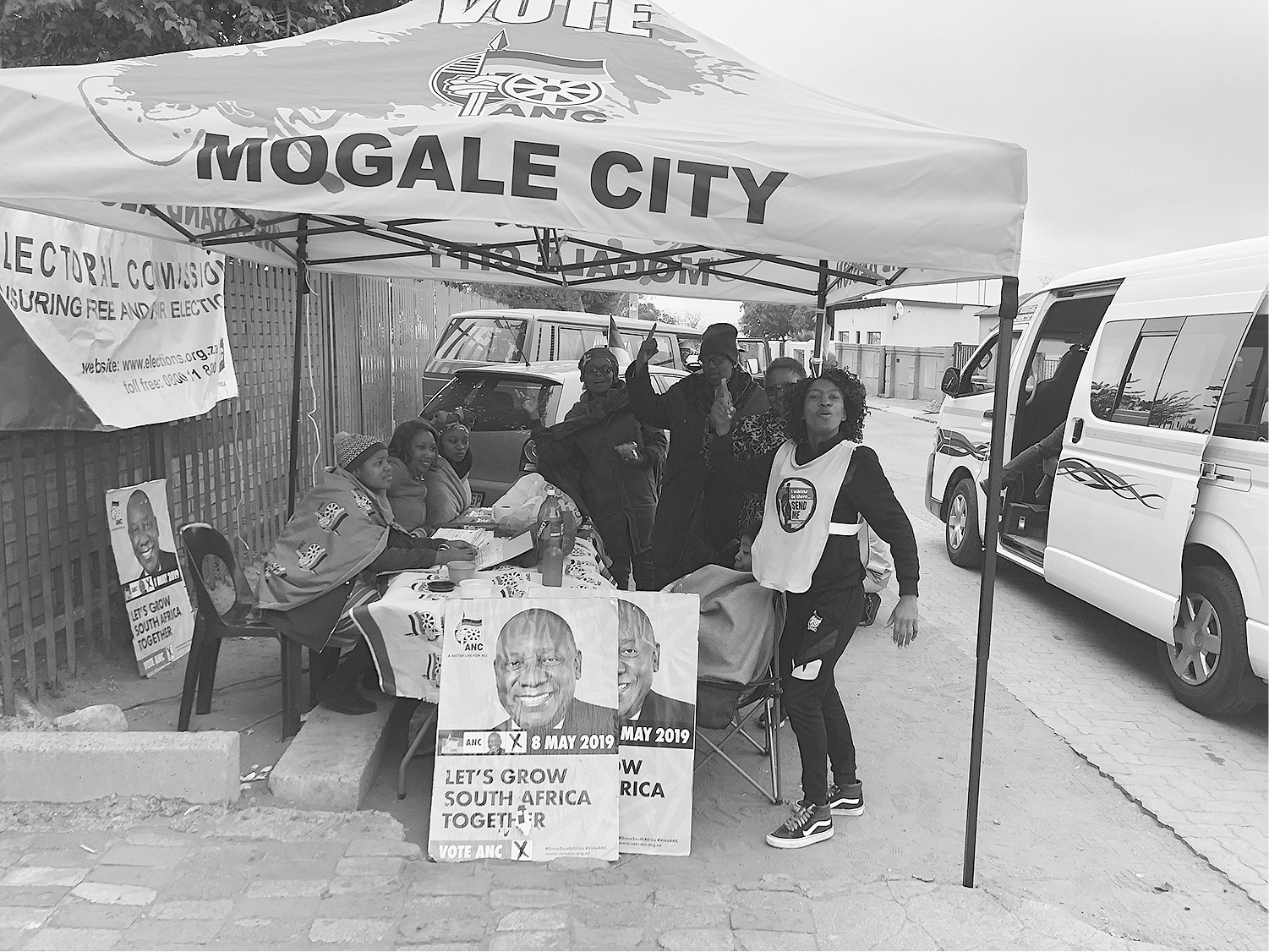
FIGURE 2.2. ANC party representatives in Kagiso on election day, May 8, 2019. Credit: Evan Lieberman.
I could see that Kuswayo was going to stand here, perfectly legally, but definitely in the path of pretty much anyone who wanted to vote at this station. I asked if he minded if I talked to people coming out of the voting booth, and he thought for a bit and said ok, but as I approached someone to talk, he stayed close by. After this first brief interview, I chatted with him some more. I asked about the low registration among young voters.
He boasted that about 80 percent of young people had been registered in the area. “We listen to them all. These kids, their complaint is unemployment. Here it is very high.”
Of the EFF, he says, “You can’t promise everything here. How will you pay for it? South Africa is the only country where you can get a free house. We are becoming a welfare state. There are too many social grants. We have seventeen million pensioners.”
Kuswayo was born here in 1960. He argued that if you look at this township and consider what it was like back then, you couldn’t imagine the changes.
He was an MMC (Member of the Mayoral Committee) for electricity, water, and sanitation. He was the service delivery guy—the very issues so many people are complaining about—and I put it to him that his portfolio is the source of complaint. In response, he highlighted that basic shares of water and electricity were free to the poor. He seemed not ready to discuss some of the more serious concerns—not here, not on election day with this American guy asking questions.
Soon enough, it was time for me to go, and I did.
TSHOLOTSEGA PRIMARY SCHOOL, KAGISO WARD 15, 2:45 P.M.
I stopped at several other voting stations in Kagiso, including in Ward 15, at the Tsholotsega Primary School. Ward 15 is a politically interesting area because it houses a strong base of Inkatha Freedom Party (IFP) supporters, enough to have made it possible to attain a single seat on the Mogale City council in 2016. As I mentioned, the IFP is largely a Zulu-based party, run out of KwaZulu-Natal Province. It is the one major Black party strongly associated with a particular ethnic group; and it was badly hurt when Jacob Zuma, a Zulu himself, headed up the ANC, drawing away the votes of other Zulus from the IFP.
A few Zulu speakers are interspersed throughout the municipality, but only in Ward 15 do they constitute a sizable minority (of 32 percent), delivering 15 percent of the total vote share in that ward in the prior local election. The EFF has also been strong here with 17 percent. And the ANC’s position is most precarious for an all-Black area, with less than 59 percent of the vote in the last election.
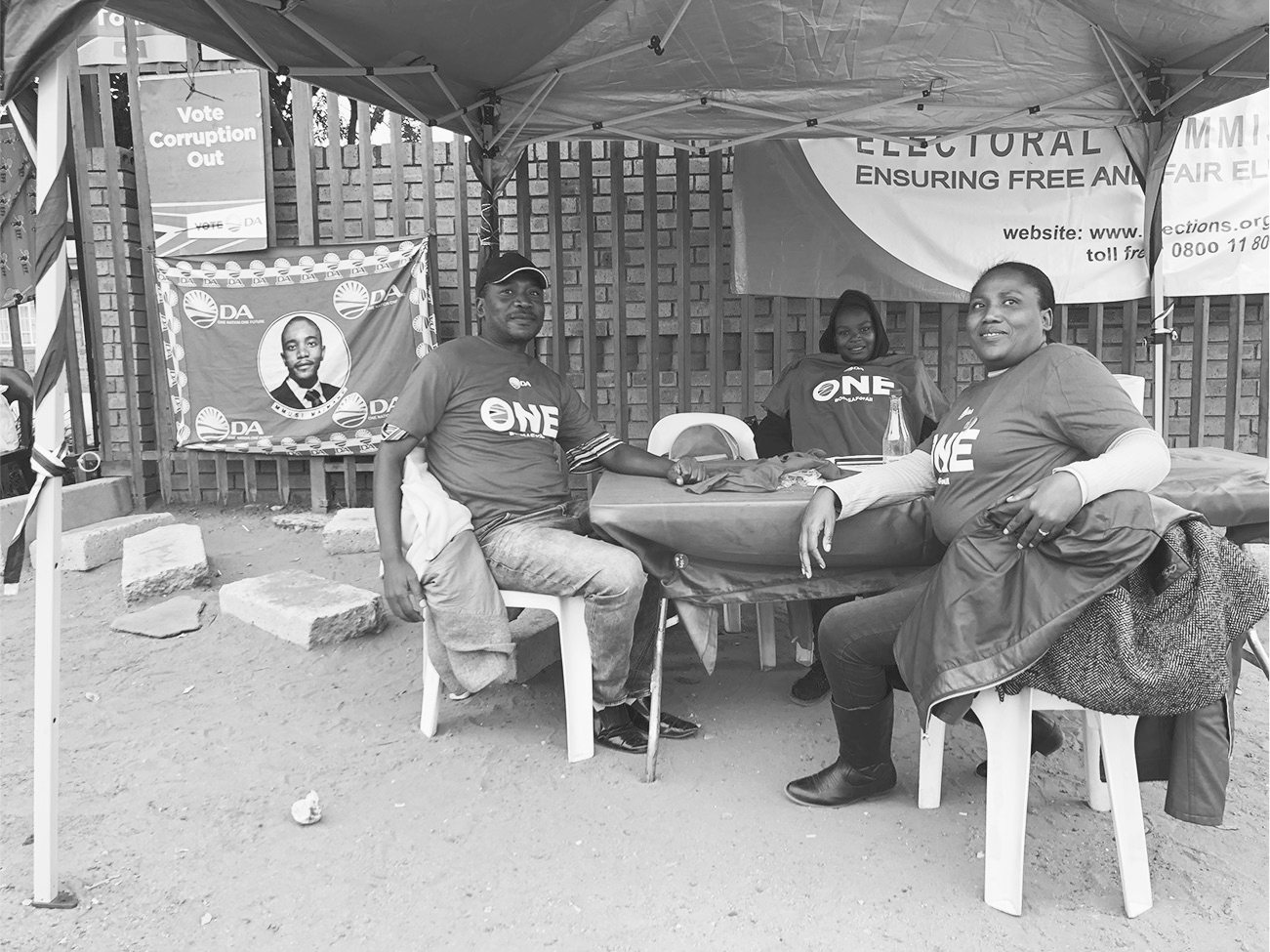
FIGURE 2.3. DA party representatives in Kagiso on election day, May 8, 2019. Credit: Evan Lieberman.
The fancy schools of central Krugersdorp were distant memories from the morning; this school had the charm of a passport office, and there was no music or partying outside. This voting station was at the crossroads of a few different communities, also on the edge of a more industrial area. I parked along the sidewalk and walked down to the first booth, the bright red one.
“The EFF is very strong in this area because people are tired of the ANC. The ANC doesn’t know how to do groundwork. Even old people want to be members. We’ve got five signups,” the EFF desk rep said proudly showing me the forms. “We have been going door-to-door, every day. Even today. I was very active in the ANC, but I switched at the time they put Zuma in as president.”
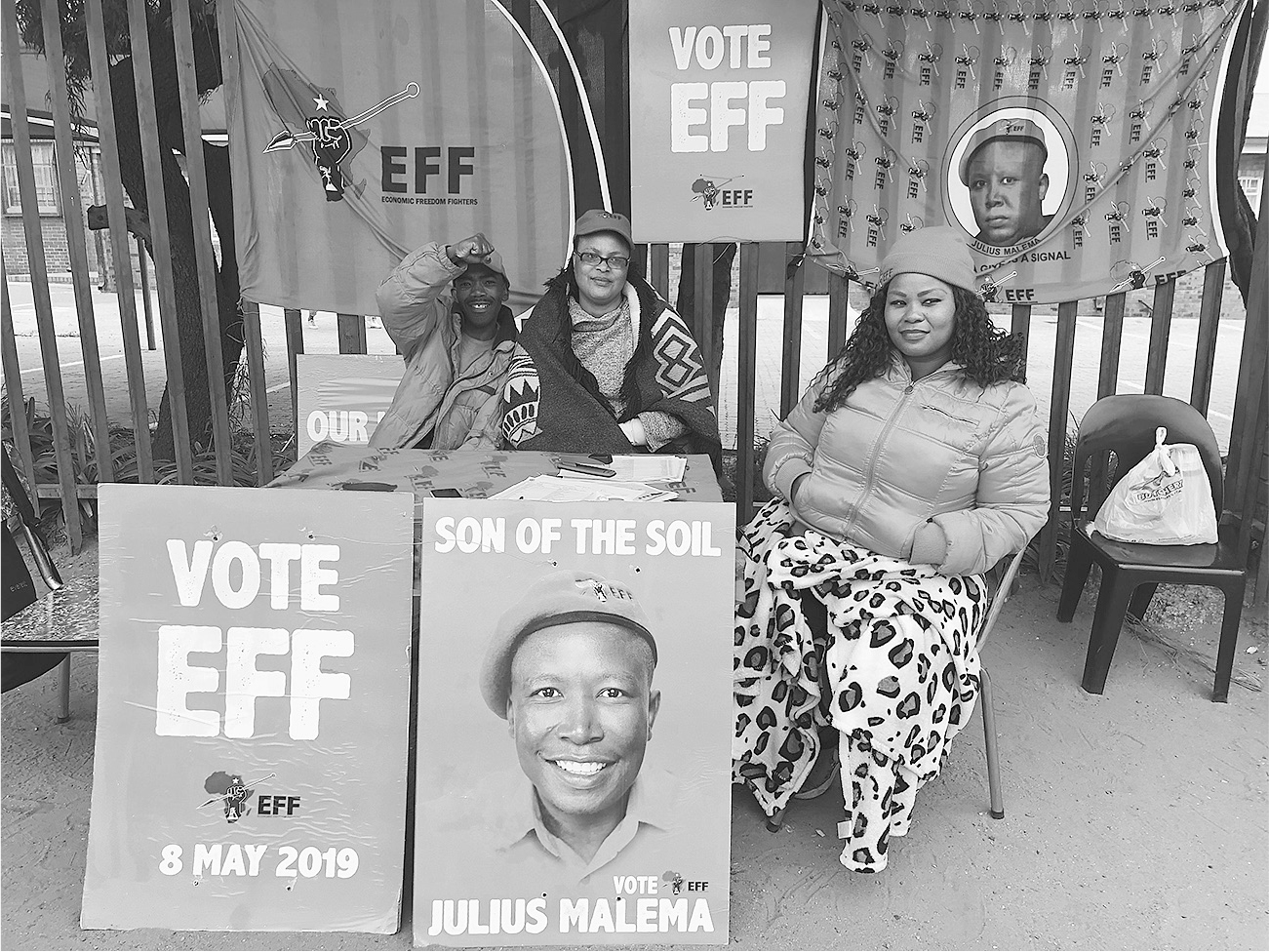
FIGURE 2.4. EFF party representatives in Kagiso on election day, May 8, 2019. Credit: Evan Lieberman.
As we were talking, a woman with a DA T-shirt came to chat. I smiled and asked, “So you guys get along ok?”
“Yah, the DA and EFF are friendly. We don’t want to be near the green and yellow,” she said, referring to the ANC colors. I asked if that extends into her personal life. She nodded. “We don’t have friends who are ANC.”
I popped over to the DA tent, where two women and one man were presiding. “We hope all is going well. Seems like it’s a free and fair election. The process is going smooth,” one of the women explained. The man, about my age, wanted to talk and pulled me aside to share his story. “I used to be ANC, three years ago. But I am not happy with how the government was run. There is no system of accountability. Incompetency. Dysfunctional. I studied the manifestoes and thought the DA was for me.” He was the first person I met who complained that there should not be a paper ballot; he feared that some votes would be stolen and believed they should switch to electronic voting.
The ANC folks were confident that they would do well in Ward 15. “Let’s grow South Africa together,” a woman, possibly in her fifties, smiled as she repeated the tagline under which Cyril’s name is plastered all over the country. I asked her what she thought were the biggest issues in the ward. “The hostel dwellers. They break our windows, stone our cars.” She pointed down the way to the hostels. “They are vicious people. Some are IFP. Involved in mining. But our resources are almost depleted. So just dumps.” I saw no visible manifestation of the IFP in the area, but they may have been at another polling station within the ward.
It was time to leave Kagiso and head north.
NOORDHEUWEL COUNTRY CLUB, NOORDHEUWEL WARD 22, 3:30 P.M.
The sun came out again around 3:30 p.m., when I arrived at Noordheuwel Country Club, the site of a polling station near where I had started the morning. Looking around, it was clear that I was back in White South Africa.
At the entrance, I saw Tjaart Steenkamp, one of Mogale City’s two FF+ councillors. I had interviewed him several months earlier and now he was standing in front of his party’s flag, posted to the side of a walkway. Ward 22 had been solidly DA, close to 90 percent in the last election, but this kind of White, high-income, largely Afrikaans-speaking (over 60 percent) area was fertile ground for the FF+, as many of the typical, White DA supporters were not so sure about a party run by Mmusi Maimane.
As I headed down to the voting booth, I could see tennis courts off to the right and a lawn bowling pitch, perfectly manicured, off to my left.
I introduced myself to a tall young man with a flop of brown hair, glasses, and a white button-down shirt. He said he didn’t know whom he was going to vote for until he got into the voting booth. The issues? “It’s work … jobs … quotas in sports.”
That last one felt out of the blue, and I guessed there must be a back story. There was: he was a cricketer—a sport long dominated by Whites—and frustrated that he had not been initially admitted to university because, according to him, of his color. He shared that he would soon start at the University of South Africa, UNISA. “The biggest thing is my sport. I love it. I just wish we could look past race, gender, identity.” A White man’s pushback against gender- and race-based affirmative action would be familiar in many circles of the United States.
I chatted with Tjaart and when I asked how it was going, he smiled. “We’re doing very well. We’ll be strongest in the West Rand.” A key platform for the FF+ is opposition to affirmative action, and the appeal of that message goes beyond Afrikaners to many English-speaking Whites, and even Coloureds and Indians, who say they are overlooked for jobs, promotions, and other opportunities in favor of less-qualified Black Africans.
LAST STOPS: RIETFONTEIN SUPERMARKET, RIETFONTEIN, MULDERSDRIFT WARD 23, 4:01 P.M.
IMAGES OF AFRICA, CRADLE OF HUMANKIND, WARD 39, 4:40 P.M.
After 4 p.m., I made two more stops. The first one was the Rietfontein supermarket in Ward 23 up in Muldersdrift, a rural part of the municipality where I first went on voter registration day; the second stop was at the polling station in Ward 39 located next to a taxidermist, where it is dead quiet. Most of the voters who would cast a ballot in this election had already come and gone. And as the light was getting low, with winter setting in, I decided that it was time to call it a day.
As I drove back to my guesthouse on the largely empty road, I continued a conversation in my head that had started as I decided to write this book and persists with me now: Had South Africa’s democratic project been a success? So many of the problems I had learned about for decades were still unresolved, and so many people had grown cynical. But others were proud of what had been accomplished. Quite clearly, my answer could not be a simple “yes” or “no.” But I would aspire to sum up what I could learn with something more useful than “it’s complicated.”