
8
IN EARLY FEBRUARY, still a few months before the 2019 election, I prepared for a meeting with three of Mogale City’s local religious leaders. Questions about basic service delivery were still very much on my mind. To what extent was the gap between poverty and prosperity being closed in terms of concrete outcomes such as housing, water, electricity, and jobs? Given the importance of religion in the lives of South Africans (three-quarters of citizens say that religion is important to them, as compared with 20 percent or lower in most European countries, China, and Japan)1 and the fact that religious leaders like Tutu and Chikane played such key roles in local and national politics, I was optimistic they could shed valuable light on the political history I was studying. I had contacted Rev. Armando Sontange of the Kagiso Presbyterian Church requesting an interview, and he offered to invite a few colleagues from other churches to join us for a discussion. We agreed to meet around 11 a.m. at the Mugg and Bean, South Africa’s most ubiquitous coffee chain, this one in the bustling Presidential Square shopping center in downtown Krugersdorp.2
Once we placed our orders and exchanged introductions, I threw out a softball question in the hopes of generating some responses: “How have basic housing conditions changed for your congregants during the past twenty-five years?” They nodded that indeed they had seen substantial improvements over this period, and they described aspects of the record I detailed in the previous chapter. Lots of upgrades, but still room for improvement. And always new people moving in. However, as we continued to engage in conversation, they urged me to redirect my focus.
“It’s not just about material things,” Sontange said, “but about Ubuntu. About a human being human.” He and his colleagues took turns reminding me of earlier times, when Black people, irrespective of education or occupation, were confined to townships, their lives heavily controlled. For men like them, in their fifties, sixties, and older, the legalized caste-like system of Apartheid South Africa and the everyday indignities it perpetuated were still etched in their memories. They wanted to emphasize the fact that the apparent “normalcy” of three Black men having coffee with a White man in Krugersdorp should still be cherished as a stark departure from the past.3
The term “ubuntu” roughly translates to “humanness,” “humanity,” or “personhood” in several languages spoken in South Africa (Zulu, Xhosa, and Ndebele) and is most commonly associated with the Zulu proverb umuntu ngumuntu ngabantu, which translates to “a person is a person through other persons.”4 The concept of ubuntu has been particularly influential in South Africa and in Zimbabwe owing to efforts to promote indigenous philosophies in the aftermath of White rule.5 Much like the analogous term “dignity,” ubuntu is an articulation of a core human value, one that demands moral obligations in various ways, including respect for others, the promotion of harmony, and the reduction of discord.
Perhaps unique in their abilities to see through the noise of everyday life, the pastors collectively made the case that post-Apartheid South Africa had come much closer to realizing this ideal at least compared with what they had experienced before.
At one point in our conversation, Rev. Monwabisi Moses, from the Kagiso Methodist Church, suggested that I look outside. A line of people moved slowly in pursuit of cash from the automated teller facing the parking lot just outside the Mugg and Bean. He explained that the line was long because the government had deposited social grants into their accounts via electronic transfer that morning. In a Socratic engagement, he asked if I noticed anything “interesting” about the line.
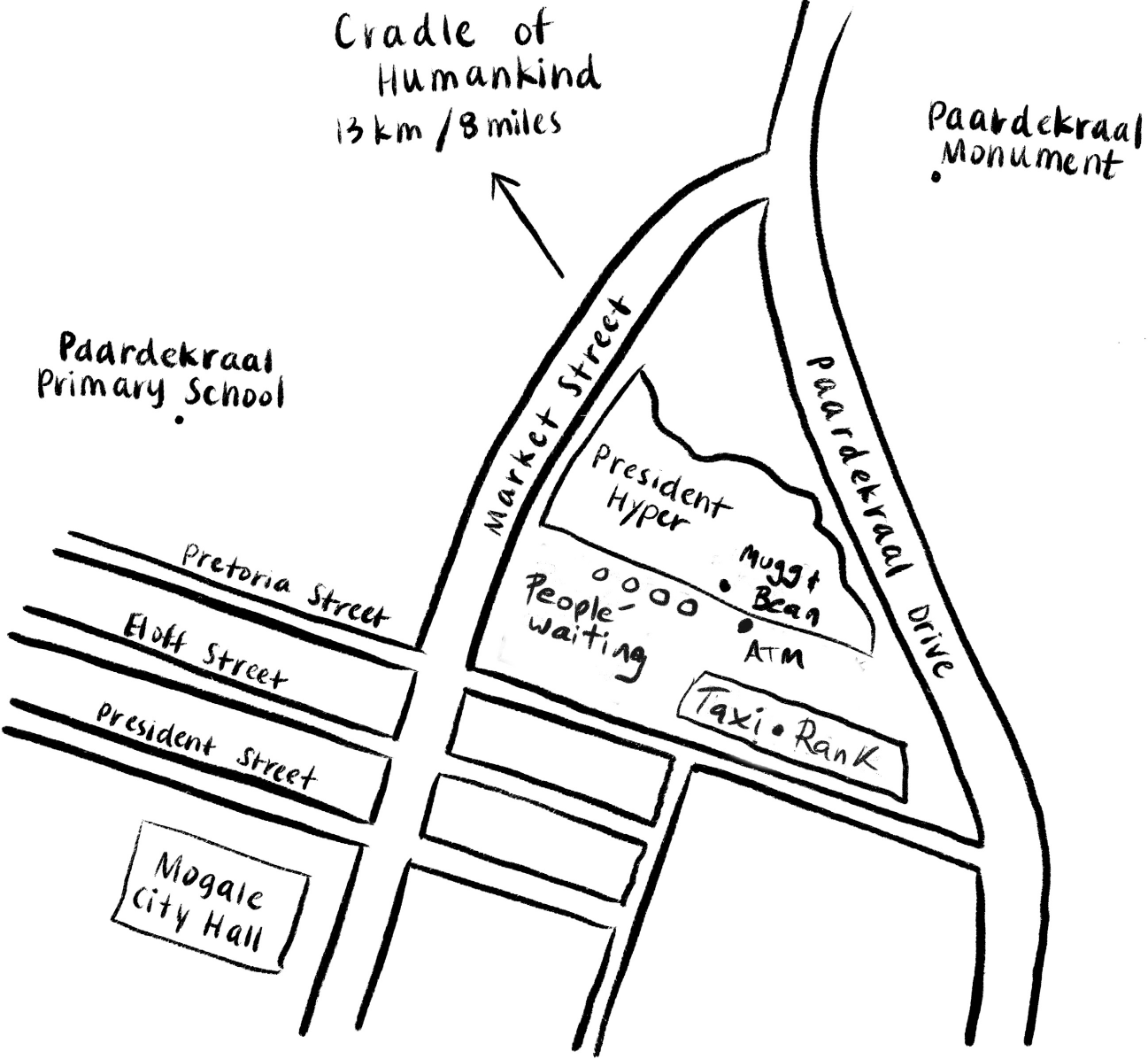
FIGURE 8.1. Location of the Mugg and Bean at the President Hyper, Krugersdorp.
Slightly embarrassed to always be focusing on race, I nonetheless offered up my first impression, “There’s that one White guy on line, otherwise comprised of Black people.”
He nodded with a smile.
“During Apartheid, [the line] would only be White people. You see that White guy, even if there were a queue, he would have had a preference. But not today.”
At the time we spoke, I still had very little sense of where we were sitting—an artefact of being relatively new to the area and doggedly following the instructions delivered to me by my phone-as-navigational assistant. Just beyond the parking lot lay two sets of conflicting historical legacies with diametrically opposite messages for the core concerns we were discussing.
On the one hand, we were less than half a kilometer from the town council’s Centennial Hall, where only a few decades earlier White local councillors had, time and again, voted to maintain the most petty of Apartheid’s discriminatory policies. Layered on top of residential segregation, as late as the 1980s, Krugersdorp still maintained racially separate restrooms. As one Black councillor recounted to me, when she came into town during the Apartheid years she had to use the “Nie Blankes” (Non-Whites) bus stop. The message of profound disrespect was clear and mortally insulting.
On the other hand, we were also just eight miles from a 50,000-hectare tract of land, the Cradle of Humankind, which UNESCO declared to be a world heritage site. In 1947, the year before the onset of Apartheid, Robert Broom discovered fossils of early human ancestors of approximately 2.5 million years in vintage—artefacts that changed the way scientists understand the pattern of human development. And in December 1998, far within the depths of the Sterkfontein Caves on this land, located less than ten miles north of the Paardekraal Monument, another research team from Johannesburg’s University of the Witwatersrand unearthed what would amount to the nearly complete skull of a 3.5-million-year-old human ancestor.6 The stunning on-site visitor center—only a decade old—argues strongly in favor of ubuntu philosophy: there is more that unites us in our common ancestry as humans than the superficiality of the various traits that seem to divide us. The idea of “race” that was almost fanatically developed on South African soil, with significant help from Europe and the Americas, is just one of many sources of human diversity. The Cradle offers scientific evidence of shared human origins—the types of facts that undergird calls for universal human rights and the ideal that all humans have inherent dignity, or value, and deserve to be accorded with commensurate levels of respect.
Nonetheless, one cannot escape the bitter irony that the immediate dangers and long-term health consequences of the early excavations were disproportionately borne by Black mine workers, let alone the multiple ways in which Black people have been treated with profound disrespect in the area around the Cradle. And to this day, many Black Africans squat and reside in informal settlements on its outskirts, a legacy of the state’s historical lack of appreciation for equal human worth.
The existential question—of what our shared humanity ought to mean in practice—thus looms particularly large in Mogale City. The removal of segregated coffee shops, segregated bus stops, and legalized Apartheid was just a starting point. Starting in 1994, South Africans from all of their diverse backgrounds proved they could vote together and select leaders peacefully. And the government began to close some gaps in service delivery. Yet, the fight to end Apartheid was not just about getting the vote, electricity, a flush toilet, or a job. The Freedom Charter, Nelson Mandela’s fiery “I am prepared to die” speech, and the new constitution all explicitly aspired to realize the goal of restoring human dignity.
What is dignity, after all? I wanted to make sure I understood what the South Africans had in mind. So I decided to ask around. After our meeting at the Mugg and Bean, I asked Rev. Moses if I could come to his church in Kagiso to pilot the very Historical Memories Survey that I’ve been describing in the chapters of this book, and I would use that opportunity to ask this sample of citizens how they might define the term (in addition to trying out lots of other questions). I hired a young woman from his congregation—a recent university graduate—to work as a research assistant and to conduct interviews in English and Tswana. We posed the following question: “The constitution says that the Republic of South Africa is founded on the value of HUMAN DIGNITY. What does the word DIGNITY mean to you?”
We only interviewed twenty-five congregants, a mix of men and women, all over the age of forty, and with few exceptions, their answers were overwhelmingly consistent: dignity is about respect and being valued.
“Simply means we need to respect one another and have faith in each other and not be against each other.”
“Dignity I would say is to have value to yourself, be respectful, respected wherever you are and be treated equally.”
“Dignity to me means respecting other human beings, conducting myself in a manner that doesn’t undermine, discriminate any other human being. Ascribing to values, to norms that are acceptable in the society without undermining anyone.”
Given the importance of respectful treatment as a goal and value, in this chapter, I reflect on patterns and trends in human relations during the democratic era. Because race was such a fundamental basis for exclusion and indignity during the period before democracy, I focus here on what the post-Apartheid governments did to try to improve social cohesion, integration, and unity across racial lines, and with what consequences. There are many other dimensions along which citizens in South Africa and elsewhere are frequently made to feel devalued, and I consider a few of those here—in particular, discrimination on the basis of gender and being a foreign national.
Once again, a contemporary snapshot of South African society reveals many gaps and shortcomings in the extent of dignified treatment: ongoing racial discrimination, sexism, gender-based violence, and homophobia. And yet, the persistence of everyday headlines and political movements within South Africa to address these shortcomings also reminds us of the value of democracy at work. Individuals, organizations, and even government actors have been steadfastly attempting to transform a society that infamously set standards for forcing people to suffer indignities along so many dimensions in the decades prior to the democratic transition. Without losing sight of the remaining needs, we can also recognize that South Africa has made enormous strides in extending respect for human dignity and, in many ways, has become a global leader in the defense of human rights—and this can be traced to the institutions of the democratic dispensation and the ethos they engendered.
Putting Ideals into Actions
The idea that an ANC-led government would pursue a nation-building and human-rights agenda to address the country’s racist history had deep roots. The ANC cofounder, Sol Plaatje, espoused such values in his writing and newspapers and in his opposition to the Native Lands Act during the first decades of the twentieth century.7 Like so many of the aspirations of the democratic era, the 1955 Freedom Charter provided a written blueprint to overcome the racial hierarchy and other dimensions of intolerance: “All national groups shall be protected by law against insults to their race and national pride; The preaching and practice of national, race or colour discrimination and contempt shall be a punishable crime.… All shall enjoy equal human rights!”
Forceful appeals to such values would nonetheless leave open the question of how they would be realized in practice. Important answers were revealed in the first years of the Mandela presidency: the enshrining of those values in the new constitution, promoting a new nation-building myth, holding a Truth and Reconciliation Commission, distributing new symbols that would recognize the role of liberation leaders, and developing a set of democratic institutions that would facilitate a more inclusive sense of nationhood. In fact, the totality of government-led initiatives to generate a more inclusive South African society, particularly during the first few years after the 1994 election, was extraordinary. It is hard to identify a government anywhere in the world that has been more deliberate in trying to recognize and to accommodate such a diverse citizenry, with keen attention to rights and respectful treatment.
Among its many virtues, the 1996 constitution enumerated various protections to recognize the ubuntu ideal. And although the term “ubuntu” was mentioned explicitly only in the interim 1993 constitution, legal scholars have highlighted that the notion of “dignity” essentially implies a similar norm of respect for the value of all humans and of humanity.8 Section 39 of the constitution would direct courts to “promote the values that underlie an open and democratic society based on human dignity, equality and freedom.”9 And in 1995, the government launched its constitutionally mandated South African Human Rights Commission to raise awareness of, monitor, and seek to protect various human rights.
Beyond these written ideals and protections, Munsieville’s favorite son, Desmond Tutu, stepped up to play a pivotal role in the promotion of solidarity in two key nation-building projects designed to further the goal of mutual respect.
First, in 1994, Tutu coined the term “rainbow nation” to evoke a positive image of the diverse cultures coming together as one imagined community.10 He had previously described demonstrators of various races participating in a 1989 defiance campaign as the “rainbow people of God.”11 Mandela and other leaders invoked the Rainbow Nation idea, and at least for the first few years of post-Apartheid South Africa, they did so frequently. People on the outside—this author included—ate up the idea that a shared sense of collective identity could be forged in short order, particularly under the tutelage of a small band of Nobel Peace Prize–winning leaders. In a place where national identity had been so important as a legitimating basis for oppression, a new narrative was clearly necessary.
Second, Tutu chaired the country’s Truth and Reconciliation Commission (TRC), along with Alex Boraine as deputy (he cofounded IDASA, the institute that had hosted peace-building missions during Apartheid). The idea for an amnesty process was already enshrined in the provisional 1993 constitution, justified in ubuntu philosophy:
The adoption of this Constitution lays the secure foundation for the people of South Africa to transcend the divisions and strife of the past, which generated gross violations of human rights, the transgression of humanitarian principles in violent conflicts and a legacy of hatred, fear, guilt and revenge.
These can now be addressed on the basis that there is a need for understanding but not for vengeance, a need for reparation but not for retaliation, a need for ubuntu but not for victimisation.
In turn, Boraine helped draft the 1995 Promotion of National Unity and Reconciliation Act establishing the TRC, which began its hearings in 1996.
The TRC hearings continued on while Amy and I lived in South Africa in 1997 and 1998, and for us, the weekly “Truth Commission Special Report,” hosted by the progressive journalist Max du Preez, was just about the most gripping television we could have imagined. Each week, we sat in front of our small television watching recaps of testimony from a wide cast of characters; and on a few occasions, when hearings were in Cape Town, I sat in the gallery transfixed. The drama frequently involved heavily Afrikaans-accented former government operatives recalling their role in often brutal interrogation and even torture—and then watching them face the families of victims describing their pain and the lasting scars. These hearings often, but not always, concluded with scenes of Black African families—usually, a mother or a grandmother—tearfully hugging the killers of their kin in acts of forgiveness.12 It was an attempt to restore a sense of humanity to people who had been either victims or perpetrators of tragically dehumanizing acts.
The commission received 7,127 applications for amnesty, and it listened to and recorded 21,298 statements over a two-year period.13 To be granted amnesty, the commission needed to be persuaded that the acts were politically motivated and directed (which generally meant that they were tied to a specific organizational mission) and that the applicants provided full disclosure for all relevant acts.14 It ultimately granted amnesty in 849 cases and refused it in 5,392,15 almost 70 percent of which were refused because the acts were deemed to have no political objective,16 highlighting that this was not simply a pro forma process. For example, a group of policemen petitioned for amnesty for killing four Black men from Cradock—the birthplace of Paul Kruger—in 1985. The commission was not impressed with the sincerity of the apology or the claim on the part of the White police officers that the murders were either ordered or necessary to achieve their political ends, and their application for amnesty was denied.17
The TRC proved controversial, including with respect to concerns that perpetrators ought to face harsher justice, that victims deserved more generous reparations, and that the whole enterprise would cost a lot and change little. There was no shortage of people involved with the process, or who looked on from the outside, describing it as having been unhelpful and/or unfair.18
Such valid concerns notwithstanding, what would have been better? No amnesty process? A different one—like the Gacaca courts used in post-genocide Rwanda? Those also met a very mixed reaction from the citizenry.19 Indeed, the TRC might have carried out aspects of its mission in different ways. However, it was a central component of the transition and it is hard to imagine—given the history—how a peaceful transition could have moved forward without such a process. Along the way, the commission documented the inner details of a horrific history, and while it certainly did not equate the Apartheid crimes with those committed in the struggle for liberation, it served to acknowledge that many human rights violations also occurred in the latter. It implied a degree of give-and-take in assigning blame that was consistent with the compromising and conciliatory spirit Mandela and Tutu had each advocated.
Outside the commission hearings, more visible symbols and iconic imagery inherited from before 1994 would also literally stand out all around the country as reminders of past indignities. They were in tension with the new values and composition of an integrated South Africa, and over the years, many actors have demanded deliberate responses.
One strategy has been to transform and to create novel symbols of what it means to be South African. As I mentioned earlier, the national flag and the national anthem were reworked in time for Mandela’s inauguration. And at the finals of the Rugby World Cup in 1995, Mandela reappropriated the old South Africa’s Springbok symbol to be acceptable for the New South Africa. Beyond that, the faces of nightly television news, especially on the South African Broadcasting Company, would always depict the country’s racial diversity. National government media and publications have marketed the ideal of diversity, a strategy that has mostly been mirrored in the private sector as well.
A related strategy has been to use museums as a vehicle for telling a new story about nationhood—for consumption by the outside world, visiting school groups, and the general population.20 When Amy and I were living in Cape Town in 1997–98, she worked in the education department of the South African National Gallery and observed curators and staff actively trying to project a more nuanced and diverse portrait of the new nation within the confines of a building that was just steps away from the national parliament. For example, the museum prominently displayed the Butcher Boys, an anti-Apartheid sculpture depicting three gruesome part-human, part-animal figures sitting on a bench. It was intended to critically highlight the banality of dehumanization that transpired under that regime. Fabricated in 1986 by Jane Alexander, the artwork had previously been displayed at Johannesburg’s Market Theater, a venue that managed to welcome multiracial audiences and even perform anti-Apartheid plays for many years before the end of the regime. In 1991, the National Gallery obtained the sculpture, moving it from the sphere of private protest to national treasure, embracing rejection of Apartheid as part of the new national narrative.
Cape Town and Johannesburg were rising cosmopolitan cities, within which there was more elite consensus concerning the future direction of the country—at least in terms of disavowing its past. In other parts of the country, however, such reengineering proved to be more fraught. For example, Carolyn Holmes tellingly describes a duo of war memorial museums located at opposite ends of a river near the small town of Dundee in KwaZulu-Natal Province. The first, dedicated in 1947, tells the Afrikaner side of an 1838 battle, and the second, financed and dedicated by the government in 1998, tells the Zulu side. As she explains, even the literal creation of a physical bridge to cross the river and facilitate collective recognition of these perspectives has failed to integrate the predictably distinct sets of patrons who visit each.21
Located on the urban periphery, Mogale City also offers a set of sometimes contradictory messages in its museums. On the one hand, the national visitor’s center to the Cradle of Humankind is thoroughly modern in appearance and hews closely to the inclusive vision of the Freedom Charter and the constitution. Meanwhile, just a few doors away from the downtown Krugersdorp Chicken Licken and facing the Mogale City Hall is the municipality’s local museum, which appeared neglected and run-down when I visited. On display were multiple layers of national stories: one, constructed more recently and hastily, in which Black Africans rose up after a long period of victimhood; and one that was previously understood by Krugersdorpers as the only relevant history, that of White English and Afrikaners forging unity after a period of bitter conflict.22 Presented next to one another, these layers remained separate, as if two distinct histories—much like in Dundee.
More frequently viewed than museum exhibitions is the everyday iconography of statues, monuments, and street and place names. In recent years, some White residents have decried the efforts to change names as a waste of time and money. Yet, it is worth recalling that even after the Boer War, at the start of the twentieth century, the victorious British similarly sought to alter the local symbology. For example, they anglicized some of the road and place names from the quintessentially Afrikaner—Kemp and Viljoen—to British ones, such as Tindall, Philips, and Tominson.23 The British also made efforts not to antagonize the previously defeated Afrikaners, and when Lord Chamberlain visited Krugersdorp, he offered to repair the war-time damage to the Paardekraal Monument, and town planning was increasingly implemented with an eye toward balance and fairness across the two White groups—for example, locating a sports ground in between Paardekraal and Coronation Park, respective symbols of Boer and British pride.24
The post-Apartheid government sought to more explicitly recognize iconic resistance leaders and other notable Black individuals, whose contribution to history had been made invisible under Apartheid. Very soon, Black South Africans would see themselves and their leaders in the form of statues and symbols, with their names and languages inscribed on the walls of buildings used in the business of government and on various street signs. A statue of the town’s namesake, the Batswana chief Mogale wa Mogale, stands between city hall and the local museum.
Given the regime change, the question had to be raised concerning what to do about the White symbols, especially those closely associated with committing atrocities against Black people throughout the twentieth century and earlier. The approach to this sensitive task has varied to a degree across the country, no doubt a function of the demographics, sentiment, and organization of local populations. For example, Krugersdorp, within Mogale City, is still called Krugersdorp, named after Paul Kruger, whose very resentment of Black people and British abolition of slavery led him to take actions that set South Africa on its path toward extreme racial exclusion.
Nationally, and in recent years, the figure most squarely in protesters’ crosshairs has been Cecil Rhodes. For university students in countries around the world, including South Africa, Rhodes’s name has long been associated with academic excellence: it is synonymous with the prestigious fellowship that allows students to study at Oxford. And one of South Africa’s leading universities also bears his name. Just as in the case of America’s Woodrow Wilson, Rhodes’s own history of racism turned out to be too profound to ignore, and owing to his involvement in education, his likeness has literally stared politically active students in the face throughout the post-Apartheid period. Starting in 2015, students at the University of Cape Town forcefully argued for removal of a prominent Rhodes statue. Some protesters flung human excrement at it.25 And it was eventually removed. The effort sparked protests around the country, loosely coordinated on social media with the slogan #Rhodesmustfall. It articulated the idea that respect for the dignity of Black South Africans means not having to look at his figure, literally elevated onto a pedestal.
Not surprisingly, such protests have not been without controversy. Just as many American southerners have clung to symbols of the Confederate South, despite the clear offense to African Americans, many White South Africans still value symbols and figures of White icons as sources of pride. Within Mogale City, statues of Kruger and Rhodes can be viewed via a short trip on Voortrekker Drive or on roads named after Afrikaner leaders, Potgieter or Pretorius. Though gated to visitors, Paardekraal remains as a shrine to Afrikanerdom. Representatives from political parties such as the Freedom Front Plus say that these are a part of history and should be viewed as part of a cultural, not political, landscape. Perhaps given the greater numbers and influence of Whites in Mogale, and especially of Afrikaners—and their demonstrated commitment to this symbology—Rhodes and Kruger remained standing as of 2019.
And while the efforts described above might be understood as consequences of the give-and-take of democratic practice, democracy itself has provided a powerful recognition of South Africa’s diverse society. In particular, the proportional representation electoral institutions have facilitated a strong degree of “descriptive” representation26—that is, where the racial (and gender) composition of legislatures resembles that of their constituents—at all levels of government. For example, after the 2016 election, approximately 18 percent of Mogale’s councillors were White, 4 percent Indian, and 78 percent Black African; and approximately one-third were women, which came much closer to the actual population demographics than any represented body ever in the history of the country. While it’s true that when Ramaphosa took office in 2017 he was the fifth Black African man from the ANC in a row to be president—a pattern that is likely to continue—the office has been held by individuals from a variety of ethnic backgrounds: Mandela and Mbeki were Xhosa, Motlanthe a Pedi, Zuma a Zulu, and Ramaphosa a Venda.
Overcoming the Racial Divide?
Such initiatives, policies, and practices could only encourage, not determine, how people in this divided society would treat one another and, in turn, whether they would feel respected and valued. Could deliberate efforts to reverse three and a half centuries of institutionalized racism create a respectful and unified nation within the span of twenty-five years?
In a word, no.27
It is impossible to ignore the obvious: race is still the basis for huge social, political, and economic divides in South Africa, particularly in cities and on the urban periphery, which are racially diverse (as compared with many rural municipalities which are 99 percent Black African). In prior chapters I’ve described the substantial leveling of political rights across racial boundaries and the partial but very far from complete effort to reduce the material gaps in racial inequality. In each case, legacies still overshadow modern efforts. And not surprisingly, all of this, alongside awareness of the country’s political history, contributes to suspicion and lack of trust across groups, and between citizens and the state. For Americans, the story will sound eerily familiar, especially since we have a longer history of anti-discrimination policy, and yet racial inequalities and evidence of the pernicious effects of discrimination remain powerful and everyday features of life in our society.
Nonetheless, given the starting point of the late 1980s and early 1990s, there’s been measurable progress in race relations and even nation-building under democratic government.
Consider first the situation of Mogale City: for my Historical Memories Survey, one criterion for inclusion in the study was that the respondents had to have actually lived through at least a few years of Apartheid and its aftermath. I asked them to compare their present life (in 2019) to what it was like under Apartheid, specifically in terms of how they were treated by people from other race groups. A full 47 percent of Black respondents said they were treated better now, while 23 percent said worse now, and 24 percent said things had not changed.28
Of those who said everyday life had improved on this dimension, many adopted a stance similar to the one advanced by the three pastors: Don’t lose sight of how things once were. I asked about their hopes pre-1994 and their reflections on the period 1994–99, and unprompted, a great many referred to their optimism and subsequent happiness about not having to carry a “dompas” or pass.
“When Mr. Nelson was out of jail he made sure that there was no violence, we stopped carrying dompas, our identity documents changed, and we were allowed to vote.”
“We could all walk around free without carrying any dompas.”
“We are not slaves, we have a choice not to be slaves or work as domestic workers. We walk free in our streets without carrying a dompas and we can enter any restaurants.”
Understandably, for many others, merely being “free from slavery” in the sense of the end of draconian Apartheid legislation was too low a bar to celebrate. Many expected more, and received less, especially in the early years of the transition.
For example, in an extended interview, Pamela Esso, who in her activist youth and participation in the Soweto uprising was hopeful for change, recalled that she continued to experience harsh discrimination in the area even into the 1990s, as the country underwent its transition. After years of hard work as a government-employed nurse, she wanted her family to enjoy a more comfortable lifestyle. In 1992, about a year after the removal of the Group Areas Act that restricted where Blacks could live and own property, Esso decided to build a house from scratch in a Krugersdorp suburb. She could afford a place with all of the modern amenities and wanted to live in an area that was fully serviced by the municipality and among neighbors. Esso knew that they would be living around White people, mostly Afrikaners—in fact, they would be the very first Black family in the neighborhood—but she was not deterred.
When the Essos finally moved in, the neighbors didn’t show up with welcoming meals. And she did not receive any invitations to visit anyone in their homes. Instead, her house was repeatedly robbed and vandalized, and neighbors called her and her family names. Local kids harassed her children on the way to school, once they arrived at school, and on their way back home. Esso told me this story while sitting beside her adult daughter, who nodded and grimaced as she was reminded of this painful past.
By the late 1990s, some of the hostility seemed to subside. But her family never felt welcome. Esso told me she could not recall instances of White South Africans being kind to her. Her account was by no means unique: various Black political leaders, activists, and ordinary citizens, particularly around Mogale City, highlighted to me how at every turn, their intelligence and integrity were questioned by Whites, including work colleagues.
In my survey, many Black residents said they perceived enduring resentment from Whites, and that Whites did not view them as being fully human:
“Fear divides Black and White because most White people fear that Black people are monkeys and we are full of ourselves.”—42-year-old woman in Ward 4
“We are divided because of color of skin. White people have better jobs and even if we have the same position at work they earn more money than Blacks.”—44-year-old woman in Ward 27
“Life between Black and White is different because of culture they have and they hate the Black people’s culture.”—63-year-old man in Ward 4
“Apartheid has played a role in a division of South Africans—for example, you can’t eat with a White person in the same table because they are disgusted by Black people, they call Black people pigs.”—49-year-old man in Ward 26
For the most part, Black South Africans recalled the period before democracy as one filled with painful and fraught memories, disrespect and discrimination. But there were exceptions, and Black South Africans who lived through Apartheid recalled a wide range of experiences. For example, Bobie Tlapu, a fiery Black EFF councillor in his sixties, spoke of being treated like a family member on a White farm. And some, like the Black DA councillor Margaret Mohube, described frustration with the violent nature of the anti-Apartheid struggle even as she supported the goals of the political activists.
Whites described their frustrations with the state of race relations, but from a very different perspective. If there were ever a spirit of White regret for Apartheid and hopeful reconciliation around Mogale City, it was not palpable to me in 2019. In interviews and more casual conversations, many bristled at the very premise that racial prejudice directed at Blacks was a concern worth exploring further; and if anything, the tables had turned. Younger (White) adults were quick to point out, “This was not our fault. Why are we being blamed?” In terms of older adults, it is so difficult to find anyone willing to admit they ever supported Apartheid that one might conclude that this whole set of institutions was forced on them by an out-of-touch, alien government.
Amanda de Lange, a Freedom Front Plus councillor, described in an interview with me her recollection of the past with memories distinct from the ones Black citizens shared:
From the mid-1970s, I grew up in the countryside. We were very innocent and naive. We were still friends on the farms with the Black children. My best friends were Black boys and girls; when I visited my grandparents’ farm, we had fun, we did naughty things and we were all over the farm. I didn’t have White friends at that stage … I didn’t understand where all of these political issues came from. I didn’t get this Apartheid thing and “you guys are oppressing us.” Then this thing came up, and people were spending a lot of time on it, and there was a lot of upheaval in those years. Then we got blamed … for this Up until this day, I feel like we are blamed for things, we were dead good country folks … we don’t all understand this.
I heard similar sentiments time and again from Whites. Jacqueline Pannall, a DA councillor, said that her father’s workers “were like our family. We never saw color. We weren’t raised to see color.”
Most White South Africans conceded that Blacks were once treated unfairly, but they also argued that the time had come to stop demanding apologies or for their privileged position in the present. And they routinely recounted, “We were not racist.”
Such views echoed the White responses to a nationwide survey fielded in late 2016, asking, “Which one of the following categories best describes you when thinking about the injustices of South Africa’s past?” Among Whites born in 1970 or earlier (and thus aged twenty or older at the time De Klerk released Mandela), less than one-third accepted the notion of racial privilege, which included 5 percent who described themselves as “Perpetrators,” 22 percent as “Bystanders,” and 6 percent as “Beneficiaries.” As for the rest, 15 percent said they were “Victims,” 10 percent were “Resisters,” and 41 percent said they could not be described by any of those terms.29
In a survey the previous year, a full 31 percent of Whites said they felt racially discriminated against “often” or “always”—as compared with 12 percent of Black Africans who reported discrimination in the current dispensation.30 In Mogale, the White respondents amplified this point:31
“Race is the biggest divide. The government forces racial hatred on the public.”—54-year-old man in Ward 22
“The biggest divide is the BEE policy [affirmative action] because it excludes other races in the country.”—53-year-old man in Ward 32
“Black people want to exterminate White people.”—46-year-old woman in Ward 17
“Black people cannot tolerate White people.”—63-year-old woman in Ward 22
White South Africans continue to command more power and more external attention than their size in the population would warrant, and I recognize that I may be perpetuating this pattern by the extent of attention they receive in the pages of this book. However, like in other countries with economically dominant minorities,32 the advent of democracy invited theoretical and quite practical questions of whether they would be ruthlessly targeted in a post-Apartheid dispensation and/or act as spoilers. Indeed, as I discussed earlier, many Whites in Mogale City actually expected some form of coordinated revenge for the past and/or worried about total political domination under multiracial democracy.
More recently, survey responses, interviews, and reports in the media all point to a common refrain: a large share of Whites feel aggrieved in the New South Africa. Many, and certainly in Mogale City, prefer what was to what is. This is not entirely surprising given that 1994 marked a stark reversal of political fortune in terms of relative power and influence. To be sure, the post-Apartheid government has implemented a number of policies to favor Black Africans. Like the young man I met on his way to the voting booth in May 2019, many others say that were it not for their skin color, they would have much greater opportunities in terms of university acceptance, jobs, and other areas. But is that unfair? Of course, fairness, like success, is in the eye of the beholder.
In Mogale City, and in most other parts of the country, many White South Africans complain that they pay high taxes and yet must also pay for private security and sometimes for essentially private provision of other services, such as personal generators. Moreover, they point to being unfairly targeted as victims of violence and generally ignored by government. Like several other relatively privileged minorities in the world—including Catalans in Spain and certain sections of the White population in the United States—they too are essentially making claims for greater respect for their dignity.
Representing the most conservative and largely Afrikaner segment of the population, Afriforum is an organization that has tried to raise such concerns, as well as related issues of Afrikaner dignity. It has argued against changing place-names (for example, from Pretoria to Tshwane) and removing Afrikaner statues. Their complaints have sometimes gained the sympathies of White nationalists in other countries, including the prize of a coveted tweet from President Donald Trump in August 2018. He expressed concern that large-scale killings of White farmers and takeovers of their farms needed to be investigated.33 Afriforum’s active media campaigns have helped to reinforce a conventional wisdom among a broader White population that they have been unduly victimized since the end of Apartheid, and especially in recent years.
Undoubtedly, there have been some brutal and tragic murders of White farmers, and there have been several notable land invasions.34 Yet, it’s also hard to ignore the bigger picture that by and large, White South Africans have been extremely fortunate in the post-Apartheid dispensation, and their collective complaints are vastly disproportionate to realities. They continue to enjoy an enormously high quality of life and have paid a relatively minimal price in terms of net material transfers. Despite the grave atrocities committed by the White government and many within society, they were offered a truth and reconciliation process, not large-scale revenge. And compared with the extent of crime and violence that Black Africans face, the reality for White South Africans is one of relative security. Of the 20,000 murders recorded in the year prior to Trump’s tweet, just 46 were White people killed on farms.35 One study highlights the ways in which Afriforum managed to gain outsized domestic attention to a statistically very rarely occurring phenomenon by effectively rebroadcasting brutal imagery.36
Post-Apartheid governments have actually protected Whites in various ways. Several instances of anti-White and anti-Afrikaner hate speech have received enormous media attention, have been condemned by the SA Human Rights Commission and other bodies, and, in a few rare occasions, have been sanctioned or punished.37 In Mogale City, where a disproportionately large share of the country’s otherwise very small poor White population resides, the government has provided the same social protections, including RDP houses, that Black South Africans receive. In short, it would be very hard to maintain the argument that the dignity of White South Africans has been substantially disrespected during the era of multiracial democracy.
Moreover, notwithstanding these sentiments, we still must ask, has there been change in terms of intergroup relations? Both in terms of attitudes and behaviors, I think the answer, unequivocally, is yes. For example, Gauteng residents were asked in a survey whether “interracial dating/marriage is acceptable.” In Mogale City, 66 percent of Whites agreed, while a sizable, but much smaller 18 percent disagreed with the proposition. The very foundations of Apartheid were built on the notion that Whites and Blacks were so different, they were almost different species. Now, about two-thirds of Whites were rejecting this premise. Meanwhile, 79 percent of Blacks agreed and 12 percent disagreed that interracial marriage was acceptable.38 By comparison, in the United States in 2009, just 63 percent of all Americans, and 61 percent of Whites, said they would be “fine if a family member were married to someone of a different race/ethnicity.”39
Relatedly, for over three decades, the World Values Survey has been asking citizens around the world to identify “who would you not like to have as a neighbor.” And when they were interviewed in 1982, as shown in figure 8.2, more than 40 percent of a representative sample of South African Whites said “someone from a different race group.” That statistic dropped dramatically to 13 percent in 1996 and has gone up and down since, but it has certainly remained well below the Apartheid-era level of widespread animosity. While just over 10 percent of Black South Africans mentioned someone of another race in 1982, that figure increased somewhat, peaking at 28 percent of Blacks mentioning this bigoted preference in 2001, but by 2006, this dropped to a historic low of 8 percent, and then went back up to 19 percent in 2013. While Black intolerance has increased markedly, and should not be ignored, it is also not nearly as widespread as White racial intolerance twenty-five years earlier.
Even among people from whom one might have expected resentment, contemporary attitudes can be surprisingly embracing of the other. Eunice Sagathle was an activist with the anti-Apartheid UDF and detained in 1986 at the age of fourteen at Krugersdorp Prison for a year and a half. By the mid-1980s, thousands of young people under the age of eighteen, some as young as ten years old, were similarly imprisoned and treated like adults.40 Nonetheless, she went on to get an education, including as a student at the University of Bophuthatswana, and took advantage of an opportunity to participate in a student exchange program in Norway. When I spoke with her in 2019, she was working in the Mogale administration after many years serving as a local councillor. As an ANC member, she described the challenges her party faces, but I was surprised by her response when I asked her about the (White) opposition: “I must say I like them, they are not like [at the national level]. They are very passionate about the development of the city. As the Speaker, I had a good working relationship with them. Even now I have a good working relationship with them.”
FIGURE 8.2. Aversion to having a neighbor of a different race in South Africa (1982–2015). Source: Author analyses of WVS_multi and Afrob_2015.
In practice, intergroup tolerance and acceptance is largely practiced at arm’s length, and multiracial families are still very much the exception. For example, analyzing the composition of households included in a nationally representative survey from 2016, I found that just under 4 percent included at least one pair of related individuals from different race groups; and of that, most mixed households only included people of color (i.e., Black Africans, Coloureds, or Indian/Asians).41
What about national sentiment? Do South Africans increasingly see themselves as part of one nation? A “rainbow nation”? That is, a political community tied to the South African state in which diversity of background and culture is shared and mutually respected among its members. If Apartheid implied the separation of race and (Black) language groups, has there been a coming together at least in terms of a shared attachment to the larger nation? It wasn’t completely crazy to think that this was possible—recall that English and Afrikaners fought a bloody and bitter war at the turn of the twentieth century, and despite lingering cultural chauvinism, most Whites came to see themselves as part of a shared (White) nation within a few decades.
FIGURE 8.3. Pride in being South African (1982–2015). Source: Author analyses of WVS_multi. Note: 4-point response scale recoded to 0–1, with 1 representing “very proud.” Lines depict average scores by race group.
Over the course of six waves of the World Values Survey, respondents were asked, “Are you proud to be South African?” As shown in figure 8.3, White and Black South Africans trended in exactly opposite directions for the history of the survey. As one might expect,42 very few Black South Africans reported feeling proud in the first survey in 1982 (just 36 percent saying “very proud” as compared with 75 percent of Whites). In 1990, similar proportions of both groups said they were very proud. More Blacks tended to increase to a peak of 81 percent in 2006, falling to 68 percent in 2013. By 2013, over 80 percent of Whites and over 90 percent of Black Africans said they were “proud” or “very proud.” Notwithstanding some ups and downs, that might seem to be quite a strong showing for the nation-building project.
To be fair, when asked this way, the question allows citizens to think about the South African nation however they want—and not necessarily as the multiracial nation envisioned in the constitution, let alone by Desmond Tutu. Twenty-five years after Mandela’s election, in my survey of Mogale residents, I asked respondents to reflect on this question: “Let’s talk about what it means to be a South African. Archbishop Desmond Tutu once talked about the idea of a Rainbow Nation in South Africa. For some people, this meant a coming together and unity of people from different languages and races. Which of the following statements BEST approximates your view?” The answer was clear: the most ambitious ideals of multiracial nation-building had not yet been realized. Only 28 percent of those interviewed said that Tutu’s ideal had been realized or might be relatively soon. By contrast, “I am not convinced that South Africans can ever come together to be a rainbow nation” was the preferred response for 31 percent of the sample. Nevertheless, there were more doubters and fewer optimists in a national sample of South African public opinion in 1994, when 36 percent said the country would continue to be comprised of different nations. Although Black Africans were much more optimistic than Whites in the earlier, national sample, in the 2019 survey of Mogale residents, the distribution of answers was extremely similar across race groups.43
South African citizens seem to feel attached to the country—and perhaps it is this very attachment that has made political contests such high-stakes endeavors. For example, one survey asked, “Do you agree or disagree with the following—‘I would rather be a citizen of South Africa than of any other country in the world.’ ” Reference to “country” is clearly different from reference to a “people” or “nation” but still reflects a commentary on the collective, and 85 percent of those surveyed agreed, including 69 percent of Whites, who have been most likely to leave South Africa for other shores.44
Respect for the Dignity of Women?
While I have mostly focused on concerns about racial and income/class inequalities, I think most observers would agree that South Africa has long been a male-dominated society. The country’s extreme brand of institutionalized White supremacy involved the explicit control of sexuality and gender relations, which contributed to a more thoroughgoing form of patriarchy. This was most obvious in various laws prohibiting marriage and sexual relations across the color bar throughout the twentieth century. Different laws and penalties for men and women who violated those laws were also reflected in different social norms and expectations across gender lines. Income, power, status, and wealth all accrued disproportionately to men. Even comparatively, White South Africa was a laggard compared to some of its peers: White women were only granted the right to vote in 1930—well after suffrage was achieved by women in the settler societies of New Zealand (1893), Australia (1901), Canada (1918; but only for federal elections), and the United States (1920). The first woman, Leila Reitz, was elected to the House of Assembly in 1933, and Helen Suzman,45 who served as a Member of Parliament for thirty-six years, was an outspoken voice against Apartheid. In both cases, those women spent several years as the only women in an otherwise all-male assembly.
The liberation movement arguably made some significant gains with respect to female empowerment. Various women’s organizations were founded throughout the decades of Apartheid, some multiracial, some not. For example, the Black Women’s Federation was created with inspiration from the Black Consciousness movement in 1975, and Winnie Madikizela-Mandela served as an executive member. Women across racial groups and socioeconomic classes played pivotal roles in the struggle against racial inequality, dating back to struggles against the pass system in the early 1910s, and these were recognized by key liberation leaders.46
Nonetheless, Apartheid left a gendered legacy of poverty in South Africa,47 and the fight for gender equality was consistently subordinated to that for racial equality until the late 1980s.48 Women were only granted full membership in the ANC at the time the organization’s Women’s League (ANCWL) was founded in 1943. And although a multiracial coalition of women helped draft an initial Women’s Charter that called for the removal of all laws and customs denying equal rights to women in anticipation of the Congress of the People in 1955,49 they were often relegated to secondary roles within movements.50
The political transition ushered in during the early 1990s provided a clear opening to make needed change. And once again channeling language from the Freedom Charter, the authors of the 1996 constitution declared the republic to be founded on not just the values of human dignity and non-racialism but also non-sexism. In turn, various institutions were established with the explicit goal of “mainstreaming” gender issues into South Africa’s legislation and public policies.51
Reflecting today on the record, the results are similar to what I’ve described along the racial dimension: progress has been significant, clearly more rapid and thoroughgoing than during any other period in South African history. Perhaps most notably, after almost a century of virtually all-male legislatures, following the 1994 election, 111 (of 400) women were seated in Parliament. Many went on to have a considerable impact on substantive policy issues and legislation.52 As the ANC was the only political party with a gender quota at the time, it accounted for 90 (81.1 percent) of these seats.53 Women’s representation in Parliament has been amplified in the form of parliamentary committees including, for example, the establishment of the Women’s Budget Initiative, which pushed for government ministries to consider gender issues in the formulation of their budgets.54 By 2019, South Africa ranked tenth among all countries in the world in terms of the number of women in Parliament.55
As shown in figure 8.4, under Apartheid, South Africa truly lagged in terms of rates of female political empowerment, particularly compared with other Upper-middle-income countries. When considering female political empowerment—measured in terms of women’s civil liberties, civil society participation, and descriptive representation in political positions—the South African record shot up in 1994 and stayed very high relative to the rest of the countries. Similarly, in terms of gender-based exclusion—denial of access to services or participation based on gender identity—again, South Africa compares particularly favorably relative to other countries, but only beginning in 1994.
In 2019, South Africa ranked 66th out of 167 countries on the Georgetown Institute for Women, Peace and Security overall empowerment index, virtually tied with Namibia, Mauritius, and Rwanda as the overall leaders for Africa, a region that otherwise populates most of the bottom rankings internationally.56
FIGURE 8.4. Female political empowerment scores, South Africa compared to other Upper-middle-income countries (1985–2018). Source: Author analysis of VDEM_2019.
These broad patterns belie important caveats and remaining concerns. Scholars have frequently found that because of lack of resources and/or insufficient commitment within government agencies, the impact of gender oversight commissions is often limited.57 And the country’s electoral system ensures that parliamentarians are vulnerable to party discipline, which limits the substantive ability of female parliamentarians to strike out on their own without the blessing of generally male-dominated party leadership. And following South Africa’s democratic transition, the women’s movement became increasingly fragmented and demobilized due both to the recruitment of its most competent leaders to the political system and to the ANC Women’s League’s declining prominence.58
And while it is true that at least a few female politicians can be found in the upper rungs in all of the leading parties, nationally and in Mogale City, top leadership remains a very male-dominated club, and the country has yet to seriously consider a woman for the position of state president.
These facts are not lost on the female politicians in Mogale City, including Noluthando Mangole, the Black ANC Speaker; Eunice Segatlhe, the Black former ANC Speaker and current government bureaucrat; Amanda de Lange, the White Afrikaans-speaking FF+ councillor; or Sharon Govindasamy, an Indian DA councillor. In so many ways, these women could not be more different in terms of their personal backgrounds and policy preferences. But in my separate conversations with them, they each had remarkably similar responses to my line of inquiry on at least one question: that is, on the issue of how they are treated as women within their parties and in South African society.
Mangole was born and raised in Munsieville. At council meetings, she is responsible for keeping meetings in order and councillors in line, following rules of debate, and so forth and has a commanding presence in the chamber. Despite being in the number two position in council, she worried about what she saw as reversing trends in gender parity:
Remember that the gender issue was brought by the ANC Women’s League into government.… But that discussion is also now fading away. The ANC took a decision that said in the deployment you can have 50–50 or can have 60–40 in favor of women. But that is fading away. For example, [look at] the ANC outcomes of elections in 2017, you see one female and five males. When you would have expected at least three females, three males. It’s about power relations.
Segatlhe, also from Munsieville, decried the problem of men sidelining outspoken women.
In politics, nowadays when you are vocal, when you can stand your ground, if you are principled, they put her aside, “she talks too much,” they just put you there, “she thinks she is educated,” they just put you there, and it is such a pity, because even those women who are in leadership positions today here, you’ll find that they are there, but not there, because their male counterparts are telling them when to speak and when to raise issues which is so unfortunate.… Lots and lots of female leaders that are unemployed with degrees and because they are independent thinkers they are sidelined.
De Lange similarly told a story of unfinished business. Despite representing a small, minority party, she cast a strong presence in local politics, speaking often in meetings and writing to the Krugersdorp News on a regular basis. Nonetheless, she highlighted a male-dominated culture within the party that creates a “glass ceiling” for competent female leaders.
The FF+, being the conservative party that it is, stemmed mainly from the male fraternity and I think it’s always been like that. There have always been good and competent women, but they never wound up in the structures or the senior positions, leadership positions. Only of late, since the rest of the country and the opposition parties started to push women forward, that the awareness was created, that we needed to move with it, because we were still seen as a men’s party, or a party where men featured and men ruled. Before me, there were many women who were very good and they sort of just dwindled away … I do find still that some of the very senior leadership is still not acceptable to the fact, that I am not just a woman, but outspoken and decisive, and I come with my ideas and it should be incorporated because of the merits, and not declined because it’s a woman who brings it to the table. It is still difficult, yes.
She argued for a greater representation of women in the seats of power toward better ends.
I certainly feel that if we had more women in senior positions in this country, matters would have been much more stabilized because women just bring a sense of stability in any community and any organization. It’s just because, and I don’t want to generalize, but I think history has taught us that men are more inclined to go for war, whereas women are more level-headed. Again I don’t want to generalize, I just think women bring more stability. I’ve seen it in places where I’ve worked. I’ve seen it everywhere. I do believe if we could have more women and stronger women in power we could definitely see a lot of changes in this country.
And as for Govindasamy, another woman who described for me a very full daily agenda in her work as a PR councillor and was active in her home ward of Azaadville, she largely echoed the views of her councillor colleagues from rival parties. In some ways, this was most surprising, as the DA has had a woman as its national leader (Helen Zille), and the Mogale City local leadership of her party is also largely female. But she said that when it comes time to make decisions around advancement, male perspectives dominate: “I think we are being downplayed in South Africa. [There are] more women as councillors, but more men are promoted to status positions. It’s tough being a woman in politics.”
Beyond questions of political leadership, in recent years, concerns for the dignity of women have come to the fore as various activists have tried to shine a light on gender-based violence. As just one example, the 2019 rape and murder of a university student set off a wave of protest marches and demonstrations across the country. In turn, more perpetrators of such violence are being held accountable, and the critical issue has attracted unprecedented attention from government and society. Both the ANC and the DA included mention of gender-based violence in their respective 2019 election manifestoes. But the problem of this highly prevalent and grave indignity is very far from being solved.
(Lack of) Respect for the Dignity of Foreigners
While the post-Apartheid South African governments have clearly and deliberately pursued far more inclusionary approaches than any of their predecessors, almost any nation-building process inevitably bumps up against a difficult problem: the task of defining who is South African, entitled to the responsibilities and privileges of citizenship, and who is not. And just as countries around the world have, in recent years, been forced to reconsider how open or closed they would like to be with respect to people traveling across borders in search of new opportunities, so too have the South Africans. In practice, the country has not been regarded as very welcoming, to say the least.
Throughout South Africa’s history, various attempts to build harmony, solidarity, or nationhood among some have accompanied the harsh exclusion of others. When Paul Kruger and his Voortrekkers arrived in the area around what would become Mogale City, to build their Afrikaner community, they used force to relegate a group of Black Africans—the Ndebele—to an area that would later become Zimbabwe. When Kruger tried to build the South African Republic as a sovereign state for Afrikaners, he despaired of the British, American, and other foreigners who came in search of gold. And sustained interest in that gold was at the root of a war that generated concentration camps and graves, again, a short walk from where I was sitting having coffee with the three pastors. The new Union of South Africa, born in 1909, bridged intra-White divides alongside the near total exclusion of Black Africans, despite the fact that the latter constituted the overwhelming numerical majority in the region.
And just as when foreigners flocked to the area in search of gold in the late nineteenth century, the end of Apartheid came to resemble another gold rush. Particularly given all of the advantages I have described with respect to the benefits of being South African relative to other countries, it is not surprising that so many Africans would come to their southern neighbor in search of better opportunities. Whatever challenges South Africans face, the situation in almost all of the rest of Africa is worse.
This is most evident with respect to the Ndebele people in modern Zimbabwe. In fact, the founding king of the Matabele Kingdom (of the Zimbabwean Ndebele, also known as Northern Ndebele), Chief Mzilikazi, was himself from South Africa’s Zululand. Through conquest, he had settled in the area around modern Mogale City, especially in the Magaliesberg mountains. When the Afrikaners arrived during the Great Trek, they defeated Mzilikazi in military conflicts, forcing him and his Ndebele followers to retreat to the north. As far as I know, the modern South African state affords no special path for citizenship for these descendants, despite the fact that approximately one million culturally similar Ndebele live as South Africans today. Zimbabweans, and other Africans for that matter, came to be recognized as foreigners.
Reports of violence targeted at foreign nationals emerged almost immediately after the country’s transition to democracy in 1994.59 The first, most notable outbreak was almost fourteen years later, on May 11, 2008, in Alexandra township, a place primarily known for its history of anti-Apartheid activism.60 Over the course of approximately two weeks, violence spread to other urban areas in the country61 and led to approximately 60 deaths—in addition to over 700 seriously injured and 100,000 displaced residents.62 Then-president Thabo Mbeki was widely criticized for his initial characterization of these attacks as random acts of criminality.63 The prevalence of xenophobic attitudes in South Africa was acknowledged as early as the late 1990s in government policy documents,64 and research carried out two decades later suggests that such violence became normalized.65
As in other places where anti-immigrant violence is rife, many theories have been advanced as to why, and there is no single answer, especially as the migrants themselves are quite varied in their origins and activities, as are the local contexts where they settle. Some migrants are perceived to be economic threats in competing for jobs and/or are resented for their success in building new businesses. Some are resented for their cultural differences, some for antisocial behavior. On a national survey conducted in 2015, 63 percent of South Africans said immigrants cause increases in crime; 44 percent said they bring disease; and 64 percent said they use up the country’s resources, again with little difference in the distribution of responses across race groups.66
Nationally, and certainly in Mogale City, citizens blame many of the long-standing challenges of the country on these foreigners—a blanket act of scapegoating. Along these lines, a few comments recorded on the Historical Memories Survey were quite typical of widespread sentiment:
“Foreigners are a threat to us. All South Africans must stick together to keep them out.”—63-year-old White man from Ward 26
“Foreigners are selling drugs while Pakistanis are raping our kids, they take all our jobs and bring rotten food in South Africa.”—52-year-old Black woman from Ward 23
The editor of the Krugersdorp News said to me with respect to border security, “So many South Africans agree with Donald Trump … what he’s trying to do.” I gasped. A wall? The idea had not been seriously raised by any South African politicians. But on my survey of Mogale residents, I asked whether they agreed with this statement: “The Government must urgently secure the borders to keep out foreigners.” More than 70 percent of Whites and more than 70 percent of Blacks selected 10—fully agreed.67
The South African story resonates widely with other postcolonial accounts of growing intolerance of “others,” including in Rwanda and Ivory Coast. Tragically, the development of a sense of membership and belonging frequently goes hand in hand with efforts to exclude.
Reconciliation: A Dream Deferred
It would be easy to focus on a snapshot of human relations in South Africa and find much that is wanting relative to an ideal benchmark of universal respect for human dignity. Relatedly, South Africans in all their diversity have not yet cohered into a strong and inclusive nation. Nonetheless, a fair assessment of human relations and government-citizen relations during the democratic era reveals a profound set of transformations that ought not be taken for granted in a country that literally was at civil war along several dimensions in the years just prior to the 1994 election. Social boundaries that once appeared impenetrable are breaking down. Relative to generations of South Africans, frankly for the whole of modern history, those who have faced indignities because of who they are—for example, along the lines of race or gender—now have recourse in ways that were previously never available. South African government policy is also remarkably inclusive of members of the LGBTQ community, those with disabilities, and other groups. To a degree, these trends mirror those in other countries at approximately the same time, but it is worth noting that in many African countries, state leaders have strongly resisted greater tolerance and acceptance, particularly with respect to gender and sexual orientation. In South Africa’s democratic context, it became the first on the continent to legalize same-sex civil unions.
And in no African country has there been more deliberate progress toward protecting respect for human dignity than in South Africa of the past quarter century. The end of Apartheid did not preordain that the country would become the leader it now is in the promotion of human rights in Africa, with unparalleled domestic capacity to monitor and to protect those rights on the part of government and nongovernment organizations. The ongoing quest to extend respect for human dignity and to raise the bar for what that implies has been enabled and fueled by democratic government and competitive politics.