
– 6 –
Henry Dietrich Fernández
Secrecy played a key role within the apartment belonging to Cardinal Bernardo Dovizi da Bibbiena at the Vatican Palace, created by Raphael around 1516 at Pope Leo X’s behest to supply Bibbiena, his boyhood tutor, with living quarters of exceptional quality. Bibbiena was Leo’s segretario domestico, his confidential secretary, his “secret keeper,” as the early modern world understood segretario to mean.1 The cardinal’s rooms included the stufetta with erotic grotesques (fig. 6.1), the loggetta (fig. 6.2), and the chapel, and they were situated above the pope’s own camerae secretae, connected to the pope’s chambers by a small, secret spiral staircase. Courtly ritual at the Vatican Palace hindered private exchange, and the secret staircase thereby gave Leo and Bibbiena the means to interact undisturbed and with discretion. This essay explores the spatial operations and architecture that enabled this singular relationship between pope and secretary to function.2
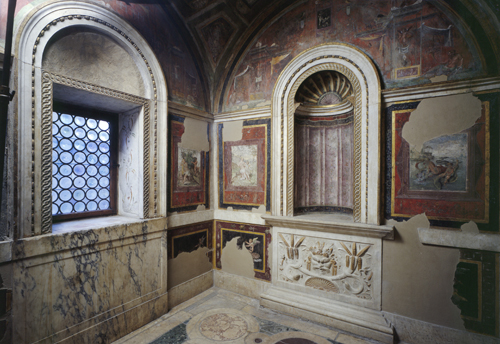
FIGURE 6.1. Raphael and workshop, Stufetta of Cardinal Bibbiena, 1516–17, Vatican Palace.
Nimatallah / Art Resource, NY.
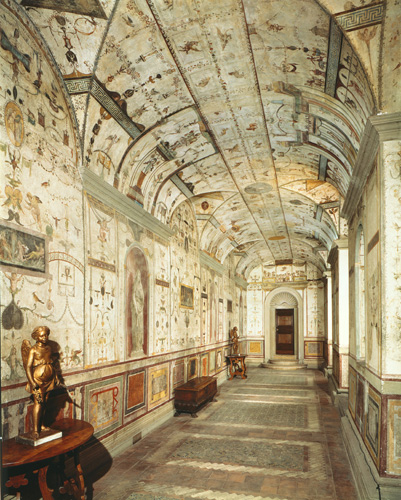
FIGURE 6.2. Raphael and workshop, Loggetta of Cardinal Bibbiena, 1516–17, Vatican Palace.
Scala / Art Resource, NY.
Numerous sources underscore the extent to which the notion of secrecy was embedded into the role of the secretary in the Italian Renaissance. For example, the Venetian writer Francesco Sansovino, in his 1564 Del Secretario noted that “the Secretary is named from the secrecy that one presupposes must be in him, he must have eyes and mind, but not a tongue outside of counsel.”3 Forty years later, Sansovino’s words were largely echoed by the Vicentian historian Giacomo Marzari, who in 1593 wrote that “Secretaries are now called a secretis presumably because they must have a constant and solid secrecy in them, that they will never speak freely, for any reason whatsoever about the affairs of their prince, but the secretary must keep these affairs to himself, as if he were mute.”4 For John Florio, the secretario was plainly and unambiguously a “secret keeper.”5
[150] Of equal importance to this essay on Cardinal Bibbiena’s Vatican apartments are source materials that demonstrate that “secret keepers” should work within a “spazio segreto,” meaning secret, segregated, and apart. For example, in 1594, Angelo Ingegneri, secretary to Cardinal Aldobrandini, stipulated in his Del buon segretario that the secretary should have a room of his own within his master’s palace, “separated but luminous and airy . . . where he could avoid having to let certain inappropriate people enter.”6 The cardinal and segretario domestico Bernardo Dovizi da Bibbiena was to secure much more than just a “separate” room of his own in the palace occupied by his master, Pope Leo X (1513–21), on the Vatican Hill. But Bibbiena was no ordinary “secret keeper.” He had been tutor to Leo when he was the boy cardinal Giovanni de’ Medici and had even accompanied his pupil into exile when the Medici were banished from Florence in 1494. On Leo X’s election to the papacy in 1513, Bibbiena received the title of cardinal deacon and became the chief administrator and writer of papal correspondence. More importantly, until about 1517, Cardinal Bibbiena enjoyed the special position of segretario domestico (confidential secretary) that elevated him above the pope’s own family member Cardinal Giulio de’ Medici. Consequently, as the pope’s [152] tesoriere generale (treasurer), as well as chief advisor and confidant, Cardinal Bibbiena resided within the safely guarded confines of the Vatican Palace.7
While other cardinals built palaces in the city, Bibbiena’s relatively modest background meant that he was to live in the palace itself, which is perhaps not surprising given his important role at the Vatican court.8 The importance of secrecy and the mechanics of spatial secrecy were well appreciated by the builders and inhabitants of these palaces; according to one early-sixteenth-century treatise, the ideal cardinal’s palace would be furnished with private spiral staircases, secret doors, peepholes, listening tubes, and spy-windows.9 Nonetheless, there is an astonishingly prescient, arguably intentional relationship between the secret nature of Bibbiena’s profession and the secret nature of the space that was to be custom built and decorated for him by Raphael directly above his employer’s own apartments within the Vatican Palace.10
Cardinal Bibbiena’s rooms were situated above the pope’s own camerae secretae and connected to the pope’s chambers by a small private lumaca, spiral staircase. As such, the staircase is critical in understanding the spatial and psychological conception of both sets of apartments. From morning until night, the pope was accompanied by a retinue—he was rarely alone—and the secret staircase gave Leo and Bibbiena the means to interact undisturbed, to allow the segretario domestico to fulfill his duties to the letter. Unfettered access to Bibbiena was equally difficult: the Ferrarese poet Ludovico Ariosto observed that the cardinal was “always surrounded by a great circle of people whom one cannot get past, and one must fight through ten doorways to get to where he is.”11 This strategically positioned secret staircase gave Bibbiena and the pope access to one another at all hours. In this favored part of the fourth level of the Vatican Palace, above the sala prima del papa, Raphael designed parts of Bibbiena’s private apartment, one that might be described as a “palace within a palace.”
The desire to appear and disappear at will, to have a means of escape unknown to others, is undoubtedly at the foundation of the invention of secret passages, cabinets, stairs, and other architectural devices that conceal and reveal. Secret stairs provided the need for private, secure communication and movement within already highly protected and ostensibly secure environments. Within the physical spaces of the Renaissance court, secret stairs constructed power relations by means of privileged access, but at the same time their function could also be quite practical. For instance, the “service stairs” at Urbino’s Palazzo Ducale were designed by the Sienese Francesco di Giorgio Martini as part of the palace’s third building program from 1474 to 1482, for the purpose of hauling water up from the well. The well is located deep within the walls of the palace—protecting the water and ensuring a continuous, safe water supply. Such a staircase could be described as an open secret; it could not be seen from outside the palace walls, but everyone that lived in the palace certainly knew about it and its location. In addition to these substantial service stairs, there were several minor secret stairs connecting living quarters to different parts of the palace. Pope Julius II’s architect, Donato Bramante, was from Urbino, and perhaps had some knowledge of Francesco di Giorgio’s stair designs. Around 1507, he incorporated a secret staircase within the “guarded area” of Julius II’s cubiculum [153] (bedroom), which was later used by Leo X. One of these stairs is located to the north of the cubiculum adjoining a small audience room (perhaps the same room in which Julius II is portrayed in Raphael’s painting of the pontiff in the National Gallery, London); this staircase led all the way down to the Cortile del Pappagallo and offered the pope a quick and expeditious entry and escape route. The second secret stair located within the pope’s apartment is probably the design of Bramante’s legatee, Raphael, just south of the cubiculum.
From 1514 to 1516, under Leo X’s papacy, Leonardo da Vinci lived in Rome at the Palazzo Belvedere at the Vatican. Residing in this northernmost part of the Vatican complex, Leonardo would certainly have known Bramante’s spiral stair (ca. 1507), which was designed to give access to Julius II’s Secret (secluded or segregated) Sculpture Garden, the Giardino Segreto.12 In 1516 Leonardo traveled to France where he entered the service of Francis I. While there is no documentary proof that Leonardo designed the famous double spiral stair built within the core of Francis I’s château at Chambord, it is reasonable to suggest that his then-current experimentation with secret stair designs may have at least informed the Chambord stairs.13 The centrally placed Chambord stairs are hardly secret. Nonetheless they offer a simultaneous means of ambulating up and down to the palace’s inner precincts, ensuring the regulation and maneuvering of communication to protect and suggest privacy and secrecy.
The spiral staircase leading up to Bibbiena’s rooms offered the cardinal and the pope a different type of escape and sense of seclusion, one based on classical notions of privacy and leisure (otium), pleasure and delectation (voluptas), humanist virtues promoted in the Renaissance that correspond not with excessive luxury, but with the vita contemplativa.14 The new rooms designed and decorated in fresco by Raphael and his workshop between 1515 and 1517 included a stufetta (or stufa) facing the Cortile del Pappagallo and a loggetta facing the Cortile de Maresciallo, and other improvements. The earliest documentation for Raphael’s related work in this part of the palace is an agreement of 15 January 1515 between Giuliano Leno and a master mason Jacomo, among others, for a cornice required by Raphael for Cardinal Bibbiena’s specially positioned apartment.15 Even prior to the documented involvement of Raphael, construction is recorded in this segregated part of the palace, as early as six months after Leo X’s election. New construction is documented again on 19 June 1514, in which Francesco dello Guelfo stipulated he had produced measurements on behalf of Giuliano Leno for Cardinal Bibbiena’s apartments located above those of Pope Leo X.16 The noise and inconvenience of such construction directly above Leo’s private apartment explains why the pope vacated his rooms while the renovation of Bibbiena’s special space took place, but Leo must have felt that this temporary displacement was worth the effort. After all, its locus would soon provide expeditious and secret access to Bibbiena, his new palatine [154] count. As we shall see, this architectural program would also ensure that this access was visually marked for all, evident to the wandering eyes of those assembled in the piazza below.17
The dating of Bibbiena’s new rooms, which include the stufetta and the loggetta, has been deduced by Deoclecio Redig de Campos on the basis of correspondence from Pietro Bembo to Cardinal Bibbiena. The first letter dated 6 May 1516 from Bembo in Rome, while Bibbiena was in Florence, comments on the current state of the work: his new rooms and loggia were finished and the stufetta nearly so.18 In another letter, dated 20 June 1516 and cited by Redig de Campos and John Shearman, Bembo writes again to Cardinal Bibbiena to say that his apartment, which includes his loggetta and stufetta, is finished, complete with leather wall hangings.19 About a year later, in a letter dated 19 July 1517, Bembo comments on the loggetta: “Once more your Lordship’s [Bibbiena] loggia is being built and is turning out most beautifully.”20 The decoration of Bibbiena’s apartment by the highly esteemed Raphael would itself have been indicative of the new cardinal deacon’s special status within Leo X’s inner circle, despite the modest size of the loggetta and the stufetta. The dimensions of the plan of the loggetta measure 3.12 x 15.74 meters with a height of 4.64 meters, while the plan of the stufetta measures only 2.5 x 2.5 meters and is 4.34 meters high.
Nonetheless, the scale of these small additions to Bibbiena’s apartment was enhanced by their decorative splendor, albeit scandalous by contemporary sixteenth-century taste, which in turn embellished Bibbiena’s privileged position at Leo X’s court.21 In particular, the decorations in the stufetta were distinguished by Raphael’s use of erotically laden grotesques, “secret pictures” both in terms of subject matter, and also in the circumstance of their discovery, within “secret” places such as the ruins of Nero’s Domus Aurea within what were likened to “underground grottoes.”22 These mythologies do not survive, save in damaged fragments, but an engraving usually attributed to Marco Dente—an associate of Raphael, Marcantonio Raimondi, and Giulio Romano—probably records one of these compositions, Venus Pulling a Thorn from Her Foot (fig. 6.3).23 These erotically charged mythological scenes with their sexually explicit ornamentation of flora and fauna parallel those designed by Raphael for the Psyche Loggia of the Villa Farnesina (ca. 1511–13) owned by Agostino Chigi.24 While the Farnesina provided the stage for elaborate banquets and the convivial cultivation of the arts, Bibbiena’s stufetta offered a more intimate deliberation on amorous experiences that are the source of art (figurative and poetic) and inspired thought.
This image is available in the print edition
FIGURE 6.3. Marco Dente. Venus Pulling a Thorn from Her Foot. ca. 1516, engraving, London, British Museum.
© Trustees of the British Museum.
On 4 June 1517 Bibbiena wrote a letter to his young clerical protégé Giulio Sadoleto, having just arranged for Sadoleto to be accommodated during his own absence from Rome in his Vatican [156] rooms, with various instructions regarding his property. “The bathroom may be used and praised by you, now and then,” Bibbiena instructed Sadoleto, though he was not otherwise to touch the cardinal’s things.25 He fully anticipated the appeal to the young cleric of the erotic grotesques, whose salacious and sensational nature immediately denoted them as sights to be viewed only by a select group of cognoscenti. Indeed the proscription not to touch anything else served to jokingly activate the play between the forbidden and the revealed. The inner circle of men like Sadoleto who could be permitted access to the stufetta also constituted the sanctioned audience for Giulio Romano’s now lost drawings of I Modi, sights emphatically barred to a wider viewing public through the censure of Raimondi’s prints based on those drawings.26
The cardinal went further than most in claiming ownership of this most secret space; where it was customary for only the papal coat of arms to be recorded in papal sponsored spaces, Bibbiena actually had his own coat of arms, two cornucopias filled with flowers in the form of a cross, permanently inscribed into the fabric of his private stufetta. Collectively these new spaces, along with the restoration of some preexisting rooms, his cubiculum (a bedroom) and sale (reception halls), shaped the identity of Cardinal Bibbiena’s very private palatine living quarters within the papal famiglia.27
As stated previously, this suite of rooms was more than just an apartment; it was, for all intents and purposes, a “palace within a palace,” one secretly lodged within the greater fabric of the palace. As such, it was fitting that this “secret palace” should also contain a palatine chapel; indeed no true palace would have been complete without such accommodations for prayer. This sacred space would offer the cardinal deacon more than just a place for prayer or a locus for the ritual of the mass. A chapel strategically positioned above Bibbiena’s rooms, one that was accessible exclusively through his apartment and therefore viewed from the public side as emphatically his, visibly positioned Cardinal Bibbiena within the public realm populated by his ecclesiastical colleagues and Rome’s popolo.28
From the steps of St. Peter’s below, the excitement and anticipation of identifying a seemingly important chapel—but one mysteriously private, at the very top of the Vatican Palace in clear public view—was undercut by the realization that it was in fact a small chapel with a plan measuring just 7.75 meters wide, east to west, and 4.45 meters deep, north to south. As is the case with many revealed secrets, it was the semblance of something grander and more monumental, rather than its actual appearance, which set up an aesthetic dissonance that must have resulted in its owner occupant’s visual pleasure and delight. A similar paradox between scale and grandeur is expressed in Raphael’s painting, Vision of Ezekiel (fig. 6.4) of circa 1517, measuring only 40 x 30 centimeters, but endowed with a magnificence and gravitas more commonly associated with much larger pictures.29 Raphael challenged the expectations of viewers by conveying a moment of visionary revelation, an image even of divinity, in a precious handheld object. In so doing, the painter espoused the pictorial equivalent of a device familiar to Renaissance poets and writers as multo in parvo. The fables of Aesop or the [158] adages of Erasmus were understood to present an elegant contrast between brevity of form and depth of erudition. Similarly Raphael’s audience delighted in witnessing this vast landscape and the sculptural monumentality of the Ezekiel’s “four living creatures” in a remarkably compact physical space. Likewise, privileged visitors to Bibbiena’s apartments would have experienced the revelation of the chapel’s small scale as a surprising and marvelous contrast to the impression of grandiosity that the structure conveyed to the pointedly excluded onlookers in the piazza.
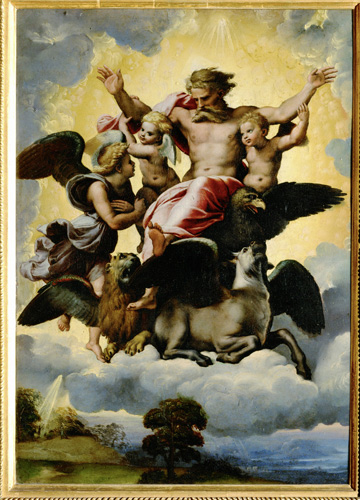
FIGURE 6.4. Raphael, The Vision of the Prophet Ezekiel, ca. 1518, oil on panel, Florence, Galleria Palatina, Palazzo Pitti.
Erich Lessing / Art Resource, NY.
For the few who knew the chapel up close and intimately, the ambiguity of this perceptual difference was clearly evident. From forty meters below, at the entrance to the Old Basilica where a much greater number of people were able to admire the clarity of Raphael’s novel design, however, the means by which he achieved such an effect were not so readily apparent. Only upon thoughtful reflection could one discern how Raphael’s calculated design effects sustained the chapel’s sharp optical legibility over such a long distance, from the basilica entrance porch up to Bibbiena’s terrace, or from the Janiculum Hill as seen in Maarten van Heemskerck’s drawing of 1534.30 In part, this effect was accomplished by Raphael’s use of architectural chiaroscuro, the balance of light and shadow, which was achieved through his dimensional exaggeration of the cornice. The overhang of the cornice creates a deep shadow all along the frieze of the western elevation of the chapel and continues around the corner of the façade over the pilasters that define the corners. Consequently, the central bay of the façade is given greater visual emphasis when viewed from afar, an optical illusion that heightened its mystery, secrecy, and special status. The visibility of Bibbiena’s chapel was enhanced when viewed by the pope and the public alike from the steep sight line down below. In this manner, one can recognize yet another example of Raphael’s courtly sprezzatura; the optical effects appear both clear and effortless yet were the result of a highly complex demonstration of architectural ingegno.31
The visual model from the ancient Roman world that may have had the greatest aesthetic resonance for Raphael was the so-called Temple of Vesta at Tivoli, of the early first century BCE (fig. 6.5).32 Just as Bibbiena’s chapel would perch atop the façade of the Vatican Palace, this circular temple was situated high above the banks of the Aniene River. A heavy, overhanging cornice casts a dramatic shadow on the columns below, imparting a sense of the monumental on this structure of rather modest scale. In a letter from Pietro Bembo to Cardinal Bibbiena, dated 3 April 1516, Bembo describes a private excursion to Tivoli that included Raphael among its participants.33 Raphael’s personal appropriation of the dramatic chiaroscuro activated by that temple’s cornice allowed him to establish a parity with ancient architects and ultimately to invest Bibbiena’s secret apartment with all’antica resonance.34
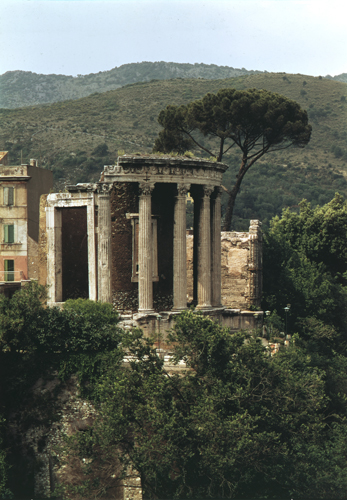
FIGURE 6.5. Temple of Vesta, early first century BCE, Tivoli.
Scala / Art Resource, NY.
Raphael’s sophisticated composition endowed upon Bibbiena’s chapel a monumentality usually reserved for larger buildings and even greater patrons. “Stay safe in your sweet little rooms,” Bibbiena encouraged Sadoleto, his words suggesting occupancy of a bijoux pied à terre, albeit one [160] closer to the sky.35 At the same time, he admonished Sadoleto “don’t touch anything from the guardaroba.”36 For those few intimates of the papal court who knew that the private chapel led to Cardinal Bibbiena’s suite of rooms in the palace, the façade functioned as the public front to his “secret palace within the palace of a pope.” Yet the splendid modesty of Raphael’s design allowed Cardinal Bibbiena to maintain an appropriate level of public decorum without upstaging his friend, employer, former pupil, and now benefactor, Pope Leo X. Thus the chapel within the secluded apartment, its occupant, and its patron encapsulate the paradoxes of papal culture—indeed early modern court culture more generally—in which visibility and prominence, rank and decorum all had to be carefully managed and negotiated. It is these architectural underpinnings that enabled and supported this very singular relationship between pope and secretary, and simultaneously allowed them to function equally well in public and in secrecy.
This essay remained incomplete at the time of Dr. Fernández’s death in 2009. The notes that appear here have been added by the editors. The editors want to thank Caroline P. Murphy for her assistance and support in publishing the essay and hope that it serves as a fitting tribute to Henry, his scholarship, and the warm friendship he extended to us in Los Angeles.
Bibliography
Barkan, Leonard. Unearthing the Past: Archaeology and Aesthetics in the Making of Renaissance Culture. New Haven, CT: Yale University Press, 1999.
Bembo, Pietro. Lettere. Rome: Valerio Dorico, 1548.
Biow, Douglas. Doctors, Ambassadors, Secretaries: Humanism and Professions in Renaissance Italy. Chicago: University of Chicago Press, 2002.
Colie, Rosalie. The Resources of Kind: Genre-Theory in the Renaissance. Edited by Barbara Lewalski. Berkeley: University of California Press, 1973.
Dacos, Nicole. La découverte de la Domus Aurea et la formation des grotesques à la Renaissance. London: Warburg Institute, 1969.
———. Le Logge di Raffaello. Rome: Istituto Poligrafico, 1977.
———. “La Loggetta du Cardinal Bibbiena: Décor à l’antique et role de l’atelier.” In Raffaello a Roma: Il convego del 1983, 225–36. Rome: Edizioni dell’Elefante, 1986.
Fernández, Henry Dietrich. Bramante and Raphael in Renaissance Rome . New Haven, CT: Yale University Press, forthcoming.
———. “Raphael’s Bibbiena Chapel in the Vatican Palace.” In Functions and Decorations: Art and Ritual at the Vatican Palace in the Middle Ages and the Renaissance, edited by Tristan Weddigen, Sible De Blaauw, and Bram Kempers, 115–30. Vatican City: Biblioteca Apostolica Vaticana, 2003.
Fernández, Henry Dietrich, and Barbara E. Shapiro. “La Scala di Bramante e Raffaello nei Palazzi Vaticani.” In Raffaello in Vaticano, edited by Fabrizio Mancinelli et al., 136–41. Milan: Electa, 1984.
Fiorenza, Giancarlo. Dosso Dossi: Paintings of Myth, Magic, and the Antique. University Park: Pennsylvania State University Press, 2008.
Florio, John. A Worlde of Wordes. London, 1598. Reprint, Hildesheim: Georg Olms Verlag, 1972.
Folin, Marco. “Studioli, vie coperte, gallerie: Genealogia di uno spazio del potere.” In Il Camerino di alabastro: Antonio Lombardo e la scultura all’antica, edited by Matteo Ceriana, 97–109. Milan: Silvana, 2004.
Gombrich, Ernst. “The Style all’antica: Imitation and Assimilation.” In Gombrich on the Renaissance: Norm and Form, 122–28. London: Phaidon, 1966.
Ingegneri, Angelo. Del buon segretario libri tre. Rome: Guglielmo Faciotto, 1594.
Jones, Roger, and Nicholas Penny. Raphael. New Haven, CT: Yale University Press, 1987.
Joyce, Hetty. “Grasping at Shadows: Ancient Paintings in Renaissance and Baroque Rome.” Art Bulletin 74 (1992): 219–46.
Louden, Lynn M. “Sprezzatura in Raphael and Castiglione.” Art Journal 28 (1968): 43–53.
Lowe, K. J. P. Church and Politics in Renaissance Italy: The Life and Career of Cardinal Francesco Soderini, 1453–1524. Cambridge: Cambridge University Press, 2002.
Marzari, Giacomo. La pratica e theorica del cancelliere. Vicenza: Giorgio Greco, 1593.
Moncallero, Giuseppe Lorenzo. Il cardinale Bernardo Dovizi da Bibbiena, umanista e diplomatico, 1470–1520. Florence: Olschki, 1953.
Pediconi, Angelica. “Cardinal Bernardo Dovizi da Bibbiena (1470–1520): A Palatine Cardinal.” In The Possessions of a Cardinal: Politics, Piety, and Art, 1450–1700, edited by Mary Hollingsworth and Carol Richardson, 92–112. University Park: Pennsylvania State University Press, 2010.
Redig de Campos, Deoclecio. I Palazzi Vaticani. Bologna: Cappelli, 1967.
Rowland, Ingrid. The Culture of the High Renaissance: Ancients and Moderns in Sixteenth-Century Rome. Cambridge, UK: Cambridge University Press, 1998.
———. “Raphael, Angelo Colocci, and the Genesis of the Architectural Orders.” Art Bulletin 76 (1994): 81–104.
———. “Render unto Caesar the things which are Caesar’s: Humanism and the Arts in the Patronage of Agostino Chigi.” Renaissance Quarterly 39 (1986), 673–730.
Sansovino, Francesco. Del secretario. Venice: Francesco Rampazetto, 1564.
Shearman, John. “Castiglione’s Portrait of Raphael.” Mitteilungen des Kunsthistorischen Instituts in Florenz 38 (1994): 69–97.
———. Raphael in Early Modern Sources: 1483–1602. 2 vols. New Haven, CT: Yale University Press, 2003.
Simonetta, Marcello. Rinascimento Segreto: Il mondo del Segretario da Petrarca a Machiavelli. Milan: Franco Angeli, 2004.
Stamper, John. The Architecture of Roman Temples: The Republic to the Middle Empire. Cambridge: Cambridge University Press, 2005.
Struever, Nancy. “Proverbial Signs: Formal Strategies in Guicciardini’s Ricordi.” Annali d’Italianistica 2 (1984): 94–109.
Talvacchia, Bette. Raphael. London: Phaidon, 2007.
———. Taking Positions: On the Erotic in Renaissance Culture. Princeton, NJ: Princeton University Press, 1999.
Thompson, Wendy. Poets, Lovers, and Heroes in Italian Mythological Prints. Exhibit catalogue. New York: Metropolitan Museum of Art, 2004.
Thornton, Peter. The Italian Renaissance Interior, 1400–1600. New York: Henry N. Abrams, 1991.
Turner, James Grantham. “Marcantonio’s Lost Modi and Their Copies.” Print Quarterly 21 (2004): 363–84.
Van Hamskeerck, Martin. Die römischen Skizzenbücher. Soest, Holland: Davaco, 1975.
Vickers, Brian. “Leisure and Idleness in the Renaissance: The Ambivalence of otium.” Renaissance Studies 4 (1990): 107–54.
Weege, Fritz. “Das Goldene Haus des Nero.” Jahrbuch des Deutschen Archäologischen Instituts 28 (1913): 127–244.
Weil-Garris, Kathleen, and John d’Amico. “The Renaissance Cardinal’s Ideal Palace: A Chapter from Cortesi’s De Cardinalatu.” In Studies in Italian Art and Architecture 15th through 18th Centuries, edited by Henry Millon, 45–119. Cambridge, MA: MIT Press, 1980.
Welch, Evelyn Samuels. “Galeazzo Maria Sforza and the Castello di Pavia, 1469.” Art Bulletin 71 (1989): 352–74.
Wyatt, Michael. “Bibbiena’s Closet: Interpretation and the Sexual Culture of a Renaissance Papal Court.” In Queer Italia: Same-Sex Desire in Italian Literature and Film, edited by Gary Cestaro, 35–53. New York: Palgrave, 2004.
[162]