
92
To corrupt the faith, whereby the soul lives, is much graver than to counterfeit money, which supports temporal life. Since forgers and other malefactors are summarily condemned to death by the civil authorities, with much more reason may heretics as soon as they are convicted of heresy be not only excommunicated, but also justly be put to death …
Cut off the decayed flesh, expel the mangy sheep from the fold, lest the whole house … the whole body, the whole flock burn, perish, rot, die. Arius was but a single spark in Alexandria, but as it was not at once put out, the whole world was laid waste by his flame …
Saint Thomas Aquinas writing, and quoting Saint Jerome, on the dangers of heretics to the body of the Catholic faith.
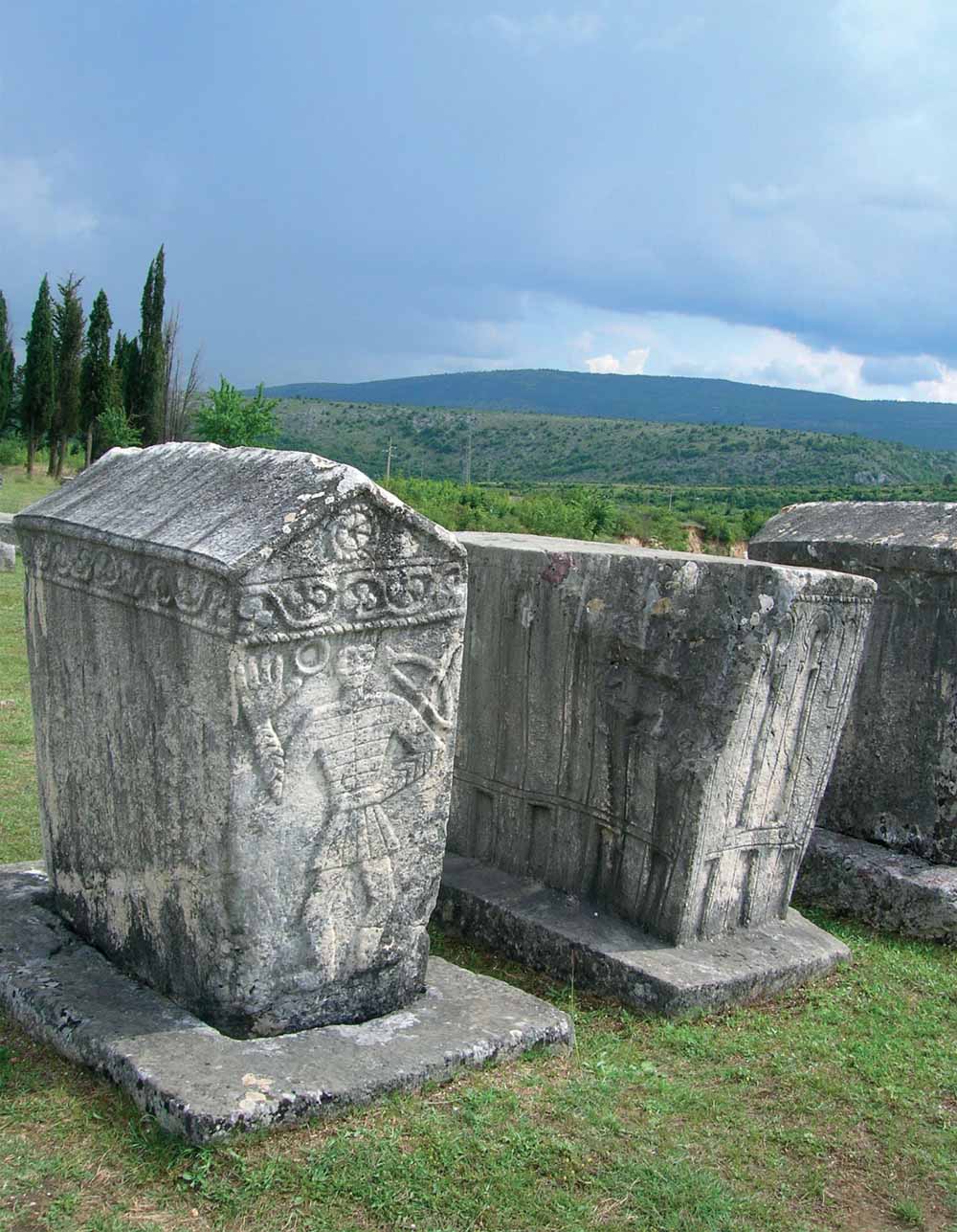
The Albigensian heresy of Languedoc had its origins in the Bogomil heresy of Bulgaria. The term Bogomil, freely translated, means ‘dear to God’. The Bogomils were far beyond the pale for both the Orthodox and Catholic Churches, and this may well have had more to do with their antipathy for ecclesiastical hierarchy and their resistance to both state and church authorities than their actual beliefs, which were also certainly heretical. They believed in dualism and the creation of the world not by God, but by the Devil. Bogomils refused to pay taxes, to work in serfdom, or to fight in conquering wars. They disdained feudal society and the established churches as these were manifestations of Satan’s creation. Both the Catholic and Orthodox Churches were alarmed by the apparent popularity of the creed among the lower orders. It spread in various forms across the Balkans, through to the Russian lands, and to Italy and France, where it evolved into Catharism.

Many times the Bogomils of the Balkans were threatened with extermination by the Church and by orders such as the Order of the Dragon who we met fighting the Turks in the last chapter, but the sect survived into the Ottoman period, despite the Hungarian kings using its existence as a consistent reason for ‘crusading’ against Bosnian lords and nipping away at their territory, and the pope despatching Franciscans to begin an Inquisition in Bosnia in 1291.
In Southern France no such lukewarm a resolution to heresy was contemplated, and a complete annihilation of the Cathars was undertaken over a period of 20 years from 1209 with the recruitment of 10,000 Crusaders from northern France and England, who attacked Montpellier, Carcassonne and Béziers. Almost the entire population of Béziers was slaughtered indiscriminately. The possibly apocryphal words of Amalric, a leader of the Crusade, ‘Kill them all! God will know his own!’ led to the killing of both Cathars and Catholics, and of nearly every man, woman and child in the city.

More blood and murder followed at Minerve, where many ‘perfects’, the leaders of the Cathar community, were given the option of conversion and to be identified by the wearing of a large yellow cross for the rest of their life, or burning at the stake. Three ladies did recant, but 140 ‘perfects’ were burned. More than few walked into the flames willingly.
Toulouse was the next city to be tortured after their protector the Crusader King of Aragon, and hero of the Reconquista, Peter was killed in battle but the Cathar cities revolted and in 1225 the French crown had to directly intervene. Louis XIII led a Crusader army of a size far exceeding that of 1209 to Languedoc. Still, it was hard going, but the war was concluded by treaty in 1229.
The Crusade was followed by an Inquisition in 1234 that extinguished the sect. Whilst Saint Thomas perhaps gives us some indication of the motivations for the Crusade, there can also be no doubt that the Ile-de-France saw the south of the country as desirable and too independent. In some respects the Albigensian Crusade looks more like an invasion and land grab than a religious act.